
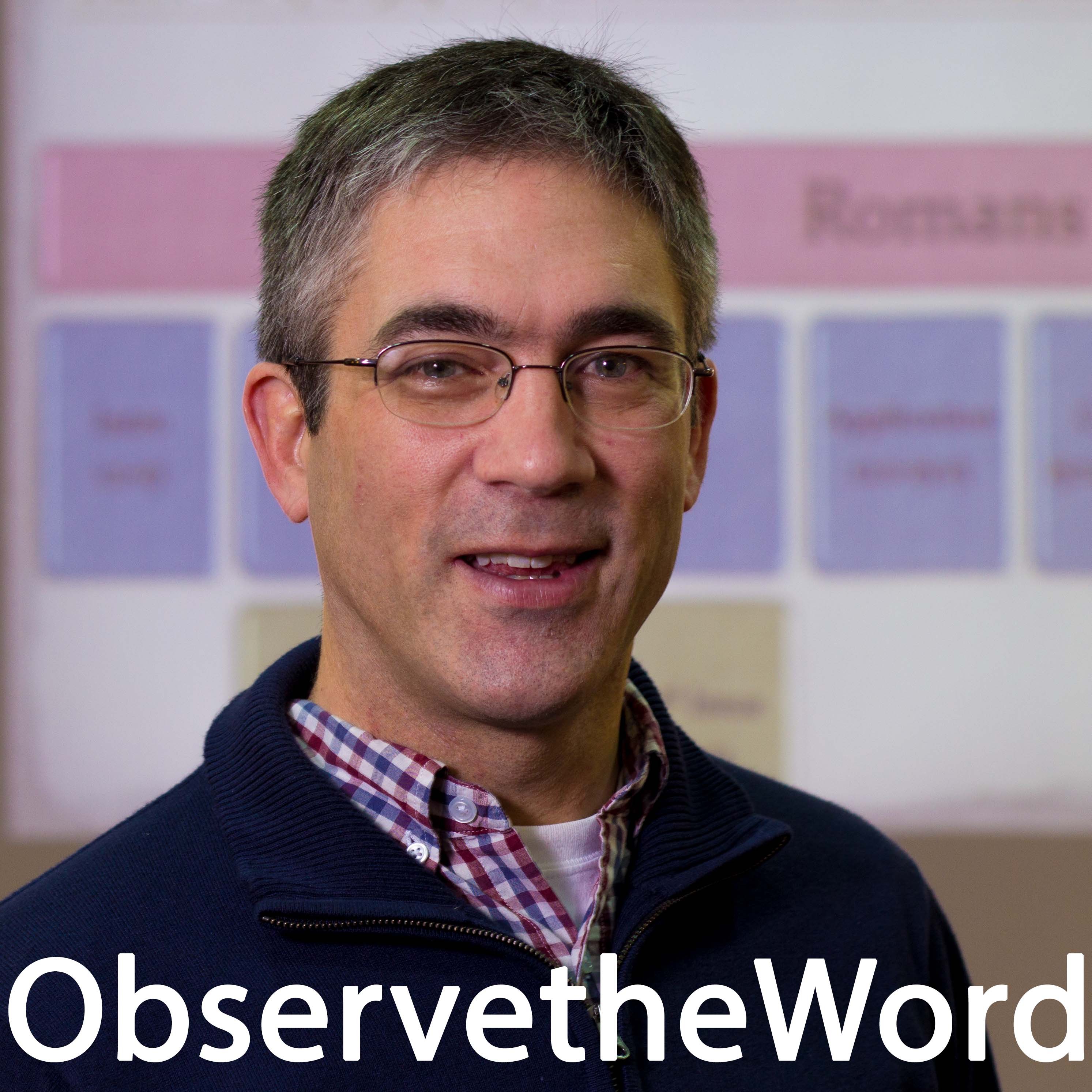
PODCAST · religion
Observe the Word
by Michael Brent
Bible teacher Michael Brent helps listeners observe and interpret the Word of God. His present series addresses the Sermon on the Mount (Matthew 5-7) with an emphasis on the sermon’s thought and structure. Previous series on the Pentateuch, Isaiah, John, Acts and Romans can be found by searching here at podbean or by accessing these series individually at the observetheword.com website or on various podcasting platforms such as itunes, spotify and youtube.
Episodes
-
Matthew 7:13-29 Kingdom Decision
In Matthew 7:13-29 Jesus concludes the Sermon on the Mount with a call to decision. It is an invitation, a challenge and a warning. Every human being has a choice to make. And that choice is about Jesus. What is the narrow way? And who do you trust to take you along the narrow way? The choice is...
-
Matthew 7:1-12 Kingdom Wisdom
In Matthew 7:1-12 Jesus gives us wisdom on how to love our neighbor in a sinful, messy world. Love is hard and risky. We need self-awareness, others-awareness and God-awareness to live out the ethic of Jesus.
-
Matthew 6:19-34 Kingdom Priority
In Matthew 6:19-34 we are challenged to ask, "What do I really want out of life?" Jesus uses a series of deceptively simple metaphors that urge us to reorient our lives around heavenly treasure. And he tells us why seeking first the kingdom of heaven is so simple and why it is so hard.
-
Matthew 6:7-15 Kingdom Piety 2
In Matthew 6:7-15 Jesus further develops his exhortation on genuine prayer. Known as "the Lord's prayer" and as "the Our Father", this is not a prayer given us to pray word for word. This is a model of prayer guiding us in the way we should pray. Jesus teaches us how to think about our…
more -
Matthew 6:1-6 and 16-18 Kingdom Piety 1
In Matthew 6:1-6 and 16-18, Jesus shifts from loving our neighbor to loving our God, a shift from public spiritual life that ought to be seen, to private spiritual life that ought not be seen. Jesus now exhorts us to acts of devotion that bring about lasting reward from God.
-
Matthew 5:33-48 Kingdom Commandments 2
In Matthew 5:33-48, we continue with the second half of Jesus' kingdom commandments. He calls us deeper in and further out, establishing an incredibly high moral standard for entrance into the kingdom of heaven. At this point, we are finally ready to go back and understand the blessings Jesus...
-
Matthew 5:17-32 Kingdom Commandments 1
In Matthew 5:17-32, we address the first half of kingdom commandments indicated by Jesus formula, "You have heard it said...but I say to you..." What does it look like to be salt and light for the kingdom of heaven? Jesus is going to tell us. And the standard he sets is going to be very high indeed.
-
Matthew 5:1-16 Kingdom Values
In Matthew 5:1-16, Jesus begins the sermon on the mount with a two part introduction. First, he communicates a series of virtues God affirms by rewarding. And second, he exhorts his disciples to be salt and light in society, presumably by living out the virtues that God values. But what does it...
-
Matthew 3-4 Gospel of the Kingdom
In Matthew 3-4, we continue to follow Matthew as he sets up the context for the sermon on the mount. Who is this Jesus? What has he come to do? What is his connection to the Old Covenant? What does he mean that the kingdom of heaven is near? What is this gospel of the kingdom that Jesus proclaims?
-
Matthew 1-2 Origin of the King
We begin our Sermon on the Mount series with a two-part overview of Matthew 1-4 to set up our context. Who is this Jesus? What has he come to do? What is his connection to the Old Covenant? That's what Matthew has in mind to tell us, starting with the origin of the king in chapters 1 and 2.
-
Isaiah 66:18-24 A Sign Among the Nations
In Isaiah 66:18-24, the end of Isaiah speaks of the end of this age. God sets a sign among his people. And he sends survivors out to the ends of the earth. They raise the sign as a standard. It is time to gather in the nations, time for every knee to bow and every tongue confess that the Holy One...
-
Isaiah 65:17-66:17 New Heavens and New Earth
In Isaiah 65:17-66:17, God's response to the watcher's lament reaches a climax with the promise of a recreation. God will create the heavens and earth anew as an eternal dwelling place for his chosen ones. Who are the chosen ones? Who are these servants of God that dwell with him forever?
-
Isaiah 63:7-65:16 Lament and Response
In Isaiah 63:7-65:16, we move from the triumphant vision of glorious Zion to the struggle of holding onto the promise of that glorious future in the painful present. A human watcher cries out to God in a theological rich lament. God challenges the watcher to accept a more accurate perspective of...
-
Isaiah 61:10-63:6 Four Songs of the Conqueror
In Isaiah 61:10-63:6, we encounter two further songs of a mysterious figure committed to the establishment of an ideal society for God's people. In the first song he comes dressed as a groom for a wedding. In the second song he comes dressed as a champion for battle.
-
Isaiah 61:1-9 The Favorable Year of the Lord
In Isaiah 61:1-9 God pours out his Spirit, anointing a chosen servant to proclaim good news to the afflicted. That good news transforms God's people. 700 years later Jesus stood up in a synagogue, read the first two verses of this passage, sat down and declared, "Today this Scripture has been...
-
Isaiah 60 The Coming Glory
In Isaiah 60, the glory of God shines out from Zion as a glorious city on a hill. Many peoples respond to that light bringing gifts of tribute to the Holy One of Israel, tribute including frankincense and gold. How does this vision of Zion relate to the church? Is this our mission to build a city...
-
Isaiah 59 The Conqueror Comes
In Isaiah 59, the prophet first condemns the wickedness of his society and then includes himself in with all the rest as he confesses, "our sins testify against us...we know our iniquities." Seeing no man to intercede, the Lord arms himself to bring justice and salvation. But who is this divine...
-
Isaiah 58 A True Fast – Desiring God and Loving People
In Isaiah 58, the prophet calls out religious hypocrisy. As the paganism of chapter 57 represents the progressive idolatry of the left, the human-centered religiosity of chapter 58 represents the conservative idolatry of the right. In this lesson we raise our third big picture interpretation...
-
Isaiah 56:9-57:21 Two Parties in Judah
In Isaiah 56:9-57:21, we shift from the ideal of God's people depicted in 56:1-8 to the actual reality of God's people. This gives us an opportunity to ask the critical interpretive question, "Who is Isaiah's primary audience?" Who were the people of God he was talking to and what were they like?
-
Isaiah 56:1-8 World People, Sabbath People, Praying People
In Isaiah 56:1-8, we introduce the Book of the Conqueror, chapters 56-66, asking a critical interpretive question, overviewing this book's structure, and considering in its first 8 verses the inclusion of eunuchs and foreigners into covenant community with God.
-
Isaiah 54:1-55:13 Respond to the Servant’s Triumph
In Isaiah 54 and 55, we are exhorted by the prophet to respond to the astounding work of the servant described in Isaiah 53. Shout! Cry aloud! Come! Seek! The table of grace has been set. You have been invited. Enter into the everlasting covenant of peace.
-
Isaiah 53 Interpretations of the Fourth Servant Song
The fourth servant song in Isaiah 52:13-53:12 provides an incredible example of Old Testament prophecy about Jesus Christ. In this episode, we consider how critical historians have interpreted this text, how Jewish scholars have interpreted this text, and how New Testament writers have…
more -
Isaiah 52:13-53:12 The Fourth Servant Song
In Isaiah 52:13-53:12, we arrive at the heart of the Book of the Servant. The fourth servant song proclaims the long awaited "how" of spiritual deliverance. How does our holy God justly forgive sinful people?
-
Isaiah 50:4-52:12 The Third Servant Song
In Isaiah 50:4-52:12, the third servant song provides a model of faithful resilience. Isaiah exhorts Israel to listen, wake up and walk with God according to that model.
-
Isaiah 49:1-50:3 The Second Servant Song
In Isaiah 49:1-50:30, Isaiah begins the final section in the Book of the Servant with the second of four servant songs. God's servant is a select arrow, hidden in the Lord's quiver, to be aimed, drawn and released at the appropriate time, not only to restore Israel, but as a light for the nations...
-
Isaiah 48:1-22 Israel Delivered
In Isaiah 48:1-22, Isaiah completes his description of Babylon's fall and Israel's deliverance. God perseveres in faithfulness to his chosen people, but a dark chord is struck in the joyful song of rescue. A great deliverance from the external oppressor Babylon does not solve the internal problem...
-
Isaiah 47:1-15 Babylon Conquered
In Isaiah 47:1-15, Isaiah looks ahead to the fulfillment of the Cyrus prophecy with the fall of Babylon. Isaiah's vision looks beyond the specific, historic fall of Babylon to a spiritual reality that runs through human history from the tower of Babel in Genesis 11 to John's depiction in…
more -
Isaiah 46:1-13 God’s Plan for Obstinate Israel 2
In Isaiah 46:1-13, Isaiah concludes his description of Israel's obstinacy in regard to God's plan to use Cyrus. But first we continue our consideration of how Isaiah 45 influenced Paul's letter to the Romans in regard to the three themes of questioning God's plan, the righteousness of God, and…
more -
Isaiah 45:9-25 God’s Plan for Obstinate Israel 1
In Isaiah 45:9-25, Israel pushes back against God's plan to raise up Cyrus, a Gentile Messiah. God responds with a rebuke and an affirmation that Israel will still play a central role in the formation of a world wide people. We will see significant connection between Isaiah 45 and Paul's letter…
more -
Isaiah 44:24-45:8 The Cyrus Prophecy and Historical Background
In Isaiah 44:24-45:8, we consider the historical background and meaning of one of the most specific and unlikely prophecies of Scripture that a king named Cyrus would deliver the Jewish exiles from Babylon.
-
Isaiah 43:22-44:23 Forgiveness of Sins
In Isaiah 43:22-44:23, we address the second half of our second major section in the Book of the Servant - the Redemption of Israel. The people of God need spiritual redemption from their own sin nature. Only God can meet our deepest needs. Pagan idol-gods, both ancient and modern, are empty...
-
Isaiah 42:18-43:21 Release from Bondage
In Isaiah 42:18-43:21, we address the first half of our second major section in the Book of the Servant - the Redemption of Israel. Israel is going to need national redemption from exile in Babylon. God is going to do this. God's people are to give witness.
-
Isaiah 41:21-42:17 Consolation of the Gentiles
In Isaiah 41:21-42:17, Isaiah offers consolation for the Gentiles by exposing the idol-gods of the nations, prophesying God's remedy in a future servant, and responding with a new song. Isaiah's description of an ideal servant in 42:1-4 constitutes our first of four servant songs in the Book of…
more -
Isaiah 41:1-20 Three Pictures of Consolation
In Isaiah 41:1-20, Isaiah concludes the initial consolation of Israel, with a powerful, compact description of God as sovereign over world events and with three descriptive pictures of the transformation he will bring about when Israel's exile is complete.
-
Isaiah 40:12-31 The Creator God – The Ground of Comfort
In Isaiah 40:12-31 Isaiah extols the character of the Creator God as the ground of the hope proclaimed in 40:1-11. We can find comfort in the hope of God's glory, word and arm when we see God as he truly is.
-
Isaiah 40:1-11 The Consolation of Zion
In Isaiah 40:1-11 God calls for heralds to proclaim his word of comfort for Israel. That word is provided by three voices, each adding to the message of consolation. Before getting into the text, we first introduce the Book of the Servant, chapters 40-55, by addressing Isaiah's development of the...
-
Isaiah 38-39 Hezekiah’s Fateful Choice
In Isaiah 38-39 Isaiah creates a bridge between the Book of the King and the Book of the Servant with a reminder that even good human kings do not persevere in faithfulness.
-
Isaiah 36-37 Lord of History
In Isaiah 36-37 Isaiah reminds Judah that God truly is the Lord of History through the example of Sennacherib's inability to capture Jerusalem.
-
Isaiah 36-39 Historical Background
In this lesson we consider historical sources of Sennacherib's invasion of Judah to help us better interpret the narrative in Isaiah 36-39.
-
Isaiah 31-35 The Stability of Your Times
In Isaiah 31-35, we complete the six woes that rebuke Judah for turning away from God in troubled times to find help in Egypt. Isaiah continues to call his listeners back to God our King who is the source of stability in present times and our sure hope for the future.
-
Isaiah 30 Security Not Found in Human Alliances
In Isaiah 30, Isaiah begins and ends with the human perspective of Judah's alliance with Egypt and the looming invasion by Assyria. In the middle of the chapter, he gives us two divine perspectives, calling Judah's leaders to turn back to God and trust him to be their security.
-
Isaiah 29 Historical Deliverance and Spiritual Transformation
In Isaiah 29, we address the 2nd and 3rd woes of the Lord of History section, chapters 28-37. In this larger section, Isaiah reminds the people of God's deliverance during a national crisis, so that they might believe God is at work in the present and trust that God will fulfill his promises for...
-
Isaiah 28 A Simple Message for Halls of Power
The move from Isaiah 27 to Isaiah 28 is a transition between major sections. In this lesson we briefly summarize 5 principles of faith from the Universal Kingdom section, chapters 13-27, and then move into the first woe of the Lord of History section, chapters 28-37. In chapter 28, employing...
-
Isaiah 24-27 The Third Cycle - Two Cities
In Isaiah 24-27, Isaiah presents a third cycle of passages that look far into the future to a final day where the city of man stands in stark contrast against the city of God and the faithful are exhorted to endure through to glory.
-
Isaiah 21-23 The Second Cycle of Oracles
In Isaiah 21-23, Isaiah continues addressing God's rule over a universal kingdom in a second cycle of oracles to the nations in which he describes the failure of self-sufficiency to meet human need through the depiction of a toppled empire and the rippling effects on smaller nations.
-
Isaiah 13-20 The First Cycle of Oracles
In Isaiah 13-20, Isaiah begins a new section addressing God's rule over a universal kingdom. This first cycle of five oracles to the nations shows God to be sovereign over all nations both in his just punishment of self-sufficient pride and in his faithful provision for a believing remnant.
-
Isaiah 9:8-12:6 The Word to Israel
In Isaiah 9:8-12:6, Isaiah proclaims a word to Israel that further develops the four themes in his word to Judah, moment of decision, judgment, remnant and glorious hope. We end with an epilogue of praise in 12:1-6.
-
Isaiah 8:9-9:7 The Word to Judah II
In Isaiah 8:9-9:7, Isaiah moves from his prophecy of judgment on Judah to identification of a remnant and a glorious hope. The great light of glorious hope will arise in Galilee. He will be born a human child whose name is somehow also Mighty God!
-
Isaiah 7:1-8:8 The Word to Judah I
In Isaiah 7:1-8:8, we consider a moment of decision set before Ahaz King of Judah and a sign from God that affirms the truthfulness of His words. The sign in this case is a baby born to a virgin.
-
Isaiah 6 Vision, Call and Mission
In Isaiah 6, Isaiah experiences the vision of God that becomes the foundation for his lifelong ministry. His call and mission both follow after that vision.
We're indexing this podcast's transcripts for the first time — this can take a minute or two. We'll show results as soon as they're ready.
No matches for "" in this podcast's transcripts.
No topics indexed yet for this podcast.
Loading reviews...
ABOUT THIS SHOW
Bible teacher Michael Brent helps listeners observe and interpret the Word of God. His present series addresses the Sermon on the Mount (Matthew 5-7) with an emphasis on the sermon’s thought and structure. Previous series on the Pentateuch, Isaiah, John, Acts and Romans can be found by searching here at podbean or by accessing these series individually at the observetheword.com website or on various podcasting platforms such as itunes, spotify and youtube.
HOSTED BY
Michael Brent
CATEGORIES
Loading similar podcasts...
Frequently Asked Questions
How many episodes does Observe the Word have?
Observe the Word currently has 193 episodes available on PodParley. New episodes are automatically indexed when they're published to the podcast feed.
What is Observe the Word about?
Bible teacher Michael Brent helps listeners observe and interpret the Word of God. His present series addresses the Sermon on the Mount (Matthew 5-7) with an emphasis on the sermon’s thought and structure. Previous series on the Pentateuch, Isaiah, John, Acts and Romans can be found by searching...
How often does Observe the Word release new episodes?
Observe the Word publishes regularly with 193 episodes available. Check the episode list for the typical release schedule.
Where can I listen to Observe the Word?
You can listen to Observe the Word on PodParley by clicking any episode. We provide an embedded audio player for direct listening, and you can also subscribe via your preferred podcast app using the RSS feed.
Who hosts Observe the Word?
Observe the Word is created and hosted by Michael Brent.
URL copied to clipboard!