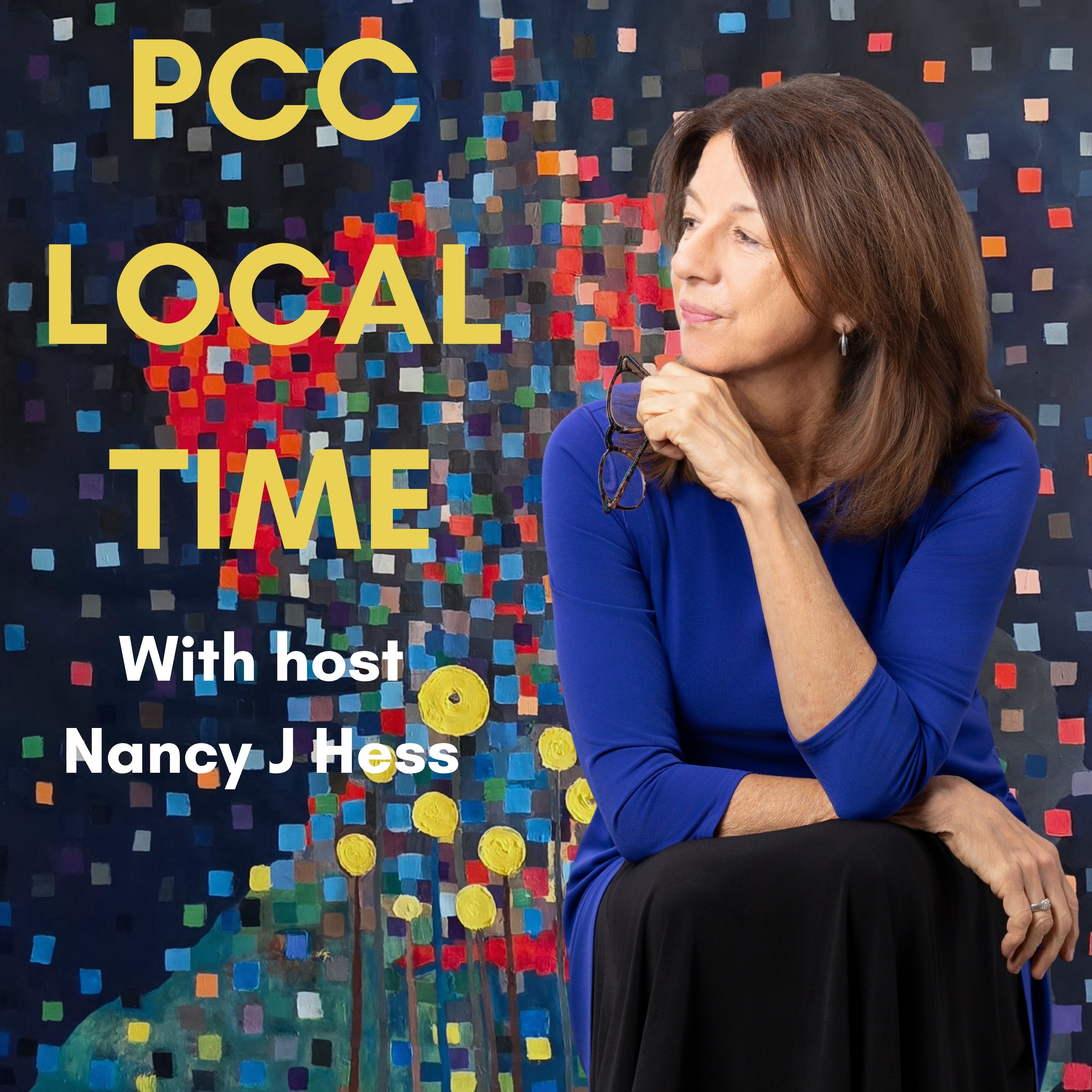
PCC Local Time podcast artwork

PODCAST · government

PCC Local Time

No other level of government impacts us as much in our daily lives as local government.For the last 40 years I have been talking to managers as an organization consultant and am as fascinated by their work today as when I began. The professional municipal manager is entrusted with a ship that often runs over rough waters even as it delivers vital services to communities. This show is about the ideas and innovation that will drive the future of the profession of municipal management. If you are interested in learning more about the Pioneering Change Community, sign up for the Friday newsletter and get access to more in-depth episode information. Check for a link in the show notes.[Intro and exit music by Joseph Hess. Cover art by Nancy Hess]

  1. 102

    So this is goodbye....Closing a chapter on Generation on the Rise

    As producer and publisher here at MuniSquare on Substack, today’s post is hard to write… we have decided to bring the Generation on the Rise podcast to a close, at least for now. Dave, Brandon and Nancy start off with a little light bantor today before making their way to the core message which concerns the absence of Eden.This will not affect PCC Local Time podcast recordings or our MuniSquare podcast stream. Please subscribe to receive full content from our site that focuses on local government and public service!TIMESTAMPS00:00 Opening banter and music talk 03:00 Brandon on ICMA, APMM and the conference season 03:53 Nancy introduces the final episode 04:20 Decision to close this chapter of Generation on the Rise 05:05 Eden’s departure and what is publicly known 06:15 Why the public testimony required a response 07:10 What we know, what we do not know 07:50 Employee voice, risk and organizational recovery 08:20 Building in public and closing this chapter 08:54 Brandon reflects on the purpose of the podcast 09:35 Conversations people need but do not get formal training for 10:30 The value of candid professional dialogue 11:20 Continuing the conversation beyond the podcast 12:01 Dave reflects on Eden, Middletown and next chapters 13:00 Dave’s leadership lesson: people need to want to follow you 14:15 Authenticity, social intelligence and emotional intelligence 15:40 The danger of trying to be someone you are not 16:50 Mistakes, public judgment and professional recovery 18:10 Learning, growth and second chances in leadership 19:10 Investing in employees, boards and communities 19:45 Looking back on the podcast’s purpose and tone 21:00 Appreciation for listeners and future collaborations 21:47 Nancy reflects on Dave and Brandon’s growth 22:45 Gratitude, community and what comes next 23:40 Final goodbye and “take care of each other” 24:05 Closing banter and authenticity of the show 25:11 Nancy’s final words 25:37 Dave and Brandon close the episode

  2. 101

    APMM Series: The Role of Emergency Management: From a Title on Paper to a Mature Agency

    What does a mature emergency management program look like before a community is tested? In this 2026 APMM series episode of PCC Local Time, Nancy Hess talks with Shawn Kauffman, Fire Director for the Centre Region Council of Governments and former Emergency Management Coordinator, about the human infrastructure behind effective emergency response.Shawn shares what he has learned over 40 years in emergency services. The conversation explores the importance of local knowledge, technical skill, regional coordination, relationships with county and state partners, and the ability to bring people together across silos before a crisis occurs. It is a practical and hopeful conversation for local government managers, elected officials, emergency service leaders, and volunteers who want to understand where this field is headedBe sure to check out and subscribe ro MuniSquare for more content on local government.TIMESTAMPS00:00 — Introducing Shawn Kauffman and the Centre Region model01:40 — What mature emergency management looks like02:30 — From silos to coordination04:00 — Building relationships before the emergency05:20 — Local knowledge versus technical training07:00 — Why county relationships matter in Pennsylvania08:40 — Regionalization as a practical solution11:00 — Volunteer capacity and looking beyond municipal borders12:20 — No-notice events and what keeps emergency managers up at night15:00 — The infrastructure of relationships16:00 — What silos look like in real life18:00 — Who makes a good emergency management coordinator?19:30 — Falling in love with emergency management20:20 — Who needs to be at the table?22:10 — Lessons from major events23:50 — Creating a “community within a community”25:00 — Leadership, ego, and resistance26:40 — COVID and the loss of in-person cohesion29:00 — Working with state police and large institutions30:30 — Large employers, institutions, and local emergency planning32:20 — The future of emergency management33:40 — The next emergency manager34:40 — AI, forecasting, and the human factor36:00 — Emergency management as a career path37:20 — Shawn’s own path into the work38:00 — Closing reflections

  3. 100

    A 25-Year Relationship, Expressed in Three Words: How safety culture rests on wellness and connection.

    "I need help."There are conversations in local government that change how you think about leadership. This is one of them. In this episode of PCC Local Time, I sit down with Chief David Lash of Northern York County Regional Police and Chief Dave Steffen, retired chief of Northern Lancaster County Regional Police, to talk about how the idea of wellness actually converts to meaningful outcomes inside a police agency.Link to an earlier episode with Chief David Steffen on Regional PolicingBe sure to check out MuniSquare on Substack and our YouTube ChannelTIMESTAMPS:00:00 Opening: why wellness and policing are difficult to connect 02:00 A 25-year relationship: how it began 05:30 The shift in policing culture around wellness 10:00 February 2025: the UPMC shooting 13:30 Immediate response and the role of support systems 17:30 Continuity of care and leadership perspective 19:30 September 2025: the second critical incident 22:30 “Two minutes of hell”: what happened and what followed 24:30 Leadership under pressure and the role of relationships 26:30 The three-word call: “I need help” 28:30 Reframing wellness as culture, not program 29:30 Reducing stigma and normalizing support 31:00 Moving from reactive to proactive wellness 32:30 Total wellness: beyond mental health 34:00 Building access: systems, providers, and trust 36:30 Wellness and use of force: a possible connection 38:00 Mindfulness and officer buy-in 39:00 Feeling valued as a core metric 40:30 Resistance, generational differences, and adaptation 44:30 Extending wellness into the community 46:30 Budgeting for wellness as essential, not optional 48:00 Culture shift: from external image to internal strength 49:30 Closing reflections: what can be carried forward

  4. 99

    APMM SERIES: What Does a Four-Star Restaurant Have to Do With Local Government? Unreasonable Hospitality in Public Service

    Two municipal managers introduced host Nancy to the same book: Unreasonable Hospitality by Will Guidara. Chris Garges and Joe Hogarth (also Chief of Police) join her to unpack what a four-star Manhattan restaurant can teach local government. Through a municipal lens, they talk about the front of the house and the back of the house, how "toiling in obscurity" is part of our success, why imitating others is a bad idea, and what Joe calls the nobility of the work.This PCC Local Time podcast episode has been created in partnership with APMM - the Association of Pennsylvania Municipal Management.🎧 Full show notes and quotes at MuniSquare. Subscribe and get more content like this.TIMESTAMPS:00:00 Opening: what can a restaurant teach local government? 00:02 How Joe and Chris found the book 00:05 Nancy’s restaurant story and the customer experience lens 00:07 Silos, roles, and balancing departments 00:09 Real teamwork across public works, police, and codes 00:11 Volunteer work and building connection across staff 00:13 Why stories matter in shaping culture 00:16 Purpose, community, and significance in public service 00:20 Chris on marathon mindset and mental toughness 00:22 Why collaboration meets resistance 00:23 Vulnerability and the myth of the all-knowing leader 00:26 Humility, learning, and asking better questions 00:27 Learn from others, but do not imitate blindly 00:29 Hierarchy, feedback, and speaking honestly 00:31 Hospitality as a daily dialogue 00:33 Younger employees and visible community impact 00:34 What leaders do with resistant employees 00:36 Encouraging people when the work never feels finished 00:38 One takeaway for managers 00:39 Nobility, purpose, and the meaning of service 00:41 Final story: when someone thanks an officer for arresting them

  5. 98

    The Stories We Carry: On James C. Scott and the Art of Not Being Governed

    Why would anyone choose to evade governance, and what do contemporary versions of that choice look like in the communities we serve? What familial stories do we carry forward that are, at root, an attempt to evade government?The late James C. Scott, Yale political scientist, agrarian studies scholar, and, as he put it himself, an anarchist willing to raise only two cheers (as he titled one of his beloved books, Two Cheers for Anarchism), spent a career asking that question.Today we explore Scott’s book The Art of Not Being Governed, which outlines an arc of our history that is, for the most part, about people who have lived outside the reach of government systems. That we have fled, adapted, and re-integrated elsewhere, partly or fully, is fundamental to our human story. These stories reveal our diversity and resilience, but also our reluctance to be made “legible” to governments.Here with me are Dr. Mike Rowe (University of Liverpool), Dr. Tom Bryer (University of Central Florida, soon to be founding director of the Center for CivicLands and Democratic Stewardship at Old Dominion University), and Dr. Mandie Cantlin (township manager and lecturer at West Chester University).Together we take up Scott’s larger question: why do people stay within systems of governance, and why do they leave? Drawing on examples that range from Southeast Asia to contemporary communities, the conversation moves through themes of resistance, mobility, sustainability, and public trust.Our conversation offers many jumping-off points for deeper inquiry into how people navigate the edges of being governed. For those of us working in and around local government, Scott’s work asks us to look more closely at how people experience governance, and what it means to belong to a place.Check out MuniSquare.Substack.com and subscribe for more content on local government's role in our lives today.Timestamps00:00 — Molokai and the choice to say no05:30 — Why people stay or leave a place06:30 — Scott’s work and challenging linear progress09:30 — Rethinking prosperity and subsistence12:00 — Why people choose not to be governed13:30 — Modern examples: homeschooling and personal autonomy16:30 — Diversity, identity, and “legibility”18:00 — The push and pull of government in everyday life20:00 — Contemporary forms of resistance21:30 — Subsistence thinking in modern economies23:00 — Development, sustainability, and local choice24:30 — The role of government when people resist26:00 — Participation, “state picking,” and civic voice29:00 — Public trust and agency30:00 — Ecological systems and unintended consequences33:00 — Climate, risk, and the role of the state37:30 — Hill people, mobility, and “flight”40:00 — No single path forward41:30 — Civilization, exclusion, and who belongs45:30 — Living with tension in governance47:30 — Closing reflections

  6. 97

    Generation on the Rise: Marbles in the Pocket

    Brandon Ford rejoins Dave Pribulka and Eden Ratliff and wastes no time stepping back into the role of host. He deftly guides the conversation from how have expectations changed for managers to something much deeper that touches on what it means to be apolitical in this new reality and how compartmentalization may or may not serve the profession going forward.Check our MuniSquare for more content like this and be sure to subscribe!Chapters00:00 Sports and Local Engagement03:56 International City Management Association Insights09:30 Expectations of Local Government18:44 The Role of Technology in Local Governance23:13 Navigating Civic Engagement and Emotional Appeals25:13 The Complexity of Local Governance28:35 Engaging the Next Generation of Managers30:26 The Balance of Politics and Management32:34 Compartmentalizing Personal Beliefs in Governance36:34 The Future of Political Neutrality in Local Government40:18 Maintaining Professional Standards Amidst Political Pressures

  7. 96

    Who Decides What a Place is Worth? Guests Christa Breum Amhøj, and John Diamond

    Who gets to decide the value of a place? In other words, who gets to decide the metric?I brought that question to Christa Breum Amhøj, a Danish practitioner, researcher, and what I can only describe as a social architect because she reads a place the way a building architect reads a site. And to John Diamond, who sits in Manchester and has been watching the same tensions play out in the UK across decades of academic research, consultation, and engagement with emerging local government challenges. What follows is my attempt to trace the arc of what the three of us discovered together.Be sure to check out the full video on MuniSquare or our YouTube Channel and subscribe to get more content like this!Chapters01:39 — Opening: Who Creates Value in a Community?02:23 — Competing Definitions of Public Value03:38 — Rethinking Value: The Aging Society Example06:22 — Tourism, Resistance, and Local Control (Scotland Case)08:51 — Visible vs. Invisible Value11:11 — Micro-Experiments vs. Traditional Innovation14:53 — Professional Expertise vs. Local Knowledge19:43 — A Place Has Agency21:00 — Learning to Observe and Map a Place23:27 — From Problem-Solving to System-Based Thinking24:42 — Case Study: Faxe Municipality (Denmark)27:00 — Redesigning the Festival Through Community Input28:30 — Outcomes: Relationships, Access, and New Pathways32:49 — Why Process Matters More Than Outputs34:00 — Access and Infrastructure: The Transport Example37:45 — The COMPASS Model Overview42:30 — Managing Tension and Conflict in Co-Creation44:00 — Expanding the Definition of Prosperity46:30 — The Role of the Facilitator in Place-Based Work53:34 — Closing Reflections: Practice Over Theory

  8. 95

    APMM Series: Who Really Shapes the Future of a Place? with Erin Trone and Keri (MIller) Kenepp

    Economic development isn’t just about buildings and business, sidewalks and parking, blighted malls and dying downtowns, housing shortages and shrinking workforces, casino controversies and data center ordinances. It’s actually about facilitating conversations with the people invested in the outcomes.Keri (Miller) Kenepp, Director of Community and Economic Development for College Township, Pennsylvania, and Erin (Genest) Trone, Project Manager for BusinessPA at the Pennsylvania Department of Community & Economic Development, walk us through a maze of issues facing local governments today and grant us invaluable insights into how we can think about a future together.This episode is made possible by a partnership with APMM, the Association for Pennsylvania Municipal Management.Be sure to subscribe to MuniSquare to get full content that includes all episodes of PCC Local Time and much, much more.Chapters00:00 – Who Shapes the Future of a Place? (Episode Setup)02:00 – Keri’s Non-Traditional Path into Economic Development05:00 – The Expansive Nature of Local Government Roles07:00 – “Creating the Conditions” for Development08:30 – The Long Game vs. Election Cycles10:30 – What Elected Officials Want (and Need to Say in Public)12:30 – Casinos: Public Resistance vs. Legal Reality15:00 – Data Centers: Misunderstanding and Zoning Constraints17:00 – “We Have to Allow for All Uses” (Policy Reality)20:00 – The Power of Community Resistance (Nestlé Case)22:00 – The Blighted Mall and Risk-Taking in Development23:00 – Understanding the Private Sector (Erin’s State Role)25:00 – Matchmaking: Communities and Companies29:00 – The Facilitator Role Defined31:00 – Advising Elected Officials (Pros, Cons, and Decisions)33:00 – Tension: Standards vs. Development (Affordable Housing)36:00 – Sidewalks as a Case Study in Equity and Safety38:00 – Developer Perspective: Why Projects Don’t Pencil Out40:00 – Blighted Properties and “Highest and Best Use”43:00 – Redeveloping the Mall (Zoning Shifts and Density)45:30 – Parking: Outdated Assumptions and New Thinking49:00 – Changing Mindsets About Walkability50:30 – What Keri Had to Unlearn About Economic Development53:00 – Erin on Labor Shortages, AI, and Shifting Metrics

  9. 94

    APMM Series: What Happens When a Community Wants to Change its Local Government?

    Structural change in local government is rare. Therefore, we don’t often get the opportunity to learn how it works.My three guests today, Jerry Andree, Toby Cordek, and Michael Foreman were invited to work with a group of engaged citizens in Millcreek Township, Erie County to shepard a community making its third attempt in fifteen years to restructure their local government.Millcreek is one of the largest second-class townships in Pennsylvania with nearly 55,000 residents, a sophisticated range of services, and all the complexity that comes with governing a community that size. Yet for decades, it has been run by three elected supervisors who, at their first meeting after each election, appoint themselves as the township’s full-time municipal administrators. This does not provide for a separation of powers between the people who set policy and the people who carry it out and creates a vacuum in the continuity of services.This episode is in many respects a rare master class in how to form a study commission and carry a recommendation through to the voters. But more importantly, it’s a frank, insider conversation about the dynamics behind the scenes, including the interviews, the resistance, the attacks, and what it takes to stay focused and transparent when the process gets hard.This podcast episode has been created in partnership with APMM, the association for professional municipal managers to enhance learning, leadership development and networking.Jerry Andree spent three decades as Township Manager of Cranberry Township in Butler County Pennsylvania and has been a steady presence in local government leadership across Pennsylvania. Even in retirement, he continues to teach, advise, and support communities working through complex challenges.Toby Cordek served more than 35 years as Town Manager of McCandless in Allegheny County and has worked across nearly every aspect of local government. Today, he continues to mentor leaders and support municipalities through consulting and executive search work.Michael Foreman brings over 30 years of experience with the Pennsylvania Department of Community and Economic Development, where he advised municipalities on policy, finance, and operations. He now continues that work as a consultant supporting local governments across the region.Be sure to follow PCC Local Time on your favorite player and subscribe to MuniSquare.Substack.com for more in-depth content on local government.🎧 Episode Timestamps00:00 – Opening: Why this story mattersNancy frames the rarity of structural change in local government and introduces Millcreek as a “third attempt” story with real stakes.01:30 – Guest introductionsJerry Andree, Toby Cordek, and Michael Foreman are introduced with their backgrounds and roles.03:00 – What makes Millcreek differentThree-member board of supervisors acting as full-time administrators—an unusual structure for a township of this size.05:30 – The core problem emergesLack of professional management; solicitor acting as de facto manager; growing complexity of the township.07:45 – Why residents pushed for changeBlended roles (legislative, executive, administrative) and growing disconnect between governance and community expectations.09:00 – Public access and transparency issuesMeeting times and structure raise questions about accessibility and responsiveness to residents.10:30 – Clarifying the real issueNot about removing elected officials—but clarifying roles and introducing professional management.12:00 – How a study commission worksMichael walks through the legal process: ballot question, election, structure, and responsibilities.15:00 – Inside the research processInterviews with department heads, supervisors, and comparisons with other townships.17:00 – Why council-manager emerged as the best fitSeparation of powers, stability, and professional administration.19:00 – What the interviews revealedLack of continuity, shifting oversight, and absence of administrative expertise.21:00 – A “vacuum of continuity”Toby reflects on what was felt inside the organization—competence present, but no administrative anchor.22:30 – Resistance from leadershipSupervisors not supportive; difficult environment for employees and interviews.23:30 – The decision point: vote for changeStudy commission evaluates options and moves toward a council-manager model.27:00 – Voter approval and timeline to 2028Final report, public hearing, and decisive vote; transition period begins.28:00 – The “secret sauce” beginsShift from structure to human dynamics—how the commission actually worked together.29:00 – Building trust and momentumEarly meetings, “symbiosis,” and a nurturing leadership approach.31:00 – Organizing the commission like a governing bodyCommittees form; members begin practicing how a council operates.32:30 – Facing attacks and staying groundedPublic criticism, accusations, and the discipline to “keep the high ground.”34:30 – Who were the commission members?Diverse, accomplished residents who largely didn’t know each other before serving.36:30 – What made the group effectivePatience, empathy, discipline—and a shared commitment to the community.37:00 – Understanding resistanceCultural, political, and financial incentives behind opposition to change.39:30 – The work is not finishedTransition phase begins; questions about hiring a professional manager.40:30 – The transition challengeNo formal roadmap after the vote; need for a transition committee and continued leadership.42:00 – Administrative code and controlWho shapes the new system—and whether it enables or constrains the manager role.45:00 – “Poison pills” to watch forRisks in implementation: micromanagement, weak role definition, hiring decisions.47:00 – Signs of early progressEvening meetings added; continued civic engagement by commission members.48:30 – One chance to get it rightImportance of early leadership and governance alignment.49:00 – The first manager will be testedDiscussion of political pressure, expectations, and leadership resilience.50:30 – What kind of leader is needed?Experience, toughness, and ability to navigate conflict and culture change.52:00 – Community support for changeStrong voter backing and desire for professional leadership.53:00 – Closing reflections“You only get one opportunity to do it right.”54:00 – Final thoughts: democracy in actionGuests reflect on the meaning of the process and community engagement.

  10. 93

    Finding Your Place: Why Boroughs Demand Everything. A conversation with Maggie Dobbs

    Maggie Dobbs is a trained city planner (Rutgers) who spent a decade writing comprehensive plans across Montgomery County before stepping into her current role as Borough Manager of Narberth, Pennsylvania, a half-square-mile community tucked inside Lower Merion Township just outside of Philadelphia. She arrived after a period of leadership turnover. What she found was not a small job. It was a dense one.Host Brandon Ford and co-host Nancy Hess have a wide ranging conversation with Maggie that moves through the real experience of borough management: the math of running a full municipal government — police, public works, library, eleven miles of road — with fifteen people and a fraction of a township’s budget; the intimacy that makes boroughs special and the same intimacy that makes criticism land close to the heart; and the reality that wearing every hat in the building demands more knowledge, not less, than specializing in a larger organization.Maggie is candid about walking into a community that had cycled through five managers in four years, what it took to steady that ship, and why her focus is on building standard operating procedures so the day-to-day can run itself. Along the way, the crew explores Narberth’s housing story — how a historically working-class rail town became the highest median sales price in Montgomery County — and what that shift means for a community once referred to as “Mayberry,” still sorting out who it is.MuniSquare is a reader-supported publication. To receive new posts and support our work, consider becoming a free or paid subscriber.“My job gets in the way of me doing my job.”— Maggie Dobbs — on the borough manager’s capacity problem“Your hats are wearing hats. It’s a lot.”— Maggie Dobbs — on generalist demands in a small-staff borough"If I had a campaign slogan, it would be policy and procedure. My big push has been standard operating procedures. I want to think less about the day-to-day. I want the day-to-day to essentially run itself because we've already figured it out. I don't want to have to answer questions I've answered again." — Maggie Dobbs, on her first-year management strategy🔥 Hot TakesFive Realities Before You Take the SeatYour job will crowd out your job. Protect space for strategic work.SOPs are not paperwork. They are oxygen.Fill your blind spots early. Pride is expensive.Proactive information reduces political friction.Borough leadership is not smaller. It’s closer.Timestamps0:00 – Introducing Maggie and Narberth1:18 – The “donut hole” geography inside Lower Merion2:09 – Maggie’s path: NJ Dept. of Agriculture → Rutgers → Planning3:30 – Montgomery County Planning Commission & contract planning model5:49 – Writing four comprehensive plans; interviewing hundreds8:12 – Planners as connectors in local government9:36 – Being tapped for the manager role10:01 – First-year lessons; “90% of the day is listening”12:36 – Compliance vs. innovation — the Venn diagram problem13:20 – Shared services with Lower Merion17:45 – Joint traffic study collaboration21:29 – Pennsylvania’s “nugget” borough system24:02 – Borough vs. township — professional fit27:08 – Narberth staffing reality (4 admin, 6 police, 5 public works)30:00 – Affordable housing question31:05 – Narberth’s housing transformation36:10 – Generalist vs. specialist municipal structures40:47 – SOPs, website overhaul, proactive communication42:00 – Five managers in four years — rebuilding trust44:34 – The lunch that changed her mind49:57 – Finance gaps & building a support network52:27 – Who thrives in borough leadership?54:31 – Closing reflections

  11. 92

    Free Agency in Local Government: A conversation with Brad Gotshall about protection, advocacy and reputation.

    There is a polite fiction in local government that serving “at the pleasure of the governing body” rests securely on mutual trust. Often it does. Increasingly, it can feel more fragile.In today’s political climate, the employment relationship between elected officials and their chief administrative officer deserves a closer examination. What protections actually exist? Who advocates for the manager when circumstances shift?In this episode of Generation on the Rise, Eden Ratliff and Dave Pribulka sit down with Brad Gotshall to explore what it means to become, in his words, a “free agent.” They examine contracts and severance, and they also confront questions of reputation, professional identity, and the personal weight of transitions that can be political, strategic, or simply inevitable.MuniSquare is a reader-supported publication. To receive new posts and support our work, consider becoming a free or paid subscriber.⏱️ Timestamps00:00 – Cold open, book banter, introductions04:30 – Brad’s background: elected official at 17 to professional manager09:30 – Transition to Warren County and “free agency”11:30 – Protecting yourself as a manager: personal and professional buckets13:30 – Contract negotiations: learning the hard way16:00 – Do managers need representation?19:00 – The loneliness of severance negotiations22:00 – Lower Paxton: no contract, negotiated exit26:00 – Recruiter’s role in negotiations31:00 – Severance pushback and board dynamics37:00 – Creative contract structures (Rehoboth example)39:30 – Should managers use agents?41:30 – Legal review vs. negotiation support43:00 – Preserving reputation under NDAs45:30 – Building a personal brand before crisis hits48:00 – No-fault divorce vs. political dismissal50:00 – Wrap-up and Part Two teaser

  12. 91

    Crisis as the New Normal - Management Under Pressure with Jeffrey Stonehill

    Eden and Dave are joined by guest Jeffrey Stonehill, Borough Manager of Chambersburg Pennsylvania. They begin with an examination of how crises today differ from those Jeffrey encountered when he began in the field. Although they traverse the doom and gloom of dealing with crisis in the profession, they return to the core reasons they remain in the field.Contrasting generational perspectives and recognition of the vulnerability that comes with commitment and transitions make this episode a memorable one.Subscribe to MuniSquare on Substack for more content like this.“If everything is a crisis, nothing is.” - EdenYou have to have a little bit of self-confidence. I will find the place, I will find the role, I will find the journey. It's like the actor—the Broadway play closes, what do they do the next day? You need to have confidence that it will work itself out. - Jeffrey"There is a lightness of being after you're gone that almost hits as you're walking out the door. That's when I realized how much pressure I'd been under. That feeling is quickly replaced by this feeling of not being a part of something bigger than yourself anymore. When that ends, especially if it ends abruptly, it's a hard realization to wake up one morning and your calendar is empty." - DaveHot Takes:🔥Crisis has always been part of the job. The pressure isn’t new — the speed is.🔥Not every issue deserves full emotional escalation.🔥Fire Suppression ≠ Fire Prevention. Be proactive.🔥 The communities you serve will continue without you—and that's okay.🔥Leaving a community requires a grieving process, even when it's your choice to leave.🔥The work is meaningful. Despite the pressure, leaders would not trade the experience.Timestamps00:00 - Cold open and greetings03:47 - Welcome and introduction to Generation on the Rise04:42 - Introducing first-time guest Jeffrey Stonehill06:32 - Jeffrey’s career journey: From SUNY grad to 40-year manager08:15 - The “crisis as normal” phenomenon in local government11:45 - Why municipalities attract constant crisis15:20 - The evolution of pressure: Then vs. now19:30 - Harrisburg bankruptcy and advisory board experience24:10 - The psychological toll of perpetual emergency management28:45 - Learning to disconnect (or trying to)33:20 - The loneliness of municipal management37:50 - Why managers struggle to share burdens42:15 - Transitioning between communities: The Disney tradition45:40 - The grieving process when you leave a community49:18 - Taking care of yourself and your family50:05 - Despite everything: Why we love this profession52:03 - Closing thoughts and next week’s preview

  13. 90

    Heavy Lies the Crown - The Managers Toughest Job

    Hey listeners, if you like video with your podcast, check out this episode on Spotify with the video feed included. Don't forget to hit the follow button. And subscribe to MuniSQuare where you will find more on the Pioneering Change Community channel."We are all one elected official away from a hostile work environment.” - Dave“Yeah, but if it gets that bad, why would you stay?" - EdenToday on Generation on the Rise, what starts as tactical shop talk evolves into a revealing examination of professional isolation, with Dave pushing hard on systemic advocacy gaps while Eden counters with self-reliance pragmatism. By the end, they’re debating whether the profession’s recruitment crisis stems from lack of awareness or legitimate wariness about the job’s inherent instability.“Labor relations are high risk, high reward. When it goes bad, it goes bad fast.” - BrandonHot Takes:Generational dynamics within unions have shifted bargaining leverage.Don’t wait until negotiation year to build trust.Personnel management is on-the-job training, no matter your preparation.Managers lack advocacy structures..Geographic mobility is a professional survival skill, not a character flaw.The profession needs better advocacy and mentorship structures.Timestamps00:00 – Sustainability banter, ICMA programs03:00 – Topic launch: manager’s role in HR04:30 – Why personnel issues are hardest to prepare for06:00 – HR professionals vs textbook training08:30 – Generational workforce dynamics10:00 – Labor relations as high-risk / high-reward12:00 – Collective bargaining philosophy differences18:00 – “Sacrificing the unborn” and pension negotiations22:00 – Relationship building with unions outside negotiation years29:00 – Transparency and negotiating in public33:00 – The manager as an employee: who advocates for us?38:00 – Hostile work environment discussion44:00 – The limits of formal support structures50:00 – Informal networks and senior advisors53:00 – ICMA’s role: management vs manager debate55:00 – Closing reflections on the realities of the profession

  14. 89

    Inform, Respect, Deliver: Local Government Managers in the Policy Arena

    In this kickoff-to-2026 episode of Generation on the Rise, hosts Dave Pribulka, Brandon Ford, and Eden Ratliff tackle the question: what is the real role of a municipal manager in forming local government policy? Generation on the Rise is produced by Nancy Hess (Publisher of MuniSquare) and features Eden Ratliff (Middletown Township Manager, Bucks County PA), Brandon Ford (Lower Merion Assistant Township Manager, Montgomery County PA, and Dave Pribulka (Bellefonte Borough Manager, Centre County PA)MuniSquare is a reader-supported publication. To subscribe to this feed, receive new posts and support our work, consider becoming a free or paid subscriber.This is a great listen for anyone interested in the work of local government or just wants to understand how it really works. Be sure to leave your comments and questions for the crew to tackle in a future episode.“Our job is to inform the process, respect the outcome, and then deliver with enthusiasm.” - Eden“We took ‘leaf blower ban’ as a goal and did what staff does—we turned it into options, wrote the ordinance, and recommended a seasonal ban. The board said, ‘Thanks, but we want a full ban.’ And that’s democracy.” - Brandon“Sometimes the textbook says, ‘The board sets policy, the manager administers.’ The real work is everything in between—the translation, the conflict, the opportunity costs.” - DaveTIMESTAMPS:00:00 – New Year banter & Y2K03:30 – First-week-back routines & “Purge Day”06:30 – Reorganization meetings as the “real” New Year09:00 – Setting up the topic: managers and policy formation10:00 – Textbook council–manager model vs reality12:00 – How Eden reads and frames board policy priorities13:30 – Who really sets the agenda? Chair vs manager14:30 – Is capital equipment a policy question?16:00 – Municipal vs nonprofit vs corporate boards17:30 – Disagreeing with the board and processing it at home21:00 – Culture, roles, and “no big emotions” about policy24:00 – Translating decisions up and down the organization28:00 – “Negotiation” vs expectations and culture29:30 – When managers do and don’t make recommendations33:00 – Budgets, tax policy, and whether a balanced budget is a recommendation36:00 – Assistant manager perspective: one functional unit38:00 – Preemption, home rule, and plastic-bag bans44:00 – Inertia, backlash, and revisiting policy after it “marinates”47:00 – What’s distinctive about the Generation on the Rise cohort?48:00 – When operations are failing and the manager must force the policy conversation49:00 – Closing reflections & takeaways

  15. 88

    When Loyalty Gets Complicated in Local Government - Generation on the Rise shows us some heat!

    Summary: In this thought-provoking episode, Brandon, Dave, and Eden tackle the complex topic of workplace loyalty in local government. The hosts debate what loyalty means in practice, whether it’s connected to tenure, and how it differs from professionalism. The conversation takes an unexpected turn into residency requirements, sparking passionate disagreement about whether living in the community you serve impacts your work. As they wrap up 2024, the hosts announce exciting changes coming in 2025, including guest appearances.Generation on the Rise is produced by Nancy Hess (Publisher of MuniSquare) and features Eden Ratliff (Middletown Township Manager, Bucks County PA), Brandon Ford (Lower Merion Assistant Township Manager, Montgomery County PA, and Dave Pribulka (Bellefonte Borough Manager, Centre County PA)MuniSquare is a reader-supported publication. To subscribe to this feed, receive new posts and support our work, consider becoming a free or paid subscriber.Show Notes:What does workplace loyalty mean in local government?The connection (or disconnection) between loyalty and tenureICMA’s two-year standard and generational shifts in career mobilityProfessionalism vs. loyalty: which matters more?The heated residency debate: does living in your community change your recommendations?Small town dynamics vs. larger municipalitiesLooking ahead: Generation on the Rise adds guests in 2025!Timestamps:00:00 - Cold open: ICMA’s two-year standard discussion01:00 - Holiday gift assembly war stories05:00 - Defining workplace loyalty in local government08:00 - The role of personal affinity in job selection11:00 - Measuring loyalty: what does it look like?15:00 - The two-year standard and its implications18:00 - Why managers move more frequently now22:00 - ICMA’s two-year standard revisited27:00 - Loyalty vs. professionalism in difficult decisions31:00 - The residency debate begins40:00 - Does living in your community affect recommendations?46:00 - Generational differences in mobility and commitment50:00 - Episode wrap-up and 2025 announcement

  16. 87

    Strategic Planning: From Vision to the Cross-offable Action

    As the calendar year closes out, Eden Ratliff sits down with Brandon Ford and Dave Pribulka to talk about strategic planning in the real world: not as a glossy document, but as a working “rudder” for budget decisions, priorities, and day-to-day execution.They dig into the tension between aspirational goals (the “why”) and cross-offable action steps (the “how”)—including how to avoid plans that sound inspiring but don’t translate into steps, owners, timelines, or resources.Along the way, they compare planning approaches in large and small communities, debate when to use consultants vs. doing the work in-house, and talk honestly about what happens when boards turn over and want to toss the plan on the shelf.Generation on the Rise is produced by Nancy Hess and features Eden Ratliff (Middletown Township Manager, Bucks County PA), Brandon Ford (Lower Merion Assistant Township Manager, Montgomery County PA, and Dave Pribulka (Bellefonte Borough Manager, Centre County PA)Subscribe to MuniSquare on Substack and sign up for the Generation on the Rise feed.Highlights00:00 - Welcome & Year-End Check-In00:01 - Episode Introduction: Strategic Planning00:02 - Brandon's Love/Hate Relationship with Strategic Planning00:03 - The Chicken or Egg Debate: Aspirational vs. Practical00:04 - Dave Introduces "Cross-Offable" Action Steps00:05 - The Comp Plan vs. Strategic Plan Hierarchy Debate00:07 - Eden's Cascade Model: How Plans Connect00:08 - Lower Merion's Annual Priorities Workshop Process00:11 - Strategic Planning for Small Communities00:15 - Dave: Small Communities Need It MORE00:17 - Brandon's Reality Check: Need vs. Resources00:18 - In-House vs. Hiring Consultants00:20 - Dave on Pros and Cons of Each Approach00:22 - Eden's Charlottesville Story: Third-Party Facilitation00:24 - Most Memorable Planning Experiences00:26 - Eden's 112-Person Strategic Team: "Planning Is Messy"00:28 - Strategic Plans Cannot Replace Policy Process00:30 - The Big Question: What When Boards Throw Out Your Plan?00:31 - Defining AMI and ALICE (Housing Affordability Context)00:34 - Dave: Sometimes Things Just Change00:35 - "Failing to Plan Is Planning to Fail" - True or False?00:37 - Emergency Planning Discussion00:38 - Dave's Key Insight: Strategic Plans Give Managers "Cover"00:40 - Final Wisdom: Planning for Communities of All Sizes00:41 - Closing & Where to Listen

  17. 86

    Generation on the Rise: Navigating Bias in Local Government

    In this episode of ‘Generation on the Rise’, the hosts Dave Pribulka, Eden Ratliff, and Brandon Ford “go there” to unpack the inherent biases present in local government, and how it can impact decision-making processes.They explore how biases affect hiring practices and public policy formation, emphasizing the need for a culture of challenge and building perspective in leadership. The conversation also touches on the impact of confirmation bias and the necessity of engaging with voices from outside familiar turf to challenge the status quo.Chapters02:51 The Meaning Behind ‘Generation on the Rise’12:06 Understanding Bias in Local Government23:47 Bias in Hiring Processes and Practices28:27 Navigating Education Choices in Suburban Life29:41 Blind Reviews and Bias in Hiring31:35 The Importance of Diverse Perspectives33:17 Creating a Culture of Disagreement35:01 Affinity Bias in Team Dynamics37:47 The CAO and Assistant Relationship42:54 Confirmation Bias in Municipal Management54:58 The Impact of Experience on Management Bias59:22 Bias in Public Policy Formation

  18. 85

    Generation on the Rise: Work Life Balance

    In this episode, Brandon Ford leads the conversation with co- hosts Eden Ratlif and Dave Pribulka. They discuss the challenges of work-life balance in local government, touching on public comment dynamics, the pioneering leaf blower ban initiative, and the importance of personal life beyond work. They explore generational differences in work expectations, the impact of remote work policies, and the recent implementation of a paid parental leave policy. The conversation emphasizes the need for boundaries and support in achieving a healthy work-life balance.Highlights include: why culture starts at the top (and why “first in, last out” can quietly poison a workplace), why “email jail” keeps people from fully unplugging, what it looks like to structure remote work without creating resentment, and a concrete example of a benefits move that actually supports families: a 12-week paid parental leave policy that includes birth, non-birth parents, adoption, and foster adoption.“Work-life balance is not about time management. It’s about boundary management. You could always make the time work, but it’s those boundaries—setting those boundaries up.” - Brandon

  19. 84

    Generation on the Rise - How to Shape Your Team

    Hosts Dave Pribulka, Eden Ratliff, and Brandon Ford, candid talk about shaping your team in your municipal organizations. They explore the essential roles needed in local government, the importance of dedicated HR departments, and the challenges of managing diverse personalities within teams. The conversation delves into the hiring process, community engagement in recruitment, and the dynamics of leadership, emphasizing the need for a balance between doers and thinkers.TAKEAWAYSHR is crucial for understanding municipal dynamics.Community engagement is vital in the hiring process.The role of the police chief can significantly impact management.Home Rule Charters allow municipalities to create their own regulations.Public safety funding is often misallocated in municipalities.Dedicated HR departments can enhance employee wellness and education.Managing doers and thinkers requires different strategies.Building relationships with new leaders is essential for team cohesion.Internal service departments play a key role in supporting operations.The hiring process should focus on culture fit and qualifications.

  20. 83

    APMM Series: Everybody’s Hometown: How Media Borough Built a Sense of Place with Brittany Forman

    🎧 This episode of PCC Local Time is part of the APMM Series, featuring conversations with Pennsylvania’s municipal managers and leaders about the evolving practice of local government.In this episode, I talk with Brittany Forman, Manager of Media Borough in Delaware County, Pennsylvania, about what it takes to build — and preserve — a strong sense of place in a small community that has suddenly become a regional magnet.Brittany walks us through Media’s evolution from a struggling commercial district in the 1990s to today’s walkable, lively, “everybody’s hometown,” complete with trolleys, a regional rail station, an energetic restaurant district, and a deep environmental ethic.Listeners will hear a grounded, practical conversation about what local leaders can control, what they can influence, and what they simply need to adapt to as their communities change.This episode is for municipal managers, planners, elected officials, and anyone wrestling with growth, affordability, and the tension between tourism appeal and local character.CONTACT: Brittany FormanAPMMPCC Local Time on MuniSquareSHOWNOTES00:00–01:10 — Opening & PurposeI introduce Brittany and set the stage: a conversation for municipal managers and elected leaders about transformation and sense of place.01:10–04:00 — Brittany’s Path to MediaHer career in HUD, Norfolk, mayor’s office, planning, private-sector consulting — and how Media’s economic development plan brought her to the borough.04:00–06:00 — Living and Working in the Same CommunityWhy Media feels like the right fit and what it's meant to be embedded in the place she serves.06:00–08:30 — “Everybody’s Hometown” & The TrolleyWe discuss Media’s iconic branding, its historic trolley system, and early investments that anchor identity.08:30–11:00 — Media’s Built Form & Good BonesGrid layout, transit access, mixed housing types, courthouse activity, and how the borough’s size (¾ sq mile) shapes everyday life.11:00–13:30 — Media’s Recovery StoryThe 1990s: crime, vacancies, and disrepair — and how Mayor McMahon and elected officials actively recruited businesses and built events that revived the town.13:30–15:30 — A Full Calendar: 30+ Annual Street ClosuresBrittany describes Dining Under the Stars, seasonal festivals, parades, and weekly programs that create social cohesion.15:30–18:00 — Parks, Environmental Ethos & Regional ConnectivityMedia’s strong environmental culture, parks investment, and the importance of looking to adjacent municipal assets.18:00–21:00 — Housing Pressure & Becoming a “Victim of Success”Demand outpacing supply, luxury units, price spikes, first million-dollar home, and concerns about seniors and young families.21:00–23:30 — Media’s Affordable Housing StrategyVision: a place where residents can access housing at every stage of life.Focus areas: households under $75k, seniors, zoning changes, office conversions.23:30–26:00 — Preserving Character While Welcoming GrowthPlacemaking investments (Plum Street Mall), creating “third places,” and designing for connection.26:00–29:00 — How Leadership Creates or Loses VisionWhat stalls progress, why leadership turnover matters, and how staff align everyday decisions with council priorities.29:00–34:00 — Tourism vs. Residents: Balancing TensionEvents that serve locals vs. events that serve visitors, communication strategies, and maintaining a sense of “this is for us.”34:00–38:00 — Is the Affordable Housing Plan Working?Early wins, patience required, partnerships with developers, regional zoning comparisons, and home-sharing models.38:00–41:30 — Municipal Innovation: Land, Authorities & Development ToolsWhat Media can and cannot do because of land constraints; examples from other communities; public-private development strategies.41:30–End — Final Reflections & Closing ThoughtsHolding onto core values (“everybody’s hometown”) while allowing the community to evolve; gratitude and wrap-up.

  21. 82

    APMM Series - City Managers as Deliberative Systems Leaders with Martín Carcasson

    🎧 This episode of PCC Local Time is part of the APMM Series, featuring conversations with Pennsylvania’s municipal managers and leaders about the evolving practice of local government.Follow APMM on LinkedIn and Read more at APMM.netIn this episode of the APMM Series, produced in partnership with PCC Local Time, Nancy J. Hess and Dr. Martin Carcasson explore how local government leaders can shift from problem-solvers to systems builders. Together, they trace how small shifts in process — better questions, framing, and facilitation — can profoundly affect trust and decision-making in communities.Dr. Martin Carcasson is a professor of Communication Studies at Colorado State University and the founding director of the Center for Public Deliberation (CPD) — a university-community partnership that helps local governments, school districts, and civic organizations improve how they talk about complex public issues.Martin’s work draws from communication theory, social psychology, and systems thinking to design better public conversations about “wicked problems” — the issues that have no simple or permanent solutions.He has collaborated extensively with the Kettering Foundation, the National Civic League, and the International City/County Management Association (ICMA), where he’s trained city managers and superintendents to act as deliberative systems leaders.In his words:“If city managers see themselves as systems leaders — deliberative systems leaders — their job is to get a sense of how this system works, and then figure out how to intervene in this system to improve it.”More resources from Dr. Martin Carcasson:CPD resources page and my youtube channel🧭 Timestamps00:00 – 02:20 — Opening: Why talk about conversations at all?Martin distinguishes debate, deliberation, and dialogue.“Debate, deliberation, and dialogue… each has strengths and weaknesses.” 02:20 – 05:10 — The Charlie Kirk example and what it reveals about campus “deliberative systems”A live example of tough conversations and what universities can learn.05:10 – 07:30 — Nancy introduces Paul Bloom’s “Against Empathy” and the need for reflection“Am I being manipulated or am I being educated?” — Nancy 07:30 – 10:00 — Why conversation matters in local governmentNancy frames the skepticism many leaders have: “Do we really need all these meetings?”Martin connects it to wicked problems and shared goals“We prefer the simple story… but these issues require complexity.” — Martin 10:00 – 13:00 — Brain science and the limits of human natureWhy we resist nuance — and how public processes often make this worse.13:00 – 16:40 — Pre-work matters: why tough conversations shouldn’t start “on the fly”“Confidence becomes very powerful… often when it shouldn’t be.” — Martin“For most of our meetings, we do a lot of pre-work.” — Martin 16:40 – 20:30 — How to gather opinions before the meetingSurveys, individual conversations, Google Forms, and anonymous responses.“I wouldn’t gather them and say, ‘What do you think?’ I’d want their perspectives first.” — Martin 20:30 – 24:00 — Making the most of face-to-face engagementMeetings aren’t for collecting opinions — they’re for engaging people.“What I need is for them to engage each other… develop mutual understanding.” — Martin Martin Gallery24:00 – 27:00 — Wicked problems and the danger of simple stories“Our brains are wired for all the reasons I’m right and they’re wrong.” — Martin“There are very few magic bullets — and very few villains.” — Martin 27:00 – 30:00 — The placemat: a powerful tool for productive discussionOne-page documents designed to spark conversation, not persuade.“A document purposely designed to spark good conversation… is very rare.” — Martin 30:00 – 34:00 — Why facilitative leadership mattersNancy describes shifting from consultant to facilitative consultant.Martin explains why leaders struggle to facilitate their own meetings“Being both the leader and the facilitator can be really tough.” — Ma34:00 – End — The superpower of 21st-century leadership“The superpower of 21st century leaders is the ability to bring people together across perspectives to get things done.” — Martin

  22. 81

    Conditions for Change: What it Takes to Move......a team, an organization, a local government.

    Hosts Dave Pribulka, Eden Ratliff, and Brandon Ford, are joined by Nancy Hess for a candid talk about what real change management looks like in local government. They explore how trust, timing, and human connection shape change — from labor negotiations to leadership teams to community-driven expectations.A double header this week… be sure to check out the chat for this week’s show!Subscribe to MuniSquare.Substack.com where you can find Generation on the Rise and PCC Local Time podcast episodes along with lots of other local government content!⏱️ Show Notes02:00 – 10:00 - What change management really looks like: buy-in, communication, and shifting expectations.10:00 – 18:00 - Real-world examples: labor negotiations, labor dynamics, and the conditions that make change possible.18:00 – 25:00 - External forces: AI, community pressure, and unexpected participation.25:00 – 33:00 - Pacing and leadership: slowing down on purpose, avoiding rushed decisions, emotional intelligence.33:00 – 42:00 - Trust, vulnerability, and the “blockbuster questions” that unlock better decisions.42:00 – 44:00 - Wrap-up: reflections and close.

  23. 80

    Back from ICMA in Tampa - and a Deep Dive on Trust, Boundaries, and the Human Side of Leadership

    Fresh from the ICMA Conference in Tampa, the Generation on the Rise crew dives into how to draw the line between leadership and politics. Eden reflects on his ICMA session about rebuilding trust after a $3.2 million fraud case, while Dave and Brandon unpack what it means to stay apolitical and human in a world where expectations sometimes conflict with professional ethics. From the emotional side of management to candid talk about boards, boundaries, and values, this episode captures the nuance and humor of a profession in flux. Join hosts: Dave Pribulka, Brandon Ford, Eden Ratliff.Check out more content like this and PCC Local Time at [email protected]

  24. 79

    APMM Series: Mapping our Path to Sustainable Communities with Sara Gibson, Bailey Rocco and Kate Robeson Grubb

    🎧 This episode of PCC Local Time is part of the APMM Series, featuring conversations with Pennsylvania’s municipal managers and leaders about the evolving practice of local government.In this episode on Sustainability, host Nancy Hess talks with three guests who are redefining what local sustainability looks like on the ground:Sara Gibson, Borough Manager, Camp Hill Borough, creator of StormfestBailey Rocco, Sustainability Coordinator, Pennsylvania Municipal LeagueKate Robeson Grubb, Sustainability Specialist, Solebury Township, and Penn State Distinguished Alumni Award recipientThey share how communities are translating mandates into meaningful local action—from stormwater festivals and inter-municipal cooperation to new sustainability certification programs and community engagement efforts.SHOWNOTES:00:00 – 02:00 | IntroductionNancy opens with reflections on the meaning of sustainability and how local governments bring it to life.Introduction of guests: Sara Gibson, Bailey Rocco, and Kate Robeson Grubb.02:00 – 22:00 | Sara Gibson – From Compliance to Community: The Story of StormfestOrigins of Stormfest and the MS4 stormwater permit requirementsTurning federal compliance into a community celebrationBuilding partnerships among watershed groups, boroughs, and volunteersEducating elected officials and residents about stormwater systems“We all live downstream” — understanding local impact and interconnectivityReflection on sustainability as intergovernmental collaboration and community awareness23:00 – 45:00 | Bailey Rocco – Measuring What Matters: The Sustainable PA ProgramBailey’s path from social work to sustainabilityHow Sustainable PA helps municipalities benchmark and communicate their sustainability effortsCertification levels: Bronze through PlatinumChallenges for small municipalities and the importance of partnerships with universitiesRegional collaboration and shared learning among municipalitiesTransparency, resident trust, and the power of visibilityFuture directions: energy use, inclusion tracking, and young professionals entering the field46:00 – 1:11:00 | Kate Robeson Grubb – Building the Future LocallyKate’s journey into sustainability and local governmentSolebury Township’s Energy Transition Plan and Ready for 100 goalsPartnerships with the Environmental Advisory Council and community volunteersChallenges: funding large projects and public educationThe link between sustainability and equity (affordable housing, inclusivity)Long-term planning vs. short-term wins (solar installations, single-use plastic ordinances)Clarifying misconceptions about sustainability and building local resilienceClosing reflections: “Resilient communities outlast instability.”1:11:00 – 1:12:00 | Closing

  25. 78

    Generation on the Rise - Episode 2 - Networking, Mentorship, and the Art of Going There

    PCC Local Time is pleased to share another episode of a new podcast series, Generation on the Rise, a great companion piece to the content we post here and something we think you are all going to like.In this podcast series, local government's next generation sits down to talk about what's changing, what's hard, and why we believe it's worth doing. Join hosts: Dave Pribulka, Brandon Ford, Eden Ratliff, and Executive Producer Nancy J. Hess as they find the new normal — not the one we’re used to, but the one we are here to create.Welcome to Generation on the Rise!Be sure to follow this podcast at MuniSquare SHOW NOTES:00:00 – Warm-up: Tampa and Leaf Blowers02:30 – The “Middletown Budget Roadshow”06:00 – Introducing the Topic: Networking & Mentorship08:00 – The Brandon Factor09:00 – Why Networking Matters14:00 – The Golf Myth17:00 – Bad Advice from Mentors23:00 – The Shadow Side of Mentorship28:00 – When to Leave the Nest33:00 – The Manager–Assistant Dynamic35:00 – Bulls in the China Shop38:00 – Competing for the Same Job41:00 – The Unwritten Map44:00 – How to Actually Network47:00 – Networking as an Introvert50:00 – Following Up55:00 – The Value of Small Conferences58:00 – Closing Thoughts

  26. 77

    Generation on the Rise — Episode 1 - The New Normal: Why We Chose Local Government

    PCC Local Time is pleased to share the the first episode of a new podcast series, Generation on the Rise, a great companion piece to the content we post here and something we think you are all going to like.In this podcast series, local government's next generation sits down to talk about what's changing, what's hard, and why we believe it's worth doing. Join hosts: Dave Pribulka, Brandon Ford, Eden Ratliff, and Executive Producer Nancy J. Hess as they find the new normal — not the one we’re used to, but the one we are here to create.Welcome to Generation on the Rise!Be sure to follow this podcast at MuniSquare 02:00 – IntroductionsDave introduces Generation on the Rise and hands the mic to each co-host.Eden describes his journey from Charlottesville back to Pennsylvania.Brandon introduces Lower Merion’s size and scope — “large and in charge.”Dave offers his own winding path through Ferguson, Susquehanna, and Bellefonte.Nancy explains MuniSquare’s purpose and her role as executive producer.07:00 – Why We’re Doing ThisBrandon explains that these conversations grew out of years of late-night conference chats. Eden adds that this podcast is simply a continuation of those friendships — but shared with others who need to hear it.09:00 – Finding Purpose in Local GovernmentEden reflects on his township’s “why” exercise and describes helping staff reconnect to purpose. “I care about people — the ones who live, work, and play in our community.”11:00 – A New Generation’s VoiceBrandon speaks about reaching students and newcomers to the field. “Existing podcasts are mostly hosted by people already at the top of their careers. We want something real and relatable.”14:30 – Nontraditional PathsBrandon shares how he switched careers from teaching to management, encouraged by his wife and a Villanova MPA program. Eden and Dave discuss how few of them planned to become managers — “We all owe something to serendipity.”18:00 – Learning from MentorsBrandon gives credit to mentors like Ernie McNeely and Crandall Jones, calling them “deep puddles” of wisdom. Dave riffs on that: “We stand on the shoulders of giants — or at least knee-deep puddles.”22:00 – The Gap Between School and RealityNancy observes that an MPA doesn’t teach how to be a manager — “You learn that in the trenches.” The group discusses what academia misses about local government.24:00 – Change and Sacred CowsDave and Nancy recall their first encounter when Dave challenged a speaker’s generalizations about millennials. Eden expands with his story of uncovering municipal fraud and rebuilding trust — “When there’s massive fraud, there are no sacred cows.”28:00 – Lessons in ReinventionThe group reflects on how the profession has evolved: new technologies, new expectations, and a new kind of leader — one who blends professionalism with authenticity.30:00 – Closing ThoughtsDave sums it up: “If we’ve seen farther, it’s because we’ve stood on the shoulders of giants — and maybe leaned on each other along the way.”

  27. 76

    APMM SERIES: Lessons from Town Gown Leaders Nicole Sipos, Rebecca DeSantis-Randall and Jessica Whitely

    In this episode of PCC Local Time, produced in collaboration with the Association of Pennsylvania Municipal Management (APMM), host Nancy Hess explores the evolving relationship between universities and their surrounding communities — the so-called “Town Gown” connection.Our guests — borough managers from three Pennsylvania university towns — reflect on how they navigate both the tension and potential that arise when generations, lifestyles, and values intersect.From housing and community safety to student engagement and communication, they share real-world stories about how small towns are cultivating vibrant, intergenerational communities where students, residents, and local leaders learn to see each other as partners.GuestsNicole Sipos — Borough Manager, Indiana Borough, Pennsylvania (Home of Indiana University of Pennsylvania)A proud graduate of Indiana University of Pennsylvania (IUP), she holds a degree in Business and has dedicated over two decades to public service within her hometown. Nichole was appointed Borough Manager in January 2023. She oversees a $12 million annual budget and leads strategic initiatives to support community development, infrastructure, and intergovernmental collaboration.A lifelong resident of Indiana Borough and a strong advocate for the region, Nichole’s deep ties to both the community and IUP have been instrumental in fostering strong partnerships and transparent communication. One of her most notable recent accomplishments includes managing a $4.1 million renovation of the Borough’s Municipal Building.Rebecca DeSantis Randall — Borough Manager, Millersville Borough, Pennsylvania (Home of Millersville University)Rebecca graduated from Washington College in Chestertown, Maryland, earning a bachelor’s degree in international studies. She went on to receive her Master of Public Administration (MPA) degree from American University in Washington DC. She began her public service career with the International City/County Management Association (ICMA) on both the communications team and then on the career and equity advancement team as a program manager. Following ICMA, Rebecca transitioned to the City of Frederick, Maryland to serve as the City’s first Manager of Equity and Inclusion and a member of the Mayor’s Executive Leadership Team. Currently, Rebecca serves at the Borough Manager in Millersville Borough, PA, managing a community of 8,000 residents. Jessica Whitley — Assistant to the Borough Manager, State College, Pennsylvania (Home of Pennsylvania State University)Jess is a public administrative professional with interest in program design, community engagement, youth advocacy and arts & culture, she is currently serving as the assistant to the Borough Manager in State College, Pennsylvania. Jess holds a 'Bachelor of Fine Arts' and a 'Master of Public Administration' from Syracuse University. A proud member of ICMA since 2022, Jess was a recipient of the prestigious Tranter Leong Fellowship in 2024 and began her journey at the Borough as a Local Government Management Fellow. Jess remains an active member of the SheLeadsGov Committee and the LGMF Alumni Committee. Grateful for the opportunities that have shaped her career, Jess remains deeply committed to serving the public and positively impact others.Follow APMM on LinkedIn and Read more at APMM.netEpisode Timeline00:00 – Introduction: The Spirit of Town and GownNancy introduces the episode and the Association of Pennsylvania Municipal Management (APMM). She frames Town Gown communities as partnerships where universities and local governments collaborate to build places people want to live, work, and belong.02:00 – Opening Reflections: Student Events as BridgesRebecca begins with the Millersville parade — a shared celebration of students and residents. Nicole and Jessica describe similar traditions in Indiana Borough and State College, where collaboration builds connection and civic pride.06:00 – Balancing Generations in MillersvilleRebecca reflects on the diversity of Millersville — retirees, young families, students, and faculty — and how their values sometimes clash around housing, parks, and growth.09:00 – Housing, Growth, and Community ValuesNancy links the conversation to broader demographic shifts and the difficulty of attracting young families. Rebecca, Nicole, and Jessica explore housing shortages, zoning revisions, and ways to make their towns livable for all ages.12:00 – Creating a Sense of PlaceNicole and Jessica emphasize how communication, walkability, and vibrancy define community life — and how student engagement fuels local economies and neighborhood vitality.13:00 – Technology, Service, and CommunicationRebecca describes updating borough systems to improve resident experience — from online payments to student interactions. Nicole and Jessica share how “Coffee with Comms” and “Coffee with Cops” build trust and transparency across generations.17:00 – Public Events, Free Speech, and Local TensionsNicole shares how Indiana Borough navigates controversial event requests and community pushback while protecting free speech. The group discusses the growing challenge of balancing expression, safety, and community standards.21:00 – Crisis Management and Shared ResponsibilityRebecca recalls a recent swatting incident during a university parade, describing how collaboration between campus and borough emergency teams ensured consistent communication. Nancy and guests highlight the need for shared safety planning between town and university.26:00 – Pathways to Public Service: Jessica’s StoryJessica shares her journey from Syracuse to State College through ICMA’s Local Government Management Fellowship, and how the term “Town Gown” took on new meaning once she began working in local government.29:00 – Engaging Students in Local GovernmentJessica envisions programs where students participate in real municipal processes — from running community dialogues to serving on committees — helping both students and residents understand their shared civic power.33:00 – Partnerships in Action: Faculty, Students, and BoroughsNicole describes how IUP graduate students’ sidewalk mapping project led to a $480,000 grant. Rebecca shares Millersville’s “Day of Caring,” where freshmen volunteer locally and learn what a borough is.36:00 – The Deeper Role of Local GovernmentNancy reflects on how the essence of local government — to engage, educate, and connect — remains the same whether or not a college is present. Town Gown communities simply make that role more visible.37:00 – What Universities Gain from CollaborationRebecca and Nicole discuss how universities benefit from safe, livable, and attractive communities that help recruit and retain students. Jessica adds that engaged students become stronger citizens and future leaders.41:00 – Keeping Students After GraduationNicole and Rebecca wrestle with how to make their towns appealing to graduates in their 20s and 30s, from amenities to affordable housing. Jessica highlights how partnership and place-shaping can inspire them to stay.42:00 – Why Local Government Matters More Than EverJessica offers a heartfelt closing reflection: when the world feels overwhelming, you can still make a difference locally. Rebecca and Nicole echo that change is most visible — and meaningful — at the local level.44:00 – Closing and ConnectionNancy thanks the guests and closes with a reflection on mutual benefit, leadership, and partnership. The episode ends with a spontaneous moment of recognition between Jessica and Rebecca over the ICMA fellowship program.

  28. 75

    The Limits of Empathy - A Book Discussion about Paul Bloom's book "Against Empathy"

    In the first MuniSquare Book discussioin Podcast, colleagues dive into Paul Bloom’s provocative book Against Empathy. Bloom argues that emotional empathy can mislead us, create bias, and open us to manipulation. Instead, he proposes cultivating rational compassion.Our panel wrestles with the book’s claims—exploring empathy’s role in public service, the ethics of neutrality, manipulation of emotions in politics, and whether empathy can help us navigate today’s polarized climate.Dr. Tom Bryer is Pegasus professor in the School of Public Administration at the University of Central Florida,  Dr. Mike Rowe is Senior Lecturer in Public Sector Management at University of Liverpool, UKMatt Candland is manager of South Boston, VirginiaDr. Mandie Cantlin is manager at East Bradford Township, PennsylvaniaKey Chapters & Timestamps[00:00] IntroductionOverview of Paul Bloom’s book and the central question: is empathy always good, or can it lead us astray?[00:03] Tom’s Opening ChallengeEmotional empathy vs. cognitive empathy; empathy’s unintended consequences in society[00:05] Matt’s CritiqueThe “degree of empathy” and the need for moral grounding; empathy tethered to worldviews[00:06] Mike’s PerspectiveEmpathy doesn’t always lead to action; questioning the head/heart divide[00:10] Mandie on Public vs. Private RolesHow empathy differs when acting as an individual versus as a public servant[00:14] Politics, Torture, and the War on TerrorExamples of how empathy is tethered and manipulated in high-stakes decision making[00:17] Manipulation of EmotionsWillie Horton case, political campaigns, and the spotlight effect in policymaking[00:21] Empathy, Charity, and BiasFundraising appeals and the effectiveness (and risks) of emotional storytelling[00:27] History as a LensCarlisle Indian School as an example of empathy tethered to destructive cultural values[00:31] Rationality vs. EmotionalityDebating whether reason and empathy can truly be separated[00:32] Empathy in LeadershipEmotional intelligence, authenticity, and shifting trends in public leadership[00:33] Political Violence and EmpathyReflections on the shooting of Charlie Kirk, empathy’s role in both violence and reconciliation[00:39] Closing ReflectionsFinal verdicts: qualified support for empathy but with cautions on its limits

  29. 74

    APMM 2025 Roundtable Series - Southeastern Dispatch with John Ernst, Amanda Lafty and Dave Burman

    In this episode of PCC Local Time, we sit down with three dynamic municipal leaders from southeastern Pennsylvania—John Ernst (Lansdale Borough), Amanda Lafty (Upper Merion Township), and Dave Burman (Haverford Township). Representing three generations of managers, they dive into the hard questions facing local governments today: housing instability, generational workforce changes, the role of social media, the looming fiscal cliff, zoning reform, and even the future of public utilities.🗝️ Topics include:Housing pressures in boroughs and suburbsWorkforce shifts and millennial recruitmentSuccession planning and structural reorganizationPotential and limits of social mediaZoning reform and housing affordabilityMS4 compliance burdensShared services and regional collaborationSign up for the PCC Friday newsletter.APMM - Association for Pennsylvania Municipal ManagementEpisode Timestamps00:00 – Housing issues in Lansdale05:00 – Workforce changes and generational transitions08:30 – Collective bargaining and staff retention11:00 – Succession planning and restructuring13:00 – Using social media in recruitment17:00 – Affordable housing and zoning tensions21:00 – Accessory dwelling units and density24:00 – Transit access and economic concerns25:30 – Fiscal cliff and revenue diversification28:30 – Public utilities and privatization30:00 – MS4 mandates and funding responsibilities32:00 – Magic wand ideas for civic education and communication37:00 – Shared staffing and municipal collaboration40:00 – Cross-community learning and rural leadership42:30 – Closing reflections

  30. 73

    APMM 2025 Series - Western Roundtable Dispatch - Greg Primm, Kristen Denne and Seth Abrams

    This is the first episode of the APMM 2025 podcast series featuring regional roundtables. We are joined by three municipal managers: Greg Primm from Lower Burrell, Kristen Denne from Bethel Park, and Seth Abrams from Forest Hills. We talk about emotional resilience and the personal toll of being the buffer when tensions arise, the importance of honest dialogue with peers, especially within a region and shifting expectations from the workforce and the public. Contact info:Greg PrimmKirsten DenneSeth AbramsAPMM - Association of Pennsylvania Municipal ManagementPioneering Change Community NewsletterKey Topics:The erosion of professional advisory roles and ethical challenges when elected officials disregard legal codes.Legislation by social media" and the pressure for instant responses to public complaintsGenerational workforce challenges and the struggle to retain talent in an era of work-life balance expectationsThe impact of social media on decision-making and public expectationsBalancing short-term political pressures with long-term municipal planning needsRegional cooperation strategies and emergency services challengesTimestamps00:00:00 - Greg's on professional standards erosion00:03:30 - Kristen on "legislation by social media" concept00:04:30 - Seth on zoning decision-making challenges00:07:30 - Communication and social media strategy discussion00:11:30 - Kristen - workforce and generational challenges00:14:00 - Nancy asks about adapting work for younger employees00:19:30 - Seth on staffing and resource constraints00:22:00 - Nancy transitions to relationships with elected officials 00:29:00 - Magic wand section begins00:35:30 - Nancy wraps up magic wand ideas00:36:00 - Final thoughts and parting words begin00:38:00 - Greg raises EMS crisis concerns00:39:30 - Nancy introduces regionalization topic00:44:00 - Positive ending with recruitment discussion00:45:00 - Closing remarks and wrap-up

  31. 72

    Mike Baumwoll on why human-connected communication matters in local government.

    In this episode of PCC Local Time, Nancy Hess talks with Mike Baumwoll, co-founder and CEO of Rep’d, about how short-form video and authentic communication are transforming how local governments engage with their communities. From AI-driven script tools to lessons from Twitter and the entrepreneurial world, Mike shares actionable insights on how municipal leaders can overcome fear, speak with clarity, and build trust—both inside and outside their organizations. Whether you're a curious manager or a communications pro, this episode offers real-world examples and a hopeful path forward.Themes: local government communication, community trust, short video strategy, AI for municipalities, civic engagement, human-centered leadership, government tech, authentic messaging.SHOW NOTES:Mike Baumwoll on LinkedInRep'd WebsiteSign up for the PCC Local Time Newsletter HERE Key Ideas [00:00–02:00] Short Video Engagement: Local government videos show 70–80% completion rates, signaling residents prefer concise, authentic messages over long emails.Core Lesson: Authenticity matters more than production quality.[02:00–06:00] Building Relationships at Conferences: Trust in government tech starts with handshakes and real conversations. That’s how Rep’d connects with towns like Mount Jackson, VA.[06:00–09:00]AI Readiness in Local Government: Mike describes three groups:Early adoptersHesitant or anxiousCurious but cautious majorityAI must be practical and easy to use to gain traction.[09:00–12:00]Leadership Through Communication: Speaking clearly is a leadership skill. Residents don’t want perfect—they want real.[12:00–17:00]Mike’s Background: From Lafayette College to Twitter, his career journey trained him in marketing, brand messaging, and client relationships. Entrepreneurship runs deep.[17:00–20:00]Lessons from Twitter: The best communication meets people where they already are, taps into existing conversations, and feels organic—not forced.[20:00–24:00]Crisis Communication: Whether it’s a flood, explosion, or school emergency, people need fast, clear updates from local officials—preferably via video, right on the homepage.[24:00–27:00]Why Local Matters: Residents want to trust the people running their communities. It starts with knowing who they are.[27:00–30:00]Coaching for Reluctant Speakers: Rep’d provides AI-generated scripts, teleprompters, and support to make recording simple—even for the nervous or tech-shy.[30:00–32:00]Video as an Internal Leadership Tool: Skills gained through external communication translate to better internal communication and cohesion.[32:00–35:00]From Twitter to Goverment: Mike didn’t imagine he’d end up in local government tech—but now he doesn’t want to be anywhere else.[35:00–37:00]Advice for Entrepreneurs: Building for local government is different. You must care deeply and build trust first. It’s people work.[37:00–End] Future of AI in Government: The entrepreneurial spotlight is shifting to government and AI. The investment is growing—but trust and simplicity must remain central.

  32. 71

    Everyday Resistance & Local Power: Exploring James C. Scott with Mike Rowe

    This is a cross-over podcast episode from our Substack site MuniSquare. We hope you will enjoy and follow subscribe if you like what you see.In this episode Nancy Hess and Mike Rowe from the University of Liverpool explore James C. Scott's groundbreaking book "Seeing Like a State" and its powerful implications for local government. Discover how governments make society "legible" through mapping and regulation, why top-down planning often fails, and how everyday acts of resistance shape our communities. From Brasília's utopian architecture to contract farming's unintended consequences, this conversation reveals how Scott's insights help us understand everything from zoning disputes to the hidden knowledge that really keeps organizations running. Essential listening for anyone working in public administration, urban planning, or community development.SHOW NOTES:00:00 - 03:00 - Introduction and Context Nancy introduces the episode structure and Scott's four key concepts; Mike explains discovering Scott's work at the intersection of public administration and anthropology03:00 - 07:00 - Everyday Forms of Resistance Explainer on hidden resistance in daily life; discussion of Indonesian flood management and animistic land practices07:00 - 11:00 - From Job Descriptions to Legibility Nancy's organizational development experience; Mike's story about the two women who "really ran" the university; introduction to legibility concept11:00 - 16:00 - Legibility and Simplification Explainer on cadastral mapping and forest management; immigration policy as example of complex simplification16:00 - 20:00 - Planning and Local Knowledge Discussion of urban sprawl, high-speed rail planning challenges, and Colin Ward's anarchist architecture20:00 - 24:00 - Cadastral Mapping and Zoning Historical context of land mapping for taxation; modern parallels in small business and cash economy24:00 - 30:00 - High Modernism and Brasília Explainer on Le Corbusier's influence; the story of Brasília's construction workers creating thriving informal settlements30:00 - 36:00 - Agricultural Simplification Contract farming as modern example; loss of generational farming knowledge; comparison to contracting out government services36:00 - 42:00 - Local Government Applications Lancaster County agriculture, mushroom farms vs. new developments, building on floodplains; practical advice for policy-making42:00 - 43:00 - Conclusion Reflections on Scott's political reception and continuing relevance

  33. 70

    APMM Series: She Leads - Not by Accident: Stephanie Mason, Amy Farkas, Stephanie Teoli Kuhls & Amanda Serock

    A few weeks ago, APMM concluded another successful conference in Lancaster Pennsylvania. This episode is a recording from one of the sessions and is part of the 2025 APMM series.In this session, four past presidents of APMM open up about what it means to lead while legacy still shapes the norms. With humor, honesty, and insight, they share lessons on mentorship, advocacy, fitting in (or not), and what happens when you finally stop shrinking to fit.This episode offers inspiration and strategy for anyone navigating leadership, from seasoned professionals to those just beginning the climb.Guest Introductions:Joining us for this episode are four respected leaders in Pennsylvania municipal management:Amanda Serock is manager of Concord Township, Delaware County, Pennsylvania. She teaches at Villa Nova University, from where she received her MPA and began her career in local government in 2005. She is an advocate for leaders coming up in the field.Stephanie Teoli Kuhls has worked in municipal government for over 34 years, most recently serving as Township Manager in Middletown Township, Bucks County. She began her career in 1991, received her MPA from PennStaate and now teaches at Villanova University, where she continues her passion for mentoring emerging leaders in the field. Amy Farkas is the Township Manager of Patton Township in Centre County and previously served for 17 years in Harris Township. She began her career in local government in 1997, received her MPA from Penn State and has been an active member of APMM since 2005.Stephanie Mason is the longtime Township Manager of Doylestown Township in Bucks County, where she has served for 38 years, including 25 as manager. She received her MPA from University of Pittsburth and served as APMM's president in 2011 and 2012, she also represented the region on the ICMA Executive Board.SHOW NOTES00:00–02:00 | Framing the Conversation02:00–04:00 | Breaking Into APMM Leadership04:00–07:00 | What It’s Really Like to Be APMM President07:00–09:30 | Reform from Within09:30–12:00 | Professional Advocacy in a Biased System12:00–15:00 | The Invisible Problems15:00–17:30 | Claiming Space and Leading with Confidence17:30–20:00 | How to Get Involved (Even if You're Not Ready for a Committee)20:00–23:00 | Mentoring and Pushing Others to Lead23:00–26:00 | Don’t Make Yourself Small

  34. 69

    APMM Series: The Return of the Managers: Reckoning with the Pennsylvania Exception: A conversation with Municipal Managers who left Pennsylvania

    In this powerful session from the APMM annual conference, three former Pennsylvania municipal managers—now working in other states—return to reflect on the structural and political challenges facing the profession in Pennsylvania. They explore what’s holding the profession back, including outdated laws, weak employment protections, fractured local governance, and lack of advocacy. Together with facilitator Dave Kratzer and the audience, they tackle tough questions: Can a manager be both neutral and political? What’s the real role of local government today? And who’s protecting the managers doing the work?This candid, collegial, and at times gritty conversation is a wake-up call to local leaders—and a call to action for the next generation.This is part of the 2025 APMM Series. Follow this podcast on your player to catch the next episode!Quotes:  📍 A question that needs to be asked across the Commonwealth is, at its core, what is the role of local government? Almost all of us would probably agree. It's not really just to. Pave roads plow and, help take care of trash. As Dave said, the government of a right.What do our constituents expect of us? These municipal codes that say what we can and can't do are oftentimes tying our hands, so I think there needs to be a conversation about what is the future of municipal government and how can laws be modified. - Eden Ratliff  📍 We just had a general session on ethics, and there were some really good hypotheticals that were introduced.And I think we as a cohort can generally agree on the responses to some of those hypotheticals. But I'll tell you, as somebody speaking from personal experience when you're in them, it's a different ballgame. It's much more difficult to stick to the script and answer that way. - Dave Pribulka  📍 The problem in Pennsylvania is unlike all of the other employee groups, we don't really have anyone representing us. If we think it's PML, you're kidding yourself.That's not a knock on PML. But if you think about who they represent the elected officials. They don't represent the managers. When the two align, they'll certainly back up. Just understand who they are really working for and who pays their bills. - Matt Candland  📍 If I had a magic wand, and I'm gonna, I'm just here offend all of you one way or another, but one of the change what I think would be one of the best ways to help the management profession in Pennsylvania is consolidation. - Matt Candland  📍 I think the reality is if you can manage here in Pennsylvania, you can manage anywhere. This is a state where the manager is a Jack or Jane of all trades and a master of none. You get so much exposure to the direct work we do as local government officials that when you go to a community out of state where that might be delegated or you have a staff that can handle that you can speak with exactitude about how you approached, the situation. - Dave Pribulka  📍 It's really hard to do big things in the Commonwealth. But a bunch of little things do lead to big things. And all of you are doing that in your communities. - Eden RatliffCONNECTAPMM - Association for Pennsylvania Municipal ManagementDavid Kratzer, Session FacilitatorDave Pribulka, GuestEden Ratliff, GuestMatt Candland, GuestNancy J Hess, Podcast Host⏱️ Timeline of Key Topics00:00–02:00 | Opening FramingA moment of generational reckoning for the profession: “We are it.”02:00–03:30 | The Fragmented Landscape of PA GovernmentWhy regionalization is nearly impossible and progress starts from scratch.03:30–05:00 | What’s the Role of Government Today?Rethinking the function and purpose of municipal government.05:00–07:00 | Structural Gridlock and the Union MentalityHow entrenched systems and union dynamics limit bold leadership.07:00–10:00 | The Employment Contract ProblemThe 2-year contract limit, job insecurity, and lack of manager protections.10:00–12:30 | Who Advocates for Managers?PML’s misalignment and APMM’s limited capacity for lobbying.12:30–14:30 | Can We Attract Talent to PA?Hard truths about why managers leave—and what other states do better.14:30–17:00 | Should APMM Advocate?A shift in perspective: neutrality vs. self-protection and representation.17:00–19:30 | Advice for Exporting Your CareerOvercoming Pennsylvania’s “timid manager” syndrome when applying out-of-state.19:30–23:30 | The Two-Year Contract in PracticeA cautionary tale and call for legislative reform.23:30–26:30 | Brick Wall Politics & Systemic InertiaWhy the system works exactly as intended to suppress reform.26:30–28:00 | Framing Reform in Terms of MoneyFiscal cliffs may do what logic hasn’t—prompt change.28:00–30:00 | Final Question: How Do You Keep the Spark Alive?Personal reflections on finding meaning in tough conditions.

  35. 68

    APMM Series: Pre-Conference Chat with Dan Santoro, APMM President and Sara Gibson, Conference Chair.

    Today we have a special first episode of our 2025 APMM series with guests Dan Santoro, Incoming President of APMM and Sara Gibson, Conference Chair.We are going to chat about the upcoming APMM conference in Lancaster, Pennsylvania – Monday, May 19th – Wednesday May 21st. This year’s theme is Find Your Spark and it is chock full of sessions and opportunities to connect.APMM is the Association in Pennsylvania to network and learn with other municipal managers and this year they will be joined by managers from Delaware! So check out the links to the APMM conference page and listen in to find out how to get your Spark in Lancaster with APMM!For more information on the conference: https://www.apmm.net/annual-conference-information.Host: of PCC Local Time - Nancy J.HessDan Santoro, Township Manager, Cranberry Township, PASara Gibson, Borough Manager, Camp Hill, PA

  36. 67

    APMM SERIES: Navigating the Status of the Profession: Insights from Tom Fountaine, David Kratzer Jr and George Needles

    In this episode of our APMM series, we dive into the evolving world of local government leadership. I'm thrilled to be joined by three distinguished guests: Tom Fountaine, George Needles, and Dave Kratzer. Together, they bring decades of experience and deep insight into the challenges and opportunities shaping municipal management today.In our conversation, we cover:• The growing complexity of public expectations and the rise of instant communication in the digital age.• Navigating governance challenges, from polarization to the need for greater professionalization in local government.• The competition for talent and what it means for the future of the profession.• And finally the need to Advocate for statutory protections and employment agreements to ensure stability and address leadership volatility.Whether you’re a municipal manager, elected official, or someone curious about the dynamics of local governance, this episode offers valuable insights on leadership, adaptability, and the profession’s future.APMM AND GUEST INFOAPMM Website (Upcoming Executive Conference Info)APMM LinkedIN**Tom FountaineDavid Kratzer JrGeorge NeedlesSHOW NOTESDuration of Employment Agreements (Starting: [00:00:00])"The limitation in the statute that doesn't allow local municipalities to make their own decisions about that issue is not a good statute...those decisions should be made by local governing bodies." - TomIncreased Interaction with Elected Officials (Starting: [00:03:00])"I probably spend more time today working directly with elected officials, communicating with elected officials, attending meetings with elected officials...than I did when I started in this career." - TomImpact of Polarization and Social Media (Starting: [00:04:00])"The polarization of the world has really made this work much different than it used to be 20 or 30 years ago." - TomEvolving Public Expectations (Starting: [00:07:00])"People consume communication so many different ways now that there is an expectation that we can deliver in their way that they can consume and we can deliver that very quickly." - GeorgeFaster Information Flow (Starting: [00:09:00])"With quicker access to information...it puts more importance on making sure that those charged with governance, the elected officials, are aware of that information before it becomes generally available." - DaveThe Competition for Talent (Starting: [00:12:00])"Competition for talent...is not only a function of competition within the sector but also other opportunities that may present for those that have functioned well in this position." - DaveStandardization Challenges in Pennsylvania Governance (Starting: [00:16:00])"We operate under codes, right? But we're not highly standardized...No two [local governments] are similar." - GeorgeGovernance Fragmentation and Managerial Transitions (Starting: [00:19:00])"The fragmentation of local government in Pennsylvania makes it very complicated...Every square inch of the state is incorporated." - TomCultural Dynamics of Elected Bodies (Starting: [00:23:00])"Communities have cultures that develop over time...Elected officials and groups that historically maybe have worked well together are always one election away from having a dramatic change." - TomLearning to Fail Publicly (Starting: [00:51:00])"Being able to fail publicly and get up and say, you know what, dust it off and let’s keep moving forward...is what’s going to create good governance." - GeorgeThe Role of Municipal Managers (Starting: [00:40:00])"The manager...is truly functioning as the chief executive officer of the municipality and has a leadership role in the community to implement the policies...established by the elected officials." - TomAdvocacy for Professional Stability (Starting: [00:32:00])"We’ve gotten to a point where we need to revisit duration...and have that duration reflect some of the volatility and some of the commitment that we’re making as professionals to the communities that we serve." - DaveImportance of Onboarding and Education for Elected Officials (Starting: [00:41:00])"We’ve done a significant deep dive orientation for newly elected officials...It helps enormously in orienting new elected officials." - TomImpact of Contract Management Legislation (Starting: [00:48:00])"City management is about people and about the leadership that people bring to those communities...Having a manager in a community is really critical to help with the professional side of things in a non-partisan, unbiased manner." - TomNecessity of Leadership and Adaptability (Starting: [00:52:00])"As we talk about the meaningful work that we do and the value that we bring to communities...perhaps we’re a little bit more out there in terms of some of the advocacy for self that needs to occur." - Dave

  37. 66

    Adaptive Thinking and Leadership in Policing with Lou Hayes Jr. and Gary Wong

    Today we explore how adaptive thinking, emotional intelligence, and innovative frameworks like the OODA loop and Cynefin transform problem-solving are impacting policing. Lou Hayes Jr., a detective sergeant, and complexity facilitator Gary Wong share insights on navigating uncertainty, fostering trust, and rethinking traditional approaches to leadership. Perfect for leaders, law enforcement professionals, and anyone tackling complex challenges.Nancy Hess, Host of PCC Local TimeGUEST INFOLou Hayes , Jr. (LinkedIn)The Illinois Model Gary Wong (LinkedIn) Welcome to My BrainIDEAS/ RESOURCES MENTIONS IN SHOW:John Boyds OODA Loop Dr. Gary Klein's work on recognition, prime decision makingA Leader’s Framework for Decisionmaking (HBR Article co-authored by Dave Snowden)KEY IDEAS/QUOTES[00:09:00] Adaptive Thinking in PolicingLou emphasizes the need for adaptive thinking in policing, focusing on reframing problems, understanding complex dynamics, and utilizing frameworks like the OODA loop to navigate evolving situations.Quotes:Lou: "In policing, you rarely encounter situations that fit into neat, predefined boxes. You need tools and frameworks that adapt in real-time to the chaos around you."Gary: "The transition from seeing things as 'either-or' to 'both-and' opens up creative, novel solutions that weren't initially apparent."[00:18:00]The Role of Storytelling and Emotional IntelligenceStorytelling and emotional intelligence are highlighted as critical tools for decision-making, team building, and understanding diverse perspectives in policing.Quotes:Lou: "Storytelling builds a bank of experiences we can draw from, helping us navigate new and complex situations with confidence."Gary: "Emotional intelligence isn't just about managing emotions but also about fostering environments where diverse perspectives come together effectively."[00:33:00]The Intersection of Policy and ComplexityLou and Gary discuss the limitations of rigid, policy-driven approaches in addressing complex policing scenarios. They advocate for more flexible policies that acknowledge and adapt to complexity.Quotes:Lou: "Policies need to balance structure with flexibility, allowing officers to navigate both ordered and chaotic situations effectively."Gary: "The challenge isn't micromanagement; it's misapplied micromanagement in contexts where creativity and flexibility are required."

  38. 65

    Coaxing Out Potential: Coaching Teams and Leaders with Yaron Prywes

    In this episode, I sit down with Yaron Prywes, a coaching psychologist, executive coach, and educator whose career has been dedicated to helping leaders and teams reach their full potential. We explore the transformative power of coaching—how it builds trust, unlocks self-awareness, and helps leaders navigate challenges in both public and private sectors. From resolving conflicts to fostering accountability, Yaron shares practical tools and stories that illustrate the impact of coaching. Whether you're a leader or a team member, this conversation offers valuable insights into how coaching can create meaningful change.BIOYaron Prywes is a coaching psychologist, executive coach, and educator known for his innovative, visual approach to coaching. His work on visual action plans has been published in The Philosophy of Coaching: An International Journal, and he is currently authoring The Visual Coaching Handbook, which features a collection of creative, field-tested techniques. Yaron has led research on the outcomes of coaching and leadership development initiatives and previously taught Executive Coaching at Columbia University, where he supervised new coaches as they worked with live clients for the first time.CONNECTLINKEDINSHOWNOTES[00:00:00] Introduction and BackgroundNancy introduces Yaron, sharing the story of how they met and his dedication to coaching.[00:03:21] Yaron’s First Experience with CoachingYaron recounts his first encounter with a career coach and how it set him on his path to coaching.[00:04:53] Sports Coaching and Workplace CoachingThe parallels between sports coaching and executive coaching, focusing on performance adjustments.[00:06:50] Whole-Person CoachingYaron explains the importance of seeing clients as whole individuals and how personal and professional challenges intersect.[00:08:37] Common Scenarios for Coaching in OrganizationsTypical contexts in which coaching is introduced, particularly in public sector organizations.[00:09:24] Case Study: Hard-Charging LeaderA story about coaching a CFO with black-and-white thinking and the importance of diplomacy.[00:12:40] Team Workshops Using the NBI ToolYaron describes the Neethling Brain Instrument (NBI) and how it helps teams understand communication styles.[00:17:54] 360-Degree Feedback for LeadersThe value of 360 feedback in developing leaders and creating self-awareness.[00:22:40] Building Agency and Accountability in TeamsCoaching to empower teams to take ownership of challenges and build accountability.[00:29:33] Dealing with Workplace ConflictA case study on resolving conflict in a utilities department through coaching and team-building exercises.[00:32:55] Transformative Conversations and TrustHow sharing personal highs and lows can transform team dynamics and build trust.[00:36:44] Leadership’s Role in Creating Safe SpacesThe importance of leaders creating safe environments to surface and address issues before they escalate.[00:39:32] The Structure of a Coaching EngagementYaron outlines the typical phases of coaching: discovery, planning, and execution.[00:42:19] Coaching as a Hero’s JourneyYaron explains the metaphor of coaching clients as protagonists on a hero’s journey, navigating challenges and growth.[00:46:26] The Importance of Self-Awareness in LeadershipNancy and Yaron discuss how self-awareness helps leaders identify their strengths and weaknesses.

  39. 64

    APMM Series: The Life and Times of Larry Comunale

    Larry Comunale is a seasoned municipal manager whose career has spanned decades of challenges, growth, and impact. In this episode, Larry reflects on his journey from rigid labor negotiations to fostering trust-based relationships and community cohesion. He shares invaluable insights into navigating relationships with elected officials, building transparent budgeting processes, and addressing the evolving needs of diverse communities. From his practical strategies for productive conversations to his reflections on the role of community in public health, Larry's stories are both inspiring and thought-provoking. Join us as we explore the enduring lessons of leadership in local government through Larry’s eyes.Learn more about Larry's career from the Villanova University website HERE [Excerpt below]Larry Comunale completed a 42-year career in municipal management in 2016 when he retired as the Township Manager of Lower Gwynedd Township in April of 2016. During his career, he was the manager in three municipalities: East Stroudsburg Borough; Newtown Township (Delaware County); and Lower Gwynedd Township. Larry has been an Adjunct Faculty member in Villanova’s MPA Program since 2004 and is also an Adjunct Faculty member at Delaware Valley University in the Master of Public Policy (MPP) Program. He has served as Executive Director of the Montgomery County Association of Township Officials (MCATO). Larry is a past President of the Pennsylvania Municipal Managers Association and received the President’s Leadership Award from the Pennsylvania State Association of Township Supervisors (PSATS) in 2006. He has a Bachelor’s degree in Political Science and a Master’s of Public Administration degree from Penn State University.MORE INFORMATION ABOUT APMMConnect with Association for Pennsylvania Municpal Management on LinkedInSign up for the PCC Local Time Newsletter HERE EPISODE HIGHLIGHTS[00:00:00] Introduction to Larry Comunale and His CareerOverview of Larry's career, his leadership roles, and his approach to municipal management.[00:01:10] Early Career Challenges in Municipal ManagementLarry discusses transitioning from an engineer-focused management style to a generalist approach that emphasized human relations and labor relations.[00:05:00] Evolving Perspectives on Labor RelationsLarry reflects on his confrontational approach to union negotiations early in his career and how he shifted toward a more conciliatory and trust-based strategy.[00:10:44] Transparency and Accessibility in BudgetingLarry emphasizes the importance of creating understandable budgets and using them as tools for community engagement.[00:15:30] Navigating Relationships with Elected OfficialsInsights on maintaining open communication while setting boundaries between board members and municipal staff.[00:22:00] Recruitment and Retention Challenges in Local GovernmentDiscussion on the shrinking pool of qualified candidates and the complexities of relocating for municipal roles.[00:30:00] Community Cohesion and the Manager’s RoleLarry highlights the importance of managers actively participating in community events to build trust and rapport.[00:39:00] Building Productive Conversations and RelationshipsStrategies for managers to foster productive dialogues with residents and stakeholders, even on contentious issues.[00:47:00] Addressing Community Diversity and HousingChallenges of promoting affordable housing and fostering diversity in affluent communities.[00:58:00] The Role of Local Government in Community HealthLarry shares the story of Roseto, Pennsylvania, as an example of how community cohesiveness can directly impact public health.[01:01:00] Closing Reflections on a Career in Local GovernmentLarry and Nancy reflect on the richness of municipal management as a career and its impact on community well-being.

  40. 63

    APMM SERIES: As the Board Turns: Lessons in Board Transitions and Leadership with Scott Hutt and Sara Gibson

    Board transitions can bring about hand wringing or a promise of welcome change, they may feel like a small shift or a seismic one. But at root, there are fundamental lessons to be learned if you, as the executive leader or manager, are going through one for the first time.On today's show, we welcome Sara Gibson, Borough Manager at Camp Hill Borough, Cumberland County, Pennsylvania, and Scott Hutt, Assistant Manager of Hatfield Township in Montgomery County, Pennsylvania. Though the size and structure of the governments they manage differ, they both bring a wealth of knowledge about the core elements of effective onboarding. Today we talk about the importance of patience and open communication, a structured onboarding process that also encourages mentorship and an ongoing need to balance change while preserving the core values of local government.We hope you enjoy!SHOW NOTESFollow Sara Gibson on LinkedInSara Gibson has served as Manager of Camp Hill Borough for the past three years, driving progress on strategic initiatives like pedestrian connectivity, zoning updates, sewage and stormwater planning, and downtown development. Under her leadership, the Borough adopted a Climate Action Plan in 2023 through the DEP Local Climate Action program. Sara has championed environmental efforts, including the innovative StormFest public outreach event and the establishment of a Sustainability Committee. Camp Hill also participates in Bee City USA, Tree City USA, Bird Town Pennsylvania, and SolSmart programs, with Sara and her team securing grants and technical assistance to bolster these initiatives.Follow Scott Hutt on LinkedInFollow APMM on LinkedInMORE INFORMATION ABOUT APMMSign up for the PCC Local Time Newsletter to receive updates about the community and this podcast HERE EPISODE HIGHLIGHTS[00:01:10] Importance of Board Transitions in Shaping Organizational LifeSara reflects on her first experiences with board transitions and the challenges of being a professional manager.[00:05:07] Onboarding New Board MembersScott shares his first experience with onboarding and the importance of structured, effective processes.[00:06:21] Structuring the Onboarding ProcessDetailed explanation of onboarding approaches, including educational seminars with consultants and department heads.[00:07:45] Building Personal Connections with Board MembersSara emphasizes the significance of developing personal connections and understanding board members' backgrounds.[00:10:44] Quality Interactions Between Board Members and StaffDiscussion on fostering trust and ensuring productive interactions through community events and informal gatherings.[00:12:45] Setting Boundaries and Roles for Effective GovernanceScott elaborates on defining roles and staying in lanes for efficient operations and collaboration.[00:17:30] Community Events and Relationship BuildingSara and Scott discuss the role of community events in creating stronger bonds among board members, staff, and the public.[00:23:00] Navigating Difficult Transitions and ConflictsNancy and Scott explore managing transitions when new board members have conflicting visions.[00:26:48] Facilitating Dialogue and Building Common GroundStrategies for finding common ground and bridging divides among board members.[00:30:00] Professionalism and Maintaining BoundariesSara emphasizes the balance between personal connections and maintaining professional integrity.[00:34:00] Vulnerabilities of Managers During Board TransitionsDiscussion on why board transitions can lead to manager turnover and strategies for navigating these periods.[00:40:27] Preparing for and Embracing ChangeAdvice for managers on embracing change and viewing transitions as opportunities.[00:44:55] Final Reflections and Advice for New ManagersSara and Scott offer insights and advice for new managers facing upcoming board transitions.

  41. 62

    AI in local government: A conversation with Joe Mench

    How many of us feel overwhelmed by the amount of information coming at us about AI today? One of my best thought partners on the topic of AI is Joe Mench, Assistant Manager at Muhlenberg Township in Berks County Pennsylvania. He is truly boots on the ground at the local government level and this conversation is a starting point for thinking about AI today in our organizations.We delve into the practical applications of AI for local governments, discussing both the opportunities and challenges. Joe Mench shares his insights on how AI can enhance municipal operations, from improving customer service to predictive analytics for public safety. The conversation highlights the importance of ethical use, transparency, and developing internal policies to guide AI's responsible implementation. The episode also touches on the future of AI in areas such as public works and organizational learning, stressing the need for clear guidelines and cautious optimism. It’s a must-listen for local government leaders interested in leveraging AI to improve services while being mindful of ethical considerations and community trust.Sign up for the PCC Local Time Newsletter HERE Connect with Joe Mench on LinkedInMuhlenberg Township, Berks County, PennsylvaniaTIMESTAMPS[00:00:00] Introduction to AI Tools and OptimismJoe encourages trying out AI tools before forming an opinion. He emphasizes that AI is a powerful tool that’s not as intimidating or omnipotent as some perceive.[00:09:53] Practical Use Cases of AI in Local GovernmentDiscussion on AI applications such as customer service improvements, predictive analytics for infrastructure, and operational efficiencies (e.g., waste management, public safety).[00:13:07] AI in Law Enforcement for Body Cam AnalysisThe use of AI to review body cam footage for good policing practices, improving morale by highlighting positive behavior, and potentially identifying areas for officer development.[00:16:21] AI as a Tool for Organizational LearningAI's potential to build internal knowledge libraries for custom learning and professional development within local governments.[00:18:38] The Concept of AI as an Executive AssistantHow AI can act like an executive assistant, offering data-driven suggestions to facilitate decision-making, while still requiring human validation for accuracy.[00:20:07] Building AI Chatbots for Resident InteractionDevelopment of AI chatbots to provide better and more responsive service to residents, moving beyond keyword recognition to more natural, interactive conversations.[00:28:38] Vendor Accountability and Policy DevelopmentKey considerations when implementing AI solutions, such as asking vendors critical questions about data security and transparency, as well as forming responsible AI policies.[00:39:00] Addressing Ethical Considerations and TransparencyConversations about ethical implications, such as ensuring fairness, addressing the digital divide, and maintaining transparency with citizens on data usage.[00:46:39] AI’s Role in Public Works and InfrastructureAI applications in monitoring and planning infrastructure needs (e.g., road maintenance, leaf collection), optimizing operational efficiency in public works.

  42. 61

    Bring your ideas and expertise to life: A conversation with Ghostwriter Emily Crookston

    Have you ever thought about capturing your ideas in a book, a TED Talk, or maybe a blog? Perhaps you have a story to tell, expertise to share, or ideas that pile up but never quite come together in a cohesive way. If this sounds like you, stay tuned.In this episode, Emily Crookston explains why even experienced writers might hire a ghostwriter. She shares how ghostwriting is not just about putting words on paper; it’s about collaboration, shaping ideas, and helping clients clearly communicate their expertise. Whether you’re thinking about writing a book, creating LinkedIn content, or simply sharing your knowledge in any format, this episode will show you how a ghostwriter can bring your ideas to life and make the process less overwhelming.Sign up for the PCC Local Time Newsletter HERE BIOEmily Crookston is a best-selling business book ghostwriter, author, and developmental editor. She specializes in helping entrepreneurs and consultants build their businesses by writing a book that sells. As the Owner of The Pocket PhD, she and her team create and execute pre-launch strategies for self-published business book authors to align your thought leadership content, increase your sphere of influence, and prime your audience for the book. Her first book, Unwritten: The Thought Leader’s Guide to Not Overthinking Your Business Book, launches on October 1, 2024.Emily is also a former philosophy professor, speaker, and podcast guest. When she’s not writing intensely, she’s most likely practicing yoga intensely. She lives for desserts topped with *real* whipped cream.Find Emily on LinkedIN Check out Emily's book, UNWRITTENTIMESTAMPS[00:03:33] Why Hire a Ghostwriter?[00:04:10] The Role of a Ghostwriter in Shaping Ideas[00:06:00] Collaborative Writing and Developmental Editing[00:06:47] The Importance of Audience and Translation of Expertise[00:07:14] The Process of Ghostwriting[00:09:21] Publishing Options and Self-Publishing[00:18:33] The Rising Role of Books in Professional Branding[00:19:48] Writing for Different Formats[00:27:42] Why Some People Struggle with Writing[00:29:19] Final Tips on the Writing Process

  43. 60

    APMM Series: Navigating the Crossroads: Crandall Jones on Career Transitions in City Management

    In this episode, we explore the multi-faceted career of Crandall Jones, a seasoned City Manager. His is not a predictable story, but one with many twists and turns. Crandall opens up about the challenges that impacted his big decisions. Crandall is currently the Chief Administrative Officer at Upper Darby Township in Delaware County Pennsylvania. He previously served as CAO in Norristown, Pennsylvania in Montgomery County. In addition to serving as an adjunct at Villanova University, he serves on the Board of the APPM.This episode is particularly valuable for those considering a career in city management or a new opportunity in the field of local government.The APMM series highlights the many layers and aspects of local government work. Be sure to check out the links to APMM and visit us at the upcoming ICMA conference in Pittsburgh!SHOW NOTESFollow Crandall Jones on LinkedInFollow APMM on LinkedInMORE INFORMATION ABOUT APMMSign up for the PCC Local Time Newsletter to receive updates about the community and this podcast HERE TIMESTAMPS[00:00:00] Introduction and Crandall’s BackgroundNancy introduces Crandall and the focus of the episode on his career in city management.[00:01:51] The Unique Arc of a City Management CareerCrandall discusses how each city management career is unique and shaped by personal choices and challenges.[00:04:00] Early Inspiration in Political ScienceCrandall shares how a high school political science course sparked his interest in local government.[00:07:01] Lessons from Savannah: The Importance of PlanningCrandall reflects on his time in Savannah, where he learned the value of big-picture thinking and community engagement.[00:13:15] Transition to City ManagementCrandall talks about his move from economic development to city management and the challenges he faced.[00:19:38] The Role of MentorshipCrandall emphasizes the importance of mentorship in his career and how it helped shape his path in city management.[00:26:10] Navigating Race-related IssuesCrandall discusses his experiences managing in diverse communities and the challenges of navigating race-related issues.[00:34:09] The Importance of Building Strong TeamsCrandall shares insights on the importance of team building and leadership in local government.[00:43:12] Strategic Planning and Community HealthDiscussion on the need for strategic planning in addressing long-term community health and infrastructure issues.[00:52:03] Making Career TransitionsCrandall reflects on his decision to transition to new opportunities and the factors that influence such decisions.

  44. 59

    APMM Series: When Tradition Meets Transformation: A conversation with Rick Kane

    In this episode of the PCC Local Time Podcast, we explore the evolving landscape of fire services with Rick Kane, the Manager of Manheim Township and a former Fire Chief. Rick offers unique insights into the critical transition from volunteer to career fire departments, focusing on the importance of strategic planning, leadership, and effective communication. Many municipal managers will tell you this is one of the greatest challenges facing local government today. Rick gives us an excellent understanding of why that is and how municipalities can respond.This episode has tons of takeaways for fire service professionals, municipal managers, elected officials, and people like you and me who depend on fire services!SHOWNOTES:Manheim Township, Lancaster County, PennsylvaniaFollow APMM on LinkedInMORE INFORMATION ABOUT APMMSign up for the PCC Local Time Newsletter HERE TIMESTAMPS:[00:00:00] Introduction and OverviewIntroduction to the episode and Rick Kane’s background.[00:01:33] Historical Context of Volunteer Fire ServicesRick discusses the historical context of volunteer fire services and their deep-rooted independence.[00:04:00] Transition from Volunteer to Career Fire ServiceChallenges and considerations when transitioning from a volunteer to a career fire service.[00:09:40] Importance of Communication Between Municipal Managers and Fire ChiefsRick emphasizes the need for open communication between municipal managers and fire chiefs.[00:15:20] Financial Implications of Fire Service TransitionsDiscussion on the financial costs associated with transitioning to a career fire service and maintaining it.[00:21:00] Establishing Benchmarks and StandardsThe role of benchmarks and standards in fire services, including NFPA standards and ISO ratings.[00:26:10] The Strategic Planning ProcessRick shares insights on the strategic planning process for merging volunteer departments into a municipal fire service.[00:31:00] The Role of Leadership in Fire ServicesHow leadership plays a critical role in managing the transition and maintaining service quality.[00:37:10] The Future of Fire ServicesRick discusses the future challenges and opportunities in fire services.[00:46:50] Moving from Fire Chief to Municipal ManagerRick reflects on his transition from fire chief to municipal manager and the lessons learned.

  45. 58

    APMM Series: From Volunteer to Career: Evolving Fire Services in Northampton Township with Robert Pellegrino and Adam Selisker

    In this episode, we delve into the evolving relationship between a Township Manager and a Fire Chief, focusing on transitioning from a volunteer to a career fire service. This episode is a fascinating inside look at how a rural community that becomes a suburban one transitions from a volunteer to a full-time career fire service that includes volunteer fire. Robert Pellegrino and Adam Selisker share their journey, highlighting the importance of trust, community engagement, and strategic leadership. From addressing funding challenges to building a resilient fire service, this episode offers valuable insights for municipal leaders and emergency service professionals. Discover how effective collaboration can transform community safety and resilience.SHOWNOTES:Visit Northampton Township websiteConnect with Adam M. Selisker on LinkedInFollow APMM on LinkedInMORE INFORMATION ABOUT APMMSign up for the PCC Local Time Newsletter HERE TIMESTAMPS:[00:00:00] Introduction and BackgroundNancy introduces the topic and the guests.[00:01:22] Transitioning from Volunteer to Career Fire ServiceRobert and Adam discuss the initial challenges and steps in transitioning from a volunteer to a career fire service.[00:04:34] Building a Working RelationshipThe importance of building a good working relationship between the Township Manager and the Fire Chief.How Robert and Adam established their working relationship.[00:06:18] Addressing Funding and Manpower IssuesDiscussion on the funding challenges and solutions, including the federal SAFER grant.How they addressed the shortage of volunteers.[00:08:06] Community EngagementStrategies for engaging the community and communicating the need for a paid fire service.Examples of successful community engagement efforts.[00:13:14] Leadership and TrustThe importance of mutual trust and support between the Township Manager and the Fire Chief.Advice for other managers and fire chiefs on building trust.[00:17:55] Challenges and SolutionsOngoing challenges in maintaining a mix of volunteer and career firefighters.How they adapted and evolved their strategies over time.[00:24:30] Impact on the CommunityPositive outcomes of the transition to a career fire service.Personal anecdotes highlighting the impact on community safety and resilience.ADDITIONAL RESOURCE NOTES: 1933 ACT 69 SECOND CLASS TOWNSHIP CODE OF PENNSYLVANIASECTION 607. DUTIES OF SUPERVISORS.--THE BOARD OF SUPERVISORS SHALL:(1) BE CHARGED WITH THE GENERAL GOVERNANCE OF THE TOWNSHIP AND THE EXECUTION OF LEGISLATIVE, EXECUTIVE AND ADMINISTRATIVE POWERS IN ORDER TO ENSURE SOUND FISCAL MANAGEMENT AND TO SECURE THE HEALTH, SAFETY AND WELFARE OF THE CITIZENS OF THE TOWNSHIP.

  46. 57

    Fire Services: A conversation with Bert Brugghemans about decision making in crises

    Bert Brugghemans joins us from the City of Antwerp, where he serves as the Chief Fire Officer. Today, we'll gain Bert’s perspective on leadership and decision-making when routine operations turn into rapid response situations.We talk about Bert's research and how he has progressed his thinking from the early days in the fire service and studies in public health to his later career in leadership and studies in public management. In particular, we talk about leadership-team dynamics and what creates the environment in which trust enables teams to make good decisions in a crisis. If you are interested in topics like this, sign up for our Friday newsletter to find out what we are up to. SHOWNOTESConnect with Bert Brugghemans on LinkedINResearch Links:The process of decision-making in a fast burning crisis situation: a multiple sequence approach of decisivenessThe Collapse of Sensemaking in Organizations: The Mann Gulch DisasterYoung Men and FireHow does Leadership Manage Network-Level Tensions in a Turbulent Environment? A Case Study on the Antwerp Fire Service Network Leadership during the COVID-19 PandemicTIMESTAMPS[00:04:36] Transition from Order to Chaos[00:08:07] The Unique Role of Fire Services[00:13:24] Collaborative Leadership[00:24:31] Decision-Making Research[00:43:00] Trust and Team Cohesion[00:45:14] Network Management[00:49:50] Public Awareness and Investment

  47. 56

    APMM Series: Stephanie Teoli Kuhls and Sandra Zadell on labor relations and the path from conflict to collaboration..

    Welcome to another episode in the APMM Series on PCC Local Time. I am your host Nancy HessOur guests today offer us a glimpse of how labor relations in your municipality can help or hinder your efforts as a manager, and significantly impact your workplace. What is unique about labor relations is that you can only really come to it through experience. No amount of study or expertise will make you good at it. You must develop a practice and an approach or style that is both authentic and appropriate for your situation.Stephanie Teoli-Kuhls is the manager of Middletown Township in Bucks County Pennsylvania, and Sandra Zadell is the manager at Upper Gwynedd Township in Montgomery County. Both are seasoned managers and adjuncts at Villa Nova University, and as you will learn, Sandra was mentored by Stephanie. So they have a special connection that brings this episode to life. This conversation offers a wealth of insights for managers looking to foster a collaborative and productive work environment.Follow APMM on LinkedInMORE INFORMATION ABOUT APMMSign up for the PCC Local Time Newsletter HERE Connect on LinkedIn:APMMStephanie Teoli-KuhlsSandra ZadellNancy HessSHOW NOTES:[00:02:17] Signs of a Good NegotiationA good negotiation leaves both sides feeling neutral, without clear winners or losers.[00:03:31] Components of a Good RelationshipMutual respect, open communication, engagement, and consistency.Importance of resolving issues proactively before they escalate.[00:08:46] Impact on Workplace and ServicesHow labor relations affect the delivery of services and workplace morale.The significance of fostering a collaborative culture.[00:13:31] Engaging Unions Outside NegotiationsBuilding individual relationships with union members and understanding their perspectives.Examples of engaging union leadership in discussions about major changes.[00:22:08] Manager at the Negotiation TablePros and cons of having the manager lead negotiations versus bringing in a professional negotiator.Balancing advice from labor attorneys with what is best for the organization.[00:29:46] Top Advice for First-Time NegotiatorsBeing prepared by understanding the negotiation landscape and anticipating issues.Being patient and trusting the process.Understanding that a good negotiation is one where neither side feels like they won or lost.[00:34:50] Challenges for New ManagersExperiences of gender bias and how it can affect negotiations.Importance of having supportive colleagues and mentors.[00:43:18] Questions for ColleaguesBalancing labor attorney advice with what is best for the organization.Learning from both successful and challenging negotiation experiences.

  48. 55

    APMM Series: A conversation with Peter Buck about Local Government's Role in Climate Action

    This episode is part of our APMM series on Community Health. Today we dig deeper into the connection between climate action and community health. Our guest, Peter Buck, co-directs the Local Climate Action Program and is the Associate Director of Climate and Sustainability Education at Penn State Sustainability. Peter brings a perspective that helps us untangle some of the ideas related to climate action and sustainability, and he shares practical steps and success stories that show how local governments can make a real impact. Climate change isn't just a global issue; it hits home in our neighborhoods, affecting everything from air quality to stormwater management. But local governments face the challenge of building awareness and converting policy to action. Peter brings great energy to this conversation as he shares his experience with initiatives that are changing the course of our future. Follow APMM on LinkedInMORE INFORMATION ABOUT APMMSign up for the PCC Local Time Newsletter HERE GUEST BIO:Dr. Peter Buck is a sustainability and climate change professional, public servant, and educator. He co-directs the Local Climate Action Program and is the Associate Director of Climate and Sustainability Education at Penn State Sustainability. Buck has communicated widely on sustainability, education, leadership, and democracy in The Washington Post, Citizens Democracy Works, on the TEDx stage, and in peer-reviewed journals and books. Buck commits himself to leadership and service, serving as an elected official in municipal and school district government, appointed service for climate planning at the local and state level, and in educational and Connect with Peter HERE on LinkedInSHOW NOTES:[Scroll down for links to resources mentioned in episode.]Today we explore the impact of climate change on community health and local government actions.Timestamps: [00:02:40] Background and Personal JourneyPeter's early interest in the controversy over teaching evolution and its link to climate science.His transition to focusing on climate action due to the real-world impacts on health and safety.[00:08:17] Local Climate Action ProgramOverview of the program at Penn State.Partnership with local governments and students to conduct greenhouse gas inventories and develop climate action plans.Examples of different municipalities and their unique challenges and opportunities.[00:14:55] Challenges and Opportunities in Local GovernmentVariations in municipal capacities and readiness to tackle climate issues.Importance of regional cooperation for effective climate action.Encouraging educational initiatives to promote community engagement and understanding.[00:18:21] Policy and InfrastructureThe role of policy windows in creating opportunities for change.Integrating climate action into comprehensive plans and municipal budgets.Examples of successful initiatives, like the LEED Gold-certified public works facility in Ferguson Township.[00:24:12] Community EngagementStrategies to engage and educate communities about climate impacts and actions.Importance of transparency and communication in building community support.Leveraging crises as opportunities to advance climate action agendas.[00:37:15] Future DirectionsImportance of ongoing education and adaptation.Encouraging municipalities to start with small steps and build on successes.Availability of resources and support from organizations like Penn State, DEP, and ICLEI.LINKS TO RESOURCES MENTIONED IN EPISODE:Pennsylvania Municipal League Sustainable PA Conference Fall 2024Allegheny ConnectSustainable PittsburghLocal Governments for SustainabilityUrban Sustainability Directors NetworkPenn State Students are helping Pennsylvania Communities

  49. 54

    APMM Series: Zoning and Community Health: A Deep Dive with Ben Estell and R.J. Susko

    Zoning may be one of the least understood and most under-appreciated aspects of local government. But my guests today see zoning through the lens of community health and want you to come along with them to better understand how zoning and planning impact our lives. Ben Estell is manager of Dormont Borough outside of Pittsburgh in Allegheny County Pennsylvania and R.J. Susko is Planning and Development Director in the Town of McCandless in Allegheny County. In this episode, RJ and Ben discuss the crucial role zoning and community planning play in enhancing community health. RJ and Ben highlight the paths to their current roles and emphasize the human impact of zoning decisions. They explore topics such as transparency, public engagement, and the challenges of implementing zoning changes that balance community needs and environmental considerations. The conversation underscores the importance of proactive planning and the iterative nature of zoning regulations to foster resilient and thriving communities.If you like your comprehensive planning to be entertaining and even a little sexy, you have come to the right place. This episode is part of our 2024 APMM series. APMM is dedicated to the promotion of professional and effective local government management in Pennsylvania.Follow APMM on LinkedInMORE INFORMATION ABOUT APMMSign up for the PCC Local Time Newsletter HERE Guest BiosRJ Susko serves as the Planning and Development Director for the Town of McCandless, Allegheny County, PA. Ms. Susko holds a Master of Public Administration Urban Affairs and Planning concentration, from the University of Pittsburgh Graduate School of Public and International Affairs (GSPIA), and a B.S. in Public Health from the University of Massachusetts Amherst. A lifelong asker of “how does that work?”, Ms. Susko has been active in the municipal management world for several years, focusing on process improvement, change management, and right-sizing regulations to empower communities to reach their full potential. Most recently in her current role as Planning and Development Director at the Town of McCandless, RJ has overseen the Town’s first wholesale zoning update in the last 50 years, involving a complete re-write and restructuring of the McCandless land use and development codes. Benjamin Ryan Estell serves as Manager for the Borough of Dormont in Allegheny County, PA. Ben holds a Master of Business Administration (MBA) from the University of North Carolina at Chapel Hill and a B.A. in French language and Culture from The Ohio State University. He received his ICMA certification in 2015.Has led numerous impactful projects, such as the Potomac Avenue Design and Reconstruction, an award-winning storm water management project, and a 5-Year Strategic Planning Process, which has involved significant public input and research. Most recently led a comprehensive zoning rewrite that brought Form-Based Code and Transit Oriented Development into the Pittsburgh suburbs and created the transformational catalyst for a truly welcoming community.TIMESTAMPS[00:00 - 05:07]: Introduction and RJ's background in community development.[05:08 - 10:18]: Ben's childhood experience with a hazardous waste incinerator and its influence on his career.[10:19 - 15:00]: Discussion on transparency in zoning and public access to information.[15:01 - 20:10]: Historical context of zoning and its impact on different communities.[20:11 - 25:00]: Challenges in current zoning, including parking minimums and density issues.[25:01 - 30:15]: RJ's practical example of implementing a chicken ordinance.[30:16 - 35:00]: Ben's explanation of Dormont's unique zoning approach.[35:01 - 40:00]: Importance of ongoing community engagement in planning processes.[40:01 - 45:00]: Human aspect of zoning and its effect on community health and livability.[45:01 - 51:00]: Long-term impact of zoning changes and the necessity of iterative design.

  50. 53

    Crisis leadership and the evolving landscape of emergency services: A conversation with Paresh Wankhade

    In times of crisis, we often see leaders emerge from the frontline. My guest today, Professor Paresh Wankhade has published extensive research on emergency services and offers us examples of how emergent leadership shows up in times of crisis. In this episode we talk about how the leadership framework is changing within emergency services. Some of the topics we cover include pressure on ambulance crews to meet performance targets, and how this impacts their ability to provide care, cultural challenges inside fire services, and lessons on leadership from crisis situations. This episode is part of the Across the Pond Series that we began in 2023 with Professor John Diamond. We have so much to learn with our colleagues across the pond and they in turn have an interest in learning with us. GUEST BIOParesh Wankhade FAcSS, FRSA, FCMI is a Professor of Leadership and Management at Edge Hill University Business School, UK. He is the Editor-In-Chief of International Journal of Emergency Services. His research and publications focus on analyses of strategic leadership, organisational culture, organisational change and interoperability within the public services with a focus on emergency services. Paresh has published in major journals including Work, Employment and Society, International Journal of Management Reviews, Public Management Review, Regional Studies, Public Money and Management and International Journal of Public Sector Management along with several monographs on the leadership and governance aspects in the emergency services. MOST RECENT BOOK: Emergency Services Management: A Research OverviewProfile with List of ResearchLinkedIn ProfileSHOW NOTES[05:00] Emergent Leadership in Crisis SituationsParesh explains how leadership can emerge from unexpected situations, using examples like the Chilean miners and the Thai cave rescue. He emphasizes the importance of team-based leadership and bottom-up approaches in emergency services.[10:00] Performance Targets in Ambulance ServicesParesh critiques the performance management approach in ambulance services, particularly the focus on response time targets. He argues that this approach pressures ambulance crews and impacts the quality of patient care, as the eight-minute response target often prioritizes speed over effective medical intervention.[15:00] Cultural Challenges in Fire ServicesParesh highlights the cultural issues within fire services, particularly the lack of diversity and gender balance. He mentions recent reviews highlighting problems related to the treatment of women and ethnic minorities in the fire services and the need for cultural change to address these issues.[20:00] Professionalization and Its ImpactParesh talks about the professionalization of emergency services and how it affects motivation and job satisfaction. He discusses the clash between efficiency-focused management models and the mission-driven nature of emergency services work.[25:00] Crisis Leadership and Shared LeadershipParesh discusses the need for a shift in leadership models from heroic, top-down approaches to more collaborative, team-based structures. He provides examples of effective shared leadership during crises, such as the Chilean miners' ordeal.[30:00] Lessons from Grenfell Tower FireParesh analyzes the Grenfell Tower fire, highlighting the failures in communication, evacuation plans, and coordination among emergency services. He stresses the importance of having clear operational plans and better training for handling large-scale incidents.[35:00] Comparing UK and US Emergency ManagementParesh compares the emergency management structures in the UK and the US, explaining the UK's approach, which lacks a federal agency like FEMA, and discusses the role of local resilience forums in managing crises.[39:00] Lessons from Captain Sullenberger's Decision-MakingParesh discusses the famous incident involving Captain Chesley "Sully" Sullenberger, who successfully landed a commercial airplane on the Hudson River after both engines failed due to a bird strike. Paresh uses this example to illustrate the importance of experience, risk assessment, and decisive action in crisis leadership.[45:00] Shared Leadership Among the Chilean MinersParesh discusses the 2010 crisis involving the Chilean miners who were trapped underground for 69 days. He emphasizes the role of shared leadership in their survival, highlighting how the miners collectively made decisions and supported each other throughout the ordeal. Mentioned in this episode (in reference to the Titanic Disaster)Why We Can’t See What’s Right in Front of UsHBR, May 10, 2012

Type above to search every episode's transcript for a word or phrase. Matches are scoped to this podcast.

Searching…

We're indexing this podcast's transcripts for the first time — this can take a minute or two. We'll show results as soon as they're ready.

No matches for "" in this podcast's transcripts.

Showing of matches

No topics indexed yet for this podcast.

Loading reviews...

ABOUT THIS SHOW

No other level of government impacts us as much in our daily lives as local government.For the last 40 years I have been talking to managers as an organization consultant and am as fascinated by their work today as when I began. The professional municipal manager is entrusted with a ship that often runs over rough waters even as it delivers vital services to communities. This show is about the ideas and innovation that will drive the future of the profession of municipal management. If you are interested in learning more about the Pioneering Change Community, sign up for the Friday newsletter and get access to more in-depth episode information. Check for a link in the show notes.[Intro and exit music by Joseph Hess. Cover art by Nancy Hess]

HOSTED BY

Nancy Joan Hess

Frequently Asked Questions

How many episodes does PCC Local Time have?

PCC Local Time currently has 50 episodes available on PodParley. New episodes are automatically indexed when they're published to the podcast feed.

What is PCC Local Time about?

No other level of government impacts us as much in our daily lives as local government.For the last 40 years I have been talking to managers as an organization consultant and am as fascinated by their work today as when I began. The professional municipal manager is entrusted with a ship that often...

How often does PCC Local Time release new episodes?

PCC Local Time has 50 episodes. Check the episode list to see recent publication dates and frequency.

Where can I listen to PCC Local Time?

You can listen to PCC Local Time on PodParley by clicking any episode. We provide an embedded audio player for direct listening, and you can also subscribe via your preferred podcast app using the RSS feed.

Who hosts PCC Local Time?

PCC Local Time is created and hosted by Nancy Joan Hess.
URL copied to clipboard!