
PODCAST · society
Preconceived
by Snack Labs
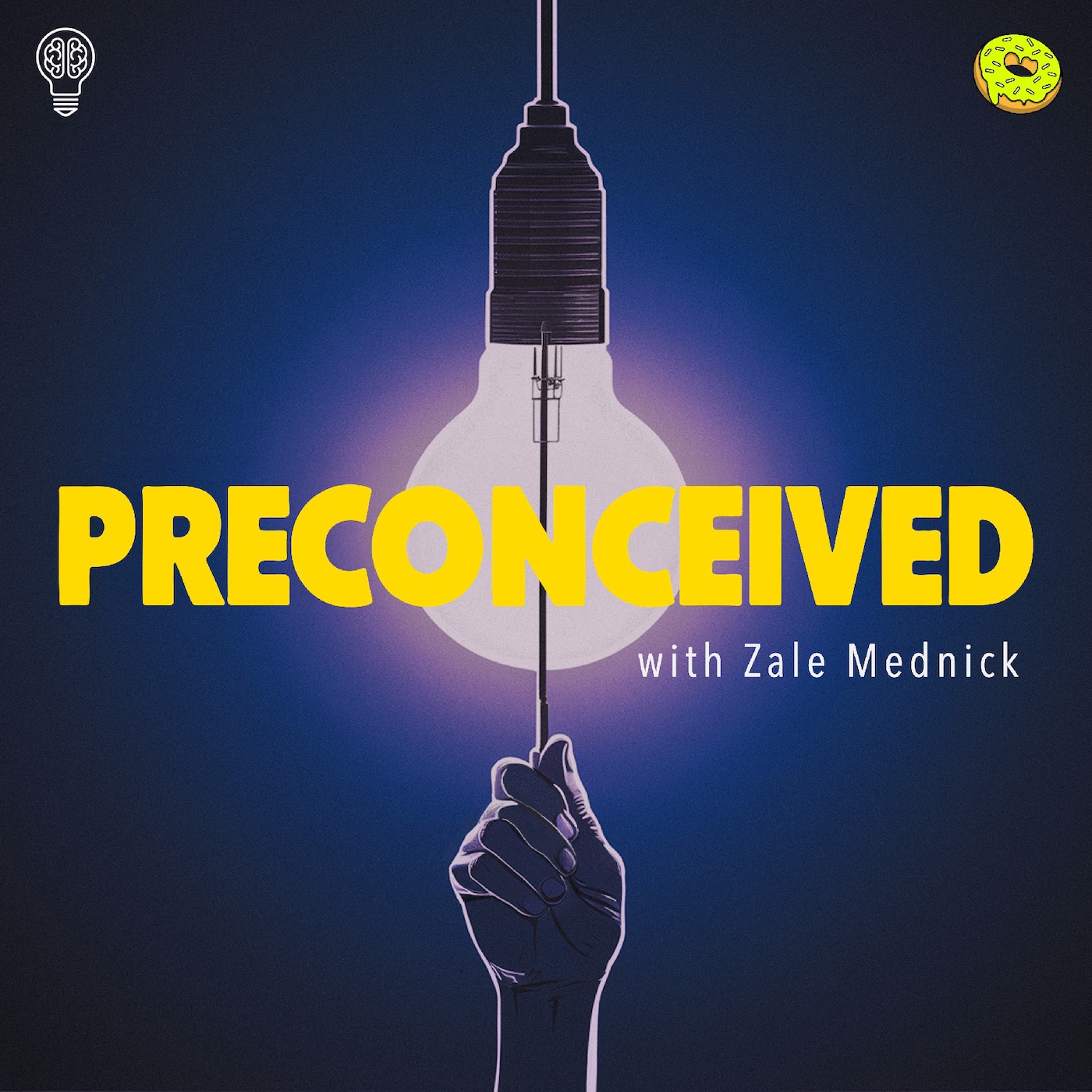
Preconceived, hosted by Zale Mednick, dives deep into the intricacies of human experience, challenging the assumptions that shape our understanding of the world. In each episode, Zale engages with leading experts, thought leaders, and individuals with unique perspectives to uncover the layers beneath societal norms and expectations. From exploring cultural phenomena to dissecting scientific breakthroughs, Preconceived invites its listeners to question their preconceptions about love, life, technology, health, history, and beyond. With a blend of curiosity and critical thinking, Zale navigates through complex topics, offering his audience a chance to gain new insights and broaden their horizons. Whether it's debunking myths, confronting biases, or simply indulging in the joy of learning something new, Preconceived is more than just a podcast; it's an invitation to view the world through a different lens. Join Zale Mednick every week on Preconceived for enlightenin
Episodes
-
319. Why We Love Superheroes: What They Tell Us About Ourselves
This episode explores why superheroes are more than disposable pop culture: they reflect our hopes and anxieties about power, morality, identity, and justice. Zale is joined by Danny Fingeroth, a comic book historian, former Marvel editor, and author of Superman on the Couch and A Marvelous Life....
-
318. What Makes a Great Actor? The Secrets Behind Incredible Performances
Most of us assume that great actors are just born with it — some natural gift that lets them inhabit a character and move us in ways we can't quite explain. But what actually goes into the performances we love? Is it raw talent, or is there a craft behind it that most of us never get to see? This...
-
317. Why Fantasy Football Becomes an Obsession (with Adam Aizer)
This episode is about why fantasy football is so addictive and why so many people love it. Adam Aizer from CBS Sports joins the podcast to talk about the fantasy football industry, what makes a good manager, and the balance between skill and luck. We also get into what fantasy football reveals...
-
316. Christopher Nolan's 'The Odyssey': Who Was Odysseus and Why Does He Still Matter?
In the wake of Christopher Nolan’s The Odyssey, there has been enormous interest in Homer’s ancient Greek epic—and in Odysseus, the hero at its center. Who was Odysseus, why has The Odyssey remained relevant for nearly 3,000 years, and what does this story have to say about human nature today? We...
-
Is God Good? Rethinking the Bible's Most Difficult Question
From a young age, many of us are brought up believing that God is the embodiment of perfection - that God is good, merciful, and reflective of the values we hold so dear in our daily lives. But on closer look, the Judaeo-Christian God that is portrayed in the Old and New Testaments can often be...
-
Preconceived is on YouTube!
Preconceived Podcast is you on YouTube @preconceivedpodcast. If you prefer watching over listening to your podcasts, you can check out all new episodes on your new and revamped YouTube channel. Be sure to subscribe at https://www.youtube.com/@preconceivedpodcast Hosted on Acast. See...
-
315. What If? The Psychology of Regret and Life's Biggest Decisions
In this episode, Zale discusses with Dr. Barry Schwartz, a renowned psychologist and author, how modern society's abundance of choices impacts our happiness, decision-making, and regret. They explore how too many options can lead to paralysis, the role of social comparison, and the importance of...
-
314. The Navy SEAL - Rethinking Mental Toughness
What really separates elite performers from everyone else? In this episode of Preconceived, Zale sits down with former Navy SEAL officer Rich Diviney to challenge the myth of the "superhuman" SEAL and explore what truly drives performance under pressure. Rich explains the difference between…
more -
313. The Truth About Cocaine
Most of us think we know cocaine — a glamorous party drug with a dark side, a scourge of the 80s, a straightforward villain in the story of addiction. But what happens behind the scenes - in the months of work and miles of travel that take the coca leaf of Central and South America to the…
more -
312. The Neuroscience of Thriving: Emotional Fitness, Social Connection & Why Your Brain Feels Off
What does it actually mean to thrive—not emotionally, but biologically? In this episode, neuroscientist Paul Zak breaks down the brain science behind emotional fitness, social connection, and the kinds of experiences that make life feel deeply engaging rather than merely comfortable. We explore...
-
311. What is Normal Penis Size? Male Sexual Performance and Anxiety
In recent years, conversations around sex have become far more attentive to women’s experiences, desires, and frustrations — and for good reason. But in the process, have we stopped talking honestly about male sexuality? In this episode, Zale sits down with sex therapist and author Chris Donaghue...
-
310. Can Science Fully Explain Consciousness?
Is human consciousness simply the product of brain activity — or does reducing human experience to biology leave something essential out? In this episode, philosopher, physician, and former clinical neuroscientist Raymond Tallis joins the show to challenge reductionist views of the mind, unpack…
more -
309. Can a Chemical Make You Moral? The Science of Oxytocin
What if our sense of right and wrong isn’t just philosophical, but biological? In this eye-opening episode, Dr. Paul Zak reveals that a single molecule—oxytocin—could hold the key to understanding trust, empathy, and virtue itself. Imagine being able to measure compassion in a blood sample or...
-
308. Is AI Coming For Your Job?
In this episode, Zale is joined by Mark McNeilly to explore the transformative power of AI, its implications for the future of work, society, and creativity, and how individuals and organizations can adapt. Which jobs are most at risk with the advent of AI? Has society at large been downplaying…
more -
Why Do People Cut Themselves?
We learn from an early age that it’s not acceptable to harm others. Many would say it’s something we don’t even need to really learn – that it’s a natural human instinct to not want to cause harm. With that perspective, it’s natural that it would be extremely challenging for people to understand...
-
307. Why Do People Deny the Holocaust? Understanding Holocaust Denialism
We know the Holocaust to be true, yet many deny it. How is it possible to deny fact? In this episode, Robert Jan van Pelt delves into the perplexing world of Holocaust denial, exploring how meticulous forensic analysis and evidence-based reasoning challenge these unfounded claims. Through...
-
306. The Art of War Explained: Sun Tzu’s Strategy in Today’s World
On this episode of Preconceived, explore the timeless principles of Sun Tzu’s The Art of War and their application in today’s military tactics and business strategies. Join us as Mark McNeely dives into how indirect approaches, restraint, and strategic character leadership shape success across...
-
305. Can You Fall In Love With AI?
Is it possible to love an AI? In this episode, we delve into the fascinating intersection of artificial intelligence and romantic relationships. Dr. Marnie Feuerman joins us to discuss the potential benefits, risks, and ethical considerations of AI in our intimate lives. Discover how AI might...
-
304. Do People Feel Guilty After Cheating?
In this episode of Preconceived, Zale explores the often misunderstood topic of infidelity, revealing why cheating is more common and psychologically complex than it appears on the surface. Joined by Dr. Dylan Selterman, a Johns Hopkins psychology professor, this discussion uncovers the...
-
What Is Life Really Like In North Korea?
There is perhaps no country in the world more perplexing and bewildering than North Korea. Considered by many as a silo shut off from the rest of the world, much of North Korea is shrouded in mystery. Unfortunately, much of that mystery involves a dictatorial regime and severe oppression of its...
-
303. Why Do People Become War Journalists - and What Does It Do To them?
In this episode of Preconceived, Zale engages with Dr. Anthony Feinstein to explore the intricate world of war journalism. They discuss the psychological hurdles faced by war correspondents, the motivations that drive them into conflict zones, and the unique challenges they encounter compared to...
-
302. Defensive Pessimism - Are There Some Benefits to Negative Thinking?
In this episode of Preconceived, Zale explores the concept of happiness and melancholy with Professor Julie Norem, a psychology expert from Wellesley College. They delve into the strategy of defensive pessimism, discussing how it can be a beneficial approach for managing anxiety and achieving...
-
301. Is Democracy Dying?
In this episode of Preconceived, Zale explores the concept of democracy and its current state in the world, particularly in the United States. He is joined by Peter Biro, a lawyer, writer, and NGO leader, who discusses the importance of not taking democracy for granted and the potential threats…
more -
300. The Wokeness Debate - Unpacking Gender Identity and Cultural Shifts
In this 300th episode of Preconceived, we dive deep into the intricate world of wokeness—a term that has sparked both fervent support and intense debate. What does it truly mean to be 'woke'? How has this cultural phenomenon reshaped our conversations around identity, free speech, and societal...
-
299. The Essence of Invention
In this episode of Preconceived, Zale sits down with Dr. Kieran Murphy, a renowned inventor and professor of radiology, to explore the essence of invention and creativity in medicine. Dr. Murphy shares his journey from medical innovations to his thoughts on the socio-economic factors that…
more -
298. Forced Fatherhood - Male Reproductive Rights
In this episode of the podcast, Zale has a discussion with Laurie Shrage about the often-overlooked topic of male reproductive rights. The conversation delves into the complexities surrounding male reproductive autonomy, contrasting it with the more widely discussed female reproductive rights....
-
297. Good Vibrations - The Neuroscience of Music
In this episode of Preconceived, Zale explores the profound impact of music on our emotions and well-being with guest Stefan Kölsch, a renowned psychologist and neuroscientist. They discuss the science behind music's ability to evoke emotions, enhance mood, and even offer therapeutic benefits....
-
296. BDSM - More Common Than You Think
In this episode of Preconceived, Zale delves into the often misunderstood world of BDSM with guest Alicia Walker, an associate professor of sociology. They explore the complexities of bondage, discipline, dominance, submission, sadism, and masochism, discussing why these practices appeal to many,...
-
Taylor Swift - In a League of Her Own
Taylor Swift is arguably the most famous person in the world – a pop star the likes of whom many of us haven’t seen in our lifetimes. Especially over the past year with the release of her latest album Midnights and her record-breaking The Eras Tour, it’s not crazy to wonder if what we are...
-
295. Achieving Elite Performance
In this episode of Preconceived, Zale interviews Dr. Cassidy Preston, a high-performance coach who works with professional athletes and surgeons. They discuss the importance of mindset, dealing with stress, and achieving high performance in high-pressure environments. Cassidy shares insights on…
more -
294. History's Famous Druggies
In this episode, Zale is joined by Sam Kelly, author of 'Human History on Drugs', to explore the complex morality surrounding drug use throughout history. They discuss the historical context of drug perception, the stigmatization of drug use, and the philosophical views on drugs. The conversation...
-
293. The Myths of Modern Love
In this episode, Zale engages with social psychologist Pamela Regan to explore the complexities of modern love, including the romantic ideal, different love styles, and the impact of societal expectations on relationships. They discuss the validity of arranged marriages, the burden of expecting…
more -
292. Titanic - A Tragedy of Hubris?
In this episode of Preconceived, Zale delves into the enduring fascination with the Titanic disaster, exploring themes of hubris, human nature, and historical myth-making. Joined by Professor Stephanie Barczewski, a specialist in modern British history, they unravel the complex narratives...
-
291. Protecting Kids in the Digital Age
In this episode, we explore the multifaceted impact of technology on modern parenting. Our discussion covers a range of topics, including the challenges of limiting technology use, which tech platforms are less harmful than others, and which facets of technology are most detrimental to childhood...
-
Christianity - Compelling Truth or Indoctrination?
With over two billion followers worldwide, Christianity is the most popular religion in the world. For some, the preconception is ‘of course Christianity is the correct religious view’, with so many people subscribing to it. For others, the preconception might be, ‘how is it possible that so many...
-
290. Born Remembering - When Kids Recall Past Lives
In this episode of Preconceived, Zale discusses the phenomenon of Past Life Memories (PLMs) with Marietta Pehlivanova, a research assistant professor at the University of Virginia's Division of Perceptual Studies. The conversation primarily focuses on children who recount having memories of past...
-
289. Genocide in Gaza? (Part 2 - An Argument in Defence Of Israel)
In this second episode of the two-part mini-series on the war in Gaza, Jeffrey Herf shares his point of view on why Israel is NOT committing genocide in Gaza. He provides a historical definition of genocide, contrasting it with the current situation, which he argues is a war rather than an act of...
-
288. Genocide in Gaza? (Part 1 - An Argument Against Israel)
In this two part mini-series of Preconceived, we explore the question of whether or not Israel's war with Gaza qualifies as a genocide. We delve into the complex and sensitive topic of genocide, focusing on the role of intent and context in its definition. Joined by Professor Omer Bartov, we...
-
Winning Survivor - A Glimpse into Reality TV
Survivor is the most iconic reality television competition of the last twenty years. And Todd Herzog, the winner of Survivor's 15th season, is one of the show's most iconic winners. Todd joins the show to shed some light on what it's really like to play Survivor, and how his life changed when he...
-
287. The Immigration Debate: The Challenges of Multiculturalism
In this episode of Preconceived, we tackle the complex issues surrounding immigration and multiculturalism. Join us as we explore the delicate balance between embracing diversity and addressing the legitimate concerns that arise from rapid cultural shifts. With insights from Professor Henk de…
more -
286. Can You Drink In Moderation? The Alcohol Debate
This episode delves into the complexities of alcohol addiction with Dr. Anna Lemke, a renowned expert in addiction medicine. This episode explores the traditional AA model, the concept of abstinence, and emerging treatment paradigms that challenge the status quo. Discover the nuances of…
more -
285. Legacy Media in the Age of Everyone's a Journalist
In this episode, Zale discusses the evolution of media with Kim Kierans, focusing on the decline of legacy media and the rise of new media platforms. They explore the implications of this shift, including the crisis in local news, the importance of transparency in journalism, and the challenges…
more -
284. The Case Against DEI
Diversity Equity and Inclusion (DEI) is a movement aimed at promoting diversity on college campuses and a variety of institutions. On the surface, Diversity, Equity, and Inclusion are all positive words; for most people at least, promoting these values is a good thing. But in the particular…
more -
283. Cutting Ties - Why Kids are Walking Away from their Parents
In increasing trend is emerging of kids deciding to cut their parents off completely. What is driving the younger generations to become estranged from their parents? Are their reasons justified as a step to better 'self-care', or does it reflect a certain selfishness and disloyalty? How can…
more -
Torture: Necessary Evil or Moral Failing?
Torture is generally thought of as a bad things - an unacceptable means to an end. But what if that end is justifiable? In many cases, torture is clearly unethical - for example when used as a means of political suppression, as a fear tactic, or for a forced confession. But what about torture in...
-
282. In the Age of Options, Why is Dating so Hard?
With the plethora of dating apps that have arrived over the last decade, one would think that it's easier to date than ever. Yet for some reason, dating has been down. Data has shown that people are finding it tougher than ever to find a romantic partner. So why is this the case? Is it a change…
more -
281. The Russian Perspective on Ukraine
For most of the Western world, the main headline of the war in Ukraine has been something along the lines of ‘Russia invades Ukraine, Putin is a war criminal, and Ukraine has been the victim of a terrible, nonsensical war’. And this may very well be accurate. But if you spoke to someone in…
more -
280. Everest
Climbing Mount Everest is one of the most extreme adventures on which a human can embark. The highest peak in the world, there is a certain mystique and allure associated with the mountain. Some seek the summit for a love of climbing, and others climb it for the glory and fame. Is there a 'right'...
-
279. What's in the Food You're Eating?
Most of us do try and eat healthy in some capacity. The majority of us are at least conscious of the fact that what we put in our bodies deeply shapes our present and future health. But even with a certain degree of health awareness, are we still in many regards doomed? Do the basic food systems...
-
The Housing Market - To Buy or To Rent?
Part of 'The American Dream' is predicated on home ownership. Conventional wisdom suggests that it is a financially sound and important decision to buy a home rather than to rent from a landlord. But is this just something we've been indoctrinated to believe, or does the math really add up to...
We're indexing this podcast's transcripts for the first time — this can take a minute or two. We'll show results as soon as they're ready.
No matches for "" in this podcast's transcripts.
No topics indexed yet for this podcast.
Loading reviews...
ABOUT THIS SHOW
Preconceived, hosted by Zale Mednick, dives deep into the intricacies of human experience, challenging the assumptions that shape our understanding of the world. In each episode, Zale engages with leading experts, thought leaders, and individuals with unique perspectives to uncover the layers beneath societal norms and expectations. From exploring cultural phenomena to dissecting scientific breakthroughs, Preconceived invites its listeners to question their preconceptions about love, life, technology, health, history, and beyond.
With a blend of curiosity and critical thinking, Zale navigates through complex topics, offering his audience a chance to gain new insights and broaden their horizons. Whether it's debunking myths, confronting biases, or simply indulging in the joy of learning something new, Preconceived is more than just a podcast; it's an invitation to view the world through a different lens.
Join Zale Mednick every week on Preconceived for enlightenin
HOSTED BY
Snack Labs
CATEGORIES
Loading similar podcasts...
Frequently Asked Questions
How many episodes does Preconceived have?
Preconceived currently has 370 episodes available on PodParley. New episodes are automatically indexed when they're published to the podcast feed.
What is Preconceived about?
Preconceived, hosted by Zale Mednick, dives deep into the intricacies of human experience, challenging the assumptions that shape our understanding of the world. In each episode, Zale engages with leading experts, thought leaders, and individuals with unique perspectives to uncover the layers...
How often does Preconceived release new episodes?
Preconceived publishes regularly with 370 episodes available. Check the episode list for the typical release schedule.
Where can I listen to Preconceived?
You can listen to Preconceived on PodParley by clicking any episode. We provide an embedded audio player for direct listening, and you can also subscribe via your preferred podcast app using the RSS feed.
Who hosts Preconceived?
Preconceived is created and hosted by Snack Labs.
URL copied to clipboard!