
PODCAST · society
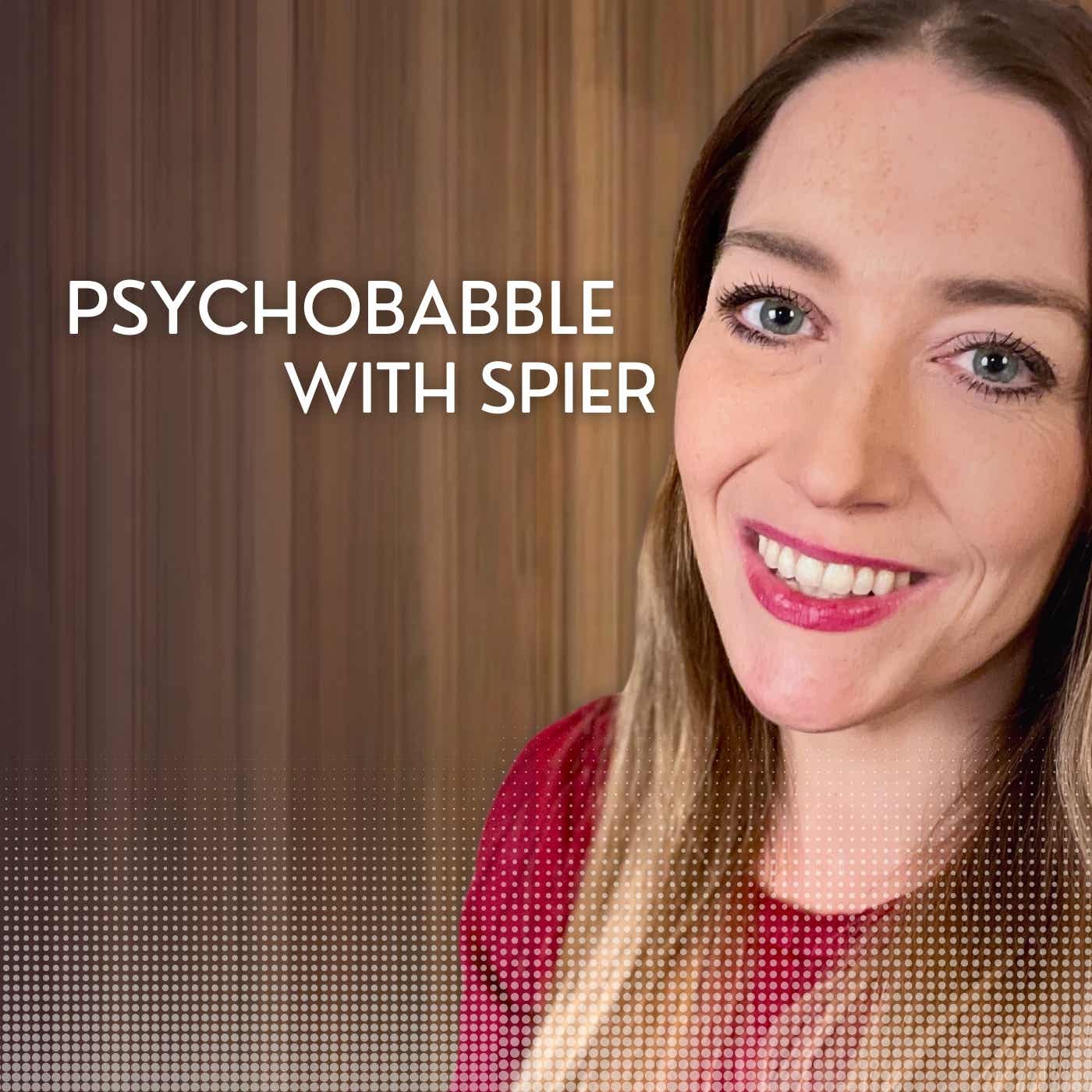
Psychobabble
by Hannah Spier, MD
Psychiatrist analyzing how cultural trends and modern therapy incentivize dysfunction. hannahspier.substack.com
-
73
#89. Why Powerful Men Fall for Borderline Women
Evolutionary psychologist Edward Dutton joins me to discuss his new book Borderline Genius, Borderline Insane and we ask the question: have women with borderline traits had an outsized influence on powerful men, culture and history? We get into the unstable self, mirroring and attachment, whether borderline manipulation is conscious, the overlap between BPD and vulnerable narcissism, and the increasingly complicated relationship between borderline traits, autism and ADHD. We also debate trauma versus temperament, why certain men are drawn to borderline women, the relationship between attractiveness and instability, and whether modern culture is removing the guardrails that once helped people regulate difficult temperaments. Edward Dutton / The Jolly Heretic: https://www.jollyheretic.com/ Borderline Genius, Borderline Insane: https://us.amazon.com/Borderline-Genius-Insane-Understanding-Personality-ebook/dp/B0HGGGWYGP
-
72
#88. Their Surrogate Refused to Abort. Now They're Suing Her.
McKenna West agreed to carry a baby for a California couple for around $60,000. When the baby was diagnosed with a serious heart condition, the genetic parents requested an abortion. West refused, moved to Texas, gave birth and is now being sued for breach of contract. In this episode, I look at what this case reveals about commercial surrogacy. I also bring in The Handmaid's Tale because the show is a pure dramatization of the feminist id and spends six seasons asking us to recoil at a world where women's reproductive bodies are used to produce children for other people. More powerful people. At the expense of women. The comparison becomes uncomfortable when we ask what really changes once the woman is paid, signs a contract and then changes her mind. What happens when two women both claim what we have told them are their reproductive rights but only one of them can get what she wants? What does this reveal about the nature of feminism? For more Psychobabble and ad-free episode, subscribe on Substack: https://substack.com/@UCZlHNlu2CVjcPy... LIVE STREAM WITH JANICE FIAMENGO: 14th of September at noon ET.
-
71
#87. The New Feminist Buzzwords You Need to Know
Hannah is joined by returning guests: Janice Fiamengo, author of "The Goddess That Failed" Tom Golden, host of the "Men Are Good" podcast, and Jim Nuzzo author of "The Nuzzo Letter," whose research and writing on men, gender and public policy has featured regularly on Psychobabble. Their work and links are included below. In this episode, the four investigate a new crop of feminist buzzwords — and the much more serious ideas hiding behind them. From himpathy and medical misogyny to vicarious violence and leg harrassment and gender washing, many of these terms are presented as ways of describing injustice. But what happens when subjective feelings of grievance are turned into categories of harm. Some of the examples are easy to laugh at but others are already moving from academia into journalism, government policy and legislation. Announcement: Hannah will be speaking at the **Parental Alienation Study Group conference in Australia this October**. Details here: https://eecw.eventsair.com/pasg2026/ Guests: Janice Fiamengo: https://fiamengofile.substack.com/ Jim Nuzzo: https://jameslnuzzo.substack.com/ Tom Golden: https://menaregood.substack.com/ Please like, subscribe and share the episode if you find Psychobabble valuable!
-
70
#86. When "Silent Suffering" Turns Into Manipulation
In this episode, I examine the growing Quiet BPD narrative and the behaviors being described as internalized—from withdrawing and ghosting to relationship tests, reckless behavior and emotional escalation. I ask what happens when psychiatry describes a disorder entirely from the perspective of the person experiencing the emotions, while overlooking the effect those behaviors have on partners, parents, friends and colleagues.
-
69
#85. Why We Want Lindsay Clancy to Be the Victim
The Lindsay Clancy case has become a story about postpartum psychosis, psychiatric medication and a healthcare system that supposedly failed a struggling mother. But does the evidence actually support that story? In this episode, psychiatrist Hannah Spier examines the psychiatric arguments at the center of the ongoing Lindsay Clancy trial: what an acute psychotic break actually looks like, the unusual timing of the alleged postpartum psychosis, the claim of an undiagnosed bipolar disorder, the long list of psychiatric medications Clancy was prescribed, and the argument that she could appear completely normal while experiencing severe psychosis. But the case raises a larger question. Why are we so quick to search for an external explanation when a mother commits an horrific act? At what point does psychiatric explanation begin to erase moral agency? This episode discusses disturbing material involving the deaths of children. Subscribe for more Psychobabble with Spier! Read Psychobabble and become a Psychobabble Insider on Substack for articles, sources, exclusive lives and access to the full Psychobabble library. https://substack.com/@psychobabblewithspier
-
68
#84. Why Women Are Really Angry at Voice Memo Guy
Check out our sponsor: Get 15% off OneSkin with the code HANNAH at https://www.oneskin.co/HANNAH A viral voice memo has everyone arguing about timing, pressure and consent. But the real issue is something else entirely. It exposes how ridiculous the conversation around sex and dating has become.
-
67
#83. How We Trained Girls For Conflict
Sponsor: Looki L1 is an AI Life Memory Camera that helps you stay present now and return to the day later. Learn more: https://www.c2go.cc/r/HannahSpierMD | code: Hannah. What ordinary moment would you want to relive? Girls were taught to speak up, resist influence, reject criticism and never change for anyone. But what happens when every part of culture—film, advertising, social media, schools and psychology—pushes in the same direction? This episode examines how efforts to make girls tougher may also have discouraged compromise, accommodation and agreeableness, leaving many women trained to approach relationships as power struggles rather than cooperation. Want to watch the episodes ad-free? Upgrade on Substack and get every epsiode and other benefits like Google Meets and Exclusive Live Videos: https://substack.com/@psychobabblewit...
-
66
#82. The Dark Psychology Behind "High Value" Women
"High-value woman" dating advice promises better men, stronger boundaries and a softer life.A new manifestation of feminism. But much of it is really a guide to entitlement, strategic detachment and low reciprocity—traits that make lasting relationships almost impossible. In this episode, psychiatrist Hannah Spier explains how modern dating coaches rebrand narcissistic behavior as femininity, confidence and self-worth.
-
65
#81. How Women Use Mental Health to Avoid Growing Up
How did ordinary adulthood become evidence of psychiatric suffering? What's the real attraction? In this episode, I react to young women presenting normal functioning as "high-functioning depression," insisting that invisible distress cannot be questioned, and using suicidal language to make disagreement morally dangerous. I explain how mental-health labels can turn basic responsibilities into acts of bravery, confer moral authority and eventually become leverage over everyone around them. Do you think mental-health awareness has gone too far—or are these videos helping people feel less alone? Let me know in the comments. Please like, subscribe and share the episode! Head on over to Substack and upgrade to watch the episodes ad-free! https://hannahspier.substack.com/
-
64
80. Why So Many Young Women Suddenly Have "Alters"
Dissociation is a real and measurable psychological phenomenon—but does that validate dissociative identity disorder as it is commonly portrayed online and diagnosed in clinical practice? In this episode, psychiatrist Hannah Spier examines the evidence behind DID, the limitations of self-reported amnesia and diagnostic interviews, and the difficulty of distinguishing separate "identities" from shifting emotional states, trauma responses, borderline personality traits, and identity disturbance. Finally, Hannah looks at the history of multiple personality disorder—from mesmerism and hypnosis to *The Three Faces of Eve*, *Sybil*, *Split*, and TikTok—and offers advice for parents whose children return from therapy with a new DID diagnosis. Read Hannah's articles and join exclusive live discussions on Substack! https://substack.com/@psychobabblewithspier
-
63
#79. Why We Pretend Women Aren't Violent
SPONSOR: Get 15% off OneSkin with the code HANNAH at https://www.oneskin.co/HANNAH In this episode, we look at the Mackenzie Shirilla case as a starting point for a broader question: how do we understand female physical violence? The discussion moves from the details of the case — including Shirilla's behavior before and after the crash, the public reaction, and the question of remorse — into a wider examination of how female aggression is often framed culturally. We tend to associate men with physical violence and women with relational aggression, but the evidence around intimate partner violence, family violence, elder abuse, and child homicide complicates that picture. Chapters 00:00 — Are women less physically violent? 00:38 — The Mackenzie Shirilla case 03:41 — Cluster B traits and interpersonal dominance 08:56 — Female sociopathy and violent women 09:10 — The myth of domestic violence as male-only 09:26 — Intimate partner violence data 10:12 — Why female violence is often framed as self-defense 10:41 — Why women report using physical aggression 10:56 — Gender symmetry in older violence studies 11:35 — Teen boys and dating violence victimization 11:49 — The problem with using general crime statistics 12:22 — Violence in female-dominated settings 12:37 — Elder abuse and female perpetrators 12:50 — Mothers, filicide, and neonaticide 13:41 — How society interprets male vs female violence
-
62
#78. Why Men are GIving Up on Modern Women
Modern dating has become increasingly expensive for men — not only financially, but emotionally, socially, and psychologically. In this episode, I look at the inflation of chivalry: the way ordinary courtship has turned into elaborate performance, "princess treatment," promposals and endless proof of male devotion. What is the problem with this? We also look at the rise of "the ick," and what that signifies. Chapters: 00:40 The Cost of Modern Dating for Men 02:09 No Effort, No Reciprocity 03:00 Promposals and Princess Treatment 04:22 What Chivalry Was Supposed to Be 05:27 The Rise of "The Ick" 06:17 The Train Ticket Example 07:01 When Men Stop Performing 08:22 Women Want Permanent Courtship 09:00 Male Vulnerability and the Collapse of Empathy 10:11 Consuming Relationships Instead of Building Them 10:38 Fragile Narcissism and Modern Intimacy
-
61
#77. The Glorification of Feminist Violence
Get 15% off OneSkin with the code HANNAH at https://www.oneskin.co/HANNAH #oneskinpod On June 3, 1968, Valerie Solanas walked into Andy Warhol's studio and shot him. Decades later, she has become a feminist icon, her SCUM Manifesto is taught in universities, and Hollywood celebrated her life in a major film that is now returning to theaters in a new restoration. How did an attempted murderer become a cultural hero? In this episode I'm joined by Janice Fiamengo, Tom Golden, and Jim Nuzzo to explore one of the most striking double standards in modern culture: why female violence is so often explained, romanticized, and even celebrated, while male violence is treated as evidence of innate evil. Follow them here: Janice Fiamengo: https://substack.com/@fiamengofile James Nuzzo: https://substack.com/@jameslnuzzo?utm_source=global-search 🔴 Tonight: Live Google Meet for paid subscribers: https://hannahspier.substack.com/ Tonight at 3:00 PM Eastern I'll be hosting our exclusive monthly Google Meet for paid subscribers. We'll be discussing fathers, masculinity, and what is happening to men in modern society, with plenty of time for questions and discussion. If you'd like to join, upgrade now. You'll immediately gain access to the paid subscriber chat, where the Google Meet link has already been posted. I'll also send an email with the meeting link to all paid subscribers before we go live. I hope to see many of you there. 00:00 Valerie Solanas and the Attempted Murder of Andy Warhol 01:06 Introducing the Panel 01:37 Why Is Valerie Solanas Being Celebrated? 05:16 Hollywood's Romanticization of Female Violence 11:48 The SCUM Manifesto and Feminist History 17:00 Did Feminism Embrace Valerie Solanas? 22:49 Was Valerie Solanas Mentally Ill? 25:15 Why Society Excuses Female Violence 30:01 Feminist Utopias and Anti-Male Ideology 34:17 Is Feminism a Public Health Problem? 36:33 Female Violence and the Double Standard 40:35 Why We Don't Excuse Violent Men 42:29 Gynocentrism and Cultural Bias 46:39 Protection vs Special Treatment 49:00 Why We Ignore Violence by Women 52:00 Final Thoughts
-
60
76. Why Therapy Protects the Pathological Female
Most treatments for Borderline Personality Disorder focus on emotional dysregulation. The goal is to reduce distress, self-harm, anxiety, and crises. But that misses the mark. In this episode, I argue that modern psychiatry has adopted a model of Borderline Personality Disorder that is incomplete. By focusing almost exclusively on suffering, it neglects the maladaptive strategies harm others. I also examine the striking contrast between how psychiatry approaches Borderline Personality Disorder—predominantly diagnosed in women—and Antisocial Personality Disorder, diagnosed predominantly in men. Why do we define one disorder primarily by the patient's suffering and the other by the harm inflicted on others? And what has this double standard done to treatment? In the second half of the episode I outline what I believe a more realistic treatment model would look like. If you've ever wondered why Borderline Personality Disorder remains so difficult to treat, this episode offers a very different way of thinking about the problem.
-
59
#72. Is Feminism an Intrasexual Competitive Strategy? | Dr Dani Sulikowski
Is feminism really a movement for equality or could it be something else entirely? Evolutionary psychologist Dr Dani Sulikowski joins me to discuss if feminism may be best understood as a form of intrasexual competition between women. Let me know what you think in the comments. Follow Dr. Dani Sulikowski: https://x.com/DrDaniS https://substack.com/@drdanis CHAPTERS: 01:05 Feminism as a form of female competition 02:02 How feminism suppresses female reproductive success 03:07 The attack on attractiveness and femininity 04:22 Body positivity and competitive strategies 04:39 "Feminism was always intersexual competition" 05:05 Was feminism ever about motherhood? 06:09 Ancient Rome and declining birth rates 07:43 My challenge: is this really about resentment? 09:40 Why feminism targets desirable men 12:33 "It's not suicidal empathy, it's homicidal virtue signalling" 21:56 Feminist mothers and transing children 29:35 Activism, status, and moral superiority 32:32 Competitive strategies vs evolutionary adaptations 33:35 The attack on masculinity and femininity 39:15 Does this theory remove female agency? 58:30 Final reflections 01:00:32 "That wasn't the answer I was hoping for"
-
58
#71. The 3 Mechanisms Behind Female Grievance
In this episode, I look at the mechanisms behind female grievance culture: externalizing blame, turning victimhood into identity, and rewarding antagonism through therapy-speak and social media. I argue that when ordinary disappointment is constantly translated into harm, trauma, invalidation, gaslighting or exploitation, this prevents maturation. When they are trained to scan for injury, keep score, and treat gratitude or accommodation as weakness, relationships are doomed to fail. Want to listen ad-free? Go to Substack: https://hannahspier.substack.com/p/71-the-3-mechanisms-behind-female 00:32 The mechanisms behind female grievance culture 01:31 Marriage, fertility and adult adjustment 02:26 How motherhood became framed as burden 02:56 Mechanism 1: Externalizing blame 04:27 Mechanism 2: Victimhood and suspicion 05:13 Mental load and the grievance lens 06:37 Are fathers really doing less? 07:28 Marriage as a zero-sum game 08:12 The burdens fathers carry 09:20 Interpersonal victimhood and personality 10:23 When grievance becomes identity 11:02 Mechanism 3: Rewarded antagonism 12:05 Why suspicion is treated as intelligence 13:32 Female venting, validation and social media 14:47 Therapy-speak and the female psyche 16:36 The three mechanisms together 17:28 What feminist wellbeing research misses
-
57
#70. How Feminism Changed Women's Psychological Makeup
For decades, feminist literature has claimed that feminist identification is associated with better psychological well-being in women. But what exactly was being measured and did those measures tell us anything serious about women's adjustment to adult life? In this episode, I look at the gap between self-reported empowerment and broader indicators of functioning: marriage, fertility, divorce, emotional regulation, and the rise of late mental-health labels among adult women. I also trace how feminist ideas moved from academia into popular psychology, advertising, music, television, and social media , shaping how women were taught to interpret frustration, dependence, men, marriage, and motherhood. Chapters: 00:00 Feminism and female psychological health 00:40 What the studies actually measured 02:14 Assertiveness, empowerment, and anger 04:02 Functioning versus feeling empowered 05:17 The indicators of women's adjustment to adult life 06:29 Marriage, fertility, divorce, and mental-health labels 08:53 The feminist narrative push 09:51 Early feminist literature and marriage as exploitation 10:49 Advertising, independence, and female self-possession 11:32 Media portrayals of men, fathers, and marriage 13:35 Sisterhood, resentment, and female loyalty 15:28 Music, ridicule, and the female psyche 16:33 Why these messages reach girls early 17:06 The influence of feminist academia 18:48 Popular psychology and female grievance 19:32 From pendulum to freight train 20:11 Modern feminism, 4B, and decentering men 21:43 Social media and the divorce reflex 22:09 Grievance as a psychological orientation 22:50 What comes next: the psychological mechanisms Want to listen ad-free? Subscribe on Substack and get the epsiode straight to you inbox without any ads! https://hannahspier.substack.com/
-
56
#69. Preventing the Pathological Female and the Role Feminism Played
Prevention matters because once these patterns are learned, they are extremely difficult to undo. I am not convinced we can confidently call them curable. This is a practical look at what could make a difference, first at the individual-level, and then at a societal level. Listen to ad-free epsiodes of Psychobabble by subscribing on Substack! Chapters: 00:00 The Missing Piece: Prevention 00:28 The Temperament Foundation 02:10 How it Develops 05:35 Where Parents Lose Ground 06:53 Containing Neuroticism 11:30 Training Agreeableness 13:14 Culture vs Parenting 16:06 The Danger Effects of Peer Saturation 17:19 The Role of Social Norms and External Constraints 18:11 Cultural Shift: From Restraint to Expression 21:13 Feminism's Role in Shaping Behavior Norms 23:14 A Practical Example 26:06 Preserving Innocence and Delaying Instrumentalization 27:29 What Needs to Change (Family, Culture, Mental Health Framing) 30:25 Indulgence vs Adversity (Why Traits Are Increasing Today) 31:37 Final Framework: Containment vs Expression
-
55
#68. This Therapy Teaches You How To Manipulate
At first, Dialectical Behavioural Therapy sounds like good therapy: calm tone, validation, "skills," the language of care. But if you look closely, something very different is happening. In this video, I break down a real clip of a DBT therapist and show how what is presented as "help" can, in practice, reinforce the very behaviors it claims to treat. We'll go beyond the surface, beyond self-report, beyond symptom reduction and look at what these interventions actually do in real relationships. Because the question isn't whether DBT reduces self-harm in the short term. It does. The real question is: what is it training instead? ------- Want to listen ad-free? Head over to the Psychobabble Substack and subscribe to receive the episodes ad-free straight to your email: https://substack.com/@psychobabblewithspier --------
-
54
#67. Borderline vs Vulnerable Narcissism: A Diagnostic Walk-Through of Taylor Frankie Paul
What if borderline and vulnerable narcissism are the same traits—just executed differently? Using a real case, I break down the strategy behind. Want ad-free episodes? Go to the Psychobabble Substack and subscribe! https://hannahspier.substack.com/
We're indexing this podcast's transcripts for the first time — this can take a minute or two. We'll show results as soon as they're ready.
No matches for "" in this podcast's transcripts.
No topics indexed yet for this podcast.
Loading reviews...
Loading similar podcasts...
Frequently Asked Questions
How many episodes does Psychobabble have?
Psychobabble currently has 20 episodes available on PodParley. New episodes are automatically indexed when they're published to the podcast feed.
What is Psychobabble about?
Psychiatrist analyzing how cultural trends and modern therapy incentivize dysfunction. hannahspier.substack.com
How often does Psychobabble release new episodes?
Psychobabble has 20 episodes. Check the episode list to see recent publication dates and frequency.
Where can I listen to Psychobabble?
You can listen to Psychobabble on PodParley by clicking any episode. We provide an embedded audio player for direct listening, and you can also subscribe via your preferred podcast app using the RSS feed.
Who hosts Psychobabble?
Psychobabble is created and hosted by Hannah Spier, MD.
URL copied to clipboard!