
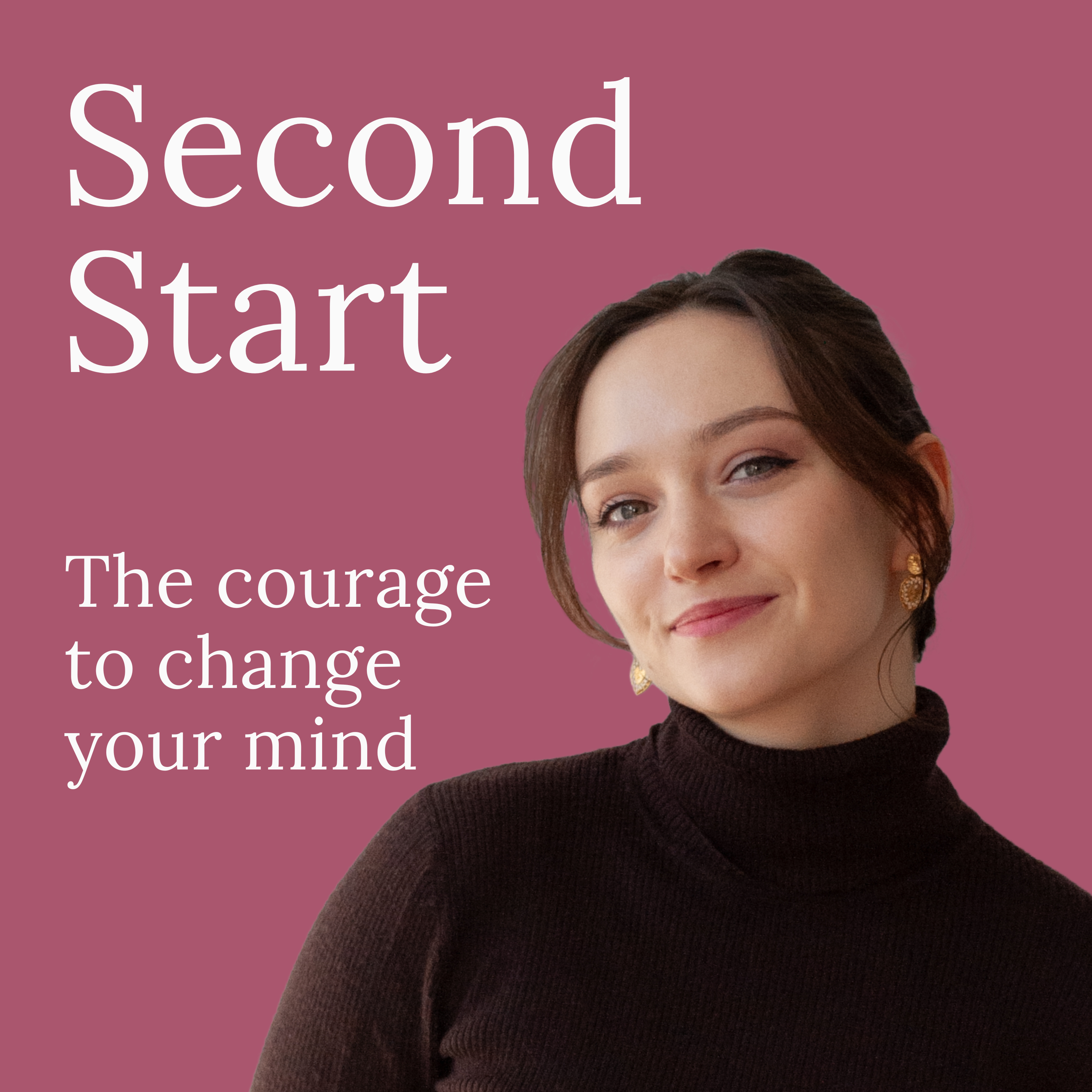
PODCAST · health
Second Start
by Tennessee Le Du
Second Start combines personal stories of change with expert perspectives from psychology, health, and beyond, exploring new ways to understand ourselves and others, and to find the courage to change our minds. This podcast goes beyond surface-level self-help to explore, with nuance, the science, the stories, and the practices that can help people start again.
-
5
3. The Psilocybin Question
A solo episode exploring psilocybin through two different bodies of research: Michael Pollan's How to Change Your Mind (2018), which gathers a wide range of what was known at the time about psychedelic-assisted therapy, and a 2023 study by Jules Evans and colleagues on something the trials don't usually cover, namely the difficulties some people report after psychedelic use, sometimes long after the drug itself has worn off. Rather than trying to settle the tension between these two accounts, the episode takes the time to look at what each is, what it can and cannot tell us, and what remains to be figured out.Support : if you need to talk, the Samaritans are free 24/7 on 116 123 (UK), or email [email protected] - You can also text SHOUT to 85258. Outside the UK : findahelpline.com.Sources:Pollan, M. (2018). How to Change Your Mind. Penguin. https://www.penguin.co.uk/books/303866/how-to-change-your-mind-by-pollan-michael/9780141985138Evans, J., Robinson, O. C., et al. (2023). "Extended difficulties following the use of psychedelic drugs: A mixed methods study." PLOS ONE, 18(10): e0293349. https://doi.org/10.1371/journal.pone.0293349Lyons, T., Carhart-Harris, R. L., et al. (2026). "Human brain changes after first psilocybin use." Nature Communications, 17: 3977. https://doi.org/10.1038/s41467-026-71962-3Davis, A. K., et al. (2025). "Five-year outcomes of psilocybin-assisted therapy for Major Depressive Disorder." Journal of Psychedelic Studies. https://doi.org/10.1556/2054.2025.00461Ellis, R. J., et al. (2025). "Long-term outcomes of single-dose psilocybin for US military Veterans with severe TRD: 12-month data." Journal of Affective Disorders. https://www.sciencedirect.com/science/article/abs/pii/S0165032725010973A related Instagram post, on the comparison between brain scans of experienced meditators and people on psilocybin (relevant to the brain section starting at 5:10): https://instagram.com/p/DYDCTnWlzWq/?img_index=1One clarification on the recent brain study: The authors describe the dramatic acute brain changes as "largely absent" one month after the dose, but with one exception. A measure called "brain network modularity" did persist, and the people in whom this change was strongest also saw the biggest well-being increase. So the kind of cross-network communication Pollan describes does seem to persist, in this one specific form, at the one-month mark.Second Start is the podcast that welcomes stories of change and the science of starting again. secondstartpodcast.com.
-
4
2. Conditioning of Shame
In this first solo episode, I talk about a book: Perfect Pain / Perfect Shame: A Journey into Radical Presence, by the psychologist Jerry Duvinsky.Drawing on the book, I am talking about what shame really is, how it seeds itself in childhood, through what is said and through what is not said and done. And the paradox, which is that trying to control or eliminate shame reinforces it.Along the way, the work of neuropsychologist Allan Schore on how shame is physiologically imprinted in early attachment, the cumulative weight of small messages over a lifetime, and the surprising forms shame can take in adulthood.📖 Book referenced:Perfect Pain / Perfect Shame: A Journey into Radical Presence, Jerry Duvinsky, PhD (2017, self-published)
-
3
1. Voices & Mindfulness with Amy Law
Amy went through addiction, an abusive relationship, and was diagnosed with paranoid schizophrenia, hearing voices in Cantonese telling her to end her life. After waking from a coma, she decided to live differently. A leaflet for Reiki in a mental health clinic opened a door. The work that followed, daily meditation, therapy, and discipline, that's what built the change.Today, Amy is a certified mindfulness teacher in London, helping others find the peace she fought so hard to find herself.📖 Books & references mentioned:"The Body Keeps the Score" — Bessel van der KolkMindfulness-Based Stress Reduction (MBSR) — a programme created by Jon Kabat-ZinnLoving-kindness meditation (mettā)🧘 About Amy: Amy is a mindfulness teacher based in Islington, London. She trained with the Mindfulness Association (UK) and teaches free 8-week mindfulness courses through The Stress Project, a wellbeing charity run by the Holloway Neighbourhood Group. She also offers private and corporate sessions. 🌐 The Stress Project: https://www.stressproject.org.uk/mindfulness.html 📩 Contact Amy: [email protected]
-
2
Trailer: Welcome to Second Start
A new podcast about the courage to change your mind.Second Start is where personal stories of courage meet expert perspectives from psychology, health, and beyond. Every episode is a real conversation, filmed in person in London, about what it really takes to understand ourselves and others, ask better questions, and start again.New episodes coming soon.
We're indexing this podcast's transcripts for the first time — this can take a minute or two. We'll show results as soon as they're ready.
No matches for "" in this podcast's transcripts.
No topics indexed yet for this podcast.
Loading reviews...
ABOUT THIS SHOW
Second Start combines personal stories of change with expert perspectives from psychology, health, and beyond, exploring new ways to understand ourselves and others, and to find the courage to change our minds. This podcast goes beyond surface-level self-help to explore, with nuance, the science, the stories, and the practices that can help people start again.
HOSTED BY
Tennessee Le Du
Loading similar podcasts...
Frequently Asked Questions
How many episodes does Second Start have?
Second Start currently has 4 episodes available on PodParley. New episodes are automatically indexed when they're published to the podcast feed.
What is Second Start about?
Second Start combines personal stories of change with expert perspectives from psychology, health, and beyond, exploring new ways to understand ourselves and others, and to find the courage to change our minds. This podcast goes beyond surface-level self-help to explore, with nuance, the science,...
How often does Second Start release new episodes?
Second Start has 4 episodes. Check the episode list to see recent publication dates and frequency.
Where can I listen to Second Start?
You can listen to Second Start on PodParley by clicking any episode. We provide an embedded audio player for direct listening, and you can also subscribe via your preferred podcast app using the RSS feed.
Who hosts Second Start?
Second Start is created and hosted by Tennessee Le Du.
URL copied to clipboard!