
PODCAST · religion
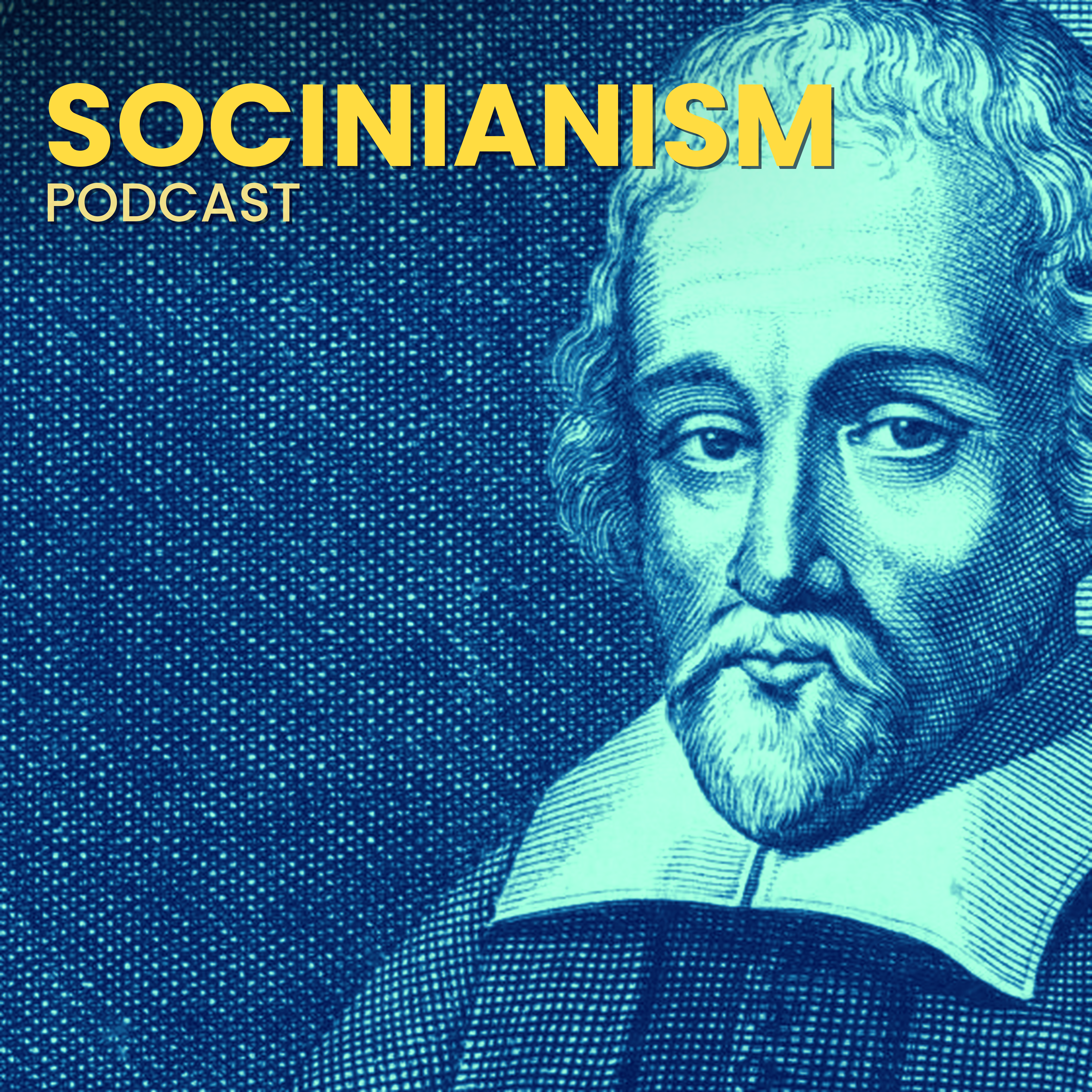
Socinianism Podcast
by Marcin Poholski
A podcast exploring Socinianism – a 16th-century theological and philosophical movement founded by Fausto Sozzini that critically examines core doctrines such as the Trinity, original sin, and predestination.
-
43
#43 - "When the Holy Spirit 'Said': Acts 13:2 and the Voice That Guides
Acts 13:2 — "The Holy Spirit said..." — has been a touchstone in debates about the personhood of the Holy Spirit and the nature of divine speech. This episode begins a close reading of that verse and its history: how early Christians, medieval scholastics, and Reformers heard a voice directing mission, and how that voice later became the battleground between Trinitarians and the Polish Brethren. Expect textual detail, patristic and Reformation witnesses, and the precise lines of argument that made Acts 13:2 so central to questions about agency, personhood, and how God speaks.
-
42
#42 - Luke 2:52 — Why Socini Emphasised Jesus' Human Growth, Not Divine Pre‑existence
Luke 2:52 says simply that Jesus "increased in wisdom and stature, and in favor with God and man." For orthodox theology that phrase sits easily beside the doctrine of the Son's eternal pre‑existence; for the Socinians of the sixteenth and seventeenth centuries it became a hinge. This episode begins by reading that verse and tracing how both classical orthodoxy and the Socinian school understood its force—showing the historical debate, the theological stakes, and why the Racovian circle put human growth at the centre of its Christology.
-
41
#41 - "Call No Man Father": Socinus, Clerical Titles, and the Fight Over Religious Authority
A close reading of Matthew 23:9 that changed how one early modern movement thought about clergy, titles, and power. We trace the Jewish and patristic background of the phrase, the rise of clerical honorifics in medieval Europe, and the particular concerns of the Polish Brethren and Fausto Socinus. This episode sets the historical stage for Socinian exegesis of "Call no man father" and explains why a single line from Jesus came to threaten centuries of ecclesiastical practice.
-
40
#40 - "Born of a Woman": How Galatians 4:4 Became a Test Case for Christ's Origin
Paul's terse line—"born of a woman"—has carried enormous theological freight. Traditionally read as proof that the eternal Son entered history, it shaped doctrines from Nicaea to Calvin. Yet Socinians read it in a radically different key: a claim about human birth and legal status, not eternal pre-existence. This episode opens the debate, tracing the orthodox case for pre-existence, divine Sonship, and the legal implications of "born under the law," setting the stage for Socinian reinterpretation.
-
39
#39 - The Sympathetic Priest: Hebrews 4:15 and the Orthodox Tradition
Hebrews 4:15 — "we do not have a high priest who cannot sympathize..." — became a touchstone for how Christians understand who Jesus is and what his suffering accomplishes. This episode examines how the historic Trinitarian tradition read that verse: as proof that the divine Son truly became human, felt our temptations, and intercedes for us as eternal high priest. We trace the verse through the Fathers, medieval theologians, and the Reformers, showing the theological logic that tied sympathy, priesthood, and atonement together — and why that logic set the stage for later Socinian critique.
-
38
#38 - "I Came to Fulfil": How Matthew 5:17 Became Proof of Divine Authority
Matthew 5:17 contains one of the most contested phrases in Christian history: "I have not come to abolish the law but to fulfil it." Traditionally read as proof that Jesus is divine lawgiver and the consummation of prophecy, this verse was read very differently by Fausto Socinus and the Polish Brethren. This episode begins by laying out the orthodox case — the scriptural web, the patristic and Reformation readings, and the doctrinal stakes — so you can see precisely what Socinians were arguing against.
-
37
#37 - Becoming All Things: 1 Corinthians 9:19–23 and the Art of Persuasion
Paul’s famous claim “I have become all things to all people” has been read for centuries as a pattern for mission, moral flexibility, or even theological compromise. This episode reconstructs how the verse was received from the Fathers through the Reformers and into the early modern missionary age — the background against which Fausto Socini would later stake a radical claim for persuasion over coercion. Expect close attention to Paul’s immediate context in Corinth, how key interpreters understood the language of “slave” and “becoming all things,” and why this passage mattered for debates about conscience, conversion, and the use of cultural accommodation.
-
36
#36 - The Berean Test: How Socini Read Acts 17:11
Acts 17:11 describes the Bereans as "noble" because they examined Paul's teaching against the Scriptures. Socinian writers seized that single sentence as a hermeneutical key: scripture must be examined by reason, not accepted on ecclesiastical authority. This episode begins a close reading of Acts 17:11 as Socinians read it—its biblical context, its reception in early and Reformation traditions, and why the Polish Brethren and the Racovian Academy made the Berean model central to their method of scriptural inquiry.
-
35
#35 - "Tell Him His Fault": Matthew 18:15 Through Socinian Eyes
Matthew 18:15—"If your brother sins against you, go and tell him his fault..."—has shaped how churches correct and exclude their members for nearly two millennia. This episode digs into the historical backdrop that made that verse a locus of ecclesiastical power: Jewish practice, the early Fathers, medieval canon law, and Reformation formulations from Calvin to the Polish Brethren. We trace how orthodox teachers read Matthew 18 as a warrant for binding and loosing, penance, and sometimes coercive discipline — and set the stage for the radical re-reading offered by Fausto Sozzini and the Socinians. Expect careful primary-source attention and vivid historical detail as we prepare to enter the Socinian interpretive method.
-
34
#34 - Gentle Disputation: How 2 Timothy 2:24–25 Shaped Socinian Controversy
A close reading of 2 Timothy 2:24–25 and its role inside Socinian pastoral practice. We trace how Faustus Socinus and the Polish Brethren turned Paul's counsel—"the Lord's servant must not be quarrelsome but kind"—into a systematic method of calm, rational disputation and a principled stand against coercion. This episode situates that method in its seventeenth‑century controversies and shows why a single Pauline paragraph became a touchstone for theology, pedagogy, and religious freedom.
-
33
#33 - Your Word a Lamp: Psalm 119:105 and the Socinian Balance of Scripture and Reason
Psalm 119:105 — "Your word is a lamp to my feet and a light to my path" — has been claimed by many as the foundational image for how Christians should read the Bible. This episode traces how the verse functioned in patristic, medieval, and Reformation theology, and how it came to be a flashpoint for the Polish Brethren and Fausto Sozzini. We set the stage for the Socinian hermeneutic: a steadfast reliance on Scripture coupled with a rigorous appeal to reason.
-
32
#32 - John 1:1 — The Word as God's Self‑Expression, Not a Co‑equal Person
John 1:1 has been called the battleground of Christian identity. Orthodox interpreters read "the Word was God" as proof that Jesus is the second person of a tri‑personal God. Faustus Socinus and the Polish Brethren read the same Greek and came to a radically different conclusion: the Logos is God's self‑expression or divine attribute, not a distinct, co‑equal person. This episode reconstructs the long history behind that debate — from Philo and the early Fathers to Athanasius and Augustine, through the Nicene controversies and Reformation commentaries — so you can hear exactly what was at stake before Socinianism offered its alternative.
-
31
#31 - "Only the Father Knows": When Jesus Says He Doesn't Know
Mark 13:32 — "But about that day or hour no one knows, not even the Son, but only the Father." This episode examines why a single sentence in Jesus' apocalyptic speech became a flashpoint for theological argument. Hear how traditional Trinitarian theology reads the verse, and how Socinians — Faustus Socinus and the Polish Brethren — seized it as decisive proof of Christ's non‑divine ignorance. A close look at history, key texts, and the debates that followed sets the stage for a sustained biblical and logical reconstruction of the Socinian claim.
-
30
#30 - "Lied to the Holy Spirit? Acts 5:3–4 and the Personhood of the Spirit
When Peter tells Ananias, “You have not lied to men but to God” (Acts 5:3–4), orthodox readers take it as unambiguous proof that the Holy Spirit is a distinct divine Person. Fausto Socini and the Polish Brethren read the verse another way: the Spirit as God’s active power. This episode unpacks the verse, the Trinitarian case that grew from it, and why Acts 5 became a central battleground in debates about the Spirit’s identity.
-
29
#29 - One Mediator: How 1 Timothy 2:5 Became the Proof-Text for Christ's Divine-Mediatorship
A close, historical look at 1 Timothy 2:5 — "There is one God and one mediator..." — and how the mainstream tradition read it as proof that Christ is both God and man, uniquely qualified to reconcile humanity to God. This first installment traces the verse’s weight in the early councils, the church fathers, scholastic theologians, and the Reformers, setting the stage for the Socinian challenge that follows Scripture rather than creeds.
-
28
#28 - "The Father is Greater Than I": How John 14:28 Shaped the Trinitarian Debate
A close reading of John 14:28 — "The Father is greater than I" — and the long history that made this single sentence a battleground. We trace how patristic, medieval, and Reformation theologians read Jesus' words as compatible with the unity of God, and how that longstanding reception was later challenged by anti‑Trinitarian thinkers culminating in the Socinian rejection of consubstantiality. This episode sets the historical scene: the creeds, the commentators, and the controversies that turned one Gospel verse into a decisive test-case for competing visions of Christ and God.
-
27
#27 - "Firstborn of All Creation": How Socinus Read Colossians 1:15
Colossians 1:15 — "He is the image of the invisible God, the firstborn of all creation" — has been a battleground for what Christians mean by "who is Christ." This episode begins a close reading of that single verse through the eyes of Faustus Socinus and the Polish Brethren. We trace how the early church and Reformers used the verse to defend the Son's eternal divinity, then follow Socinian method: a literal, grammatical-historical reading, attention to how "firstborn" functions in Scripture, and a reasoned refusal to import metaphysical assumptions. Expect clear textual argumentation, primary sources, and the live intellectual texture of a seventeenth-century theological controversy.
-
26
#26 - "When God 'Emptied Himself': The Kenosis Hymn and the Socinian Turn
Philippians 2:6–11 has shaped centuries of Christology. Orthodox interpreters read its "emptying" (kenōsis) as a paradox of divine humility that nonetheless preserves Christ's eternal deity. Fausto Socinus and the Polish Brethren read it differently: "emptying" as moral humility and incarnation, not a divestment of divine attributes. This episode begins a careful, verse-by-verse investigation of the hymn, setting the historical scene and showing why this single passage became a decisive battleground for Trinitarian theology.
-
25
#25 - "Hear, O Israel": The Shema and the Battle over One God
Deuteronomy 6:4 — the Shema — is the heartbeat of Jewish faith: "Hear, O Israel: The Lord our God, the Lord is one." For centuries Christians and Jews read that short sentence as the clearest statement of God's unity. But during the Reformation and especially in the writings of Fausto Socini and the Polish Brethren, the Shema became a battleground. This episode examines how the orthodox tradition historically read Deuteronomy 6:4 as compatible with the Trinity, and how that reading set the stage for Socinian insistence on a strict, single-person monotheism. Expect close attention to Hebrew and Greek words, patristic and Reformation commentary, and the ritual life that made the Shema central to identity.
-
24
#24 - You See That a Person Is Justified by Works: James 2:24 and the Socinian Challenge
A deep dive into James 2:24—“You see that a person is justified by works”—and the long argument it sparked between Paul and James, Reformers and Councils, and finally the Socinians. This episode traces the verse’s reception from Augustine through Luther and Trent, then places it in the intellectual world of the Polish Brethren, who read James as evidence that justification is above all an ethical standing produced by faith’s obedience, not a forensic declaration imputed by God. Expect close attention to texts, historical voices, and the fault lines that made James 2:24 a decisive battleground.
-
23
#23 - "Choose Life: Deuteronomy 30:19 and the Question of Human Choice"
A focused examination of Deuteronomy 30:19 — "I have set before you life and death... therefore choose life" — and how that imperative shaped debates about free will, responsibility, and divine election. This episode traces the verse from Moses' farewell on the plains of Moab through Jewish, patristic, medieval, and Reformation readings, showing why later thinkers treated it as decisive evidence for human moral agency. The historical background prepares the ground for Fausto Socinus and the Polish Brethren, who used the verse to challenge doctrines of inevitable predestination and to defend accountable human choice.
-
22
#22 - "My Lord and My God": How Fausto Sozzini Read John 20:28
A single sentence in John's Gospel — "My Lord and my God" — became a battleground in the Reformation. This episode reconstructs how Fausto Sozzini and the early Socinians read Thomas's confession, the prior history of interpretation, and why that reading mattered for anti‑Trinitarian theology. We follow the text in Greek and translation, the patristic and Reformation uses of the verse, and the way Socinian principles — literal exegesis, grammar, and reason — reframed a canonical proof‑text for Christ's divinity.
-
21
#21 - Johann Crell: Architect of Continental Socinian Theology
A portrait of Johann Crell (Crellius), the Latin- writing theologian who turned the Polish Brethren’s dissident ideas into a systematic, continental school. This episode traces the University at Raków, the legacy of the Sozzini family, and the political and intellectual currents that made Crell’s work possible — and necessary. Listeners will encounter the printing press, the Academy classrooms, and the controversies that forced Socinianism from local dissent into a carefully argued theology that would travel across Europe.
-
20
#20 - Harboring Heresy: Socinians in the Dutch Republic
When persecuted Polish Brethren crossed the North Sea, they found more than refuge: they found an energetic market for ideas, a tolerant if cautious legal climate, and a network of printers and intellectuals ready to move controversial theology across Europe. This episode traces how Socinian refugees transformed Amsterdam and Leiden into hubs of publication, debate, and exile politics — and how a stack of pamphlets could become a diplomatic problem.
-
19
#19 - Miracles Under Scrutiny: How the Socinians Tested Prophecy
When a thunderous miracle is claimed, how do you tell true prophecy from spectacle, fraud, or wishful thinking? This episode traces the Polish Brethren — the Socinians — and their distinctive, rigorously rational test for authentic prophecy. We situate that test in the turbulent Reformation century: intellectual humanism, confessional conflict, courts of conscience, and print culture. Listeners will meet the key figures and institutions, and discover why Socinians treated miracles not as unquestionable signs but as claims to be weighed by Scripture, reason, and moral fruit.
-
18
#18 - Samuel Przypkowski and the Politics of Toleration: Pacifism & Law
Samuel Przypkowski (1592–1670), a leading voice among the Polish Brethren, shaped an argument for religious toleration rooted in Scripture, conscience, and nonviolence. This episode traces the world he inhabited—Racovian schools, Counter-Reformation Poland, and the European conflicts of the seventeenth century—and explains how Socinian theology provided the moral and legal foundation for his radical case that civil power must not coerce belief. Expect close historical detail, primary sources, and clear explanation of the theological reasoning that made toleration and pacifism a coherent Socinian politics.
-
17
#17 - Michael Servetus: Martyrdom, Medicine, and the Seed of Socinian Thought
A vivid re-telling of Michael Servetus’s life: a Spanish physician-theologian whose anatomical insight and anti-Trinitarian writings collided with the Reformation’s fiercest controversies. This episode traces his travels, his books—including the rare Christianismi Restitutio (1553)—his arrest and execution in Geneva, and the ways his work was preserved, read, and later taken up by anti-Trinitarian circles, including the Polish Brethren and early Socinians. Listeners will encounter primary sources, trial records, and the charged intellectual atmosphere that made Servetus both a medical innovator and a religious martyr.
-
16
#16 - Lelio Sozzini: The Intellectual Seed of Fausto's Socinianism
How did an Italian humanist uncle shape one of the Reformation’s most controversial theologies? This episode traces Lelio Sozzini’s life, learning, and method — the humanist scholarship, travels, and scriptural scrutiny that planted ideas Fausto Socinus would later systematize into Socinianism. We explore the intellectual climate of 16th‑century Italy and Europe, the Sozzini family’s legal and humanist background, and the precise ways Lelio’s cautious anti‑speculative approach and philological reading of Scripture prepared the ground for Fausto’s later anti‑Trinitarian, rationalist theology.
-
15
#15 - John Biddle and England's First Anti-Trinitarian Trials
A close look at John Biddle—the man historians call the father of English Unitarianism—and the first public trials in England that tested who could define Christian belief. This episode situates Biddle within the broader Socinian (non-Trinitarian) tradition, the chaotic religious politics of mid-17th-century England, and the Bible-centered, rational method that made his claims both dangerous and persuasive.
-
14
#14 - Andrzej Wiszowaty: Keeper of the Socinian Library
When the Polish Brethren were outlawed and their academy closed, a single man helped turn scattered manuscripts into a living intellectual tradition. This episode opens the story of Andrzej Wiszowaty — the seventeenth-century editor, teacher, and organizer who gathered Socinian writings, printed them in exile, and transmitted a controversial theology across generations. Expect vivid history, primary texts, and a close look at how ideas survive persecution.
-
13
#13 - Born Guilty? Socinian Rejection of Original Sin
What if the human soul is not born guilty, but responsible only for its own choices? This episode traces how the Radical Reformation’s Socinians dismantled the ancient doctrine of original sin, replacing legal guilt with moral agency. We chart the intellectual roots—from Augustine and Pelagius through Luther and Erasmus—to the Polish Brethren and the Racovian Catechism, setting the stage for the Socinian program that reshaped sin, salvation, and the character of divine justice.
-
12
#12 - Immortality Debates: Socinians, Soul Sleep, and the Question of Resurrection
In the seventeenth century a small, intensely reasoned movement in Poland and across Europe forced a fundamental question: are human souls naturally immortal, or is immortality a gift tied to Christ’s resurrection? This episode traces the rise of the Socinian challenge — their method, key voices, and the living texts they invoked — setting the stage for a debate that reshaped Protestant theology, print culture, and ideas of justice after death. Listeners will meet the Polish Brethren, the Racovian press, and the scriptural passages at the heart of the controversy.
-
11
#11 - Transylvanian Unitarians and the Socinian Connection: Divergence and Dialogue
A close look at how the Unitarian movement in sixteenth‑century Transylvania intersected with the later, more systematic Socinian movement of Poland. This episode traces the personalities, politics, and theological commitments that shaped both movements — Ferenc Dávid and the Edict of Torda, Giorgio Biandrata’s itinerant influence, and the rise of the Polish Brethren and Fausto Sozzini. We set the stage for a detailed theological conversation: where did Transylvanian Unitarians agree with Socinian thought, where did they part ways, and how did those differences shape the broader European debate over Christ, Scripture, and reason.
-
10
#10 - Water, Bread, and Order: How the Polish Brethren Practiced Baptism and Communion
This episode explores how the Polish Brethren — the Minor Reformed Church often called the Socinians or Racovians — shaped baptism, the Lord’s Supper, and church order from the mid-16th to the mid-17th century. We'll trace the movement’s institutional life in Raków and Pińczów, introduce key leaders and texts (above all the Racovian Catechism), and show how their anti‑Trinitarian theology, rationalist method, and emphasis on Scripture produced distinctive rites and strict church discipline. Listeners will leave with a clear sense of how doctrine and practice fit together in one of early modern Europe’s most controversial churches.
-
9
#9 - The Racovian Press: How a Little Printing House Spread a Big Heresy
A concentrated look at the Racovian press — the small but prolific printing operation attached to the Racovian Academy in early 17th-century Poland — and how its books carried Socinian theology across Europe. This episode traces the press’s origins, what it printed, how the Polish Brethren organized a publishing network, and the political and ecclesiastical pressures that turned ink into a battlefield. Expect vivid scenes of presses, pamphlets, and seizures, and a close look at why authorities regarded these particular doctrines as dangerous.
-
8
#8 - Locke, Reason, and Toleration: Socinian Threads in Enlightenment Thought
This episode traces how a small, controversial Protestant movement from early modern Poland — the Socinians or Polish Brethren — helped shape arguments about reason, Scripture, and religious toleration that circulated in seventeenth‑century England and beyond. We follow the movement’s writings and networks, the ideas they promoted about God, Christ, and human conscience, and the routes by which those ideas entered a conversation that would include John Locke. Expect close attention to key Socinian texts (the Racovian Catechism, Fausto Sozzini’s writings) and to the political, confessional, and intellectual pressures that made their voice both dangerous and influential.
-
7
#7 - Johann Ludwig von Wolzogen: An Aristocrat Defends the Socinians
A seventeenth-century nobleman discovers a banned theology and chooses to defend it. This episode traces Johann Ludwig von Wolzogen’s place inside the wider story of the Polish Brethren, the Racovian Academy, and the transnational circulation of Socinian ideas. Listeners will gain a clear picture of the intellectual and political world that made a private aristocratic champion both necessary and dangerous — and why Socinian doctrines appealed to reasoned critics of orthodox Trinitarianism.
-
6
#6 - Oaths, Law, and Conscience: Socinian Views on Civic Duty and Ethics
How did Socinians — the Polish Brethren and their Italian founders — think about swearing oaths, obeying magistrates, and the Christian conscience? This episode traces the debate from sixteenth‑century courts to the Racovian Academy, showing how Scripture, law, and a commitment to reason shaped a distinctive ethic of civil duty. Expect vivid historical scenes, key texts like the Racovian Catechism, and the biblical arguments that animated one of the Reformation’s most controversial communities.
-
5
#5 - Women of the Polish Brethren: Hidden Voices in Raków
Who were the women woven into the life of the Polish Brethren — the Nontrinitarian community centered at Raków in the 17th century — and how did they shape doctrine, education, and exile? This episode reconstructs the social and institutional setting that made female engagement possible: the Racovian Academy and press, the noble households that sheltered dissenters, patterns of female literacy and patronage in the Polish–Lithuanian Commonwealth, and the archival traces that let historians hear women’s voices across centuries. Expect vivid scenes of households and classrooms, primary sources such as the Racovian Catechism and the 1658 expulsion decree, and careful attention to what the archives do — and do not — tell us.
-
4
#4 - Fausto Sozzini's Biblical Method Against the Trinity
How did Fausto Sozzini turn the Bible itself into a tool for arguing against the Trinity? This episode reconstructs the intellectual climate that made Sozzini a singular figure: the Polish Brethren's refuge, the influence of his uncle Lelio, controversies sparked by Servetus' execution, and the texts — and textual judgments — that shaped his approach. We trace the historical roots of his method: a rigorous appeal to Scripture's plain sense, close attention to language and context, and a willingness to reject later textual additions. Primary sources like the Racovian Catechism and Sozzini’s letters illuminate how a small, embattled minority recast Christian dogma.
-
3
#3 - Salvation Without Substitution: Socinian Models of Atonement
How did a small band of Reformation-era thinkers argue that humanity is saved without Christ's death standing in for our punishment? This episode traces the rise of Socinianism — from Lelio and Fausto Sozzini to the Raków academy — and reconstructs the historical background that produced an alternative to substitutionary atonement. We set the stage with people, places, controversies, and print-culture that shaped Socinian critiques of penal substitution and their own models of redemption.
-
2
#2 - Racovian Catechism: How Socinians Systematized Faith and Reason
A concise portrait of the Racovian Catechism’s origins: how a small Polish community turned scattered anti‑Trinitarian debates into a disciplined handbook of faith and rational argument. This episode traces the intellectual roots in Italian anti‑Trinitarianism, the unique religious climate of the Polish–Lithuanian Commonwealth, the founding of Raków and its academy, and the moment when Socinian thinkers shaped doctrine into a catechism that would provoke friends and enemies across Europe.
-
1
#1 - 1658: The Expulsion of the Polish Brethren
A decree, a deadline, and the end of an era. In 1658, the Polish Sejm banished the Polish Brethren from their homeland — forcing Socinians into a diaspora that would scatter them across Europe. Discover what led to this fateful decision, who the Polish Brethren were, and how their expulsion paradoxically helped spread Socinian ideas further than ever before.
We're indexing this podcast's transcripts for the first time — this can take a minute or two. We'll show results as soon as they're ready.
No matches for "" in this podcast's transcripts.
No topics indexed yet for this podcast.
Loading reviews...
ABOUT THIS SHOW
A podcast exploring Socinianism – a 16th-century theological and philosophical movement founded by Fausto Sozzini that critically examines core doctrines such as the Trinity, original sin, and predestination.
HOSTED BY
Marcin Poholski
CATEGORIES
Loading similar podcasts...
Frequently Asked Questions
How many episodes does Socinianism Podcast have?
Socinianism Podcast currently has 43 episodes available on PodParley. New episodes are automatically indexed when they're published to the podcast feed.
What is Socinianism Podcast about?
A podcast exploring Socinianism – a 16th-century theological and philosophical movement founded by Fausto Sozzini that critically examines core doctrines such as the Trinity, original sin, and predestination.
How often does Socinianism Podcast release new episodes?
Socinianism Podcast has 43 episodes. Check the episode list to see recent publication dates and frequency.
Where can I listen to Socinianism Podcast?
You can listen to Socinianism Podcast on PodParley by clicking any episode. We provide an embedded audio player for direct listening, and you can also subscribe via your preferred podcast app using the RSS feed.
Who hosts Socinianism Podcast?
Socinianism Podcast is created and hosted by Marcin Poholski.
URL copied to clipboard!