
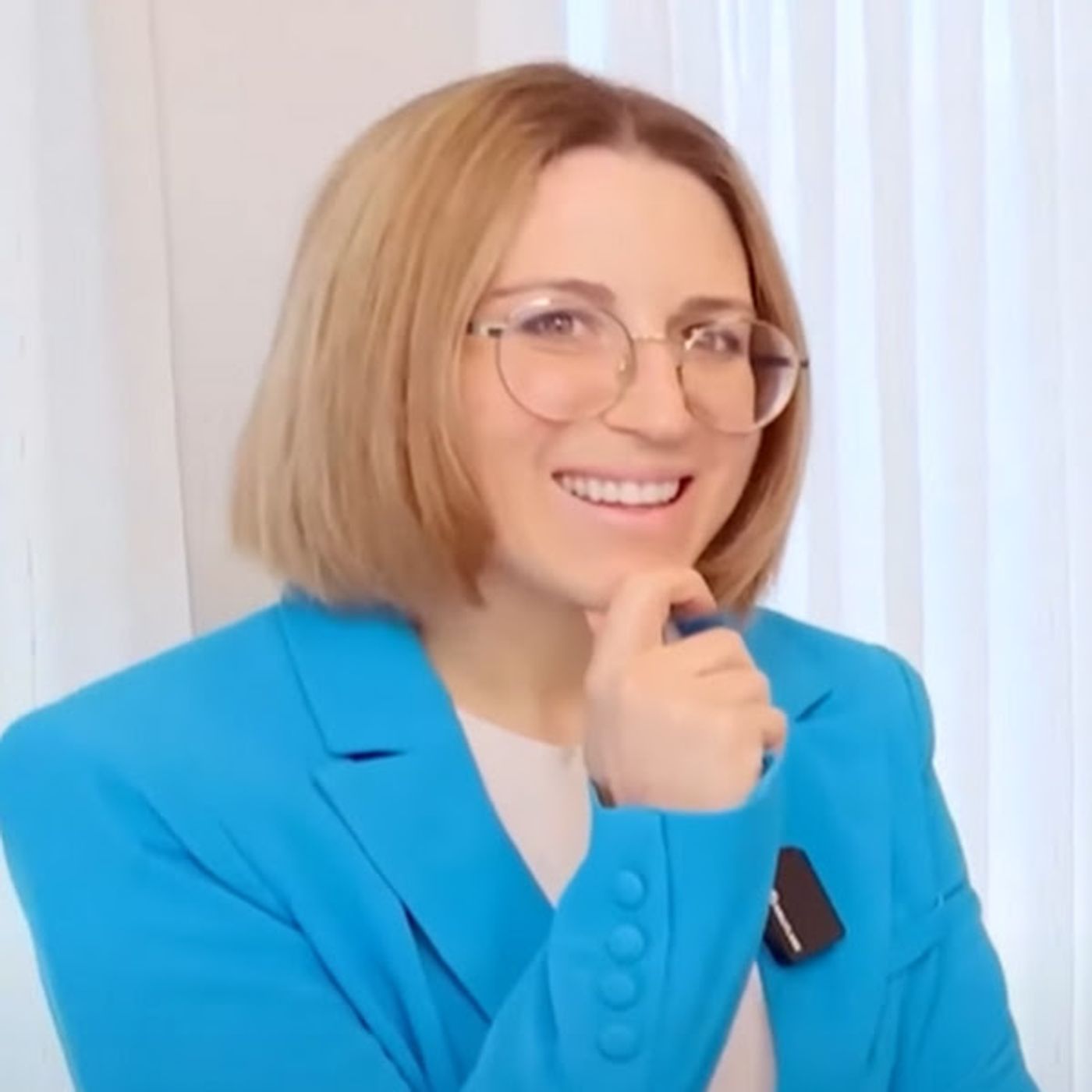
PODCAST · religion
The Frieda Vizel Podcast
by Frieda Vizel
Welcome to in-depth conversations on Hasidism, Judaism, NYC, culture, education, religion and more!This podcast is hosted by popular Youtuber Frieda Vizel, who has been studying the Hasidic community for more than ten years.This is the podcast version of the video conversations which are also published on Youtube. Please reach out with feedback. Here's the youtube channel if you prefer to see the host and guests! :)Become a supporter of this podcast: https://www.spreaker.com/podcast/the-frieda-vizel-podcast--5824414/support.
-
143
The major battle that split Satmar in two | Yumi Lowy
video link to this interview: https://youtu.be/NtFI3NL4dFE?si=zOhqSNq6aijFxcc4In September 2026, the Satmar community experienced a major historic event. After decades of the community being split into two rival factions, the two brothers who led the rival factions met again. But not just anywhere, but at the White House. After so much time of hurt and estrangement, the rabbis wished each other a sweet year before heading into the White House to meet with the president, Trump, and advocate on behalf of their Jewish community. This is a great time to look back at how this split happened and record some oral history. Yumi Lowy grew up Satmar and paid a lot of attention to the battles. These are his memories. As is the case with oral histories, other people will have other stories. I so look forward to more perspectives in the comments.Follow Yumi Lowy on Instagram here: https://www.instagram.com/yumilowy/For more on the early battles in Kiryas Joel, watch my interview with lawyer Michael Sussman: https://youtu.be/jcz0xmkm10sMy interview with Hasidic reporter Joseph Kornbluh: https://youtu.be/4MPf67ftXMEMy reflections before the Trump visit: https://youtu.be/_UjXlnOVdugReb Aaron Teitelbaum and AI: https://youtu.be/vUhamjWR_vABecome a supporter of this podcast: https://www.spreaker.com/podcast/the-frieda-vizel-podcast--5824414/support.
-
142
Hasidic Rabbis to visit Trump | Reflections
Video link to this podcast: https://youtu.be/_UjXlnOVdugIn September 2026, news broke that Hasidic Rabbis will meet with president Trump. This was revealed when the Satmar Rabbi Aaron Teitelbaum stepped up to his congregation on Shabbos and pre-emptively told his community that although he accepted an invite to sit with the president, he doesn't want the teenage boys to get too into it and excited about it. In this video, I unpack, from my own personal experience, what I think motivated the speech, what I think motivates the visit, and a little context on the Hasidic community's relationship to America.To watch the full video of my maroon binders, click here:https://youtu.be/ZRhOovJLcBYSome other thoughts on politics - here about NYC mayor Mamdani:https://youtu.be/FMgh3_O13HgMy interview with Hasidic reporter Jacob Kornbluh who covers the Mamdani beathttps://youtu.be/4MPf67ftXMEA conversation with a Satmar woman (Pearl!) about the dynasty:https://youtu.be/tPiKqDCtyIo0:00 Personal reflection2:58 Rabbi's address to students8:23 Analyzing the visit11:28 Political controversy12:21 Historical context14:17 Personal intersectionsBecome a supporter of this podcast: https://www.spreaker.com/podcast/the-frieda-vizel-podcast--5824414/support.
-
141
Forty years of missionizing the faith before losing it | Jeff Parnell
Video link to this interview: https://youtu.be/Yy4Tzw-UAUcBecome a supporter of this podcast: https://www.spreaker.com/podcast/the-frieda-vizel-podcast--5824414/support.
-
140
My experience of Kiryas Joel boyhood to manhood | Shia Friedman
Video link to this interview: https://youtu.be/vEkKjydfG3gThe Hasidic village of Kiryas Joel is an unusual community in the state of New York. It's all Hasidic, very insular. It is shaped around the Satmar Hasidic code of behavior which includes speaking Yiddish, strict gender roles, and insularity from secular society. The community is so gendered that growing up male versus growing up female are completely different experiences. I, as this channel host, have shared much about the female experience. However, there is little I know about the male experience. Through my network of people from Kiryas Joel, I recently got to know Shia Friedman - who is a rare example of someone from Kiryas Joel who is willing to talk on my channel on the record. We sat down to chat, primarily to understand his life as a male who grew up Hasidic. Obviously, Shia's story reflects only Shia's experience, but it can give us some insights just as my experience gives us some insight as well.We talk about the school day of Hasidic boys, the relationship to teachers, the expectations of learning an extreme amount, the lack of English and secular education, attitudes towards women, marriage rituals, and stepping out of the box. I think there's a lot that's covered in this brief episode, and I so look forward to your thoughts. Shia's instagram is: https://www.instagram.com/shia__friedman/My instagram is: https://www.instagram.com/friedavizel/Check out some of my other videos on Kiryas Joel:What it was like for me to grow up in Kiryas Joelhttps://youtu.be/uHu_17N9GdEMy response to the Tyler Oliviera video on Kiryas Joelhttps://youtu.be/ZlWRN4jo-CAInterview with lawyer Michael Sussman on the early years of kiryas joelhttps://youtu.be/jcz0xmkm10sInterview with Fradel Neuman who comes from Kiryas Joelhttps://youtu.be/HoTzWaF7dU8Become a supporter of this podcast: https://www.spreaker.com/podcast/the-frieda-vizel-podcast--5824414/support.
-
139
AI threatens the Hasidic community; a fiery speech by Rabbi Aaron Teitelbaum
Video link to this episode: https://youtu.be/vUhamjWR_vAIn this video, I provide a translation and analysis of a powerful Yiddish speech by the Grand Rabbi of the Satmar Hasidic sect, Rabbi Aaron Teitelbaum. He addresses what he describes as the "new Satan" threatening today's generation: Artificial Intelligence.I offer a unique context as someone who grew up in the community. I share personal stories, including a poignant encounter at my son's opsherin, to illustrate the complex relationship between Hasidic leadership, tradition, and the relentless march of technology.In this video, we explore:-The Rabbi's Warning: How AI is viewed as a "mutation" of past technological temptations like computers and smartphones.-The "Kosher Phone" Dilemma: Why even filtered devices are now seen as gateways to unsupervised access to the world.-Cultural Preservation: The community's ingenious and sometimes desperate tactics for balancing modern necessity with spiritual isolation.-A Personal Journey: I reflect on how the internet changed my own life and why I find the Rabbi’s cautionary stance more logical than many might expect.Timestamps: 00:00 Introduction: My background and the significance of the speech 01:18 Personal story: Meeting Rabbi Aaron Teitelbaum 08:24 The Hasidic community’s "dance" with technology 11:52 The Recording Begins: The "Flaming Speech" against the new Satan 17:09 Why AI is seen as a mutating evil inclination 21:05 The history of Hasidic solutions: Filters and bans 25:22 The "woe to us" dilemma: Why the Rabbi chose to speak out 30:25 How AI chatbots are accessed via kosher phone numbers 33:50 My reflections: Is the Rabbi’s warning extreme or insightful?Join the conversation: How do you think we should manage the influence of AI on children and vulnerable communities? Does the Hasidic approach offer any lessons for the secular world, or is it too extreme? Share your thoughts in the comments below.Become a supporter of this podcast: https://www.spreaker.com/podcast/the-frieda-vizel-podcast--5824414/support.
-
138
She had to cut off with the Hasidic world in order to return | Melissa Weisz
Video link to this episode: https://youtu.be/mW6PTwWUVAUMelissa Weisz grew up in Hasidic, Yiddish-speaking Boro Park and left the fold well before the OTD phenomenon became famous. I believe she left the fold before me, and I'm of the old timers now! I have been waiting for the opportunity to share her story with my viewers. Here, we finally get Melissa's story live. Please come if you would like to see this live and ask questions. It will also be available for view later.Follow Melissa on her socials!https://www.instagram.com/melissaweisz/https://melissamalkyweisz.com/Here is the full, unedited livestream: https://youtube.com/live/j16Dlc5iRGoHere's a trailer to this interview: https://youtube.com/shorts/oiWlef1AHVk?feature=shareBecome a supporter of this podcast: https://www.spreaker.com/podcast/the-frieda-vizel-podcast--5824414/support.
-
137
Alone but not lonely; inside this Hasidic woman’s world | Gita Katz
Video link: https://youtu.be/xBBW-b4yNfwGita got married, like many Hasidic Williamsburg girls did. In an arranged match, when she was not yet twenty. Her marriage lasted until death did them part. Decades together, seven children, forty grandchildren, and about as many great-grandchildren. What does it mean for a woman of such a traditional, pious world to lose her husband, the backbone of her life and family? Gita is a story of resilience, everlasting love, and the language to express it all through food. From her shabbos morning coffee on the porch, from where she watches young families, to her choice to have peanut butter bread for shabbos lunch, to her refusal to let her kids cook for her, she remains fiercely independent, deeply traditional, and eternally devoted to her family through food. In a world where tradition is lived through food, Gita shares her family tradition of eating Rakot Crumpli: packed potatoes. A Hungarian food of sliced potatoes and eggs, with heaps of "dairy goodies" - cottage cheese, sour cream, and lots of butter. Join Gita and me for a day in her home of cooking Rakot Crumpli and learning about her life and world as a widow in the Hasidic community. About her struggles with chronic illness and how she lives life fully despite her mobility issues and need to get around with a Rollator. Her resilience and love for life is inspiring, her fashionista side is envy-inducing. Most of all, she laughs and makes you laugh. She's alone but not lonely.This is my second time with Gita. My first visit was an interview about her life story which you can watch here:https://youtu.be/2saQ0LEwZXQ~~ Filmed by me. How did I do? Do you prefer professional videography or more intimate home made filming?~~ Edited by the wonderful Lee Kupac https://readymag.website/u3245558506/6471652/I've interviewed the cooking influencer Lovina Zook:https://youtu.be/GHF0lQS2CHsCheck out another story of an inspiring widow from Williamsburg, Tova Schiff:https://youtu.be/O2eglqRL5n4Check out Mr Klein's shop where you can buy Rakot Crumplihttps://youtube.com/shorts/KHnzQ5l674s?feature=shareBecome a supporter of this podcast: https://www.spreaker.com/podcast/the-frieda-vizel-podcast--5824414/support.
-
136
We had ONE date & got married! | Brach and Avi
Video link to this interview: https://youtu.be/LV99eySK-24Fifteen years after their marriage was arranged, a couple reflects on their lives together. They met once for forty minutes and then got married a year later, without any contact during the engagement. Are they happily married? In hindsight, what do they take away from their way of having met? 🔗 Follow Brachi and Avi on instagram: https://www.instagram.com/brachif/🔗 Brachi's Shabbos table decor business is here: https://hod-hadar.com/🔗 Hod Hadar Instagram: https://www.instagram.com/hod_hadar_/Did you enjoy this interview? Watch some of my others:🌟 Eli's story: https://youtu.be/SggvtB586Gk🌟 Pessy's story: https://youtu.be/7CBHWJwmAJI🌟 Gita's story: https://youtu.be/xBBW-b4yNfw🌟 Melissa Weisz's story: https://youtube.com/live/j16Dlc5iRGoEdited by Lee Kupac / https://www.instagram.com/alice.kpcAs always, my interviews are available as podcasts wherever you get your podcasts.Thank you for supporting my work!!Become a supporter of this podcast: https://www.spreaker.com/podcast/the-frieda-vizel-podcast--5824414/support.
-
135
Expelled from school and their world destroyed | Pessy Unstressing
Link to video version of this interview: https://youtu.be/7CBHWJwmAJIMany people know Pessy from her popular Yiddish comedy videos, where she lovingly and hilariously captures the world of Hasidic women. She was one of the first creators to bring that world to social media through a female lens, and her sharp observations and humor have earned her a devoted following.But behind the comedy is a remarkable personal story.Pessy grew up in a Hasidic family in Monsey and spent much of her childhood carrying responsibilities that no child should have to carry. As the oldest sister, she watched her family struggle through the challenges surrounding her younger sister and felt an overwhelming need to hold everything together. She learned early on that being "good" and "perfect" seemed to be the safest way to survive difficult circumstances.In our conversation, Pessy speaks with extraordinary honesty about family, faith, rejection, and the pressure she felt to meet everyone's expectations. She shares how religion became a source of comfort, how she entered marriage determined to be the perfect wife, and how she concealed her own struggles because she didn't want to burden the people she loved.What makes Pessy's story so powerful is not simply what happened to her, but the way she reflects on it. She brings insight, humor, and compassion to experiences that could easily have left her bitter. Her story touches on themes that are deeply personal and yet almost universal: the desire to be accepted, the weight of responsibility, the loneliness of feeling misunderstood, and the long journey toward self-acceptance.Pessy's story is, in many ways, everyone's story. I hope you'll watch this conversation with kindness and an open heart.You can find Pessy on Instagram:https://www.instagram.com/pessyunstressing/You might also enjoy some of my other interviews with women from the Yiddish-speaking Hasidic community:Melissa Weiszhttps://youtube.com/live/j16Dlc5iRGoFradel Neumanhttps://youtu.be/HoTzWaF7dU8Sara Braunhttps://youtu.be/1E54wVSn-wMGita Katzhttps://youtu.be/2saQ0LEwZXQAs always, my interviews are also available in audio-only form wherever you get your podcasts.And thank you especially to my channel members for helping make these conversations possible.Become a supporter of this podcast: https://www.spreaker.com/podcast/the-frieda-vizel-podcast--5824414/support.
-
134
The National Desertion Bureau | Eddy Portnoy
Video link to this episode: https://youtu.be/ixZOxV5BuCIEddy Portnoy is back by popular demand, after our wonderful discussion on the history of Yiddish language. Eddy is the exhibit curator at YIVO Institute for Jewish Research and does amazing Yiddish/Jewish curations.Today’s subject is juicy but educational, eye-opening, and enlightening.We are diving into the shocking and largely forgotten story of the National Desertion Bureau, a real organization founded in New York in 1911 to track down runaway Jewish husbands who abandoned their wives and children during the great wave of Jewish immigration from Eastern Europe to North America.For more on this below.Here are some links:-My previous interview with Eddy: https://youtu.be/tq8y3KkAWTk?si=-KdfW3UJBkiMdrh_-The Yivo Exhibit: https://www.yivo.org/National-Desertion-Bureau-📘 THE BOOK ON THIS: Wives without Husbands: Marriage, Desertion, and Welfare in New York, 1900–1935 by Anna R. Igra https://amzn.to/4tGvhbZPopular stereotypes about Jewish husbands tend to be flattering: loyal, hardworking, stable, family-oriented. Which is exactly why so many people have never heard of this dark social crisis that unfolded inside immigrant Jewish communities during the early 20th century. Behind the romanticized image of the immigrant success story was another reality entirely: crushing poverty, overcrowded tenements, fractured families, emotional collapse, and men disappearing without a trace.The problem became so widespread that Yiddish newspapers like the legendary The Forward published daily columns called “The Gallery of Missing Husbands,” complete with mugshots and descriptions of men who vanished and left their families destitute. There were even Lower East Side psychics who specialized in helping women locate missing husbands.From 1905 through the 1960s, the National Desertion Bureau investigated more than 18,000 cases, working with courts, police departments, charities, and governments to track down deserters, force support payments, and sometimes even jail offenders. The surviving files read like tragic little novellas filled with betrayal, desperation, ruined finances, abandoned children, and impossible choices made during an era of massive upheaval.The archives at YIVO Institute for Jewish Research contain roughly 17,000 surviving case files from the Bureau, many of which formed the basis for the exhibition *Runaway Husbands, Desperate Families: The Story of the National Desertion Bureau*, curated by Eddy himself.In this episode, Eddy walks us through this extraordinary hidden chapter of Jewish history and helps unpack what these stories reveal about immigration, masculinity, poverty, shame, survival, and the fragile reality behind nostalgic immigrant mythology.Before we begin, I want to thank those of you who are channel members and help make this work possible. Members get early access to videos before they are released publicly. I deeply appreciate all of you, members, subscribers, commenters, and everyone who participates in these conversations and helps keep this channel alive.Become a supporter of this podcast: https://www.spreaker.com/podcast/the-frieda-vizel-podcast--5824414/support.
-
133
Jews and Poland; how we tell Polish Jewish history | Barbara Kirshenblatt-Gimblett
Video link to this conversation: https://youtu.be/KCS9vAundmsHow do you tell the history of Jews in Poland? Why is there so much debate about this from Polish people? I ask the curator of the Polin museum about her work at the crux of this debate: when telling the story of Polish Jewish history for the museum. Watch part 1 for Barbara's life story here: https://youtu.be/xXqmG4rI-sEBecome a supporter of this podcast: https://www.spreaker.com/podcast/the-frieda-vizel-podcast--5824414/support.
-
132
At 83, this Jewish icon has a story to tell | Barbara Kirshenblatt-Gimblett
Video link: https://youtu.be/qdQi26lBQ7QToday I have the great honor and pleasure of speaking with Barbara Kirshenblatt-Gimblett, a renowned scholar of Jewish culture, folklore, and performance studies. She is best known for her work exploring how Jewish history and heritage are presented in museums and public culture, and she served as the chief curator of the core exhibition at the POLIN Museum of the History of Polish Jews, the landmark institution that tells the thousand-year history of Jews in Poland.Barbara's own story, and her relationship with her father, is part of the Polish Jewish story. For many years, her father shared memories of his life in Poland with his Canadian-born daughter. Later, during a period of depression, he began illustrating those memories in a remarkable series of paintings. Those paintings became the foundation for a book Barbara created, preserving both his experiences and a vanished world.Please check out part 2 where we talk about Barbara's work in Poland as the chief curator of the Polin musuem. https://youtu.be/KCS9vAundmsBecome a supporter of this podcast: https://www.spreaker.com/podcast/the-frieda-vizel-podcast--5824414/support.
-
131
What is anti-semitism? | Doran Shafrir
Video link to this episode: https://youtu.be/gwCyNjr2vU0Today I am talking to Doran from the channel @TheEasyWayDMS about philosophical subjects. What is antisemitism? How does it form and change? What are the guises it comes in? In a world in which there's so much muddled dialogue about antisemitism, I thought it was important to have a nuanced, thoughtful conversation. I invite your comments and thoughts.For more on this subject, see these videos:Everyone is talking about Jews: https://youtu.be/A1aOTCsYQfMMy experience with antisemitism as a Jewish content creator: https://youtube.com/live/IZuSqgQGDBUAntisemitic attack in the UK with Izzy Posen https://youtu.be/IfWm5mlQRwgHe lived through the Bondi Beach attack: https://youtu.be/css7bPGITTEAlso, check out my conversation with Doran for his channel.https://youtu.be/utFUQCFnqdc?si=UEUJJjqYDNKhdoieBecome a supporter of this podcast: https://www.spreaker.com/podcast/the-frieda-vizel-podcast--5824414/support.
-
130
Hasidic Bubby shares their wedding traditions
Video link to this conversation: https://youtu.be/uQ8YqHA_id8📸 Videography: Upperdeck Film / https://www.instagram.com/upperdeck_film/ ✂️ Edited: Lee Kupac / @mayo.nap 👰 Wedding footage: Shmilly Feldman / https://www.instagram.com/chasidish_lifter/More content with Pearl: https://youtube.com/playlist?list=PLhW2QoO54ycylVdMte0xOgmKWkyksKzyv&si=hOy-eozSCg2cWErrBecome a supporter of this podcast: https://www.spreaker.com/podcast/the-frieda-vizel-podcast--5824414/support.
-
129
Everyone is talking about Jews
Video link to this monologue: https://youtu.be/A1aOTCsYQfMBecome a supporter of this podcast: https://www.spreaker.com/podcast/the-frieda-vizel-podcast--5824414/support.
-
128
She doesn't regret her comments | Satmar anti-zionist Pearl
Video link to this conversation: https://youtu.be/92Q4LAxh_UgA year ago, Pearl sparked one of the most heated discussions on this channel.As a Satmar Hasidic woman, she shared her views on the Holocaust, anti-Semitism, Israel, and Zionism—views that many viewers strongly disagreed with. The response was intense.In this conversation, I sit down with Pearl again and ask her how she feels about the backlash, whether she regrets speaking so openly, and why she continues to stand by her beliefs.This interview is not about agreeing or disagreeing. It is an opportunity to hear, in Pearl's own words, how a deeply religious Hasidic woman understands Jewish history, suffering, faith, anti-Semitism, and the role of Israel in the modern world.Whatever your perspective, I hope this conversation helps illuminate a worldview that is rarely heard and often misunderstood.As always, please keep the discussion respectful.You can find many of my other podcasts with Pearl on podcast apps or on Youtube through this playlist:https://www.youtube.com/playlist?list=PLhW2QoO54ycylVdMte0xOgmKWkyksKzyvBecome a supporter of this podcast: https://www.spreaker.com/podcast/the-frieda-vizel-podcast--5824414/support.
-
127
When life is like weaving a quilt | Dovid Bashevkin
Link to video version of this episode: https://youtu.be/aeVekOqP7-YThe tables have turned! The wonderful, renowned Orthodox Jewish podcaster Dovid Bashevkin, host of 18forty, who interviewed me for his podcast, returned the favor and joined me for a candid conversation about the inside-outside perspectives. He inside, I outside, together we have an interest in the same thing from different angles.Bashevkin is one of the most thoughtful voices in the Orthodox Jewish world, for a wide-ranging conversation about faith, doubt, Shabbos, Jewish identity, community, America, Israel, assimilation, spirituality, and what it means to build a meaningful Jewish life in 2026.What makes this conversation especially interesting to me is that Dovid and I approach many of the same questions from different locations. He speaks from deep inside Orthodox communal life; I often speak from the margins, or from outside looking in. And yet we share a fascination with how people search for meaning, belonging, transcendence, and authenticity.Links:• Dovid Bashevkin on Twitter/X: [@DBashIdeas](https://x.com/DBashIdeas?utm_source=chatgpt.com)• 18Forty podcast: [18Forty](https://18forty.org/podcasts/?utm_source=chatgpt.com)• My appearance on his podcast: [My conversation with Dovid Bashevkin on 18Forty](https://www.youtube.com/watch?v=GEaI-Paltfc&t=1s&utm_source=chatgpt.com)We talked about:• why he created the 18Forty podcast• the “institutional scaffolding” of modern Jewish life• why younger Jews are restless even inside successful communities• Shabbos as both beautiful and difficult• assimilation, identity, and the pressure to “earn” love• celebrity culture and existential longing• the future of American Orthodoxy• why so many young Orthodox Jews are drawn to Israel• cultural translation between Jewish worlds• gum as contraband in Hasidic childhoods 😭Thank you to all channel members, subscribers, viewers, and commenters who make these conversations possible.FriedaBecome a supporter of this podcast: https://www.spreaker.com/podcast/the-frieda-vizel-podcast--5824414/support.
-
126
From Orthodox in Israel to an Academic studying the community | Yossi David
Video link to this interview: https://youtu.be/fV8LeAiQQe8Join us for an insightful conversation with Dr. Yossi David, a leading researcher in social biases, migration trauma, and media influence. We delve into how leaving insular communities mirrors migration challenges, the impact of fiction and AI on perception, and the importance of trust and skepticism in society today.Key topics discussed: -The psychological challenges faced by individuals leaving ultra-Orthodox communities, compared to immigration trauma -Language barriers and cultural transitions when integrating into secular society-The influence of fiction, media, and AI technologies on shaping perceptions and biases-Trust in science versus authority and the role of scientific methodology in building credibility-The importance of a society that balances trust and skepticism for healthy self-correction-Strategies for raising awareness about fiction, misinformation, and fake content-Personal experiences of transition, identity, and resilience amid societal change-The role of education in developing critical thinking from a young age-The significance of physical challenges and community support in personal transformationResearch that inspired this conversation: 📄 “The Search for Meaning and Belonging After Leaving a High-Cost Religion” PDF: https://app.luminpdf.com/viewer/698b43ca5896b082df3e537b Journal link: https://www.tandfonline.com/doi/full/10.1080/10508619.2025.2553407#abstract FormerHaredi? Consider participating in Yossi’s current research: 📝 2026 Annual Survey for Former Haredi Individuals https://bgupsych.eu.qualtrics.com/jfe/form/SV_elMDRXhMsMVr23c Follow me: Instagram / X / TikTok: @FriedaVizelBecome a supporter of this podcast: https://www.spreaker.com/podcast/the-frieda-vizel-podcast--5824414/support.
-
125
Inside an Amish school day | Lovina Zook
Video version of this episode: https://youtu.be/vUl5DjWhCBkLovina's personal story: https://youtu.be/GHF0lQS2CHsFormer Swartzentruber Amish teacher Lovina Zook takes us inside the world of Amish education, sharing detailed insights into what a typical school day looks like in one of America's most closed communities. From the one-room schoolhouse structure to the daily routines, strict dress codes, and teaching methods, Lovina offers a rare glimpse into this traditional education system.Lovina speaks with genuine enthusiasm about her experiences as both a student and teacher in the Amish school system, which she describes as the highlight of her teenage years. She explains the challenges of 5 a.m. mornings, preparing breakfast and lunches for siblings, and the deep bonds formed in the close-knit classroom environment.This video is for anyone interested in closed subcultures, sociology, and understanding how traditional communities maintain their way of life through education. Lovina's firsthand account provides an authentic look at the simplicity, discipline, and community connection that define Amish schooling.Follow Lovina Zook:🎥 YouTube: https://www.youtube.com/@lovina_zook📸 Instagram: https://www.instagram.com/lovina_zook/🎵 TikTok: https://www.tiktok.com/@lovina_zook🌐 Website & Cookbook: https://socialsbylovina.com/More of my Amish content:📺 Interview with Martha Ross: https://youtu.be/teadpfXWCO4📺 Academic perspective with Steven Nolt: https://youtu.be/5OnDYM2jymk📺 Ex-Amish man on tour: https://youtube.com/shorts/x_qOijQpPnY📺 Hasidic and Amish together: https://youtu.be/fAp1QPGNb5wBecome a supporter of this podcast: https://www.spreaker.com/podcast/the-frieda-vizel-podcast--5824414/support.
-
124
From Amish life to millions of followers on social media | Lovina Zook
Link to the video version of this episode: https://youtu.be/GHF0lQS2CHsLovina Zook, a former Swartzentruber Amish woman who left her community at age 18 with only $24 to her name. Lovina shares her compelling story of growing up in one of the strictest Amish settlements, without electricity, running water, or any exposure to technology, where she raised her 12 younger siblings as the oldest girl.She opens up about the difficult decision to leave her family and community behind to pursue a different life, and the challenges of adapting to the modern world. Today, Lovina has built a following of millions, sharing authentic Amish cooking and baking recipes while educating people about her former way of life. Her story is one of courage, sacrifice, and resilience.Follow Lovina Zook: 🎥 YouTube: https://www.youtube.com/@lovina_zook 📸 Instagram: https://www.instagram.com/lovina_zook/ 🎵 TikTok: https://www.tiktok.com/@lovina_zook 🌐 Website & Cookbook: https://socialsbylovina.com/More of my Amish content: 📺 Interview with Martha Ross: https://youtu.be/teadpfXWCO4 📺 Academic perspective with Steven Nolt: https://youtu.be/5OnDYM2jymk 📺 Ex-Amish man on tour: https://youtube.com/shorts/x_qOijQpPnY 📺 Hasidic and Amish together: https://youtu.be/fAp1QPGNb5wBecome a supporter of this podcast: https://www.spreaker.com/podcast/the-frieda-vizel-podcast--5824414/support.
-
123
Raw thoughts while sitting in my car in Kiryas Joel [on Mother's Day]
video link: I feel I am completely incoherent here but also raw in a way I felt I wanted to share anyway. I’ve organized my thoughts in many videos in ways that I think (hope) is clear and accessible. Here’s where you see a bit of the me behind the analysis. The personal and analytical as I sit and reflect and process a story that I think is exceptional and beautiful and imperfect and problematic but also to me, so very precious.Meanwhile, to all of you who celebrate mother's day - wishing you a wonderful Mother's Day!Become a supporter of this podcast: https://www.spreaker.com/podcast/the-frieda-vizel-podcast--5824414/support.
-
122
Riki Rose on the Frieda Vizel Podcast live! 5/5/26 5pm ET
Video link: https://youtube.com/live/XDNed30Yqng?feature=shareRiki and I recently talked children's games and had fun on my living room floor:https://youtu.be/uvwSkTZbjOoShe will come over to my place, hopefully on May 5 and at 5pm we will go live together from my computer. Please chat with us in the comments, or watch it later if you can't make it!Follow the brilliant performer @riki_rose on Youtube and on instagram.Become a supporter of this podcast: https://www.spreaker.com/podcast/the-frieda-vizel-podcast--5824414/support.
-
121
Riki Rose and Frieda Vizel play nostalgic Hasidic children's games
Link to the video version: https://youtu.be/uvwSkTZbjOoYou can buy kugelech here:https://amzn.to/3YbJPTHCan you play this game? Do you know these chants?In this video, I explore kugela (plural: kugelach)—a simple game of five stones that carries centuries of history. With Yiddish singer Riki Rose, we try to play, reminisce about childhood games, and uncover a whole world of “oldies” that once shaped how children everywhere played.Before toy stores, before screens, children made their own fun—on stoops, in streets, with whatever they could find. Many of those games have faded from mainstream culture. But in Hasidic Brooklyn, they’re still alive.We talk about:– How kugela (five stones/knucklebones) is played– The culture of homemade play before modern toys– Street games, chants, and clapping rhymes– Why Hasidic communities preserved these traditions– The strange, funny, and sometimes dark songs we all grew up withThis is part nostalgia, part cultural anthropology, and part me failing at a children’s game.Watch more videos with Riki Rose:https://www.youtube.com/playlist?list=PLhW2QoO54ycwpngXudOzA5as9MfS4Ss6ARiki Rose:--} YouTube: @riki_rose --} Instagram: https://www.instagram.com/riki_rose/If you grew up with any of these games or chants, tell me in the comments—I’m collecting them.FriedaBecome a supporter of this podcast: https://www.spreaker.com/podcast/the-frieda-vizel-podcast--5824414/support.
-
120
Naomi Seidman on Frieda Vizel Podcast, LIVE 4/29/26 3pm ET
Video version of this segment: https://youtube.com/live/_5ZJi2noZOg?feature=shareNaomi Seidman shares about her research on Jewish love and romance, her own marriage and the loss of her beloved pet. We discuss her book "The Marriage Plot" which you can get here:https://amzn.to/4vIkgtbBecome a supporter of this podcast: https://www.spreaker.com/podcast/the-frieda-vizel-podcast--5824414/support.
-
119
An amazing collection of Rare Talmuds! | Samuel Marks
A 26-year-old collector opens his personal library to reveal the dramatic, human stories hidden inside antique Jewish Talmuds.In this video, Samuel Marks takes us through his personal collection of Talmuds from different eras, using each volume to tell a larger story about how the Talmud was printed, censored, altered, and preserved under extraordinary historical pressure. Samuel is a self-taught collector whose engagement with Jewish texts grew out of immersive learning in Hasidic spaces, particularly within the Satmar community in Williamsburg.Raised in a secular Jewish family in Boston, Samuel later reconnected deeply with Jewish learning and history. He is currently a student at the University of Michigan Law School and is not a professional academic, historian, or dealer. His knowledge comes from close study of primary texts, printing history, and the material culture of postwar Hasidic life in America.This Talmud tour explores not only rare editions, but the human, political, and emotional forces that shaped them. Among the stories discussed:• How expensive and technically complex it once was to print the Talmud, including the challenges of typesetting its dense, layered layout• How Jewish owners signed their Talmuds, turning them into personal historical documents• The dramatic saga of Christian censorship, which led to missing passages, partially removed pages, and forced insertions of Christian propaganda• Copyright disputes that shaped competing editions and caused the text to evolve differently across printings• The forgery of the so-called lost Yerushalmi Talmuds• The story of a young girl named Ella who helped typeset a Talmud and signed her name inside, noting that she was looking for a husband• Talmuds printed in the Shanghai Ghetto during World War II• Talmuds produced in displaced persons camps in Germany immediately after the war, often on discarded or reused paper• Which tractates were printed most, when, and why, including postwar demand for laws dealing with loss of a spouse and the special status of Bechorot• How printing errors entered the Talmud, were copied forward, and later identified and addressed• Why Talmuds ended up so oversizedFor more on Samuel’s background as a collector, watch our first interview:https://youtu.be/qjtlgrLe92wYou can also find a related playlist where I read a 1977 Yiddish book that Samuel scanned for me:https://www.youtube.com/playlist?list=PLhW2QoO54yczFq9JWHjYsS9xMpgmK7GiSThank you to the Youtube channel members for supporting this work and helping make these in-depth projects possible.Find me here:Instagram: https://www.instagram.com/friedavizel/Facebook: https://www.facebook.com/toursbyfrieda/Website: friedavizel.comBecome a supporter of this podcast: https://www.spreaker.com/podcast/the-frieda-vizel-podcast--5824414/support.
-
118
Meet this INCREDIBLE young Jewish collector | Samuel Marks
Video link to this conversation: https://youtu.be/qjtlgrLe92wMeet Samuel Marks, a young collector whose passion for rare Judaica brings overlooked corners of postwar Hasidic history vividly to life.In this first interview, we get to know Samuel through the objects he studies, preserves, and loves. Raised in a secular Jewish family and now a law student, Samuel has built a remarkable collection of Judaica, with a particular focus on postwar Hasidic materials. His collection includes rare texts and objects related to the Satmar Rebbe - Rabbi Joel Teitelbaum, postwar intra-Hasidic disputes, broadsides, early American Hasidic publications, prewar Talmuds, and clothing from before the war.Because Samuel is currently a student and only has a limited portion of his collection with him, this conversation offers a taste rather than a full survey. Among the items he shares is an old Hasidic hat, which he uses to compare earlier styles with contemporary Hasidic fashion, showing how tradition both holds and shifts over time.We also discuss a unique Yiddish book from 1977 that Samuel found inexpensively and later scanned in high resolution to preserve it for posterity. One striking page depicts a television labeled “not allowed,” a small but revealing snapshot of a moment before the internet, when communal anxieties centered on large, stationary media rather than the constant, portable screens of today.Through these objects and stories, we come to understand Samuel’s eye as a collector, the joy he takes in rare finds, and the quiet urgency he feels to rescue fragile materials from being forgotten.In the following segment, Samuel walks us through his favorite collection of antique Talmuds and explains which editions he deliberately refuses to collect. You can watch that discussion here:https://youtu.be/jt_AwGwu-_4Find me here:Instagram: https://www.instagram.com/friedavizel/Facebook: https://www.facebook.com/toursbyfrieda/Website: friedavizel.comBecome a supporter of this podcast: https://www.spreaker.com/podcast/the-frieda-vizel-podcast--5824414/support.
-
117
She left Hasidic Boro Park | Melissa Weisz's story
Video of this interview: Melissa Weisz grew up in Hasidic, Yiddish-speaking Boro Park and left the fold well before the OTD phenomenon became famous. I believe she left the fold before me, and I'm of the old timers now! I have been waiting for the opportunity to share her story with my viewers. Here, we finally get Melissa's story live. Please come if you would like to see this live and ask questions. It will also be available for view later. Follow Melissa on her socials! https://www.instagram.com/melissaweisz/ https://www.melissaweisz.com/about Here's a trailer to this interview: https://youtube.com/shorts/oiWlef1AHVk?feature=shareMelissa Weisz grew up in Hasidic, Yiddish-speaking Boro Park and left the fold well before the OTD phenomenon became famous. I believe she left the fold before me, and I'm of the old timers now! I have been waiting for the opportunity to share her story with my viewers. Here, we finally get Melissa's story live. Please come if you would like to see this live and ask questions. It will also be available for view later.Follow Melissa on her socials! https://www.instagram.com/melissaweisz/ https://www.melissaweisz.com/about Here's a trailer to this interview: https://youtube.com/shorts/oiWlef1AHVk?feature=shareBecome a supporter of this podcast: https://www.spreaker.com/podcast/the-frieda-vizel-podcast--5824414/support.
-
116
Being a lefty lesbian Jewish comic in 2026 is crazy | Judy Gold
Video link to this interview: https://youtu.be/bk6Q2RIN_mE"You're not shutting me up." - Jewish comedy icon Judy Gold, 2026Judy Gold is a lot of things. She's an icon, she's a comic, a writer, a gay woman who was at the forefront of fighting for LGBT rights. But one of the things that is her foremost descriptor is: Jewish. She was never a comic who was also Jewish. But always a Jewish comic. Her comedy is deeply Jewish. Yet since October 7, this has made her work surprisingly difficult. She gets heckled on stage and has lost a lot of the allies she stood side by side with in the fight for marriage equality and her left-leaning politics (including a fierce dislike of Trump). She has continued to be foremost a Jewish comedian anyway. Her style is deeply Jewish, with lots of neurotic mom jokes, a role her own Jewish mother loved to play. "How did we do?" Mom would ask Judy after a show. It was a "we" for mom. It's all so Jewish.In this engaging conversation, I talk to Judy about her values, work, life story, and more.Check out Judy Gold's website here:https://judygold.com/Upcoming show dates here:https://judygold.com/#timely Judy's book here:https://amzn.to/462LdwqJudy on Instagram: / jewdygold Some parts of the discussion:-Judy Gold emphasizes the significance of humor in Jewish culture as a means of survival.Comedy serves as a tool for storytelling and coping with adversity.-The landscape of comedy has changed, with audiences becoming more sensitive to certain topics.-Judy's identity as a Jewish comedian is central to her work and personal life.-She believes in the importance of being unabashedly Jewish in her comedy.-The challenges of being a Jewish comedian have intensified in recent times.-Family dynamics play a crucial role in shaping a comedian's material and perspective.-Judy's early experiences in comedy were influenced by iconic Jewish female comedians.-Representation in comedy is vital for both the performer and the audience.-Judy advocates for open dialogue and understanding in the face of political and social issues.Sound Bites"I am a proud Jew.""You're not shutting me up.""It's important to talk about it."Follow me on socialsInstagram: / friedavizel Website: friedavizel.comBecome a supporter of this podcast: https://www.spreaker.com/podcast/the-frieda-vizel-podcast--5824414/support.
-
115
Hasidic Jews once thrived in Poland | Historian Glenn Dynner
Link to video version of this episode:In this episode, I’m joined by historian Glenn Dynner, who was my professor years ago and played a pivotal role in getting me started as a tour guide. Our conversation focuses on Polish Jewish history, Hasidism, and how Jewish life in Poland developed under pressure, change, and violence.Before we begin, here are Glenn’s books, which come up throughout the interview:The Light of Learning: Hasidism in Poland on the Eve of the Holocaust / https://amzn.to/3LNJYduYankel's Tavern: Jews, Liquor, and Life in the Kingdom of Poland /https://amzn.to/4qogrpMMen of Silk: The Hasidic Conquest of Polish Jewish Society / https://amzn.to/3ZdZJ0jWe talk about Polish Jewish society as a lived world rather than a static prelude to the Holocaust. Topics include the development of Hasidism, the social and economic role of tavernkeeping, responses to antisemitism, and how violence shaped religious and cultural life. We also discuss women in Hasidic communities, underground Torah study during the Holocaust, and the networks that helped preserve religious leadership and scholarship.The conversation also touches on Glenn’s research trajectory, how historians approach Polish Jewish history, and why earlier frameworks sometimes fall short when trying to understand how these communities functioned over time.As with all of my interviews, an audio-only version of this conversation is available on the podcast platform of your choosing.Thanks for watching and listening.Become a supporter of this podcast: https://www.spreaker.com/podcast/the-frieda-vizel-podcast--5824414/support.
-
114
From the oldest Hagaddahs to a Hasidic sedar that ends 4am | David Akerman, Yiddishkeit
Video link to this episode: https://youtu.be/QuMAGZuI5J0Frieda and @_yiddishkeit discuss the seder with a mix of amazing haggadah illustrations and childhood memories. CHAPTERS 0:00 intro2:51 illustrated haggadah 5:49 the opening rituals of the seder 10:33 the steps of the seder14:14 the symbolism of the matzah, maror, wine 16:37 instructions in Yiddish 21:04 the story of the Exodus 23:41 David's childhood Haggadahs 25:12 the literal-ness of the Sarajevo Haggadah 30:36 Bird's Head Haggadah 34:04 Washington Haggadah 37:15 The white Kittel 38:20 messianic images 42:53 the four sons throughout history 51:26 Hasidic depiction of The Exodus 53:17 closing rituals of the seder58:29 David's film about the haggadahBecome a supporter of this podcast: https://www.spreaker.com/podcast/the-frieda-vizel-podcast--5824414/support.
-
113
My Hasidic Passover Memories
video link to this trip down memory lane: https://youtu.be/S3c7Px2jMRoHasidic Jews go hard for Passover. The goal is not to come into any contact with bread. But this has turned into a full half-year operation for some, like my family. Here I talk about my childhood memories in Kiryas Joel, preparing for Passover. The methodical cleaning, then opening the Passover kitchen, then cooking everything from scratch for the holiday. It was a lot! My favorite part was definitely the cooking, the moment everything was done, and the fresh, hot, half-raw, piping bread after it was all over!Become a supporter of this podcast: https://www.spreaker.com/podcast/the-frieda-vizel-podcast--5824414/support.
-
112
Baily prepares for Passover [comedian Leah Forster]
video link to this episode: https://youtu.be/XLDwhIRumwUThis is comedy.Baily is the character of the famous Jewish comedian Leah Forster.I love Baily. She is very kind to me and will help me find a husband soon. She also very willingly shares about her Hasidic life. She's now extremely busy preparing for passover. Hasidic Jews go all out cleaning, cooking, shopping for Passover. To make things easier, Baily went glutton free for a whole year. She has a lot of ideas of how to cut corners and make things easier while she juggles her busy household. She also has very particular ideas about what marriage should be about, and her approach to Passover is not conventional either.All of this is comedy. For a more serious take on Passover, I have done a video where I reflect on my Passover memories. Check that out here:https://youtu.be/S3c7Px2jMRoFor more from Baily, see my 3 other interviews with Leah Forster here:https://www.youtube.com/playlist?list=PLhW2QoO54ycwOheypSNe9u6-MgzdEXO2ABecome a supporter of this podcast: https://www.spreaker.com/podcast/the-frieda-vizel-podcast--5824414/support.
-
111
"My experience as a Pediatric Pulminologist with the Hasidic population" | Dr. Lynne Quittel
Link to video version of this episode: https://youtu.be/kP_NgV7y_CsWhat happens when modern medicine meets a tight-knit Hasidic world?In this long-form conversation, Frieda Vizel speaks with Dr. Lynne Quittell, a pediatric pulmonologist with more than 40 years of experience and decades of close work with Orthodox and Hasidic Jewish families. Dr. Quittell has practiced at world-renowned institutions, including Children’s Hospital of New York and Columbia University Irving Medical Center, and brings rare insight into how medical care unfolds inside insular religious communities.Much of the discussion centers on Dr. Quittell’s experience treating Hasidic patients and navigating the cultural realities that shape medical decisions. She reflects on what she deeply appreciated about the community, including its extraordinary sense of responsibility, mutual aid, and care for vulnerable children. At the same time, she speaks honestly about the challenges: stigma around genetic disease, tensions between medical transparency and communal norms, and the frustrations physicians face when science collides with deeply held cultural expectations. Dr. Quittell emphasizes that effective care requires humility, cultural literacy, and respect for patient autonomy rather than coercion.The conversation covers cystic fibrosis (CF), Dr. Quittell’s medical specialty and an area where she has seen enormous change over the course of her career. She explains how advances in treatment have dramatically improved life expectancy and quality of life for patients, while also exploring the social and emotional dimensions of living with CF. Particular attention is given to dating, marriage, fertility, and family planning, especially within Orthodox communities where childbearing is central to adult life. Dr. Quittell discusses the reality that most men with CF are infertile, the complexities surrounding IVF, and the heavy emotional burden young people carry when deciding whether and how to disclose a life-threatening illness.Throughout the interview, Dr. Quittell reflects on long-term relationships with patients and families, some spanning decades, and the emotional weight of caring for children with chronic illness. She shares how community support often functions as a form of medicine itself, while also acknowledging the toll such work takes on physicians. The discussion concludes with reflections on end-of-life decision-making, evolving physician-patient dynamics, and the ethical responsibility to meet patients where they are.Referenced in this interview:Dr. Bat Sheva Marcus on end-of-life decision-makinghttps://www.instagram.com/reel/DTfxxSyDfzc/?utm_source=ig_web_button_share_sheet&igsh=MzRlODBiNWFlZA==Interview with pediatrician Dr. Howard Rosmanhttps://youtu.be/TkUS0jzJci4?si=5DYx-4FTzSCBeXyPSound Bites:“Community is its own medicine.”“Most men with CF are infertile.”“It taught me to be really accepting.”Keywords:Hasidic community, Orthodox Judaism, pediatric pulmonology, cystic fibrosis, genetic disease, cultural sensitivity, chronic illness, infertility, IVF, medical ethics, community support, physician-patient relationshipNotable takeaways:-Cultural norms heavily influence medical decisions-The Hasidic community often provides extraordinary support for vulnerable children-Life expectancy for CF patients is now in the mid-50s-Dating and disclosure are major challenges for people living with CF-Long-term physician-patient relationships create deep emotional bondsFollow Frieda Vizel:Instagram: https://www.instagram.com/friedavizelTwitter/X: https://twitter.com/FriedaVizelWebsite: friedavizel.comAn audio-only version of this interview is available on podcast platforms.Become a supporter of this podcast: https://www.spreaker.com/podcast/the-frieda-vizel-podcast--5824414/support.
-
110
From the hospital bedside
Video link to this episode:https://youtu.be/Biqnh3CZIFoI have so many thoughts and feelings about illness and being ex-Hasidic. About losing community support, about how my mother is fighting for her health, about returning to be at her bedside and wanting to be there but also fearing the ptsd of some rituals. This video cropped out of my high holiday season time spent with my mother. Many thanks to my editor Steve Milligan for the beautiful edit.https://www.instagram.com/shootitsteve/ Many thanks to the wonderful Youtuber Yiddishkeit for helping so much with this video. Follow him @_yiddishkeit Thanks to all the kind and diligent medical professionalsThanks to Chesed 24/7, Satmar Bikur Cholim, and all the other wonderful Jewish charity organizations. Thanks to my family, for arranging everything and the loveThe period that my mother was in the hospital was the most unbelievably surreal and draining. It felt like one long, terrifying dream. I'm so grateful to everyone whose kindness touched us during that time.Become a supporter of this podcast: https://www.spreaker.com/podcast/the-frieda-vizel-podcast--5824414/support.
-
109
Just a messenger? A Jewish interpreter at international organizations
Video link to this conversation: https://youtu.be/n8g9RwmGwF8Dan is a Jewish interpreter who immigrated from the Soviet Union. He believes his Soviet past taught him important lessons about recognizing when society takes a wrong turn. He reached out to me to share his story, and I invited him for an in-depth interview. We discussed his Soviet upbringing, his life journey, and his experiences as a Jewish interpreter. Dan has thoughtful criticisms of contemporary human rights organizations (alongside genuine appreciation for their work) and feels it's important to share his unique perspective.If you would like to get in touch with Dan, you can reach him here:[email protected] video focuses specifically on our discussion about Dan's work as a Jewish interpreter. You can watch our complete interview here:From a Soviet upbringing to Jewish identity | Dan’s storyhttps://youtu.be/Nmw9jZM2aYUBecome a supporter of this podcast: https://www.spreaker.com/podcast/the-frieda-vizel-podcast--5824414/support.
-
108
From a Soviet upbringing to Jewish identity | Dan’s story
Video link to this episode: https://youtu.be/Nmw9jZM2aYUThe story of a Jew who grew up in the Soviet Union and learned little about his Judaism but some other hard lessons that would shape his life.Dan is a high-level interpreter and a thoughtful, intelligent man. He reached out to me after noticing how different his experience as a Soviet Jew was from mine. I grew up deeply engaged with my Jewishness, while he grew up almost entirely disconnected from it. Our conversation convinced me that Dan's story needed to be documented and shared, so I invited him onto my podcast. What I heard was remarkable: the horrors his family endured, the gripping archival material he inherited documenting his grandparents' ordeals, and his unique perspective from working inside contemporary human rights organizations and other governmental bodies. Dan believes the progressive mission, which he sees as well-intentioned, is nonetheless misguided and heading toward dangerous territory. He also reflects candidly on the antisemitism he's encountered in his work as a translator in a world increasingly hostile to Israel.If you would like to get in touch with Dan, you can write to him at: [email protected] more on Soviet Jewry?My interview with Anna Shternshishttps://youtu.be/hKN0_75EuqEMy interview with Igor Golyakhttps://youtu.be/E5_n3p3Oto0Leave a comment with your thoughts!Become a supporter of this podcast: https://www.spreaker.com/podcast/the-frieda-vizel-podcast--5824414/support.
-
107
Mayor Mamdani and the Jews | Jacob Kornbluh
Video link to this episode: https://youtu.be/4MPf67ftXMEJacob Kornbluh is a Hasidic reporter covering the Mamdani beat at a moment when Zohran Mamdani has become a lightning rod in Jewish communities. For many, Mamdani represents fear, anger, political anxiety, and deep uncertainty about where New York is headed. And in the middle of that storm is Kornbluh.Recently featured in The New York Times, Kornbluh occupies a complicated position. He reports on power while belonging to a community that often feels scrutinized by power. During COVID, some Hasidic critics accused him of “reporting on” the community to city officials. That tension hasn’t disappeared. If anything, it’s intensified.I went into this interview not knowing what to expect. As a Hasidic man speaking with me, and about issues that feel raw and personal. This conversation surprised me and left me with an invite to travel across the world to a wedding. You never know!You can follow Jacob Kornbluh here:📰 Reporter at The Forwardhttps://forward.com/author/jacob-kornbluh/🐦 Twitter / Xhttps://twitter.com/jacobkornbluh🗞 His recent feature in The New York Timeshttps://www.nytimes.com/2026/02/01/nyregion/jacob-kornbluh-mamdani-hasidic-jewish-reporter.html?unlocked_article_code=1.I1A.Lkpv.51t0435BwIlj&smid=url-shareAs always, I’m curious what you think. Please leave a comment!Frieda.Become a supporter of this podcast: https://www.spreaker.com/podcast/the-frieda-vizel-podcast--5824414/support.
-
106
The beloved bubby answers your questions | Pearl from Williamsburg
Video link to this full Pearl repost: https://youtu.be/Uo5mf0_1izYBecome a supporter of this podcast: https://www.spreaker.com/podcast/the-frieda-vizel-podcast--5824414/support.
-
105
Living and leaving Jehova's Witness | Miriam Vidal
Link to video version of this conversation: https://youtu.be/2iPiYwftPygIn this interview, I speak with Miriam Vidal about her childhood growing up as a Jehovah’s Witness, and her eventual decision to leave the faith.As a Hasidic child growing up in Kiryas Joel, there was a strange building behind my house that we simply called “the church.” Every Saturday, rows of cars would pull up, and we kids would stand by the gate, watching and waving. Only years later, after I had left my own religious community, did I learn that this building was actually a Jehovah’s Witness Kingdom Hall.Miriam was one of the people attending services there.In this conversation, Miriam shares what it was like to grow up inside the Jehovah’s Witness community: the rules, the rhythms of daily life, the sense of belonging, and the limitations placed on childhood, education, and social life. We talk about her memories of the Kingdom Hall in Kiryas Joel, the wider culture of Jehovah’s Witnesses, and what it meant; emotionally and psychologicall... to leave such a structured religious world.This interview is also about what comes after leaving: identity, belief, grief, freedom, and the slow work of figuring out who you are when the framework you grew up in falls away.As someone deeply interested in religious subcultures, exit narratives, and the sociology of faith, this conversation felt especially meaningful.... almost like closing a loop that began when I was a child in my Shabbos dress, waving at strangers I didn’t yet understand.Topics we cover include:-Growing up as a Jehovah’s Witness-Family life, schooling, holidays, and missionizing-The Kingdom Hall in Kiryas Joel and Miriam’s memories of it-Community, ritual, and belonging-Leaving a high-control religious environment-The emotional and psychological impact of exiting-Spiritual life and identity after leaving-Reflections on religion, culture, and comparison with other faith communitiesWant more?Watch my video about the Jehovah's Witness Church in Kiryas Joelhttps://youtu.be/naUJMITJ5sYWatch my interview with Martha Ross, who left the Amish:https://youtu.be/teadpfXWCO4My own recounting of what it's like to grow up in Kiryas Joelhttps://youtu.be/uHu_17N9GdEThe story of Anna Shternshis:https://youtu.be/hKN0_75EuqEStay tuned for more stories of subcultures and religious groups.Become a supporter of this podcast: https://www.spreaker.com/podcast/the-frieda-vizel-podcast--5824414/support.
-
104
Reading your comments and more stories, kinderlech #3
Video version: https://youtu.be/MyGxlBywfAcBecome a supporter of this podcast: https://www.spreaker.com/podcast/the-frieda-vizel-podcast--5824414/support.
-
103
Surviving the Bondi Beach terror attack | Rabbi Yosef Eichenblatt
Video link to this episode: https://youtu.be/css7bPGITTEThis video is le’ilui nishmas (dedicated to the souls) of the dear people lost at Bondi Beach, and dedicated to their loving families in mourning. May the families find moments of light in these unbearably hard days. My heart is with them.In this conversation, I speak with Sydney resident Rabbi Yosef Eichenblatt, who shares his oral history of the Chanukah 2025 attack in Sydney, an event his family lived through and one in which his daughter’s life was miraculously saved.Rabbi Eichenblatt speaks not only about fear and shock, but about what came after. He recalls the night following the attack, sitting at home with his family, shaken and uncertain, and consciously turning toward faith rather than retreat. Drawing deeply on the teachings of the Lubavitcher Rebbe, he describes an approach rooted in responsibility, hope, and the idea of being a messenger to spread light, especially after darkness.This is a testimony shaped by loss and danger, but also by profound optimism, a belief that light is not passive and that faith asks something active of us, even in the most fragile moments.Rabbi Yosef Eichenblatt on Instagram:https://www.instagram.com/mindfulrabbi/Video from the day of the attack:https://www.instagram.com/reel/DSR06KeEg2i/Become a supporter of this podcast: https://www.spreaker.com/podcast/the-frieda-vizel-podcast--5824414/support.
-
102
"Jewish children don't fight!" | 1977 Yiddish reader story #2
Video version here: https://youtu.be/F9xzvdkMXMILet me read to you some Yiddish from 1977 and unpack the values and worldview of the Hasidic young girls through the moral lessons presented in this book. See how they were introduced to social values of obedience, kindness, respect to the elders, safety, trust in each other, modesty, and more.Become a supporter of this podcast: https://www.spreaker.com/podcast/the-frieda-vizel-podcast--5824414/support.
-
101
The Wedding Night documentary | Rachel Elitzur
video version of this episode: https://youtu.be/RK7_--5f0TcWhat happens when intimacy is expected before it’s understood?The Wedding Night is a striking and deeply intimate documentary by Orthodox filmmaker Rachel Elitzur. It explores a rarely discussed reality inside ultra-Orthodox Jewish life: couples who marry after only a handful of supervised dates, then face the expectation of consummating their marriage on the wedding night.The film grows out of Elitzur’s own traumatic wedding-night experience, which led her to seek out others with similar stories. Many participants felt unable to appear on camera, so their voices are heard anonymously, paired with carefully staged reenactments performed by actors. A very unusual method of storytelling. In the shorter version published in the New York Times in December 2025, the actors were totally removed.📰 Here is a shorter version of this story appeared in The New York Times:https://www.nytimes.com/2025/12/02/opinion/ultra-orthodox-jewish-wedding-night.html🎥 Here is the full extended documentary The Wedding Night can be watched here:https://www.youtube.com/watch?v=9lOnex1o5h8&t=5s🎬 Instagram link to filmmaker: Rachel Elitzurhttps://www.instagram.com/elitzurachel/This film connects to broader conversations I’ve explored on this channel about sex, intimacy, silence, and expectation in Orthodox and Hasidic communities:• How Hasidic teens learn about sexhttps://youtu.be/Gk917OpgS_Q• My own painful experience leaving an arranged marriagehttps://youtu.be/GvLO9Vhid44• An intimacy coach shares delicate, rarely voiced perspectiveshttps://youtu.be/AUdw8W71Gv8• Pearl, a Hasidic woman, speaks about her own and her children’s matchmaker marriageshttps://youtu.be/yQ_GgbC9RD4Become a supporter of this podcast: https://www.spreaker.com/podcast/the-frieda-vizel-podcast--5824414/support.
-
100
A Jehova's Witness church INSIDE the Jewish village Kiryas Joel
Video version of this episode: https://youtu.be/naUJMITJ5sYThe article is here: https://friedavizel.com/2014/06/06/a-church-in-kiryas-joelBecome a supporter of this podcast: https://www.spreaker.com/podcast/the-frieda-vizel-podcast--5824414/support.
-
99
The kinds of industries Hasidic Jews work in
Video version of this episode: https://youtu.be/ClAU6WJfj8UOne of my earliest video and, in my view, an important one to repost at this time. Forgive the repost. Lots of new content coming soon.Become a supporter of this podcast: https://www.spreaker.com/podcast/the-frieda-vizel-podcast--5824414/support.
-
98
Watching and reacting to the Tyler Oliveria viral video on Kiryas Joel
Video version here: https://youtu.be/ZlWRN4jo-CA As someone who grew up in Kiryas Joel and left the fold, I have a lot to say on this Hasidic village. There's good and bad. There are issues, and yes there are valid criticisms on its relationship to the welfare system, although this doesn't take away from the facts: that this is a community where the vast majority of men are gainfully employed and work incredibly hard. The stereotypes of this community as "welfare queens" whose men study torah and don't work is so damaging and not true. @TylerOliveira 's recent video will so deeply reinforce these misconceptions. I've done a video where I went through the phone book and showed the extensive numbers of businesses Hasidim are into. It's so sad that his platform will create so much misrepresentation.This is my first take reaction to his video. Please forgive my early morning rants and rambles. I am watching it raw with you. I find it quite upsetting and ignorant. I hope my deep feelings that this community is complicated, imperfect, should be criticized but is also often misrepresented comes through. This is long - well Tyler's video is long.Please watch some of my other videos, especially my video on how Hasidim earn a living.https://youtu.be/UXXOGYqbK5oWhat it was like for me to grow up in Kiryas Joelhttps://youtu.be/uHu_17N9GdEMy interview with Fradel Newman, lifetime resident of Kiryas Joelhttps://youtu.be/HoTzWaF7dU8Interview with civil rights lawyer Michael Sussman, who can really speak for some of the dark sidehttps://youtu.be/jcz0xmkm10sBecome a supporter of this podcast: https://www.spreaker.com/podcast/the-frieda-vizel-podcast--5824414/support.
-
97
An eye-opening 1977 Yiddish book of female socialization #1
Video version of this episode: https://youtu.be/qUDGHnwTUPwFollow along with the pdf of the story here: https://drive.google.com/file/d/1JCIYkr489nAvNDZQapUJ9UzTdmeCpt-8/view?usp=sharing Let me read to you some Yiddish from 1977 and unpack the values and worldview of the Hasidic young girls through the moral lessons presented in this book. See how they were introduced to social values of obedience, kindness, respect to the elders, safety, trust in each other, modesty, and more. Please let me know what you think I missed.Become a supporter of this podcast: https://www.spreaker.com/podcast/the-frieda-vizel-podcast--5824414/support.
-
96
The original dissidents of Kiryas Joel | Michael Sussman
Video link to this interview: https://youtu.be/jcz0xmkm10sThe Hasidic village of Kiryas Joel’s early days in the 1970s and 80s were anything but quiet. They were marked by infighting, lawsuits, dissidents, and a legal battle so consequential it’s still taught in American law schools today.In this interview, I speak with lawyer Michael Sussman, the man who came to represent some of Kiryas Joel’s most outspoken internal critics during its formative years. Though he was neither Hasidic nor Orthodox, Sussman became deeply entangled in the village’s internal struggles—so much so that, to many of us growing up there, his name became part of the folklore. There was even a dissident synagogue nicknamed the Sussman Shul.This conversation explores the early legal wars that shaped Kiryas Joel: battles over governance, power, dissent, and most famously, the creation of a public school for children with special needs. That case—Board of Education of Kiryas Joel Village School District v. Grumet—went all the way to the U.S. Supreme Court and sits at the uneasy intersection of religious freedom and the separation of church and state.I also approach this story personally. Kiryas Joel is where I grew up and spent 25 formative years of my life. I married at 18, became a mother to my son Seth shortly after, and absorbed these conflicts as background noise to childhood—names, sides, “politics” that hovered at the edges of daily life. As an adult, I’ve returned to this history with new questions and a deeper curiosity about how insular religious subcultures navigate American law.This interview is part of a broader attempt to document the oral histories of Kiryas Joel’s early years. I have made repeated efforts to reach figures from the other side of these disputes to record their recollections as well, but so far without success. That invitation remains open.If you want to go deeper into this story, here are essential resources:Book — American Shtetlhttps://amzn.to/49Lmz5zDocumentary — City of Joelhttps://amzn.to/4soIDKCArchival footage collected by dissident Joseph Waldman:https://www.youtube.com/@thekingofaronWebsite for Michael Sussman:https://www.sussman.law/This is a story about Kiryas Joel, but it’s also a story about America: about pluralism, law, dissent, and the price of making space for radically different ways of life under one constitutional roof.Become a supporter of this podcast: https://www.spreaker.com/podcast/the-frieda-vizel-podcast--5824414/support.
-
95
The oral histories of Bukharian Jews | Abe and Mazal
Video link to this episode: https://youtu.be/koTlTNYXoxIThis video is the extended sit-down conversation from my visit with the Bukharyan Jewish community in Forest Hills, Queens. In this segment, Abe Fuzaylov and his mother-in-law Mazal slow things down and tell their stories—about family, memory, food, and what it means to carry a Central Asian Jewish heritage into New York.Bukharyan Jews once lived for centuries in relative isolation in Central Asia. Today, very few remain there, but the culture is alive and evolving in new places. New York is one of them.In the broader visit, I toured the neighborhood with Abe from @BukharianBites, visited the restaurant Nadezhda in Queens, and cooked a Chanukah treat called Hushquiliq with Mazal. This video focuses on the conversation itself—the personal history behind the food.🔗 Follow Abe on Instagram: Bukharian Biteshttps://www.instagram.com/bukharianbites/🔗 Abe on Substackhttps://substack.com/@bukharianbites🔗 Abe on YouTubehttps://www.youtube.com/@UCtWCGTdaMOF2eDiSJOXZ7yA➡️ The short vlog about my trip to Queens to explore this community:https://youtu.be/m2NT3r7rs20➡️ My earlier video on Bukharyan Jewish tandoori bread baked in a clay oven:https://youtu.be/UH3PnRYYquM?si=wZmb88p-6u9WHcLbBecome a supporter of this podcast: https://www.spreaker.com/podcast/the-frieda-vizel-podcast--5824414/support.
-
94
My most candid conversation yet | On the Avrum Rosenzweig show
Video version here:https://youtu.be/1j7yKcjT4K8Follow Avrum's wonderful podcast here:https://www.youtube.com/@avrumrosensweigshowFollow Frieda on Youtube here:https://www.youtube.com/friedavizelbrooklynBecome a supporter of this podcast: https://www.spreaker.com/podcast/the-frieda-vizel-podcast--5824414/support.
We're indexing this podcast's transcripts for the first time — this can take a minute or two. We'll show results as soon as they're ready.
No matches for "" in this podcast's transcripts.
No topics indexed yet for this podcast.
Loading reviews...
ABOUT THIS SHOW
Welcome to in-depth conversations on Hasidism, Judaism, NYC, culture, education, religion and more!This podcast is hosted by popular Youtuber Frieda Vizel, who has been studying the Hasidic community for more than ten years.This is the podcast version of the video conversations which are also published on Youtube. Please reach out with feedback. Here's the youtube channel if you prefer to see the host and guests! :)Become a supporter of this podcast: https://www.spreaker.com/podcast/the-frieda-vizel-podcast--5824414/support.
HOSTED BY
Frieda Vizel
Loading similar podcasts...
Frequently Asked Questions
How many episodes does The Frieda Vizel Podcast have?
The Frieda Vizel Podcast currently has 50 episodes available on PodParley. New episodes are automatically indexed when they're published to the podcast feed.
What is The Frieda Vizel Podcast about?
Welcome to in-depth conversations on Hasidism, Judaism, NYC, culture, education, religion and more!This podcast is hosted by popular Youtuber Frieda Vizel, who has been studying the Hasidic community for more than ten years.This is the podcast version of the video conversations which are also...
How often does The Frieda Vizel Podcast release new episodes?
The Frieda Vizel Podcast has 50 episodes. Check the episode list to see recent publication dates and frequency.
Where can I listen to The Frieda Vizel Podcast?
You can listen to The Frieda Vizel Podcast on PodParley by clicking any episode. We provide an embedded audio player for direct listening, and you can also subscribe via your preferred podcast app using the RSS feed.
Who hosts The Frieda Vizel Podcast?
The Frieda Vizel Podcast is created and hosted by Frieda Vizel.
URL copied to clipboard!