
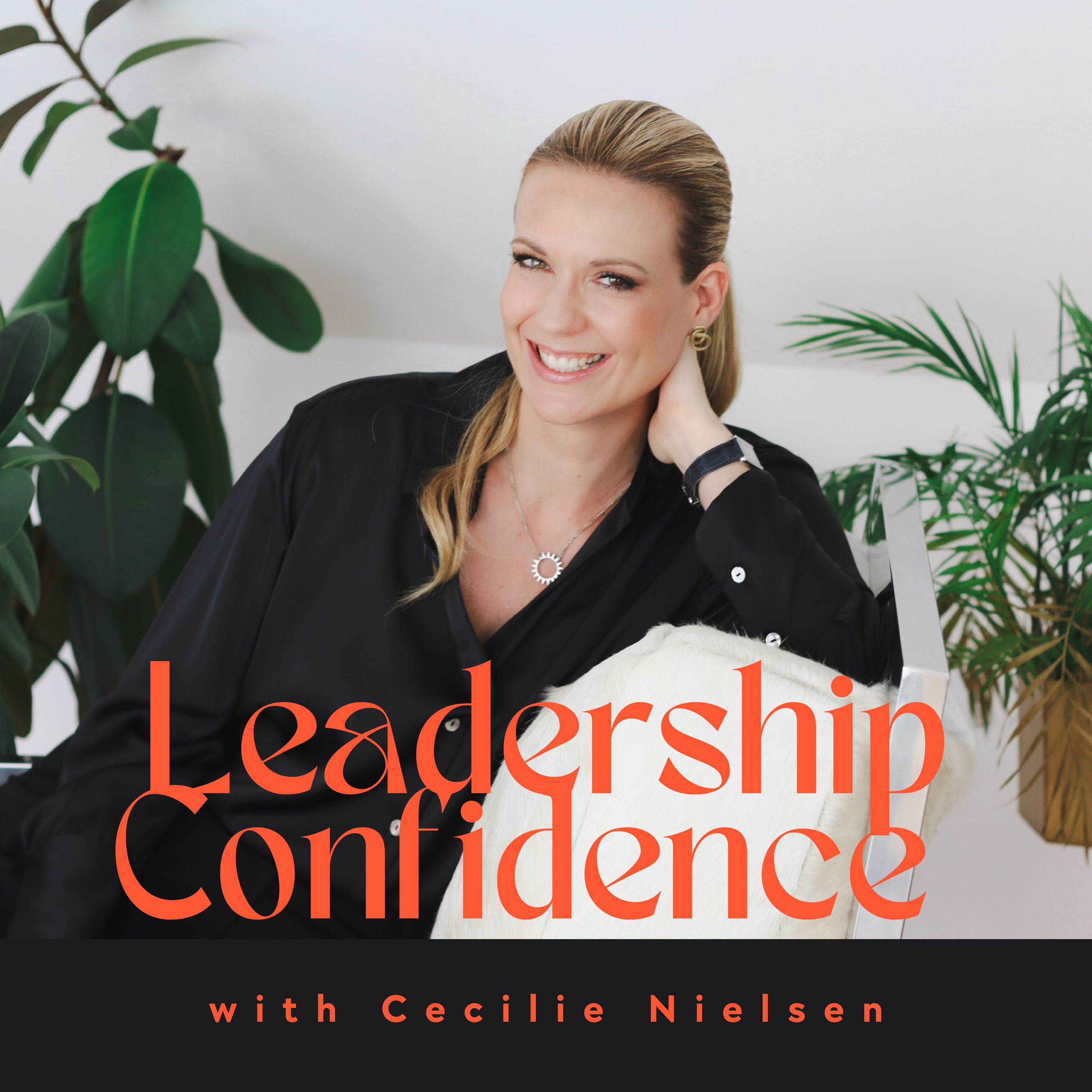
PODCAST · business
The Leadership Confidence Podcast
by Cecilie Nielsen
Think of this podcast as the leadership voice notes you wish landed in your inbox. Quick, candid, and straight to the point. As a seasoned executive coach, who has spent years helping senior leaders navigate the toughest questions, I'm here to help answer yours: How do I lead with authority without losing authenticity? How do I balance confidence with compassion? How do I manage my time, my team, and myself when the stakes are high? Each episode answers one of those pressing leadership questions - the kind you wrestle with in the middle of the night or before a big meeting. No unnecessary fluff, no theory for theory’s sake. Just practical tools, fresh perspectives, and strategies you can use right away. Whether you’re running a team, shaping culture, or making decisions that ripple across an entire organisation, these notes are here to help you do it with clarity, confidence, and control.
-
20
20. The Burnout Lie - Why Executive Exhaustion Comes From Uncertainty, Not Overload
Most advice about burnout tells you to do less, protect your time, and build better boundaries. In this episode, executive coach Cecilie Nielsen offers a different diagnosis entirely.In this episode:Why the leaders who burn out are not necessarily the ones doing the most work - and what's actually depleting themThe specific feature of senior leadership that makes exhaustion structural, not personalWhy the endless stream of unsolved problems on your desk is not evidence of failureHow to separate the work from the worry, and why that distinction changes everythingKey TakeawaysThe exhaustion that no amount of holiday seems to fix is not caused by volume of work. It comes from carrying uncertainty without a frame that makes sense of it. The problems that land at senior level are there because they belong there - that is the structural reality of the role, not a sign that something is wrong. The leaders who sustain themselves over time are not the ones who eliminate the uncertainty. They are the ones who learn to operate within it without being consumed by it.About Cecilie NielsenCecilie Nielsen is the founder of CN8 Leadership Confidence, a global boutique executive coaching and leadership advisory practice. A former Private Equity MD and HR Director, Cecilie is multi-certified as an executive coach and advanced Hogan practitioner, and holds an MSc in Leadership. She works with senior leaders, CEOs, boards, and leadership teams at the intersection of leadership performance and commercial reality. Learn more at cn8.co.uk.Newsletter: cn8.co.uk/contact-us LinkedIn: linkedin.com/in/cecilie-søndergaard-nielsen
-
19
19. Moving From Fear To Confidence Under Pressure
Under pressure, even the best leaders slip into patterns that work against them. And most of the time, they don't even notice. In this episode, Cecilie Nielsen introduces a framework that changes that.The three ways fear shows up in senior leadership, and why none of them feel like fear at the timeThe roles we slip into under pressure, and how they sabotage successWhy clear thinking, curiosity, and accountability disappear under pressure — and how to get them backHow to recognise when fear has taken over your leadership, and the framework for getting back to grounded confidenceKey TakeawaysGrounded confidence under pressure isn't a state of calm. It's noticing, mid-meeting, that something other than the actual problem is driving your response — and making a different choice. The three patterns Cecilie describes are not character types. They are responses that any leader can slip into under enough pressure. The shift doesn't require the fear to disappear. It just requires you to notice who is driving and make a different choice.About Cecilie NielsenCecilie Nielsen is the founder of CN8 Leadership Confidence, a global boutique executive coaching and leadership advisory practice. A former Private Equity MD and HR Director, Cecilie is multi-certified as an executive coach and advanced Hogan practitioner, and holds an MSc in Leadership. She works with senior leaders, CEOs, boards, and leadership teams at the intersection of leadership performance and commercial reality. Learn more at cn8.co.uk.Newsletter: cn8.co.uk/contact-us LinkedIn: linkedin.com/in/cecilie-søndergaard-nielsenResearch: https://brenebrown.com/book/strong-ground/
-
18
18. The Real Reason Your Team Has Stopped Performing - And How To Fix It
The work is still getting done. People are still committed. There's no crisis you can point to. But something has shifted: decisions take longer, meetings feel harder, the energy has changed - and nobody can quite explain why.In this episode, Cecilie Nielsen explores why high-performing teams degrade quietly, what's actually driving it, and how to diagnose the root cause before it becomes a bigger problem.In this episode:Why high-performing teams don't collapse — they just slow down, and why that makes the problem harder to seeThe five most common causes of performance degradation in teams that used to be exceptionalWhy the real issue is almost never about individuals, and almost always about the systemWhat a fast-growing tech company's leadership team reveals about how quickly the conditions for high performance can shiftHow to diagnose what's actually happening - and why addressing the symptom instead of the cause makes it worseKey TakeawaysHigh performance isn't a state you achieve once. It's a dynamic equilibrium that requires active maintenance. When a strong team starts to slow down, it's rarely because people have lost capability or stopped caring - it's because something in the conditions that enabled their performance has shifted, and the team has adapted accordingly. Naming the pattern, identifying the root cause, and addressing it directly is what restores performance. Pushing harder with the same system doesn't.About Cecilie NielsenCecilie Nielsen is the founder of CN8 Leadership Confidence, a global boutique executive coaching and leadership advisory practice. A former Private Equity MD and HR Director, Cecilie is multi-certified as an executive coach and advanced Hogan practitioner, and holds an MSc in Leadership. She works with senior leaders, CEOs, boards, and leadership teams at the intersection of leadership performance and commercial reality. Learn more at cn8.co.uk.Newsletter: cn8.co.uk/contact-us LinkedIn: linkedin.com/in/cecilie-søndergaard-nielsen
-
17
17. Managing Your Mind - Interrupting Old Patterns And Creating New Results
Most leaders can identify what went wrong after the fact. The conversation that escalated when it didn't need to. The pattern that keeps repeating despite the awareness. What's harder to see is what's driving it — the belief operating below the surface that made the reaction feel completely rational.In this episode, Cecilie Nielsen breaks down why the most consequential leadership behaviours aren't choices. They're automatic patterns running from beliefs formed years, sometimes decades, earlier — and why the leaders who change them do something most people skip entirely.In this episode:Why the moments that matter most are the ones you have least access to your own thinkingThe single question that opens the gap between what happened and how you respondedWhat a CFO's reputation for being hard to work with revealed about a belief he'd stopped noticingWhy understanding a pattern is not the same as changing it — and what the difference costs youThe three-step sequence that actually produces different results, including what neuroscience says about how long it takesKey TakeawaysYour reactions at senior level are rarely about the circumstance. They're about the meaning you assigned to it, instantaneously, without noticing. That meaning comes from a belief — one that probably made sense in a different context, at an earlier stage of your career, and has simply never been updated. The leaders who change their patterns don't try harder or develop more insight. They find the specific belief, examine it honestly, and practise thinking differently until the new thought becomes the automatic one. That's what this episode is about.About Cecilie NielsenCecilie Nielsen is the founder of CN8 Leadership Confidence, a global boutique executive coaching and leadership advisory practice. A former Private Equity MD and HR Director, Cecilie is multi-certified as an executive coach and advanced Hogan practitioner, and holds an MSc in Leadership. She works with senior leaders, CEOs, boards, and leadership teams at the intersection of leadership performance and commercial reality. Learn more at cn8.co.uk.Newsletter: cn8.co.uk/contact-us LinkedIn: linkedin.com/in/cecilie-søndergaard-nielsen
-
16
16. Using Intuition As A Strategic Advantage
You've spent years making decisions in complex, high-pressure environments. The pattern recognition you've built up in that time is one of the most sophisticated leadership tools available to you - and knowing when to trust it, when to interrogate it, and when to verify it before acting is what separates good judgment from expensive mistakes.In this episode of the Leadership Confidence Podcast, executive coach Cecilie Søndergaard Nielsen explores the neuroscience of intuition and pattern recognition in leadership: what it actually is, why ignoring it costs you, and how to use it to make better decisions under pressure.In this episode:Why intuition isn't a mystical gift — it's pattern recognition your unconscious mind has been running across your entire careerThe neuroscience behind gut instinct, and why dismissing it as "just a feeling" misses what's actually happeningHow to distinguish intuition from anxiety — they feel similar, but they behave very differentlyWhy pattern recognition can carry bias, and when that matters mostKey Takeaways: Intuition is data. Experiential, pattern-based, accumulated across years of executive decision-making in complex environments. The leaders who perform best under pressure aren't the ones with the most information. They're the ones who've learned to take it seriously, distinguish it from noise, and know when to verify it before acting. Ignoring it isn't rigour. It's leaving one of your most sophisticated inputs on the table.About Cecilie: Cecilie Søndergaard Nielsen is the founder of CN8 Leadership Confidence, a global executive coaching and leadership advisory practice. She works with CEOs, senior leaders, and leadership teams in high-growth and investor-backed environments globally, combining operating experience with deep expertise in the psychology and neuroscience of leadership under pressure.Join the Leadership Confidence newsletter: www.cn8.co.uk/contact-us Connect on LinkedIn: linkedin.com/in/cecilie-søndergaard-nielsen
-
15
15. The Relationship That Defines Your Success As CEO
There is one relationship that has a disproportionate impact on your success as a CEO. Not the one with your CFO. Not the one with your leadership team. The one with the people who hired you, who own the business, and who will ultimately decide whether you stay or go.In this episode, I explore why even experienced, capable CEOs get this relationship wrong, what the neuroscience tells us about why board dynamics are so hard to navigate clearly, and what the leaders who handle it well tend to do differently.In this episode:Why the CEO-investor relationship breaks down in a predictable sequence, and what each stage looks like from the insideThe structural contradiction at the heart of the CEO role, and why it's neurologically destabilisingThe difference between seeking approval and seeking alignment, and why it changes everythingHow to use the chair relationship deliberately rather than passivelyThe internal orientation that separates leaders who manage the relationship from leaders who lead through itKey Takeaways: The relationship with your investors or board will shape your tenure more than almost any other single factor. Not because they're always right, but because how you navigate it determines whether you get to do the work you were hired to do. Over-deference doesn't protect the relationship. It erodes it. The CEOs who handle this well aren't the ones who stop feeling the pressure. They're the ones who have built enough internal stability, and enough external trust, that the pressure doesn't run them.About Cecilie: Cecilie Søndergaard Nielsen is the founder of leadership and coaching performance practice, CN8 Leadership Confidence, and an executive leadership coach who works with senior leaders and teams in high-pressure, high-growth environments. She combines real-world business experience with deep expertise in psychology and neuroscience to help leaders create meaningful, sustainable change.Join the Leadership Confidence newsletter for deeper insights: www.cn8.co.uk/contact-us Connect on LinkedIn: linkedin.com/in/cecilie-søndergaard-nielsen
-
14
14. The Performance Debt - Why Recovery Loses To Urgency
You know what you need. More sleep. Real time off. Something that actually restores you. And yet work keeps winning.In this episode, I explore why recovery always loses to urgency at senior level, what cognitive depletion is actually costing you in the decisions that matter most, and why the usual fixes don't hold under pressure.In this episode:Why "when things calm down" is not a time that exists at senior levelThe difference between recovery and collapse, and why they feel identical in the momentWhy the usual fixes break under pressure, and what actually works insteadOne structural change that produces measurable results within two weeksKey Takeaways: Every time you skip recovery, you're not just tired. You're borrowing capacity from tomorrow. The decisions you make depleted are not the same decisions you make rested. And when you're significantly depleted, you lose the ability to accurately assess that you're depleted. The fix isn't more discipline. It's one non-negotiable, decided in advance, protected like your most important meeting.Research Reference:Danziger, Levav & Avnaim-Pesso (2011), Extraneous factors in judicial decisions — PNASAbout Cecilie: Cecilie Søndergaard Nielsen is the founder of leadership and coaching performance practice, CN8 Leadership Confidence, and an executive leadership coach who works with senior leaders and teams in high-pressure, high-growth environments. She combines real-world business experience with deep expertise in psychology and neuroscience to help leaders create meaningful, sustainable change.Join the Leadership Confidence newsletter for deeper insights: www.cn8.co.uk/contact-us Connect on LinkedIn: linkedin.com/in/cecilie-søndergaard-nielsen
-
13
13. Imposter Syndrome Isn't What You Think It Is (IWD Special)
Imposter Syndrome Isn't What You Think It Is International Women's Day Special 75% of executive women report experiencing imposter syndrome. But what if we've been solving for the wrong problem? In this International Women's Day episode, I explore why the term "imposter syndrome" misses what's actually happening when women experience self-doubt in professional settings—and what that tells us about the environments we're all working in. In this episode:Why the term "imposter syndrome" pathologises a normal response to abnormal circumstancesThe neuroscience behind why women's brains are more sensitive to social threatWhat cultural expectations create the impossible bind for women in leadershipWhat organisations can actually do to change the conditions (not just fix the women)Key Takeaways: If you're experiencing self-doubt in your leadership role, your brain isn't malfunctioning. It's responding to real signals in your environment. The question isn't "what's wrong with me?" but "what's my brain trying to tell me about this environment?" When we create environments where people don't have to fight their own neurobiology just to contribute, everyone performs better.Further Reading:"Stop Telling Women They Have Imposter Syndrome" - Harvard Business ReviewInvisible Women: Data Bias in a World Designed for Men by Caroline Criado PerezThe Gifts of Imperfection by Brené Brown About Cecilie: Cecilie Søndergaard Nielsen is the founder of leadership and coaching performance practice, CN8 Leadership Confidence, and an executive leadership coach who works with senior leaders and teams in high-pressure, high-growth environments. She combines real-world business experience with deep expertise in psychology and neuroscience to help leaders create meaningful, sustainable change.Resource:Join the Leadership Confidence newsletter for deeper insights: www.cn8.co.ukConnect on LinkedIn: linkedin.com/in/cecilie-søndergaard-nielsen
-
12
12. The Unspoken Hierarchy Of Leadership Teams
Your leadership team has an org chart that says everyone's equal. But in practice, some voices carry more weight than others.In this episode, we explore why every leadership team has an informal hierarchy—and why pretending it doesn't exist makes it harder to navigate, not easier.In This Episode:Why informal power exists in every leadership team, regardless of what the org chart saysHow your brain automatically scans for status and hierarchy—it's a survival mechanismThe difference between legitimate power (earned trust) and problematic power (fear-based influence)Why making implicit hierarchy explicit actually improves team performancePractical strategies for working with informal power dynamics consciouslyKey Takeaways: Power doesn't just come from titles. It comes from relationship with the CEO, domain expertise that's critical to the business, track record of being right, and social capital. None of these show up on an org chart. The problem isn't that hierarchy exists—it's when it's invisible and unexamined. When power operates in the shadows, decisions take longer, conflict goes underground, and people navigate dynamics they can't explicitly address.About Cecilie: Cecilie Nielsen is the founder of leadership and coaching performance practice, CN8 Leadership Confidence, and an executive leadership coach who works with senior leaders and teams in high-pressure, high-growth environments. She combines real-world business experience with deep expertise in psychology and neuroscience to help leaders create meaningful, sustainable change.Resources: Join the Leadership Confidence: www.cn8.co.uk/contact-usConnect on LinkedIn: linkedin.com/in/cecilie-søndergaard-nielsen
-
11
11. The Arrival Paradox - Why Success Feels Disorienting
You finally made it to the C-suite. And now you're wondering: What's my job, exactly?In this episode, we explore why the more senior you become, the less defined your role actually is - and why that disorientation isn't a problem to fix but a transition to navigate.What You'll Learn:Why leadership becomes increasingly ambiguous at senior levels - and why that's by designThe identity crisis that happens when you have to stop doing what made you successfulHow your brain's neural pathways keep pulling you back to execution modeWhy status anxiety intensifies at the top, not decreasesThe difference between a learning curve and an identity shift - and why this mattersKey Takeaways: Your value isn't what you personally deliver anymore. It's how you think, who you develop, and what you enable in others. That shift isn't just a learning curve, it's an identity crisis. And your brain experiences it as loss, not growth, because the dopamine hits from execution disappear. The disorientation you're feeling isn't failure. It's the transition itself.About Cecilie: Cecilie Søndergaard Nielsen is the founder of leadership and coaching performance practice, CN8 Leadership Confidence, and an executive leadership coach who works with senior leaders and teams in high-pressure, high-growth environments. She combines real-world business experience with deep expertise in psychology and neuroscience to help leaders create meaningful, sustainable change.Resources: Join the Leadership Confidence newsletter for deeper insights: www.cn8.co.uk Connect on LinkedIn: linkedin.com/in/cecilie-søndergaard-nielsen
-
10
10. Culture Isn't What You Say, It's What You Tolerate
In this episode, we explore why culture isn't formed by the values on your wall—it's formed by what you actually reward, promote, and allow to continue in practice. And why well-intentioned leaders end up tolerating the very behaviours that undermine the culture they're trying to build.What You'll Learn:Why the gap between stated values and actual behaviour is where trust breaks downThe psychology of why leaders tolerate behaviour that contradicts their valuesThe concept of espoused values vs. enacted values—and why people always believe the enacted onesHow leaders underestimate how closely they're being watchedWhat it takes to close the gap between intention and realityKey Takeaways: When people stop believing the stated values are real, your best talent leaves, decision-making slows, innovation dies, and cynicism spreads. The culture you create isn't the one you intend—it's the one your patterns of reinforcement build.About Cecilie: Cecilie Søndergaard Nielsen is the founder of leadership and coaching performance practice, CN8 Leadership Confidence, and an executive leadership coach who works with senior leaders and teams in high-pressure, high-growth environments. She combines real-world business experience with deep expertise in psychology and neuroscience to help leaders create meaningful, sustainable change.Resources: Join the Leadership Confidence newsletter for deeper insights: www.cn8.co.uk Connect on LinkedIn: linkedin.com/in/cecilie-søndergaard-nielsen
-
9
9. Why Executive Teams Avoid The Real Conversation
Episode Summary:Your executive team just finished another productive strategy session. Smart discussion, clear next steps. And yet - the real issue remains completely untouched.In this episode, we explore why capable, experienced executive teams avoid the conversations that matter most. Not because they lack courage, but because the neuroscience of status threat fundamentally changes the calculation at senior levels.What You'll Learn:Why executive teams optimise for process while avoiding substanceHow status threat operates differently at the executive level than at lower levelsThe neuroscience behind why naming difficult truths feels genuinely riskyThe concept of "false consensus" and why ambiguity protects the status quoFour practical strategies for breaking the avoidance pattern without triggering defensivenessKey Takeaways:When power operates invisibly, decisions take longer, conflict goes underground, and teams can't function at full potential. The teams that perform at the highest levels aren't the ones that avoid tension—they're the ones that have learned to metabolize it.About Cecilie:Cecilie Søndergaard Nielsen is the founder of leadership and coaching performance practice, CN8 Leadership Confidence, and an executive leadership coach who works with senior leaders and teams in high-pressure, high-growth environments. She combines real-world business experience with deep expertise in psychology and neuroscience to help leaders create meaningful, sustainable change.Resources:Join the Leadership Confidence newsletter for deeper insights: www.cn8.co.ukConnect on LinkedIn: linkedin.com/in/cecilie-søndergaard-nielsen
-
8
8. What Your Effort Is Really Telling You
In this episode, we explore why effort so often becomes the default response at senior levels of leadership - and what your own level of effort can tell you about how the system around you is really working. We’ll look at: why staying close and involved often feels like the most responsible optionwhat’s actually happening in the brain when leaders step in under uncertaintyand how sustained effort can act as a signal — not of failure, but of something else being carried by you that may not belong there This isn’t about doing less, stepping back, or changing your standards. It’s about understanding why effort feels necessary, and what information your effort might be giving you.
-
7
7. Are You Solving The Wrong Problems?
This episode is about something that often goes unexamined at senior levels of leadership — not because it’s taboo, but because it’s so easily mistaken for effectiveness and therefore harder to spot and diagnose as a potential leadership issue. We're talking about why so many senior leaders end up solving the wrong problems — not because they lack judgement, or ability but because they’re operating at the wrong level of the system. We discuss: why this happenshow to recognise when you’re working too close to the surfaceand what it actually means to shift from problem-solving to leverage at senior level
-
6
6. Insight vs. Accuracy
In this episode, we’re talking about a distinction that becomes increasingly important at senior levels of leadership: the difference between insight and accuracy. We’ll explore why being highly reflective is no longer enough on its own, how information subtly changes as roles become more senior, and what actually shifts when leaders stop relying on judgement alone and start restoring accuracy in the system.
-
5
5. Goal-Setting That Works
In this episode of the Leadership Confidence Podcast, we’re looking at why so many goals fail - even for high-performing leaders. We’ll explore the neuroscience behind shame-based motivation, why “should” goals create resistance, and the shifts that actually drive sustainable change. You’ll leave with a smarter way to set goals that builds momentum, strengthens self-trust, and works with your brain rather than against it.
-
4
4. Belonging At The Top
In this episode, Cecilie Søndergaard Nielsen breaks down the psychology of leadership worthiness and identity. We explore why high-performing leaders often confuse confidence with validation, how early narratives shape behaviour, and what it really takes to lead without over-proving.Expect practical insight, real leadership examples, and a reframing of confidence that helps you take bolder action — even before you feel ready.
-
3
3. The Moment That Changes The Room
It only takes one moment to change the whole room. In this episode, we explore how small leaks of emotion - a sharper tone, a tighter posture, a split-second reaction - can reshape how people interpret you and shift the trajectory of a conversation or meeting. You’ll learn how to spot the signals you’re sending before others do, how to recover fast when a moment lands badly, and how to use emotion intentionally so it strengthens your leadership instead of undermining it.
-
2
2. The Productivity Trap
You’re busy, but not progressing. Sound familiar? In this episode, Cecilie Søndergaard Nielsen breaks down the neuroscience of overwork — why high performers often confuse activity with impact, how dopamine and anxiety keep you stuck in motion, and what it really takes to reset. You’ll learn how to spot the trap early, create space for strategic thinking, and reclaim calm, confident focus in a world thatrewards speed over substance.
-
1
1. Why Leadership Is So Hard
Even the most capable leaders sometimes lose confidence under pressure. In this episode, executive coach Cecilie Søndergaard Nielsen unpacks why — exploring what happens in your brain when stress hits, why logic disappears just when you need it most, and how to regain clarity, confidence, and control in real time.
We're indexing this podcast's transcripts for the first time — this can take a minute or two. We'll show results as soon as they're ready.
No matches for "" in this podcast's transcripts.
No topics indexed yet for this podcast.
Loading reviews...
ABOUT THIS SHOW
Think of this podcast as the leadership voice notes you wish landed in your inbox. Quick, candid, and straight to the point. As a seasoned executive coach, who has spent years helping senior leaders navigate the toughest questions, I'm here to help answer yours: How do I lead with authority without losing authenticity? How do I balance confidence with compassion? How do I manage my time, my team, and myself when the stakes are high? Each episode answers one of those pressing leadership questions - the kind you wrestle with in the middle of the night or before a big meeting. No unnecessary fluff, no theory for theory’s sake. Just practical tools, fresh perspectives, and strategies you can use right away. Whether you’re running a team, shaping culture, or making decisions that ripple across an entire organisation, these notes are here to help you do it with clarity, confidence, and control.
HOSTED BY
Cecilie Nielsen
CATEGORIES
Loading similar podcasts...
Frequently Asked Questions
How many episodes does The Leadership Confidence Podcast have?
The Leadership Confidence Podcast currently has 20 episodes available on PodParley. New episodes are automatically indexed when they're published to the podcast feed.
What is The Leadership Confidence Podcast about?
Think of this podcast as the leadership voice notes you wish landed in your inbox. Quick, candid, and straight to the point. As a seasoned executive coach, who has spent years helping senior leaders navigate the toughest questions, I'm here to help answer yours: How do I lead with authority without...
How often does The Leadership Confidence Podcast release new episodes?
The Leadership Confidence Podcast has 20 episodes. Check the episode list to see recent publication dates and frequency.
Where can I listen to The Leadership Confidence Podcast?
You can listen to The Leadership Confidence Podcast on PodParley by clicking any episode. We provide an embedded audio player for direct listening, and you can also subscribe via your preferred podcast app using the RSS feed.
Who hosts The Leadership Confidence Podcast?
The Leadership Confidence Podcast is created and hosted by Cecilie Nielsen.
URL copied to clipboard!