
PODCAST · business
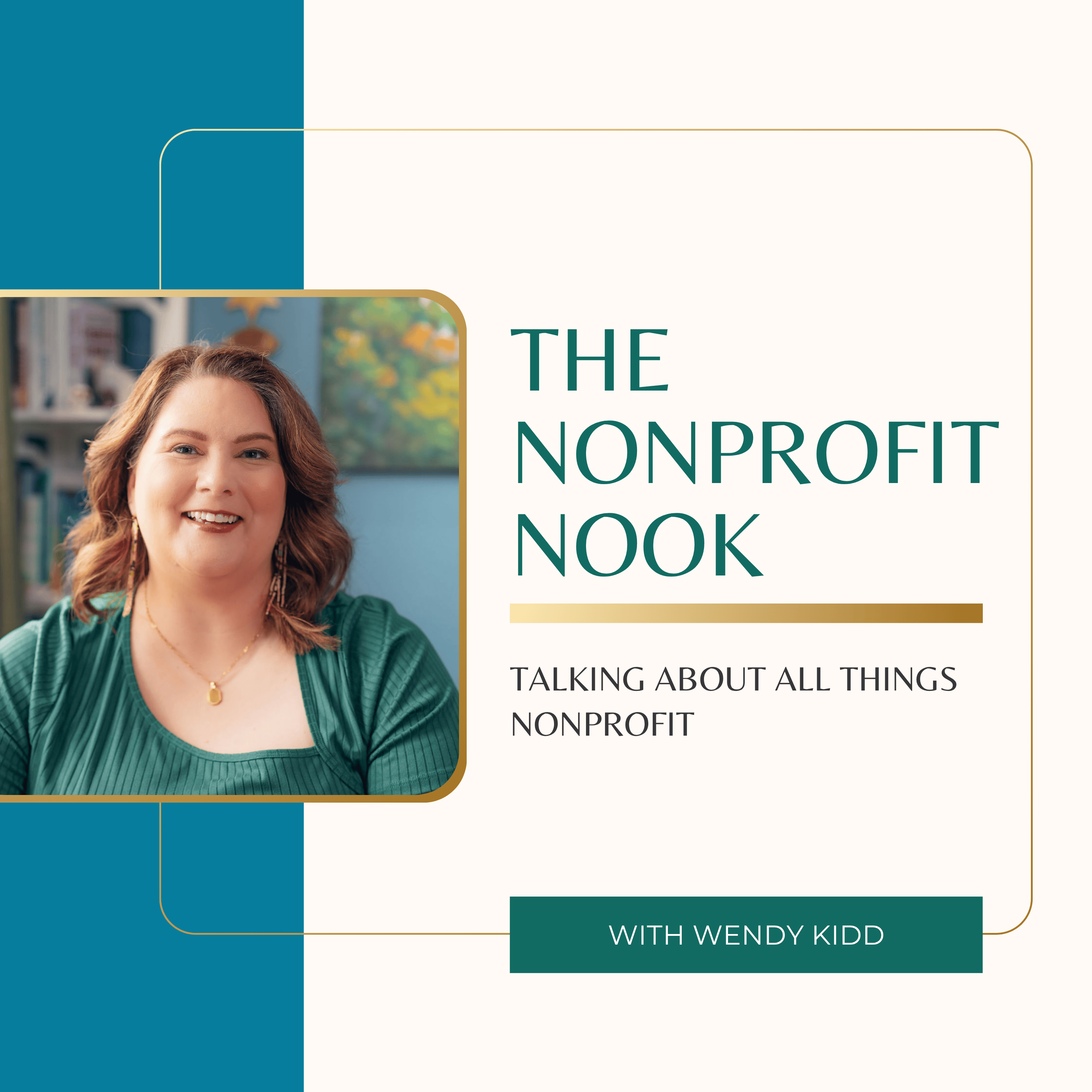
The NonProfit Nook
by Wendy Kidd
Welcome to The NonProfit Nook — the podcast for nonprofit leaders, board members, staff, and community champions who want to strengthen their organizations and make a bigger impact... without burning out in the process.I’m Wendy Kidd—business owner for over 20 years and nonprofit leader for just as long. I created this show because I know how overwhelming it can be to lead a nonprofit. Most of us didn’t get into this work thinking we’d be running a business—we just wanted to help people. But the truth is, running a nonprofit *is* running a business, and I’m here to help make that part easier.Each week on The NonProfit Nook, you’ll get real talk and real tools.We’ll dive into the nuts and bolts of nonprofit management—strategic planning, budgeting, board engagement, donor communication, volunteer recruitment, and more. No fluff—just practical advice and conversations that help you work smarter and lead with confidence.You’ll also hear:- Stories from inspiring North Texas nonprof
-
36
More Than a Meal: Serving with Dignity at Community Garden Kitchen
What happens when a conversation among friends uncovers a need in your community that’s far bigger than anyone realized?For Angela Poen, Chair of Community Garden Kitchen, that moment came in 2014. Angela and a group of friends were talking about hunger when they learned just how many children and families in Collin County were experiencing food insecurity. They also discovered a gap: while food pantries were doing important work, there were people who couldn’t access them during operating hours or didn’t have a place to store and prepare food.Their response was ambitious: build a place where anyone who needs a meal can sit down and enjoy one with dignity — no questions asked.In this episode of The Nonprofit Nook, Angela joins Wendy to share how that idea became Community Garden Kitchen, a nonprofit that describes itself not as a soup kitchen, but as a free meal restaurant.Angela takes us behind the scenes of the organization’s journey — from securing land and raising the money for a permanent building to navigating the pandemic before they could even open their doors. When Community Garden Kitchen finally opened in 2022, they did so debt-free.Today, the organization has served approximately 160,000 meals through its dining room and sack lunch program, supported by an incredible volunteer community of roughly 180 volunteers each week.But the heart of this conversation goes beyond the number of meals served. Angela and Wendy talk about what it means to build dignity into the way you serve, why volunteers are essential to Community Garden Kitchen’s model, and how nonprofits can stay focused on the people behind the numbers.If you lead, volunteer with, support, or dream of starting a nonprofit, this conversation is a beautiful reminder that sometimes meaningful change starts when a few people recognize a need and decide, We can do something about this.In This EpisodeYou’ll hear Wendy and Angela talk about:How Angela and her friends first discovered the extent of food insecurity in their own communityThe important difference between hunger and food insecurityWhy traditional food resources don’t always work for people experiencing housing or financial instabilityHow Community Garden Kitchen went from an idea in 2014 to opening its doors in 2022Why the organization intentionally created a restaurant-style experience centered on dignityHow Community Garden Kitchen opened its new building debt-freeThe role hundreds of volunteers play in making the organization’s work possibleWhat other nonprofit leaders can learn from Community Garden Kitchen’s persistence, community support, and service-first approachResources + LinksConnect with Community Garden KitchenLinkedIn: https://www.linkedin.com/company/community-garden-kitchen/?viewAsMember=trueInstagram: https://www.instagram.com/COMMUNITY_GARDEN_KITCHEN/Facebook: https://www.facebook.com/communitygardenkitchenofcollincounty/Volunteer with Community Garden Kitchen: https://bit.ly/CGKVolunteerAppRegister for Your Financials Tell a Story — September 24Join Wendy and Melanie for Your Financials Tell a Story, where they’ll continue the conversation around understanding and using your nonprofit’s financials.Register here: https://www.eventbrite.com/e/your-financials-tell-a-story-tickets-1998973064246?aff=oddtdtcreatorConnect with Wendy + The Nonprofit NookThe Nonprofit Nook: https://nonprofitnook.comUpcoming Nonprofit Nook Events: https://www.nonprofitnook.com/eventsWendy Kidd on LinkedIn: https://www.linkedin.com/in/wendykidd/More from Boss Level EngagedBoss Level Engaged: https://www.bosslevelengaged.com/Boss Table: https://www.bosslevelengaged.com/bosstableMentioned in this episode:Enji
-
35
How Nonprofits Can Use AI Without Losing the Human Touch with Rachael Leventhal Garnett of EAAS AI
AI can save your nonprofit time—but where do you start without sacrificing the human relationships at the heart of your mission?In this episode of The Nonprofit Nook, Wendy Kidd sits down with Rachael Leventhal Garnett of EAAS AI to make AI feel practical, approachable, and useful for nonprofit leaders.They unpack the difference between AI and automation, how to identify repetitive tasks worth streamlining, and why your organization needs clear AI guardrails—even if you haven't officially adopted AI yet.You'll also hear why Rachael believes the best AI strategy starts with people, not technology, and how keeping a human in the loop can help your organization use AI responsibly while creating more capacity for mission-driven work.In this episode, you'll learn:The difference between AI and automationHow to spot repetitive workflows that could be automatedWhy AI should support your people rather than replace themWhat AI governance means and why your nonprofit needs guardrailsHow "shadow AI" can create risks for your organizationWhy human review is still essential when using AIHow to start small instead of trying to transform everything at onceRESOURCES + LINKSConnect with Wendy + The Nonprofit NookThe Nonprofit Nook:https://nonprofitnook.comUpcoming Nonprofit Nook Events:https://www.nonprofitnook.com/eventsWendy Kidd on LinkedIn:https://www.linkedin.com/in/wendykidd/Connect with Rachael + EAAS AIRachael Leventhal Garnett on LinkedIn:https://www.linkedin.com/in/rachael-garnett-eaas/EAAS AI on LinkedIn:https://www.linkedin.com/company/eaas-ai/?viewAsMember=trueAI Policy Resource:https://lp.eaaservice.com/ai-policyMore from Boss Level EngagedBoss Level Engaged:https://www.bosslevelengaged.com/Boss Table:https://www.bosslevelengaged.com/bosstableMentioned in This EpisodeMcKinsey Health Institute:https://www.mckinsey.com/mhi/overviewMentioned in this episode:Enji
-
34
Is Your Nonprofit Financially Sustainable? The Numbers You Can’t Ignore with Melanie Kirton
Is your nonprofit truly financially sustainable—or does everything just look okay because there’s still money in the bank?For a lot of nonprofit leaders and board members, financial reports can feel confusing, overwhelming, or like something to quickly review before moving on to the “real” work. But your financials are actually telling you a story about the health of your organization—and learning how to read that story can help you make better decisions before problems become crises.In this episode of The Nonprofit Nook, Wendy sits down with Melanie Kirton, founder of Financial Affairs, an accounting firm dedicated exclusively to nonprofits. Melanie helps mission-driven leaders move beyond basic bookkeeping and use their financial information to make strategic decisions with greater clarity and confidence.Wendy and Melanie dig into what nonprofit leaders and boards should actually be looking for in their numbers, including the true cost of running programs, whether your revenue is diversified enough, how much cash you should have in reserve, and the warning signs that your organization may be heading toward financial trouble.They also talk about an important reality: a program can be deeply connected to your history without necessarily being the best use of your resources today. Understanding what each program truly costs—and the impact it creates—can help your organization make thoughtful decisions about where to invest its time, people, and money.If you’ve ever sat in a board meeting while everyone glossed over the financial reports, wondered whether your nonprofit has enough money in reserve, or worried that your organization is too dependent on one funding source, this conversation is for you.In this episode, you’ll learn:Why strong financial reporting matters for both nonprofit leaders and boardsWhat your board should actually be paying attention to in financial reportsHow to calculate and evaluate the true cost of your programsWhy revenue diversification is critical to long-term sustainabilityThe risks of relying too heavily on one grant, funder, donor, or revenue sourceHow to think about cash reserves and what’s appropriate for your organizationFinancial red flags—including recurring deficits—that leaders shouldn’t ignoreWhy your budget, strategic plan, and financial reporting should work togetherHow better financial understanding can lead to better mission-driven decisionsRESOURCES + LINKSRegister for Your Financials Tell a Story — September 24 Join Wendy and Melanie for Your Financials Tell a Story, where they’ll continue the conversation around understanding and using your nonprofit’s financials. https://www.eventbrite.com/e/your-financials-tell-a-story-tickets-1998973064246?aff=oddtdtcreatorConnect with Melanie + Financial Affairs Financial Affairs: https://www.thefinancialaffairs.com/ Financial Affairs on LinkedIn: https://www.linkedin.com/company/the-financial-affairs-us/?viewAsMember=trueConnect with Wendy + The Nonprofit Nook The Nonprofit Nook: https://nonprofitnook.com Upcoming Nonprofit Nook Events: https://www.nonprofitnook.com/events Wendy Kidd on LinkedIn: https://www.linkedin.com/in/wendykidd/More from Boss Level Engaged Boss Level Engaged: https://www.bosslevelengaged.com/ Boss Table: https://www.bosslevelengaged.com/bosstableMentioned in this episode:Enji
-
33
More Than a Food Pantry: Serving McKinney with Dignity with Melody Krill
What does it look like when a food pantry becomes more than a place to pick up groceries—and instead becomes a place where people feel seen, supported, and treated with dignity?In this Community Spotlight episode of Nonprofit Nook, Wendy sits down with Melody Krill, Executive Director of the Community Food Pantry of McKinney, to talk about the growing reality of food insecurity in North Texas and the incredible work happening right here in the McKinney community.The Community Food Pantry of McKinney has been serving its neighbors for decades, but the need has grown dramatically. Melody shares how the pantry has grown from serving around 100 individuals a day when she started in 2024 to more than 600 a day, including more than 10,000 individuals in a month.But this isn't your traditional food pantry. As a choice pantry, the organization gives neighbors a grocery-store-style experience where they can use a shopping cart, walk the aisles, and choose the food their families actually need. Through food rescue partnerships with local grocery stores, the pantry is also helping reduce food waste while getting fresh food into the hands of families who need it.Melody also shares the deeply personal path that brought her to this work. After she and her husband both experienced job loss, Melody found herself needing assistance for her own family. That experience changed the way she thought about food insecurity—and about the importance of helping people without sacrificing their dignity.Wendy and Melody also dig into what it really takes to keep a rapidly growing nonprofit running: volunteers, community partnerships, grant funding, unrestricted donations, leadership, collaboration, and a willingness to keep finding creative ways to meet the need.This conversation is an important reminder that food insecurity doesn't always look the way we imagine it does. Sometimes it's a working family trying to make the numbers add up. Sometimes it's a single mom facing a crisis. Sometimes it's someone choosing between groceries, rent, and an electric bill.And sometimes, a little help at exactly the right moment can make an enormous difference.In This EpisodeHow the Community Food Pantry of McKinney serves local families through a choice-pantry modelWhy dignity is such an important part of addressing food insecurityThe dramatic increase in the number of neighbors needing assistanceMelody's personal experience with food insecurity and how it shaped her leadershipHow food rescue partnerships help the pantry provide fresh food while reducing wasteWhy volunteers, donors, grants, and community partnerships are essential to keeping the pantry operatingHow local businesses and community members can get involved and support the pantryResources & LinksCommunity Food Pantry of McKinneyWebsite: https://www.mckinneyfoodpantry.org/Instagram: https://www.instagram.com/mckinneyfoodpantry307/Facebook: https://www.facebook.com/McKinneyPantryMelody Krill on LinkedIn: https://www.linkedin.com/in/melody-krill-336a5b89/Gather on the SquareLearn More / Purchase: https://www.gatheronthesquare.com/offers/DzbQy6HG/checkoutConnect with Wendy KiddNonprofit Nook: https://nonprofitnook.comBoss Level Engaged: https://www.bosslevelengaged.com/Wendy Kidd on LinkedIn: https://www.linkedin.com/in/wendykidd/Mentioned in this episode:Enji
-
32
Stop Treating Social Media Like a Bulletin Board with Sheena Kalso
If social media feels like one more thing on your never-ending nonprofit to-do list, this episode is for you.I’m joined by Sheena Kalso, founder of Behind Your Scenes, a social media and video skills education company that helps established professionals show up on Instagram the way they already show up in real life. And Sheena understands the struggle firsthand: even while working as a social media manager for other people, she once went an entire year without posting on her own Instagram.So if you’ve ever thought, I’m just not good at social media, you are definitely not alone.Sheena breaks down how nonprofit leaders can stop overcomplicating content and start using social media for what it’s really good at: building human connection.We talk about what to do when you hate being on camera, including Sheena’s surprisingly simple advice to start with B-roll. Instead of jumping straight into talking-head videos, film yourself doing the work you’re already doing—typing at your desk, preparing for an event, working with your team, or simply going about your day. You can pair that footage with a strong text hook that teaches your audience something or grabs their attention.We also get into one of the biggest mistakes nonprofits make on social media: treating their feeds like bulletin boards filled with event announcements, donation requests, and organizational updates.Sheena encourages nonprofits to put people back into their content. Show the humans behind your mission—from your executive director to your intern—and let your audience get to know your organization's “cast of characters.” As Sheena explains, people want to know who is behind the work they’re supporting.And then we get into one of my favorite parts of the conversation: Instagram Stories and DMs.Instead of seeing Instagram solely as a place to broadcast your message, Sheena suggests thinking of it like a networking room. Stories can help you stay top-of-mind with people you’ve recently met, while genuine DMs can turn online connections into real relationships. The key? Stop pitching and start acting like a human.We also talk about why nonprofit leaders shouldn’t completely hand their voice over to someone else—or an AI-generated version of themselves. Your team can absolutely support your content, but the people who care about your organization want to hear from the real humans behind it.Most importantly, Sheena reminds us that you don't need to become amazing at video overnight. Being visible is a skill you build through practice. Start small, post the imperfect thing, and keep going.Because when it comes to social media, done really can be better than perfect.In this episode, we talk about:How to start creating video when you hate being on cameraWhy simple B-roll can become great nonprofit contentHow to create stronger hooks that stop the scrollWhy nonprofits need to show more human faces in their feedsHow to build a “cast of characters” from your staffWhy Instagram Stories are an underrated networking toolHow to use DMs to build genuine relationships instead of pitchingWhy nonprofit leaders shouldn't completely outsource their voiceThe problem with AI-generated people and overly manufactured contentHow to stop assuming your everyday nonprofit work is “too boring” to shareWhy consistency and practice matter more than perfectionRESOURCESConnect with Wendy + Nonprofit NookNonprofit Nook:https://nonprofitnook.comBoss Level Engaged:https://www.bosslevelengaged.com/Connect with Wendy Kidd on LinkedIn:https://www.linkedin.com/in/wendykidd/Connect with Sheena + Behind Your ScenesLinkedIn:https://www.linkedin.com/in/behindyourscenes/Instagram:https://www.instagram.com/behindyourscenes.coFacebook:https://www.facebook.com/sheenakalsocreatesFirst Impressions Audit:https://behindyourscenes.hbportal.co/public/bysauditJoin the Reely Fun Club:https://behindyourscenes.thrivecart.com/reely-fun-club/Talking Head Interview Questions:https://behindyourscenes.myflodesk.com/interviewquestionsFree Nonprofit Nook Resource from Sheena:https://behindyourscenes.myflodesk.com/nookfreebieInstagram Accounts Sheena Recommends for InspirationMilwaukee Public Library:https://www.instagram.com/milwaukeepubliclibrary/Trevor Crump:https://www.instagram.com/thetrevorcrumpMentioned in this episode:Enji
-
31
From One Chapter to 400: Luke Mickelson on Scaling a Mission
From One Chapter to 400: Luke Mickelson on Scaling a MissionHow do you grow a nonprofit from one local project into an international movement without losing the heart behind the mission?In this episode of The Nonprofit Nook, Wendy Kidd welcomes back Luke Mickelson, founder of Sleep in Heavenly Peace (SHP), to pull back the curtain on what it really takes to scale a nonprofit.What started as one person building beds for children who didn't have one has grown into more than 400 chapters across 47 states and four countries, serving hundreds of thousands of children. But rapid growth brings new challenges—leadership, culture, delegation, and protecting your mission.Luke shares the behind-the-scenes story of SHP's explosive growth, including the unexpected national attention that changed everything, the difficult leadership decisions that came with expansion, and why every growing nonprofit must guard its mission above all else.Whether you're leading a small nonprofit that's ready to grow or you're managing multiple locations already, this conversation is packed with practical wisdom for building an organization that scales without sacrificing its heart.In this episode, you'll learn:How Sleep in Heavenly Peace grew from one chapter to more than 400The story behind Mike Rowe's Returning the Favor and how national exposure changed everythingWhy growth requires letting go of control—and how to do it wellThe biggest leadership challenges that come with scaling a nonprofitHow to protect your organization's culture while expandingThe importance of keeping your mission crystal clear for every volunteer and leaderWhy "humans helping humans" remains the foundation of SHP's successPractical leadership lessons for founders experiencing rapid growthHow to avoid mission drift as your nonprofit growsMemorable Quote"The first and foremost, most important thing when you grow is making sure everybody knows one thing that's crystal clear: What is our mission? We will not add to it or take away from it."ResourcesConnect with Luke MickelsonLinkedIn: https://www.linkedin.com/in/shpluke/Instagram: https://www.instagram.com/lukemickelson/Facebook: https://www.facebook.com/SHPLukeFounder's Syndrome Survival Course: https://lukemickelson.com/fss-courseSleep in Heavenly Peace: https://shpbeds.orgConnect with Wendy KiddNonprofit Nook: https://nonprofitnook.comBoss Level Engaged: https://www.bosslevelengaged.com/Wendy Kidd on LinkedIn: https://www.linkedin.com/in/wendykidd/ If you enjoyed this episode...If this conversation encouraged you, be sure to subscribe to The Nonprofit Nook, leave a review, and share this episode with another nonprofit leader who's working to grow their mission without losing what makes it special.Mentioned in this episode:Enji
-
30
Why We Tell People: "Don't Start a Nonprofit" with Anh Nguyen
In this episode of The Nonprofit Nook, Wendy sits down with nonprofit leader and marketing strategist Anh Nguyen to unpack the advice that always gets people's attention: "Don't start another nonprofit."Before you assume they're against new nonprofits, hear them out. Wendy and Anh explore why passion alone isn't enough to build a sustainable organization, why a 501(c)(3) is a tax designation—not a business model—and how aspiring founders can make a greater impact by doing their homework before filing paperwork.Together, they discuss common misconceptions about nonprofit startups, the growing challenge of nonprofit saturation, the importance of market research, and why collaboration with existing organizations may create more impact than launching something new. If you've ever dreamed of starting a nonprofit—or know someone who has—this conversation offers the practical questions every founder should ask before taking the leap.In this episode, you'll learn:Why Anh always says, "Don't start another nonprofit."The biggest myths about launching a nonprofit.How to determine whether your idea truly fills a gap.Why nonprofits should be run like businesses.When collaboration creates more impact than competition.The questions every founder should answer before applying for 501(c)(3) status.This episode is a must-listen for anyone considering starting a nonprofit and wanting to build an organization that is both impactful and sustainable.ResourcesAnh’s LinkedIn - https://linkedin.com/in/AnhTNguyen170Wendy’s LinkedIn - https://www.linkedin.com/in/wendykidd/Amplified Marketing - https://www.instagram.com/amplifiedmktgtx/Boss Level Engaged Services: https://www.bosslevelengaged.com/Podcast Home: https://thenonprofitnook.com/The NonProfit Nook on YouTube https://www.youtube.com/@BossLevelEngagedPerplexity.ai - https://perplexity.aiFamilies to Freedom - https://www.familystofreedom.orgChapters00:00 Introduction and episode overview07:10 Guest introduction: Anh Nguyen and her background08:43 Why Wendy and Anh discuss the realities of nonprofits09:23 Common misconceptions about starting a nonprofit12:20 The importance of market research and collaboration13:46 Understanding nonprofit saturation and competition16:14 The necessity of a solid business plan and legal setup21:58 The role of ego and collaboration in nonprofits24:37 When is the right time to start a nonprofit?33:03 Key question: What is the goal of your nonprofit?35:07 Final thoughts and encouragement for prospective founderskeywordsnonprofit, starting a nonprofit, nonprofit tips, nonprofit collaboration, nonprofit planning, nonprofit saturation, nonprofit board, fiscal sponsorship, nonprofit impactMentioned in this episode:Enji
-
29
Unlocking Corporate Support: Strategies for Nonprofits with E Jeff Serrano
SummaryIn this conversation, Wendy Kidd and E. Jeff Serrano discusses the nuances of corporate engagement for nonprofits, emphasizing the importance of building meaningful partnerships rather than merely seeking donations. He shares insights on how nonprofits can prepare for corporate partnerships, leverage in-kind contributions, and maintain long-term relationships with corporate sponsors. Jeff also highlights the evolving landscape of corporate philanthropy and offers actionable steps for nonprofits to strengthen their corporate engagement efforts. Throughout the discussion, he stresses the significance of communication, patience, and understanding the corporate giving process.TakeawaysEngagement is more than just fundraising; it's about building partnerships.Nonprofits should have a designated person for corporate outreach.In-kind contributions can be as valuable as cash donations.Maintaining communication with corporate partners is crucial.Nonprofits need to understand the corporate giving cycle.Research potential corporate partners to align missions.Patience is key in corporate fundraising efforts.Feedback from corporate partners can improve nonprofit strategies.Nonprofits should be specific about their needs when approaching corporations.Building trust with corporate partners takes time and effort.ResourcesConnect with Jeff on LinkedIn: https://www.linkedin.com/in/ejeffserrano360corporateengagement/https://360corporateengagement.com/Boss Level Engaged: https://www.bosslevelengaged.com/Podcast Home: https://thenonprofitnook.com/The NonProfit Nook on YouTube https://www.youtube.com/@BossLevelEngagedChapters00:00 Navigating Technical Glitches and Podcasting Challenges03:00 The Importance of Corporate Engagement06:03 Building Meaningful Partnerships with Corporations08:49 Key Elements for Nonprofits Before Approaching Corporations11:59 Leveraging In-Kind Contributions14:59 Maintaining Long-Term Corporate Relationships17:59 Understanding Trends in Corporate Philanthropy21:02 Actionable Steps for Strengthening Corporate Engagement23:54 Starting Corporate Partnerships from Scratch27:03 The Joy of Fundraising and Corporate Engagement Consulting30:10 360 Degree Corporate Engagement Consulting Overview33:04 Final Thoughts and Key TakeawaysMentioned in this episode:Enji
-
28
REPLAY: Money Matters: Harnessing Bank Relationships for Nonprofit Success with Andrew Lee
In this episode of The NonProfit Nook, host Wendy Kidd is joined by Andrew Lee from First United Bank to discuss the importance of cultivating strong relationships between nonprofits and their banks. With nearly 18 years of banking experience, Andrew highlights key benefits and strategies for nonprofits, emphasizing the importance of open communication and understanding the organization's needs. He also shares practical advice on financial management, internal controls, and common mistakes to avoid. This episode provides valuable insights for nonprofit leaders seeking to strengthen their financial foundation.Links:Andrew’s LinkedIn: https://www.linkedin.com/in/andrew-l-b360892b?utm_source=share&utm_campaign=share_via&utm_content=profile&utm_medium=ios_apphttps://www.bosslevelengaged.com/services-for-nonprofits-nonprofitnookhttps://thenonprofitnook.com/https://www.youtube.com/@BossLevelEngaged00:00 Introduction to Open Communication in Nonprofits00:21 Welcome to The NonProfit Nook01:05 Introducing Andrew Lee from First United Bank01:50 Building Relationships with Your Banker03:54 Benefits of Having a Go-To Banker06:09 Common Mistakes Nonprofits Make13:34 The Importance of Internal Controls18:24 Key Moments to Consult Your Banker18:54 The Role of Community Banks20:13 Identifying Green Flags in Banks21:38 Purpose in a Pocket: First United's Community Commitment23:04 The Importance of Nonprofit-Banker Relationships29:04 Supporting Small Nonprofits30:32 Final Thoughts and Encouragement32:31 Conclusion and Contact InformationMentioned in this episode:Enji
-
27
Perception Matters: Insights with Kendria Taylor
In this episode of The NonProfit Nook, host Wendy Kidd welcomes back Kendria Taylor, a learning and development expert with over 20 years of experience. Kendria shares her insights on the importance of perception for nonprofit leaders, particularly focusing on the perceptions of Executive Directors by the public, board members, and staff. The discussion covers strategies for aligning personal behavior with organizational mission, improving communication, and developing empathy. Kendria also offers practical advice for Executive Directors and boards facing conflicts, emphasizing the need for honest self-assessment and structured communication. Listeners are encouraged to consider how they are perceived and to address any issues with a proactive and empathetic approach. Wendy also notes that the podcast will take a brief hiatus over the holidays, returning on January 6th.https://www.tg8solutions.comhttps://www.instagram.com/thekendriataylor/https://www.instagram.com/tg8solutionsinsight/https://www.bosslevelengaged.com/services-for-nonprofits-nonprofitnookhttps://thenonprofitnook.com/https://www.youtube.com/@BossLevelEngaged00:00 Introduction to the Rumor Mill00:30 Welcome to The NonProfit Nook01:18 Meet Kendria Taylor: Learning and Development Powerhouse02:23 Discussing Feedback and Generational Workforce03:38 Diving into Perception in Nonprofits08:54 Empathy and Leadership in Nonprofits12:19 Balancing Frontline and Office Work15:29 Effective Board Management19:11 Addressing Perception Issues20:14 Naming and Taming Emotions21:16 Empathy in the Workplace22:23 Addressing Board and ED Conflicts25:21 Communication and Generational Differences27:51 Assessing Board Impact and Engagement30:11 Perception and Public Image35:05 Final Thoughts and Listener Engagement35:36 Holiday Announcement and Sign-OffMentioned in this episode:Enji
-
26
Decoding Nonprofit Finances: Hiring a Bookkeeper, Collaborating and Key Metrics with Kelsey Gleason
Navigating Bookkeeping for Nonprofits: Tips, Tools, and Best PracticesIn this episode of The NonProfit Nook, host Wendy Kidd is joined by Kelsey Gleason, co-owner of Educated Bookkeeping, to explore the distinct challenges and strategies of bookkeeping for nonprofits versus for-profit businesses. They discuss the importance of understanding financial reports, customizing chart of accounts, and the significance of training and quality control for volunteer bookkeepers. They also cover practical tips on selecting a professional bookkeeper, using QuickBooks features like classes and projects, and highlight a crucial financial metric every nonprofit board should monitor. The episode aims to provide real tools and strategies to help nonprofit leaders and boards manage their finances more effectively.Links:https://www.educatedbookkeeping.comhttps://www.instagram.com/educatedbookkeeping/https://www.bosslevelengaged.com/services-for-nonprofits-nonprofitnookhttps://thenonprofitnook.com/https://www.youtube.com/@BossLevelEngagedhttps://www.instagram.com/thenonprofitnook/00:00 Introduction to Nonprofit Bookkeeping01:28 Meet Kelsey Gleason: From Teacher to Bookkeeper02:05 Challenges of Nonprofit Bookkeeping05:03 Advice for Small Nonprofits Without a Bookkeeper05:49 Training and Software Recommendations10:27 Hiring a Professional Bookkeeper18:59 Understanding Financial Reports22:08 QuickBooks Tips and Tricks26:33 Final Thoughts and Key Takeaways30:37 Conclusion and FarewellMentioned in this episode:Enji
-
25
REPLAY: Creating a Feedback-Friendly Environment: Tools for Team Success and Retention
In this episode of 'The NonProfit Nook,' host Wendy Kidd and guest Kendria Taylor, a learning and development expert, delve into the importance of creating a culture of feedback within nonprofit organizations. They discuss the definition and the significance of providing various types of feedback: reinforcing, redirecting, impact, and reflective. Kendria shares practical models such as the 'GOOD' model for effective feedback and provides strategies for personalizing feedback based on communication styles. The episode emphasizes that consistent, thoughtful feedback can build trust, enhance morale, and boost organizational performance. Kendria also offers listeners free tools to improve their feedback approaches, making this episode an invaluable resource for nonprofit leaders aiming to strengthen their teams and retain top talent.Links: https://www.tg8solutions.comhttps://www.instagram.com/thekendriataylor/https://www.instagram.com/tg8solutionsinsight/https://www.bosslevelengaged.com/services-for-nonprofits-nonprofitnookhttps://thenonprofitnook.com/https://www.youtube.com/@BossLevelEngaged00:00 Introduction to Active Listening00:23 Welcome to The NonProfit Nook01:09 Meet Kendria Taylor02:45 The Importance of Feedback09:21 Types of Feedback13:40 Developing Your Team with Feedback19:14 The Importance of Ongoing Feedback19:49 Creating a Culture of Feedback20:25 Introducing the Good Model21:54 Breaking Down the Good Model24:21 Giving Feedback to Leaders27:34 Understanding Communication Styles30:31 Reflective and Empathetic Listening33:16 Free Resources and ConclusionMentioned in this episode:Enji
-
24
REPLAY: Spotlight: Communities Foundation of Texas & North Texas Giving Day
Maximizing Impact: Inside the Communities Foundation of Texas and North Texas Giving DayIn this episode of The NonProfit Nook, host Wendy Kidd converses with Heather Lothes, Donor Relations Officer at the Communities Foundation of Texas (CFT). The discussion focuses on the role and impact of CFT in North Texas, emphasizing its efforts to support local nonprofits and philanthropic activities. They delve into the details of North Texas Giving Day, a significant regional initiative designed to boost donations and awareness for local nonprofits. Heather shares insights on how nonprofits can maximize their success on this day and the ongoing support CFT provides throughout the year. Listeners are encouraged to participate and spread the word to enhance community support and philanthropy.Links:CFT Website: https://www.cftexas.org/North Texas Giving Day website: https://www.northtexasgivingday.org/Social Handles - CFT: communitiesfoundationoftexas, NTGD: northtexasgivingdayhttps://www.bosslevelengaged.com/services-for-nonprofits-nonprofitnookhttps://thenonprofitnook.com/https://www.youtube.com/@BossLevelEngaged00:00 Introduction to Community Foundations00:58 Welcome to The NonProfit Nook01:42 Meet Heather Lothes02:43 Understanding Communities Foundation of Texas05:18 North Texas Giving Day: Origins and Impact08:03 Maximizing North Texas Giving Day11:44 Upcoming Events and How to Get Involved14:05 The Broader Impact of North Texas Giving Day15:22 Riding the Wave of North Texas Giving Day16:34 Maximizing Success on Giving Day17:41 Leveraging Your Network and Resources19:38 The Power of Follow-Up22:29 Beyond North Texas Giving Day: CFT's Year-Round Impact22:40 CFT's Multifaceted Support for Nonprofits25:28 CFT's Role in Community Crises25:56 Conclusion and Final ThoughtsMentioned in this episode:Enji
-
23
Your Mission Deserves a Stronger Brand with Amy Jackson
In this episode, Wendy Kidd and Amy Jackson explore the importance of brand strategy for nonprofits and purpose-driven organizations. They discuss how a clear, authentic, and actionable brand foundation can simplify decision-making, improve consistency, and enhance community engagement.resourcesAmy's website: https://www.brandisnota4letterword.com/Connect on LinkedIn: https://www.linkedin.com/in/amyjdesigns/Follow Amy on Insta: @brandisnota4letterwordAmy's podcast: https://www.brandisnota4letterword.com/podcasthttps://www.bosslevelengaged.com/services-for-nonprofits-nonprofitnookhttps://thenonprofitnook.com/https://www.youtube.com/@BossLevelEngagedkeywordsbrand strategy, nonprofit branding, brand audit, brand guide, community building, brand consistency, purpose-driven brandingChapters00:00 The Importance of Consistent Branding for Nonprofits09:36 Building a Strong Brand Foundation for Nonprofits12:30 The Importance of Brand Hierarchy15:21 The Brand Audit Process19:19 Understanding Competitive Research and Audience Journey24:25 Creating a Living Brand Guide30:14 When to Consider a Brand Refresh33:20 Budget-Friendly Branding SolutionsMentioned in this episode:Enji
-
22
Building a People-First Nonprofit Culture: Practical HR Strategies from Gabriela Norton
In this insightful interview, Gabriela Norton, a strategic HR expert supporting nonprofits, shares practical strategies for building healthy workplace cultures, managing HR challenges, and implementing effective performance management. Discover how nonprofits can create sustainable, people-first environments with limited resources.keywordsNonprofit HR, workplace culture, performance management, employee engagement, HR policies, leadership, organizational developmentkey topicsHR challenges in nonprofitsPerformance management best practicesBuilding a healthy workplace culture resourcesPeople Performance Resources - www.pprhr.comConnect with Gabriela - https://www.linkedin.com/in/gabrielanorton/https://www.linkedin.com/company/people-performance-resources-llc/https://www.instagram.com/ppr_hrhttps://www.facebook.com/pprhrSociety for Human Resource Management (SHRM) - https://www.shrm.org/Dallas HR Chapter - https://dallashr.org/https://www.bosslevelengaged.com/services-for-nonprofits-nonprofitnookhttps://thenonprofitnook.com/https://www.youtube.com/@BossLevelEngagedChapters00:00 Introduction to Nonprofit HR Challenges02:37 Common HR Issues in Nonprofits05:46 Establishing Clear Expectations08:47 The Importance of Job Descriptions11:51 Creating an Employee Handbook14:34 Performance Management Best Practices17:42 The Role of Leadership in HR20:41 Building a Healthy Workplace Culture23:47 Resources for Nonprofits26:37 First Steps for Improvement29:32 Final Thoughts and Key Takeaways39:35 Introduction to Leadership Development Toolkit40:32 Accessing HR Tools and TemplatesMentioned in this episode:Enji
-
21
Luke Mickelson: Building Beds and Battling Founder’s Syndrome
summaryLuke Mickelson shares his inspiring journey from small-town farm kid to founder of Sleep in Heavenly Peace, scaling a nonprofit that has delivered over 350,000 beds to children in need. He discusses the origins of his mission, the challenges of scaling, founder syndrome, and practical advice for nonprofit growth and leadership. key topicsThe origin story of Sleep in Heavenly PeaceScaling a nonprofit from local to globalFounder syndrome and leadership challengesThe importance of vulnerability and self-awareness in leadership action itemsVisit shpbeds.org to learn more and find your local chapterStart a chapter or donate to support beds for children in needTake the Founder Syndrome assessment at lukemickelson.comJoin the upcoming Founder Syndrome Survival Course resourcesSleep in Heavenly Peace Website - https://shpbeds.org Follow Sleep in Heavenly Peace - https://www.linkedin.com/company/shpbeds/posts/?feedView=all Founder Syndrome Survival Course - https://lukemickelson.com/fss-course Connect with Luke - https://www.linkedin.com/in/shpluke/ Follow Luke - https://www.instagram.com/lukemickelson/ , https://www.facebook.com/SHPLuke Boss Level Engaged Services: https://www.bosslevelengaged.com/services-for-nonprofits-nonprofitnook Podcast Home: https://thenonprofitnook.com/The NonProfit Nook on YouTube https://www.youtube.com/@BossLevelEngaged keywordsNonprofit, Founder Syndrome, Scaling Nonprofits, Sleep in Heavenly Peace, Leadership, Social Impact, Community Service, Nonprofit Growth, Founder Challenges, Leadership EvolutionMentioned in this episode:Enji
We're indexing this podcast's transcripts for the first time — this can take a minute or two. We'll show results as soon as they're ready.
No matches for "" in this podcast's transcripts.
No topics indexed yet for this podcast.
Loading reviews...
ABOUT THIS SHOW
Welcome to The NonProfit Nook — the podcast for nonprofit leaders, board members, staff, and community champions who want to strengthen their organizations and make a bigger impact... without burning out in the process.I’m Wendy Kidd—business owner for over 20 years and nonprofit leader for just as long. I created this show because I know how overwhelming it can be to lead a nonprofit. Most of us didn’t get into this work thinking we’d be running a business—we just wanted to help people. But the truth is, running a nonprofit *is* running a business, and I’m here to help make that part easier.Each week on The NonProfit Nook, you’ll get real talk and real tools.We’ll dive into the nuts and bolts of nonprofit management—strategic planning, budgeting, board engagement, donor communication, volunteer recruitment, and more. No fluff—just practical advice and conversations that help you work smarter and lead with confidence.You’ll also hear:- Stories from inspiring North Texas nonprof
HOSTED BY
Wendy Kidd
CATEGORIES
Loading similar podcasts...
Frequently Asked Questions
How many episodes does The NonProfit Nook have?
The NonProfit Nook currently has 16 episodes available on PodParley. New episodes are automatically indexed when they're published to the podcast feed.
What is The NonProfit Nook about?
Welcome to The NonProfit Nook — the podcast for nonprofit leaders, board members, staff, and community champions who want to strengthen their organizations and make a bigger impact... without burning out in the process.I’m Wendy Kidd—business owner for over 20 years and nonprofit leader for just as...
How often does The NonProfit Nook release new episodes?
The NonProfit Nook has 16 episodes. Check the episode list to see recent publication dates and frequency.
Where can I listen to The NonProfit Nook?
You can listen to The NonProfit Nook on PodParley by clicking any episode. We provide an embedded audio player for direct listening, and you can also subscribe via your preferred podcast app using the RSS feed.
Who hosts The NonProfit Nook?
The NonProfit Nook is created and hosted by Wendy Kidd.
URL copied to clipboard!