
PODCAST · health
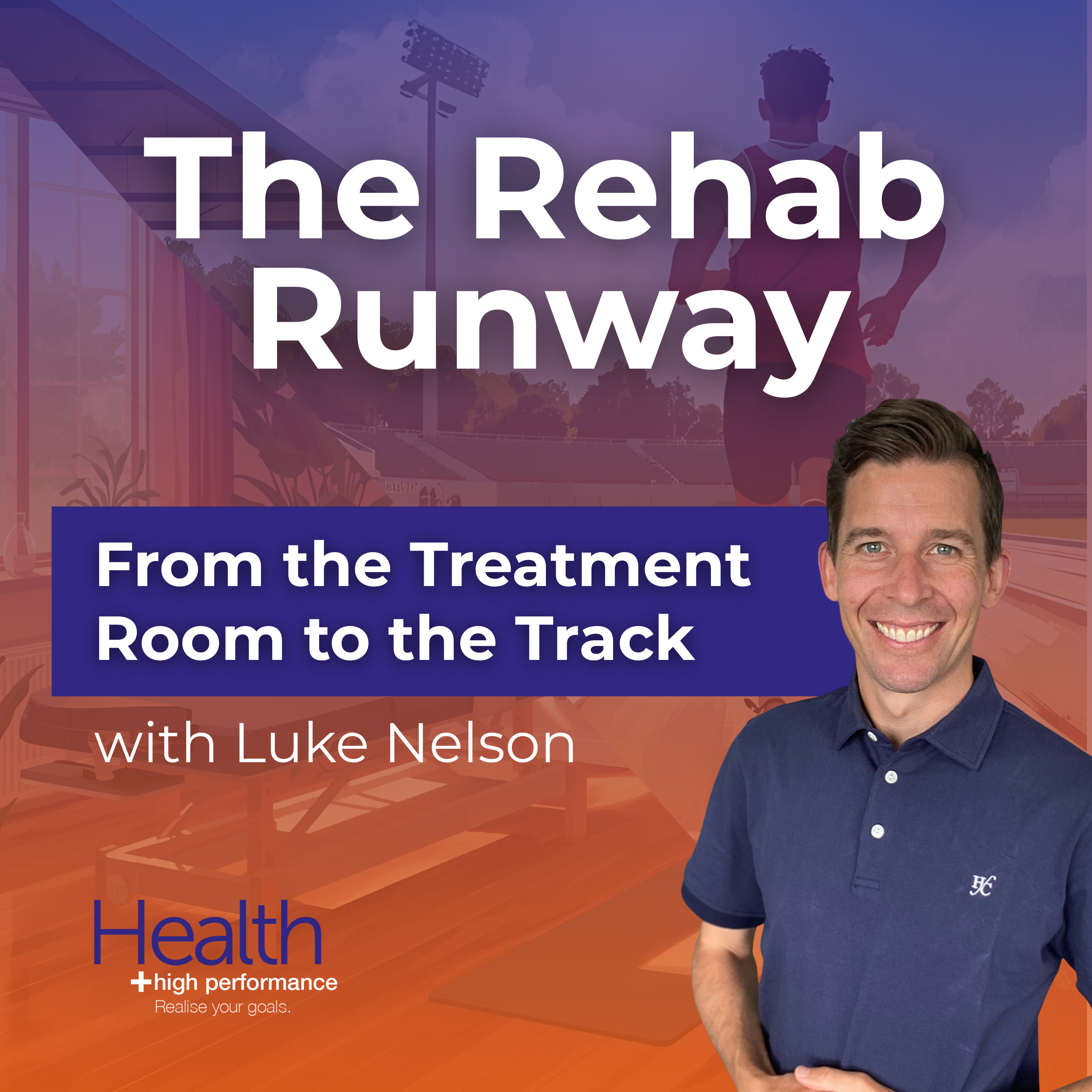
The Rehab Runway: From the Treatment Room to the Track
by Luke Nelson
"The Rehab Runway: From the Treatment Room to the Track" is your go-to podcast for injury recovery and running performance. Hosted by Luke Nelson, Sports & Exercise Chiropractor, running coach, and strength coach, it helps runners recover smarter and perform stronger, while giving health pros practical, evidence-based insights. From Achilles tendinopathy to return-to-run protocols, Luke shares strategies to get athletes moving well and performing their best.
-
15
Strength Training for Runners: What Actually Matters?
🎙️ Strength Training for Runners: What Actually Matters?Strength training has become one of the most talked-about topics in running performance and injury prevention. But despite the growing body of research, many runners are still left wondering what they should actually be doing in the gym, how often they should be doing it, and whether it will truly make them a better runner.In this episode of The Rehab Runway, I’m joined by physiotherapist, strength and conditioning coach, researcher and podcaster Kate Baldwin to unpack what the evidence really tells us about strength training for runners.We explore why strength training appears to improve running economy and performance, the concept of the interference effect, and whether runners should really be worried that lifting weights will negatively affect their endurance training.Kate also shares insights from her PhD research into concurrent training in endurance athletes, including how strength and endurance training can be effectively integrated, the minimum effective dose of strength training, and why consistency often matters more than complexity.We also discuss:🏋️♂️ How much strength training runners actually need🏃 Running economy and durability⚡ The role of strength training in performance📈 Practical programming considerations🔋 Recovery and balancing gym work with running🧠 Common misconceptions around strength training for endurance athletesWhether you're a runner, coach or clinician, this episode is packed with practical, evidence-informed takeaways you can apply immediately.Full show notes here📲 Follow Kate Baldwin on Instagram:@thedistancedr🌐 Connect with Luke NelsonInstagram: @sportschirolukeWebsite: https://www.healthhp.com.au/🎧 Enjoying the podcast?Please consider following, rating, and sharing The Rehab Runway. It helps us continue bringing evidence-informed conversations to runners and health professionals around the world.
-
14
Running Durability Explained: Why You Fall Apart Late in a Run
🎙️ Running Durability Explained: Why You Fall Apart Late in a RunWhy do some runners completely fade late in races while others seem to hold pace deep into fatigue?In this episode of The Rehab Runway, I’m joined by sports physiologist, researcher, strength coach, and endurance coach Michele Zanini to unpack one of the most talked about emerging concepts in endurance performance: durability.We explore what durability actually means, how it differs from VO₂ max, lactate threshold, and running economy, and why the physiology you start a race with may not be the physiology you finish with.Michele shares insights from his recent research examining how prolonged running changes running economy, thresholds, and fatigue resistance, along with what may separate runners who maintain performance late in races from those who completely unravel.We also dive into:• how durability is currently measured in research• practical ways coaches and clinicians may assess it in the field• the role of long runs and training volume• whether strength training can improve durability• and how fueling, pacing, and fatigue all interact during prolonged performanceWhether you’re a runner preparing for your next marathon or a clinician working with endurance athletes, this episode offers a fascinating look into what may be one of the missing links in long-distance performance.🎯 Key Takeaways• Durability refers to the ability to resist physiological deterioration during prolonged exercise• Running economy, VO₂ max, and lactate threshold can all worsen as fatigue builds• Two runners with similar “fresh” physiology may perform very differently late in races• Long runs and higher training volumes may improve running economy durability• Strength and plyometric training may help preserve performance under fatigue• Late-race breakdown is not always just a fueling or pacing issue• Durability may become an important future performance marker in endurance sportFull show notes here📚 Research DiscussedZanini, M., Jones, A.M. and Nybo, L. (2025) ‘Viewpoint: Durability, fatigability, repeatability, and resilience in endurance sports: definitions, distinctions, and implications’, Journal of Applied Physiology.Zanini, M., Folland, J.P. and Blagrove, R.C. (2025) ‘Regular long runs and higher training volumes are associated with better running economy durability in performance matched well-trained male runners’, Medicine & Science in Sports & Exercise.Zanini, M., Folland, J.P., Wu, H. and Blagrove, R.C. (2025) ‘Strength training improves running economy durability and fatigued high-intensity performance in well-trained male runners’, Medicine & Science in Sports & Exercise.🌐 Connect with Michele ZaniniInstagram: @michele.zaniniResearchGate: Michele ZaniniLinkedIn: Michele Zanini🌐 Connect with Luke NelsonInstagram: @sportschirolukeWebsite: https://www.healthhp.com.au/🎧 Enjoying the podcast?Please consider following, rating, and sharing The Rehab Runway. It helps us continue bringing evidence-informed conversations to runners and health professionals around the world.
-
13
Does Running Build Strength? What It Actually Improves
🎙️ Does Running Build Strength? What It Actually ImprovesDoes running actually build strength? 🏃Or does it simply make you better at running?In this episode of The Rehab Runway, Luke explores one of the more debated topics in running rehab and performance:What physical qualities does running actually improve, and are there situations where running alone may not fully solve every problem for every runner?This episode explores:• local muscular endurance 🔋• movement economy ⚙️• tendon and elastic function• reactive force qualities ⚡• muscle fibre adaptations• bone loading and adaptation 🦴• and where strength training may or may not fit for runners 🏋️Luke also discusses:• why running remains the primary driver of running performance• the difference between measurable and meaningful qualities• why rehab and S&C can sometimes drift too far away from the actual task• and why the answer is probably more individual than social media debates often suggestWhether you’re a runner, coach, physio, chiropractor, or strength coach, this episode is a nuanced discussion around specificity, adaptation, injury resilience, and performance📖 Does Running Build Strength?https://www.healthhp.com.au/post/does-running-build-strength📖 What Running Actually Improveshttps://www.healthhp.com.au/post/what-running-actually-improves🇰🇪 Trust Me Physio Run Camp, Kenya March 2027https://trustmephysiotherapy.com/product/physio-running-camp-kenya-3/🏃 MAT Running Course Melbourne, November 22nd, 2026https://www.matassessment.com/matliverunningcourse🔗 Link to full Shownotes💻 Connect with LukeInstagram: @sportschirolukeWebsite: www.healthhp.com.au
-
12
Calf Strains Explained Part 2: Rehab, Loading and Return to Running
Calf strains are one of the most common and recurrent injuries in runners, and how you load them during rehab is often the difference between a smooth return and repeated setbacks.In Part 2 of this series, I’m again joined by physiotherapist and researcher Brady Green to break down how to actually manage calf injuries from early stage rehab right through to return to running.We explore how loading should be progressed across each phase of rehab, including the role of isometrics, heavy strength work, and the transition into energy storage and plyometrics. We also unpack how management may differ in aponeurosis-related injuries, and why getting early loading right is critical.We dive into practical return to running strategies, including how to reintroduce running load, manage spikes, and integrate gym and running without overloading the calf. We also discuss why calf injuries are so prone to recurrence, and what can be done to reduce that risk long term.Whether you are a runner coming back from a calf strain or a clinician guiding that process, this episode provides a clear, structured approach to rehab and return to performance.🎯 Key TakeawaysEarly loading is important, but needs to be matched to the specific tissue involvedProgressive strength development is key before returning to higher speed runningEnergy storage and plyometric work are critical for return to runningAponeurosis injuries may require a more cautious and structured loading progressionPoor load management is a major contributor to recurrenceReturn to running should be gradual, structured and integrated with strength work🔗 Links and Resources 📄 Show notes: https://www.healthhp.com.au/the-rehab-runway/calf-strains-explained 📲 Follow Luke: https://www.instagram.com/sportschiroluke👤 Connect with Brady📲 Socials: X 🌐 Website: Pure Sports Physio 🔬Research Gate
-
11
Calf Strains Explained Part 1: Diagnosis, Classification and What Actually Matters
🎙️ Calf Strains Explained Part 1: Diagnosis, Classification and What Actually MattersCalf strains are one of the most common injuries in runners, yet they’re often poorly understood and frequently mismanaged.In this episode of The Rehab Runway, I’m joined by physiotherapist and researcher Brady Green to break down what is really going on when a runner “strains their calf” and how to approach diagnosis with more clarity and confidence.We explore the key structures involved, including gastrocnemius, soleus and the aponeurosis, and why tissue type and injury location matter when it comes to prognosis and rehab planning.We also dive into clinical examination, including the most useful tests in practice, how to assess calf strength and load tolerance, and whether we can truly differentiate injury types without imaging. Importantly, we discuss the role of scans, when they are useful, and what to do when imaging isn’t available.Whether you are a runner dealing with calf pain or a clinician managing these injuries, this episode will give you a clear, practical framework for diagnosis and early decision making.Part 2 will focus on rehabilitation, loading strategies and return to running.🎯 Key TakeawaysNot all calf strains are the same and tissue type matters for prognosisAponeurosis involvement may change both timelines and rehab approachClinical examination can provide strong direction even without imagingStrength and load tolerance are critical components of assessmentImaging can be helpful, but it is not always necessary for decision-makingAccurate early diagnosis sets up more effective rehabilitation🔗 Links and Resources📄 Show notes: https://www.healthhp.com.au/the-rehab-runway/calf-strains-explained📲 Follow Luke: https://www.instagram.com/sportschiroluke👤 Connect with Brady📲 Socials: X🌐 Website: Pure Sports Physio🔬Research Gate
-
10
Plantar Heel Pain Explained: Load, Foot Strength and the Truth About Heel Spurs
🎙️ Plantar Heel Pain Explained: Load, Foot Strength and the Truth About Heel SpursPlantar heel pain is one of the most common and frustrating injuries in runners, and one that is often misunderstood.In this episode of The Rehab Runway, I’m joined by podiatrist, strength coach, and researcher John Osborne to break down what is really going on with plantar heel pain and how to manage it effectively.We explore the key drivers behind heel pain through a load and capacity lens, unpack the role of foot and calf strength, and tackle one of the biggest myths in this space: heel spurs.We also dive into the growing conversation around foot strength, including whether intrinsic foot muscles are undertrained or overhyped, and how to actually apply strength training in both rehab and performance.Importantly, we discuss the role of overall health, including body weight and metabolic factors, and how these may influence both the development and recovery of plantar heel pain.Whether you are a runner dealing with heel pain or a clinician working with these cases, this episode is packed with practical, evidence-informed takeaways you can apply straight away.🎯 Key TakeawaysPlantar heel pain is primarily a load and capacity issue, not just a local tissue problemHeel spurs are often incidental and rarely the cause of painCalf capacity plays a major role alongside plantar fascia loadingFoot strength is important, but needs to be applied in contextOverall health, including metabolic factors, can influence outcomesRehab should focus on progressive loading rather than complete rest🔗 Links and Resources📄 Show notes: https://www.healthhp.com.au/the-rehab-runway/episode-9-plantar-heel-pain📲 Follow Luke: https://www.instagram.com/sportschiroluke👤 Connect with John📲 Instagram: https://www.instagram.com/theagilefoot🌐 Website: https://www.theagilefoot.com.au/📧 Email: [email protected]
-
9
The Mental Load of Injury: A Conversation for Runners & Clinicians with Freya Bronwin
Running injuries aren’t just physical. For many runners, injury threatens identity, routine, and self-worth.In Episode 8 of The Rehab Runway, Luke Nelson is joined by psychotherapist Freya Bronwin (Reframe Sessions) to explore the mental side of being sidelined, especially with longer-term setbacks like bone stress injuries.We discuss:🏃♂️ Why running becomes identity🧠 Fear of re-injury, hypervigilance, and rebuilding trust📱 Strava and social media: connection vs comparison🩻 Why bone stress injuries hit differently🩺 How clinicians can validate distress and support rehab better🔥 Burnout, over-responsibility, and the “high bar” clinician mindset👟 Masters runners: moving beyond comparing to your younger selfPhrase Book for Health Professionals https://walnut-taleggio-db1.notion.site/Phrasebank-for-Physios-EPs-247ffc8715e8808492abed6b775ab2ddConnect with Freya:Instagram: @reframe.sessionsWeb: https://reframe-sessions.com/Email: [email protected] resources: https://www.healthhp.com.au/Follow Luke: @sportschiroluke
-
8
Muscle Cramps: It’s Not Just Salt
Muscle cramps suck.But they’re probably not caused by what you think.In this solo episode of The Rehab Runway, Luke breaks down the research behind exercise-associated muscle cramps (EAMC), including prospective Ironman and ultramarathon studies, lab-based cramp threshold trials, and emerging evidence on neuromuscular fatigue.We cover:• Why the dehydration and electrolyte model is incomplete• Who is more likely to cramp• Why stretching works immediately• The truth about pickle juice and TRP channel activators• The role of recovery and cumulative fatigue• What actually reduces your risk long termIf you’ve struggled with cramps in training or racing, this episode will help you shift from chasing electrolytes to building capacity.🔗 Show notes & references:https://www.healthhp.com.au/the-rehab-runway/episode-7-muscle-cramps📲 Follow Luke for more running rehab insights: @sportschiroluke
-
7
Achilles Tendinopathy: What Actually Matters with Prof Peter Malliaras
🎙️ Achilles Tendinopathy: What Actually MattersAchilles tendinopathy is one of the most common and frustrating injuries in runners and one of the most challenging conditions clinicians manage.In this episode of The Rehab Runway, Luke Nelson is joined by Peter Malliaras, world-renowned physiotherapist and tendon researcher, to cut through the confusion around Achilles tendon pain.Together, they unpack what actually matters in Achilles tendinopathy, including tendon structure versus symptoms, subtendons, plantaris involvement, assessment frameworks, and the influence of stress, sleep, and overall health.The conversation also dives into management strategies, from pain relief and region-specific rehab through to isometrics, the Berlin approach, collagen supplementation, imaging, injections, and anti-inflammatories.Whether you are a runner dealing with persistent Achilles pain or a health professional looking to sharpen your clinical reasoning, this episode delivers practical, evidence-based insights you can apply immediately.📚 References: for a full list, head to the episode website https://www.healthhp.com.au/the-rehab-runway/episode-6-achilles-tendinopathy-what-actually-mattersConnect with Peter:Instagram: @TendinopathyrehabEducation, courses, and blogs: https://www.tendinopathyrehab.com/🎙️ Hosted by Luke Nelson- Sports & Exercise Chiropractor, running coach, and strength coach.Follow on Instagram @sportschiroluke
-
6
Masters Runners: Stronger, Smarter & Still Getting Faster
Masters runners make up the fastest-growing group in distance running, yet they are also more likely to struggle with recurring injuries, late-race fade, and inconsistent training. Why does this happen, and more importantly, what can be done about it?In this episode of The Rehab Runway Podcast, we take a deep dive into the science and practice of masters running. We unpack how ageing changes muscle strength, power, tendon behaviour, hormones, recovery, and durability, and why aerobic fitness is often preserved while tissues struggle to keep up.You will learn:What defines a masters runner and why participation has exploded globallyHow sarcopenia, power loss, and distal muscle decline affect running performanceWhy durability, not VO₂max, is often the limiting factor after 40How running biomechanics change with ageThe role of hormonal changes, energy availability, and bone health in injury riskWhy recovery and sleep matter more than ever for masters runnersPractical training strategies including strength training, density management, cross-training, and durability-focused long runsThis episode is designed for runners who want to keep improving beyond 40, and for health professionals working with masters athletes who want to move beyond a wear-and-tear narrative🔗 Related Blogshttps://www.healthhp.com.au/post/age-is-just-a-number-the-power-of-exercisehttps://www.healthhp.com.au/post/changes-in-the-master-runnerhttps://www.healthhp.com.au/post/our-number-one-tip-for-masters-runners📚 References: for a full list, head to the episode website https://www.healthhp.com.au/the-rehab-runway/episode-5-masters-runners🎙️ Hosted by Luke Nelson- Sports & Exercise Chiropractor, running coach, and strength coach.Follow on Instagram @sportschiroluke
-
5
Runner Rehab Q&A with Tom Goom
In this bonus Q&A episode of The Rehab Runway, Luke is joined again by Tom Goom (The Running Physio) to answer real-world questions from runners dealing with common and often frustrating injuries.Tom shares practical, evidence-informed advice on managing femoroacetabular impingement while training for a marathon, navigating long-standing iliotibial band pain, and understanding the role of pain hypersensitivity in persistent tendon issues. The conversation also covers when and how to safely reintroduce speed work after injury, helping runners balance confidence, load, and performance.Short, focused, and packed with clinical insight, this episode is ideal for runners and health professionals looking for clear guidance they can apply immediately.🔗 Follow Tom Goom: Instagram: @running.physio Website: https://www.running-physio.com/🎙️ Hosted by Luke Nelson — Sports & Exercise Chiropractor, running coach, and strength coach. Follow on Instagram @sportschirolukeLearn more at www.healthhp.com.au
-
4
Gamechangers in Running Rehab: Lessons from The Running Physio, Tom Goom
This week on The Rehab Runway, Luke sits down with one of the most influential voices in running rehab, Tom Goom, better known as The Running Physio.Tom has inspired clinicians and runners around the world with his evidence-based yet practical approach to treating running injuries. In this episode, Luke and Tom unpack the real gamechangers that have shaped how they both work with runners, from modern load management to the art of communication and the evolution of running rehab itself.They explore: 🏃♂️ How Tom’s approach to treating runners has evolved ⚙️ The key shifts and “aha moments” that changed his clinical practice 💪 Why strength training remains a cornerstone of injury prevention and rehab 📈 How to approach load management and return-to-run progressions 🚫 The biggest myths and mistakes still seen in running rehab 🧠 The importance of communication, behavioural change, and understanding the runner’s mindset 🔮 What excites Tom most about the future of running rehabPlus, Tom shares his top three recovery tips for runners and three key lessons for clinicians helping runners return from injury, before jumping into a rapid-fire round that reveals his favourite strength exercise, most underrated rehab tool, and one myth he wishes would disappear for good.Whether you’re a clinician, coach, or runner, this conversation is packed with insights you can apply immediately in the clinic or on the run.🔗 Follow Tom Goom: Instagram: @running.physio Website: https://www.running-physio.com/📝 Show Notes Mentioned in This Episode: Personal Energy Availability Questionnaire (PEAQ): https://mypeaq.streamlit.app/🎙️ Hosted by Luke Nelson — Sports & Exercise Chiropractor, running coach, and strength coach. Follow on Instagram @sportschirolukeLearn more at www.healthhp.com.au
-
3
From Setback to Start Line: Returning the Runner to Running with Chris Johnson
In this episode, Luke sits down with Chris Johnson, physical therapist, coach, and founder of Zeren PT and Performance, to break down the art and science of safely returning runners to the sport after injury.They explore what it truly means to “earn the right to run again,” the key criteria for reintroducing running, the common pitfalls made by both clinicians and athletes, and how to balance tissue healing with confidence, psychology, and performance. Chris also dives into load management, decision making, and the subtle nuances that often determine whether a return-to-run plan succeeds or stalls.Whether you’re a clinician helping runners get back on their feet or an athlete navigating your own comeback, this conversation is packed with clear, practical, evidence-based insights from one of the most respected minds in running rehabilitation.🎙️ Topics discussed:The philosophy behind safe return-to-run protocolsWhen and how to resume speed workWhether pain free running is necessaryPractical load management strategiesCommon mistakes to avoid during return to sportBuilding confidence and psychological readiness post-injuryFind Chris:📸 Instagram: @chrisjohnsonthept🌐 Website: chrisjohnsonpt.com🎙️ Hosted by Luke Nelson — Sports & Exercise Chiropractor, running coach, and strength coach. Follow on Instagram @sportschirolukeLearn more at www.healthhp.com.au
-
2
Beyond the Finish Line: The Science of Marathon Recovery
Crossing the finish line is an incredible achievement — but what happens next is just as important. In this episode of The Rehab Runway, Luke Nelson dives into the science and psychology of marathon recovery, unpacking what really happens to your body and mind after 42.2 kilometres.Discover: 🏃♂️ The physiological toll of marathon running — muscle damage, inflammation, cardiac stress, and immune changes. 🍒 Evidence-based recovery strategies for refuelling, hydration, and inflammation management. 🧠 The mental side of recovery — from post-marathon blues to goal resetting and motivation. 💤 How sleep, nutrition, and gradual loading accelerate recovery. 🩺 Practical guidance for health professionals on tissue timelines, readiness markers, and psychological support.Whether you’ve just finished your first marathon or you’re guiding athletes through recovery, this episode will help you understand what’s really happening beneath the surface — and how to return smarter, stronger, and healthier.🎙️ Hosted by Luke Nelson — Sports & Exercise Chiropractor, running coach, and strength coach. Follow on Instagram @sportschirolukeLearn more at www.healthhp.com.au
-
1
The Truth About Running, Arthritis, and Clicking Knees
Is running bad for your knees and hips? 🦵🏃♂️ Luke Nelson (@sportschiroluke) breaks down the science showing running protects rather than damages your joints. Learn the truth about osteoarthritis, joint health, and why “clicking knees” aren’t a cause for panic.💻 Read full show notes & references: https://www.healthhp.com.au/the-rehab-runway/episode-1-running-arthritis🎙️ Hosted by Luke Nelson — Sports & Exercise Chiropractor, running coach, and strength coach. Follow on Instagram @sportschirolukeLearn more at www.healthhp.com.au
We're indexing this podcast's transcripts for the first time — this can take a minute or two. We'll show results as soon as they're ready.
No matches for "" in this podcast's transcripts.
No topics indexed yet for this podcast.
Loading reviews...
ABOUT THIS SHOW
"The Rehab Runway: From the Treatment Room to the Track" is your go-to podcast for injury recovery and running performance. Hosted by Luke Nelson, Sports & Exercise Chiropractor, running coach, and strength coach, it helps runners recover smarter and perform stronger, while giving health pros practical, evidence-based insights. From Achilles tendinopathy to return-to-run protocols, Luke shares strategies to get athletes moving well and performing their best.
HOSTED BY
Luke Nelson
Loading similar podcasts...
Frequently Asked Questions
How many episodes does The Rehab Runway: From the Treatment Room to the Track have?
The Rehab Runway: From the Treatment Room to the Track currently has 15 episodes available on PodParley. New episodes are automatically indexed when they're published to the podcast feed.
What is The Rehab Runway: From the Treatment Room to the Track about?
"The Rehab Runway: From the Treatment Room to the Track" is your go-to podcast for injury recovery and running performance. Hosted by Luke Nelson, Sports & Exercise Chiropractor, running coach, and strength coach, it helps runners recover smarter and perform stronger, while giving health pros...
How often does The Rehab Runway: From the Treatment Room to the Track release new episodes?
The Rehab Runway: From the Treatment Room to the Track has 15 episodes. Check the episode list to see recent publication dates and frequency.
Where can I listen to The Rehab Runway: From the Treatment Room to the Track?
You can listen to The Rehab Runway: From the Treatment Room to the Track on PodParley by clicking any episode. We provide an embedded audio player for direct listening, and you can also subscribe via your preferred podcast app using the RSS feed.
Who hosts The Rehab Runway: From the Treatment Room to the Track?
The Rehab Runway: From the Treatment Room to the Track is created and hosted by Luke Nelson.
URL copied to clipboard!