
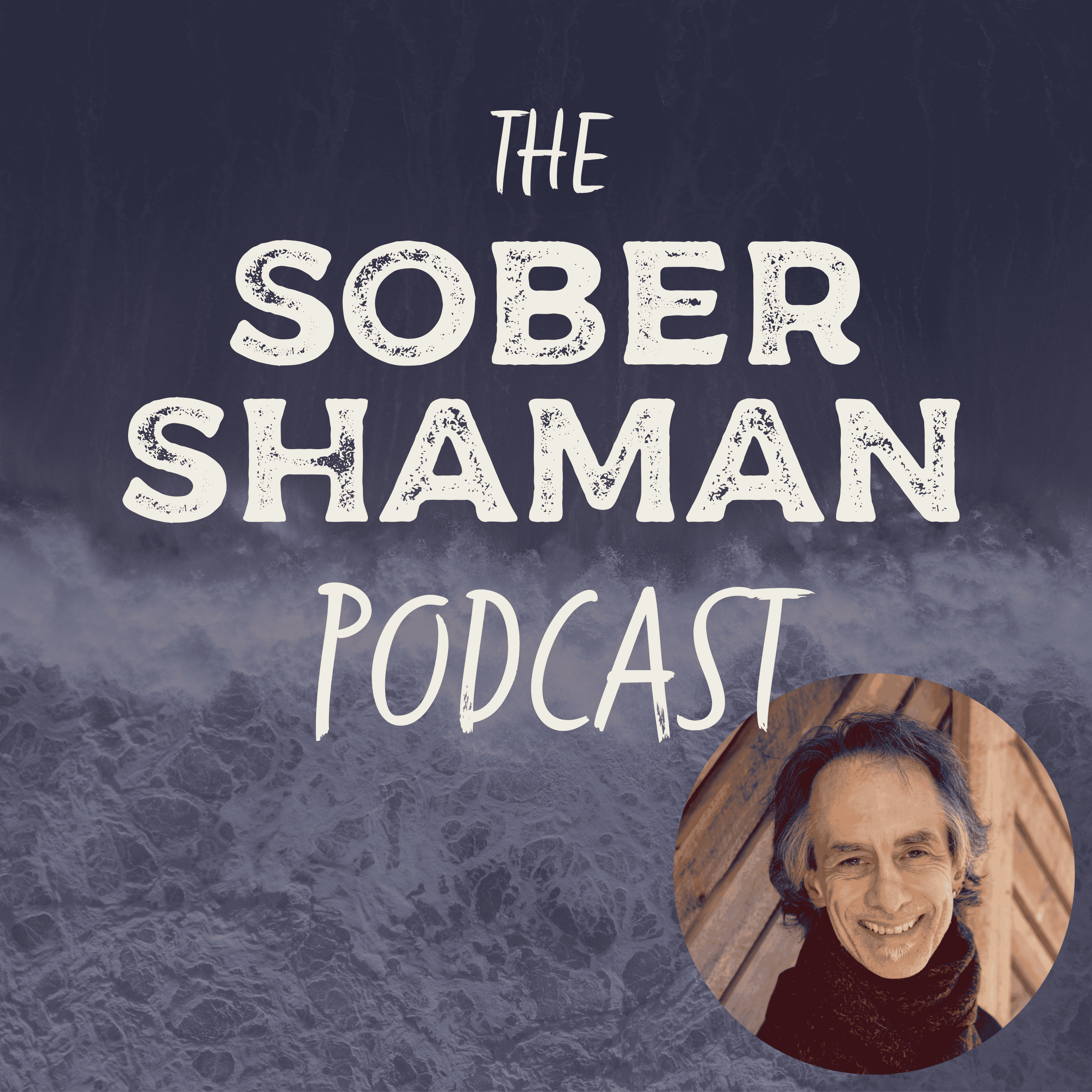
PODCAST · health
The Sober Shaman
by Transforming addiction by making the spiritual practical.
Spiritual practices that transform addiction into long-term, successful recovery. www.thesobershaman.com
-
70
Hold the Ball: Qi for Pain, Cravings and the Heart
Recorded from the back porch along the banks of the Ping River here in northern Thailand, I'm joined by Tucker our Temple Cat and a cacophony of singing birds for this episode of the Sober Shaman Podcast. We get into Qi, and not by talking about it, but by having an experience of it.The focus is one simple, powerful Qigong exercise: holding the ball. In 13 years inside addiction treatment centers, this is the exercise that lit people up. I could see the light bulbs going off when someone felt the Qi between their palms for the first time.We'll explore Qi follows Yi. Energy flows where attention goes. Which means we can direct it, move it, use it. Starting with the basics, jaw, shoulders, belly, we work through three lines of relaxation, build the Qi ball between the palms, and then take that ball of love and light to wherever it's needed: a headache, a knee, gastric upset, anxiety, cravings, heartbreak. No place to put it? Bring it straight into the Heart.This is a practice that can deliver palpable relief, not a cure-all, but an absolute component of healing that puts you back in participation with your own recovery.Want to run through it step by step? Lesson 23 is waiting at thesobershaman.com.Links referenced in this episode:thesobershaman.com
-
69
My Guardian Spirits: A Shamanic Journey in Sobriety
“Sobriety Is Boring”Really?I’ve noticed this sentiment has been showing up on social media lately, and I’ll admit, I get it. I bumped up against it in those first couple of years and I’ve had many people tell me they’ve experienced exactly the same. It’s common to hit some pretty quick plateaus of the, “Ok, I’ve stopped. Now what?” variety.But here’s what I keep coming back to: what’s boring, exactly? Life?Yup, there’s a lot to cover here. Because, as we know, stopping the active addiction is just the beginning. Links referenced in this episode:continue reading on Substack herethesobershaman.com
-
68
Am I a Shaman?
Am I a shaman? It’s right there in the name but the answer might surprise you. In this episode, I dig into what the word “shaman” actually means, why I deliberately use it, and why I’m equally deliberate about saying I’m not one. From lineage, ancestors and sacred language to power loss, soul loss and spiritual intrusion, I share the path I do walk and why I’d rather teach you to be your own shaman than do the work for you.Show HighlightsWhat a shaman actually is, Unpacking the real, traditional meaning of shamanism: lineage, sacred language, ritual, and the role of intermediary between people and spirit.Why I use the word, but don’t claim the title. The intentional tension behind the name “The Sober Shaman” and why challenging preconceived notions is part of the work.The three forms of shamanic disease. A breakdown of power loss, soul loss, and spiritual intrusion, and how they show up in addiction and trauma.Teaching you to do it yourself. Why I believe the most powerful healing is the kind nobody can do for you, but it’s also the kind nobody can take away from you, either. And how I guide people to reclaim it.This one is close to my heart, so I hope it sparks something in you too. Listen in, and let me know your thoughts. Don’t forget to like and subscribe wherever you get your podcasts, and come find me on Substack and at www.thesobershaman.com.Links referenced in this episode:thesobershaman.com
-
67
Addiction & Adderall: The Cost of Speeding
In this episode, I ask a few questions that always seem to hit a nerve, reveal definitive opinions and ignite interesting conversation.To begin, I start with, "What are the long term effects of Adderall?" There's a lot to look at there.Then, I visit a question that I'm often asked, which is: "If I'm diagnosed with ADHD, prescribed Adderall by a licensed psychiatrist, and taking it as I should be, is this still an addiction?"I take a look at these from a Chinese medicine perspective, which Adderall, and any amphetamine, is simply a form of Fire. Speed makes us go faster, and as is the nature of things that make us go faster, certain universal laws come into effect.And the last one, which is something I ask of every prescription, "Where's the off ramp?" Which is my way of exploring when is enough going to be enough, the "problem" finally fixed, and we can stop taking the medicine.These are the questions not enough people seem to be asking, which is why I'm kicking up the dirt here. It's a discussion that needs to keep being revisited. Links referenced in this episode:thesobershaman.com
-
66
A Shamanic View of Illness
“There is no chemical solution to a spiritual problem.”You’ve probably heard this one, as it’s one of the most quoted lines in recovery. Maybe you’ve even said it a few times yourself. But here’s the thing:What exactly is the spiritual problem?Because if we can’t name it and we can’t map it, then the saying is just a groovy bumper sticker. True, sure, but not particularly useful.In this episode, I’ll be nailing down exactly what the spiritual problem is through an introduction to the core shamanic model of illness. It provides answers and gives us a solid framework for understanding addiction,This isn’t one culture’s tradition or one religion’s perspective. It’s a structure that’s found on every continent of the world that points to the same three root causes for all disease. And when I applied these to addiction, something fit into place where nothing else had clicked before.The shamanic map finally made sense of the spiritual territory.The three reasons, in order:Power Loss — We are all born with spiritual help. Whatever you call it. That connection gets severed when the TAHL hits — the Trauma, Abuse, Heartbreak, and Loss that overwhelms every defense we have. Power Loss isn’t weakness. It’s a severed connection.Soul Loss — When the pain becomes too much to be present for, a piece of us leaves. Psychology calls this dissociation. Shamanism calls it Soul Loss. Basically the same thing, different language. That piece takes qualities with it, our innocence, trust & childlike-joy, and leaves a void where those blessings used to be.Spiritual Intrusion — The void doesn’t stay empty. It never does. Something moves in. It’s pain-fear-based, hungry, and perfectly fed by your drug of choice. This is the spell of addiction. And the only reason it works is because we believe the lie it tells us about who we are.You don’t have to frame any of this in spiritual terms if that’s not your language. The concepts hold whether you call it a spirit, a belief, a pattern, or a spell. What matters is recognizing the sequence and understanding that recovery, at its core, is about reversing it.Stop feeding the intrusion. Court your soul back. Reclaim your power.That’s the treatment plan. And this episode is where it starts.With Blessings,Randalthesobershaman.com
-
65
The Spell of Power: Man-Made Authority vs. the Living Web
Kevin O'Leary is making the rounds, and his case for the Stratos Hyperscale Data Center is polished, confident, and deeply unsettling. Not because he's lying — but because he's telling the truth about exactly what kind of world we're choosing to build.In this episode, we pull apart the reasoning behind "we need this" and ask a harder question: need it for what, exactly? And according to whose values?Some of O'Leary's foundational pillars — national security, medical advancement, and job creation — sound like progress. But look closer and you'll find the same engine running all three: fear. Fear of enemies. Fear of disease. Fear of falling behind. When fear is the foundation, the structure it builds is one of control, dependence, and hierarchy — not human flourishing.We look at what it means to place data centers on top of farmland, possibly permanently. That isn't a neutral infrastructure decision — it's a declaration that our relationship to data is more important than our relationship to food. And when tech inevitably offers lab-grown food as the solution to the food problem it helped create, we'll have traded another living thread for a managed one.We talk about medicine — and the empowered patient that this model of "advancement" continues to leave out of the equation. We talk about community — what Main Street actually gave us, and what we quietly surrendered when big business became the default form of human organization.And we talk about power. Not the kind that flows through server farms, but the kind that flows through relationship — with nature, with neighbors, with your own body and choices.Two kinds of power are on the table right now. One is being built with billions of dollars and the full force of fear. The other lives in the choices you make every single day.Which one are you feeding?Takeaways:The "if we don't, our enemies will" argument behind Kevin O'Leary's Stratos Data Center is the same fear-based logic that drove the nuclear arms race — and it's still building the wrong world for the wrong reasons.When we place data centers on farmland, we're making a values statement: that our relationship to technology matters more than our relationship to nourishing, living food.Modern medicine's promise to "advance through AI" continues to disempower the patient — ignoring that the vast majority of chronic disease is lifestyle-dependent and entirely within each person's own control.Big Business as community — built on competition, hierarchy, and dependence on billionaire infrastructure — is one model, not the only model; Main Street, reciprocity, and relationship-based commerce existed, and can exist again.Every strand we hand over to a tech system — food, health, commerce, human connection — is another thread removed from the Web of Life, and the cost doesn't show up until the web starts to tear.Links referenced in this episode:substack.com / thesobershamanrandallyons.com
-
64
Is Ozempic an Addiction? A Chinese Medicine & Shamanic Perspective
What if the problem with Ozempic isn’t the drug itself — but what it says about our relationship with hunger?In this episode, I’m sharing my first take on one of the most loaded topics in wellness right now: Ozempic and addiction. And just for a heads-up, my angle might surprise you.I hear people talk about Ozempic quieting “food noise” or reducing cravings. While that’s great, when I look at it through the lens of Chinese medicine and shamanic tradition, I see something different: a drug that solves hunger by treating hunger as the problem.Here’s why that matters. Hunger isn’t just a body signal — it’s a sacred function. It’s our daily act of communion with the Earth, with nourishment, with life itself. When we chemically suppress that, we don’t just suppress cravings. We weaken the very muscle that allows us to say yes to what truly nourishes us.And that, by the Alchemist Recovery definition, starts to look a lot like addiction — the patterned and repetitive use of any substance or action that attempts to fill a void, but instead reinforces the origins of the pattern.We’ll walk through each element of that definition and apply it directly to Ozempic. We’ll talk about rituals of communion, the archetypal wound of disconnection from nature, and why…your daily pill may have replaced your daily bread.This is not medical advice. This is a perspective — one I hope sparks some open thinking & honest conversation.Important discussions like…who makes the best stuffed noodle? Wontons vs. ravioli vs. pierogis. Let’s sit down, disagree, and figure it out together.🎙️ The Sober Shaman Podcast — making the spiritual practical.You can listen to the audio of this episode here:This is a public episode. If you'd like to discuss this with other subscribers or get access to bonus episodes, visit www.thesobershaman.com/subscribe
-
63
Addiction is Possession: A Modern Shamanic Take
he Sober Shaman Podcast #65Addiction is Possesssion: A Modern Shamanic TakeLet’s clear up what we mean by possession. We can start with what it’s not, which is the sensationalized version we’ve been shown in the exorcism movies.Overwhelmingly, and almost exclusively, that’s not the case.So, what exactly is it? What is doing the possessing?Who and what is being possessed?How do we unravel all of this?And especially as it relates to our modern take on addiction?That’s what we’ll be diving into and the questions we’ll be answering in today’s episode.thesobershaman.com
-
62
Addiction in Reality: Psychedelics & The Shamanic Journey
Explore the nature of reality through the lens of psychedelics and shamanic journeys, and their potential in addiction recovery. Discover insights on how these experiences alter perception, foster trust with spirits, and support healing.keywords:reality, psychedelics, shamanic journey, addiction, consciousness, spiritual healing, perception, non-ordinary realitykey topics:The nature of reality and perceptionDifferences between psychedelic and shamanic journeysThe role of trust and relationship with spiritsImpact of experiences on addiction beliefsThe importance of intention and partnership in journeyssound bites"Reality isn't as cut and dry as I thought it was.""Psychedelics can help dissolve limiting beliefs.""Both realities are true and valuable for healing."Chapters00:00 Introduction to Reality and Psychedelic Perspectives01:21 Perception of Reality During Psychedelic Experiences02:30 Living in Different Dimensions: From 2D to 3D to Higher Realms04:10 Shamanic Journeys and the Experience of the Other06:08 Differences Between Psychedelic and Shamanic Experiences09:35 Control and Agency in Psychedelic vs. Shamanic Practices11:57 Partnership and Trust with Spirit Guides14:14 Thresholds, Dismemberment, and Transformation15:27 Impact of Experiences on Identity and Beliefs23:44 Psychedelics and the Dissolution of Limiting Beliefs29:46 Using Shamanic Journeys for Specific Intentions36:48 Integrating Multiple Realities for Healing and Growth37:57 Conclusion and Future Directions for Healing with Psychedelics and ShamanismWebsite - thesobershaman.com
-
61
Breaking Lifelong Addiction Blocks: Lessons on Commitment from Jesus & the Buddha
What happens when we commit 100% to breaking through a lifelong block?In this episode of The Sober Shaman, we dive into the "ceilings" we all hit in recovery. Especially those stubborn, recurring patterns involving the "Big Three": Food, Sex, and Money.Even after years of sobriety, many of us find ourselves still enchanted by the Spells of our solidified beliefs. They validate themselves on our past experiences but because we believe them, they predetermine our future outcomes.We'll explore why taking a journey or working the steps or reading self-help isn't always enough to shatter these specific blocks.The missing ingredient? 100% Commitment.In this episode, we explore:The Big Three: Why food, sex, and money are the usual ceilings we hit in our next level of spiritual growth.The Anatomy of a Spell: How your current beliefs are actually sabotaging your future potential.The Power of 100%: Lessons from Jesus and the Buddha on what it truly looks like to "say no to the Devil".Whether you are struggling with sugar, finances, or love in all of its forms, this episode provides the spiritual medicine needed to breakthrough those self-imposed ceilings we've all manifested.Connect with the Journey:Ready to take the spiritual medicine into your daily life? Visit us at thesobershaman.com for more resources, episodes, and guidance on your path to recovery.
-
60
Getting Unstuck with Surrender: Why trying harder isn't the answer
When faced with the fact that we’ve come up short, It’s normal to think that if we just planned better, woke up earlier, and tried a little harder, then we would have succeeded.But what happens when we realize that we’ve said that, and done that, and still ended up in this exact spot, more than once before?Trying harder, and of all the mind’s controlled thinking, planning and judging, can actually be the cement that hardens a long-standing pattern into place.So, for these people, which are most people, surrender is the way out.But what exactly is surrender? Who is doing it? And what are we surrendering to?Don’t worry, this isn’t about defeat - it’s actually about scoring a victory for the forces of innocence, love, spirit and the Heart.Check out how we do this in the latest episode of The Sober Shaman PodcastTakeawaysCycles of addiction and mental health struggles can lead to feelings of being stuck and repeating patterns.The interplay between surrender and discipline, and the longing of the heart for connection, are key elements in getting unstuck.Chapters00:00 Getting Unstuck in Recovery and Mental Health09:26 The Pull of Surrender and Discipline19:39 The Role of Identity and Purpose26:41 The Power of Surrender and the Heart's Longing32:28 Breaking Free from Limiting Core Beliefsthesobershaman.com
-
59
Can an Online Space Save Sacred Wisdom? Scottie Schneider on Healing Through the Ocoyai Community
The conversation delves into the world of Okoye, a living school rooted in indigenous wisdom and community building. It explores the incorporation of indigenous elders, preservation of languages, and the impact of remote work on indigenous communities. The discussion also highlights the challenges and growth of community building, emphasizing the importance of relationship and the medicine of community. The conversation delves into the changing nature of communication and community, the role of AI in community building, the concept of home and community acceptance, creating safe spaces and deep work with medicine, the purpose of joining an online community, in-person immersion experiences and community expansion, the responsibility of community stewardship, empowering visionaries and building a sustainable community, and inviting individuals to join the community.TakeawaysCommunity BuildingIndigenous Wisdom Community BuildingHolistic HealingChapters00:00 Challenges and Growth of Community Building23:53 The Changing Nature of Communication and Community30:30 Creating Safe Spaces and Deep Work with Medicine35:56 The Responsibility of Community Stewardship45:04 Inviting Individuals to Join the Communityhttps://www.skool.com/ocoyai-ancestral-schoolthesobershaman.com
-
58
Opening the Eyes of the Heart - an Introduction to this powerful & ancient medicine
When I'm asked, "What do you do?" the most accurate answer is…"I help people Open the Eyes of their Heart.”Of course, that response raises more questions than it answers but sometimes...isn't that the point?Which is why in this episode of the podcast, I answer this question in detail and provide the what, how and why of this powerful approach and time-less medicine.Join us & experience what it's all aboutthesobershaman.com
-
57
Why Understanding Is Not Enough
The podcast explores the limitations of understanding and the need for the four medicines to treat addiction and trauma. It emphasizes the importance of experience, connection, and practice in transforming old beliefs and behaviors.TakeawaysUnderstanding alone is not enoughThe four medicines (awareness, experience, connection, practice) are essential for transformationChapters00:00 Understanding is Not Enough07:02 The Medicine of Experience14:36 The Path of Masterythesobershaman.com
-
56
Inspiration: Breathing Beauty into Addiction Recovery
The conversation explores the interconnectedness of inspiration and mastery, emphasizing their role in personal transformation and empowerment. It delves into the power of inspiration in guiding individuals towards authenticity and value, highlighting the significance of breathing in the divine and the impact of inspiration on empowerment and transformation.TakeawaysInspiration and mastery are interconnectedThe power of inspiration in transformationChapters00:00 The Path of Mastery and Transformation10:46 Breathing in the Divine19:30 The Power of Inspiration26:02 Empowerment and Transformation
-
55
Addiction Recovery using Tai Chi, Mastery & Cannolis
The latest surge in all-things-Chinese-health-related, gives me both hope and disappointment.Because I know that this medicine is exactly what's needed right now and the surge will introduce its wonders to many.And at the same time, I know that the appeal will quickly fade once people realize there's no hack, short-cut or quick-fix anywhere to be found.It's a path of skill, dedication and mastery.And it doesn't have to be mastery in Tai Chi or anything obviously health related. It could be...cannolis ; )See how & let me know your thoughts.Blessings!RandalTakeaways:The practice of Tai Chi serves as a profound method for cultivating self-discipline and mastery in one's life.Achieving mastery in any discipline requires unwavering dedication and the willingness to engage in repetitive practice over an extended period.The disparity between internal worth and external validation significantly contributes to the challenges encountered in the realm of addiction.Mastery enables individuals to establish meaningful connections with others through the sharing of acquired skills and knowledge.The journey of mastery is analogous to the adage of 'chop wood, carry water,' emphasizing the importance of consistent effort in all endeavors.In the pursuit of mastery, one learns that the process of continuous improvement is intrinsically valuable in itself.Chapters:00:00 - The Surge of Interest in Tai Chi01:01 - The Journey into Tai Chi05:07 - The Journey of Mastery07:01 - Exploring Internal vs External Validation11:23 - The Path to Mastery12:38 - Exploring Paths of Mastery
-
54
We've been here 1,000 times before...
"I've been here 1,000 times before.""We've been here 1,000 times before.""What do you say? Ready to try something different?"For those of us who've battled addiction, or loved someone with an addiction, or are a professional medical or mental healthcare provider helping someone with addiction..."We've been here 1,000 times before."Principle #2 of The Alchemist Recovery Program states, "Addiction is a Cycle," and while that may not seem revelatory, there are a few things we recognize differently.Because addiction is a cycle, and because we've been here 1,000 times before, we know with certainty what comes next.The Cycle is repetitive, unoriginal and quite boring, actually!So, when we shine the light of truth onto the situation and provide a clear off-ramp to the person struggling, why don't they take it?Because they know if they do, it will never be the same. Something will change forever and something will die.That "something" can be called denial, the ego, the Pericardium, the spirit of addiction, or the devil himself.Whatever "It" is, "It" knows it will die.And when something knows death is nye, there is the most violent of thrashings for survival.That's what we're up against. And that's what we're talking about in this episode.Links referenced in this episode:thesobershaman.comemail: [email protected]
-
53
The Formula & Requirements for Success in Sobriety
Success.What does this look like?And specifically, what does it look like in sobriety?I’ve got a simple 3-part formula to begin the conversation.When you hear it, it may very well land with you as simplistic, which for me is awesome, but it also demands that we apply two kinds of medicine.The first is a ruthless honesty of awarenessAnd the second is a generous heart of compassion.Holding these two together, simultaneously, is the way we can accurately assess the ingredients that go into real, lasting success.That’s what we dive into in this episode of The Sober Shaman Podcast.Join us in the next Live Session of the Lesson of the Week - where it’s always completely anonymous - and guaranteed to introduce you to a few new ways of viewing some old problems.Links referenced in this episode:thesobershaman.com
-
52
Addiction Recovery & How it Takes a New Experience to Change the Old Belief
On The Sober Shaman Podcast this week, we take a fresh look at the work the we perform within Lesson #4: Definitions: Medicine - Part 2.We start with an online back-and-forth between myself and an MD about the basics: what medicine is and what medicine is not.For me, medicine absolutely is something that encompasses approaches beyond what he proposed as outside agents, such as pills, and procedures, such as surgery. Specifically, this Lesson shows how awareness, experience, connection and practice are four examples of this - and how each directly applies to a particular aspect of the whole person.Next, I provide two client cases of how the medicine of experience is applied in addiction treatment. I have a saying…It takes a new experience to change an old beliefIn these examples, we show how a conscious, connecting, new experience that is put into practice, is the exact medicine to transform the old, outdated limiting core beliefs that lie at the core of an addiction.Links referenced in this episode:thesobershaman.com
-
51
Understanding the Void: It's the Pull at the Core of Addiction
Have you ever felt a deep sense of "not enough" or an "insatiable pull from somewhere inside" that you just couldn't quite name?A feeling that something essential is missing, driving you to seek comfort or escape?Introducing "The Void": Today, we're diving into a core concept from Alchemist Recovery's definition of addiction: "The Void." In plain English, "The Void" is that profound internal emptiness that addiction desperately tries to fill.It's a central piece of the puzzle in understanding why addiction takes hold and what drives the "patterned use" we discussed in previous lessons.Takeaways:The profound internal emptiness, referred to as the void, is a central concept in understanding addiction.This void is often expressed as an insatiable craving to be filled, stemming from trauma and loss.The metaphor of a meteor crashing into the earth illustrates how trauma impacts the soul, creating a deep emotional crater.Addiction arises as a misguided attempt to fill the void, driven by core beliefs of inadequacy and brokenness.Links referenced in this episode:thesobershaman.com
-
50
Addiction to Identity: Who I Am & Who I Am Not
The primary focus of this podcast episode is the exploration of identity in the context of recovery from addiction, particularly as we embark upon the new year of 2026.We delve into the significance of defining key terms such as "alcoholic" and "addict," examining their implications both personally and within broader societal frameworks.As we reflect on the cyclical nature of time and personal growth, we emphasize the importance of approaching recovery with a mindset that embraces ongoing introspection and transformation.Through this lens, we encourage listeners to confront their beliefs and attachments to their identities, which may hinder their progress in recovery.Ultimately, this episode serves as a foundational lesson that invites a deeper understanding of oneself, paving the way for a more meaningful journey toward sobriety.Takeaways:The commencement of the year serves as a pivotal moment for introspection and self-improvement.In recovery, understanding the definitions of addiction and identity is paramount for personal growth.Holistic perspectives in recovery emphasize the cyclical nature of personal development and transformation.It is essential to differentiate between individual identity and addiction, recognizing the nuances involved.The exercise of defining oneself can either empower or disempower individuals in their recovery journey.Embracing the universality of addiction fosters connection and facilitates meaningful dialogues among individuals.Links referenced in this episode:thesobershaman.comCompanies mentioned in this episode:Dr. Dana Lee Lyons / Perfect Hunger
-
49
Is Addiction a Form of Possession?
This week’s episode of The Sober Shaman Podcast dives into a big one — possession — and how it connects to the experience of addiction.We explore how this is not the Hollywood version with demons and exorcisms… but rather the more insidious and self-perpetuated kind. The kind that happens when our own addictive thoughts, beliefs and feelings grab hold of the wheel and take over the driving. Looking back, we wonder exactly when it was we handed over the keys.In this episode, we'll go into:What possession really means in shamanic and recovery termsHow thought forms — energetic creations born from focused intention and strong emotions — can take on a life of their ownWhy addiction is predictable and cyclical, and what it means when we lose choiceHow to dissolve these patterns and begin feeding the helping & compassionate spirits of healing, gratitude, and recoveryIt’s a subject that causes reflexive reactions and that's exactly why I'm diving in. This is a conversation about reclaiming power through awareness and by taking responsibility earlier in the process of manifestation. We go into exactly where these parasites of possession begin their attachment to our thoughts, beliefs, and feelings, and explore how we can disentangle ourselves from them and their destructive outcomes.Links referenced in this episode:[email protected]
-
48
Possessing Beauty: Courting, Competition & Mastery
A Call for Mastery and Men's Ability to CourtWhen we grow into adulthood without a guide that can lead us to mastery of a skill that enhances our community, speaks to our hearts, and promotes the healthiest aspects of our culture...We feel the Void this leaves behind. Then, how do we respond to the pull of this Void?In this episode of The Sober Shaman Podcast, we take a look at exactly what happens here, the damage that is caused as a result - and what we can do about it.___________________This is a big subject - and one that can be approached from many directions. So today, we enter into it from our current culture's relationship to beauty, courting, and the dance of Yin Yang and male female.As always, please hit the Like & Subscribe buttons, and send me any comments or questions you have.With blessings,Randal------------------------Takeaways:The Sober Shaman Podcast delves into the intersection of spirituality and practical recovery methods for addiction.Understanding the societal and cultural roots of addiction can help illuminate personal struggles and pathways to healing.Mastery and the ability to create beauty are essential components that can fill the existential void in individuals, particularly men.The lack of guidance and mentorship in young men's lives contributes significantly to their feelings of emptiness and subsequent addiction issues.A clear transition from adolescence into adulthood, facilitated by mentorship, is crucial for developing skills necessary for mastery and personal fulfillment.The podcast emphasizes the importance of expressing and appreciating beauty as a fundamental human experience essential for recovery and growth.Links referenced in this episode:thesobershaman.com
-
47
Trauma, Addiction & Power Loss: How does a victim become the perpetrator?
Every victim does not become the perpetrator but…nearly every perpetrator has been the victim.How does one go from being a victim, from being the recipient of horrendous pain, to then inflicting that same brand of pain upon another?How does this happen?In shamanism, it’s starts with Power Loss.And in this episode of The Sober Shaman Podcast, we'll examine how and why this happens, what are the results, and then, what we can do about it to regain our power back and heal.Here’s the breakdown:The 3 kinds of shamanic illnessPower LossSoul LossSpiritual IntrusionTAHL: Trauma, Abuse, Heartbreak & LossAbuse that can cause Power Loss:SexualPhysicalVerbalHow do we get it back?There’s a bad way…”The same way it was taken from me!”We’ll talk about this and why it doesn't work.And a good way…”Re-connection and a place to put my gift.”We’ll talk about this.I love how shamanism can take important, powerful and deeply painful forms of illness, and create clear and simple-languaged ways of explaining the healing path ahead.With blessings,RandalTo learn more about this subject, check out Lesson #21 on The Alchemist Recovery Program: https://www.thesobershaman.com/p/lesson-21-a-shamanic-view-of-illnessAs always, please subscribe to the podcast, the newsletter, and send me any questions you may have: https://www.thesobershaman.com/
-
46
Stuck & Waiting for the Lightning Bolt, The Spell of Time, Breaking Bad Beliefs
Thanks for joining me once again for another episode of The Sober Shaman Podcast.In this one, I address a few areas where we can get stuck. We find ourselves repeating patterns, feeling familiar resistances and experiencing the same ineffectual results.These are aspects of The Story we tell ourselves, about ourselves, and whether consciously or subconsciously, are participating in for its ongoing perpetuation.Yup. We all do it.Here's how I've broken down this episode & the way we phrase it...In each one of the above examples, we can go down deep caves of exploration and follow them into all kinds of revelatory passageways. Give the episode a listen and then let me know...Does any one stand out for you?Are you stuck there now?Have you been stuck in the past and are now on the other side? If so, how'd you do it?I'd love to know what you experienced!Links referenced in this episode:thesobershaman.com
-
45
Addiction, Forgiveness, Karma & Reincarnation: Life Explained with Hans Wilhelm
Takeaways:The Sober Shaman Podcast delves into the intertwining of spirituality and practical recovery from addiction and trauma.Hans Wilhelm, a prolific author and mystic, has created numerous resources to explain spiritual laws visually.The understanding of reincarnation and karma provides clarity on life's injustices and personal challenges we face.Forgiveness is essential for emotional freedom and healing, benefiting the person who forgives more than the one forgiven.Website: www.LIFEexplained.comYouTube: https://www.youtube.com/@lifeexplainedvideosWith Blessingsthesobershaman.com
-
44
A Spiritual Passage: In Conversation with Rand Timmerman
This episode of The Sober Shaman Podcast is a conversation with Rand Timmerman.Rand is a retired attorney who is a recovered alcoholic that hiked the Appalachian Trail at 72 years old with his younger brother (71) and then wrote a book with 500 pictures, called "A Spiritual Passage" describingl the difficulties and problems they encountered doing such an arduous hike while dealing with issues of grief, overcoming addiction and inspiring, spiritual growth even as we get older.Takeaways:The Sober Shaman Podcast delves into the intersection of spirituality and practical recovery methods, emphasizing the therapeutic potential of nature.Rand Timmerman shares his profound experiences hiking the Appalachian Trail as a form of spiritual passage, marking his journey of recovery from alcoholism.The episode explores themes of grief, resilience, and the transformative power of physical challenges in the context of personal healing and recovery.Rand discusses the importance of faith and higher powers in overcoming addiction, as well as the personal challenges he faced throughout his journey.Listeners learn about the intricate relationship between nature and spirituality, as Rand reflects on how the beauty of the Appalachian Trail inspired profound spiritual revelations.The conversation highlights the significance of community and support in recovery, illustrating how shared experiences can lead to mutual healing and inspiration.Links referenced in this episode:randtimmerman.comthesobershaman.com
-
43
From Pain to Purpose: The Healing Path That Changes Everything
This episode of the Sober Shaman Podcast presents a profound dialogue with Jennifer Pilates, an esteemed intuitive medium and spiritual thought leader.Central to our discussion is the transformative journey that emerges from the intersection of spirituality and physical wellness, particularly through the lens of Pilates as a healing modality. With over 25 years of experience, Jennifer articulates how her personal encounter with a life-altering car accident catalyzed her awakening and subsequent dedication to helping others align their body, mind, and spirit.Together, we delve into the nuanced relationship between physical ailments and energetic blockages, emphasizing the importance of holistic healing approaches that integrate emotional and spiritual dimensions. This enlightening conversation not only underscores the significance of empowerment in the recovery process but also invites listeners to reflect on their own paths toward healing and self-discovery.Takeaways:The Sober Shaman Podcast delves into the intersection of spirituality and practical recovery methods for addiction and trauma.Jennifer Pilates, a highly esteemed intuitive medium, shares her transformative journey through hardships and healing practices.The podcast emphasizes the importance of aligning body, mind, and spirit through practices such as Pilates and Reiki healing.Listeners are encouraged to embrace their fears and trust their inner guidance as they navigate personal transformations and spiritual growth.Links referenced in this episode:jenniferpilates.comthesobershaman.com
-
42
When the Doctor is the Addict: Coming Full-Circle with Dr. Brett Cordes
Even with all of the advances we've made in today's world of addiction treatment, there are some subjects that still hold the power of taboo. One of these is the doctor who is also the addict,Which is why I am excited to share my latest talk with Dr. Brett Cordes. He is a recently retired ear, nose, and throat physician, who tells his remarkable journey of recovery from addiction and then how he found his current work in coaching fellow physicians struggling with burnout and substance abuse.Dr. Brett emphasizes the widespread issues surrounding burnout in the medical profession, and particularly the stigma and secrecy that often accompany physicians seeking help. We explore the nuances of his transition from clinical practice to coaching, shedding light on the vital need for support within the medical community.Ultimately, this episode is an important reminder of the intersection between personal well-being and professional fulfillment for all of us who serve (or have loved ones that do!) in the demanding landscape of healthcare.Takeaways:Dr. Brett Cordes shares his journey from having a thriving medical practice, the fall into addiction, then onto long-term successful recovery.Dr. Cordes discusses his transition from practicing medicine to coaching other physicians experiencing burnout.Dr. Cordes highlights how his personal experiences with addiction have informed his coaching approach.We take a deep-dive into the stigma surrounding mental health and addiction in the medical profession.A key takeaway is that burnout is prevalent among physicians, often stemming from systemic issues in healthcare.Links referenced in this episode:theburnoutdoc.comthesobershaman.comWith Blessings,Randal Lyons
-
41
Metamorphosis: Transforming Trauma One Soul at a Time with Soreya James
Hello All! I am excited to share this episode of the Sober Shaman Podcast, in which I have a conversation with Soraya James. She is a " guide through life’s deepest thresholds — grief, betrayal, identity loss, menopause, heartbreak, trauma and awakening." (From her website: https://soreya-james.mvt.so/meet-soreya )In our talk, we explore the idea of alchemizing trauma, and h ere's an overview of our conversational path: We delve into the integration of spiritual practices with recovery methodologies, particularly focusing on addiction and trauma healing.Soreya emphasizes the importance of embodiment and physical awareness in the process of alchemizing trauma.We explore the multifaceted nature of grief, suggesting that many individuals fear grief more than death itself due to its complex layers and emotional toll.Soreya encourages listeners to recognize that transformation is a natural process, akin to metamorphosis, which occurs through various stages of personal and spiritual development.The podcast stresses the significance of listening to one's body and emotions as vital components in the healing journey, advocating for a deeper connection with nature and self.A unique aspect of the Metamorphosis series is its integration of a companion app that provides therapeutic resources, allowing viewers to engage with their healing process actively.You can click here to listen from the website, or the pic above to watch on YouTube, or go to your favorite podcast platform to give it a listen there - and please hit the Like or Subscribe if you're so inclined!.
-
40
From Military to Medicine: Scottie Schneider's Journey of Indigenous Healing
In today’s podcast, we’re going to hear Scotty Schneider tell a little of his personal story. It is one rich in experience, and focuses on dealing with PTSD with the healing potential of psychedelic medicines. Scotty, who has spent a decade in Colombia, recounts his training with indigenous traditions and the establishment of a self-sustaining community that honors both the past and the present.In our conversation, Scotty details the Eagle and Condor prophecy, which embodies the hope for unity and shared knowledge between different tribes, different continents and different cultures. As we navigate the intricacies of community dynamics, Scotty illustrates the challenges and triumphs of fostering a collective spirit while being mindful of the delicate balance between tradition and evolution.I personally loved this episode, as Scottie's vision for those seeking to reconnect with their humanity in an increasingly disconnected world provides practical insights into the transformative power of following one's spiritual calling.Takeaways:We emphasize the integration of spirituality into practical recovery methods for addiction and trauma.How Scotty Schneider, a West Point graduate and former military officer, has now dedicated his life to holistic healing practices.We discuss the importance of indigenous wisdom and plant medicines in modern therapeutic contexts.The podcast offers veterans a way to explore alternative therapies, including psychedelics, for mental health challenges.Links referenced in this episode:ocoyai.comthesobershaman.com
-
39
Unbroken: A Journey Through Trauma and Resilience
The podcast delves into the profound narrative of Adriene Caldwell, author of 'Unbroken: Life Outside the Lines', who shares her tumultuous journey from a childhood marred by trauma to a life of resilience and self-discovery.Throughout the discussion, Adriene candidly recounts her experiences with untreated mental illness, physical abuse, and the harrowing realities of foster care, offering listeners a stark insight into the complexities of survival in the face of adversity. The dialogue highlights the pervasive impact of these experiences on her psyche, illustrating how each trauma has shaped her identity and influenced her relationships.Caldwell's account is not merely a recollection of suffering; it is a narrative of empowerment, emphasizing the importance of finding one's voice and reclaiming agency amidst the chaos.Takeaways:Adriene Caldwell's narrative illustrates the profound impact of childhood trauma on personal identity and relationships.The book, Unbroken: Life Outside the Lines, addresses severe issues such as mental illness and abuse experienced during foster care.Adriene emphasizes the significance of open communication in relationships, particularly in mitigating misunderstandings and fostering connection.The discussion highlights the struggle for forgiveness, particularly towards those who inflicted deep emotional wounds, and its implications for healing.Links referenced in this episode:unbrokencaldwell.comthesobershaman.com
-
38
Breaking the Spell of Lies
In this episode, titled "Breaking the Spell of Lies," we delve into the intricate relationship between addiction, trauma, and the deceptive narratives we construct around our experiences. We examine how these lies ensnare us in cycles of denial and dysfunction, particularly in the realm of addiction, where the implications of believing falsehoods can perpetuate suffering and hinder recovery. Drawing from the thought-provoking work of M. Scott Peck, we engage in a nuanced discussion regarding the nature of lies, their emotional ramifications, and the profound impact they have on our identities and relationships. We then emphasize the necessity of confronting these lies through a holistic approach, integrating mental, spiritual, emotional, and physical dimensions of healing. Ultimately, we stress the importance of fostering new experiences that can dismantle entrenched beliefs, allowing for genuine transformation and recovery.Takeaways:The podcast discusses the integration of spirituality into the recovery process from addiction and trauma.A recurring theme is the concept of lies and how they perpetuate cycles of addiction.M. Scott Peck's work on narcissism and the psychology of evil is referenced as a valuable resource.The episode emphasizes the necessity of new experiences to challenge and transform old beliefs.The relationship between mental, spiritual, emotional, and physical aspects of addiction is examined thoroughly.The necessity of community support in recovery is underscored, highlighting the importance of shared beliefs.Links referenced in this episode:thesobershaman.com
-
37
Ghosts: Do You Believe? And how does this help my addiction recovery?
The belief in whether or not ghosts exist, is one we've been thinking about since we were kids.So, what do you think nowadays? Yes? No?And how could this possibly have something to do with your recovery?In this episode of The Sober Shaman, I'll be going into all of it and showing exactly how it relates - and what our next steps could be.Takeaways:The exploration of spirituality can significantly enhance the process of addiction recovery by fostering deeper connections with oneself and others.Beliefs in ghosts and spirits may provide a unique framework through which individuals can process grief and trauma related to addiction.Understanding the cultural differences in perceptions of ghosts can inform recovery practices, as it emphasizes the importance of relationships beyond the physical realm.Engaging in practices that honor the spirits of those lost to addiction can be a powerful tool in recovery, facilitating healing and closure for individuals and their communities.The relationship with spirits and the idea of making merit for them can serve as a therapeutic avenue for those grappling with feelings of guilt or unresolved emotions from their past.The importance of maintaining a curious and questioning mindset in recovery is essential, as it encourages continual growth and prevents stagnation.Links referenced in this episode:thesobershaman.comhttps://danaleighlyons.substack.com/p/perfect-hunger-link-up-thai-ghostsPeter Jenx: https://www.thethaioccult.com/Thanks for listening & as always leave a comment or send any questions you may have.With Blessings,Randal
-
36
AI has no spirit / Old Testament Abraham and the sacrifices of gods & sons
I have been listening to all of the latest predictions about Artificial Intelligence and how it’s going to change our lives.Everything from how it will eventually take your job and end your career, to the ability to offer you a private therapy session with Carl Jung. On top of that, the advancements in medicine are going to be massive. For example, you’ll be able to take a simple blood test to detect the first signs of cancer. That’s amazing!But I’m skeptical of the application of this shiny new AI tool to the entire spectrum of medicine and how it will further shift the cultural perceptions of health.Specifically, how this will relate to addiction? Will AI:Diminish or remove personal responsibility?Eliminate desire for overcoming “character defects”?Reduce the options for transforming trauma from a painful open wound into a wisdom-filled and experiential-informed scar?And what of the role of spirit in all of this?“…but it seems to me that AI has been developed by people who don’t understand things like compassion and random acts of kindness and these sorts of things. It seems like it’s entirely transactional and the AI lacks a spirit. I don’t care what they say. What is missing from AI? There’s no spirit to it.”Dennis McKenna from the Brain Forest Cafe podcast with Paul StametsWhat does spirit do?Transforms through surrenderProvides something bigger worthy to surrender toInfuses the magic of healing that manifests as a new and never-before-seen, product of co-creation with usNot a compilation from AI’s algorithm of past human inputFrom the Program’s Lesson #18: The Power of SurrenderWhich Wolf do you feed?Who are you in relationship with?From the Program’s Lesson #16: The Story of the Two WolvesPart 2:Today is the Islamic Feast of the SacrificeSynchronicity with my son’s tattoo text3 different religions, 3 different holidays, 3 different takes on the Old Testament story of AbrahamI’m not too keen of The Story and here’s why:Sacrifice can be transactional and focused upon the rewardWith GodWith religionWithin our own beliefsSo, here’s another take:What if…Sacrifice was its own reward?What would this look like and what’s the point?As always, send me any questions you have and let me know your thoughts on this one.With blessings,Randal
-
35
The Opposite of Addiction is…Sacrifice / It can Immediately break the cycle
The opposite of addiction is sacrifice because it can immediately break the cycle at any point along the repeating pattern.It can do this because addiction is all about my stuff: my planningmy acquiringmy usingthen my covering upit’s all about me, me, me, So the opposite of that is focusing upon someone else. And specifically, another person’s needs.Quite simply:Addiction is all about gettingSacrifice is all about givingThis may sound simple, and it is, but the power behind it is profound.The entire Cycle of Addiction is able to perpetuate itself because it keeps the energy flowing in one direction: getting my stuff.This is Yin in nature, which is the negative polarity of magnet, which only imposes its force one way: pulling in.This is perfectly personified by the Buddhist idea of The Hungry Ghost. This wandering spirit has a pin-hole sized mouth that is forever trying to suck in enough to fill its bottomless belly. Which of course, it can never do, which is why it remains hungry and why it remains a ghost. I can’t describe addiction any better than that.AddictionMePulling inGettingYin -/negative chargeSacrificeOtherSending outGivingYang +/positive chargeListen to the rest of our exploration and explanation of how sacrifice immediately can break the cycle in the podcast. Please leave a comment wherever you listen and as always, send me any questions you may have - I’d love to connect!With Blessings,Randal
-
34
Addiction, Soul & Home: "Give Me Your Tired...
To stay or leave one's Home is a decision that has profound consequences no matter which choice is made.And it is a choice we all must make.For those of us in recovery, we can look back into the past and explore the ramifications of our previous choice.We can also evaluate the choice that presents itself right now.And we can look into the future to see how the choices we make moving forward will effect the generations to come.Big and important stuff.At the base of the Statue of Liberty is enscripted the poem, The Colossus, with the famous line, "Give me your tired, your poor, your huddled masses yearning to breathe free." It was a 19th century call to immigrants, who arriving at the USA's shores, were following The American Dream.But what was left behind? What was lost?As we explore this topic, I propose that you answer those questions for yourself, your family and maybe your culture treasures.Join Us!With blessings,Randal Lyons
We're indexing this podcast's transcripts for the first time — this can take a minute or two. We'll show results as soon as they're ready.
No matches for "" in this podcast's transcripts.
No topics indexed yet for this podcast.
Loading reviews...
ABOUT THIS SHOW
Spiritual practices that transform addiction into long-term, successful recovery. www.thesobershaman.com
HOSTED BY
Transforming addiction by making the spiritual practical.
CATEGORIES
Loading similar podcasts...
Frequently Asked Questions
How many episodes does The Sober Shaman have?
The Sober Shaman currently has 37 episodes available on PodParley. New episodes are automatically indexed when they're published to the podcast feed.
What is The Sober Shaman about?
Spiritual practices that transform addiction into long-term, successful recovery. www.thesobershaman.com
How often does The Sober Shaman release new episodes?
The Sober Shaman has 37 episodes. Check the episode list to see recent publication dates and frequency.
Where can I listen to The Sober Shaman?
You can listen to The Sober Shaman on PodParley by clicking any episode. We provide an embedded audio player for direct listening, and you can also subscribe via your preferred podcast app using the RSS feed.
Who hosts The Sober Shaman?
The Sober Shaman is created and hosted by Transforming addiction by making the spiritual practical..
URL copied to clipboard!