
PODCAST · society
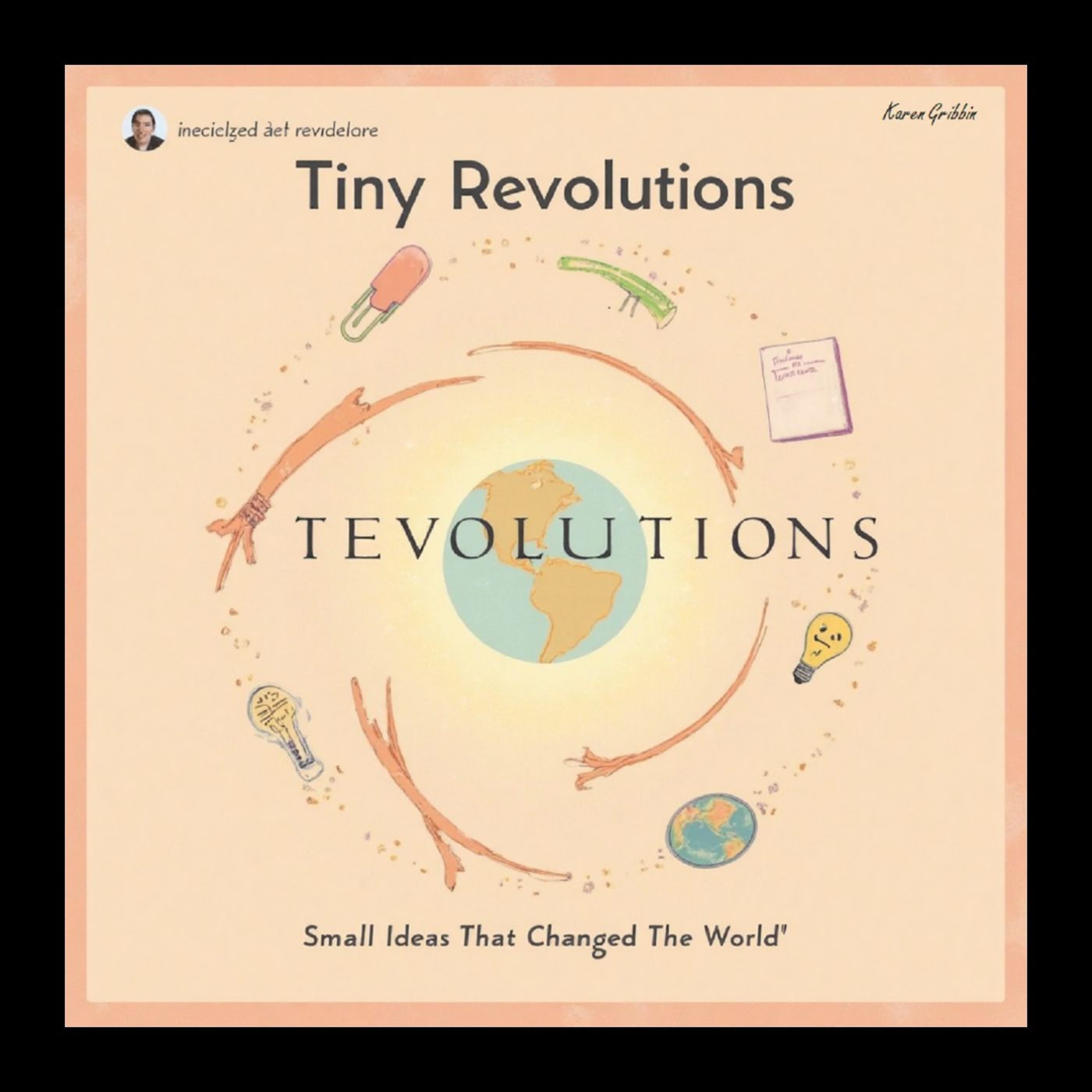
Tiny Revolutions: Small Ideas That Changed the World
by Karen Gribbin
Sometimes, the smallest ideas spark the biggest changes. Tiny Revolutions is a podcast about the humble inventions, unnoticed habits, and small flashes of creativity that quietly transformed the way we live — from the paperclip to the emoji, from the safety pin to the coffee filter.Each episode reveals the story behind a seemingly simple idea: who created it, how it spread, and why it changed the world in ways no one expected. Blending history, creativity, and everyday life, this series celebrates the inventors, thinkers, and even accidents that made our daily world what it is today.
Episodes
-
The Paper Cup — Drinking and Throwing Away
This episode explores how the paper cup changed everyday drinking by making disposability feel normal. Before disposable cups, people reused glass, metal, ceramic, or shared public cups. As germ theory became better understood, shared drinking vessels increasingly looked like health risks rather...
-
The Band-Aid — Healing Made Personal
This episode explores how the Band-Aid transformed minor wound care by bringing first aid out of hospitals and into everyday life. Before adhesive bandages, small cuts and scrapes often required separate pieces of gauze, cloth, and tape, making treatment slower and more awkward. The breakthrough...
-
The Disposable Razor — A Sharp New Habit
This episode explores how the disposable razor transformed shaving from a skilled ritual into a fast, ordinary routine. Before modern razors, shaving often required straight blades, sharpening, stropping, preparation, or visits to a barber. The development of the safety razor, especially...
-
The Ziplock Bag — Containing Modern Life"
This episode explores how the Ziplock bag became a quiet form of everyday infrastructure. Its simple resealable design made it easy to divide, protect, carry, freeze, label, and organize food and countless small household objects. The bag's key innovation was not plastic alone, but the…
more -
The Mask — A Small Cloth That Changed Society"
*]:pointer-events-auto R6Vx5W_threadScrollVars scroll-mb-[calc(var(--scroll-root-safe-area-inset-bottom,0px)+var(--thread-response-height))] scroll-mt-[calc(var(--header-height)+min(200px,max(70px,20svh)))]" dir="auto" data-turn-id= "request-690c93a0-3bb4-8324-8e95-0a0747ba05ff-29"...
-
Private Military Companies – The Rise of Mercenaries in Modern Conflicts
This episode explores the rise of private military companies and how they have transformed modern warfare. From Executive Outcomes in Africa to contractors in Iraq and Afghanistan and the later emergence of Wagner, private armed organizations have taken on roles once reserved for national...
-
The Safety Helmet — Protecting the Future
This episode explores how the safety helmet changed industrial work by turning protection into a visible part of progress. In earlier eras, workplace injuries were often treated as unavoidable risks of mining, construction, shipbuilding, railways, and factory labor. Workers were expected to rely…
more -
The Thermos — Keeping Warmth Alive
This episode explores how the Thermos transformed temperature into something people could carry with them. Before insulated bottles, warmth belonged mostly to the home, the stove, the fire, or the kitchen. Hot drinks and soup quickly became cold once people left those places. The scientific...
-
The Bicycle That Freed Women — Transport Reshaped Gender Roles
This episode explores how the bicycle became a powerful tool of freedom for women in the nineteenth and early twentieth centuries. Before bicycles became practical, women's movement was often limited by social rules, clothing, money, safety, and expectations of modest behavior. The arrival of the...
-
The ATM — Cash on Demand
This episode explores how the ATM changed banking by giving people direct access to their money without needing a bank teller. Before ATMs, getting cash required visiting a bank during business hours, waiting in line, filling out slips, and depending on human staff behind a counter. The ATM...
-
The Credit Card — Swipe for Freedom
This episode explores how the credit card transformed trust from a personal relationship into a financial system. Before credit cards, buying on credit usually depended on local reputation, familiar shopkeepers, or direct relationships. A store trusted a known customer, and debt was often…
more -
Tupperware — Plastic and Power
This episode explores how Tupperware became more than a plastic food container. It emerged in the postwar era, when refrigerators were changing how families stored leftovers and modern kitchens needed better ways to organize food. Earl Tupper's lightweight plastic containers, especially with…
more -
The Toothpaste Tube — Squeezing Progress
*]:pointer-events-auto R6Vx5W_threadScrollVars scroll-mb-[calc(var(--scroll-root-safe-area-inset-bottom,0px)+var(--thread-response-height))] scroll-mt-[calc(var(--header-height)+min(200px,max(70px,20svh)))]" dir="auto" data-turn-id= "request-690c93a0-3bb4-8324-8e95-0a0747ba05ff-74"...
-
The Wristwatch Revolution — Time Becomes Personal Identity
This episode explores how the wristwatch changed time from something public into something personal. Before wristwatches, people looked to the sun, church bells, tower clocks, station clocks, or pocket watches to know the hour. Time existed around them, but it was not yet attached to the body.…
more -
The Alarm Clock — Waking the Modern World
This episode explores how the alarm clock changed humanity's relationship with time. Before alarm clocks, people woke naturally through sunlight, animals, weather, church bells, or the sounds of daily life. Work followed nature more closely, and ordinary people were not ruled by exact minutes the...
-
The Microwave Oven Accident — Speed Became Expectation
*]:pointer-events-auto R6Vx5W_threadScrollVars scroll-mb-[calc(var(--scroll-root-safe-area-inset-bottom,0px)+var(--thread-response-height))] scroll-mt-[calc(var(--header-height)+min(200px,max(70px,20svh)))]" dir="auto" data-turn-id= "request-690c93a0-3bb4-8324-8e95-0a0747ba05ff-235"...
-
The Refrigerator — Chilling the Future
*]:pointer-events-auto R6Vx5W_threadScrollVars scroll-mb-[calc(var(--scroll-root-safe-area-inset-bottom,0px)+var(--thread-response-height))] scroll-mt-[calc(var(--header-height)+min(200px,max(70px,20svh)))]" dir="auto" data-turn-id= "request-690c93a0-3bb4-8324-8e95-0a0747ba05ff-132"...
-
The Light Switch — Power at Your Fingertips
This episode explores how the light switch transformed electricity from a complex technology into an effortless part of everyday life. Before electric switches, creating light required lighting candles, maintaining oil lamps, or operating gas lamps, while early electrical systems were difficult…
more -
The Light Bulb Moment — Night Officially Ended
This episode explores how the light bulb transformed human civilization by freeing daily life from the limits of daylight. Before electric lighting, people relied on candles, oil lamps, and gas lamps, all of which were costly, dim, or potentially dangerous. As a result, work, education, and…
more -
The Elevator — Rising to the Modern City
*]:pointer-events-auto R6Vx5W_threadScrollVars scroll-mb-[calc(var(--scroll-root-safe-area-inset-bottom,0px)+var(--thread-response-height))] scroll-mt-[calc(var(--header-height)+min(200px,max(70px,20svh)))]" dir="auto" data-turn-id= "request-690c93a0-3bb4-8324-8e95-0a0747ba05ff-29"...
-
The Sewing Machine — Threading Equality
This episode explores how the sewing machine transformed clothing production and helped reshape society. Before its invention, all sewing was done by hand, making clothing expensive, time-consuming to produce, and highly dependent on manual labor. A single garment could require many hours or even...
-
Buttons — Holding the World Together
This episode explores how the humble button evolved from a decorative object into one of the most influential innovations in clothing history. Early buttons, dating back thousands of years, were primarily ornamental and made from materials such as shell, bone, and stone. Their true revolution…
more -
The Barcode — The Stripes That Run the World
This episode explores how the barcode transformed global commerce by allowing machines to instantly identify products. Before barcodes, stores relied on manual pricing and inventory tracking, making large-scale retail slow, error-prone, and difficult to manage as supermarkets and consumer culture...
-
The Rubber Band — Stretching Possibility
This episode explores how the rubber band became a small but essential tool for organization and efficiency. Before its invention, people struggled to temporarily hold objects together without using permanent methods like knots, glue, or nails. As offices, factories, and bureaucracies expanded…
more -
The Camera — Capturing the Moment
This episode explores how the camera transformed human memory by allowing moments to be permanently preserved and shared. Before photography, people relied on paintings, written descriptions, and fragile personal memories to remember faces, events, and history. Portraits were expensive and often...
-
The Typewriter — Writing the Modern Era
This episode explores how the typewriter transformed communication by making writing clear, consistent, and scalable. Before its invention, all writing was done by hand, resulting in documents that were often difficult to read, slow to produce, and prone to errors. Each piece of writing reflected...
-
Paper Money — The Idea of Value
*]:pointer-events-auto scroll-mt-[calc(var(--header-height)+min(200px,max(70px,20svh)))]" dir="auto" data-turn-id= "request-690c93a0-3bb4-8324-8e95-0a0747ba05ff-88" data-testid= "conversation-turn-134" data-scroll-anchor="true" data-turn= "assistant"> This episode explores how paper money...
-
The Ruler — Measuring Progress
*]:pointer-events-auto [content-visibility:auto] supports-[content-visibility:auto]:[contain-intrinsic-size:auto_100lvh] R6Vx5W_threadScrollVars scroll-mb-[calc(var(--scroll-root-safe-area-inset-bottom,0px)+var(--thread-response-height))]...
-
The Toothbrush — Revolution in Hygiene
This episode explores how the toothbrush transformed human health by shifting hygiene from treatment to prevention. For most of history, oral care was minimal, leading to widespread tooth decay, pain, and infections that could even become life-threatening. Losing teeth early in life was common…
more -
The Straw — A Sip Through Time
This episode explores how the simple straw evolved from a practical solution in ancient times to a modern symbol of convenience — and environmental responsibility. The earliest straws appeared in ancient Mesopotamia, where people used hollow reeds or metal tubes to drink beer while avoiding...
-
The Umbrella — Shelter in Style
This episode explores how the umbrella evolved from a symbol of power into an everyday tool of protection. In ancient civilizations like Egypt and China, early umbrellas were parasols used to block sunlight and signify status, often carried by servants for royalty. They were decorative and…
more -
The Wheelbarrow — Labor in Motion
This episode explores how the wheelbarrow transformed human labor by allowing one person to move heavy loads efficiently. Before its invention, most work depended on physical strength — people carried materials by hand, limiting how much could be transported and slowing construction and...
-
The Compass — Guiding the World
This episode explores how the compass transformed human exploration by giving travelers a reliable sense of direction. Before its invention, sailors and travelers relied on natural cues such as the sun, stars, coastlines, and landmarks. These methods worked only under clear conditions, making...
-
The Candle — Flame of Civilization
This episode explores how the candle transformed human life by turning nighttime into usable time. Before portable lighting, darkness ended most daily activities. While fire existed in hearths and torches, it was large, smoky, and difficult to move, limiting what people could do after sunset.The...
-
The Wheel - The First Revolution
This episode explores how the invention of the wheel transformed human civilization by overcoming the physical limits of carrying and dragging heavy objects. Before the wheel, progress depended on strength — transporting goods, building structures, and traveling long distances required enormous...
-
The Queue - The Invisible Line That Created Fairness
This episode explores how the simple act of standing in line transformed social behavior by introducing fairness among strangers. Before queues existed, access to services was chaotic — the strongest, fastest, or highest-status individuals were served first, while others were ignored. Order...
-
The Calendar - Organizing Time Itself
This episode explores how the calendar transformed human society by allowing people to share and coordinate time. Before calendars, humans lived by natural cycles — daylight, seasons, and weather — but these varied by location and made large-scale planning impossible. Communities could not…
more -
The Mirror - Seeing Ourselves for the First Time
This episode explores how the mirror transformed human self-awareness, identity, and culture. For most of history, people had no clear way to see their own faces. Reflections in water or polished metal were rare, distorted, and unreliable. Only wealthy individuals in ancient civilizations could...
-
The Eraser - Permission to Fail
This episode explores how the eraser quietly transformed learning, creativity, and human confidence by making mistakes reversible. For most of history, errors in writing, carving, and drawing were permanent and costly, discouraging experimentation and risk-taking. Being wrong often meant...
-
The Pencil - The Quiet Power of Impermanence
This episode explores how the pencil transformed human thinking by making mistakes acceptable and creativity flexible. For much of history, writing was permanent — carved in stone or fixed in ink — making errors costly and discouraging experimentation. The pencil changed this by allowing ideas to...
-
Paper – The Silent Engine of Civilization
This episode explores how paper, a fragile and unassuming material, became one of the most powerful forces in human history. Before paper, knowledge was heavy, rare, and difficult to preserve, recorded on stone, clay, parchment, or papyrus — materials accessible only to elites. Ideas moved…
more -
Toilet Paper - A Soft Revolution
This episode explores how one of the most ordinary objects in modern life — toilet paper — quietly reshaped hygiene, comfort, and human dignity. For most of history, people relied on whatever was available: grass, leaves, cloth scraps, snow, corn cobs, seashells, or even communal sponges. A…
more -
The Matchstick - A Spark That Changed Everything
This episode explores how the humble matchstick transformed humanity's relationship with fire. For most of history, creating fire required skill, time, and effort using flint, steel, or preserved embers. Fire was precious and often difficult to replace once lost.In 1826, English chemist John…
more -
The Safety Pin – Fastening More Than Fabric
This episode explores the remarkable story of the safety pin, a tiny invention that quietly made everyday life safer and more resilient. Before its invention, fastening fabric relied on exposed straight pins that easily slipped, tore clothes, and injured skin. In 1849, American mechanic Walter...
-
The Shopping Cart – Rolling into Modern Life
This episode explores how the shopping cart quietly transformed modern consumer culture. Before its invention, grocery shopping was limited by what people could physically carry in hand baskets. No matter how large stores became, customers simply couldn't buy more than their arms allowed.In 1937,...
-
The Coffee Filter - Clean Brew, Clear Mind
This episode explores how a simple paper filter transformed the way the world drinks coffee. In the early 20th century, coffee was often bitter and cloudy, filled with grounds that settled at the bottom of the cup. Dissatisfied with this, a German housewife named Melitta Bentz searched for a…
more -
Bubble Wrap – From Failed Wallpaper to Global Comfort
This episode tells the surprising journey of Bubble Wrap, an invention that began as a failure and ended as a global necessity. In 1957, inventors Alfred Fielding and Marc Chavannes tried to create a futuristic textured wallpaper by sealing two shower curtains together and trapping air bubbles...
-
The Ballpoint Pen – The Writing Revolution
This episode follows the journey of the ballpoint pen, a tiny everyday object that quietly transformed how the world writes. It begins with Hungarian journalist László Bíró, who grew frustrated with leaky, smudging fountain pens in the 1930s. Inspired by fast-drying printer ink, he imagined a pen...
-
Velcro - The Power of Observation
This episode tells the remarkable story of how a simple walk in the Swiss countryside led to one of the most useful inventions of the modern age. In 1941, Swiss engineer George de Mestral noticed burrs clinging stubbornly to his pants and his dog's fur. Instead of brushing them off, he examined...
-
The Fork – A Revolution at the Table
This episode reveals the surprising history of the fork — a dining tool so ordinary today, yet once considered shocking, sinful, and unnecessary. For most of human history, people ate with hands, spoons, and knives. Early forks existed only as cooking tools, not utensils.The fork's first…
more
We're indexing this podcast's transcripts for the first time — this can take a minute or two. We'll show results as soon as they're ready.
No matches for "" in this podcast's transcripts.
No topics indexed yet for this podcast.
Loading reviews...
ABOUT THIS SHOW
Sometimes, the smallest ideas spark the biggest changes. Tiny Revolutions is a podcast about the humble inventions, unnoticed habits, and small flashes of creativity that quietly transformed the way we live — from the paperclip to the emoji, from the safety pin to the coffee filter.Each episode reveals the story behind a seemingly simple idea: who created it, how it spread, and why it changed the world in ways no one expected. Blending history, creativity, and everyday life, this series celebrates the inventors, thinkers, and even accidents that made our daily world what it is today.
HOSTED BY
Karen Gribbin
Loading similar podcasts...
Frequently Asked Questions
How many episodes does Tiny Revolutions: Small Ideas That Changed the World have?
Tiny Revolutions: Small Ideas That Changed the World currently has 50 episodes available on PodParley. New episodes are automatically indexed when they're published to the podcast feed.
What is Tiny Revolutions: Small Ideas That Changed the World about?
Sometimes, the smallest ideas spark the biggest changes. Tiny Revolutions is a podcast about the humble inventions, unnoticed habits, and small flashes of creativity that quietly transformed the way we live — from the paperclip to the emoji, from the safety pin to the coffee filter.Each episode...
How often does Tiny Revolutions: Small Ideas That Changed the World release new episodes?
Tiny Revolutions: Small Ideas That Changed the World has 50 episodes. Check the episode list to see recent publication dates and frequency.
Where can I listen to Tiny Revolutions: Small Ideas That Changed the World?
You can listen to Tiny Revolutions: Small Ideas That Changed the World on PodParley by clicking any episode. We provide an embedded audio player for direct listening, and you can also subscribe via your preferred podcast app using the RSS feed.
Who hosts Tiny Revolutions: Small Ideas That Changed the World?
Tiny Revolutions: Small Ideas That Changed the World is created and hosted by Karen Gribbin.
URL copied to clipboard!