
PODCAST · religion
UUMUAC (You Me Act): The Unitarian Universalist Multiracial Unity Action Council
by Barbara Jean Walsh
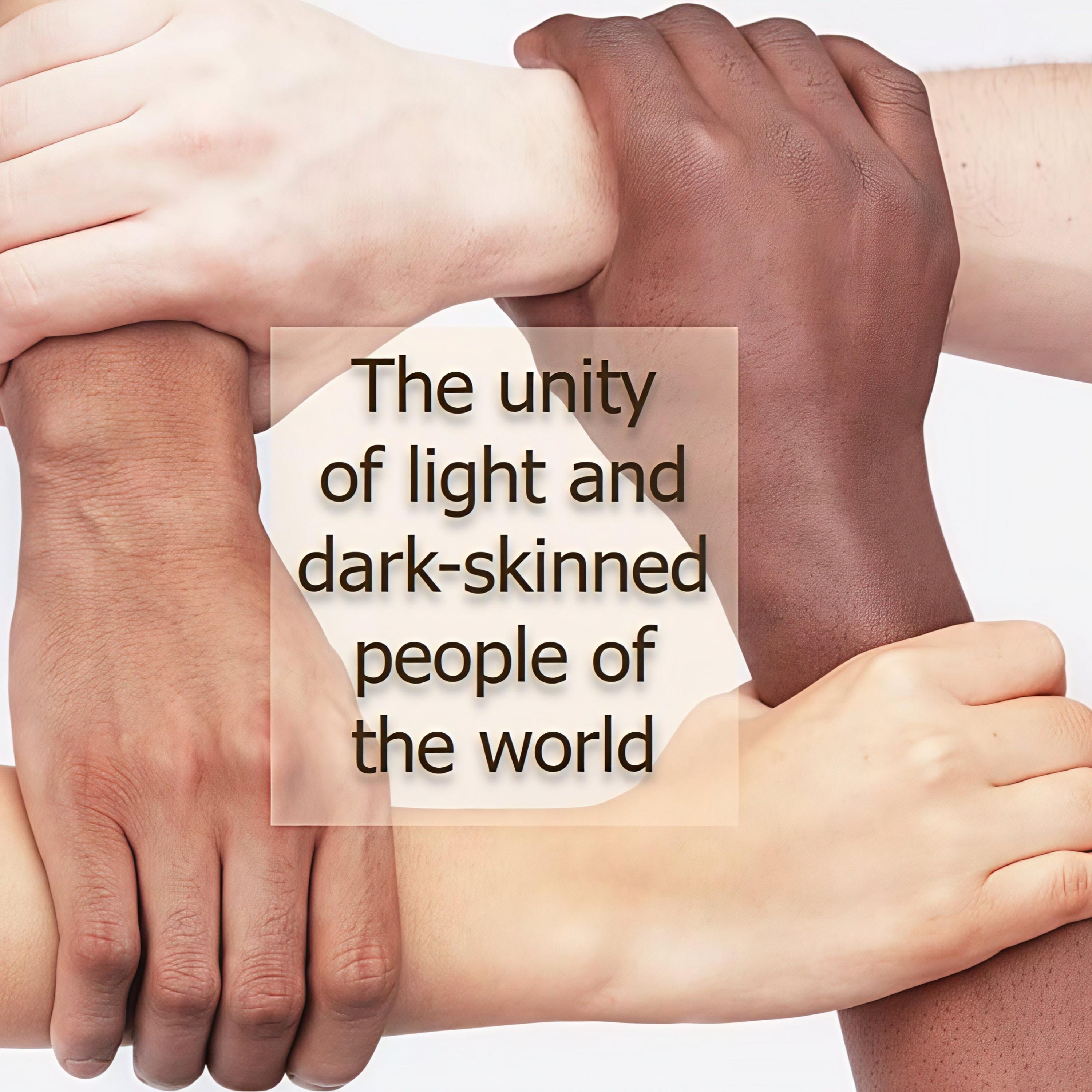
UUMUAC stands for Unitarian Universalist Multiracial Unity Action Council, but you don't need to be a Unitarian or a Universalist to understand our message: We need to work together to build the world that Martin Luther King dreamed of, a world where people are judged by who they are and what they do - not the color of their skin. UUMUAC hosts a monthly vespers service via Zoom and YouTube, featuring speakers who are both articulate and passionate about both multiracial unity and liberal religion. This podcast will extract sermons from those services and other UUMUAC-sponsored online events. Note: If you would like to attend Vespers by Zoom, so you can participate in the conversation, please use our <a target="_blank" rel="noopener n
-
13
The Four Horsemen of the Apocalypse
Rev. Jack Reich opens his sermon with Isaac Asimov’s reminder that “if knowledge can create problems, it is not through ignorance that we will solve them,” setting a tone rooted in evidence, clarity, and moral responsibility. He contrasts the everyday issues Americans believe are most urgent—rising costs, taxes, crime, immigration—with the deeper, structural crises that truly threaten our collective future. This mismatch between public perception and actual danger, he argues, undermines our ability to act effectively as citizens.Reich identifies four overarching crises: climate change, extreme inequality, pervasive violence, and the erosion of voting rights and democratic functioning. These are not isolated problems but interconnected systems shaping American life. Climate change threatens long‑term survival; inequality distorts democracy; violence saturates daily experience; and political division, fueled by defensiveness and misinformation, weakens the nation’s capacity to respond. As he notes, “a population that insists on believing in the facticity of fairy tales” becomes less capable of solving real‑world problems.A major theme of the sermon is the need to look beneath surface‑level symptoms to the underlying causes: failures in education, the decline of critical thinking, the rise of defensiveness, and the cultural elevation of belief over evidence. Reich critiques the ways religious certainty, anti‑intellectualism, and lack of discernment have made Americans vulnerable to manipulation and unable to confront hard truths. Rebuilding discernment—especially through early childhood reading, civic learning, and a renewed respect for science—is framed as essential to national survival.Reich also highlights the epidemic of loneliness and alienation in American society. He calls for rebuilding community life through new forms of gathering, honest conversation, and shared purpose. He urges listeners to imagine a society that invests in children, supports teachers, guarantees healthcare, rejects violence, and cultivates courageous dialogue about the future we want. Structural reforms—such as strengthening workers’ rights, addressing inequality at its roots, and recommitting to democratic participation—are presented as necessary steps toward renewal.In closing, Rev. Reich reframes the “Four Horses of Our Apocalypse” not as biblical omens but as modern forces—defensiveness, inequality, violence, and democratic decay—that threaten the nation’s moral and civic fabric. Yet his message remains hopeful: by confronting root causes, rebuilding community, and choosing evidence over illusion, Americans can still shape a just and sustainable future. The sermon invites listeners into a deeper conversation about responsibility, courage, and the work of collective repair.
-
12
Howard Thurman: Medicine for Our Times (Kennedy, 2022)
This episode introduces listeners to the life and wisdom of Howard Thurman, the influential mystic, theologian, and spiritual guide whose work shaped generations of activists, including Martin Luther King Jr. Drawing from a 2022 video presentation by Rev. Dr. Mellen Kennedy, along with two excerpts from a 1976 PBS interview with Thurman, the episode highlights why his teachings remain “medicine for our times.”Rev. Kennedy opens with one of Thurman’s most beloved lines: “Don’t ask yourself what the world needs. Ask yourself what makes you come alive.” She situates her message within a larger interfaith project co‑hosted by the Springfield Vermont Universalist Meeting House and the Empowerment Center in Maryland—an effort to bring Thurman’s legacy to new audiences.Listeners first hear Thurman in his own voice. In the PBS interview, he recalls his childhood in Daytona Beach, where the ocean, night sky, and a sturdy backyard oak tree formed the foundation of his earliest religious experiences. Sitting with his back against the tree during storms, he learned that beneath life’s turbulence there is a deeper stability. Nature, he explains, taught him to speak aloud to God and to feel part of a “rhythmic flow of life.”Rev. Kennedy frames Thurman as a healer for three modern ailments: fear, environmental disconnection, and social divisiveness. She describes fear as a “second pandemic” that constricts our thinking and compassion. Thurman’s practices of silence, grounding, and communion with nature offer a path back to clarity and courage.Environmental crisis, she argues, stems from forgetting our place within the natural world. Thurman’s spirituality—rooted in direct experience of sky, sea, and earth—invites us to reconnect with the living world as a source of wisdom and belonging.The third ailment, divisiveness, is addressed through a second interview excerpt. Thurman explains that when one goes deeply inward, one “comes up inside every other living person.” True self‑knowledge reveals universal kinship. Rev. Kennedy connects this insight to Mother Teresa’s practice of seeing the divine “in all of his many disguises.”She also highlights the influence of Thurman’s grandmother, an enslaved African woman whose stories instilled in him a lifelong sense of dignity: “You are not slaves. You are a child of God.” This grounding enabled Thurman to resist fear and to become a spiritual anchor for the Civil Rights Movement. John Lewis called him a saint; King drew heavily from his teachings, especially on nonviolence.Rev. Kennedy closes by urging listeners to practice what Thurman lived: silence, rootedness, connection, and love. She quotes his reminder that we are living “where the old is breaking up and the new is being born”—a moment not for despair but for engagement. Thurman’s legacy calls us to become healing presences in a bruised and beautiful world.
-
11
The God-No-God Divide (Matthew Shear, March 2026)
Rev. Dr. Matthew Shear’s presentation explores the long‑standing divide between those who believe in God and those who do not, beginning with the observation that people often mean very different things when they use the word God. As he notes, when asked whether he believes in God, he responds, “Tell me what you mean by God,” because most people describe not a biblical figure but “a spirit or a presence, something outside of and greater than themselves.” This divide, he argues, is no longer just theological but increasingly political, shaping how people perceive one another across social and ideological lines.To illuminate the complexity of the God–No‑God question, Shear draws on cultural and literary references. He reflects on the song “From a Distance,” which evokes what transcendentalist Theodore Parker called the “infinite God,” a perspective from which human differences diminish. He then turns to Isaac Asimov’s story “The Last Question,” summarizing its exploration of entropy and cosmic evolution. The story ends with the line “Let there be light and there was light,” prompting Shear to suggest that scientific and religious narratives may not be as incompatible as they seem—perhaps the Big Bang and creation stories are different expressions of the same mystery.Shear then situates the God–No‑God divide within a broader historical and cultural context. He traces how scientific advancement, humanism, and shifting religious identities have shaped Unitarian Universalism, sometimes pushing it toward defining itself by what it rejects rather than by a positive spiritual vision. He cites contemporary political commentary, including David French’s warning that “we have reached end‑stage polarization,” to show how religious identity and political identity have become entangled in ways that deepen division.To offer a path forward, Shear highlights the work of Krista Tippett, who emphasizes the importance of language, deep listening, and love as tools for navigating polarization. Tippett argues that “we are starved for fresh language to approach each other,” and that listening requires “a willingness to be surprised… and take in ambiguity.” She frames virtues as “spiritual technologies” that can help communities move beyond tribalism. Shear also discusses Amanda Montel’s analysis of cultish language and cognitive bias, noting how easily people can be drawn into rigid ideological groups—and how religious communities can instead cultivate “ritual time” that supports meaning without fanaticism.In closing, Shear argues that congregations have an opportunity to counteract polarization by fostering wisdom, transcendence, and spiritual practice rooted in compassion rather than dogma. As he puts it, “we can make the choice to turn away from… fanaticism and… practice speaking of a faith dedicated to becoming wise.” The presentation ultimately invites listeners to reconsider the God–No‑God divide not as a battleground but as a space for curiosity, humility, and shared human striving.
-
10
Dancing with the Panthers Part One (Campbell & Rice, c2000)
This episode of Dancing with the Panthers features a conversation recorded around the year 2000 with Rev. Dr. Finley C. Campbell and historian Dr. Jon Rice, reflecting on their involvement with the Black Panther Party roughly thirty years earlier. Barbara Jean Walsh introduces the discussion by explaining that both men—Campbell in Indiana and Rice in Chicago—became deeply influenced by the Panthers’ philosophy, especially its emphasis on multiracial unity, socialism, and community self‑determination.Dr. Campbell opens with personal reflections on race, class, and the spread of economic oppression, using a chance encounter as a metaphor for the interconnectedness of racial and class struggle. He recounts how he was “drafted” into the Panthers’ Ministry of Education in Indiana, helping organize Black Student Unions and translating Panther ideology for largely white academic audiences. Campbell describes his political awakening, shaped by the Panthers’ Ten‑Point Program, their critique of capitalism, and their insistence that commitment—not racial purity—defined solidarity.Dr. Rice then shares his experience as a young volunteer in the Chicago chapter beginning in 1969. He traces the Panthers’ roots to the moral courage of the civil rights movement, arguing that the collapse of legal segregation revealed deeper economic inequalities that required more radical solutions. Rice explains how the Panthers studied global revolutionary movements, equated racism with capitalism, and sought to build class‑based coalitions across racial lines. This vision led to groundbreaking alliances with groups like the Young Patriots (poor white migrants) and the Young Lords (a Puerto Rican organization), forming Chicago’s original Rainbow Coalition.Both speakers emphasize the Panthers’ boldness, youth, and idealism, as well as the challenges they faced—from internal discipline to external repression such as COINTELPRO. The episode highlights the Panthers’ community programs, their efforts to unite marginalized groups, and the lasting impact of leaders like Fred Hampton, who was only 21 when he was killed. Together, Campbell and Rice offer a vivid, personal account of a turbulent era and the revolutionary imagination that shaped it.
-
9
A Different Take on The Good Samaritan (Richard Trudeau February 2026)
Rev. Richard Trudeau’s sermon invites listeners to reconsider the familiar parable of the Good Samaritan by challenging the interpretive frame supplied by the Gospel of Luke. Trudeau argues that Luke, writing as a non‑Jewish Christian several generations after Jesus, misunderstood both the cultural meaning of “Samaritan” and the nature of Jesus’s parables. Luke’s framing dialogue—“Go and do likewise”—is presented as a later moralizing overlay rather than Jesus’s own teaching, a point Trudeau underscores by noting that Jesus’s parables are rarely, if ever, straightforward morality tales. Instead, he insists, they function as puzzles meant to “tease the mind into active thought,” not as ethical instructions.To recover Jesus’s original intent, Trudeau urges listeners to begin with what Jesus’s audience would have known implicitly: Samaritans were not merely outsiders but longstanding enemies, viewed as heretical descendants of a breakaway kingdom with its own temple and Torah. This cultural memory, he argues, is essential to hearing the parable as Jesus’s contemporaries would have heard it. The peasants and displaced farmers who made up Jesus’s audience would not have identified with the priest, Levite, or innkeeper, but with the man “left for half dead”—the only character present throughout the story. The shock of the parable, then, is not that a Samaritan behaves ethically, but that the victim experiences compassion from someone he has been taught to despise.From this vantage point, Trudeau reframes the parable as an expression of Jesus’s central proclamation: the “Empire of God,” a term he argues is more accurate than the traditional “Kingdom of God.” In this vision, God’s reign is not an afterlife reward but a transformed social reality marked by justice, sufficiency, and mutual care. The parable becomes an imaginative doorway into that world—a world in which one’s supposed enemy becomes the agent of one’s healing. This, Trudeau contends, is the parable’s true theological force: not a call to imitate the Samaritan, but an invitation to imagine a society reordered so profoundly that compassion flows across entrenched lines of hostility.The discussion that follows the sermon reflects how Trudeau’s reframing resonates with listeners. Participants connect the parable to contemporary prejudices, institutional failures of compassion, and the perennial question of what brings antagonistic groups together. Some raise textual or historical questions—such as whether ritual purity laws would truly have prevented the priest and Levite from helping—while others affirm the power of reading the story through the lens of social estrangement and unexpected grace. The conversation underscores Trudeau’s central claim: that the parable’s enduring power lies not in moral exhortation but in its capacity to unsettle, reorient, and expand the moral imagination.
-
8
Unitarianism & the Birth of Humanism (Todd Ekloff June 2025)
Rev. Todd Eklof’s talk traces the deep historical roots of humanism and argues that it has always been intertwined with Unitarianism. He begins with early 20th‑century religious humanism and figures like John Dietrich, noting that Dietrich’s shift toward humanism took shape during his ministry in Spokane, where the congregation’s 1888 bylaws affirmed “reason” and “scientific” inquiry as the basis of religious belief. Eklof highlights how Dietrich and Curtis Reese sparked the early Humanist Debate within Unitarianism, and he challenges the modern assumption that humanism is a recent add‑on to the tradition. As he puts it, humanism is grounded in “the betterment of humanity,” a theme he traces through Jewish monotheism, the teachings of Jesus, Renaissance humanism, and Enlightenment rationalism.From there, Eklof broadens the lens, showing how humanistic values—human dignity, agency, welfare, and the use of reason—have persisted across every era in which Unitarianism has existed. He contrasts this long lineage with what he sees as today’s drift toward anti‑rationalism within Unitarian Universalism. Drawing on examples from the transcript such as the Edict of Torda, which he describes as “the first religious toleration law in human history,” he argues that Unitarianism’s survival depends on reclaiming its historic North Star: a commitment to truth, freedom, and the flourishing of all people.
-
7
The Improbability of Us (Ewen Hadington January 2026)
This UUMUAC podcast episode features Evan Hadingham, former Senior Science Editor of PBS's Nova, who brings his extensive background in prehistory and archaeology to explore humanity's precarious existence. Drawing on his experience and writings, Evan guides listeners through a journey of cosmology, climate, catastrophes, and human evolution, highlighting the many critical points where humanity's survival was far from certain. He incorporates insights from scientists, philosophers, poets, and popular culture to frame this exploration.Evan's talk, titled "The Improbability of Us," invites listeners to reflect on the fragility of human history and our present condition with a sense of wonder and gratitude rather than fear. He discusses how scientific understanding has evolved from ancient cosmologies to modern perspectives, touching on indigenous creation stories, classical Western views, and the transformative impact of Renaissance discoveries. This episode offers a thoughtful examination of how improbable it is that humans exist today and encourages appreciation for the complex chain of events that brought us here.
-
6
Children of the Rainbow (Rev. Dr. Finley Campbell, 1970)
Rev. Dr. Finley C. Campbell’s Children of the Rainbow is a stirring call to recognize difference as the foundation for genuine unity. Speaking in 1970, he argued that the presence of Black students on white campuses was never neutral—it was meant to be a shock, a confrontation, a reminder of America’s unfinished reckoning with slavery, segregation, and systemic racism. Their very existence in classrooms challenged the myth of “colorblindness,” insisting instead that difference must be acknowledged and valued, like the many colors of a rainbow. This confrontation opened doors to humility, awareness, and the possibility of deeper human connection.Campbell went on to describe Black students as catalysts for educational and cultural transformation, demanding that Black history, literature, and art be integrated into mainstream learning. Their organizing created space not only for Black liberation but also for white students to confront the “Blackness” within themselves—the suppressed vitality and soul that society had long repressed. Finally, he placed Black student activism in a broader political frame: beginning with the liberation of Black people, but extending toward the liberation of all humanity. In his vision, the “Children of the Rainbow” are living witnesses against oppression, carriers of resilience, and heralds of a future where justice is shared across race, class, and nation.
-
5
Denise Tracy on the "Beloved Community" (July 2025)
Reverend Denise Tracy continues her exploration of Beloved Community with vivid stories that show how compassion dissolves fear and how ordinary people can rise to extraordinary humanity. Drawing on the musical Come From Away, she reflects on the generosity of the people of Gander, Newfoundland, who sheltered thousands of stranded travelers after 9/11. Through song and story, the musical reveals how strangers overcame fear, grief, and difference to form lifelong bonds—an embodiment of beloved community that continued long after the crisis ended. Reverend Tracy connects this to her own experiences of unexpected connection, from a simple exchange with a family in Brussels to witnessing a diverse crowd united by music in a public square.Her message widens into a meditation on the countless ways people quietly care for one another every day—through worship, through crisis response, through acts of solidarity that rarely make headlines. She reminds us that beloved community is not an abstract ideal but something we create in real time, with the people right in front of us. Whether in a Zoom service, a village cemetery in Belgium, or an airport gate in Albuquerque, the sacredness of community emerges when people choose compassion, presence, and shared responsibility.Reverend Tracy closes with a call to action rooted in Unitarian Universalist values: to witness, to help, to speak, to sing, to show up for one another, and to build the beloved community both within our congregations and beyond them. Her reflections, paired with the words of Dr. Martin Luther King Jr., invite listeners to imagine a world where love guides our choices and where every day offers an opportunity to create connection. It’s a moving, hopeful message—one that will stay with listeners long after the episode ends.
-
4
Deb Reich on Transcending the Power of Words that Bind Us (Dec 2025)
🎙️ SynopsisTranscending the Power of Words That Bind Us — Deb Reich (introduced by Jack Reich)The podcast opens with host Barbara Jean Walsh introducing a Vespers Service featuring writer and peace‑builder Deb Reich, preceded by a warm biographical introduction from her brother Jack Reich. Jack traces Deb’s journey from her New York upbringing to her decades living in Israel and Palestine, where she immersed herself in both Jewish and Palestinian communities and committed her life to intercommunal reconciliation.Deb’s central theme is how certain words and phrases—especially those used in discourse about Israel and Palestine—become “sacred terminology” that both inspire and imprison us. She argues that these emotionally charged terms accumulate symbolic weight over generations, eventually constraining thought, empathy, and political imagination.She reflects on her own evolving relationship with words like “Zionism,” “democracy,” “homeland,” “resistance,” and “liberation.” Raised to see Zionism as wholly positive, she was stunned to discover how Palestinians experienced the same word as the source of their suffering. She illustrates how language becomes a kind of ideological inheritance, shaping identity and allegiance long after its original meaning has shifted or fractured.Deb shares stories from her life, including her work with peace organizations, her friendships across communities, and her experiences living in a Muslim Arab village. These stories highlight how direct human contact dissolves the abstractions that words often harden into. She contrasts this with the way slogans, dogma, and political rigidity—on both left and right—can “gaslight” people into avoiding uncomfortable truths.She critiques the way certain activist phrases (e.g., “from the river to the sea”) or Israeli statements (e.g., “there are no innocents in Gaza”) function as verbal weapons, shutting down dialogue and alienating potential allies. She also examines the Palestinian concept of anti‑normalization, acknowledging its historical logic but lamenting how it has often suffocated grassroots cooperation.Deb refuses to be bound by the word “genocide,” insisting that the moral catastrophe in Gaza must be confronted without becoming trapped in semantic battles. She emphasizes the human toll—trauma, displacement, grief—and the profit motives that quietly fuel ongoing destruction.Throughout, she returns to the idea that language can either entrench enmity or open pathways to shared humanity. She describes her own transformation as she learned Arabic, lived among Palestinian families, and experienced daily life in all its ordinariness—children playing, neighbors calling to one another, the rhythms of village mornings. These experiences, she says, “irrevocably humanized” the people and the language for her.In the Q&A portion, Deb expands on the psychological exhaustion many Israelis feel, the lack of political leadership committed to justice, and the research organizations that track public sentiment. She recommends books that illuminate lived experiences on both sides and discusses long‑term political possibilities, including confederation models that might someday evolve into shared governance—though she stresses that such visions require healing, trust, and leadership not currently present.The podcast closes with an invitation to explore more UUMUAC programming and to engage with the organization’s work toward multiracial unity and justice.
-
3
Finley Campbell on Multiracial Unity and Black History (Feb 2006)
If you are wondering what UUMUAC, or even multiracial unity, is all about, you’ve come to the right place. Barbara Jean Walsh, and I am the vice-chair of UUMUAC, the Unitarian Universalist Multiracial Unity Council. One of the first people I met after moving to Chicago a few years ago was Finley Cambell. It has been a real treat for me to work on archiving his audio files since I did not have the opportunity to hear him deliver full-length services in person. This particular sermon is an excellent introduction to the spirit and philosophy of the man who founded UUMUAC – and why.Rev. Dr. Finley C. Campbell’s 2006 Black History Month sermon is a powerful, dramatic, and deeply engaging exploration of race, history, and the future of Unitarian Universalism. Delivered in his signature “dramatic monologue” style, the sermon blends humor, scholarship, storytelling, and prophetic urgency. Campbell invites the congregation to join him in a three‑act “drama,” asking them to listen not just as observers but as participants in a shared moral struggle.Speaking against the backdrop of a turbulent 2006—Supreme Court battles, war, political polarization, the aftermath of Hurricane Katrina, and the death of Coretta Scott King—Campbell argues that we are living in a time of “irrepressible conflict.” In such a moment, he says, understanding the multiracial roots of Black history is essential for building a just and unified future.Campbell challenges the congregation to distinguish between diversity and division. Diversity, he notes, has always been part of the Black experience, shaped by centuries of interracial relationships—both loving and violent. But diversity becomes dangerous when it fragments community instead of strengthening it. He reminds listeners that the great movements for justice in American history succeeded only when people of many backgrounds worked together.A major portion of the sermon unpacks the origins of racism, which Campbell describes not as natural prejudice but as a deliberately constructed ideology. Drawing on history, theology, and personal experience, he shows how racism was created to justify slavery, institutionalized in the Constitution through the Three‑Fifths Compromise, and reinforced by scientists, artists, churches, and governments. He distinguishes racism from prejudice and bigotry, arguing that racism is a system—one that empowers bigots and shapes national policy.Campbell then turns to the future, echoing Martin Luther King Jr.’s warning that America must choose between chaos or community. He argues that Unitarian Universalists face a similar choice: between a multiculturalism that keeps groups separate and a multiracial unity that brings people together in shared struggle. True unity, he insists, is not colorblindness but a “rainbow of steel”—distinct identities joined in common purpose.The sermon ends with a call to action. Campbell urges congregations to become sites of resistance, places where people can find solidarity, courage, and community in the face of political and economic challenges. He envisions a Unitarian Universalism that embodies the universalist ideal: a fellowship that transcends race, class, and nation, grounded in justice and human dignity.This sermon is rich, challenging, and often humorous. It moves quickly—from Aristotle to Jefferson, from South Pacific to the Civil War, from biblical imagery to contemporary politics—yet it remains deeply personal and grounded in lived experience. Whether read or heard, it offers a compelling vision of what multiracial community can be.Many thanks to Finley’s wife and comrade Bobbi for give UUMUAC access to this and other recordings.
-
2
The Dignity Index with Dan Kenney (2025)
IntroductionBarbara Jean Walsh (UUMUAC board member) introduces speaker Dan Kenney, a retired teacher and founder of Rooted for Good (formerly DeKalb County Community Gardens).The focus of the talk is The Dignity Index, a tool created in 2022 by the University of Utah and partners through the UNITE initiative to measure dignity vs. contempt in language.What is the Dignity Index?An 8-point scale:1–4 → contempt, dehumanization, divisive speech.5–8 → dignity, respect, constructive dialogue.Purpose: to ease divisions, prevent violence, and foster healthier debate.Key ThemesDefinition of dignity: rooted in the Latin dignitas (“worthy, having value”), aligned with the Unitarian Universalist principle of inherent worth and dignity of every person.Donna Hicks’ work: dignity violations drive conflict, divorce, war, and revenge; dignity can heal divides.Contempt vs. dignity:Contempt fuels polarization, violence, and broken relationships.Dignity fosters respect, inclusion, and problem-solving.Illustrative StoriesSpecial Olympics 1995: athletes used disposable cameras backwards as telescopes to see President Clinton—lesson in misjudgment and perspective.Historical change: institutions for people with disabilities largely closed since 1968, showing progress is possible.Arthur Brooks: warns of cultural addiction to contempt, driven by media business models.Amanda Ripley: contempt dominates political speech, inciting division and violence.Examples of the Index in ActionLeon Mug (Rwanda, 1992): “wipe out this scum” → Score 1 (dehumanizing, violent).John McCain: bipartisan cooperation → Score 6 (respectful, collaborative).Hillary Clinton (2016): “basket of deplorables” → Score 3 (moral contempt).Desmond Tutu: recognizing humanity even in child soldiers → Score 8 (universal dignity).Call to ActionBuilding blocks for a culture of dignity:Admit misjudgments.Practice bravery.Name the problem: contempt.Embrace the solution: dignity.Measure, manage, mobilize.Encouragement to take the Dignity Pledge and use the Index in personal relationships, not just politics.Emphasis: democracy requires healthy debate, and healthy debate requires dignity.ClosingBarbara Jean Walsh invites listeners to learn more at Dignity.us and UUMUAC.org, encouraging membership and engagement.✅ In essence: The podcast argues that contempt is tearing society apart, while dignity—respecting the inherent worth of every person—is the antidote. The Dignity Index provides a practical tool to measure and encourage dignified speech, helping bridge divides in families, communities, and democracy itself.Would you like me to condense this even further into a one-paragraph executive summary you could use for newsletters or outreach?
-
1
Thanksgiving: A Multiracial Vision (November 2021)
Rev. Dr. Finley Campbell reflects on the complexities and contradictions of our times, urging boldness and truth in the face of personal, existential, and political challenges. He draws parallels between historical struggles against white supremacy, such as the Battle of Gettysburg, and contemporary crises, emphasizing gratitude for progress while acknowledging ongoing peril.Dr. Campbell shares a personal reflection on his father's role as a Baptist preacher and introduces a reimagined version of the hymn "The Church Has One Foundation," blending traditional religious imagery with a broader, inclusive vision of God that embraces diverse spiritual narratives.He discusses the concept of human will through the lens of quantum metaphysics, highlighting the interplay of chance and necessity in shaping our lives. This leads into his central theme: Thanksgiving as a symbol of multicultural synergy—a coming together of diverse cultures to create a new, unified culture.Focusing on the 1623 Pilgrims' Thanksgiving, Dr. Campbell identifies three key cultural groups at the table: the Native American Wampanoag, the Puritans seeking religious freedom, and the capitalist traders focused on commerce. He explains that "culture" encompasses customs, arts, social institutions, and achievements, and emphasizes that multiculturalism involves the coexistence and blending of multiple cultural or ethnic groups.He highlights the role of Squanto, a Native American who spoke English due to prior contact with Europe, as a crucial connector facilitating communication and cooperation among these groups. The meal itself symbolized unity, featuring a blend of indigenous and English foods and shared practices, such as hunting and fishing.Dr. Campbell stresses that despite differences in religion and values—ranging from earth-centered spirituality to Calvinist Protestantism and capitalist agnosticism—these groups found synergy through shared experiences and mutual dependence.He envisions this multicultural synergy as the foundation for a new culture that would eventually give rise to descendants who challenge later racist and white supremacist ideologies.The importance of this perspective lies in countering narratives that portray early American history solely through the lens of white supremacy. Dr. Campbell references contemporary efforts within Unitarian Universalism, including the contested eighth principle and groups like DRUM (Diverse Revolutionary Unitarian Universalist Multicultural Ministries), which emphasize the need to recognize and honor multicultural contributions without perpetuating white supremacy.He draws a parallel to current global struggles, such as refugees at the Polish-Belarusian border, framing their quest for safety and community as a modern Thanksgiving moment, united by a divine or teleological force that transcends division.Ultimately, Dr. Campbell calls for unwavering commitment to fighting any form of multiculturalism defined by race, which he sees as a divisive "serpent" threatening the unity symbolized by Thanksgiving. He concludes with a hopeful invocation of love as the spirit that binds diverse peoples together, urging continued dedication to justice and inclusion.
-
0
Work in Progress (November 2025)
This podcast features Rev. Dr. Marie Manning, better known as Twinkle. She will talk to us about what it means to all of us to be a work in progress. But before you listen to what she has to say, here's a little more information about Twinkle. Reverend Manning currently serves as the contract minister for the UU congregation in Waterville, Maine. Previously, she excelled at retreat leadership and workshop facilitation for many years. Now, as a semi-retired media professional, award-winning television producer, author, artist, and poet, she is founder of TV for Your Soul and the Empowering Women's Signature Series. I hope you'll want to learn even more about Reverend Manning, and you can do that by visiting her website, twinklesplace.org. Her presentation here has been excerpted from the full UUMUAC Third Wednesday Vesper Service for November 2025, which you can watch on our YouTube channel. During this podcast, Reverend Manning begins with a reading of Jennifer Bloom's poem, "Work in Progress." It was originally published in her 2020 book, Within My Illusions, published by Balboa Press. The poem ends with the line, "I am a work in progress, and still I am complete." But that's just the beginning of Twinkle's musings and prose as she takes off from that point and offers us an entrancing meditation and reflection on this topic. We are sure you will enjoy this remarkable exploration of all the ways we grow and change, all of us works in progress.
-
-1
Science in the Time of Trump (October 2025)
This podcast consists of a talk given during our monthly online Vesper service in October 2025. full service, including a lively discussion about the topic, "Science in the Time of Trump" is available to you on YouTube. Our speaker this time is Dr. Suzanne Willis.She is a professor emerita at Northern Illinois University in DeKalb, Illinois, where Dr. Willis taught physics until her retirement in 2012. Having been interested in science her entire life, Dr. Willis received her bachelor's degree in physics Mount Holyoke College. She then went on to Yale University to complete both her master's and doctoral degrees, again in physics, and in 1988, she joined the faculty at Northern Illinois University.Dr. Willis remained there until her retirement in 2012, also serving for a time as President of the Faculty Senate and Executive Secretary of the University Council. Her main research focus was experimental, high-energy physics. Since retiring, she has expanded her interests to physics education and public science literacy.As you are no doubt aware, the current Trump administration is clearly opposed to both science and scientific research. In this talk, Dr. Willis explains the long-term ramifications of this opposition to scientific research currently in progress. She also predicts how academic academic research will fare in the future. With that said, I hope you enjoy this very informative presentation.What you are hearing on this podcast is an extract of a much longer program, including Q & A. You can find it on YouTube at this address: https://www.youtube.com/watch?v=A_ko4RgJ09E&t=819s
-
-2
Church of the Free Spirit with Rev. Dr. Matthew Spear (September 2025)
TRANSCRIPTSpeaker Barbara Jean WalshHello. My name is Barbara Jean Walsh, and I am a Board Member of UUMUAC, the Unitarian Universalist Multiracial Unity Action Council. (For more information about UUMUAC, please visit our website at UUMUAC.org.)Each month, it is our pleasure to offer an online vespers service featuring noted speakers who typically share their unique perspectives on liberal religion. This sermon has been extracted from one of those services. I hope it will inspire you to check out UUMUAC more closely.Our speaker for this podcast episode is Dr. Matthew Shear, who has, in his own words, come from “Practice to Pulpit.” In this program, he is offering us his vision for a Church of the Free Spirit. That explains the “pulpit” part of his journey, but you may be surprised to learn that the “practice” part refers to his optometry practice including his post-grad work at the Baltimore Academy for Behavioral Optometry.Dr. Shear is deeply interested in how our behavior is affected by misperception of ourselves, and the whole world. He is an engaging speaker with a gift for breaking down complex topics into wonderfully understandable segments. And, as you’ll find out, he is very good at creating acronyms to help us all remember the many segments that together comprise the Church of the Free Spirit.Please click on FULL TRANSCRIPT to read more.
We're indexing this podcast's transcripts for the first time — this can take a minute or two. We'll show results as soon as they're ready.
No matches for "" in this podcast's transcripts.
No topics indexed yet for this podcast.
Loading reviews...
ABOUT THIS SHOW
UUMUAC stands for Unitarian Universalist Multiracial Unity Action Council, but you don't need to be a Unitarian or a Universalist to understand our message: We need to work together to build the world that Martin Luther King dreamed of, a world where people are judged by who they are and what they do - not the color of their skin. UUMUAC hosts a monthly vespers service via Zoom and YouTube, featuring speakers who are both articulate and passionate about both multiracial unity and liberal religion. This podcast will extract sermons from those services and other UUMUAC-sponsored online events. Note: If you would like to attend Vespers by Zoom, so you can participate in the conversation, please use our <a target="_blank" rel="noopener n
HOSTED BY
Barbara Jean Walsh
CATEGORIES
Loading similar podcasts...
Frequently Asked Questions
How many episodes does UUMUAC (You Me Act): The Unitarian Universalist Multiracial Unity Action Council have?
UUMUAC (You Me Act): The Unitarian Universalist Multiracial Unity Action Council currently has 16 episodes available on PodParley. New episodes are automatically indexed when they're published to the podcast feed.
What is UUMUAC (You Me Act): The Unitarian Universalist Multiracial Unity Action Council about?
UUMUAC stands for Unitarian Universalist Multiracial Unity Action Council, but you don't need to be a Unitarian or a Universalist to understand our message: We need to work together to build the world that Martin Luther King dreamed of, a world where people are judged by who they are and what they...
How often does UUMUAC (You Me Act): The Unitarian Universalist Multiracial Unity Action Council release new episodes?
UUMUAC (You Me Act): The Unitarian Universalist Multiracial Unity Action Council has 16 episodes. Check the episode list to see recent publication dates and frequency.
Where can I listen to UUMUAC (You Me Act): The Unitarian Universalist Multiracial Unity Action Council?
You can listen to UUMUAC (You Me Act): The Unitarian Universalist Multiracial Unity Action Council on PodParley by clicking any episode. We provide an embedded audio player for direct listening, and you can also subscribe via your preferred podcast app using the RSS feed.
Who hosts UUMUAC (You Me Act): The Unitarian Universalist Multiracial Unity Action Council?
UUMUAC (You Me Act): The Unitarian Universalist Multiracial Unity Action Council is created and hosted by Barbara Jean Walsh.
URL copied to clipboard!