
PODCAST · religion
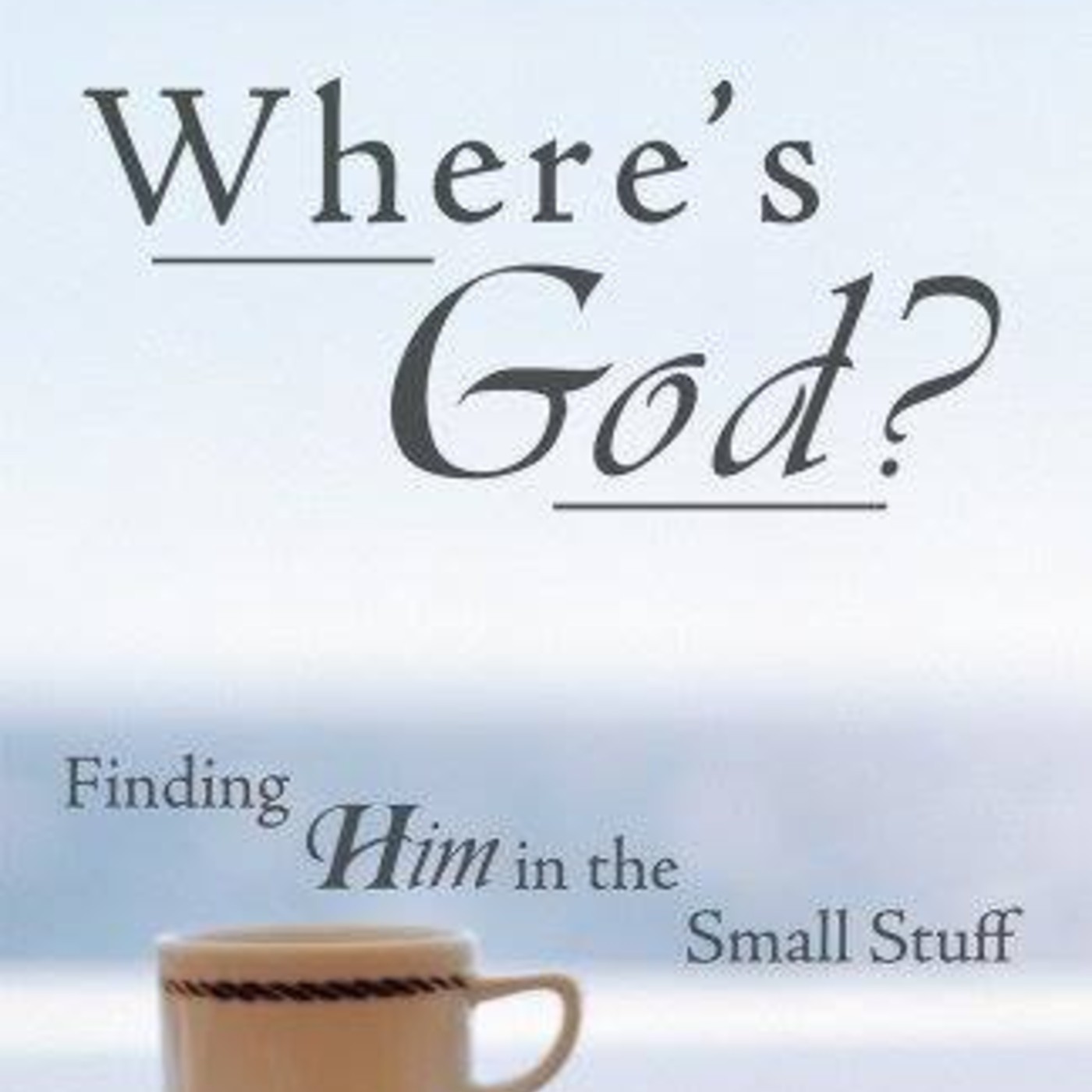
Where's God? Finding Him in the Small Stuff
by Greg McCollam
Each episode offers inspiration to help you move closer to God through the small stuff in life -- a cup of coffee, a grocery list, or fast-food French fries. You may never look at a roller coaster the same way again!
Episodes
-
Moses and Exodus 51
The Lord replaced the stone tablets for the Ten Commandments after Moses broke the originals when he threw them on the ground as part of his reaction to the golden calf incident. The replacement tablets were similar to the first ones, but not exactly the same. What kind of message did these new...
-
Moses and Exodus 50
Moses is upset. God has informed him that He can no longer lead the people to the Promised Land because of their stubborn hearts. God says He will lose His patience and strike them with His wrath. Moses appeals to the Lord, making it clear that they want God and no other "substitute guide" will…
more -
Three Crosses on a Hill -- music by Greg McCollam
Bluegrass gospel about a cross on a hill that leads me back to my old home in West Virginia where the cold Coal River and hand-cranked ice cream awaits. Another cross on a different hill leads me like a lighthouse on a stormy sea.
-
Moses and Exodus 49
As Moses and the people recover from the golden calf incident, God begins to distance Himself from the Israelites. God uses the language of distancing as Exodus chapter 33 opens. Did God mean what He said, or was He testing the people? How did they react? We also learn what happened to all of…
more -
Moses and Exodus 48
Moses had heard and seen what the people were doing as they worshipped the golden calf, and he made sure they suffered certain consequences. He also held Aaron responsible for his part in making the calf. In the midst of these things, the Levites were set apart as the priestly tribe. Eventually,...
-
Moses and Exodus 47
Everyone knows that the Ten Commandments were written on two stone tablets. If nothing else, most of us have seen Charlton Heston as Moses descending Mt. Sinai with those stone tablets in his hands! The question is: "Why two tablets?" If you review some classical art and re-watch the movie, you...
-
Moses and Exodus 46
Well, Aaron has made the golden calf. What was he thinking? He must have known it was wrong, but the social pressure applied by the people was too great for him to withstand. What was God's response? How did Moses feel about God's plan? Was it really a "plan," or was it a test that God was giving...
-
Moses and Exodus 45
Moses had been at the top of Mt. Sinai for forty days and the people had lost their patience. If Moses could not lead them to the Promised Land, they would make a god who would go before them, at least an image of that god. So they turned to Aaron to make the golden calf out of pure gold. What…
more -
Moses and Exodus 44
There is still a lot happening at the base of Mt. Sinai after God gives the Ten Commandments. Moses continues to interact with both God and the people. The Israelites pressure Moses to fulfill a specific role on their behalf because they are afraid to do it themselves. God appoints Moses to build...
-
Moses and Exodus 43
In this episode we look at the last five Commandments, which feature a lot of "Thou Shall Nots," like "Thou Shall Not Murder" and "Thou Shall Not Steal." On the surface, it seems like these Commandments would be somewhat easy to obey. However, Jesus says that if we even think about doing…
more -
Moses and Exodus 42
Sometimes we discount the importance of the Commandment which says, "Honor your father and mother." After all, what does "honor" really mean anyway? And compared to such big Commandments as "Thou shalt not murder" or "You shall have no other gods before Me," it seems a little puny. However, it is...
-
Moses and Exodus 41
The Ten Commandments not only call us to live a certain way, but also show us when we have failed to do so. God says in the third Commandment, "You shall not take the name of the Lord your God in vain," and we might wonder what the word "vain" means in this context. The idea is that we should not...
-
Moses and Exodus 40
Probably the best-known facts in the story of Moses are the plagues of Egypt, the parting of the Red Sea, and the Ten Commandments. This new episode delves into the Commandments, or the "Ten Words" as they are known in Hebrew. We will look at each Commandment during this and the next three...
-
Moses and Exodus 39
Moses and the Israelites have been waiting at the base of Mt. Sinai as the morning of the third day dawns there. They are waiting for Moses to tell them what to do next. Before they know it, God arrives at the pinnacle of Mt. Sinai! His arrival is accompanied by thunder, lightning, and a thick...
-
Moses and Exodus 38
When Moses and the Israelites arrived at Mt. Sinai from Egypt, God gave them a conditional promise (or covenant). IF they obeyed Him, THEN they would receive wonderful blessings and become the Lord's treasured possession. He promised to carry them on eagle's wings. But could they actually do the…
more -
Moses and Exodus 37
Moses and the Israelites were camped at Rephidim and the people were thirsty again. They quarrelled with Moses, which means they verbally attacked him because it was HIS fault! This passage says that the people "tested" God here and so God named it "Test and Struggle" (in Hebrew, of course)....
-
Moses and Exodus 36
This episode is all about manna. How did it get its name? What did it look like? What did it taste like? How did everyone end up with an omer of manna even if they originally gathered more or less initially? God gave the Israelites their first two commands which they were to obey when it came to...
-
Moses and Exodus 35
As the Israelites continued their trek from Egypt to Mt. Sinai, they found themselves in another predicament: They were hungry! Maybe today we would call it "hangry" because they were hungry AND angry! They blamed Moses (again) for all their troubles and claimed (for the third time since leaving...
-
Moses and Exodus 34
When the Israelites arrived at a place called Marah they were thirsty, but the water there was "bitter" so they could not drink it. What did they do? Complained. God heard them and when Moses threw a piece of wood into the water, it became sweet and they could drink it. Isn't that weird? What was...
-
Moses and Exodus 33
The Israelites were able to walk through the sea on dry land as they escaped the clutches of Pharoah and his army. However, the Egyptian chariots had a difficult time crossing over the same terrain. Why? As God's people passed through the sea, both God's "pillar of fire" and His "pillar of cloud"...
-
Moses and Exodus 32
As the Israelites stood at the edge of the sea with no means of escape, they heard Egyptian chariots storming towards them and they were frightened. They were certain that they were about to be killed. They saw Pharaoh in the distance and thought he had all the power in his hands. But God told…
more -
Moses and Exodus 31
The Israelites had left Egypt behind and were camped at a place "by the sea." Geographically speaking, there were interesting aspects about this location which made it a precarious and curious place for them to be. Could this be why Pharoah thought he could catch and capture the Israelites…
more -
Moses and Exodus 30
Moses and the Israelites were leaving Egypt and heading for Mt. Sinai, which is the beginning of their wilderness experience. They were introduced to the "pillar of cloud" and the "pillar of fire" for the first time. What was the function of these "pillars" beyond guidance and direction? For that...
-
Moses and Exodus 29
Passover night is over and the Israelites are ready to leave Egypt as the Egyptians bury their dead. They are told to "hurry" and leave, and the Israelites marched out as a victorious army with gold, and silver, and expensive clothing. This was the fulfillment of a promise which God had made to...
-
Moses and Exodus 28
Moses told the Israelites to dip the hyssop branch into the sacrificial lamb's blood which had drained into the "basin" at the foot of their doors. What was this basin? How was this a forerunner of what would happen at the cross of Christ? When the firstborn died in Egypt, was it the males only…
more -
Moses and Exodus 27
We have come to Passover night in Egypt, which brings death into every household, both Egyptian and Israelite. Egyptians will suffer the death of their firstborn as God's final plague expresses His wrath for what had been done to His people. The Israelites will suffer the sacrificial death of a...
-
Moses and Exodus 26
The final plague in Egypt was so significant that Moses wrote chapter 11 of Exodus to explain what it would entail. It is the only chapter during the plague narrative in which no plague actually takes place. Moses said that the first-born of every Egyptian family would perish and when it was…
more -
Moses and Exodus 25
Moses described the plague of darkness in Egypt as a darkness you could "feel." Certainly, this was more than just the darkness of a night sky and more than the lack of natural light from the sun, or moon or stars. It also included the extinguishing of artificial light as well, no light from...
-
Moses and Exodus 24
The plague of locusts is certainly one of the most well-known of all the plagues of Egypt. As one of the final three plagues, it directly threatened the lives of the Egyptians. As part of this plague, God told Moses why the plagues were necessary. The answer might surprise you. And we find a...
-
Moses and Exodus 23
The plague of hail in Egypt was unique. It was the only plague which caused distress for all three at the same time...the people, the land, and the livestock. This plague also marked a big change among the people. Before the hail, the Israelites had turned to Pharaoh for help and mercy.…
more -
Moses and Exodus 22
The plague of boils began from a handful of soot which had been taken from the same kilns used by Pharaoh to make bricks, sometimes without straw, by the Hebrew slaves. God took the very thing Pharaoh used to cause pain for His people and used it to bring pain upon Pharaoh's people. These boils...
-
Moses and Exodus 21
When it comes to the plaque of the livestock, the Egyptians are given a choice by the Lord. They can obey Him and bring their livestock into a stable or a barn and the livestock will be spared. But if they choose to disobey Him and leave their livestock out in the field, then their livestock will...
-
Moses and Exodus 20
Moses did not know how many plagues God would inflict upon Egypt before Pharoah would let His people go. In this episode, we learn that Moses must have thought enough was enough, so he made a deal with Pharoah himself. But Moses learned that his plan was not God's plan and that you cannot make...
-
Moses and Exodus 19
God brings His third plague upon the land of Egypt through Moses, the plague of gnats (or lice, or mosquitos, or ?) which is distinctly different than the first two plagues. What made this one different? Pharaoh's magicians even testified that this plague was the "finger of God," although Pharaoh...
-
Moses and Exodus 18
God brings the plague of frogs upon the land of Egypt, covering the land with them. How many were there? Where did they go once they were upon the land? In the first two plagues, God has shown His power by turning Egyptian gods of life and resurrection into judgement and death. We also learn of…
more -
Moses and Exodus 17
The time had come for plague no. 1 in Egypt, when God turned the water of the "mighty" Nile River, and all the water in Egypt (even the jars of water in homes) into blood for seven days. Before it was over, all the fish that had died were rotting and stinking and the river that represented the...
-
Moses and Exodus 16
Moses failed the first time he confronted Pharoah on behalf of the enslaved Israelites in Egypt. As a matter of fact, things went from bad to worse because of it. Now Moses does not want to go back and engage with Pharoah again, but God gives him seven "I will" promises, including, "Now you will...
-
Moses and Exodus 15
When Moses first confronted Pharaoh upon his return to Egypt, the interaction between them did not go well. Even though God spoke through Moses with authority, proclaiming, "Let My people go," not a request, but a demand, Pharaoh refused. Pharaoh even retaliated against the Israelites, taking…
more -
Moses and Exodus 14
As he received his marching orders from God, Moses was reminded that Israel was important to the Lord, and he was given a message of warning for Pharaoh: obey and let His people go, or Pharaoh would suffer the death of his first-born son. On the way back to Egypt, though, Moses was also called to...
-
Moses and Exodus 13
As Moses headed back to Egypt, uncertain as he was, hesitant, fearful, unsure, he held tightly to the "staff of God." In the years ahead, whenever he felt anxious again, Moses would hold tightly to that same staff because God had promised him that it would be instrumental in bringing forth...
-
Moses and Exodus 12
Moses was worried that he would not be eloquent enough for God to use him, especially in the Egyptian royal court. And even though God assured him, "I will be with your mouth," Moses still hesitated. This angered the Lord, but He accommodated Moses by giving him, among other things, the "staff of...
-
Moses and Exodus 11
As Moses tried to convince God that he was not the right man to go to Egypt and be used by God to deliver the Israelites from slavery, God made three promises and gave Moses three signs to show him that he would be successful. Yet Moses still hesitated. One of the excuses Moses used was that he…
more -
Moses and Exodus 10
At first, Moses did not want to return to Egypt when God called to him from the burning bush. Why was he so resistant? Why did Moses want to know God's "Name?" God promised to provide Moses with a "sign" which would assure Moses that God was with Him in Egypt. What was that sign? And when God…
more -
Moses and Exodus 9
We all know that Moses was sent to Egypt by God to deliver the Israelites from slavery in Egypt. But did you know that he was also called to deliver God to the Israelites? The Lord sent Moses to Egypt from the burning bush because God saw how His people were struggling under the "hand" of the...
-
Moses and Exodus 8
Moses was called by God to a burning bush that was not actually burning. That will get your attention! Actually, all three persons of the trinity Godhead were present at the burning bush! The Lord says He "knows" and "remembers" His people in Egypt. What does that mean? Moses said, "I have become…
more -
Moses and Exodus 7
After Moses struck and killed an Egyptian slave master, he spent 40 years in the wilderness of Midian tending sheep. Why was it necessary for Moses to be there for so long? How did God need Moses to change before God could use Moses to free His people from slavery? What was the difference between...
-
Moses and Exodus 6
Moses had been living in the Egyptian royal palace forty years when he decided one day to go check on the Hebrew slaves. Within hours, he had killed an Egyptian man who was a slave master. Moses' actions make us ask several questions. Why did Moses "look this way and that" before he sprang into...
-
Moses and Exodus 5
As we read Moses' birth narrative, we are introduced to some very interesting people. In Exodus, chapter two, we will learn about Miriam, Moses' sister, and the role she played in his early life. We will wonder why Pharaoh's daughter, who pulled Moses from the Nile, let a Hebrew woman nurse him...
-
Moses and Exodus 4
After Moses was born in Egypt, he was placed in a small basket, (or "ark") by his mother and placed in the Nile. She was trying to save him from the edict of Pharaoh which ruled that all male babies born to Israelite mothers should be drowned. How was Moses' ark similar to Noah's ark? Eventually,...
-
Moses and Exodus 3
When Pharoah commanded that all male babies born to Israelite women be thrown into the Nile and drowned, head midwives Shiphrah and Puah chose to disobey. When asked about it by Pharoah, their response served to further objectify the Hebrew women in his eyes. Even though Pharoah had Plans A, B…
more
We're indexing this podcast's transcripts for the first time — this can take a minute or two. We'll show results as soon as they're ready.
No matches for "" in this podcast's transcripts.
No topics indexed yet for this podcast.
Loading reviews...
ABOUT THIS SHOW
Each episode offers inspiration to help you move closer to God through the small stuff in life -- a cup of coffee, a grocery list, or fast-food French fries. You may never look at a roller coaster the same way again!
HOSTED BY
Greg McCollam
CATEGORIES
Loading similar podcasts...
Frequently Asked Questions
How many episodes does Where's God? Finding Him in the Small Stuff have?
Where's God? Finding Him in the Small Stuff currently has 200 episodes available on PodParley. New episodes are automatically indexed when they're published to the podcast feed.
What is Where's God? Finding Him in the Small Stuff about?
Each episode offers inspiration to help you move closer to God through the small stuff in life -- a cup of coffee, a grocery list, or fast-food French fries. You may never look at a roller coaster the same way again!
How often does Where's God? Finding Him in the Small Stuff release new episodes?
Where's God? Finding Him in the Small Stuff publishes regularly with 200 episodes available. Check the episode list for the typical release schedule.
Where can I listen to Where's God? Finding Him in the Small Stuff?
You can listen to Where's God? Finding Him in the Small Stuff on PodParley by clicking any episode. We provide an embedded audio player for direct listening, and you can also subscribe via your preferred podcast app using the RSS feed.
Who hosts Where's God? Finding Him in the Small Stuff?
Where's God? Finding Him in the Small Stuff is created and hosted by Greg McCollam.
URL copied to clipboard!