
PODCAST · education
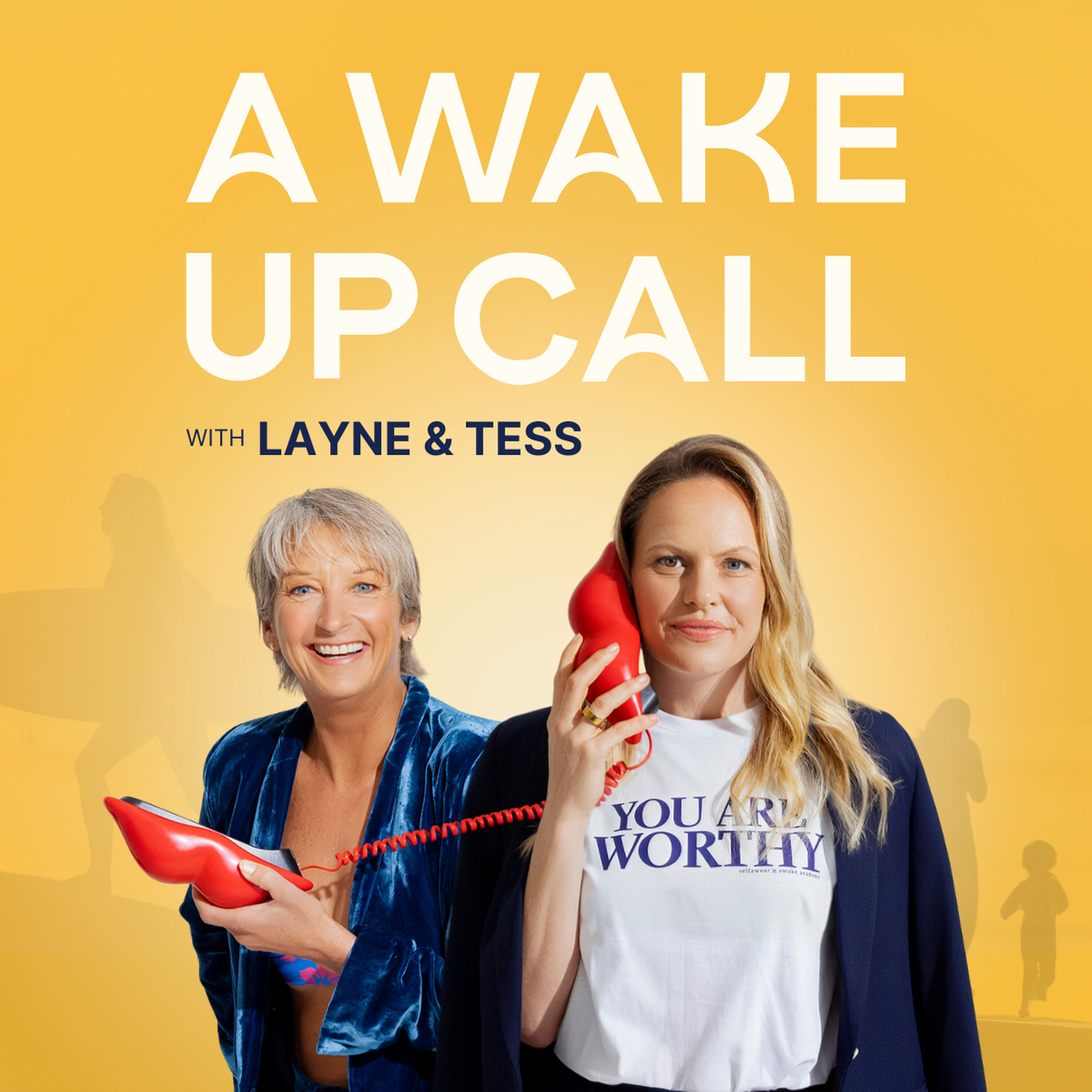
A Wake Up Call
by Layne Beachley AO & Tess Brouwer
You can change your life and A Wake Up Call will show you how.Hosted by Layne Beachley AO and Tess Brouwer, this is the podcast that gets real about what it takes to live awake - no filters, no fluff, just truth, science, and stories that will shake you out of autopilot and into action.Each episode is packed with practical tools, honest conversations, and powerful wake-up calls to help you stress less, feel more, and reconnect with who you really are.If you’re ready to stop drifting and start living with purpose, you’re in the right place.Follow @awake_academy for more tools, truth, and transformation and tune in weekly to A Wake Up Call.
-
0
What Happens When You Let People With Dementia Live Normal Lives: The Small Home Model at Emmaus with Tracy Baker
What if dementia care was designed around everyday life instead of rosters, risk avoidance and locked doors? In Port Macquarie, a small aged care provider has built a full village for people living with dementia and after 18 months, the outcomes are forcing questions about how care is traditionally delivered. Emmaus lets people living with dementia cook their own meals, choose when they eat, gives them the freedom to wander through a village with a café, bus stop, green spaces and a perimeter fence that doesn’t feel like an intrusion on daily life. Today, Dane and Rose are speaking with Tracy Baker to find out what it’s been like to build and work within the small home model. Key moments: 00:00 - Why St Agnes decided to make her residential village into a real neighborhood 5:58 - What kind of impact does the setup have on their residents? 11:40 - What did Emmaus Village decide to forgo the rosters and give the residents more flexibility 14:45 - Where does the companion carer come into the Emmaus model 17:39 - Why Emmaus only has one companion carer per small house model 19:34 - The design and construction details that were required to make this vision possible 25:03 - How does the small household model impact staffing from a recruitment workforce, culture, and even staff retention perspective? 28:50 - Is this small home model only for mobile residents? 33:03 - Why do they stand behind the small home model even when it’s tough 38:02 - Where do RNs sit in the Emmaus village? 39:10 - The benefits financially for a running a small model home 49:07 - How is the model going from a clinical perspective 18 months in? 56:58 - What Tracy wants the policymakers to change to help make improve the quality of life for Emmaus residents — Visit www.thepurefoodco.com to hear more about how The Pure Food Co could help with your meal service. Connect with Dane and Rose or the Podcast on Linkedin. https://www.linkedin.com/in/dane-mitchell-763ba524 https://www.linkedin.com/in/rose-plater-0a111a129 https://www.linkedin.com/company/time-well-spent-podcast If you want to book a free Reablement Planning Workshop with Optimum Allied Health, visit www.opthealth.com.au/tws If you’re starting to scope out your next project, get in touch with Paynters over at www.paynters.com.au
-
-1
Texture Modified Food and Dignified Dining with Chris Deed from the Pure Food Co
The New South Wales coroner recently released findings into two deaths at a Sydney aged care home. Two residents on modified diets for swallowing difficulties.Both choked to death on food they should never have been given. When something like this happens, the response is often to look for who got it wrong. But what if the real issue is how easy it is for things to go wrong in the first place? In this episode, Dane and Rose sit down with Chris Deed from Pure Food Co to discuss what’s actually happening inside aged care kitchens, where the gaps are between care plans and reality, and why something as fundamental as food is still one of the biggest risks in the system. Key moments: 0:00: Two deaths, one system: how does something like this actually happen inside a facility? 2:55: 50% of residents have swallowing difficulties… what that really looks like in your kitchen day to day 04:42: No speech pathologist on site: who’s actually making the call on a resident’s diet? 05:51: Care plan vs reality: how does the wrong meal still end up on the plate? 10:59: IDDSI explained and why misunderstanding it creates real risk 13:07: “Dignity of risk.” Are we signing these off too quickly without fully understanding the consequences? 16:06: Why even well-run kitchens struggle to deliver consistency (and where risk creeps in) 19:16: If nutrition changes outcomes… Why isn’t it treated like a clinical intervention? 21:03: Protein, malnutrition, and what most providers are missing across the day 25:29: What a good texture-modified meal actually looks and tastes like (and why that matters more than you think) 27:11: New Aged Care Act: does the sector finally have the framework to get food right? 31:59: Choking deaths have doubled. What needs to change immediately? 32:09: The real problem Pure Food Co was built to solve 37:57: When food gets done properly… What actually changes for residents? 39:37: From anxiety to eating in the dining room again… A real example of impact 41:39: Inside the kitchen: What most people don’t realise about how aged care food is actually delivered If you want to learn more about The Pure Food Co, head over to www.thepurefoodco.com/aus/,or if you want to chat more with Chris, get in touch on LinkedIn here. Find out more about Pure Food's latest white paper Feeding Strength & Dignity here. — And if you want to connect with Dane and Rose or the Podcast, you can find them on Linkedin. https://www.linkedin.com/in/dane-mitchell-763ba524 https://www.linkedin.com/in/rose-plater-0a111a129 https://www.linkedin.com/company/time-well-spent-podcast
-
-2
Dr Nick Coatsworth: “We Never Asked Older Australians What They Wanted.” COVID, Regulation and the Consequences We’re Still Living With
We spent two years trying to protect older Australians. But did anyone actually ask them what they wanted? During COVID, aged care became one of the most tightly controlled environments in the country. Residents were isolated, families were locked out and providers were making big decisions without any solid evidence. We’re sure you don’t need to be reminded how that played out. Today Dane and Rose are talking with someone who is in the system currently with his mum going through the aged care funding packages as we speak - the Former Commonwealth Deputy Chief Medical Officer, Dr Nick Coatsworth. Nick is reflecting not only on what those decisions looked like in real time, but what we got wrong, and why some of the hardest questions still haven’t been answered. Including: If another pandemic hit tomorrow, would anything change? Key moments: 0:00 - How a hospital doctor becomes the public face of Australia’s pandemic response 6:03 - What the government got wrong when it came to isolating aged care residents 9:18 - Who should have been making the calls during the pandemic and whether aged care providers were left to carry too much of that burden? 13:28 - The lingering impact of COVID on how the sector now thinks about risk, safety and infection control 18:41 - Is a lack of honest conversations with the public a recurring theme? 26:23 - The statistic that changes how you look at COVID in aged care and what it actually tells us about how residents live and die 37:51 - If another pandemic hit tomorrow, would we be prepared? Would there still be mandates? 43:43 - Why don’t we ever seem to learn from previous mistakes? 50:02 - The conversations most families avoid and why they matter more than anything else when it comes to end-of-life care 57:01 - What made Nick publicly push back on the misinformation bill and what that reveals about trust and control 59:53 - How badly did COVID damage our trust in institutions? Did it just expose where it was already breaking down? 1:02:03- The one question we didn’t ask during COVID that should shape every future response
-
-3
The Financial Reality of Aged Care in 2026 (And Why It’s Getting Worse). The Latest Report with Stuart Hutcheon
Metro homes make up around 65% of the sector. So they should be the most financially stable right? They’re performing the worst. At the same time, more than half of providers are still losing money… and we’re being told the system is improving. So what are the numbers actually telling us? In this episode, Dane and Rose sit down with Stuart Hutcheon from StewartBrown to break down the latest benchmarking data and where the pressure is really coming from. From funding models that don’t leave room for a margin… to providers not pulling the levers already available to them… to a system that still isn’t set up to attract investment. Because if these numbers are right, we’re still a long way from a model that works. Key moments: 0:00 - Why metro homes (65% of the sector) are now the worst performing financially… and what’s driving that shift 6:34 - 60% of providers are still losing money… Are the reforms actually fixing anything? 9:31 - What it really takes to get new beds approved… and why providers are hitting roadblocks before they even start? 15:04 - The accommodation review 21:27 - Should the market be setting RAD prices in metro areas… and what happens if it does? 24:50 - The “everyday living” gap: why even with higher supplements, providers are still running at a deficit 29:01- Should residents be paying extra for things they expect in normal life? 33:0-1 - The simplest lever providers aren’t pulling… and why it’s directly impacting financial performance 37:28 - There’s $4.5 billion sitting unused in home care… so why isn’t it reaching the people who need it? 40:55 - Where 30% of every home care dollar actually goes… and why that’s becoming unsustainable 52:18 - Are we quietly cutting funding while calling it “reform”? 56:55 - The number the sector actually needs to be investible… and why we’re nowhere near it 58:48 - if you could change three ithings in the next 12 months to shift this trajectory what would they be 1:02:026 - What small providers need to understand right now if they want to survive what’s coming
-
-4
A Good Death: Are We Designing Aged Care for Living, but Not for Dying?
We design aged care services around living well. But what about leaving well? Death is inevitable in residential care, and yet most organisations have no clear framework for what a good death looks like. No structured training, no consistent rituals, and in some cases, no funding for the final day of care. So today Dane is turning the mic on Rose, to sit down and unpack the policies we don’t have, the conversations we avoid, and the leadership decisions that shape the final experience of life in care. Key moments: 0:00 - What shocked Rose when she first starting working in aged care and designing death 4:22 - What Rose learnt from experienced clinical staff about what actually shapes a good death 5:35 - Why aren’t we recording something as simple as the preferred place of death? 7:29 - Are we training our staff enough about how to design a good death? 9:34 - What are we doing that might be well-meaning but affecting the lives of residents and staff? 13:16 - Is there a right way to handle death in a residential facility? 16:02 - When we hide death, what is the cost? 17:04 - What happens when funding doesn’t recognise the final day of care? 19:23 - Switzerland is doing things differently: what designing for both living and leaving looks like 22:43 - The beautiful moment Rose got to share with her grandmother thanks to a nurse 26:08 - What leaders should be doing now
-
-5
“Australia’s Health Care System is on it’s Knees” - Why We Need to Start Talking About Money in Aged Care ft Charles Moore
What happens when an industry built on care is uncomfortable talking about money? Aged care is framed as something that should exist outside the language of profit, investment and commercial thinking. But without those things, it becomes very difficult to build the homes, services and communities the next generation of older Australians will rely on. And that time is coming quickly. In this episode, Rose and Dane sit down with Charles Moore, CEO of BaptistCare, to talk about why the sector may need to rethink the way it talks about capital, growth and commercial sustainability. Key moments: 0:00 - The tension between profit and purpose in aged care, and why the sector needs to get more comfortable with being commercial 4:53 - Why attracting capital into aged care might be one of the biggest challenges facing the sector 10:20 - The role retirement living could play in solving the bed shortage 12:54 - What “integrated care” actually looks like inside BaptistCare’s model 15:56 - The things Charles believes need to change if the system is going to work long-term 20:32 - What Charles learned working on the Sydney Olympic Park development and how that thinking has shaped BaptistCare 25:26 - Why attracting younger people into the workforce is becoming more urgent 26:20 - BaptistCare’s clustering strategy and how it changes the way services are delivered 33:08 - The thinking behind the recent merger and what it enables them to do 40:52 - Why Charles believes this might actually be the best time to invest in aged care 44:11 - The story behind Hope Street and the role projects like this can play in communities 50:17 - How housing affordability is shaping the future of aged care 55:19 - What Charles hopes the sector could look like in the years ahead
-
-6
Funding Aged Care Homes in Regional Australia: Taking Initiatives into your own hands with Chris from Whiddon Aged Care
Australia has an Aged Care Home problem. And it’s already creating pressure in regional communities. Current projections suggest that 80,000 additional beds will be needed over the next decade. They’re currently being built at less than 1,000 beds a year … And the gap is starting to have a very real effect on the industry. We’re already seeing it play out in service viability, workforce strain and further limiting options for regional families. In this episode, Dane and Rose sit down with Chris Mamarelis from Whiddon Aged Care to talk through what’s happening in regional Australia. From why funding and viability remain the biggest constraints, to how providers are being forced to take matters into their own hands when policy makers just aren’t keeping up. Key moments: 0:00 - Why regional aged care is where the system is breaking first 3:47 - “The problem is viability”: Why services are closing even though demand exists 5:18 - How capital grants are being used to make otherwise unviable regional projects possible 7:41 - How Triple M and regional loadings work and why they’re still falling short 9:18 - Why very small regional homes are becoming no longer viable 13:06 - What Whiddon actually means by relationship based care (with real examples) 18:44 - Why COVID has made people afraid to enter residential care again 21:46 - Recruiting in regional towns vs metro including timelines, agency use + cost 23:38 - The real cost of skilled migration and what Whiddon does differently for its staff 31:12 - Why Whiddon stopped waiting for government and launched a collaborative health model 39:52 - Why Australia is massively underbuilding aged care beds despite clear demand 44:41 - Standalone community providers are being forced to merge or exit 1:00:02 - Chris’s message to the government about funding
-
-7
Support at Home… But Not When You Need It: Adrian Morgan on What Went Wrong 6 Month On
4,812 older Australians died waiting for the right level of home care last financial year. When Adrian Morgan last joined the podcast, he warned that Support at Home could create serious unintended consequences. Six months on, a lot of those predictions have played out. So what went wrong? In this episode, Adrian Morgan is sitting down with Dane and Rose to talk about what’s happened since the Act came into effect and whether the course can still be fixed. If you want to listen to our first episode with Adrian you can listen to it on Spotify or Apple. Key moments: 0:00 - Six months in… what has actually changed since Support at Home began? 7:59 - Co-contributions: are they quietly pushing people to refuse care altogether? 11:28 - The prediction that the system would collapse under its own weight… is it already happening? 13:29 - Why are clients being reassessed out of services they were already receiving? 22:09 - The “black box” algorithm: who really controls the outcome of an assessment? 24:58 - Dementia, diabetes, anxiety… and told there’s “no impairment.” How is that possible? 28:32 - Are regional providers about to hit a financial breaking point? 32:49 - Is there anything in this reform that’s actually working as intended? 36:47 - CHSP: the only part of the system functioning well… so why merge it? 40:12 - What happens to provider viability if CHSP disappears tomorrow? 49:22 - Have peak bodies been too cautious “inside the tent?” 59:18 - Seven changes that could stabilise Support at Home 1:04:02 - The promise list vs the reality list: affordable, simple, person-centred… or something else? 01:08:59 - If the Minister is listening… What would need to change, today?
-
-8
Dementia and Dignity: When Love and Connection Become Organisational Strategy with CEO Jenni Hutchins
Most aged care organisations simply talk about dementia. Warrigal decided to formalise it, take it to the board, and make it measurable. Today Dane and Rose sit down with Jenni Hutchings, CEO of Warrigal, to talk about why Warrigal chose to formalise its approach to dementia through a 2030 Dementia Action Plan. The conversation looks at what shifts when dementia is treated as an organisational responsibility, and what it actually means to place love, connection, and dignity at the centre of decision making. Not just in language, but when it’s embedded in an organisation's systems, training, and staff accountability. Read Warrigal’s Dementia Action Plan here. Key moments: 0:00 - Why Warrigal decided to put dementia on the board agenda, and what changes once it’s treated as a leadership issue 6:15 - What it takes to turn dignity and dementia into something measurable, rather than values on a page 9:15 - What organisations learn once their commitments are made public and measurable 10:01 - Why Warrigal chose to formally teach touch and connection in dementia care 16:30 - Leadership advice from a CEO to 2,500 staff and 600 volunteers 22:00 - How intergenerational care programs are changing more than just workforce supply 27:20 - The reaction from younger staff that challenges commonly believed assumptions about aged care 30:12 - Where the current funding models stop lining up with how residents actually experience care 34:36 - The kinds of innovation that policy settings are ruling out today 52:00 - Supporting people at home: an outcome the system simply isn’t equipped for 53:51 - If loneliness sits underneath so many outcomes, why it still isn’t treated as a core policy issue?
-
-9
What’s changed After the New Aged Care Act & Support At Home Roll Out (and what hasn’t) with Paul Sadler
The last time we had Paul Sadler on the podcast, we spoke about the upcoming reforms to the Support at Home program that were due to go live in November. The reforms are now live and for many older Australians and providers, the reality looks very different to what was promised. We wanted to get Paul back on the show to talk about exactly what has happened after the roll out of the Support at Home program and the new Aged Care Act. From algorithms that are deciding the fate of service providers without any professional opinion, to funding decisions that are reshaping access to care, we have a lot of questions. Key moments: 00:00 - The last minute decision assessors were told about the day before rollout02:02 - What happens when an algorithm decides eligibility and clinicians can’t override it03:24 - People are being assessed as ineligible or far lower than their needs suggest07:18 - Why this is being compared to robo debt 13:16 - Why people are choosing to stay in CHSP despite higher assessed needs14:43 - When providers are pushed into regulatory risk without funding16:19 - Interim funding at 60% is becoming the default entry point19:15 - Who decides which 40% of assessed care gets ignored 23:38 - The immediate changes that could be made without new legislation 30:19 - Pricing, claims, and what providers still can’t get clear answers on34:35 - Why hardship applications are already increasing 36:31 - What’s actually changed in residential aged care under the new Act 45:23 - Why new beds aren’t being built, especially in regional areas48:21 - Where innovation is happening despite the pressure on the system 53:00 - “The least broken part of the system” and why it’s now at risk
-
-10
Service, Humility, and the Quiet Work of Caring with Dane and Rose
In this deeply personal episode of Time Well Spent, co-host Rose Plater turns the microphone toward Dane Mitchell to explore the story that quietly shaped his life, values, and leadership in care. At the heart of the conversation is Lola, Dane’s Nan, a woman of deep faith who devoted her life to raising more than 160 children as matron of a Baptist children’s home. Known simply as “Mum” to every child in her care, Lola believed that every child deserved one thing above all else: a place to call home. Dane reflects on how Lola’s legacy shaped his family’s story, his commitment to service, and ultimately the purpose behind Time Well Spent. Together, Dane and Rose unpack how lived experience — from childhood care, to dementia journeys, to working on the frontline — informs better leadership, better design, and more humane models of aged care. See omnystudio.com/listener for privacy information.
-
-11
Why Every Aged Care Provider Has Payroll Errors and What to Do About It with Siobhain Simpson
Payroll compliance is now one of the biggest risks in aged care. Every provider, even the well-run ones, uncover errors driven by 24/7 rosters, complex Modern Awards and constant legislative change. In this episode, Dane and Rose speak with Siobhain Simpson, Partner at StuartBrown, who has audited hundreds of providers and never completed an audit without finding payroll issues. Siobhain breaks down why errors are unavoidable, which clauses cost organisations the most, why overpayments are harder to fix than you think, and what boards should be asking to protect their organisations. She also shares how transparency builds trust, why independent checks matter, and when AI might finally take over payroll interpretation. A must-listen for aged care and NDIS leaders navigating risk, reform and the reality of paying people right. See omnystudio.com/listener for privacy information.
-
-12
AI, Aged Care & the Automation Revolution with Rob Covino, CEO MIRUS Australia
In this powerful episode of Time Well Spent, hosts Dane Mitchell and Rose Plater sit down with data evangelist and aged-care innovator Rob Covino, CEO MIRUS Australia, to explore how AI, automation, and predictive technology are reshaping the future of care in Australia. Rob shares candid insights into the challenges and opportunities facing aged-care providers—from workforce fatigue and inefficient systems to the promise of AI-powered documentation, predictive deterioration modelling, and even cloned video avatars that can support behavioural de-escalation for residents living with dementia. See omnystudio.com/listener for privacy information.
-
-13
You’ve had a cyber breach – now what? Why providers need to be prepared with Reece Corbett-Wilkins
What happens after a cyber breach and how can providers be ready before it strikes? In this episode of Time Well Spent, we sit down with leading cyber lawyer and incident response expert Reece Corbett-Wilkins to explore the realities behind data breaches in the aged care and NDIS sectors. Key links: Annual Cyber Threat Report 2024-2025 | Cyber.gov.au – annual status including average costs of cybercrime for businesses Cyber Wardens Foundations - Live and On Demand Webinars - Cyber Wardens – free training for SMEs Questions to ask managed service providers | Cyber.gov.au – questions to ask MSPs about cyber security What are you risking online? | Act Now. Stay Secure. – Act Now, Stay Secure – government campaign about how to build cyber security culture Follow Atmos on LinkedIn See omnystudio.com/listener for privacy information.
-
-14
The hidden cost of hospitals acting as aged care waiting rooms and more - with Paul Sadler
Paul Sadler joins "Time Well Spent" for an unflinching look at Australia's aged care reform: what’s working, what’s gridlocked, and how real change hangs on rights, funding, and workforce realities. From the promise of the new Aged Care Act—putting human rights at the heart of care—to the systemic roadblocks of rationed packages, hospital bed bottlenecks, and a sector under intense financial and staffing pressure, this episode dives deep. Paul explains key shifts in legislation, why equity of access remains elusive, how CHSP and support-at-home models are evolving, and the big question marks hanging over provider confidence and future investment. A candid exploration of high-stakes reform, provider survival, and what it will take to deliver truly dignified, community-centered support for older Australians. See omnystudio.com/listener for privacy information.
-
-15
Aged Care in the Red: Real Strategies to Restore Viability – with Stu Hutcheon (StewartBrown) (Ep 2)
Stuart Hutcheon from StewartBrown returns to unpack the financial realities facing aged care providers, revealing why profitability remains out of reach and what strategic moves can rebuild sector sustainability. They dive into the stark numbers: residential homes losing $3.10 per bed daily, workforce costs surging 60% since 2021, and the complex challenges of care minutes, technology adoption, and pricing strategies. A candid chat of the financial pressures, policy constraints, and potential solutions that could transform aged care from a struggling sector to a viable, patient-centered industry. See omnystudio.com/listener for privacy information.
-
-16
What the Numbers Say: Inside the StewartBrown Benchmark w/ Stu Hutcheon (Ep 1)
Australia’s aged care sector has been in the red for a decade, with more than half of homes losing money. Stuart Hutcheon, Managing Partner at StewartBrown, joins Dane and Rose to unpack why viability remains elusive and what must change to rebuild confidence. They discuss the true cost of building sustainable homes, the role of the new accommodation supplement, and how smaller, regional providers can survive as compliance and consolidation rise. A clear-eyed look at the numbers, the policy gaps, and what it will take to make aged care genuinely sustainable. See omnystudio.com/listener for privacy information.
-
-17
Support at Home reforms - we know the challenges but where are the opportunities for providers with Lorraine Poulos, Managing Director of LPA
The long-awaited Support at Home reform has arrived, reshaping how aged care providers deliver, price, and manage care. But with the reduction to the care management fee and a shift to a fee for service model, are providers really ready? Lorraine Poulos, Managing Director of LPA and one of the sector’s most practical voices, joins Dane and Rose to unpack what “commercial readiness” actually means, why utilization is now the number to watch, and how providers can stay compliant while maintaining genuine person-centred care. They explore the realities behind the new assessment model, the loss of management income, the importance of clinical governance, and what a reablement-focused future might look like for home care in Australia. See omnystudio.com/listener for privacy information.
-
-18
Support at Home — But Maybe Not When You Need It with Adrian Morgan, General Manager at Flexi Care
The reform promised help when you need it. The reality might be another story. Adrian Morgan, General Manager at Flexi Care, joins us to unpack what’s going wrong, how funding gaps are leaving people without essential care, and what needs to change to help more Australians live safely and independently at home. See omnystudio.com/listener for privacy information.
-
-19
Why Aged Care Has a Brand Problem (and How to Fix It) with Anthony Nguyen
Four out of five older Australians say they’d rather not enter residential aged care. That’s not just a statistic—it’s a brand crisis. Today’s guest is on a mission to flip that script.Anthony Nguyen, recruiter and host of the Pioneers in Aged Care podcast, is trying to bring ‘sexy’ back to aged care—by changing the way we tell our stories, attract our workforce, and reimagine what it means to age well. See omnystudio.com/listener for privacy information.
-
-20
Boards and Billions: The Power Shaping Aged Care with Anthony and David from JBWere
Did you know that aged care boards currently hold over 30 billion dollars in resident deposits within Australia? It’s a big responsibility - and we’re deep diving on this in today’s episode with Anthony Hamawi and David Hurley from JBWere. In this episode, Anthony and David share: Why strong governance and liquidity management are the foundation of good investment decisions How aged care boards can balance risk and return without losing sight of their mission The importance of skilled, diverse boards and the debate over paying board members Why the sector needs to embrace a “user pays” model and attract new investment to meet growing demand And a powerful reminder that aged care is about more than numbers — it’s about being the stewards of Australians’ final days and creating communities where life — and death — are treated with dignity. The information in this podcast is general in nature and doesn’t take into account your personal objectives, financial situation, or needs. Before acting on any information, consider whether it’s appropriate to your circumstances and seek professional advice. See omnystudio.com/listener for privacy information.
-
-21
The 40% Problem in Aged Care, with Nick Ryan CEO of Lutheran Services
Today’s conversation is with someone we both have immense respect for: Nick Ryan, the CEO of Lutheran Services. Lutheran Services has been providing services and support to Queenslanders for 90 years. Dane: Nick’s credentials are impressive: He’s the Chairperson of Meaningful Ageing Australia He was previously the CEO of Aged Care Queensland, which is now called Ageing Australia. He also held the role of CEO of the Australian Aged Care Quality Agency, where, under his guidance, new Aged Care Quality Standards were established. In this chat Nick highlights a huge problem in Aged Care and how we can change it. See omnystudio.com/listener for privacy information.
-
-22
Welcome to Time Well Spent with Dane and Rose.
Welcome to Time Well Spent. The podcast for decision-makers, providers, and everyone working to make a difference in care. With your host, Dane Mitchell and Rose Plater. See omnystudio.com/listener for privacy information.
We're indexing this podcast's transcripts for the first time — this can take a minute or two. We'll show results as soon as they're ready.
No matches for "" in this podcast's transcripts.
No topics indexed yet for this podcast.
Loading reviews...
ABOUT THIS SHOW
You can change your life and A Wake Up Call will show you how.Hosted by Layne Beachley AO and Tess Brouwer, this is the podcast that gets real about what it takes to live awake - no filters, no fluff, just truth, science, and stories that will shake you out of autopilot and into action.Each episode is packed with practical tools, honest conversations, and powerful wake-up calls to help you stress less, feel more, and reconnect with who you really are.If you’re ready to stop drifting and start living with purpose, you’re in the right place.Follow @awake_academy for more tools, truth, and transformation and tune in weekly to A Wake Up Call.
HOSTED BY
Layne Beachley AO & Tess Brouwer
Loading similar podcasts...
URL copied to clipboard!