
PODCAST · business
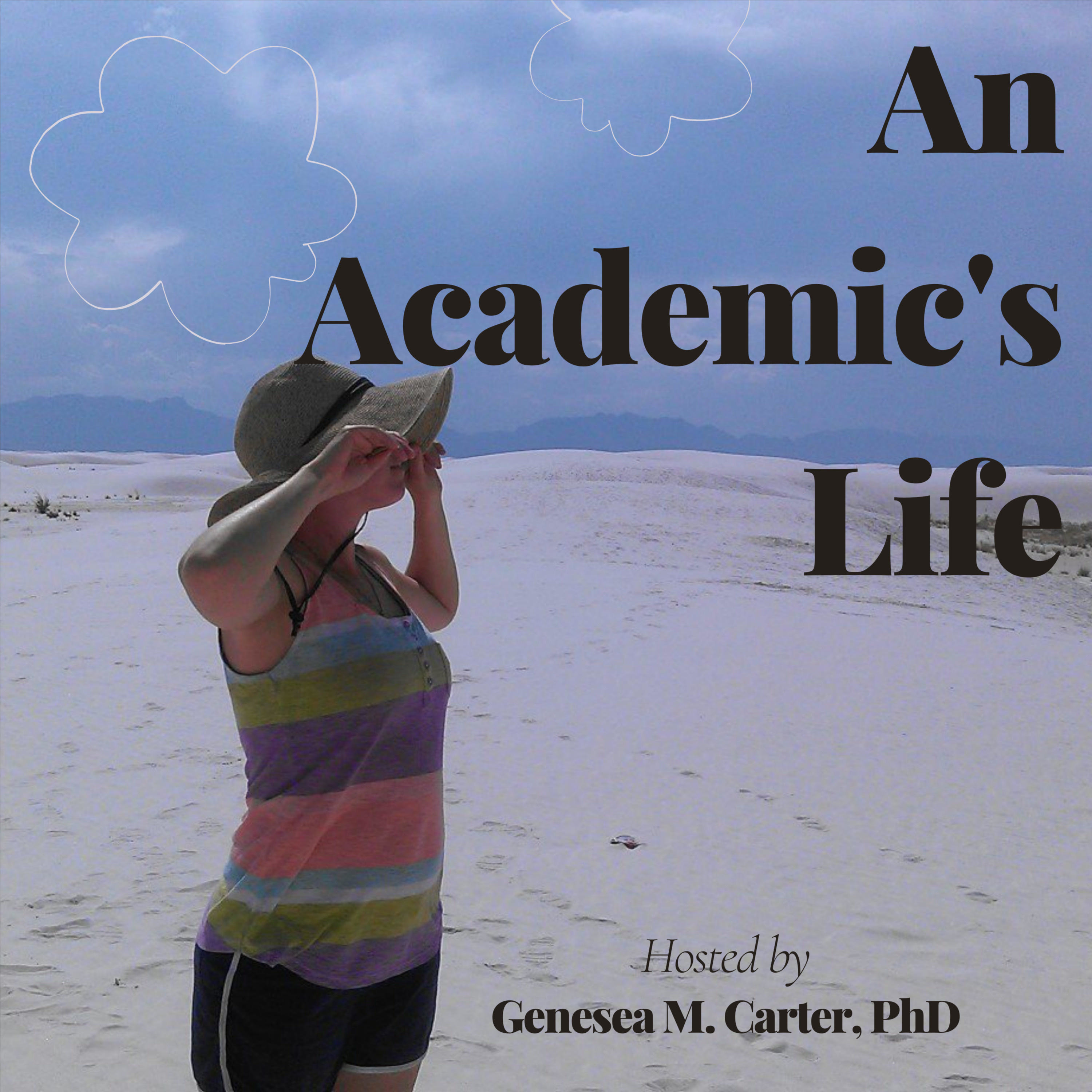
An Academic's Life
by Genesea M. Carter
This podcast isn't about the theory and research we do--it's about our real lives. Join Genesea Carter, PhD in rhetoric and composition, as she shares her personal journey through academia. This podcast is for academics (and the academic curious) who want to have real conversations about academic life--the system, the work, the students, the compensation, the stress, the happiness. If you feel alone in academia, this podcast is for you.
-
35
36. Supposedly, It Is Okay to Rest
This episode title is a bit tongue-in-cheek, but it's a good reminder that it is okay (and necessary) to rest. This week, I talk about the need for rest as the year wind's down (ugh, don't remind me that 2023 is just around the corner!) and how our prior learning knowledge can create self-beliefs that prevent us from taking the rest that we need. I draw from Susan A. Ambrose et al.'s work on prior learning knowledge in How Learning Works: Seven Research-Based Principles for Smart Teaching. I close the episode with a few reflection questions about our own prior learning knowledge about rest and work and what we might do to teach ourselves that it is okay to rest. Happy listening!
-
34
35. Workspace Hacks: How to Lessen Energy Leaks
Do you know that everytime you are mildly (or greatly) annoyed with your office or workspace, you waste cognitive and emotional energy? I've been trying to force myself into loving working in my on-campus office, and I just ..... can't. And I'm envious of folks who can. But forcing myself to try to be productive and motivated in a space that doesn't do it for me is actually causing me a huge energy leak. "Energy leaks" are the ways in which our cognitive, emotional, and intellectual energy dissipates leaving us tired, frustrated, unfocused, and/or resentful. (And maybe many other emotions.) In this episode, I get honest about my office and workplace energy leaks and what I've been doing to stop the leak. Happy listening!
-
33
34. What is Workplace Happiness and How Do You Find It?
This week I explore Agota Kun and Peter Gadanecz's 2022 article "Workplace happiness, well-being and their relationship with psychological capital: A study of Hungarian Teachers." Kun and Gadanecz provide a really nice overview of the scholarship on workplace happiness and well-being, as well as the necessary components to ensuring employees' happiness, so I highly recommend you all to read their literature review. Ever with the goal of finding ways forward and strategies that work, I share my own understanding of workplace happiness and offer listeners several strategies for finding (or refining their search for) workplace happiness within academia.
-
32
33. Working on my Promotion Materials and Creating an Ebook
I am currently neck-deep in promotion material writing/organzing (due September 6), but I was inspired to do a little creative writing with an ebook! In this episode I reflect on how my promotion material writing and the ebook adventure have been retraining my brain away from deadline freak outs and internal criticsm. Without giving away what I've learned, I've found that desensitization works really well for me in these particular contexts. If you want to check out my ebook (on Kindle and as a print-on-demand), feel free. This is me-in-action learning new (non-academic) things and practicing not being perfect -- both things I need to keep working on. How am I supposed to learn new skills and retrain my brain away from the imposter syndrome if I don't challenge myself? Happy listening!
-
31
32. Why You Should Get to Know (at least) One Support Office
It is GTA Orientation time this week, and I'm neck-deep in training our new first-year composition graduate teaching assistants. If there's one thing I can encourage you to do this semester--as I've been telling our new GTAs--is to pick one support office on campus and get to know the staff. I've found that getting to know various support offices on campus have helped me be a better teacher and mentor, as well as set boundaries. If you're feeling lonely, disconnected, or confused from your program, department, or campus, getting to know one support office can definitely help.
-
30
31. Happiness at Work
What does it mean to be happy at work? In this week's episode, I share some workplace happiness research I've been doing (because, you know, us academics are always doing the research) in my own quest for understanding what workplace happiness looks like for me. I share Annie McKee's recipe for happiness at work--"meaningful work," "a hopeful view of the future," and "true friendship"--from her book How to be Happy at Work. (Annie has a PhD in Organizational Behavior and is currently a Senior Fellow at the University of Pennsylvania, so she's got the research-based goods.) I close the episode with a few reflection and brainstorming exercises to help you define for yourself what workplace happiness looks like. Happy listening!
-
29
30. Learning to Inhabit Your Body
These last few weeks have been a little crazy with a water pipe bursting and our basement flooding, so I've been silent. I've been feeling overwhelmed and anxious, and it's hard to slow down and connect with myself when I'm feeling that way. This week, I share a few paragraphs from Dr. Bessel van der Kolk's book The Body Keeps Score: Brain, Mind, and Body in the Healing of Trauma, specifically the chapter titled "Learning to Inhabit Your Body: Yoga." Dr. van Der Kolk, MD, is a trauma researcher who uses neuroscience and attachment research to discover and develop trauma-informed therapies for children and adults. When we're stressed--whether that includes deadlines, flooded basements, or worry about the fall semester--it's hard to remember that we should feel our feelings, acknowledge them, and work through them. In this episode, I also share my own experience learning to inhabit my body as an academic and share some strategies you might want to try.
-
28
29. Don’t Be a Peer Review Jerk
Whether you're just starting out as a peer reviewer or you've been doing it awhile and want a refresher, I've got four recommendations for how to be a good peer reviewer. TLDR: Be a good human and provide meaningful feedback. In this episode, I draw from writing studies scholarship and my experience as an edited collections and special journal issue editor. If you're looking for some student- and/or faculty-friendly readings on how to be a good peer reviewer (yes, you can use these readings in your classrooms to teach students how to effectively peer review), check out writing studies scholar Richard Straub's "Responding--Really Responding--to Other Students' Writing," MIT's Broad Institute "Peer Review--Best Practices," and Paraminder Dhillon's "How to be a Good Peer Reviewer of Scientific Manuscripts." Oh, and that salty Facebook group is called Reviewer 2 Must Be Stopped! Happy listening!
-
27
28. Stop Limiting Yourself
Academia is rife with scarcity mindset--the idea that there are finite opportunities, jobs, and funding to go around and only the best and brightest will survive. For us academics raised in scarcity mindset, we often cannot see new opportunities or potentials because our inner critic tells us that we'll "never be good enough" or "the competition will be so fierce--you'll never get it." As a result, we might be afraid to branch out and take career risks, such as applying for jobs in an adjacent industry, applying for fellowships and grants, or sending in publications to top journals. But in this week's episode, I share why we're ultimately limiting our potential when we buy into the scarcity mindset. I incorporate some personal examples and also an example from a friend who just got a job he never thought he was qualified for or deserved. I close this episode with reflective exercises to help you identify where the scarcity mindset shows up in your life and how to retrain your brain against it. Happy listening!
-
26
27. It's Summer Writing Time!
It's summer--the time when academics get down to their research and writing. In this episode, I share my five top writing strategies (based on writing studies' research and pedagogy) to make your summer writing experience as enjoyable and generative as possible without sacrificing your well-being. Also, it looks like Anchor isn't transcript friendly (transcripts can only happen in 1 minute audio segments--wut?!), so while I said I was making this episode to get a transcript ... yeah, that didn't work. I'm going to have to find a different platform or something.
-
25
26. The Importance of Brain Down Time
It's summer time and either you're feeling pressure to do research and publish or you're embracing downtime ... or you're like me and feeling the pressure of both. In this week's episode, I talk about the importance of downtime for our brain to consolidate information, make long-term memories, and encourage creativity. So if you think you need to go, go, go--like many of us in academia do--you actually need time to go slow, slow, slow. I include some ideas for how you might practice downtime, especially if your inner critic is yelling at you to not take downtime. Check out this Scientific American article "Why Your Brain Needs More Downtime" and this Psychology Today article "The Scientific Case for Downtime."
-
24
25. It's Graduation Time
It's graduation time, which always makes me think about new beginnings. But graduation time is also a moment to remember two critical points: (1) we are so much more than our degrees and content areas and (2) let's not put all of our (career) eggs in one basket. In this episode, I encourage all listeners--including myself because I need to hear it just as much--to celebrate our skills beyond content knowledge, to embrace new ideas about the work landscape, and to think big about the lives we want to have. If this topic resonates with you, I encourage you to also check out Bill Burnett and Bob Evans' Designing Your Life, Maggie Berg and Barbara K. Seeber's The Slow Professor: Challenging the Culture of Speed in the Academy, and Elizabeth Perle McKenna's When Work Doesn't Work Anymore: Women, Work, and Identity. Happy listening!
-
23
23. I Have Imposter Syndrome -- Do You?
In this week's episode, I explore what I've learned about having imposter syndrome and how it has affected my perception of self and possibility. I draw from Drs. Lisa and Richard Lisa Orbé-Austin's and their book Own Your Greatness: Overcome Imposter Syndrome, Beat Self-Doubt, and Succeed in Life, which has helped me better understand the experiential and psychological underpinnings of imposter syndrome and why high-achieving folks like me are more likely to have imposter syndrome. Listen along to learn more about imposter syndrome, what it is, why people have it, and how to stop feeling like an imposter.
-
22
22. Are We Sellouts If We Want to Make Money?
Coming from a background where making money was considered greedy, I grew-up thinking my career needed to be service-focused and money didn't really matter. Now that I've gotten older (and have more bills), I am questioning the (often) implicit and explicit negativity associated with faculty who want to make money ... or who leave academia to make more money. In this episode, I question why so many academics stay in low-paying academic jobs and/or eschew looking for better paying work. What if academics, even for the short term, took better paying jobs to get financially stable, so they can have the financial means to do the work they love? A few resources you might be interested in: Tiffany Aliche, the Budgetnista; Tori Dunlap, Her First 100K; Keelan Muscara, Millennial Educator; Regina Moore and Angela Rozmyn, Women's Personal Finance; and Ramit Sethi, I Will Teach You To Be Rich.
-
21
21. Living with Authenticity and Integrity
In this episode, I use Dr. Bill Plotkin's book Soulcraft: Crossing into the Mysteries of Nature and Psyche to talk about the importance of living an authentic self with integrity in academia. Bill has a PhD in psychology from the University of Colorado--Boulder but now is the founder of Animas Valley Institute in Southwest Colorado. I have found his book helpful at uncovering the layers of my own psyche, so I want to share some of his wisdom with you. Many of us feel like we cannot be authentic in academia because of the pressures of social acceptance--the pressure to be well-liked, to get funding, to get optimal teaching times, to sail through annual evaluations, etc. However, if we want to live in alignment with our true selves, we must find ways to be authentic within our programs, departments, and classes. I share some of my own experiences grappling with authenticity and end the episode with recommendations you may want to try in your home institutions. As always, I would love to connect with you on LinkedIn and welcome your topic ideas. Happy listening!
-
20
20. Developing a Well-Differentiated Self
In this episode, I draw from the psychology concept "differentiation of self," as defined by The Bowen Center for the Study of the Family, to share the ways in which we might struggle with differentiation in academia. According to The Bowen Center, "People with a poorly differentiated 'self' depend so heavily on the acceptance and approval of others that they either quickly adjust what they think, say, and do to please others or they dogmatically proclaim what others should be like and pressure them to conform." Many of us, through upbringing and/or academic training, struggle with differentiation of self in academia because we don't want to rock the boat, make waves, draw attention to ourselves, etc., for fear of losing funding, not getting hired, not getting promoted, etc. I close the episode with strategies I have learned to develop a well-differentiated self in the workplace to help me with living out my own integrity, feeling comfortable with my personality, and (trying not to) give undue power to annual evaluations and promotion processes. (Also, in talking to my therapist about my own differentiation of self, she says I am well-differentiated .... but I don't feel like I am. haha.) As always, I would love to connect with you on LinkedIn, so feel free to connect over there. Happy listening!
-
19
19. Be Adventurous
Academia is really great at training grad students and faculty to silo themselves into disciplines that don't get much crossover or exposure to other disciplines. (If you're in a field with a lot of disciplinary crossover, that's awesome.) Many hiring and promotion guidelines, disciplinary journals, hiring committees, etc., prioritize/privilege those who have stuck with the field and not branched out. (Of course, your mileage may vary.) For those of us who have been trained to not branch out or for those of us who think it would be a waste of professional time to branch out, this episode is about the benefits of being adventurous. This episode was recorded in Austin, Texas, where I was attending a regional conference facilitated by the edtech company TopHat and their (mostly) STEM educators. I am neither a STEM person nor an edtech person, but I decided this conference was my opportunity to be adventurous. And, needless to say, I had a fantastic time and learned a lot that I can apply to my own teaching and administrative role. As always, I would love to connect with you on LinkedIn and feel free to drop me a line about topics you're interested in me exploring for future episodes.
-
18
18. What's Your Workview and Lifeview?
This week's episode draws from Bill Burnett and Dave Evans' Designing Your Life book. Burnett and Evans are design professors at Stanford University; their book has helped me get more clear about what I want from work and life, and I've assigned chapters (with positive feedback from students) in my undergraduate and graduate courses. In this episode, I read chapter 2, "Building a Compass," which is a reflection-based chapter in the book about one's workview and lifeview. Pull up a chair, grab a notebook, and get ready to write (or just mull over ideas). I sprinkle in my own thoughts and feelings as I read the chapter again. I would love to hear your topical requests, so feel free to connect with me on LinkedIn.
-
17
17. My PhD Life, a Brief Tale
This week's episode is about my PhD life at the request of a current PhD-student via LinkedIn. This isn't the whole story or even half of the story, but it does cover the fun, the inspiring, the frustrating, and the annoying--with a healthy dose of how my imposter syndrome, identity deconstruction, inner critic, and nervous system impacted my PhD life. I close the episode with some metacognitive and mindfulness recommendations for those of you in similar situations. I would love to hear more of your topical requests, so feel free to connect with me on LinkedIn.
-
16
16. More of My Story; or, How Religion and Public Service Motivation Shaped/s My Conception of Work
I get a bit more vulnerable this week as I recount how my evangelical upbringing shaped/s my view of academic work. Ultimately, I thought it was critical to pick a career where I was doing good and I thought that service-through-career would sustain me. Now I'm not so sure. Ever the academic, I draw connections between my upbringing and Wang, van Witteloostuijn, and Heine's (2020)'s article "A Moral Theory of Public Service Motivation" published in Hypothesis and Theory.
-
15
15. Grounding Yourself for the Week
This week's episode focuses on listening to and calming the anxiety many of us wake-up with on Monday morning. I offer a 5 minute grounding strategy in this episode--which you can follow along with--as well as alternative strategies. This episode can be listened to during any part of the week, or you can save it for days you're feeling particularly stressed. I close this week's episode with a few journaling topics to help you listen to what your body is telling you about why you're feeling anxious and stressed and next steps to address those feelings.
-
14
14. The No Asshole Rule: Who are the Assholes and How do we Deal with Them?
It's that time of year when professors and grad students take to social media to ask for help dealing with academic assholes. But who are the assholes and how do we deal with them? In this episode, I read an excerpt from Dr. Robert Sutton's book The No Asshole Rule: Building a Civilized Workplace and Surviving One That Isn't and share my own strategies for dealing with the assholes in academia. Additional resources on surviving assholes in academia: Darla J. Twale and Barbara M. De Luca: Faculty Incivility: The Rise of the Academic Bully Culture and What to Do About It Virginia Gewin: "How to Blow the Whistle on an Academic Bully" Loraleigh Keashly and Joel H. Neuman: "Faculty Experiences with Bullying in Higher Education: Causes, Consequences, and Management"
-
13
13. Strategies for Well-Being (and Work Reduction/Streamlining) as a Teacher
This is part two of my new-to-2022 well-being episodes. Last week I shared strategies for well-being within the department and this week I share strategies for well-being (and workload reduction) as a teacher. In this episode I share five strategies that work well for me that can be used by graduate student teachers, NTTF, TT, and program directors: (1) creating template emails, (2) sending batch announcements, (3) creating a bank of comments/feedback for students, (4) utilizing student support services, and (5) ensuring syllabus and program policies are in line with current university practice. I mention Joseph Murray's The Power of Your Subconscious Mind, and it's worth checking out if you want to learn more about how the conscious and subconscious mind work. It's a little woo-woo, but there's a lot of good research about understanding how to retrain subconscious messaging, thought patterns, and beliefs. Take what you need and leave the rest! Finally, I mention how dance can reduce anxiety. Read more about that here. Happy listening!
-
12
12. Strategies for Well-Being in the Department
It's 2022, and a new term is upon us! Inspired by recent conversations on Reddit's r/Professors about managing well-being and boundaries within the department, in this episode I share five strategies that work well for me: (1) starting the day with a mantra, (2) building in rewards, (3) setting time and space boundaries, (4) being aware of how spaces drain or sustain me, and (5) using on-campus resources. I open today's episode with an excerpt from economist Arthur C. Brook's The Atlantic column "A Profession is Not a Personality," which is also a timely topic that has been swirling around in my brain. Happy listening!
-
11
11. A Writing Professor’s Tips for the Writing Process
I share my tips and strategies for academics struggling (or annoyed by) the writing process. As a professor with a PhD in rhetoric and writing, one of my specializations is teaching the writing process. In this episode, I talk about drafting, the problem with getting stuck in the minutiae, writer's block, reverse outlining, and other useful topics. If you're looking for a good, short piece of writing about the writing process from one writer to another, I always recommend Anne Lamott's Bird by Bird, especially her chapter "Shitty First Drafts." I always assign "Shitty First Drafts" in my classes--from first-year to graduate school--because it helps reframe the one common pitfall of most writers: that the first draft has to be great. Happy listening!
-
10
10. Transitioning to a Large Teaching Load
This episode is for all grad students and faculty who have jobs teaching more sections than they anticipated. In this episode, I share my own experience teaching a 4-4 (four sections of composition writing courses a semester) and strategies for maintaining one's sanity and mental health while teaching a lot of students. I also provide specific recommendations for academics who have grading-heavy teaching loads and feel like they are drowning under all the grading.
-
9
9. Five Tips Before Applying to Non-Tenure-Track Faculty Positions
In this episode, I share my experience sitting on a non-tenure-track faculty (NTTF) committee at two different institutions. I also share what I've learned from academic Facebook groups and academic friends who are NTTF.
-
8
8. Grad School: What to Know About the Application Process
There is a lot I've learned about from my own graduate school experience--good, bad, and ugly. In this episode, I share five general recommendations as you prepare or plan to prepare for graduate school applications. If you have An Academic's Life topic you would like me to explore or want to hear more about my own academic life experiences, drop me an email at [email protected].
-
7
7. What I’ve Learned About the Tenure Track Job Market
In this episode, I talk about my experience graduating with my rhetoric and composition PhD in 2013, my illusions of grandeur, applying for seventy (70!) jobs in the U.S., the interview process, getting letters of rec -- everything but the kitchen sink. If you have An Academic's Life topic you would like me to explore or want to hear more about my own academic life experiences, drop me an email at [email protected].
-
6
6. Academic Life, the Sunk Cost Fallacy, and the Scarcity Mindset
In this episode, I explore how the sunk cost fallacy and the scarcity mindset has kept me feeling small and expendable. I encourage listeners to examine the sunk cost fallacy and scarcity mindset in their own lives to break free of these toxic ways of thinking. I’d love to know what topics you would like me to cover. If you have an idea, please reach out to me at [email protected].
-
5
5. How to Survive as an Academic Empath
In this episode, I share what I've learned from reading Dr. Judith Orloff's book The Empath's Survival Guide, the many types of empaths in the world, and how I am learning to survive as an academic empath.
-
4
4. Academia, Bullshit Rules, and What to Do About Them
I draw from Vishen Lakhaini's "Brules" (bullshit rules), from his book The Code of the Extraordinary Mind, to talk about how and why brules frame so many of our academic lives. I close the episode with strategies I am trying to challenge some of the brules I have internalized but no longer serve me. I’d love to know what topics you would like me to cover. If you have an idea, please reach out to me at [email protected].
-
3
3. Reading for Fun, Reading Burnout, and How to Read for Fun Again
In this episode, I explore why I am burned out on pleasure reading and offers strategies (and hope) for academics who are longing to read for fun again. I’d love to know what topics you would like me to cover. If you have an idea, please reach out to me at [email protected].
-
2
2. Academia, Boundaries, and Emotional Labor
In this episode, I talk about the emotional labor of academic work, why boundaries are important, and strategies to set boundaries. I’d love to know what topics you would like me to cover. If you have an idea, please reach out to me at [email protected].
-
1
1. Welcome to An Academic's Life
In this first episode, I explain why I've started this podcast, the niche I want it to fill, and a lil' bit about me. I’d love to know what topics you would like me to cover. If you have an idea, please reach out to me at [email protected].
No matches for "" in this podcast's transcripts.
No topics indexed yet for this podcast.
Loading reviews...
ABOUT THIS SHOW
This podcast isn't about the theory and research we do--it's about our real lives. Join Genesea Carter, PhD in rhetoric and composition, as she shares her personal journey through academia. This podcast is for academics (and the academic curious) who want to have real conversations about academic life--the system, the work, the students, the compensation, the stress, the happiness. If you feel alone in academia, this podcast is for you.
HOSTED BY
Genesea M. Carter
CATEGORIES
Loading similar podcasts...
URL copied to clipboard!