
PODCAST · health
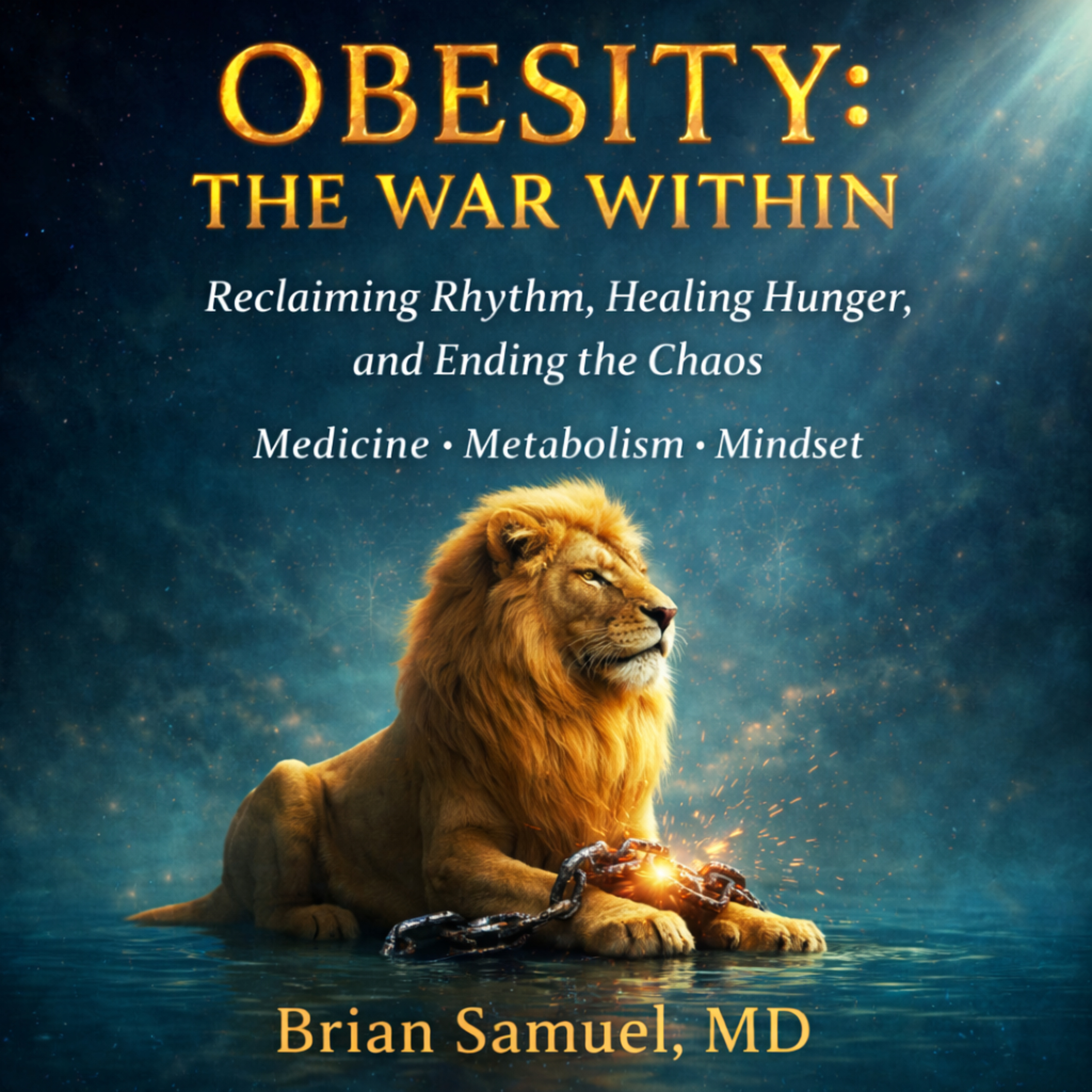
Obesity: The War Within
by Brian Samuel, MD
Obesity: The War Within, hosted by Dr. Brian Samuel, explores the real science behind weight, hunger, and metabolism. Many people feel trapped in cycles of dieting, guilt, and starting over. This podcast explains what is actually happening inside the body and why hunger, cravings, and fatigue are signals, not failures. Through simple science, patient stories, and practical tools, you will learn how food, sleep, movement, and stress shape metabolism. No shame. No extreme diets. Just clear guidance to help you build a sustainable rhythm, regain energy, and restore trust in your body.
-
28
Is Insulin Actually Making You Gain Weight? | The Insulin Truth
If you have ever been told insulin is the reason you cannot lose weight, this episode will help you understand the real story. In this episode, Dr. Brian Samuel explains insulin in plain language, not as the villain people fear, but as one of the body’s most important energy hormones. You’ll learn what insulin actually does, what insulin resistance really means, and why the body becomes more reactive when life is filled with poor sleep, stress, erratic eating, and internal overload.This episode breaks down why insulin is not bad, why carbohydrates are not the enemy, and why the problem is often not one food but the bigger metabolic environment surrounding it. Dr. Samuel connects insulin to daily life, including energy crashes, cravings, belly fat, afternoon fatigue, and that feeling of being stuck even when you are trying.If you have ever felt confused by blood sugar, afraid of carbs, or frustrated that your body seems to store everything more easily than it used to, this episode will help you stop fearing insulin and start understanding it. Because when insulin finally makes sense, the body starts to make more sense too.
-
27
Why You Never Feel Full (Even After Eating) | The Leptin Effect
Why do some people eat and still not feel fully satisfied? In this episode, Dr. Brian Samuel explains leptin, one of the body’s key fullness signals, and why that signal can become harder to hear when the system has been under stress for too long. You’ll learn how fullness is not just about stomach size or willpower, but about chemistry, rhythm, sleep, stress, and the body’s ability to feel safe enough to settle.This episode explores why some people feel like they are always looking for more food, even after a meal, and why that does not mean they are broken. Dr. Samuel explains leptin in simple language, including why fullness can go quiet after years of dieting, weight cycling, poor sleep, emotional strain, and chaotic eating patterns.If you have ever wondered why satisfaction feels delayed, muted, or unpredictable, this episode will help you see that the issue is often not you. It is the signal. And when the body starts to feel safer, steadier, and more nourished, that signal can begin to return.
-
26
Why You’re Always Hungry (It’s Not Your Fault) | The Ghrelin Effect
Why does hunger sometimes feel calm, and other times feel overwhelming? In this episode, Dr. Brian Samuel breaks down ghrelin, one of the body’s main hunger hormones, in a way that finally makes sense. You’ll learn why hunger gets louder when meals are skipped, why poor sleep can make appetite stronger, and why stress and inconsistency can make food feel more urgent than usual.This episode explains that strong hunger is not a weakness and not a sign that something is wrong with you. It is often a protective signal from the body when it senses scarcity. Dr. Samuel shows how modern life, busy schedules, late meals, and under-fueling during the day can quietly set people up for intense hunger later on.If you have ever felt like you were “fine” all day and then suddenly felt out of control around food at night, this episode will help you understand why. This is the beginning of learning the body’s language instead of blaming it.
-
25
Mindfulness What’s Really Holding You Back
Most people don’t struggle because they don’t know what to do. They struggle because of what they tell themselves every day.In this episode, Dr. Brian Samuel breaks down the real reason change feels so difficult, even when you feel like you’ve tried everything. From thoughts like “I already know what to do,” “I’ll start Monday,” “I’m too busy,” or “it runs in my family,” to the deeper patterns that keep repeating, this episode brings clarity in a way that feels simple, honest, and relatable.You’ll understand why your days feel controlled but your nights feel harder, how under-eating and dehydration build up throughout the day, and why your body is often just responding to how you’ve been treating it. This episode also simplifies what your body actually needs, from protein and carbohydrates to hydration and consistency, so it finally makes sense.Dr. Samuel also shares his personal experience, showing that this is not about perfection, but about daily awareness and small consistent actions. You’ll learn how to build real mindfulness, how to recognize your patterns without judgment, and how to take back control one step at a time.This episode is for anyone who feels stuck, overwhelmed, or frustrated, whether you feel like you “know what to do” or feel like nothing has worked.This is the shift before the science.Based on concepts from the book Obesity: The War Within
-
24
Why Weight Loss Medications Can Work and What No One Tells You
Weight loss medications are everywhere right now, but very few people actually understand how they work. In this bonus episode, Dr. Brian Samuel breaks down the real differences between Wegovy, Ozempic, Zepbound, Mounjaro, and the newer medications being studied like retatrutide. He explains GLP-1, GIP, and glucagon in simple language, what these hormones actually do in the body, and why these medications do much more than just “make you eat less.”This episode also clears up the biggest misconceptions people have about side effects, plateaus, muscle loss, hair loss, constipation, fatigue, mood changes, and why some people feel great the first week and worse the next. You’ll learn how these medications can indirectly mute hunger and thirst signals, why under-fueling and under-hydrating create problems, and why more dose is not always better.Dr. Samuel also explains how older medications like phentermine, metformin, topiramate, and Wellbutrin fit into weight loss treatment, what adipose tissue is really doing in the body, and why shrinking fat tissue improves inflammation and so many obesity-related conditions. Most importantly, this episode brings the conversation back to what matters most: structure, habits, body literacy, and learning how to work with your body instead of fighting it.This is an essential episode for patients, providers, and anyone trying to make sense of the modern weight loss medication world.
-
23
Calories Matter… But Not the Way You Think
This episode tackles one of the biggest arguments in nutrition without turning it into nonsense. Yes, calories matter, but the lived experience of calories is not as simple as people have been told. This episode explains why two meals with the same calories can affect hunger, fullness, cravings, blood sugar, energy, and mental control very differently depending on protein, fiber, food quality, timing, stress, sleep, and hormones. It should help people stop thinking of calories like cold math and start understanding how the body actually experiences food in real life. This is the kind of episode that can shift how people think about weight loss forever.
-
22
Why Eating Less Isn’t Working | The Metabolism Truth
This episode challenges one of the biggest beliefs in weight loss. People are taught that if they want to lose weight, they just need to eat less and be more disciplined. But for many people, eating too little for too long creates more problems than they realize. This episode explains how aggressive restriction can lead to fatigue, muscle loss, rebound hunger, worse sleep, cravings, obsession with food, and the feeling that your body is working against you. It also talks honestly about fasting, keto, low-calorie dieting, and when those approaches may help versus when they start backfiring. This should hit people because it speaks to a truth they have felt but maybe never understood.
-
21
Why You Still Feel Off Even When You Eat “Healthy” | The Vitamin Gap
This episode clears out the supplement noise and focuses on what really matters. Instead of making people feel like they need a shelf full of pills, it explains the few nutrients that commonly matter most, like vitamin D, B12, magnesium, and iron, in a simple way people can actually understand. It should help listeners connect low nutrients to real symptoms like fatigue, brain fog, weakness, low mood, poor recovery, or feeling off without knowing why. The goal is to make people think, maybe I do not need more hype, maybe I just need to understand what my body is actually asking for.
-
20
Why Drinking Water Isn’t Fixing Your Fatigue | The Electrolyte Issue
This episode talks about something a lot of people miss completely. They think hydration just means drinking more water, but that is not always the full story. Sometimes people are drinking plenty and still feel tired, foggy, crampy, headachy, weak, or drained. This episode explains why sodium, potassium, and magnesium matter, how sweat, heat, workouts, illness, stress, and even daily life can throw things off, and why some people actually feel worse when they only keep pushing plain water. It should make people realize hydration is not just about quantity. It is about what your body can actually absorb and use.
-
19
Macronutrients Made Simple : How Much Protein, Carbs, Fat, and Fiber Do You Actually Need
This is one of the most common questions people ask. How much protein should I eat? Are carbs bad? How much fat is too much? Do I really need fiber?In this episode of The War Within, Dr. Brian Samuel simplifies macronutrients in a way that finally makes sense. Protein, carbohydrates, fat, and fiber are not just numbers or rules to follow. They each play a role in how your body feels, how your energy holds up, and how your hunger shows up throughout the day.You’ll start to understand what each macronutrient actually does in your body, using simple, real-life examples that fit into normal routines. No extreme plans, no rigid tracking, just a clear way to think about how food works.We also walk through how these needs can shift based on your body, your lifestyle, and your activity level, and what that actually looks like when you sit down to eat.Because once you understand how to build a meal, everything starts to feel less confusing and more in your control.This is the episode you come back to when you want clarity, not noise.
-
18
Metabolism Isn’t Broken (It’s Talking to You) | The Signal Model
Most people think metabolism is something you’re born with. Fast or slow. Good or bad. And after a while, it starts to feel like yours is working against you.But what if that’s not actually what’s happening?In this episode of The War Within, Dr. Samuel breaks down what metabolism really is in a way that finally clicks. Not as a fixed setting, but as a system that is constantly adjusting based on how you’re living your life.Your sleep, your stress, how often you eat, how much you move, even how chaotic your day feels… your body is paying attention to all of it.If you’ve ever felt like your body is slowing down, holding onto weight, or not responding the way it used to, this episode will change how you see it. Because your metabolism isn’t broken. It’s adapting.And once you understand what it’s adapting to, you finally stop fighting your body and start working with it.
-
17
Why Your Gut Feels Off (And How to Fix It) | The Fiber Link
There are a lot of people who feel like they’re doing everything right. Eating better, trying to be more mindful, cutting back on certain foods, and yet they’re still hungry, still dealing with cravings, or their digestion just doesn’t feel right.In this episode, Dr. Brian Samuel talks about something that’s often overlooked but makes a huge difference, fiber.Fiber isn’t just about digestion. It slows how food moves through your body, helps stabilize blood sugar, and plays a big role in how full you feel after a meal. Without enough of it, food can move too quickly, energy can spike and crash, and hunger comes back sooner than expected.You’ll start to see how different types of fiber work in simple terms, and why most people aren’t getting enough without even realizing it. Foods like vegetables, fruits, beans, oats, lentils, nuts, and seeds all bring something different to the table, but in everyday life, they’re often the first things to get pushed aside.We also talk about what happens when fiber is added too quickly, why that can backfire, and how to build it into your day in a way that actually feels good.Because when fiber is in the right place, digestion becomes smoother, hunger becomes more stable, and the entire day starts to feel more predictable.Next episode, we’ll talk about something people feel every day but rarely understand clearly, metabolism.
-
16
Why You’re Never Satisfied After Eating | The Fat Factor
There are people who eat what looks like the “perfect” diet on paper, clean foods, low fat, controlled portions, and still feel like something is missing. They’re still thinking about food, still not satisfied, still looking for more.In this episode, Dr. Brian Samuel explains why fat plays a much bigger role than most people realize. Fat slows digestion, helps you feel full, supports hormones, and adds a sense of calm to eating that many people have been missing.When fat is too low, meals can feel incomplete. You may finish eating, but your brain doesn’t register that you’re actually done. That’s when the constant searching starts, even if you technically ate enough.You’ll learn how fat works in the body in simple terms, how it helps balance meals, and why removing it completely often leads to more chaos, not control.This isn’t about adding large amounts of fat or following strict rules. It’s about understanding how a small amount in the right place can change how your meals feel and how long that sense of fullness lasts.Because when meals feel complete, eating becomes quieter, and that changes everything.
-
15
Are Carbs Actually Making You Gain Weight? | The Carb Myth
Carbohydrate have become one of the most confusing parts of nutrition. One person says avoid them completely, another says they’re essential, and somewhere in the middle people are left unsure what to believe.In this episode, Dr. Brian Samuel breaks down what carbs actually do in your body in a way that finally makes sense. When you eat carbs, they turn into glucose, which is your body’s main source of energy. Your brain depends on it, your muscles use it, and your body stores extra as glycogen, a form of stored energy kept in your muscles and liver for later use.You’ll start to see why not all carbs feel the same. Whole foods like fruits, rice, potatoes, and oats behave very differently than ultra-processed foods that digest quickly and leave you hungry again. The difference isn’t just calories, it’s how fast they move through your system and how stable your energy stays afterward.This episode isn’t about fearing carbs or overusing them. It’s about understanding how they fit into your life, your activity, and your rhythm so they work for you instead of against you.Because once you understand carbs, a lot of the confusion around food starts to clear.Next episode, we’ll talk about something people often remove without realizing what they’re losing, fats.
-
14
The #1 Thing You’re Not Eating Enough Of | The Protein Gap
Most people think they have a willpower problem, but when you look a little closer, it’s often something much simpler. They’re just not eating enough protein.In this episode, Dr. Brian Samuel breaks down why protein quietly shapes your entire day, from how hungry you feel, to how often you snack, to whether your body feels steady or out of control. You’ll start to understand why some meals keep you full for hours, while others leave you searching for something again not long after.We talk about what protein actually does in your body in plain, everyday language. How it helps stabilize blood sugar, protect muscle, and send signals to your brain that you’re finally satisfied, not just temporarily distracted.You’ll also hear real-life examples of what this looks like in a normal day. Busy mornings, quick lunches, late nights, and how small shifts in protein can change the entire rhythm without turning your life upside down.Because when protein is in the right place, something interesting happens. The constant thinking about food starts to quiet down.And once that noise settles a bit, you can finally start to see food differently, not as something to fight, but something to understand.
-
13
Breaking the Cycle Without Starting Over Again
It doesn’t usually fall apart all at once. It’s one off day, one missed meal, one stressful moment, and suddenly it feels like everything is undone.In this episode, Dr. Brian Samuel brings the season together and talks about how to move forward without restarting from zero. Because one moment doesn’t erase your progress, and it doesn’t mean you failed.You’ll learn why the all-or-nothing mindset keeps people stuck, why small slips turn into full restarts, and how to return to your rhythm without guilt or overcorrection.Because the goal was never perfection. It was consistency.And when you learn how to come back calmly, you stop starting over for good.
-
12
Why Diets Always Fail (And It’s Not You) | The Diet Trap
Most diets work… for a little while.You follow the plan, stay strict, push through the cravings, and for a few weeks it feels like you finally figured it out. Then something shifts. Hunger gets louder, energy drops, life gets busy, and everything slowly starts to fall apart.In this episode, Dr. Brian Samuel talks about why diets don’t fail because you failed them. They fail because they’re built on intensity, not real life. The body adapts to restriction, hunger signals increase, and the brain starts pushing back. Add in stress, work, family, and normal life, and the plan becomes impossible to sustain.You’ll learn why short-term success can be misleading, why rebound eating happens, and why extreme plans almost always collapse over time.Because the goal isn’t to find a plan you can survive for a few weeks. It’s to build something you don’t have to escape from.
-
11
Why Cravings Are Actually Information | The Signal Theory
Everyone has an opinion about what you should eat.Social media diets, TikTok trends, friends sharing what worked for them, family members telling you what’s “good” or “bad,” and even different experts giving completely opposite advice. After a while the noise becomes so loud that people stop trusting their own body.In this episode, Dr. Brian Samuel talks about why cravings are often misunderstood. Instead of seeing them as weakness, cravings can be signals. Signals about stress, sleep, blood sugar swings, under-fueling, or even emotional overload.You’ll learn how outside opinions can drown out the body’s natural signals and how paying attention to patterns in your own life can be far more useful than chasing every new diet trend.Because when you quiet the noise around you, you can finally start hearing what your body has been trying to tell you all along.
-
10
BMI vs Weight: Does It Actually Matter? | The Scale Illusion
The scale has a strange power over people. One number can change your entire mood for the day. A small drop feels like success. A small jump can make you feel like everything you did yesterday didn’t matter.In this episode, Dr. Brian Samuel talks about what the scale is actually showing you and why BMI and body weight don’t always tell the full story. Your weight can move up or down from simple things like water, sodium, inflammation, sleep, hormones, and muscle changes, not just body fat.You’ll learn why people often panic over normal fluctuations, why BMI was never designed to judge individual health, and how to start looking at your body with a little more perspective.Because when you understand what the numbers really mean, the scale stops being a judge and starts becoming just another piece of information.
-
9
Coffee? The First Meal
For many people, the first thing that touches their stomach in the morning isn’t food. It’s coffee.In this episode, Dr. Brian Samuel explores a simple question most people never stop to think about: what actually happens in the body when caffeine becomes the first “meal” of the day? Coffee can sharpen focus and wake up the brain, but it can also quietly suppress hunger signals, shift stress hormones, and delay the body’s natural rhythm for eating.You’ll learn why so many people end up skipping breakfast without meaning to, why hunger suddenly crashes later in the day, and how this small morning habit can shape cravings, energy, and food choices for the rest of the afternoon.This isn’t about saying coffee is good or bad. It’s about understanding how the body responds and learning how to use it in a way that works with your rhythm, not against it.Because sometimes the smallest habits in the morning quietly decide how the entire day will unfold.
-
8
Why You’re Always Tired (Even When You Sleep) | The Energy Problem
“I know I should move more… but I’m exhausted.”That is something Dr. Brian Samuel hears from patients all the time.In this episode, we unpack why constant fatigue is one of the most misunderstood signals in the body. Being tired is often blamed on laziness or lack of motivation, but in reality it is usually the result of overload. Poor sleep, unstable blood sugar, dehydration, stress chemistry, and nonstop stimulation can quietly drain the body long before people realize what is happening.Dr. Samuel explains how modern life pushes the nervous system into survival mode and why the body responds by slowing things down. When energy is low, the brain protects itself. Movement feels harder, cravings rise, and people start blaming themselves for something that is actually biological.You will learn how sleep debt, missed meals, dehydration, and chronic stress interact to create the fatigue cycle so many people live in. More importantly, you will hear simple ways to begin restoring energy by rebuilding daily rhythm instead of forcing motivation.Because the truth is, most people are not lazy.They are depleted.This episode also sets up an important shift in the next conversation. If fatigue is often the result of how the day begins, then the first meal of the day might matter more than people realize.
-
7
Hunger is Not the Enemy
Many people today are afraid of hunger. They call it “food noise,” or they assume something is wrong when their appetite comes back.But hunger is not the enemy.In this episode, Dr. Brian Samuel explains why hunger is actually one of the body’s most important signals. When hunger shows up, it often means something simple happened earlier in the day. Missed meals, dehydration, poor sleep, or being out of rhythm can all trigger it.Instead of panicking or immediately turning to more restriction or higher medication doses, this episode invites listeners to pause and ask a better question. Why is my body asking for fuel right now?You will learn how to recognize the difference between true hunger, dehydration, and stress signals, and how small shifts in timing, hydration, and daily rhythm can quiet the chaos around eating.Because the goal is not to silence your body. The goal is to understand it.This episode is part of Season 1: Breaking the Cycle, where we explore why so many people feel stuck restarting their health over and over, and how to step out of that pattern for good.
-
6
Why You’re Probably Dehydrated (And Don’t Know It) | The Fluid Problem
Most people think their cravings, fatigue, headaches, and brain fog are food problems. A lot of the time, they’re hydration problems.In this bonus episode, Dr. Brian Samuel talks about why fluids may be one of the most overlooked drivers of appetite, energy, mood, digestion, and even anxiety-like symptoms. Many people spend years trying to fix these issues with stricter diets, supplements, or caffeine—while their body is simply running low on water.You’ll learn how dehydration can amplify hunger signals, why common fluid recommendations don’t make sense for everyone, how hydration affects metabolism and skin health, and why something as simple as drinking consistently can quiet cravings and stabilize energy.Sometimes the missing piece isn’t another diet.Sometimes it’s water.
-
5
The Hidden Reason Willpower Fails
If willpower were the answer, most people would have solved this already.In this episode, Dr. Brian Samuel explains why willpower feels strong one moment and completely disappears the next. It’s not a character flaw, and it’s not a lack of discipline. Willpower is actually a limited mental resource, and when the brain is overloaded by stress, poor sleep, decision fatigue, and constant stimulation, that resource runs out quickly.You’ll learn how modern life quietly drains the brain’s ability to make good decisions, why relying on motivation alone almost always leads to burnout, and why simplifying routines restores consistency far better than pushing harder.This episode reframes the struggle many people feel: the problem isn’t that you don’t care enough. The problem is that your brain has been asked to do too much for too long.When the environment becomes simpler and the body becomes more supported, willpower stops carrying the entire load and consistency becomes possible again.
-
4
What If Nothing Is Wrong With You?
Most people believe their body is the problem.That they lack discipline. That they don’t have enough willpower. That something inside them is broken.But what if none of that is true?In this episode, Dr. Brian Samuel explores a different possibility: that the cravings, fatigue, stress eating, and restarts people experience are not personal failures — they are signals. Signals from a body trying to protect itself in a world that is constantly overstimulated, underslept, and overloaded.You’ll learn why the body reacts the way it does, why willpower often fails under pressure, and how curiosity can replace shame when it comes to understanding hunger, cravings, and weight struggles.This conversation begins the shift from self-blame to self-understanding.Because when you stop assuming something is wrong with you, you can finally start listening to what your body has been trying to say all along.
-
3
Why You Keep Starting Over
In this episode, Dr. Samuel explores the cycle of dieting, trust issues, and overload, offering practical strategies to rebuild trust in oneself and establish sustainable habits. He emphasizes the importance of steadiness, rhythm, and self-compassion over perfection.keywordshealth, nutrition, habits, trust, stress, self-care, cycle, steadiness, routine, emotional eatingkey topicsThe trust problem in dieting and healthHow overload and stress trigger emotional eatingThe importance of rhythm and steadiness in healthPractical strategies for coming back to normal after setbacksThe role of shame and self-compassion in health journeysMost resets are not about food but about overload and trust.Stress and fatigue significantly impact appetite and decision-making.Steady, simple actions rebuild trust more effectively than harsh punishments.Life's chaos makes strict plans fragile and unsustainable.The key to lasting change is learning to come back without drama.Breaking the Cycle: How to Rebuild Trust in Your Eating HabitsThe Power of Steadiness: Overcoming Diet Reset Temptations"Messing up is usually not a dramatic moment.""The middle ground is where real change happens.""Health is about rhythm, not perfection."
-
2
The War Within: Obesity Without Shame
We live in a loud world. Diet trends come and go, motivation rises and fades, stress stays high, and sleep runs short. After a while, it’s easy to start believing something is wrong with you.In this introduction to The War Within, Dr. Brian Samuel, board-certified in Obesity Medicine and Family Medicine, and author of Obesity: The War Within on Amazon, offers a different place to start.Your body is not failing. It is responding.Hunger, cravings, fatigue, irritability, weight gain, and the constant cycle of starting over are not personal weaknesses. They are signals shaped by hormones, stress, sleep, environment, and the pace of modern life. When things become overwhelming, the body adapts to protect you. And sometimes that protection feels like loss of control.This podcast isn’t about fighting your body.It’s about finally understanding it.In this episode, you’ll learn why most people don’t struggle because they lack knowledge, why the “start again Monday” cycle keeps repeating, how shame keeps the body stuck in survival mode, and why rhythm, not restriction, is what creates real stability.This isn’t a motivational show or a lecture. It’s a steady, honest conversation about how your body actually works and how to start rebuilding trust with it.If you’ve been trying to fix yourself, this is where things begin to shift. Stop fighting. Start listening.The war within begins to quiet when the body finally feels safe.Welcome to the beginning.
No matches for "" in this podcast's transcripts.
No topics indexed yet for this podcast.
Loading reviews...
ABOUT THIS SHOW
Obesity: The War Within, hosted by Dr. Brian Samuel, explores the real science behind weight, hunger, and metabolism. Many people feel trapped in cycles of dieting, guilt, and starting over. This podcast explains what is actually happening inside the body and why hunger, cravings, and fatigue are signals, not failures. Through simple science, patient stories, and practical tools, you will learn how food, sleep, movement, and stress shape metabolism. No shame. No extreme diets. Just clear guidance to help you build a sustainable rhythm, regain energy, and restore trust in your body.
HOSTED BY
Brian Samuel, MD
Loading similar podcasts...
URL copied to clipboard!