
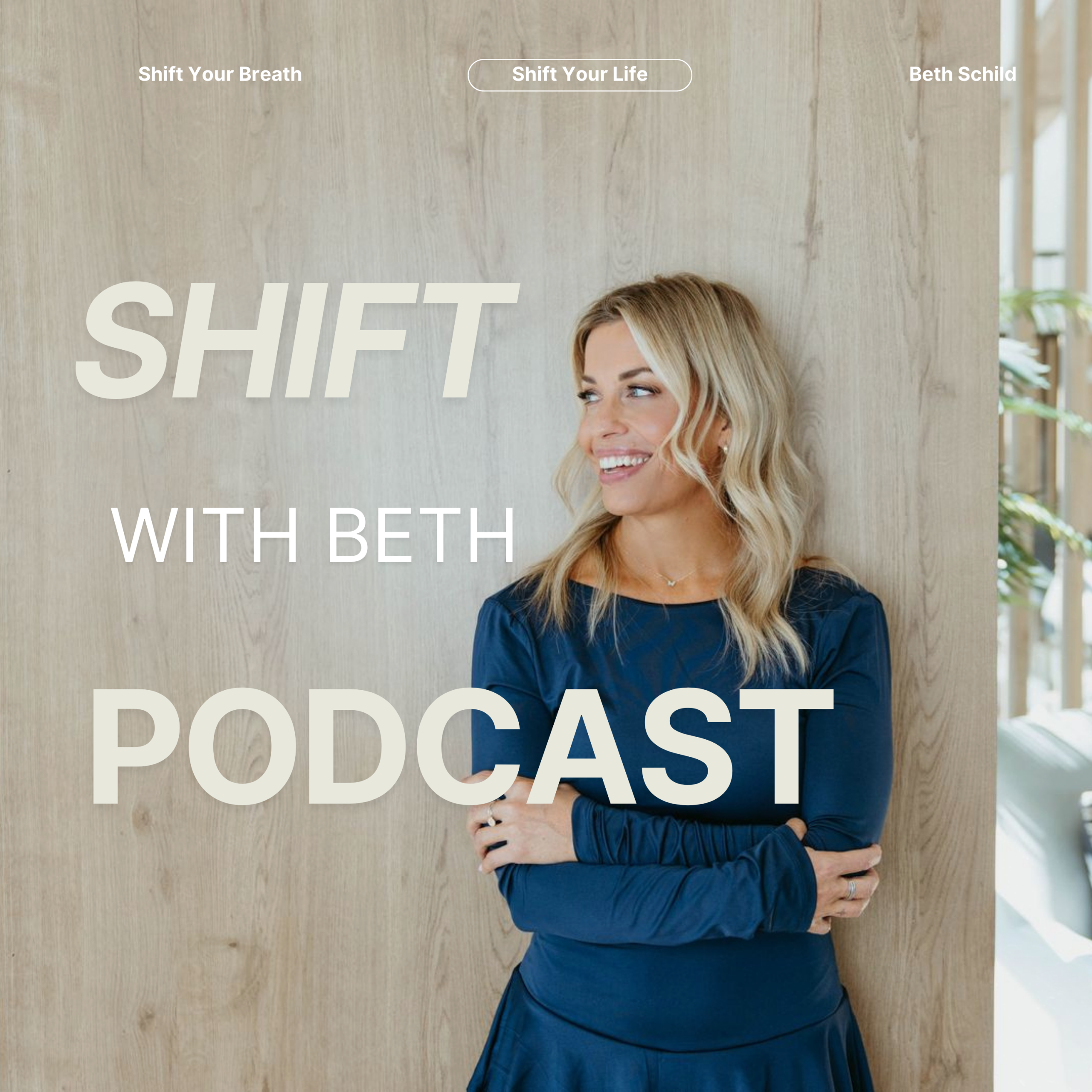
PODCAST · education
Shift With Beth
by Beth Schild
Change is inevitable, but a "shift" is intentional. Welcome to Shift with Beth, a podcast dedicated to helping you navigate life’s transitions with clarity and confidence.Whether you’re looking to overhaul your career, improve your mental well-being, or simply see the world through a different lens, Beth explores the psychology and practical steps behind meaningful change. Each episode features solo deep-dives and expert interviews designed to help you stop overthinking and start shifting.
-
15
Vulnerability in Leadership: How Self-Awareness Transforms Teams & Relationships with Ken Crenshaw
When most people think about leadership, they think about confidence, authority, and control. But the truth is, the most impactful leaders don’t lead from control—they lead from awareness. Vulnerability in leadership is often misunderstood. It’s not about oversharing or being emotional in every moment. It’s about being real, honest, and grounded in who you are. It’s about having the courage to show up without hiding behind perfection. And more importantly, it’s about creating a space where others feel safe to do the same. Why Vulnerability Is the Most Powerful Leadership Tool One of the biggest insights from this conversation is […]
-
14
Self Trust Is Freedom (And How to Build It)
In this episode, Beth breaks down one of the most foundational pieces of emotional healing and personal growth: self-trust.
-
13
Part 3: Building a Conscious Relationship After Divorce
In this final part of the 3-part series, Beth and Randy move beyond how they met and into what it actually looks like to be in a conscious relationship.
-
12
Part 2: Finding Love Later in Life
Most people believe relationships begin with a single moment—a first conversation, a spark, or an instant connection that feels like everything just clicked. But what often gets overlooked is everything that came before that moment. The healing, the endings, and the quiet internal shifts that changed who you are. The truth is, relationships don’t just begin when you meet someone. They begin in the seasons where you are learning how to come back to yourself. Timing Isn’t Random When something feels aligned, it’s easy to think it simply happened at the right time. But timing is rarely accidental. It’s often the result of who you’ve become. The boundaries you’ve learned to hold, the patterns you’ve started to recognize, and the ways you’ve begun choosing yourself differently all shape what you are available for. They also influence what feels right to you. Something that once felt exciting may no longer feel aligned, while something that once felt unfamiliar may now feel safe. This is why timing matters so much in relationships. You don’t just meet people based on chance. You meet them based on where you are. Healing Changes What You Accept As you grow, your relationships naturally begin to shift. Sometimes that means outgrowing people. Not because anyone did anything wrong, but because you’re no longer the same version of yourself. This can feel uncomfortable, and there can be grief in letting go of what once felt normal. But it also creates space—space for something that reflects who you are now, not who you used to be. That’s often where more aligned relationships begin. Why Vulnerability Feels So Hard One of the biggest challenges in relationships isn’t connection. It’s vulnerability. For many people, vulnerability doesn’t feel natural. It can feel exposed, unfamiliar, and even unsafe. And that’s usually because, at some point, it was. Maybe your emotions weren’t fully received. Maybe being open led to rejection or misunderstanding. Maybe you learned that being “too much” created distance instead of connection. So your system adapted. It learned to protect you by staying guarded, holding back, and only revealing parts of yourself that felt safe enough. This isn’t a flaw. It’s a response. It’s how your nervous system learned to keep you safe. When Healthy Feels Unfamiliar One of the most unexpected parts of healing is how different healthy relationships can feel. There’s often less anxiety, less guessing, and less emotional intensity. Instead, there is steadiness, clarity, and consistency. But because it’s different from what you’re used to, it can feel uncertain at first. You might question it or wonder if something is missing. Often, what feels unfamiliar isn’t wrong. It’s simply new. Emotional Safety Changes Everything Vulnerability becomes possible when there is emotional safety—not just with another person, but within yourself. When you trust yourself to handle your emotions, set boundaries, and stay connected to your truth even in discomfort, something shifts. You begin to open in a different way. Not from pressure or the need to prove anything, but from a grounded place of self-trust. The Moments That Quietly Shape Everything When you look back on your life, it’s often not the big moments that changed everything. It’s the small ones. A conversation you almost didn’t have. A decision that didn’t feel significant at the time. A moment where you chose yourself in a new way. These are the moments that quietly shift your direction. Over time, they lead you somewhere different—somewhere more aligned.
-
11
Part 1: Choosing Love Differently: Who We Were Before Each Other with Randy Brimhall
This is a 3-part series with my partner, Randy Brimhall. Most people believe their reactions define them. That if they’re anxious, reactive, or overly emotional, something must be wrong with them. But what if your reactions aren’t random at all? What if they were learned? Where Patterns Actually Begin Long before you were aware of your behaviors, your nervous system was learning how to stay safe. For many people, this meant becoming: – The high achiever– The “good” one– The helper– The one who doesn’t cause problems These patterns don’t come from personality. They come from adaptation. If love, approval, or safety felt conditional growing up, your nervous system learned how to respond in ways that increased your chances of receiving it. Over time, those responses become automatic. The High Achiever and the Need for Approval High achievement often looks like discipline, motivation, and success from the outside. But underneath, it can be driven by something deeper. The need to be enough. When approval becomes tied to performance, achievement stops being a choice and starts becoming a requirement. You’re not just doing well. You’re trying to secure love, validation, and belonging. People-Pleasing Isn’t Weakness People-pleasing is often misunderstood. It’s not about being “too nice” or lacking boundaries. It’s a learned survival response. If expressing your needs once led to rejection, conflict, or disappointment from others, your system adapts by prioritizing other people instead. Not because you want to, but because it feels safer. Disconnection from Self One of the biggest costs of these patterns is disconnection. You learn how to be who others need you to be. But you lose touch with who you actually are. This can show up as: – Not knowing what you want– Feeling stuck or unfulfilled– Constantly seeking external validation– Difficulty making decisions Because your identity was built around adaptation, not authenticity. Awareness Changes Everything The moment you start seeing these patterns clearly, something shifts. You stop labeling yourself as “too much” or “not enough.” You begin to understand that your reactions were never the problem. They were solutions. Solutions that worked at one point, but may no longer serve you now. And from that place, change becomes possible. Not through force, but through awareness. The First Step Forward You don’t need to fix yourself. You need to understand yourself. Because when you understand where your patterns come from, you stop fighting them. And that’s where real change begins.
-
10
Boundaries: The Greatest Act of Self-Love | Stop People Pleasing & Start Choosing Yourself
Most people misunderstand boundaries. They think boundaries are about telling other people what they can or cannot do. They think it sounds like control, confrontation, or conflict. But a boundary is none of those things. A boundary is a decision you make about what you will and will not participate in. It is about your behavior, your response, and how you take care of yourself when something does not feel aligned. That shift changes everything. Boundaries Are Not About Controlling Others One of the biggest misconceptions is that boundaries are about changing other people. “You can’t talk to me like that.”“You need to stop doing that.” Those are not boundaries. Those are attempts to control someone else’s behavior. A true boundary sounds like: “If you speak to me that way, I’m going to leave the conversation.”“If this continues, I’m going to step away.” Do you feel the difference? One is trying to change them. The other is taking responsibility for yourself. Why Boundaries Feel So Hard If you were raised to keep the peace, be agreeable, or make sure everyone else is okay, boundaries will feel uncomfortable. Not because they are wrong.Because they are unfamiliar. Your nervous system learned that being liked, accepted, and easy was what kept you safe. So when you start setting boundaries, your body reacts. Your heart races.You feel anxious.You want to explain more or take it back. This does not mean you are doing it wrong. It means you are doing something new. Why Boundaries Only Work With Follow-Through Many people say their boundaries do not work. But the truth is, a boundary only works if you follow through. If you say, “I’m going to leave the conversation,” but you stay, it is no longer a boundary. It becomes a request. And if someone is used to you having no boundaries, there will often be resistance when you start. They may push back.They may test you.They may call you difficult or selfish. This is part of the process. It does not mean the boundary is wrong. It means the pattern is changing. The Real Shift: Self-Trust Boundaries are not just about other people. They are about your relationship with yourself. Every time you say yes when you mean no, you disconnect from yourself.Every time you override your needs, you lose a little self-trust. And every time you follow through on a boundary, you rebuild that trust. This is where the deeper work is. Not just setting the boundary, but staying with yourself when it feels uncomfortable. Letting someone be upset.Not rushing to fix it.Not overexplaining. Just being with the discomfort and reminding your body: this is safe, it is just new. Boundaries Are Self-Love In Action Boundaries are not about pushing people away. They are about making sure you never push yourself away again. They are about choosing alignment over obligation, honesty over approval, and self-trust over control. And the more you practice, the more natural it becomes. Because you are no longer abandoning yourself to keep the peace. You are learning how to stay.
-
9
Understanding Triggers: What They Really Mean and How to Work With Them
The word triggered gets used all the time, but most people do not actually understand what it means. They just know it feels uncomfortable, overwhelming, and often bigger than the moment. So let’s slow it down. A trigger is when something happening in the present moment activates something unresolved from your past inside your nervous system. It is not just a thought. It is a body response. Your chest tightens.Your throat constricts.Your stomach drops.Your jaw clenches.Your mind starts scanning for danger. And the important part is this: the current situation may not actually be unsafe, but it feels familiar to something that once was. That changes everything. Triggers Are Felt In The Body First One of the most important things to understand is that triggers happen in the body before the mind creates the story. Your nervous system reacts first. Then your thoughts rush in to explain it. That is why your reaction can feel immediate. Maybe your boss sends a message that says, “Can we talk later?” and suddenly your body goes into alarm. Nothing has even happened yet, but your system is already bracing. Your mind starts filling in the blanks. This is not just about the present moment. It is about what your nervous system remembers. Why Your Reaction Feels Bigger Than The Moment A trigger often means a younger part of you has been activated. Not your grounded adult self. A past version of you. A younger version who learned to people-please, shut down, overthink, brace, or react in order to feel safe. So when your reaction feels bigger than the current moment, it usually is not just about what is happening right now. It is about what this moment reminds your body of. Instead of asking, What is wrong with me, a more helpful question is: What is being activated in me right now? Why Fighting The Trigger Makes It Worse Most people have never been taught how to be with a trigger. They are taught to suppress it, react from it, or judge themselves for having it. But when you brace against the bracing, you often intensify the trigger. A more supportive approach is to acknowledge what is happening and gently signal safety to your nervous system. If your chest feels tight, let your body know it is okay to feel that. Then bring your attention to another part of your body that feels neutral or safe, like your hands, your legs, or your feet. You are not telling your body that something is wrong. You are telling it, I can feel this and still be safe. And if the activation feels too strong, orient outward. Notice what you can see. Listen for what you can hear. Touch something grounding. Triggers pull you emotionally into the past. Grounding brings you physically back into the present. A Simple Way To Work With Triggers Beth teaches a simple three-step process: Notice.Get curious.Regulate before responding. Notice that something in you is activated. Get curious about what story, belief, or younger part may be coming online. Then regulate before reacting. Take a breath. Ground. Pause. Give your nervous system support before you respond. The goal is not to never be triggered. You are human. You have a nervous system. You have lived experiences. The goal is to understand what is happening when you are, so you can stay with yourself instead of abandoning yourself in the moment. That is where self-trust begins to rebuild.
-
8
Inner Child Breathwork Session: A Guided Practice to Create Safety and Reconnect with Yourself
There are moments in healing when insight is not enough. You understand the pattern. You can name the self-abandonment. You recognize the inner critic. You know your nervous system is reacting to something older than the present moment. But your body still needs an experience. That’s where breathwork becomes powerful. In this episode of Shift with Beth, I guide you through an inner child breathwork session designed to help you move out of your thinking brain and into the deeper intelligence of your body. This is not about forcing a breakthrough. It’s about creating enough safety for your body to open, release, and reconnect in its own timing. Why inner child breathwork matters So many of us are trying to heal from the neck up. We think about our patterns. We analyze our triggers. We try to mindset our way into change. But lasting healing doesn’t happen by overriding the body. It happens when the body feels safe enough to participate. That’s what breathwork can help create. Breathwork gently shifts you out of your head and into greater awareness of what your body is holding. It helps restore communication between the brain, the heart, and the gut. When those pathways begin to open, insights, memories, emotions, and clarity can surface without you forcing them. This is why breathwork can feel so different from simply thinking about your healing. It becomes embodied. What makes this guided session different This session is especially meaningful because it is the first recorded breathwork practice I’ve shared publicly outside of private client work and live events. It is gentle, guided, and trauma-aware. I begin by explaining how I facilitate, what kinds of sensations you may notice, and how to approach the practice in a way that helps your nervous system feel informed and supported. You are reminded throughout that there is nothing to perform and nothing to prove. You can pause. You can slow down. You can adjust the breath. You can stop and return when you’re ready. That matters. Because healing does not happen through pressure. It happens through safety. What you may experience during the session During this inner child breathwork practice, you may notice physical sensations such as tingling, temperature changes, tightness, or emotional release. You may feel calm. You may feel resistance. You may feel connected to a younger version of yourself or simply more aware of what your body needs. All of that is valid. In the session, I guide you through different breath patterns and breath holds, along with a gentle journey through the body’s energy centers. If spiritual language like chakras does not resonate with you, you can simply think of these as intelligent areas of the body with networks of nerves, glands, and communication pathways. This is one of the things I love most about breathwork. It bridges science and spirituality in a way that feels grounded and practical. You don’t need to force your inner child to appear. You don’t need to make anything happen. The intention is simply to create enough safety for whatever wants to arise. The healing is in the staying One of the most powerful moments in the session is the invitation to connect with a past version of yourself and let them know you are here. Not to fix them.Not to rush them.Not to analyze them. Just to stay. To ask what they need.To offer what they didn’t get.To let them know you’re not leaving. That is reparenting. That is repair. That is how self-trust begins to rebuild in the body. If you’ve been craving a way to move beyond insight and into actual embodied healing, t...
-
7
Breathwork: The Superpower You Didn’t Know You Had
Sometimes, the most profound tools for healing are not found outside of us, but within. We spend so much time searching for answers in books, courses, and experts, yet we often overlook the incredible power we already carry inside our own bodies. What if the key to unlocking clarity, processing grief, and reconnecting with your intuition was as simple, and as vital, as your own breath? Before breathwork became a central part of my work, it was the practice that found me when I needed it most. It became an anchor during one of the most turbulent and painful seasons of my life, guiding me back to myself when I felt completely lost. In the fourth episode of the Shift with Beth podcast, I share the deeply personal story of how breathwork became my lifeline. This conversation is for you if you are navigating a difficult season, feeling disconnected from your inner knowing, or simply curious about how this simple practice can create such profound transformation. My First Encounter with Breathwork My journey with breathwork began in 2021. My marriage was ending, and I was navigating a summer of separation that felt devastating. In the midst of this chaos, I felt a strong intuitive pull to attend a holistic business retreat in Idyllwild, California. I knew no one there, but something told me I had to go. On the first morning, we were guided through a Wim Hof breathwork session. I had no idea what to expect. Within minutes, I felt a visceral response in my body—my hands grew tight, my arms went stiff, and a tingling sensation washed over me. During the breath holds, tears streamed down my face, not from a specific thought or memory, but from a deep, cellular release. It felt as if my body was letting go of something it had been holding for years. That experience planted a seed. It showed me that there was a way to access and release stored emotion that went beyond just talking or thinking my way through it. A Lifeline Through Grief and Trauma A few months later, my life was shattered by trauma. On January 3, 2022, I received a call that my older brother, Jim, had been shot and killed by police during a mental health crisis following a relapse after five years of sobriety. To say it was traumatic is an understatement. The grief was excruciating, and compounded with the complete collapse of my marriage, the stress my body was carrying felt enormous. In the weeks that followed, I went to an in-person breathwork session, simply needing to get out of my head and survive. About 20 minutes into the breathing, during a breath hold, something happened that changed everything. I saw my brother, Jim. It wasn’t a memory; it was a connection. He was in the ocean, a place he loved, and he told me he was at peace. He said, “I couldn’t help you and support you on Earth, but I’m going to help you from the other side.” At a time when I felt angry at the universe and disconnected from any sense of spirituality, this experience was a profound gift. It was real. Breathwork became a sacred space where I could connect with him, process my grief, and receive the guidance and courage I needed to choose myself when I felt I couldn’t do it alone. How Breathwork Actually Works Most of us live almost entirely in our thinking minds, disconnected from the wisdom held in our bodies. We have neural networks not just in our brain, but also in our heart and gut. Breathwork is a practice that helps you move out of your thinking brain and create coherence between your mind, heart, and body. When you do this, you drop into a state where you can access your deeper knowing. This is where you receive what I call “downloads”—insights, clarity, and realizations. It’s a space where you can connect with different parts of yourself: your confident self, your higher sel...
-
6
Inner Child Work: The Missing Key to Healing You Didn’t Know You Needed
Have you ever wondered why you react so strongly to certain situations? Maybe a small conflict feels catastrophic, or a minor setback sends you into a spiral of self-doubt. You might tell yourself you’re just “overreacting” or that you should be “stronger” by now. But what if those reactions aren’t about what’s happening right now? What if they are echoes from a younger version of you who is still trying to feel safe? In the latest episode of the podcast, we dive deep into a concept that often feels abstract or even a little “woo-woo” until you actually experience it: Inner Child Work. If you are a high-achieving woman, a solopreneur, or someone who is constantly holding it all together, this episode is specifically for you. We explore why understanding your inner child is often the missing key to healing the anxiety, burnout, and perfectionism that keeps you stuck. What is Inner Child Work, Really? Let’s demystify this term right away. Inner child work isn’t about blaming your parents or dwelling on a terrible childhood. In fact, many people—myself included—avoid this work because they feel their childhood was “good enough.” We tell ourselves, “I had food, I had a home, my family loved me. I shouldn’t be complaining.” But your nervous system doesn’t deal in logic; it deals in safety. Inner child work is simply recognizing that parts of you learned how to survive when you were younger. Those parts—whether they are five, ten, or fifteen years old—developed strategies to stay safe, connected, and loved. And those strategies, which served you well back then, are often the very patterns causing you stress today. When we talk about the inner child, we are talking about the younger parts of you that learned what the world felt like and what you had to do to survive in it. The “Little T” Trauma We Often Overlook We tend to think of trauma only as the big, obvious events—abuse, severe loss, or violence. But there is also what we call “little t” trauma. These are the subtle, consistent moments that taught your nervous system that it wasn’t safe to be fully you. Maybe you learned that: Your emotions were “too much” for the adults around you. You had to be the “good girl” or the “easy child” to get attention. Mistakes were dangerous, so you had to be perfect. You were responsible for everyone else’s feelings. Your body remembers these lessons. Even if you’ve built a successful business and a beautiful life, your nervous system might still be operating on outdated software, scanning for danger where there isn’t any. In this episode, I share my personal story of growing up in Southern California with terrifying earthquakes. My body learned early on that danger could strike at any moment, especially when I was resting. Years later, as a mother and entrepreneur, that same survival mechanism kicked in when life got overwhelming, manifesting as severe anxiety and insomnia. It wasn’t until I connected the dots back to that frightened little girl that I could finally heal the anxiety instead of just managing it. Why High-Performers Struggle to Heal As driven women, we are excellent at “managing” things. We manage our businesses, our households, and yes, our anxiety. We might use medication, exercise, or sheer willpower to push through the discomfort. I did this for years. I managed my anxiety. I managed my insomnia. I kept showing up, coaching, and parenting while internally I was exhausted and wired. But managing isn’t healing. Healing requires us to stop fighting the anxiety and start listening to it. When you feel triggered or overwhelmed,...
-
5
When Your Inner Critic Is Running the Show and How to Take Your Life Back
If you’ve ever felt like there’s a voice inside you that’s constantly evaluating, correcting, or pressuring you, you’re not alone. The inner critic can feel like your voice. It sounds like your thoughts. But it’s not your true self. It’s a protective part of you. And the first shift is learning to stop treating it like the truth. Where the Inner Critic Comes From We aren’t born criticizing ourselves. This part develops over time based on what we experience. It can come from a critical parent. A sibling who teased you. A coach or teacher who demanded perfection. A high-demand religion. A culture that taught you your worth is tied to performance. Your nervous system learns something simple and powerful: this is what keeps me safe. The inner critic becomes an internal manager. Always scanning. Always tightening the rules. Always trying to keep you from risk, rejection, or shame. But here’s the problem. This part is not updated to your adult life. It’s still operating with childhood information. Its goal is not your happiness or your freedom. Its goal is safety, even if it has to keep you small, exhausted, or stuck. The Inner Critic Disguises Itself as “Productive” One of the most sneaky things about the inner critic is how helpful it can sound. You should be doing more.You shouldn’t rest.You’re falling behind.Who do you think you are? It often sounds like self-improvement. But the energy underneath it is pressure and urgency, not care. And your body knows the difference. When you’re listening to your inner critic, you don’t feel empowered. You feel tight. Braced. On edge. Like you’re chasing worth instead of living your life. How the Inner Critic Shows Up in Your Body and Your Choices This part shows up strongly in body image too. It tells you to punish yourself into change, then shames you when you can’t maintain perfection. But shame never creates safety. And without safety, your nervous system can’t change in sustainable ways. The inner critic also gets loud right when you’re about to expand. When you’re thinking about starting something new. Leaving something old. Being more visible. Going after what you actually want. It asks: What if you fail? What if you’re judged? What if you’re not ready? So you wait. You overthink. You stay where you are. Not because you don’t want more, but because this protective part is afraid of what change might bring. A Grounded Way to Work With Your Inner Critic Here’s the shift: you don’t have to fight your inner critic. You also don’t have to let it run your life. In parts work, including Internal Family Systems (IFS), we learn that we’re made up of many parts. And even the parts with outdated strategies have good intentions. When your inner critic gets loud, try this: Pause.Notice what’s happening in your body.Ask internally: What are you worried will happen right now? Usually, underneath the criticism is something young and scared. Then you can respond from your adult self: I hear you. Thank you for trying to protect me. I’ve got this now. This is how self-trust is built. Not by silencing parts of you, but by becoming the leader inside you. Because your inner critic is not your intuition. It’s not your higher self. It’s a protective part that learned to keep you safe in a different season of your life. You get to listen. And then you get to choose. Episode Highlights & Timestamps [05:40] Why your body stays “on guard” even when there is no imme...
-
4
The High Cost of People-Pleasing | Understanding Self-Abandonment
Understanding Self-Abandonment: Why We Choose Others Over Ourselves Have you ever found yourself saying “yes” to a commitment while your entire body was screaming “no”? Or perhaps you’ve become so good at sensing what other people need that you’ve completely lost touch with what you want. In this episode of Shift with Beth, we are pulling back the curtain on a behavior that many of us mistake for “being nice” or “being easy-going”: Self-Abandonment. What is Self-Abandonment? Self-abandonment is the act of rejecting your own feelings, needs, or boundaries in order to maintain a connection with someone else. It often starts as a survival strategy in childhood or high-demand environments where “fitting in” was a requirement for safety. Over time, this survival strategy becomes a default setting. We become high-capacity, low-maintenance individuals who are “successful” on the outside but feel increasingly hollow on the inside. The Link Between People-Pleasing and the Nervous System From a somatic perspective, people-pleasing is often a “fawn” response. When our nervous system senses a threat—like potential conflict or disapproval—it tries to appease the threat to stay safe. Common “tells” that you are in a cycle of self-abandonment include: The Reflexive Yes: Agreeing to things before you’ve even had a chance to check your calendar or your energy levels. The Emotional Chameleon: Changing your tone, opinions, or personality based on who you are with. The Silent Resentment: Feeling “burned out” by people you love, because you’ve been overriding your own boundaries to serve them. How to Start the Shift Back to Self-Leadership Healing from self-abandonment isn’t about becoming “selfish”; it’s about becoming self-led. It’s the process of rebuilding the capacity to be honest with yourself and others, even when it causes “natural friction.” “We’ve been taught that success requires at least some amount of self-abandonment. But true success—and true intimacy—can only happen when you are actually present in the room.” — Beth Schild Episode Highlights & Timestamps [05:20] Defining the “People-Pleaser” archetype as a protector. [14:15] Why high-demand environments (religion, corporate, etc.) reward self-abandonment. [22:40] The physical cost: How suppressing your truth leads to chronic stress and fatigue. [31:10] Action Step: The “10-Second Pause” technique to interrupt the fawn response. Subscribe: Follow on Apple Podcasts or Spotify to continue your journey. Join the Community: Visit shiftwithbeth.com to access resources and coaching.
-
3
Welcome to Shift with Beth | How a Podcast Changed My Life
Have you ever had a moment where you realized the life you were living wasn’t actually yours? In this debut episode of Shift with Beth, I’m sharing the raw, honest story of how I found my own voice after decades of self-silencing. For years, I lived a life defined by a high-demand religion, a 20-year marriage, and the constant pressure to be “good” and “easy-going.” But everything changed in the most unexpected place: at the gym, with a pair of headphones on. How a Podcast Became My Lifeline In this episode, I share the “lightning bolt” moment I experienced while listening to a podcast. It was the first time I felt truly seen by a stranger’s voice. That moment sparked a series of intentional shifts that led me away from religious dogma and toward somatic healing, self-love, and eventually, the creation of this show. What Does it Mean to “Shift”? We often think that change has to be explosive or overnight. But a shift is different. A shift is an intentional, slight adjustment in perspective or physiology that changes your entire trajectory. On this podcast, we will explore the shifts required to: Move out of “Survival Mode” and into a regulated nervous system. Stop the cycle of self-abandonment and people-pleasing. Navigate the messy middle of life’s biggest transitions—like divorce and faith crises. Use tools like Somatic Breathwork to heal the body from the inside out. What to Expect in Future Episodes This isn’t just a podcast about theory; it’s about practice. Moving forward, we will dive into: Somatic Tools: Practical ways to regulate your stress in real-time. Expert Interviews: Conversations with leaders in psychology, parenting, and wellness. Candid Solo Deep-Dives: Sharing the lessons I’m learning in real-time as a mother, coach, and woman in transition. “Change is inevitable, but a shift is intentional. I’m here to help you make the shifts that bring you back home to yourself.” — Beth Schild
We're indexing this podcast's transcripts for the first time — this can take a minute or two. We'll show results as soon as they're ready.
No matches for "" in this podcast's transcripts.
No topics indexed yet for this podcast.
Loading reviews...
ABOUT THIS SHOW
Change is inevitable, but a "shift" is intentional. Welcome to Shift with Beth, a podcast dedicated to helping you navigate life’s transitions with clarity and confidence.Whether you’re looking to overhaul your career, improve your mental well-being, or simply see the world through a different lens, Beth explores the psychology and practical steps behind meaningful change. Each episode features solo deep-dives and expert interviews designed to help you stop overthinking and start shifting.
HOSTED BY
Beth Schild
Loading similar podcasts...
URL copied to clipboard!