
PODCAST · health
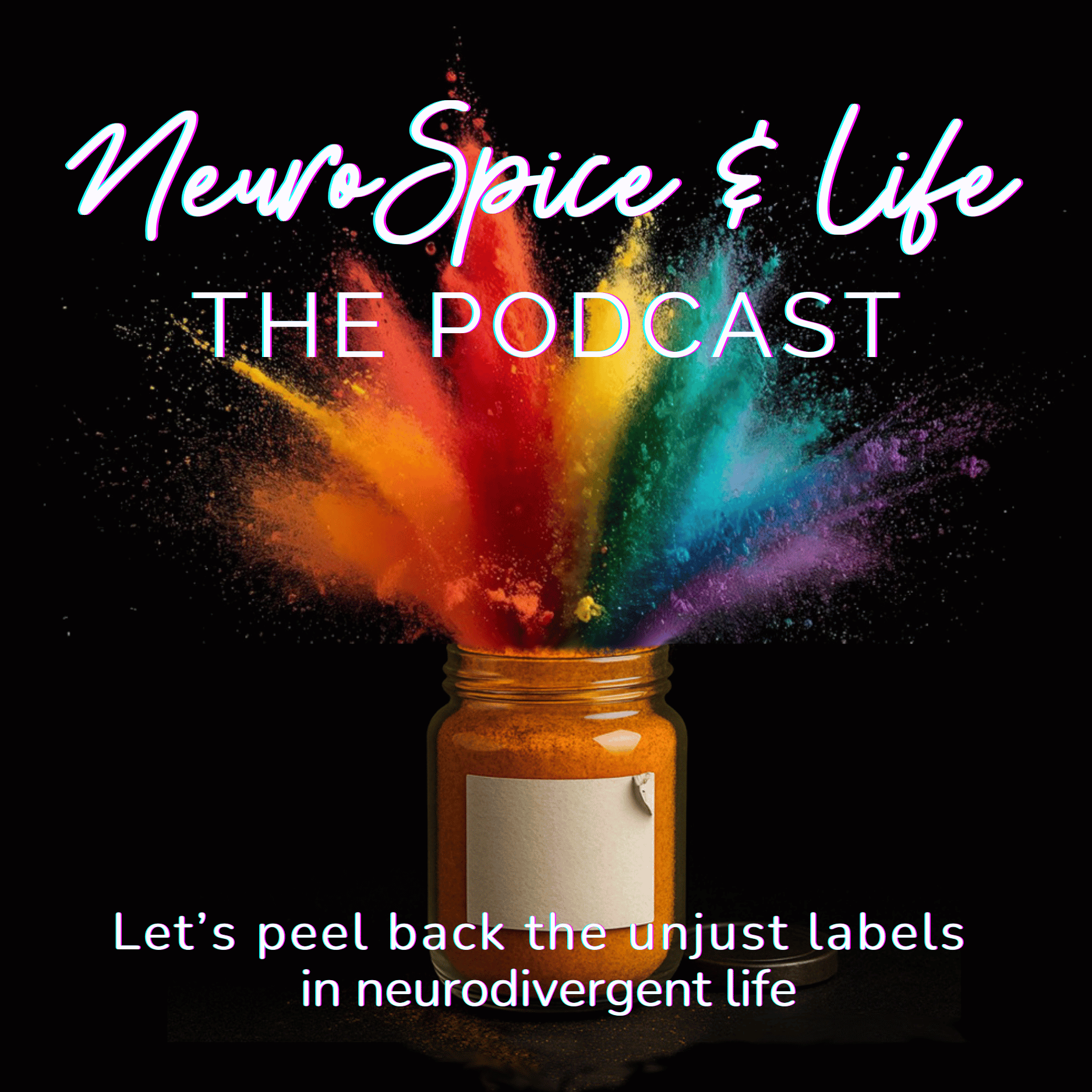
NeuroSpice and Life
by neurospice and life
For anyone who’s ever felt the sting of an unfair label — lazy, blunt, weird, difficult — this one’s for you.We’re Freya and Hanna — one counsellor, one sexologist, both AuADHD women with delightfully spicy brains. Together, we peel back the labels, examine the stereotypes and rewrite the stories about what it means to be neurodivergent, emotional, and unapologetically human.From masking and meltdowns to relationships, shame, and self-acceptance, we talk about the messy, marvellous reality of neurospicy life — with humour, heart, and the occasional swear.Because there’s nothing wrong with the way you’re wired — it’s time to reclaim your label and wear it with pride.
-
24
This Isn’t Bad Spending… It’s Dysregulation
Why do you keep buying things you don’t need… and then regret it later? If you’re ADHD, autistic, or neurodivergent human, this isn’t about willpower or being “bad with money.” Impulsive shopping is often your brain trying to regulate overwhelm, stress, and low dopamine. In this episode of Neurospice & Life, we break down: ✨ Why impulse buying happens in ADHD and autism ✨ The link between dopamine, time blindness, and decision fatigue ✨ Why shopping feels good in the moment… but doesn’t last ✨ The “rapid self-regulation” loop (and why it keeps repeating) ✨ Practical, neuroaffirming strategies to reduce impulsive spending If you’ve ever: – Bought something for a quick mood boost – Forgotten what you ordered – Felt guilt or shame after spending – Struggled to pause before clicking “buy now” You are not alone. And you’re not broken. This is about understanding your brain… and working with it, not against it. Connect with NeuroSpice & Life: Website: neurospiceandlife.com.au YouTube: @NeuroSpiceandLife Freya (Mumshine): mumshine.com.au Hanna (The Sensologist): thesensologist.com.au Disclaimer: This podcast is for educational purposes only and does not constitute medical, psychological, or mental-health advice. It is not a substitute for diagnosis, therapy, or professional care. Please seek support from a qualified healthcare or mental-health professional if needed. #ADHD #Autism #Neurodivergent #ImpulseSpending #Dopamine #EmotionalRegulation #Burnout #Overwhelm #Neuroaffirming #ADHDwomen #AutisticWomen #MumLife #MentalHealth #ExecutiveFunction
-
23
Why Neurodivergent People Act Impulsivly in Love & Dating
What if being called impulsive in love was never about being reckless — but about a nervous system chasing relief, dopamine, and something that feels familiar? In this episode of NeuroSpice & Life – Impulsive in Love, late-diagnosed neurodivergent hosts Freya Corboy and Hanna Hosking unpack what happens when ADHD, autism, trauma patterns, loneliness, and low self-worth collide in dating and relationships. For many ADHD and autistic adults, impulsivity in love isn’t just about poor choices or lack of self-control — it can feel like an itch under the skin. A restless urgency in the brain that doesn’t settle until action happens. A text sent. A person chased. A date booked. A connection sparked. And then comes the dopamine rush. This episode explores how lust, novelty, pursuit, and emotional intensity can become addictive for neurodivergent brains that crave stimulation. The giddy anticipation. The heart pound when someone messages. The thrill of uncertainty. The high of being wanted. But when that rush fades, calm can feel empty. Safety can be mistaken for boredom. Stability can feel like complacency. Peace can feel unfamiliar. This conversation explores how subconscious relationship patterns can override conscious logic — leading us toward people who feel exciting in the short term but unsafe in the long term. Because sharing your story is powerful. But safe love is built over time. In this episode, we explore: • Neurodivergent dating patterns • ADHD love addiction and dopamine seeking • Autism and relationship dynamics • Trauma responses in intimacy • Secure love vs chaotic attraction • Boundaries, pacing, and emotional safety • Reframing impulsivity with compassion Connect with NeuroSpice & Life: Website: neurospiceandlife.com.au YouTube: @NeuroSpiceandLife Freya (Mumshine): mumshine.com.au Hanna (The Sensologist): thesensologist.com.au Disclaimer: This podcast is for educational purposes only and does not constitute medical, psychological, or mental-health advice. It is not a substitute for diagnosis, therapy, or professional care. Please seek support from a qualified healthcare or mental-health professional if needed.
-
22
Are You Too Much in Relationships… or Just Being Authentic? (Autism & ADHD)
What if being called “too much” in relationships was never about you — but about someone else’s lack of capacity to meet you where you are? In this episode of NeuroSpice & Life – Too Much in Relationships & Dating, late-diagnosed neurodivergent hosts Freya Corboy and Hanna Hosking unpack what happens when a lifetime of being labelled too intense, too curious, or too expressive begins to shape how you show up in love, dating, and connection. For many AuADHD, ADHD and autistic adults, being called too much isn’t a one-time experience — it’s a pattern. A pattern that often comes from being around people who don’t have the emotional language, awareness, or capacity to understand their own discomfort — and instead project it outward. Over time, that message gets internalised: Maybe I am too much. Maybe I need to filter myself. Maybe I need to be less. This episode explores the emotional spiral that can come with that conditioning — the anger, resentment, guilt, and shame that builds every time you’re told you’re too much, and the impact that has on self-worth, boundaries, and relationships. Freya and Hanna talk about what happens when you hit the wall — when the emotional load of masking, dimming, and filtering yourself becomes heavier than the fear of being rejected. Because at some point, something shifts: You realise you don’t want to keep shrinking to be loved. This conversation reframes dating and relationships through a neurodivergent lens — where being called “too much” can actually become a form of clarity. A filter. A way of identifying who has the capacity to meet you — and who doesn’t. Because the goal isn’t to be less. The goal is to find people who can hold, meet, and amplify who you already are We talk about: ✨ Being called “too much” in relationships ✨ Neurodivergent emotional intensity ✨ ADHD and autism in dating and connection ✨ Internalised shame and self-filtering ✨ Masking and dimming your personality ✨ Emotional intelligence and capacity differences ✨ The anger, guilt, and shame cycle ✨ Hitting the wall and choosing authenticity ✨ Dating as a filtering process, not a performance ✨ Finding people who amplify, not diminish you Connect with NeuroSpice & Life: Website: neurospiceandlife.com.au YouTube: @NeuroSpiceandLife Freya (Mumshine): mumshine.com.au Hanna (The Sensologist): thesensologist.com.au Disclaimer: This podcast is for educational purposes only and does not constitute medical, psychological, or mental-health advice. It is not a substitute for diagnosis, therapy, or professional care. Please seek support from a qualified healthcare or mental-health professional if needed.
-
21
Monotropism: Why You Live in Extremes (ADHD & Autism)
Do you feel like you’re either all in… or completely out? Like there’s no in-between? Do you have black or white thinking? In this episode of Too Much, Freya & Hanna discuss all or nothing, hyperfocusing, and why so many ADHD and autistic people experience life in extremes — from intense focus and deep passion to total disengagement. This episode dives into monotropism, a theory of attention that explains how neurodivergent brains tend to focus deeply on a limited number of interests at a time — often leading to hyperfocus, all-or-nothing thinking, and difficulty shifting attention. What gets labelled as obsessive, intense, or too much is often a reflection of how the neurodivergent nervous system and attention system are wired — not a personal flaw or lack of discipline. Freya and Hanna explore how this pattern can show up across life: Diving all in… then burning out Struggling to start or switch tasks Losing interest suddenly after deep investment Feeling either fully engaged or completely disconnected This episode reframes extremes as depth, focus, and neurological wiring, rather than failure or inconsistency. Because sometimes it’s not that you lack balance — it’s that your brain is designed for intensity, not moderation. Connect with NeuroSpice & Life: Website: neurospiceandlife.com.au YouTube: @NeuroSpiceandLife Freya (Mumshine): mumshine.com.au Hanna (The Sensologist): thesensologist.com.au Disclaimer: This podcast is for educational purposes only and does not constitute medical, psychological, or mental-health advice. It is not a substitute for diagnosis, therapy, or professional care. Please seek support from a qualified healthcare or mental-health professional if needed.
-
20
Why You Don’t Ask for What You Need (Autism & ADHD)
Trigger Warning: This episode discusses rejection sensitivity, masking, burnout, self-worth, and relational insecurity. Do you hold back your needs, lower your expectations, or avoid asking for more… just in case you’re seen as too much? In this episode of NeuroSpice & Life, late-diagnosed neurodivergent hosts Freya Corboy and Hanna Hosking explore what happens when being called too much over time teaches you to become less visible, less expressive, and less likely to ask for what you actually need. This episode unpacks how many ADHD and autistic adults learn to minimise their needs to stay safe — in relationships, workplaces, families, and friendships — often developing patterns of masking, people-pleasing, and emotional self-suppression to avoid rejection. This episode discusses how Rejection Sensitive Dysphoria (RSD) and limerence can reinforce these patterns, creating a fear of abandonment or not being “worth enough,” which can lead neurodivergent people to over-accommodate others while under-advocating for themselves. The conversation explores how repeated experiences of being told you are too sensitive, too intense, or too needy can create a nervous system pattern of don’t ask, don’t risk, don’t need. But what happens when you start asking anyway? This episode is both a reflection on how these patterns form and a gentle exploration of what it looks like to begin asking for your needs, your boundaries, and your worth — even when it feels uncomfortable. We talk about: ✨ Being called “too much” and internalising it ✨ Neurodivergent masking and self-minimising ✨ ADHD and autism in relationships ✨ Rejection Sensitive Dysphoria (RSD) ✨ Limerence and fear of abandonment ✨ Burnout from chronic people-pleasing ✨ Self-worth and asking for needs ✨ Why advocating for yourself can feel unsafe ✨ Learning to ask anyway Connect with NeuroSpice & Life: Website: neurospiceandlife.com.au YouTube: @NeuroSpiceandLife Freya (Mumshine): mumshine.com.au Hanna (The Sensologist): thesensologist.com.au Disclaimer: This podcast is for educational purposes only and does not constitute medical, psychological, or mental-health advice. It is not a substitute for diagnosis, therapy, or professional care. Please seek support from a qualified healthcare or mental-health professional if needed.
-
19
Are You “Too Much”, “Too Emotional”… or Just Misread? (ADHD & Autism)
Trigger Warning: This episode discusses emotional explosions, shame, and experiences of being labelled “too much” or “too emotional.” Freya & Hanna are back in a brand new season! We listened to your feedback and we’re making our episodes shorter, sharper, and (neuro) spicier! Have you ever been told you’re too much? Too sensitive. Too emotional. Too intense. Too reactive. In this episode, late-diagnosed neurodivergent hosts Freya Corboy and Hanna Hosking explore what happens when big feelings become too much for our own nervous systems — and sometimes spill outward in ways that become too much for the people around us. In this episode, we unpack why neurodivergent people often experience intense emotions, including differences in interoception, emotional processing, and delayed awareness. What looks like “overreacting” is often a nervous system catching up. This is a reframe from shame to understanding. Your emotions aren’t the problem. We’re not too much, sometimes it’s that our feelings are too big. We talk about: ✨ Being labelled too sensitive or too emotional ✨ Neurodivergent emotional intensity ✨ ADHD emotional regulation ✨ Autism and emotional processing ✨ Interoception and body awareness ✨ Delayed emotional recognition ✨ Nervous system overwhelm ✨ Suppressing rage and the negative health impacts ✨ Why emotions sometimes “come out sideways” ✨ Moving from shame to self-understanding Connect with NeuroSpice & Life: Website: neurospiceandlife.com.au YouTube: @NeuroSpiceandLife Freya (Mumshine): mumshine.com.au Hanna (The Sensologist): thesensologist.com.au Disclaimer: This podcast is for educational purposes only and does not constitute medical, psychological, or mental-health advice. It is not a substitute for diagnosis, therapy, or professional care. Please seek support from a qualified healthcare or mental-health professional if needed.
-
18
Difficult Reframing; Needs and Compassion - Dysregulation ≠ Disrespect
Trigger Warning: This episode includes discussion of alcohol use as a coping mechanism. What if being called difficult is actually a sign of feeling frustrated and overwhelmed by trying to work in a system not designed for your brain? In Season 1, Episode 16 of NeuroSpice & Life – Difficult: Reframing, late-diagnosed neurodivergent hosts Freya Corboy and Hanna Hosking explore how traits labelled as difficult or stubborn are often signs of different learning styles, problem-solving approaches, and unmet needs. This episode balances deep insight with humour, including some hilarious reflections on baking experiments that went wrong (or surprisingly right) when Freya and Hanna refused to follow the “normal” way of doing things — highlighting how neurodivergent thinking often challenges rigid systems. Together they explore how many neurodivergent adults, especially those late diagnosed with ADHD or autism, come to realise that many systems, structures, and expectations simply weren’t designed with their brains in mind. What gets labelled difficult is often frustration with environments that don’t accommodate neurological differences. This episode also reframes failure through a neurodivergent lens: FAIL = First Attempt In Learning. Freya and Hanna discuss how developing tools, systems, and self-understanding is more effective than simply being told to “just breathe” or calm down. Regulation strategies help — but understanding the source of frustration is what creates long-term change. They also introduce some of their personal “Spice Tools”: Freya shares the 5 Whys technique for uncovering root causes of frustration Hanna introduces the Four Quadrants of Needs as a framework for understanding and advocating for emotional, physical, relational, and cognitive needs This episode explores how when neurodivergent people struggle with things others consider “normal,” they’re often labelled difficult instead of being supported to understand what’s actually getting in the way. We talk about: ✨ Reframing difficult vs stubborn ✨ Neurodivergent learning styles ✨ ADHD and autistic problem-solving differences ✨ Late diagnosis and system mismatch ✨ Why “failure” is part of learning ✨ Frustration and nervous system overload ✨ Alcohol as a coping strategy ✨ Moving beyond surface coping tools ✨ Identifying needs to reduce burnout ✨ Self-advocacy and neurodivergent supports In this episode, we explore: • Neurodivergent reframing • Different ways of learning and processing • Systems not built for ND brains • Emotional regulation vs root cause understanding • Needs identification and communication • Tools for reducing overwhelm • Self-compassion and growth Connect with NeuroSpice & Life: Website: neurospiceandlife.com.au YouTube: @NeuroSpiceandLife Freya (Mumshine): mumshine.com.au Hanna (The Sensologist): thesensologist.com.au Disclaimer: This podcast is for educational purposes only and does not constitute medical, psychological, or mental-health advice. It is not a substitute for diagnosis, therapy, or professional care. Please seek support from a qualified healthcare or mental-health professional if needed.
-
17
Difficult reflections; The truth about difficult kids and the grown ups they become
Trigger Warning: This episode discusses difficult family dynamics, child vs adult power imbalances, difficulty vocalising boundaries, and childhood experiences of being labelled “difficult.” What if “difficult” doesn’t mean someone is hard — but that their needs aren’t being understood? In Season 1, Episode 15 of NeuroSpice & Life – "Difficult reflections; The truth about difficult kids and the grown ups they become”, late-diagnosed neurodivergent hosts Freya Corboy and Hanna Hosking unpack what the word difficult often really means: you’re not being easy for me right now. This episode explores how children and neurodivergent people are often labelled difficult by adults and literally as a diagnostic criteria for certain neurodiversities, when they cannot comply with expectations due to unmet needs, nervous system overwhelm, or unbalanced power dynamics. Freya and Hanna reflect on how being called difficult can shape identity — especially when compliance is rewarded and self-advocacy is punished — sometimes teaching people to become passive just to avoid conflict or negative consequences. Hanna shares her experience growing up with a non-related caregiver who repeatedly crossed boundaries to establish dominance, and used “difficult” as a form of deflection, and how being labelled became the consequence of not complying rather than the understanding of having different needs. Freya reflects on her experience of being labelled the “easy” middle child — until she wasn’t — and what happens when systems stop working and unmet needs finally surface. Together they explore how difficult is often a label used when family systems, school systems, or relationship patterns are being challenged, and how underneath most “difficult behaviour” is an unmet need, lagging skill, or nervous system response. This episode also references the work of Dr Ross Greene’s Collaborative & Proactive Solutions (CPS) model, which reframes challenging behaviour as a signal of unmet needs or skill gaps rather than defiance. We also mention resources like the Hey Warrior children’s book by Karen Young, which helps explain anxiety and behaviour through a brain-based lens. Resources mentioned: Hey Warrior book (Karen Young) Collaborative & Proactive Solutions – Lives in the Balance (Dr Ross Greene) We talk about: ✨ What “difficult” behaviour often really means ✨ Neurodivergent children and unmet needs ✨ ADHD and autism in childhood and adolescence ✨ Power dynamics between adults and children ✨ Boundaries and compliance conditioning ✨ Negative reinforcement and passivity ✨ Why behaviour is communication ✨ Systems theory and family roles ✨ Reframing difficult as a signal, not a character flaw Key themes & keywords: Neurodivergent children, ADHD, autism, difficult behaviour, unmet needs, nervous system regulation, parenting neurodivergent kids, trauma-informed care, masking, boundaries, childhood roles. Connect with NeuroSpice & Life: Website: neurospiceandlife.com.au YouTube: @NeuroSpiceandLife Freya (Mumshine): mumshine.com.au Hanna (The Sensologist): thesensologist.com.au Disclaimer: This podcast is for educational purposes only and does not constitute medical, psychological, or mental-health advice. It is not a substitute for diagnosis, therapy, or professional care. Please seek support from a qualified healthcare or mental-health professional if needed.
-
16
Self-Centered Reframing; Who Decides What “Caring” Looks Like?
What if being labelled “self-centered” is actually the moment a neurodivergent person finally stops masking? In Episode 14 of NeuroSpice & Life – Self-Centered: Reframing, late-diagnosed neurodivergent hosts Freya Corboy and Hanna Hosking explore what happens when years of masking, over-accommodating, and people-pleasing start to fall away — and how that shift is often misunderstood as selfishness. Many autistic and ADHD adults grow up learning to prioritise other people’s comfort over their own needs. When boundaries, sensory needs, and authentic communication finally start to emerge, the change can look sudden — and others may interpret it as being self-focused or self-centered. This episode explores how dropping the mask for the first time can challenge long-standing dynamics in relationships, families, and social systems. Freya and Hanna also discuss the concept of Human Giver Syndrome — the belief that your value comes from meeting other people’s needs — and how difficult it can be to reframe neurodivergence in your life when others see boundaries, self-advocacy, or accommodation needs as selfish. Do we fully answer the question of how to reframe being labelled self-centered? Kind of. Do we share heartfelt stories, wander through tangents, and follow some beautifully random conversational pathways before landing on the point? Also yes. This episode is a ride — one filled with reflection, laughter, and honest conversations about responsibility, compassion, and learning to live more authentically as a neurodivergent person. Freya and Hanna share the systems and processes they’ve developed to communicate more openly with loved ones — including how to signal when they’re overwhelmed, how to ask for understanding instead of shame, and how to take responsibility for themselves without carrying responsibility for everyone else. And in a rare moment for these reflection episodes… Hanna laughs the whole way through — no tears this time. We talk about: ✨ Neurodivergent masking and what happens when it drops ✨ Why boundaries can be labelled as selfish ✨ ADHD and autistic people navigating relationship expectations ✨ Human Giver Syndrome and chronic people-pleasing ✨ Self-advocacy and nervous system needs ✨ Compassion instead of shame in relationships ✨ Communication systems for neurodivergent adults ✨ Taking responsibility for ourselves without over-carrying others Key themes & keywords: Neurodivergence, ADHD, autism, masking, people-pleasing, human giver syndrome, boundaries, self-advocacy, emotional labour, neurodivergent relationships, communication tools. Connect with NeuroSpice & Life: Website: neurospiceandlife.com.au YouTube: @NeuroSpiceandLife Freya (Mumshine): mumshine.com.au Hanna (The Sensologist): thesensologist.com.au Disclaimer: This podcast is for educational purposes only and does not constitute medical, psychological, or mental-health advice. It is not a substitute for diagnosis, therapy, or professional care. Please seek support from a qualified healthcare or mental-health professional if needed.
-
15
Self-Centered Reflections; Why Neurodivergent Communication Gets Misread
What if being called “self-centered” is actually a misunderstanding of neurodivergent traits? In Season 1, Episode 13 of NeuroSpice & Life – Self-Centered Reflections; Why Neurodivergent Communication Gets Misread, late-diagnosed neurodivergent hosts Freya Corboy and Hanna Hosking unpack how autistic and ADHD traits are often misinterpreted as selfishness, self-absorption, or lack of empathy. This episode explores how neurodivergent love languages, communication styles, and nervous system needs can look very different from neurotypical expectations — and how those differences are frequently pathologised or moralised. Why is sharing your own story to show empathy labelled as one-upmanship? Why does forgetting birthdays or important dates get interpreted as not caring? Why does not wanting to hug, touch, or engage physically sometimes get framed as cold or selfish? Freya and Hanna break down how neurodivergent empathy is often experiential and story-based — using personal examples to build connection — rather than purely verbal reassurance. They explore how traits such as alexithymia (difficulty identifying and expressing emotions), face blindness (prosopagnosia), time blindness, attention deficit, and working memory differences can appear as carelessness or self-focus when they are actually neurological processing differences. The episode also discusses advocacy — including setting boundaries around physical touch, declining hugs, needing sensory accommodations, or communicating in ways that feel safe — and how asserting those needs is often labelled as selfish instead of self-aware. Together, they challenge the idea that difference equals deficit, and explore how masking, overcompensating, and chronic people-pleasing often develop as protection against being perceived as self-centered. We talk about: ✨ Neurodivergent love languages ✨ Story-sharing as connection, not competition ✨ Alexithymia and emotional processing ✨ Face blindness and social recognition challenges ✨ Time blindness, birthdays, and perceived forgetfulness ✨ Attention deficit and working memory ✨ Sensory needs and touch boundaries ✨ Masking and social survival strategies Who this episode is for: Neurodivergent adults (ADHD, autistic, AuDHD, OCD), late-identified or high-masking individuals, people navigating relationship misunderstandings, and anyone who has been labelled selfish when they were actually trying to connect or protect their nervous system. Key themes & keywords: Neurodivergent empathy, ADHD, autism, alexithymia, face blindness, time blindness, attention deficit, masking, boundaries, sensory needs, communication differences, neurodivergent relationships. Connect with NeuroSpice & Life: Website: neurospiceandlife.com.au YouTube: @NeuroSpiceandLife Freya (Mumshine): mumshine.com.au Hanna (The Sensologist): thesensologist.com.au Disclaimer: This podcast is for educational purposes only and does not constitute medical, psychological, or mental-health advice. It is not a substitute for diagnosis, therapy, or professional care. Please seek support from a qualified healthcare or mental-health professional if needed.
-
14
Stupid Reframing - School Got Smart Wrong; Understanding Neurodivergent Intelligence
What if the problem was never your intelligence — but a system designed to measure everyone by the same standard that was never built to support neurodivergent people? In this empowering follow-up episode, hosts Freya Corboy (alexithymic counsellor) and Hanna Hosking (sexologist) continue the conversation from Episode 11, diving deeper into how education systems got intelligence completely wrong — and how neurodivergent people can reclaim their unique "pattern of brilliance." Building on the Starry Profiles from "Stupid Reflections," Freya and Hanna explore how each person has their own constellation of strengths, skills, and ways of being smart — and why comparing yourself to others (or to neurotypical standards) is a guaranteed path to feeling "less than." This episode tackles the crushing weight of adult learning when you're constantly measuring yourself against others, the unrealistic expectations of perfectionism, and why "comparison is the thief of joy" hits differently for ADHD and autistic adults who've spent their whole lives being judged by metrics that were never designed for them. You can't judge a fish by its ability to climb a tree — so why do we keep judging neurodivergent intelligence by neurotypical standards? Freya and Hanna unpack the origins and evolution of school systems, how education became a competition rather than a space for exploration, and why we're asked "what do you want to be when you grow up?" before we've even had a chance to discover who we are. They also reframe "stupid" reclaiming it as playful, silly, and unapologetically free from other people's judgments. This episode is full of compassion, practical tools, and permission to stop measuring yourself against impossible standards. What you'll hear: ✨ Your unique "Starry Profile" — discovering your personal pattern of brilliance ✨ Why adult learning feels so hard when comparison and perfectionism take over ✨ "Comparison is the thief of joy" and what that means for neurodivergent people ✨ How school systems evolved into competition machines instead of learning spaces ✨ Why "What do you want to be when you grow up?" is an impossible question ✨ Limited exposure to possibilities and how environment shapes our sense of potential ✨ How being called "stupid" shows up in adult relationships and self-worth This episode is for you if: You struggle with perfectionism or comparing yourself to others Adult learning feels overwhelming because you measure yourself against impossible standards You're late-diagnosed ADHD, autistic, or AuDHD and reframing childhood "stupid" labels You want to explore your unique pattern of brilliance (your Starry Profile) You're healing from educational trauma and reclaiming your intelligence You're a neurodivergent parent navigating school systems with your kids You're tired of feeling "less than" and ready for self-compassion You want practical tools to celebrate your strengths instead of fixating on perceived weaknesses Key topics: Neurodivergent intelligence | ADHD strengths | Autistic brilliance| Comparison| Perfectionism | Educational trauma | Adult learning | Self-compassion | Late diagnosis | Hosts: 🧠 Freya Corboy – Mumshine | mumshine.com.au 💜 Hanna Hosking – The Sensologist | thesensologist.com.au More NeuroSpice & Life: 🌐 neurospiceandlife.com.au 📺 YouTube: @NeuroSpiceandLife Disclaimer: This podcast is for educational and entertainment purposes only. It does not constitute medical, psychological, or mental-health advice and is not a substitute for professional diagnosis, therapy, or care. Please consult a qualified healthcare provider for personalized support.
-
13
Stupid - Reflections
Stupid Reflections - Reclaiming Intelligence Beyond Traditional Systems Ever been called "stupid" when you were actually brilliant — just in ways the system refused to recognize? In this raw and validating episode, hosts Freya Corboy (alexithymic counsellor) and Hanna Hosking (sexologist) share their personal experiences of growing up labeled as "not smart enough" — when the truth was, their ADHD and autistic brains were wired for creativity, exploration, and divergent thinking that traditional education systems completely missed. If you've ever felt like you didn't measure up academically, were told you "weren't reaching your potential," or internalized the belief that you were less intelligent because you didn't fit the mold — this episode is for you. Freya and Hanna unpack how schools reward narrow definitions of intelligence (academics and sports) while dismissing the very real gifts of neurodivergent minds: pattern recognition, creative problem-solving, curiosity-driven learning, and thinking outside the box. They explore the lasting impact of being misunderstood, the shame that comes from years of trying to prove yourself, and how late diagnosis finally reframes those experiences — not as your failure, but as the system's failure to see you. This conversation is honest, emotional, and deeply relatable for anyone who's ever questioned their intelligence because they learned differently. What you'll hear: ✨ Personal stories of being labeled "stupid" as undiagnosed neurodivergent kids ✨ How traditional education fails ADHD and autistic learners ✨ The many types of intelligence schools don't measure (creative, emotional, kinesthetic, spatial) ✨ Why neurodivergent people often excel at non-linear, exploratory thinking ✨ Unpacking internalized shame from years of academic struggle ✨ How late ADHD and autism diagnosis helps you reclaim your narrative ✨ Educational trauma and its impact on self-worth and identity ✨ Celebrating neurodivergent strengths: hyperfocus, curiosity, pattern-spotting, and more ✨ Reframing "stupid" as a trauma label, not a truth This episode is for you if: You were told you were "lazy," "not trying hard enough," or "not living up to your potential" You struggled in school but thrived when learning in your own way You're late-diagnosed ADHD, autistic, or AuDHD and re-examining childhood experiences You're healing from educational trauma or intelligence-based shame You're a parent of a neurodivergent child navigating school systems You've ever felt "not smart enough" despite being deeply creative, curious, or insightful Key topics: Neurodivergent intelligence | ADHD learning styles | Autistic strengths | Late diagnosis | Educational trauma | Twice-exceptional | Giftedness | Academic pressure | Undiagnosed ADHD | Undiagnosed autism | Intelligence types | Divergent thinking | Creativity | Self-worth | Reclaiming identity | Neurodiversity-affirming | High-masking ADHD | Internalized shame | School trauma | Neurodivergent women | ADHD women | Autistic adults Hosts: 🧠 Freya Corboy – Neurodivergent Counsellor for Mums | mumshine.com.au 💜 Hanna Hosking – The Sensologist | thesensologist.com.au More NeuroSpice & Life: 🌐 neurospiceandlife.com.au 📺 YouTube: @NeuroSpiceandLife Disclaimer: This podcast is for educational and entertainment purposes only. It does not constitute medical, psychological, or mental-health advice and is not a substitute for professional diagnosis, therapy, or care. Please consult a qualified healthcare provider for personalized support.
-
12
Blunt — Reframing “No Filter” as a Feature Not a Flaw
In this episode of NeuroSpice & Life, late-diagnosed neurodivergent hosts Freya Corboy and Hanna Hosking move from reflection into reframing, exploring how autistic and ADHD people can reclaim bluntness as clarity rather than rudeness. This episode blends practical tools, reframes, and humour, offering an empowering and light-hearted conversation alongside discussions of masking, people-pleasing, and communication boundaries. Freya and Hanna discuss modern communication styles — including texting, voice notes, gifs, and video — and how neurodivergent people can advocate for their preferred ways of communicating in relationships, therapy, and everyday life. They explore why “honesty is the best policy” often works for neurotypical people with an unspoken social rulebook, but can backfire for neurodivergent people who are labelled “brutally” or “ruthlessly” honest for communicating directly. The episode also challenges the belief that we’re responsible for managing other people’s emotional reactions. You can communicate clearly, respectfully, and honestly without taking responsibility for how someone else chooses to interpret your words. Practical tools are shared for giving feedback, reducing unnecessary softening, and removing reflexive apologies such as “just” or apologising for things that aren’t your fault. Together, Freya and Hanna explore what it means to reclaim bluntness after years of masking, over-explaining, and self-silencing. Topics include: Neurodivergent communication, ADHD, autism, bluntness, honesty, masking, people-pleasing, communication boundaries, feedback tools, self-advocacy, emotional labour. Connect with NeuroSpice & Life: Website: neurospiceandlife.com.au YouTube: @NeuroSpiceandLife Freya (Mumshine): mumshine.com.au Hanna (The Sensologist): thesensologist.com.au Disclaimer: This podcast is for educational purposes only and does not constitute medical, psychological, or mental-health advice. It is not a substitute for diagnosis, therapy, or professional care. Please seek support from a qualified healthcare or mental-health professional if needed.
-
11
Blunt - Reflecting
In this episode of NeuroSpice & Life, late-diagnosed neurodivergent hosts Freya Corboy and Hanna Hosking explore what it really means to be labelled “blunt” — and why honesty, direct communication, and social rules can be so confusing for ADHD, autistic, and AuADHD people. This episode balances deep reflection with humour and laughter, making it one of our more comedic, light-hearted conversations, even while discussing anxiety, masking, and people-pleasing. Freya reflects on how being called blunt is often interpreted as rude or “too honest,” while Hanna shares how honesty in childhood led to chronic people-pleasing and softening her language to feel safe. Together, they unpack neurodivergent communication styles, and ways to process people’s actions when they don’t always say what they mean, and the concept of prosocial lying — and why it can be deeply dysregulating for neurodivergent minds. The episode also explores anxiety, reassurance-seeking, and trust in language, especially when words don’t match tone or intent, and the role of the prefrontal cortex and amygdala in why neurodivergent people get called “blunt” along with the mental effort it takes for people with ADHD to regulate impulsivity and filter speech in order not to be perceived as blunt. This conversation challenges the idea that directness is a flaw and highlights the emotional cost of masking, self-monitoring, and prioritising politeness over clarity. Topics include: Neurodivergent communication, ADHD, autism, bluntness, honesty, masking, people-pleasing, prosocial lying, anxiety, emotional regulation, impulsivity, nervous system awareness. Warning: This episode includes swearing. Connect with NeuroSpice & Life: neurospiceandlife.com.au YouTube: @NeuroSpiceandLife Freya (Mumshine): mumshine.com.au Hanna (The Sensologist): thesensologist.com.au Disclaimer: This podcast is for educational purposes only and does not constitute medical, psychological, or mental-health advice. It is not a substitute for diagnosis, therapy, or professional care. Please seek support from a qualified healthcare or mental-health professional if needed.
-
10
Sensitive - Reframing
In this episode of NeuroSpice & Life, late-diagnosed neurodivergent hosts Freya Corboy (alexithymic counsellor) and Hanna Hosking (sexologist) explore sensitivity through a neurodivergent, ADHD-informed lens. We discuss how humans are not innately taught emotional regulation — and how suppressing emotional and sensory needs can create anxiety, burnout, and cumulative emotional and physical strain, particularly for neurodivergent people. This episode offers an authentic example of two ADHDers communicating through shared ideas. The conversation is non-linear, reflective, and associative — a communication style common in ADHD — where ideas circle, connect, and ultimately return to insight and meaning. Freya reflects on sensory sensitivity, including food, clothing, and environmental needs, and how attuning to her body and nervous system has supported emotional regulation and reduced overwhelm. Hanna shares her experiences of emotional sensitivity, Rejection Sensitive Dysphoria (RSD), and relational patterns, highlighting how minimising emotional needs for others can take a significant toll over time. Together, we reframe sensitivity as information rather than weakness, and explore why honouring neurodivergent sensory and emotional needs is essential for mental health, self-trust, and long-term wellbeing. This episode invites listeners to move away from “Why am I so sensitive?” and toward a more compassionate and empowering question: “What is my sensitivity trying to tell me?” In this episode, we explore: • Neurodivergent emotional and sensory sensitivity • ADHD communication styles and non-linear thinking • Nervous system regulation and emotional awareness • Rejection Sensitive Dysphoria (RSD) • Emotional regulation and unmet needs • Anxiety, burnout, and chronic overwhelm • Boundaries, self-advocacy, and self-trust Key concepts & searchable topics: Neurodivergence, ADHD, autism, AuDHD, emotional sensitivity, sensory processing differences, nervous system awareness, RSD, emotional regulation skills, neurodivergent burnout, high masking, late diagnosis, trauma-informed care, mental health and wellbeing. Who this episode is for: Neurodivergent adults (ADHD, autistic, AuDHD), highly sensitive people, late-identified or high-masking individuals, and anyone learning to honour emotional and sensory needs without minimising themselves for others. Website: neurospiceandlife.com.au YouTube: @NeuroSpiceandLife Freya (Mumshine): mumshine.com.au Hanna (The Sensologist): thesensologist.com.au Disclaimer: This podcast is for educational purposes only and does not constitute medical, psychological, or mental-health advice. It is not a substitute for professional diagnosis or treatment.
-
9
Sensitive - Reflecting
⚠️ Trigger Warning: This episode discusses domestic violence, abusive relationships, emotional abuse, and relational trauma. Please listen with care and prioritise your safety and wellbeing. What if being sensitive isn’t a weakness — but a form of intelligence? In this reflective episode of NeuroSpice & Life, late-diagnosed neurodivergent hosts Freya Corboy (alexithymic counsellor) and Hanna Hosking (sexologist) explore sensitivity through a neurodivergent and trauma-informed lens. Freya reflects on her sensory sensitivity — including food, clothing, and environmental needs — and how learning to honour her nervous system has reduced anxiety and overwhelm. Hanna shares her experience of emotional sensitivity, Rejection Sensitive Dysphoria (RSD), and her history with limerence, rejection, and abusive relationship dynamics. Together, this episode reframes sensitivity as a source of resilience, emotional insight, boundaries, and healing, especially for autistic, ADHD, AuDHD, and highly sensitive people who have been taught to mask, minimise, or disconnect from their needs. Rather than hardening or “toughening up,” we explore how tuning into emotions and bodily signals builds strength, self-trust, and nervous-system safety. In this episode, we discuss: • Neurodivergent sensory sensitivity and regulation • Emotional sensitivity and RSD (Rejection Sensitive Dysphoria) • Limerence, attachment, and rejection wounds • Domestic violence and emotionally abusive relationships • Anxiety, vulnerability, and resilience • Why sensitivity is not weakness • Learning to listen to your nervous system Who this episode is for: Neurodivergent adults (autistic, ADHD, AuDHD, OCD), highly sensitive people, late-identified or high-masking individuals, trauma survivors, and anyone learning to honour their emotions without shame. Key themes: Neurodivergence • Sensory processing • Emotional regulation • RSD • Limerence • Trauma-informed healing • Vulnerability • Resilience Connect with NeuroSpice & Life: Website: neurospiceandlife.com.au YouTube: @NeuroSpiceandLife Freya (Mumshine): mumshine.com.au Hanna (The Sensologist): thesensologist.com.au Disclaimer: This podcast is for educational purposes only and does not constitute medical, psychological, or mental-health advice. It is not a substitute for diagnosis, therapy, or professional care.
-
8
Weird - Reframing
Is your “weird” something you tried to hide, or still do? What if it’s actually something to honour? In this reflective episode of NeuroSpice & Life, late-diagnosed neurodivergent hosts Freya Corboy (alexithymic counsellor) and Hanna Hosking (sexologist) revisit the theme of weird and reframe it as something meaningful, connective, and powerful. This episode explores why weird is wonderful, why normal is a myth, and how embracing neurodivergent difference creates space for authenticity, inclusion, and belonging. We reflect on how growing visibility of neurodivergent people in the celebrity and public sphere helps normalise diversity — not by flattening difference, but by showing that there has never been just one way to be human. For autistic, ADHD, OCD, and AuDHD people, being labelled “weird” often meant masking, shrinking, or self-abandonment to survive social systems not built for neurodivergent nervous systems. In this episode, we invite a different approach: radical self-expression, radical self-acceptance, and curiosity instead of judgment. We unpack why no two people experience the world the same way, why conformity harms both individuals and communities, and why you don’t need to yuck someone else’s yum. Normal isn’t real — it’s a spectrum. In this episode, we discuss: • Reframing weird as difference, not defect or deficit • Neurodivergence and identity beyond masking • Why “normal” doesn’t exist • Celebrity visibility and cultural normalisation of diversity • Radical self-expression and self-acceptance • Letting others exist without judgment Who this episode is for: Neurodivergent adults (autistic, ADHD, AuDHD, OCD), late-identified or high-masking individuals, creatives, advocates, parents, and anyone exploring identity, authenticity, belonging, and inclusion. Connect with NeuroSpice & Life: Website: neurospiceandlife.com.au YouTube: @NeuroSpiceandLife Freya (Mumshine): mumshine.com.au Hanna (The Sensologist): thesensologist.com.au Disclaimer: This podcast is for educational purposes only and does not replace medical, psychological, or mental-health care. Please seek support from a qualified professional if needed.
-
7
Weird - Reflecting
What does it really mean to be called “weird” — and why are neurodivergent people so often given that label? In this episode of NeuroSpice & Life, neurodivergent hosts Freya Corboy (alexithymic counsellor) and Hanna Hosking (sexologist) reflect on the lived experience of being labelled weird as autistic, ADHD, and AuDHD people — and how that label has shown up as ostracisation, isolation, loneliness, and being treated as other. For many neurodivergent children and adults, being “weird” isn’t just a word — it’s a social experience shaped by exclusion, misunderstanding, and pressure to mask, camouflage, and chameleon in order to survive. This episode explores how long-term neurodivergent masking and self-abandonment can erode self-trust, create identity confusion, and leave people disconnected from who they really are later in life. We also unpack confirmation bias and social psychology, examining how humans naturally gravitate toward people who think, communicate, and behave like themselves — and how this unconscious pattern reinforces exclusion in families, friendships, workplaces, and communities. We discuss why intentional inclusion of difference is essential for creativity, innovation, safety, and genuine belonging. This episode is a compassionate, grounded reflection on reclaiming “weird” — not by bypassing the pain, but by recognising difference as a source of insight, connection, and collective growth. In this episode, we discuss: • What “weird” means in autistic, ADHD & neurodivergent lives • Ostracisation, isolation, loneliness & being labelled as other • Neurodivergent masking, camouflaging & people-pleasing as survival • Identity loss, self-trust, and late-identified neurodivergence • Confirmation bias, inclusion, and social psychology • Why difference drives innovation, creativity & change Who this episode is for: Autistic, ADHD, AuDHD, and neurodivergent adults — especially those who are late-identified, highly masked, or struggling with belonging and identity. This episode is also for parents, partners, educators, and professionals seeking to better understand neurodivergent experiences and inclusive practice. About NeuroSpice & Life: NeuroSpice & Life is a neurodivergent-led podcast exploring autism, ADHD, AuDHD, nervous system regulation, identity, relationships, burnout, and neurodiversity-affirming living — without shame, pathologising, or toxic positivity. Connect with us: Website: neurospiceandlife.com.au YouTube: @NeuroSpiceandLife Freya (Mumshine): mumshine.com.au Hanna (The Sensologist): thesensologist.com.au Disclaimer: This podcast is for educational purposes only and does not constitute medical, psychological, or mental-health advice. It does not replace diagnosis, therapy, or professional support. Please seek guidance from a qualified healthcare or mental-health professional.
-
6
Lazy - Reframing
Welcome back to Episode 4 of NeuroSpice & Life. In this episode, we continue the conversation around the harmful label of “lazy” and reframe what is really happening beneath the surface for neurodivergent people. What is often misread as procrastination or lack of motivation is far more commonly overwhelm, neurodivergent burnout, sensory overload, or perfection paralysis. Join alexithymic counsellor Freya Corboy and sexologist Hanna Hosking as we unpack why burnout in ADHD, autism, and AuDHD can feel so pervasive and difficult to recover from, how unmet sensory needs quietly contribute to exhaustion and shutdown, and why many common coping strategies stop working over time. This episode supports listeners to understand their nervous system responses, reassess survival-based coping mechanisms, and begin creating sustainable, neurodiversity-affirming change. ✨ This episode introduces the next round of our Spice Jar Tools—practical tools designed for ADHD, autistic, and neurodivergent nervous systems. ✨ Listeners who sign up to our newsletter via our website receive the Spice Jar tips for free, and can also access our Quirkbook through our initial launch offer to continue the work beyond the episode. In this episode, we discuss: ✨ Why “lazy” is a mislabel for ADHD, autistic, and neurodivergent burnout ✨ The difference between overwhelm, shutdown, burnout, and perfection paralysis ✨ How sensory processing and sensory overload contribute to chronic exhaustion ✨ When coping strategies no longer serve neurodivergent adults ✨ Why “done is better than perfect” when you live with executive dysfunction Who this episode is for: Adults navigating ADHD, autism, AuDHD, neurodivergent burnout, sensory overwhelm, executive dysfunction, perfectionism, or chronic stress—and anyone supporting a neurodivergent partner, child, colleague, or client. This episode is ideal for listeners seeking practical, compassionate, neurodiversity-affirming support. Connect with us: Website/Quirkbook: neurospiceandlife.com.au YouTube: @NeuroSpiceandLife Freya (Mumshine): mumshine.com.au Hanna (The Sensologist): thesensologist.com.au References & Further Learning: • Emily & Amelia Nagoski - Burnout: The Secret to Unlocking the Stress Cycle • Feminist Survival Podcast — Emily & Amelia Nagoski • Brene Brown — “Paint Done” concept (from Daring Greatly and Rising Strong) Disclaimer: This podcast is for educational purposes only and is not medical, therapeutic, or mental-health advice. It does not replace diagnosis, therapy, or professional support. Please consult a qualified healthcare or mental-health professional for personalised guidance.
-
5
Lazy - Reflecting
Welcome back to Episode 3 of NeuroSpice & Life. In this episode, we explore one of the most painful and common labels placed on neurodivergent people: “lazy.” For many of us who are ADHD, autistic, AuDHD, dyslexic, anxious, or otherwise neurodivergent, this label shows up when we are actually overwhelmed, burnt out, frozen, masking, or simply misunderstood. Join alexithymic counsellor Freya Corboy and sexologist Hanna Hosking — two neurodivergent humans who have lived this label — as we unpack why “lazy” is rarely accurate, how it intersects with executive functioning, and what’s happening beneath the surface when motivation disappears. This episode invites you to gently examine your own relationship with the word lazy, challenge internalised shame, and build a more compassionate understanding of your beautifully wired brain. In this episode, we discuss: ✨ Why “lazy” is a mislabel for neurodivergent brains ✨ How shutdowns, freeze, inertia and overwhelm are mistaken for lack of effort ✨ What executive dysfunction actually looks like day to day ✨ How repeated negative labels create internalised shame Who this episode is for: Anyone navigating adult ADHD, autism, AuDHD, dyslexia, executive dysfunction, RSD, burnout, or supporting a neurodivergent friend, partner, child, or colleague. This space is for learning, compassion, and real-life neurodiversity-affirming tools. Connect with us: Website: neurospiceandlife.com.au YouTube: @NeuroSpiceandLife Freya (Mumshine): mumshine.com.au Hanna (The Sensologist): thesensologist.com.au Disclaimer: This podcast is for educational purposes only and is not medical, therapeutic, or mental-health advice. It does not replace therapy, diagnosis, or professional support. Please seek guidance from a qualified healthcare or mental-health professional for individual support.
-
4
Labels - Reframing
Episode 2: Labels — Reframing If Episode 1 was all about reflecting on the labels we’ve carried, Episode 2 is where we begin to reframe them. Join alexithymic counsellor Freya Corboy and sexologist Hanna Hosking as we move from understanding the origins of our labels to transforming the narratives they’ve created in our lives. In this episode, we introduce our Spice Jar Tool — practical ways to help you challenge old stories, bring more acceptance to your neurodivergent traits, and shift the meaning of the labels that have shaped your identity. We share step-by-step strategies, lived examples, and real-world language you can use to approach yourself with more compassion, curiosity, and emotional safety. Whether you’ve spent years feeling “too much,” “not enough,” or constantly misunderstood, this episode gives you the tools to rebuild your relationship with yourself — gently and at your own pace. Join us as we explore: ✨ How reframing changes the emotional weight of a label ✨ Practical steps for using the Spice Jar Tool in daily life ✨ Why compassion is essential for healing internalised narratives ✨ How acceptance creates room for growth, clarity, and self-trust This episode is supportive, practical, and deeply human — perfect for anyone craving a new way to understand themselves or the neurodivergent people they love. Subscribe to our mailing list to get access to our Spice Jar Tools, and our newsletter sent straight to you! Find out more about us: NeuroSpice & Life - www.neurospiceandlife.com.au YouTube - @NeurospiceandLife Freya (Mumshine) - www.mumshine.com.au Hanna (The Sensologist) - www.thesensologist.com.au References: • Instinctive Elaboration — how the brain searches for confirming evidence when given a prompt • Harvard Business Review — research showing high-performing teams give 5 pieces of praise for every 1 criticism • The Gottman Institute — findings on divorce predictors, including the ratio of 4 negative to 3 positive interactions • Dr Ross Greene — collaborative and compassion-based approaches to behaviour (“Kids do well if they can”) Disclaimer: The information shared in this podcast is for educational purposes only and is not medical, therapeutic, or mental-health advice. It is not a substitute for professional support, diagnosis, or treatment. Always seek guidance from a qualified healthcare or mental-health professional regarding any personal concerns or wellbeing needs.
-
3
Labels - Reflecting
Episode 1: Labels — Reflect Have you ever been called lazy, difficult, too sensitive, or stupid? In our very first episode, join alexithymic counsellor Freya Corboy and sexologist Hanna Hosking, as we dive deep into the world of labels — what they are, why people use them, and why neurodiverse children are far more likely to be unfairly judged, misunderstood, and mischaracterised. In episode 1, we reflect on our own stories over 30 years of friendship and unpack how these labels form, how they get repeated by teachers, parents, peers, and systems, and how they follow neurodivergent people into adulthood, often becoming internalised as shame, self-doubt, and anxiety. Whether you’re ADHD, autistic, AuDHD, dyslexic, or simply someone who’s ever felt misunderstood, this conversation is for you. Join us as we explore: ✨ Why humans label others so quickly ✨ How neurodivergent traits are misread as behavioural issues ✨ The long-term impact of repeated negative feedback ✨ Hope for the ability to accept your wonderful brain the way it is This episode is equal parts validating, eye-opening, and empowering — perfect for listeners seeking language for their lived experience and neurotypical listeners wanting to understand the people they love. Subscribe to our mailing list to get our Spice Jar tools sent to you! Find out more about us on: NeuroSpice & Life https://www.neurospiceandlife.com/posts YouTube - https://www.youtube.com/@NeuroSpiceandLife Freya (Mumshine) - https://www.mumshine.com.au Hanna (The Sensologist) - https://www.thesensologist.com.au Sources used in the episode: Children with ADHD Avoid Failure and Punishment More Than Others, Study Says What to Know About Autism and Rejection Sensitive Dysphoria Why ADHD Is More Challenging for Women
-
2
Introducing: NeuroSpice & Life Podcast
NeuroSpice & Life: A podcast to peel back unfair and unjust labels given to us, one label at a time. We celebrate all forms of neurodiversity. Join us as we challenge labels and rewrite narratives for neurodivergent adults who've been told they're "too much." Perfect for: neurodivergents, ADHD community, autistic adults, AuDHD, allies seeking understanding, & anyone questioning if they're neurodivergent. You're not too much. You're just enough. This is your space.
No matches for "" in this podcast's transcripts.
No topics indexed yet for this podcast.
Loading reviews...
ABOUT THIS SHOW
For anyone who’s ever felt the sting of an unfair label — lazy, blunt, weird, difficult — this one’s for you.We’re Freya and Hanna — one counsellor, one sexologist, both AuADHD women with delightfully spicy brains. Together, we peel back the labels, examine the stereotypes and rewrite the stories about what it means to be neurodivergent, emotional, and unapologetically human.From masking and meltdowns to relationships, shame, and self-acceptance, we talk about the messy, marvellous reality of neurospicy life — with humour, heart, and the occasional swear.Because there’s nothing wrong with the way you’re wired — it’s time to reclaim your label and wear it with pride.
HOSTED BY
neurospice and life
Loading similar podcasts...
URL copied to clipboard!