
PODCAST · health
Return on Health
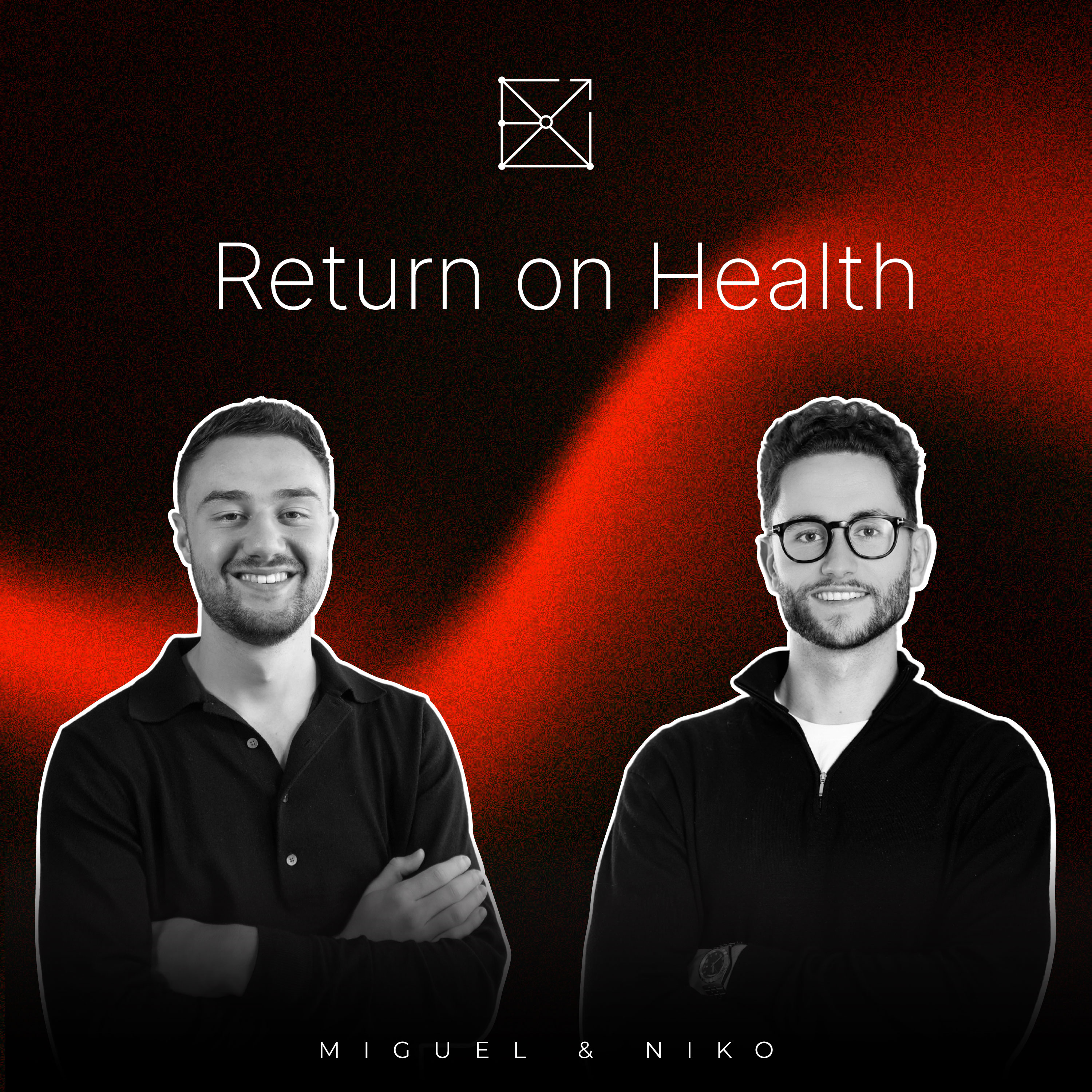
by Niko Hems and Miguel Medina
Health is full of strong claims, conflicting voices, and bold promises. Most people end up overwhelmed and unsure who to trust. Return on Health aims to bring clarity by listening to every side, asking hard questions, and keeping science and common sense at the center.Hosted by Niko Hems and Miguel Medina Stanivukovic, the podcast takes a clear look at longevity, prevention, performance, and the future of health. We invite researchers, founders, clinicians, skeptics, and innovators, then pressure-test their ideas. Some viewpoints will align. Others will clash. That is the point.
-
8
Harvard MD: The Truth About Peptides And Longevity Medicine
Harvard MD: The Peptide Boom Is Here.. But Is Medicine Ready?In this episode of Return on Health, Niko and Miguel speak with Dr. Anand Vinjamoori, Harvard Medical School and Harvard Business School trained physician, former founding Chief Medical Officer at Modern Age, advisor to Superpower, and founder of Next Generation Medicine.Together, they discuss why longevity medicine is booming while many companies still struggle to build sustainable businesses, why peptides may become one of the next major waves in health optimization, and why the future of biomarkers will likely require a much more individualized and data-driven approach.This episode covers:The peptide boom and why it mattersWhy longevity businesses often failWhat biomarkers can and cannot tell usDr. Anand explains why the current medical evidence system may be too slow for the next generation of therapies, how real-world data and patient registries could help close the evidence gap, and why biomarkers should be used with nuance rather than treated as absolute truth. He also shares his view on overhyped interventions, the role of exercise, and the cultural differences between American optimization culture and European lifestyle rhythms.Key topicsLongevity medicine and market timingThe business challenges behind longevity clinicsCustomer acquisition and why messaging mattersThe rise of peptides in health optimizationEvidence gaps, real-world data, and patient registriesPersonalized medicine and individual risk assessmentBiomarkers, multi-omics, and biological individualityWhy HBA1c can be overinterpretedExercise as one of the strongest health interventionsCold plunges and the problem of overapplied hormesisEuropean lifestyle culture vs. American optimization cultureChapters00:00 The Longevity Paradox01:03 Building Modern Age and the Early Longevity Market05:04 Personal Motivations Behind Longevity Medicine07:57 What Patients Actually Want From Longevity Care11:39 Why Many Longevity Businesses Struggle15:12 How Customer Preferences Have Changed18:21 Peptides as the Next Big Wave19:07 Peptides, Regulation, and Medical Experimentation24:24 The Evidence Gap in Peptide Use30:58 Why Medicine Needs Better Risk Assessment36:59 Biomarkers and Biological Ground Truth44:20 Multi-Omics and the Future of Measurement48:35 Which Biomarkers Are Useful — And Which Are Noise?52:42 Culture, Lifestyle, and Health Optimization55:45 Lightning Round: Metrics, Interventions, and Healthcare ReformGuestDr. Anand VinjamooriHarvard Medical School and Harvard Business School trained physician, former founding Chief Medical Officer at Modern Age, advisor to Superpower, and founder of Next Generation Medicine.Guest linksLinkedIn: https://www.linkedin.com/in/vinjamoori/Next Generation Medicine: https://www.nextgenerationmedicine.co/Superpower: https://www.linkedin.com/company/superpower/posts/?feedView=allListen nowReturn on Health is available wherever you get your podcasts.If you enjoyed this episode, leaving a 5-star rating on Spotify helps us bring more honest conversations about health, longevity, and medicine to more people.
-
7
Geriatrician: Most Aging Is Preventable (But We Start Too Late)
Most people think aging is something that happens later.In reality, the processes that determine how you age — and whether you stay functional — start decades earlier.In this episode of Return on Health, we sit down with Roberta Vella Azzopardi, a geriatrician and geroscientist with a PhD in cognitive frailty, to break down what aging actually looks like in clinical practice.Instead of focusing on single diseases, this conversation zooms out: Why do people lose independence? What really drives decline? And where are the biggest missed opportunities in prevention?What this episode coversWhy modern medicine often intervenes too lateWhat frailty really means — and why it matters more than ageHow loss of muscle drives metabolic and cognitive declineThe concept of peak span and why function beats lifespanWhy hearing loss is one of the biggest overlooked dementia risk factorsThe massive gap in menopause and women’s health careWhat actually works vs. what’s just hype in longevityKey takeawaysFrailty is best understood as loss of physiological reserves.When those reserves drop below a certain threshold, even small stressors can lead to long-term decline.This is why two people at the same age can look completely different clinically — one independent, one dependent.A major driver of this process is muscle loss.Muscle is not just about movement. It directly affects metabolic health, insulin sensitivity, and even brain function. The good news: even later in life, resistance training and sufficient protein intake can still improve outcomes.One of the most underestimated risk factors discussed in this episode is hearing loss.It contributes to cognitive decline through increased cognitive load, social isolation, and shared vascular mechanisms — yet remains widely underdiagnosed and undertreated. Another critical blind spot is women’s health, especially around menopause.Many symptoms are treated in isolation instead of addressing underlying hormonal changes, leading to years of missed intervention opportunities.Timestamps(00:00) Introduction & Roberta’s background(04:30) Frailty explained: vulnerability vs. age(11:00) Why prevention starts decades earlier(16:50) Reversing decline: muscle, protein, training(21:00) Peak span vs. lifespan(28:30) Menopause and missed diagnoses(36:30) Dementia prevention & modifiable risks(37:00) Hearing loss and cognitive decline (50:00) Busting common aging myths(55:00) Lightning round insightsTakeawaysStart investing in your health early — not when problems appearMaintain muscle mass through resistance training and protein intakeDon’t ignore hearing health — it directly impacts brain healthLook at root causes, not isolated symptomsPrevention is not one intervention — it’s a systemRoberta:https://www.linkedin.com/in/roberta-vella-azzopardi-md-phd-8235878a/Return on Health:https://returnonhealth.de/Niko:https://www.linkedin.com/in/niko-hems/https://www.instagram.com/niko_hemshttps://nikohems.de/Miguel:https://www.linkedin.com/in/miguel-medina-stanivukovic-857b9720b/https://www.instagram.com/miguelmedinastanivukovic/?hl=en
-
6
Karolinska MD PhD: The Hidden Phase Before Disease
Karolinska MD PhD: You Feel Healthy. Your Data DisagreesMost people think they’re healthy.But biology doesn’t care how you feel.Long before symptoms show up, your physiology is already shifting.. and most check-ups won’t catch it.In this episode, we sit down with Natalia Trpchevska (MD, PhD Karolinska, Medical & Scientific Director at AYUN) to break down what longevity medicine actually looks like when applied properly.We go beyond surface-level optimization and talk about what actually drives risk: mitochondria, metabolic flexibility, genetics, and why most people are already off track without knowing it.This episode covers:Why longevity medicine still struggles in practiceMitochondria, NAD+ and optimization mythsBiohacking and the future of healthcareKey takeaways:Health declines silently — symptoms come lateLongevity medicine asks: where are you heading biologically?The basics still dominate outcomes — most people underestimate themThe next level is personalization, not more hacksTwo “healthy” people can have completely different risksMitochondria adapt first — then they start driving dysfunctionMost mitochondrial interventions are misunderstoodGenetics gives probabilities, not certaintyReal optimization = prioritization + sequencingAbout Natalia:Natalia Trpchevska is a medical doctor and holds a PhD in genetics from the Karolinska Institutet.She is the Medical & Scientific Director at AYUN in Zurich, where she focuses on applying systems biology and layered diagnostics to detect early shifts in physiology — before disease develops.Her work bridges clinical medicine and research, with a strong emphasis on translating complex biology into actionable interventions.Timestamps:00:00 – Introduction & Natalia’s background (Karolinska, genetics → clinic)03:30 – Why genetics naturally leads into longevity medicine05:00 – What longevity medicine actually does differently07:30 – “Physiology before pathology” explained09:30 – The basics vs. the real next level11:30 – Same lifestyle, completely different risk profiles13:30 – APOE4, Lp(a) and personalized strategy15:00 – Mitochondria: what actually happens as you age18:30 – When mitochondrial dysfunction becomes clinically relevant21:00 – Cause vs. consequence: where mitochondria fit in aging23:30 – How mitochondrial function is actually measured26:30 – Why isolated tests don’t work (layered diagnostics)29:00 – What happens after testing: prioritization & sequencing32:00 – Why “doing everything” doesn’t work35:00 – IHHT explained: mechanism, benefits, limitations38:30 – Risks, contraindications & when it backfires41:00 – Environment vs. lifestyle: what really drives dysfunction44:00 – The hierarchy: metabolism → inflammation → toxins47:00 – Why most people focus on the wrong layer49:30 – What genetics got wrong over the last decade53:00 – Polygenic risk, probabilities & real-world use56:00 – Gene–environment interaction: what actually matters58:30 – Final thoughts: what people still misunderstand about healthLinks:Natalia:https://www.linkedin.com/in/natalia-trpchevska/https://www.ayun.ch/More about Return on Health:https://returnonhealth.de/Niko:https://www.linkedin.com/in/niko-hems/https://www.instagram.com/niko_hemshttps://nikohems.de/Miguel:https://www.linkedin.com/in/miguel-medina-stanivukovic-857b9720b/https://www.instagram.com/miguelmedinastanivukovic/
-
5
Medical Doctor: Primary Care Is Broken!
Rethinking Primary Care and Longevity: Insights with Dr. Takhar. In this episode, Dr. Takhar, UCLA and Harvard trained physician-scientist shares his journey from emergency and internal medicine to building a groundbreaking primary care model focused on human connection, longer physician-patient times, and personalized longevity strategies. We explore how systemic issues hinder patient-centered care and what reforms could make healthcare more effective, preventative, and humane.Key topics:The limitations of conventional healthcare: burnout, bureaucracy, short visitsThe unique model of Primary MD: small panels, extensive diagnostics, longer consultationsHuman connection as a pillar of effective medicineThe importance of listening and communication skills in healthcareEthical considerations of concierge medicine and access equityThe role of diagnostics: lipid panels, advanced markers, and their clinical relevanceRisks, hype, and evidence in emerging longevity interventionsFuture pathways for systemic reform: data, evidence, insurance, and policy shiftsLessons from infectious disease training applied to longevity and longevity safetyThe "Mixed Medical Arts" approach: integrating diverse fields for optimal patient outcomesTimestamps:(00:00) - Introduction to Dr. Takhar and the care collision in modern medicine(02:07) - Clinical experiences shaping innovative primary care(07:12) - The human component in healthcare and systemic barriers(10:53) - What primary MD does differently to foster patient trust(13:20) - Teaching patients the 'why' behind health decisions(14:17) - The vital role of health coaches in adherence and engagement(15:32) - The holistic approach combining diagnostics, trust, and relationship(18:07) - Addressing ethics and access in concierge-like models(19:36) - How to demonstrate value and scalable models(22:37) - Overcoming telehealth technical issues in podcast interviews(23:58) - The importance of comprehensive, integrated care strategies(26:32) - Membership-based care: structure and patient experience(27:33) - Ethical considerations of luxury care and future access(36:36) - System change: from volume to value and prevention(42:48) - Infectious disease background shaping longevity skepticism(46:55) - The dangers of hype and unproven interventions(50:32) - Bottom-up demand and the future of preventative medicineMore about Return on Health:https://returnonhealth.de/Dr. Sukhjit “Sarge” Takhar:https://www.linkedin.com/in/sukhjit-takhar-md/https://www.primary-md.com/Niko:https://www.linkedin.com/in/niko-hems/https://www.instagram.com/niko_hemshttps://nikohems.de/Miguel:https://www.linkedin.com/in/miguel-medina-stanivukovic-857b9720b/https://www.instagram.com/miguelmedinastanivukovic/?hl=enThis episode underscores the critical need for systems that prioritize genuine human connection, personalized diagnostics, and thoughtful health promotion to advance longevity and overall well-being.
-
4
Stanford MD: The Longevity Industry Is Lying To You
Longevity science is advancing quickly. Healthcare systems are moving much slower.In this episode, Stanford-trained physician Dr. Hillary Lin explains why prevention, biological age testing, mitochondria, and health optimization often struggle to translate into real clinical practice. We discuss the limits of NAD+ supplementation, the risks around peptides, and why behavioral change still drives most health outcomes.The conversation also looks at decentralizing healthcare, continuous monitoring, and why many high performers struggle with recovery despite doing “everything right.”What you’ll learn• Why longevity science and healthcare are misaligned• The role mitochondria play in aging and energy• When NAD+ supplementation can backfire• Risks around peptides and self-experimentation• Why behavior change drives most longevity gains• The future of continuous health monitoringTopics00:00 The gap in longevity care02:17 Hillary Lin’s path into longevity medicine05:28 Decentralizing healthcare08:13 Mental health navigation14:05 Mitochondria and mitophagy16:45 The NAD+ problem22:33 High performer bottlenecks27:20 Behavior change and longevity30:31 Peptides in longevity medicine35:02 Continuous healthcare models46:19 Biological age testing51:32 The future of healthcare monitoringFollow Hillary:https://www.hillarylinmd.com/https://www.linkedin.com/in/hillarylinmd/https://www.instagram.com/hillarylinmd/?hl=enMore about Return on Health:https://returnonhealth.de/Niko:https://www.linkedin.com/in/niko-hems/https://www.instagram.com/niko_hemshttps://nikohems.de/Miguel:https://www.linkedin.com/in/miguel-medina-stanivukovic-857b9720b/https://www.instagram.com/miguelmedinastanivukovic/?hl=en
-
3
Longevity Doctor: The Hidden Power of Metabolic Flexibility
Unlock the secrets to lasting health and longevity with Dr. Rhea Kotecha - a physician bridging functional medicine, longevity, and science to transform the way we age. Discover why metabolic health is the underrated pillar of a long, vibrant life, and learn practical strategies that go beyond quick fixes to create real, sustainable change. If you've ever wondered how to assess your true health potential or how personalized medicine can help you avoid the pitfalls of one-size-fits-all protocols, this episode is your essential guide.TakeawaysLongevity is not just about adding years but optimizing healthspan.The gap between knowledge and action is where health interventions fail.Personalized protocols based on biomarkers are essential for effective longevity strategies.Metabolic health is a crucial pillar of healthspan optimization.Visualizing future health can motivate clients to adhere to protocols.Functional foods can be both beneficial and a marketing gimmick.A whole food approach is vital for improving health outcomes.Adherence to protocols is often hindered by overwhelming information.Medical education should emphasize holistic approaches to health.The healthcare system needs to adapt to prioritize healthspan optimization.SummaryIn this conversation, Dr. Rhea Kotecha discusses the multifaceted approach to longevity, emphasizing the importance of understanding healthspan over mere lifespan. She highlights the significance of personalized protocols based on biomarkers, the role of metabolic health, and the need for a holistic view in medical education. The discussion also covers the challenges of adherence to health protocols, the impact of functional foods, and the necessity of visualizing future health to motivate clients. Dr. Kotecha advocates for a shift in the healthcare system towards proactive health management, focusing on optimizing healthspan.Chapters00:00 Understanding Longevity: A Multifaceted Approach02:02 The Intersection of Medicine, Psychology, and Nutrition04:06 The Role of Psychology in Health Interventions06:03 Functional Foods: Marketing vs. Reality08:15 Assessing Longevity: The Importance of Individualization10:15 Key Biomarkers for Longevity Assessment11:55 Metabolic Health: The Foundation of Longevity14:57 Microbiome Testing: Promise and Challenges19:22 Visualizing Longevity: Engaging Clients in Their Health Journey23:23 Fermented Buckwheat: A Nutritional Powerhouse27:00 The Importance of Gut Health and Fermented Foods28:53 Creating a Balanced Fiber and Protein Blend33:24 Client Readiness and Longevity Protocols35:29 Improving Adherence in Medical Protocols40:45 Navigating Evidence-Based Medicine and Experimental Interventions45:31 Practicing Longevity Medicine in a Traditional Healthcare System47:17 Misconceptions About Longevity and Healthspan49:02 The Anthropological Perspective on Longevity51:14 Bridging the Gap Between Modern Life and Evolutionary Needs53:27 Key Interventions for Healthspan Improvement54:08 Overhyped Longevity Interventions to Avoid54:53 Future of Personalized Supplementation55:27 The Role of AI in Longevity Medicine56:03 Reforming Healthcare Incentives for LongevityFollow Rhea:https://www.instagram.com/drrheakotecha/https://www.drrheakotecha.com/More about Return on Health:https://returnonhealth.de/Niko:https://www.linkedin.com/in/niko-hems/https://www.instagram.com/niko_hemshttps://nikohems.de/Miguel:https://www.linkedin.com/in/miguel-medina-stanivukovic-857b9720b/https://www.instagram.com/miguelmedinastanivukovic/?hl=enKeywordslongevity, healthspan, biomarkers, metabolic health, functional foods, personalized medicine, adherence, medical education, evolutionary health, anthropological perspective
-
2
Stanford-Trained MD: Do This to Prevent Chronic Disease
This episode digs into why midlife health quietly shapes your future more than most people realize - and why the healthcare system is structurally bad at dealing with that phase of life.Together with Stanford-trained MD Ali Zaidi, we talk about what actually changes in your body during midlife, which signals people tend to miss, and where medicine often reacts too late instead of setting the right defaults early on.A grounded conversation about biology, behavior, and why “doing nothing until something breaks” is still the dominant strategy in most health systems.TakeawaysMidlife health is crucialPreventive care is undervalued in the healthcare system Longevity interventionsTesting for mid-lifersChapters00:00 The Importance of Midlife Health06:02 Physiological Changes in Midlife19:02 Personal Health Stories and Biases28:10 Experimental Approaches in Healthcare36:18 Exploring Red Light Therapy and Vision HealthFollow Ali:https://www.linkedin.com/in/ali-zaidi-4a81121/https://www.alizaidimd.com/More about Return on Health:https://returnonhealth.de/Niko:https://www.linkedin.com/in/niko-hems/https://www.instagram.com/niko_hemshttps://nikohems.de/Miguel:https://www.linkedin.com/in/miguel-medina-stanivukovic-857b9720b/https://www.instagram.com/miguelmedinastanivukovic/?hl=en
-
1
What is Return on Health?
In our first episode, we explain why this podcast exists.We talk about how Miguel and Niko met during their Master’s at NOVA SBE, how endless late-night debates about health, medicine, and broken incentives slowly turned into a shared frustration with the system - and why starting this podcast became the only logical step.We break down what “Return on Health” actually means:why most health decisions optimize for short-term comfort, not long-term outcomes;why good intentions fail when incentives are misaligned;and why prevention, incentives, and system design matter more than hacks and biohacking trends.You’ll get a clear sense of:what we will challenge on this podcastwho this is for (founders, operators, builders, and anyone tired of health content that oversimplifies reality)how we’ll approach topics: data-driven, critical, open to uncertaintywhy we will talk to people we disagree withand why some “promising” health ideas never get good evidence — and what to do with that realityMore about Return on Health:https://returnonhealth.de/Niko:https://www.linkedin.com/in/niko-hems/https://www.instagram.com/niko_hemshttps://nikohems.de/Miguel:https://www.linkedin.com/in/miguel-medina-stanivukovic-857b9720b/https://www.instagram.com/miguelmedinastanivukovic/?hl=en
We're indexing this podcast's transcripts for the first time — this can take a minute or two. We'll show results as soon as they're ready.
No matches for "" in this podcast's transcripts.
No topics indexed yet for this podcast.
Loading reviews...
ABOUT THIS SHOW
Health is full of strong claims, conflicting voices, and bold promises. Most people end up overwhelmed and unsure who to trust. Return on Health aims to bring clarity by listening to every side, asking hard questions, and keeping science and common sense at the center.Hosted by Niko Hems and Miguel Medina Stanivukovic, the podcast takes a clear look at longevity, prevention, performance, and the future of health. We invite researchers, founders, clinicians, skeptics, and innovators, then pressure-test their ideas. Some viewpoints will align. Others will clash. That is the point.
HOSTED BY
Niko Hems and Miguel Medina
Loading similar podcasts...
URL copied to clipboard!