
PODCAST · society
The Cognitive Liberty Podcast with ChrisPYounce
by harmonichomesteading
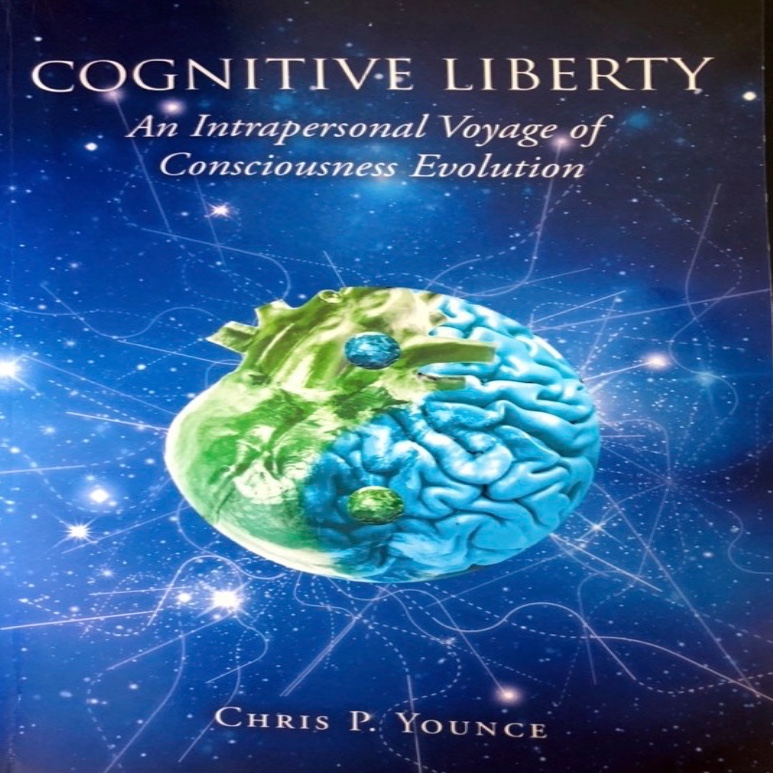
Monologue rundowns coupled with readings from my book, Cognitive Liberty. This Podcast is my way of sharing my book with the world in an audible format. It’s a deep dive into the arts and sciences of our humanity in attempt to synchronize our evolution with our creative process as individuals and as a collective. In each episode, I plan to provide brief rundowns and background information based on why I wrote the book and where its relevance lies in the world today. It’s a journey of recognizing how Mankind is at a crossroads. Our social systems are breaking down because we’ve lost touch with our ecological position in the natural world. We’ve become utterly distracted by the fast-paced demands of daily life to the point where we’ve lost track of who we are. We’ve forgotten how to work as a team and nurture the partnerships that helped us be who we are today. Our neglected partnerships and abusive attitude toward our homeland reflect a mass symptom of ignorance that begs me to quest
-
23
23. What Consciousness Does Pt. 1
Thanks for tuning in folks! Feel free to get a copy of the book so you can read along - it's available on Amazon, Barnes and Noble, iTunes, and wherever books are sold! Here's a URL hub to check it out, just click on the icon store of choice at the bottom of the page on the link below: https://pagepublishing.com/books/?book=cognitive-liberty-younce In this episode, I begin to tackle the age-old mystery of consciousness, how it works, what it does, and why it matters in our lives as we begin the new year of 2024. Though I do not claim to even have begun to scratch the surface of this elusive topic, this is the point in my book that is the cornerstone of my research and what this book attempts to unpack as it aims to understand consciousness as the ground of being. Contrary to popular belief and scientific dogma that the brain is what generates consciousness, I would argue that the brain is more of a receiver of consciousness, and secondary to cognitive functions, which is what will T-off part two of this section - the last of Part I and of this Chapter on The Evolution of The Brain. Stay tuned! Thanks again for listening and for all your support! Don't forget to review the podcast wherever you're tuning in. I invite you to follow the Cognitive Liberty Podcast and feel free to follow me on the social medias with any thoughts you may have: Instagram @harmonic_homesteading Twitter @Chrispyounceman LinkedIn @Chris Younce Also, feel free to get a copy of the book so you can read along https://pagepublishing.com/books/?book=cognitive-liberty-younce In support of Indy booksellers, feel free to check out the book’s availability on bookshop.org: https://bookshop.org/p/books/cognitive-liberty-an-intrapersonal-voyage-of-consciousness-evolution-chris-p-younce/18639926?ean=9781662455438 Cheers Folks! Chris P.
-
22
22. Neuroplasticity
Happy New Year's Eve everybody! Thanks for tuning in! Feel free to get a copy of the book so you can read along - it's available on Amazon, Barnes and Noble, iTunes, and wherever books are sold! Here's a URL hub to check it out, just click on the icon store of choice at the bottom of the page on the link below: https://pagepublishing.com/books/?book=cognitive-liberty-younce In this episode, I talk about neuroplasticity to demystify it as a concept by looking at it more like a process that is constantly in motion because it characterizes the very notion of evolution. The fact that we're made of drugs speaks to this idea that we are always going through changes in neurochemical structure from one state of consciousness to another. Just as emotions are primary drivers of our physiology, our neurological wiring compliments this ability we have to influence our states of being. The best news is that we have a choice in how we think, feel, and behave. In the coming new year, let's use it wisely! I hope you enjoy this episode and the reading from my book. Thanks again for listening! Don't forget to review the podcast wherever you're tuning in. And I invite you to follow the Cognitive Liberty Podcast and feel free to follow me on the social medias with any thoughts or questions you may have regarding the book or the Podcast: Instagram @harmonic_homesteading Twitter @Chrispyounceman LinkedIn @Chris Younce Also, be sure to check out The Banana Bread and Circus Republic Podcast on Spotify or wherever you listen to your Podcasts. And don't forget to get a copy of the book so you can read along https://pagepublishing.com/books/?book=cognitive-liberty-younce In support of Indy booksellers, feel free to check out the book’s availability on bookshop.org: https://bookshop.org/p/books/cognitive-liberty-an-intrapersonal-voyage-of-consciousness-evolution-chris-p-younce/18639926?ean=9781662455438 Cheers Folks! Chris P.
-
21
21. Survival Mode
Hi folks, be sure to get a copy of the book from select retailers, including Amazon and iTunes, so you can read along! Major shout out to TOOL! I recorded this segment within 24 hours after seeing them play the best show I have ever had the pleasure of attending. Which was something that had been on my bucket list for years. Since the show, I feel like I have crossed over to a whole new dimension of self-discovery as an artist. Thank you, Danny, Adam, Justin, and Maynard for all of your work and mastership. This segment is about Survival Mode and its implications on our cognitive functions that can either help or hinder our neurobiological makeup. I hope you enjoy this episode and the reading from my book. Thanks again for listening! Don't forget to review the podcast wherever you're tuning in. I invite you to follow the Cognitive Liberty Podcast and feel free to follow me on the social medias with any thoughts or questions you may have regarding the book or the Podcast: Instagram @harmonic_homesteading Twitter @Chrispyounceman LinkedIn @Chris Younce Also, feel free to get a copy of the book so you can read along https://pagepublishing.com/books/?book=cognitive-liberty-younce In support of Indy booksellers, feel free to check out the book’s availability on bookshop.org: https://bookshop.org/p/books/cognitive-liberty-an-intrapersonal-voyage-of-consciousness-evolution-chris-p-younce/18639926?ean=9781662455438 For more content from me, be sure to check out The Banana Bread and Circus Republic Podcast. Cheers Folks! Chris P.
-
20
20. Intro to Ch. 3: The Evolution of the Brain
Thanks for tuning in folks! Feel free to get a copy of the book so you can read along - it's available on Amazon, Barnes and Noble, iTunes, and wherever books are sold! Here's a URL hub to check it out, just click on the icon store of choice at the bottom of the page on the link below: https://pagepublishing.com/books/?book=cognitive-liberty-younce In this episode, I talk about a recent challenge I had in the fermentary moments before I recorded this segment. Thanks to the uplifting spirit of Monty Python humor and the Institute of HeartMath's research in cultivating Heart-Brain coherence, I was able to transcend my frustration into an appreciation of the moment to access real solutions to the problems at hand. This is a testimony of how the brain is an adaptable social organ. It responds to over 90% of the signals from the heart and its consciousness. The internal and external environmental forces at play seem to pull the strings from one moment to the next, and our brains and bodies respond accordingly. But as Dr. Joe Dispense points out in his work, to be greater than the environment, the body, and time means we need to cultivate a new way of being present and in the moment. When we choose how to be, we can shift into a new realm of thinking, feeling, and behaving. I hope you enjoy this episode and the reading from my book. Thanks again for listening! Don't forget to review the podcast wherever you're tuning in. I invite you to follow the Cognitive Liberty Podcast and feel free to follow me on the social medias with any thoughts or questions you may have regarding the book or the Podcast: Instagram @harmonic_homesteading Twitter @Chrispyounceman LinkedIn @Chris Younce Also, feel free to get a copy of the book so you can read along https://pagepublishing.com/books/?book=cognitive-liberty-younce In support of Indy booksellers, feel free to check out the book’s availability on bookshop.org: https://bookshop.org/p/books/cognitive-liberty-an-intrapersonal-voyage-of-consciousness-evolution-chris-p-younce/18639926?ean=9781662455438 Cheers Folks! Chris P.
-
19
19. Liberation as Boundary Dissolution
This episode is the last section of Chapter 2. I talk about what makes cognitive freedom relevant to our cultural conditioning and our egoic habits that leave us disillusioned and astray. In part, I actually introduce a simple Taoist concept, one that speaks directly to the essence of this project and its definition. A concept that I plan to go a little deeper on in the future episodes of chapter 3 just around the corner. Get a copy to read along. I hope you enjoy this episode and the reading from my book. Thanks again for tuning in! I invite you to follow the Cognitive Liberty Podcast, give it a review on whatever platform you use, and share it with others. Also, feel free to follow me on the social medias: Instagram @harmonic_homesteading Twitter @Chrispyounceman LinkedIn @Chris Younce Here's where you can get a copy of the book so you can read along https://pagepublishing.com/books/?book=cognitive-liberty-younce Just click the icon store of choice at the bottom of the page. In support of Indy booksellers, feel free to check out the book’s availability on bookshop.org: https://bookshop.org/p/books/cognitive-liberty-an-intrapersonal-voyage-of-consciousness-evolution-chris-p-younce/18639926?ean=9781662455438 Cheers Folks! Chris P.
-
18
18. Integrating Feedback
Get a copy of Cognitive Liberty to read along. Just click the icon store of choice. This episode is about integrating feedback and what this means in our societal evolution. Our cognitive liberation often depends on questioning who we are, and what the self is, and recognizing that the things we’re told and the things we believe could be a falsehood leading us astray. I hope you enjoy this episode and the reading from my book. Huge shout out to Bill Hicks! R.I.P. sir, we love you and miss you, always. Thanks again for tuning in! I invite you to follow the Cognitive Liberty Podcast and feel free to follow me on the social medias: Instagram @harmonic_homesteading Twitter @Chrispyounceman LinkedIn @Chris Younce Also, feel free to get a copy of the book so you can read along https://pagepublishing.com/books/?book=cognitive-liberty-younce In support of Indy booksellers, feel free to check out the book’s availability on bookshop.org: https://bookshop.org/p/books/cognitive-liberty-an-intrapersonal-voyage-of-consciousness-evolution-chris-p-younce/18639926?ean=9781662455438 Cheers Folks! Chris P.
-
17
17. Interpersonal Neurobiology
Feel free to get a copy of the book so you can read along In this episode, I cover the section from the book on Interpersonal Neurobiology and its implications for what it can tell us about ourselves, our mental health, and the relationships that contribute to the development of our brains. Friendships are what give us our sense of connection to the world. In fact, having friends is so powerful that it can actually remedy mental health ailments, such as depression and anxiety. There is a real essence in the fellowship in our evolutionary development. As such, we are lifelong learners and there is simply nothing we can’t achieve when we band together and make friends with each other. I hope you enjoy this episode and the reading from my book. Thanks again for tuning in! I invite you to follow the Cognitive Liberty Podcast and feel free to DM me and follow me on the social medias with any thoughts or questions you may have regarding the book: Instagram @harmonic_homesteading Twitter @Chrispyounceman LinkedIn @Chris Younce Feel free to get a copy of the book so you can read along https://pagepublishing.com/books/?book=cognitive-liberty-younce In support of Indy booksellers, feel free to check out the book’s availability on bookshop.org: https://bookshop.org/p/books/cognitive-liberty-an-intrapersonal-voyage-of-consciousness-evolution-chris-p-younce/18639926?ean=9781662455438 Cheers Folks! Chris P.
-
16
16. The Structure of The Ego
In this episode, I scratched the surface of perceiving the ego differently. What does the ego offer to our neurological and psychological way of being? How do our social circumstances reinforce the ego? And what does this mean for our lives on a personal level? In our journey of becoming more self-aware, I think it's important to question how our ego becomes developed over time, based on the people we hang out with, the stories we've told ourselves, or what we've been told throughout our lives. Our ego is a story. As fictitious as may be, it is what hinges our social experience to what we take seriously about ourselves as it molds and forms our identity over time. I hope you enjoy this episode and the reading from my book. Thanks again for tuning in! I invite you to follow the Cognitive Liberty Podcast and feel free to DM me and follow me on the social medias with any thoughts or questions you may have regarding the book: Instagram @harmonic_homesteading Twitter @Chrispyounceman LinkedIn @Chris Younce Also, feel free to get a copy of the book so you can read along https://pagepublishing.com/books/?book=cognitive-liberty-younce In support of Indy booksellers, feel free to check out the book’s availability on bookshop.org: https://bookshop.org/p/books/cognitive-liberty-an-intrapersonal-voyage-of-consciousness-evolution-chris-p-younce/18639926?ean=9781662455438 Cheers Folks! Chris P.
-
15
15. Cultural Autism
This episode is about how societal habits mimic the autistic tendencies we unconsciously engage in when it comes to the cultural ideologies and economic policies that keep us stuck in a box of limited perspective, especially when it comes to our ability to self-reflect how we treat the environment, each other, and ourselves. As self-referencing beings, we must remember to check in with ourselves individually and embrace our ability to choose how we want to be. We are all co-creating our world as we go, remember to do so consciously. I hope you enjoy this episode and the reading from my book. Thanks again for tuning in! I invite you to follow the Cognitive Liberty Podcast and feel free to DM me and follow me on the social medias with any thoughts or questions you may have regarding the book: Instagram @harmonic_homesteading Twitter @Chrispyounceman LinkedIn @Chris Younce Also, feel free to get a copy of the book so you can read along https://pagepublishing.com/books/?book=cognitive-liberty-younce In support of Indy booksellers, feel free to check out the book’s availability on bookshop.org: https://bookshop.org/p/books/cognitive-liberty-an-intrapersonal-voyage-of-consciousness-evolution-chris-p-younce/18639926?ean=9781662455438 Cheers Folks! Chris P.
-
14
14. The Disordered Mind
This episode was recorded on July 8th, 2023. In this episode, I share a story of some recent adversity I faced personally. Part of this lends to the ongoing process of how challenging it can be to summon our resilient nature when we’re faced with unexpected changes and curveballs, which can render us at the mercy of nature to the point where we may feel hopeless and frozen. My personal account of this exemplifies how I applied my teaches as a certified HeartMath Trainer. I relied on my heart's wisdom to feel okay with the decisions I made to resolve the problems at hand. In the process of trusting my heart, I realized that a common denominator of the disordered mind and feeling victimized by our circumstances results from a disconnect of our heads to our hearts. Getting in touch with our hearts is probably the most effective means of recalibrating our consciousness with our deepest intentions. I hope you enjoy this episode and the reading from my book. Thanks again for tuning in! I invite you to follow the Cognitive Liberty Podcast and feel free to DM me and follow me on the social medias with any thoughts or questions you may have regarding the book: Instagram @harmonic_homesteading Twitter @Chrispyounceman LinkedIn @Chris Younce Also, feel free to get a copy of the book so you can read along https://pagepublishing.com/books/?book=cognitive-liberty-younce In support of Indy booksellers, feel free to check out the book’s availability on bookshop.org: https://bookshop.org/p/books/cognitive-liberty-an-intrapersonal-voyage-of-consciousness-evolution-chris-p-younce/18639926?ean=9781662455438 Cheers Folks! Chris P.
-
13
13. Left and Right Brain Hemispheres
In this episode, I introduce a book I’m reading by Gregg Braden, who introduces a critical question: who are we? As we address this question, we can reflect more deeply on our choices based on free will. But how much free will do we actually have? This question could also be “How conscious are we?” Be it of the choices we make or how much of our lives are self-directed. We rely on the space in between more than we realize. What I mean by this is that when we cram everything in from one day to the next, we have less and less bandwidth to give ourselves the space to make choices for ourselves. It’s as if the space between those spaces is where the spirit resides in order to give life to our minds and bodies. Our feelings of separation from our exchanges with our world and the people in our lives are part of this greater question of who we are. How we feel matters. What we bring to the table for ourselves and others matters. The emptiness is what lends to our free will to create the chemistry of feelings we use to create the stories of our lives. Our emotional intelligence is entangled with our ability to choose, even though emotions can be an involuntary or spontaneous process because they are the primary drivers of our physiology, and thus they tend to dictate how we think and behave. With that said, it’s all about knowing how to navigate the empty spaces, and thus our free will to think, feel, and behave, wisely. Remember that we are the main characters in our story. Thanks again for listening folks! I invite you to follow the Cognitive Liberty Podcast and feel free to DM me and follow me on the social medias with any thoughts or questions you may have regarding the book: Instagram @harmonic_homesteading Twitter @Chrispyounceman LinkedIn @Chris Younce Also, feel free to get a copy of the book so you can read along https://pagepublishing.com/books/?book=cognitive-liberty-younce In support of Indy booksellers, feel free to check out the book’s availability on bookshop.org: https://bookshop.org/p/books/cognitive-liberty-an-intrapersonal-voyage-of-consciousness-evolution-chris-p-younce/18639926?ean=9781662455438 Cheers Folks! Chris P.
-
12
12. The Mammalian Brain
In this episode, I hop into the significance of our neurological energy as derived from the fungal kingdom. We are animals first, and humans second. So, in order to get in touch with our human nature, we must become familiar with our animal nature, and thus our fungal nature. Our roots come from the fungal kingdom, which is where animals come from. Neurons and fungal behavior are very similar with regard to their electrical and molecular functionality. Mammals are fungal organisms, believe it or not. With that said, I take a moment to share Merlin and Cosmo Sheldrake’s piece that captures fungal mycelium in audible. Check it out on YouTube here: https://www.youtube.com/watch?v=6KAnGAtSSgE and see for yourself. Very cool stuff! I also talk for a bit about my journey as a beekeeper, which has a lot to do with our mammalian nature to connect, proliferate and create. As humans, we have an intuition for the creative dimension of our being that guides our lives based on what we feel is right for us and our fellowships that create sustainable relationships in order to perpetuate our lives into the future. Our sustainability depends on this side of ourselves that can sense when we’ve gone astray. We are deeply connected to our environment and our ecosystem and we are very lucky to bear witness to it. Thanks again for listening folks! I invite you to follow the Cognitive Liberty Podcast and feel free to DM me and follow me on the social medias with any thoughts or questions you may have regarding the book: Instagram @harmonic_homesteading Twitter @Chrispyounceman LinkedIn @Chris Younce Also, feel free to get a copy of the book so you can read along https://pagepublishing.com/books/?book=cognitive-liberty-younce In support of Indy booksellers, feel free to check out the book’s availability on bookshop.org: https://bookshop.org/p/books/cognitive-liberty-an-intrapersonal-voyage-of-consciousness-evolution-chris-p-younce/18639926?ean=9781662455438 Cheers Folks! Chris P.
-
11
11. Chapter 2: Cultural Conditioning
In episode 11, I open the floodgates of chapter 2, Cultural Conditioning, by describing the indisputable fact that we are survival mechanisms at the end of the day. Our energy is based on how we respond to our natural and social environment. Without getting too deep into our unique subjectivity, we mustn’t forget that we are beings subject to our objectivity. This is how we judge. But we can’t ignore the fact that this is something we can influence as free minds, using whatever bandwidth of free will we have, to determine what thoughts and feelings we want to experience or allow to manipulate our judgments in the first place. Our inner kundalini becomes programmed based on what we fear and where our comfort zones and their parameters lie. This chapter (in the segments to come) is loaded with neurocentric examples and neurobiological evidence that our minds are a reflection of our emotional environment. So, what better way to manipulate our mental energy than to get through to what energetic serpent lies within to toy with our emotional strings? Our responsibility to be human means we need to learn how to be responsible. This means we need to reckon with our ability to respond in the first place and learn to master how we regulate our emotions in this body, here and now. This begins with learning how to self-direct our thoughts, which influence our feelings and emotions. This is where we will learn to identify where and how we allow culture to guide our thinking and judgments. Because all culture is in the first place is a set of idealistic principles embedded in concepts and beliefs. Nothing more; not right or wrong, nor good or bad. Until we learn how to break through our cultural paradigms, we will not know how to overcome our own personal program. That being our comfort zones and our autistic ways of individuality. See you in the next episode where we dive into the section of the book about the mammalian brain and its limbic system. Thanks for listening folks! I invite you to follow the Cognitive Liberty Podcast and feel free to DM me and follow me on the social medias with any thoughts or questions you may have regarding the book: Instagram @harmonic_homesteading Twitter @Chrispyounceman LinkedIn @Chris Younce Also, feel free to get a copy of the book so you can read along https://pagepublishing.com/books/?book=cognitive-liberty-younce And of course, to support Indy booksellers, feel free to check out the book’s availability on bookshop.org Cheers Folks! Chris P.
-
10
10. From Western Psychoanalysis to Eastern Liberation
In this episode, I lead off by acknowledging the death of a dear friend and former supervisor of mine, Valerie LeGrand. Thank you for everything you taught me in the realm of person-centered human services, fiscal responsibility, and much more. My hat is off to you, your work ethic, and the legacy you built. Huge loss for the world. We will always miss you, Val. As the episode unfolds, I intended to provide a brief rundown of some key terms for listeners to keep in mind because the book explores these terms from a conventional lens of where we can apply their relevance today. Terms like Tao, Wu Wei, and Zen. Some of which you may have heard before. But I wanted to unpack these terms as a means of broadening the horizon of the Western worldview so as to step outside of our misconception regarding the forces of nature at play when we consider how our mental health is a symptom of deep insecurity. As beings that participate in a lived-experienced world, we must come to terms with the fact that our insecurities are part of an arcane confusion and a lack of accepting who we are that dates far beyond our documented human history. By recalling insights from the longtime forgotten Eastern philosophies of the above-mentioned terms, we can begin to heal our psychological pain and simply learn how to perceive ourselves and our world without all the judgment and the attachment to the outcome. This segment closes out chapter one of the book, Relating to Autism. I look forward to sharing chapter 2 with you guys in our next episode, which explores the neuroscience of cultural conditioning, relationships, and the fear-conditioned response in general. Thanks for listening folks! I invite you to follow the Cognitive Liberty Podcast and feel free to DM me and follow me on the social medias with any thoughts or questions you may have regarding the book: Instagram @harmonic_homesteading Twitter @Chrispyounceman LinkedIn @Chris Younce Also, feel free to get a copy of the book so you can read along https://pagepublishing.com/books/?book=cognitive-liberty-younce Cheers! Chris P.
-
9
9. My Autistic Self
In this episode, I open up by paying tribute to my family’s recent loss of their dog, our beloved Maisy. As is the fact that we all learn differently – we all grieve differently, too. It is up to each of us on an individual basis to find a deeper capacity within ourselves to work together and love and tolerate one another. In doing so, we can overturn the demons we foster within as we all too often harbor the resentment we have for each other and ourselves. If we are being honest, we will reckon with the indisputable fact that we all have pain. Our hurt runs so deep that we often deny that it’s signaling a recognition of a need to heal. We owe it to ourselves to step outside our comfort zones and invite additional attunement and perspective for our context as individuals within a web of social dynamics and learning differences. Our learning differences are what make our neurodiversity a unique thumbprint to our time of extremes as we continue to push the boundary as a collective and challenge the conventionalism of the past. This next section of the book is where I suck it up and share the journey of my own autistic tendencies and how this has created lots of challenges for my personal development. It’s important to keep in mind that the greater self-awareness we have, the more connected we are to our evolutionary process. The book references of ASD individuals I wanted to plug here are: Nate’s Triumph by Nate Trainor; Typed Words Loud Voices (authored by editors); and Ido in Autismland by Ido Kedar. Thanks again for listening folks! I invite you to follow the Cognitive Liberty Podcast and feel free to DM me and follow me on the social medias with any thoughts or questions you may have regarding the book: Instagram @harmonic_homesteading Twitter @Chrispyounceman LinkedIn @Chris Younce Also, feel free to get a copy of the book so you can read along https://pagepublishing.com/books/?book=cognitive-liberty-younce Cheers! Chris P.
-
8
8. The Deception of Comfort Zone Perception
In this episode, I provide a glimpse of how our comfort zones relate to autism spectrum disorder (ASD). It’s important to acknowledge how our comfort zones have pros and cons embedded within their operating systems, which can either leverage our sense of well-being or blind us to the reality that life is a process of changes happening all around us. We all learn differently as humans with unique preferences, sensory needs, and perceptual boundaries. Likewise, we all respond to fear differently. Our comfort zones naturally have blind spots to the pitfalls that surround their perspectives. Though our comfort zones can serve us with staying out of danger, the problem often lies in their nature to deceive our ability to perceive things objectively. When we don’t overindulge ourselves within its insulated boundaries, we can admit that they are a helpful crutch for our need to have safety and security. Without them, we have a hard time thriving in a state of growth. On the other hand, too much of them, and we become consumed by their influence and can become stuck in a perpetual state of protection. Regardless of what comfort zone each and every individual identifies with, it’s important to remember a timeless Taoist principle: that too much of anything produces its opposite. As for the corresponding figures from this episode’s section from the book, unfortunately, I am unable to post those in the description here as the technical difficulties seem to persist. Thanks for listening folks! I invite you to follow the podcast and on the social medias and feel free to DM me with any thoughts or questions you may have regarding the book. Instagram @harmonic_homesteading Twitter @Chrispyounceman LinkedIn @Chris Younce Also, feel free to get a copy of the book so you can read along and check out the corresponding Figures from this segment: https://pagepublishing.com/books/?book=cognitive-liberty-younce Cheers! Chris P.
-
7
7. Autism As a Social Continuum
In this episode, I dive into the section in the book that has to do with the diversity of autism characterized by a binary relationship between the intellectual wiring and the emotional wiring of the brain. Using two examples of autistic individuals, I outline that their way of thinking depends on how they relate to their world: one through a sense of needing to feel accepted, and the other through a sense of engaging in personal interests. One is fueled from a place of doing, and the other is fueled from a place of being. The neurodiversity of society and culture is a collective example of how our personalities and sensibilities can vary in dramatic ways. I encourage everyone to appreciate how our heterogeneity is a profound contribution to our collective resilience, which often comes down to our free will to persevere and transcend our own personal adversity plagued by the comfort zones we identify with. The Maynard James Keenan quote I meant to mention in the episode is: “The new era of art is an egoless collaboration. We’re a huge patch of algae, single cells in a larger organism in sync. One person might coordinate it all, but they can’t make it happen unless all the other elements are working together.” Thanks for listening! I invite you to follow me and feel free to DM me on the social medias with any thoughts or questions you may have regarding the book. Instagram @harmonic_homesteading Twitter @Chrispyounceman LinkedIn @Chris Younce Also, feel free to get a copy of the book so you can read along https://pagepublishing.com/books/?book=cognitive-liberty-younce Cheers! Chris P.
-
6
6. Neurological Conditions of Autism
This episode was recorded shortly after daylight savings time, so I was feeling a bit off due to lack of sleep in trying to adjust to the new morning schedule. I began by introducing a form of augmentative/alternative communication (AAC) known as Facilitated Communication, or FC for short. FC is still a very fringe topic so it’s tricky to talk about it to a broader audience who hasn’t heard of it or to the uninitiated. One of the reasons FC is a fringe thing is that the speech and language pathology (SLP) community views it as a non-evidence-based practice. However, I would argue that it is, in fact, an evidence-based practice – along with several communication specialists I work with. Best practices of FC include a threefold approach for supporting an individual’s typing: emotional, communicative, and physical. The emotional component has to do with helping the typer stay connected and regulated to their communication process in being able to cope with some of the challenges and stressors of trying to communicate. The communicative component obviously has to do with helping the individual clarify unclear messages, but not directing where the messages are going or putting words in their mouth, so to speak. And the physical component is where the heart of its controversy lies: it’s a means to provide backward resistance for the typer so they do not strike the keyboard or letters too hard or get caught up in the loop of automatic, echolalic patterns that get in the way of effective or meaningful communication. Due to the nature of FC as a threefold support strategy for facilitating an individual’s typing rhythm and movement by means of “pointing,” the authenticity of authorship is a questionable anomaly in the eyes of the SLP community. This is primarily because physical support is provided; and to an outside observer, it may seem that the facilitator is influencing or even perhaps controlling what the message being typed out is. I encourage those who are interested in ASD to explore the world of AAC in depth and to have an open mind. The diversity of our individuality means we need to treat each AAC method on a case-by-case basis where it meets the needs and communication preferences of the individual. I invite you to follow me and feel free to DM me on the social medias with any thoughts or questions you may have regarding the book. Instagram @harmonic_homesteading Twitter @Chrispyounceman LinkedIn @Chris Younce Also, feel free to get a copy of the book so you can read along https://pagepublishing.com/books/?book=cognitive-liberty-younce Thanks for listening and for all your support! Cheers! Chris P.
-
5
What is Autism?
This episode was one of my favorites to record because it covered some of the key points of autism based on what I’ve personally discovered. I was so excited to present this section that I decided to read it first and then debrief the episode by ranting on about it afterward. Autism operates primarily like an automatic force outside of consciousness or executive functioning. Most of the people who have autism that I have worked with will describe the worst of their disability as a prison. It's like an uncontrollable urge for predictability and sameness, running on a loop as though it has a life of its own. Obviously, this paints a pretty daunting image but it goes to show that even our most unique characteristics and abilities are not all hunky-dory. Our autism can consume us to the point where it can override our empowered sense of self and our capacity to think for ourselves. That’s why it’s important to never forget that no matter how automatic our subconscious habits (of thinking, doing, and being) may be, we are the masters of our minds, not the other way around. I had a lot of fun presenting this section, but let me know your thoughts as I invite you to DM me and follow me on the social medias: Instagram @harmonic_homesteading Twitter @Chrispyounceman LinkedIn @Chris Younce Also, feel free to get a copy of the book so you can read along: https://pagepublishing.com/books/?book=cognitive-liberty-younce Thanks for listening and for all your support! Cheers! Chris P.
-
4
The Autism Spectrum
This episode is where I open up Part One of the book, The Social Continuum: Autism in Culture and Ego in Subconscious. This becomes the central focus of the first few minutes of the episode, trying to describe what I mean by the opening title. Then I segway into the relevance of why it’s important to relate to autism spectrum disorder (ASD), which happens to be the title of chapter 1 of the book: Relating to Autism. In terms of being more aware of our human nature, I wanted to reflect on what ASD says about our humanity and, in doing so, dissect the diagnostic criteria for ASD in order to introduce it through a clinical lens. This is where the reading becomes super dry (and I apologize in advance for that), but that’s only because it’s a necessary component to understanding what we know about ASD. But I promise, it gets better. I don’t want our understanding of ASD to solely hinge on the clinical criteria from the DSM. In order to fully appreciate how far we’ve come regarding our diagnostic tools, we need to recognize that our understanding of mental health and ASD continues to evolve whether we like it or not. This section is meant to get the basic, conventional definitions of ASD out of the way so we can move on to applying them in real-life scenarios. ASD is not only a continuum or a spectrum – It’s also a pie chart with co-occurring syndromes within it. In the next episode, I plan to share some key points about autism based on what I’ve personally discovered. Feel free to comment on what you think and if you have anything to add regarding the exploration of ASD. I understand that if you have a friend or a loved one with ASD, any of their symptoms may or may not be what I discussed in the book. Feel free to DM me, and follow me on Instagram @harmonic_homesteading Twitter @Chrispyounceman LinkedIn @Chris Younce Also, feel free to get a copy of the book so you can read along https://pagepublishing.com/books/?book=cognitive-liberty-younce Thanks for listening and for all your support! Chris P.
-
3
Introduction (Part 2): Evolution as Cognitive Liberation
In this episode, I elaborate on the structure of the book and the building blocks of its contents. From the last episode's reference to The Trinity of Transcendence (Figure 1), I break down its interrelatedness of how the mind, body, and soul correspond to our knowing, doing, and being as individuals. Side note: I apologize for the technical difficulty in posting the Figure 1 image to the previous episode's description. Turns out it did not work. I will try reposting it in this description to see if I have any luck with it this time. I organized the book into four parts. Part one corresponds to aspects of the mind through research in neuroscience and psychology; part two corresponds to aspects of the body through research in epigenetics and biology; part three corresponds to aspects of the soul through research in ecology. In doing so, I explore a new perspective on nature as an intelligent aspect of our being and our creative process. Though often taken for granted, our natural intelligence is what makes us who we are, just as it makes any organism what they are as it applies to its own inner process that is unique to itself and is so of itself. This is where science can only explain so much. I use this as a launchpad for how I constructed part four, which is a consolidated version of its preceding parts within its respective chapters - chapter one of part four is a derivative of part one, chapter two of part four is a spin-off of part two, and chapter 3 of part four is a byproduct of part 3. To tie it all together, by the end of the story I provide one last chapter: an epilogue. Which, in the spirit of the book's structural rhythm, I derived from the potency of part four's content. In case Figure 1 does not post here again, feel free to purchase a copy of the book here to check it out: https://pagepublishing.com/books/?book=cognitive-liberty-younce And feel free to follow me on Instagram, Twitter, and LinkedIn. Send me a DM if you have comments or questions. Instagram: @harmonic_homesteading Twitter: @Chrispyounceman LinkedIn: Chris Younce Thanks for listening! And for all your support! ChrisPY
-
2
Introduction: Evolution as Cognitive Liberation (Part 1)
In this episode, I get into the first half of the introduction of the book. In doing so, I loosely define some key terms, such as the title of the book/podcast itself in terms of freedom of the mind and freedom from the mind. These terms may seem to contradict each other, but I would argue they complement each other in many ways. Piggybacking off the previous episode, I provide a global view of questioning modern culture and our futile ways of life in the grand scheme of the ecosystem. In support of this reflective means of critical thinking, I state that "Consciousness is the locus of evolutionary change." And that in order to deepen and evolve our consciousness we need to treat it as an art. Could we really be living in an elaborate simulation? Hard to say. But if we are, then it stands to reason that we could cultivate reality by means of practicing the art of consciousness simply through processes of play. It's through play that we can embrace our deepest challenges of perception by connecting with the breath and the heart and applying our creative process to our knowing, doing, and being as individuals. How could we do it if we are not honest with ourselves? In this episode, I introduce these concepts through the lens of Tao (The Way). It's that space between the spaces that guide our values and our judgments, which determines who we are, what we're doing, and where we're going. As we walk the path, it's never been a more critical time to follow your heart and think for yourself. For those curious about Figure 1 in the episode, here it is: Feel free to read along by purchasing my book here: https://pagepublishing.com/books/?book=cognitive-liberty-younce And feel free to follow me on Instagram @harmonic_homesteading. Thanks for listening and for all your support! Cheers! Chris P.
-
1
Preface: An Intrapersonal Reckoning
In this episode, I provide some background information on my research as a Human Services Provider, and what led me to why I wrote the book. It's a broad brushstroke of acknowledging how our human uniqueness lends to the nature of our autistic tendencies. That our animal nature is part of our human nature and our personal identities. My book would be good for anyone interested in expanding on new ideas and principles about humanity's evolutionary role in nature. It's a philosophical narrative about autism and the evolution of consciousness in a social and ecological context. More specifically, the book is about a new perspective on autism spectrum disorder. Reflecting on our imperative need to free our minds from a neurocentric view of intelligence, and embrace the emotional dimensions that guide our lives. It's about questioning our traditional sense of intelligence, as it explores the symptoms of modern culture as a parallel version of autism where life and experience are trapped almost exclusively inside the head. But new discoveries reveal that intelligence goes beyond the brain, through the tapestry of feeling in the body within a larger body of awareness. In this collective ecological view, we can express our full potential as free-thinking, living systems. We are not living “things,” as often relegated by materialist science addicted to old habits of reductionism. We are living beings; processes that grow and develop in a social ecology of creative expression. This project takes on a Taoist approach to how the creative process and evolutionary process are essentially one and the same, as it pertains to our consciousness and how it’s used. Our evolutionary development often depends on our ability to come to terms with how our habits can inhibit our creativity and growth as individuals. So my book is about understanding how our mental health is deeply connected to our biological, ecological, and spiritual health. And in order to use consciousness to its full potential, we must treat it as an art, and learn what it means to free the mind from the mind. Using our hearts as much as we use our brains, as we lend our will to the collective body we are part of. But to be truly free, we must walk the path and discover who we are for ourselves. This Podcast (and this book) would be good for anyone who considers themselves an open-minded, free-thinker interested in exploring new ways of thinking about basic psychology, biology, ecology, Taoism, psychedelics, nature, and evolution. Feel free to purchase a copy from any of the respective retailers at the bottom of the page from the link below: https://pagepublishing.com/books/?book=cognitive-liberty-younce
No matches for "" in this podcast's transcripts.
No topics indexed yet for this podcast.
Loading reviews...
ABOUT THIS SHOW
Monologue rundowns coupled with readings from my book, Cognitive Liberty. This Podcast is my way of sharing my book with the world in an audible format. It’s a deep dive into the arts and sciences of our humanity in attempt to synchronize our evolution with our creative process as individuals and as a collective. In each episode, I plan to provide brief rundowns and background information based on why I wrote the book and where its relevance lies in the world today. It’s a journey of recognizing how Mankind is at a crossroads. Our social systems are breaking down because we’ve lost touch with our ecological position in the natural world. We’ve become utterly distracted by the fast-paced demands of daily life to the point where we’ve lost track of who we are. We’ve forgotten how to work as a team and nurture the partnerships that helped us be who we are today. Our neglected partnerships and abusive attitude toward our homeland reflect a mass symptom of ignorance that begs me to quest
HOSTED BY
harmonichomesteading
CATEGORIES
Loading similar podcasts...
URL copied to clipboard!