
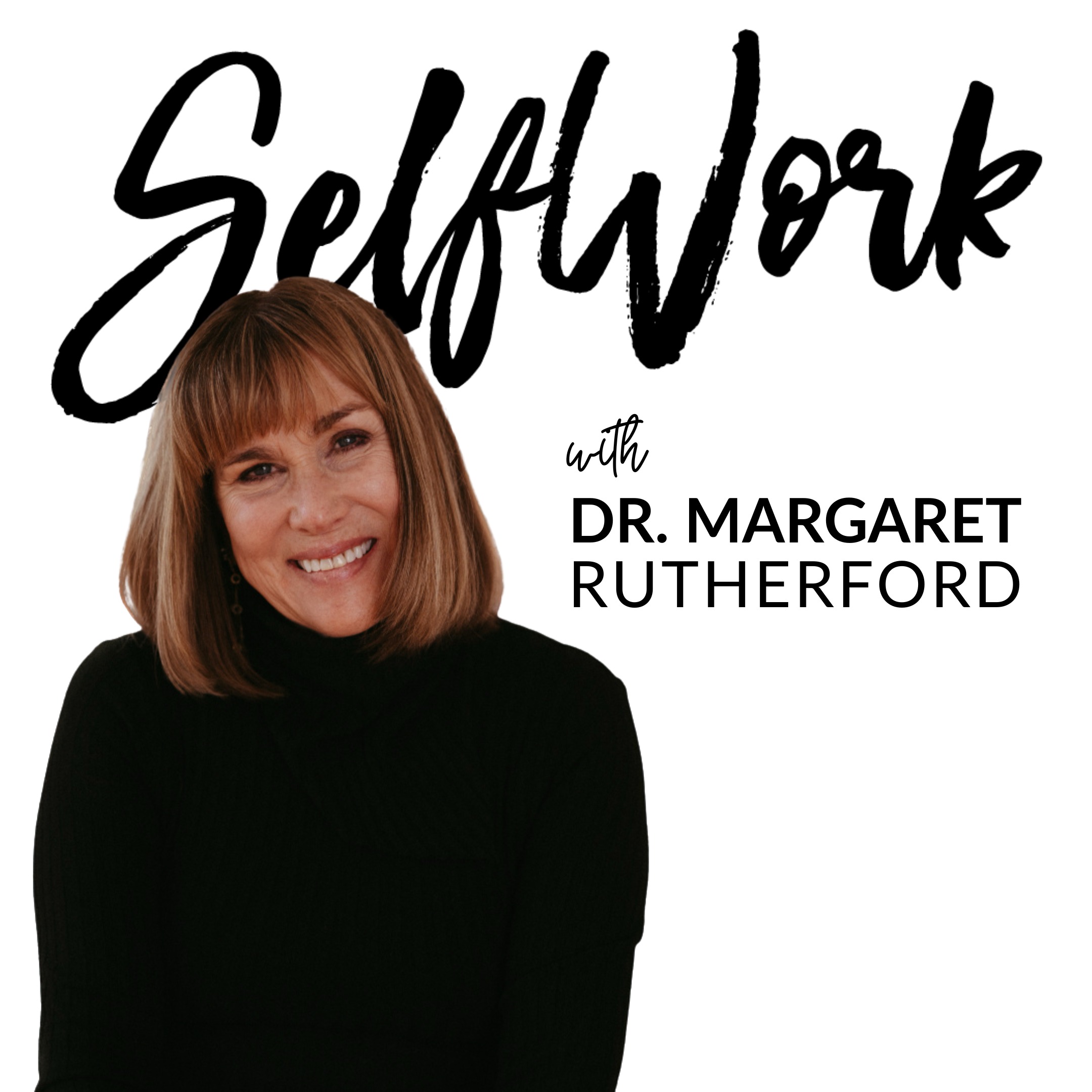
PODCAST · health
The SelfWork Podcast
by Margaret Robinson Rutherford PhD
I'm Dr. Margaret, a psychologist for over 30 years, TEDx speaker, and the author of Perfectly Hidden Depression. I created The SelfWork Podcast in 2016 to explain mental health treatment and to give you the chance to consider therapy without thinking it's weird or that it somehow suggests you can't fix your own problems. My team is very honored that nine years later, SelfWork has earned nearly 5 million downloads! Each episode features the popular listener question as well as interviews with outstanding guests, authors, and experts, adding to the wide diversity of topics listeners so appreciate. Regularly rated as one of the top mental health/depression podcasts out there (ranked as a top .5% internationally) I keep it short, casual, and focused on "what you can do about it." I'd love to hear from you. Please join me.
-
541
497 SelfWork: What's The Current Controversy Over What "Licensed Mental Health Professional" Means
Today we’ll focus on what it means to be a licensed mental health professional. How are coaches and influencers different from licensed mental health professionals? And how has the rise of therapists themselves online affected the social media culture, while unlicensed influencers are offering mental health advice?We'll focus on five major concerns of the online presence (and often persistence) of online 'therapists', be they the licensed kind, coaches, or unlicensed influencers, including the impact of licensed mental health professionals.Our listener voicemail is from a listener who herself has been diagnosed with BPD – and how she’s struggling with her adult child not being in her life.Order The Perfectly Hidden Depression Workbook - A stand-alone workbook exploring the ten traits of Perfectly Hidden Depression, with guided exercises to help you decide what to keep from your drive and perfectionism, and what to let go.Be a part of the conversation and join Dr. Margaret’s newsletter for one weekly email featuring the latest blog post and podcast episode. Have a question or comment? Send a voice message for possible use on the podcast. By recording, you give permission for your voice to be used on SelfWork!Advertising Inquiries: https://redcircle.com/brands
-
540
494 SelfWork: Masterclass: Befriending Your Inner Critic with Dr. Tara Cousineau
In this episode, Dr. Margaret talks with Dr. Tara Cousineau about perfectionism and "befriending your inner critic."My guest today, Dr. Tara Cousineau, is an expert on perfectionism's treatment. She's a clinical psychologist, as well as a yogi and mom. And she's a staff psychologist at Harvard's Counseling and Mental Health Services. There are certainly a lot of perfectionists there. She's written a book, which I read cover to cover -The Perfectionist’s Dilemma: Learn the Art of Self-Compassion and Become a Happy Achiever. And it's wonderful.Order my new The Perfectly Hidden Depression Workbook - A stand-alone workbook exploring the ten traits of Perfectly Hidden Depression, with guided exercises to help you decide what to keep from your drive and perfectionism, and what to let go. Be a part of the conversation and join Dr. Margaret’s newsletter for one weekly email featuring the latest blog post and podcast episode.Have a question or comment? Send a voice message for possible use on the podcast. By recording, you give permission for your voice to be used on SelfWork!Advertising Inquiries: https://redcircle.com/brands
-
539
493 SelfWork: Self-Love Empowers You and Leads to Self-Agency
Today we're focusing on finding emotional stability and calm through self-love. Not narcissism – not grandiosity or some kind of over-the-top shouting to the world how great you are. But what exactly self-love is and what it can lead to is our focus. That's self-agency - the ability to act and to feel empowered to do so. Even though we live in a world that repeatedly suggests you can’t be happy or feel valuable if you don’t have a partner, or followers, or live in a certain neighborhood or wear certain clothes or be thin – or countless other things that we’re supposed to chase to prove our worth – if you love yourself – that’s internal. That’s not dependent on anyone or anything but you.Order The Perfectly Hidden Depression Workbook - A stand-alone workbook exploring the ten traits of Perfectly Hidden Depression, with guided exercises to help you decide what to keep from your drive and perfectionism, and what to let go.Publishes April 1st! Be a part of the conversation and join Dr. Margaret’s newsletter for one weekly email featuring the latest blog post and podcast episode. Have a question or comment? Send a voice message for possible use on the podcast. By recording, you give permission for your voice to be used on SelfWork!Advertising Inquiries: https://redcircle.com/brands
-
538
492 SelfWork: Revisiting Perfectly Hidden Depression
In this episode, Dr. Margaret gives her best advice about enmeshment, Anne Burrell’s suicide, and perfectly hidden depression to those that have reached out to her in the past few months.This episode is kind of a grab bag; one comment from a woman who loved Anne Burrell (as a response to a piece I wrote about her), another from a young man in an arranged marriage whose mother is harsh and who he feels very controlled by.Then I’m also bringing in some comments from the TEDx on perfectly hidden depression – they’re so relatable and hit to the core of the message.And... my new workbook was published on April 1st and is now available to you! If your drive is driving you, if you have to keep people from sensing that you may struggle, if you're someone who keeps tight emotional control always... this workbook may be for you!By the way... Send me a message! You can record by clicking below and ask your question or make a comment. You’ll have 90 seconds to do so and that time goes quickly. By recording, you’re giving SelfWork (and me) permission to use your voice on the podcast. I’ll look forward to hearing from you!Advertising Inquiries: https://redcircle.com/brands
-
537
491 SelfWork: Friendships: How To Create and Keep Solid Connections
Friendships are vital for your sense of well-being.When you know that you have people that you can count on to be there for you when you need them, who you feel solidly connected to. that knowledge can offer a kind of grounding that's unshakeable.Dr. Margaret invites Marisa Franco to SelfWork to discuss how she discovered this for herself, how friendships have provided her with steady caring and acceptance, and how she uses the science of attachment to help you understand how to create and keep friendships in your life.Pre-order The Perfectly Hidden Depression Workbook - A stand-alone workbook exploring the ten traits of Perfectly Hidden Depression, with guided exercises to help you decide what to keep from your drive and perfectionism, and what to let go.Publishes April 1st! Pre-orders matter! Be a part of the conversation and join Dr. Margaret’s newsletter for one weekly email featuring the latest blog post and podcast episode. Have a question or comment? Send a voice message for possible use on the podcast. By recording, you give permission for your voice to be used on SelfWork!Advertising Inquiries: https://redcircle.com/brands
-
536
490 SelfWork: How To Choose A Great Career and When To Change It
Choosing a career is one thing. However, knowing if it's the right choice for you or if you need to consider other alternatives? That can be more difficult.In this enlightening episode, Dr. Margaret speaks with Ashley Stahl, the author of the best-selling book, You Turn: Get Unstuck, Discover Your Direction, Design Your Dream Career . They delve deep into the complexities of career choices and the transformative journey of discovering your true calling - one that more exactly fits with your core values. Throughout this conversation, listeners will gain invaluable insights on how to navigate these choices effectively and achieve outcomes that bring joy and fulfillment.Pre-order The Perfectly Hidden Depression Workbook - A stand-alone workbook exploring the ten traits of Perfectly Hidden Depression, with guided exercises to help you decide what to keep from your drive and perfectionism, and what to let go.Publishes April 1st! Pre-orders matter! Be a part of the conversation and join Dr. Margaret’s newsletter for one weekly email featuring the latest blog post and podcast episode. Have a question or comment? Send a voice message for possible use on the podcast. By recording, you give permission for your voice to be used on SelfWork!Advertising Inquiries: https://redcircle.com/brands
-
535
489 SelfWork: When Suicide Is A Brutal Shock
Note: In this episode, Dr. Margaret talks with Penny Gray, who lost her husband to suicide. Please read/listen carefully. Here are international numbers of suicide hotlines.Suicide is hard for all, and horrific for others. Why? Because someone they loved died by suicide, and they were absolutely shocked.Not that suicide isn't always extremely hard on those that loved the person who took their own life. But when you suspect nothing... the emotions that come are hard to understand and accept.Whether you're a parent, a wife, a friend, a partner - the question of why they couldn't tell you what they were going through can haunt you.Maybe the concept of perfectly hidden depression can help. Pre-order The Perfectly Hidden Depression Workbook - A stand-alone workbook exploring the ten traits of Perfectly Hidden Depression, with guided exercises to help you decide what to keep from your drive and perfectionism, and what to let go.Publishes April 1st! Pre-orders matter! Be a part of the conversation and join Dr. Margaret’s newsletter for one weekly email featuring the latest blog post and podcast episode. Have a question or comment? Send a voice message for possible use on the podcast. By recording, you give permission for your voice to be used on SelfWork!Advertising Inquiries: https://redcircle.com/brands
-
534
488 SelfWork: Bipolar Disorder: Terri Cheney Tells The Raw Truth
Bipolar disorder can be very difficult to diagnose. But that pales in comparison to what it can be like to live with and manage.This week, Dr. Margaret Rutherford is republishing her interview with Terri Cheney who writes about her own battle with bipolar disorder. Sometimes she's won that battle. But not every time. And she talks about mixed episodes, which are harder to understand and certainly harder to live through. Pre-order The Perfectly Hidden Depression Workbook - A stand-alone workbook exploring the ten traits of Perfectly Hidden Depression, with guided exercises to help you decide what to keep from your drive and perfectionism, and what to let go.Publishes April 1st! Pre-orders matter! Be a part of the conversation and join Dr. Margaret’s newsletter for one weekly email featuring the latest blog post and podcast episode. Have a question or comment? Send a voice message for possible use on the podcast. By recording, you give permission for your voice to be used on SelfWork!Advertising Inquiries: https://redcircle.com/brands
-
533
487 SelfWork: Hope For Autism: A Conversation with Dr. Theresa Lyons
Autism is a diagnosis that's feared by parents whose beloved child's development seems off.Dr. Theresa Lyons, a scientist and autism parent and expert, has lived this life. She and Dr. Margaret discuss what it was like, how she coped, and the professional and personal advice she has to offer.Dr. Lyons own words on discovering the autism diagnosis..."I knew something was wrong with my daughter. I just had this intuition. This knowing. That things just weren’t going right. My daughter was developing but there was just something not right. I had a nagging feeling and everyone kept telling me to ignore it and that everything’s fine but I ignored myself and that’s what I get really mad about."Pre-order The Perfectly Hidden Depression Workbook - A stand-alone workbook exploring the ten traits of Perfectly Hidden Depression, with guided exercises to help you decide what to keep from your drive and perfectionism, and what to let go.Publishes April 1st! Pre-orders matter! Be a part of the conversation and join Dr. Margaret’s newsletter for one weekly email featuring the latest blog post and podcast episode.Have a question or comment? Send a voice message for possible use on the podcast. By recording, you give permission for your voice to be used on SelfWork!. Advertising Inquiries: https://redcircle.com/brands
-
532
486 SelfWork: The Paralyzing Consequences of Self-Blame
Self-blame - when it happens way too much - can be paralyzing.Five paralyzing consequences of self-blame... You were blamed as a child so it's become part of your own punishing self-critic which can lead to self-sabotage.You were manipulated or are being abused and you take the blame to "keep the peace" and become submissive.You take the blame for something that's happened to you in order to irrationally regain some sense of control.You're perfectionistic and are constantly looking for even the smallest of mistakes that your inner critic pounces on to shame and blame you.You need affirmation so you take blame that doesn't belong to you as a way of getting that kind of attention.Advertisers Links: Click HERE for the NEXT GEN offer from AG1 – with bonus product with your new subscriptionPre-order The Perfectly Hidden Depression Workbook - A stand-alone workbook exploring the ten traits of Perfectly Hidden Depression, with guided exercises to help you decide what to keep from your drive and perfectionism, and what to let go.Publishes April 1st! Pre-orders matter! Be a part of the conversation and join Dr. Margaret’s newsletter for one weekly email featuring the latest blog post and podcast episode. Have a question or comment? Send a voice message for possible use on the podcast. By recording, you give permission for your voice to be used on SelfWork! Advertising Inquiries: https://redcircle.com/brands
-
531
485 SelfWork: How to Get Bad People Out of Your Life
The Bad People Bible is a definitive guide to removing toxic people from your life.Written by celebrity and renowned clinical and forensic psychologist Dr. Peter J. Favaro, “Bad People Bible” combines real-life stories, psychological insights, and actionable strategies to help people recognize toxic individuals and get out of relationships with narcissists and manipulators.Dr. Favaro explained in in this interviews how many narcissists employ incredibly debilitating and manipulative strategies to their partners in marriage. And how very difficult it can be to get out of those marriages. He's seen it all.As he said, "I'm cynical - I swim in very toxic waters."Pre-order The Perfectly Hidden Depression Workbook - A stand-alone workbook exploring the ten traits of Perfectly Hidden Depression, with guided exercises to help you decide what to keep from your drive and perfectionism, and what to let go.Publishes April 1st! Pre-orders matter! Be a part of the conversation and join Dr. Margaret’s newsletter for one weekly email featuring the latest blog post and podcast episode. Have a question or comment? Send a voice message for possible use on the podcast. By recording, you give permission for your voice to be used on SelfWork!Advertising Inquiries: https://redcircle.com/brands
-
530
484 SelfWork: Psychedelic-Assisted Therapy: One Man's Transformational Journey
Psychedelic-assisted therapy is being actively researched by mental health researchers for its efficacy. And where it's legal, it's reported to be highly effective in treating depression and suicide prevention. Suicide rates within our veteran and first responder communities are incredibly high, and I’ve had conversations before with several guests on SelfWork about this very painful fact. Research shows that traditional therapies often fall short for these individuals, leading to a search for alternative approaches. In recent years, psychedelic-assisted therapy has emerged as a promising option, harnessing substances like psilocybin and MDMA in controlled settings to facilitate profound psychological healing. By creating a safe environment for exploration of deep-seated traumas, individuals can experience breakthroughs that may have previously been inaccessible through conventional therapeutic methods. Pre-order The Perfectly Hidden Depression Workbook - A stand-alone workbook exploring the ten traits of Perfectly Hidden Depression, with guided exercises to help you decide what to keep from your drive and perfectionism, and what to let go.Publishes April 1st! Pre-orders matter! Be a part of the conversation and join Dr. Margaret’s newsletter for one weekly email featuring the latest blog post and podcast episode. Have a question or comment? Send a voice message for possible use on the podcast. By recording, you give permission for your voice to be used on SelfWork! Advertising Inquiries: https://redcircle.com/brands
-
529
483 SelfWork: Flashbacks and Nightmares: Healing Fear and Finding Peace
Flashbacks and nightmares are primary symptoms of PTSD (Post Traumatic Stress Disorder) as well as CPTSD (Complex Post Traumatic Stress Disorder) – and they’re extremely frightening to have. Nightmares and flashbacks occur in different states of consciousness. Flashbacks happen when you’re awake and conscious; nightmares happen during sleep. Nightmares can involve a range of distressing themes, from feelings of helplessness to fears of abandonment. You don’t have to have experienced trauma to have a nightmare, whereas flashbacks are reliving the trauma itself. We'll talk about the treatments available for both today on SelfWork! Pre-order The Perfectly Hidden Depression Workbook - A stand-alone workbook exploring the ten traits of Perfectly Hidden Depression, with guided exercises to help you decide what to keep from your drive and perfectionism, and what to let go.Publishes April 1st! Pre-orders matter! Be a part of the conversation and join Dr. Margaret’s newsletter for one weekly email featuring the latest blog post and podcast episode. Have a question or comment? Send a voice message for possible use on the podcast. By recording, you give permission for your voice to be used on SelfWork!Advertising Inquiries: https://redcircle.com/brands
-
528
482 SelfWork: The Messiness of Marriage
Messy marriages are all over the place – and living through them and maybe grieving them can at times be extremely complicated. In today’s SelfWork episode, whether you’re grieving the death of someone with whom you had a complex and even hurtful relationship or whether that relationship still exists, you are often needing to grieve that person’s impact on you. With Valentines Day fast approaching, a date that people often have great fun with or hate living through, it’s important to realize that not all grief belongs with “good” or “meaningful” relationships. Maybe you were estranged from them. Maybe the relationship or marriage has taken you down paths that you didn’t want to go or never thought you would – and you have difficult feelings about that. It may seem contradictory – why would you need to grieve someone’s life or simply their presence in your life – if they’d hurt you? Or if you regret either getting married or staying married. That’s on today’s SelfWork.The listener email today is from someone who read my book on perfectly hidden depression and was moved by it. She paints in eloquent detail her own reaction. Why am I reading it to you? Because maybe it explains how you might feel – or how someone you love might feel.Vital Links:Link to pre-order the Perfectly Hidden Depression Workbook! Research on divorce's effect on childrenAdvertisers Links: Click HERE for the NEXT GEN offer from AG1 – with bonus product with your new subscriptionBy the way... I’m excited to let you know that my new workbook, The Perfectly Hidden Depression Workbook, is available for pre-order! It’s a stand-alone workbook (so doesn't need to be used with the original book) and goes through the ten traits of PHD - things like taking on too much responsibility, not knowing how to be more open emotionally - and guides you through new exercises and ideas. These can help you decide what about your drive or your perfectionism you want to keep - and what you need to let go. It’ll publish on April 1st - but pre-order numbers are very important! So I’ll hope you’ll pre-order now! Here's the link!You can hear more about mental health and many other topics by listening to my podcast, SelfWork with Dr. Margaret Rutherford. Subscribe to my newsletter and receive one weekly email from me, highlighting my weekly blog post and podcast! If you’d like to join myself and others in my private FaceBook group, click here and answer the membership questions! I'd love to see you there!And there’s another way to send me a message! You can record by clicking below and ask your question or make a comment. You’ll have 90 seconds to do so and that time goes quickly. By recording, you’re giving SelfWork (and me) permission to use your voice on the podcast. I’ll look forward to hearing from you! Advertising Inquiries: https://redcircle.com/brands
-
527
481 SelfWork: What's Anticipatory Grieving and How Does It Help?
Today we're exploring what's termed "anticipatory grieving."When you know something is going to happen that will bring its own kind of grief… whether it’s a loved one being diagnosed with a terminal illness, an unwanted divorce being filed, learning that a child will struggle with a learning difference – it can bring a slew of emotions, many of them moving in and out of your awareness quickly. Anticipatory grieving is a way to imagine, visualize, and begin to emotionally prepare for the loss that is to come.We’ll focus today on the five steps of anticipatory grieving – the how, when, what, where, and why it’s important. But before I do that, for any of you who are thinking, “Why in the hell would I want to do that?” I’ll answer that very good and reasonable question.I received a lovely message from someone telling me she’d listened to my podcast episode with Terry McGuire – who’s the host of Giving Voice to Depression and has struggled with depression herself. Terry talked about anhedonia – and this listener asked me to talk more about what you can do about this particular symptom of depression.Vital Links:Link to pre-order the Perfectly Hidden Depression Workbook! By the way...I’m excited to let you know that my new workbook, The Perfectly Hidden Depression Workbook, is available for pre-order! It’s a stand-alone workbook (so doesn't need to be used with the original book) and goes through the ten traits of PHD - things like taking on too much responsibility, not knowing how to be more open emotionally - and guides you through new exercises and ideas. These can help you decide what about your drive or your perfectionism you want to keep - and what you need to let go. It’ll publish on April 1st - but pre-order numbers are very important! So I’ll hope you’ll pre-order now! Here's the link!You can hear more about mental health and many other topics by listening to my podcast, SelfWork with Dr. Margaret Rutherford. Subscribe to my newsletter and receive one weekly email from me, highlighting my weekly blog post and podcast! If you’d like to join myself and others in my private FaceBook group, click here and answer the membership questions! I'd love to see you there!And there’s another way to send me a message! You can record by clicking below and ask your question or make a comment. You’ll have 90 seconds to do so and that time goes quickly. By recording, you’re giving SelfWork (and me) permission to use your voice on the podcast. I’ll look forward to hearing from you! Advertising Inquiries: https://redcircle.com/brands
-
526
480 SelfWork: Why Am I So Self-Critical?
Self-criticism can take on a life of its own. And become so constant that you have to fight it on a daily or even hourly basis.So today we’re going to focus on what may be keeping your self-criticism alive and well in ways that you don't realize.There are two steps we’ll cover. The first is raising awareness of your own inner self-critical voice. The second is assessing what role or function it may have for you. What purpose might self-criticism have that weirdly protects you in some way or serves a role for you in your life?For our email, I’ve pulled some excerpts from an email I received from a younger reader who’d read the article on enmeshment I have on my website. She has questions about her relationship with her parents – she finds herself, even in her early 20’s, sharing certain kinds of things with them that her friends don’t share with their parents – and think it’s a little strange that she shares those experiences with hers. Her friends are saying that that’s oversharing – that there are certain things you no longer share with your folks as you grow and develop your own life away from them. Are her friends right?Advertisers Links: Click HERE for the NEXT GEN offer from AG1 – with bonus product with your new subscription!Vital Links:Link to pre-order the Perfectly Hidden Depression Workbook! Dr. Margaret's article on covert narcissismEnmeshment article by Dr. Margaret By the way...I’m excited to let you know that my new workbook, The Perfectly Hidden Depression Workbook, is available for pre-order! It’s a stand-alone workbook (so doesn't need to be used with the original book) and goes through the ten traits of PHD - things like taking on too much responsibility, not knowing how to be more open emotionally - and guides you through new exercises and ideas. These can help you decide what about your drive or your perfectionism you want to keep - and what you need to let go. It’ll publish on April 1st - but pre-order numbers are very important! So I’ll hope you’ll pre-order now! Here's the link!You can hear more about mental health and many other topics by listening to my podcast, SelfWork with Dr. Margaret Rutherford. Subscribe to my newsletter and receive one weekly email from me, highlighting my weekly blog post and podcast! If you’d like to join myself and others in my private FaceBook group, click here and answer the membership questions! I'd love to see you there!And there’s another way to send me a message! You can record by clicking below and ask your question or make a comment. You’ll have 90 seconds to do so and that time goes quickly. By recording, you’re giving SelfWork (and me) permission to use your voice on the podcast. I’ll look forward to hearing from you!Advertising Inquiries: https://redcircle.com/brands
-
525
479 SelfWork: Are You Being Judgmental? Two Mental Mistakes That Take You There
Are you being judgmental? Many of us would quickly say "no" to that question. But how many people do you know one thing about – and one thing only – and you categorize them as “bad” or “good”, "weak" or "strong," "smart" or "not the brightest bulb."It doesn’t take long for us to form an opinion. And there are obvious situations – such as one where there’s the possibility of harm – where quick judgments are necessary and very helpful.But what about the kind of judgment that you make because of your own biases? There are two mental mistakes we'll focus on today: confirmation bias and fundamental attribution error. They sound fancy, but many of us make these errors in judgment every day.So today we’re going to focus on how you judge your own judgmental-ness. Are you using your better judgment? Or are you making quick judgments that are based on biases and assumptions?Advertisers Links: Click HERE for the NEXT GEN offer from AG1 – with bonus product with your new subscription!Vital Links:Test on the Psychology Today website to rate your own judgmental-ness!New York Times article on Kristin CabotTime article on Monica LewinskyBy the way...I’m excited to let you know that my new workbook, The Perfectly Hidden Depression Workbook, is available for pre-order! It’s a stand-alone workbook (so doesn't need to be used with the original book) and goes through the ten traits of PHD - things like taking on too much responsibility, not knowing how to be more open emotionally - and guides you through new exercises and ideas. These can help you decide what about your drive or your perfectionism you want to keep - and what you need to let go. It’ll publish on April 1st - but pre-order numbers are very important! So I’ll hope you’ll pre-order now! Here's the link!You can hear more about mental health and many other topics by listening to my podcast, SelfWork with Dr. Margaret Rutherford. Subscribe to my newsletter and receive one weekly email from me, highlighting my weekly blog post and podcast! If you’d like to join myself and others in my private FaceBook group, click here and answer the membership questions! I'd love to see you there!And there’s another way to send me a message! You can record by clicking below and ask your question or make a comment. You’ll have 90 seconds to do so and that time goes quickly. By recording, you’re giving SelfWork (and me) permission to use your voice on the podcast. I’ll look forward to hearing from you! Advertising Inquiries: https://redcircle.com/brands
-
524
478 SelfWork: The Mind Games of Sociopathy
How do you know if someone with sociopathic traits is playing with your mind? Today on SelfWork we’re going to talk about just that.The term cognitive dissonance has been around for quite a long time. What it’s describing is when you do something or say something that you believe to be wrong or unkind or unjust. But you do it or say it anyway. So, you’re not following or abiding by the values that you say you have.The gaslighting technique of those with sociopathy... But cognitive dissonance can also be caused or created as well through toxic manipulation or what’s termed gaslighting. This is when someone with narcissistic traits or sociopathic ones creates a smokescreen of confounding lies, even telling you one thing is true as well as its opposite, and expecting you to blindly follow. The trap is complete when they prevent you from trusting your own gut or mind or heart. Or guide or lead you away from their manipulation.It can be paralyzing.You either must cut yourself off from the value that you hold – or you must become more aware of the manipulation. You must see that it’s happening and how it’s happening. But remember, the actions and manipulations of the person who wants you to be paralyzed are still coming on strong.Today’s voicemail is from a woman in France who’s asking me about perfectly hidden depression – and in French. I had to get out my translating app because my own French was a little too rusty – but I was pretty much on the mark.Vital Links:BBC article on the young Elizabeth HolmesThriveWorks article on emotional manipulation and sociopathyBustle article on games played by those with sociopathic traitsAdvertisers Links: Click HERE for the NEXT GEN offer from AG1 – with bonus product with your new subscription!Other offerings from Dr. MargaretYou can hear more about this and many other topics by listening to my podcast, SelfWork with Dr. Margaret Rutherford. Subscribe to my website and receive my weekly newsletter including a blog post and podcast! If you’d like to join my FaceBook closed group, then click here and answer the membership questions! Welcome!My book entitled Perfectly Hidden Depression is available and you can order here! Its message is specifically for those with a struggle with strong perfectionism which acts to mask underlying emotional pain. But the many self-help techniques described can be used by everyone who chooses to begin to address emotions long hidden away that are clouding and sabotaging your current life. And it’s available in paperback, eBook or as an audiobook!And send me a message! You can record by clicking below and ask your question or make a comment. By recording, you’re giving SelfWork (and me) permission to use your voice on the podcast. I’ll look forward to hearing from you! Advertising Inquiries: https://redcircle.com/brands
-
523
477 SelfWork: Disappointments, Expectations, and Blind Spots
Disappointment. It’s a feeling in between hurt and shock. Why? Because you expect one thing – and you receive another. It doesn’t quite shock you - maybe it wasn’t totally unexpected. And it doesn’t crush you – it’s not exactly traumatic.But expectation and disappointment are totally interrelated.Some disappointment is normal of course. You don’t always win the prize or get what you were striving for, whether that’s a job, or a grade, a promotion, or a relationship moving ahead. But how do you feel it? And is it possible that you’re setting yourself up for disappointment in some way, especially if you tend to get disappointed a lot?How can you identify the expectations that you have that are likely not rational? You can so hope something is going to be different – that when it’s not – you’re disappointed for sure. Does that mean that your expectation was “wrong?”Building your capacity for disappointment... There’s a lot of focus on social media right now about building your capacity or your skill set in managing what’s hurtful in your life. Coping with disappointment. Not identifying with whatever has been hard so much as you feel what you need to feel, what’s helpful to feel, but then using that emotional and psychological learning to grow from it, rather than being paralyzed by it.In this week's voicemail, I'm not sure of the article that the readers is referencing. But the important ‘aha’ experience for her was… "if I struggle to see something in myself, and even therapists or “experts” struggle to see it, then how could I have expected my ex to see it?" Something was a blind spot for her. And she’s doing the important work of taking on her share of the responsibility for her divorce – then seeing how she can move past it. She’s growing her skill set.Order the new Perfectly Hidden Depression Workbook!You can pre-order Dr. Margaret's Perfectly Hidden Depression Workbook by clicking right here! And I'm so excited! It's an actual workbook so all your "selfwork" is contained in its covers!It's a stand-alone look at all the ten traits of PHD - such as struggling to express painful emotion, taking too much responsibility by staying eternally "busy," and balancing gratitude with what is real hardship. Then you're guided to keep what is worth keeping about that trait, and gently let go of what's harmful.Advertisers Links: Advertisers' Links and Special Offers:Have you been putting off getting help? BetterHelp, the #1 online therapy provider, has a special offer for you now!You can hear more about this and many other topics by listening to my podcast, SelfWork with Dr. Margaret Rutherford. Subscribe to my website and receive my weekly newsletter including a blog post and podcast! If you’d like to join my FaceBook closed group, then click here and answer the membership questions! Welcome!My book entitled Perfectly Hidden Depression is available here! Its message is specifically for those with a struggle with strong perfectionism which acts to mask underlying emotional pain. But the many self-help techniques described can be used by everyone who chooses to begin to address emotions long hidden away that are clouding and sabotaging your current life.There’s another way to send me a message! You can record by clicking below and ask your question or make a comment. You’ll have 90 seconds to do so and that time goes quickly. By recording, you’re giving SelfWork (and me) permission to use your voice on the podcast. I’ll look forward to hearing from you! Advertising Inquiries: https://redcircle.com/brands
-
522
476 SelfWork: Is There A Right Way to Grieve?
Grief is never easy. And it can be made harder by the many things that happen with grief that you’re not prepared for – or believe ‘should’ be happening or ‘shouldn’t’. Dr. Elizabeth Kübler Ross made the observation about terminally ill people that they seemed to go through five stages of grief: denial, anger, bargaining, depression, and acceptance. But she never meant for that model, no matter how interactive or nonlinear we may think about it – to become what it’s become – some kind of standard yardstick where you’re supposed to measure if you’re grieving the ‘right’ way.There’s not a right way. And it’s been my professional and personal experience that grief has a way of weaving in and out of your awareness. It’s not like there’s a tangible end. You may know when your grief began. And it’s not that it’s never-ending – that can be very difficult if that happens and cause deep depression and a kind of forlorn emptiness. But there may be days or weeks when you don’t really feel it – and then suddenly, your grief reappears. Or there’s an anniversary of a death – or simply life bringing you back to your sadness.So, we dig deeper into grief today featuring an episode I did two years ago. I’m having a little outpt surgery and am a bit behind. So I thought this would be helpful to many of you who’ve had loss around the holidays – or really anyone. One story at the end of the episode comes from a mother’s story after losing her son. She says (and this isn't a quote), “He loved me deeply and I’ll honor that love. I can’t die along with him.”As hard as that may be. It may be the most important idea to take away with you.Advertisers Links: Click HERE for the NEXT GEN offer from AG1 – with bonus product with your new subscription!Other offerings from Dr. MargaretYou can hear more about this and many other topics by listening to my podcast, SelfWork with Dr. Margaret Rutherford. Subscribe to my website and receive my weekly newsletter including a blog post and podcast! If you’d like to join my FaceBook closed group, then click here and answer the membership questions! Welcome!My book entitled Perfectly Hidden Depression is available and you can order here! Its message is specifically for those with a struggle with strong perfectionism which acts to mask underlying emotional pain. But the many self-help techniques described can be used by everyone who chooses to begin to address emotions long hidden away that are clouding and sabotaging your current life. And it’s available in paperback, eBook or as an audiobook!And send me a message! You can record by clicking below and ask your question or make a comment. By recording, you’re giving SelfWork (and me) permission to use your voice on the podcast. I’ll look forward to hearing from you!Advertising Inquiries: https://redcircle.com/brands
-
521
475 SelfWork: Nine Ways to Challenge Low Self-Esteem
“Low self-esteem” is one of the symptoms or reflections of classic depression. Of course, it goes along with other symptoms or signs - a negative self-image, feelings of helplessness and/or hopelessness, not enjoying much of anything – which is called anhedonia.But how do you increase self-esteem? What is self-esteem anyway? It’s a recognition of your value – of your worth. You can have high self-esteem, low self-esteem, or an inflated sense of self-esteem where you think too highly of yourself and even see others as less valuable or worthy than you.So, self-esteem often gets built in your childhood as your caregivers provide you with not only safety and security, but with love. They give you the message that you’re valuable – right?Well, maybe not. Maybe they don’t give you that message. Or maybe your parents did a pretty good job, not perfect but good enough. But you had other relationships – or chose them – where you got the message that you weren’t so valuable after all.This is the focus today on SelfWork – what you can do about low self-esteem after it has seeped into your very being. It’s work – but everything worthwhile typically is.Our listener email is from a man from South Jersey who asks how you know if you’re with the right therapist. It’s another great question so I’ll do my best to answer it. Here’s one clue – it seems to me that if you’re asking that question, you may be overly doubting of yourself and your choices in general OR your therapy isn’t providing you with things that you can see are valuable and are helping you to change in desirable ways. Or both. Basically, could it be an issue with trusting yourself? Listen in to hear my answer!Vital Links: Recent SelfWork Episode on dealing with my own shame001 SelfWork: Episode answering the question "What is good therapy?"SelfWork episode describing how therapy works... or can workAdvertisers Links: Advertisers' Links and Special Offers:Have you been putting off getting help? BetterHelp, the #1 online therapy provider, has a special offer for you now!You can hear more about this and many other topics by listening to my podcast, SelfWork with Dr. Margaret Rutherford. Subscribe to my website and receive my weekly newsletter including a blog post and podcast! If you’d like to join my FaceBook closed group, then click here and answer the membership questions! Welcome!My book entitled Perfectly Hidden Depression is available here! Its message is specifically for those with a struggle with strong perfectionism which acts to mask underlying emotional pain. But the many self-help techniques described can be used by everyone who chooses to begin to address emotions long hidden away that are clouding and sabotaging your current life.There’s another way to send me a message! You can record by clicking below and ask your question or make a comment. You’ll have 90 seconds to do so and that time goes quickly. By recording, you’re giving SelfWork (and me) permission to use your voice on the podcast. I’ll look forward to hearing from you! Advertising Inquiries: https://redcircle.com/brands
-
520
474 SelfWork: Healing Through Intuition: A Conversation with Author Laura Day
Have you ever thought that intuition could be used for healing crisis?Laura Day, the New York Times bestselling author is back with a long-awaited, life-altering book to help you learn how to do just that. In her past breakthrough book Practical Intuition, she explained how anyone can train themselves to gain full access to the powers of the intuitive brain. However, only Laura’s closest friends knew that behind the book’s phenomenal success was a dark family history.In this, her first book in fifteen years, Day, shares her haunting and unforgettable family story. Multiple suicides including her mother. A home life where the kids actually lived by themselves in a separate apartment from their parents. Only her intuition helped her figure out what no one had taught her – how to care for herself and her siblings.Now, Day has combined her experiences and teaching in her new book, The Prism: Seven Steps to Heal Your Past and Transform Your Future (Spiegel & Grau; April 29, 2025. It reveals seven points in our growth as children and adults that can hinder or help us thrive.Next week’s episode will begin our official 9th year here at SelfWork! We can’t believe it really. I won’t say it’s flown by – 9 years is a long time. But guests keep coming – listeners let us know through comments and questions – and supporting our sponsors – that SW remains important to you. We thank you so much for that. And see you next week.Advertisers Links: Click HERE for the NEXT GEN offer from AG1 – with bonus product with your new subscription!Other offerings from Dr. MargaretYou can hear more about this and many other topics by listening to my podcast, SelfWork with Dr. Margaret Rutherford. Subscribe to my website and receive my weekly newsletter including a blog post and podcast! If you’d like to join my FaceBook closed group, then click here and answer the membership questions! Welcome!My book entitled Perfectly Hidden Depression is available and you can order here! Its message is specifically for those with a struggle with strong perfectionism which acts to mask underlying emotional pain. But the many self-help techniques described can be used by everyone who chooses to begin to address emotions long hidden away that are clouding and sabotaging your current life. And it’s available in paperback, eBook or as an audiobook!And send me a message! You can record by clicking below and ask your question or make a comment. By recording, you’re giving SelfWork (and me) permission to use your voice on the podcast. I’ll look forward to hearing from you! Advertising Inquiries: https://redcircle.com/brands
-
519
473 SelfWork: Blame, Perfectly Hidden Depression, and Bipolar Disorder
Today we have a grab bag of questions and comments, with the topics being blame, perfectly hidden depression, and bipolar disorder.The first is from a mom who lived through her daughter and yet also didn’t offer safety or a sense of security – even with the basic things. This listener is now sober for a year (much to her credit) and is asking about how to navigate her relationship with her mom – who's still chaotic. The second is from a therapist who attended one of my workshops on perfectly hidden depression and had a great comment to make. The third is a voicemail from an older mom who sees her daughter as blaming her without reasonable cause. And last, someone whose fairly new boyfriend revealed he’d been diagnosed with bipolar disorder. Since her father also had bipolar disorder, she’s not quite sure how to respond or react…I’m very honored when listeners of SelfWork or readers of my articles on my website respond to me in some way. Realizing there’s much I don’t know after reading or listening to their email or voicemail, I hope what I can do is offer some kind of helpful perspective, knowing only the things they tell me.Vital Links:Defining intergenerational trauma - VeryWell Mind ArticlePractical Neurology article on bipolar disorder occurring after a head injuryHarvard research article on bipolar disorderAdvertisers' Links and Special Offers:Have you been putting off getting help? BetterHelp, the #1 online therapy provider, has a special offer for you now!You can hear more about this and many other topics by listening to my podcast, SelfWork with Dr. Margaret Rutherford. Subscribe to my website and receive my weekly newsletter including a blog post and podcast! If you’d like to join my FaceBook closed group, then click here and answer the membership questions! Welcome!My book entitled Perfectly Hidden Depression is available here! Its message is specifically for those with a struggle with strong perfectionism which acts to mask underlying emotional pain. But the many self-help techniques described can be used by everyone who chooses to begin to address emotions long hidden away that are clouding and sabotaging your current life.There’s another way to send me a message! You can record by clicking below and ask your question or make a comment. You’ll have 90 seconds to do so and that time goes quickly. By recording, you’re giving SelfWork (and me) permission to use your voice on the podcast. I’ll look forward to hearing from you! Advertising Inquiries: https://redcircle.com/brands
-
518
472 SelfWork: What To Do After You've Lost Your Shit
Anger has a place. It’s an important emotion to feel and know how to handle. It lets you know a boundary and maybe a very important boundary, value, or expectation has been ignored or crossed or threatened in a very real way. But it’s a skill then to think through what you’re going to do with that anger.It seems that there are a lot more people these days who are angry. Maybe it’s because the immediacy that social media and texting have provided that have made it SO much easier to attack someone else online – or it was online at first. Maybe it’s political rhetoric that’s become more aggressive and insulting, as if that’s okay.There's anger... and then there's losing your shit. But what do you do after you've lost your shit? Losing your shit is about losing control. It’s about very poor management – yes. But that term – albeit fairly colorful – usually means that you got way too mad about something and even you recognize that you were way out of line. Maybe it’s a pattern for you. Maybe you do it all the time. Or maybe it’s after something that suddenly happened – or seemed to suddenly happen - and here comes a shit fit.The speaker voicemail is from a man living in the UK – that discovered my writing about enmeshment. He describes giving so much of himself away to his parents, which then served as the pattern of his relationships with others – where he’s the caregiver for all – and feels that he has nothing left for himself. I’ll do my best to answer him!Vital Links:Article on enmeshmentArticle on the American Counseling Associations’ website on women's angerAnger Management ResourcesArticle on regret after losing your temperAdvertisers Links: Click HERE for the NEXT GEN offer from AG1 – with bonus product with your new subscription!Other offerings from Dr. MargaretYou can hear more about this and many other topics by listening to my podcast, SelfWork with Dr. Margaret Rutherford. Subscribe to my website and receive my weekly newsletter including a blog post and podcast! If you’d like to join my FaceBook closed group, then click here and answer the membership questions! Welcome!My book entitled Perfectly Hidden Depression is available and you can order here! Its message is specifically for those with a struggle with strong perfectionism which acts to mask underlying emotional pain. But the many self-help techniques described can be used by everyone who chooses to begin to address emotions long hidden away that are clouding and sabotaging your current life. And it’s available in paperback, eBook or as an audiobook!And send me a message! You can record by clicking below and ask your question or make a comment. By recording, you’re giving SelfWork (and me) permission to use your voice on the podcast. I’ll look forward to hearing from you!. Advertising Inquiries: https://redcircle.com/brands
-
517
471 SelfWork: When Sexual Abuse Tears A Family Apart
We’re talking about sexual abuse on SelfWork today – so please, if you have sexual abuse in your history or have somehow been affected by it, listen carefully.Sometimes I receive a voicemail where I can hear the stark heartache that’s behind the message. And this week was no exception. The hurt expressed was so palpable for me. Not only hurt, but confusion and a huge sense of loss.Who was it from? She’s a therapist. A mom. A daughter, not in that order. Let’s call her Lisa.So, what had happened? Lisa’s very young daughter had told her that her mother’s husband, Lisa’s stepfather, had sexually molested her. And she’s struggling to handle the consequent tsunami of family distrust and estrangement between the members of her family – which is very common but still very painful. At the very time she feels she most needs her mother, her mom has taken her stepfather’s side and believes her granddaughter is making up something that didn’t happen.Maybe some of you tried to talk to a parent or a teacher or a pastor about being hurt sexually or any other way in your family. Not only were you not believed. You might’ve been blamed or warned not to tell “lies” about your family – or the perpetrator.Again, please take care in listening if you have a history of sexual abuse or were hurt in some way through sexual abuse. The sexual abuse hotline number/website below.Vital Links:The RAINN.org sexual abse hotline/websiteJane Epstein's incredibly courageous journey, revealing sibling sexual abuseSelfWork episode on intrafamilial sexual abuseAdvertisers' Links and Special Offers:Have you been putting off getting help? BetterHelp, the #1 online therapy provider, has a special offer for you now!You can hear more about this and many other topics by listening to my podcast, SelfWork with Dr. Margaret Rutherford. Subscribe to my website and receive my weekly newsletter including a blog post and podcast! If you’d like to join my FaceBook closed group, then click here and answer the membership questions! Welcome!My book entitled Perfectly Hidden Depression is available here! Its message is specifically for those with a struggle with strong perfectionism which acts to mask underlying emotional pain. But the many self-help techniques described can be used by everyone who chooses to begin to address emotions long hidden away that are clouding and sabotaging your current life.There’s another way to send me a message! You can record by clicking below and ask your question or make a comment. You’ll have 90 seconds to do so and that time goes quickly. By recording, you’re giving SelfWork (and me) permission to use your voice on the podcast. I’ll look forward to hearing from you! Advertising Inquiries: https://redcircle.com/brands
-
516
470 SelfWork: How to Find Meaning In The Moment with Author Pam Roy
One of the most difficult things we all face is how to find meaning in the moments or experiences of our lives that are cruel or devastating, frightening or despairing. The very idea that that might be possible can seem to completely ignore the very real pain or injury of that moment.A book all about finding meaning... One of the most eye-opening books I ever read, I was introduced to in a freshman class I took in college. The course was geared toward the study of how different writers and philosophers, both ancient and present-day, had thought about how to do just that - find meaning.That book was Victor Frankl’s “Man’s Search for Meaning.” I read it from cover to cover. In it, he told the story of being a prisoner in four different concentration camps during the Holocaust. What stayed with me was how he vowed to discover the tiniest shreds of meaning, of mattering that he could. Before he was imprisoned at age 37, he'd worked as a psychiatrist and neurologist, and had created a form of therapy called “logo therapy” - a form of psychotherapy that focuses on finding meaning in life as the primary human motivation. It operates on the belief that individuals have the freedom to find purpose even in suffering, Its techniques aim to help people discover meaning through their work, love, and their attitude toward unavoidable sufferingMy guest on SelfWork today, Pam Roy, has co-authored a book that serves as a companion book, offering creative reflections on many of Victor Frankl’s essential ideas. She’s full of stories about Frankl – is an expert on both him and his work – and has dedicated much of her life on trying to help people (especially parents) understand that their job is to find their own meaning and model that journey for their children.Vital Links:Pam Roy's bookAn article on logo therapyAdvertisers' Links and Special Offers:Have you been putting off getting help? BetterHelp, the #1 online therapy provider, has a special offer for you now!You can hear more about this and many other topics by listening to my podcast, SelfWork with Dr. Margaret Rutherford. Subscribe to my website and receive my weekly newsletter including a blog post and podcast! If you’d like to join my FaceBook closed group, then click here and answer the membership questions! Welcome!My book entitled Perfectly Hidden Depression is available here! Its message is specifically for those with a struggle with strong perfectionism which acts to mask underlying emotional pain. But the many self-help techniques described can be used by everyone who chooses to begin to address emotions long hidden away that are clouding and sabotaging your current life.There’s another way to send me a message! You can record by clicking below and ask your question or make a comment. You’ll have 90 seconds to do so and that time goes quickly. By recording, you’re giving SelfWork (and me) permission to use your voice on the podcast. I’ll look forward to hearing from you! Advertising Inquiries: https://redcircle.com/brands
-
515
469 SelfWork: Understanding the Fears and Faces of Borderline Moms
Today we’re focusing on what are termed borderline traits as well as different types of borderline personality disorder.There are many people, primarily women, who struggle with it, without knowing what to call it. In fact, it wasn’t a “diagnosis” until 1980. But that certainly doesn’t mean it wasn’t real before that date.Having any kind of personality disorder is tough. What do those words “personality disorder” mean? We’ll go over that (you may be wondering if you or someone you love may struggle with that). And today, we'll be covering two distinct and contradictory fears of those having borderline traits. We'll also focus on four different categories within the borderline framework that Dr. Christine Lawson uses in her fantastic book, Understanding the Borderline Mother. Her whole approach is so that you, as her adult child, can learn how to have a relationship with her – with certain guardrails put in place.Vital Links:Mayo Clinic article on personality disordersThe classic book on borderline personality disorder “I Hate You, Don’t Leave Me”SelfWork episode on nine ways to work through the guilt you may feel with a BPD momSelfWork episode on how you can never be enough for someone with BPDPsychology Today article outlining the two major fears of someone with BPDSummary of the four types of BPDAdvertisers' Links and Special Offers:Have you been putting off getting help? BetterHelp, the #1 online therapy provider, has a special offer for you now!You can hear more about this and many other topics by listening to my podcast, SelfWork with Dr. Margaret Rutherford. Subscribe to my website and receive my weekly newsletter including a blog post and podcast! If you’d like to join my FaceBook closed group, then click here and answer the membership questions! Welcome!My book entitled Perfectly Hidden Depression is available here! Its message is specifically for those with a struggle with strong perfectionism which acts to mask underlying emotional pain. But the many self-help techniques described can be used by everyone who chooses to begin to address emotions long hidden away that are clouding and sabotaging your current life.There’s another way to send me a message! You can record by clicking below and ask your question or make a comment. You’ll have 90 seconds to do so and that time goes quickly. By recording, you’re giving SelfWork (and me) permission to use your voice on the podcast. I’ll look forward to hearing from you! Advertising Inquiries: https://redcircle.com/brands
-
514
468 SelfWork: Stop Going Down The High-Functioning Rabbit Hole with Dr. Whitney Casares
Are you going down the high-functioning nervous breakdown rabbit hole?When I read these words, written by our guest on SelfWork today, I knew I wanted her on the show. She’s a pediatrician, a mom, an executive – and she gets it.Most women feel like failures—always feeling like they’re not doing enough, but so exhausted from their over-functioning that they have no more to give. Their go-to solution? To double down on doing more for everyone but themselves. The result? A vicious cycle of work harder, grow resentful, explode at the kids or partner (or even just internally), feel ashamed, and then work even harder to do more, driving themselves even further down the high-functioning nervous breakdown rabbit hole. No wonder their health is suffering as a result.Let me introduce you to Dr. Whitney Caseres. In her spare time, she’s writing a book for children about liking their body, she’s the podcast host of Modern Mommy Doc, and she’s making sure that she does a lot for all the moms out there who are struggling with that sense of overwhelm and failure. Her new book, Doing It All, is packed full – not of meaningless advice – but very practical steps to help parents make sure their actual priorities, aka their values, stay at the top.Advertisers Links: Click HERE for the NEXT GEN offer from AG1 – with bonus product with your new subscription!Other offerings from Dr. MargaretYou can hear more about this and many other topics by listening to my podcast, SelfWork with Dr. Margaret Rutherford. Subscribe to my website and receive my weekly newsletter including a blog post and podcast! If you’d like to join my FaceBook closed group, then click here and answer the membership questions! Welcome!My book entitled Perfectly Hidden Depression is available and you can order here! Its message is specifically for those with a struggle with strong perfectionism which acts to mask underlying emotional pain. But the many self-help techniques described can be used by everyone who chooses to begin to address emotions long hidden away that are clouding and sabotaging your current life. And it’s available in paperback, eBook or as an audiobook!And send me a message! You can record by clicking below and ask your question or make a comment. By recording, you’re giving SelfWork (and me) permission to use your voice on the podcast. I’ll look forward to hearing from you! Advertising Inquiries: https://redcircle.com/brands
-
513
467 SelfWork: Healing Narcissism's Wounds
Today on SelfWork I’m answering questions about narcissism as well as frustration and even hopelessness about ever healing from the wounds that narcissists can cause. We’ll hear from one man whose dad he describes as extremely self-centered and emotionally abusive to both him and his mother. But asks if this is narcissism or not. Then there’s a very poignant voicemail from a woman who talked eloquently about her past relationships with two different types of narcissists, the first what she calls covert, the second malignant. I’ll describe those terms, so you’ll know what we’re talking about. But she described herself as feeling hopeless about her ability to trust anyone again.What brought these stories together in my own mind was not only that the two stories were about narcissism. But how both listeners conveyed a sense of not knowing how to heal or which direction to go where their lives wouldn’t be so painfully affected by their narcissistic parent or ex-partner.Vital Links: Duke Health proposes an acronym - SPECIAL MEArticle with Dr. Margaret's advice on dealing with narcissism:Hormone Replacement Episode with Donna WhiteAdvertisers' Links and Special Offers:Have you been putting off getting help? BetterHelp, the #1 online therapy provider, has a special offer for you now!You can hear more about this and many other topics by listening to my podcast, SelfWork with Dr. Margaret Rutherford. Subscribe to my website and receive my weekly newsletter including a blog post and podcast! If you’d like to join my FaceBook closed group, then click here and answer the membership questions! Welcome!My book entitled Perfectly Hidden Depression is available here! Its message is specifically for those with a struggle with strong perfectionism which acts to mask underlying emotional pain. But the many self-help techniques described can be used by everyone who chooses to begin to address emotions long hidden away that are clouding and sabotaging your current life.There’s another way to send me a message! You can record by clicking below and ask your question or make a comment. You’ll have 90 seconds to do so and that time goes quickly. By recording, you’re giving SelfWork (and me) permission to use your voice on the podcast. I’ll look forward to hearing from you! . Advertising Inquiries: https://redcircle.com/brands
-
512
466 SelfWork: How Shame Lies to You and How to Stop It
Shame may be one of the most, if not the most, devastating feeling about yourself that you can have. I was interviewed this week by a Swedish journalist who asked me some probing questions about my own history with shame – as she’d read an article I wrote in Psychology Today on just that topic. Here’s the last paragraph of that article: The funny thing that shame does? It lies to you. It tells you that you're so terrible. And that you must be the worst of the worst. So, when you meet someone that you like, trust, or respect, and they tell you they understand and have lived what you're living? Gone through what you're going through?You figure out shame has been lying to you all along.Today we’re going to talk about just that. First how shame talks to you through an inner dialogue that’s always commenting and often criticizing you. Second, how shame lies to you. I’ll tell you the details of my own battle with shame. And how I learned to acknowledge the power of its lies. And third – how you can stop that from happening. Or at least become much more aware of when shame is yapping away at you. You can challenge it and even turn down its volume so you can make decisions free from shame’s voice.Here’s a hint – you want to challenge it. You choose to believe differently about yourself. That becomes your innermost desire – and the freedom you can find is astounding!The Listener VoicemailThe listener voicemail today is from an older mom who says to me, “I just don’t want to carry the pain of disconnection.” She realizes in a very poignant way that her pain and depression has to do with being the youngest child of 12 in her family but now doesn’t feel connected to her grown children “except when they need something.” We’ll tackle what she might can do to feel the connection she yearns for – and my answer may surprise you.Vital Links:My own Psychology Today article on shame's lies to me and how I overcame them.Advertisers Links: Click HERE for the NEXT GEN offer from AG1 – with bonus product with your new subscription!Other offerings from Dr. MargaretYou can hear more about this and many other topics by listening to my podcast, SelfWork with Dr. Margaret Rutherford. Subscribe to my website and receive my weekly newsletter including a blog post and podcast! If you’d like to join my FaceBook closed group, then click here and answer the membership questions! Welcome!My book entitled Perfectly Hidden Depression is available and you can order here! Its message is specifically for those with a struggle with strong perfectionism which acts to mask underlying emotional pain. But the many self-help techniques described can be used by everyone who chooses to begin to address emotions long hidden away that are clouding and sabotaging your current life. And it’s available in paperback, eBook or as an audiobook!And send me a message! You can record by clicking below and ask your question or make a comment. By recording, you’re giving SelfWork (and me) permission to use your voice on the podcast. I’ll look forward to hearing from you! Advertising Inquiries: https://redcircle.com/brands
-
511
465 SelfWork: Families and Other Calamities: A Conversation with Leslie Gray Streeter
My guest for this episode of SelfWork is Leslie Gray Streeter, a woman I’ve “known” (or as she explains to me is a parasocial friend of mine) – since 2019 or 2020. Leslie’s first book, Black Widow, was about the death of her husband, Scott – and was told with such biting truth and gritty humor that I knew I wanted to keep up with her.She's now written her second book, Families and Other Calamities. She weaves together her own life with her story line, and I once again found her writing - and the characters in this family - to be fascinating, funny, and very human.Born in hood-adjacent Baltimore City, Leslie is a columnist for the Baltimore Banner, a University of Maryland College Park graduate, and veteran journalist. She's also someone always looking for new ways to tell stories, both her own and those in her communities. She's the co-host of “Fine Beats and Cheeses,” a podcast about pleasure we aren’t guilty about, with her sister Lynne Streeter Childress.Advertisers' Links and Special Offers:Have you been putting off getting help? BetterHelp, the #1 online therapy provider, has a special offer for you now!You can hear more about this and many other topics by listening to my podcast, SelfWork with Dr. Margaret Rutherford. Subscribe to my website and receive my weekly newsletter including a blog post and podcast! If you’d like to join my FaceBook closed group, then click here and answer the membership questions! Welcome!My book entitled Perfectly Hidden Depression is available here! Its message is specifically for those with a struggle with strong perfectionism which acts to mask underlying emotional pain. But the many self-help techniques described can be used by everyone who chooses to begin to address emotions long hidden away that are clouding and sabotaging your current life.There’s another way to send me a message! You can record by clicking below and ask your question or make a comment. You’ll have 90 seconds to do so and that time goes quickly. By recording, you’re giving SelfWork (and me) permission to use your voice on the podcast. I’ll look forward to hearing from you! Advertising Inquiries: https://redcircle.com/brands
-
510
464 SelfWork (Second Time Around): Attachment and Intimacy
Today we'll cover the four different types of attachment styles, and how they're created in childhood. As an adult, they influence what you seek in relationship, what you’re comfortable or secure with and what you’re not. But your style can also change – and that’s what we’ll focus on… what you can do about it. You can also click on a link to a questionnaire in your show notes that’s free and you can determine what your own attachment style is currently! Here’s the link to the attachment questionnaire! Click this link! I also received a deeply thought-out question in an email from a listener who was trying to figure out how her identification with perfectly hidden depression and a struggle with intimacy were connected. She stated that she had what’s called an “anxious avoidant” attachment style… So that pointed me to the very episode you’re going to hear today as we focus in on relationships.Vital Links: Mark Manson on attachment stylesAdvertisers Links:Click HERE for the NEXT GEN offer from AG1 – with bonus product with your subscription!Other offerings from Dr. MargaretYou can hear more about this and many other topics by listening to my podcast, SelfWork with Dr. Margaret Rutherford. Subscribe to my website and receive my weekly newsletter including a blog post and podcast! If you’d like to join my FaceBook closed group, then click here and answer the membership questions! Welcome!My book entitled Perfectly Hidden Depression, which is coming out in the spring in German, is available and you can order here! Its message is specifically for those with a struggle with strong perfectionism which acts to mask underlying emotional pain. But the many self-help techniques described can be used by everyone who chooses to begin to address emotions long hidden away that are clouding and sabotaging your current life. And it’s available in paperback, eBook or as an audiobook!And send me a message! You can record by clicking below and ask your question or make a comment. You’ll have 90 seconds to do so and that time goes quickly. By recording, you’re giving SelfWork (and me) permission to use your voice on the podcast. I’ll look forward to hearing from you! Advertising Inquiries: https://redcircle.com/brands
-
509
463 SelfWork (Second Time Around): The Quartet of Self-Sabotage
Today on SelfWork, in this "second time around" episode, let's focus on a quartet of players in the self-sabotage realm: procrastination, perfectionism, a negative self-fulfilling prophecy, and of course, imposter syndrome. And as always, we'll talk about... what you can do about it. What's self-sabotage? When you're doing things or not doing things that seem to get in the way of achieving something or creating the life you say you want.I want to talk more about the fear that’s underneath self-sabotage. Perhaps it’s not sabotage at all. It’s really one part of you – the part that’s afraid – protecting that fear or avoiding it. So, what can seem as if you’re “getting in your own way” can actually be your mind working to keep you safe from a fear that you may be conscious of, or not conscious of at all.The Speakpipe voicemail for today is from a woman who’s realized that, in order to have a sense of control, that she not only lives out her plans for today, but tries to complete things early – things she might have a plan to do tomorrow – she does today. And yet as she says, “That’s not how time works." Loved her comment and wanted to share.Advertisers Links:Click HERE for the NEXT GEN offer from AG1 – with bonus product with your subscription!Other offerings from Dr. MargaretYou can hear more about this and many other topics by listening to my podcast, SelfWork with Dr. Margaret Rutherford. Subscribe to my website and receive my weekly newsletter including a blog post and podcast! If you’d like to join my FaceBook closed group, then click here and answer the membership questions! Welcome!My book entitled Perfectly Hidden Depression is available here! Its message is specifically for those with a struggle with strong perfectionism which acts to mask underlying emotional pain. But the many self-help techniques described can be used by everyone who chooses to begin to address emotions long hidden away that are clouding and sabotaging your current life. And it's available in paperback, eBook or as an audiobook!And there's another way to send me a message! You can record by clicking below and ask your question or make a comment. You’ll have 90 seconds to do so and that time goes quickly. By recording, you’re giving SelfWork (and me) permission to use your voice on the podcast. I’ll look forward to hearing from you! Advertising Inquiries: https://redcircle.com/brands
-
508
462 SelfWork: So You Wanna Be Your Own Brand?
The goal of personal branding is being touted as the best way to ensure success in 2025. Here’s a statement put out by the Harvard Business Review in 2023.. “Much of professional and personal success depends on persuading others to recognize your value. You have to do this when you apply for jobs, ask for promotions, vie for leadership positions, or write your dating profile. For better or worse, in today’s world everyone is a brand, and you need to develop yours and get comfortable marketing it.”Today we’re going to focus on the pressure involved in personal branding. I’m readily admitting, that with my head in the research about the dangers of what’s termed destructive perfectionism, with another recent bestseller being a book called ‘high-functioning depression, and the rise in suicides in our youth ’ – I have some real concerns about the pressure this whole idea brings with it. The Harvard article may say, “like it or not” – but I don’t particularly like to be told that I have to accept something that I think could be harmful to many.The Speakpipe voicemail for today is from one of my website readers who’s commenting on a post there that’s earned thousands of readers each month. The post is on enmeshment, which I’ve talked about here before. He appreciates having a word for the way he’s felt for years, but has a specific question about what to do now, as an adult with his own children, what to do with his parents that still rely on him…Vital Links:Harvard Business Review ArticleExample of a high school "build your brand" courseCarlii Lyon article on branding tipsSelfWork Episode on enmeshmentAdvertisers' Links and Special Offers:Have you been putting off getting help? BetterHelp, the #1 online therapy provider, has a special offer for you now!You can hear more about this and many other topics by listening to my podcast, SelfWork with Dr. Margaret Rutherford. Subscribe to my website and receive my weekly newsletter including a blog post and podcast! If you’d like to join my FaceBook closed group, then click here and answer the membership questions! Welcome!My book entitled Perfectly Hidden Depression is available here! Its message is specifically for those with a struggle with strong perfectionism which acts to mask underlying emotional pain. But the many self-help techniques described can be used by everyone who chooses to begin to address emotions long hidden away that are clouding and sabotaging your current life.There’s another way to send me a message! You can record by clicking below and ask your question or make a comment. You’ll have 90 seconds to do so and that time goes quickly. By recording, you’re giving SelfWork (and me) permission to use your voice on the podcast. I’ll look forward to hearing from you! Advertising Inquiries: https://redcircle.com/brands
-
507
461 SelfWork: Should AI Be Used For Therapy?
Today we’re going to focus on AI (Artificial Intelligence) and how it might be used as in psychology and specifically in therapy. It’s interesting to see how people are responding; some states are banning its use, either to protect the jobs of people who’ve studied and received degrees (as is happening in many professions) or to warn of mistakes that AI can make or harm it can do.There was dramatic and heart-breaking example of this happening just this week. I'd already recorded this episode but then heard about 16 year-old Adam Raine who was allegedly admitting to ChatGBT that he wanted someone to stop him from killing himself. You can hear ChatGBT's alleged answers in this episode. And if it's found to be true, it's not only tragic but it's highly dangerous. I cannot imagine how his parents and loved ones are coping with his death which seemed to be extremely preventable.I’ll give you my thoughts and my own experiences with ChatGBT thus far. Maybe a few reminders about what my experience as a therapist suggests to me about the pros and cons of a chatbot as a therapist.Our listener voicemail today is from a mom whose son has successfully launched from home and has a job where he’s finding success. But she sounds as if she’s grieving that he’s not more physically present or doesn’t call all that often. So I’ll add my ideas about her situation and how you, as both the parent and the now launched “child” or young adult can do to keep the relationship going strong.Vital Links:Adam Raine's tragic suicide and its alleged links with ChatGBTAn empty nest article with ideas about letting go with intentionAdvertisers Links:Click HERE for the NEXT GEN offer from AG1 – with bonus product with your subscription!You can hear more about this and many other topics by listening to my podcast, The SelfWork. Podcast with Dr. Margaret Rutherford. Subscribe to my website and receive my weekly newsletter including a blog post and podcast! If you’d like to join my FaceBook closed group, then click here and answer the membership questions! Welcome!My book entitled Perfectly Hidden Depression is available here! Its message is specifically for those with a struggle with strong perfectionism which acts to mask underlying emotional pain. But the many self-help techniques described can be used by everyone who chooses to begin to address emotions long hidden away that are clouding and sabotaging your current life.There’s another way to send me a message! You can record by clicking below and ask your question or make a comment. You’ll have 90 seconds to do so and that time goes quickly. By recording, you’re giving SelfWork (and me) permission to use your voice on the podcast. I’ll look forward to hearing from you!Advertising Inquiries: https://redcircle.com/brands
-
506
460 SelfWork: Marci Hopkins on How To Find Hope and Stop Drinking
If you've ever wondered if you had it in you to stop drinking or change any destructive habit you have, Marci Hopkins wants to tell you that you can. She's the author of Chaos to Clarity, Seeing the Signs and Breaking the Cycles, and an award-winning TV Personality, host, show creator and executive producer of "Wake Up with Marci." Wake Up is a talk show all about inspiration and empowerment, where Marci shares stories of triumph and transformation to spread hope.Marci got very honest with herself (after getting a DWI) that her alcohol use had moved way beyond a glass of wine or two at night “to relax.” I loved that her story was messy… it took some time for her to be honest with herself about her alcoholism… but the DWI and the realization she could lose her family made her take the healing step she needed.She’s open and clear that for her, her faith was what helped her get through the very difficult commitment to sobriety.She says, "My guests are living proof that it is possible to heal and that difficult situations do not have to define you...I hope viewers find strength, hope and their purpose through these stories."Advertisers Links:Click HERE for the NEXT GEN offer from AG1 – with bonus product with your subscription!Manage your hormones with the help of Happy Mammoth, a leader in women's health! Go to https://happymammoth.com/selfwork to order!You can hear more about this and many other topics by listening to my podcast, SelfWork with Dr. Margaret Rutherford. Subscribe to my website and receive my weekly newsletter including a blog post and podcast! If you’d like to join my FaceBook closed group, then click here and answer the membership questions! Welcome!My book entitled Perfectly Hidden Depression is available here! Its message is specifically for those with a struggle with strong perfectionism which acts to mask underlying emotional pain. But the many self-help techniques described can be used by everyone who chooses to begin to address emotions long hidden away that are clouding and sabotaging your current life.There’s another way to send me a message! You can record by clicking below and ask your question or make a comment. You’ll have 90 seconds to do so and that time goes quickly. By recording, you’re giving SelfWork (and me) permission to use your voice on the podcast. I’ll look forward to hearing from you! Advertising Inquiries: https://redcircle.com/brands
-
505
459 SelfWork: Kyle Kittleson On Being Gay, Managing Depression, and Learning Empathy
Meeting Kyle Kittleson was an incredibly refreshing experience.Why? Because he lives and breathes his passion for bettering the world. Whether it's through his work with animals (he's an animal trainer), his dedication to children's learning about animals on his very popular YouTube channel, BaBa Blast. Or his hosting of the incredibly informative MedCircle.com, where he interviews therapists and doctors and all kinds of people about mental health. About that, he says, "To help other struggle less through proper education has been a privilege."As a child, he formed a club that he called the "Save the World" club. He says now, "Saving the world might be a stretch. However, changing the world – changing the world for better – is absolutely doable."Along the way, he dealt with his own depression as a nine year-old, his knowledge that he was gay and wishing he could be anything else but that, and his mother's early death. Yet the relationships he formed with the animals he loved helped him balance those struggles with his hope that he could form lasting, empathic relationships with others.This is his story of doing just that.Vital Links:Kyle's book Wear a Wetsuit at Work: How You Can Become a Marine Mammal TrainerKyle Kittleson websiteAdvertisers Links:Click HERE for the NEXT GEN offer from AG1 – with bonus product with your subscription!Manage your hormones with the help of Happy Mammoth, a leader in women's health! Go to https://happymammoth.com/selfwork to order!You can hear more about this and many other topics by listening to my podcast, SelfWork with Dr. Margaret Rutherford. Subscribe to my website and receive my weekly newsletter including a blog post and podcast! If you’d like to join my FaceBook closed group, then click here and answer the membership questions! Welcome!My book entitled Perfectly Hidden Depression is available here! Its message is specifically for those with a struggle with strong perfectionism which acts to mask underlying emotional pain. But the many self-help techniques described can be used by everyone who chooses to begin to address emotions long hidden away that are clouding and sabotaging your current life.There’s another way to send me a message! You can record by clicking below and ask your question or make a comment. You’ll have 90 seconds to do so and that time goes quickly. By recording, you’re giving SelfWork (and me) permission to use your voice on the podcast. I’ll look forward to hearing from you! Advertising Inquiries: https://redcircle.com/brands
-
504
458 SelfWork: When Anxiety Imprisons You
Today we're focusing on the anxiety of being rejected, scorned, or judged. And how it’s a prison that keeps you from feeling safe to talk about yourself in real terms. It’s not a diagnosable anxiety disorder – unless you have panic attacks along with that fear. But to me, it’s as real as any of the classic diagnoses that are out there, like OCD or generalized anxiety disorder.But when you can allow yourself to step out of that prison – when you feel safe enough with a therapist or a friend or a partner to say who you really are… the freedom you feel can be incredible.Today's listener/reader comment was a response to the blogpost When Mom Is Emotionally Unstable: Seven Ways to Heal. So, I’ll read her comment and question – and maybe it’ll answer some of your own about your mom or dad whose emotions and behaviors were or are all over the place.There's also my thoughts on the life and death of Anne Burrell. Only compassion and wondering what this wonderful woman could've been dealing with..Vital Links:When Mom is Emotionally Unstable: Seven Ways to Heal. Book on borderline traits “I Hate You, Don’t Leave Me.”Advertisers' Links and Special Offers:Have you been putting off getting help? BetterHelp, the #1 online therapy provider, has a special offer for you now!Manage your hormones with the help of Happy Mammoth, a leader in women's health! Go to https://happymammoth.com/selfwork to order!You can hear more about this and many other topics by listening to my podcast, SelfWork with Dr. Margaret Rutherford. Subscribe to my website and receive my weekly newsletter including a blog post and podcast! If you’d like to join my FaceBook closed group, then click here and answer the membership questions! Welcome!My book entitled Perfectly Hidden Depression is available here! Its message is specifically for those with a struggle with strong perfectionism which acts to mask underlying emotional pain. But the many self-help techniques described can be used by everyone who chooses to begin to address emotions long hidden away that are clouding and sabotaging your current life.There’s another way to send me a message! You can record by clicking below and ask your question or make a comment. You’ll have 90 seconds to do so and that time goes quickly. By recording, you’re giving SelfWork (and me) permission to use your voice on the podcast. I’ll look forward to hearing from you! Advertising Inquiries: https://redcircle.com/brands
-
503
457 SelfWork: How To Be Enough: A Conversation with Ellen Hendriksen
How To Be Enough, a new book by Ellen Hendriksen is a must-read for anyone struggling with perfectionism and shame.She's a clinical psychologist at Boston University Center for Anxiety and Related Disorders, and the author of a new book, How to Be Enough: Self-Acceptance for Self-Critics and Perfectionists. She's already a very successful author having published the book How To Be Yourself in 2018 on conquering social anxiety. And I was incredibly interested in talking with her because we are obviously both very concerned about rising perfectionism. She states: "Perfectionism isn't about striving to be perfect. It's about never feeling good enough."I really enjoyed this conversation. She's funny. Her book is full of pragmatic advice as well as personal stories. She's down to earth, and we had a real human to human connection - woman to woman - "perfectionist to perfectionist."Advertisers Links:Click HERE for the NEW GEN offer from AG1 – with bonus product with your subscription!Manage your hormones with the help of Happy Mammoth, a leader in women's health! Go to https://happymammoth.com/selfwork to order!You can hear more about this and many other topics by listening to my podcast, SelfWork with Dr. Margaret Rutherford. Subscribe to my website and receive my weekly newsletter including a blog post and podcast! If you’d like to join my FaceBook closed group, then click here and answer the membership questions! Welcome!My book entitled Perfectly Hidden Depression is available here! Its message is specifically for those with a struggle with strong perfectionism which acts to mask underlying emotional pain. But the many self-help techniques described can be used by everyone who chooses to begin to address emotions long hidden away that are clouding and sabotaging your current life.There’s another way to send me a message! You can record by clicking below and ask your question or make a comment. You’ll have 90 seconds to do so and that time goes quickly. By recording, you’re giving SelfWork (and me) permission to use your voice on the podcast. I’ll look forward to hearing from you!Advertising Inquiries: https://redcircle.com/brands
-
502
456 SelfWork: When You Hate Your Body... Body Dysmorphia
What is body dysmorphia? If you've irrationally felt, "I hate the way ....... looks or is," and you're talking about your own body, then you may be struggling with body dysmorphia.You can have a huge preoccupation with whatever defect your mind is telling you that you have – and can spend lots of time and money and energy to try and “fix” the problem. But tragically, the medicine or the surgery or the exercise doesn’t “fix” the irrationality – and so these kinds of problems can exist for years.So today, we’re going to focus on what body dysmorphia is – and as always, what you can do about it.Instead of a listener email this week, I’ve learned of the death of a wonderful man who was my guest last year on SelfWork. James Doty. He was a neurosurgeon, a professor at Stanford, who knew the Dalai Lama well as he founded the Stanford Center for Compassion and Altruism Research and Education, and they became quite good friends. I’ll tell you a little more about him later in the episode and once again, hear his words of encouragement of how to live a meaningful life.Vital Links: Famous celebrities who's talked about having body dysmorphiaMayo Clinic description of body dysmorphiaInto the Magic ShopAdvertisers Links:Click HERE for the NEW GEN offer from AG1 – with bonus product with your subscription!Manage your hormones with the help of Happy Mammoth, a leader in women's health! Go to https://happymammoth.com/selfwork to order!You can hear more about this and many other topics by listening to my podcast, SelfWork with Dr. Margaret Rutherford. Subscribe to my website and receive my weekly newsletter including a blog post and podcast! If you’d like to join my FaceBook closed group, then click here and answer the membership questions! Welcome!My book entitled Perfectly Hidden Depression is available here! Its message is specifically for those with a struggle with strong perfectionism which acts to mask underlying emotional pain. But the many self-help techniques described can be used by everyone who chooses to begin to address emotions long hidden away that are clouding and sabotaging your current life.There’s another way to send me a message! You can record by clicking below and ask your question or make a comment. You’ll have 90 seconds to do so and that time goes quickly. By recording, you’re giving SelfWork (and me) permission to use your voice on the podcast. I’ll look forward to hearing from you! Advertising Inquiries: https://redcircle.com/brands
-
501
455 SelfWork: Is Depression Getting Easier to Talk About
Given the wave of mental health awareness that has occurred over the last decade or more, is depression getting easier to talk about?In some ways, yes. But in other important ways… it doesn’t seem to be. There are plenty of reasons that are the essentially the same as they've been for a while. But there’s one that’s emerged only recently… the idea that a mental illness diagnosis becomes an identity you have. “I’m bipolar, so this is really hard for me.” It can even become your identity or brand on social media.What about the apparent backlash that’s occurring as a response to mental illness branding? Influencers are labeling themselves as traumatized or using a diagnostic label as their way of selling you something or attracting followers.How do you know who to trust? Who’s an expert and who isn’t?The listener voicemail tells a story that I’ve heard fairly often. When one family member takes advantage of their relationship with an older person, a mom, a dad, an aunt or uncle or grandparent, and takes much more than their share of that person’s assets, be it jewelry or money or collections. The rest of the family is aware perhaps but feels helpless, not wanting to press charges or maybe even not knowing how to “prove” manipulation.Vital Links: An article on how and why depression is hard to talk aboutAdvertisers' Links and Special Offers:Have you been putting off getting help? BetterHelp, the #1 online therapy provider, has a special offer for you now!Manage your hormones with the help of Happy Mammoth, a leader in women's health! Go to https://happymammoth.com/selfwork to order!You can hear more about this and many other topics by listening to my podcast, SelfWork with Dr. Margaret Rutherford. Subscribe to my website and receive my weekly newsletter including a blog post and podcast! If you’d like to join my FaceBook closed group, then click here and answer the membership questions! Welcome!My book entitled Perfectly Hidden Depression is available here! Its message is specifically for those with a struggle with strong perfectionism which acts to mask underlying emotional pain. But the many self-help techniques described can be used by everyone who chooses to begin to address emotions long hidden away that are clouding and sabotaging your current life.There’s another way to send me a message! You can record by clicking below and ask your question or make a comment. You’ll have 90 seconds to do so and that time goes quickly. By recording, you’re giving SelfWork (and me) permission to use your voice on the podcast. I’ll look forward to hearing from you! Advertising Inquiries: https://redcircle.com/brands
-
500
454 SelfWork: Redefining Success for Men: Talking with Evryman's Lucas Krump
What's success for men? Lucas Krump would say that what's missing for many men is connection, with their emotions but also with each other.Who's Lucas Krump?He's the Chief Growth Officer at EVRYMAN, a global community that fosters men's personal growth and emotional wellness. Lucas has been instrumental in expanding EVRYMAN's mission, offering retreats, online programs, and a membership-based platform that helps men develop deeper emotional intelligence. His work has been featured in outlets such as CBS Evening News, The New York Times, and GQ.He’s basically a guy who thought he had all the boxes checked – that he was as successful as any man could be. But he was also miserable in his corner office with his name on the door and lots of money in his pocket.This is his story. And how he changed his misery into gratitude and connection.Vital Links: Lewis Howes on his book The Masks of MasculinityAdvertisers Links:Click HERE for the NEW GEN offer from AG1 – with bonus product with your subscription!Manage your hormones with the help of Happy Mammoth, a leader in women's health! Go to https://happymammoth.com/selfwork to order!You can hear more about this and many other topics by listening to my podcast, SelfWork with Dr. Margaret Rutherford. Subscribe to my website and receive my weekly newsletter including a blog post and podcast! If you’d like to join my FaceBook closed group, then click here and answer the membership questions! Welcome!My book entitled Perfectly Hidden Depression is available here! Its message is specifically for those with a struggle with strong perfectionism which acts to mask underlying emotional pain. But the many self-help techniques described can be used by everyone who chooses to begin to address emotions long hidden away that are clouding and sabotaging your current life.There’s another way to send me a message! You can record by clicking below and ask your question or make a comment. You’ll have 90 seconds to do so and that time goes quickly. By recording, you’re giving SelfWork (and me) permission to use your voice on the podcast. I’ll look forward to hearing from you!Advertising Inquiries: https://redcircle.com/brands
-
499
453 SelfWork: A Shrink Talks About Shrinking
I'm a shrink. And today, I want to talk about the hit show Shrinking.Most of the time, I hear the term "shrink" used in a funny, almost endearing way. It’s like when people call me “Doc” instead of my name. It’s a term that binds us but also keeps boundaries clear.I’d like to give you my thoughts on the Apple TV show Shrinking. And even more so, its message – that the people who are shrinks aren’t living lives that are somehow set apart from the rest of humanity. We’re dealing with our own lives as we try our best to help you with yours. As I think the Harrison Ford character says, “Messed up people can help other messed up people” or something like that. There’s hopefully some humility involved.The listener email is from a daughter asking if the insecurity she feels – fear of “messing up” – has anything to do with the fact that she and her mom were enmeshed…AG1 New GenerationVital Links: Blogpost on building self-confidenceAdvertisers Links:Click HERE for the NEW GEN offer from AG1 – with bonus product with your subscription!Manage your hormones with the help of Happy Mammoth, a leader in women's health! Go to https://happymammoth.com/selfwork to order!You can hear more about this and many other topics by listening to my podcast, SelfWork with Dr. Margaret Rutherford. Subscribe to my website and receive my weekly newsletter including a blog post and podcast! If you’d like to join my FaceBook closed group, then click here and answer the membership questions! Welcome!My book entitled Perfectly Hidden Depression is available here! Its message is specifically for those with a struggle with strong perfectionism which acts to mask underlying emotional pain. But the many self-help techniques described can be used by everyone who chooses to begin to address emotions long hidden away that are clouding and sabotaging your current life.There’s another way to send me a message! You can record by clicking below and ask your question or make a comment. You’ll have 90 seconds to do so and that time goes quickly. By recording, you’re giving SelfWork (and me) permission to use your voice on the podcast. I’ll look forward to hearing from you!Advertising Inquiries: https://redcircle.com/brands
-
498
452 SelfWork: Parenting: Letting Go of Your Grown Kids
Parenting is hard. It may be the most ambiguous job you’ll ever have. Not only do you have to wait literally years to see what the “finished product” truly is – you have to get through adolescence and social media influence and screen time and drug use and hurt from relationships and broken bones and just basic screw-ups on your part – but there’s no guaranteed rule book.Parenting has stages...Today’s episode is on the stage of parenting, where you leave the “teaching” stage of parenting to the “consulting” stage. You move from having a very central, controlling role with your kids to a less primary, but still very important role. You don’t tell them what to do necessarily – but you offer guidance. And if they fall, you help them get up. You show your belief in them – you don’t try (as hovering helicopter or even worse lawn-mower parents do) to make sure they’re not facing any obstacles. You may think you see the obstacle before they do – but they’re grown. And they’ve got to live out their choices – just as you did. Or hopefully you did.We’ll be using three different listener comments or questions – and as always, thank you for writing in!Advertisers' Links and Special Offers:Have you been putting off getting help? BetterHelp, the #1 online therapy provider, has a special offer for you now!Find out what your "true age" is! Go to https://trudiagnostic.com/selfwork to sign up and get a discount for being a SelfWork listener!Manage your hormones with the help of Happy Mammoth, a leader in women's health! Go to https://happymammoth.com/selfwork to order!You can hear more about this and many other topics by listening to my podcast, SelfWork with Dr. Margaret Rutherford. Subscribe to my website and receive my weekly newsletter including a blog post and podcast! If you’d like to join my FaceBook closed group, then click here and answer the membership questions! Welcome!My book entitled Perfectly Hidden Depression is available here! Its message is specifically for those with a struggle with strong perfectionism which acts to mask underlying emotional pain. But the many self-help techniques described can be used by everyone who chooses to begin to address emotions long hidden away that are clouding and sabotaging your current life.There’s another way to send me a message! You can record by clicking below and ask your question or make a comment. You’ll have 90 seconds to do so and that time goes quickly. By recording, you’re giving SelfWork (and me) permission to use your voice on the podcast. I’ll look forward to hearing from you! Advertising Inquiries: https://redcircle.com/brands
-
497
451 SelfWork: Why and How to Stop Using Therapy-Misspeak
Therapy-misspeak – overusing the terms used by psychologists and doctors and therapists – has blown up in recent years. Words that are used in the mental health world to diagnose or describe certain mental illnesses or traits of mental illnesses have become part of everyday language. But not in a good or accurate way.The trend seems to be leading… not to better mental health – but to a dilution of the actual pain or hardship that is mental illness as well as to hinder you learning how to talk more plainly about your emotions or experiences.Things to remember about therapy-misspeak: Not all jerks are narcissists.No one has one day where you have bipolar disorder or OCD.A reaction isn’t a trigger.Getting hurt isn’t necessarily trauma. It’s important but it’s not necessarily traumatic.Imposter syndrome isn’t the same as feeling initially overwhelmed by something you’re trying to do or become.Self-care isn’t as powerful as self-respect.Borderline isn’t you feeling out of control.Panic is more than feeling anxious.And toxic? Poisons are toxic. And maybe something is poisoning you. But you’ll grow a lot more if you describe what feels poisonous to you.Today’s listener question isn’t a question. I was very touched by the words this listener wanted me to hear – and told her so.Vital Links: HuffPost piece: “Dealing with a narcissist” - all jerks aren't narcissists.Early SelfWork Episode on narcissismResearch article on therapy-misspeakThe Instagram account of Raquel the capacity expertAdvertisers Links:Click HERE for the NEW GEN offer from AG1 – with bonus product with your subscription!Find out what your "true age" is! Go to https://trudiagnostic.com/selfwork to sign up and get a discount for being a SelfWork listener!Manage your hormones with the help of Happy Mammoth, a leader in women's health! Go to https://happymammoth.com/selfwork to order!You can hear more about this and many other topics by listening to my podcast, SelfWork with Dr. Margaret Rutherford. Subscribe to my website and receive my weekly newsletter including a blog post and podcast! If you’d like to join my FaceBook closed group, then click here and answer the membership questions! Welcome!My book entitled Perfectly Hidden Depression is available here! Its message is specifically for those with a struggle with strong perfectionism which acts to mask underlying emotional pain. But the many self-help techniques described can be used by everyone who chooses to begin to address emotions long hidden away that are clouding and sabotaging your current life.There’s another way to send me a message! You can record by clicking below and ask your question or make a comment. You’ll have 90 seconds to do so and that time goes quickly. By recording, you’re giving SelfWork (and me) permission to use your voice on the podcast. I’ll look forward to hearing from you! Advertising Inquiries: https://redcircle.com/brands
-
496
450 SelfWork: Climbing the Walls: Talking ADHD In Women with Danielle Elliot
ADHD in women is finally being diagnosed for what it is and has been!Understood.org, a leading resource for people with learning and thinking differences, has launched a new podcast series, Climbing the Walls, a new limited-series investigative podcast. Hosted by health and science journalist and documentarian Danielle Elliot, the podcast explores what led to new ADHD diagnoses among women ages 20–49, which nearly doubled between 2020 and 2022 (CDC).Across six episodes, Elliot weaves together scientific explanations with personal stories, describing significant problems with such things as executive functioning and rejection sensitivity.Advertisers Links:Click HERE for the NEW GEN offer from AG1 – with bonus product with your subscription!Find out what your "true age" is! Go to https://trudiagnostic.com/selfwork to sign up and get a discount for being a SelfWork listener!Manage your hormones with the help of Happy Mammoth, a leader in women's health! Go to https://happymammoth.com/selfwork to order!You can hear more about this and many other topics by listening to my podcast, SelfWork with Dr. Margaret Rutherford. Subscribe to my website and receive my weekly newsletter including a blog post and podcast! If you’d like to join my FaceBook closed group, then click here and answer the membership questions! Welcome!My book entitled Perfectly Hidden Depression is available here! Its message is specifically for those with a struggle with strong perfectionism which acts to mask underlying emotional pain. But the many self-help techniques described can be used by everyone who chooses to begin to address emotions long hidden away that are clouding and sabotaging your current life.There’s another way to send me a message! You can record by clicking below and ask your question or make a comment. You’ll have 90 seconds to do so and that time goes quickly. By recording, you’re giving SelfWork (and me) permission to use your voice on the podcast. I’ll look forward to hearing from you!Advertising Inquiries: https://redcircle.com/brands
-
495
449 SelfWork: How to Heal From An Affair
Do you know how to heal from an affair?This episode is once again motivated by a wonderful question from a listener. He’s a guy whose been in a relationship for many years – had an affair – or as he says “I cheated." But he now realizes that he still has deep feelings for his girlfriend. He wants to know how the two of them need to approach reconciliation together. I was struck by his sincerity and honesty, and decided to feature his comments and question.There are very specific things I’ve learned about how to heal from an affair or affairs. It’s not easy but it can be done. I’ll offer seven of those caveats today.Advertisers Links:Click HERE for the NEW GEN offer from AG1 – with bonus product with your subscription!Find out what your "true age" is! Go to https://trudiagnostic.com/selfwork to sign up and get a discount for being a SelfWork listener!Manage your hormones with the help of Happy Mammoth, a leader in women's health! Go to https://happymammoth.com/selfwork to order!You can hear more about this and many other topics by listening to my podcast, SelfWork with Dr. Margaret Rutherford. Subscribe to my website and receive my weekly newsletter including a blog post and podcast! If you’d like to join my FaceBook closed group, then click here and answer the membership questions! Welcome!My book entitled Perfectly Hidden Depression is available here! Its message is specifically for those with a struggle with strong perfectionism which acts to mask underlying emotional pain. But the many self-help techniques described can be used by everyone who chooses to begin to address emotions long hidden away that are clouding and sabotaging your current life.There’s another way to send me a message! You can record by clicking below and ask your question or make a comment. You’ll have 90 seconds to do so and that time goes quickly. By recording, you’re giving SelfWork (and me) permission to use your voice on the podcast. I’ll look forward to hearing from you!Advertising Inquiries: https://redcircle.com/brands
-
494
448 SelfWork: Watching My Mother Disappear
Today's episode is about watching my mother disappear.She wasn't a magician; she didn't physically leave all of us. She disappeared after she very bravely went into rehab and got off the massive amounts of prescription drugs she'd been taking for decades.My mother would've been 100 years of age this week, a feat she wouldn't have liked as she hated aging. I think of her a lot but decided that, in an episode that I hope honors her, I wanted to describe how addictions to prescription drugs can happen so easily.She was beautiful, very thin, and smart - all the things women were supposed to be in the 1960's. And when she sought help for what were panic attacks, she was handed her "nerve pills." And that was it.This is a repeat episode. And her story bears repeating. She once said, "I wish I'd known what these meds were doing to me."And I want you to know. Please share with anyone who might be struggling.Advertisers' Links and Special Offers:Have you been putting off getting help? BetterHelp, the #1 online therapy provider, has a special offer for you now!Find out what your "true age" is! Go to https://trudiagnostic.com/selfwork to sign up and get a discount for being a SelfWork listener!Manage your hormones with the help of Happy Mammoth, a leader in women's health! Go to https://happymammoth.com/selfwork to order!You can hear more about this and many other topics by listening to my podcast, SelfWork with Dr. Margaret Rutherford. Subscribe to my website and receive my weekly newsletter including a blog post and podcast! If you’d like to join my FaceBook closed group, then click here and answer the membership questions! Welcome!My book entitled Perfectly Hidden Depression is available here! Its message is specifically for those with a struggle with strong perfectionism which acts to mask underlying emotional pain. But the many self-help techniques described can be used by everyone who chooses to begin to address emotions long hidden away that are clouding and sabotaging your current life.There’s another way to send me a message! You can record by clicking below and ask your question or make a comment. You’ll have 90 seconds to do so and that time goes quickly. By recording, you’re giving SelfWork (and me) permission to use your voice on the podcast. I’ll look forward to hearing from you!Advertising Inquiries: https://redcircle.com/brands
-
493
YGTG SelfWork: AI and Therapy: Are You Chatting With A Bot?
Do you chat with a bot these days? Is AI feeling like therapy to you?Here's a new "You get the gist" segment of SelfWork!I was surprised the other day by someone saying that – in their battle with an upcoming divorce and ongoing separation – that they’d been talking with an AI chatbot. And that it was helping in its own way.It reminded me a little bit of the first time a new client told me that they’d met their spouse or dating partner online. It was said with some embarrassment or certainly hesitation. “I know it’s kind of weird, but we were both on Match and it just worked out.”What's it like to use AI to chat? The guy that told me this wasn't, to me at least, a likely candidate to use AI. But he was very happy that he had "someone" to share his ideas and get feedback. Right in his own apartment after work.Then I began wondering. “Maybe more do than they’re letting on. Maybe you listeners have tried it out.”So I thought I'd ask! And will talk about your answers more in an upcoming episode of SelfWork!Thanks ahead of time for your feedback!Advertisers Links:Manage your hormones with the help of Happy Mammoth, a leader in women's health! Go to https://happymammoth.com/selfwork to order!Click HERE for the NEW GEN offer from AG1 – with bonus product with your subscription!You can hear more about this and many other topics by listening to my podcast, SelfWork with Dr. Margaret Rutherford. Subscribe to my website and receive my weekly newsletter including a blog post and podcast! If you’d like to join my FaceBook closed group, then click here and answer the membership questions! Welcome!My book entitled Perfectly Hidden Depression is available here! Its message is specifically for those with a struggle with strong perfectionism which acts to camouflage underlying emotional pain. But the many self-help techniques described can be used by anyone who chooses to begin to address emotions long hidden away that are clouding and sabotaging your current life.And there’s another way to send me a message! You can record by clicking below and ask your question or make a comment. You’ll have 90 seconds to do so and that time goes quickly. By recording, you’re giving SelfWork (and me) permission to use your voice on the podcast. I’ll look forward to hearing from you!Advertising Inquiries: https://redcircle.com/brands
-
492
447 SelfWork: Seven Ways Conflict Can Work For You
Conflict can work for you and help you create more intimacy in your relationship.I’ve worked with so many couples on how to work through conflict. And there are definite things to do and things not to do. As I said in the last episode (which you might want to listen to if you haven’t..) a relationship that avoids conflict, where one or both people don’t talk about the elephant in the room, is also avoiding (or not creating) intimacy. If they sense conflict, one or both will change the subject. Or there’ll never seem to be time for “that thing we’ve been saying we need to talk about.”Today we’re going to address seven excuses or justifications (or what may be wrongly called “reasons”) how conflict sticks around – and doesn’t get worked through. And we’ll also focus on how to realistically approach conflict in ways that promote greater understanding and intimacy.Vital Links:Difficulty with apathy in a relationshipHarvard Article on conflict resolutionThe Visibility Gap PodcastAdvertisers Links:Manage your hormones with the help of Happy Mammoth, a leader in women's health! Go to https://happymammoth.com/selfwork to order!Click HERE for the NEW GEN offer from AG1 – with bonus product with your subscription!You can hear more about this and many other topics by listening to my podcast, SelfWork with Dr. Margaret Rutherford. Subscribe to my website and receive my weekly newsletter including a blog post and podcast! If you’d like to join my FaceBook closed group, then click here and answer the membership questions! Welcome!My book entitled Perfectly Hidden Depression is available here! Its message is specifically for those with a struggle with strong perfectionism which acts to camouflage underlying emotional pain. But the many self-help techniques described can be used by anyone who chooses to begin to address emotions long hidden away that are clouding and sabotaging your current life.And there’s another way to send me a message! You can record by clicking below and ask your question or make a comment. You’ll have 90 seconds to do so and that time goes quickly. By recording, you’re giving SelfWork (and me) permission to use your voice on the podcast. I’ll look forward to hearing from you! Advertising Inquiries: https://redcircle.com/brands
We're indexing this podcast's transcripts for the first time — this can take a minute or two. We'll show results as soon as they're ready.
No matches for "" in this podcast's transcripts.
No topics indexed yet for this podcast.
Loading reviews...
ABOUT THIS SHOW
I'm Dr. Margaret, a psychologist for over 30 years, TEDx speaker, and the author of Perfectly Hidden Depression. I created The SelfWork Podcast in 2016 to explain mental health treatment and to give you the chance to consider therapy without thinking it's weird or that it somehow suggests you can't fix your own problems. My team is very honored that nine years later, SelfWork has earned nearly 5 million downloads! Each episode features the popular listener question as well as interviews with outstanding guests, authors, and experts, adding to the wide diversity of topics listeners so appreciate. Regularly rated as one of the top mental health/depression podcasts out there (ranked as a top .5% internationally) I keep it short, casual, and focused on "what you can do about it." I'd love to hear from you. Please join me.
HOSTED BY
Margaret Robinson Rutherford PhD
CATEGORIES
Loading similar podcasts...
URL copied to clipboard!