
EPISODE · May 17, 2026 · 7 MIN
02. ❝ When Words Aren’t Enough
from River Journeys Podcast · host Anne Ayers Koch
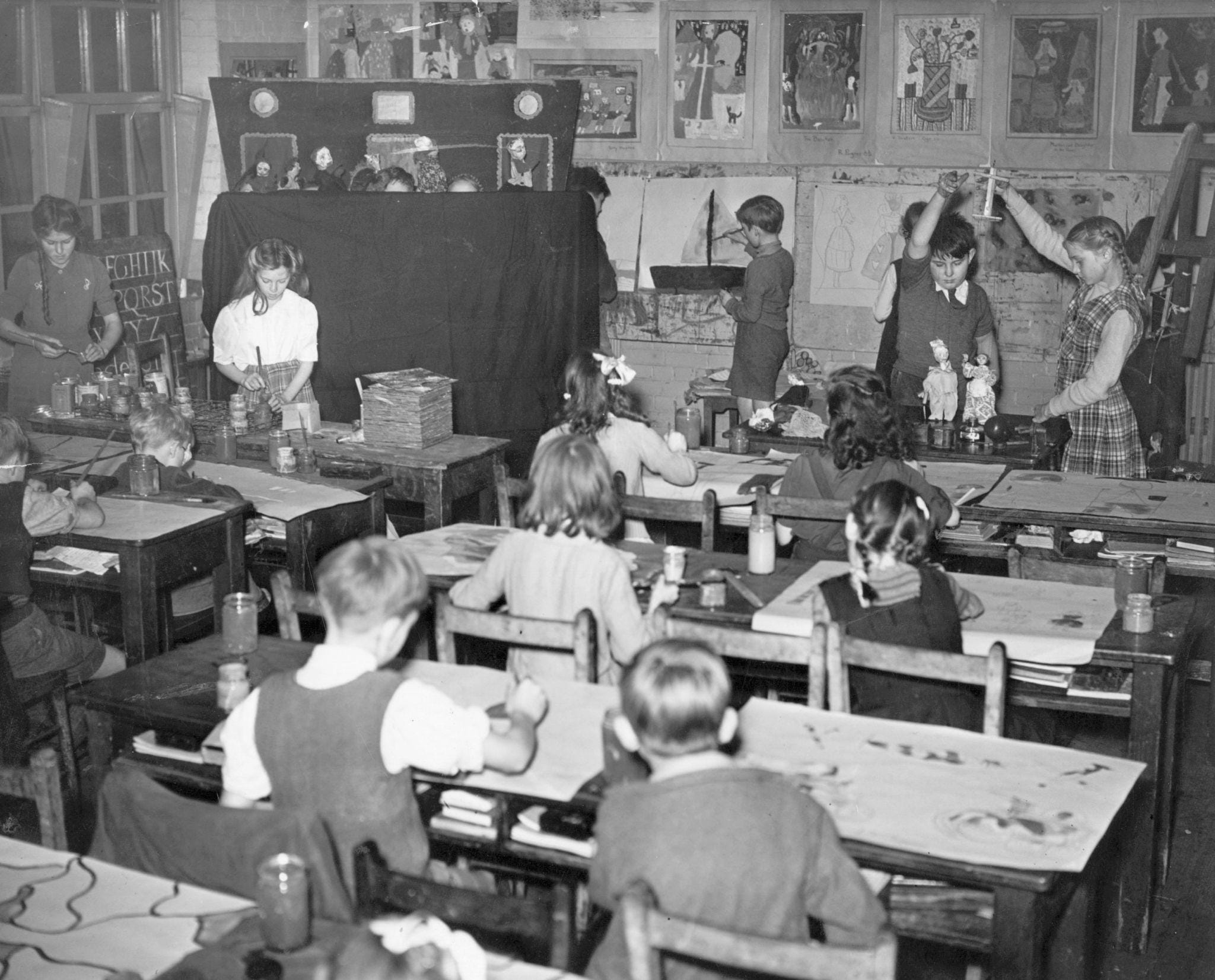
Part One ***ENERGY UNBRIDLEDEvery child is an artist. The challenge is to remain an artist when you grow up. —Pablo PicassoDraw. Decorate. Design. All were outside my sturdy middle-class school experience. In a curriculum where memorization and outlining were daily companions, art was an infrequent visitor… and never for a “serious” student. I was a serious student. The Space Age began October 4, 1957, when the USSR launched Sputnik 1, the first Earth-orbiting satellite. In case we weren’t intimidated enough, that same year Soviets also tested the first ICBM, a self-propelled unmanned missile capable of carrying nuclear warheads. The country riveted its attention on the “space race”… a race that focused schools on “important subjects” — science, math, civics. There was little room for art. Americans were busy building concrete bomb shelters in their backyards while peering skyward, positive missiles would be raining down any minute. My classmate, Karen, had the nicest bunker in the city. We all wanted to be her friend. Lillian J. Rice Elementary School, where I began fifth grade that year, sits in the southwest corner of Chula Vista, then a sleepy town eight miles north of the Mexican border. Built in 1938, it had three single-story wings of self-contained classrooms clustered like dominoes at right angles to one another. At the far edge of the property squatted two rectangular portables, the same dusty color as the playground. On the first day of school, our new teacher, a slight, timid man who wore a dark wool suit that day and every day after (despite the hot Southern California fall weather), couldn’t get the noise level below deafening. As 3 o’clock approached, he made an announcement. We were curious. The room fell silent. It is the singular quiet moment I recall. Longer recess? No homework? The suit should have tipped us off. The quiet disconcerted him. Twisting his hands like someone demonstrating the best way to use hand sanitizer, he told us art and music would be our “reward” at the end of each week. Why? Because we were “stuck” in one of the dilapidated temporary classrooms. Murmurs began to percolate as he rushed on. He explained he would bring symphonic music to play on the record player perched atop the dented gray file cabinet behind his desk. The clincher: while we listened, we could draw. We were unimpressed. We didn’t feel “stuck.” We liked our classroom. We liked being away from the “little kids.” We liked the playground right outside the door. We didn’t know what symphonies were and weren’t interested in finding out. My classmate, Karen, had the nicest bunker in the city. We all wanted to be her friend. Every Friday, Mr. Chang arrived, a large black vinyl record in a paper jacket tucked under his arm. Every Friday, chaos ensued. The boys drew insulting pictures on their construction paper, then tore them into tiny pieces for spit wad wars. The girls drew hearts and played “hangman.” Soon after Sputnik, art and music disappeared. By Christmas, the teacher disappeared as well after an unfortunate incident. He somehow ended up stuck in the ball box while we snaked around the room in a jerky conga line in time with a Beethoven overture. Art education was over.I threw myself into a tracked curriculum dominated by words… lab manuals, grammar tomes, foreign language workbooks, anthologies. Seven years later, I found myself a freshman at Whittier College. Studying in the library one hot, smoggy afternoon, surrounded by piles of books and feeling the world was a huge, fragmented set of competing ideas, I longed to look at something besides lines of text. The bookstore was selling tiny books of famous art prints on a table by the checkout stand — 25 cents apiece. Without much thought, I bought one. Rummaging through my book bag, I plucked it out. On the cover, a red violin floated over the title: “Raoul Dufy—Music.” Flipping through the 4-inch prints, a stray thought pushed toward the surface like a swimmer coming up from a deep dive. I realized both my education and my heart had been missing something. Something important. Artists and craftsmen look for the same unity beneath life’s disconcerting rumblings as do philosophers and writers. Different mediums. Similar goals. I went back to the bookstore and bought one copy of every pamphlet on the table. I stood them side-by-side around the wide library carrel desktop like baseball players looking from the dugout toward the playing field. When I tired of unraveling philosophical arguments or slogging through Randall’s Making of the Modern Mind, the abstruse required text for the college’s two-year History of Western Civilization course, I would disappear into one of the miniature pictures. A door cracked open. I wandered through some of the world’s great paintings and handicrafts. Pausing often to study some captivating detail, I recognized although the works were wildly different, they had one thing in common. Artists work in multiple mediums — paint, marble, porcelain, wood, clay, fibers, photography, found objects, and more — because there are no words for what they want to convey. I spent two years at Whittier. The little art books were part of everyday. Towards the end of E.M. Forster’s A Room with a View, the heroine, Lucy, expresses her debt to old Mr. Emerson. “It was as if he had made her see the whole of everything at once.” I know now it is impossible to see the whole of even any one picture at once, let alone everything. But there was a single moment, long ago in the old wooden college library, where turning my eyes from the book before me to the art around me, I sensed for an instant that perhaps, just perhaps, everything might form a whole, at the edge of awareness in a place we seldom go. These days, I never look for missiles in the sky. I look instead at lights and shadows overhead, underfoot, all around. I look at my paint palette too. The colors start out separated, lined up in anticipation of some project. Soon the palette is messy — colors oozing into one another, unexpected different hues percolating out. More interesting. More exuberant. Wholeness. Waiting to be found. Once more.River Journeys is a reader-supported publication. To receive new posts and support my work, consider becoming a free or paid subscriber. Get full access to River Journeys at anneayerskoch.substack.com/subscribe
NOW PLAYING
02. ❝ When Words Aren’t Enough
No transcript for this episode yet
Similar Episodes
Mar 26, 2026 ·1m
Jan 2, 2026 ·47m
Dec 21, 2025 ·46m