When it's time for Hibachi, my protein comes from ButcherBox and ButcherBox only. Go to butcherbox.com.com to get $20 off your first box. Hostingers AI builds your website in minutes. No coding needed? Go to hostinger.com.com and use code MICK for 10% off.
Join the millions who are already banking fee-free with America's number one choice for banking. Head to chime.com.com.com. Go to im8health.com. Right now, or click on the link in the description and use code MICK for a free welcome kit, five free travel sachets plus 10% off your order. Transformation. This is MICK on Plug.
We'll help you identify your because. So you can create a routine that's not just productive but powerful. You'll embrace the art of evolution, adapt strategies to stay ahead of the game, and take a step toward the extraordinary. So let's unleash your potential. Now, here's MICK.
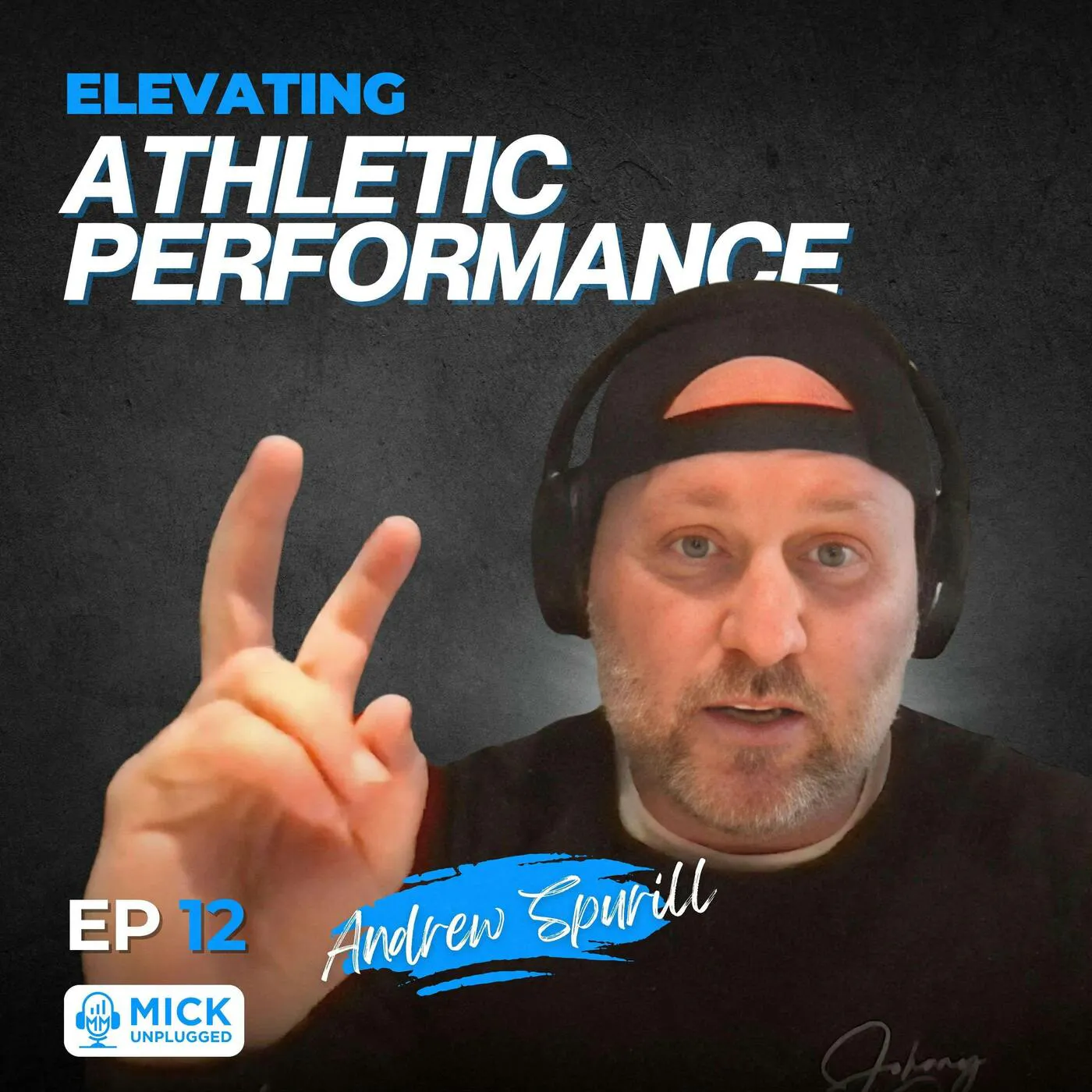
Welcome to another exciting episode of MICK on Plug where we dive deeper into your why to really get fueled by your recalls. And today we have a very special episode. From serving our country in the Air Force to shaping the future of athletes across multiple sports. Today's guest has transformed dedication and knowledge into unparalleled success. Training over 300 NFL combine prospects, including 51 first round picks, and guiding hundreds of high school athletes to achieve their D1 dreams.
He's not just a coach but a pivotal force in the athletic world. He said a new standard in sports training. We're about to dive deep into the world of athletic and mental preparation with my guests, none other than Mr. Andrew Sproul. Andrew, welcome to the show, my brother. How are you?
Good. That was a crazy intro. That was good. It's you, man. That is what Andrew told me all about.
I could do it. No, I'm just was gonna do it that way. That was great. Appreciate it. Thanks for having me.
That is awesome. I'm glad that you were here, man. First and foremost, thank you for your service. I know that a lot of people sometimes take that for granted, man. But I really appreciate the sacrifices that you personally made and that everyone that surrounds you has made for our safety and for us to do the things that we do.
So again, thank you for your service. Appreciate it, man. We'll dive into that part of my life. But that was definitely a necessary chapter that I needed. Let's do it.
So you needed it. Talk to me about why you needed that part of your life. Why did that help shape who you are today? Man, I was right out of high school. I was enrolled in college, didn't take school.
Nearly as a series, I should have when I was in high school, just kind of floated by state eligible to play sports. And then after that, it's like, oh, should I probably should have done a little bit more? Because I'm just like, out here not knowing what the heck I want to do. And real much in the face kind of college. Fast. That's a way for anybody. I talked to my dad. I was like, dude, I got to do something.
I can't do college. I just can't do it. I'm just gonna be honest with you. And he was in the Navy for four years. And he's like, I mean, you can look into the military.
And but if you do, he's like, you got to go Air Force. Like, you know, I'm not letting you go on the other branch. Of course, kind of known for having the best basis, best jobs, best quality of life stuff. Went to recruiter, pretty much joined within a week. And I left three months later.
I mean, it helped me a lot. Shaped me, responsibility, accountability, being on time. You know, all those things are, they're not negotiable in the military. You have to do it. You have to be on time. You have to learn your job in a timely manner.
Or there's serious consequences. You can't just quit. Like, you can't quit the military. You're in. They literally make you adapt to those things. And that's what I needed.
And four years of that, I kind of found my love for working out and fitness while I was in. I kind of wanted to, you know, make a life in that industry. So if my four years was up, I decided to get out and pursue that. And then that's when I met Tony Volani. I came to FAU down in Boca to do my exercise science degree.
And that's when I met Tony who owns XP Sports. And I did an internship with him and I ended up working with him for 10 years. Wow. So making that leap from the Air Force to an intern with Tony must have been a significant thing in your life. What core principles or core skills from your military background helped you the most with that transition? And that's what it was to. I mean, I could have,
if I met Tony when I was 19 out of high school, I would have grabbed that opportunity. There's no way. I knew nothing about performance industry or the training industry. I taught myself how to lift weights and I did a pretty good job of doing that when I was in the Air Force. I didn't realize there was a whole world of athlete training outside of the team. I didn't
realize that. So I'm looking at him training these guys for the off season. And I was like, man, this is definitely something I want to do. For me, it was just showing up every day. You know, I was on volunteer internship status. I wasn't really getting paid. Just being there, you'd give
me the times and days they were training. I'd show up as much as possible and just kind of being reliable, showing a willingness to learn and things like that. I've had kids that I train come up to me and ask me, you know, when they get done playing sports, they're like, what did you do to start your business? Or what did you do to get hired? And I'm like, just show up on time and just show some sort of willingness to learn and be consistent. And you'll be surprised just how much the people
who you work for will keep you around and retain you if you just do that. You don't have to be necessarily the best worker or the smartest one there. But if you can be reliable and show up every day on time, they'll probably keep you around. That's awesome. And you've trained thousands of people, not just athletes, but also, I know in the military, that was a part of your job function as well too.
And I always say this, great people. I don't care if you're an athlete, if you're a business leader, if you're the everyday person at your job. Mindset is usually the biggest separator, because everyone wants to be great. But very few people actually take the action to get there. From your viewpoint and training thousands of athletes, right, or thousands of people, what do you see as like the top two things that great people do that average people don't do?
That's a good question. The great ones that I've been around, and it goes back to the willingness to learn never acted like they knew everything. Never. Never. You're talking about 10 to 12 year pro athletes who are sitting there listening and learning and doing basic drills, like everybody else, not once ever asked, hey, what are we doing tomorrow? If we're doing this, I'm probably not going
to show up. Never a conversation. Showing up every day, no matter what the workout is, no matter what we're doing, it doesn't matter what it's the basic drills, if we're doing some more advanced stuff, they're in it, they're in the mix every day. No questions asked. And you know, that's not to say that nobody can ask questions. Anyone's more than welcome to say, hey, what's
this drill for? What are we working on? How does this help? No problem. We can explain that. But
the greatest ones with the most athletic ability and the most talent still came into training like, it was our first day. They have something to prove. Yeah. Oh, yeah. That chip never ends.
What are some attributes of average people that you see showing up every other day, being late going to be too hard looking like I just had to go to turn the corner. Boom. Disappears for a week. Where's this guy at? No one knows. Okay. Drop it in every now and then,
you know, not really having that attentiveness during training. Just kind of floating through it. Like I said, the great ones are there every day willing to learn. No questions asked. Never miss.
They do miss. They tell you. Okay. Take a family vacation for a week. I'll be back next Monday.
All right. Fine. They don't just disappear. Like, hey, where's this guy at? Oh, nobody knows.
Down in Miami. I think it's in Miami for a party and he stays down there for three or four days. Just come over. You know, like the legendary guys don't, you don't hear that from them. They're coming back.
They go down for that party Miami. They're driving right back up. They're going to make the session that next day. But yeah, it's just, but like in general, it's just there's no consistency in the average ones, you know, floating through workouts, stuff like that, you know, stuff that everybody knows. Everyone knows what average people do and everyone knows what it takes to get above average.
You all know it. It's just a matter of if you want to do it or not. And that's the same thing for people again. I don't care if you're a salesperson. I don't care if you're a kind of a real leader. If
you're not consistent, if you can't make the mundane almost boring and in routine, if you can't make that routine, it's going to be hard because there are days you don't want to do it, but you got to get your butt up and go do it. The training that your sales leader wants you to go to that you decide, I'm just going to have to butt it today. It's going to show in the results, but yet everyone wants to be a millionaire. Everyone wants to be a first round pick. Everyone wants to be the next one in the line of promotion, but you don't want to do the same things that have to be done every single day. And that goes for all levels too. You know, I'm talking about high school kids too.
I've got kids that train almost year round in season, off season, spring break, winter break, and like they make it happen as much as I can. You know, they're a little different because I've got a lot more going on school, social life, stuff like that than kind of a pro athlete, but I've got, you know, kids that show up all the time. And then I've got ones that just kind of drop in. They're not really on a consistent plan. They just come in every couple weeks.
Yeah, I was going to say so for some of the high school kids and athletes listening, you're saying Andrew, I can't just show up like every other Sunday with a group of my buddies when it's cool to be there. I hate it. I hate it. I hate it when I've got these kids that I know and I like them and they'll message me, hey, I'm coming in this Saturday. I'll see you then and I'll see you in three months. Like what do we do? Like there's got to be you can't like if you're listening, you can't
just pick and choose when you want to do these things. Like if you're going to commit to is those for anything, but I'm talking about our student athlete performance training, but it goes for anything. If you're going to do something to do it, like you can't just have your toes in the water and then out for a month. Like it's got to be like you really want results. You got to really commit to it and I had a parent text me one time. I'd seen that I hadn't seen a kid forever. If she
was like, Hey, someone says off this Friday for holiday, we're thinking about coming in for a workout. Are you available? And I just said, no, I just I'm not my workouts are something you just drop into the birds and calories. Like it's offensive when people text like that. Like you drop into an orange theory class, you drop into, you know, get boxing, you drop into spin classes, you don't drop into sport performance classes. There's progressions to what we do. If you're doing private sessions with me,
I need you to commit to a certain amount of sessions up front. We're going to go through the progressions. It just isn't like I hate it when I'm getting worse and worse as I get older as, you know, not worse. I'm getting better at telling those people that like I'm not. I'm just not doing it. We're just wasting both of our time. You work hard for your money paying fees just to keep it
somewhere. That deserves a second look. Chime is changing the way people bank. They're not like traditional banks that charge fees and gatekeep perks and rewards. Chime offers the most rewarding fee free banking. No overdraft fees, no monthly fees, no minimum balance fees, get 5% cash back on
Chime card in a category of choice like gas or groceries while building credit through regular everyday spending with no credit check. Grow your money faster with the savings rate that's nine times the national average and in a pinch, Spot Me lets you overdraft up to $200 fee free. Join the millions who are already banking fee free with America's number one choice for banking. Head to chime.com slash mick. That is chime.com slash mick. Sign up now. It only takes a few minutes.
Chime is a FinTech, not a bank banking services and Chime card provided by Chime's bank partners. Qualifying direct deposits required. Terms and limits apply. Go to chime.com slash disclosures for detail. I wonder if this parallels to you, man, because I want to consult and firm in an executive coaching firm.
When a prospect or someone's interviewing for me to be their coach, when they're a little too gung ho and they're telling me what they think I want to hear, I can pick that up really quick versus the one that comes in and they ask a lot of questions. They have a notebook and they want to know a plan and they want to know the why behind the why and the science behind certain things. Those are the ones that I know I'm going to work with. I can filter through the fluff really quick. When you're a little too overly excited to work with me and it's like, you see the success or you want to be a part of something. But when I start asking you about commitment and when I start
asking you about what are you doing behind the scenes and you start stuttering a little bit, I know really quickly you're not my kind of person. Do you see that on your own too? Yeah, yeah. It's pretty evident typically up front what kind of commitment, what kind of client and athlete they're going to be. With student athletes, sometimes some of them are a little other assuming sometimes because they're so young, 13, 14, 15, 16 years old. So you obviously want to
give them a chance to show who they are. But it doesn't take that long for someone to show who they are. It happens pretty quick. If you get a kid that says, all right, I'm coming to train Monday and I think this is something I want to do. If they want to do it, they come Monday, they'll be back Tuesday.
Or they'll be back Wednesday Thursday. They'll be back a couple times that week. If they do it on Monday and I don't hear from again until next week, it's like, okay, you're going to be one of those. That's going to be every other week. I get it now. It's quickly evident who you are. I just started
with a girl. She's committed to University of Miami for soccer and she leaves the summer. She's going to start getting ready for her preseason and she showed up last Tuesday just to check it out. She had a showcase this weekend. So she was going to do kind of a trial session and then she was going to start training this week after her showcase or dad texting me right after the Tuesday session. He's
like, hey, she's coming back tomorrow. She doesn't want to wait until next week to get another session. And even though she had a showcase this weekend, I know she starts tomorrow for good. She's going to be I already know I can tell. They make it pretty apparent pretty quick who they're going to be.
I love it. And so I want to dive deep into that a little bit because we talked about NFL. We talked about high school sports, but you train in like 20 different sports, right? Probably 20 plus sports. How do you adapt your approach to meet the diverse needs of all of the athletes that you're working?
Because they're all not the same, right? You know, as far as the speed and the agility and the strength goes, for the most part, it's all pretty relative. If you're talking about general speed work, agility, strength, especially that middle school high school age, any sort of strength and sprinting work is going to go a long way, whether you play football, basketball, soccer, lacrosse, tennis, volleyball. Now, at some point, the more advanced and the more you grow as in levels, college, especially pro, you probably have to dial back and be like, all right, we need to do a little extra of this on the side because you play the sport. If you're a pro, and I got like a couple pro basketball players that play overseas, they'll be back in May, they'll train together. So straight, straight basketball
specific speed, agility, vertical jump, stuff like that. But for the most part, I mean, working with just all the different types of athletes and personalities, it's that's something that I kind of had to get better at quickly when I started 14 years ago. That was never something I ever had to deal with. So that's something I just learned over the years to kind of just learn how to get along with all kinds of different people and parents. But there was a long time ago, I read a trainer had posted something about going into every session with the mindset that I'm going to like this person, and this is going to be a good client. And I started doing that, it actually really started helping.
You know, because sometimes you don't know what they're going to like, you start telling yourself, man, I hope this is a good kid, I hope they work hard, I hope I like them. Maybe you just start to doubt it. But then if you say, hey, you're going to like this person, they're going to be a good athlete for you, it's going to work out. I started doing that more often going into every intro and new clientele session and that really started helping me, I think, get along better with the athletes. Good stuff. So you talked about these parents, man, what are parents doing wrong in 2024?
Some of it isn't all their fault. But the first thing that always comes to my mind when we talk about this is like the club sports in the AAU and the seven on sevens. It's just like, it's too much. Club volleyball, club soccer, probably travel baseball, probably the worst, private top three, or really, yeah, because you're talking about travel baseball, if they're playing year round, club volleyball, they're playing year round, club soccer, they're playing year round, they don't stop. And it's like pro soccer players don't even play year round, pro baseball players don't play year round. They can't. Like, what are we making? These kids,
I'm talking like seven, eight years old, up to always through 17, 18. And it's like, they don't have to do it. But if they don't, they're going to find someone else just to take their spot on that club and they're not going to be able to come back to it. So then like, you know, if you really want to be a high-end soccer player, what are you supposed to do not do it when everyone around you was playing? So it's not a hard thing to juggle. I don't even know what the answer is to it. I wish,
I read that there's some, I think it was like Norway or Finland or something like that. It doesn't even allow those things to happen. Like clubs, clubs, sports aren't allowed to operate year round. It's mandatory to have like two to three month breaks at some point. That's probably the only solution because I mean, these clubs are really just money grabs. Obviously, these coaches know these kids don't
need to play year round. But if you're going to get three to 400 soccer girls to pay for your club, year rounds, why wouldn't you do it? But two things happen when that's the case, right? Number one, you can't give your body time to development and be the body it's supposed to be, right? Like, you can't train and work on something when you're continuously doing your sport year round. And then
the second thing that I see, and we're starting to see this, especially in the NBA, hopes can't play a full season anymore. Because for 15 years prior to them becoming an athlete, a professional athlete, they were playing 300 days out of the year. It doesn't allow them to play other sports either, which I mean, you look at some of the best athletes played lots of sports. LeBron James, and Patrick Mahomes there, Travis Kelsey did, all those guys were like all state, like three different sports, all through the world. I know what you're really good at, right? You can find out. Yeah,
I've been on this basketball track forever, but I'm pretty dog on good football player. And then, but you know, when you're playing the same sport for your whole life year round, it's not good to just move because you're only moving in certain ways in that sport, you know, if you're only playing tennis, you know, it would be great for you to also go play soccer, so you can get more of that long field running. You're just you're in that little box. Just little things like that. Your body gets to be open up to so many different movements and different athletic abilities. You're really limiting yourself when you only play one sport, but you know, what are you
going to do? It's the specialization era, everyone specializing. So I've got kids that played soccer all year round in these clubs since they were seven, eight years old that end up getting division one scholarship. So there's there are a lot of success stories to it. But I mean, ideally, it wouldn't be playing year round, but I just don't know if the solution is.
Question for you. Has the advancement of technology influenced how you train? Oh, yeah. I do a lot of velocity based training now with a bar speeds. So, you know, instead of, it's just one example, instead of just lifting weight to lift it, we're measuring how fast you're moving it now. That's a big thing. I think in the sports performance industry is how fast you're
moving a particular weight kind of determines how much weight you should be lifting. You know, it's like they measure in meters per second. So if you're moving something over one meter per second, that's that's a fast movement. So that's a speed. That's a speed session. If you really want to go
heavy and strength, you should be moving something like under 0.5 meters per second. And so that's, yeah, it's a big velocity base is what it's called based on how fast you move something. Also, with sprinting, we measure our sprints in 10 yard increments with different head starts. So five yard head start into a 10 yard fly, 15 yard head start into a 10 yard fly, 25 yard head start into a 10 yard fly. So that's measuring every aspect of your sprint. So we know where you're deficient and where
you're good. If you got a bad start, that five yard head start into a 10 yard fly is going to be bad. But if you have good back in speed, that 25 yard head start into your 10 is going to be good. So that's a big thing that we started doing it up to be about 10 years ago, instead of having to run a 40 every single day, we measure the different areas of the 40 yard dash. And we know which ones they need to work on to get faster. That's impressive. So I'm gonna turn it on to questions. Number one,
looking ahead, what do you see as the biggest opportunities or challenges in the athletic training? Oh, I would say at some point, I think right now is everybody is really learning how to train straight ahead speed. It's kind of like the blueprints out there. I'm not saying it's not hard, but there's a lot of trainers out there that offer a lot of free stuff on Instagram and things like that. Good ones that you can really, really learn how to train that straight ahead speed and really get explosive and fast. Now the challenge is in team sports, you're not ever moving in a straight line very often. So
how do you train to be so fast, but also be able to train someone to know how to harness it during a game? And that's where I think a lot of trainers get challenges. Okay, so it's called a game speed, is how do you train for game speed? We're doing, you know, doing all this explosive and fast sprinting. Okay, but what are they going to do in a game when you're not just running in a straight line? So I think that's, that's a big thing right now is that game speed training everyone's starting
to talk about. I would say that's like the biggest thing that everyone's starting to talk about. And then getting you out of here on this, if you could give three pieces of advice to the listeners, rather their high school athlete, college athlete, business owner, salesperson, what's three things that people should start doing right now to either mentally or physically get better, be better as an athlete, you know, to get better, you need to focus on, I'm going to put these two things together. You're a nutritionist, because those are probably the two things that high school and college athletes are the worst at absolutely terrible diet and sleep. I mean, if you get your diet and sleep on lock, I mean, it just helps you so much in life, like not even your sport, but like your social life, your classes, your homework, your grades will probably turn up better, stuff like that. Start looking at your diet and sleep, how you can help that. I would start, if
you're not as an athlete, if you're not doing it, I would especially these high school kids, I would start looking at a strength program to get stronger at that age, just getting stronger in general, I have this conversation with parents all the time, just getting stronger in general will help you get faster, it'll help you get quicker, it'll help you get more explosive, you don't even, you should, but you don't even have to do a lot of speed work. If you just get stronger, you will become better on the field. Now, with that being said, nutrition, sleep, strength, conditioning, and I would start looking into how you can be better mentally. This generation of high school kids now, and college kids now talk about this mental health thing, it's a big topic amongst that age group. They talk about it all the time, they post about it on social media all the time, but I don't think a lot of them even know what it is. It's a real thing, but I think it's a trendy topic for them. And I tell
them all the time, I'm like, look, all you guys post about how mental health is important for athletes, especially in college, because they get jerked around so much and a lot of them just feel like, they're not even looked at as people, they're just looked at as a member. I get it. I think there's some truth to that, but you're posting about it, but what are you doing outside of the post? Right. Just because you put it on your story, doesn't mean you affected somebody. So what does it mean to
help someone with their mental health? What does that mean? So I think that's probably the other thing I would say to start looking into as a young athlete, because it's such a hot topic now, and it's a real thing, but instead of just posting about you need to know what it means. Like what does it mean to check in on somebody and notice if someone looks like they're struggling, like what are you supposed to do? Ladies and gentlemen, my man Andrew dropped a lot of times today. Andrew, I appreciate you
more than you know, my man. And again, thank you so much for your service. Andrew, where can people find you? You find me on Instagram, Andrew Sproul, underscore my website, gamespeedtrainer.com. Those are probably the best two sources to get ahold of me. Very active on Instagram and I'll reply quick
to the website. So either of those works. Good stuff. Everybody reach out to my man Andrew, especially if you're in the South Florida area, he is the best. I'm just going to go ahead and put it out there.
He is the best of the best. None other than Mr. Andrew Sproul. And remember everyone, your because is your superpower. Thanks for listening to Mick Unplug. We hope this episode helps you take the
next step toward the extraordinary and launches a revolution in your life. Don't forget to rate and review the podcast and be sure to check us out on YouTube at Mick Unplug. Remember, stay empowered, stay inspired and stay unplugged.