
EPISODE · Feb 13, 2026 · 58 MIN
Being right doesn't make us influential - interview with Suzie Barnett
from Changemakers’ Handbook with Elena Bondareva · host Elena Bondareva and Suzie Barnett
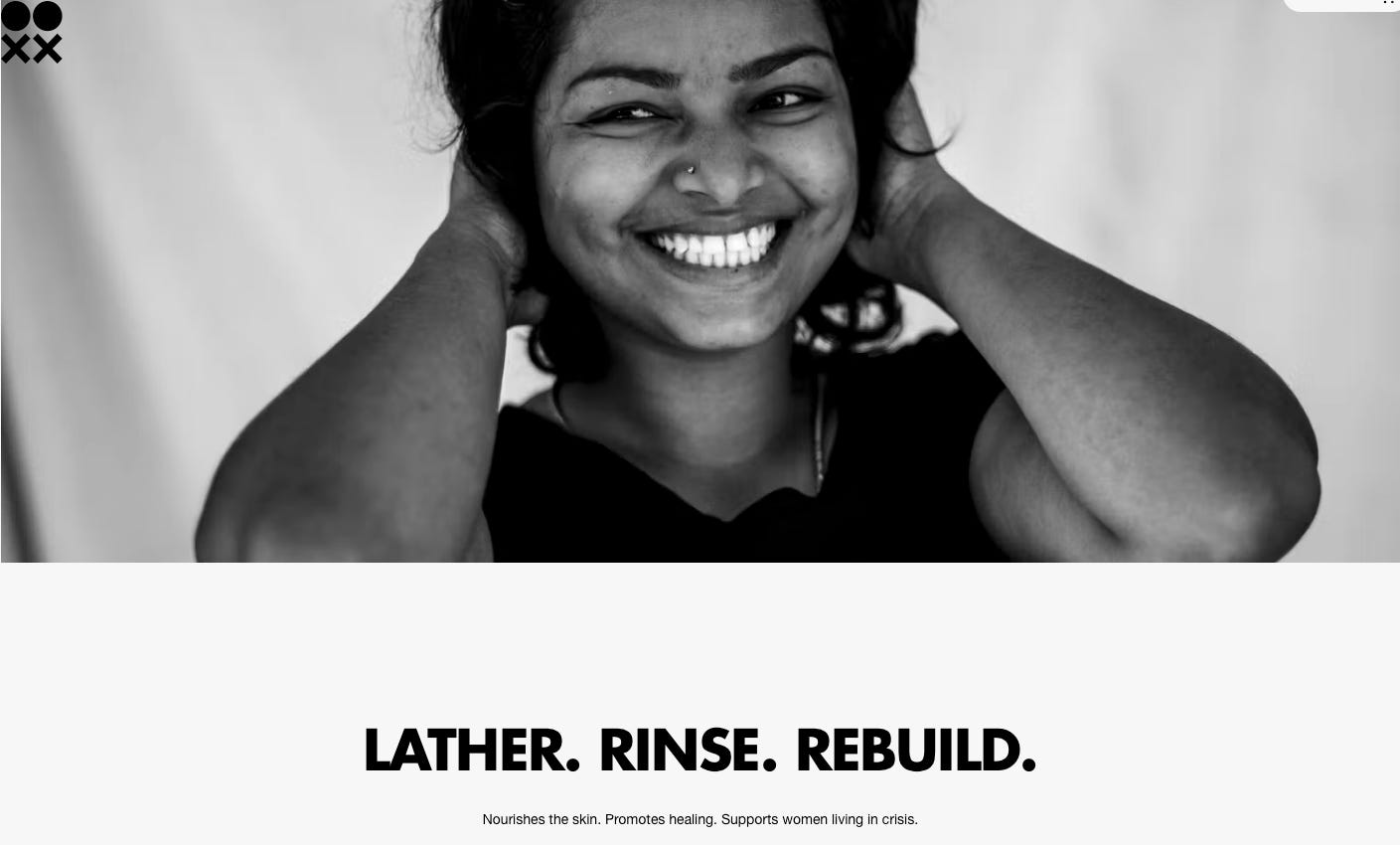
Today’s Substack LIVE with Suzie Barnett was honest and rich — a reminder that changemaking doesn’t sit in tidy absolutes. We named some of the ethical discomforts many of us feel: influence vs manipulation, the shame around power, and the sense that the rules we follow don’t seem to apply. That was real, and important. Watch on Substack or listen on Spotify or Apple Podcasts),Below are my highlights and post-interview reflections.Suzie brings rare credibility to this terrain. Across industries and continents, she has worked to connect people to meaningful change through society-wide narratives — not just campaigns, but shifts in what feels possible and legitimate. Her craft has always been meaning-making at scale.So when she speaks about ethical discomfort in influence, it is not theoretical. It is lived.We spoke about moments when integrity did not translate into adoption. When technically sound solutions did not scale. When evidence alone did not move behavior.That is not failure.It is a signal.The pattern beneath the discomfortHere is the pattern that emerged:* We double down on good evidence and good intentions.* The world responds to social permission and narrative coherence.* We confuse being right with being influential.And then we call our discomfort morality.When “solutions” stall, we reach for explanations — political polarization, institutional inertia, media distortion. Often those factors are real. But they are not the whole story.The harder question is whether we are confusing solution design with change design.A solution can be technically flawless and yet transformationally inept. Big, bold change requires something else: identity alignment, emotional resonance, repetition, permission. It requires narrative architecture — not to deceive, but to make participation feel legitimate.If we do not design for adoption, we cannot be surprised when adoption lags.Changemakers’ Handbook is an audience-supported publication. To access all posts and support my work, consider becoming a free or paid subscriber.Solutions are not changeSolutions are about accuracy. Change is about energy.Solutions repair what is broken. Change shifts what people accept as normal.We are highly trained in building solutions. We convene experts, engineer frameworks, gather data, publish reports. What we are less trained in is designing for the social spread of those solutions — how they become legitimate, contagious, durable. And effortlessly irresistible.This distinction matters.Because when we stop at the solution, we can still blame others for not adopting it. When we take responsibility for change, we must ask harder questions about how belief shifts, how narratives travel, and how participation cascades.That is not marketing. It is structural accountability.It is also where my research increasingly sits: not simply how to envision interventions, but how to design for run-away transformation that holds over time.The moral discomfort we avoid namingAvoiding propaganda sounds like virtue. But refusing to study influence because it feels uncomfortable is not the same as refusing to manipulate.There is a real line between coercion and influence. Between deceit and disciplined narrative design. nThe ethical guardrails matter — deeply.But collapsing all influence into manipulation removes us from the terrain entirely. When ethical actors vacate the terrain of influence, it is overrun with those less encumbered. Many changemakers are already influencing. We frame, write, speak, convene. We just prefer not to name it as such. We tell ourselves that clarity and sincerity are sufficient.They are not.Movements do not scale because they are correct. They scale because people see others participating and recognize themselves in the story. Social permission, not logic alone, drives adoption.To ignore that is not moral superiority.It is strategic fragility.A hard question that mattersHere is the question I am no longer willing to avoid:What happens if we succeed — scientifically, materially, ecologically — using influence strategies that make us uneasy?If we ended hunger, reversed climate collapse, dismantled trafficking networks, restored ecosystems — and did so using the most sophisticated communication tools available — would we feel ashamed of ourselves? Would we call it propaganda? Or leadership?This is not theoretical for me. It sits at the core of my current doctoral work and of what it would mean to formalize changemaking as a profession.Because there is an asymmetry we cannot ignore: those willing to manipulate without restraint will not hesitate to deploy every psychological tool available. Those committed to regeneration often hesitate, second-guess, and overcorrect.Power does not disappear because ethical actors refuse to wield it.It concentrates elsewhere.Refusing to let dictators monopolize competence is not rhetoric. It is responsibility.What seriousness now requiresIf we are serious about transformation — not just solutions — we must hold two commitments at once: influence is real, and ethics must govern its use.That means studying influence without romanticizing it. Naming manipulation risks without abandoning effectiveness. Building guardrails alongside capability. Accepting that clarity, repetition, and narrative coherence are not inherently corrupt.Restraint must come from competence. If you know how to move people and choose not to, that is discipline. If you never learn how because you fear moral contamination, that is timidity disguised as virtue.Innocence is not integrityGood intentions are not enough. Evidence is not enough. Solutions are not enough.We must take responsibility not only for what we build, but for how it spreads — how it becomes legitimate, normalized, durable.Power will be used. The only question is by whom, and toward what ends.Ethical changemakers cannot afford pseudo-timidity. We must become fluent in scale and explicit about our guardrails.That is not manipulation.It is stewardship.And stewardship, in this moment, demands both moral clarity and technical competence — held together, deliberately, without apology.Thank you Michelle Malanca Frey, Dominique Hes, James Orenstein, and many others for tuning into my live conversatin with Suzie Barnett! Join me for my next live video in the app.Suzie works with Two Good Co, an innovative social enterprise in Australia.The video about the first follower is referenced in my earlier post: This is a public episode. If you'd like to discuss this with other subscribers or get access to bonus episodes, visit changemakershandbook.substack.com/subscribe
Embed this episode
Ready to play
Being right doesn't make us influential - interview with Suzie Barnett
No transcript for this episode yet
Similar Episodes
No similar episodes found.