
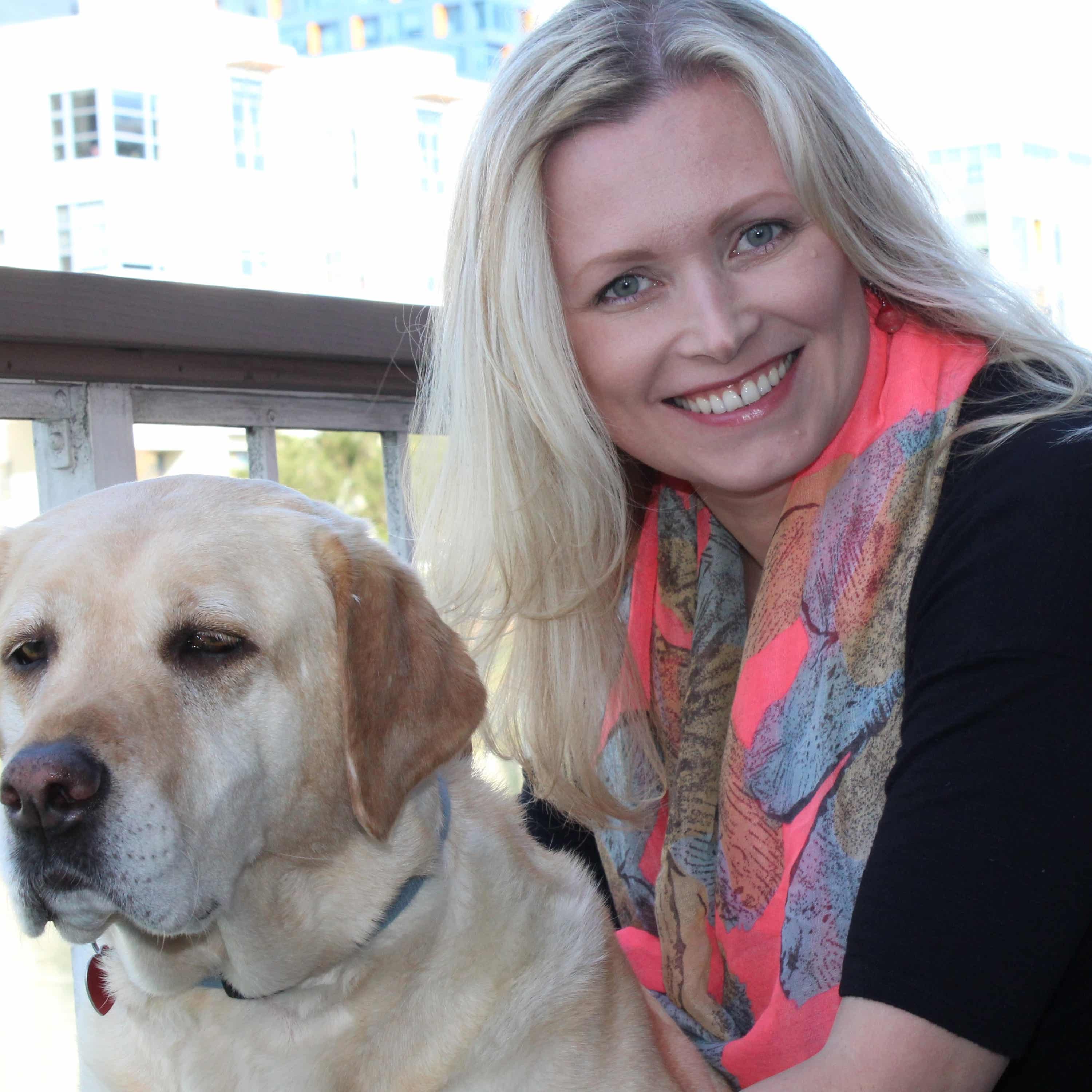
PODCAST · society
Changemakers’ Handbook with Elena Bondareva
by Elena Bondareva
Your front-row seat to PhD findings into change-making and no-holds-barred insight into my experience across 6 continents. Join me in fueling dialogue on the why, the how, the how not to, and the personal toll of creating regenerative transformation. changemakershandbook.substack.com
-
49
My cover is blown
“Are you a spy?” is a question I get surprisingly often.Yes, I was raised in the Soviet Union and have spent much of my life making relatively little sense to anybody anywhere. Still, the question surprises me mostly because regular people, tickled by the possibility that they are standing next to a maybe-spy, seem to expect a meaningful answer.If I were a spy (and I never confirm nor deny), I would have been fielding that question since I first learned to regard a pacifier with suspicion. Also, if I were a spy, I wouldn’t have any accent at all. Haven’t people seen The Americans?Anyway, with AI taking over the world, I can no longer hide the truth.Spotify has taken in hundreds of hours of my choices across music, podcasts, audiobooks and, yes, recommendations from friends — really, really watch who you allow to contaminate the evidence — and noticed something many of you have treated as a running joke for years.I have spent much of this summer noticing.Since I am currently based in North America, summer is only now coming to a close, leaving me up to my neck in unprocessed evidence.I have spent most of my professional life observing people, organizations, systems, movements: what changes, what stubbornly doesn’t, and what happens between intention and reality. Observation is practically an occupational hazard.But my PhD has been forcing me to distinguish more carefully between looking in order to reach a conclusion and looking to acknowledge what is there. Age may also be playing a role. Not chronological age, necessarily. I don’t remember who said it first, but I was with a group of friends when it was established that I was 76 on the inside. That was at least ten years ago. When I got perilously close to an internal 90, I decided something had to change or I’d soon be the oldest person anybody’s ever met. Lonely.I have been attempting a “Benjamin Button”: methodically reverse-aging my inside person.I reluctantly accepted that mac-and-cheese is legitimate food. Tried and was smitten by a weighted blanket. Gradually—over months—crept my bedtime from 8:15 p.m. toward 10. Committed to phone puzzles. Got hair tinsel. Glitter. A dog bed. All for myself.Impressive, I thought.And then yesterday afternoon, when asked for my Daylist, Spotify analyzed me and labeled it, coastal grandmother.Correct. Coastal grandmother.See Exhibit A.I sent this screenshot to several friends because, obviously, an accusation of this magnitude requires sufficiently appalled witnesses. This only becomes a story because my friends weren’t appalled. One friend reminded me that I had been claiming to be 74 for years. I corrected him. It has never dropped below 76 in recorded history, so there was no need to start flattering me now.What disturbed me was not that Spotify had got me wrong. It was that Spotify had somehow got me right.The algorithm looked past much of the evidence humans tend to use when deciding who somebody is and landed on something I have been insisting was true all along. Not even especially deep down.The evidence against me“Coastal grandmother” — I had to know, in case it comes up in New York Times Puzzles; thank you, Glamour — was coined and popularized in 2022 by TikTok creator Lex Nicoleta. You do not have to be a grandmother or live anywhere near a coast: this type of person is apparently excused from all integrity. The archetype draws heavily on Nancy Meyers heroines: relaxed linen, good food, farmers’ markets, fresh flowers, understated elegance, early mornings spent holding artisanal mugs with both hands, and effortless enjoyment of one’s life while expressing unfounded doubt and disorientation. Architectural Digest describes the domestic version in terms of natural materials, soft colors, eclectically washed out homes swaddled in light, comfort, simplicity, and everyday pleasure.In my mind, she has also perfected the self-deprecating chuckle and the lollop: that oddly loose, over-articulated gait, with too much limb, too much side-to-side, and not enough obvious reason.S**t.Diane Keaton has been preparing me for this diagnosis for decades.Once you scrub away the baby face, the midlife chub, my actual date of birth and other inconvenient forensic evidence, Spotify may have produced a surprisingly accurate profile. Once I stopped laughing, I became interested in the data Spotify had apparently found beneath a running joke.Caricatures work because they are wrongA good caricature is intentionally inaccurate. The proportions are all wrong. The eyebrows have become an independent life-form. Something recognizable has been exaggerated almost to the point of insult. And still, the person may be more recognizable than in a photograph.The distortion works because somebody has correctly identified the features carrying an unusual amount of information. This may be one useful way to think about both artificial and human intelligence.We are constantly making little models of one another.She is ambitious.He is shy.They are generous.He is witty.She is difficult.He is unreliable.They are eccentric.Eventually: Ah. This is you.Except every one of those conclusions can be uncannily accurate and radically incomplete at exactly the same time. We have been doing this to one another long before machines joined in. Perhaps what AI changes is the scale of the evidence.The interesting question is not whether the machine has captured my identity. Of course it hasn’t. The interesting question is: what did it notice that other people discounted because it contradicted more obvious evidence?I don’t look or lollop 76. I actually feel younger than I have in decades. Spotify does not know me. I merely left such a pervasive trail pointing to rayon and chai that the date of birth on my profile presented an anomaly.What counts as evidence of a person?This question interests me professionally because much of my work as a transformation expert involves pattern recognition.I am trying to understand changemakers well enough that we can support their vital function in the world better than we currently do. That requires categories. Are there recurring ways people initiate change? Build it? Legitimize it? Hold relationships and spaces around it? Steward what has been created? Almost certainly. But the moment we identify a pattern, another question arrives: When is categorization clarifying, and when does it flatten a human being?I don’t think the answer is to stop recognizing patterns. That would be absurd. Pattern recognition is one of the ways we know anything at all. The harder discipline may be learning to let a pattern tell us: Look here. How curious. Not: Gotcha! Case closed.That feels important far beyond my research.What criteria do we use to decide what most deeply defines another person? Age? Profession? Appearance? Diagnosis? Politics? Income? The worst thing they have done? The best? What they are frightened of? What reliably delights them? What they notice? What they protect? What they return to? Under what particular conditions do they become most alive? I am increasingly interested in those last kinds of evidence.Maybe individuality lives less in our demographic facts than in our peculiar patterns of sensibility, sensitivity and delight-ability.The things that move us.The things that reliably commandeer our attention.The things we cannot quite help loving.Better caricatures. Not flatter people.However delightful — and disturbing — it was to be validated as a coastal grandmother, I don’t want technology that tells me who somebody is. Humans have already demonstrated how dangerous we are when convinced we have other people figured out. But I can imagine technology becoming extraordinarily useful at helping us notice.You seem happier after you speak with this person.You keep returning to this kind of music.You say this matters to you, but your effort is elsewhere.You may be more this than you thought.Imagine computational pattern recognition paired not with human certainty, but human curiosity.Not, The data says this is you. Rather, Something keeps appearing here. Shall we look?That seems to me a much more interesting place for artificial intelligence and human knowing to meet. The machine gets better at recognizing patterns. We get better at refusing to conflate a pattern with the whole person. And perhaps, between those capabilities, we become a little better at seeing one another for what is already true —and for everything that might yet become possible from it.In the meantime, Spotify has apparently concluded that beneath my current identity experiments lives a woman who savors music, good food, plants, soft fabrics, long walks to meet herself, people to love, and enough quiet to notice her own life.My cover is blown.I can live with that._ _ _Changemakers’ Handbook is an audience-supported publication focused on professionalizing chaangemaking in a post-solutions world. Consider subscribing to invest in this work, join future live conversations and access all posts. This is a public episode. If you'd like to discuss this with other subscribers or get access to bonus episodes, visit changemakershandbook.substack.com/subscribe
-
48
Art is water for changemaking
I may have been bullying artists recently.Or, perhaps, I have been excessively compelling changemakers who are capable of making art to do so. Either way, a poet, a satirist, a couple of painters, and an occasional dancer have been subjected to fervent appeals that their therapists may eventually hear about.Please make art. Please do not underestimate what it does the world.The longer I study changemaking, the more convinced I become that art is one of civilization’s oldest changemaking technologies — and one whose powers we have persistently underestimated.Changemaking demands strategy, competency, meticulous process, and masterful execution. These reshape the conditions around people: institutions, incentives, relationships, resources, and systems. They matter enormously. However, meaningful change also expects something of the people moving through it. It asks us to loosen identities, certainties, loyalties, fears, griefs, and hopes. It asks us to become capable of inhabiting a future that does not yet exist.This journey cannot be engineered. It must be imagined and experienced. And that is where art comes in.A private place to meet ourselvesArt changes the conditions within people, but not by issuing instructions, winning arguments, or demanding agreement.When societies know who they are, art celebrates. When societies know what they are fighting, art mobilizes. But when people can no longer make sense of themselves —when decent people are unsure whether to take pride or shame in their private thoughts — art becomes something else entirely. It becomes a kind place for an unmasked meeting with ourselves.Public life has become remarkably poor at holding such encounters. It demands conclusions before we have woven an understanding. It rewards declarations and treats uncertainty as weakness, guilt, or evasion.Art asks something quieter of us. It asks us to stay. To remain by an unfolding idea. With an authentic moment. Inside a paradox. Despite the urge to run.A poem, a song, a dance, a painting, a novel, or a satirical sketch may quietly ask: Is this what you want? Is this who you want to be? The gift of art is that no one ever has to hear our answers.The artist creates the work, but the decisive conversation occurs in private between the work and the person encountering it. Away from applause and outrage, we can notice what frightens, attracts, disgusts, consoles, implicates, or awakens us. We can mourn what we cannot explain. We can reconcile envy, tenderness, prejudice, delight, resentment, hope, and love within the human heart.Art gives us permission to confront ourselves before confronting one another. This privilege is one of art’s greatest kindnesses.Practicing paradoxIn my last essay, I argued that one of the defining competencies of changemakers is the capacity to remain inside paradox: to resist resolving complexity too quickly and to tolerate uncertainty long enough for better judgment to emerge.LINK: https://changemakershandbook.substack.com/p/can-changemaking-be-taughtArt is one of the places where we practice that competency. It can suspend judgment without abolishing discernment. It can loosen shame without excusing harm. It can delay action without surrendering responsibility. This suspension matters because action taken too quickly may be little more than fear dressed as moral courage.Art does not tell us what to think or who to become. It challenges us to question, imagine, and remain present long enough to encounter truths that cannot be marketed, legislated, or argued into existence.Art gives wisdom room to form.Refusing collective self-deceptionFor the artist, creation can be an act of defiance: pointing to what everyone else pretends not to see. The declaration that the emperor has no clothes is not reserved for governments. Art exposes the delusions of markets, institutions, ideologies, movements, communities, and individuals. It reveals where certainty has become performance, where language has outrun humanity, and where the stories we tell have locked us out of possibility. It invites us to consider where we, too, might disappoint ourselves.This is why authoritarian movements have so often feared artists. Not every artist is politically radical, but art itself resists reduction. It refuses to collapse a human being into a caricature, demographic, diagnosis, voting bloc, algorithm, market segment, or enemy. Art insists that human experience is always larger than the systems attempting to explain or control it.Long before investigative journalism, peer review, decentralized governance, or social media, artists were helping civilizations fulfil one of their most important responsibilities: refusing collective self-deception. Artists have risked ridicule, censorship, exile, imprisonment, and obscurity to insist on questions capable of disturbing complacency.Art allows the artist to remain truthful. It allows the rest of us to discover whether we are.Changemaking changes the changemakerYes, this is a mouthful. It also feels increasingly important to me.Planning matters. Action matters. Power matters. Connection matters. But for any of these to be exercised wisely, changemakers must attend to transformation within people, including within themselves.Art helps us notice where conviction has calcified into identity, where fear has disguised itself as certainty, where shame has hardened into cruelty, and where hope remains alive beneath the rubble. It reminds us that the people affected by change are not merely components of a system and that changemakers, too, are frightened, contradictory, grieving, and sometimes giddy with excitement.Art softens what argument often hardens. Without it, changemaking risks becoming technocratic. People become obstacles to move, audiences to persuade, populations to manage, behaviours to modify, or instruments of somebody else’s vision. Art tethers transformation to our humanity.Art is waterPerhaps this is why I keep returning to water as a metaphor.Water does not command a seed to grow. It changes the condition of the ground to make growth possible. It softens what has hardened, carries nourishment, restores what drought has made brittle, and awakens life that appeared to be gone but was merely dormant.Similarly, art breaks through the baked-on residue of ignorance and injury. It rehydrates our capacity for imagination. It welcomes contradiction without spectacle. It restores compassion and delight, because human beings cannot live indefinitely on urgency, duty, and outrage.Water also offers hospitality. To hand someone a glass of water is to honor them. Art offers a respite to parts of us that public life rarely welcomes. It enables humility without humiliation. It allows for trust.Art does not force transformation. It creates conditions in which transformation can live.If you are an artist, please do not mistake your work for decoration, indulgence, or retreat.You are wielding one of humanity’s oldest transformational technologies. You create places where we can look ourselves in the eye. You give truth a place to hatch and imagination — somewhere to soar. You expose the invisible and restore life to what grief, fear, and certainty have made brittle.Please write, paint, compose, carve, print, dance, perform, and fashion matter into meaning. Please make visible what the rest of us have stopped noticing. Please keep reminding us that no movement is worth building if it requires us to abandon our humanity.I would love to know how art has changed what you see, feel, imagine, or do. Please share!* * *Changemakers’ Handbook is an audience-supported publication focused on professionalizing chaangemaking in a post-solutions world. Consider subscribing to invest in this work, join future live conversations and to access all posts.Image credit: Alexandr Ivanov from Pixabay. This is a public episode. If you'd like to discuss this with other subscribers or get access to bonus episodes, visit changemakershandbook.substack.com/subscribe
-
47
Can changemaking be taught?
Approximately 70% of transformational efforts fail. We often blame strategy, leadership, culture, funding, politics, or bad luck. Increasingly, my research suggests another explanation: we have never treated changemaking as a profession.Architects, teachers, engineers, surgeons, firefighters, pilots, and musicians all develop explicit competencies. We expect them to practise, improve, receive feedback, and continue learning throughout their careers. Changemakers, by contrast, are largely expected to figure it out as they go.That has left generations of extraordinary people underprepared, unsupported, and far more dependent on talent and perseverance than any serious profession should tolerate.One of the central questions driving my PhD is deceptively simple: if changemaking is a profession, what are its competencies? This post offers an early answer.If you listened to my Q2 Field Notes (LINK: https://changemakershandbook.substack.com/p/field-notes-on-changemaking-q2-2026?r=1i4aw7), you'll recognize this as one of the biggest shifts in my thinking. Increasingly, I suspect that successful transformation depends not only on good methods but on the abilities of changemakers. If that's true, understanding the competencies they can develop becomes just as important as understanding the tools they use.While my recent writing has focused on the predispositions that may draw someone toward changemaking, today's post turns to a different question: once someone is drawn to this work, what can they deliberately learn to become most effective?Changemakers have largely learned through improvisation. We apprentice ourselves to problems, borrow techniques from adjacent professions, accumulate scars, and hope that experience eventually resembles expertise. No mature profession would deem that sufficient.If we can articulate the competencies of changemaking, we can begin to do what every mature profession eventually learns to do:* recruit people whose natural predispositions fit the work,* develop them intentionally rather than accidentally,* coach them through increasingly complex challenges,* recognize excellence,* and sustain meaningful impact over an entire career.My research suggests 9 core and 6 situational competencies.While most of the competencies below emerge from my own research and practice, they are also informed by the work of others who have shaped my thinking. In particular, futurist Bob Johansen's work on future leadership skills has influenced several of the situational competencies, including dilemma flipping, bio-engaging, human calming, and what he calls "smart-mob swarming." His work has been an important companion as I develop a competency framework specifically for changemakers.LINK TO BIO: www.iftf.org/people/bob-johansen/LINK TO BOOK: https://www.iftf.org/insights/navigating-the-age-of-chaos-a-sense-making-guide-to-a-bani-world-that-doesnt-make-sense/The 9 Core Competencies of ChangemakersThese are the competencies all effective changemakers demonstrate. Some emerge naturally. Others require years of deliberate practice. Together, they form the professional foundation of changemaking.* Curiosity — Embracing uncertainty; actively seeking and enjoying new perspectives and experiences.* Systems Thinking — Building on the predisposition of systems sensitivity, this competency involves analysing interdependence, feedback loops, leverage points, and unintended consequences in order to design more effective interventions. Detailed in my earlier post: https://changemakershandbook.substack.com/p/want-to-change-the-world-master-systems?r=1i4aw7* Empathy — Understanding and responding to the lived experience of others when designing and leading change.* Strategy — Stripped of rigidity, effectively coordinating action across all spheres of influence. Related to Bob Johansen's concept of "clarity."* Facilitation & Collaboration — With humility and vulnerability, guiding groups toward possibility that is unlocked through cooperation.* Intentionality — Translating conviction into deliberate action.* Influence — Enlisting others, whether through charisma, story, or orchestration. Closely related to Bob Johansen's "smart-mob swarming."* Impact Assessment — Defining and communicating success; indispensable for legitimacy and scale. Detailed in my earlier post: https://changemakershandbook.substack.com/p/are-you-impactful-how-you-can-know?r=1i4aw7* Sense of Purpose — Knowing your “why”; the compass and stamina behind changemaking. Detailed in my earlier series: https://changemakershandbook.substack.com/p/playlist-purpose-is-fuel-for-changemaking?r=1i4aw7Situational CompetenciesWhile not universal, these competencies can give changemakers the edge to navigate crises, build resilience, and turn intractable problems into breakthroughs. Think of them as the extra gear. You can ride without it, but if the journey challenges you, you’ll be glad it’s there.1. Self-Awareness Knowing yourself: your motivations, blind spots, and triggers. This isn’t indulgence — it’s essential for trust, clarity, and the power of conviction. Leaders at peace with both their ego and trauma — who know how they come across — are better able to mobilize others.2. Self-Care & Resilience Effective changemakers burn bright, and that takes stamina. In some, it may mean cultivating stoicism: staying grounded under pressure. For others, it means implementing habits that allow for renewal. Either way, resilience is non-negotiable for a lifetime of impact.Human Calming -- “Developing a sense of centeredness that cultivates inner focus, maintains composure under pressure, and guides others with steady grounded presence in a brittle, anxious, nonlinear, and incomprehensive world.” — Bob Johansen3. Decisiveness Consensus has its place. But when the moment demands action, indecision can sink a movement. Decisiveness is the courage to make the hard call when it matters most.4. Dilemma Flipping (after Bob Johansen) The toughest problems present as unsolvable paradoxes — until someone reframes them into opportunities. It’s a skill of foresight, timing, judgment, and creativity: resisting premature conclusions while avoiding endless delay.5. Bio-Engaging (after Bob Johansen) Nature holds wisdom, and biomimicry has rightfully been pushing its way into mainstream decision-making. Changemakers who draw on ecological principles — interdependence, resilience, regeneration — design solutions better suited for today’s crises.6. Gameful Mindset Play is not frivolous. It’s an adaptive, experimental, and engaging approach to solving problems. Changemakers who approach transformation with a playful mindset — testing, iterating, inviting collaboration — create momentum and possibility.Why the distinction mattersCore competencies are universal. Without them, transformation doesn’t stand a chance.Situational competencies are amplifiers. They mark the difference between good and great practice.Core skills let you survive the terrain of change. Situational skills let you thrive in its steepest climbs. They don’t replace the core ones. They extend them.Cultivating changemaker competenciesFor more than twenty years and across six continents, I have been helping leaders, executive teams, coalitions, and mission-driven organizations build these competencies — long before I had language for the framework emerging through my PhD.I increasingly see my work as professional development for changemakers. Sometimes that means coaching individual changemakers or executive teams through an especially complex or ambitious transformation. Sometimes it involves diagnosing why transformational efforts stall or derail. I often develop transformational strategy, build collaborative processes, recalibrate systems, or help groups develop the confidence and judgment required to lead meaningful change together.If your organization is navigating significant change — or if you're a leader who wants to become a more capable changemaker — I offer executive coaching, team development, facilitation, and strategic advisory grounded in this work.Contact: [email protected] bigger pictureMy work in defining changemaking isn’t about narrowing the field to an elite few. It’s about professionalizing the craft so that we can recruit, equip, and sustain more changemakers for the long haul.Competencies are not the whole story. My research increasingly suggests that changemakers also share certain recurring predispositions—ways of seeing and relating to the world that make some people more likely to step toward transformation in the first place. LINK: https://changemakershandbook.substack.com/p/how-to-spot-a-change-maker-signs?r=1i4aw7Predispositions may influence who becomes a changemaker. Competencies shape how effective they become. That distinction has become one of the central questions of my research — and, increasingly, the reason this publication exists. _ _ _Changemakers’ Handbook is an audience-supported publication focused on professionalizing chaangemaking in a post-solutions world. Consider subscribing to invest in this work, join future live conversations and to access all posts.Cover image credit: Pexels from Pixabay This is a public episode. If you'd like to discuss this with other subscribers or get access to bonus episodes, visit changemakershandbook.substack.com/subscribe
-
46
Field Notes on Changemaking (Q2 2026)
In this second installment of Field Notes on Changemaking, I again step back after a quarter of essays and conversations to reflect, synthesize, and help build shared memory for an emerging profession.These field notes serve two purposes. First, they provide an overview of the content generated during the quarter, helping you decide what source material is most worth your time.Second, they offer my reflection across that material to identify emerging patterns, refine working hypotheses, pose the next set of questions, and invite you to shape the coming quarter of inquiry.One unexpected gift of writing these notes is that they force me to examine not only what I published, but how my own thinking has changed.What has changed in how I understand changemaking?LINK to Notes from Q1: https://changemakershandbook.substack.com/p/field-notes-on-changemaking-q1-2026?r=1i4aw7Q1 ended with eight questions that I believed would shape the next phase of my work. They remain the living research agenda behind The Changemaker’s Handbook, my doctoral research, and the conversations within this growing global community.* What builds legitimacy at scale?* Can we create transformation without social movements?* How does power actually move?* How do we design for impact—not merely moral correctness or agreement?* Why do changemakers continue to serve, against all odds?* What would it mean to professionalize changemaking without flattening it?* How do we build the infrastructure this emerging profession lacks?* And how do we reduce the unequal cost of change?Q2 certainly advanced some of those questions. More surprisingly, it reorganized them.Regardless of whether I was speaking with Dr. Laura Mae Lindo about public service, Dr. Whitney Austin Gray about public health, Andrew MacLeod about trafficking and institutional courage, Dr. Dominique Hes about regenerative design and story, or reflecting on gender, mothering, fathering, and invisible work, I found myself pulled further upstream.Questions about legitimacy became questions about trust, standards, and story. Questions about social movements became questions about adoption. Questions about power became questions about relationships, institutions, and narrative. Even my longstanding interest in transformation infrastructure began to feel incomplete. Infrastructure, I realized, is itself dependent on something more fundamental: the conditions under which it can emerge, be maintained, and ultimately become ordinary.Rather than asking how we create change, these conversations probed what makes change possible. If we better understand the conditions that allow transformation to spark, spread, and endure, perhaps legitimacy, adoption, professionalization, and even power become more intelligible as consequences rather than starting points.That, I now believe, was the central discovery of the quarter. Q1 questions were pointing toward a more fundamental one.The quarter in reviewThe quarter opened with a milestone in my doctoral research into changemaking: three essays that captured some of my findings. What are changemakers for? Are all people changemakers? and How can we recognize one — or know that we’re “it”? introduce the function changemakers serve in society, the six attributes they appear to share, and why the world benefits from a diversity of contribution — not merely a diversity of people.LINK: https://changemakershandbook.substack.com/p/how-to-spot-a-change-maker-signs?r=1i4aw7LINK: https://changemakershandbook.substack.com/p/most-people-are-not-changemakers?r=1i4aw7LINK: https://changemakershandbook.substack.com/p/what-are-changemakers-for?r=1i4aw7I also revisited the origin story of my own work. Rather than recounting a biography, Why I Care explores why I have spent two decades trying to professionalize changemaking, and what experiences convinced me that the world needed better transformation infrastructure.LINK: https://changemakershandbook.substack.com/p/why-i-care-10e?r=1i4aw7For Mothers’ Day and Fathers’ Day, I stepped outside my usual territory to explore two forms of contribution that get trapped in biology and gender.To All Who Choose to Mother the World argued that mothering is best understood as a choice: caring for what is vulnerable.LINK: https://changemakershandbook.substack.com/p/to-all-who-choose-to-mother-the-world?r=1i4aw7What Are Fathers For? drew on my global audience and 50+ answers to what fathering had contributed to your lives. Your responses suggested that fathering may be less a category of person than a category of care: helping people trust themselves, understand the world, and participate in it with integrity.LINK: https://changemakershandbook.substack.com/p/what-are-fathers-for?r=1i4aw7The LIVE conversations extended those themes in unexpected directions.Dr. Laura Mae Lindo challenged the way we educate changemakers for public service, arguing that we devote disproportionate attention to methods over the formation of the practitioner. If changemakers themselves are one of the variables shaping outcomes, that imbalance matters.LINK: https://changemakershandbook.substack.com/p/we-are-teaching-changemakers-wrong?r=1i4aw7Dr. Whitney Austin Gray showed how public health increasingly succeeds not by persuading people to make better choices, but by making healthier conditions inevitable. Standards, buildings, and environments become forms of invisible changemaking when they make flourishing easier than harm.LINK: https://changemakershandbook.substack.com/p/on-making-change-stick-interview?r=1i4aw7Drawing on decades of international humanitarian work, Andrew MacLeod took us into some of society’s most difficult territory: human trafficking, gender-based violence, untenable social norms, and institutional failure. My subsequent reflection explored a question that stayed with me long after the recording ended: what happens when a problem is not merely difficult, but socially and psychologically avoided?LINK: https://changemakershandbook.substack.com/p/post-live-reflection-what-happens?r=1i4aw7LINK: https://changemakershandbook.substack.com/p/changemaking-on-unspeakable-territory?r=1i4aw7Finally, Dr. Dominique Hes brought many of the quarter’s themes together. We discussed regenerative design, story as infrastructure, representing Nature on fiduciary boards, and why she increasingly believes our greatest challenges are no longer technical, but narrative.LINK: https://changemakershandbook.substack.com/p/beyond-solutions-our-story-problem?r=1i4aw7This conversation changed something in my own thinking. I now see story not primarily as communication but increasingly as infrastructure.6 working hypothesisHere are the arguments occupying me after this exceptional quarter of learning:1. The world is not short on solutions; it is short on transformation infrastructureThis has been a recurring argument in my work for several years, but the conversations this quarter have refined what I mean by it. Again and again, I encountered fields rife with technical knowledge: we know how to build healthier buildings, reduce suffering, and restore ecosystems. We know a great deal about learning, leadership, and human flourishing. Yet the existence of good ideas remains a remarkably poor predictor of their adoption.The bottleneck, increasingly, appears to lie elsewhere. Transformation requires far more than evidence. It requires legitimacy, coordination, institutions, incentives, governance, relationships, and people willing to sustain difficult work long after novelty has faded. In other words, it requires infrastructure. This quarter has strengthened my conviction that changemakers are often less in the business of generating solutions than of building the social architecture through which transformational solutions become ordinary.2. Stories are transformation infrastructureDr. Dominique Hes offered that our greatest challenges may no longer be technical but narrative. While at first glance, that can sound like a call for better communication, it is much deeper.Economics is a story. Leadership is a story. Organizations are stories. Even many of the systems we experience as fixed are, ultimately, stories that have become institutionalized over time. They shape what we notice, what we value, what we consider possible, and which futures appear legitimate before a single decision has been made. Stories do not merely describe reality. They determine what reality becomes thinkable.If that is true, stories are not decorations around change. They are part of the infrastructure through which change becomes possible. They determine which solutions feel inevitable, which feel threatening, and which remain invisible altogether. I increasingly suspect that one of the changemaker’s most important responsibilities is not merely to tell better stories, but to help societies inhabit stories capable of supporting the futures they hope to build.3. Invisible work remains our greatest blind spotOne pattern reappeared across remarkably different conversations: we consistently celebrate visible achievements while overlooking the quieter work that makes those achievements possible.Dr. Laura Mae Lindo spoke about the formation of practitioners rather than simply the methods they use. Dominique described herself as “mycelium,” quietly connecting people and ideas beneath the surface. My Father’s Day inquiry revealed that what people most remembered were rarely grand gestures. They remembered someone who believed in them before there was evidence, helped them trust themselves, or quietly expanded what they thought was possible.Perhaps invisible work feels difficult to value precisely because, when done well, it dissolves into the success of others. It leaves stronger institutions, healthier cultures, more capable people, and better decisions, but rarely obvious credit. If changemaking is to become a profession, we may need far better language — and ultimately better infrastructure — for recognising, supporting, and rewarding the forms of contribution that currently remain almost impossible to see.4. Safety may be a prerequisite for transformationI did not begin the quarter intending to think about safety. Yet by the end of it, I could no longer ignore how often it appeared.Healthy buildings create conditions in which people flourish. Good educators create conditions in which people can experiment and learn. Difficult conversations require conditions in which people can speak honestly without punishment. Father figures, in many of the responses I received, were honored for empowering us to venture into the world with confidence.Even outside my formal work, a doe chose to raise twin fawns on my land. Watching frightened creatures repeatedly choose my space has made me wonder whether safety itself deserves more attention within changemaking.Safety not as the absence of challenge but as the presence of conditions that afford presence, experimentation, growth.If transformation requires people to leave behind familiar identities, institutions, and ways of working, perhaps creating safety is not peripheral to changemaking. Perhaps it is one of its core competencies.5. Roles often obscure contributionThe Mothers’ and Fathers’ Days essays unexpectedly converged on the same insight. We often notice who gets to perform a role while overlooking the contribution itself.The responses to my Fathers’ Day question came not only from fathers, but from grandfathers, stepfathers and uncles—as well as mothers, grandmothers, siblings, and aunties. From professors, mentors, coaches, advisors, and people entirely unrelated by blood. The same pattern appeared elsewhere this quarter. Meaning-makers, translators, conveners, standards developers, and even someone formally representing Nature on a board all contributed in ways that conventional leadership language struggles to recognise.Professionalising changemaking may therefore require us to become less attached to titles and more attentive to impact. What contribution is being made? What conditions does it create? What becomes possible because someone chose to play that role, regardless of whether society has an established name for it? I increasingly suspect that understanding contribution may ultimately prove more useful than refining categories.6. I am ever more willing to let my own life serve as dataThis is perhaps the most personal shift of the quarter, although not for autobiographical reasons. Having long viewed my life as an ongoing experiment, I find myself increasingly treating my experiences as data rather than something separate from the work.Writing about mothering and fathering, observing wildlife in my space, reflecting publicly on fear, interviewing practitioners whose work has shaped my own, and paying closer attention to what repeatedly captures my curiosity have all become ways of testing ideas against lived experience. Rather than weakening the rigor of the inquiry, I suspect this strengthens it. Theories are easier to hold when they remain abstract. They become more trustworthy when they survive contact with life.Field Notes have become part of that process. They document not only what I think, but how my thinking changes. In time, I suspect that evolution may prove just as valuable as any individual conclusion I reach.While I argue that the world is not short on solutions, I also increasingly suspect it is not merely short on transformation infrastructure—it is short on the conditions from which transformation infrastructure itself grows.I offer these not as conclusions, but as working hypotheses. My hope is that they become more robust—or are proven wrong—through the conversations, experiments and practice we share in the coming quarter.The questions I start Q3 with:* What conditions reliably precede transformation?* Which stories have quietly become infrastructure?* What competencies allow changemakers to steward those conditions?* Which forms of invisible work deserve recognition, support, and professional infrastructure?* How do we create conditions without becoming controlling?* If changemaking is a profession, what exactly are we stewarding?Perhaps the legacy of changemakers lies not only in the interventions they make, but in the conditions they leave behind.What questions should we pursue together in Q3?Changemakers’ Handbook is an audience-supported publication focused on professionalizing chaangemaking in a post-solutions world. Consider subscribing to join future live conversations and to access all posts. This is a public episode. If you'd like to discuss this with other subscribers or get access to bonus episodes, visit changemakershandbook.substack.com/subscribe
-
45
Beyond solutions — our story problem: Interview with Dr. Dominique Hes
I had the honor of interviewing Dr. Dominique Hes — regenerative design pioneer, educator, co-author of Designing for Hope, and one of the biggest influences on my own thinking over the past two decades.“We have become very good at changing the stuff. We have paid far less attention to changing the story.” — Dr. Dominique HesThat distinction (and how it came to matter to Dominique) framed almost everything we discussed.For years, Dominique has worked across science, engineering, architecture, and regenerative development. Yet she increasingly believes that:Our greatest challenges are no longer technical. They are narrative. Because economics is a story. Planning is a story. And so is law. organizations. and markets. Even many of the systems we experience as fixed are, ultimately, stories we collectively agreed to live inside.Stories are infrastructure.That conversation led somewhere neither of us expected: the regenerative brain. The possibility that our collective excellence in analytical, literate, reductionist thinking has left us less practiced at noticing, relationships, presence, and seeing wholes.Perhaps regeneration requires a different way of paying attention.“Listen with the intent to learn.” — Dr. Dominique HesListen not to reply, persuade, or defend, but to understand. That feels rare. And vital.Another lovely moment came from me asking Dominique, What kind of changemaker do you consider yourself to be?“I’m mycelium.” — Dr. Dominique HesNot a profession. Invisible infrastructure in healthy forests. Connecting ideas, people, and places. Moving nutrients where they are needed. It struck me because invisible work was one of the themes of my Field Notes for Q1 2026. Perhaps some of the most important changemaking resembles mycelium far more than the visible leadership we tend to celebrate.Nature on the BoardWe also explored one of Dominique’s newest experiments: serving as the Voice of Nature on the board of Regen Melbourne. Not symbolically. Practically. She reads every board paper twice: once as Dominique (the left-hand page in her notebook) and then again as Nature (the right-hand page). Her description of the moments when the two disagree—and how that practice has changed the board’s governance — was one of the most thought-provoking parts of our conversation.What is hope?We finished on hope, which is in the title of Dominique’s book and at the heart of her work. Not hope as optimism, but hope as a practice of contribution, one relationship at a time.If you’ve been following the recent conversations here — from Laura Mae Lindo, Whitney Austin Gray, Andrew MacLeod, and now Dominique Hes — you may notice a thread emerging. Again and again, the work comes back to the same question:How do we create the conditions in which better futures become not merely imaginable — but normal?Dominique’s answer is both deceptively simple and profoundly challenging:Perhaps to expand what is possible, we must change our stories.References* Designing for Hope (2015) by Dr. Dominique Hes & Dr. Chrisna du Plessis: https://www.booktopia.com.au/designing-for-hope-dominique-hes/book/9781763874909.html?srsltid=AfmBOor4mU4litT-1fW7VPrEDuHkx_CPiZ2G5tqNjOQq8isD1fYkTstd* Mycelium Seed, Dominique’s Substack: https://myceliumseed.substack.com* Regen Melbourne: Nature on the Board https://regen.melbourne/gazette/dominique-hes-nature-on-the-board* Change the Story, Change the Future: A Living Economy for a Living Earth (2015) by David Korten. https://www.amazon.com/Change-Story-Future-Living-Economy/dp/1626562903* Right Story, Wrong Story (2023) by Tyson Yunkaporta. https://www.amazon.com/Right-Story-Wrong-Tyson-Yunkaporta/dp/1922790958▶️ Watch or listen to Changemakers Handbook on Substack, Spotify, or Apple Podcasts.https://podcasts.apple.com/us/podcast/changemakers-handbook-with-elena-bondareva/id1828981728https://open.spotify.com/show/4MGxEQM72DhSvpURHo7IQS?si=e6cef2e629474b12https://changemakershandbook.substack.com/aboutThank you to Susan Kain, Regina Pistilli, Fiona Gray, Luke Middleton, Tim McIntosh-Hannah, Sarah Patterson, Fiona Gray, Dawna Jones, Laurie McGinley and all others who joined us live because conversations like these are always richer for our shared curiosity in real time.If this conversation resonates, please subscribe, share it with someone who thinks deeply about change, and join us for the next LIVE conversation to help build a shared body of practice for changemakers.Changemakers’ Handbook is an audience-supported publication focused on professionalizing chaangemaking in a post-solutions world. Consider subscribing to join future live conversations and to access all posts. This is a public episode. If you'd like to discuss this with other subscribers or get access to bonus episodes, visit changemakershandbook.substack.com/subscribe
-
44
What are fathers for?
I thought that writing something that went beyond biology and stereotypes for Mothers’ Day was hard. Then I started thinking about fathering.For Mother’s Day, I found myself writing about mothering as a choice: a way of caring for what is vulnerable. It felt surprisingly coherent. Fatherhood felt different. More contested. More uneven. More shaped by personal experience.What are fathers for?In a moment when many men seem increasingly uncertain about masculinity, fatherhood, and their place in society, I wasn’t sure I knew how to answer. Partly because my own experience refuses to fit neatly into any story I know how to tell.So I asked my audience:What is something a father or father figure gave you that would have been difficult to receive elsewhere?More than fifty responses arrived from around the world.Some people answered immediately. Others took days. A surprising number struggled to answer at all, and that, too, felt significant.One person responded:“A longing for a father… If I had my father, I wouldn’t long for one in others.”Another wrote:“There is something uniquely painful about being hurt the most by the person who was supposed to love you the most.Whatever fathering is, people seem to notice both its presence and its absence.Your answers were remarkably variedSome named values:“Integrity. Work ethic.” — Sujatha“Humility.” — Jeff“Patience.” — Rick“Counsel.” — Jim“Compassion.” — Alex“High standards as a man, father, leader.” — H.G."Discipline." - GuntherOthers described confidence:“Belief — my Dad always believed in me, sometimes when I didn’t.” — Davina“Confidence in life.” — Mukt“Confidence in my abilities.” — AndreaOne respondent described learning to build and repair almost anything alongside her father before concluding:“That confidence in turn birthed resilience.”Others spoke about safety:“A safe place. Acceptance. Reassurance. Rescue.” — Sara“The space to make my own decisions (and mistakes) without fear of judgement... the room to grow.” — Anthony“Security.” — Nick, Jennifer“A grounding presence.” — Paul“Unconditional support and always a safe place to land.” — Lynn“Unconditional love and support in all my decisions, even the ones he disagreed with.” — EricOne surprising answer stayed with me:“To know what it feels like to be delighted in.” — TiffanyInterestingly, this question is attracting attention far beyond my inbox. Dr. Sanjay Gupta (CNN’s Chief Medical Correspondent) has just interviewed the author of the new book Dad Brain, exploring the growing body of research on how fatherhood changes men’s brains and behavior.Who fathers us?What struck me was not just the variety of answers, but who people were talking about. Fathers, certainly. But also grandfathers. Professors. Mentors. Advisors. Stepfathers. Coaches. People who were not necessarily related to them at all.One responded opened with,“I don’t think these things are inherently masculine.”He then proceeded to describe a grandfather who taught him generosity, courage, emotional openness, humor, advocacy, and how to love with his whole heart. That response helped clarify something for me. Perhaps fathering is less about who performs it than what is contributed.Our parenting norms aren’t universalNature itself seems remarkably unconcerned with our assumptions. Male seahorses carry pregnancies. Emu fathers incubate eggs and raise chicks. Across the animal kingdom, parenting responsibilities are distributed in countless ways.Perhaps humans are not so different.Perhaps fathering is not a category of person but a category of care.Again and again, people described fathering as modeling a way of being in the world. Sometimes that meant trust in themselves: confidence, self-reliance, resilience, ambition, a sense of worth or the room to grow. Sometimes it meant trust in how the world works: how to build, fix, compete, endure, recover, or make sense of things. And sometimes it meant trust in how to participate with integrity: how to love, how to treat others, how to stay calm, how to stand for something, how to be strong without becoming hard.And perhaps the strongest evidence that it matters is that people notice when it is there — and when it is not.So this Father’s Day, consider thanking or honoring the father figures who helped you trust yourself a little more, understand the world a little better, and participate in it a little more wisely.And to every single person who chooses to father the world: Happy Father’s Day! May you know that your care mattered, often in ways you may never fully see.Changemakers’ Handbook is an audience-supported publication focused on professionalizing chaangemaking in a post-solutions world. Consider subscribing to join future live conversations and to access all posts.Image credit: Leo Lachnit and Lisa Yount from Pixabay This is a public episode. If you'd like to discuss this with other subscribers or get access to bonus episodes, visit changemakershandbook.substack.com/subscribe
-
43
Why I Care
Almost two years ago, I published a piece called Why I Care.Change-maker’s Handbook (the book) came out in late 2023. I was starting to mine my twenty years of changemaking experience for patterns and lessons that may benefit others, interviewing practitioners, and shaping my PhD research. Re-reading this piece now, I am struck by how many of the themes that would later emerge in my research were already present within it — not as theory or findings, but as lived experience.Most of you would have never seen this essay, so I thought I would share it again. After the original piece, I’d like to tell you what I now see differently._ _ _Why I Care (2024)The baby in the photo, I was born and raised in Moscow. Now Russia, then the traumatically imploding Soviet Union and the West’s sandbox for crude experimentation in forging a democracy and a market economy from scratch. Unlike many other countries — including those of the former Soviet Union — Russia had no history of either. This was like teaching a child to swim by throwing them into the deep end: there was no muscle memory to trigger.Raised by two university professors and a veteran of one of WWII’s all-female front-line battalions, I witnessed what it meant to strip a society of its value system without meaningfully replacing it. Once-respected professionals, my mom and dad were now paid in towel fabric, plates, and promises because anybody who relied on the government was, well, instantaneously overboard without a life raft. Surgeons, police officers, and scientists were bartering on street corners. In shame, nobody was making eye contact.I was not yet seven when I — clad in layers that kept us somewhat warm via sheer bulk, not smarts — first held my parents’ spot in lines for bread, sugar, or butter in the pitch black of winter mornings. Those were, indeed, separate lines with none of the efficiency of Western food banks.As it relegated people to shuffling huddles, I looked Need in the eye before I could recognize its power over everybody in my world.It would be years before I understood the meaning of eating pancakes for dinner every night of the week. By the age of eleven or twelve, I was responsible for growing (often to be canned) our annual supply of vegetables, fruit, and berries during the summer. I still can’t throw food away.At school, we routinely sat for hours on end without teachers, who were forced out into the fickle market economy to make ends meet. There were no extracurricular activities. Playgrounds got dismembered for parts. All the parents were so preoccupied with surviving that as children, we were raising ourselves.I remember acknowledging that change was non-negotiable. Still, I knew in my gut that it need not callously decimate people’s lives. Before even hitting my teens, I remember the Moscow intersection where I first committed to finding better ways to do it; ways that did not pull the rug from under people’s feet; ways that protected the environment as well as human dignity; ways that reinvigorated rather than decimated; that unlocked possibility rather than entrenched despair.My postgraduate research at Cornell University allowed me to delve into broad-spectrum change, and I have not stopped since.I was in my 20s when, on a flight, I first wrote down my purpose, “To mobilize people to imagine and create realities far better than they have experienced.”Curiously, this has not changed for me. I don’t know if this is atypical. I accept that one’s purpose may change with time, and I wish we knew more about this; one of my standing invitation for social sciences research.Even if it took me years to see it clearly, my purpose has been my compass for over three decades.May I suggest that you have a lot to gain and nothing to lose by giving a go at distilling yours. Section 1 of my book, Change-maker’s Handbook, focuses on purpose and can guide you. It may mean all the difference in the impact and contentment you experience as a changemaker, and I would love to hear from you whether it does! https://open.substack.com/pub/changemakershandbook/p/playlist-purpose-is-fuel-for-changemaking?r=1i4aw7&utm_campaign=post&utm_medium=web_ _ _When I wrote this piece, I was trying to explain myself and my commitment to better equip changemakers for their vital work. Today, I find myself asking a different question. Not why I care but why some people repeatedly find themselves caring in this particular way.The distinguishing feature is not compassion. Many people are compassionate.It is not intelligence.It is not idealism.It is not even a desire to help.What keeps catching my attention is something more specific: an inability to fully look away once certain forms of harm, contradiction, or unrealized possibility become visible. A tendency to keep asking:* Why is it like this?* Why do we accept this?* Could this work differently?* What would it take to change it?Those questions have followed me for most of my life.Increasingly, I wonder whether they have followed some of you as well. I’ve been working on something that explores that possibility. More soon.Changemakers’ Handbook is an audience-supported publication focused on professionalizing chaangemaking in a post-solutions world. Consider subscribing to join future live conversations and to access all posts.Are you a changemaker? https://open.substack.com/pub/changemakershandbook/p/how-to-spot-a-change-maker-signs?r=1i4aw7&utm_campaign=post&utm_medium=webMost are not changemakers https://open.substack.com/pub/changemakershandbook/p/most-people-are-not-changemakers?r=1i4aw7&utm_campaign=post&utm_medium=webWhat are changemakers for? https://open.substack.com/pub/changemakershandbook/p/what-are-changemakers-for?r=1i4aw7&utm_campaign=post&utm_medium=webPurpose as fuel for changemaking https://open.substack.com/pub/changemakershandbook/p/playlist-purpose-is-fuel-for-changemaking?r=1i4aw7&utm_campaign=post&utm_medium=web This is a public episode. If you'd like to discuss this with other subscribers or get access to bonus episodes, visit changemakershandbook.substack.com/subscribe
-
42
What are changemakers for?
I have repeatedly spoken and written about purpose.Across earlier posts, I have argued that purpose is fuel for changemaking; explored the idea that each of us possesses gifts, experiences, and motivations that point toward particular forms of contribution; and written about superpowers, mandates, and the strange experience of feeling repeatedly drawn toward work that is neither convenient nor obviously rewarded.Those ideas remain central to my thinking. Yet the deeper I go into this work, the more they seem to point toward another question entirely: What are changemakers for?This may sound obvious, odd, or both. We tend to think of changemakers as individuals with causes, ideas, wounds, gifts, convictions, and projects. We ask what drives them, what problems they are solving, and how we can help.All useful questions.But if changemakers are real — more than a corporate buzzword or aspirational LinkedIn identity, but as people predisposed toward transformation — then another question becomes unavoidable.Why do changemakers exist?Across countries, sectors, professions, ideologies, and generations, some people seem persistently drawn to changemaking. They notice problems others normalize. They imagine alternatives others dismiss. They struggle to disengage from harms they did not create. They continue engaging long after exhaustion, cynicism, self-interest, or social pressure would have persuaded many others to stop.Not all changemakers agree. Not all succeed. Not all are even pursuing the same future. Still, they are everywhere.What if societies require transformation in the same way they require continuity?What if human communities need people who are unusually sensitive to unrealized possibility? People who repeatedly question inevitability. People who become uncomfortable when preventable harm is normalized. People willing to move toward uncertainty in pursuit of a future that does not yet exist.Goodness knows we need them now.Perhaps we always have — whether anybody, changemakers included — recognized the function clearly or not.Human beings are astonishingly capable of normalizing the unbearable. We adapt to institutions that degrade us, incentives that distort reason, technologies that outpace our ethics, economies that drain us, and narratives that shrink our hopes.This capacity to adapt can protect us. But at times, it can also trap us. Changemakers, at their best, disrupt that trap.They are not the whole answer. They are not saviors. They are not automatically wise, ethical, effective, or right. But they may perform a necessary function inside human systems: noticing where reality no longer fits the frame, where harm has been normalized, where possibility has been declared impossible too soon.Studying changemakers reminds me of immune systemsHealthy immune systems do not dominate the body. They detect threats, respond to harm, support repair, and help living organisms survive what might otherwise overwhelm them.Without an immune system, the body becomes dangerously vulnerable. With an overactive or misdirected one, the body can self-sabotage. This feels increasingly useful to me as a metaphor for changemakers.A society without changemakers would likely struggle to adapt. A society composed entirely of changemakers would likely implode.The work, then, is not to romanticize changemakers. Nor is it to dilute, silence, or punish them for picking at what others would rather leave alone. The work is to understand what function they perform, what conditions allow that function to become regenerative rather than destructive, and what kinds of support, ethics, relationships, competencies, and institutions might help changemakers serve transformation well.This matters because changemakers are often treated as anomalies. Too disruptive. Too intense. Too idealistic. Too impatient. Too difficult. Too unwilling to accept “that’s just how things are.”Sometimes, all of that is fair.Yet perhaps some of what makes changemakers difficult is inseparable from what makes them useful. The person who cannot stop asking whether the system is solving the wrong problem may prevent pseudo-consensus. The person who balks at existing constraints may chip away until unrealized possibility comes into view. The person who feels responsible for harms they did not create may help an entire society take responsibility.Without changemakers, many necessary transformations may never happen. Purpose, in this sense, is not only personal. It is ecological.The question is not simply, What gives my life meaning? It may also be, What kind of contribution does the world seem to need of me?Changemakers’ contribution seems to be helping systems change before their failures become irreversible. What if that is their function?And if changemakers perform a function within transformation, the next question follows naturally: Do all changemakers play the same role?I no longer think they do. And that realization may prove just as important as discovering changemakers themselves.References:https://changemakershandbook.substack.com/p/how-to-spot-a-change-maker-signshttps://changemakershandbook.substack.com/p/playlist-purpose-is-fuel-for-changemakinghttps://changemakershandbook.substack.com/p/most-people-are-not-changemakersChangemakers’ Handbook is an audience-supported publication focused on professionalizing changemaking in a post-solutions world. Consider subscribing to join future live conversations and to access all posts. This is a public episode. If you'd like to discuss this with other subscribers or get access to bonus episodes, visit changemakershandbook.substack.com/subscribe
-
41
Most people are not changemakers
Modern “change” culture may create an impression that those oriented toward continuity, care, craft, mastery, preservation, relationship, beauty, stability, or stewardship are somehow less vital — or even less committed to humanity’s future — than those oriented toward disruption and reinvention.I do not believe this for a second.In fact, the more I practice changemaking, the more reverence I feel for people whose primary contribution to the world may not be transformation at all. My last post introduced the 6 attributes of changemakers. Now, I turn to the people whose contributions let changemakers do their thing. Theirs is not secondary work. It is civilization.I am increasingly aware that my changemaking has been made possible by countless people who are probably not changemakers themselves.The teachers who honed my potential. The people who ensured my scholarships were credited correctly to my university tuition accounts. Those who made sure I ate something wholesome. The friends who tethered me back to reality when I became a hot air balloon buoyed too far upward by causes and ideas.I owe everything I have accomplished — and likely much of what I still will — to people who built the roads I travel on, ensured fresh water and air, grew my food, tended to my health, and created art that kept weaving me back into humanity while I wrestled with how it might need to change.What studying changemakers has shown me* Changemaking is real. Not merely as a buzzword or aspirational personal brand, but as a recognizable practice of transformation.* Some individuals — I refer to them as changemakers — appear uniquely predisposed toward changemaking. They persistently ask: Why is it like this? Why do we accept this? Could this work differently? What would it take to change it? Goodness knows we need people willing to question inevitability, challenge harmful systems, imagine and build alternatives, and continue long after exhaustion, cynicism, self-interest, or social pressure would convince many others to stop. For more, see my last post: https://changemakershandbook.substack.com/p/how-to-spot-a-change-maker-signs* Our future equally depends on the people whose contributions take entirely different forms. I have become equally convinced that changemakers depend on people oriented toward many other equally vital forms of human contribution.* Importantly, changemakers do not have exclusive dibs on creating change. Nor does it mean that changemakers cannot care deeply about continuity, ethics, beauty, relationship, or stewardship.The more I study changemakers, the more I think of them as something like a society’s immune system.At their best, changemakers help societies detect harm, aim higher, adapt, and regenerate. At their worst, they are destabilizing, reckless, and destructive.Weak immune systems are dangerous, but so are overactive ones. Left entirely to themselves, changemakers might redesign civilization incessantly. Some of those redesigns would be extraordinary. Some would be catastrophic. All would be exhausting.Human flourishing has probably always depended on many different forms of devotion existing alongside one another.Which may be one reason changemakers need not only to hone their own strengths, but to cherish the countless contributions that keep us alive, connected, nourished, honest, safe, or sane long enough to do our thing at all.A future worth building takes bothPerhaps maturity — especially for changemakers — involves finally recognizing that people who do not share our particular fixation on transformation are not necessarily barriers to the future we want. They may be part of the reason we survive long enough to build it.Are you a changemaker?I have been building a survey (stay tuned) to help explore that question, based on six recurring attributes my research increasingly points toward, to better understand one particular orientation toward change — and how it exists alongside many other equally vital forms of human contribution._ _ _Changemakers’ Handbook is an audience-supported publication focused on professionalizing changemaking in a post-solutions world. Consider subscribing to join future live conversations and to access all posts.Image credit: Eleanor Smith from Pixabay This is a public episode. If you'd like to discuss this with other subscribers or get access to bonus episodes, visit changemakershandbook.substack.com/subscribe
-
40
Are you a changemaker? Signs, habits, and habitat of the people who can’t seem to leave the world alone
Have you ever wondered if something is wrong with you?If you feel responsible for problems you did not create, see possibilities others miss, and find it difficult to stay passive in the face of systemic harm, you may be a changemaker. Not in the influencer sense or as branding, but as your orientation toward transformation. And changemakers may be among society’s most important — and least supported — resources.Across more than 20 years of research and practice in transformation across six continents, I have observed that some people appear consistently drawn toward systemic change efforts regardless of sector, profession, ideology, or geography.While their personalities vary dramatically, they can be strikingly similar in how they relate to responsibility, uncertainty, systems, and action.Importantly, predispositions are not the same as competencies. Predispositions may explain why some people repeatedly engage in changemaking. Competencies determine how effective they are.My current research suggests that changemakers frequently exhibit six recurring predispositions:The signs1. Responsibility beyond causationChangemakers often experience unresolved social, institutional, or environmental harm as psychologically difficult to ignore — even when they did not personally create the problem. Many describe that once they become aware of systemic harm, they “cannot look away.” Guilt for all that goes unresolved is the surest tell you’ve spotted a changemaker in the wild.2. Possibility orientationChangemakers see possibilities others miss. They glimpse plausible futures where today’s impossibilities become ordinary reality. They imagine scenarios in which today’s harms, constraints, and institutional logic no longer hold — and often detect pathways others dismiss as unrealistic, premature, or impossible.3. Expanded scope of concernChangemakers often struggle to “stay in their lane” when systemic problems affect communities, ecosystems, or future generations. Such problems feel like their responsibility regardless of institutional, professional, and social boundaries. This does not necessarily reflect rebellion. Rather, many instinctively recognize that complex problems cross such boundaries.4. Agency orientationPassive observation rarely feels like an option. Even when risks are substantial and success uncertain, changemakers often feel compelled to intervene rather than remain spectators.5. High tolerance for uncertaintyTransformation is uncertain, nonlinear, and difficult to control. Changemakers often continue acting despite ambiguity, delayed feedback, contradiction, and incomplete information. Many also learn to navigate tensions that cannot be fully resolved: hope alongside realism, action alongside humility, strategy alongside adaptation.6. Systems sensitivityChangemakers frequently perceive relationships that others experience as separate. They notice patterns, interdependencies, contradictions, incentives, and unintended consequences across social, technological, institutional, economic, and ecological systems. Long before formal systems thinking language enters the picture, many changemakers appear instinctively attentive to interconnectedness across problems, interventions, and outcomes.WARNING: If you — or someone you know — consistently exhibits these signs, you may be a changemaker. This makes you part of one of society’s most important — and structurally under-supported — populations.Ecological functionOur work — remaking the world for the better — sure is cut out for us.For centuries, changemaking happened through improvision. Consequently, its impact has been haphazard. The unlikely upside of nearly assured self-destruction. An incidental byproduct rather than an outcome of intentional effort.Thankfully, changemakers are adaptable, creative, versatile, relentless, and many.Misunderstood, under-equipped, chronically unsupported, occasionally vilivied — and somehow still showing up.Imagine what becomes possible once we stop treating changemaking as accidental heroism and start treating it as a human capability worthy of cultivation.The dangersAs changemakers, we navigate major fault lines.* Loneliness. Many changemakers — and I have asked hundreds worldwide — feel alone. When most people can’t understand why we care — why you carry the weight of the world on your shoulders — it can be isolating.* Shame. If guilt is brutal, shame is cruel. Unlike guilt, which at least picks on behavior, shame concludes that you — at your core — are no good. Dr. Brené Brown is a leading social researcher on this topic, and I would be honored to apply her findings to the change-maker community.* Burnout. How do we call it a day if the world is still on fire? How can we give ourselves permission to watch Netflix if [insert entrenched systemic problem] persists? For changemakers, overwhelm is commonplace. If unchecked, it is debilitating and leads to depletion.* Anxiety and depression. Anxiety may, at times, be the only rational response to awareness. Who can blame us for despair when our efforts to shift entrenched systems so often feel painfully inadequate? Feeling “othered” only compounds the experience.* Other sacrifices. We forego expected milestones in favor of work we cannot quite justify but seem incapable of abandoning. We don’t fully understand the value changemakers create for society — or the cost many quietly pay to do so.The perksHands down, there are easier ways to make a living and to craft a respectable life.And yet. Yes, there are upsides to being a changemaker!* Meaning. Remember all those studies correlating meaning with wellbeing. Changemakers tend to outperform on those metrics.* Impact. Changemakers are usually several existential steps ahead of those who find exercises like, What would you like people to say at your funeral? confounding. * Community. The biggest reason I recommit, every day, to this work is the people it puts in my life. On the harder days, it is the unbearable thought of losing fellowship with other changemakers that pushes me to keep figuring out how to live — and thrive — as one.Do I get a choice whether to be a changemaker?I honestly don’t know.I doubt you ever knelt before your god and asked them to show you all the horrid, shameful things about this world — and then make you feel personally vested in making them right.And yet you do.And so do I.Twice, I tried to ignore my wiring. To “pray away the changemaker” because I would, damn it, be content charting a path that prioritized “number one” (aka, me) and maybe donate or share when I had extra.According to sources close to the experiment, I was miserable to be around. And that’s with the true torment masked as best I could.It may well be in our nature to dare to change the world. A power less ours to possess than to direct.While we may not choose changemaker predispositions, we do choose how to navigate this world. How to direct our energy. How to cultivate our capabilities. How to make the difference that is ours to make. And whether we manage to do so with joy in our hearts.That is what this Substack is about.What changemakers needExpect detailed posts and leading science on topics like:* Self-awareness. If what I’ve shared resonates, we’re going deeper.* Community. You are not alone! This community (Changemakers’ Handbook) already reaches across 44 countries. Engage. And let me know if I can help directly.* Self care. We cannot build a better world by destroying ourselves in the process.* Tools. Chemists, geneticists, architects, florists, physiotherapists, and pet groomers all begin with shared tools, competencies, and professional language.Changemakers got… well, mostly vibes.Unacceptable.Because the more time I spend in this field, the more convinced I become that changemaking should not remain dependent on improvisation alone.As we attempt to navigate civilizational-scale transformation, we should probably stop expecting changemakers to improvise their way through it unsupported.Building infrastructure for changemakersIf you’ve wondered why you — or someone you’ve spotted in the wild — are the way you are…Well.Now you know a little more.* I wrote Change-maker’s Handbook (2023) to distill my professional, personal, and research experience into a practical roadmap for impact. https://www.amazon.com/Change-makers-Handbook-Everything-meaningful-business/dp/B0CP8T4Z6F/ref=sr_1_1?crid=27J3JJ7GUB8J5&keywords=elena%20bondareva&qid=1701565531&sprefix=elena%20bondareva%2Caps%2C150&sr=8-1* My current PhD research is producing what I sometimes call the “periodic table” of changemaking: a framework that defines the predispositions, roles, competencies, tensions, dynamics, and building blocks of transformation.* My consulting and coaching practice, Vivit, helps changemakers and organizations launch, navigate, and scale transformational initiatives. www.Vivitworldwide.com.* I am increasingly exploring group-based support, learning, and developmental spaces.* And this publication exists to help changemakers feel recognized, less alone, better equipped, and more capable of sustaining meaningful contribution over time. https://changemakershandbook.substack.com/aboutAre you actually a changemaker?I’m currently building something else: a global survey designed to answer this important question.Not aspirationally. Not professionally. Structurally. In your wiring.If this post piqued your interest, keep an eye out!* * *Changemakers’ Handbook is an audience-supported publication focused on professionalizing changemaking in a post-solutions world. Consider subscribing to join future live conversations and to access all posts.Image credit: Pat_Photographies This is a public episode. If you'd like to discuss this with other subscribers or get access to bonus episodes, visit changemakershandbook.substack.com/subscribe
-
39
To all who choose to mother the world
Mother’s Day (this Sunday in some countries) makes me think about one of the most powerful forces on earth:Care that is on tap without being requested. The willingness to notice before someone asks. To make space before another needs to expand beyond politeness. To ensure a soft landing before someone breaks. To create the conditions for another human being to process, heal, gather themselves, or become.A mother does this.A mother interrupts the ruthless passage of time. She cocoons, soothes, and mends. She is the magic that darns frayed threads, tends to false starts, and sees a beautiful pattern before you can.As long as we subscribe to a shared humanity, each of us can mother.This doesn’t diminish the profound labour, sacrifice, or love of biological mothers — especially those raising young ones. If anything, it reveals how extraordinary mothering truly is if we recognize and bow to it instantly.I am forever grateful to have been mothered by women, men, and non-binary people extraordinary enough to offer me unconditional care. By friends, mentors, intimate partners, colleagues, elders, and people who quietly extended such love with no guarantee of return. People who created a cocoon around possibility when the world demanded speed, performance, certainty, or resilience on command.Biological mothers deserve profound honour for the magnitude of what they carry and give. Hands down. No questions asked.Perhaps mothering is one of the few forces that consistently pushes against the brutalizing logic of the world — the insistence that worth must always be earned before one is loved.Maybe this is one of the great invisible infrastructures of human life: people choosing, over and over again, to hold open the conditions under which another person can be and become.The world survives not only because people build, compete, produce, or achieve — but because somewhere, someone keeps tending what is fragile so that it might thrive before it disappears.I am increasingly convinced that civilizations survive because somewhere, someone keeps choosing to mother the world.Happy Mothers’ Day, my darling community!Changemakers’ Handbook is an audience-supported publication focused on professionalizing changemaking in a post-solutions world. Consider subscribing to join future live conversations and to access all posts. This is a public episode. If you'd like to discuss this with other subscribers or get access to bonus episodes, visit changemakershandbook.substack.com/subscribe
-
38
Post-LIVE Reflection: When change requires us to face what we refuse to see
Andrew MacLeod described presenting evidence on child trafficking or systemic abuse in professional settings only to watch people’s eyes glaze over. Not in disagreement. Not in anger. But to escape the conversation.I recently spoke with Andrew — a former UN official, military officer, politician, and founder of Hear Their Cries — about changemaking on terrain that is not just difficult, but socially and psychologically unspeakable. You can listen on Substack, Spotify, or Apple Podcasts. I recommend that you do. What follows is how I am holding the ideas.We are no longer in a world that lacks solutions.We are in a world that struggles to deploy them. This premise has sharpened across my work.This conversation revealed a harder limit.Some problems remain endemic not because we don’t see them — but because we do not want to.When awareness is not the bottleneckI have argued before that we overestimate the role of awareness in driving change (see my earlier post, What if I Told You That You Don’t Need To Change Minds To Create Powerful Change?) This conversation pushes that further.https://changemakershandbook.substack.com/p/what-if-i-told-you-that-you-dont?r=1i4aw7Sometimes awareness already exists. Evidence is available. Solutions are proven. And still nothing changes — because people cannot stay with the reality long enough to act on it.Unspeakable problems are not just complex. They are resisted. Especially when their existence implicates us — or threatens our identity, our institutions, or our sense of morality. Unspeakable problems are like flames: staying in them feels so unsafe that our very instincts force us to flinch and recoil.Andrew’s glazed-over audiences are not a failure of communication. They reveal a limit of what people and systems can tolerate without turning away.What this means for changemakingIf this is true, the work changes. It is no longer only about creating the conditions for transformation. It is also about creating the conditions for sustained engagement — and sometimes working within, or around, the limits of what people can face.One of the most confronting ideas in this conversation is that naming the problem directly can shut down progress.So, changemakers adapt: introducing evidence indirectly, building legitimacy through institutions, shifting what is sayable over time. Not because they are avoiding truth — but because truth in its raw form is sometimes not adoptable.This leads to something I cannot resolve: if naming the full reality of a problem causes people to shut down, are we obligated to find another way? At what point does protecting people from the full weight of a problem become a form of complicity? And at what point does insisting they face it fully become a barrier to the very change we need? Both paths carry a cost. Neither is clean. And I don’t think we should be comfortable with either.A second shift: from systems to peopleAndrew described a change in his own work — from exposing institutions and orchestrating systems change to enabling individuals closest to the problem.Not because systems no longer matter but because change often moves through people before it moves through systems. And because, at certain moments, enabling a single person to act may be the highest leverage available. For how powerful first followers can be, see my earlier post, Want a Sure Way To Change The World? Follow Another’s Lead.https://changemakershandbook.substack.com/p/want-a-sure-way-to-change-the-world)What this adds to the mapSome of the hardest problems are not resisted by power alone. They are resisted by our limits — of attention, tolerance, and willingness to remain present. That means changemakers are not only working against systems. They are working within human psychology, social norms, and moral thresholds — including their own.I am sharing this not because it is comfortable or resolved, but because if we are serious about how change happens, we cannot only study the problems that are easy to talk about.When you listen to the conversation, notice where your attention starts to drift — or where you feel the impulse to tune out. If you feel that, what does that tell us about what we can realistically expect of others?What happens when the biggest barrier to change is not the system — but what we are willing to see?If this resonates — or feels incomplete in important ways — I would genuinely value your perspective. This is not settled ground.Changemakers’ Handbook is an audience-supported publication focused on professionalizing changemaking in a post-solutions world. Consider subscribing to join future live conversations and to access all posts. This is a public episode. If you'd like to discuss this with other subscribers or get access to bonus episodes, visit changemakershandbook.substack.com/subscribe
-
37
Changemaking on unspeakable territory: Interview with Andrew MacLeod
I recently went LIVE with Andrew MacLeod — a former UN official, military officer, politician, and the founder of Hear Their Cries — to explore changemaking in its most confronting terrain:problems that are not just difficult, but socially and psychologically “unspeakable.”This conversation carries a content warning: It addresses abuse, power, rape, and systemic failure in humanitarian contexts.As I metabolize this conversation, I will publish a reflection, please stay tuned.▶️ Watch or listen🎥 Substack (video + audio):https://changemakershandbook.substack.com/about🎧 Spotify / Apple Podcasts:Search Changemakers’ HandbookThe premiseAcross my recent work, I’ve been tracing a distinction:We do not lack solutions.We struggle to scale what works.This conversation complicates that further.Because some problems do not fail to spread due to lack of evidence or coordination.They fail because people do not want to see them.Why this matters for changemakersThis conversation adds something I have not explicitly named before:Some of the hardest problems are not resisted by power alone —they are resisted by our own limits of attention, comfort, and moral tolerance.That changes the work. It means:* awareness is not enough* evidence is not enough* even alignment is not enoughIf you are working on change…This conversation is worth your time if you are grappling with:* why some issues never gain traction* how to work on topics others avoid* the limits of “raising awareness”* how to stay in difficult work over time* what it means to create change without recognitionReferences & further exploration* Hear Their Cries: https://www.hearthercries.org* BBC World of Secrets (Season 12) Searching for Soldier Dad: https://www.bbc.com/audio/play/p0nds5d9* ABC Four Corners: Sex Tourism – My Father’s Secret: https://www.abc.net.au/news/2024-07-04/sex-tourism-my-father-s-secret/104056506* UK Parliamentary Reports on aid sector abuse: https://committees.parliament.uk/work/3401/sexual-exploitation-and-abuse-in-the-aid-sector-inquiry/The question I’m left withWhat happens when the barrier to change is not the system —but what we are willing to see?Thank you to everyone who joined LIVE —and to Andrew for staying in work that most would turn away from.Changemakers’ Handbook is an audience-supported publication focused on professionalizing changemaking in a post-solutions world. Consider subscribing to join future live conversations and to access all posts. This is a public episode. If you'd like to discuss this with other subscribers or get access to bonus episodes, visit changemakershandbook.substack.com/subscribe
-
36
On making change stick: Interview with Dr. Whitney Austin Gray
Recently, I went LIVE with Dr. Whitney Austin Gray, a public health leader and an executive at the International WELL Building Institute, to explore what it takes to move solutions from evidence into everyday reality.We discussed the healthy building movement, the gap between knowing and doing, and why change often fails not because the science is weak, but because systems do not absorb it. Watch or listen on Substack, or find the audio on Spotify and Apple Podcasts.Whitney’s work sits at the intersection of science and practice—translating what we know about human health into the environments we spend 90% of our lives in. Not as aspiration. Not as awareness. But as something that gets designed, tested, and, at its best, adopted at scale.This conversation illustrates something I have been tracing across my recent work:We do not lack solutions.We struggle to make what works normal.Whitney brought that to life through the built environment. She described three ways public health tries to solve problems: educate them out, legislate them out, or design them out. Her own work sits squarely in that third category: creating conditions that support health by default, rather than relying on perfect awareness or individual behavior. That matters far beyond buildings.A second thread that stayed with me is that standards are not just technical documents. At their best, they are vehicles for coordination and adoption. They help translate emerging knowledge into shared expectations. But they also force a difficult question: is it better to be perfectly right, or sufficiently adoptable to move the field forward? Whitney was candid about that tension.And then there was a third idea that landed more quietly, but just as powerfully: environments do not merely surround us. They shape what becomes possible for us. We are often far quicker to blame people than to examine the conditions they are growing in. Whitney’s plant analogy is fitting.There’s also a more personal thread running through this conversation—about service. Not as obligation or identity, but as something more fundamental:the way changemaking often shows up as creating conditions for others to thrive, even when the work itself goes unseen.If recent Field Notes have named adoption, invisible work, and conditions as central to changemaking, Whitney offers a concrete case of what that looks like in practice—translated into a movement, a standard, and a living body of work.Changemakers’ Handbook is an audience-supported publication focused on professionalizing changemaking in a post-solutions world. Consider subscribing to join future live conversations and to access all posts.Across examples ranging from sanitation to air quality to clean water, she shows that change happens when conditions — not merely awareness — shift. When design, standards, and systems make new behaviors the default rather than the exception.If you are interested in:* how science becomes practice* how standards help change spread* why prevention remains harder than emergency response* or what it means to create conditions for people to thrivethis conversation is worth your time.References / further exploration* International WELL Building Institute: www.WELLcertified.com* WELL Building Standard: https://v2.wellcertified.com/en/wellv2/overview/ * Hidden Potential: The Science of Achieving Greater Things (2023) by Adam Grant: https://adamgrant.net/book/hidden-potential/* Amy Webb on global trends: https://ftsg.com/member/amy-webb/* My analysis of the opportunities that global trends create for changemaking: https://changemakershandbook.substack.com/p/playlist-megatrends * Frederick Law Olmsted / Central Park as historical public-health design: https://www.centralparknyc.org/articles/how-public-health-influenced-the-creation-purpose-and-design-of-central-park * Blue Zones research on longevity: www.bluezones.com—▶️ Watch or listen on Substack: changemakershandbook.substack.com ▶️ Also available on Spotify and Apple Podcasts.If this resonates, share it — this is how more people find their way into this work.Thank you to Susan Kain and everyone who tuned into my live video! Join me for my next live video in the app. This is a public episode. If you'd like to discuss this with other subscribers or get access to bonus episodes, visit changemakershandbook.substack.com/subscribe
-
35
We are teaching changemakers wrong: Interview with Laura Mae Lindo
Yesterday, I went LIVE with Dr. Laura Mae Lindo — educator, former elected official, and Director of Black Studies at the University of Waterloo.We discussed how power actually operates inside systems — and why changemakers are often taught the wrong version of how change works.Watch or listen to the full conversation on Substack, Spotify, or Apple Podcasts.What stayed with meThis conversation sharpened something I’ve been circling:Legitimacy is not one thing.Inside systems, legitimacy is often assumed — granted by title, role, or election.Outside systems, legitimacy is earned — through action, trust, and lived impact.And the two don’t always align.What I learned (or saw more clearly)1. Power rarely sits where we think it doesTitles can mislead. Influence often sits with advisors, informal networks, and proximity to decision-makers — not just those at the top.2. We are taught the wrong systemMany changemakers enter institutions believing they understand how they work.They don’t. And that gap costs time, energy, and sometimes credibility.3. One of the most effective interventions is simple — and uncomfortable“Say the system’s secrets out loud.”Name where power actually sits.Name how decisions are really made.Help others see the game they’re playing.Unsurprisingly, Naming is one of the elements of transformation that comes through in my PhD research.The cost of changeLaura Mae shared a concrete example from her time in public office: to remain in her role as a single mother, she would have had to personally absorb thousands of dollars in costs each year.Not everyone pays that price.Which reinforces something that is becoming clearer across my work:We are not just under-supporting changemakers.We are unevenly distributing the cost of change.One idea I’m still sitting with“You have to be both — inside and outside the system.”Not either/or.Inside:* access* influence* decision pathwaysOutside:* accountability* grounding* real-world impactThe work is in the tension.And one unexpected reframePower is not only heavy. It can be creative, relational — even joyful.That’s not how most of us are taught to approach it.If you take one thing from this conversation…Learn how the system actually works — not how you were taught it works.It may be the difference between being right and being effective🔗 References & Links* Dr. Laura Mae Lindo: https://lauramaelindo.com* Unthinkable Laughter: Reimagining Anti-Racist Education (Dr. Laura Mae Lindo, 2025).* Field Notes on Changemaking Q1 2026:https://changemakershandbook.substack.com/p/field-notes-on-changemaking-q1-2026* On Gender and the Cost of Change with Sujatha Ramani and Jenna Davey-Burns:https://changemakershandbook.substack.com/p/on-gender-and-the-cost-of-changeIf you’re trying to create change inside complex systems, this conversation is worth your time. Watch on Substack or listen on Spotify or Apple Podcasts.Share this conversation with a changemaker in your network!Thank you, Susan Kain, Krsna PROUT Domine and everyone who tuned into my live video! Join me for my next live video in the app.Changemakers’ Handbook is an audience-supported publication focused on professionalizing changemaking in a post-solutions world. Consider subscribing to join future live conversations and to access all posts. This is a public episode. If you'd like to discuss this with other subscribers or get access to bonus episodes, visit changemakershandbook.substack.com/subscribe
-
34
Field Notes on Changemaking (Q1 2026)
I am trying a couple of new things, and I’d genuinely love to know how they land with you.First, I want to offer an overview of the content generated in the first quarter of this year, helping you decide what source material is worth your time. Then, I want to offer a reflection across that material — across essays as well as LIVE conversations — identifying themes, posing the next set of questions, and inviting you to shape the coming quarter of our shared inquiry.This is my first attempt at Field Notes on Changemaking.What I’m hearing. What I’m sensing. What I’m making sense of — in real time, with you.This is not a recap. It is an attempt to build shared memory for an emerging field.Talking to changmakers I deeply admire when schedules aligned, I ended up having — and sharing with you — extraordinary conversations in the first three months of 2026. There was no premeditated arc. And yet, with hindsight, powerful themes emerged. Furthermore, they reflect my own continuing dance with the two questions that have guided my life:1. How does meaningful systemic change actually happen?And:2. How might a willing individual wield this power for good?Not in theory.Not in aspiration.In practice — at the actionable level of roadmaps, patterns, and plans that empower the willing to make a real difference.Across essays and interviews on systems transformation — and across climate, storytelling, politics, policy, leadership, gender, social enterprise, and public life — one premise has become much clearer:We do not lack solutions.We lack their adoption at scale.Solutions repair what is broken. Transformation shifts what people accept as normal.That distinction sits underneath everything. And it helps explain why so much good changemaking still struggles to move systems.Before the LIVE conversations started up this year, my essays were already naming the gap.In Your Support of Public Libraries Will Change Lives, I argued for something deceptively simple: access matters. Infrastructure matters. Public goods matter. Not as charity, but as conditions for agency as the transformational energy. That piece may seem modest beside climate or power or regret, but it is not. It names one of the most important truths of changemaking: agency – individual and collective – needs favorable conditions in order to recast systems.https://changemakershandbook.substack.com/p/how-this-monday-can-turn-out-way?r=1i4aw7In We Measure Everything Except the Thing That Changes the World, I tried to name a more uncomfortable gap: we still do not have shared instruments for sensing changemaking itself. We measure outputs, activity, and even useful proxies. But we do not yet adequately measure shifts in legitimacy, permission, coordination, or collective movement — the things that actually determine whether change holds.https://changemakershandbook.substack.com/p/we-measure-everything-except-the?r=1i4aw7And in A Changemaker? Meet Your Spirit Animal, I reached for metaphor to make the work more visible. The beaver became a way to talk about changemaking as slow, world-shaping, collective, habitat-altering labor: practical, unglamorous, often uncelebrated – and essential. That piece matters more to this quarter than I first realized. It helped me begin naming changemakers not just as catalysts or leaders, but as ecosystem engineers whose work is often invisible until the landscape itself has changed.https://changemakershandbook.substack.com/p/a-changemaker-meet-your-spirit-animal?r=1i4aw7While I wish I could take credit, it sure is good timing that Hoppers, the new animated film, came out this quarter to illustrate my point. Official trailer: https://www.youtube.com/watch?v=PypDSyIRRSsTaken together, those essays point to one increasingly unavoidable problem:We are still treating changemaking as something that individuals carry, rather than something systems enable.That is not a small difference.It means that even when solutions are available, even when the moral case is clear, even when the evidence is overwhelming, change can still stall because the field itself remains underdeveloped.The LIVE conversationsThe LIVE conversations helped turn that diagnosis into something more textured, human, and grounded.Suzie Barnett — the influence challengehttps://changemakershandbook.substack.com/p/we-confuse-being-right-with-being?r=1i4aw7Suzie made the influence challenge visible.We avoid naming what changes systems: narrative, permission, influence. We confuse being right with being effective.That conversation sharpened something I had already been circling but had not yet landed clearly enough: ethical changemakers are often deeply uncomfortable with studying influence, even while less scrupulous actors use it fluently. We can tell ourselves that this discomfort is virtue. But often it is something else: a refusal to become literate in the mechanics of transformation.The landing, for me, is this:Evidence matters. Intention matters. But neither moves systems on its own.If change depends on narrative coherence, social permission, and believable pathways, then a changemaker who refuses to engage those dynamics is not preserving purity. They may simply be limiting impact.The implication is uncomfortable but unavoidable:If we refuse to study influence, we concede it to those who will.Bill McKibben — the time challengehttps://changemakershandbook.substack.com/p/post-live-reflection-when-solutions?r=1i4aw7Bill McKibben made the time challenge visible.We will likely win.Whether we win in time is another question.The constraint is no longer technology. It is speed. Speed, in this context, is moral.That matters because it transforms the meaning of delay. When solutions do not yet exist, delay is frustrating. When solutions do exist, delay becomes something else. It becomes tragedy.This is where the adoption thesis grew teeth for me.If the tools are ready and the crisis is accelerating, then the bottleneck is no longer invention. It is movement. Coordination. Legitimacy. Permission. Politics. Timing. Everything that sits between a viable solution and a shifted system.In other words:Once solutions exist, delay is no longer unfortunate.It is tragic.Michelle Malanca Frey — the field challengehttps://changemakershandbook.substack.com/p/post-live-reflection-changemakers?r=1i4aw7Michelle turned the tables and interviewed me during my birthday week, which made the field challenge visible in a different way.Changemaking exists without language, roles, pathways, or recognition. Too few people are carrying systemic responsibility without systemic support.That conversation did not simply recap my argument. It exposed something about the field itself: how long this work has existed without being properly named. So many people doing changemaking have been forced to understand themselves through adjacent vocabularies — leadership, advocacy, change management, organizing, strategy, service — because there is no stable public category for what they are actually doing.It is not merely that changemakers deserve recognition.Fields cannot mature if their practitioners cannot see themselves, find one another, or develop shared standards.This is not a talent problem. It is a structural gap.Jorge Chapa — the transformation challengehttps://changemakershandbook.substack.com/p/revolution-is-a-moment-transformation?r=1i4aw7Jorge made the transformation challenge visible.Revolution is a moment. Transformation is a process.And most of what determines outcomes is slow, technical, and invisible.This mattered because it clarified something our culture consistently confuses: rupture is not the same as transformation.Tearing something down is dramatic and can be cathartic. Building the next condition of legitimacy, practice, policy, or norm is much harder. It is also where most movements lose stamina before transformation takes hold.That conversation strengthened my conviction that:The world is not short on solutions. It is short on the conditions required for them to spread.And those conditions are often invisible: standards, procurement, sequencing, institutions, cultural legibility, repetition, shared language.Jason McLennan — the movement challengehttps://changemakershandbook.substack.com/p/where-the-movement-stalled-interview?r=1i4aw7Jason made the movement challenge visible.Building an industry does not equate to building a movement.That distinction matters enormously.Industries can professionalize, certify, optimize, and scale techniques. Movements must do something harder: shift what a society will accept, fund, celebrate, and normalize.The conversation with Jason exposed a core asymmetry:Those resisting change are organized. Those advancing it often are not.This is one of the clearest doctrine lines to emerge this quarter because it shows why intelligence and innovation are not enough.A field can be morally serious, technically advanced, and still strategically underpowered.This is not just fragmentation. It is a power asymmetry.H.G. Chissell — the coordination challengehttps://changemakershandbook.substack.com/p/from-solo-burden-to-a-team-sport?r=1i4aw7H.G. made the coordination challenge visible.Changemaking is not individual.It is coordinated. It is a team sport.And for the first time, I could see what professionalized changemaking might actually look like in practice.This conversation mattered because it moved my thinking from diagnosis toward prototype. H.G.’s work showed what it looks like when change is treated not as inspiration or sacrifice, but as a team sport: shared accountability, sprint cycles, alignment around one solvable problem, visible progress, real-world coordination.And then, unexpectedly, something else opened: the idea that changemaking might someday have leagues, rituals, fandom, public recognition — not to trivialize the work, but to normalize, popularize, and sustain it.Its power lies precisely in its playfulness. I think it may be design energy and hope to explore this further.Sujatha Ramani and Jenna Davey-Burns — the distortion layerhttps://changemakershandbook.substack.com/p/on-gender-and-the-cost-of-change?r=1i4aw7In the most recent conversation with Sujatha and Jenna, something shifted again.Not a new model but a distinct lens:What is the effect of gender on systems ripe for changing?That conversation revealed something I had not fully named before:Transformation is not only about systems moving.It is also about who pays the cost of moving them.Gender made that visible because it often determines:Who gets believed. Who gets trusted. Who gets to act. Who must persuade. Who absorbs friction. Who metabolizes conflict.This is not just “about women.” It is about patriarchy as a system that unevenly distributes legitimacy, permission, labor, and penalty. Men and women may both uphold it. Men and women may both resist it. But the lived cost is not symmetrical.Patriarchy does not only shape identity. It shapes the mechanics of change.Who must pre-regulate. Who must translate. Who must buffer. Who must remain palatable while pushing for change.And suddenly, something clicked for me. I have been arguing that changemakers are under-supported. This conversation sharpened that further:We are not just under-supporting changemakers.We are unevenly distributing the cost of change.That matters profoundly because if some people are carrying more legitimacy-building work, more emotional labor, more self-regulation, more relational smoothing, and more exposure to consequence than others, then any serious account of changemaking has to include not only how systems move, but how the burden of moving them is allocated.Patriarchy does not just shape experience. It shapes outcomes.What has become impossible to ignoreThese are not conclusions. Merely patterns I can not ignore.Theme #1: We lack adoption at scaleThe presence of a solution does not guarantee transformation.That depends on adoption at scale, which depends on legitimacy, timing, coordination, incentives, permission, and cultural traction.This is where the written work and the conversations converged most clearly.From libraries to climate to green building to gendered institutions, the problem is not simply that people do not know what is right. It is that systems do not absorb it.Theme #2: We are still asking individuals to carry systemic changeResponsibility is individualized. Failure is internalized. Support is inconsistent.This is not only inefficient. It is extractive.It asks people to carry public transformation through private heroism. It romanticizes grit while neglecting structure. It rewards visible leaders while ignoring the habitat that makes durable change possible.Theme #3: power is under-theorized and underusedInfluence works. Narrative matters. Permission drives behavior.Avoiding this does not make us more ethical. It often makes us less effective.This quarter has made me more convinced that changemakers need a more serious literacy in power — not to become manipulative, but to stop surrendering efficacy to those with fewer scruples.Power ignored is power conceded.Theme #4: the most important work is invisibleTransformation depends on coordination, repetition, sequencing, and institutional movement.This is where A changemaker? Meet your spirit animal suddenly feels less whimsical and more central. The beaver metaphor works because changemaking so often resembles habitat work: unglamorous, cumulative, often unseen until the environment itself behaves differently.The work that matters most is rarely the most visible.And the work that is most visible is rarely the whole story.Visibility is not a proxy for importance.Theme #5: the field lacks infrastructureNo shared language.No common pathways.No agreed capabilities.No durable support structures.We are asking people to deliver systemic change without systemic support.This is where We measure everything except the thing that changes the world matters so much. If a field cannot adequately sense its own work, it cannot train for excellence, support practitioners properly, or distinguish signal from performance.Theme #6: the cost of change is not evenly distributedWho carries the friction matters.Who absorbs the labor matters.Who gets to act without penalty matters.Any theory of changemaking that ignores these distortions is incomplete.What changed for meSomething else changed this quarter. Since I aim to enhance our collective understanding of changemaking, it is not about opinion alone. To achieve this, I’m trying to distinguish confirmation, signal, and residue.* Confirmation names the basic risk of sharing evolving concepts in public. When I put unfinished thinking in front of you, I expose it to contradiction, validation, expansion, refinement.* Signal is what materially advances the inquiry. It changes what I think, what I can now see more clearly, or what I can no longer ignore.* Residue is what is warm, eloquent, satisfying, or moving, but does not materially alter understanding.And with every dialogue, I now find myself asking:* How does this conversation shape the trajectory of my inquiry on behalf of changemakers?* What does it reveal about the pathways, leadership, conditions, or costs of transformation?That shift in method feels important. It means I am no longer simply conducting conversations. I am building a way of learning from them.My inquiry for Q2Here is the unresolved that Q1 leaves me with:1. What builds legitimacy at scale?2. Can we create transformation without social movements?3. How does power actually move?4. How do we design for impact — not just moral correctness or agreement?5. Why do changemakers serve, against all odds?6. What would it mean to professionalize changemaking without flattening it?7. How do we build the infrastructure the (emerging) field of changemaking lacks?8. And how do we reduce the unequal cost of change?These are not rhetorical questions. They are, increasingly, the next phase of the work.Upcoming LIVE conversations:* Tomorrow, I speak with Laura Mae Lindo (Canada) on power and legitimacy. Join the conversation live on Thursday, April 9 at 2pm Pacific (San Francisco) / 5pm Eastern (New York) / which is Friday, April 10 at 8am for Sydney/Melbourne.Also in the coming weeks:* On changemaking as service with Dr. Whitney Austin Grey (US): Thursday, April 16 at 2pm Pacific (San Francisco) / 5pm Eastern (New York) / which is Friday, April 17 at 8am for Sydney/Melbourne.* On changemaking within the “unspeakable” with Andrew MacLeod (Saudi Arabia): Friday, April 24 at 8am Pacific (San Francisco) / 11am Eastern (New York) / [what time is this in London and Paris and Moscow?]* On leading change within “other” social norms with Guy Eames (Russia): Wednesday, April 29 at 9am Pacific (San Francisco) / noon Eastern (New York) / [what time is this in London and Paris and Moscow?]* On propagating regeneration with Dr. Dominique Hes (Australia): TBC.* On the role of emerging tech with Sheree Ip (Australia): TBC* On vehicle electrification through a fossil fuel crisis with Casey Brown (US): TBCJoin live or listen later on Substack, Spotify or Apple Podcasts.The invitationThis is my first attempt at making meaning from a stretch of an ongoing inquiry into changemaking as a practice.A way of thinking in public.These are the starter questions I am carrying into the next quarter. What are yours?Challenge it. Contribute to it. Complicate it. Expand it. Let’s see where that gets us.If you have been following these conversations and posts, I would genuinely value your perspective.* Is this useful?* Does it help you see your own work more clearly?* Or does it miss something important?Because if this is a field in formation, then this is not my synthesis alone.It is ours.Changemakers’ Handbook is an audience-supported publication focused on professionalizing changemaking in a post-solutions world. Consider subscribing (free or paid) on Substack to join future live conversations and to access all posts. Follow on Spotify (https://open.spotify.com/show/4MGxEQM72DhSvpURHo7IQS?si=e6cef2e629474b12) or Apple Podcasts (https://podcasts.apple.com/us/podcast/changemakers-handbook-with-elena-bondareva/id1828981728).Help other changemakers find this growing global community! Share this post.Thumbnail image credit: Phuong Luu from Pixabay This is a public episode. If you'd like to discuss this with other subscribers or get access to bonus episodes, visit changemakershandbook.substack.com/subscribe
-
33
On gender and the cost of change: Interview with Sujatha Ramani and Jenna Davey-Burns
Last week, I went LIVE with Sujatha Ramani and Jenna Davey-Burns to explore where gender shapes the outcome of changemaking. Not identity. Not representation. But mechanics: who gets believed, who gets forgiven, who gets to push, who must persuade, and what it costs to stay in the work. Watch on listen on Substack or listen on Spotify or Apple Podcasts:https://podcasts.apple.com/us/podcast/changemakers-handbook-with-elena-bondareva/id1828981728https://open.spotify.com/show/4MGxEQM72DhSvpURHo7IQS?si=e6cef2e629474b12https://changemakershandbook.substack.com/aboutWhat emerged was not a new theory but a sharper lens on something I’ve been circling:Change does not only depend on what works.It depends on who is allowed to make it work — and at what cost.Change depends on who is allowed to make it work—and at what cost.Across the conversation, the same pattern showed up in different forms:* competence filtered through legitimacy* leadership constrained by narrow acceptable frames* double binds shaping how people act and are judged* emotional labor quietly holding systems togetherIn other words, gender is not a side conversation. It is part of how changemaking systems actually function. And, in many cases, how they fail.One shift that stayed with me:We are not just under-supporting changemakers.We are unevenly distributing the cost of change.That has implications for:* who stays* who leads* and what change becomes possibleWe are unevenly distributing the cost of change.We did not resolve this.In fact, the most important questions remain open:* How is legitimacy actually constructed — and shifted?* Why does participation not translate into power?* How do we reduce friction without flattening difference?I expect this conversation will matter most as part of a larger pattern across the past few months.Gender is not a side conversation. It is part of how changemaking works.For now, I’d encourage you to listen to the full conversation. Not for answers but for where it sharpens the question.References and further exploration* Sujatha Ramani: https://www.linkedin.com/in/sujatha-ramani-226a665/* Pollinate Group: https://pollinategroup.org* Jenna Davey-Burns: https://www.linkedin.com/in/jenna-davey-burns-113a4681/* A precious resource: changemakers deserve professional infrastructure: https://changemakershandbook.substack.com/p/a-precious-resource-changemakers?r=1i4aw7* We confuse being right with being effective: https://changemakershandbook.substack.com/p/we-confuse-being-right-with-being?r=1i4aw7* From solo burden to a team sport: https://changemakershandbook.substack.com/p/from-solo-burden-to-a-team-sport?r=1i4aw7 * Field Notes on Changemaking (forthcoming)Thank you, Susan Kain, Connie Preheim, and all who tuned in live! This is a public episode. If you'd like to discuss this with other subscribers or get access to bonus episodes, visit changemakershandbook.substack.com/subscribe
-
32
From solo burden to a team sport: interview with H.G. Chissell
Earlier today, I went LIVE with H.G. Chissell, Founder of Advanced Energy Group and the Carbon League, whose work sits at the intersection of climate ambition and delivery. We explored what it actually takes to turn promises into results — from treating changemaking as a team sport to creating the conditions for accountability, momentum, and measurable progress. Along the way, we stumbled into a bigger question: what if changemaking had leagues, teams, and scoreboards we could all see?If you’d like to go deeper into the work referenced in this conversation:H.G. Chissell and Advanced Energy Group* Advanced Energy Group (LinkedIn updates and outcomes): https://www.linkedin.com/company/advanced-energy-group-llc* Upcoming AEG Stakeholder Challenges (participation / events): https://www.luma.com/aeg* Advanced Energy Group (overview): https://aeg.team/* Carbon League (teams, accountability, and climate action): https://carbonleague.org/* H.G. Chissell — Columbia Climate School profile: https://people.climate.columbia.edu/users/profile/h-g-chissellRelated work from The Changemaker’s Handbook* My vision for changemaking — a future state: https://open.substack.com/pub/changemakershandbook/p/my-vision-for-changemaking-a-future* A precious resource: changemakers deserve professional infrastructure:https://changemakershandbook.substack.com/p/post-live-reflection-changemakers* We confuse being right with being effective: https://open.substack.com/pub/changemakershandbook/p/we-confuse-being-right-with-beingMy gratitude to James Orenstein, Susan Kain, Greg Anson, Alexandra Maida, and all others who joined us live!Changemakers’ Handbook is an audience-supported publication focused on professionalizing changemaking in a post-solutions world. Consider subscribing to join future live conversations and to access all posts. This is a public episode. If you'd like to discuss this with other subscribers or get access to bonus episodes, visit changemakershandbook.substack.com/subscribe
-
31
Where the movement stalled: interview with Jason McLennan
Earlier today, I went LIVE with Jason F. McLennan, the founder of the Living Building Challenge and the Living Future Institute, the Chief Sustainability Officer with Perkins+Will, and a prolific author. We discussed the gap between building an industry and building a movement — and why being right has never been enough to change systems. Watch the full interview on Substack or listen on Spotify (https://open.spotify.com/show/4MGxEQM72DhSvpURHo7IQS?si=e6cef2e629474b12) or Apple Podcasts (https://podcasts.apple.com/us/podcast/changemakers-handbook-with-elena-bondareva/id1828981728).Referenced material:* Living Building Challenge: https://living-future.org/lbc/* International Living Future Institute: https://living-future.org* Living Future Institute of Australia: https://living-future-oceania.org/about-us/* The Third Age of Green Building, published in Transformational Thought (McLennan, 2012).* Zugunruhe: The Inner Migration to Profound Environmental Change (McLennan, 2010). Link: https://store.living-future.org/products/zugunruhe-the-inner-migration-to-profound-environmental-change* LOVE+GREEN BUILDING: You and Me and the Beautiful Planet (McLennan, 2020). Link: https://store.living-future.org/products/love-green-building-you-and-me-and-the-beautiful-planet* The Magic of Imperfection: The ¾ Baked Secret to Unlocking Innovation and Getting More Done (McLennan, 2025). Link: https://www.amazon.com/Magic-Imperfection-Unlocking-Innovation-Getting/dp/B0DQGYDPQM* On the 3 dynamics of transformation: How to build a world-changing movement (Bondareva, 2025): https://changemakershandbook.substack.com/p/how-to-build-a-world-changing-movement?r=1i4aw7* Failing, flailing or forging ahead: diagnosing the green building movement (Bondareva, 2025): https://changemakershandbook.substack.com/p/flailing-failing-or-forging-ahead?r=1i4aw7* Interview with Bill McKibben and Blair Palese: https://changemakershandbook.substack.com/p/if-we-win-too-late-interview-with?r=1i4aw7* Interview with Lindsay Baker: https://changemakershandbook.substack.com/p/troubleshooting-the-green-building?r=1i4aw7Thank you to Joe Karten, Kristin Stout, Guy Raithby-Veall, and all others who joined us live.Changemakers’ Handbook is an audience-supported publication focused on professionalizing changemaking in a post-solutions world. Consider subscribing to join future live conversations and to access all posts. This is a public episode. If you'd like to discuss this with other subscribers or get access to bonus episodes, visit changemakershandbook.substack.com/subscribe
-
30
Post-LIVE reflection: Revolution is a moment. Transformation is a process.
Earlier this week, I went LIVE with Jorge Chapa (Joch), the Chief Impact Officer at the Green Building Council of Australia. If you haven’t yet, listen Spotify and Apple Podcasts and watch on Substack (links below).What I want to do here is land the six ideas the conversation clarified for me. Because it surfaced a tension that feels increasingly urgent.#1. The temptation of revolutionOn our preparation call, Jorge said something that stayed with me:“Sometimes it feels like tearing down the wall becomes the point.”When systems feel broken — politically, environmentally, socially — the desire for rupture can be overwhelming. Revolution promises something emotionally satisfying: a decisive break from what came before. It feels proportional to the scale of the problem.And revolutions absolutely can produce transformation. History is full of moments when rupture created the conditions for new systems to emerge.But the conversation with Jorge surfaced a distinction that matters.Revolution is a moment.Transformation is a process.The two are often confused.#2. The invisible work of transformationOne reason this confusion persists is that many vital parts of transformation are rarely dramatic. They happen in rooms most people never see.Standards committees. Industry working groups. Training programs. Pilot projects. Policy drafts.This work is slow, technical, and often invisible.In the green building movement, practices that now feel inevitable — commissioning, low-emission products, energy performance standards — were once fringe ideas.They did not spread because someone invented a brilliant solution. As Jorge put it during the interview:“Any monkey can write a rating tool. The trick is getting the jungle to agree.”That line captures something changemakers know instinctively but struggle to explain.The world is not short on solutions.The challenge is creating the conditions for them to work at scale.Tearing down the old is only the beginning.What replaces it — and how it is implemented — determines whether transformation actually occurs.Revolutions are destabilizing by design. They break systems open. But what fills the vacuum afterward determines whether the rupture leads to progress or simply another cycle of collapse.#3. Moral clarity is not the same as strategic effectivenessEnvironmental and social movements are often moral movements. They emerge from a deep conviction that something about the current system is wrong.That moral clarity is often the spark. But sparks alone do not sustain a fire.One of the threads Jorge and I explored is the tension between moral seriousness and moral superiority.Too many vital movements today choose moral purity over structural change. Self-righteousness has fueled some of the worst moments in human history. During the conversation we landed on a phrase that captures the risk well:It does not behoove us to mistake being right for being effective.Shared outrage can produce a powerful sense of belonging. But belonging is not transformation.That distinction matters.Because the world does not change when we prove we are right. It changes when complex systems shift.#4. Migrants and the inside gameAnother thread running through the conversation was the experience of changing complex social systems as outsiders.Both migrants, Jorge and I built our careers in countries that were not originally ours. That position creates an unusual vantage point. You belong — but never entirely. There is always a part of you observing from the outside. That distance can sharpen perception. It can make assumptions visible that insiders rarely question.#5. We overrate charismatic leadersWhen I asked Jorge what his younger self misunderstood about transformation, his answer was simple: he used to overestimate the importance of charismatic leaders.My PhD research confirms that transformation requires so much more.Charismatic leaders can catalyze change, but they are only one element — and not even a required one.* Transformation requires people able and willing to stay long enough to build.* People willing to work inside imperfect systems without losing sight of what’s possible.* People willing to hold moral clarity without abandoning strategic maturity.In other words: competent changemakers.#6. Why this distinction matters nowAcross politics, culture, and activism, the appetite for revolutionary energy is growing. Some of that disruption is necessary. But we must not collapse transformation into revolution.Revolutions break systems open.Transformation determines what replaces them.And that work requires something less dramatic — but far more demanding:Coordination. Legitimacy. Patience. Responsibility.In other words:The willingness to build.A question worth sitting with: How do we build the future we want — not just collapse the present we reject?If you haven’t already, I encourage you to listen to the source material for this reflection: my full conversation with Jorge. Because beneath the stories about green building, policy, and institutional change sits a deeper question. LINK: https://changemakershandbook.substack.com/p/on-revolutions-and-responsibility?r=1i4aw7What does it actually take to change the system — not just protest it?Thank you, Krsna PROUT Domine, Susan Kain, Larry Riggs, Philip Buxton, and all others for joining live!Changemakers’ Handbook is an audience-supported publication focused on professionalizing changemaking in a post-solutions world. Consider subscribing to join future live conversations and to access all posts.Upcoming LIVE conversations:You must be on Substack to join live. Recordings and reflections will be published shortly after.* On transformational movements with Jason McLennan (US): Thursday, March 19 at 2pm Pacific (San Francisco) / 5pm Eastern (New York) / which is Friday, March 20 at 8am for Sydney/Melbourne.* With H. G. Chissell (US): Monday, March 23 at 1pm Pacific (San Francisco) / 4pm Eastern (New York) / which is Friday, March 24 at 7am for Sydney/Melbourne.* On centering women in changemaking with Sujatha Ramani (India) and Jenna Davey-Burns(Australia): Wednesday, March 25 at 6pm Pacific (San Francisco) / 9pm Eastern (New York) / which is Thursday, March 26 at 6:30am for Bengaluru, India and noon for Sydney/Melbourne, Australia.* With Dr. Whitney Austin Grey (US): Thursday, April 2 at 2pm Pacific (San Francisco) / 5pm Eastern (New York) / which is Friday, April 3 at 8am for Sydney/Melbourne.* On changemaking within the “unspeakable” with Andrew MacLeod (Saudi Arabia): TBC.* On With Guy Eames (Russia): TBC.* On power and legitimacy with Dr. Laura Mae Lindo (Canada): TBC* On the role of emerging tech with Sheree Ip (Australia): TBC This is a public episode. If you'd like to discuss this with other subscribers or get access to bonus episodes, visit changemakershandbook.substack.com/subscribe
-
29
On revolutions and responsibility: interview with Jorge Chapa
This week, I went LIVE with Jorge Chapa (Joch) — Chief Impact Officer at the Green Building Council of Australia and someone I had the privilege of working alongside in the early days of the green building movement.We met during his interview for a role that would change both of our careers. Shortly afterward, our boss, Michelle Malanca Frey, left the organization. Suddenly we were building something together — neither of us particularly experienced at working alongside other high-performing people like ourselves, both migrants trying to transform an industry in an adopted country.Two decades later, we returned to that moment.Not nostalgically. But honestly.The conversation is about revolution, responsibility, and the harder work of transformation.If you press play above, you’ll hear the full conversation.Changemakers’ Handbook is an audience-supported publication focused on professionalizing changemaking in a post-solutions world. Consider subscribing to join future live conversations and to access all posts.Thank you, Krsna PROUT Domine, Susan Kain, Larry Riggs, Philip Buxton, and all others for joining live! All, join me for my next live video in the app. This is a public episode. If you'd like to discuss this with other subscribers or get access to bonus episodes, visit changemakershandbook.substack.com/subscribe
-
28
Post-LIVE reflection: Changemakers deserve professional infrastructure
On Wednesday, I went LIVE with Michelle Malanca Frey — my first boss, the editor of my last book, and one of the few people who has watched this work evolve over more than twenty years. If you haven’t listened yet, you can watch on Substack or listen on Spotify or Apple Podcasts (links below).But today, I want to do something slightly different.I want to stick the landing.Because we are past exploration.This is consolidation.This is readying.And it is time.Please listen to my reflection and share yours in comments!https://changemakershandbook.substack.com/p/a-precious-resource-changemakers?r=1i4aw7https://podcasts.apple.com/us/podcast/changemakers-handbook-with-elena-bondareva/id1828981728https://open.spotify.com/show/4MGxEQM72DhSvpURHo7IQS?si=e6cef2e629474b12 This is a public episode. If you'd like to discuss this with other subscribers or get access to bonus episodes, visit changemakershandbook.substack.com/subscribe
-
27
A precious resource: changemakers deserve professional infrastructure — with Michelle Malanca Frey
Earlier today, I went LIVE with Michelle Malanca Frey — my first boss, the editor of my last book, and one of the few people who has watched this work evolve over 20+ years. We spoke about changemaking, changemakers, the cost of carrying transformation inside resistant systems, and how we do better.Thank you Dawna Jones, Megan White, Larry Riggs, Susan Kain, Anna Vatuone, James Orenstein, and many others for tuning in live. Listen or watch the full interview on Substack, or find the audio on Spotify and Apple Podcasts.What I want to do here is stick the landing.Because we are past exploration. This is consolidation and readying. It is time.I am ready.Join me.1. Changemaking is not random — but we treat it as if it wereFor two decades, I have worked in transformation across sectors: green building, climate, social enterprise, public health, synthetic biology, blockchain technology, domestic violence. Different subject matter. Same mechanics.I kept seeing the same patterns.We mobilize.We spark.We burn out.We fragment.We start again or drop out.Not because change is impossible — but because changemaking has not been professionalized.We are trying to solve 21st-century systemic problems with medieval tooling.The world is attempting structural transformation with episodic effort. We mistake moral intensity for infrastructure. We confuse momentum with durable power.When it fails, we blame leaders, politics, timing — or ourselves — instead of demanding shared literacy, clear standards, a community of practice committed to improving our craft, and effective guardrails.The problem has never been the people.The problem has been the absence of professional infrastructure.2. The world misses out when changemaking is haphazardWhen changemakers are not properly equipped:* Movements fracture.* Progress unravels.* Institutions drift.* Ethical actors get outpaced by strategic actors.This is not abstract. It is visible everywhere.We would never send firefighters into a blaze without training, coordination, protective gear, and command structures. Yet we routinely send changemakers into institutional fires armed with conviction and a Slack channel.That is not romantic. It is negligent.Changemakers are a public resource. It’s time we built the infrastructure.Professionalizing changemaking is not about prestige. It is about parity.Right now, those willing to manipulate are organized. Those willing to distort narrative are organized. Those willing to consolidate power for self-interest are organized.Ethical actors? Improvising.Changemakers are farmers with pitchforks going up against organized armies.That asymmetry is unacceptable.3. Changemakers miss out, tooThe cost is not only societal. It is personal.Changemakers often carry:* Moral injury.* Career instability.* Downward title shifts.* Isolation.* Grief when progress gets undone.* The burden of explaining themselves to the world.And they think it is their fault.It isn’t.We have romanticized changemaking and ignored its occupational hazards. We celebrate passion and ignore infrastructure. We applaud courage and neglect armor.Many seasoned practitioners quietly withdraw not because they stop caring, but because the asymmetry becomes unbearable. They were wired for responsibility — compelled to intervene in problems they did not cause — but never given the infrastructure to succeed.They lose joy, health, and even their lives. The world loses their contribution.We can do better.4. Professionalization is how we thriveProfessionalizing changemaking is not a branding exercise. It is field formation.* It means shared language so we are not constantly reinventing the wheel or mistaking confusion for depth.* It means competency frameworks and pathways for changemakers to develop, refine, and be recognized for vital skills.* It means role clarity so initiators, builders, stewards, and legitimizers do not operate at cross-purposes.* It means standards and guardrails that reduce unintended harm while allowing impact to compound.* It means taking care of the world’s most precious resource — before, during, and after their years of active contribution.* It means stewardship so progress does not depend unfairly on individual heroism.Professionalization moves us from heroic improvisation to field maturity.Medicine professionalized. Aviation professionalized. Parenting professionalized. Not to eliminate love, bravery, or instinct — but to reduce preventable harm and increase collective reliability.Social transformation shapes lives, ecosystems, democracies, economies. Why would this be the one arena where rigor remains optional?Professionalization is how changemakers endure. It is how movements scale. It is how progress compounds and stabilizes.5. Power without illusionThere is another piece that deserves explicit naming.Influence is real. Power is real. Its application is never neutral.Avoiding conversations about power does not make us ethical. It makes us underprepared.It is time we stop mistaking moral purity for strategic maturity.Professionalizing changemaking means pairing competence with accountability. Studying mechanism without surrendering morality. Naming manipulation risks while refusing to let bad actors monopolize competence.Ethical restraint must be a choice, not a capability gap.If we are serious about climate transition, racial justice, institutional integrity, ecosystem regeneration, public health — then we must become as organized as the forces that resist those changes.This is not about becoming ruthless.It is about becoming responsible.6. I am the hub — but not the heroI have had the privilege of sitting at the intersection of hundreds of changemaker paths across sectors and geographies — 1k+ changemakers across 38 countries on Substack alone. I have paid attention across decades. I have listened throughout career arcs. I have seen patterns repeat.What I am doing now is synthesizing what changemakers practice without naming.I am convening. Distilling. Integrating. Weaving. Strengthening. While you are focused on the world, I am focused on you and on the field as a whole.Since I was a teen, I have been relentless in figuring out how we do change better. Not because I am uniquely heroic, but because I kept seeing the same structural gap — and realized someone had to attempt to build the infrastructure. And I discovered that I am wired for the kind of long-horizon synthesis many would find daunting.This is the beginning of a field shift. You are either already part of it — or you have been carrying it alone and are invited to share the load.7. The invitationIf you recognize yourself here — if you feel responsible for problems you did not cause, if you see paths others miss, if you have felt isolated, miscast, or misunderstood — you are a changemaker.You are under-equipped. And you deserve better.Your struggles are not personal failure. They are symptoms of an immature field.The next phase of this work includes a global changemaker survey, live field-testing of tools, and continued public research in partnership with this community. Subscriptions are not passive consumption; they are participation in the formation of a profession.I want you to leave this reflection thinking:Oh. I am not crazy.This is real work.There is finally language for it.And then, if it resonates:I want to be part of this.Because the world misses out when changemaking is haphazard.Changemakers miss out, too.It is time we stop sending idealists into organized systems without organized support.It is time we build the infrastructure.It is time we grow up as a field.Full stop.Referenced material:* Michelle’s Substack, The World We Need: https://michellemalancafrey.substack.com* Elena’s book, Change-maker’s Handbook (2023) is a roadmap to impact — from identifying your transformational ideas through vetting, funding, implementing, and scaling them to putting yourself in the best position to thrive. https://www.amazon.com/Change-makers-Handbook-Everything-meaningful-business/dp/B0CP8T4Z6F/ref=sr_1_1?crid=27J3JJ7GUB8J5&keywords=elena%20bondareva&qid=1701565531&sprefix=elena%20bondareva%2Caps%2C150&sr=8-1* Elena’s earlier posts:https://changemakershandbook.substack.com/p/how-to-spot-a-change-maker-signs?r=1i4aw7https://changemakershandbook.substack.com/p/why-70-of-transformation-initiatives?r=1i4aw7https://changemakershandbook.substack.com/p/why-we-must-professionalize-changemaking?r=1i4aw7https://changemakershandbook.substack.com/p/my-vision-for-changemaking-a-future?r=1i4aw7https://changemakershandbook.substack.com/p/what-you-wish-you-knew-about-changing?r=1i4aw7https://changemakershandbook.substack.com/p/we-measure-everything-except-the?r=1i4aw7https://changemakershandbook.substack.com/p/how-to-build-a-world-changing-movement?r=1i4aw7Changemakers’ Handbook is an audience-supported publication focused on professionalizing changemaking in a post-solutions world. Consider subscribing to join future live conversations and to access all posts. This is a public episode. If you'd like to discuss this with other subscribers or get access to bonus episodes, visit changemakershandbook.substack.com/subscribe
-
26
If we win too late: interview with Bill McKibben
Bill McKibben began our conversation with a sentence most leaders would never volunteer:“I’ve been in some ways a manifest failure.”It was destabilizing to hear that from someone who has spent four decades doing everything in his power to address climate change. Not because I believe he failed. But because the sentence refuses comfort. It refuses the tidy arc in which history vindicates the early truth-tellers and we all feel relieved.Note: this is my reflection on a live interview with Bill McKibben and Blair Palese. For the firsthand conversation, please listen or watch the full interview on Substack, or find the audio on Spotify and Apple Podcasts (links below). This isn’t a transcript — it is how I am holding the ideas in the context of my research and work.This conversation builds on themes I raised earlier in What would you ask Bill McKibben? and in relation to Bill’s latest book Here Comes the Sun (2025), which reframes the climate moment now that technological solutions exist.The warnings were accurate. The science was right. The projections are materializing.And still.For decades, the climate fight operated under one central constraint: fossil fuels were known and cheap while renewables were uncertain and expensive. Most of the work was defensive — carbon taxes, green building standards, divestment, and otherwise raising the cost of destruction in indirect ways.Something has shifted.Solar and wind are now cheaper than fossil alternatives in most markets. Batteries scale. Texas installs renewables at a pace that defies ideology. Australia will soon give residents free electricity because solar has proliferated so rapidly.The solutions exist.In preparing for this conversation, Blair and I kept returning to what feels like a post-solutions phase. The moral terrain has changed. When solutions don’t exist, delay is unfortunate. When solutions do exist, delay is something else. It is tragic. Heartbreaking.Delay is no longer about technological immaturity. It is about time. And time, in this case, is melting ice, burning forests, rising seas, collapsing reefs, communities pushed into unlivable heat.Bill said something that will not leave me: “We’re going to win this fight. Whether we win it in time is a very different question.”That distinction is devastating.It is showing up with extra blood after the patient bleeds out. It is finding the epinephrine after your loved one has gone into shock. It is the nightmare where you run through molasses and arrive one second too late.We may win the economics and still lose the glaciers.We may win the argument and still lose whole cultures.We may build the future and still witness collapse.When he called himself a “manifest failure,” I heard something more precise. It is not the grief of defeat. It is the grief of avoidable, devastating delay.The tax of moral alivenessWhen I asked about the emotional cost of this work, Bill did not describe what I think of as burnout. He described consciousness.“To be morally alive in a world that’s being wounded at this pace is emotionally difficult.”If you are paying attention, it will hurt.We often treat climate grief — and changemaker grief more broadly — as pathology. Something to manage, soothe, or overcome. But what if grief is simply the tax of awareness? The price of refusing to look away?Not melodrama. Not despair. Just the friction between what we know and what we are living through.Hope, clarity, and refusing to sell comfortWhat struck me most was not his hope. It was his clarity.In transformational movements, we place too much weight on hope. Too much emotional labor on optimism, as though we must feel buoyant to be effective. In changemaking, optimism is a state of mind, not a state of emotion. It is a decision, not a mood.Instead, Bill drew lines. There is a difference, he said, between a coal miner entangled in a system he did not design and a capital deployer who knowingly funds new coal infrastructure. One is not immoral. The other is.Nobody gets to claim inevitability.Everybody is choosing.Moral clarity is not moral superiority. It is the refusal to pretend we don’t know what we know.Wielding power without becoming what we opposeBlair and I asked a question many changemakers are privately wrestling with: if the other side does not play by the rules, are we handicapping ourselves by insisting on restraint?He answered with a metaphor.The two most important technologies of the 20th century, he said, were the solar panel and the nonviolent social movement. We are still learning how to use both.Bill did not suggest they are effortlessly effective, but he believes they are sufficient.Nonviolent movements are not sentimental. They are disciplined. Slow. Demanding. They require courage, coordination, and stamina. And they can shift power without becoming the thing they oppose. When I invited my audience to help shape the conversation — asking “What would you ask Bill McKibben?” — many thoughtful questions helped orient the interview toward real-world structural concerns rather than abstractions. For example, Jorge Chapa of the Green Building Council of Australia and an upcoming guest on this podcast, asked what 2035 could look like for the built environment if progress turns—and what stands most in the way. Phaedra Svec asked why powerful institutions cling to stranded assets and how we make them brave. Their questions point to the same truth that Blair summarized: institutions are not paralyzed by ignorance. They are stalled by self-preservation. That distinction matters because it shifts the problem from awareness to courage — and from persuasion to power. That is not solved by feeling more hopeful. It is solved by getting serious about how change actually works. Which is precisely the focus of my work. Changemakers’ Handbook is an audience-supported publication. To access all posts and support my work, consider becoming a free or paid subscriber.“Sometimes, I am just angry”Bill admitted that some days it is enough to try to make life a little harder for Exxon.Not noble. Not transcendent.Human.Anger does not disqualify us from moral work. But neither is it a strategy. For changemakers, grief and anger are often adjacent, not opposites.Speed is the constraintFor decades, the constraint was technology.If the tools exist and we move slowly anyway, that is not inertia. It is the system protecting itself. Now the constraint is speed.Speed is structural.Speed is political.Political speed is moral.Structural speed is the disciplined removal of obstacles.Not more urgency.Not more passion.Professional competence in changemaking.Because in a post-solutions phase, amateurism is no longer benign. It costs mightily.How good are we at identifying friction? Sequencing interventions? Aligning incentives? Building coalitions large enough to move capital? Designing social norms and rituals that nourish and endure?This is where my own work sits. Not in telling more people to rush out and “do something.” That wastes changemakers — the world’s most precious resource.It is time we get serious. Intentional. Professional.What we are actually fighting forWhen I asked Bill what we gain if we succeed — not just what we avoid — he described a cooler world. A healthier one—millions fewer deaths from combustion. A more peaceful one, less dependent on militant and political regimes that control fossil deposits.Then he mentioned his grandson.He now loves someone who will be alive in the 22nd century.Not the next election.Not the next quarter.The next century.The economics suggest we will win. The moral question is how much we are willing to lose before we do.Winning too late is both unbearable and plausible. In a warming world, delay compounds harm. It narrows futures. It forecloses options.And once the solutions exist, delay is no longer unfortunate.It is tragic.Heartbreaking.And chosen.This piece is my reflection on the conversation. To hear Bill’s words directly, Spotify and Apple Podcasts, or watch/listen on Substack. I also recommend reading Bill’s Here Comes the Sun (2025) alongside this reflection.For continuity, you may want to revisit What would you ask Bill McKibben? — which framed this interview — as well as my ongoing work on professionalizing changemaking, focused on why competence and structure matter now that solutions exist.Upcoming LIVE conversations You must be on Substack to join live. Recordings and reflections will be published shortly after.* Michelle Malanca Frey will interview me during my birthday week. Wednesday, February 25 at 1pm Pacific (San Francisco) / 4pm Eastern (New York) / which is Thursday, February 26 at 8am for Sydney/Melbourne.* With Jason McLennan: Thursday, March 5 at 1pm Pacific (San Francisco) / 4pm Eastern (New York) / which is Friday, March 6 at 8am for Sydney/Melbourne.* With Jorge Chapa: Wednesday, March 11 at 1pm Pacific (San Francisco) / 4pm Eastern (New York) / which is Thursday, March 12 at 8am for Sydney/Melbourne.Past LIVE episodes: with Suzie Barnett, with Caroline Pidcock, with Bill Reed, with Lindsay Baker, with Anna Vatuone, and with Blair Palese.Thank you, Liberatory Living, Dawna Jones, PaulM, SusannaDana, Mary Swander, Merrill Goozner, Kirsten Ritchie, Wes Siler, Jonathan Larsen and nearly 500 others for joining live! This is a public episode. If you'd like to discuss this with other subscribers or get access to bonus episodes, visit changemakershandbook.substack.com/subscribe
-
25
Being right doesn't make us influential - interview with Suzie Barnett
Today’s Substack LIVE with Suzie Barnett was honest and rich — a reminder that changemaking doesn’t sit in tidy absolutes. We named some of the ethical discomforts many of us feel: influence vs manipulation, the shame around power, and the sense that the rules we follow don’t seem to apply. That was real, and important. Watch on Substack or listen on Spotify or Apple Podcasts),Below are my highlights and post-interview reflections.Suzie brings rare credibility to this terrain. Across industries and continents, she has worked to connect people to meaningful change through society-wide narratives — not just campaigns, but shifts in what feels possible and legitimate. Her craft has always been meaning-making at scale.So when she speaks about ethical discomfort in influence, it is not theoretical. It is lived.We spoke about moments when integrity did not translate into adoption. When technically sound solutions did not scale. When evidence alone did not move behavior.That is not failure.It is a signal.The pattern beneath the discomfortHere is the pattern that emerged:* We double down on good evidence and good intentions.* The world responds to social permission and narrative coherence.* We confuse being right with being influential.And then we call our discomfort morality.When “solutions” stall, we reach for explanations — political polarization, institutional inertia, media distortion. Often those factors are real. But they are not the whole story.The harder question is whether we are confusing solution design with change design.A solution can be technically flawless and yet transformationally inept. Big, bold change requires something else: identity alignment, emotional resonance, repetition, permission. It requires narrative architecture — not to deceive, but to make participation feel legitimate.If we do not design for adoption, we cannot be surprised when adoption lags.Changemakers’ Handbook is an audience-supported publication. To access all posts and support my work, consider becoming a free or paid subscriber.Solutions are not changeSolutions are about accuracy. Change is about energy.Solutions repair what is broken. Change shifts what people accept as normal.We are highly trained in building solutions. We convene experts, engineer frameworks, gather data, publish reports. What we are less trained in is designing for the social spread of those solutions — how they become legitimate, contagious, durable. And effortlessly irresistible.This distinction matters.Because when we stop at the solution, we can still blame others for not adopting it. When we take responsibility for change, we must ask harder questions about how belief shifts, how narratives travel, and how participation cascades.That is not marketing. It is structural accountability.It is also where my research increasingly sits: not simply how to envision interventions, but how to design for run-away transformation that holds over time.The moral discomfort we avoid namingAvoiding propaganda sounds like virtue. But refusing to study influence because it feels uncomfortable is not the same as refusing to manipulate.There is a real line between coercion and influence. Between deceit and disciplined narrative design. nThe ethical guardrails matter — deeply.But collapsing all influence into manipulation removes us from the terrain entirely. When ethical actors vacate the terrain of influence, it is overrun with those less encumbered. Many changemakers are already influencing. We frame, write, speak, convene. We just prefer not to name it as such. We tell ourselves that clarity and sincerity are sufficient.They are not.Movements do not scale because they are correct. They scale because people see others participating and recognize themselves in the story. Social permission, not logic alone, drives adoption.To ignore that is not moral superiority.It is strategic fragility.A hard question that mattersHere is the question I am no longer willing to avoid:What happens if we succeed — scientifically, materially, ecologically — using influence strategies that make us uneasy?If we ended hunger, reversed climate collapse, dismantled trafficking networks, restored ecosystems — and did so using the most sophisticated communication tools available — would we feel ashamed of ourselves? Would we call it propaganda? Or leadership?This is not theoretical for me. It sits at the core of my current doctoral work and of what it would mean to formalize changemaking as a profession.Because there is an asymmetry we cannot ignore: those willing to manipulate without restraint will not hesitate to deploy every psychological tool available. Those committed to regeneration often hesitate, second-guess, and overcorrect.Power does not disappear because ethical actors refuse to wield it.It concentrates elsewhere.Refusing to let dictators monopolize competence is not rhetoric. It is responsibility.What seriousness now requiresIf we are serious about transformation — not just solutions — we must hold two commitments at once: influence is real, and ethics must govern its use.That means studying influence without romanticizing it. Naming manipulation risks without abandoning effectiveness. Building guardrails alongside capability. Accepting that clarity, repetition, and narrative coherence are not inherently corrupt.Restraint must come from competence. If you know how to move people and choose not to, that is discipline. If you never learn how because you fear moral contamination, that is timidity disguised as virtue.Innocence is not integrityGood intentions are not enough. Evidence is not enough. Solutions are not enough.We must take responsibility not only for what we build, but for how it spreads — how it becomes legitimate, normalized, durable.Power will be used. The only question is by whom, and toward what ends.Ethical changemakers cannot afford pseudo-timidity. We must become fluent in scale and explicit about our guardrails.That is not manipulation.It is stewardship.And stewardship, in this moment, demands both moral clarity and technical competence — held together, deliberately, without apology.Thank you Michelle Malanca Frey, Dominique Hes, James Orenstein, and many others for tuning into my live conversatin with Suzie Barnett! Join me for my next live video in the app.Suzie works with Two Good Co, an innovative social enterprise in Australia.The video about the first follower is referenced in my earlier post: This is a public episode. If you'd like to discuss this with other subscribers or get access to bonus episodes, visit changemakershandbook.substack.com/subscribe
-
24
We Measure Everything Except the Thing That Changes the World
We live in a world saturated with metrics.We measure productivity, performance, engagement, growth, satisfaction, retention, reach. We measure outputs down to the decimal point, and dashboards glow with confidence about what is supposedly working.And yet, when it comes to change — the kind that actually alters how systems behave — we are remarkably unsophisticated.Not because people don’t care.Not because they lack intelligence or effort.And not because they underestimate how hard this work is.In fact, in conversations with changemakers around the world — people who have dedicated years or decades of their lives to environmental justice, public health, democratic renewal, education, and economic reform — I’ve noticed something striking.None of them assume they can orchestrate the change they are working toward.They don’t presume outcomes.They don’t mistake effort for causality.They don’t confuse commitment with control.If anything, the most serious changemakers I’ve met are defined by humility: a clear-eyed awareness that systems are complex, that progress is fragile, and that the results of their work may only become visible long after they’ve stepped away — if at all.That humility is admirable.It is also revealing.Because it tells us something uncomfortable about the state of changemaking today.How haphazard transformation still isEven at its highest levels, transformation remains surprisingly haphazard.Many changemakers hope that the next right action will lead to something meaningful. That effort will compound. That conditions will align.This stance reflects seriousness and restraint.It also reflects the limits of the field.In this way, changemaking today resembles early parenting.For most of human history, parenting was deeply consequential — and almost entirely un-instrumented. Children were born. Care was given. Outcomes varied wildly. Harm was often accidental. Knowledge was local, anecdotal, and unevenly shared.Parents did their best with what they had.For a long time, “doing your best” was the only available standard.Today, no new parent leaves the maternity ward without at least some shared, evidence-based guidance: clear warnings, basic practices, and an understanding that while outcomes are never guaranteed, some conditions reliably matter.No one believes this makes parenting controllable.It means it has become intentional.Changemaking has not yet made that shift.Despite the stakes, we still rely heavily on intuition, inherited narratives, and personal tolerance for uncertainty. We accept burnout, miscasting, and stalled efforts as inevitable side effects of “how hard this work is,” rather than as signals of a field that has not yet taken its own practice seriously enough.Accepting unnecessary harm in the name of humility is not humility at all.My work is about changing that — not by promising control, but by insisting on intentionality.Because if we are to do better without burning through people, we need more than hope and heroics.How transformation actually happensAcross contexts, sectors, and cultures, a simple pattern repeats.Somebody spots what’s broken.Somebody earns permission to change it.Somebody makes it real.Somebody protects what must not be lost.When any one of these functions is missing — or miscast — change stalls. Sometimes quietly. Sometimes catastrophically.This isn’t a theory about personalities or titles.It isn’t a hierarchy of importance.It’s an observation about how transformation actually works.And yet, we rarely name these functions explicitly. We rarely ask whether they are all present. We rarely notice when one person is trying to carry three at once — or when a system rewards one function while suppressing the others.Instead, we default to individual heroics, vague leadership language, or blunt performance metrics that tell us everything except whether the system itself is changing.A field without a compassEvery mature field develops ways of orienting itself.Medicine has diagnostics.Aviation has instruments.Finance has accounting standards.Changemaking — despite its stakes — largely does not.What we have instead are fragments: leadership models, skills frameworks, inspirational stories. Useful, sometimes. Insufficient, always.What we lack is a shared way to:* distinguish disposition from role* separate support from intervention* understand how different contributions interact over time* assess impact without centering egoUntil we take that gap seriously, we will continue to exhaust the very people we rely on to carry change.Why I’m returning to this nowOver the past year, many of you — across countries, sectors, and stages of life — have asked me questions like:* How do I know if what I’m doing is actually making a difference?* What kind of work is mine to do — and what isn’t?* When is staying the responsible move, and when is leaving?These are not questions of ambition.They are questions of stewardship.I’m spending the coming weeks returning to these themes — here, and in conversation — because I believe our field is ready for more precise, more honest, and more humane ways of making sense of changemaking itself.For now, I’ll leave you with a question worth sitting with — one that cuts across roles, sectors, and cultures:If the work you care about succeeds, what will actually be different when you’re no longer in the room?If you’re new hereYou might want to revisit (links at the end):* the pieces on how to tell whether impact is real* the reflections on exit, handoff, and continuity* the essays exploring agency without illusionThey’re increasingly speaking to each other.And so, soon, will we.https://changemakershandbook.substack.com/p/are-you-impactful-how-you-can-knowhttps://changemakershandbook.substack.com/p/what-to-know-youre-making-a-differencehttps://changemakershandbook.substack.com/p/change-fails-when-we-deny-choicehttps://changemakershandbook.substack.com/p/playlist-planning-for-exit This is a public episode. If you'd like to discuss this with other subscribers or get access to bonus episodes, visit changemakershandbook.substack.com/subscribe
-
23
What would you ask Bill McKibben? [Now Live]
The live interview with Bill McKibben and Blair Palese — shaped in part by your responses to this post — is now available to watch or listen on Substack, Spotify, and Apple Podcasts, along with my separate post-interview reflection.Bill and Blair joined me for a candid discussion about speed, grief, institutional fear, and what changes when solutions already exist. This post originally invited your questions. Below is the framing that shaped the live conversation.The solutions are here; what remains is whether we’re willing to meet the moment we’ve created.For a long time, climate conversations were shaped by a familiar set of obstacles: denial, uncertainty, and the absence of viable alternatives. The work — rightly — was about making the problem visible and undeniable.But we are no longer in that moment.Solar, wind, and storage have crossed thresholds that would have seemed implausible even a decade ago. It is no longer a question of whether we have the tools to address climate change.Today, the question is why — despite having the solutions — we still hesitate to act at the scale and speed required.This shift matters, because it changes what honesty requires of us.In Change Fails When We Deny Choice, I argued that transformation stalls when people are asked to comply without agency. For years, denial in the climate space was external: bad actors obscuring facts, sowing doubt, delaying reckoning. It looks subtler now.Today, denial shows up as an insistence that what’s missing is more willpower, more motivation, more exhortation — when what’s actually missing is agency embedded in systems that allow people and institutions to act without heroic effort.The distinction between will and agency is not semantic. It is moral.Framing climate delay as a failure of will quietly individualizes responsibility while leaving structural blockages intact. It allows systems that concentrate power, slow deployment, and reward delay to remain unexamined, while the burden of action is placed on consumers, activists, or future generations.I debunked the perceived strength of this approach in What If I Told You That You Don’t Need To Change Minds To Create Powerful Change?Asking people to care more is easier than redesigning the conditions that would let care turn into action. It is a copout.This is why I’ve become increasingly interested in climate not just as an environmental challenge, but as a question of moral infrastructure.In Your Support Of Public Libraries Changes Lives, I wrote about public libraries as institutions that exist not to optimize markets, but to protect dignity, access, and agency — to make choice possible in the first place. Energy — especially renewable energy — belongs in this category. Unlike fossil fuels, renewables are modular, distributable, and capable of being governed closer to the people who depend on them. They don’t just reduce emissions; they rearrange power.So the question becomes: if we treated energy the way we treat other forms of moral infrastructure, what decisions would look different? Who would get to decide? What would no longer be acceptable to delay?I’ve been sitting with these questions as I prepare for a live conversation with Bill McKibben, whose latest work (Here Comes The Sun, 2025) reflects a similar turn — from sounding the alarm to asking what, exactly, is in the way now that the alarm has been heard.What interests me most in this moment is not whether people care enough, but how responsibility is structured once caring is no longer the bottleneck. When the tools exist, delay takes on a different moral weight. Leadership looks less like persuasion and more like stewardship. And the hardest work shifts from invention to honesty—about power, tradeoffs, and what this transition will actually demand of us.This is a theme I returned to in What I’m Willing to Burn (and What I’m Choosing to Carry Forward): the move from urgency and accumulation toward custodianship —protecting the conditions that allow agency, dignity, and choice to exist at all. It’s also why I’ve grown wary of climate narratives that oscillate between optimism and despair, without grappling with responsibility in between.That’s the terrain I want to explore with Bill: how his own work has evolved alongside these shifts, what truths about institutions and human behavior took the longest to accept, and how he thinks about telling the truth now — without either comforting people with illusions or paralyzing them with despair.Before that conversation, I want to widen the apertureIf you had a genuine opportunity to ask one careful, non-performative question of someone who has spent decades at the center of the climate movement, what would you ask now?Not a slogan.Not a policy preference.But the question you think this moment can no longer avoid.I’m gathering your questions as I shape the interview, and I’ll carry some of them — crediting the originators — into the conversation itself.This feels like a moment that deserves shared thinking.If you find this inquiry useful, I’d invite you to share it with someone who’s been struggling to name what feels different about the climate conversation right now. And if you’re a paid subscriber, thank you: your support is what allows me to hold space for work that’s less about performance, and more about responsibility.The interview is coming soon.The questions are already here.What is yours?* * *Changemakers' Handbook is an audience supported publication, so please share, subscribe on Substack, follow in Apple Podcasts and Spotify, and engage with this growing global community of changemakers committed to perfecting our craft! This is a public episode. If you'd like to discuss this with other subscribers or get access to bonus episodes, visit changemakershandbook.substack.com/subscribe
-
22
A Changemaker? Meet Your Spirit Animal
This is a free preview of a paid episode. To hear more, visit changemakershandbook.substack.comThere are animals we adore — and animals we need. The swan is the former. A beaver is the latter.Take a moment to get that giggle out, for I am quite serious😊.Swans delight us. They glide across still water with an elegance that reassures us the world is working as it should. When we see a swan, we don’t just register function — we feel meaning. Beauty. Harmony. Grace. Swans don’t merely survive in a healthy ecosystem; they elevate our experience of it. They are the visible proof we point to when we say, Look — everything is fine here.Beavers, on the other hand, flood roads.They fell trees. They reroute streams. They make a mess.They don’t ask permission. They don’t coordinate. They don’t wait to be invited into the conversation. They intervene — relentlessly — and in doing so frustrate farmers, city planners, conservationists, and anyone invested in keeping the landscape recognizable.And yet.As I’ve been reading Eager: Beavers and Why They Matter (Goldfarb, 2018), one truth lands again and again: beavers are not a nuisance to riparian ecosystems, they are why the healthiest of those ecosystems exist at all. Individually, a single beaver looks insignificant. Small. Interchangeable. Easy to dismiss in the grand scheme of things.Collectively, they are irreplaceable.Long before we engineered canals, dams, and reservoirs, beavers were shaping landscapes of astonishing vitality. Wetlands teeming with life (the very ecosystems most sustainability rating systems now try to protect). Water tables resilient to drought. Biodiversity so rich that we can barely imagine it today. Goldfarb is blunt about this: the land was once far more alive than anything we have since experienced or designed. We don’t even have a proper baseline for what “healthy” can mean until we take the beaver seriously.Swans are the poster children of ecosystem health.Beavers are the infrastructure.And we have made the same mistake — again and again — in how we think about transformation.We reward delight — and punish the work that makes it possibleThere is a pattern here that runs far beyond ecology.We reward what is visible, elegant, and pleasing.We mistrust what is structural, disruptive, and inconvenient.In organizations, movements, and institutions, we celebrate outcomes that look like success — alignment, engagement, momentum, morale. These are our swans. They delight us. They reassure us that the system is functioning.But they are never the cause.They are a symptom.The cause is almost always something far less glamorous: a shift in incentives, a redesign of decision rights, a change in narrative power, a redistribution of agency. The work that actually makes transformation inevitable is rarely delightful. It is muddy. It interrupts flow. It surfaces conflict. It destabilizes arrangements that only kind of worked.This is why so many change efforts fail — not for lack of effort, but for lack of honesty about what kind of change is required. As I wrote in Why 70% of Transformation Initiatives Fail, we consistently confuse incremental change with transformation. We try to optimize systems that are not fit for purpose, instead of redesigning the conditions that make failure inevitable. Incremental change trims the reeds along the riverbank.Transformation reroutes the river.Beavers do not optimize damage. They do not patch broken systems. They do not offer bandaids. They change the conditions so ecosystems can thrive — and they accept the disruption that follows.The beaver is not a helper.The beaver is the change.Changemakers do the vital work no one asked forBeavers don’t intervene because they want to.They can’t help themselves.Beavers intervene because they must.They merely choose how to do so.Source: Beaver Institute, the non-profit focused on interdependence with beavers. https://www.beaverinstitute.orgThis is the part that resonates most deeply with changemakers. Not the drama of disruption — but the quiet ownership of responsibility. The moment you see that something is structurally broken and realise you can no longer unsee it. Changemakers — like beavers — know many a moment when “not my job” stops being morally available.Changemakers don’t wake up wanting to disrupt systems.They wake up unable to unsee structural dysfunction.This kind of work is almost never wanted — even when survival depends on it. Preventative medicine works this way. Soil regeneration works this way. Parenting works this way. No one thanks you in the moment for doing what prevents collapse and establishes the conditions for an irresistible future.Need is not validated by desire.Responsibility is not conferred by applause.This is also why resistance shows up so reliably.Resistance is not a misunderstanding.It is evidence of impact.Malfunctioning systems are exquisitely sensitive to intervention — not because intervention threatens health, but because it exposes how little health existed to begin with. When a system has been held together by habit, hierarchy, or avoidance, even a small dam can reveal its brittleness.Like beavers, changemakers don’t destabilise healthy ecosystems.They destabilise — and reimagine — arrangements that were already failing.Can we trust the beaver?At this point, a reasonable counterargument emerges.What if beavers intervene too much?What if unchecked intervention becomes destruction?What if restraint is wiser?Eager is clear on this: beavers are not ideological. They are context-responsive. They do not build if they do not need to. They do not build everywhere. And when they do, their dams — unlike ours — decay. Their systems self-limit through feedback loops rather than domination. Most of the “damage” attributed to beavers turns out to be damage to human convenience, not system health.This distinction matters.When changemakers become dangerous, it is not because they intervene — but because they lose contact with feedback, consequence, and responsibility. Agency without accountability is compulsion. Transformation without restraint is chaos.Wisdom lies in discernment: knowing when intervention is essential — and when grief, witnessing, or letting go is the more ethical choice. I’ve written about this tension before, particularly in how changemakers carry the cost of seeing what others cannot, and the grief that comes with it: Is depression the inevitable cost of changing the world?. Agency includes the capacity not to intervene.But it also includes the courage to act when needed.Naming the beaver in youImage credit: Clker-Free-Vector-Images from Pixabay.Many changemakers will recognize themselves here — not as the visionary at the podium, but as the one quietly fixing whatever is not working. The one who doesn’t just “show up” or “stir,” but does the work that needs to be done. The one whose reliability, loyalty, and commitment are tested long before they are — if they ever are — acknowledged.In How to wield the power of one, I wrote about agency not as scale, but as orientation — the willingness to act from responsibility rather than permission.That is the beaver’s orientation.Not loud.Not performative.Decentralised.Tenacious.Irresistible.Beavers don’t wait for alignment. They do what the system requires — again, and again, and again — until it works.A single beaver looks small in the scheme of things.But the collective impact of beavers — decentralized, persistent, compounding — is irrefutable. A landscape shaped by beavers becomes the baseline.Beaver: a changemaker’s spirit animal Beaver energy is unmistakable:* Looks small, acts structural → underestimated individually, indispensable collectively* Decentralized by nature → doesn’t wait for permission, alignment, or applause* Relentlessly constructive → intervenes not to disrupt, but to make life possible* System-literate → changes conditions, not symptoms* Tenacious under pressure → keeps building, even when misunderstoodBeaver doesn’t posture.Beaver doesn’t optimise broken systems.Beaver builds the future quietly, repeatedly, until it works.If you were to get yourself - or another changemaker - a t-shirt (or a onesie, as is in vogue), it might say: Changemakers’ spirit animal: BeaverSmall. Steady. Irresistible.And absolutely essential.Questions for you:* What is “the beaver” in your ecosystem? Who/what fulfills this vital role wherever you are across the 38 countries that Changemakers’ Handbook is read.* Where do you most identify with the Beaver?* Where can you imagine Beaver energy best guiding you? If you choose to apply this insight:* What it means to report to a beaver?* What it means to manage a beaver?* What it means to mentor or govern a beaver?The nuance I am about to demonstrate for paid subscribers notwithstanding, the answer is the same: stop trying to manage intervention — and start designing with it.If you recognize yourself here, the task is not to soften, shrink, or slow down your nature. It is to wield it responsibly, surround yourself with people who understand the work, and design systems that can carry what you are building.Now, let’s get to practical applications for your teams, Boards, and communities. Changemakers’ Handbook is an audience-supported publication. To access all posts and support my work, consider becoming a free or paid subscriber.
-
21
Your support of public libraries will changes lives
I’m going to say something that may grate on many. And yet, I’m choosing not to soften it.If our primary way of “supporting books” is buying them, we’re practicing a form of literary virtue that feels more powerful than it is.While our purchases directly support publishers and bookstores, they do almost nothing for the reading commons — leaving millions of people without access to the best books not because of taste, but because of cost.That loss is silent.Ignorable.And structural.I say this as someone who reads an average of 100 books a year and who loves authors, stories, bookstores, and the physical pleasure of books. I also say this as an avid public library user, borrowing 100+ audio books a year across genres through Hoopla ( the an amazing app many public libraries in the US use for digital lending and it is on the chopping block of public funding) — books I finish, books I abandon, books I never would have risked money on, books that surprised me into new lines of thought.That freedom is the point.Image credit: Veronika Andrews from PixabayThis is not buying versus borrowingLet’s remove this false — and deeply damaging — opposition.Buying books is a good thing.Supporting indie bookstores is a marvelous thing.Owning and gifting books you love are pleasures worth savoring.What I’m arguing is subtler — and more consequential:Buying is not the only meaningful form of support. And it is not always the most powerful one.A robust reading culture doesn’t require us to choose between market participation and public access. It requires us to recognize that they do different kinds of work.Markets reward what sells.Libraries — like public parks — protect what deserves to be available regardless of its commercial value.Is reading a luxury good — or a public good?This distinction sits underneath everything.If reading is a luxury good, access is conditional — on income, timing, storage, and confidence. If reading is a public good, access is unconditional — especially for people without disposable income or permission to explore freely.Public libraries are what make thinking, curiosity, wondering, and dialogue public goods.And they are not just “scale.”Libraries are equity.Libraries are access.Libraries are participation.Libraries are individual agency.Libraries are dignity.Libraries are democracy, if you want to use the word carefully.They are how curiosity survives even when inconvenient to market forces.And dignity matters.There is something profoundly different about choosing a book freely — without justifying the expense, without calculating whether it’s “worth it,” without being evaluated as a customer.That experience confers dignity. It tells a reader: your curiosity is legitimate. Your wonder is why I write.Circulation is not trivia. It’s leverage.Libraries don’t guess what matters. They respond to use.Borrowing, holds, waitlists, ratings — these are signals. All feelings we value so highly are reduced to sterile data that shapes what libraries buy, rebuy, renew, and keep available.When you borrow a book, you are not extracting value.You are creating proof of relevance.This is why I encourage authors — especially self-published ones — to do the unglamorous work of getting their books into public libraries. And why I encourage each of you to borrow/request your allotted fill every month!Yes, it’s calendar monitoring and logistics and labor.But it is also impact.Not measured in units sold.Measured in lives reached.What libraries make possibleSome of the books that changed me most are books I would never have purchased.Some I didn’t finish.Some contradicted me at my core.Some opened doors I didn’t know existed.Libraries make that possible because they remove risk. They take failure and regret out of the equation. Which is especially meaningful when the cost of books competes with life’s necessities.Public libraries allow:* Exploration without commitment* Abandonment without guilt* Curiosity without justificationWhat stories actually do to usStories have the power to make our minds malleable again.They inform, shape, and prune — not through coercion or demand, but through offering.Every step is purely generous.None of it is conditional on our response.Books give to us the way only art can.No other influence works quite like that.Stories normalize our curiosities.They validate our questions.They show us that something we’ve never experienced is possible.And they do this quietly — without asking us to perform belief, loyalty, or identity in return.That is not trivial.That is formative.This is for anyone who believes in storiesThis isn’t just for people who post reading stats or yearly book lists.It’s for anyone who advocates for books.For stories.For writing.For reading.For the strange, human magic that happens when words move between people.If that’s you, this is an invitation — not a correction.Now, a deeply personal plug for audio books…I’ve shared that in my own journey through unpleasantries of adulting, I realized - after consuming audio books for 15 years — that they may be the best that tech innovation ever offered us. If you had it better than many, you had somebody read to you when you were a child… It grounded you, helped you calibrate, relaxed your nervous system enough for restorative sleep. Well, audio books are a way for me to have somebody read to me — whenever I want, for as long as and at a pace that suits me.. and that is miraculous. And a most powerful hack of one’s nervous system. Plus, now I can read AND hike, or clean my house, or do a puzzle… Rather than a choice against anything, audiobooks render reading a delight that supplements most activities.A more powerful reading practiceIf you want a resolution that strengthens the literary ecosystem rather than just signaling taste:* Get library cards in every location you can. This isn’t “voter fraud,” this is supporting your favorite franchise everywhere you can. * Borrow to your limit every month. Especially books you’re unsure about. Regardless of whether you’ll listen/read. You buy a book without an implicit promise to read it — borrow the same way!* Use the system fully. Holds, requests, digital borrows — all of it counts. Vote with your library card.* Rate generously when something moves you. Visibility matters.* Then respond however you wish. Buy to own. Buy to gift. Recommend. Or simply carry the book forward in conversation.Discovery does not have to justify itself in advance.Response can come later — or not at all.That freedom is the gift.A closing thoughtOwning books is a private pleasure.Libraries are a public promise.A promise that curiosity won’t be rationed.That reading won’t be conditional.That dignity is not something you have to earn before you’re allowed to wonder.So yes — buy books.Love bookstores.Celebrate authors.And then and also and always: patronize your public library like the future of reading depends on it.Because it does.Changemakers’ Handbook is an audience-supported publication. To receive new posts and support my work, consider becoming a free or paid subscriber. This is a public episode. If you'd like to discuss this with other subscribers or get access to bonus episodes, visit changemakershandbook.substack.com/subscribe
-
20
What I’m willing to burn (and what I’m choosing to carry into 2026)
There is a difference between ending a year and ending a pattern. Before the calendar turns, I plan to burn a few things. Literally. Deliberately. Ritualistically. Surrounded by people who hold meaning to me. Not out of rage — but to honor what once served and no longer does.Because change does not begin with what we add. It begins with what we are willing to leave behind.For those of us who work in systems change, leadership, culture, and transformation, this moment between years is not a productivity checkpoint. It could, however, be a moral one. A moment to ask:* What narratives are we done carrying?* What habits no longer deserve our loyalty?* What do we refuse to normalize for another year?Instead of offering my own year-in-review, I want to share a small constellation of writing that helped me sit more honestly with those questions. These pieces don’t sell certainty. They practice discernment. Together, they sketch a different way of entering a new year — one rooted in agency, attention, and care.Changemakers’ Handbook is an audience-supported publication. To access all posts and support my work, consider becoming a free or paid subscriber.Image credit: Christine Sponchia from Pixabay.1. Staying with the light — without rushing the tunnelMichelle Malanca Frey — When We See the Light, We Keep GoingMichelle writes from inside the unfinished — the creative middle where outcomes are unclear and motivation wavers. Rather than tidy reflection, she offers something braver: presence.What struck me most is her insistence that connection itself is a form of light. Not applause. Not completion. But choosing to share before we’re ready, to notice our neighbors, to keep walking together even when we can’t yet see the exit.For changemakers, this is a quiet but radical reminder: progress is not proof; it’s participation.2. Refusing easy answers in a flooded worldSarah Sieloff — Flooded with QuestionsSarah begins with real floods — climate-driven, destabilizing, immediate — and expands into a larger inquiry about governance, responsibility, and preparedness.What makes this piece powerful is its refusal to collapse complexity into talking points. Sarah models something essential for our time: ethical attention. She asks what it means to live inside systems that are clearly failing — and how our political and institutional responses reveal what (and who) we are willing to protect.This is change work at its most honest: not certainty, but stewardship of the questions.3. The ideas that change us quietlyAnna Vatuone — Four Life-Changing Books I Read This YearAnna’s reflection looks like a reading list but reads like a map of inner evolution. These are not books as credentials or consumption. They are books as companions — texts that arrive when we are ready to be changed.I appreciate how this piece invites a different accounting. Not “what did I accomplish?” but:What altered my lens?What stayed with me after the page closed?For those of us shaping narratives for a living, this is a reminder that what we take in shapes what we can imagine out.4. Burning the resolution scriptMegan White — The Bridge: On Hibernation, Somatic Clearing, and the Return of the LightMegan offers a direct alternative to January’s demand for reinvention. She frames this moment as a bridge — a space for clearing, integration, and rest before movement.Her invitations are small, embodied, practical: lighten your emotional load, your digital clutter, your unspoken obligations. This is not about striving less — it’s about making room.For anyone exhausted by performative growth, this piece offers permission to choose another path: clarity before momentum.5. Reclaiming the compass after disruptionDawna Jones — Feeling Shattered? How to Recover From Being Laid OffDawna writes with deep compassion for those whose lives have been abruptly interrupted. Rather than rushing readers toward reinvention, she centers the interior work that disruption demands.This is a piece about listening — to grief, to values, to the quieter signals that point us back toward alignment. Harmony with and within ourselves. In a culture obsessed with bouncing back, Dawna reminds us that re-orientation is not weakness.Sometimes the bravest move is not the next step — but the pause that lets us choose the right one.And for something quite magical… Friendships slow aging!A dear friend Monique shared this piece for The Conversation U.S. by Livia Gerber, Katharina J. Peters, and Lee A Rollins with me as (an exquisite) bow to our friendship over now 20+ years, at just the right time! So, please suspend all trepidation and reach out to your favorite humans and bask in the connection. What I’m carrying forwardRead together, these pieces form a quiet manifesto for transformation without coercion.They remind me that:* agency grows where choice is honored* attention is a finite, moral resource* rest is not retreat; it is gratitude and preparation* meaning is built in relationship — not extraction* peace, joy, and pleasure are not “optional extra” but preconditions for an impactful lifeSo, before I welcome the new year, I will burn what no longer belongs:* the illusion of control* the fear of fear itself* pressure to perform happiness, certainty, and convenienceAnd I will welcome others in:* curiosity and better questions* uncomfortable disclosure* the courage to choose* and the wisdom to bask in the goodMay the year ahead be shaped less by what we promise — and more by what we are finally willing to release!Happy new year, changemakers!! See you in 2026. This is a public episode. If you'd like to discuss this with other subscribers or get access to bonus episodes, visit changemakershandbook.substack.com/subscribe
-
19
The Truth Is: I Have Always Been Afraid
For most of my life, I believed I was fearless. Or rather, I believed I had negotiated some unspoken détente with the universe: If I can keep functioning at the level you demand, you will not ask me to feel what I cannot afford to feel.And for decades, this worked. Or seemed to.I built a business during the Great Financial Crisis. I moved countries eight times, sometimes with only a few weeks’ notice. I navigated relationships, heartbreak, reinvention, and reinvention after reinvention — all the while carrying the quiet conviction that fear was something I had somehow outrun through strategy and sheer competence.However, it wasn’t courage. It was adaptive invincibility — a survival mechanism so elegant it fooled even me. I wasn’t fearless; I was simply armored. The architecture of the dam Somewhere in the deep interior of my psyche, a dam had been built. Not consciously, not ceremonially — more like the way a river gradually deposits enough silt to alter its own course. Every overwhelming experience was quietly redirected behind that structure: fear, grief, vigilance, uncertainty, the shocks I refused to metabolize.The dam was not strength. It was containment.And containment held — until it didn’t.Last September, traveling through Australia, Luxembourg, and Germany, I noticed a shift I had no language for yet. Airports — the places I once strode through like they were second homes — suddenly felt charged, unpredictable. My nervous system, stripped of its usual discipline, began leaking signals I had no practice receiving.Then came the panic attack. In public. Unsanctioned. Unarguable.It seeded a new fear: not of the world, but of my own body’s unpredictability. Could this happen mid-flight? Mid-talk? Mid-facilitation? Mid-anything?The dam had cracked. And once cracks form, the water remembers it has somewhere to go.Changemakers’ Handbook is an audience-supported publication. To access all posts/episodes and support my work, consider becoming a free or paid subscriber.This wasn’t the first dam in my life to strainIn my earlier essay — Is Depression the Inevitable Cost of Changemaking? — I argued that people who work in impact roles metabolize a unique form of grief: the grief for what could have been.Changemakers learn early that heartbreak is part of the job. We take in what is unbearable for others. We stabilize what others flee. We carry the emotional residue without asking where it should go. But we rarely ask what happens to us when the system never gets to empty. Grief accumulates. Fear accumulates. Vigilance accumulates. And because we are competent — sometimes frighteningly so — we continue to function long after the internal cost becomes unsustainable.When competence becomes a form of self-betrayalWhat I used to call bravery — what others admired as resilience — was not fearlessness at all. It was a kind of quiet sabotage of my nervous system, a repeated overriding of signals meant to protect me. Every time I pushed through exhaustion, flew through heartbreak, or solved crises because “I always do,” a tax was levied against my body that I refused to acknowledge.This is the strange thing about long-term adaptive competence: it doesn’t feel like harm. It feels like capability.Until the bill arrives.Tasks that once energized me began crackling with static. Uncertainty — once my natural habitat — became a source of tension. Even benign decisions carried an electric sharpness, as if something in me had finally lost its shock-absorbing capacity.Courage without recovery isn’t resilience. It’s slow erosion.Fear wasn’t my enemy. But ignoring it was.The price of never letting yourself be afraid We celebrate people who “act despite fear,” but rarely question what happens when that becomes a lifestyle. Fear — evolutionarily speaking — is not an enemy. It’s a sentinel. A guide. A source of orientation.But I had spent years treating fear like an incompetent intern: useless, inconvenient, and best ignored.So, my system found another way to get my attention. It cracked the dam. It forced a breach.Fear wasn’t trying to stop me. It was trying to speak. My reflection on this can be found in an earlier post. When the water meets airI’ve begun noticing things: that my hands get clammy when I’m moving too fast, that my chest tightens when I override my own pacing, that my intuition whispers “rest” long before I allow myself to hear it.And so, this new phase of my life — accommodating the honesty of my system — has humbled me more than any external challenge ever did.Just because I can doesn’t mean I should. Just because I’ve survived everything so far doesn’t mean I always will. Neither should it keep collecting a toll from my body. Fear was never the problem. My refusal to acknowledge it was.What might this mean for you?If you’re a person who carries responsibility, impact, courage, or care — you likely have your own dam. A structure your nervous system built on your behalf, long before you ever granted permission.Consider:* Where are the cracks forming?(fatigue, irritability, overthinking, sudden indecision, anxiety, stress-eating)* What signals has your body been sending that your mind has been overriding?* Where has competence replaced care? (This one is almost always the quietest).* Are you confusing endurance with resilience?Fear is not a stop sign. It’s a sign of life. It means your system is still trying to participate in the conversation.Closing: the new agreementIf I once made a deal with the universe to be invincible, I am putting a new one on the table; care to join me? I will no longer abandon my body for my ambition. I will no longer exile my fear in the name of being impressive. I will listen. I will pace. I will rest. I will allow my humanness to have a seat at the table.Invincibility is intoxicating, yes. But honesty — lived fully, embodied, not negotiated away — may be the truest form of courage I’ve identified thus far. This is a public episode. If you'd like to discuss this with other subscribers or get access to bonus episodes, visit changemakershandbook.substack.com/subscribe
-
18
"A Little Less, a Bit Better”: We Are Fooling Ourselves with Incremental Change
The night before our LIVE conversation, architect and regenerative practitioner Caroline Pidcock sent me a short text that landed with the weight of a thesis: “We are behaving as if incremental change is good enough.”It was blunt, unsoftened, and in many ways the most honest description of the moment we’re in. Sustainability has, too often, become a story we tell ourselves to feel better, not a practice that actually changes outcomes. “A little less, a little better” has become both a comfort blanket and a trap.In our conversation, Caroline Pidcock dissected that trap with extraordinary clarity. She spoke about the truth-telling we avoid, the systems we cling to, the joy we misplace, and the surprising role that slowing down and listening might play in urgent times. And she introduced a regenerative framework—the five handprints of good design—that shifts us from disorientation and guilt to agency.This essay is a distilled version of that LIVE session: the heartbreak, the hope, the wisdom accumulated over 33 years inside a movement that has asked more of her than any single role could contain.The full episode is available on Substack, Spotify, and Apple Podcasts for all who prefer to listen to the original! 1. The moment that “hit her in the chest”Caroline began by describing an article she had just read about scientists briefing the UK Parliament about climate risk:They were “very factual, very clear, very calm” about the “clear and present danger of what is happening right now,” laying out the need to “almost move to a war footing.”She contrasted this with the softened, diluted messaging she sees in Australia, where truth is “tampered down” or, in some cases, “completely changed” for political convenience.What unsettles her most is the gap between what scientists know and how society behaves.“So many people don’t even think about this.” “The idea that we can keep doing what we’ve always done with a few little tweaks… is so fallacious.”She wasn’t angry. She was heartbroken.And she was clear about the stakes:“We’re experiencing what came 30 years ago… the disasters will only get worse.”2. The comforting lie of “a little less, a bit better”Caroline described a pervasive cultural myth — that small improvements allow us to keep living exactly as we do now.“If we electrify our houses, we can keep doing exactly what we’re doing… keep consuming as much as we have… driving, flying… no one is talking about how many flights we should be making every year.”The fantasy is that we can avoid changing anything fundamental.But the truth she returns to is simple and devastating:“I’d love it if the people who say we don’t need to do anything were right. Wouldn’t that be great? But it’s not the truth.”This is the moral clarity we rarely hear in climate conversations.3. Joy, regeneration, and what we’ve misunderstoodCaroline refuses the framing that climate action is about sacrifice.Instead, she reframes where joy actually lives:“The end game is a really joyful, happy life… finding joy not from consuming things but from regenerating nature and people.”She’s not imagining a grim hairshirt future. She’s pointing out that the consumerist present is already failing:“I just can’t see huge amounts of happiness out in the world… in consumer land.” “Kids playing in nature—that’s when I see joy.”In her telling, the shift away from incrementalism is not about less joy.It’s about truer joy.4. The roles you must invent when reality changesOne of the most powerful parts of the conversation was Caroline’s description of how her own career unfolded — accidentally, emergently, courageously:* Accidentally starting her practice in 1992, after being told her job might disappear: “I love this… I can’t go back to being an employee.”* Being the only woman on the Academic Senate at the University of Newcastle, and unexpectedly loving committee work: “I had never been on a committee before… and I just loved it.”* Reading Green Architecture in a single night — “Oh my God, I think this is it” — and reorienting her whole trajectory.* Realizing that “green” wasn’t enough, then “sustainable” wasn’t enough, and eventually moving toward regenerative design.* Establishing the Living Future Institute of Australia, which I co-founded with Warren Overton in 2012, inviting Caroline to join the inaugural Board: “It just opened my heart widely… I want to be part of this.”* Helping launch Architects Declare and joining global peers: “These are the architects I want to connect with.”Her summary:“My career is much more one of happenstance… but I was always open to what I could or should be doing.”Openness, not a plan, is how you shape a movement — and how a movement shapes you for the better.5. Urgency vs. Listening: The Paradox of Regenerative LeadershipThis may have been the most unexpected twist in our conversation.We began with urgency.But we landed on listening.Caroline described the “command and control” training she received:“In architecture… and from my engineer father… I was trained to work quickly, manage exactly what happens.”But she is now intentionally unlearning that:“I’m really trying to stop, listen… give space… feel into the right way.”COVID accelerated this transformation:“I closed my office in 2018, but I was still in that mode of being busy. COVID helped me slow down and be more patient.”And her move to the small town of Dungog is part of that spiritual redesign:“I’m hoping this place will also change me.”Urgency without imagination becomes panic.Slowing down without urgency becomes retreat.Caroline is practicing a third thing: attentive urgency.6. The five handprints: a framework for regenerative actionCaroline introduced a framework she and collaborators are developing: the handprints of good design, a counter-narrative to the carbon footprint.The five handprints ask:* How does this bring the story of place to life?* How does it celebrate resourcefulness?* How does it enable communities to thrive?* How does it foster long-now thinking and good ancestor values?* How does it inspire and enable capacity and agency?She walked us through a live example — rethinking walkability in Dungog — and showed how these five questions shift us from guilt to generation. It was one of the most constructive moments of the entire session.7. The Closing Question That Opens AgencyNear the end of the conversation, Caroline offered a deceptively simple reframing:“One of the big shifts is from, ‘I can’t do this,’ to ‘How can I do this?’ It opens a door.”She contrasted this with the exhaustion people feel in the green movement:“People say, just tell me what to do… give me boxes to tick.”Ticking boxes keeps us inside the same inadequate and dangerous frame.To unleash imagination, she suggests embracing:“Questions… poetry… music… they open things up.”This, perhaps more than anything, is the antidote to incrementalism:A shift from compliance → creativity.From guilt → agency.From “less bad” → “more good.”My takeawayThis conversation clarified something essential:Incrementalism isn’t just inadequate — it is a psychological strategy to avoid transformation.Truth-telling is an act of love.Slowing down is an act of courage.Imagination is an act of defiance.Agency is an act of design.Caroline embodies all four.Changemakers’ Handbook is an audience-supported publication. To access all posts and support my work, consider becoming a free or paid subscriber.📚 References & Further Reading* Scientists briefing UK Parliament on climate risk: https://www.theguardian.com/environment/2025/nov/27/limate-related-risks-uk-economy-security * Green Architecture — Robert & Brenda Vale: https://books.google.com.au/books/about/Green_Architecture.html?id=PpdlQgAACAAJ&redir_esc=y* Less Is More — - how regrowth will save the world. Jason Hickel: https://www.penguin.com.au/books/less-is-more-9781786091215 * The Web of Meaning — Jeremy Lent: https://www.jeremylent.com/the-web-of-meaning.html. A 7-Day Experiment: Replace “I can’t” with “How can I?”Choose one moment each day where you feel resistanc e— writing the email you’re avoiding, having the conversation you fear, making the decision you’ve delayed.Ask:“If I assumed I could influence this, how might I do it?”Then pick one handprint:* story of place* resourcefulness* community thriving* long-now thinking* capacity & agency…and run your problem through that lens.Share your reflections in the comments—I will respond! This is a public episode. If you'd like to discuss this with other subscribers or get access to bonus episodes, visit changemakershandbook.substack.com/subscribe
-
17
Troubleshooting the green building movement (with Lindsay Baker, ILFI)
When Lindsay Baker (the head of the International Living Future Institute) and I sat down for this Substack LIVE, we thought we were going to discuss diagnostic frameworks and social movement theory. Instead, a different conversation emerged — one that struck a nerve in both of us and, judging by the chat, many listening live.This post captures the arc of that conversation, but not the whole of it. Some things are best experienced “in the room.” This exchange cracked open a necessary conversation about why, despite progress and progress stories, we have not yet delivered the systemic shifts that matter most: equitable health outcomes, meaningful declines in building-sector emissions, and codes that lift the baseline for everyone — not just the privileged few. And, importantly, what all changemakers can learn from this — whatever their cause.To get the full story (and the friction), I strongly recommend listening to the recording on Substack, Spotify or Apple. Thank you, Michelle Malanca Frey, Alexie Seller, Christina GB, Greg Anson, Jay Sholl, and all others who tuned in live!If this conversation resonates, please follow, like, share, and engage — it genuinely helps other changemakers discover this global community committed to perfecting our craft.Where movements begin — and where ours got lostLindsay shared her inflection point from 2019, when she was invited into a circle of women recognized as leaders in the climate movement. She realized she didn’t know them — and they didn’t know her.That moment opened up a question that became the spine of our discussion:If the global green building community truly were a movement, wouldn’t we know our movement peers?What followed was a surprising, and at times uncomfortable, unpacking of how the green building sector formed — and why it (mis)behaves the way it does today.I go deeper into these dynamics in my essays on movement-building and diagnostics, but what came up between us was more personal, more candid, and — unexpectedly — more divergent.I’ll leave that discovery for the audio.The pattern we both see: strong nurturing, muddled aims, weak recalibrationIn my PhD research — and in the work I’ve published on movement building — effective movements do three interconnected jobs:* Catalyzing:Naming the problem, defining the possibility, and aligning around a shared aim. This is the work of clarity — turning scattered concern into coherent mobilization and giving people a future they can actually move toward together.* Nurturing:Building the relationships, trust, and cultural fabric that hold people in the work. This is where belonging forms, norms take root, and the movement develops the emotional resilience to withstand pressure, backlash, and ambiguity.* Recalibrating:Shifting the baseline conditions — laws, policies, norms, systems — so that the change no longer depends on exceptional people making exceptional choices. This is the work of embedding the new reality into the structure of everyday life.Lindsay and I both noted how deeply the green building community excels at nurturing. If you’ve been part of this world, you know exactly what I mean: the unabashed hugs, the loyalty, the decades-long friendships.But when it comes to coalescing around a single aim and recalibrating systems, we’ve been far less aligned.What Lindsay said here — especially about why this alignment never happened and what derailed it early on — is something I’m not going to summarize.It’s worth hearing in her voice.What happens when opportunity hits and a movement isn’t readyAcross successful social movements — civil rights, disability rights, universal suffrage — readiness comes long before the window opens. By the time opportunity arrives, there’s alignment, language, and strategy on the shelf; waiting.We explored what readiness would has — and has not — looked like across the global green building.And just as we started to agree, something shifted.There’s a moment in the conversation where Lindsay pushes my framing in a direction that surprised me — and changed the way I now think about the last 20 years of “green building progress.”I’m intentionally leaving that moment in the audio for you.The U.S. challenge — and why Australia offers a clueI talked about ASBEC — the Australian Sustainable Built Environment Council — and how powerful it is when industry, advocacy, research, and environmental organizations coordinate their recalibration efforts.The U.S. lacks an equivalent. That alone has consequences.But what Lindsay added next about American political culture, building regulation, and the structural limits of federal power… was something I had never heard articulated so plainly.It reframed the entire readiness question.And it’s a piece I’m holding back here, because the nuance matters — and because you can hear the “ohhhh” moment land in the LIVE recording.What it would take for the green building “effort” to become a true movementWithout giving away the full scaffolding we built together, here are the contours:1. Alignment on the goalNot a dozen versions of “sustainability.” One shared definition.2. Alignment on languageWords are strategy.We talked about the misuse of regenerative — and what that misuse signals.(There’s a segment here where Lindsay’s background in regenerative work adds heat. You’ll want to hear it.)3. Alignment on tacticsEspecially the tactics we must retire.We named one that is so embedded in the industry that the comments lit up.I’m intentionally not detailing it — because this is one of the most eye-opening parts of the conversation.4. Becoming politically legibleA movement that avoids politics isn’t a movement.But how that plays out in the U.S. context is… not straightforward.And this is where the biggest divergence — and the biggest convergence — between us showed up.Some things are best heard live.For other movements: what we hope you take from thisHonoring the wide audience of Changemakers’ Handbook, our conversation broadened beyond green building, touching on:• how to know whether you’re in a movement or an industry• why shared vocabulary is non-negotiable• what baseline-lifting really requires• how misalignment becomes vulnerability• what backlash reveals about preparationBut the real insight landed in the final five minutes, where Lindsay named something that hit both of us at once.Rather than flatten that moment here, I’ll let you hear it in context.If you care about transformation work, this is a conversation worth hearing.It’s honest, occasionally uncomfortable, and — I think — important.🎧 Listen to the full Substack LIVE conversation on Substack, Spotify or Apple. And if you want to go deeper into these themes, here are the pieces referenced:Changemakers’ Handbook is an audience-supported publication. To receive new posts and support my work, consider becoming a free or paid subscriber.📚 References & Further Reading* Lindsay’s Design the Future Podcast — https://www.designthefuturepodcast.com* Lindsay’s essay, Why Words Matter — The Future of Regenerative Design (Metropolis)https://metropolismag.com/viewpoints/why-words-matter-the-future-of-regenerative-design/* Australian Sustainable Built Environment Council (ASBEC) —https://www.asbec.asn.au* My earlier post, How to Build a World-Changing Movementhttps://changemakershandbook.substack.com/p/how-to-build-a-world-changing-movement?r=1i4aw7* My earlier post, Diagnosing a Flailing Movementhttps://changemakershandbook.substack.com/p/diagnosing-a-flailing-movement?r=1i4aw7* My earlier post, Flailing, Failing, or Forging Aheadhttps://changemakershandbook.substack.com/p/flailing-failing-or-forging-ahead?r=1i4aw7 This is a public episode. If you'd like to discuss this with other subscribers or get access to bonus episodes, visit changemakershandbook.substack.com/subscribe
-
16
Change fails when we deny choice
This is a free preview of a paid episode. To hear more, visit changemakershandbook.substack.comWhen we force change, people freeze. When we offer choice, they move.Most change efforts fail not because people don’t care, but because they feel trapped. Transformation succeeds when people feel that their agency is real — when they experience the freedom to act, even within constraints.In my earlier post, What if I told you that you don’t need to change minds to create powerful change? I showed why persuasion is overrated and why behavior is the real lever of change.A sense of agency among those impacted by transformation is vital for success. Agency fuels creativity, ownership, and trust — the oxygen of transformation. Let’s explore how you can activate agency among the people your transformational initiatives impact!Why choice matters — even when options shrinkThink about a specific cause or movement you’d like to advance. Is it an institutional shift, a regulatory reform, a workforce uplift, or something entirely new?Trying to make people care is often a waste of goodwill and resources. Forcing behavior may produce short-term compliance, but sustained change grows from agency. Feeling like a victim drains both creativity and courage, while agency restores both the will and capacity to co-create.Even when we feel “in control,” we’re usually operating within constraints — rules, social codes, budgets, borders. Transformation triggers fear because it spotlights what we can no longer choose — the options we do NOT have — igniting defensiveness that can compromise outcomes.The task isn’t to remove constraints — it’s to activate agency within them.Image credit: 지원 이 from PixabayAgency comes from the freedom to act, not the absence of boundaries.What all changemakers can learn from surgeons As a changemaker, think of yourself as a surgeon. A relaxed — empowered, prepared, and supported — patient optimizes outcomes. When disrupting lives, you take every opportunity to make people feel good about choosing to trust your expertise.“Date? Time? Dietary restrictions? Heated blankets? Any questions? Here’s the call button.”Every small choice signals respect.Imagine if patients routinely rebelled against procedures they needed — or if hospitals withheld vital information. What if we tricked people into surgery? Transformation is no different: without informed choice, trust collapses.(Sidebar: Aleksandr Solzhenitsyn captured this truth in Cancer Ward (1966), one of the most powerful meditations on human agency ever written.)How does thinking of yourself as a surgeon change how you see your current change effort? Share your reflections in the comments — I’ll feature a few in an upcoming post.The three pathways to activating agencyI’ve tested three tactics that reliably activate agency with all its benefits.1. State the non-negotiablesThose impacted by your transformation want surprise as much as you want to wake up from anesthesia missing a limb. Surprises break trust in ways that are often irreparable.Too often, we infantilize people in change processes — judging them for apathy while withholding the facts they deserve. Expecting the worst becomes a self-fulfilling prophecy. Think of police in full riot gear showing up to a picnic: a mismatch between posture and context can trigger the very resistance it seeks to prevent.As a changemaker, you’re asking people to give you a chance — to show up with an open mind, not with Molotov cocktails. You reciprocate through honesty and curiosity.You don’t need to share everything, only what matters to those affected — especially what the change means for them. Misleading people can set the whole initiative back so far that it would have been better to sit it out.2. Accept attritionBy stating the non-negotiables, you’ve laid out options. Now — since you are not a dictator — honor people’s choices.Setting ambitious targets may trigger resistance: presenteeism, passive aggression, even sabotage. Instead of ignoring the elephant in the room, make choice explicit:“To thrive, we must evolve. Here’s what that means, and why.We know this may not be what you signed up for — and we respect your decision if you choose another path.”We often fear attrition because it feels like rejection. But allowing graceful exits builds legitimacy among those who stay. Momentum thrives when participation is voluntary.Transformation feels like a chore when people are cornered. It becomes a choice when they’re invited to opt in.3. Let people tailor their experienceThink back to why surgical patients feel in control: they’re offered choice wherever possible, no matter how small.💡 Case study: turning a burning platform into an invitation to co-createOver a decade ago, I led the change strategy for a large company standing on a burning platform — a mandate to halve its real estate footprint across 400 locations worldwide. The transformation required both technological and behavioral shifts. If we succeeded, the upside — health and wellbeing, avoided emissions, reduced materials use, less waste, biodiversity gains, and equity improvements — would be enormous. So, we went all in.While our eventual approach drew industry recognition and awards, success hinged on something far more human: helping a workforce traumatized by ripples of layoffs transition to activity-based working (ABW).The budget left no room for perks or frills — which made choice feel impossible. So, I got creative.First, I fought for a symbolic but powerful choice: PC or Mac. IT initially refused, so we negotiated a workaround — Macs would run on Windows, for now. That single concession reframed the mood from compliance to collaboration.Next, we repurposed the Occupational Health & Safety (OH&S) budget. Regulations required every employee receive an ergonomic backpack with their laptop — a well-intentioned but uninspired token. Rather than buy thousands of identical bags destined to collect dust, I argued (and won approval) to pool the $60 per-person allowance into a “personalisation fund.”We built a virtual marketplace where employees could use points to select from dozens of items — bags, computer sleeves, headsets, photo-printed skins, and other accessories. To stretch every dollar, we sourced close-out suppliers and assembled “welcome packs” ourselves.When Move Day arrived (staggered for thousands of staff), the energy was electric. People who had resisted the transformation unwrapped their kits with Christmas-morning excitement — and post-move surveys confirmed the cultural shift.We defused resistance and turned compliance into collaboration — all on time and on budget.Everyone got to decide what would make the transition both tolerable and personal. By giving choice within constraint, we transformed dread into curiosity. We defused resistance, stayed on time and on budget, and ultimately cut the real-estate footprint — and its environmental impact — by almost half. Even better, we avoided waste by buying only what people actually valued.It’s the same principle that made the phase-out of incandescent bulbs a success: people weren’t forced into a single replacement but offered expanded choice. Agency scales when people can shape their own experience — even if only at the margins. Small freedoms make big change possible.💬 The next section is for paying subscribers.Here, I break down how to translate these insights into your own change efforts — including prompts to identify your non-negotiables, design for agency, and balance attrition with belonging.Changemakers’ Handbook is an audience-supported publication. To receive new posts and support my work, consider becoming a free or paid subscriber.What this means in practice
-
15
Making sense of "regenerative" with Bill Reed
What a delightful conversation with Bill Reed, whose name has become synonymous with “regeneration.” * We continually wove between 30,000 feet and the intimacy of our human core.* We explored the process and frameworks that underpin regenerative transformation, whatever your cause or sector.* We identified how our conditioning and social norms may get in the way. * And Bill kindly shared some of what it takes (curiosity, humility, knowledge, artful questions) to lead — facilitate — such profound, irresistible change. How to ask for what it takes to create regenerative transformation?When we discussed how changemakers can secure the permission to pursue emergent outcomes — not just quote and report on time spent — Bill generously offered to share a generalized proposal with us! Click here to access. Thank you, Dominique Hes, Shana Rappaport, Joe Karten, Krsna PROUT Domine, RegenEarth Studio, and all others for tuning in. For all who could not, here’s the recording, which you can watch or hear on Substack OR as a podcast on Spotify or Apple. Changemakers’ Handbook is an audience-supported publication. To access all posts and support my work, consider becoming a free or paid subscriber.Want to join future LIVEs? Substack is new to most of us. Live participation is open only to those with accounts (anonymous will do! And if you got this via email, you’re a mere couple of clicks away). Get the Substack App to get calendar notification of upcoming LIVEs as well as of all new content. Questions for you: * How does this refine your understanding/definition of “regenerative”? * If you are a regenerative practitioner, whatever your filled, what further practical advice might you offer us? * What do you wish Bill and I covered? For the context and resources referenced in this discussion: * About Bill Reed.* About Regenesis. * About Elena’s current PhD research into changemaking: the scope and the vision. * BOOK: Total Reset: Realigning With Our Timeless, Holistic Blueprint for Living. Greg Campbell. 2023. * BOOK: Zen and the Art of Motorcycle Maintenance. Robert M. Pirsig. 1974. * Elena’s troubleshooting of the global green building movement. This is a public episode. If you'd like to discuss this with other subscribers or get access to bonus episodes, visit changemakershandbook.substack.com/subscribe
-
14
Care to Dance?
I have danced since birth. Yet, last month, I danced for the first time in nearly four years. And for the first time in a long time, I remembered what it meant to feel fully alive. As a dancer, I am internationally spoiled. So, in this small town, I wasn’t chasing technical virtuosity or majestic venues. Yet, I was floored by something profound: the possibilities accessible only through connection. Music carried me — its rhythms bypassing my mind and letting my body feel joy I hadn’t realized I missed, amplified by the willingness of strangers to move together.I have danced since birthI first danced in the arms of my parents, both uncanny natural dancers despite never having formal training. Then, on my dad’s feet before he made me, a child, his preferred dance partner in front of crowds, in any country, opening any dance floor as if we were the only two people in the room.Our family life was often uncertain, scary, and even violent. Dancing became my sanctuary. Music slipped under every mental defense. Outmaneuvered every calculation. Calmed every worry. In its rhythms, I had access to something denied in every other part of my life: presence in my body, joy in the moment, freedom from fear.Over decades, I became a versatile dancer, able to move alone or with anyone, anywhere, to any song. When I left the imploding Soviet Union at fifteen for Dallas, Texas, I landed in a world that felt utterly alien. Even as I moved countries eight times, dancing was my harbor. Adrift elsewhere, I could at least always read the dancef loor: a glance that acknowledged another’s presence, subtle eye contact that invited participation, a rhythm shared with others that said, you belong here right now. Through and within movement, I have navigated trust, social norms, connection, and belonging.Image credit: Tom Frazier, from a competition in 2007.Intentionally protecting dance from the fate of every other hobby that had died once it became a task, I only competed a few times despite immersion in some of the world’s best dance scenes. Yet nearly four years had passed since I danced with other dancers when I did something radical in its simplicity: I looked up the local dance socials. Lucky for me, it would shortly be the “first Tuesday of the month,” when both blues and salsa were scheduled. I decided, there and then, not just to go dancing, but to split my time between two events.I daydreamed about it all MondayOn Tuesday morning, I was hyper-productive, running through tasks faster than usual. I faced the nearly three-hour walk into town and a racing mind: so out of practice, how much worse will I be than I used to be? What if my body simply cannot bear the workout in my 40s? I don’t know the local etiquette! Will these shoes even work, now that I have no appropriate dancing attire?Amid all that internal dialogue, a surprising mantra emerged: everyone’s life will be better off if I dance. Having danced with a couple thousand people — most of whom would have never asked me to dance had I not asked them — perhaps wouldn’t even be there had I not coaxed them out — that is a known statistical probability. When I dance, the joy of the music has itself an amplifier. A single song shared can shift an entire room.Thanks for reading Changemakers’ Handbook! This post is public so feel free to share it.Am I the best version of myself when I dance? When I dance, my mind is off-duty. The teacher and coach in me come through graciously. Most importantly, my inner joy is on display. I will delight moving to any song with any respectful partner. I do not analyze. I do not perform. I respond. Every decision is about musical interpretation and connection, not logic.Connecting the dots to changemakingWhen I dance, I am that “first follower” to my dance partner. Because of the silent power I have learned to command, I am also an inconspicuous conductor of a real-time collective experience for everybody involved. I have the power to validate and inspire the band. To bring out the best in my dance partner. To instigate a broader shared experience if I activate other dancers. To offer multiple permission structures for anybody to give it a go. To create a memory that has the power to shape one’s self-concept and aspirations.By the time I talked myself down for the n-th time during that walk, I managed to convince myself that even as an imperfect “follow”, I hold immense power to shape the experience of dozens of people that evening — for the better. Which got me to my comfort zone: that it wasn’t about me as much as about the role I could play in an amazing collective thing.It is hard to call it for what it is — power — because good, non-ego-driven people aren’t supposed to know or act in our power. To dare influence others for fear that we might manipulate. This stigma is a problem for individuals and for communities that hold futures in their hands. If we embrace our change work, we must embrace our power. Then, when we leverage its toolkit (which I am developing through my current PhD research), we can steer individuals while consensually shaping collective experiences, simply by presence and responsiveness.Changemakers’ Handbook is an audience-supported publication. To access all posts and support my work, consider becoming a free or paid subscriber.By now, you may be asking: if dancing means so friggin much to her — if she thinks about it this deeply — why don’t she just… dance?What gets in the way of doing what we love?You know the answer. Almost everything — when it should be nothing. Raising a family, commuting, obligations. Non-dancing partners often struggle with the intimacy, trust, or elation involved in what somebody like me views as a three-minute interpretation of the art that is a song — as expressive as spoken word, as intimate as live drawing.Following vs Leading — in dance and changemakingLeading and following are often mistaken for dominance and submission, in dance and in work. What a pity!In my youth, I thought that following meant utter submission. There is a common misconception — on the dance floor and in leadership — that making the call holds more power than following. With years of dancing, leadership, and reflection, I’ve learned that following is the vital, creative core of collaboration. And that a leader cannot truly lead until they follow fully and willingly.In dance, the lead offers structure and enables risk-taking, but it is the follow who realizes that potential, moment by moment, shaping the experience for both dancers and audience. Together, lead and follow create something neither could do alone — a lesson that resonates beyond the dance floor. I even subscribe to the view that without a follow, a lead is just a lone nut.A sidebar on somatic self-awarenessShared movement is a proven tool for regulating stress and enhancing well-being. Emily Nagoski and Amelia Nagoski highlight in Burnout that moving together — even briefly — synchronizes bodies, increases joy, and deepens connection, offering a tangible antidote to fatigue, emotional depletion, and isolation.Dancing as ImpactThat Tuesday, dancing with strangers, I realized that making a positive impact doesn’t always require mastering leadership theories or complex systems. Sometimes, it’s simpler: just a shared rhythm.Listen. Respond. Care. Imagine. Execute together. Co-create a fleeting work of art that lingers in memory and spirit.Image credit: Sharo Era from PixabayConnection as ActionIn many well-meaning circles, connection is treated like a passive, feel-good state — something to “be” rather than to do. That’s another misconception changemakers cannot accept.In dance, if I am not actively engaged, my lead has nothing to work with — no cues, no feedback, no chance of co-creating something alive. Beautiful movement arises only when partners are fully present, attuned to where the other is, and willing to grant a measure of autonomy. Think of connection like physics: zero connection is zero gravity—floating, inert, suspended. Friction is connection—the subtle resistance that lets energy transfer, that allows movement to take shape. Acceleration is the product of that connection. Every lift, turn, improvisation, or ensemble movement relies on it. Without it, we drift. With it, we propel each other forward.In work, in leadership, and in change-making, connection functions the same way. Rather than some luxury or a soft indulgence, connection is the active condition that transforms intention into action, potential into progress, and ideas into momentum. To be “connected” is not to rest — it is to participate, to be active, to be felt and to leave your mark in return.I left that evening reminded: joy and connection are not rare metals; they are boundless and renewable resources accessible through any human moment, if only we allow ourselves to be moved, even for a few minutes. Before our mind ever catches on, movement can make us remember what we did not know we forgot. Even small gestures of trust, responsiveness, and playfulness ripple far beyond their moment.So, I ask you: care to dance?Want to be a better dancer (literally)?* Imagine that the song plays between your shoulder blades Not in your head, legs, chest, or arms. Actively hold it in the middle of your back, letting it ripple through your body and inform every movement. You will know if you did this because you will be a bit sore the next couple of days!* Lead or follow, choose one and embrace its power As a lead, turn your follow’s missteps into opportunities — just like in leadership, unintended outcomes can spell innovation. As a follow, hold your action until you’ve received a lead. Intentionally delay your response by a fraction of a second. It will appear perfectly synchronized while giving you time to respond to your partner’s direction.My questions for you: * When have you felt fully seen or alive through shared movement or activity?* Think about a moment in a transformational movement when connection felt “zero gravity” vs. full acceleration—what made the difference?* How could you apply the lead/follow insight in your work or relationships?* What, if any, room have you made for physical movement in your changemaking?* If we have danced together, what was that like for you? I am not fishing for compliments —I want honest reflection because if I’m full of sh**, I’d like to know! This is a public episode. If you'd like to discuss this with other subscribers or get access to bonus episodes, visit changemakershandbook.substack.com/subscribe
-
13
Change the world through your story: with Anna Vatuone
What if the single most powerful tool you have to change the world isn’t data, funding, or strategy — but your own story?The forces we oppose rely unapologetically on the world’s best tools to influence public sentiment and behavior. So why do changemakers hold back?Changemakers working on behalf of social and environmental justice often feel that “branding” efforts undercut the merit of their cause. That to ask, “How can I better cut through?” is to sell out, somehow.Is it any wonder that most movements I have helped launch, scale, or diagnose have zero branding, marketing, advertising, or PR professionals in the room? And is it that surprising that their opposition — better resourced and media-savvy — continues to “win”?I brought all this “messiness” to my Substack LIVE conversation with Anna Vatuone — a dear friend, prolific personal brand strategist, and the author of Lonely Girl. Anna has helped me — with grace and direction — confront my own stigma and embrace what modern media has to offer our work.Our individual stories are gateways to truths others may only see through our eyes.Thanks for reading Changemakers’ Handbook! This post is public so feel free to share it.Influencing hearts and minds is at the core of successful movements. So, how can changemakers harness the power of storytelling? How can we leverage personal branding when it is for a cause, and how do our own stories contribute to the transformation we target? Here’s what stood out most for me (and might for you too):* We questioned whether “personal branding” is even the right term when the goal is authentic, actionable connection.* We discussed the (mis)conception many changemakers have about social media as performative self-promotion; as a vanity project — when in reality it can amplify their cause.* One stand-out moment for me was Anna saying, “We’re not brands, we’re people.” It reminded me afresh that our individual stories are gateways to truths others may only see through our eyes.* On my own example, we confirmed that authenticity can — and should — look different for introverts and those who aren’t “social media people.”* We identified one powerful advantage changemakers already have in creating online presence: a strong sense of “Why.”* Most importantly, we explored the alternative: if people don’t make decisions based on facts as much as on emotional connection, then the only way to change the world is to put ourselves out there.Thank you, Paul Bierman, Megan White, Patrick, Stefanie Mullen, Laurie Sirois, and all others who tuned in LIVE.The point of personal branding isn’t to turn people into brands at all. The point is to help people trust their voice, and use it to connect with others — without feeling like they have to sell themselves, or sell out in the process. — Anna VatuoneHere is Anna’s own post on her reflections, astute as ever!About AnnaAnna Vatuone is a writer, storyteller, and personal brand strategist. She is the author of Lonely Girl, a memoir first serialized on Substack, and the founder of Personal Brand Accelerator, where she helps entrepreneurs, authors, and creators clarify their message, tell their story, and post with confidence online. Alongside her writing and coaching, she hosts the Personal Branding Podcast, sharing the journeys of creators who have built their own personal brands and the insights they’ve gained along the way. Her work and teaching have resonated with more than 250,000 followers across social media.Before you go, I’d love to hear from you:* What resonated most?* Did this dialogue shift your perspective on personal branding, storytelling, or social media?* What might you do differently going forward?Changemakers’ Handbook is an audience-supported publication. To access all posts and support my work, consider becoming a free or paid subscriber.To dive deeper:* Watch the full conversation in the video above.* Connect with Anna via her Substack All Of Me or her personal site.* Explore her book Lonely Girl (Amazon) — which I had the honor of editing (and being Anna’s “book doula”!).* If you’re interested in book writing/publishing, check out our earlier conversation on that topic.* And if you’re looking for tailored support in your changemaking, reach out — I’ve supported countless changemakers in creating their legacy worldwide and would love to hear from you. This is a public episode. If you'd like to discuss this with other subscribers or get access to bonus episodes, visit changemakershandbook.substack.com/subscribe
-
12
Diagnosing a F(l)ailing Movement
After 2+ decades of creating transformation across 6 continents, my most common brief is diagnosing why change falls short of expectations or outright fails. I invite you to join me for a mini-series that conducts a “wellness check” on the global green movement!My last post addressed how one can build a movement that changes the world, aka the “holy grail” of all the change/transformation buzz and a two-sided coin: knowing how to build an effective movement from scratch allows us to troubleshoot an existing one. Applying all this theory to an actual movement will also, I hope, help ground what can otherwise be rather complex and esoteric content.Why now?On September 20, I have the honor of helping Jason McLennan — the Founder of The Living Building Challenge and a remarkable transformation leader — deliver the Death & Life of Green Building Movement Summit on Bainbridge Island, WA. While the afternoon will focus on “where to from here,” we’ve designed the morning a bit like the “morbidity and mortality” conferences that medical doctors and researchers use to accelerate experiential learning. Given that designing, launching, and scaling transformational change is why most of you subscribe to this Substack, I thought we could deepen this reflection around the world if I extended my insight beyond the 50-odd people joining the summit itself. Image credit: Gerd Altmann from PixabayWhat is the green building movement?Human history is increasingly that of altering the natural environment. While indigenous people tended to acknowledge and honor their symbiosis with the land, industrialization threw all that to the wind because we could extract, build, pollute, import, and move on as needed.The “green building” movement has been reimagining our built environment — the buildings, homes, roads, bridges, and all the dug, paved, and planted things that connect them — in an effort to bring this run-away dynamic into harmony with our planet. In its scope, the green building movement directly affects the real estate, construction, utilities (energy, water, and waste), and professional services industries (especially the design professions). However, it is hard to imagine a sector it does not touch, be that education, healthcare, transport, agriculture, or even fast-moving consumer goods.4 variables define a transformational movementTransformational movements are not the same. So, how do we begin matching strategies that might work? I’d like to share with you the four criteria I have developed over two decades of this work; criteria that allows me to broadly qualify what kind of movement I’m dealing with. * Timeframe – Y/NSome movements are time-bound. Whatever movement you activate is fueled by and useful within its built-in expiry date. If you only have until such a date to sell enough product for a cause, there’s a deadline. Same with elections. No.While there have been milestones, the green building movement is not time-bound.* Outcome – Y/N Some movements are outcome-bound. Rights to vote. Curing cancer. Halting climate change. Movements like these might tie themselves to milestones, but results are the only thing that ultimately matters. A lay person often knows whether they’ve succeeded or not.Yes.However, the green building movement hasn’t effectively articulated its goals.* Targeted impact – out of 10 While some movements target a contained issue, others aim to reimagine global systems of power, information, and material flows.10 / 10Given how prolific buildings and infrastructure are, the green building movement targets profound change at every level of nearly every system in the world. No small feat!* Number of disparate people required – out of 10Some movements can be accomplished by a single person or a small, committed band. Other movements demand the expertise, influence, and behavioral change from people unlikely to even meet outside of such a movement.10 / 10The global green building movement is as complex as it gets: to make a meaningful difference, regulators, consumers, and everybody adjacent and in between needs to act in alignment.The next post has come out! It identifies what is and isn’t working in favor of the global green building movement across the three vital dynamics of transformation: catalytic, nurturing, and recalibrating. Changemakers’ Substack is an audience-supported publication. To access all posts and support my work, consider becoming a free or paid subscriber. This is a public episode. If you'd like to discuss this with other subscribers or get access to bonus episodes, visit changemakershandbook.substack.com/subscribe
-
11
How to build a world-changing movement
Having just celebrated a year on Substack with this hyperlinked reflection, I have thought long and hard how to start another year. What cornerstone can guide more eye-opening exploration among this growing global community of changemakers? I’ve decided to honor the changemakers who’ve joined this Substack by answering the question: what does it take to build a movement that changes the world? Want big, bold change? Build a movement.If you want to make a meaningful difference in the world, you probably have an idea you hope can recast what is possible. What is acceptable. Until it represents the new normal. You envision what we would call a movement. You know more than you think you doHave you ever felt like you belong in a community you didn’t know? Acted in its interests even when that demanded letting go of your own preferences for the broader benefit? If so, you’ve been part of a movement.Have you ever gotten people behind a cause? Led a successful fundraiser? Facilitated a meet-up that got a life of its own? Then, you’ve started a movement! If you subscribe to this Substack, you have probably been part of countless movements. I dare say, movements have defined you as much as you have defined them. However, almost no movements scale beyond their original community. When they try, they often collapse, even harming the group that began them. Why does this happen?I’d argue that most movements “fail” because we don’t understand them for what they are OR see them through.Image credit: Michelle DarnéChangemakers’ Substack is a reader-supported publication. To access all posts and support my work, consider becoming a free or paid subscriber.What is a movement?A movement is when many people act independently towards a shared goal. A movement produces meaningful transformation without coercion.For the purpose of this Substack and my work more broadly, we’re after transformational movements that change the world for the better. Does all transformation demand a movement?No. A movement is not the only way to change the world. I care deeply about showing other paths forward, and I’m good at it. As a changemaker, you can rewire systems without building movements (see an earlier post.) However, if you love working with people — and/or if the change you seek is big, bold, and sweeping — it demands a movement. So, we might as well learn how to do it well. Building a successful movement is the holy grail of all change talk. We have had many successful movements, yet rarely does anybody who has “changed the world” claim that they designed — planned — intended — to do just so. Interviews with countless changemakers suggest that they were driven by intent, acting however seemed right at the time. The truth is, most changemakers have been conditioned to think they can’t deliberately create large-scale change.That is a set of assumptions — a wiring — that is more dangerous than anything I know. Historically, our impact as changemakers has been haphazard. Too often, changemakers create impact by accident, not by design. Our efforts can feel like self-destruction — throwing ourselves against the status quo without enough preparation. Is it any wonder that 70% of transformational efforts fail? See my earlier post on this statistic.Given how much transformation we have collectively created in spite of this, what would become possible if we could become intentional — deliberate — about it? Let me pause here because yes, this is a big deal. Transformation has often been treated as a mystery, even by experienced changemakers. As something we cannot plan, let alone steer. I’ve long disagreed. And my defiance has paid off!Why listen to me?A few of you might wonder if I’m really offering anything new. I am.Since I first got hooked on change (see my origin story), I’ve helped launch and accelerate a dozen movements around the world: green building, healthy buildings, blockchain, health equity, transactional energy, anti-domestic violence, living building materials, etc. My PhD research involved looking for patterns across three “buckets” of insight:* 20+ years of my own experience creating transformation on 6 continents* interviews with seasoned changemakers like Maria Atkinson, Pooran Desai, Jason McLennan, Bill Reed, and Lakisha Woods.* Scholarly and practice literature.My PhD research confirms that we can, indeed, orchestrate transformation. There are no guarantees, but we don’t expect those from any complex systems, whether in chemistry, parenting, or politics.We can — finally — be intentional about transformationIn the coming weeks, I’ll draw on my PhD research tested against real-life experience.This is one of many posts on this complex topic. If it were simple, we wouldn’t still be asking questions. One day, I plan to turn this series of posts into its own book. For now, you get the front-row seat as I work it out.A successful movement follows distinct phases: vetting a solution, planning, implementation, and embedding & celebrating. Future posts will spell out what questions and actions each phase might mean for your particular movement. Before we get there, please reflect on the three variables and the three parallel forces that shape movements.A movement is subject to 4 variables:* Timeframe. Some movements are time-bound. If you only have until such a date to sell enough product for a cause, there’s a deadline. Same with elections. Whatever movement you activate is fueled by and useful within its built-in expiry date. * Outcome. Some movements are outcome-bound. Rights to vote. Curing cancer. Halting climate change. Movements such as these might tie themselves to milestones, but results are the only thing that matters. A lay person often knows whether they’ve succeeded or not. * Targeted impact. While some movements target a contained issue, others aim to reimagine global systems of power, information, and material flows.* Number of disparate people required. Some movements can be accomplished by a single person or a small, committed band. Other, more complex movements demand the expertise and influence of people unlikely to even meet outside of such a movement.My research suggests that every effective movement depends on 3 interlocking dynamics: * Catalytic. An effective movement is like a spark that catches dry tinder — it doesn’t just glow, it ignites. It awakens urgency, clarity, and conviction. It presents a vision of the future that feels both bold and within reach — something we must be part of. But this catalytic force goes further. It translates the movement’s deeper intent into terms people can grasp and act on. It bridges the radical and the practical, the emotional and the strategic, the outsider and the institution. In doing so, it creates a force strong enough to attract not just believers, but unlikely allies.* Nurturing. If catalyzing is the spark, nurturing is the hearth. An effective movement isn’t just fire—it’s the warmth that keeps us gathered, the glow that makes struggle bearable. It doesn’t just move us forward—it holds us together. It creates a sense of belonging so deep that, even in hardship, we feel we’re among the best company of our lives. At its strongest, this bond becomes an intimate emotional relationship—not just with people, but with the movement itself. We feel seen, supported, and sustained. Often, this is made real through genuine, life-altering relationships with like-minded others. These are not casual connections; they are the social fabric that helps us stay in the work even when it gets hard.* Recalibrating. A movement is not just a feeling — it’s a force. To last, it must forge change both outward and inward. Outwardly, it changes laws, norms, and markets. Inwardly, it refines vision against reality, tempers conviction with humility, adapts to conditions, and evolves rather than calcifies. We often resist this work because it is slow, technical, political—and humbling. It is also rarely glamorous. Yet this is how we measure movements when all is said and done. We are mobilized by energy and connection—but we remember whether it stuck the landing. It is in the forge that moments become movements, and movements become turning points.I want to hear from you! In a comment, share the movement you’re working on, and why it matters. In upcoming posts, I may illustrate the best of science and experience on your movement! This is a public episode. If you'd like to discuss this with other subscribers or get access to bonus episodes, visit changemakershandbook.substack.com/subscribe
-
10
Celebrating 1st anniversary — the crème de la crème for your limited time!
This week, I celebrate a year on Substack! And what a year it’s been!Whether you’ve known me across my transformational efforts on 6 continents and found yourself on Substack a year ago when I moved my newsletter here OR you we’ve met in the last 12 months, THANK YOU for your attention, support, and everything you do to create a better world.You are the reason I do what I do.I’ve had a pretty confronting time of it recent, as I shared last week in my most personal post yet. One of my conclusions is: if given the option, I isolate and stay silent. I talk — aka write — if I feel invited to do so. If I think it can make a difference. Otherwise, I am quite content going weeks — months — without talking to another human. Yes, I am an introvert… Thus, the 60+ posts I have published signify that we’ve had a dialogue, and that is something — maybe everything — in a world where connection too often feels elusive. Thank you for having me in your headphones and/or for casting your overcommitted eyeballs over my writing… I SO appreciate it!Here are some highlights from the last 12 months:* Having edited lots (incl. as the editor-in-chief of two magazines), I finally got the honor of editing a book! Lonely Girl is a courageous and heartfelt memoir by Anna Vatuone, coming to Amazon TOMORROW! Whether your interest is peaked by this work in particular or you’re curious about what it takes to write and publish a book, this discussion between Anna and I is for you!* Changemakers’ Handbook is read in 30 countries… Given that my mission isto support changemakers around the world in their vital work, this means more than I can say.* We’re a podcast! Please take a moment to follow and rate Follow the podcast on Apple, Spotify, or both!. Note that I recorded a couple-dozen episodes (with voiceover) before activating the podcast, so please check out Substack. It remains the hub for ALL my work.* With your help, Changemakers’ Handbook is Substack’s #32 “Rising in Science!”Rather than share new content, I’d like to draw you attention to what you may have missed over the past 12 months:* We had our first LIVE session, and with the amazing Blair Palese! Drawing on nearly 4 decades as a professional changemakers, she shares so many gems that help us understand how to leverage the history of successful advocacy to shape the future.* I have shared my vision for the future where changemaking is recognized and rewarded as a discipline. I’ve also introduced the findings of my PhD research into changemaking, world-first (by definition, as they don’t let you do a PhD if it is not original knowledge). I will continue to detail these in the months to come.* I’ve thoroughly covered several topics you can explore as “playlists.” Sadly, it doesn’t appear I can set these to play automatically, but at least they are grouped for you!** The 10 megatrends reshaping the world, and why it matters to changemakers. Specifically, check out the 10 opportunities ripe for your efforts!** Identifying your purpose is fuel for your changemaking.** Starting with the end in mind: planning for your exit may be the best thing you can do for your transformational initiative.* I continue to develop a few more topics:** On darkness/depression, which is as familiar to me as rain. Sadly, this is the case for many changemakers.** Gems for humans changing the world: the best in science and debate for people working to change the world. Put your ideas for additions into comments!** Building blocks and formulas for transformation, the most nascent playlist of them all as there’s lots to uncover still! ___Changemakers’ Substack is a reader-supported publication. To access all posts and support my work, consider becoming a free or paid subscriber.___* While this is not a political publication and I greatly appreciate the range of political views shared by this community, my lived experience with an authoritarian regime seems to offer insights many of us see. I have posted after the 2024 US election, after Zelenskyy’s visit to the White House, and during the US Military parade in June.* Drawing on my experience with blockchain technologies, I’ve published this opinion piece.* To see how everything connects into a roadmap to optimizing your impact — from identifying your transformational ideas through vetting, funding, implementing, and scaling them to putting yourself in the best position to thrive — get your copy of Change-maker’s Handbook (2023). Even as I expand and refine what we know, it will provide a handy structure, with wide margins for your notes!To help me celebrate, would you help?In our digital world, every “like,” rating, share, and comment ranks my work in “the system” and helps other changemakers find us. So, if I may ask and if you feel comfortable, would you please consider:* Share with this publication with other changemakers in your life to grow this global community committed to perfecting our craft of changing the world!* If you have 30-60-90 sec to spare, please click here and “like” every post that resonates. Depending on how many fit into your browser, it may be 3-4 pages. You don’t actually have to open posts or have an account to “like” (e.g., if you’ve already listened or read elsewhere), and every “like” helps!* Get a Substack account (e.g., with this email address) and comment. EVERY comment (e.g., even “thanks” and “nice” help! It’s a crazy world!). An account also allows you to meaningfully engage with this community, join LIVE sessions like the one with Blair Palese, and explore all the voices that Substack has to offer!* If you can afford it, your paid subscription helps me keep most posts free for all around the world.Cheers!Image credit: Secoura from Pixabay This is a public episode. If you'd like to discuss this with other subscribers or get access to bonus episodes, visit changemakershandbook.substack.com/subscribe
-
9
On spray-painting baby seals, other world-changing campaigns, today's judginess, and getting sh** done - with Blair Palese
Wow, we covered a lot! Blair Palese is a delight to talk to… and with nearly 4 decades of changemaking around the world, a treasure trove of both reflection and practical ideas! Thank you Anna Vatuone, Michelle Malanca Frey, Brynly, Lynn symon, Ricky Sutton,Juan Rovalo, Tathra Street, and all others for tuning into our FIRST (hopefully, of many) live video, and for your patience with a bit of clunkiness (at first, I was afraid I couldn’t see who was on or comments! Had me a tad distracted). Would you please respond, in comments:* What did you think, overall?* What do you think of Blair’s suggestion that we get changemakers of different generations to explore what works? * Would you nominate a person or a topic you’d like to see on a future LIVE? This is a public episode. If you'd like to discuss this with other subscribers or get access to bonus episodes, visit changemakershandbook.substack.com/subscribe
-
8
The 7 steps to an exit strategy that shores up your impact
This is a free preview of a paid episode. To hear more, visit changemakershandbook.substack.comIf you want to make a meaningful difference in the world but think that “exit planning” doesn’t apply to you, you’re wrong, and this series is for you. In earlier posts, I challenged us to think of all our changemaking efforts as temporary. That if they endure, it is because they’ve had several lifetimes, not one. That the world loses when we put mission-focused organizations on life-support. On the analogy of your venture as a custom home, I illustrated why proactive exit planning is good planning. And I have delved into other reasons why exit planning may be the best investment you could make into the impact you target. Now, it is time to identify your exit options and build your exit strategy!In creating your exit strategy, think of exit the way you might think of an investment property. What value would it have in the eyes of others you may want to take it over? Who would you like to own your venture after you? Can any number of “buyers” imagine themselves happy in your venture? What would they find valuable — or not so much? Are your planned modifications likely to increase or decrease your venture’s appeal to potential buyers?NOTE: Changemakers’ Substack is for everybody within the growing global community committed to perfecting the craft of creating big bold change. I post (a) actionable guidance on what might snag your efforts to make a meaningful difference in the world (this post), (b) world-leading research and debate on changemaking, and (c) my reflections on a life of a professional changemaker. While not every post may resonate with you, stick with me, please!Image credit: congerdesign from PixabayNOTE: As always with me, “venture” applies to any concerted effort to make a meaningful difference in the world, at any scale and whether governmental, for- or non-profit.Perhaps because they are created much less frequently than business plans, there is substantial variability to exit strategies. However, they should answer some shared questions, which I have distilled to seven and introduce below. The 7 questions to your exit strategyNote that planning for exit will likely feel really personal. While you should answer all the questions sincerely, some of the answers need not show up in documents you create for external consumption.Q1: Why are you planning for exit?“Because you left me little choice, Elena,” is a fair retort at this point in the series. That said, try to go deeper into your particular reasons. What do you need exit to do for you? Do you need to protect your government venture against political volatility? Is exit a condition of accepted investment? Are your retirement savings locked in your venture? Are you ready to do something different? Is burnout showing its ugly face?If you are considering exit while still shaping your venture, the questions would query what you need your venture to do for you:* Enable you to hand over to a more capable operative* Allow you to work fewer hours* Provide a steady paycheck* Afford a certain lifestyle, perhaps in a particular location* Confer a higher social status* Set you up for your next career* Propel you into certain political or professional circles* Generate the nest egg for an (early) retirementQ2: What is your preferred exit?Exit refers to getting out of your venture. Identify and assess all your options, ranking them from the standpoint of their desirability for you. The most common options are:* Having somebody take over* Liquidate and dissolve* Go independent or IPO* Staff buy-outLet’s consider these one by one.Exit option #1: Have somebody take overFor a commercial or nonprofit venture, an acquisition can yield the most cash for you. At a minimum, the buyer would take on your venture’s liabilities, such as debts. While “acquisition” is not the term most likely used for government ventures, its essence remains: another party is willing to take responsibility for your program’s performance and to fund it out of their budget. What might this option look like?* M&A. Your venture merges with or is altogether absorbed by a complementary one under a shared brand. The term “M&A” (mergers and acquisitions) describes this for commercial and nonprofit ventures, with mergers retaining (at least for a time) distinct identities while acquisitions lose theirs. The founder payout may be stretched over years and even tied to the venture’s ongoing performance under their leadership (aka “golden handcuffs”) for several years.* A private sale is most common between small-to-medium enterprises (SMEs). For example, a restaurateur moving into a new area may buy an existing compatible restaurant, saving costs on the acquisition of the real estate, equipment, staff, and customers.* Shareholder buyout is a common take-over scenario for partnerships. For example, a young vet, attorney, accountant, or doctor may join an existing practice and ultimately help its original owner retire by buying them out. Across enduring partnerships like major professional services firms, ownership is by an evolving mix of partners who buy into the business, work to increase its worth, and cash out on exit.* Program transfer. Too often, government ventures don’t get enough time to prove themselves. The problem with shutting them down if they don’t meet a milestone — or if the new leadership demands a new flavor — is that it wastes a ton of money and goodwill. In this, I hope (and do my part) to see government programs increasingly built like ventures, with an exit in mind, so that they can keep at their legacy even if they must change hands. Across government ventures, a successful program may get absorbed into another part of the organization or even moved to another agency. In both cases, another part of the government takes responsibility for the budget and reporting obligations of the venture. While acquisition is not the term used for this, it does fit, and it does help us leverage private sector expertise for the benefit of taxpayers.I hope to see government programs increasingly built like ventures, with an exit in mind, so that they can keep at their legacy even if they must change hands. Exit option #2: Liquidate and dissolveGranted, sometimes this is where you end up if none of the other options worked out. Hence, exit planning. However, this can be both a legitimate and a celebratory exit. In addition to what we discussed about mission-focused ventures, this is often the preferred exit for sole traders (consultants, hairdressers, massage therapists, personal trainers), for whom retirement often means finding a new home for any equipment still in good order, shutting down the website and the bank account, cashing out, and filing the last tax return.You are your venture’s key asset, holding the power to squash it or to propel it into its next life. Exit option #3: Go independent or IPOBranch out. If you are holding prime IP with a university, spin off a venture that can commercialize it under license. If you represent an experimental government program, seek to establish yourself independently the way that Medicare (while the name means something altogether different in the US, UK, Australia, etc.) has. If you’re an investor-backed venture, go through the Initial Public Offering (IPO) to become a public company through selling your shares on a stock exchange.Exit option #4: Staff buy-outSome of the best-known staff-owned companies are Arup, Patagonia, Gensler, and HDR. In the US, this option is called an Employee Stock Ownership Plan (ESOP). Knowing several founders who have sold their businesses to their staff, I can attest to the veracity of this option if you trust your staff to carry on your legacy and can afford for your payout to trickle in over time.Take a moment to check in with yourselfEach of these options triggers a tremendous amount of due diligence, marketing, and regulatory compliance. Before you consider these four options and rank them in order of your preference, do yourself a favor and check in with your feelings, because you — to your last day — are your venture’s key asset, holding the power to squash it or to propel it into its next life. Does being absorbed into a mega brand feel like success or like failure? On your final day as the owner, do you want a load of cash, the confidence that your impact endures, the profile to launch your next venture, or a guaranteed easy job for life? There are no wrong answers, so opt for inner honesty.Q3: What is your preferred timeline?Have you got 18 months? Five years? Whatever time it takes to leave your venture in good hands?Your timeline may be driven by investor expectations. For example, if your loans are due in three years, that may set your timeframe. That said, if you are confident that you can raise further funds to take you to the next level, your timeline extends. Ultimately, when are you or your venture likely to run their course?Q4: Who are your potential buyers?In my experience, buyers — and I use this term loosely here to refer to those looking to take over your venture, whether it is government, for- or nonprofit — will also fall into three broad categories, the eliminators, the fixers, and the operators. Each comes with advantages and disadvantages, so consider your ideal successor.
-
7
On the basis of food. What I heard in, “They’re eating the dogs, they’re eating the cats”
Whether you’re gearing up for Independence Day, Muharram, Bastile Day, Calgary Stampede, Gion Matsuri, or xmas in July, this season is defined by the food we share. As was the case 6 months ago, when I drafted this post for another bundle of holidays, unable to finish it because it felt too exposing. Unlike anything else, food is both intimate and a rite of passage. It brings us in or casts us out. And for a perpetual outsider like me, it has proven harder to write about than I thought.Help me by sharing your experience of food used to “other”!Having lived and worked around the world (six continents for me), I think about “othering” quite a bit. In fact, this post builds on Nomading, one of the ten megatrends I’ve identified and the one that feels most personal because it has given me the world at the price of never belonging in it.Image credit: Republica from Pixabay.Food as belongingSocial creatures, we crave to belong. However, should we step foot outside the norm — as changemakers notoriously do — we find belonging nearly out of grasp.Out of the three things we need to live — air, water, and food — two are pretty universal. Food, however, is so deeply tied to our identity that it holds the power to both connect and divide us. Perhaps more than any other gesture or ritual, food determines whether we belong. I have felt — and been shaped — by its judgement. But I know that those judging me on the basis of food did not mean to inflict what I felt. Having left home alone at 15, I have paved my bumpy road to belonging with a LOT of food stories! I’d like to share some examples here so that, perhaps, we can all become less judgmental — and more curious — where it comes to food.How could you eat kangaroo?“Do you really eat kangaroo? But they are so cute!”This question, posed by my (step)children the very first day I met them, forced me into the discussion of how cuteness, if held as the criteria for what they were willing to eat, would recast their menu. Possibly years earlier than I would have otherwise, it also had me explain ecologically sensitive eating: kangaroo — native and abundant in Australia — is the indigenous protein while hoofed animals are detrimental to that continent’s soil.Image credit: xiSerge from Pixabay.Gnawing on bonesThe friendly kangaroo interrogation reminded me of the first time I found myself straddling the line between hunger, culture, and aspiration.It was 1988, and I was six. In the foreshadowing of the Soviet Union’s collapse, the International Peace Fund selected eight families each from Russia and the US to participate in a cultural exchange. First, the Americans came over. The following year, we would travel to the US.During the two weeks that all the families experienced as a tightly orchestrated program on the outskirts of Moscow, we would host a single American family for dinner at our home.We pulled out all the stops! Our best preserves were accompanied by the crown jewel, roast chicken quarters. Until they appeared in stores from America (after the current American president, we called them Bush Legs), we had never seen such chunks of meat on our plates. My mom baked them in a cast iron pan, topping them with freshly chopped garlic to serve over rice.While unambiguously content with the dinner overall, the Americans left most of the meat on the bone. Sure, a quarter poses a challenge for a fork and a knife, but they did not even seem to try much. Even as we cleared the plates, I knew we could not throw so much food in the garbage! So, later that evening, my entire family gathered in near-darkness of our tiny kitchen and gnawed on those bones for every morsel of nutrition.In the coming years, I learned to wield a fork and a knife with a precision that spared nothing eatable. I also learned to be embarrassed about that evening.Changemakers’ Substack is a reader-supported publication. To access all posts and support my work, consider becoming a free or paid subscriber.Hungry at a buffetThe next summer, our eight families travelled to the US. Except for a similar evening at an American home, we stayed at a campground. Every mealtime featured a spread I now understand to be basic, but it was so extravagant to us that we gorged ourselves! Until, a few days in, I threw a fit because amidst more food than we had ever seen, I was so hungry I couldn’t stop crying. The food on offer was a treat, but it did not satisfy or comfort because we did not know it.Eating off lawnsWhat is a delicacy to you?Imagine being in a place where locals treat it like weeds.In my early teens, I joined my dad and his new family on a road trip from Moscow, Russia to Finland. Within hours of our arrival, the entire trip became about mushrooms because it appeared that Fins didn’t consider anything but “button” (aka, champignon) mushrooms eatable, rendering nearly ALL of nature’s delicious goodness as mere landscape.Image credit: Jürgen from PixabayIn hindsight, only zombie movies illustrate the single-mindedness with which we, day after day, cleared acres of woodlands and, occasionally, trespassed on perfectly groomed lawns to pick an irrisistibly succulent porcino.What did we do with all those mushrooms? We preserved. Like our lives depended on it.Our Finish cabin had a sauna. However (very!) serious Russians are about their saunas, the mushrooms meant that we never used it after the first evening. Rather, it was dedicated to drying mushrooms around the clock. More than we could eat or gift. Deliciousness was all around, dismissed by everybody but us. We couldn’t help ourselves, holiday be damned.The urge to hunt in a Sydney parkFast-forward a decade, and I — a twenty-something with an international education and a good job — had just moved to Australia to work for what proved to be one of the most globally transformative non-profits, the Green Building Council of Australia.Within a week, I remember walking through a Sydney park when I spotted carp in the pond. “I could probably catch it after the park closes,” I thought but knew not to say. Image credit: Maria Angélica Spínola Yamaguchi from Pixabay.Australians (like many wealthy nations) see carp as decoration. As fish, it is considered “garbage” because it survives on nearly anything. How carp is “out” while chickens and pigs are “in,” given that they are not picky, either, beats me. However, having recognized food where others do not, I heard something more sinister than most when Trump said (inaccurately, ridiculously, and bigotedly) during the 2024 Presidential debate, “They are eating the dogs, they are eating the cats.”Leftovers: an act of scarcity or respect?Over 30 years in the “global North,” I have tried and failed to change my relationship to wasting food. At Cornell University, my on-campus job was in a dining hall, and I was so heartbroken about the waste that when I couldn’t divert it to a non-profit, I changed my schedule. Since then, I have often found myself laden with containers of leftovers from events in cities I did not know, looking for people who could use that food. Over too many stories to tell, I can attest that social status demands a comfort with wasting food. Neither a comfort nor a status I could ever attain.What is “proper” food?There is — of course — no evidence that any Haitian immigrants hunted or ate pets, so in Trump’s horrid statements, I hear but a permission structure to villainize anybody whose definition of “food” extends beyond the neatly wrapped items in a supermarket.Wherever you are, your culture defines not only what and how we eat, but how that food is to be procured. And unless we catch ourselves, we’re likely to judge as a lesser anybody who deviates from the “proper” ways. Subsistence living: admirable or shameful?In Colorado, my family used to tease me every time we saw wild turkeys. Deer. Rabbit. “Don’t you look! No catching our dinner today!” I can, indeed, catch and gut fish and know most medicinal herbs. While I have never hunted game, I think I could. I can weave, sew, knit, and darn; preserve anything; and cook a feast from seemingly nothing. Curiously, my skillset is where the far-right and the far-left merge, a phenomenon called the horseshoe.Our ancestors were opportunistic hunter-gatherers. Everywhere they looked, they saw food — medicine — beautify — shelter — clothing. Today, we’re just as opportunistic but much more judgy. How can Elena see dinner in a public park? How unsuccessful is Alex to pack up leftovers? How weird/progressive is Jay to hold on to the carcass for bone broth?We could use food to “our” rather than “other”I grew up in a household that cooked every single thing we ate. There was no ready-to-eat food in our kitchen. And what we ate was, probably, the only thing we had access to. There were no other options! Or vegetarians. Or vegans. Or food allergies. So, I get why food — what it is, how it is made, and how and with whom it is enjoyed — defines us at a fundamental level. I even see the value it its power to identify outsiders. It is a survival thing. However, given that more often than not, outsiders no longer threaten your clan’s survival, I merely wonder how our shared meals can make more of us feel like we belong. An outsider with a 30+ years of feeling “othered” by food, I hope we can find ways to use food to “our” each other. This is a public episode. If you'd like to discuss this with other subscribers or get access to bonus episodes, visit changemakershandbook.substack.com/subscribe
-
6
Are you impactful? How you can know that you're making a real difference
Is it worth it? How can I argue for the support I need? Are the promised benefits of this effort being realized? Those seeking to make a meaningful difference in this world ask variations of these questions of ourselves as we invest our talent, time, and relationships into causes we believe in, and we ask them on multi-million-dollar initiatives for which we raise — and report on — capital. The bottom line: How can we be sure we’re making the difference we target? I have personally grappled with this question — in its many forms — my whole life, including 2+ decades of creating transformation within and on behalf of nonprofits, governments, private, and listed companies across six continents. Image credit: Arek Socha from PixabayDepending on your circles, you may be hearing more and more about impact: impact models, metrics, impact reporting, social impact indicators, and the like. The good news: you can know your impact. Allow me to take you through it. In this postI suspect that this post, more than most, will meet you, my reader/listener, at a much greater range of starting points. You may be asking the question above for the first time, or you may have “impact” in your job title. How can we all get on the same page? Part of the problem with our work of remaking the world for the better is how difficult it can be to enter the conversation and the community. We can’t have that. So, please allow me to try to rise to the challenge. Please use comments to help connect any dots I leave hanging, so that we can all benefit from greater and more actionable clarity. Thank you!In this post, I hope to demystify the concepts and explain why you must create an impact model for your efforts (aka venture, project or cause). If you find yourself explaining impact to others, you may find this post helps expand your toolkit. In a later post, I will guide you through the process of building an impact model. Stick with me, and you will get that much needed certainty over whether you are making the difference you target. Changemakers’ Substack is a reader-supported publication. To access all posts and support my work, consider becoming a free or paid subscriber.First: on the jargon around “impact”Like with any groundswell occurring simultaneously around the world, this topic is fraught with jargon: social impact, social return on investment, the “s” in ESG, etc. While some will argue for the absolute correctness of one term over another, after eight international moves and work on six continents, I am not one of them. Plus, English is not my first language, so I am never as attached to words as many expect me to be, as a “through leader” and a writer. As usual, for me “impact” is not what it says but what it does. Simply put, “impact” refers to making a meaningful difference. Understand the jargon but focus on the content, not the semantics, using whatever words resonate with you, your team, and your audience.Why do we care about impact?In basic barter economies, one can only make a living by creating value that is both in demand and obvious, such as horseshoes, clothes, or midwifery. The subjective assessment of value is a product of a more complex equation: salt or imported silks commanded premium prices because they signified status. Today, neither price nor popularity mark genuine value. Sadly, a significant proportion of economic turnover has the opposite effect. Plastic bags, palm oil, sugar and trans fats in foods, and disposable fashion made in sweatshops clog our arteries and landfills and sabotage ecosystems while leaving no real benefit behind.As our life gets more complex, it becomes harder to trace the impact of any action. Faced with this uncertainty, both government and the third sector — industry wasn’t being held accountable yet — settled for accounting for activities. If there was a correlation between a child’s access to a tablet or a laptop and that child’s performance in school, an organization may have focused on distributing tablets. But how much of a difference did that tablet make in a child’s education if the child (a) had no wi-fi, (b) was living through adverse childhood experiences (ACEs) like domestic violence, or (c) brought home the only device the entire family depended on for income, social connectivity, and entertainment? Collectively, we did not even know to care about outcomes until relatively recently. So, we settled for busyness and throughput.However rational and well-intentioned, failure to close the loop between throughput and impact often leads to ineffective activity that sinks immense amounts of capital without a meaningful return. Sadly, failing to evaluate outcomes leads to underinvestment in what really matters in society, but that’s not the worst of it. Too often, public and nonprofit funds have fueled a greater dependency on such funds or even made things worse. The false sense of impact created by throughput-focused reporting ultimately breaks public trust.Through Dead Aid (2010),[1] Dambisa Moyo shone the first floodlight onto the flaw of the entrenched nonprofit model: its celebration of throughput (for example, of blankets or meals) rather than of breaking cycles of disadvantage. There are undoubtedly times to deliver bottled water, blankets, and canned food, but this approach should rarely extend beyond emergency response.What is “impact”?Impact refers to altruistic benefits and is the “end” in the “means to an end.” To the extent that a project’s or an organization’s core mission lies in the advancement of altruistic goals, impact measurement merges with the measurement of that project’s or organization’s overall performance.Simply put, impact is the difference between effort and outcome where outcome is the change you — as an individual, an entrepreneur, or an organization — wish to create in the world.Sports offer a good analogy. While a lot of attention is devoted to what players do on, say, the soccer field, it is the goals that decide the game.This analogy also illustrates (yes, here comes jargon! Sorry…) the difference between attribution (direct impact) and contribution (indirect impact or influence), and the essential role of both. No matter who scores the goal, they only occur consistently if everybody on the team plays their positions well, contributing, and going out of their way to aid each other. In fact, while the general public may only know the names of the players who do the final picture-worthy act, everybody who matters knows who planned the play, who passed, who defended, and so on.There is no impact without contribution any more than there is a goal without a team. With most impact worth targeting, many of us are not the scorer but a (let’s hope vital) team member. We influence rather than control the outcome. It is rare that direct impacts are the focus of a project or an organization. The US General Services Administration, the country’s largest owner of real estate, and Fortune 500 companies come to mind. If every aspect of their operations (from the buildings they occupy to their sourcing of paper towels, coffee, and stationary) were aligned to ambitious impact goals, such organizations can recast global systems.For almost everybody else, direct impact is likely to pale by comparison to indirect impact, or influence. But that is not to say that small direct impact — those paper towels, that coffee, how you get to work, whether it is powered by clean energy — is irrelevant. Even if you only have five staff or five square meters to your name, you better walk the talk or forfeit the credibility to influence the world. Even if the difference you make in your small operations is but a drop in the ocean, you absolutely must advance each of your impact goals through everything you can directly control. Moreover, your direct impact is your live experiment. Learn from it both the tactics and the empathy it takes to create transformation so that you can lead others.What is “social impact?”“Social impact” has become a shorthand for social, environmental, and economic outcomes, acknowledging that they tend to converge. Social impact is distinct from the return on investment (ROI) or other metrics meant to capture the direct benefit of an activity to the organization.If input doesn’t directly cause an outcome, how do we know if we are making the difference we target?I spent countless hours supporting changemakers in launching and scaling their transformational ventures; on coaching; on writing these posts so that more of you can benefit from what we’re learning. How do I assess whether my effort is worthwhile? How do you — as a social worker, engineer, manufacturer, business executive, elected official, or nonprofit leader — confirm, to yourself and your stakeholders, that your venture has made the difference that compelled all of you to invest time, money, goodwill, and other resources?An investor or donor may look at it from a different perspective. For them, if what we do does not necessarily translate into why we do it in the first place, how can we make sure this venture is productive, not just busy? How do we ensure accountability?The answer to these questions is an impact model.What is an impact model?An impact model is how you can assess whether your mission-driven venture (project, organization, cause) is making the difference for which you created it in the first place. An impact model is effectively an accounting system that makes the connections between inputs (for example, free tablets), activities (for example, the number of tablets distributed or events held), outputs (for example, time spent learning, literacy and numeracy levels, or graduation rates), and impacts (for example, whether that child ended up breaking out of the intergenerational cycle of disadvantage and poverty) easy to understand and act upon.An impact model anticipates, monitors, and reports on net impact. In this way, an impact model is like a financial model or a budget, except that it tracks social, environmental, and economic gains rather than financial ones. An upcoming post will take you through the steps of building an impact model, grounding these concepts in your reality.Collective impact modelsAlso known as collaborative impact models, collective impact models are shared by several actors/projects/organizations and are current international best practice. Moreover, they are lauded as the future of social change because of their ability to activate institutional self-interest in pursuit of complex (global or intersectional) goals that any single actor has an excuse not to tackle individually. Collective impact models acknowledge that few entities have sufficient influence to deliver the impact that matters. Here, several stakeholders across industry, government, and the third sector agree to collaborate in a structured way towards — and to be jointly assessed against — meaningful shared metrics. Like any negotiated multi-party arrangement, collective impact models depend on mutually reinforcing activities. While it is broadly acknowledged that especially going forward, collaboration and partnerships are necessary for effective progress, silos die hard, and examples of collective impact models remain few. But not for long, if you and I can help it.Can all value be measured?Sadly, not yet, but the consensus is: persevere.I am a part of a global community of practice that is pushing the boundaries on what we can legitimately and meaningfully measure. The absence of data for an indicator – let alone of the underlying methodology — may be a symptom of the very problem we are here to solve. Questioning and pushing for progress are often impactful in and of themselves and may very well be your venture’s crowning contribution. That said, some thought leaders argue that not all impact should be measured. Even as we collectively pursue more accurate and accountable impact models, many pursuits are worthy of our best effort regardless.The most effective impact models expand on financial models to track impact as a function of financial input. This allows reporting on “social impact return on investment” (SIROI), another piece of jargon you may need to know.How does an impact model differ from business-as-usual?Even at the best-practice level, organizations stop at tracking their inputs and outputs. Both are essential but insufficient. With impact metrics, an impact model will take the value of any current metrics to the next level. It will also become a lens for refining and resourcing the inputs and outputs that contribute to the targeted impact.With traditional reporting, it is tempting to share polished stories and justify actions. An impact model sets the venture on a path less traveled, linking it with peers around the world. An impact model makes room for authenticity and places focus on improving, not just proving.An impact model makes room for authenticity and places focus on improving, not just proving.Impact is often a “long game.” Contrary to the demands of traditional quarterly reports, worthy goals may take a few years of effort before meaningful impact can be documented. In my next post, I will illustrate this on Pollinate Group, an award-winning social enterprise serving the poorest of the poor in Nepal and India. The benefits of an impact modelBoth the development process and the final product have benefits:* Reset what is possible, reaching further than may be thought possible.* Align activities and teams to your venture’s goals.* Empower your best people to amplify each other’s contribution towards shared goals.* Declutter your operations, eliminating redundancy, waste, and noise.* Dramatically increase effectiveness against global or intersectional priorities.* Qualify for impact-focused funding (may be called “outcomes-based”).* Enhance public trust and approval due to clear and compelling reporting.* With a collective impact model, take all that to the next level while saving money through economies of scale.All in all, building an impact model may be the best use of your time as a changemaker. Whether you build an impact model for yourself, a project, or a whole industry, it will allow you to focus your efforts and ultimately gauge whether they make the difference that motivated you in the first place. So, please reflect on this content, ask questions in comments, and look out for the next post that will guide you through the process![1] Moyo, D. (2010). Dead Aid: Why Aid Is Not Working and How There Is a Better Way for Africa. Farrar, Straus and Giroux. This is a public episode. If you'd like to discuss this with other subscribers or get access to bonus episodes, visit changemakershandbook.substack.com/subscribe
-
5
What you wish you knew about changing the world | My PhD findings
This update is for you if you’re committed to making a meaningful difference in the world! My PhD research has identified building blocks of transformation as well as four other groups of key insights that will make all the difference in your vital work of remaking this world for the better. So, read on!It’s time to break with the pastHistorically, our impact as changemakers has been haphazard. An incidental byproduct rather than a planned outcome of our efforts. Efforts that too often feel like near-assured self-destruction as we throw ourselves in front of the tanks of the status quo, under- if not utterly unprepared. Is it any wonder that 70% of our efforts fail? What’s more, transformation has been viewed as a mystery even by the most seasoned of us. As something we cannot plan, let alone steer. I’ve long disagreed. And my defiance has paid off! Image credit: John Paul Edge from PixabayRaised in the imploding Soviet Union (my “origin story” is linked below), I empathize with all who suffer when change is random. Calous. Mangled. I have since dedicated 30 years to identifying how we do transformation — the big, bold change — better. I am now in the final stretch of PhD research that hopes to generate the “periodic table” of transformation. This Substack is your front-row seat to world-leading research into changemaking, and I am ready to share what I have found!Will you spread the word and test-drive these findings with me?The periodic table of transformationI have always loved chemistry! Its generosity of explanations for why the material world is the way it is, so elegantly encapsulated in the periodic table of the elements. In two+ decades of creating transformation across six continents, how often have I wished for such clarity about transformation! Haven’t you? So, in 2023 I embarked on PhD research to try to create such a framework. Image credit: Gerd Altmann from Pixabay.Sidebar: It has been a point of pride that it was another Russian (Mendeleev) who came up with the periodic table.Can you imagine a comprehensive framework where every element of change is identified and arranged, showcasing its properties and relationships and informing a robust, detailed roadmap to the impact you target? I can.My PhD research involved looking for patters across three “buckets” of insight:* 20+ years of my own experience creating transformation on 6 continents* interviews with seasoned changemakers like Maria Atkinson, Pooran Desai, Jason McLennan, Bill Reed, and Lakisha Woods.* Scholarly and practice literature.What are my PhD findings?I got more than I bargained for! There are, indeed, building blocks of transformation. There are also distinct stages to transformation, vital functions that each one must fulfill, attributes that define changemakers, and measurable competencies every changemaker should cultivate to optimize their impact. So, four cherries on top! I describe each below. I couldn’t be more thrilled and suspect you feel the same because this means that changemaking is closer to being recognized as a discipline and a profession, and that we — the people doing this vital work — can get the resources we need to perfect our craft! Take a glimpse at this future, as I see it. By the way, painting such a picture represents a building block of transformation!1. Changemaker attributesAll changemakers share several attributes, and you can take the test here!Why does this matter? Because changemakers appear to represent a distinct phycological profile.2. Changemaker competenciesEffective changemakers share a skillset! There appear to be core and supplemental competencies that any changemaker would want to hone. I’ve already showcased one of them: systems thinking. Stay tuned for more!Why does this matter? Because we can finally cultivate our aptitude for changing the world, get recognized and rewarded for it, and recruit and equip the next generation of changemakers.3. Functions of transformationWhenever a day — a trip — a project — go smoothly, it is because all key functions are fulfilled. Should even one such function be compromised, your experience — perhaps even safety — may be at risk. It appears that, similarly, effective transformation depends on several key functions.Why does this matter? Because in planning and executing transformation, we can ensure that all key functions are fulfilled. Furthermore, we can use them to troubleshoot!4. Stages of transformationLike it is with sharing a beautiful meal (planning, sourcing, prepping, cooking, serving, cleaning), transformation progresses in identifiable (even if overlapping) stages. Drawing on human development as another analogy, what nurtures a toddler may break a senior, and vice versa.Why does this matter? Because even though each transformation is unique, knowing the milestones it must hit allows us to tailor our plan, track progress, and diagnose problems.5. Building blocks of transformationThere indeed appear to be distinct building blocks that enable transformational outcomes. While some appear to be foundational for any transformation (I have introduced one, The First Follower, also linked below), most come into play depending on the brief. Curiously, the building blocks also appear to interact with each other in predicable ways: there are catalysts, accelerants, and binders/glue.Why does this matter? Because as a changemaker, you can methodically plan the change you target. You can play with the building blocks as you would with Lego, picking the right structural, functional, and embellishment elements for your initiative. That, my friends, is a gamechanger!Let’s become intentional about our changemakingI have already noted that our changemaking has been haphazard. Random. Nearly mystical. And overwhelmingly ineffective. In that, changemaking is where parenting was up until just a few decades ago: we were parents by virtue of having children, over which we had little to no control. There was no definitive causation between our parenting and the outcomes for our children. We did whatever we did. No surprise, most children didn’t do so well.Today, you cannot leave the maternity ward without being instructed not to put your baby in the microwave or the dryer.Science has explained how our behavior affects children. As we endeavor to do our best by our children, parenting has become intentional.It is time we become intentional about changemaking. Not only will it shore up the outcomes we target, but we will stop burning through changemakers. My PhD findings reveal that we can, indeed, steer transformation. We can plan and execute strategies, all the while resourcing ourselves for this vital work of remaking the world for the better!How will I share my findings?Right here on Substack! Upcoming posts will elaborate on everything I have found, so please subscribe, engage, and encourage others to do the same. Changemakers’ Substack is a reader-supported publication. To access all posts and support my work, consider becoming a free or paid subscriber.What I ask of youI hope that this global community of changemakers across what is now 22 countries can serve as a focus group of sorts. I have leveraged everything to advance this knowledge. I bet on our Collective Power to amplify my efforts. We need this insight, urgently! Please, help me deliver it.* Get other changemakers to subscribe to this Substack.* Pressure-test my insight on your change initiatives.* Leave feedback and ideas in comments (here on Substack preferably, so that we can all engage and grow). With your help, the findings of my PhD will be road-tested and ready for use by changemakers around the world — and for training of our new cohorts — to be more intentional and sure-footed about the changes we target. Thank you! This is a public episode. If you'd like to discuss this with other subscribers or get access to bonus episodes, visit changemakershandbook.substack.com/subscribe
-
4
My vision for changemaking: a future worth our best efforts today
I have dedicated my life to professionalizing changemaking. What does that mean? What does it look like when we succeed and changemakers and their work get their due? Let me share how I see that enticing future.My PhD research aims to identify the building blocks of transformation. One of them is offering a compelling glimpse of the future made possible through transformation. Let me illustrate it on sharing the future where those who work to make a meaningful difference in the world are recognized, supported, and rewarded for their efforts. What resonates? What else do you dream of? Please share!Image credit: 1tamara2 from Pixabay.1. In the future, “changemaker” is a distinct psychological profileWhat labels have given you comfort?Even out-of-the-box thinkers (a label in itself) find comfort in “boxes” that explain who and how we are. We’re all unique, and yet nobody wants to be “weird.” We all hope that our quirkiness allows us to belong — to be seen, valued, and supported — without conforming. So, it can be life-changing to discover that our “weird” is quite alright.That may explain why my diagnostics of changemakers remain the most viewed TikTok and Substack posts with 21k and 1.1k views, respectively.If you’re reading this, you probably feel different. Like no existing profiling tool is quite as satisfying to you as it is to others. If that is because you carry the weight of the world on your shoulders, see possibilities others miss, and feel compelled to make a difference, you are not weird! Or alone. You are a changemaker. A unique wiring I believe needs to be as normalized as “nearsighted,” “ADHD,” “gay,” “high performing,” “creative,” “neurodivergent,” or “post-partum” because understanding our “weird” sooths our hearts and liberates us to contribute to our full potential.Imagine a future where your supervisor is trained in supporting changemakers.Imagine a future where you can screen for a therapist equipped to help changemakers.Imagine a loved one excitedly telling you that an assessment revealed them to be a changemaker.Imagine your changemaker child’s school counselor tailoring their guidance accordingly.Imagine making an evening of your local school’s Changemaker Fair like you would of its robotics tournaments or music recitals.Imagine a future where both the youngest and the oldest of us are recognized and celebrated for the unique wiring that makes us changemakers.2. In the future, changemaking is a professionPeople grew food, made clothes, created breathtaking structures, and defended their communities long before we called them farmers, tailors, architects, engineers, or soldiers. Similarly, we orchestrate transformation regardless of whether it is seen as a profession. However, recognizing professions enables us to perfect our craft. It allows us to set and evolve a baseline of competencies, to learn from each other, to advance on our merit, and to find support among our peers. Furthermore, professionals deserve to get paid for their contributions — no small feat given that most changemakers do the vital work of improving our world on top of their paid work.A wiring, a calling, and a choice, changemaking is also a profession that must be resourced as such.For centuries, our impact has been haphazard. An incidental byproduct rather than a planned outcome of our effort.If you were a geneticist, your training would include everything we have learned about the human genome to date. As a chemist, you would start with Mendeleev’s periodic table of the elements. Unlike doctors, chemists, plumbers, florists, or dog groomers, changemakers start with… nada. No unifying theory. No defining skills. No lauded giants’ shoulders to stand on.Every changemaker I meet feels ill-equipped and alone. This cannot continue! Which is why — and with your help — I work towards a future where changemaking is recognized as a discipline and a profession.Changemakers’ Substack is a reader-supported publication. To all posts and support my work, consider becoming a free or paid subscriber.Imagine a future where the attributes that define you as a changemaker are seen as assets essential for any transformational brief, not as liabilities.Imagine a future where changemaking is seen through a lens of competencies that can be developed, verified, communicated, and sought after. Competencies for which you can be endorsed on your LinkedIn profile.Imagine a future where you can put “changemaker” on your resume/CV, backing it up with recognized accreditation and experience.Imagine a future where professional association(s) advocate for your rights and interests as a changemaker (and perhaps gather us up for invigorating conferences!)Imagine every school-aged child getting a guest presentation from a changemaker, inviting them to consider this fulfilling career.Imagine a career coach helping you become the best changemaker you can be rather than tell you not to take your work personally (because we do).Imagine having all the tools to plan and execute the transformation you seek. Perhaps attending a marvelous workshop on wielding the building blocks and formulas of transformation.Imagine a future of well-funded research into changemaking and the toll it takes on practitioners.3. In the future, changemaking is a public serviceWe have long recognized that we need some individuals to dedicate their lives to the rest of us. We need first responders, public defenders, law enforcement, the military, relief workers, scientists, teachers, and elected officials.Image credit: Image by Hilary Clark from PixabayWork that used to be sporadic and even persecuted is now encouraged and rewarded as public service. Not only do we assign honor to such professionals, but we take care of them via an economic model that is not fueled exclusively by capitalist self-interest. In some countries, military and first respondents get superior benefits and pensions. Our top academics garner tenure and research grants. In recent years, we have also acknowledged the socio-economic contribution of caretakers’ unpaid labor. While it is far from perfect and varies greatly by country, our shared commitment to honor public service offers a model for recognizing the contribution of changemakers.Imagine a future where communities celebrate young people who choose changemaking as their career.Imagine a future where professional changemakers have outstanding healthcare and other benefits.Imagine a future where professional changemakers garner hazard pay and pensions for their contribution to society.Imagine a future where we strive to care for changemakers who have given their lives to service, like our veterans.Our world needs positive transformation. This change depends on individuals willing and able to imagine and co-create realities better than we can imagine today. Demanding professionally, their work also takes a toll on their lives. Many changemakers pursue the greater good at the expense of their wellbeing or economic advancement. Today, we ask them to jump off roofs with hand-made parachutes. Changemakers are the world’s most precious resource, and yet we burn through them as if they were kindling. We cannot imagine the world without doctors, firefighters, or teachers, so I am confident that we will never look back once we recognize changemaking as public service and support it as such.In summary, I work towards a future where changemakers are recognized as a unique psychological profile, where changemaking — the craft of creating positive systems transformation — is seen and resourced as a skilled profession, and where our contributions are appreciated and rewarded for their public service.I hope this post has painted an enticing picture of what we stand to gain by professionalizing changemaking. What resonates? What else do you dream of as a changemaker? If your children, nieces, or nephews turn out to be changemakers, what would you hope for them? Please share!! Let’s get excited about all that becomes possible when we succeed. This is a public episode. If you'd like to discuss this with other subscribers or get access to bonus episodes, visit changemakershandbook.substack.com/subscribe
-
3
Is depression the inevitable cost of changing the world?
It may be. As might be PTSD. Grief definitely is. Those compelled to make a meaningful difference in the world (a new psychological profile I call “changemakers”) experience sorrow our society isn’t equipped to support. This may fuel self-doubt, isolation, and depression. Given that changemakers are the world’s most precious resource, I remain committed to helping us understand (incl. through my current PhD) and support changemakers in their vital work.A while ago, somebody was surprised to see books on grief on my change-and-transformation bookshelf. I quickly explained that I had, for over a decade, built grieving into my transformation projects to help people let go of the past before they can embrace change. That surprise, however, snagged on something bigger: my own grieving as a professional changemaker.While I’m still making sense of this, I do grieve every initiative that falls short of its potential. So do most changemakers I’ve asked, albeit our language varies. Please let me know how this lands with you! Let’s advance this understanding together.Image credit: Thomas Wolter from PixabayOn this seriesDepression is as familiar to me as rain. In my commitment to support all changemakers in their vital work, to serve as my own social experiment, and to build on hundreds of hours of interviews worldwide, I have chosen to share my experience with these heavier feelings to help make space for a greater range of human experience.In the earlier posts in this mini-series (click for Part 1, Part 2, and Part 3), I looked at our darkness through the lenses of religion, mental health, psychopathy, optimism, the social value of unhappy people, and the Serenity Prayer. In this post, I consider if changemakers are predisposed to depression, and why the grief of changemakers warrants further research. This content is hard to publish, so please “like,” share, and comment if it resonates! That will mean more than you know.3 layers of grief for changemakersGrief feels layered to changemakers. I remain my own living social experiment, so I’ll illustrate on my lived experience.1. Grieving what could have beenWhen I plan a transformational initiative, I clearly see the future it would make possible. I see the physical changes, feel the energy, hear the dialogue. In order to reverse-engineer a transformational pathway and to inspire others — often including my clients — for the grueling work of making it a reality, perhaps I must inhabit that future. It might also mean that what makes me formidable as a changemaker-for-hire also breaks my heart when that future is cut off. When what is left to fill my mind’s eye is avoidable suffering, disingenuous drama, and problems inflated as time passes without a solution.A recent transformation I led was for the department of education in Australia.Over 3.5 years, we co-created and implemented multiple programs that seamlessly leveraged every ounce of public funds for maximum benefit to the next generation, their communities, and the state.It was a major success I shared as a case-study throughout my book, Change-maker’s Handbook (2023).Since I wrote about it, however, a new government has defunded these programs. As a contractor, I was cut early. Most key staff have since left.Did you realize that schools are only one of two – prisons being the other – types of buildings we force people to occupy?I grieve for $8B that could have shaped a generation. For the millions of children who won’t get the healthy schools that could have unlocked their cognitive potential and wellbeing — schools built with living materials, modeling regenerative career paths that could have fueled local economies and brought communities to life. I grieve for families who won’t get access to public assets for community benefit, including in crises like wildfires and floods. For all who do not get to see the government make good on its commitment to the First Nations and Country. For a construction industry reduced to sub-par work because that’s all they get paid for. And for all the relationships I personally got to step up to the opportunity only to leave them hanging.If “there are no failures,” why do they hurt so bad? How can I not feel the loss if I know what it meant to real children, families, and communities in need of solutions?Changemakers’ Substack is a reader-supported publication. To access all posts and support my work, consider becoming a free or paid subscriber.The Silicone Valley and the broader innovation community have adopted the science adage, “We didn’t fail 1,000 times, we merely learned 1,000 ways that don’t work.” But when tackling complex social issues, the stakes are too high to shrug off setbacks.I suspect that many if not most discoveries have come from curious people unencumbered by empathy. And “praise be.” Because it is different — harder — for us.When we work on real-world problems — problems that persist or worsen with every setback — how can we be that cavalier about the cost of our failures?2. Wondering if you made it worseAs a transformation professional, I have an earned appreciation for the fable of the scape goat. When I start a job, I usually get stories of all the “horrible” people that came before me. It may have played to my ego when I was younger, but I have learned to instruct my teams to do as much good as possible while taking out as much garbage as we can.“We may be lucky to be the last crew, the one on site for the ribbon cuttings and the photos,” I would tell them. “However, we’re still doing the vital work of transformation if we’re the earlier one.”I got to a point that if I knew I would be pushed out, I would encourage my client to “load me up” with blame if it meant the next change agent could finally cross the finish line. A courtesy I am not sure my industry acknowledges or reciprocates. However, I was a teenager when I first committed to doing change in a way that doesn’t hurt as badly as it hurt my family – and my country more broadly -- during the implosion of the Soviet Union [hyperlink to origin story post]. So, impact – the net “good” that comes from change - is all that has ever mattered to me.All that said, I have wondered if the backlash against our efforts at times negates the good we create. Would the existing efforts in that department of education, however clunky and disconnected, have made more progress had I not “helped” clarify and amplify them? If I hadn’t drawn attention? In other words, would the future generations have been better off without me?I wonder if by envisioning and endeavoring to create something better, I make it worse. Furthermore, I wonder if the scar tissue from a failed transformation -- left in an organization or community -- diminishes the likelihood of another attempt.As often as I — and my teams — are but a link in a chain that may make a difference, I wonder if the world would have been better off if I never intervened. Sure, a changemaker can be a floodlight that sparks change, but what if it prompts somebody to knock ALL the light bulbs out?Yes, that is no way to think. But when has a rational argument stood up to grief? And that is what we’re exploring in this post.3. Grieving the opportunity costOpportunity cost is a business term for all that we don’t get to do or have because of the choices we make. It refers to the trade-offs. I know it’s a bit technical for most of us, but please bear with me because I haven’t found a better term to describe this third layer of grieving that changemakers experience.Think about all those movies and shows where the hero has to sacrifice everything they love to save “the world.” So, consider that struggle for somebody fighting extreme poverty, climate change, human trafficking, or deaths of despair. How can they possibly choose ANYTHING over their best chance to make a difference?If “wicked problems” readily succumbed, they wouldn’t be “wicked,” would they?So, it is hard not to reevaluate the costs when our effort fizzles out. When we’re left with ALL the other things we could have done and been.Yep, opportunity-cost thinking is a sophisticated what-if guilt trip. However, it is important for understanding changemaker grief because so many of us do what we do at an enormous personal and professional cost. Many changemakers happily charge discounted rates for our work because we, in essence, act as “impact investors” pursuing social impact alongside our clients. Therefore, when an initiative fails, we grieve what it would have made possible as well as all we personally sacrificed to give it a chance. And that is one of the MANY things we do not understand, honor, or reward about changemakers. Yet.Changemakers don’t think “it’s just a job” because we are vested in the impact, not just tasks and outputs. To do what we do, we must come to believe that better is possible. We boyo others on our hope, our vision. So, when those fall short, it hurts, and we grieve.The world doesn’t get to have it both ways. As long as changemakers care and invest the best of ourselves in audacious causes for the greater good, we grieve when we fall short.What does this mean?Sadly, I can’t tie this one with a bow.What I know is that, after two decades of professional changemaking, there are moments when I am so sad I cannot breathe.I know that everything I work to honor and defend is loved and worthy. And if that is true, how could I not grieve its loss?I know that that historically, we have chosen to overlook what happens to most of those who fight for the greater good. We may remember a few “witches” burned at the stake and know the names of Martin Luther King Jr., Mother Teresa, or Nelson Mandela. Otherwise, we seem to accept that changemakers burn hot and burn out. We don’t wonder how; that many overdose, drink themselves to death, suffer from chronic pain, or take their own lives. A rare few are sainted. Most fade from history, remembered only for what they gave, not for what it cost them.I know a changemaker who can no longer digest food, and another who has been diagnosed with complex PTSD from their work in sustainability. I know people who stood up to whaling ships. People who witnessed the last hours of those stranded, starving polar bears. I know changemakers who’ve given their lives to prevent biodiversity loss, climate change on behalf of island nations like Mauritius, and rape of children by UN Peacekeepers.And I know that their trauma — real as it is — isn’t nearly all of it. I know that they also grieve every life lost and every ounce of suffering that might have been avoided had they made more of a difference.I know that with a few exceptions of ancient cultures, we are bad at honoring grief for loved ones. We’re utterly pathetic — as any combat veteran will attest — at helping each other grieve experienced suffering. And there is not even an adjective to describe just how abysmal we are at grieving anything — people present or future, other creatures, places, cultures — that our neighbors wouldn’t deem worthy of a casserole.How do we support people who experience disproportionate grief because of their commitment to the rest of us?I don’t yet know how we support changemakers through the grief that appears to be the cost of working to make the world a better place for others. But I know that positivity art, gratitude journals, and incents aren’t going to cut it.I have never met a therapist who truly understands this form of grief, and I have spoken with many through this work. The good ones talk about boundaries, letting go of what we can’t control, self-care, etc. All — important but missing something deeper.A few of us may be outliers. That may explain why there does not appear to be other research or writing on the changemaker experience. However, based on what I’ve experienced myself and the data I have collected, it seems more likely that understanding and professionalizing changemaking is our next frontier. That changemakers’ grief is today where PTSD (post-traumatic stress disorder) and CTE (chronic traumatic encephalopathy) once were — unrecognized, misdiagnosed, and even shamed.In other words, we increasingly admit — through a partnership between research and storytelling — that certain lines of work can severely traumatize our best people and work to both treat and prevent such trauma. My eyes water when I imagine where we could have been if we had sustained most of our “greats” for more than a couple of runs of changemaking. If we treated the changemaker experience more like “tours.” If those who’ve dared the impossible didn’t feel its crashing weight alone.I work to have changemaking acknowledged as a trade, a profession. In doing so, I hope for a future where changemaker grief is as well understood as the grief faced by first responders or the military: an anticipated professional hazard, not an invisible burden. One that is met with better tools and support, so that the people who are our best chance at a better future can continue to do their vital work without being destroyed by it. Help us all understand the changemaker experience! What about the 3 layers of grief resonates with you? Anything you can add to further flesh this out? This is a public episode. If you'd like to discuss this with other subscribers or get access to bonus episodes, visit changemakershandbook.substack.com/subscribe
-
2
When brown-nosing is a life skill and humiliation is the price of survival
This video post was triggered by the White House visit by President Zelensky of Ukraine last Friday. I reflect on today’s dynamics across geopolitics that have been snagging on memories of growing up in the imploding Soviet Union; memories that feel as foundational as bone marrow.Today, millions of people around the world are once again forced to choose between survival — their own or of those who depend on them — and their dignity. In a post on my origin story, I say:“I remember acknowledging that change was non-negotiable. Still, I knew in my gut that it need not callously decimate people’s lives. Before even hitting my teens, I remember committing to finding better ways to do it; ways that did not pull the rug from under people’s feet; ways that protected the environment as well as human dignity; ways that reinvigorated rather than decimated; that unlocked possibility rather than entrenching despair.”As somebody who’s dedicated 30 years to figuring out how we can be more effective in creating transformation, I despise this trade-off. And never more so than as I watched that White House visit and what has transpired since, including the halt in the already approved US aid to Ukraine. In this post, I share why these escalating tactics are drudging up memories for me, explore what might come next if history is any gauge, and argue that deploying humiliation comes with a steep price for individuals, families, and communities.I very much look forward to your thoughts and discussion!Elena This is a public episode. If you'd like to discuss this with other subscribers or get access to bonus episodes, visit changemakershandbook.substack.com/subscribe
-
1
"What is that you do, exactly?"
“What is it that you do, exactly?” is as familiar to me as sunshine. As “What’s that accent?” and the eyebrow raised while its owner determines the right combination of curiosity, admiration, and distrust my unusual person warrants. Hosting a gathering of seasoned change-makers at our San Francisco home on July 11 offered an opportunity to connect the dots in a recording.Growing up in the traumatically imploding Soviet Union, I committed to figuring out how we do change better; a commitment I have kept for over 20 years of research and practice across 5 continents by balancing the advancement of our collective understanding of change-making with paid consulting, speaking, and Board positions that pressure-test that understanding while paying my bills.I work to professionalize change-making in part because I have had to define this career path for myself and those needing to make sense how I fit into their universe. I professionalize change-making in hope that the next generation does not have to. In the meantime, please refer me to open Board positions, keynote slots, and consulting opportunities so that we can remake the world for the better. This is a public episode. If you'd like to discuss this with other subscribers or get access to bonus episodes, visit changemakershandbook.substack.com/subscribe
We're indexing this podcast's transcripts for the first time — this can take a minute or two. We'll show results as soon as they're ready.
No matches for "" in this podcast's transcripts.
No topics indexed yet for this podcast.
Loading reviews...
ABOUT THIS SHOW
Your front-row seat to PhD findings into change-making and no-holds-barred insight into my experience across 6 continents. Join me in fueling dialogue on the why, the how, the how not to, and the personal toll of creating regenerative transformation. changemakershandbook.substack.com
HOSTED BY
Elena Bondareva
CATEGORIES
Loading similar podcasts...
Frequently Asked Questions
How many episodes does Changemakers’ Handbook with Elena Bondareva have?
Changemakers’ Handbook with Elena Bondareva currently has 49 episodes available on PodParley. New episodes are automatically indexed when they're published to the podcast feed.
What is Changemakers’ Handbook with Elena Bondareva about?
Your front-row seat to PhD findings into change-making and no-holds-barred insight into my experience across 6 continents. Join me in fueling dialogue on the why, the how, the how not to, and the personal toll of creating regenerative transformation. changemakershandbook.substack.com
How often does Changemakers’ Handbook with Elena Bondareva release new episodes?
Changemakers’ Handbook with Elena Bondareva has 49 episodes. Check the episode list to see recent publication dates and frequency.
Where can I listen to Changemakers’ Handbook with Elena Bondareva?
You can listen to Changemakers’ Handbook with Elena Bondareva on PodParley by clicking any episode. We provide an embedded audio player for direct listening, and you can also subscribe via your preferred podcast app using the RSS feed.
Who hosts Changemakers’ Handbook with Elena Bondareva?
Changemakers’ Handbook with Elena Bondareva is created and hosted by Elena Bondareva.
URL copied to clipboard!