
EPISODE · Jul 16, 2026 · 42 MIN
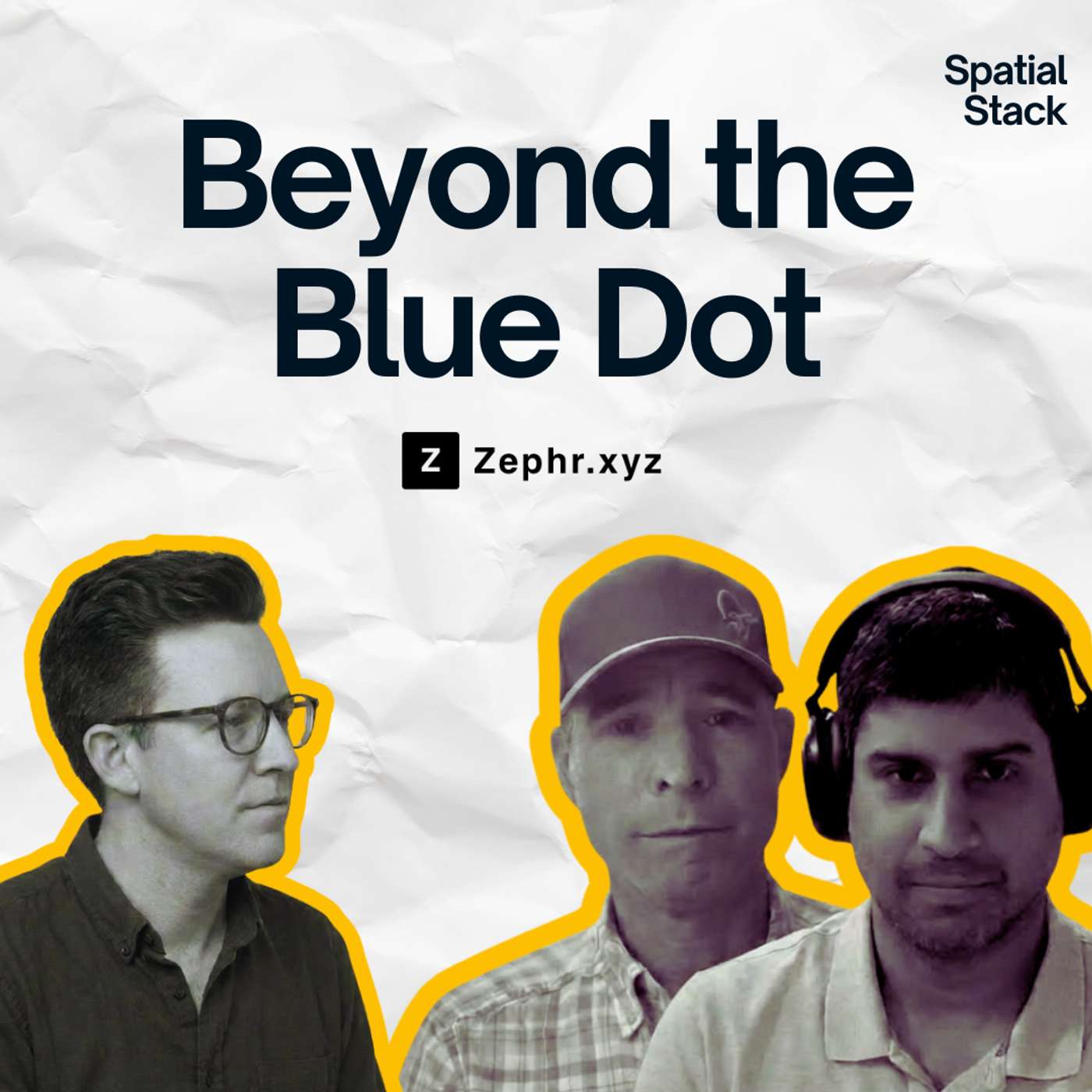
Beyond the Blue Dot: AI & LLM Navigation with Zephr's Sean Gorman and Pramukta Rao
from Spatial Stack with Matt Forrest · host Matt Forrest
What does it actually take for an AI to navigate you through the real world, without a screen and without a camera running the whole time?In this episode of the Spatial Stack, Matt Forrest sits down with Sean Gorman and Pramukta Rao, the co-founders of Zephr, to unpack how they ground large language models in location. Sean and Pramukta spent twenty years building startups together, from GeoIQ to Snap's visual positioning work, and at Zephr they walked away from the camera and went back to the sensors already in your phone.They get into why the blue dot on a map breaks down the moment you stop looking at a screen, why language models are bad at spatial reasoning like left, right, and across the street, and how they fix it by doing the geometry first and handing the model clean language. Instead of training ever-bigger foundation models, they push a small model and well-structured data down to the edge so the conversation stays fast.In this episode, we cover:- Why they left visual positioning and AR cameras behind after Snap- Cooperative positioning: getting survey-grade accuracy out of commodity phones- GNSS and the urban canyon problem (3 meters to 50 meters and back)- Beyond the blue dot: building a first-person, egocentric experience- Why LLMs struggle with geometry, and what context engineering solves- Small models at the edge vs giant foundation models- Overture Maps, GERS IDs, and conflating POIs with imagery to "agree on reality"- The grounding service: MCP, REST, and Opus or Gemma on device- Conversations about place as a new geospatial primitiveWhether you build with spatial data, work on AI navigation, or just want to see where location and LLMs are heading, this conversation is your field guide.Connect with Zephr:Website: https://zephr.xyzSean Gorman (LinkedIn): https://www.linkedin.com/in/sean-gorman-93a79Pramukta Rao (LinkedIn): https://www.linkedin.com/in/pramukta/Zephr (LinkedIn): https://www.linkedin.com/company/zephr-xyz00:00:00 – Intro and twenty years of startups together00:04:05 – Why they walked away from cameras and AR at Snap00:04:54 – Commodity sensors and cooperative positioning00:07:15 – GNSS 101 and the urban canyon problem00:10:56 – Beyond the blue dot: an egocentric experience00:13:37 – Why LLMs are bad at left, right, and across the street00:18:19 – Context engineering and the retrieval problem00:22:03 – Small models at the edge vs giant foundation models00:30:09 – Collective memory: OpenStreetMap, Mapillary, Overture00:32:08 – Conflating POIs with imagery to agree on reality00:35:36 – The grounding service: MCP, REST, Opus or Gemma on device00:38:37 – What's next: conversations as a new geospatial primitive00:42:22 – Where to find Zephr📊 FREE: The Modern GIS Skill MapThe 5 skills that actually matter in modern GIS (and what you can stop learning). Based on a survey of 1,400+ geospatial professionals.➡ Get the free training + PDF guide: https://forrest.nyc/go/training/🚀 Join The Spatial Lab:Stop guessing at your career path. Get direct mentorship, advanced training, and a roadmap to these high-value roles inside The Spatial Lab.👉 https://forrest.nyc/spatial-lab/📰 Daily modern GIS insights: https://forrest.nycCONNECT WITH ME📸 Instagram: https://www.instagram.com/matt_forrest/💼 LinkedIn: https://www.linkedin.com/in/mbforr/📧 Newsletter: https://forrest.nyc🌐 Website: https://forrest.nyc
What this episode covers
What does it actually take for an AI to navigate you through the real world, without a screen and without a camera running the whole time?In this episode of the Spatial Stack, Matt Forrest sits down with Sean Gorman and Pramukta Rao, the co-founders of Zephr, to unpack how they ground large language models in location. Sean and Pramukta spent twenty years building startups together, from GeoIQ to Snap's visual positioning work, and at Zephr they walked away from the camera and went back to the sensors already in your phone.They get into why the blue dot on a map breaks down the moment you stop looking at a screen, why language models are bad at spatial reasoning like left, right, and across the street, and how they fix it by doing the geometry first and handing the model clean language. Instead of training ever-bigger foundation models, they push a small model and well-structured data down to the edge so the conversation stays fast.In this episode, we cover:- Why they left visual positioning and AR cameras behind after Snap- Cooperative positioning: getting survey-grade accuracy out of commodity phones- GNSS and the urban canyon problem (3 meters to 50 meters and back)- Beyond the blue dot: building a first-person, egocentric experience- Why LLMs struggle with geometry, and what context engineering solves- Small models at the edge vs giant foundation models- Overture Maps, GERS IDs, and conflating POIs with imagery to "agree on reality"- The grounding service: MCP, REST, and Opus or Gemma on device- Conversations about place as a new geospatial primitiveWhether you build with spatial data, work on AI navigation, or just want to see where location and LLMs are heading, this conversation is your field guide.Connect with Zephr:Website: https://zephr.xyzSean Gorman (LinkedIn): https://www.linkedin.com/in/sean-gorman-93a79Pramukta Rao (LinkedIn): https://www.linkedin.com/in/pramukta/Zephr (LinkedIn): https://www.linkedin.com/company/zephr-xyz00:00:00 – Intro and twenty years of startups together00:04:05 – Why they walked away from cameras and AR at Snap00:04:54 – Commodity sensors and cooperative positioning00:07:15 – GNSS 101 and the urban canyon problem00:10:56 – Beyond the blue dot: an egocentric experience00:13:37 – Why LLMs are bad at left, right, and across the street00:18:19 – Context engineering and the retrieval problem00:22:03 – Small models at the edge vs giant foundation models00:30:09 – Collective memory: OpenStreetMap, Mapillary, Overture00:32:08 – Conflating POIs with imagery to agree on reality00:35:36 – The grounding service: MCP, REST, Opus or Gemma on device00:38:37 – What's next: conversations as a new geospatial primitive00:42:22 – Where to find Zephr📊 FREE: The Modern GIS Skill MapThe 5 skills that actually matter in modern GIS (and what you can stop learning). Based on a survey of 1,400+ geospatial professionals.➡ Get the free training + PDF guide: https://forrest.nyc/go/training/🚀 Join The Spatial Lab:Stop guessing at your career path. Get direct mentorship, advanced training, and a roadmap to these high-value roles inside The Spatial Lab.👉 https://forrest.nyc/spatial-lab/📰 Daily modern GIS insights: https://forrest.nycCONNECT WITH ME📸 Instagram: https://www.instagram.com/matt_forrest/💼 LinkedIn: https://www.linkedin.com/in/mbforr/📧 Newsletter: https://forrest.nyc🌐 Website: https://forrest.nyc
NOW PLAYING
Beyond the Blue Dot: AI & LLM Navigation with Zephr's Sean Gorman and Pramukta Rao
No transcript for this episode yet
Similar Episodes
Mar 26, 2026 ·1m
Jan 2, 2026 ·47m
Dec 21, 2025 ·46m