
EPISODE · Jun 12, 2026 · 27 MIN
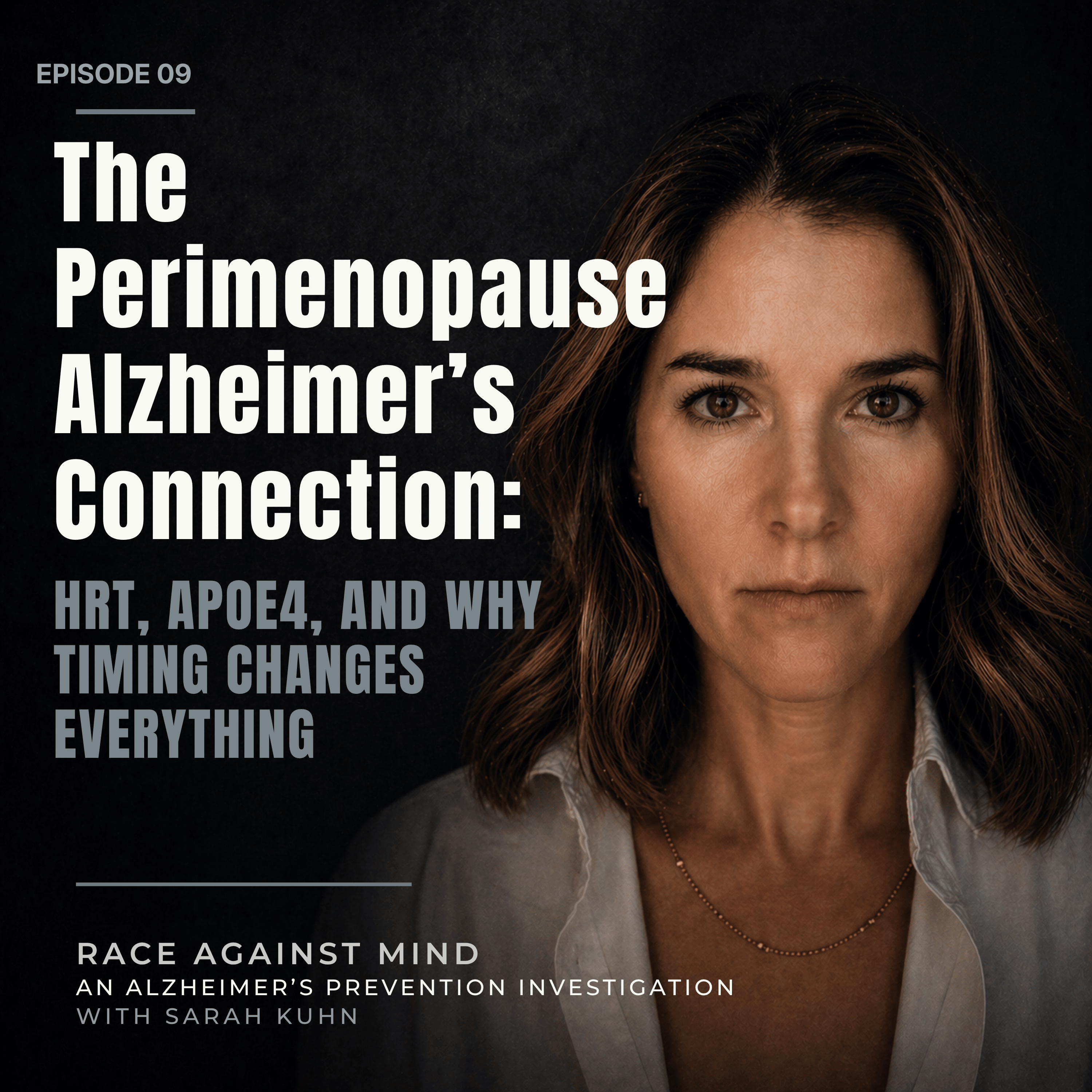
Ep. 9 The Perimenopause-Alzheimer’s Connection: HRT, APOE4, and Why Timing Changes Everything
from Race Against Mind: An Alzheimer's Prevention Investigation · host Sarah Kuhn
Women account for two-thirds of all Alzheimer’s cases. For a long time, the explanation was simple: women live longer. But that doesn’t fully account for the gap. What the research is now pointing to is that something happens during the perimenopausal transition that changes the brain’s trajectory : and for APOE4 carriers, that transition isn’t just uncomfortable. It may be the highest-leverage window in the entire prevention timeline. And it has a closing date.Last summer I started getting headaches I’d never had before. I was waking at 4am again : but differently than the nocturnal glucose drops I tracked in Episode 4. My CGM showed flat lines. My mood in the week before my period was something my husband noticed before I did. My cycles were shortening. I got my hormones tested. Everything came back normal. A month later I tested again : and the numbers were completely different.That second test is when I stopped telling myself it was stress.This episode covers what I found when I went into the research, covering the neuroprotective role of estrogen and progesterone, the FSH finding that changes how the field thinks about hormonal risk, the critical window hypothesis, the WHIMS study and what it actually tested, why the breast cancer scare was driven by the wrong formulation, and what all of it means specifically for APOE4 carriers. Then what I personally did: two hormone panels, bioidentical progesterone in November, transdermal estradiol in January, and what happened.I’m 42. I’m a double APOE4 carrier. This is not a future episode topic anymore.Shownotes
Embed this episode
NOW PLAYING
Ep. 9 The Perimenopause-Alzheimer’s Connection: HRT, APOE4, and Why Timing Changes Everything
No transcript for this episode yet
Similar Episodes
No similar episodes found.
Similar Podcasts
No similar podcasts found.