Friday Reflection 27: The Poor Historian
from Sensible Medicine Hosted by Adam Cifu, MD
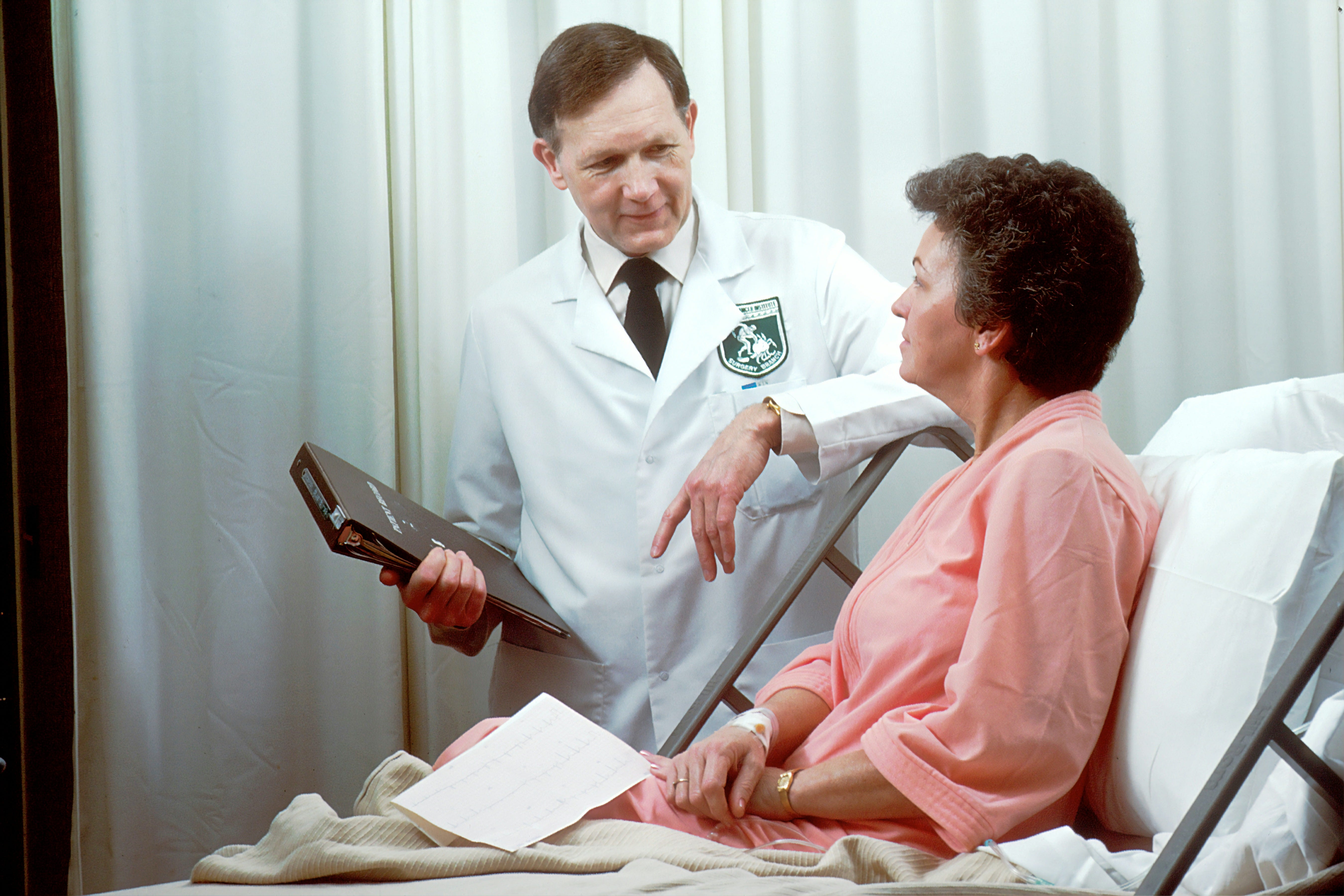
BW was a 66-year-old woman who presented to the general medicine clinic for an urgent visit. She reported that she had been having dizziness for the last four days. When pressed, she said it occurred intermittently, being present more than absent. She could not identify any palliative or provocative features, and when asked about associated symptoms, she said that she felt “bad and scared” when it was present. The doctor encouraged her many times to characterize the dizziness, but she could only say that when she had it, she felt dizzy. Sensible Medicine is a reader-supported publication. If you appreciate our work, consider becoming a free or paid subscriber. Many a medical trainee has been humiliated on morning rounds after proclaiming that their presentation was wanting because the “patient was a poor historian.” Any attending worth her white coat will respond in one of the following ways: “There are no poor historians, just poor history-takers.” “You do realize, don’t you, that the patient is not the historian? You are the historian.” “Did you consider the differential diagnosis of why you were unable to obtain a useful history?” I admit that, going for pith over constructive criticism, I employ the former two more than the latter one. There is a differential diagnosis for the patient who cannot describe the history of their medical concerns. Often, a doctor's inability to obtain a history is actually a physical exam finding, an extremely nonspecific one, but a finding nonetheless. Psychiatric disease, dementia, and delirium (whose differential diagnosis itself is practically a textbook of medicine) will render a patient unable to provide an accurate history. I can recall dozens of “poor historians'' who became Robert Caro-esque once their hypercapnea, uremia, or alcohol withdrawal was treated. Three other reasons make obtaining reliable, informative histories a struggle. 1. We think with language The first — the saddest, most troublesome, and probably most common – reason that patients are unable to provide a reliable history is because of their impaired language skills. Not only do we use language to communicate, we also use language to think. George Orwell wrote, “…if thought corrupts language, language can also corrupt thought.” Those of us who failed to master language, usually through inadequate education, often can't express our health concerns clearly. Sometimes, when I listen to a patient describe symptoms, I get the sense the problem is more than expressive. BW was not an especially striking example of this; she was just one of the more recent. She also presented with a problem for which an accurate history is critical. A patient's dizziness history radically alters the differential diagnosis. We teach trainees that the first question to pose to a patient with dizziness is, “What do you mean, dizzy?” We tell trainees to ask the question, then sit back and listen. More often than not, patients describe their dizziness in ways that can be interpreted as lightheadedness, vertigo, unsteadiness, or a nonspecific feeling of being unwell. As I interviewed BW, I sensed that she struggled not only to articulate what she was feeling but also to figure it out herself. Beyond my frustration in having trouble caring for her, I considered the lifelong impact of leaving people educationally impoverished— we limit their earning potential and, more importantly, leave them with a less rich internal life. 2. Anxiety affects how we experience symptoms VG is a patient I have seen for years, from his mid-30s to his early 60s. He has a few mild chronic medical conditions and a very severe anxiety disorder. He is a successful professional but struggles with intermittent episodes of health-related anxiety. Our interactions usually begin with an email or a phone call. VG will have become anxious about a new symptom. The symptom is real – joint pain, a rash, a new floater. The symptom has generated a web of worry about what it could portend. The worries are always baseless and would be amusing if they were not so clearly painful and disturbing to him. I have learned that for VG, as well as for many patients like him, these concerns require a visit. An accurate history cannot be obtained without seeing him. The anxiety clouds VG’s experience of the symptom. The knee pain becomes excruciating, the rash ubiquitous, the floater debilitating. His response to simple questions — Is the knee pain worse coming down the stairs? Where is the rash? Do you see the floater in one or both eyes? — are unreliable. Seeing VG, offering reassurance, and obtaining objective physical data are imperative. 3. Secondary gain “Listen to your patient; he is telling you the diagnosis” is an Osler (or merely Oslerian) quotation. From the earliest days of our training, we are taught to listen to our patients and believe what they are telling us. Our greatest sin in history-taking is that we interrupt too soon and too often. We ask closed-ended and leading questions. When an answer doesn’t align with our hypothesis, we either ignore it or doubt its veracity. However, patients are people and people lie. Patients exaggerate the symptoms of their sinus infection to get an antibiotic prescription. Patients tell you that their oxycodone or Ambien fell in the sink or toilet so they can get an early refill. I have had numerous people appear on my schedule with the chief concern of “chest pain” documented by the nurse. When I ask, “Tell me about your chest pain?” the patient responds, sheepishly, “I’m not actually here for chest pain, but I really needed to see you, and I knew that would get me in.” Some of these untruths are the proverbial chickens coming home to roost. Patients exaggerate symptoms because they fear they will not otherwise be taken seriously. They fear mild but troublesome or worrisome symptoms will be met with: “Let’s just watch that.” “That doesn’t really sound like it warrants treatment.” “If it hurts to bend your arm, don’t bend your arm.” Most everyone learns at some point the factoid that 80% of diagnoses come from the medical history. However, contrary to a standardized test on which the medical history is presented in a paragraph of clean prose, it requires skill to obtain a medical history. A novice will take longer than an expert to extract a less accurate history. From some patients, however, not even an experienced physician can obtain a cogent medical history. This failure may be a clue to an underlying diagnosis. It may also be related to a person's education, their health-related anxiety, or their effort, conscious or unconscious, to influence the doctor. This is a public episode. If you'd like to discuss this with other subscribers or get access to bonus episodes, visit www.sensible-med.com/subscribe
Embed this episode
No transcript yet.