
EPISODE · Mar 5, 2024 · 22 MIN
Houston We Have a Problem (With Space Junk)
from Houston We Have a Problem (With Space Junk) · host Inception Point AI
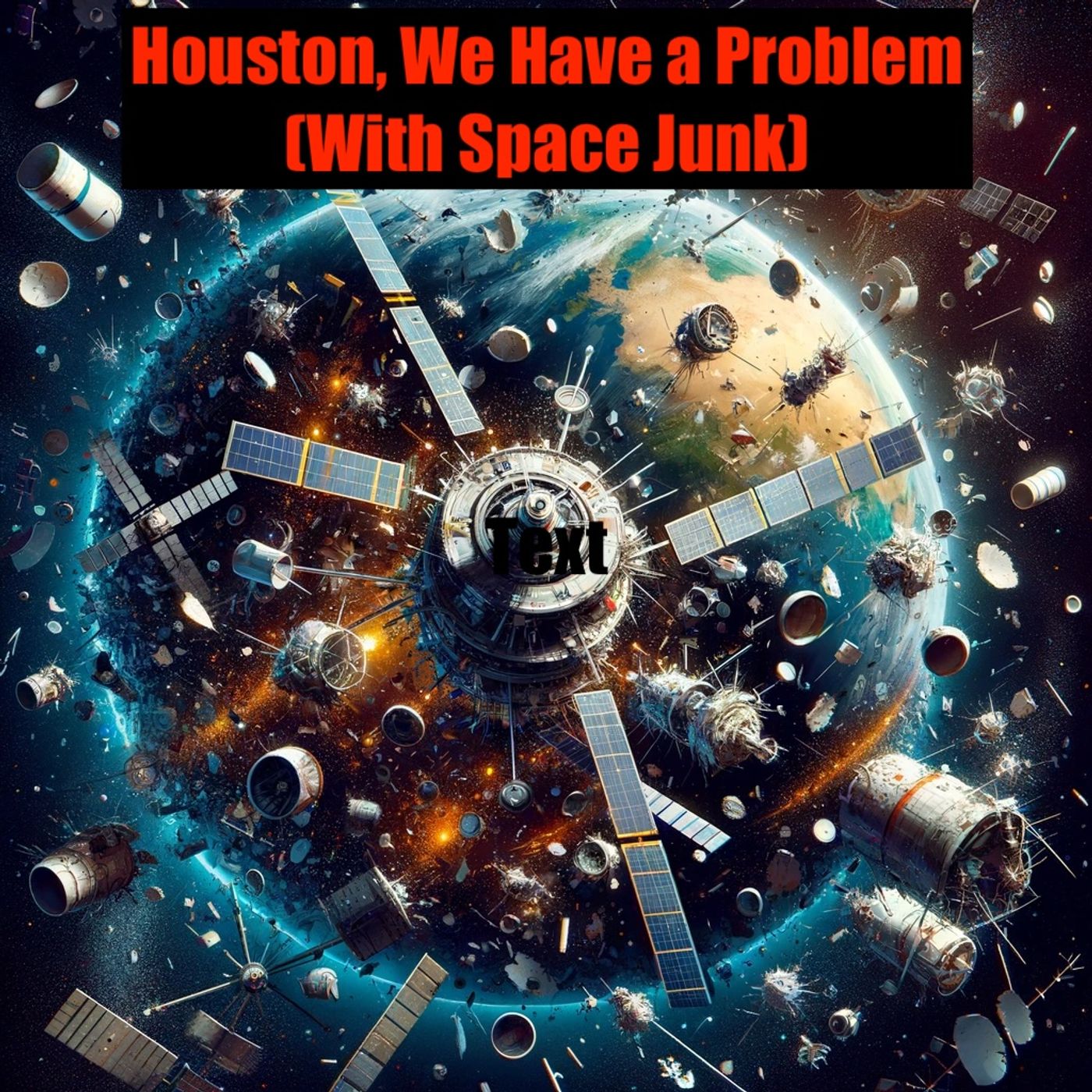
Houston, We Have a (Garbage) Problem Picture this: you're an astronaut, floating peacefully in space, minding your own business. Suddenly, a fleck of paint whizzes by your helmet at 17,500 miles per hour. That's not a shooting star, my friend—it's space junk, and it's a growing problem for our cosmic neighborhood. Since the dawn of the space age, humans have been launching objects into Earth's orbit like there's no tomorrow. We've sent up satellites, rockets, and even a few lucky individuals (shoutout to Yuri Gagarin). But what goes up doesn't always come down, and now we're facing a serious case of orbital congestion. You see, space junk isn't just an eyesore; it's a genuine threat to our space activities. Those tiny bits of debris can cause major damage to satellites and spacecraft and even pose risks to life on Earth. It's like playing a high-stakes game of dodgeball, except the balls are supersonic and made of metal. In this epic exploration of space junk, we'll dive into the history, risks, and potential solutions to this galactic garbage problem. We'll explore the incredible (and sometimes wacky) ideas scientists have cooked up to clean up our cosmic mess, from space nets to laser beams. And we'll grapple with the philosophical questions raised by our orbital dumping ground. Is space truly the final frontier, or just the universe's largest landfill? So buckle up, space cadets—we're about to embark on a wild ride through the wonderful world of space junk. Keep your hands and feet inside the spacecraft at all times, and remember: in space, no one can hear you clean. Chapter 1: What Goes Up... To understand the space junk problem, we first need to grasp the sheer scale of human space activity. Since the Soviet Union launched Sputnik 1 in 1957, we've sent over 9,000 satellites into Earth's orbit. That's a lot of metal flying around up there! But not all of those satellites are still operational. In fact, the vast majority of them are now just floating hunks of junk. According to the European Space Agency, only about 1,800 of the 4,500 satellites currently in orbit are actually functioning. The rest? Space junk. And it's not just defunct satellites we have to worry about. Every rocket launch leaves behind bits and pieces, from spent booster stages to payload fairings. Even something as small as a fleck of paint can become a hazard in space, thanks to the incredible speeds at which objects orbit the Earth. Imagine a piece of debris the size of a pea hitting a satellite at 17,500 miles per hour. That's like getting hit by a bullet—in space! And with over 23,000 pieces of orbital debris larger than 4 inches currently being tracked by NASA, the risk of a catastrophic collision is only growing. But it gets worse. You see when two pieces of space junk collide, they create even more debris. It's like a cosmic game of billiards, with each collision spawning thousands of new hazards. Scientists call this phenomenon the Kessler Syndrome, named This content was created in partnership and with the help of Artificial Intelligence AI.
What this episode covers
Houston, We Have a (Garbage) Problem Picture this: you're an astronaut, floating peacefully in space, minding your own business. Suddenly, a fleck of paint whizzes by your helmet at 17,500 miles per hour. That's not a shooting star, my friend—it's space junk, and it's a growing problem for our cosmic neighborhood. Since the dawn of the space age, humans have been launching objects into Earth's orbit like there's no tomorrow. We've sent up satellites, rockets, and even a few lucky individuals (shoutout to Yuri Gagarin). But what goes up doesn't always come down, and now we're facing a serious case of orbital congestion. You see, space junk isn't just an eyesore; it's a genuine threat to our space activities. Those tiny bits of debris can cause major damage to satellites and spacecraft and even pose risks to life on Earth. It's like playing a high-stakes game of dodgeball, except the balls are supersonic and made of metal. In this epic exploration of space junk, we'll dive into the history, risks, and potential solutions to this galactic garbage problem. We'll explore the incredible (and sometimes wacky) ideas scientists have cooked up to clean up our cosmic mess, from space nets to laser beams. And we'll grapple with the philosophical questions raised by our orbital dumping ground. Is space truly the final frontier, or just the universe's largest landfill? So buckle up, space cadets—we're about to embark on a wild ride through the wonderful world of space junk. Keep your hands and feet inside the spacecraft at all times, and remember: in space, no one can hear you clean. Chapter 1: What Goes Up... To understand the space junk problem, we first need to grasp the sheer scale of human space activity. Since the Soviet Union launched Sputnik 1 in 1957, we've sent over 9,000 satellites into Earth's orbit. That's a lot of metal flying around up there! But not all of those satellites are still operational. In fact, the vast majority of them are now just floating hunks of junk. According to the European Space Agency, only about 1,800 of the 4,500 satellites currently in orbit are actually functioning. The rest? Space junk. And it's not just defunct satellites we have to worry about. Every rocket launch leaves behind bits and pieces, from spent booster stages to payload fairings. Even something as small as a fleck of paint can become a hazard in space, thanks to the incredible speeds at which objects orbit the Earth. Imagine a piece of debris the size of a pea hitting a satellite at 17,500 miles per hour. That's like getting hit by a bullet—in space! And with over 23,000 pieces of orbital debris larger than 4 inches currently being tracked by NASA, the risk of a catastrophic collision is only growing. But it gets worse. You see when two pieces of space junk collide, they create even more debris. It's like a cosmic game of billiards, with each collision spawning thousands of new hazards. Scientists call this phenomenon the Kessler Syndrome, named This content was created in partnership and with the help of Artificial Intelligence AI.
NOW PLAYING
Houston We Have a Problem (With Space Junk)
No transcript for this episode yet
Similar Episodes
Mar 26, 2026 ·1m
Jan 2, 2026 ·47m
Dec 21, 2025 ·46m