
EPISODE · Mar 28, 2026 · 20 MIN
Mastering the Art of Receiving Feedback
from Culture Coalition Podcast
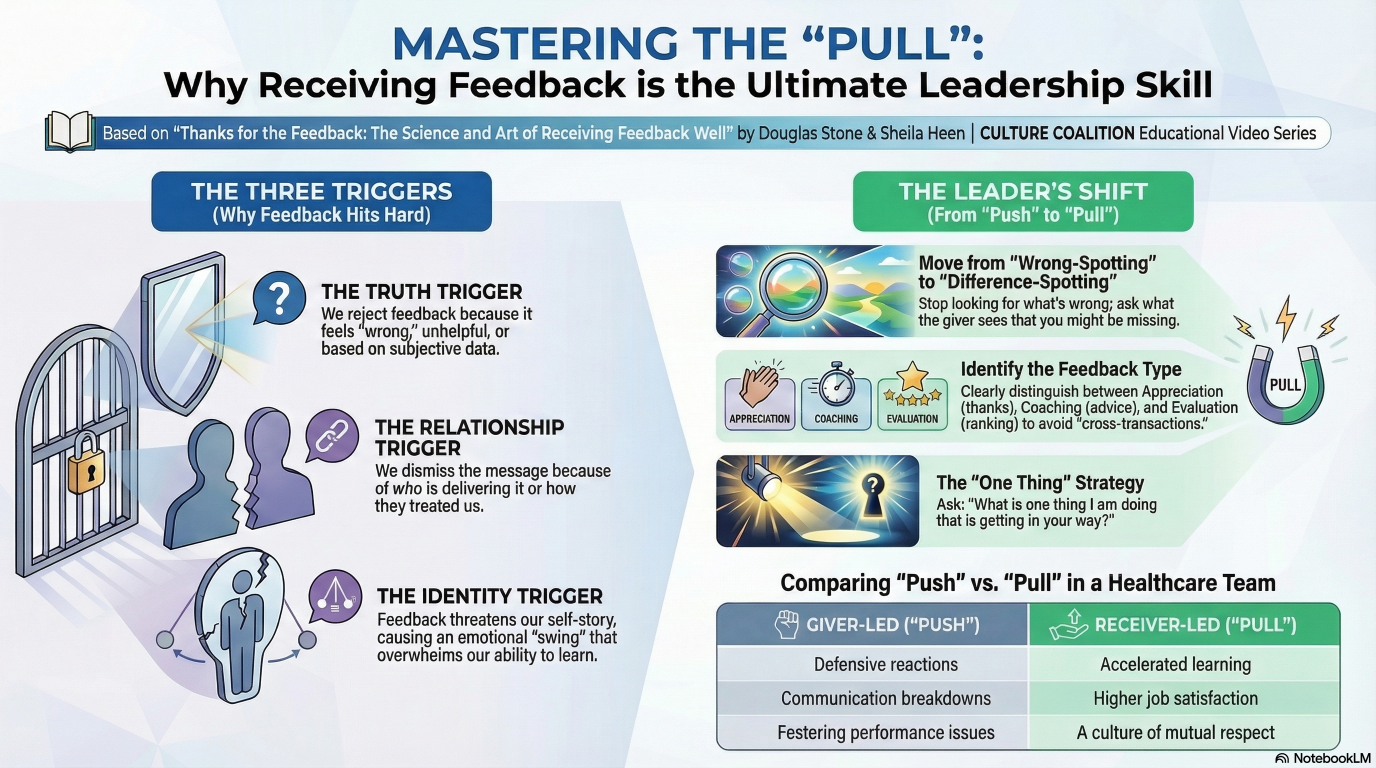
Why the Best Healthcare Leaders "Pull" Feedback Instead of "Pushing" ItThe Culture Coalition’s pivot to a "team of teams" model in women’s healthcare demands a radical re-evaluation of our feedback loops. While physician and APP leaders often fixate on delivering better critiques, safety outcomes depend on how information is received. We must navigate hierarchy by shifting from "pushing" to "pulling."The Receiver is in Charge (The "Pull" vs. "Push") Sheila Heen notes that the receiver controls the feedback loop. By "pulling" feedback—actively soliciting it—leaders dismantle clinical hierarchy and empower staff to speak up. Proactively seeking "pull" ensures that information is actually adopted and integrated, rather than just delivered."In any exchange of feedback between giver and receiver, it’s the receiver who’s in charge... deciding what they’re going to let in."Dismantle the Three Triggers Leaders must navigate three triggers that block growth in high-stakes environments:Truth Triggers: Feeling the data is "wrong," often ignoring the "blind spot" of how our behavior is actually experienced by others.Relationship Triggers: Reacting to the giver's credibility. Interdisciplinary friction often causes staff to dismiss valid data due to the optics of hierarchy.Identity Triggers: Feeling a threat to one's professional self-worth.Start with the Human, Not the Evidence Simon Sinek suggests that pointing to checklists first triggers defensiveness. Instead, create conditions where feedback is welcomed by starting with the human connection: "I’m sharing this because I care about your growth." This approach prioritizes the person, making the subsequent clinical evidence digestible.The Power of "One Thing" The most effective tactical tool for busy leaders is asking: "What is one thing I am doing (or failing to do) that gets in the way of our team?" Most staff maintain a "secret list" of frustrations; this question grants them permission to share, unlocking immediate tactical improvements.Conclusion: A New Standard for Excellence Optimal reception is the ultimate skill for high-stakes healthcare leadership. By mastering the "pull," we ensure safety data is integrated, not ignored. What would a culture of proactive "pull" do for your patient safety outcomes? Hosted on Acast. See acast.com/privacy for more information.
What this episode covers
Why the Best Healthcare Leaders "Pull" Feedback Instead of "Pushing" ItThe Culture Coalition’s pivot to a "team of teams" model in women’s healthcare demands a radical re-evaluation of our feedback loops. While physician and APP leaders often fixate on delivering better critiques, safety outcomes depend on how information is received. We must navigate hierarchy by shifting from "pushing" to "pulling."The Receiver is in Charge (The "Pull" vs. "Push") Sheila Heen notes that the receiver controls the feedback loop. By "pulling" feedback—actively soliciting it—leaders dismantle clinical hierarchy and empower staff to speak up. Proactively seeking "pull" ensures that information is actually adopted and integrated, rather than just delivered."In any exchange of feedback between giver and receiver, it’s the receiver who’s in charge... deciding what they’re going to let in."Dismantle the Three Triggers Leaders must navigate three triggers that block growth in high-stakes environments:Truth Triggers: Feeling the data is "wrong," often ignoring the "blind spot" of how our behavior is actually experienced by others.Relationship Triggers: Reacting to the giver's credibility. Interdisciplinary friction often causes staff to dismiss valid data due to the optics of hierarchy.Identity Triggers: Feeling a threat to one's professional self-worth.Start with the Human, Not the Evidence Simon Sinek suggests that pointing to checklists first triggers defensiveness. Instead, create conditions where feedback is welcomed by starting with the human connection: "I’m sharing this because I care about your growth." This approach prioritizes the person, making the subsequent clinical evidence digestible.The Power of "One Thing" The most effective tactical tool for busy leaders is asking: "What is one thing I am doing (or failing to do) that gets in the way of our team?" Most staff maintain a "secret list" of frustrations; this question grants them permission to share, unlocking immediate tactical improvements.Conclusion: A New Standard for Excellence Optimal reception is the ultimate skill for high-stakes healthcare leadership. By mastering the "pull," we ensure safety data is integrated, not ignored. What would a culture of proactive "pull" do for your patient safety outcomes? Hosted on Acast. See acast.com/privacy for more information.
NOW PLAYING
Mastering the Art of Receiving Feedback
No transcript for this episode yet
Similar Episodes
Mar 26, 2026 ·1m
Jan 2, 2026 ·47m
Dec 21, 2025 ·46m