
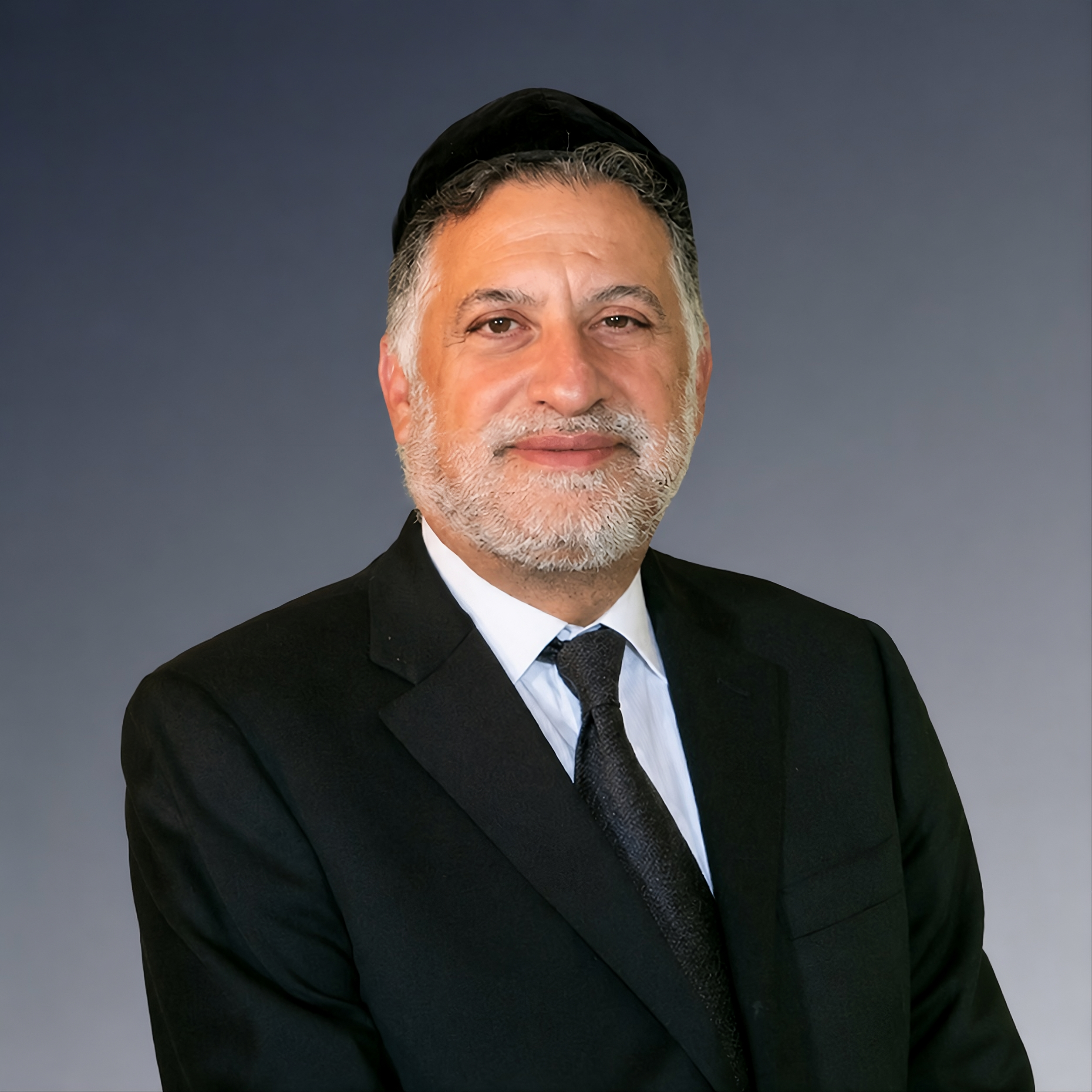
EPISODE · Jun 15, 2026
“Rabbi Yishmael Omer”
from Daily Halacha Podcast - Daily Halacha By Rabbi Eli J. Mansour · host Rabbi Eli Mansour
We conclude the daily Korbanot section with "Rabbi Yishmael Omer" – a Berayta (passage by a Tanna) authored by the great sage Rabbi Yishmael, listing the thirteen methods with which the Sages extracted Halachot from the text of the Torah. If one wishes to extract oil from the ground, it is not enough to know where the oil is located – he needs the right machinery to extract the oil from beneath the ground. Likewise, to deduce Halachot from the Biblical text, one needs to have the "tools," the rules by which the Halacha can be determined based on a careful analysis of the text. The first of these "tools" is Kal Va'homer, whereby a conclusion is reached through logical deduction, by noting that the Halacha applies in a less intuitive context. An analogy would be a person concluding that he can lift a certain heavy object after seeing that someone weaker than him was able to lift it. An example of a Kal Va'homer in the Torah is G-d's announcement of Miriam's punishment for speaking Lashon Ha'ra. He said that if Miriam's father had angrily scorned her, she would be ashamed for an entire week, so certainly, now that Hashem has scorned her by having her stricken with Sara'at, she should remain outside the camp for a week (Bamidbar 12:14). The second of Rabbi Yishmael's thirteen methods is Gezera Shava – extending a Halacha that applies in one context to a different context on the basis of a common word shared by these two areas of Halacha. Likely the most famous Gezera Shava is the connection drawn by the Sages between Pesach and Sukkot. The Torah establishes an obligation to eat Masa on the night of Pesach, the 15 th of Nissan, and the Sages deduced that on the first night of Sukkot one is similarly required to eat bread in the Sukka. As the Torah requires observing Pesach on "Hamisha Asar" – the "15 th " of Nissan, and it requires observing Sukkot on "Hamisha Asar" – the 15 th of Tishreh, we may infer that the obligation that applies on the night of Pesach applies also on Sukkot. Hence, one must eat bread in the Sukka on the first night of Sukkot just as one must eat Masa on the first night of Pesach. (Throughout the rest of Sukkot, although one who wishes to eat bread must do so in the Sukka, he does not have an obligation to eat bread in the Sukka; this obligation applies only on the first night.) The Tur writes that we recite this Berayta at the end of the Korbanot section between it is the introduction to Torat Kohanim – the Halachic Midrash on the Book of Vayikra, which focuses on the sacrifices, and is thus relevant to the topic of sacrifices. Furthermore, this Berayta appears in the Gemara (Yoma 33a), and thus by incorporating it as part of our daily prayer service, we ensure to learn some Gemara each day (just as reciting Ezehu Mekoman each day ensures the daily study of Mishna).
What this episode covers
Daily Halacha - delivered directly to your computer and/or mobile device.
NOW PLAYING
“Rabbi Yishmael Omer”
No transcript for this episode yet
Similar Episodes
Mar 26, 2026 ·1m
Jan 2, 2026 ·47m
Dec 21, 2025 ·46m