
PODCAST · religion
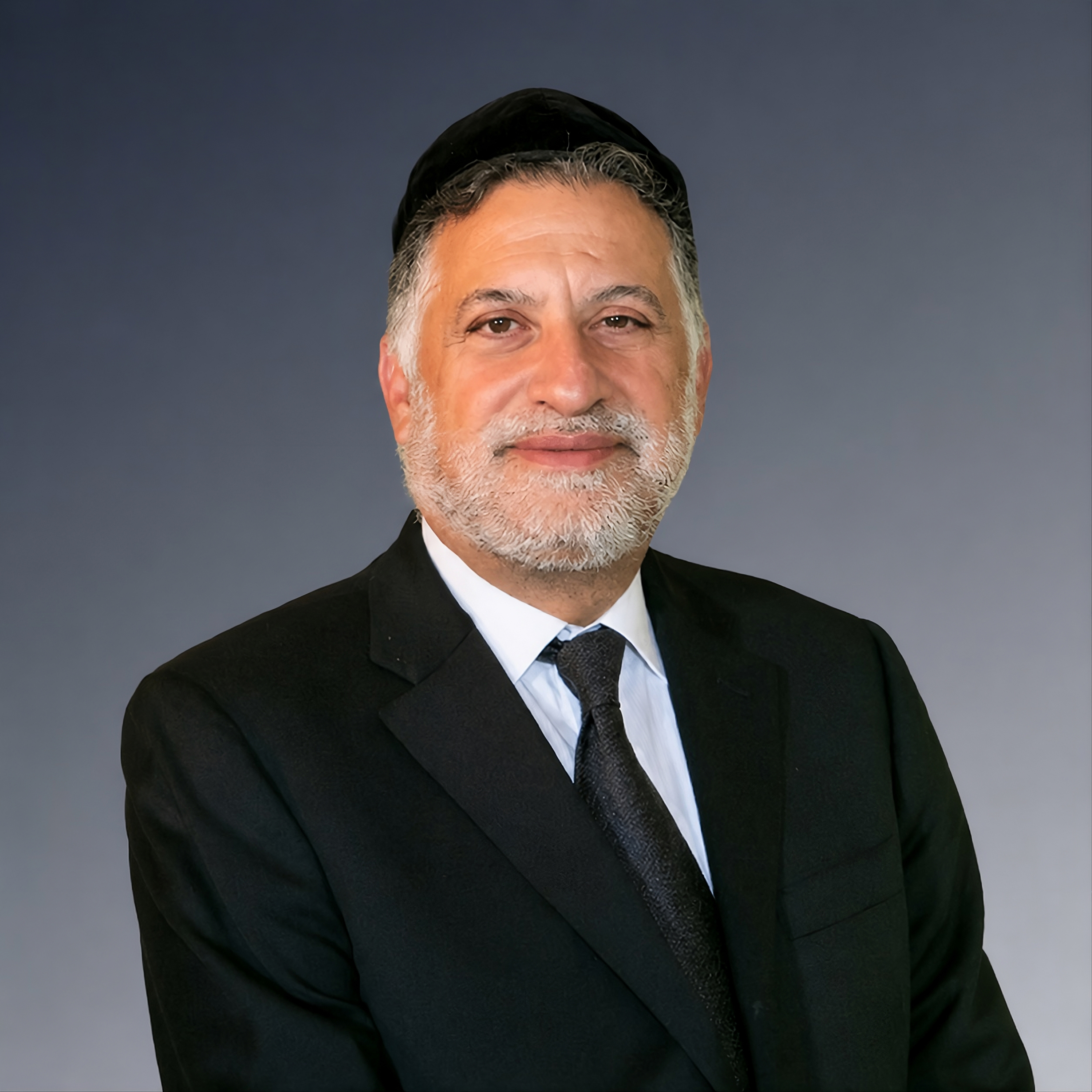
Daily Halacha Podcast - Daily Halacha By Rabbi Eli J. Mansour
by Rabbi Eli J. Mansour
Daily Halacha Given Daily by Rabbi Eli J. Mansour. Please check back frequently to get the latest Halacha.
-
25
Shaking Hands With Somebody Who Did Not Wash Netilat Yadayim in the Morning
As we have seen, Kabbalistic sources teach that a spirit of impurity descends upon a person's hands overnight, and it is removed only by washing his hands three times in alternating fashion. If a person does not wash his hands in this manner, the impure forces remain on his hands. This gives rise to the question of whether a person must repeat Netilat Yadayim after shaking the hand of a Jew who most likely did not wash Netilat Yadayim that day. If one knows that the fellow whose hand he shook is not halachically observant, or is not knowledgeable about requirements such as the morning Netilat Yadayim, must he wash his hands again, since the impurity transferred from the other person's hand onto his? (This question applies only in the case of a Jew who most likely did not wash Netilat Yadayim; the spirit of impurity does not affect the hands of gentiles, and so there is clearly no concern when one shakes a gentile's hand.) Hacham Bension Abba Shaul (Jerusalem, 1924-1998), in Or Le'sion, rules that one does not need to repeat Netilat Yadayim in this case. The only exception, he writes, is if one's hands were still wet from the morning Netilat Yadayim when he shook the other person's hands. According to Hacham Bension, the Halacha in this case resembles the case of one who washed Netilat Yadayim for bread and then touched the hand of somebody who had not washed. In that case, one needs to repeat Netilat Yadayim only if his hands were still wet from the initial washing when they came in contact with the other person's hand. Hacham Bension maintained that after the morning Netilat Yadayim, too, one who dried his hands does not need to repeat the washing if he touched the hand of somebody who had not washed Netilat Yadayim. This is the ruling also of the Kapeh Aharon (Rav Aharon Azriel, 1819–1879). Hacham Ovadia Yosef, however, noted that Rav Haim Palachi (Turkey, 1788-1868) requires repeating the washing in this case, and that this appears to be the view also of the Ben Ish Hai (Rav Yosef Haim of Baghdad, 1833-1909), since the impurity can be transferred by the hand shake. Therefore, Hacham Ovadia ruled that one should try to be stringent and repeat the washing after shaking the hand of a Jew who did not wash Netilat Yadayim in the morning. This applies only if one touched the other person's fingers, which is the place to where the forces of impurity cling. If he touched only the palm, then he certainly does not need to repeat Netilat Yadayim. Summary: Different opinions exist as to whether one must repeat the morning Netilat Yadayim if he shakes the hand of a Jew who most likely did not properly wash Netilat Yadayim in the morning. One should consult his Rabbi for practical guidance.
-
24
Learning or Praying in the Presence of Water That Had Been Used for the Morning Netilat Yadayim
Water that was used for the morning Netilat Yadayim is considered impure, as it contains the impurity that had descended on the hands during the night. Therefore, if this water fell on the ground, one should not step on it. Once the area is dry, there is no longer any concern, and one may walk on the ground where the water had been. If one washed his hands in the morning into a basin, and had yet to discard the water from the basin, may a person learn or pray in the presence of this water while it is exposed? The Hida (Rav Haim Yosef David Azulai, 1724-1806) writes that the custom among the especially pious was to refrain from learning or praying in the presence of this water, due to its status of impurity. The work Helek Levi questioned this stringency, noting that the Shulhan Aruch permits learning Torah and reciting Berachot before one washes his hands in the morning. If Torah learning is allowed before one washes, then certainly it is allowed in the presence of the water used for washing. Hacham Ovadia Yosef explained that the Hida disagreed with the Shulhan Aruch, and followed the view of the Zohar that one may not recite Berachot before washing his hands in the morning because of the impure forces that descend on the hands during the night – which is the opinion that we follow. Quite reasonably, then, he approved of the practice to refrain from learning or praying in the presence of the water used to remove this impurity. Hacham Ovadia further notes the ruling of the Magen Abraham (Rav Abraham Gombiner, Poland, d. 1682) allowing one to wash Mayim Aharonim (the washing at the end of a meal) over the floor under the table, and then recite Birkat Ha'mazon. Since nobody walks on the area underneath the table, there is no reason to prohibit washing over that part of the floor. The Magen Abraham clearly assumes that it is acceptable to recite Birkat Ha'mazon in the presence of the water used for Mayim Aharonim, even though that water is exposed. One might, at first glance, extend this ruling also to the case of water used for the morning Netilat Yadayim. However, Hacham Ovadia dismisses this line of reasoning, given the possibility that the impurity on the hands in the morning is treated more severely than the status of one's hands before washing Mayim Aharonim. Indeed, the impurity on one's hands in the morning is eliminated only by pouring water over the hands three times, and not just twice, clearly indicating that this impurity is more difficult to eliminate. By the same token, then, even if one may recite blessings in the presence of the water used for Mayim Aharonim, this might still be forbidden in the presence of the water used for the morning washing, given its severe level of contamination. Indeed, Rav Haim Palachi (Turkey, 1788-1868) writes that one may, strictly speaking, recite Birkat Ha'mazon in the presence of an open bowl containing water that was used for Mayim Aharonim, but not in the presence of water that was used for the morning Netilat Yadayim. And both the Hida and the Ben Ish Hai (Rav Yosef Haim of Baghdad, 1833-1909) were of the opinion that the water used for Netilat Yadayim has a more stringent level of impurity than even urine, such that one may not learn or pray in the presence of this water just as this is forbidden in the presence or urine. In conclusion, then, on the level of strict Halacha it is permissible to pray or learn Torah in the presence of the water with which one had washed the morning Netilat Yadayim, though there is a basis for stringency as a measure of piety. However, Hacham Ovadia ruled that if one pours a Rebi'it (approximately 3 ounces) of water over this water, then this negates the impurity and there is then no room for stringency at all. Summary: If water that had been used for the morning hand-washing was not discarded, and it is exposed, it is permissible to pray or learn Torah in its presence, though it is a measure of piety to refrain from doing so. One who wishes to be stringent should cover the water or pour on it a Rebi'it of ordinary water before praying or learning in its presence.
-
23
If One Washed Netilat Yadayim in a Place Where People Walk
As discussed in a previous installment, the water with one washed Netilat Yadayim in the morning is considered impure, and could cause harm to those who step on in. Therefore, one must ensure not to wash his hands in a place where people walk, and to wash instead directly into a sink, or into a utensil and then pour the water down a drain. If one mistakenly washed Netilat Yadayim on the ground in a place where it could be stepped on, he must pour more water over it to wash it away, out of concern for the wellbeing of others. The Poskim address the question of how much water is needed to wash away the contaminated water. The Ben Ish Hai (Rav Yosef Haim of Baghdad, 1833-1909) writes that one should pour "a lot of water," without specifying a particular quantity. The Yalkut Yosef writes that the Halacha in this case might resemble the Halacha requiring pouring a Rebi'it of water over urine to eliminate its status as urine so that one may read the Shema in its presence (Shulhan Aruch, Orah Haim 77:1). Perhaps the same small amount is required to eliminate the impurity of water that had been used for Netilat Yadayim. On the other hand, the Yalkut Yosef adds, one could argue that more water is needed in the case of water used for hand-washing. Hacham Ovadia Yosef, in Yabia Omer (vol. 3, 1:9), brings different views regarding this question. Hacham Avraham Hamwey (Aleppo, 1838-1886) shows that according to the Hida (Rav Haim Yosef David Azulai, 1724-1806), water used for hand-washing has a stricter status than that of urine, and thus a large amount of water is needed to eliminate this status. Many others, however, as Hacham Ovadia cites, ruled leniently, that it suffices to pour just a Rebi'it of water over the water used for washing. Hacham Ovadia appears to favor the lenient position. By contrast, Rav Ovadia Hedaya (1889-1969), in Yaskil Abdi, rules that one must use more water than the amount of contaminated water. It is preferable to follow this stringent opinion. The Yalkut Yosef writes that if the water used for Netilat Yadayim spilled over a tiled floor, it may be cleaned with a mop or rag. At first glance, one might question this ruling, in light of the fact that the water will contaminate the mop or rag which absorbs it. Rav Yisrael Bitan suggests explaining this ruling in light of a teaching of the Ben Ish Hai concerning the handles of the cup used for Netilat Yadayim. In his Od Yosef Hai, the Ben Ish Hai writes that one may hold the handles of the cup as he pours the water over his hands, even though there are contaminated droplets of water on the handles from when he first touched them. The reason, the Ben Ish Hai explains, is that the harmful spiritual forces are "arrogant" and only bother affecting significant water. The droplets on the handles, which are hardly visible, are regarded as "beneath their honor," and so they do not bother affecting it. It stands to reason that this applies also to water absorbed by rags or a mop, and so the water that had been used for washing may be cleaned with a rag or mop. Summary: If one mistakenly washed Netilat Yadayim in the morning in a place where people might step on them, or if the water spilled in such a place, he must pour water over them so they are not stepped on. Preferably, he should pour an amount of water exceeding the amount of contaminated water on the ground. If the water spilled on a tiled floor, it may be cleaned with a rag or mop.
-
22
The Impurity of the Water Used for Netilat Yadayim (with Special intro on Halacha in General)
The Shulhan Aruch (Orah Haim 4:8) writes that one should perform Netilat Yadayim in the morning by washing his hands over a utensil, as opposed to washing them over the ground. The reason is that once the water comes in contact with the hands, it becomes impure, and if it then falls to the ground and people step on it, they can suffer harm as a result. Therefore, one should wash into a vessel, and then discard the water in a place where people will not come in contact with it. Of course, one fulfills his obligation regardless of where he performs Netilat Yadayim, but out of concern for the wellbeing of others, he should ensure that the water does not end up in a place where people walk. Needless to say, the preferred place for washing Netilat Yadayim is in a sink, as the contaminated water descends right down the drain and into the sewer system, where nobody will tread on it. Nevertheless, this Halacha is relevant to those who sleep in a Sukka on Sukkot, and want to wash their hands in the Sukka or right outside the Sukka. They must wash into a utensil and then pour the water into a drain, safely away from people. Another situation where this becomes relevant nowadays is a camping trip. One must ensure when washing in the morning not to wash in a place where the water might be stepped on. It is acceptable to wash on soft earth, such that the water is quickly absorbed into the ground, or on a hill such that the water right away descends to a place where nobody walks. Some Poskim advise rinsing the sink after washing Netilat Yadayim, to clear it from the impurity of the water. If utensils used with food are in the sink, it is preferable not to wash Netilat Yadayim over the utensils, and to instead move them to the side. If one did wash over the utensils, he must ensure to wash them afterward, though, quite obviously, utensils in the sink are in any event dirty and waiting to be washed. After one washes Netilat Yadayim, the water is forbidden for any type of benefit. It may not be used for watering plants, or given to a pet to drink. Summary: The water used for Netilat Yadayim in the morning is considered impure, and could cause harm to those who step on it. Therefore, one who washes Netilat Yadayim outdoors must not do so in a place where people might step on the water. It is preferable after washing Netilat Yadayim in a sink to rinse the sink afterward. The water used for washing Netilat Yadayim is forbidden for any sort of benefit, and thus may not be used to water plants or given to pets to drink.
-
21
Washing the Hands of Young Children in the Morning
The Ben Ish Hai (Rav Yosef Haim of Baghdad, 1833-1909) writes that mothers should wash the hands of their young children in the morning – even children who have yet to reach the age of Hinuch (training in Misva observance). Firstly, he explains, young children touch food, and if their hands are not washed in the morning, the foods they touch will become contaminated by the Tum'a (impurity) that descends upon the hands overnight. Secondly, washing the hands of young children in the morning has a significant spiritual impact, as it helps to lead them toward the path of purity and holiness. By contrast, Rav Shneur Zalman of Liadi (first Rebbe of Lubavitch, 1745-1812) writes that the hands of young children do not become impure overnight. Before a youngster becomes Bar-Misva, Rav Shneur Zalman explains, he does not have a pure Neshama (soul) that leaves during the night which would cause the forces of impurity to descend upon him. Therefore, according to Rav Shneur Zalman, there is no requirement to wash a young child's hands in the morning. Similarly, the Sitz Eliezer (Rav Eliezer Waldenberg, Jerusalem, 1915-2006) writes that the prevalent custom is to be lenient in this regard, and not to ensure to wash the hands of youngsters below the age of Hinuch. However, Hacham David Yosef, in Halacha Berura, writes that nowadays, when washing hands is a very simple matter, there is no valid reason to be lenient, and parents should ensure to wash the hands of even their young children. If a mother is a Nidda, it is preferable for her not to wash her young children's hands in the morning. Rav Yisrael Bitan writes that at first glance, we might think to allow her to wash the children's hands, since this washing is not required according to the strict Halacha, and so we do not need to treat it stringently. In truth, however, once we have established that it is proper to satisfy the opinion that impurity indeed descends upon the hands of young children, the washing should be performed in a manner that removes the Tum'a without any uncertainty. Rav Haim Palachi (Turkey, 1788-1868) writes that water poured by a person who is Tameh cannot remove the Tum'a from the hands, and so when a mother is a Nidda, the children should pour the water over their hands themselves if possible, and if not, then the father should pour the water. The water should not be poured by an unmarried girl who has already reached adolescence, as she, too, is a Nidda. Rav Haim Palachi writes also that the washing should be done by a Jew, and not by a gentile, such as a non-Jewish housekeeper or nanny. The Yalkut Yosef writes that a woman who is a Nidda is allowed to pour water over her children's hands, citing this ruling in the name of the Be'er Moshe (Rav Moshe Stern of Debrecen, 1914-1997). The Be'er Moshe reached this conclusion based on the Halacha permitting a Nidda to pour water on others' hands for Netilat Yadayim before eating bread, assuming that this should apply as well to the morning Netilat Yadayim. Rav Yisrael Bitan noted, however, that the morning hand-washing involves the removal of impurity, and thus differs from the washing before a meal. As mentioned, several sources indicate that a person with impurity is incapable of removing the impurity from another person's hands in the morning. Rav Bitan thus concluded that although those who wish to be lenient have a basis on which to rely, it is preferable for a woman who is a Nidda not to wash her children's hands for them in the morning. More generally, the Kab Ha'yashar (Rav Tzvi Hersh Kaidanover, d. 1712) writes that if a person wishes to have somebody else pour the water over his hands for Netilat Yadayim, he should ensure to have this done by a G-d-fearing, religiously-devout individual. The Zohar teaches that each morning, Eliyahu Ha'nabi goes to Me'arat Ha'machpela to wake up the Abot (patriarchs), and he washes their hands so they can pray. The fact that Eliyahu was chosen for this role, the Kab Ha'yashar, writes, shows that washing should be done by a righteous person. Rav Bitan emphasized that washing the hands of young children in the proper way is important for their religious growth. The Shulhan Aruch (Orah Haim 4:18) writes that failing to observe the requirement of Netilat Yadayim can cause a Torah scholar to forget the material he has learned. Rav Haim Palachi explains that Torah knowledge can be acquired only if one is in a state of holiness, and therefore, one who compromises his holiness by failing to wash his hands as required cannot retain his Torah knowledge. Indeed, the letters that precede the letters that spell "Torah" are Shin, Heh, Kof and Dalet – which spell the word "Kedusha" ("sanctity"). This shows that holiness is a precondition for Torah. If parents want their children to absorb Torah and grow in Torah learning and observance, they must ensure to maintain the children's state of purity, and this necessitates washing their hands each morning, even when they are very young. The Hazon Ish (Rav Avraham Yeshaya Karelitz, 1878-1953) is said to have taught that one who seeks to retain his Torah knowledge must ensure to always speak truthfully, to recite the traditional "Yehi Rason" prayer before learning, and to meticulously observe the laws of Netilat Yadayim. In fact, it is told that when the Hazon Ish was a child, his family ensured that all the children had their hands washed in the morning already from a very young age. Rav Haim Palachi noted that proper observance of the Netilat Yadayim requirement also ensures that one will always have a sufficient supply of water, even in times of drought, and will succeed in maintaining the purity of his thoughts. Summary: From a strict Halachic standpoint, it is questionable whether young children below the age of Hinuch (training in Misvot) must have their hands washed in the morning. Nevertheless, this should be done, as this contributes to their spiritual growth. A woman who is a Nidda – including the mother – should not wash the children's hands, and neither should a gentile, such as a non-Jewish nanny.
-
20
Having Somebody Else Pour the Water for the Morning Netilat Yadayim
The Gemara (Berachot 51a) lists three rules that were taught by none other than the Angel of Death, one of which is that one cannot fulfill the Misva of the morning Netilat Yadayim by having somebody else pour water over his hands, unless that person had already washed his hands. As long as somebody's hands are still impure, he cannot bring purity to somebody else's hands. Only once a person has washed Netilat Yadayim in the morning can he then pour water on his fellow's hands for his fellow to fulfill the obligation. The Zohar comments that this is the hidden meaning of the verse (Bamidbar 19:19), "Ve'hiza Ha'tahor Al Ha'tameh" – "The pure shall sprinkle on the impure." This verse refers to the sprinkling of the Para Aduma waters, but it hints as well to the morning hand-washing, instructing that one whose hands are already pure may cleanse somebody else's hands. In this respect, the morning Netilat Yadayim is treated more stringently than Netilat Yadayim before eating bread. Halacha allows a person to fulfill his obligation before eating bread by having someone else pour the water over his hands – even if that person did not first wash his hands, and even if that person has no intention of eating bread. For the morning Netilat Yadayim, however, only one who has already washed his hands can pour water over somebody's else's hands so he can fulfill his obligation. This applies only to the actual pouring of the water. One may prepare a vessel of water for his fellow to use for Netilat Yadayim even before he has washed Netilat Yadayim. The Bet Yosef brings different opinions among the Rishonim as to whether one may fulfill this obligation by having a gentile – such as a non-Jewish butler or personal attendant – pour water over his hands. In the Shulhan Aruch, Maran rules leniently. The Ben Ish Hai (Rav Yosef Haim of Baghdad, 1833-1909) recommended acting stringently in this regard, as did Rav Haim Palachi (Turkey, 1788-1868). (Interestingly, Rav Haim Palachi recommended acting stringently in this regard for the morning hand-washing, but felt that one may have a non-Jew pour water over his hands for Netilat Yadayim before eating bread.) Although Halacha follows the ruling of the Shulhan Aruch, and thus one may have a non-Jew pour water over his hands to fulfill the morning Netilat Yadayim requirement, it is proper to have specifically an observant Jew pour the water. When a wife is a Nidda, Halacha forbids her from bathing her husband, or even washing just his hands, as this is an affectionate act that must be avoided during this time as a safeguard against marital relations. Therefore, a wife may not pour water over her husband's hands for the morning Netilat Yadayim when she is a Nidda. (Interestingly enough, the Hida writes that a woman who is a Nidda may not pour water over anybody's hands for the morning Netilat Yadayim, as her status of impurity precludes her from removing the impurity of somebody else's hands.) The Rishonim debate the question of whether a wife who is a Nidda may prepare water for her husband to use for bathing. Rabbenu Yona (Spain, 1200-1263) ruled that this is forbidden, but other Rishonim ruled leniently, and Hacham Ovadia Yosef follows the lenient position. Hacham Ovadia adds that although several Ashkenazic Poskim maintained that a wife who is a Nidda should not prepare the bathtub for her husband, these Poskim would agree that she may fill a cup for him for the morning hand-washing, and bring him the cup, as this is done for the sake of a Misva. Several other recent Poskim concurred. Hacham Ovadia also allowed a wife who is a Nidda to turn on the faucet for her husband, adding that even those who rule stringently regarding the preparation for water would allow the wife to turn on the faucet when the husband is not present, or in his presence in an unusual manner. The Kaf Ha'haim (Rav Yaakob Haim Sofer, Baghdad-Jerusalem, 1870-1939) writes that although it is obviously forbidden for a woman to bathe a man who is not her husband, she may, technically speaking, pour water over a man's hands. Preferably, however, this should be avoided. Hacham Ovadia questioned this ruling, as it seems that pouring water over another man's hands should be strictly forbidden. However, Hacham Ovadia allows a woman to prepare a utensil with water for another man. Summary: One may fulfill the obligation of the morning Netilat Yadayim by having somebody else pour water over his hands, but only if that person had already washed Netilat Yadayim. One may fulfill the obligation with water that had been prepared by someone who had yet to wash his hands. One may have a non-Jew pour water over his hands to fulfill the morning Netilat Yadayim requirement. A woman who is a Nidda should not pour water over her husband's hands, but she may prepare the utensil of water for him. A woman should not pour water over another man's hands, but she may prepare the utensil of water for another man.
-
19
The Morning Netilat Yadayim – Using Water That Was Left Uncovered, or Water That Had Been Previously Touched
The Shulhan Aruch (Yoreh De'a 116:1) writes that the Sages enacted a prohibition against drinking water that had been left exposed, due to the concern that a snake may have drunk some water and deposited venom in it. However, the Shulhan Aruch adds, in his time, snakes were not as common as they were in ancient times, and so this prohibition does not apply. The Tur (Rabbenu Yaakob Ben Asher, d. 1340) writes that when exposed water was forbidden for drinking, it was likewise unsuitable for Netilat Yadayim. Nowadays, however, when such water may be drunk, as there is no concern of snakes' venom, it may similarly be used for Netilat Yadayim. The Bayit Hadash (Rav Yoel Sirkis, Poland, 1561-1640) goes so far as to say that even those who refrain from drinking water that had been left exposed may use this water for Netilat Yadayim. However, in places where snakes are common, it is preferable not to use for Netilat Yadayim water that had been left uncovered. This is the ruling of Hacham David Yosef, in Halacha Berura. Thus, if a person left water uncovered overnight, he may use that water for Netilat Yadayim in the morning, as snakes are not generally common in our neighborhoods. A Beracha may be recited over the washing. If a person touched with his hand the water he wishes to use for Netilat Yadayim, the water has become contaminated, and is thus disqualified for Netilat Yadayim. If one has no other water with which to wash his hands, then he may use this water, but he should not recite a Beracha over the washing. The Eshel Abraham (Rav Avraham David Horowitz of Buchach, d. 1840) asserts that this Halacha applies only if one dipped his entire hand in the water. If only a finger touched the water, then it remains suitable for Netilat Yadayim. If a person used the restroom and touched the water before washing, this does not disqualify the water for Netilat Yadayim.
-
18
Using for the Morning Netilat Yadayim Water That Had Been in a Restroom
The Ben Ish Hai (Rav Yosef Haim of Baghdad, 1833-1909), in his Od Yosef Hai (Parashat Toledot), writes that one should not wash the morning Netilat Yadayim with water that had been in a restroom, as it is considered contaminated. Hacham Ovadia Yosef, in Yabia Omer (vol. 3), disagreed, and maintained that such water may be used. Preferably though, one should not use this water. The Kaf Ha'haim (Rav Yaakov Haim Sofer, Baghdad-Jerusalem, 1870-1939) ruled that water that had been in a restroom may be used for the morning washing, but no Beracha should be recited when washing with this water. Given the different opinions that exist regarding the validity of this water, the Kaf Ha'haim applied to this situation the famous rule of "Safek Berachot Le'hakel" – that a Beracha may not be recited when it is uncertain whether it is required. However, Hacham David Yosef, in Halacha Berura, disputes this ruling, and maintains that a Beracha may be recited. As a general rule, when there is a dispute among the Poskim regarding Netilat Yadayim before bread, that form of washing is acceptable for the morning washing, and so one may wash in the morning with water that had been in the restroom, as there is a debate concerning the validity of this water for washing before bread. Moreover, it is possible that the Kaf Ha'haim would not apply his ruling to modern-day restrooms, which are cleaner and might not have the same status as the restrooms of old. And, it is possible that the Kaf Ha'haim referred only to water that was prepared to be used for cleaning oneself after using the restroom, not to other water. Some Poskim maintained that if a person passed away in the neighborhood, near one's home, containers of water that had been prepared for Netilat Yadayim should not be used. If, however, one uses this water, he has fulfilled the Misva, since strictly speaking, the only problem with this water is that it is deemed unfit for drinking. Water that was underneath a bed when somebody slept should not be drunk, and preferably should not be used for Netilat Yadayim, though one may wash with this water if necessary, and a Beracha is recited. Summary: Although it is preferable not to use for the morning Netilat Yadayim water that had been in a restroom, such water may be used if necessary, and the Beracha is recited. This applies also to water that had been underneath a bed while somebody slept.
-
17
May One Use Scalding Hot Water for the Morning Netilat Yadayim?
The Poskim debate the question of whether one may use very hot water for Netilat Yadayim before eating bread, and the Shulhan Aruch ruled that such water may be used. There is a general principle that in situations of uncertainty in regard to Netilat Yadayim, the lenient possibility may be followed, and one may even recite a Beracha. Therefore, one who uses very hot water for Netilat Yadayim before eating bread recites the Beracha of "Al Netilat Yadayim" as usual. Surprisingly, however, the Yalkut Yosef comments that this rule does not apply regarding the morning Netilat Yadayim which one performs after waking up. Hence, one should not wash his hands with hot water in the morning, and if he does, he does not recite a Beracha. Rav Yisrael Bitan suggests a possible explanation for the distinction between Netilat Yadayim for bread and the morning Netilat Yadayim. He draws a comparison to the laws of Erub Tehumin – the mechanism by which one may extend the distance he is permitted to walk on Shabbat. Normally, one may walk only two thousand Amot beyond his city, but if he places before Shabbat some food outside the city – at any point within two thousand Amot beyond the city limits – he can establish that location as his boundary line. He may then walk on Shabbat two thousand Amot beyond that location. For the Tehum Shabbat to be effective, it must be prepared before the onset of Shabbat. If one arranged it during Ben Ha'shemashot – the period between sundown and nightfall, whose status as night or day is uncertain – the Erub may be used on Shabbat, as he may rely upon the possibility that Ben Ha'shemashot is considered daytime, and the Erub was prepared before Shabbat. In this case, the individual recites a Beracha over the Erub – despite the Halachic uncertainty surrounding the Erub, as we are unsure whether it was prepared before Shabbat or after the onset of Shabbat. Normally, the rule of "Safek Berachot Le'hakel" establishes that a Beracha may not be recited in situations of doubt. In this case, however, a Beracha is recited. Rav Bitan explained that since Halacha allows the individual to act upon this Erub, as he may walk two thousand Amot beyond that location, a Beracha may be recited. As there is practical expression to the Erub's validity, this situation is not treated as one of Halachic uncertainty, and therefore a Beracha is warranted. Rav Bitan applies this line of reasoning to Netilat Yadayim before bread. In a situation where Halacha accepts the validity of one's washing after the fact, despite the uncertainty involved, and permits the individual to eat bread, then necessarily, he may recite the Beracha. Since Halacha allow acting upon the washing, the Beracha may be recited. In the morning, however, the obligation of Netilat Yadayim stands alone, and is not a precondition for a subsequent act. Therefore, as there is no practical Halachic expression to the validity of the washing, a Beracha may not be recited if there is some uncertainty regarding its legitimacy. Therefore, one who, for whatever reason, washes with scalding hot water in the morning, does not recite the Beracha. Needless to say, it is best to avoid this situation and to use lukewarm or cold water for the morning Netilat Yadayim. If one has access only to very hot water, then he should wait a few minutes for the water to cool before washing Netilat Yadayim. Summary: One should wash the morning Netilat Yadayim with lukewarm or cold water. If one has access only to very hot water, then he should wait a few minutes for the water to cool before washing Netilat Yadayim. If he cannot wait, then he may use the hot water, but should not recite the Beracha.
-
16
Performing the Morning Hand-Washing by Dipping One’s Hands in a River or Mikveh
If one does not have a utensil with which to wash Netilat Yadayim in the morning, but he has access to a river or sea, or a Mikveh, he should dip his hands three times in that body of water, and he may then recite Berachot and pray. However, he should not recite a Beracha over this washing, since it is uncertain whether one can fulfill the obligation by washing in this fashion. According to some opinions, the impure forces that descend upon one's hands during the night can be removed only with a utensil pouring water on them three times, and dipping one's hands – even into a natural body of water or Halachically-valid Mikveh – does not suffice. Given the concern that this washing might thus be invalid, one should not recite a Beracha when washing in this fashion. And, when he later has access to a utensil, he should wash properly with the utensil, but without reciting a Beracha, as he may have fulfilled his requirement with his initial washing. This applies also to one whose only option is to dip his hands in snow. He should dip his hands three times in the snow, but without reciting a Beracha, and he should wash his hands properly later when he has access to a utensil.
-
15
If One Can Wash Only One Hand
If one of a person's hands is, Heaven forbid, bandaged or in a cast, and cannot be washed, he washes the other hand upon waking in the morning, pouring water on it three times. Although he washes only one hand, he recites the usual text of the Beracha – "Al Netilat Yadayim," which speaks of washing "Yadayim" – "hands," in the plural form. He does not change the text of the Beracha to "Yad," despite the fact that he washes just one hand. The Beracha over Netilat Yadayim differs in this respect from the Beracha recited over the Misva of immersing new utensils, whose text depends on the number of utensils being immersed. If one immerses two or more utensils, then he recites the Beracha "Al Tebilat Kelim," referring to the immersion of multiple utensils ("Kelim"), whereas one who immerses just a single utensil recites "Al Tebilat Keli," making reference to one utensil ("Keli"). Rav Yisrael Bitan explained that when the Sages instituted the Beracha over immersing utensils, they took into account the reality that people sometimes immerse just a single utensil, and other times immerse multiple utensils. Therefore, they formulated different texts for these two different situations. Netilat Yadayim, however, is almost always performed by washing both hands, and it is only in rare, unfortunate circumstances that a person washes just one hand. Therefore, the Sages formulated just a single text for the Beracha – "Al Netilat Yadayim," making reference to both hands, and this is the text that should be recited even if one washes only one hand.
-
14
Can One Fulfill the Morning Hand-Washing Obligation by Dipping His Hands in a Bowl of Water?
One cannot fulfill the obligation of Netilat Yadayim in the morning by dipping his hands in a bowl of water, even if he dips both hands three times. The reason, quite simply, is that the moment his hands enter the water, they contaminate it, as the impurity on the hands is imparted into the water. Hence, this water can no longer be used for the second and third washings. According to the teachings of Kabbalah, dipping one's hands three times in a bowl of water is entirely effective, though according to the strict Halacha, this method suffices to allow one to pray. Therefore, if a person has no other alternative, he may perform the morning hand-washing by immersing his hands into a utensil of water. However, he should not recite the Beracha of "Al Netilat Yadayim" over this washing, as it is uncertain whether he fulfills the Misva. The Shulhan Aruch writes that it is uncertain whether one fulfills the Misva by immersing his hands in three different bowls of water. Hacham David Yosef, in Halacha Berura, comments that according to the Zohar, the impurity is removed from the hands only if one washes them three times in alternating fashion, and so immersing them in the same utensil will be ineffective. Therefore, in this instance, too, if one has no alternative, he may wash his hands in this fashion – immersing them in three different bowls of water – but without reciting a Beracha. If one was compelled to wash in this fashion – by dipping into a bowl or several bowls of water – and soon thereafter is able to wash the normal way, by pouring from a utensil, then he should wash in the usual manner, with a Beracha. If a considerable amount of time has passed since he dipped his hands in a bowl of water, then he should wash without reciting a Beracha.
-
13
If One Does Not Have a Cup for the Morning Netilat Yadayim
When washing one's hands in the morning, one should abide by all the requirements that apply to Netilat Yadayim before eating bread. This means washing with a utensil from which one pours from his hands onto each other, and using clean water that had not previously been used for any purpose. The utensil should be complete, without any holes. It appears from the Shulhan Aruch that although one preferably should meet all these requirements when washing his hands in the morning, they are not indispensable for the performance of the Misva. Thus, it seems, according to the Shulhan Aruch, one who does not have a utensil for washing in the morning may run his hands under the faucet, and may even recite a Beracha when washing in this fashion. Since a utensil is not strictly required, one fulfills his requirement even without a utensil, and so one who washes without a cup can recite a Beracha. However, Hacham Ovadia Yosef ruled that since many disagreed with the Shulhan Aruch on this point, and maintained that one cannot fulfill the obligation of the morning washing without using a utensil, we must apply the rule of "Safek Berachot Le'hakel" – that a Beracha should not be recited in situations of doubt. The Aruch Ha'shulhan (Rav Yechiel Michel Epstein, 1829-1908) challenges the Shulhan Aruch's position, noting that both the Rambam and the Rashba (Rav Shlomo Ben Aderet, Spain, 1235-1310) rule stringently, that the morning hand washing requires all the conditions that are required when washing before a meal. Therefore, given the uncertainty surrounding the possibility of fulfilling the obligation without a utensil, one who does not have a utensil should wash his hands, but without reciting the Beracha of "Al Netilat Yadayim." This was the view also of Rav Haim Palachi (Turkey, 1788-1868). Hacham Ben Sion Abba Shaul (Jerusalem, 1924-1998) ruled that one who washes Netilat Yadayim in the morning without a utensil recites a blessing, but Hacham Ovadia disagreed with this position, as discussed. The Yalkut Yosef writes that if one washes from a faucet without a utensil, he should place his hands under the water three times in alternating fashion, just as one normally pours water over his hands three times in alternating fashion. If a person washes in the morning without a cup, he should wash again later once he has access to a cup. If a long time has passed since his first washing, then he does not recite the Beracha over the second washing. If, however, he has access to a cup not long after he had washed straight from a faucet, then he recites a Beracha over the second washing. Although he might have fulfilled the obligation through his initial washing, nevertheless, he may in this case rely on the opinions who allow reciting the Beracha of "Al Netilat Yadayim" after the morning hand-washing. As we saw in a previous installment, some communities had the practice of reciting "Al Netilat Yadayim" together with the morning blessings in the synagogue. Although we do not follow this practice, one may rely on this opinion if he washes without a utensil and then soon thereafter is able to wash with a utensil. Summary: One must wash his hands in the morning with a utensil, just as one must when washing before eating bread. However, if one does not have a utensil for the morning hand-washing, then he washes his hands by placing them under the faucet three times in alternating fashion, but without reciting the Beracha of "Al Netilat Yadayim." If soon thereafter he has access to a cup, he should wash again with a cup and recite the Beracha. If he is able to wash from a cup only after a considerable amount of time has passed since the initial washing, then he washes again but without reciting a Beracha.
-
12
The Beracha Over the Morning Hand-Washing
When does one recite the Beracha "Al Netilat Yadayim" over the morning hand-washing? The Tashbatz (Rav Shimshon Ben Sadok, Germany, 13 th century) relates that the Maharam Me'Rutenberg (Germany, 1215-1293) would recite the Beracha over the morning washing in the synagogue, well after he washed his hands. He would wash his hands at home, after waking, but he recited the Beracha "Al Netilat Yadayim" later, together with the other Birkot Ha'shahar (morning blessings) upon arriving in the synagogue. Rabbenu Peretz (France, 13 th century), in his glosses to the Tashbatz, writes that although this was the custom in German communities, in his region the custom was to recite Birkot Ha'shahar at home, when washing one's hands. The Rambam, in one of his responsa, addresses a report that the Jews of Damascus would recite the Beracha of "Al Netilat Yadayim" in the synagogue, well after the morning washing, and he writes that the blessing recited at that point unquestionably constitutes a Beracha Le'batala – a blessing recited in vain. A well-established rule requires reciting a Beracha "Ober La'asiyatan" – before performing the Misva, and thus once a person completes the Misva, he cannot then recite the blessing over that Misva. Hence, the Rambam writes, the Beracha of "Al Netilat Yadayim" cannot be recited after one washes his hands. He adds that even if a community has a long-standing tradition to follow this practice, it must be discontinued, as this practice is incorrect. The Rambam rules that the Beracha must be recited before one begins the performance of the Misva – meaning, before he pours water over his hands. Maran (Rav Yosef Karo, author of the Shulhan Aruch), in Bet Yosef, offers an explanation for the custom of reciting the Beracha upon arriving in the synagogue. He notes the view of the Rashba (Rav Shlomo Ben Aderet, Spain, 1235-1310) that the morning washing was instituted as an expression of gratitude to Hashem for restoring our souls in the morning. In response to the return of our souls, we wash our hands like Kohanim who wash their hands before entering the Bet Ha'mikdash to serve – showing that we are prepared to serve Hashem like the Kohanim. According to this understanding of the Misva, one could perceive the Beracha of "Al Netilat Yadayim" as a blessing of thanksgiving, expressing gratitude to Hashem for restoring one's soul. If so, then this Beracha indeed resembles the Birkot Ha'shahar, which give praise to Hashem for the gifts we receive each morning, such as the ability to open our eyes, to stand up straight, and to put on clothing. As such, the custom to recite "Al Netilat Yadayim" together with the other blessings in the synagogue is perhaps valid. This explanation given by the Bet Yosef appears already in the commentary of the Maharam Halawa (Spain, 14 th century) to Masechet Pesahim (7b), who supports the custom of reciting "Al Netilat Yadayim" together with the Birkot Ha'shahar in the synagogue. However, the Bet Yosef concludes his discussion by noting that the general custom among Sephardic Jewry does not follow this practice, and the more correct custom is to recite the Beracha at the time the Misva is performed. Hacham Ovadia Yosef noted that this issue could hinge on the fundamental question regarding the nature of the Birkot Ha'shahar. The Rambam maintained that each of the morning blessings must be recited at the time of the phenomenon for which it praises Hashem. For example, according to the Rambam, only if and when one hears the rooster crow does he recite "Ha'noten La'sechvi Bina." Likewise, one recites the Beracha "Poke'ah Ivrim" immediately upon opening his eyes, and one recites "Malbish Arumim" immediately when he puts on his clothes. In the Rambam's view, these blessings are recited over the personal experience of these phenomena. Others, however, viewed these blessings as expressions of praise for the general phenomena, and not of personal gratitude. This was the view of the Arizal, who maintained that one recites "Ha'noten La'sechvi Bina" even if he did not hear the rooster's crow in the morning. This is the basis for the accepted practice to recite all the morning blessings together, and not as one experiences each phenomenon. Hacham Ovadia observed that the Rambam, who viewed these blessings as expressions of personal gratitude, also argued that "Al Netilat Yadayim" must be recited at the time one washes his hands. Even if the Rambam would agree that "Al Netilat Yadayim" is recited over the gift of the soul's restoration in the morning, he requires reciting it at the time of the washing, just as he requires reciting all the morning blessings at the time one experiences each phenomenon. On the other hand, Hacham Ovadia added, the Arizal agreed that one does not recite "Al Netilat Yadayim" in the morning unless he washed his hands (and that one does not recite "Asher Yasar" in the morning unless he performed his bodily functions). And thus if one remained awake throughout the night, he does not recite "Al Netilat Yadayim" in the morning. Hence, it seems that the Arizal viewed "Al Netilat Yadayim" in the morning as a typical Birkat Ha'misva (Beracha recited over a Misva), in which case it must be recited at the time one fulfills the Misva, and not later. However, there are – surprisingly – those who require reciting "Al Netilat Yadayim" after the morning hand-washing, despite viewing this Beracha as a classic Birkat Ha'misva. The rationale behind this opinion is the fact that one cannot recite a Beracha while his hands are contaminated by the spirit of impurity that descends upon them during the night. Rabbenu David Bonafede (Spain, 13 th century), in his commentary to Masechet Pesahim (7b), draws a comparison between the Beracha over the morning hand-washing and the Beracha recited by a convert over his immersion in a Mikveh. The convert cannot recite the blessing before immersing, because he is at that point still a gentile. Therefore, the ordinary rule of "Ober La'asiyatan" is suspended, and the Beracha is recited after the fulfillment of the Misva – meaning, after the immersion. By the same token, since we cannot recite a Beracha in the morning until we dry our hands to eliminate the impurity, the rule of "Ober La'asiyatan" is suspended, as the Beracha must be recited afterward. And once the Beracha in any event cannot be recited before performing the Misva, it may be recited later, in the synagogue, together with the other morning blessings. (This brings to mind the Beracha of "Ga'al Yisrael" which we recite at the end of the Maggid section at the Seder, which many have viewed as the Beracha over the Misva to tell the story of the Exodus. When we begin the Seder, we are to see ourselves as slaves, and slaves have no Misva obligation. Hence, we cannot recite the Beracha before performing this Misva. Through the process of Maggid, we experience Yesiat Misrayim, and at that point we are then able to recite the Beracha which were unable to recite before performing the Misva.) Indeed, the Hida (Rav Haim Yosef David Azulai, 1724-1806) cites the Maharam Nigrin (16th century) as stating that the impure forces remain on the hands until after they are dried, implying that the Beracha should be recited only after one dries his hands. This is the ruling of several Sephardic Poskim, including Rav Haim Palachi (Turkey, 1788-1868), the Hesed La'alafim (Rav Eliezer Papo, 1785-1828), and the Zechor Le'Abraham (Rav Abraham Alkalai, 1750-1811). Rav Eliyahu Mani (Hebron, d. 1899) wrote that the prevalent practice was to recite the Beracha only after drying the hands, though his custom was to recite the Beracha before drying his hands. By contrast, the Ben Ish Hai (Rav Yosef Haim of Baghdad, 1833-1909) brings the Arizal's teaching that the forces of impurity leave the hands after the water is poured on them, even before they are dried, and so the Beracha should be recited at that point – right before they are dried. As this is the Arizal's opinion, this is the practice that should be followed. If, however, one is unable to recite the Beracha before drying them, then he may recite it later, relying on the opinion that the Beracha should be recited after drying. This can happen if there is a foul odor in the area where one washes – such as if there is a sewage blockage – and it is thus forbidden to recite a Beracha at that spot. Likewise, if somebody forgot to recite a Beracha before he dried his hands, he recites the Beracha afterward. If one washes his hands and cannot remember whether or not he recited the Beracha, he does not recite the Beracha, as we follow the famous rule of "Safek Berachot Le'hakel" – a Beracha is not recited when there is some uncertainty about whether it is required. The proper text of the Beracha is "Al Netilat Yadayim." If somebody mistakenly recited "Li'tol Yadayim," he does not repeat the Beracha. If one does not have a towel available for drying his hands, he may use a hot-air machine, like those stationed in many public restrooms. If one slept with gloves, then he washes his hands in the morning without reciting the Beracha. The Rosh (Rabbenu Asher Ben Yehiel, Germany-Spain, d. 1327) understood the morning washing as resulting from the fact that a person's hands likely touched unclean parts of the body during the night. Therefore, according to the Rosh, one who wore gloves during the night does not bear an obligation to wash his hands in the morning. Although Halacha requires the individual to wash his hands due to the other reasons given for the morning hand-washing, he should not recite a blessing, in deference to the view of the Rosh. Summary: Some Poskim maintained that in the morning, the Beracha "Al Netilat Yadayim" should be recited only after one dries his hands following the morning hand-washing, and some have the custom to recite this Beracha together with the Birkot Ha'shahar in the synagogue. The more correct practice, however, is to recite the Beracha immediately after the washing, before drying the hands. If, however, one did not recite the Beracha at that point, then he recites the Beracha afterward. One who cannot remember whether or not he recited the Beracha of "Al Netilat Yadayim" does not recite it. One who slept with gloves must wash his hands in the morning, though he does not recite the Beracha.
-
11
The Morning Netilat Yadayim – What to Do Immediately After Pouring the Water Over the Hands
When washing Netilat Yadayim in the morning, one pours water three times on each hand, in alternating fashion. Some, as we have seen, pour four times on each hand. Immediately after the final pouring, one should rub his hands together three times. The fingers should be held upright – without being bent downward – while they are rubbed together. Afterward, one should hold his hands upright parallel to his face – making sure not to lift them above his head – with his elbows in front of his chest, as opposed to at his sides. He should then recite the Beracha of "Al Netilat Yadayim," with his palms open, as though receiving "Shefa" (bounty) from the heavens, and dry his hands. Some people have the practice of reciting verses at the time of the morning hand-washing. It is more correct, however, not to follow this practice, since one should not utter words of Torah before reciting Birkat Ha'Torah in the morning. If one hand is bandaged, and cannot be washed, the person washes the other hand in the morning, pouring water three times on that hand.
-
10
If One Has Limited Water for the Morning Hand-Washing
When one washes Netilat Yadayim upon waking in the morning, he should use enough water that it covers both sides of each hand, until the wrist. One should move his hand somewhat as he pours the water on it, to ensure that the water covers both sides, the back and the palm. If one has a limited amount of water for Netilat Yadayim, which does not suffice to cover the entire hand, then he should wash the back of the fingers, until the knuckles where the fingers meet the wrist. When one cannot wash the entire hand, this minimum amount suffices to fulfill the Misva, and he recites the Beracha as usual. The Ish Masliah (Rav Masliah Mazuz, Tunisia, 1912–1971) writes that one may – and in fact should – rely on this leniency even if he can go to a different house to bring more water. It is preferable to wash one's hands promptly in the morning with the minimum amount of water than to delay the washing until one goes elsewhere to bring the preferred amount. On Yom Kippur and Tisha B'Ab, when washing is forbidden, one washes his hands with the minimum required amount, washing only the back of the hand, until the knuckles. The Kabbalists explain that although the forces of impurity generally cling to the entirety of the hand, on these two days – Yom Kippur and Tisha B'Ab – they cling only to the fingers. On Yom Kippur, due to the high level of sanctity that a person attains, the forces of impurity are incapable of extending beyond the fingers. And on Tisha B'Ab, the forces of impurity feel overconfident in their ability to cause harm that they are content remaining on the fingers. This explanation is brought by the Kaf Ha'haim (Rav Yaakob Haim Sofer, Baghdad- Jerusalem, 1870-1939) and the Ben Ish Hai (Rav Yosef Haim of Baghdad, 1833-1909). If one has a limited amount of water for Netilat Yadayim before a meal, and must wash only until his knuckles, then, according to the Ben Ish Hai, he does not recite the Beracha of "Al Netilat Yadayim" over this washing. Hacham Ovadia Yosef, however, disagreed, and maintained that the Beracha may be recited in such a case, since the person satisfies the obligation, albeit on the minimum standard.
-
9
The Proper Procedure for the Morning Hand-Washing
The accepted practice when washing Netilat Yadayim in the morning is to pour water on each hand three times, in alternating fashion. Meaning, one first pours water on the right hand, then the left, a second time on the right, a second time on the left, and then a third time on the right and then the left. The Seder Ha'yom (Rav Moshe Ben Machir, Sefat, 16 th century) maintained that one should pour three times consecutively on the right hand, and then three times consecutively on the left hand. Due to the difference of opinion, there were those who washed their hand twice, once in each sequence, in order to satisfy both views. However, the Kaf Ha'haim (Rav Yaakob Haim Sofer, Baghdad-Israel, 1870-1939) writes that the Arizal taught that one should wash in alternating fashion, and this is the accepted practice. The Zohar explains that each hand must be washed three times because the impurity that descends upon the hands during the night is particularly difficult to remove. It has a way of "jumping" from one hand to the next, and the only way to remove it is by causing it to "tire," so-to-speak. We therefore wash three times in alternating fashion to eliminate this impurity. It is proper to use a copious amount of water for Netilat Yadayim, to ensure that water covers the entire hand with each pouring. Maran (Rav Yosef Karo, author of the Shulhan Aruch), in Bet Yosef, notes a seeming contradiction between two passages in the Zohar regarding Netilat Yadayim. In Parashat Vayesheb, the Zohar writes that one first washes the right hand, before washing the left, and this is, indeed, the accepted practice, as mentioned. Elsewhere, however, in Parashat Teruma, the Zohar instructs washing the left hand first. The Bet Yosef initially suggests reconciling these two passages by distinguishing between the washing in the morning, and the washing before eating bread. In the morning, when we seek to eliminate the Tum'a (impurity) from the hands, it would be improper to begin with the left, as the forces of Tum'a are associated with the left – which is the side of Din, judgment – and giving it precedence would have the effect of empowering those forces. We therefore begin with the right, the side associated with Hesed (kindness). When washing for bread, however, the Zohar instructs starting with the left hand. But the Bet Yosef then presents a different way to reconcile the two passages in the Zohar, which he felt was more correct, and according to which one begins with the right hand for both the morning washing and Netilat Yadayim before eating bread. He explains that in Parashat Teruma, the Zohar refers to washing, but to lifting the cup, and teaches that one should not pick up the cup with the left hand. Instead, one should pick up the cup with the right hand, and then transfer it to the left, as though asking the left to serve the right, thus showing that the left side – the side of Din – is subservient to the right side, the side of Hesed. But as for the actual washing, one always begins by pouring water from the left hand onto the right hand. This sequence should be followed even by those who are lefthanded. Precedence is given to the right hand when washing Netilat Yadayim not because of the right hand's dominance – in which case we might distinguish between righthanded individuals and lefthanded individuals – but rather because of the association between the right and Hesed. This association is true regardless of whether one is righthanded or lefthanded, and so even a lefthanded person begins with the right hand when washing Netilat Yadayim. The Mishna Berura brings the opinion of the Gaon of Vilna (1720-1797) that one should wash both hands a fourth time. The Gaon maintained that the water that remains on the hands after the third washing contains impurity, and thus it should be washed off the hands. Many people follow this practice. The Yalkut Yosef writes that if one does not follow this practice, he should ensure not to touch his face with hands after the morning washing until his hands are dry. As mentioned, one should always lift the cup with his right hand and then transfer it to the left, in order to express the left's subservience to the right. One must avoid transferring the cup directly from the left hand to the right hand, as this would suggest the right's subservience to the left. Therefore, after one washes his right hand with the cup held by the left hand, he should not transfer the cup directly to the right hand, but should instead put it down, and then lift it with the right hand. The proper procedure, then, is to lift the cup with one's right hand, transfer it to the left, pour onto the right, place the cup down, lift it with the right, pour on the left, and then transfer to the left for the next washing. Of course, this should then be repeated a third time (and a fourth for those who wish to follow the Gaon of Vilna's practice.) The Seder Ha'yom maintained that while washing Netilat Yadayim, one must ensure not to touch a moist part of the cup's handle, as this would contaminate those drops of water, which will then contaminate the other hand. The Ben Ish Hai (Rav Yosef Haim of Baghdad, 1833-1909), however, disagreed. He explained that according to the Arizal, the forces of impurity do not affect a small, negligible amount of moisture, such as the droplets on the handle of a cup. Therefore, while washing Netilat Yadayim, one can touch any part of the handle. It is not necessary to use a cup with handles for Netilat Yadayim. Such a cup offers the benefit of helping to ensure that the hands do not touch each other during the process of transferring to the cup, but it is not required, as long as one sees to it that his hands do not touch. Summary: When washing Netilat Yadayim in the morning, one must wash his hands three times in alternating fashion. The proper procedure is to lift the cup with one's right hand, transfer it to the left, pour onto the right, place the cup down, lift it with the right, pour on the left, and then transfer to the left for the second washing. This should then be repeated a third time. Some then wash both hands a fourth time. Those who do not should ensure not to touch their face after Netilat Yadayim until their hands are dry. This procedure should be followed by both righthanded individuals and lefthanded individuals. It is proper to use a copious amount of water for Netilat Yadayim, to ensure that water covers the entire hand with each pouring.
-
8
The Importance of the Morning Netilat Yadayim
Numerous sources emphasize the importance of washing one's hands upon waking in the morning. Rav Haim Palachi (Turkey, 1788-1868), in his Kaf Ha'haim, warns that one who neglects this Misva is deserving of excommunication, and his sin is considered as grave as the sin of adultery. Moreover, students of the Arizal taught that one who fails to wash Netilat Yadayim in the morning will be reincarnated in the form of water that flows down the street constantly, without stopping – the same punishment that is given to murderers. Elsewhere, in Torah Ve'haim, Rav Haim Palachi mentions the legend told of the Ba'al Shem Tov (1698-1760) who was once walking through a forest when he encountered a large toad. The toad spoke to the Ba'al Shem Tov and said that it was a tortured, reincarnated soul. In this soul's previous life, he denied the importance of the morning hand washing, and did not fulfill this requirement. He was thus sent back down in the form of a toad, and has been there for 500 years. The Shulhan Aruch (Orah Haim 4:18) writes that if a Torah scholar fails to wash his hands when Halacha requires washing, then he will forget his Torah knowledge. If a layman neglects the hand-washing requirements, then he will lose his sanity. Hacham Ovadia Yosef, in a number of responsa, cites several earlier Poskim who maintained that the harmful spiritual forces which contaminate the hands during sleep no longer exist. One of the reasons given for the morning Netilat Yadayim is the need to eliminate these forces, but according to some Poskim – most notably, the Maharshal (Rav Shlomo Luria, Poland, 1510-1573) – these forces do not exist in our time. This would mean that although we must nevertheless wash our hands in the morning because of the other reasons given, it suffices to pour water twice on each hand, and not three times, as the only reason for a third pouring would be to eliminate the forces of impurity. In a later responsum, Hacham Ovadia clarified that this position should not be relied on, but it may be invoked as a reason for leniency to combine with other factors.
-
7
Why Don’t We Wash Our Feet Every Morning?
Halacha requires washing one's hands each morning, and the Rosh explains that this is because the hands move around during the night, and likely touched an unclean part of the body. According to this explanation of the Rosh, we easily understand why Halacha requires washing only the hands, and not other parts of the body. Other sources, however, give other reasons for this obligation. The Zohar teaches that when one's soul departs as he falls asleep, he is overcome by harmful spiritual forces. Although these impurities leave when a person wakes up, they remain on the hands, and must therefore be eliminated through washing. The Ben Ish Hai (Rav Yosef Haim of Baghdad, 1833-1909), in the introduction to Parashat Toledot, explains that the fingers and toes are especially susceptible to the harmful spiritual forces. A person's ten fingers and ten toes, the Ben Ish Hai writes, correspond to the five Hebrew letters known as "Mansepach" – Mem, Nun, Sadi, Peh and Chaf – which are formed differently when they appear at the end of a word, for a total of ten letters. According to the teachings of Kabbalah, these letters are associated with the forces of impurity. The combined value of these letters in Gematria is 280 – the Gematria of "Par," a term which alludes to the harmful spiritual energies. Although these forces cannot descend upon a person while he is awake, they are able to cling to his fingers and toes when he sleeps. We therefore eliminate these forces with water, which represents the divine attribute of kindness that defeats the harmful spiritual energies. (The word "Mayim" – "water" – may be read as an acrostic representing the phrase "Maleh Yadenu Mi'birchotecha" – "Fill our hands with Your blessings.") If so, then we should expect Halacha to require washing both the hands and feet each morning. Why do we wash only the hands? Citing the Yefeh Sha'a, the Ben Ish Hai answered that these forces cannot be removed from the toes. They cling so tightly to the toes that washing is incapable of eliminating them. Only the Kohanim, who washed with the sacred water of the Kiyor in the Bet Ha'mikdash, had the ability to remove this impurity from their toes, which is why the Torah requires the Kohanim to wash both their hands and their feet before entering the Bet Ha'mikdash to perform the service. We, however, are unable to remove the impurity from our toes, and so we do not wash our feet in the morning. The Ben Ish Hai adds that the sanctity of Shabbat empowers us to remove some degree of this impurity by washing our feet on Friday in honor of Shabbat. As we saw in a previous installment, the Rashba gave a different reason for the morning hand-washing, explaining that as we prepare to start our day of devoted service to Hashem, we resemble the Kohanim arriving at the Bet Ha'mikdash to serve. Therefore, we wash our hands each morning just as the Kohanim washed their hands and feet before serving in the Mikdash. It is unclear why, according to the Rashba, we are required in the morning to wash only our hands, and not our feet like the Kohanim.
-
6
The Reasons for the Morning Hand Washing
We find in our sources four different reasons for the obligation to wash one's hands upon waking in the morning. The Rosh (Rabbenu Asher Ben Yehiel, 1250-1327) writes that the Sages required washing one's hands in the morning because they likely touched the private parts during the night. As the hands became dirty during the night, they must be washed in the morning. The Rashba (Rav Shlomo Ben Aderet, Spain, 1235-1310) writes that in the morning, Hashem restores our souls which we entrusted to Him when we went to sleep. Not only does He give our souls back – He gives them back to us in perfect condition. We go to sleep tired and worn, and we wake up in the morning refreshed and energized. It behooves us, then, to commit ourselves each morning to pay our debt of gratitude by serving Hashem to the best of our ability. Hence, just as the Kohanim wash their hands before entering the Bet Ha'mikdash to serve, we must similarly wash our hands before we begin our day of devoted service to G-d. According to the Rashba, then, we wash our hands in the morning because we are like the Kohanim, preparing to serve the Almighty. A third reason appears in the Zohar, which teaches that when a person's soul departs at night, he experiences a kind of death, whereupon harmful spiritual forces overtake his body. These forces leave when one wakes up in the morning, though they remain attached to the hands. We therefore wash our hands each morning to eliminate these harmful spiritual elements. A similar – but not identical – explanation is given by the Orhot Haim (Rav Aharon Ha'kohen of Lunel, late 13 th -early 14 th century). Based on the Gemara in Masechet Shabbat (109a), he writes that one's hands become contaminated by harmful spiritual forces overnight, and must be removed by washing. Unlike the Zohar, which speaks of contamination resulting from sleep – a state of quasi-death – the Orhot Haim says that the night itself brings impurity to the hands. These different explanations will yield practical differences in various situations – such as if one slept during the day, or if one remained awake during the night. We will, please G-d, explore the practical Halachot in subsequent installments.
-
5
Reciting Berachot & Praying in a Mikveh
It is forbidden to pray or recite Berachot in a public bathhouse, such as a Mikveh. This applies not only in the interior area of the Mikveh, where people actually immerse, but even in the changing area. Although one is allowed to silently think about Torah matters in the outer chamber, reciting words of Torah, Berachot or prayers is forbidden. (In the inner chamber, it is forbidden even to silently think words of Torah, even if nobody is present.) Therefore, one who wishes to eat or drink in the Mikveh – even in the changing area – may not do so, since he may not recite a Beracha. For this reason, a water fountain should not be installed in a Mikveh, as drinking is not allowed. Some Poskim allow reciting a Beracha over some water or food before entering the Mikveh and then eating or drinking there, with the intention that the Beracha should cover also what he wishes to eat and drink inside the Mikveh. One may rely on this leniency when necessary. In the inner area of the Mikveh, one may not greet his fellow with the word "Shalom," as this is considered a Name of G-d. If, however, someone is named "Shalom," it is permissible to call him by his name, since "Shalom" is then being said as a reference to the individual, and not to the Almighty. (By the same token, if somebody named "Shalom" wears a piece of jewelry with his name, he is allowed to enter the restroom with it.) One may recite Berachot or even pray or recite Tehillim in the area of the Arizal's Mikveh in Tzefat, as long as nobody unclothed can be seen. The Arizal's Mikveh differs from ordinary Mikvaot in that it is not heated at all, and the water remains cold. An ordinary Mikveh is considered a place of filth due to the steam, and so the Arizal's Mikveh does not have this status. This applies to any cold pool, even if it is used as a Mikveh. After immersing, one is required to wash his hands. For this washing, it suffices to wash each hand once. Although one should not store food in a restroom, it is permissible to store food in a Mikveh.
-
4
Speaking in a Mikveh
A public bathhouse – such as a Mikveh – is treated by Halacha like a restroom in that one may not think about Torah matters there. Just as it is forbidden to think of Torah matters in a restroom, so must one refrain from such thoughts in the inner room of a bathhouse (as opposed to the changing room outside). Even when nobody is present, one must not think of Torah matters in a Mikveh, as it is considered a place of filth ("Zuhama"). Unlike in a restroom, however, in a Mikveh one is allowed to speak about non-Torah matters. Although speaking is considered inappropriate and immodest in a restroom, it is permissible in a Mikveh.
-
3
Bringing or Storing Food in the Restroom
It is clear that one must not eat or drink in the restroom, as doing so is inappropriate. But is it forbidden also to bring food into the restroom? Many people keep sucking candies or other small snacks in their pockets throughout the day. Must they remove these products from their pockets before entering the restroom? For that matter, may food or beverages be stored in the bathroom cabinets? Hacham Ovadia Yosef cites the ruling of the Shalmeh Sibur that although there are harmful forces of impurity in the restroom, these forces affect only the hands (which is why one must wash his hands after entering the restroom even if he does not perform his bodily functions). They have no effect on food products, and so one may bring food into the restroom. However, as Hacham Ovadia brings, other Poskim – including Rav Haim Palagi (Turkey, 1788-1868) and the Ben Ish Hai (Rav Yosef Haim of Baghdad, 1833-1909) – disagree, and maintain that the impurities of the restroom indeed impact food and beverages, and they should thus not be brought into the restroom. Hacham Ovadia ruled that one should act stringently in this regard, and refrain from bringing foods or beverages into the restroom, but one may rely on the lenient position of the Shalmeh Sibur after the fact, or if one has nowhere to place the food, such as if he is in a public area. This is particularly so given that our restrooms, which are more hygienic than the restrooms of old, and from which the bodily waste is immediately expelled, may not have any impurities at all. Hacham Ovadia writes that if one must bring food into the restroom, he should preferably ensure that it is wrapped. If unwrapped, exposed food was brought into the restroom, then it should be rinsed three times before it is eaten. There is even greater room for leniency when dealing with foods given to children, as some Poskim maintain that the impure forces of the restroom pose harm only to adults, who are obligated to observe the Torah, but not children. Therefore, if a schoolteacher keeps candies in his pocket to give to the children, he may give them to the children even if the candies had been in his pocket when he used the restroom. Preferably, though, he should remove them from his pockets before entering the restroom. If a person keeps in his pocket pills which he must take at certain times, they may be brought into the restroom, as they are likely not considered food, in addition to the factors noted above (the lenient ruling of the Shalmeh Sibur, the relative cleanliness of modern restrooms, and the fact that pills are not exposed). Medications that are flavored – such as chewable tablets and sweet liquid medicine – must be treated like food, and should preferably not be brought into the restroom. Therefore, one may store ordinary pills in the bathroom cabinets, but flavored medications should preferably be stored elsewhere. Of course, if flavored medications were brought into or stored in the restroom, they may nevertheless be used, just as food which was brought into the restroom may be eaten after the fact, as discussed. Many apartments in Israel are constructed with a utility room off the bathroom, where the washing machine is located, and many people use that area for storing food products. It is permissible to bring food products to and from the utility room through the restroom. This leniency is based on the factors discussed above, as well as the fact that since the restroom was from the outset intended to serve as a passageway, and not exclusively as a restroom, it perhaps does not have impurities. A woman should preferably refrain from nursing her infant in the restroom, as the impurities could affect the milk. In fact, the Poskim write that a woman should preferably refrain from nursing her infant for 18 minutes after using the restroom, and it would thus seem that all the more so, she should not nurse in the restroom. Rav Chaim Kanievsky (1928-2022) refuted this line of reasoning, asserting that it is only after a woman uses the restroom that she should wait for 18 minutes before nursing her infant. There is thus no proof that a woman should not nurse in the restroom. Rav Chaim therefore ruled that Halacha allows nursing in the restroom, though it is preferable not to. Rav Yisrael Bitan questioned this view, noting the Shulhan Aruch's ruling (Orah Haim 4:8) that impurities are always present in the restroom, even when it is not being used for bodily functions. Therefore, a woman should avoid nursing in the restroom, though, needless to say, when she has no alternative – such as when she has no other private room – she may, in light of the grounds for leniency discussed earlier (in addition to the possibility that the impurities do not affect children). Likewise, a woman should not express milk from her body in the restroom unless this is necessary. Summary: One should not bring food or beverages into the restroom, or store food or beverages in the restroom. If a person is in a public area with food or beverages and has nowhere to keep them outside the restroom, he may bring them into the restroom, and should preferably ensure they are covered. If a food product was brought uncovered into the restroom, it should be rinsed three times before being eaten. Tasteless pills may be brought into or stored in a restroom, but flavored medications are considered food and thus should not be brought into or stored in the restroom. A woman should not nurse her infant in the restroom unless she has no other private room in which to nurse.
-
2
Speaking in the Restroom While Not Performing Bodily Functions
In an earlier installment in this series, we noted that Halacha forbids having a conversation while using the restroom. The question arises as to whether this applies when one is in the restroom for reasons other than performing bodily functions, such as to use the mirror for combing one's hair or putting on makeup, or while bathing a child. Is speaking in the restroom always forbidden, or only when one is performing his bodily functions? Rav Yisrael Bitan answered this question by noting two rulings of the Shulhan Aruch which appear, at first glance, contradictory. In one context, the Shulhan Aruch writes that one may speak about mundane matters (as opposed to Torah matters) in the restroom, whereas in a different context, he indicates that speaking in the restroom is forbidden altogether. Different answers have been offered to reconcile these two passages in the Shulhan Aruch, but likely the simplest and most compelling explanation is that the latter ruling refers to a person who performs his bodily functions, when speaking is forbidden. When one is in the restroom for other reasons, speaking is allowed. In light of this, Rabbi Bitan concluded that if one enters the restroom for a purpose unrelated to bodily functions, it is entirely permissible to speak (though one must of course refrain from speaking about Torah matters). During the moments when one performs his bodily functions, speaking is strictly forbidden. When one uses the restroom to perform his bodily functions, then during the time when he is not actually relieving himself, he may speak if a need arises. The Kaf Ha'haim (Rav Yaakov Haim Sofer, Baghdad-Jerusalem, 1870-1939) writes that according to Kabbalistic teaching, one should always refrain from speaking in the restroom, under any circumstances. However, it is likely that this does not apply nowadays, when, due to modern plumbing, our restrooms are far cleaner and more hygienic. Summary: Speaking is forbidden while performing one's bodily functions, but speaking is allowed when one is in the restroom for other reasons. If one uses the restroom, and there is a need to speak, he may do so during the moments when he is not actually relieving himself.
-
1
Entering the Restroom With a Sacred Book in One’s Pocket
Special care must be taken to protect the honor of sacred books, such as Siddurim, Humashim, and all books of Torah literature. It is strictly forbidden to allow bodily waste in the presence of sacred books. When young children are being toilet trained, parents must not allow the children to use the portable "potty" in a room containing sacred books, and doing so constitutes a grave infraction on the honor of these texts. The Mishna Berura writes about a family that kept a bedpan in a small room which they used as a restroom, and the stench spread into the main room where there were Torah books. The family suffered as a result – the homeowner's son abandoned religious observance, and the family endured considerable humiliation. The Mishna in Pirkeh Abot (4:6) warns that one who disgraces the Torah will be punished with disgrace, and the Mishna Berura pointed to this unfortunate incident as an example of such a transgression. Hacham Ovadia Yosef, in his Anaf Etz Abot, likewise applies the Mishna's warning to those who fail to show proper respect to Torah books, such as by placing a child's potty in their presence, or having marital relations in a room with Torah books. (It is similarly customary not to allow young children near the Shabbat candles when they are unclothed, due to the sanctity of the Shabbat lights.) Many people carry small books or papers in their pockets throughout the day – such as a small Siddur for Minha, a small Birkat Ha'mazon, or a pocket-sized Gemara or Torah pamphlet. If one has such a text with him when he needs to use the restroom, he should remove the sacred text from his pocket before entering the restroom. If this is not possible, such as if one is in a public area, then he may enter the restroom with a book in his pocket. A sacred book may be brought into the restroom if it is under two coverings, and when necessary, one may consider the binding one covering, such that the pocket is considered the second covering. Preferably, one who often carries a small Siddur or Torah book with him should wrap it with an additional covering. If one keeps a small Birkat Ha'mazon card in his wallet, he is certainly permitted to enter the restroom with the wallet, as the wallet is considered one covering and the pocket is considered the second. A woman who wears a piece of jewelry bearing the inscription of a verse from the Tanach must remove it before entering the restroom. If the jewelry features only a name, it may be brought into the restroom. It is certainly permissible to bring a phone or other device into the restroom even though it contains Torah content, because that content is not being displayed at that time. One who keeps a picture of a Rabbi with him in his pocket may enter the restroom with the picture, as pictures have no Halachic status of sanctity. Of course, one must not treat such pictures disrespectfully, but keeping them in one's pocket in the restroom is permissible. Summary: It is forbidden to allow the presence of bodily waste in the presence of sacred books, such as Siddurim or any books of Torah literature, and therefore young children must not be potty trained in a room where sacred books are present. If one carries a sacred book in his pocket, and he cannot leave it outside when he uses the restroom, he may bring it in his pocket to the restroom, as the binding can be considered one cover, and the pocket is then the second required covering. Preferably, though, the book should be wrapped with an additional covering. One may enter the restroom with a Birkat Ha'mazon card in his wallet, as the wallet is the first covering and the pocket is the second. A woman who wears a piece of jewelry bearing the inscription of a verse from the Tanach must remove it before entering the restroom.
-
0
Performing Misvot or Preparing for a Misva in the Presence of Filth
It is clear that one may not pray, recite a Beracha, or learn Torah in a restroom or in the presence of bodily waste. But is one allowed to perform a Misva, or to make plans for performing a Misva, in such a place? One example might be Sedaka (charity). Is a person permitted to write checks to charity while in the restroom, or to go over his finances to calculate how much to donate to different organizations? Another example is a person who is in prison, and the toilet is in his cell. If the Jewish chaplain was able to bring him a Lulab and Etrog during Sukkot, may he perform the Misva of Arba Minim (the four species) – of course without reciting a Beracha – there in the cell, which also serves as his restroom? The Ben Ish Hai (Rav Yosef Haim of Baghdad, 1833-1909) writes that one may not make plans for performing a Misva while in the inner chamber of the bathhouse (which has the same status as a restroom). This includes planning his Shabbat preparations, his purchase of the four species, or distribution of charity. Hacham Ovadia Yosef, however, challenged this ruling, in light of a passage in the Talmud Yerushalmi (Demai 1:4) which permits separating Ma'aserot (tithes) in a bathhouse in situations where no Beracha is required (namely, when one tithes Demai – produce which must be tithed as a precautionary measure). This clearly demonstrates that although Berachot may not be recited in a bathhouse, Misvot may be performed. Clearly, one should preferably strive to perform all Misvot in a clean area, out of respect for the Misva. When, however, a person has no choice – such as in the case of a prison inmate – he may perform Misvot even in the presence of filth. Additionally, while a Misva should preferably not be performed in an unclean place, one may make preparations for performing Misvot in such a place. Moreover, Hacham Ovadia ruled that when it comes to a Misva like charity, which one can fulfill without thinking of spiritual matters – because the essence of the Misva is the practical assistance given – one may fulfill such Misvot even in the presence of filth. Therefore, one may write checks to charity organizations while in the restroom. Summary: Although it is preferable to perform Misvot in a clean area, one may, when necessary, perform a Misva in an unclean place. Thus, for example, a prison inmate who is brought the four species on Sukkot may perform the Misva in his cell even though his toilet is there. One may make plans in the restroom for a Misva – such as planning Shabbat preparations, the building of his Sukka, and so on. One may also write checks for Sedaka while in the restroom.
-
-1
Avoiding Torah Thoughts While Using the Restroom
The Torah commands in Parashat Shoftim (Debarim 23:15), "Ve'haya Mahanecha Kadosh" – "Your camp shall be sacred." The Gemara (Shabbat 150a) interprets the word "camp" in this verse as a reference to any place used for prayer or Torah study, such that the Torah here instructs us to ensure that any such place must be clean, without filth, to preserve the sanctity of our prayers and Torah learning. Accordingly, it is strictly forbidden to even silently think Torah matters in an unclean place, such as the restroom. It goes without saying that one may not speak Torah matters in the restroom. The severity of this prohibition is expressed by the Gemara elsewhere, in Masechet Berachot (24b), in regard to the prohibition against reciting Shema in a place with exposed sewage. The Gemara applies to a person who does not discontinue his reading when encountering filth a number of harsh warnings in the Prophets, condemning those who desecrate the Misvot. Conversely, the Gemara teaches, those who observe this command, and refrain from engaging in sacred matters when in the presence of filth, are rewarded with longevity. In order to avoid thinking of Torah matters in the restroom, it is proper for one to actively think about other matters, such as his finances, his business or his work responsibilities. On Shabbat, when one must avoid thoughts about such matters, as they induce stress, one should try while using the restroom to think of pleasant matters such as aesthetically pleasing things that he has recently seen, and the like. One must not think about or study in the restroom things that may evoke thoughts of Torah. Thus, for example, one must not study Hebrew grammar in the restroom, as this will invariably lead to thoughts about the Biblical origins of different words. It is likewise forbidden to read Hebrew poetry in the bathroom, as much of Hebrew poetry draws upon passages from the Tanach and rabbinic literature. One may read secular newspapers in the restroom. Religious newspapers may be read only if they do not contain words of Torah. For this reason, some religious newspapers in Israel present Torah materials in a separate insert, so the paper itself may be brought into the restroom. The Poskim debate the question of whether one may contemplate the six constant Misvot while in the restroom, such as the belief in G-d, the oneness of G-d, and the fear of G-d. The Lebusheh Mordechai (Rav Mordechai Yehuda Leib Winkler, Hungary, 1844-1932) ruled that this is forbidden. The Sitz Eliezer (Rav Eliezer Waldenberg, Jerusalem 1915-2006) agreed with this ruling, asserting that although one must certainly have these beliefs in one's mind at all times, he should not consciously think about them while in the restroom. By contrast, the Hochmat Shlomo (Rav Shlomo Kluger, 1785-1869) allowed contemplating G-d's existence while in the restroom, and Rav Haim Kanievsky concurred with this ruling, adding that one must avoid thinking about any verses or Torah texts in the process. Ideally, one should spend his time in the restroom contemplating his own lowliness. These moments are a perfect opportunity for a person to work on his humility, as he recognizes his limitations. Indeed, the Maggid – the angel that taught Torah to Maran Rav Yosef Karo, author of the Shulhan Aruch – instructed him to contemplate his lowliness while using the restroom. If one is the middle of studying a complex, intricate Torah topic when he experiences a need to use the restroom, he should go to the restroom without delay, and make an effort to avoid thinking about the material he is studying. If one enters a public restroom and sees his fellow doing something forbidden, he may tell him that he must discontinue the behavior. One example might be seeing somebody trimming his hair in the restroom during the afternoon of Ereb Pesach, when haircutting is forbidden. Telling the person to stop cutting his hair does not violate the prohibition against speaking Torah matters in the restroom. The Mishna Berura writes that in such a case, one should not state explicitly that the action is forbidden, as he would then be articulating a Halacha in the restroom. He should instead say, "This is not done," or "You must stop," etc. Other Poskim, however, allow explicitly stating that the act is forbidden, and the Mishna Berura himself brings this lenient position. One may rely on this lenient view, especially if otherwise the fellow might not understand that he is acting in a forbidden manner. When designing a synagogue, care should be taken to ensure that the restroom is not near the sanctuary or study hall, for two reasons – so that the odor from the restroom does not reach the sanctuary or study hall, and so that people using the restroom do not hear the prayers or words of Torah. If, for whatever reason, the restroom is situated near the sanctuary or study hall, a person who needs the restroom may nevertheless use it, and should make an effort to divert his attention away from the prayers or words of Torah that are being spoken nearby. This discussion is important not only for the actual Halachot that must be observed, but also because of the underlying assumption that one's mind is naturally inclined to think about Torah matters. The Poskim addressed this topic at length precisely because they deemed it natural for a person's mind to be occupied with Torah thoughts, thus necessitating a concentrated effort to avoid such thoughts in the restroom or in the presence of filth. The requirement to avoid Torah thoughts in the restroom should remind us of the requirement to keep our minds occupied with Torah the rest of the time, to make Torah study a priority in our lives and devote our free time to Torah learning, so that it is what fills our mind.
-
-2
Talking While Using the Restroom
The Gemara (Berachot 62a) relates that Rabbi Ami and Rabbi Assi would go out to the restroom alone, despite the fact that in those days, restrooms were out in the open fields, where one was exposed to harmful spirits. Rabbi Ami and Rabbi Assi explained that by remaining silent and conducting themselves appropriately in the restroom, they ensured their protection from harmful spirits. Later (62b), the Gemara tells that Rabbi Abba made a noise outside to restroom to see if anyone was inside before he entered. Rav Safra was in the restroom, and responded, "Come in." Afterward, Rabbi Abba reprimanded Rav Safra for speaking while in the restroom, as he should have instead made a sound to indicate that the restroom was occupied. (It appears that Rav Safra spoke because he did not want Rabbi Abba to delay using the restroom for even a moment.) The Or Zarua (Rav Yishak of Vienna, 1200-1270), based on these stories, writes that speaking while using the restroom is inappropriate. This is cited by the Rama, in his glosses to the Shulhan Aruch (Orah Haim 3:1). The Rambam (Hilchot De'ot 5:6) similarly included refraining from speaking while using the restroom in his list of behaviors that Torah scholars must practice in the interest of Seniut (discretion and propriety). The Lehem Mishnah commentary (Rav Abraham di Boton, d. 1588) clarifies that although the Rambam mentioned this as a practice observed by Torah scholars, it is proper for all people to adopt this practice. Whereas these sources speak of refraining from speech as required for the purpose of Seniut, the Sefer Haredim (Rav Elazar Azikri, Sefat, 1533-1600) writes that this is required to avoid the danger posed by the harmful spirits that lurk in the restroom, as indicated by one of the aforementioned stories told in the Gemara. Hacham Ovadia Yosef was asked about a situation where one is expecting an urgent phone call, and receives a call while using the restroom. Is it permissible to answer the phone in such a case? Hacham Ovadia replied that if a considerable financial loss is potentially at stake, or if there is some other urgent matter, then there is a basis for allowing one to answer the call while using the restroom, though he should speak only the minimum amount necessary. This leniency is based on the fact that the concern for harmful spirits likely does not pertain to modern-day restrooms. Rav Yaakob Emden (Germany, 1697-1776) writes that harmful spirits lurked in the restrooms in the times when the restrooms were located out in the fields, but not in our times, when restrooms are located in the city. (Rav Yaakob Emden explained on this basis why we are not accustomed to reciting "Kabedu Mechubadim" – the declaration that a person would make before entering the restroom asking the angels that accompanied him to wait outside the restroom.) Secondly, the Maharshal (Rav Shlomo Luria, Poland, 1510-1573) wrote that Tum'a (impurity) no longer descends upon the hands as it did in ancient times. According to this opinion, we may assume that there is no longer spiritual impurity in the restroom, for the Ben Ish Hai (Rav Yosef Haim of Baghdad, 1833-1909) writes that the impurity on the hands is more harmful than the impurity in the restroom. Hence, if we no longer need to be concerned about the impurity on the hands, we certainly do not need to worry about the impurity of the restroom. Thirdly, because of modern plumbing, the bodily waste is immediately expelled from the restroom, whereas in ancient times it remained there in the restroom, and it is thus possible that no harmful spirits lurk in modern-day bathrooms. Therefore, speaking in the restroom does not pose any danger. As mentioned, speaking in the restroom is forbidden also for a second reason – that this constitutes a breach of Seniut. Hacham Ovadia writes that nevertheless, when a considerable financial loss is at stake, we may allow one to speak, as long as he keeps the conversation as brief as possible. The Yalkut Yosef writes that it is permissible to speak in the restroom about matters related to using the restroom – such as if one needs to ask somebody to bring him more toilet paper, or to bring him water for cleaning himself. Summary: It is inappropriate to speak when in the restroom. If somebody is expecting an urgent phone call, and the phone rings when he is using the restroom, he may answer if a considerable financial loss is at stake, but he must speak as briefly as possible. It is permissible while using the restroom to ask somebody to bring more toilet paper or water that one needs for cleaning himself.
-
-3
Maintaining Cleanliness
The Gemara in Masechet Hagiga (5a) teaches that it is forbidden to do something that revolts one's fellow. The examples given include expectorating or killing a bug in somebody's presence. A modern-day example would be leaving one's used tissues on the table. The Gemara warns that one is liable to punishment for such behavior, for doing things that cause others to feel revolted. By the same token, one is obligated to clean up after himself after using the restroom, to ensure that no filth is left behind that will revolt those who use the restroom after him. This applies both to public restrooms and to the restrooms in one's home which he shares with his family members. More generally, one should always make a point of cleaning up after himself so that he does not cause discomfort to other people. If a person brings a cup of coffee into the Bet Midrash, for example, he should not leave his dirty cup on the table when he leaves. A person who uses the Mikveh should make sure not to leave behind any mess. We all have a responsibility to create a pleasant environment for the people around us, and to avoid creating an unpleasant environment. This obligation not only governs the way we are to talk to people, but also requires us to maintain cleanliness for the benefit of the people around us.
-
-4
With Which Hand Should One Clean Himself?
The Shulhan Aruch (Orah Haim 3:10) writes – based on the Gemara in Masechet Berachot (62) – that when one cleans himself after defecating, he should use specifically his left hand. The Gemara brings several reasons for this rule. One reason is that people ordinarily eat with their right hand, so it would be inappropriate to use the same hand for cleaning oneself. A second reason is that one uses his right hand when writing Torah matters. Another reason is that in the synagogue, the person signaling the cantillation notes for the Torah reader uses his right hand. Others explain this rule based on the Torah's description of G-d having given us the Torah with His "right," as it were ("Mi'ymino Esh Dat Lamo" – Debarim 33:2). Finally, one uses his right hand to wrap Tefillin around his left arm, and so this hand should not be used also for cleaning oneself. Even when cleaning with the left hand, one should not use the middle finger, as the Tefillin is wrapped around that finger. The Poskim debate the question of whether these laws apply to women, who do not wear Tefillin, and do not write Torah or signal to the Torah reader. Rav Yisrael Bitan concludes that it is proper for women to abide by this Halacha. When it comes to left-handed individuals, most of the reasons given in the Gemara would require them to do just the opposite – to use the right arm. The exception is the reason associating this practice with Hashem's having given the Torah with His "right." Regardless, the general consensus among the Poskim is that a left-handed person should clean himself with his right hand. A number of Poskim – including Rav Yaakov Emden (Germany, 1697-1776) and the Eshel Avraham (Rabbi Avraham David Wahrman of Buchach, 1771-1840) – maintained that this entire discussion applies only when one cleans himself with his bare hand. In ancient times, people did not necessarily have materials with which to clean themselves, and so they would sometimes use their bare hands. The Gemara thus established that it would be inappropriate to use the right hand for this purpose, as it would come in direct contact with excrement. Today, however, when people use paper, and the fingers do not directly touch the excrement, one may use either hand. This is the implication also of the comments of Rav Shneur Zalman of Liadi (founding Rebbe of Lubavitch, 1745-1812). Rav Shlomo Gantzfried (Ukraine, 1804-1886), in his Kisur Shulhan Aruch, disputed this view, asserting that in Talmudic times, too, people used materials to clean themselves and did not use their bare hands. Likewise, the Birkat Yehuda argued that since the Gemara makes no mention of such a distinction, we must assume that this Halacha applies regardless of whether one cleans with a material or with his bare hand. Rav Yisrael Bitan refuted this argument, noting that in Talmudic times, even when people used materials to clean themselves, it was all but inevitable that their fingers would directly touch the excrement in the process. When one uses modern-day toilet paper, however, this does not happen, and so it might be permissible to use the right hand. The Sitz Eliezer (Rav Eliezer Waldenberg, Jerusalem, 1915-2006) followed the lenient opinion, and allowed cleaning oneself with either hand if he uses paper. Hacham David Yosef, in Halacha Berura, writes that if one finds it difficult to clean with his right hand, he may use his left hand. It must be emphasized that the highest priority is that the cleaning is thorough. As we've discussed, Halacha forbids learning Torah, praying or reciting Berachot if even a small amount of excrement is on the body, and thus one must ensure to clean himself thoroughly. According to all opinions, if cleaning with the left hand will compromise one's ability to clean himself properly, then he should use his right hand. Rav Yisrael Bitan writes that it stands to reason that this applies also when cleaning an infant in the process of changing a diaper, as there seems to be no reason to distinguish between cleaning oneself and cleaning somebody else. However, Rav Bitan adds, this would apply only when the child has begun eating solid foods. When a child only drinks milk, the bodily waste is not halachically regarded as filth, and we may thus assume that he can be cleaned with either hand. Once the child begins eating solid food, however, cleaning the infant should be no different than cleaning oneself, and the aforementioned Halacha should thus apply. Of course, since baby wipes are normally used, one who wishes may rely on the leniency noted above permitting the use of either hand if there is no direct contact with the excrement. The Poskim write that this entire discussion relates specifically to cleaning excrement. It is permissible to use either hand to kill an insect, to take out the garbage, and even to wipe drops of urine that had fallen on one's skin. Likewise, a plumber may use either hand when opening and repairing sewage pipes. Summary: A person should preferably use his left hand to clean himself after defecating, but should avoid using the middle finger of his left hand. A left-handed person should use his right hand and avoid using the middle finger on that hand. This applies also when cleaning somebody else, such as when changing an infant's diaper. However, some Poskim maintain that this entire discussion does not apply nowadays, when people clean themselves with paper and do not come in direct contact with excrement, and one who wishes may rely on this leniency. The most important consideration is ensuring that one cleans himself thoroughly.
-
-5
Children Who Do Not Clean Themselves Properly After Using the Restroom
As mentioned in an earlier installment, it is forbidden for a person to pray, recite Berachot, or learn Torah if there is even a tiny amount of bodily waste on his body. For this reason, a person should clean himself with water, or at least moistened paper, after moving his bowls, to ensure that no traces of excrement remain on the body. Young children, quite obviously, cannot be expected to maintain this strict standard of cleanliness. Nevertheless, it is permissible for parents to learn Torah, pray and recite Berachot with their young child, even if it can be assumed that the child had not thoroughly cleaned himself after using the restroom. As long as there is no smell of excrement emanating from the child's body, this is permissible in the interest of Hinuch (the child's religious education). However, once a child reaches the age of 7 or 8, where he can be taught to clean himself thoroughly, with water, parents must ensure that he does so, as maintaining proper hygiene is part of a child's training in Halachic observance.
-
-6
Ensuring Bodily Cleanliness After Using the Restroom
The Ben Ish Hai (Rav Yosef Haim of Baghdad, 1833-1909) writes (Parashat Vayeseh) that the modern practice of cleaning oneself after defecating with dry paper, without using water, is Halachically incorrect. Halacha forbids praying, reciting Berachot or earning if even a tiny amount of excrement is present on the body, and it is impossible to ensure the complete elimination of all traces of excrement from the surface of one's body without water. It is therefore strongly advisable when possible to have a bidet installed in one's restroom so he can clean himself with water. If one does not have a bidet, or uses a restroom that does not have a bidet, he must at least use moist toilet paper, or moisten the toilet paper before cleaning himself, so he ensures to clean himself properly. If one has no possibility of cleaning himself with water, then he must take the time to clean himself very well with paper. The Shulhan Aruch (Orah Haim 3:11), based on the Gemara (Shabbat 82a), writes that one should not use a flammable material to clean himself after defecating, as this could pose danger. The Rama (Rav Moshe Isserles, Poland, 1530-1572) cites the Sefer Ha'aguda (Rav Alexander Suslin, Germany, d. 1349) as claiming that this applies only when one is outside a city, where there is a risk of evil spirits. Under normal circumstances, however, there is no concern when cleaning oneself with a flammable material. The Rama writes that he does not understand the rationale of this distinction, but he acknowledges that common practice is to disregard this warning and allow using flammable material for cleaning oneself. The Magen Abraham (Rav Avraham Gombiner, Poland, d. 1682) suggests that in open areas, outside the city, one is exposed to spells cast by magicians, and this is the reason for the distinction drawn by the Sefer Ha'aguda. In any event, the Aruch Ha'shulhan (Rav Yechiel Michel Epstein, 1829-1908) writes that as these magicians are no longer common in the modern world, we need not be concerned, and thus people do not hesitate to use flammable paper to clean themselves.
-
-7
Proper Conduct Inside the Restroom
The Shulhan Aruch (Orah Haim 3:2) writes that when one uses the restroom, he should not reveal his private parts until he sits down, and he should not stand up until after covering himself. This Halacha was relevant in the time when people would crouch on the ground to perform their bodily functions, and they were thus to lift their robes only after crouching. Nowadays, of course, people move their bowels while sitting on a toilet seat, and it is thus impossible to reveal oneself only after sitting, or to cover oneself before standing up. Nowadays, then, the practical application of this Halacha is that one should expose himself right before he performs his bodily functions, and then cover himself immediately afterward. However, one must ensure not to cover oneself after urinating until ensuring that no more drops need to exit the body. Just as one should minimize the duration of his exposure, he should also minimize the amount of his body that he exposes. The Halachic sources mention revealing only one Tefah (handbreadth) when defecating, and slightly more when urinating, to ensure that no drops fall on one's clothing. (The concern was that if people see someone with urine stains on his garment, they might conclude that he suffers from a urological condition, and thus suspect that his children were fathered by a different man.) Once again, in today's reality, this Halacha is not applicable, though one must make an effort to ensure that no bodily waste ends up on his garments. Likewise, although the Halachic sources forbid urinating while standing – due to the concern that some drops will ricochet from the ground back onto the person – this does not apply in modern-day bathrooms, which are specifically engineered to maximize sanitation when relieving oneself. One should ensure to close the door to the restroom even if nobody is home. The Ben Ish Hai (Rav Yosef Haim of Baghdad, 1833-1909) writes that if there is an intolerable odor in the restroom, then one may leave the door open as long as nobody is present at home. Otherwise, the door must remain closed. The requirement of modesty when performing one's bodily functions overrides the prohibition against restraining oneself and delaying relieving oneself. Therefore, it is proper to restrain oneself when necessary until he finds a private place for performing his bodily functions. The accepted position is that the prohibition against restraining oneself was introduced by the Sages, and is not a matter of Torah law. Hence, it is overridden by the concern of Kebod Ha'beriyot (preserving human dignity). The Ben Ish Hai distinguished in this regard between defecation and urination, maintaining that one who needs to urinate may not restrain himself until he finds a private restroom, and must, if necessary, relieve himself in public view. Hacham Ovadia Yosef, however, ruled that since nowadays public urination is considered indecent – and is even a punishable crime in many countries – it is clear that one may not do so, and must instead restrain himself until he finds a private place. Rav Moshe Feinstein (1895-1986) maintained that if a man uses a public restroom, and can choose between using a urinal or a private stall, he should use the private stall in the interest of maximizing privacy. If, however, no stall is available, then he should use the urinal and not wait for a stall to become available. When constructing public restrooms, Rav Moshe added, it is proper to build dividers between the urinals for the purpose of privacy. Two people should not use a private restroom together at the same time. Children, too, must be accustomed to use the restroom alone, with the door closed. One should not have conversations while using the restroom. The Shulhan Aruch writes that one should not push too hard when moving his bowels, as this could be harmful to the body. If a person must take a urine test, he is allowed to restrain himself before his visit to the medical office to ensure that he will be able to provide the required sample.
-
-8
Does it Matter Which Direction One’s Bed Faces?
The Gemara in Masechet Berachot (5b) teaches that it is praiseworthy to position one's bed to the north or south, and one who makes a point of doing so is rewarded. Rashi explains that the Shechina's presence is to the east and west, and thus it would be disrespectful for a bed, where marital relations take place, to face either of these two directions. Talmideh Rabbenu Yona (commentary by the disciples of Rabbenu Yona, Spain, 1200-1263) offer a different explanation, noting that inside the Bet Ha'mikdash, the Menorah was situated along the southern wall, whereas the Shulhan (table) was to the north. The light of the Menorah symbolizes Torah wisdom, whereas the Shulhan, upon which bread was placed, represents Parnasa (material sustenance). For this reason, the Gemara elsewhere (Baba Batra 25b) teaches that one who seeks Torah wisdom should tilt slightly to the south while praying, whereas one who seeks wealth should tilt to the north. Similarly, Talmideh Rabbenu Yona write, a bed should be positioned to the south and north to express the prayer that the children produced by the couple should be blessed with both Torah wisdom and wealth. Interestingly, however, the Zohar teaches that to the contrary, the head of the bed should be positioned to the east, and the end of the bed to the west. The Vilna Gaon (cited by the Mishna Berura, 3:11) suggested reinterpreting the Zohar's comments such that it is not in disagreement with the Gemara, but others, including the Arizal, understood that the Zohar indeed disputed the Gemara's teaching. The Kaf Ha'haim (Rav Yaakob Haim Sofer, Baghdad-Israel, 1870-1939) writes that one should follow the Zohar's view – which was accepted also by the Arizal – and position the bed with the head to the east. Numerous other Poskim, however, ruled that since this issue remains unresolved, one can position the bed in whichever direction he prefers. Indeed, the Shiyureh Ha'kenesset Ha'gedola (Rav Haim Benvenisti, Turkey, 1603-1673) writes that in his day, the custom was to pay no attention whatsoever to the position of beds. This is the ruling followed by the Aruch Ha'shulhan (Rav Yechiel Michel Epstein, 1829-1908) and Rav Shlomo Zalman Auerbach (Jerusalem, 1910-1995). Hacham Bension Abba Shaul (Jerusalem, 1924-1998) writes that it is preferable to follow the Arizal's view, but if this would cause any sort of inconvenience, one may position the bed north to south. On the occasions when I have been asked this question, I responded by noting to the questioner that this issue is many times less consequential than far more critical issues, such as the proper observance of the laws of family purity. As we saw, most Poskim conclude that the position of the bed does not matter. One's priority must be adherence to the more difficult but also far more consequential laws governing the relationship between husband and wife.
-
-9
If One Must Perform His Bodily Functions Out in the Open
If a person must perform his bodily functions out in the open – such as if he is hiking or camping, or is driving and needs to relieve himself on the roadside – he should ensure to move away from the view of people. It suffices for him to be far enough that his private parts are not visible, even he can be seen. If one goes behind a wall, such that he is not visible to others, this suffices even if he can be heard. Although he might prefer not to be heard, this would not constitute a breach of modesty from a halachic standpoint, as long as he cannot be seen. If one must defecate in the open, he must position himself facing either the north or the south, and not the east or west. This is because the Kodesh Ha'kodashim – the inner sanctum of the Bet Ha'mikdash – was positioned on the western side of the Bet Ha'mikdash, and thus the line of west-east is associated with the Bet Ha'mikdash. Defecating with one's back facing westward – the direction of the Kodesh Ha'kodashim – would clearly be disrespectful to the Bet Ha'mikdash, and since the sanctity of the Kodesh Ha'kodashim affects also the east, it would be similarly disrespectful if one's back faced the east. This Halacha applies only when moving one's bowls; when urinating in the open, there is no concern, and one may face whichever direction he wishes. Additionally, this discussion relates only when one must defecate out in the open; if he is within walls or a fence, then there is no concern. This distinction is made by Tosafot in Masechet Berachot (61) and by the Rosh (Rabbenu Asher Ben Yehiel, Germany-Spain, d. 1327). The Rambam makes no mention of such a distinction, but Maran (author of the Shulhan Aruch), in Bet Yosef, writes that the plain reading of the Gemara supports the lenient view of Tosafot, and this is his ruling in the Shulhan Aruch. Rav Shneur Zalman of Liadi (founding Rebbe of Lubavitch, 1745-1812) recommended when building a home to construct the restroom in such a way that the toilet faces to the north or south, following the stringent view, and the Ben Ish Hai (Rav Yosef Haim of Baghdad, 1833-1909) writes that this was the practice in Baghdad. Nevertheless, Hacham David Yosef, in Halacha Berura, writes that the accepted custom is to follow the lenient ruling of the Shulhan Aruch. Hence, one who moves his bowls indoors does not need to be concerned about the direction he faces, and one does not need to design the restroom in his home with the toilet facing to the north or south. The Kaf Ha'haim (Rav Yaakov Haim Sofer, Baghdad-Jerusalem, 1870-1939) extended this rule to the situation of a person who needs to relieve himself in an open area within a walled city. Since he is surrounded by walls, he may face whichever direction he wishes. By contrast, the Magen Abraham (Rav Abraham Gombiner, Poland, d. 1682) ruled that one is considered "out in the open" even within a walled city, and so unless he is inside a walled structure, he must face either north or south. Hacham David Yosef follows the stringent view of the Magen Abraham. Summary: If one is camping, hiking or the like, and needs to perform his bodily functions out in the open, he should move far enough away from people – or behind a wall – so his private parts are not visible to anyone. When defecating out in the open, one should face either to the north or south. Inside a structure, however, he may face whichever direction he chooses.
-
-10
The Ancient Practice of Making a Declaration to the Angels Before Entering the Restroom
The Gemara (Berachot 60b) teaches that before entering the restroom, one should make a declaration (beginning with the words "Hitkabedu Mechubadim") asking the angels that accompany him to wait outside, and to protect him, while he performs his bodily functions. As the angels do not enter the restroom, the individual respectfully addresses them before he enters, explaining that he needs to briefly leave them so he can tend to his bodily needs. Maran (Rav Yosef Karo, author of the Shulhan Aruch), in Bet Yosef (Orah Haim 3), cites Rav David Abudarham (Spain, 14 th century) as commenting that this prayer was instituted only for the exceptionally pious, who are indeed accompanied by angels wherever they go. For other people, making this declaration would be a display of arrogance. The Bet Yosef writes that it is thus improper to make this declaration nowadays, as nobody can honestly claim to have achieved such spiritual greatness that he is accompanied at all times by angels. Maran rules accordingly in the Shulhan Aruch. By contrast, the Hida (Rav Haim Yosef David Azulai, 1724-1806) cites the Masat Shimurim (Rav Natan Shapira of Jerusalem, 17 th century) as asserting that this Beracha should be recited even nowadays, as it helps block harmful spirits and improper thoughts, thereby assisting a person in maintaining his purity. Additionally, the Hida cites Maharam Papirash (Rav Meir Poppers, d. 1662) who claimed that the Arizal reinstated the recitation of this prayer before using the restroom. What's more, Rav Haim Palachi (Turkey, 1788–1868) notes in his work Ru'ah Haim that the angel who would learn with Maran instructed him to recite this declaration (Maggid Mesharim, Matot), even though Maran ruled in the Shulhan Aruch that it should not be said. The Kaf Ha'haim (Rav Yaakob Haim Sofer, Baghdad-Jerusalem, 1870-1939), after bringing these sources, concludes that a person who devotes himself exclusively to Torah study should make this declaration, but all others should not. He then advances a different approach, suggesting that since those who discouraged the recitation did so because it would be a display of arrogance, all people may recite this declaration when they are in the privacy of their homes, as there is then no concern of appearing arrogant. Rav Yaakov Emden (Germany, 1697-1776), cited by the Hida, claimed that although the Arizal instructed people to recite it, this was only when people would perform bodily functions outdoors in open fields, where evil spirits are found, and so even the Arizal would not encourage its recitation nowadays. And even the Arizal's closest disciple, Rav Haim Vital (1543-1620), writes (in his commentary to Tehillim) that the custom is not to recite this declaration. The Hida similarly observes that even Kabbalists do not make this declaration. Amidst his discussion of this topic, the Hida cites Rav Yehiel Kasteltz as challenging the Shulhan Aruch's ruling that this declaration should not be made. He notes the famous tradition that we are all accompanied by angels on Friday night as we return from the synagogue, and they bless us if they see that the home is properly prepared for Shabbat. It is for this reason that the "Shalom Alechem" hymn is sung in every Jewish home on Friday night to welcome the angels. Rav Yehiel objected to Maran's assumption that people nowadays are not worthy of the divine presence or of being accompanied by the angels. The Hida responds by sharply criticizing Rav Yehiel for dismissing Maran's comments, noting that Maran merely observed the widespread practice not to make this declaration, and offered his explanation. As for the angels that accompany us on Friday night, the Ben Ish Hai (Rav Yosef Haim of Baghdad, 1833-1909), in his Od Yosef Hai, explains that these angels come not for our honor, but for the honor of Shabbat – just as Eliyahu Ha'nabi attends every Berit Mila out of respect for this precious Misva, and not to give honor to the people. Hence, we are not generally accompanied by angels, but angels join us on Friday night in honor of the sacred day of Shabbat. Anyone who nowadays feels that he is worthy of being accompanied by angels is guilty of arrogance. Interestingly, the Ben Ish Hai further writes that on Yom Kippur, when our sins are forgiven and we conduct ourselves on a very high spiritual level, one may make this declaration before using the restroom, and this would not be a display of arrogance. The Yalkut Yosef observes that from Hacham Ovadia Yosef's comments in a responsum in his work Yabia Omer, it appears that he concurred with this view. In practice, however, Hacham Ovadia was never seen making this declaration, not even on Yom Kippur. Regardless, the widespread custom is not to make this declaration anytime.
-
-11
Delaying Clearing the Nose of Secretions
In earlier installments, we saw that one may not delay using the restroom when he needs to perform his bodily functions, and delaying transgresses the prohibition of "Ve'lo Teshakesu Et Nafshotechem" – "You shall not make yourselves repulsive" (Vayikra 20:25). A number of Poskim cite a work entitled Shulhan Shelomo as applying this rule also to nasal secretions, which is a form of bodily waste that needs to be discharged. Delaying the expelling of these secretions from the nose – like delaying the expelling of bodily waste – qualifies as "repulsive" and is thus forbidden. Rav Yisrael Bitan explains that the Shulhan Shelomo follows consistently with his ruling elsewhere that one is required to wash his hands after touching nasal secretions. The Shulhan Shelomo equated nasal secretions with other bodily waste, and so he felt that one must wash his hands after coming in contact with such secretions, and that one may not delay expelling them from the nose. The consensus among the Poskim, however, does not require hand-washing after touching nasal secretions. (Needless to say, this is recommended as a matter of basic hygiene, but it is not a Halachic requirement.) By the same token, there is no prohibition against delaying cleaning one's nose. Rav Efrayim Greenblatt (Memphis, 1932-2014), in his Ribebot Efrayim, brings a source for the position of the Shulhan Shelomo – a passage in the work Yesod Ve'shoresh Ha'aboda (by Rav Alexander Ziskind of Grodno, d. 1794), where the author describes how he would always clean his nose immediately when he needed to. He writes that he deemed it disrespectful to stand before the Almighty with filth, and so even when he was involved in some important activity, he would right away clean his nose as soon as this became necessary. However, Rav Bitan noted that this practice was perhaps followed as a measure of special piety, and this passage in the Yesod Ha'shoresh Ha'aboda was not necessarily intended as a halachic ruling. Moreover, it seems likely that the author referred to situations where the nasal secretions already became visible outside the nose, in which case it is certainly appropriate to clean the nose immediately. This does not necessarily indicate that one must always ensure the inside of his nose is clear of nasal discharge. Regardless, the Poskim write that one should preferably blow his nose before beginning to pray, as a buildup of nasal secretions could compromise one's ability to concentrate on his prayer. (As an aside, Rav Bitan writes that some people had the practice of ensuring not to clean the nose with the right hand, but this is unnecessary.) Gas in the body is not considered bodily waste with respect to the prohibition against delaying expelling waste from the body. Therefore, one who needs to pass air is permitted to restrain himself when he is public, and of course this is the proper thing to do to avoid embarrassment and in order not to cause distress to other people. Moreover, one is required to restrain himself from passing air when wearing Tefillin, as passing air while wearing Tefillin infringes upon the sanctity of Tefillin. If a person cannot restrain himself from passing air until he removes his Tefillin, he should at very least move the Tefillin Shel Rosh out of place. Summary: Halacha does not treat nasal secretions as bodily waste. As such, one is not required to wash his hands after touching such secretions (though of course this is recommended as a matter of hygiene), and there is no prohibition against delaying cleaning one's nose like there is against delaying using the restroom. Nevertheless, it is proper to clean one's nose before beginning to pray to help ensure he can remain focused on the prayer.
-
-12
When One Uses the Restroom in the Middle of the Night
If one wakes up in the middle of the night with a need to use the restroom, he should get out of bed despite the inconvenience in order to perform his bodily functions, in fulfillment of the Halacha that forbids restraining oneself from using the restroom. In such a case, if the person plans to go to back to sleep after using the restroom, the question arises regarding Netilat Yadayim. In order to recite the Beracha of Asher Yasar after using the restroom, one must wash his hands. Normally, of course, one does not recite the Beracha of "Al Netilat Yadayim" when washing after using the restroom. But is a Beracha required when one woke up in the middle of the night to use the restroom? Hacham Bension Abba Shaul (Jerusalem, 1924-1998) notes a dispute among the Poskim as to whether a person who wakes up in the middle of the night, and plans to go back to sleep, recites the Beracha over hand-washing even in the middle of the night. According to one view, if the individual plans to go back to sleep, he does not recite the Beracha of "Al Netilat Yadayim" when washing his hands in the middle of the night, as the Beracha is required only when one washes upon waking up for the day. Others, however, require a Beracha both times – in the middle of the night, and then again in the morning. Hacham Bension concluded that the person in such a case should not recite the Beracha when washing his hands in the middle of the night. This is the opinion also of the Yalkut Yosef. Rav Yisrael Bitan suggests avoiding this debate by washing one's hands in the middle of the night without a utensil. He writes that a utensil is not required for washing after using the restroom, whereas for the morning washing, the accepted Halacha requires using a utensil. Although some Poskim maintained that one fulfills the obligation of the morning hand-washing even without a utensil, Hacham Ovadia Yosef ruled that one should follow the stringent opinion, and thus the Beracha of "Al Netilat Yadayim" should not be recited in the morning until one washes with a utensil. Accordingly, Rav Bitan reasons, when a person wakes up in the middle of the night to use the restroom, and plans to go back to sleep, he should wash directly from the faucet, without using a utensil. He then does not require a Beracha according to all opinions, and his hand-washing suffices to allow him to recite Asher Yasar. Another question that must be addressed is whether hand-washing is required in this case immediately when one wakes up, before going to the restroom. Generally speaking, one must avoid walking four Amot (cubits) after waking up before washing Netilat Yadayim. The Mishna Berura cites an opinion that one's entire home is considered within four Amot with respect to this Halacha, but we do not rely on this leniency. Nevertheless, Rav Shlomo Zalman Auerbach (Jerusalem, 1910-1995) ruled that if somebody woke up in the middle of the night to use the restroom, and plans to then go back to sleep, he may rely on the lenient view. He explains that there is also an opinion that the requirement to avoid walking four Amot before hand-washing does not apply when one wakes up for a brief period during the night and plans to return to bed. We may take into consideration these two leniencies to allow one to go the restroom during the night before washing his hands at his bedside. Rav Shlomo Zalman added that one is allowed in this case not to wash his hands at all in the middle of the night, and simply delay the recitation of Asher Yasar until after he washes his hands in the morning. However, we follow the opinion of Hacham Ovadia Yosef that the Beracha of Asher Yasar must be recited within 72 minutes of performing one's bodily functions, and thus one may not delay the recitation until morning. If a person is concerned that washing his hands with cold water will make it difficult for him to fall back asleep, then he may wipe his hands on a towel or some other material in lieu of washing, and this suffices to allow reciting Asher Yasar. Summary: if one wakes up in the middle of the night to use the restroom, and plans to then go back to sleep, he may go to the restroom before washing his hands. After using the restroom, he washes his hands without reciting "Al Netilat Yadayim," and then recites Asher Yasar. There is an opinion that it is preferable to wash in this situation directly from the faucet, without a utensil, so that "Al Netilat Yadayim" will not be required according to all opinions. If he is concerned that washing his hands with cold water will make it difficult for him to fall back asleep, then he may wipe his hands on a towel or some other material in lieu of washing, and this suffices to allow reciting Asher Yasar.
-
-13
Situations Where One is Allowed to Delay Using the Restroom
he Yalkut Yosef cites a source addressing the case of a healthy individual who frequently feels the need to move his bowls even though this need does not really exist. There is a kind of inflammation that triggers a sensation as though one needs the restroom when in fact he does not. The cure for this condition is to accustom oneself to restraining the urge to use the restroom. Although Halacha generally forbids delaying the performance of bodily functions, nevertheless, in a case where there is a medical need to do so, this is allowed. As we have seen, the prohibition against delaying bodily functions is rooted in the command, "Ve'lo Teshakesu Et Nafshotechem" – "You shall not make yourselves repulsive" (Vayikra 20:25), and when one delays for a medical reason, this is not considered "repulsive," and so it is allowed. Later writers brought proof to this Halacha from the story told in Masechet Shabbat (108a) of one of the Sages who sought to help his colleague who suffered from constipation. He fed him foods and beverages that caused his colleague to feel a need to relieve himself, and then obstructed the entrance to the restroom so that the need would be intensified, thus curing the condition. This demonstrates that delaying using the restroom is allowed when this is done for a medical purpose. The Ben Ish Hai (Rav Yosef Haim of Baghdad, 1833-1909) addresses the case of a person who feels the need to use the restroom while learning Torah. He writes that if the person continues learning – even just to complete the paragraph or section – before using the restroom, this falls under the category of "Misva Ha'ba'a Ba'abera" – a Misva performed by committing a sin, which is not considered a Misva. One must rather immediately discontinue his learning in order to perform his bodily functions. The Ben Ish Hai does not specify the level of urgency at which one must discontinue his studies, implying that as soon as he feels even the slightest need, he is required to stop and use the restroom. Hacham Ovadia Yosef, in his Halichot Olam (a work discussing the rulings of the Ben Ish Hai), notes that the Hafetz Haim, in Bi'ur Halacha 92:2), disagrees with this position. The Shulhan Aruch there ruled that if, during the recitation of the Amida prayer, one feels the need to use the restroom, he should continue praying as long as he is capable of restraining himself. The Bi'ur Halacha applies this ruling to a person who feels this need during the Torah reading, the recitation of Hallel, the reading of the Megilla, the recitation of Birkat Ha'mazon, or a similar situation. As long as one did not feel a need when he began, he is not required to interrupt if he begins to feel a need during the reading. The Bi'ur Halacha explicitly extends this ruling even to one who begins to feel a need to relieve himself while he learns Torah. Moreover, the Bi'ur Halacha rules that the person may restrain himself even if he feels that he would be unable to delay for another 72 minutes. Even then, he may nevertheless continue until the need becomes urgent. This is in clear disagreement with the ruling of the Ben Ish Hai, who maintained that one must immediately discontinue his Torah study once he feels even a slight need to perform his bodily functions. Hacham Ovadia accepted the opinion of the Bi'ur Halacha, except that he limited this leniency to situations where a person thinks he might be able to restrain himself for 72 minutes. If the person is certain that he will not be able to restrain himself for this duration, then he must discontinue his learning to use the restroom. There is some controversy, however, surrounding Hacham Ovadia's position on this matter. Hacham Yishak Yosef, in Yalkut Yosef, claims that the editor of Halichot Olam misconstrued Hacham Ovadia's position, and in truth Hacham Ovadia accepted the Bi'ur Halacha's lenient ruling in its entirety, such that even if a person determines that he will be unable to restrain himself for 72 minutes, he may continue learning Torah. Rav Yisrael Bitan maintains that the Halacha as it appears in Halichot Olam is correct, and thus if one is certain that he cannot restrain himself for 72 minutes, he must immediately interrupt his learning to use the restroom. An exception is made, however, in the case of somebody who feels a need to use the restroom while teaching Torah. Since leaving to use the restroom would cause a disruption to the entire group, the teacher should continue and complete the class before using the restroom. It goes without saying that one should preferably take care of his bodily needs prior to praying, reciting Birkat Ha'mazon, Megilla reading, learning Torah, or any similar Misva activity in order to try to avoid this situation. In separate context (Mi'kabse'el, Parashat Vayeseh, 2), the Ben Ish Hi observes that for some people, the prohibition against postponing bodily functions can be very disruptive. There are those who require a great deal of time in the restroom each time they move their bowels, and some people need to relieve themselves very frequently. Such people might feel that it is preferable for them to delay using the restroom in order to limit the disruptions to their Torah learning and other important activities. Citing the Hesed La'alafim (Rav Eliezer Papo, 1785-1828), the Ben Ish Hai writes that these individuals should not view using the restroom as wasted time, for this is fulfilling G-d's wishes. Our time is to be spent in service of G-d, and when somebody feels the need to use the restroom, he serves G-d by tending to this need as G-d commanded. Therefore, even if fulfilling this requirement consumes a considerable amount of a person's time, he should not try to minimize this time by restraining himself, and should instead faithfully serve G-d by obeying the Halacha to use the restroom without delay. Summary: If someone began experiencing the need to use the restroom in the middle of prayer, Torah reading, Torah learning, Birkat Ha'mazon, or some other religious activity, he may continue his prayer or study, unless he knows that he will be unable to restrain himself for 72 minutes, in which case he should interrupt. If he is delivering a Torah class, then even if he is unable to restrain himself for 72 minutes, he should complete the class. If one has a medical condition that necessitates spending a great deal of time in the restroom when moving his bowls, or that causes a frequent need to use the restroom, he should nevertheless use the restroom as soon as he needs to, without delay, recognizing that he thereby fulfills the will of his Creator.
-
-14
Proper Conduct in the Restroom – Introduction
The Torah value of Seni'ut – modesty – applies even in private, and even when one uses the restroom. Although one might intuitively assume that G-d is not present in the restroom, and does not descend into places of filth, the truth is that G-d is present everywhere. He is incapable of getting dirty, or becoming contaminated, and so He is present even in the lowliest and dirtiest locations, including the restroom. As such, Halacha requires conducting oneself appropriately even when using the restroom. The importance of this concept can be seen in the Gemara's discussion in Masechet Berachot (62b) about the story of King Shaul when he was pursuing David. As we read in the Book of Shemuel I (24), David was hiding from Shaul in a cave, and as Shaul passed near the cave, he needed to perform his bodily functions, and so he looked for a private place. He went deep into the cave, far from the entrance, and he exposed the minimum amount needed to relieve himself. While he was in the cave, David's men urged him to kill Shaul, who was trying to kill him. David, however, refused, and he instead secretly cut the corner of Shaul's garment, which he later showed to Shaul to inform him that he had the ability to kill him but refrained from doing so. The Gemara comments that it was Shaul's high standards of modesty when performing his bodily functions that provided the merit in which he was not killed during those moments. Earlier (Berachot 62a), the Gemara teaches that one who conducts himself modestly even in the restroom is saved from the poisonous snakes and scorpions, and also from "demons." Back then, people used outhouses, which exposed a person to harmful creatures such as snakes and scorpions. As Rashi explains, by acting modestly in the outhouse, one avoids drawing the attention of those creatures. And the demons, Rashi writes, respect those who act in a modest way, and so they do not seek to harm such a person. The Kaf Ha'haim (Rav Yaakov Haim Sofer, Baghdad-Israel, 1870-1939) cites the Yafeh La'leb as teaching that modest behavior in the restroom is one of the practices through which a person earns long life. The Mishna Berura cites the Sefer Misvot Katan (Rav Yishak of Corbeil, France, d. 1280) as maintaining that modest conduct when performing bodily functions constitutes a Torah obligation, established by the verse in the Book of Debarim (23:15), "Ve'haya Mahanecha Kadosh" – "Your camp shall be holy." Others maintain that this verse speaks specifically of a military camp, and the Sages extended this requirement to all times and places. The Petah Ha'debir (Rav Haim Binyamin Pontremoli, Turkey, d. 1873) writes that as this question is subject to a debate among the Rishonim, we must treat the obligation of modesty in the restroom as a possible Torah obligation and thus apply the same stringencies that we apply to other Torah obligations. The Gemara (Makkot 16b) teaches that it is forbidden to postpone performing one's bodily functions, and one should instead relieve himself as soon as he feels the need. The Torah (Vayikra 20:25) commands, "Ve'lo Teshakesu Et Nafshotechem," which the Gemara interprets to mean that one may act in a revolting manner. The Gemara gives the example of drinking water from the cup used to collect the blood when bloodletting. (The modern-day equivalent would be drinking water from the utensil used to collect one's blood when he takes a blood test.) Another example given by the Gemara is restraining oneself when he needs to relieve himself. One who does so is, essentially, carrying bodily waste around with him wherever he goes, which is disgusting, and it is thus forbidden. The Rambam, in Hilchot De'ot, adds that restraining oneself is also unhealthful, and adversely affects a person's health. As one is required to maintain his physical strength so he can properly learn Torah and serve Hashem, this is yet another reason why one must not delay using the restroom when he needs to. Additionally, the Ben Ish Hai (Rav Yosef Haim of Baghdad, 1833-1909) writes that delaying using the restroom makes it more difficult to maintain the purity of one's thoughts. It is improper to leave the door to the restroom open when one uses it, even if nobody is home, because, as the Zohar teaches, harmful spirits are in the restroom at that time. The Ben Ish Hai emphasizes this point, noting that only if the odor in the restroom is unbearable, one is allowed to leave the door open, provided that privacy can be assured. The Ben Ish Hai writes that if one needs to perform his bodily functions in an open field, such as if he has no restroom available, then he should face north or south, but not east or west.
-
-15
Genuine Humility
A number of works, including the Mesilat Yesharim and the Sefer Ha'hinuch, develop the idea which might be called the rough equivalent to the moder-day phrase "fake it till you make it." This means that even if a person does not feel religiously driven or motivated, he should nevertheless do the actions, repeatedly, and with time, the emotions will come. For example, even if a person does not feel like praying, he should try to walk briskly to the synagogue, as though he's excited to pray, as this will eventually lead to zeal and enthusiasm for Tefila. And this is true of all areas of religious life – one should push himself to go through the motions when he lacks motivation, because the actions will eventually engender the feelings. There is, however, one very important exception to this rule, and that is humility. There is no "faking" when it comes to humility, for the simple reason that fake humility is actually arrogance. If a person pretends that he feels lowly, he is actually trying to earn admiration through his displays of humility, which is the precise opposite of humility. By definition, humility must be genuinely felt. The Torah tells, "Ve'ha'ish Moshe Anav Me'od Mi'kol Ha'adam Asher Al Peneh Ha'adama" – "The man Moshe was humbler than any man who was on the face of the earth" (Bamidbar 12:3). This verse could be read to mean that Moshe was more humble that any man who walks with his face toward the ground, pretending to be humble. Moshe did not look humble – he was humble. He did not pretend, and he did not make displays of humility. His humility was pure and genuine. The Shulhan Aruch (Orah Haim 2:6) writes that a person should not walk "Be'koma Zekufa," with his head fully upright, appearing arrogant and overly self-confident. The Poskim clarify that this does not mean that a person needs to walk about with his head down. Doing so would undermine the entire point of this Halacha, which is to avoid arrogance – because by walking with his head bent down toward the ground, one draws attention to himself. If a person makes a spectacle through his humility, then he is not being humble; he does just the opposite. (This applies to Seni'ut, as well. If a woman decides to be so strict with regard to Seni'ut that she dresses in an unusual manner, she draws attention to herself – which is the precise opposite of Seni'ut.) It is told that Rav Avraham Abush of Frankfurt (1690–1768) once went to a hotel where wealthy Jews were staying in order to raise money for his yeshiva. He entered the dining room, approached a table, and softly explained that he had a yeshiva and was seeking donations. The men at the table angrily sent him away, shouting that he should not disturb them while they were eating. The Rabbi immediately left. Just then, one of the men at the table noticed that his watch was missing. He ran over to the Rabbi and began yelling and beating him. He charged that the Rabbi was a fraud, that he had devised a plan to distract the men so he can sneakily steal from them. The men beat the Rabbi until he fled from the hotel. Meanwhile, the local Rabbi heard that Rav Avraham was in town, and would be spending Shabbat there. That Shabbat was Shabbat Shuba – the special Shabbat between Rosh Hashanah and Yom Kippur, when Rabbis delivered a special Derasha (lecture). The local Rabbi decided that it would be appropriate to invite the distinguished guest to deliver the Derasha in the synagogue, and Rav Avraham accepted the invitation. That Shabbat, he delivered a masterful talk, one that dazzled the entire audience – which included the men in the hotel who had chased the Rabbi away. They were shamefaced, realizing that they had mistreated such a distinguished Rabbi, beating him and accusing him of theft. They knew they needed to approach the Rabbi and ask for forgiveness. After the Derasha, they made their way through the crowds of people who were rushing to greet the Rabbi. When they finally came before the Rabbi, he immediately recognized them and said, "I told you – I didn't steal the watch!" This is a striking example of genuine humility. He did not assume that the men were impressed or inspired by his speech and were thus coming to apologize. He made no such assumptions about himself. He didn't think anything changed because he just delivered a brilliant and uplifting lecture. He assumed that they still demanded that he return the watch. Humility is an especially difficult challenge for those who are blessed with wealth. When a person has worked hard and made a lot of money, he can so easily feel superior to others, and feel entitled to do whatever he wants. The Gemara (Berachot 35a-b) notes that one verse in Tehillim (24:1) speaks of the earth as belonging to G-d – "L'Hashem Ha'aretz U'mloah," whereas a different verse in Tehillim (115:16) says that the earth belongs to man – "Ve'ha'aretz Natan Li'bneh Adam." To reconcile these two verses, the Gemara states, "Kan Kodem Beracha, Kan Le'ahar Beracha" – one verse refers to food before one recites a Beracha, and the other refers to food after one has recited a Beracha. Before one recites a Beracha, the food belongs to Hashem, but after the Beracha, the person earns rights to the food. The Gemara's comment could also be read to mean that "Kodem Beracha" – before a person is granted the blessing of wealth, he recognizes that "L'Hashem Ha'aretz U'mlo'ah," that everything is in Hashem's hands. But "L'ahar Beracha," once a person has been blessed with wealth, then he feels that "Ve'ha'aretz Natan Li'bneh Adam," he owns the world, he is self-sufficient and fully in control. The Hebrew word for "miser" is "Kilai," which is spelled Kaf, Yod, Lamed, Yod. This word can be read as a combination of the words "Ki Li" – "for it is mine." Some wealthy people are miserly because they feel too proud and self-assured, convinced that they earned their fortune not with Hashem's help, but exclusively because of their hard work and impressive skills. No matter how wealthy or successful a person is, he must remain humbly aware of his dependence of G-d, and this humility must be genuine and real, deeply-rooted in a true sense of subservience to the Almighty.
-
-16
One Should Not Walk “Be’koma Zekufa” – Fully Upright
The Shulhan Aruch (Orah Haim 2:6) writes that one must not walk "Be'koma Zekufa" – fully upright, with his head held high. This is based on the Gemara's teaching in Masechet Berachot (43b) that if a person walks in an overly confident, arrogant manner, he "crowds out" the Shechina. Elsewhere (Sota 4b), the Gemara states that an arrogant person is considered like a heretic, and like an idol-worshipper. G-d refuses to live together with an arrogant individual, because the world was created for His honor, not for the honor of human beings, and thus G-d's honor is meant to fill the entire earth. The Gemara later (Sota 5a) comments that a Torah scholar must have "one-eighth of one-eighth" – meaning, a smidgen – of arrogance, but only for the purpose of unyieldingly upholding the Torah's values and principles. Otherwise, arrogance has no place at all in the life and mindset of a Torah Jew. (The Vilna Gaon offered a different interpretation of the Gemara's comment, according to which even a Torah scholar is not permitted to have even a smidgen of arrogance.) The trait of humility must be reflected even in the way a person walks, and thus one should not walk with his head fully upright, appearing overly confident and self-assured. Some have noted that the Gemara's teaching seems to call into question Rashi's comment to a verse toward the end of the Book of Vayikra (26:13). There Hashem tells Beneh Yisrael, "Va'olech Etchem Komemiyut" – "I have led you upright," and Rashi explains, "Be'koma Zekufa" – that they walked tall and proud. How can Rashi's comment be reconciled with the Gemara's stern warning against walking about in such a manner? The Seda La'derech (work on Rashi's Torah commentary by Rav Yissachar Ber Eilenburg, c. 1550–1623) suggests that Rashi used this term figuratively, as a reference to Beneh Yisrael's unique stature. He draws a comparison to the difference between human beings – who walk upright – and animals, which walk on four legs. Animals walk looking toward the ground, because they are incapable of conceiving of lofty, spiritual matters or pursuing spiritual goals, whereas humans walk upright because they are to be focused on the heavens, on spiritual ambitions. We, who received the Torah, are to live with a special degree of "uprightness" in this sense, which our heads directed heavenward. According to the Seda La'derech, this is the meaning of the verse, "Va'olech Etchem Komemiyut" – that Hashem has granted us the privilege of living with a special connection to the heavens and spirituality. The Petah Ha'debir (Rav Binyamin Pontremoli, Turkey, d. 1784) answers differently, explaining that this verse foresees the time when the enemy nations will fear Beneh Yisrael. At that time, it will be permissible for Am Yisrael to walk "Be'koma Zekufa" in order to intimidate those peoples who might otherwise think to attack and persecute the Jewish Nation. The Petah Ha'debir also suggests an additional answer, explaining that we must display humility when we walk because of the sin of Adam and Hava in Gan Eden, which resulted in an inherent spiritual deficiency that we must always be cognizant of and that should bring us humility. In the future, however, when the sin of Adam and Hava will be fully rectified, this will no longer be necessary, and the verse "Va'olech Etchem Komemiyut" refers to that time, when we will, indeed, be allowed to walk with our heads held high. Hacham Ovadia Yosef asserted that this law, requiring one to avoid walking fully upright, applies only as a Midat Hasidut (measure of piety), and not on the level of a strict Halachic obligation. He draws proof to this conclusion from the story told of the time when Rav, the great Amora, passed away, and each of his leading disciples chose to adopt one of his unique religious practices. Rav Yehuda adopted the practice of ensuring not to walk four Amot (cubits) fully upright. This clearly proves that refraining from walking "Be'koma Zekufa" is a measure of piety, for if it constituted an outright Halachic requirement, then Rav Yehuda would have adopted this practice even before Rav's passing. Nevertheless, the Shulhan Aruch writes that this is a practice which everyone should follow. The definition of "Koma Zekufa" is walking with one's head turned upward such that his eyes cannot see the ground, thus requiring him to walk more slowly. The Aruch Ha'shulhan (Rav Yechiel Michel Epstein, 1829-1908) emphasizes that one does not need to walk with his back hunched; he must simply ensure not to walk with his head turned upward. Rav Shlomo Zalman Auerbach (Jerusalem, 1910-1995) similarly writes that one should avoid walking in a manner that expresses arrogance, but does not need to lower his head as he walks. A Torah scholar has an obligation to walk with a special degree of dignity. This means not only that he should avoid walking with his head held high, but also that he should not run in public. Some Rabbis would make a point of avoiding conversation in the street, deeming this undignified for a Torah sage. Although it is unbecoming for a Rabbi to run in public, he also should not walk about slowly and leisurely, as though he has nothing to do. He should walk quickly and with a sense of urgency, showing that he is constantly occupied with Torah learning, teaching, and Misvot. One must be especially careful with how he walks about in a synagogue or Bet Midrash, as these are, in a sense, the "houses" of the Almighty, and so one must conduct himself in these buildings with a sense of reverence and humility. One of the commentaries to Pirkeh Abot cites a passage from the Midrash relating that King David was once reprimanded by Ahitofel for walking with his head held upright in the Bet Midrash, in violation of the requirement to carry oneself reverently in the study hall, and David accepted the criticism. Several writers noted the seeming implication of the Midrash that walking upright is improper only in the Bet Midrash, but not in other places – in direct contradiction to the Halacha we have been discussing. Hacham Ovadia Yosef suggested that as a king, David was permitted to walk about with his held up high in order to earn the respect of the people, but in a Bet Midrash this is forbidden even for a king. The Hida (Rav Haim Yosef David Azulai, 1724-1806) explained that David walked about in the Bet Midrash not with his head held high, but rather in a loose, carefree manner which is not proper in a Bet Midrash, and for this was he criticized. Returning to Hacham Ovadia's explanation – that a king is allowed to walk with his head held high – this is the opinion of the Bet Obed, cited by the Petah Ha'debir. Some, however, challenged this view, noting that the Torah requires a king to exercise greater humility than all other people and to avoid all feelings of superiority (Ramban, Debarim 17:20). The answer, it would seem, is that a king must make a special effort to remain in his heart humble and subservient to the Almighty, but outwardly may – and in fact must – carry himself with an aura of authority in order to earn the reverence of his subjects.
-
-17
From What Age Should a Child Wear a Kippa?
Parents should preferably have their boys wear a Kippa already once they begin walking. At very least, they should wear a Kippa from the age of three, the age at which many parents give their sons their first haircut. As discussed in an earlier installment, wearing a Kippa helps instill within a child Yir'at Shamayim (fear of G-d), and so it is important that children be trained to wear a Kippa already from a young age. When a person rises in the morning, he should put on his Kippa first, before any other article of clothing. The head is the most important part of the body, and it should thus be "dressed" first, by placing a Kippa.
-
-18
If Somebody Mistakenly Prayed Without Wearing a Kippa
The Shulhan Aruch (91:5) brings the opinion among the Rishonim that it is forbidden to recite a Beracha with one's head uncovered. Others, however, including the Maharshal (Rav Shlomo Luria, Poland, 1510-1573), ruled leniently, and maintained that it is technically permissible to recite a Beracha bareheaded. Some drew proof to this opinion from the Gemara's listing of the morning blessings, which, it appears, were recited in Talmudic times not all together (as we recite them today), but as one experienced each phenomenon – such as reciting "Poke'ah Ivrim" upon opening one'is eyes, "Zokef Kefufim" when standing out of bed, and so on. One of the blessings on this list is "Oter Yisrael Be'Tifara," which one recites when covering his head – seemingly indicating that the previous blessings were recited bareheaded, before the head-covering was placed. Hacham Ovadia Yosef noted that the Shulhan Aruch himself appears to contradict his stringent ruling. The Hida (Rav Haim Yosef David Azulai, 1724-1806) claims that the Shulhan Aruch did not definitively forbid reciting a Beracha bareheaded, as he merely mentions that there were those who maintained this opinion. In light of all of this, Hacham Ovadia concluded that although one should certainly abide by the stringent view and wear a Kippa whenever he recites a Beracha or prays, after the fact, if one prayed or recited a Beracha bareheaded, he does not need to repeat the prayer or Beracha. Thus, for example, if someone prayed alone at home (where there was nobody to point out to him that he was bareheaded), and afterward he realized that he was not wearing a Kippa, he does not need to repeat the prayer. This was also the position of Rav Shlomo Zalman Auerbach (Jerusalem, 1910-1995). Rav Moshe Feinstein (1895-1986) ruled stringently in this regard, maintaining that a prayer recited bareheaded is unacceptable and must therefore be repeated with a head-covering. This is not, however, the consensus opinion. An interesting question arises in the case of a person who hears thunder or sees lightening while bareheaded. Halacha requires reciting the Beracha "She'koho U'gburato Maleh Olam" upon hearing thunder, and the Beracha "Oseh Ma'aseh Bereshit" upon seeing lightening. Our custom, based on the Ben Ish Hai (Rav Yosef Haim of Baghdad, 1833-1909), is to recite these Berachot without the Name of Hashem (omitting the words "Hashem Elokenu Melech Ha'olam"). The Ben Ish Hai reasoned that since the Beracha needs to be recited within a second or two of hearing the thunder or seeing the lightening, one is very likely to miss the time for its recitation, and if he recites it after the time, his blessing would constitute a Beracha Le'batala (blessing recited in vain). It is therefore preferable as a measure of caution to always recite these Berachot without Hashem's Name. Hacham Ovadia Yosef, however, disagreed, and maintained that one should make an effort to recite the Beracha immediately after hearing thunder or seeing lightening, and recite the entire text of the Beracha. If a person hears thunder or sees lightening while he is bareheaded, he will likely miss the time for reciting the Beracha if he first puts on his Kippa. Hacham Ovadia ruled that in such a case, one may rely on the opinion that permits reciting a Beracha bareheaded, in order not to lose the opportunity to recite a Beracha. Preferably, though, one should put his hand on his head when reciting the Beracha, because there is a view among the Poskim that one's own hand qualifies as a head-covering. Although Halacha does not follow that view, it is preferable to use one's hand as a head-covering if he does not have the opportunity to put on a Kippa. As mentioned, however, our practice is to recite these Berachot without Hashem's Name, in which case it is certainly acceptable to recite them before putting on a Kippa. Summary: If one realized after praying that his head was bare during his prayer, the prayer is nevertheless valid and does not need to be repeated.
-
-19
If One Feels Uncomfortable Wearing a Kippa
Rav Moshe Feinstein (1895-1986) addressed the situation of a man who scheduled a job interview and felt that he stood a better chance of receiving the job if he showed up without a Kippa. Is it permissible for a person to remove his Kippa for the interview in this case if there was a reasonable concern of possibly forfeiting a job opportunity? Rav Moshe noted the Halacha that sets limits on how much a person is required to spend for the sake of fulfilling Misvot. When it comes to avoiding the transgression of a Misvat Lo Ta'aseh (Biblical prohibition), there is no such limit; a person must be prepared to lose all his money to avoid violating a prohibition. However, when it comes to a Misvat Aseh (affirmative command), one is not required to incur a significant financial loss for the sake of fulfilling the command. Therefore, even if we assume that wearing a Kippa has now been accepted as an obligatory practice, and is no longer observed merely as a Midat Hassidut (measure of piety), it certainly does not carry more weight than a Biblical command, and so one may remove a Kippa to avoid a substantial financial loss. Clearly, missing a job opportunity is a very substantial financial loss, and so the fellow in this situation would certainly be permitted to remove his Kippa before the interview. The Yalkut Yosef similarly ruled that it is permissible to go bareheaded at work if one fears losing his job if he keeps his Kippa on. The Shebut Yaakob (Rav Yaakov Reischer, 1661-1733) was asked about a case where a high-ranking government official was visiting a synagogue, and the local protocol required everyone to remove their head-coverings as a display of honor. Given the necessity of showing respect to the official, the Shebut Yaakob permitted the people to remove their Kippot, even in the synagogue. Nevertheless, the Hida (Rav Haim Yosef David Azulai, 1724-1806) writes that it would be preferable for the community leaders to speak to the official's handlers ahead of time to explain that Jewish custom requires wearing a head-covering, so the people would not need to remove their Kippot. A more unusual question that once came to Rav Moshe Feinstein involved an otherwise observant fellow who decided to succumb to his urge to go see a movie in a theater. He posed the question of whether he can remove his Kippa in order to avoid creating a Hilul Hashem (defamation of G-d's Name) by people seeing Torah Jew in the movie theater. Rav Moshe strictly forbade removing one's Kippa in such a case, asserting that this would be adding a second sin on top of the sin of going somewhere inappropriate. Although the questioner claimed that he wished to remove his Kippa "Le'Shem Shamayim" – for G-d, so-to-speak, in the interest of protecting His honor, Rav Moshe said that this claim cannot be taken be seriously, and it is implausible that he wishes to remove his Kippa for altruistic motives. Therefore, there was no justification for removing the Kippa.
-
-20
Silently Learning Torah in the Bath or Shower
It is clear that one may not speak words of Torah while he is unclothed. However, we saw in an earlier installment that Hacham Ovadia Yosef permitted silently thinking words of Torah while unclothed, because Halacha follows the opinion that thinking is not equivalent to speaking. Hacham Ovadia goes even further, allowing one to think about Torah matters while bathing. Halacha explicitly forbids thinking about Torah matters in unclean places – such as a restroom or a bathhouse. However, Hacham Ovadia maintains that a private bathing room in one's home, which is generally kept clean, differs from a public bathhouse (such as a Mikveh) in this regard. Therefore, if one has a separate room for bathing, which is not in the same room as the toilet, it is not considered an "unclean place" like a public bathhouse, and thus one may think Torah matters there while showering or taking a bath. This applies even if the bathing room is adjacent to the restroom and one can see the toilet from the bath. As long as one bathes in a separate room from the restroom, he may think Torah matters. Hacham Ovadia extends this ruling to listening to recorded Torah classes. Although there is a general Halachic principle of "Shome'a Ke'oneh" – that listening to somebody recite words is akin to saying those words – Hacham Ovadia explains that this does not apply to an electronic reproduction of somebody's voice. This yields a stringency in that one may not fulfill the obligation of Megilla reading on Purim, for example, by listening to a recording of somebody reading the Megilla (even a livestream) because listening to a recording is not akin to saying the words. In the case of a person bathing, this yields a leniency – that he is permitted to listen to a recording of a Torah lecture, because he is not considered to be saying the words he hears. We emphasize once again that this applies only if the room with the bath or shower is not also used as a restroom. Furthermore, this applies only to a recording or livestream of a Torah class. If one is bathing near a place where a Torah class is taking class, he may not listen to the Rabbi talking as he bathes. Summary: It is permissible to silently think Torah matters while unclothed, and this is allowed even while one bathes in his private bath or shower at home (as opposed to a public bathhouse, such as a Mikveh where this is forbidden), as long as the room where he bathes does not also have a toilet. One may even listen to a recorded Torah lecture while bathing if the room does not have a toilet.
-
-21
Answering “Amen” and Greeting “Shalom” With One’s Head Uncovered
Is it permissible to answer "Amen" when one's head is uncovered? This question occasionally arises in the morning, when a person removes his Kippa in order to properly position his Tefillin Shel Rosh, and he hears a Beracha recited during those moments when his Kippa is off. Another example is a person who hears a Beracha in the barbershop while taking a haircut. Is he allowed to answer "Amen"? Some thought to forbid responding "Amen" bareheaded in light of the Gemara's teaching (Berachot 53b) that one who answers "Amen" to a Beracha is deemed greater than the person who recited the Beracha. The explanation given is that "Amen" in Gematria equals 91 – the combined Gematria of the divine Name "Havaya" (spelled Yod, Heh, Vav and Heh) and Adnut (spelled Alef, Dalet, Nun and Yod). Hence, answering "Amen" – which represents the combination of these two Names – is greater than reciting a blessing, which consists of only one of these two Names (Havaya). Seemingly, if it is improper to recite a Beracha bareheaded, we might assume that it is certainly improper to answer "Amen" bareheaded. In truth, however, this is incorrect. Certainly, if one has the possibility of covering his head to answer "Amen" and does not, then he acts improperly. But if a person finds himself in a situation where he hears a Beracha while his head is bare – as in the situations described – then it is preferable for him to answer 'Amen" bareheaded than to remain silent without responding to the Beracha. This resembles the Halacha concerning proper attire for prayer. While one is of course required to dress himself in an appropriate manner before praying, if, for whatever reason, one is unable to, he should nevertheless pray, rather than refrain from praying due to his unseemly attire. The Poskim also address the question of whether one may greet his fellow with the word "Shalom" while his head is uncovered. The Gemara (Shabbat 10a) brings the opinion of Ula that one may not extend such a greeting in the bathhouse, because "Shalom" is a Name of G-d, and the Shulhan Aruch rules accordingly. We might thus assume that one should avoid extending this greeting while bareheaded, as well, such as when taking a haircut. Hacham Ovadia Yosef, however, ruled that there is room to allow a person to respond to a greeting of "Shalom" while bareheaded. The Rambam does not bring Ula's ruling that one may not extend a greeting of "Shalom" in the bathhouse, as he apparently felt that Ula's position is not accepted as Halacha. Although the Shulhan Aruch – as mentioned – indeed codifies Ula's stringent view, several other Poskim followed the lenient opinion of the Rambam. And, even according to the Shulhan Aruch's view, it does not necessarily follow that if Halacha forbids saying "Shalom" in the bathhouse, it is likewise forbidden to utter this word while bareheaded. In light of this "Sefek Sefeka" (two uncertainties), Hacham Ovadia maintained that one who is bareheaded may respond "Shalom" if his fellow greets him. Rav Moshe Feinstein (1895-1986) maintained that one should not initiate a "Shalom Alechem" greeting to a fellow Jew who does not wear a Kippa, as the person will likely respond, "Alechem Shalom" – uttering the word "Shalom" bareheaded. Rav Shlomo Zalman Auerbach (Jerusalem, 1910-1995) ruled leniently, asserting that since the individual without a Kippa has no intention to utter a Name of G-d, one is not causing him to sin by creating a situation where he would say "Shalom." Needless to say, Hacham Ovadia would allow initiating such a greeting to somebody who does not wear a Kippa, since in his view there is room to permit uttering "Shalom" bareheaded. Nevertheless, in deference to Rav Moshe Feinstein's stringent view, Hacham Ovadia writes that one who wishes to greet his fellow who does not wear a Kippa should preferably use a greeting other than "Shalom" (such as "Good morning") so that his fellow will not respond with "Shalom." It should be noted that our Sages emphasized the great importance of extending friendly greetings. The Mishna in Pirkeh Abot (4:15) urges us to greet all people cordially, and this applies even to sinners. Although the verse in Yeshayahu (48:22) warns, "En Shalom Amar Hashem La'reshaim" – "There is no peace, said G-d, to the wicked" – this is understood as a reference to the next world. In this world, we are to extend warm, friendly greetings to all, including the non-observant, and it is important for them to see religiously-committed Jews acting in a refined, courteous manner. In fact, it is told that when Rav Yaakov Kamenetsky (1891-1986) would walk in his neighborhood in Monsey, NY, he would make a point of warmly greeting everyone he encountered, Jew and non-Jew alike. After his passing, several nuns remarked that Rav Yaakov was the only one who warmly greeted them whenever he passed them – underscoring the importance of extending friendly greetings to everyone. Summary: One who happens to be bareheaded when he hears a Beracha should answer "Amen." Although it is preferable not to say the word "Shalom" while bareheaded, one may respond to a greeting with "Shalom" if he is greeted while he is not wearing a Kippa. When one initiates a greeting to his fellow who does not wear a Kippa, it is preferable to greet him in such a way that does not elicit a response with the word "Shalom" (such as "Good morning," as opposed to "Shalom Alechem"), though strictly speaking, it is permissible to elicit a response of "Shalom."
-
-22
Silently Thinking of Torah Matters Without a Kippa
The work Va'yomer Meir addresses the situation of a Jew who was involved in a court case, and the courthouse officials forbade him from wearing a Kippa. The question arose as to whether this man was permitted to review Torah topics in his mind during his time in the courthouse, despite being bareheaded. This issue hinges on the question of "Hirhur Ke'dibbur" – whether or not we consider thinking akin to speaking. The Rambam maintains that silent thoughts are indeed halachically equivalent to spoken words, in which case one may not think Torah thoughts while not wearing a Kippa. However, Hacham Ovadia Yosef writes that Halacha does not follow this ruling of the Rambam, and even if one is entirely unclothed, he is allowed to think about Torah matters as long as he does not verbally express these thoughts. Certainly, then, it is entirely permissible to think Torah matters when one is fully clothed but not wearing a Kippa. Summary: Although one may not speak any words of Torah while not wearing a Kippa, it is permissible to silently think about Torah matters without a Kippa.
-
-23
Must One Wear a Kippa at the Mikveh, Beach or Pool?
The Zechor Le'Abraham (Rav Abraham Alkalai, 1750-1811) observes that some people ensure to keep their heads covered while walking about in the Mikveh, and not only when they actually immerse. He writes that this is an unfounded stringency that has no basis or reason. He explains that the Shechina does not reside in the bathhouse, and so there is no need to cover one's head, an act which is intended to make us aware of G-d's presence above us. The Hida (Rav Haim Yosef David Azulai, 1724-1806) similarly writes that there is no reason to cover one's head while in a Mikveh. The Ben Ish Hai (Rav Yosef Haim of Baghdad, 1833-1909) clarifies that this refers to the interior part of the Mikveh. In the outer room, where people get changed, it is proper to keep one's Kippa on his head. One should keep his Kippa on until he leaves to the interior room to shower and immerse, and should put it back on his head immediately upon returning to the outer room to get dressed. The Kaf Ha'haim (Rav Yaakob Haim Sofer, Baghdad-Jerusalem, 1870-1939) recommends placing one's hand over his head while walking about in the Mikveh, though the consensus does not follow this view. The Yalkut Yosef writes that the beach has the status of a bathhouse in this regard, and thus one may keep his head uncovered at the beach not only when he is in the water, but also when walking about or relaxing near the water. Of course, he should put his Kippa back on upon returning to the lounge. And it goes without saying that if a person wishes to eat while at the beach, he must wear a Kippa for the recitation of the Berachot and while he eats. (Incidentally, if a person wishes to eat bread at the beach, he may dip his hands in the ocean water in lieu of Netilat Yadayim, and recite the Beracha "Al Tebilat Yadayim.") This applies to a pool, as well. One may keep his head uncovered even while sitting at the poolside, except when eating. The Yalkut Yosef cites Rav Chaim Kanievksy as ruling stringently in this regard, and requiring one to wear a Kippa at the beach or pool when he is not in the water, but Halacha follows the lenient position. Summary: One is not required to wear a Kippa at the Mikveh, at the beach, or at the pool, even when he is not in the water. In the Mikveh, one should cover his head only in the outer room, where he changes. One who wishes to eat at the beach or at the poolside must wear a Kippa for reciting the Berachot and eating.
-
-24
A Man Putting on a Shirt With the Tie Already on it; A Woman Putting on a Kerchief With a Snood Inside It
As we've seen, one should avoid putting on two articles of clothing simultaneously, as this can result in forgetting one's Torah knowledge. The reason is that a special "Or Ha'makif" ("supernal light") surrounds our clothing once we put them on to protect them from the forces of impurity, and when a garment is inside another garment, this light cannot reach it to provide protection. The question was asked concerning men who leave their ties tied around the neck of their shirts. Seemingly, a man should not put on a shirt with the tie already on it, because he is then putting on two garments at the same time. Rav Yisrael Bitan writes that there is room to allow this practice, because it is questionable whether a tie, which does not cover a significant portion of the body, qualifies as a "garment" in this respect. He notes the ruling of the Yalkut Yosef that one recites the Beracha of "She'hehiyanu" upon the purchase of a new tie, which would indicate that a tie indeed is considered a "Beged" ("garment"), but he questions this conclusion, as a tie could be viewed as an accessory to the shirt, rather than an independent garment. Furthermore, Rav Bitan adds, even if a tie indeed formally qualifies as a "Beged," it is possible that a garment that does not really cover any part of the body does not require the protection of the "Or Ha'makif." Hence, there is room to permit men to put on a shirt with the tie already tied around the collar. This applies as well to pants with the belt already around the waist. Many men keep the belt inside the loops of the pants, and then put the pants on together with the belt. Rav Bitan maintains that this is permissible, for the same reason as he explains regarding the tie– because the belt covers a very small portion of the body, and so this Halacha likely does not apply. A similar question arises for women who cover their hair with a snood and a decorative kerchief on top. Many women keep the snood and kerchief together and then put them both on at the same time. Is this allowed? Rav Bitan writes that there is room to argue that since women are exempt from the obligation of Torah study, and the entire concern of putting on two garments simultaneously relates to the retention of one's Torah knowledge, this Halacha does not apply to women at all. According to this theory, women do not need to avoid putting on two articles of clothing at the same time. Rav Bitan concludes that one should not rely on this theory, and women should, in general, avoid putting on two garments simultaneously, but this possibility may be introduced as one of several factors to permit putting on the snood with the kerchief. Another consideration is that if they are kept tied together, then they may be considered a single garment. And even if not, if this has become the normal method of putting the hair-coverings on, then this might suffice to view them as just one garment. Moreover, since the kerchief covers only part of the snood, the "Or Ha'makif" can reach the snood, such that there is no concern. While each of these possibilities on its own could be questioned, they may be combined to permit women to put on the snood and kerchief together. Incidentally, if a man wears a long-sleeve undershirt beneath his shirt, then he must ensure not to pull both sleeves over his Tefillin in the morning simultaneously. Although he may certainly cover his arm with both layers, he should pull each sleeve separately, and not pull them both over his arm together.
We're indexing this podcast's transcripts for the first time — this can take a minute or two. We'll show results as soon as they're ready.
No matches for "" in this podcast's transcripts.
No topics indexed yet for this podcast.
Loading reviews...
ABOUT THIS SHOW
Daily Halacha Given Daily by Rabbi Eli J. Mansour. Please check back frequently to get the latest Halacha.
HOSTED BY
Rabbi Eli J. Mansour
CATEGORIES
Loading similar podcasts...
Frequently Asked Questions
How many episodes does Daily Halacha Podcast - Daily Halacha By Rabbi Eli J. Mansour have?
Daily Halacha Podcast - Daily Halacha By Rabbi Eli J. Mansour currently has 50 episodes available on PodParley. New episodes are automatically indexed when they're published to the podcast feed.
What is Daily Halacha Podcast - Daily Halacha By Rabbi Eli J. Mansour about?
Daily Halacha Given Daily by Rabbi Eli J. Mansour. Please check back frequently to get the latest Halacha.
How often does Daily Halacha Podcast - Daily Halacha By Rabbi Eli J. Mansour release new episodes?
Daily Halacha Podcast - Daily Halacha By Rabbi Eli J. Mansour has 50 episodes. Check the episode list to see recent publication dates and frequency.
Where can I listen to Daily Halacha Podcast - Daily Halacha By Rabbi Eli J. Mansour?
You can listen to Daily Halacha Podcast - Daily Halacha By Rabbi Eli J. Mansour on PodParley by clicking any episode. We provide an embedded audio player for direct listening, and you can also subscribe via your preferred podcast app using the RSS feed.
Who hosts Daily Halacha Podcast - Daily Halacha By Rabbi Eli J. Mansour?
Daily Halacha Podcast - Daily Halacha By Rabbi Eli J. Mansour is created and hosted by Rabbi Eli J. Mansour.
URL copied to clipboard!