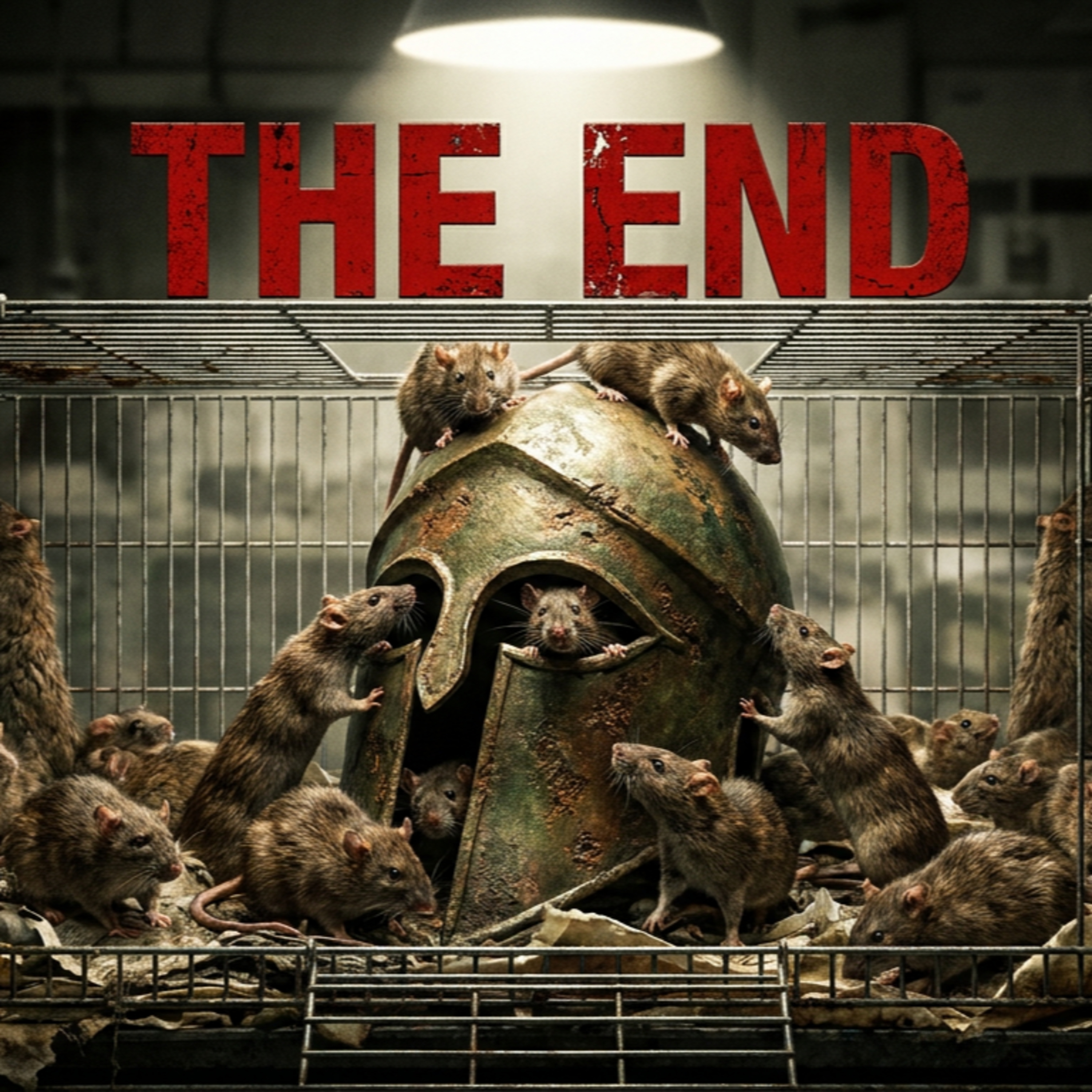
Rat Utopia and the Peloponnesian War episode artwork

EPISODE · May 25, 2026 · 1H 9M

Rat Utopia and the Peloponnesian War

from Professor Jiang · host Game Theory

In his book The Peloponnesian War, Thucydides explains that the war started because Sparta saw Athens as a threat to its hegemony. In this talk Jiang Xueqin argues that the American scientist James Calhoun’s “rat utopia” experiments offer a better explanation. In the 1950s and 1960s James Calhoun conducted experiments in which colonies of rats were put into worlds of plenty and abundance. All these experiments ended in disaster. Rather than enjoying paradise, the rats violently fought amongst themselves, and their social order collapsed. Why did this happen? In a wealthy world, high-status rats could live longer, which meant younger rats had no opportunities to achieve status. Consumed by anxiety and anger, this younger generation became violent and destructive. Fifth-century Athens was a “rat utopia.” After Persia was defeated in 479 BCE, Athens established the Delian League, and it became a de facto empire. The upper nobility was happy with the status quo, but the lower nobility clamored for opportunities to achieve fame and fortune. Athens became expansionist and imperial to ease its internal contradictions, and this ultimately led to the outbreak of the Peloponnesian War.

In his book The Peloponnesian War, Thucydides explains that the war started because Sparta saw Athens as a threat to its hegemony. In this talk Jiang Xueqin argues that the American scientist James Calhoun’s “rat utopia” experiments offer a better explanation. In the 1950s and 1960s James Calhoun conducted experiments in which colonies of rats were put into worlds of plenty and abundance. All these experiments ended in disaster. Rather than enjoying paradise, the rats violently fought amongst themselves, and their social order collapsed. Why did this happen? In a wealthy world, high-status rats could live longer, which meant younger rats had no opportunities to achieve status. Consumed by anxiety and anger, this younger generation became violent and destructive. Fifth-century Athens was a “rat utopia.” After Persia was defeated in 479 BCE, Athens established the Delian League, and it became a de facto empire. The upper nobility was happy with the status quo, but the lower nobility clamored for opportunities to achieve fame and fortune. Athens became expansionist and imperial to ease its internal contradictions, and this ultimately led to the outbreak of the Peloponnesian War.

NOW PLAYING

Rat Utopia and the Peloponnesian War

0:00 1:09:33

No transcript for this episode yet

We transcribe on demand. Request one and we'll notify you when it's ready — usually under 10 minutes.

WW2 - the Key Questions, answered by Laurence Rees. Laurence Rees A former Head of BBC TV History programmes, Laurence has specialized in writing books and making television documentaries about World War Two, the Nazis and Stalinism for thirty years. He won a BAFTA and a Peabody for his TV series 'The Nazis: A Warning from History' and a British Book Award for his book on Auschwitz, which is also the world's best selling book on this notorious camp. His book 'the Holocaust: A New History' was described by the Times as 'exemplary' and by the Daily Telegraph as 'the best single volume account of the atrocity ever written'. Educated at Oxford University, for several years he was a visiting senior fellow at the London School of Economics, London University. He holds honorary doctorates from the University of Sheffield and the Open University. Professor Robert Service, of Oxford University, described Rees as 'one of the world's experts on the Second World War'. Sir Max Hastings wrote in the Sunday Times, in a review of Laurence Rees' 'World War Two: Behi Talking Biotech with Dr. Kevin Folta Colabra Talking Biotech is a weekly podcast that uncovers the stories, ideas and research of people at the frontier of biology and engineering.Each episode explores how science and technology will transform agriculture, protect the environment, and feed 10 billion people by 2050.Interviews are led by Dr. Kevin Folta, a professor of molecular biology and genomics. Rania Awaad Muslim Central Dr. Rania Awaad M.D., is a Clinical Associate Professor of Psychiatry at the Stanford University School of Medicine where she is the Director of the Stanford Muslim Mental Health & Islamic Psychology Lab as well as Stanford University’s Affiliate Chaplain. In the community, she serves as the Executive Director of Maristan.org, a holistic mental health nonprofit serving Muslim communities, and the Director of The Rahmah Foundation, a non-profit organization dedicated to educating Muslim women and girls. In addition, she is faculty of Islamic Psychology at Cambridge Muslim College and The Islamic Seminary of America.She is also a Senior Fellow for Yaqeen Institute and the Institute of Social Policy and Understanding. Prior to studying medicine, she pursued classical Islamic studies in Damascus, Syria, and holds certifications (ijaza) in the Qur’an, Islamic Law, and other branches of the Islamic Sciences. Wild Olive Jeanne Petrolle and Jennifer Bird The Wild Olive Podcast brings you game-changing conversations about literature, culture, and the Bible. With co-hosts Jeanne Petrolle and Jennifer Bird, Wild Olive serves up idea-feasts: tasty insights about biblical texts and contemporary (or classic!) literature, with generous side-portions of cultural commentary and hearty laughter. One literature professor + one biblical studies professor = uncontrolled, out-of-bounds, untamed conversation: ideal listening for the post-evangelical, the spiritual-but-not-religious, the Bible-curious secularist, the free-thinking religionist, and the literary-but-not-stodgy! New episodes every other Friday!

Frequently Asked Questions

How long is this episode of Professor Jiang?

This episode is 1 hour and 9 minutes long.

When was this Professor Jiang episode published?

This episode was published on May 25, 2026.

What is this episode about?

In his book The Peloponnesian War, Thucydides explains that the war started because Sparta saw Athens as a threat to its hegemony. In this talk Jiang Xueqin argues that the American scientist James Calhoun’s “rat utopia” experiments offer a better...

Can I download this Professor Jiang episode?

Yes, you can download this episode by clicking the download button on the episode player, or subscribe to the podcast in your preferred podcast app for automatic downloads.
URL copied to clipboard!