At Capital One, we don't just use technology. We architect it. Our teams have true end-to-end product ownership, shipping distributed systems that handle high concurrency at scale. No single-server bottlenecks engineered beyond legacy downtime, and operating right here in downtown Toronto. That's Technology at Capital One. Search Technology at Capital One, Canada.
Hi, I'm Kate Snow, NBC News anchor and host of the NBC News Podcast, The Drink. This month I'm sipping green tea with the incomparable Harry Connick Jr. musician, actor-composer author. We talk about how he got started, playing for audiences in New Orleans at just five years old, and how a call from Rob Reiner to write music for when Harry Met Sally changed the course of his life. He also opens up about family, reflecting on losing his mom when he was only 13, how that loss has shaped him and inspired an orchestral piece and a book in her honour.
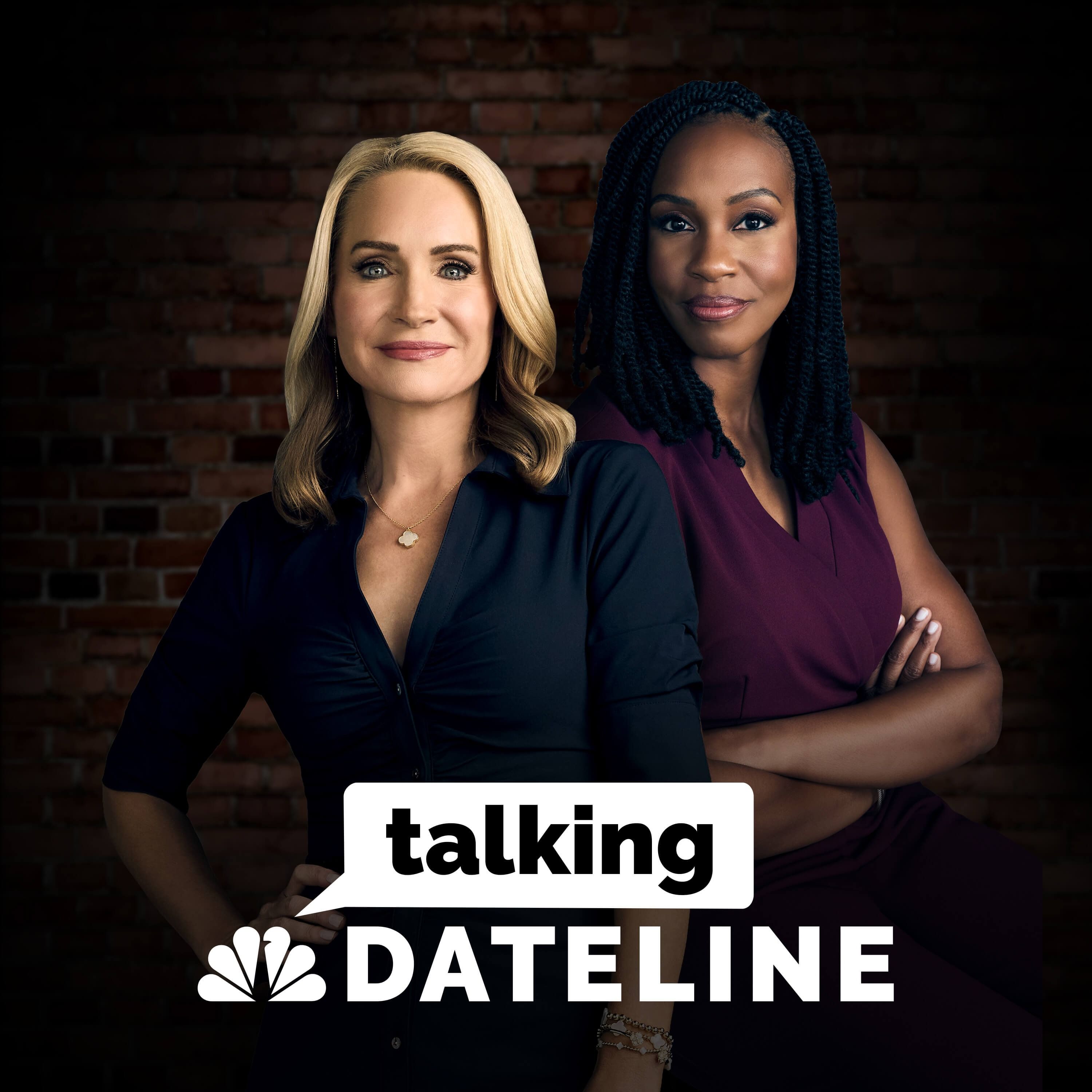
It's all in this month's episode of The Drink. I hope you'll listen and follow wherever you get your podcasts. Hey everyone, I'm Andrea Connick and this is Talking Dateline, and today we are here with Blaine talking about her episode called Unmasking the Monster. Hey Blaine, hey Andrea. This was such a powerful episode. It's the story of a successful young businesswoman's brutal attack inside her home
back in 1989 and how 30 years later her daughter set out to find the person who did it. But before we get to all of that, if you haven't listened to the episode yet, you can find it right below this one or stream it now on Peacock. We'll have more from Blaine's interviews with Dana Beatty and her daughter, Andrea, who described the ripple effect of the crime from One Generation to the next. And later Blaine will be joined by Dateline producer Brenda Breslauer to answer your questions from social media. Okay, let's talk Dateline Blaine. Let's do it.
So as I said, extremely powerful episode. And you know, even though this is airing because there was a crime, it's really the mother-daughter relationship that I ended up taking away, you know, mostly from this, like just how special that was and how the daughter fought for the mother and how the mother's experience affected the daughter. And you know, it's very complex. But really leaves you so uplifted in the way that they handled this. I'm glad that you walked away feeling uplifted because that was kind of the hope, right? I mean, these two, their bond, their love for each other, their determination is unbelievable.
And it's inspirational. And I also think that it's so striking that all of this happened years before Andrew was even born before she was even a thought, right? I think that it underscores just how much of an impact crime has on everyone in the circle, even those who haven't made an appearance in this world yet. Absolutely. And I love how you started the episode. You and your producing team,
Chetna and Brenda, which did such a good job. The home video of Dana and Andra, you just felt that mother-daughter bond right out of the first second of the show. I agree. And I'm glad you named Brenda and Chetna because they are amazing. I have to give a big shout out to them. But yeah,
I mean, talk about that bond, Andrea. Both you and I are girl moms, right? Like we know what the mother about daughter bond feels like, of course, we're daughters ourselves. And I think that I, while putting the story together while researching it, while doing the interviews, was thinking about it from both perspectives, I was thinking, and I know how Dana felt it was a difficult thought of, gosh, might this impact my daughter in some way, like kind of living with that truth is difficult. And then for Andra, I mean, she was very perceptive from a very young age, right? She was young when she
kind of started thinking, okay, there's something different about my family and the way that we do things that all of my other friends and then as she got older, she, you know, became more and more curious. But I was just really amazed by the fact that that's the type of thing that could drive a wedge between mother and daughter, right? If you think about some of the difficult conversations, if you think about maybe there's more protection and I don't know why, but Andra had this sense of determination to the point that she really went into listening to true crime podcasts and said, what can I do to solve this? Which was just an amazing term for her. So let's get to Dana and this crime. I mean, this is the ultimate cliche, right? It's the woman's worst
nightmare. But it's a cliche for a reason. It truly is a woman's worst nightmare. I mean, my heart just went out to her and that traumatic experience that she had so horrible. You know, I want to say a couple of things about Dana's interview that will always stick out to me.
It typically in our Dateline stories, it's rare that we get to sit down and speak with someone who actually had the crime inflicted upon them. This was my first time having an interview like this for Dateline, sitting down and listening to Dana for hours recount in a staggering detail what happened to her more than 30 years ago was just a stunning experience and one that I will never forget because she remembers every single moment. She remembers every single detail. She remembers smell the fabric, the fabric clothes, the way that she was feeling from moments and moments of the thoughts that were going through her head as things were happening. I mean, and to be candid, she gave such excruciating detail a lot of it we couldn't put on TV. And so I think that to sit with Dana and realize
that yes, you survived, which is a miracle, but your life after that is not the same. Like, to live with that memory in your head for 30 plus years thereafter, it's a completely different kind of life and it's a different type of struggle. So I think that that's something that really strikes me about her is just the strength that she had, the fact that she had this resolve in this moment. While it was happening to her, I'm going to remember everything. I'm going to remember every detail because I want to help find this person and bring him to justice was unbelievable.
Did you ask her at all why she thought he spared her? Because I would sort of assume, okay, this is it. He's going to kill me, which he did not. I don't know if we directly talked about that. I did ask her why did she think that she was chosen? Like, why did she think he did this?
And she felt that it was he wanted to do it to break her in some way. I mean, she was such a spirited woman. She was top of her career working at IBM, which was the place to work obviously back in 1989, right? As a woman, she was rising in the ranks. She was young. She's single. She's going to
work out classes and serving in the community. And she would go and visit her best friend. She would tell me her best friend who was used to be married to this guy. She would go visit and just always be so fun and lively. And she thought that in some way he very deeply resented who she was and the vivacious ness that she brought in and wanted to break her. I did a similar story in Connecticut with a woman
named Donna Palumba who has really devoted her life now to her organization, Jane Doe Noemore. She also woke up to a stranger in black who proceeded to rape her while her children were in the house. Hers was different because the police essentially turned things around on Donna and said that she was having an affair. And this was her covering up her affair. She of course prevailed. She sued all of that.
And eventually they caught her attacker and lo and behold, it was her husband's friend. She had been to dinner at her house very similar to Dana's situation in the way that they knew this assailant. Wow. Which is, it's just so violating all over again. It's not like a stranger's bad enough. And then when you actually know this person, they're in your circle. In your circle.
And that you've had interactions with before. And possibly in your case, certainly in Dana's case, have interactions with afterwards. I think that's the stunning thing, right? It also just kind of exposes to you just how completely depraved an individual must be to do something like that to a person and then interact with them afterwards. Or in Dana's case, show up at her wedding several years later, right? Give her a hug and wish her well or without video. I mean, her kids have
him hugging her. Wasn't that creepy? I was like, oh, yeah, poor thing had no idea. She was hugging the wolf, you know, the wolf and sheep's clothing. And your interview with him was really just, I mean, I was like on the edge of my seat, you know, with that interview. I think that, you know,
when in speaking with him, I was able to see there were a lot of different postures. I guess I'll say that throughout our interview. And the interview itself was only 25 minutes long. I mean, it wasn't too long. He walked out. He walked out. He walked out. Sorry. That's in questions. He didn't want to answer,
right? But I mean, he came in initially saying, okay, we're only going to stick to this. Obviously didn't agree to that. And he kept talking. And so I mean, it was, he was just really all over the place with this. I think that looking at that, just seeing how quickly he switched from, you know,
the only to feeling demotion to emotion, it seemed to be a lot of chameleon work going on there. But I will say that prosecutors fully believe that he is a serial offender. Law enforcement believe that he has other victims out there. It's important to know that I asked Brett Tanser that directly, has he done this to anybody else? And he adamantly denies it. He says that this was the one and only
time I can't imagine, right? That that would be the only. But then the, you know, the wives, I mean, it's amazing that a Dana is still friends, you know, with her friend that was married to him. And thank goodness the, the wife came forward, you know, and said, okay, wait, there was something, I think that in speaking with Don Tanser, it wasn't until later, of course, that after the staying after the arrest, after she learned, you know, what his previous wife had said that she came to realize, Oh gosh, like this happened to me too. And it wasn't right. The other thing to point
out too, was that there were those jail phone calls. I mean, we played a little bit of them where he kind of admitted the fact that he looked up the statute of limitations. I mean, can you imagine that? Realize that their husband is at some point googled or otherwise researched. Can I get locked up for this? Right? No. Okay, great. I'm good. Let's move on with life. I mean, that's, you know,
how it comes across to her. So you kind of hear her evolution over these phone calls of being sympathetic wanting to know more to finally saying I'm done. We're done. Thank goodness. I mean, when we come back, we have two clips from Blaine's interviews with Dana and her daughter, Andra.
And they will share more about their experience dealing with the generational trauma caused by a single violent crime. At Capital One, we don't just use technology. We architect it. Our teams have true end-to-end product ownership, shipping distributed systems that handle high concurrency at scale. No single server bottlenecks engineered beyond legacy downtime and operating right here in downtown Toronto. That's technology at Capital One. Search technology at Capital One,
Canada. Over the years, I've met people whose lives were changed forever in a single moment. In my new podcast, Before and After, I explore what happens after the decisive moment, personal, powerful conversations with Colin Kaepernick, Jeremy Renner, Gabby Giffords, and others. Join me wherever you get your podcasts. Listen to all episodes of Before and After With Lister Holt Now, Wherever You Get Your Podcasts.
One thing that this episode makes clear and so many other episodes that we have done is that family members can make a difference. And if you are a family member and you're thinking, well, it's just me and they've forgotten about the case or that I can't go up against law enforcement, this is just more proof that you can make a difference. The fact that Andra started shaking trees again, and then they do the genealogy and all of that, it just shows you that families do have such a powerful voice in these things, can have a powerful voice.
Absolutely. And I think to the fact that Andra, so gosh, let me reach out, let me try something. And alongside your message to families, sometimes you don't know the right people to call or the right place or whatever it is. She sent out kind of a note and basically Smallwood was the one who he started working on it. But then all of these things fell into place. You look to see maybe there's a box of evidence and lo and behold, the box
of evidence was still there. Gosh, can we get the funding? Can we get the permission? All of that stuff started lining up. And I think that that's really kind of also part of the underlying message in all of this in that, yeah, keep asking, keep pushing, right? And how many other boxes of evidence
are sitting in police departments around the country that, you know, in cases that have not been solved, especially when you talk about the advances in DNA technology? I mean, I love to talking with Detective Smallwood and he said the things that we're doing now would have been complete science fiction to the investigators who were working this back in 1990. So they were working to the best of their ability back then. And then yeah, you get stumped. And then suddenly, yes, decades pass.
And it's like, oh, we can do that boom, easy, no problem. And so we've all done these stories where there's some cold case that because of an advancement in the way they can process these things, it's solved. And so I do wonder if all of that were just applied in some way to all of these cold cases, what could possibly come from that? Yeah. And not just that, but the roadblocks that they had to face law enforcement, the statute of limitations, which is just so sound so wrong. You know, it was like,
you had more gasps in this episode than I think I've seen in a long time about all the things that were happening. So I love how resourceful they were in bringing in the US attorneys and coming up with this idea about recording, getting him in a lie. You know, all of this stuff was like, they really had the best of the best on this case. They did. And you know, when I asked all of them, I mean, it was so clear when I sat down with all of them, that determination was, I mean, that was real.
They were truly determined. And they said that all of that came from Dana. Once they met Dana, once they sat down, once they talked with her, they said, God, we have to do something for this lady. Like she is incredible. The fact that she has survived that she's pushing through. We have got
to bring this to justice for her. I have to say, when I spoke with the US attorneys, I mean, they were they were an incredibly dynamic duo first off of those two ladies were just on fire and I loved it. They were great. And so they were already thinking, okay, let's think outside the box. And it really was just checking off anything. Let's call other states. Let's look for, you know,
other things that he could smart. It was very smart. It was so smart. And in none of it paned out. And so that that kind of ruse that his doorstep really was their Hail Mary pass, the last thing they could do. And yes, he got 15 years from it. But in speaking with everybody
afterwards, I think the best way to describe it is kind of like a consolation prize, right? I mean, it's it's an insult almost to them to Dana, especially that he'll never actually face prison time for what he did to her. And that distinction is just so so impactful. And 15 years and they're concerned that he'll get out earlier because again, the underlying crime is lying to FBI. It's not the rape. And so that combined with statute combined with could behavior could land him out of prison
even earlier than the 15 years. The fact that Dana knows who it is, she doesn't have to go on with her life and wonder and look over her shoulder. And you know, she knows who did this and her daughter knows who did this. And you know, it really felt like you were in the room when we're listening to the recording. Like you felt like a fly on the wall and you're waiting, you're like, say it, say it, you know, say it. And then he says, no, never had a sexual relation. I'm like,
got him. Exactly. There you go. Except for they were waiting, of course, they're like, wait, why are we getting the phone call? Exactly. That felt like a movie. I can't imagine being in that
position that they had to be in to hold that character. There was another piece in there too that this didn't make it into our episode. There was a moment at which Tanser was sitting and he went up the stairs. He said, I need to go upstairs and get my glasses. And the agent and the officer were thinking, Oh gosh, like, he knows we're on to him. Maybe he's going to come down shooting. Like, who knows?
What he's going to come down doing, right? Like, maybe bring a gun. So he talks about how he's sitting down there, still trying to talk to Don, his wife at the time, but also like positioning himself, changing his position. So when he comes back down, getting a look at the staircase thinking, okay, do I need to be ready to hire? All these things go through your mind when you're sitting in this kind of high pressure situation. As far as these statutes, and I mean, you could just see on
your face how surprised you were at some of the roadblocks when it comes to the law. I certainly walked away from the story thinking that it was stunning to me just again, we talk about all the advances in technology. They've been used to solve countless murders, right? And so kind of the question that seemed to keep coming up when we were doing this reporting and just continuing to dive into the story is why aren't the laws keeping up with the advances in technology, right? As there is more ability to solve these crimes, why can't the law keep up with the pace of that ability? And that's
certainly Dana's reason for speaking out. She's speaking out for two reasons. One, because she wants the laws around statutes of limitations to be changed. She thinks that they just need to go away. And then two, she and prosecutors again want anybody who may be out there who may be watching this episode who believes that they are a victim of Fred Tanser themselves to come forward. And
they're hoping that by seeing Dana's story, that's going to nudge some people to call law enforcement and say, Hey, I was a victim to. Yeah, I hope that they feel comfortable doing that. And I do, of course, hope they do that. And you know, murder is taking a life, obviously. And you know, rape doesn't carry always quite the same, you know, punishment, right? There's no statute of limitations
on murder. But for a woman or a man who has been raped, you're still alive, which is a saving grace. But the torture, the fear, all the things you went through, the only difference is you're alive. Yeah, yeah. And and I want to say something to about Dana's attack. And this is something that
both she and her husband said in our interviews, you know, he kind of said, some people have in their mind what a rape could look like. He says, I don't even necessarily call it that I call it torture. I mean, it really was a five hour nonstop torture. But I mean, Dana made it very clear that life that that vibrant life that she had before it was gone. And it was now just trying to figure out like, okay, what can I, in the moment, what can I salvage? Can I start living again? I am amazed
by Dana and I always will be because she managed to build a beautiful life after that. A beautiful life. She married Dick. She had Andrew. She's got this beautiful daughter. She's a grandmother now,
which happened actually while we were, you know, in the process of playing together. Andra was expecting. Yes. Yes. The biggest year. So all of these things.
I did want to bring up Dick because her husband, because I did feel like that was such a beautiful love story. And it happened in the most perfect way for someone like Dana, who's been through what she went through. Like this happened in the most perfect way that he's a neighbor, that it starts slow. Oh, let's go for a walk. This was what she needed in her life. And then he turned
out to be so supportive. He was so supportive. He was so thoughtful. I think the thing that she said really that stuck with me was that after she opened up to him and told him the story, he went back and he wrote it down because he was like, gosh, I just want to remember. I want to be able to remember what she says and keep this and make sure that I get it right and fully understand what she went through. And that's not sensitivity. I mean, that's just right.
It gives you chills. It gives you chills and the way that also that he treats her with not surprising her, you know, puts the knife away and says, hold on, you know, like all those things that he has to think about that is important enough for him, you know, because he loves her. Yes. You know, it was it was so sweet watching them together while we were doing this because Dana, she's so sweet. She's so sweet and tiny. And I think baby is a big man. I mean, he is a tall man. So you could
see even just with the size dynamic of like, gosh, this is somebody who makes her feel safe. And she it was very clear that she felt safe with him. Yeah, that is a love story to be sure. And your interviews with everybody, Blaine were so good and so sensitive. And you you have more of Dana's interview. One of the things that this really touches on this episode is this generational
trauma. You know, when when mom or dad, you know, has been through something so serious like this, and then, you know, how does this affect the children? Of course, Dana speaks about this. So let's listen to what Dana has to say about how this is always in her mind as she raised her daughter. Even in those early days of motherhood, was there a sort of fear of bringing a daughter into this world or something like this could happen to women? Absolutely. A thousand percent, yes. And I was
probably overprotective of her because of it. I know and I feel a responsibility for this that, you know, she herself has struggled with anxiety over the years. And it breaks me to see her do that. But this impacted the way that she walked her life. I believe that what happened to me made a huge dent in that happening to her. So that just has to be an incredibly heavy load to
carry, right? Your experience means overprotection for your daughter means that she has a particular experience as she walks through life. I mean, I think, you know, as mothers, you want your daughters to have their own experiences. You don't want to necessarily color them or have what happened to you be a burden on them before they can even really experience life. And hearing that, you know, it's interesting hearing from Andrew on the other side of how she did feel that impact, right?
And what that meant to her growing up. And I think we have a clip from her we can listen to as well. As a kid, how did that impact you? I had and still do pretty significant anxiety. I didn't have to walk on eggshells because I was afraid of my parents, but I had to be extremely aware of not just the surroundings for her, but also something that could affect her, would affect me because she's my mom, you know, and who but looking back on that time, did it impact the way that you thought of things going forward that you saw the world going forward?
I think that it affected the way that I interacted with others. I wasn't scared. I just had a sense of like how the world was a little bit earlier and that it was a weird feeling to be like, there's this thing that's true for my family that's really heavy that nobody knows about. You know, that isn't public knowledge that can't be understood and that I don't even have the information about. Sure. Yeah. But you know that it's impacting you? Yeah. Every day. Yeah. Right.
Poor Andra such a for a child, you know, to have to try to process these feelings and not have the complete puzzle. Yes. Absolutely. And feeling her feelings, but then also caring her mother's feelings and wanting her mommy to be okay. It's just, you know, I could see though, it just had the impact of really deepening their bond because their bond was just so unbreakable and watching them together, they were so loving and just they just adored each other. The way Dana talks about her daughter.
Oh my gosh. Like it was just the cutest, sweetest thing ever. So she had a home run with her daughter. Truly. Truly did. I mean, beautiful, smart. Yes. The mom, you know, yeah. Yeah. Really good job.
And she's a great musical. She's also an actress. She has a beautiful singing voice. She's a musical theater. Yeah. She does. We talked about that for a while. My sister's a musical
theater. So they were she is very, she's just all around very talented, very impressive lady for sure. I mean, impressive family, impressive story, impressive correspondent, impressive producer. This one had me really gripped from beginning to end. So you guys, you guys just really did an awesome job. Thank you so much. Thank you, Andrea. After the break,
Blaine, you and Brenda, your producer will answer questions and address comments from all of our viewers and listeners who are interested in this episode. All right, everybody, we are back. Andrea is now out in the field shooting a brand new
date line episode. So I am thrilled, thrilled to be joined by my incredible friend and super producer Brenda Bresslauer. Hi, Brenda. Hi, Blaine. At first, I have to say, you know, it was just an honor to work on this episode with you. It was very special. You had such passion for Dana's story, and I think
that really came across. And hopefully our viewers saw that too. Oh, thank you. I mean, as was clear in the piece, Dana is a very special human. Anyone who meets Dana, I think, as Andrea articulated at the end really joins this army of people who's trying to tell her story and in our case, highlight her search for justice. Absolutely. And Brenda, I mean, a lot of times people ask,
hey, how did you learn about the story? Or how long have you been working on the story? You, I mean, from the first phone call till the day it aired, you were working on the story for almost two years. Yeah, yeah. I mean, we didn't know when we first got the case, Dana's name wasn't even public, as is typical in cases involving sexual assault. So she was just DB in the court records. And
it came up in our weekly story meeting of things that were happening around the country, just felt like even though it wasn't a typical date line, it felt like there was a lot to delve into. He was a respected doctor. They had linked him with DNA to this 1989 crime. They believed he was a serial predator. There was some initial allegations from the wives, his two wives.
So all of that made for some interesting material that it seemed like there was going to be more there. Yeah. Well, I'm really glad that you dug into it. Let's dive into some of these questions. The first one is from Sunan on Facebook, who writes, one thing which was never explained is how he got inside her apartment. That's a very astute observation. And that's because investigators don't
know. They don't. They don't. At some point, somebody had thrown out in the course of our conversations. Oh, maybe it was a credit card like you see in the movies where you put the credit card between the door frame. But really, we don't know. There's also speculation because Dana was such
close friends with his wife. He knew more about her habits, but they don't know how he got in the house. Yeah. And this next question is from Chandra Booker or Chandra Booker. Apologies. I hope I got that
right. On Facebook, who writes, was there another reason why police didn't interview Tancer? I was talking about the initial 1999 investigation. I know Dana said it couldn't be him because he was her best friend's husband. But I'm surprised they didn't interview him since he did leave a message.
Want to tackle that? Yeah. So there was a list from her answering machine. They had a list at one point of suspects. And we have that last as part of the police file. And next to four of those
suspects, there's just the word which we showed on air, the word out. One of them was her brother. Another was a car insurance salesman. There was somebody telling her there was a table to be delivered. And then it was Fred Tancer. And in her mind, it could not have been him in part because he didn't
fit the physical description. She was so sure she said, don't even waste your time. Don't go down that road. We'll get some other possibilities. Yeah. Right. This is a comment that we got a lot
from people who watched people who sent me messages, DMs. But this comes from Maria on Facebook who writes, why is there even statute of limitations on rape? Why does that even exist? Let's, I mean, let's dive into that. Yeah. That's a good question. The idea was in the early days,
like in Dana's case, when this was six years, this was before we were using DNA to solve crimes. And you think about the fact that witnesses disappear or sometimes pass away. People's memories fade. They want to incentivize prosecutors to bring cases in a timely fashion. And it also has to do with efficiency of the courts. Like we just can't have things open ended forever. So there were some logical
reasons back in the day, but everything needs to be evaluated now that DNA is being used in novel ways to solve crimes. I mean, one of the things that I think we keep hearing is we've been reporting the story is this notion of the laws not keeping up with the advances in technology. Right. Obviously, there are many ways to solve crimes now that weren't the case back in 1989. And so many people say that the law should keep up with that. I wanted to add one other thing. Blaine, you remember we were,
when we sat down with Jeff and you went through the box of evidence and Jeff explained that when he had called down for the box of evidence, they had only one box from 1989. And it was Dana's. And that was this like stroke of luck. And it just raises the question and the issue, how many other states have, because of the statute of limitations, tossed or gotten rid of evidence. In Dana's case, they were able to go back to that box, retest some of the evidence. And that's what allowed them to
do the investigative genealogy research. But if you're a small police department and you don't have space and the statute of limitations is expired, that could have been tossed. And that was one of the kind of magical things about this case is that it was still there, but it raises the issue about our laws and procedures, keeping up with technology that this material is what helped lead to the perpetrator in this case. And it very easily could have been tossed. Absolutely. That's a great
observation. And again, everybody was amazed that that box was there. And it really was the turning point in this whole thing. While we're talking about statute of limitations, in reporting the story, just seeing the patchwork of laws around the country was so stunning. I know to me and to you, Brenda, so I have to shout out our digital team and some members of our Dateline team who worked tirelessly to put together an interactive database. It's on NBC News.com,
where anyone can go and click on your state. And you can actually read the statute of limitations laws on rape in your state to have a better understanding of what things look like. Yeah. And just side note, my daughter called me from college this weekend with her two girlfriends, who had all watched her roommates and they go to school in Maine. And they're like, we've already looked and Maine is 20 years and Connecticut is this and they've already been on as young women looking into it. Wow. Yeah. Wow. Well, I mean, I think most people don't realize that
there is a statute of limitations or things like that. And so I love hearing that they've already gone on and discovered and hopefully many more people will too. Finally, we have a voicemail comment or an audio comment from Bola, Kettukoo in Texas. Let's take a listen. Hi guys. This is Bola, Kettukoo just calling in and say, Oh my God, this episode blame you
did your theme. Dateline, you did your theme. This is a Dateline absolute episode. I'm not surprised, but amazing job telling this story and finding out how they initially got you. Thank you so much for all of you. Thank you for that kind message. Thank you for that lively message. We appreciate it.
I mean, it's all of us. It's Brenda. It's me, but there is a team of more than a dozen people from our producers, our editors, our senior producer who all put in a lot of hard work and a lot of heart in the story and our crew and the team in the field, the long hours in the field, our camera people, sound people, field producers. So Brenda, it was a joy to work on this episode with you. Thank you so much back at you. Yes. Yes. It's been a journey. And that's it for talking Dateline this week.
Remember, if you have questions about our stories, you can always DM us your audio or your video on social media at Dateline NBC, or you can leave us a voicemail that numbers two, one, two, four, one, three, five, two, five, two, four, a chance to be featured right here on our podcast. And please don't forget to check out Lester's brand new podcast series before and after where he talks to people whose lives were transformed in a single moment. In this latest episode, he talks to Rebecca Scofield, a history professor whose life unraveled after a TikTok creator falsely accused her of killing four University of Idaho students back in 2022. There's nothing you told me here to me to understand how your name got, got a part of this digital hat. That should make everybody shudder that it can happen to me.
It could happen to you. And you can get that episode now wherever you get your podcasts and to get early access to future episodes ad free, just subscribe to Dateline premium. And of course, you can watch the video version of talking Dateline on YouTube, on peacock, or on the NBC News app. We will see you on Fridays on Dateline on NBC. At Capital One, we don't just use technology. We architect it. Our teams have true end-to-end
product ownership, shipping distributed systems that handle high concurrency at scale. No single server bottlenecks engineered beyond legacy downtime and operating right here in downtown Toronto. That's technology at Capital One. Search technology at Capital One Canada.