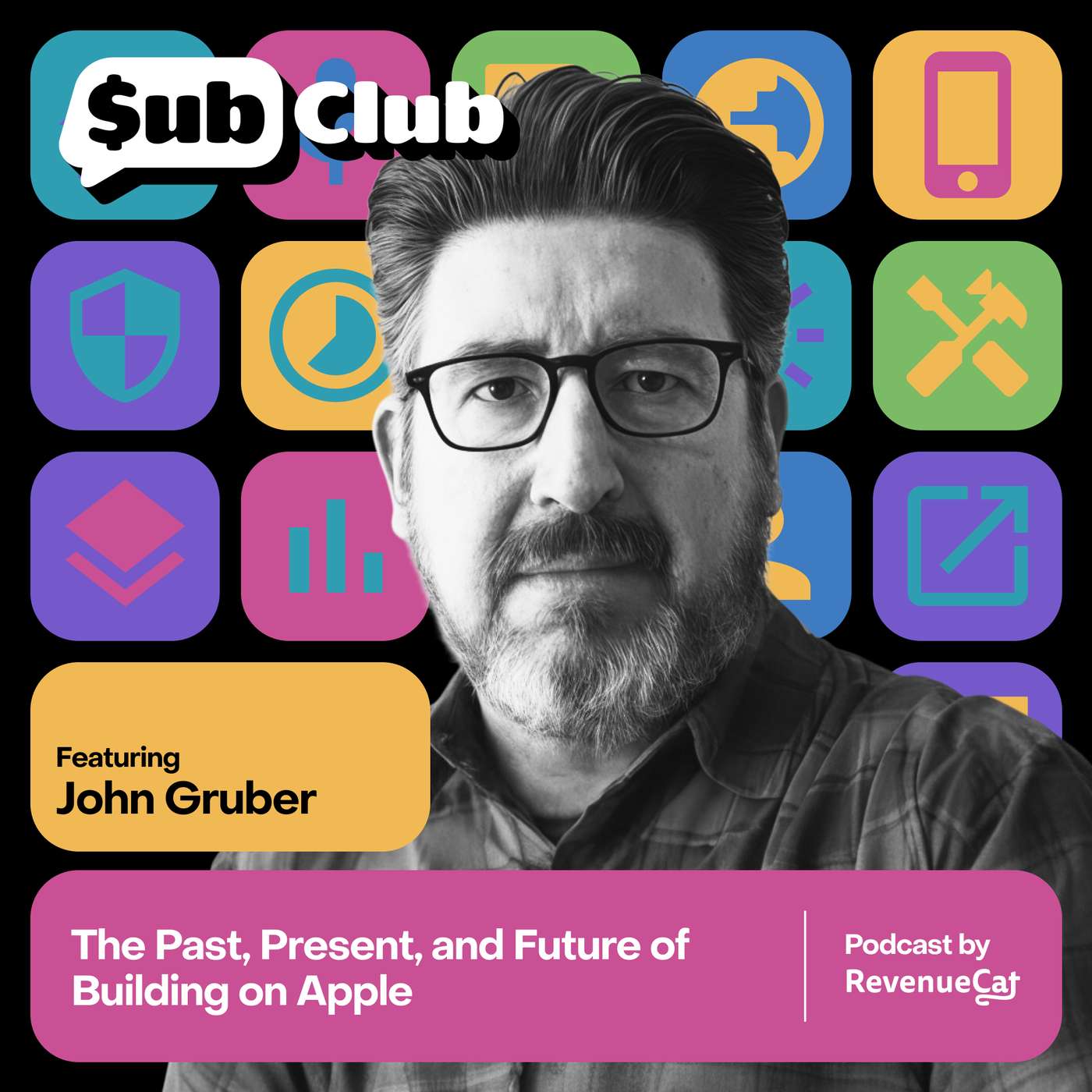
The Past, Present, and Future of Building on Apple — John Gruber, Daring Fireball episode artwork

EPISODE · Jul 23, 2025 · 2H 17M

The Past, Present, and Future of Building on Apple — John Gruber, Daring Fireball

from Sub Club by RevenueCat · host David Barnard, Jacob Eiting

On the podcast I talk with John about the fascinating 40-year history of Apple’s developer relations, how almost going bankrupt in the 1990s shaped today’s control-focused approach, and why we might need an ‘App Store 3.0’ reset.Top Takeaways:🕹️ The 1980s: Apple’s developer DNA was born  Apple’s earliest wins came from nurturing third-party developers, even spinning off its own apps to avoid competing with outsiders.💸 Microsoft saved Apple (literally)  Apple’s near-bankruptcy in the ’90s made them both humble and wary—forever shaping how they deal with developers and competition.🍎 From “please build for us” to “we choose you”  WWDC 2008 saw Apple begging for apps and evangelist emails on slides; today, it’s the other way around.🖥️ The “Delicious Era” fueled iPhone success  Mac indie devs (Panic, Delicious Monster, Bare Bones) built a design-obsessed, passionate community—setting the stage for the iPhone App Store boom.🚪 App Store 1.0: A new world for indies  For the first time, solo developers could launch businesses from home. No server costs, no payments hassle—just build, submit, and sell.🏦 Apple’s rules got stricter as the App Store grew  As the App Store became a services giant, the partnership vibe faded. Developers went from partners to “users” of Apple’s marketplace.📉 App Store math now feels upside down  Today, indie devs can pay Apple millions, while giants like Meta pay almost nothing. The fee logic and incentives don’t fit 2025.⏳ The platform needs an “App Store 3.0” reset  John and David call for a new era: lower fees, clearer rules, and Apple acting as a true platform partner—not just a toll booth.🔄 Developer enthusiasm is Apple’s long-term moat  Apple risks becoming a “legacy only” giant if it loses developer goodwill. The most important apps are still built by outsiders.👥 A generational handoff is coming  With Apple’s senior leadership nearing retirement, now is the time to set new priorities: empower developers, invest in the ecosystem, and ensure Apple’s platforms stay vibrant for decades to come.About John Gruber: 🚀 Author of the Daring Fireball blog, host of The Talk Show, and co-creator of Markdown.🍎 John is a lifelong Apple fan and is passionate about discussing all things iPhone, App Store, and developer relations.💡 “I feel like Apple is dwelling on the success and the innovation that completely revolutionized the phone industry […] for too long and that they should move on and build something else new.”👋  Daring Fireball Resources: Bill Gates in 1984 promoting Apple Macintosh Bill Gates on stage with Steve Jobs in 1983The Macintosh Way — Guy KawasakiCocoa Programming for Mac OS X — Aaron HillegassDaring FireballFollow us on X: David Barnard - @drbarnardJacob Eiting - @jeitingRevenueCat - @RevenueCatSubClub - @SubClubHQEpisode Highlights: [0:00] Apple Kremlinology: Why understanding Apple requires a special kind of obsession - and a long memory.[4:58] Fanboys unite: David shares how his love of Apple led him from audio engineer to App Store developer.[8:48] Turning point: John’s link to David’s iPhone mileage app in 2008 helped jumpstart his indie career.[13:37] Joz, Phil, and Eddy: The developer relations and most of the App Store are overseen by three Apple execs who joined in the ‘80s.[17:01] The crossroads: How Apple’s early decision to unbundle first-party apps in the ‘80s encouraged third-party innovation.[21:25] Hands off: Why Apple’s decade-long retreat from building software paved the way for a thriving developer ecosystem.[27:07] Vision parallels: John compares Vision Pro’s slow start to the original Mac - and explains why it doesn’t have to be perfect (yet).[30:32] Betting on the future: How Apple playing the long-game is their biggest advantage in launching and sustaining new platforms.[33:55] What comes after the Mac: The ‘90s were filled with failed next-gen Apple platforms - and it almost killed the company.[36:47] Burned by success: Apple’s trauma from near-bankruptcy shaped their need to control developer relationships.[41:13] The App Store revolution: Why the 2008 launch of the App Store wasn’t just a business move, it was a turning point for software itself.[45:07] Developer momentum: How passionate indie devs and Mac software of the 2000s primed the iPhone for success.[53:46] iPhone jailbreakers: Why the jailbreak community may have pushed Apple to launch the SDK sooner than expected.[57:39] App Store 2.0: In 2016, Apple dropped some commission rates, opened up subscriptions, and kicked off a new era.[1:03:03] Time for 3.0: Why David believes the App Store needs another reset - and a shift in mindset.[1:08:26] Humility and hardware: Steve Jobs’ 1997 apology to a developer at WWDC still echoes - and it’s exactly what developers need to hear in 2025.[1:13:30] Holding on too tight: How Apple’s fear of losing control is costing them developer goodwill.[1:26:35] A legacy worth protecting: The iPhone isn’t going anywhere - but without change, Apple could become a legacy business as other platforms take over.[1:32:06] Red flags on Vision Pro: Why developers aren’t building for Apple’s newest platform - and why that should worry Apple.[1:39:18] The indie paradox: How small developers pay millions to Apple, while giants like Meta pay almost nothing.[1:41:39] Fluke of history: Schiller once floated capping App Store revenue at $1B. What if Jobs had said yes?[1:44:35] The trust gap: Could a more generous App Store policy bring Netflix and others back?[1:47:08] It’s not too late: Why Apple should proactively change the App Store instead of waiting on regulation.[1:57:26] Developer vibes: A simpler App Store (with clearer rules and lower fees) could renew trust and drive innovation.[2:00:29] Bigger than profit: Making great soft...

Episode metadata supplied by the publisher feed · Published Jul 23, 2025

On the podcast I talk with John about the fascinating 40-year history of Apple’s developer relations, how almost going bankrupt in the 1990s shaped today’s control-focused approach, and why we might need an ‘App Store 3.0’ reset.Top Takeaways:🕹️ The 1980s: Apple’s developer DNA was born  Apple’s earliest wins came from nurturing third-party developers, even spinning off its own apps to avoid competing with outsiders.💸 Microsoft saved Apple (literally)  Apple’s near-bankruptcy in the ’90s made them both humble and wary—forever shaping how they deal with developers and competition.🍎 From “please build for us” to “we choose you”  WWDC 2008 saw Apple begging for apps and evangelist emails on slides; today, it’s the other way around.🖥️ The “Delicious Era” fueled iPhone success  Mac indie devs (Panic, Delicious Monster, Bare Bones) built a design-obsessed, passionate community—setting the stage for the iPhone App Store boom.🚪 App Store 1.0: A new world for indies  For the first time, solo developers could launch businesses from home. No server costs, no payments hassle—just build, submit, and sell.🏦 Apple’s rules got stricter as the App Store grew  As the App Store became a services giant, the partnership vibe faded. Developers went from partners to “users” of Apple’s marketplace.📉 App Store math now feels upside down  Today, indie devs can pay Apple millions, while giants like Meta pay almost nothing. The fee logic and incentives don’t fit 2025.⏳ The platform needs an “App Store 3.0” reset  John and David call for a new era: lower fees, clearer rules, and Apple acting as a true platform partner—not just a toll booth.🔄 Developer enthusiasm is Apple’s long-term moat  Apple risks becoming a “legacy only” giant if it loses developer goodwill. The most important apps are still built by outsiders.👥 A generational handoff is coming  With Apple’s senior leadership nearing retirement, now is the time to set new priorities: empower developers, invest in the ecosystem, and ensure Apple’s platforms stay vibrant for decades to come.About John Gruber: 🚀 Author of the Daring Fireball blog, host of The Talk Show, and co-creator of Markdown.🍎 John is a lifelong Apple fan and is passionate about discussing all things iPhone, App Store, and developer relations.💡 “I feel like Apple is dwelling on the success and the innovation that completely revolutionized the phone industry […] for too long and that they should move on and build something else new.”👋  Daring Fireball Resources: Bill Gates in 1984 promoting Apple Macintosh Bill Gates on stage with Steve Jobs in 1983The Macintosh Way — Guy KawasakiCocoa Programming for Mac OS X — Aaron HillegassDaring FireballFollow us on X: David Barnard - @drbarnardJacob Eiting - @jeitingRevenueCat - @RevenueCatSubClub - @SubClubHQEpisode Highlights: [0:00] Apple Kremlinology: Why understanding Apple requires a special kind of obsession - and a long memory.[4:58] Fanboys unite: David shares how his love of Apple led him from audio engineer to App Store developer.[8:48] Turning point: John’s link to David’s iPhone mileage app in 2008 helped jumpstart his indie career.[13:37] Joz, Phil, and Eddy: The developer relations and most of the App Store are overseen by three Apple execs who joined in the ‘80s.[17:01] The crossroads: How Apple’s early decision to unbundle first-party apps in the ‘80s encouraged third-party innovation.[21:25] Hands off: Why Apple’s decade-long retreat from building software paved the way for a thriving developer ecosystem.[27:07] Vision parallels: John compares Vision Pro’s slow start to the original Mac - and explains why it doesn’t have to be perfect (yet).[30:32] Betting on the future: How Apple playing the long-game is their biggest advantage in launching and sustaining new platforms.[33:55] What comes after the Mac: The ‘90s were filled with failed next-gen Apple platforms - and it almost killed the company.[36:47] Burned by success: Apple’s trauma from near-bankruptcy shaped their need to control developer relationships.[41:13] The App Store revolution: Why the 2008 launch of the App Store wasn’t just a business move, it was a turning point for software itself.[45:07] Developer momentum: How passionate indie devs and Mac software of the 2000s primed the iPhone for success.[53:46] iPhone jailbreakers: Why the jailbreak community may have pushed Apple to launch the SDK sooner than expected.[57:39] App Store 2.0: In 2016, Apple dropped some commission rates, opened up subscriptions, and kicked off a new era.[1:03:03] Time for 3.0: Why David believes the App Store needs another reset - and a shift in mindset.[1:08:26] Humility and hardware: Steve Jobs’ 1997 apology to a developer at WWDC still echoes - and it’s exactly what developers need to hear in 2025.[1:13:30] Holding on too tight: How Apple’s fear of losing control is costing them developer goodwill.[1:26:35] A legacy worth protecting: The iPhone isn’t going anywhere - but without change, Apple could become a legacy business as other platforms take over.[1:32:06] Red flags on Vision Pro: Why developers aren’t building for Apple’s newest platform - and why that should worry Apple.[1:39:18] The indie paradox: How small developers pay millions to Apple, while giants like Meta pay almost nothing.[1:41:39] Fluke of history: Schiller once floated capping App Store revenue at $1B. What if Jobs had said yes?[1:44:35] The trust gap: Could a more generous App Store policy bring Netflix and others back?[1:47:08] It’s not too late: Why Apple should proactively change the App Store instead of waiting on regulation.[1:57:26] Developer vibes: A simpler App Store (with clearer rules and lower fees) could renew trust and drive innovation.[2:00:29] Bigger than profit: Making great soft...

PodParley-generated summary based on available episode metadata and transcript content.

NOW PLAYING

The Past, Present, and Future of Building on Apple — John Gruber, Daring Fireball

0:00 2:17:11

No transcript for this episode yet

We transcribe on demand. Request one and we'll notify you when it's ready — usually under 10 minutes.

MG Show MG Show The MG Show, hosted by Jeffrey Pedersen and Shannon Townsend, is a leading alternative media platform dedicated to uncovering the truth behind today’s most pressing political issues. Launched in 2019, the show has grown exponentially, offering unfiltered insights, comprehensive research, and real-time analysis. With a commitment to independent journalism and factual integrity, the MG Show empowers its audience with knowledge and encourages active participation in the political discourse. That Hoarder: Overcome Compulsive Hoarding That Hoarder Hoarding disorder is stigmatised and people who hoard feel vast amounts of shame. This podcast began life as an audio diary, an anonymous outlet for somebody with this weird condition. That Hoarder speaks about her experiences living with compulsive hoarding, she interviews therapists, academics, researchers, children of hoarders, professional organisers and influencers, and she shares insight and tips for others with the problem. Listened to by people who hoard as well as those who love them and those who work with them, Overcome Compulsive Hoarding with That Hoarder aims to shatter the stigma, share the truth and speak openly and honestly to improve lives. Flottengeflüster ALD Automotive Österreich | LeasePlan Beim Flottengeflüster powered by ALD Automotive | LeasePlan präsentieren Jörg Janik und Peter Gutenbrunner alle zwei Wochen spannende Informationen rund um das Thema nachhaltige Mobilität. Beide beschäftigen sich schon lange mit der Thematik und bringen umfangreiches Fachwissen mit. Sollten sie aber doch einmal nicht weiter wissen, werden unsere Expert*innen hinzugezogen, die ihnen gerne mit Rat und Tat zur Seite stehen. The Small Business Startup School – Business Notes | Financial Literacy | Retail Psychology – For Professionals & Entrepreneurs The Small Business Startup School Inc. Starting or buying a small business? While personal circumstances may vary, business patterns remain timeless. On The Small Business Startup School, we explore strategies, insights, and practical solutions to help entrepreneurs confidently navigate their journey.Hosted by Ola Williams—a retail entrepreneur, fintech founder, and financial coach with over two decades of experience—this podcast marries financial awareness and retail psychology with optimism to deliver actionable takeaways.Join us to learn, grow, and connect as we uncover the keys to business success.Let’s continue to learn together and be encouraged to keep on connecting!

Frequently Asked Questions

How long is this episode of Sub Club by RevenueCat?

This episode is 2 hours and 17 minutes long.

When was this Sub Club by RevenueCat episode published?

This episode was published on July 23, 2025.

What is this episode about?

On the podcast I talk with John about the fascinating 40-year history of Apple’s developer relations, how almost going bankrupt in the 1990s shaped today’s control-focused approach, and why we might need an ‘App Store 3.0’ reset.Top Takeaways:🕹️...

Can I download this Sub Club by RevenueCat episode?

Yes, you can download this episode by clicking the download button on the episode player, or subscribe to the podcast in your preferred podcast app for automatic downloads.
URL copied to clipboard!