
EPISODE · Mar 28, 2026 · 21 MIN
Why Great Institutions Fall
from Culture Coalition Podcast
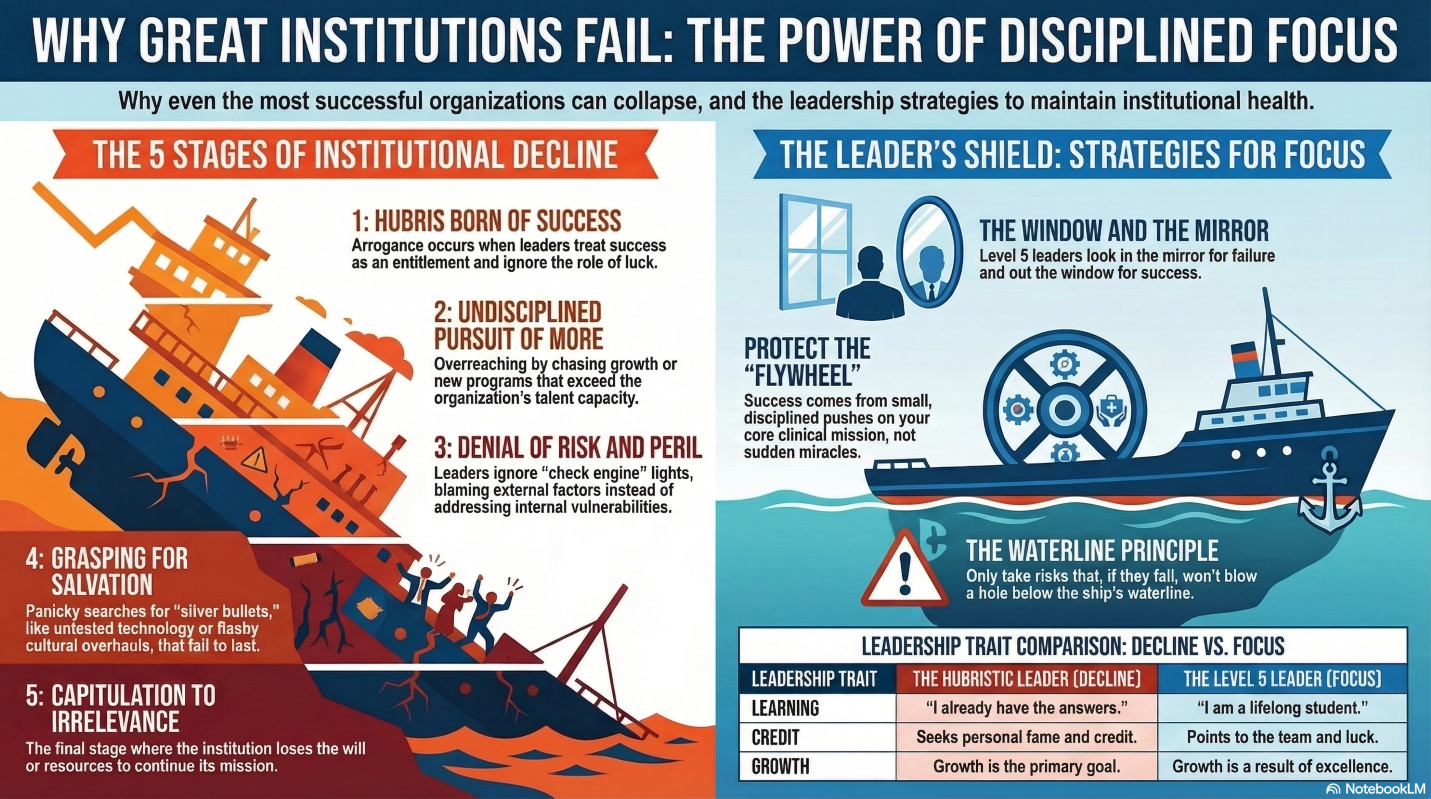
Why the Mighty Fall: A Survival Guide for Healthcare LeadersClinical stature provides no immunity against failure. Like the Roman Empire, which once appeared destined for eternity, organizational collapse is rarely the byproduct of external misfortune. It is, instead, a senseless self-destruction fueled by systemic mismanagement. Success often masks institutional decay, creating a dangerous lag between the onset of poor leadership and visible operational volatility.Success-Induced HubrisPhase 1 is defined by an arrogance born of achievement. Healthcare leaders often succumb to overconfidence, assuming past prestige guarantees future clinical outcomes. This hubris leads to the neglect of the "flywheel"—the core clinical excellence and disciplined standards that initially established the organization. Leaders stop investigating the mechanics of their success and begin viewing it as an entitlement."Hubris is outrageous arrogance that inflicts suffering on the innocent." — Jay Rueters FearsThe Undisciplined Pursuit of "More"Packard’s Law and the Growth Trap Decline accelerates when expansion outpaces the supply of mission-critical talent. Pursuing new service lines or aggressive market growth without a robust talent pipeline is a primary driver of failure. If the complexity of new initiatives exceeds the capacity of the "right people" in key seats, the program will inevitably collapse. Growth must be a managed result, not a desperate goal.Denial and the "Rose-Colored Glasses"In Phase 3, leaders ignore catastrophic vulnerabilities, such as staff dissatisfaction or declining safety metrics. Instead of facing "brutal facts," they dismiss data that contradicts their vision. Much like the Iridium project’s failure to acknowledge shifting market realities, healthcare leaders must never let a personal "vision" for a program override the brutal facts of market shifts or patient data. To survive, we must value learning over knowing.The Fallacy of the Silver BulletWhen decline is undeniable, panicked leaders search for "secular salvation." They deploy "silver bullets"—untested technologies or massive cultural overhauls—hoping for miracle cures. These moves further erode vital capital, including physician trust, reputation, and financial reserves. True recovery is built on disciplined, steady progress, not radical, unproven gambles that result in dashed hopes.Conclusion: Restoring the WaterlineLeadership longevity depends on the Waterline Principle: only take risks that allow for incremental recovery rather than those that might "sink the boat." We must prioritize disciplined, steady improvements over unproven gambles that jeopardize our mission. Core clinical discipline remains the only sustainable path back from the brink of irrelevance. Hosted on Acast. See acast.com/privacy for more information.
What this episode covers
Why the Mighty Fall: A Survival Guide for Healthcare LeadersClinical stature provides no immunity against failure. Like the Roman Empire, which once appeared destined for eternity, organizational collapse is rarely the byproduct of external misfortune. It is, instead, a senseless self-destruction fueled by systemic mismanagement. Success often masks institutional decay, creating a dangerous lag between the onset of poor leadership and visible operational volatility.Success-Induced HubrisPhase 1 is defined by an arrogance born of achievement. Healthcare leaders often succumb to overconfidence, assuming past prestige guarantees future clinical outcomes. This hubris leads to the neglect of the "flywheel"—the core clinical excellence and disciplined standards that initially established the organization. Leaders stop investigating the mechanics of their success and begin viewing it as an entitlement."Hubris is outrageous arrogance that inflicts suffering on the innocent." — Jay Rueters FearsThe Undisciplined Pursuit of "More"Packard’s Law and the Growth Trap Decline accelerates when expansion outpaces the supply of mission-critical talent. Pursuing new service lines or aggressive market growth without a robust talent pipeline is a primary driver of failure. If the complexity of new initiatives exceeds the capacity of the "right people" in key seats, the program will inevitably collapse. Growth must be a managed result, not a desperate goal.Denial and the "Rose-Colored Glasses"In Phase 3, leaders ignore catastrophic vulnerabilities, such as staff dissatisfaction or declining safety metrics. Instead of facing "brutal facts," they dismiss data that contradicts their vision. Much like the Iridium project’s failure to acknowledge shifting market realities, healthcare leaders must never let a personal "vision" for a program override the brutal facts of market shifts or patient data. To survive, we must value learning over knowing.The Fallacy of the Silver BulletWhen decline is undeniable, panicked leaders search for "secular salvation." They deploy "silver bullets"—untested technologies or massive cultural overhauls—hoping for miracle cures. These moves further erode vital capital, including physician trust, reputation, and financial reserves. True recovery is built on disciplined, steady progress, not radical, unproven gambles that result in dashed hopes.Conclusion: Restoring the WaterlineLeadership longevity depends on the Waterline Principle: only take risks that allow for incremental recovery rather than those that might "sink the boat." We must prioritize disciplined, steady improvements over unproven gambles that jeopardize our mission. Core clinical discipline remains the only sustainable path back from the brink of irrelevance. Hosted on Acast. See acast.com/privacy for more information.
NOW PLAYING
Why Great Institutions Fall
No transcript for this episode yet
Similar Episodes
Mar 26, 2026 ·1m
Jan 2, 2026 ·47m
Dec 21, 2025 ·46m