
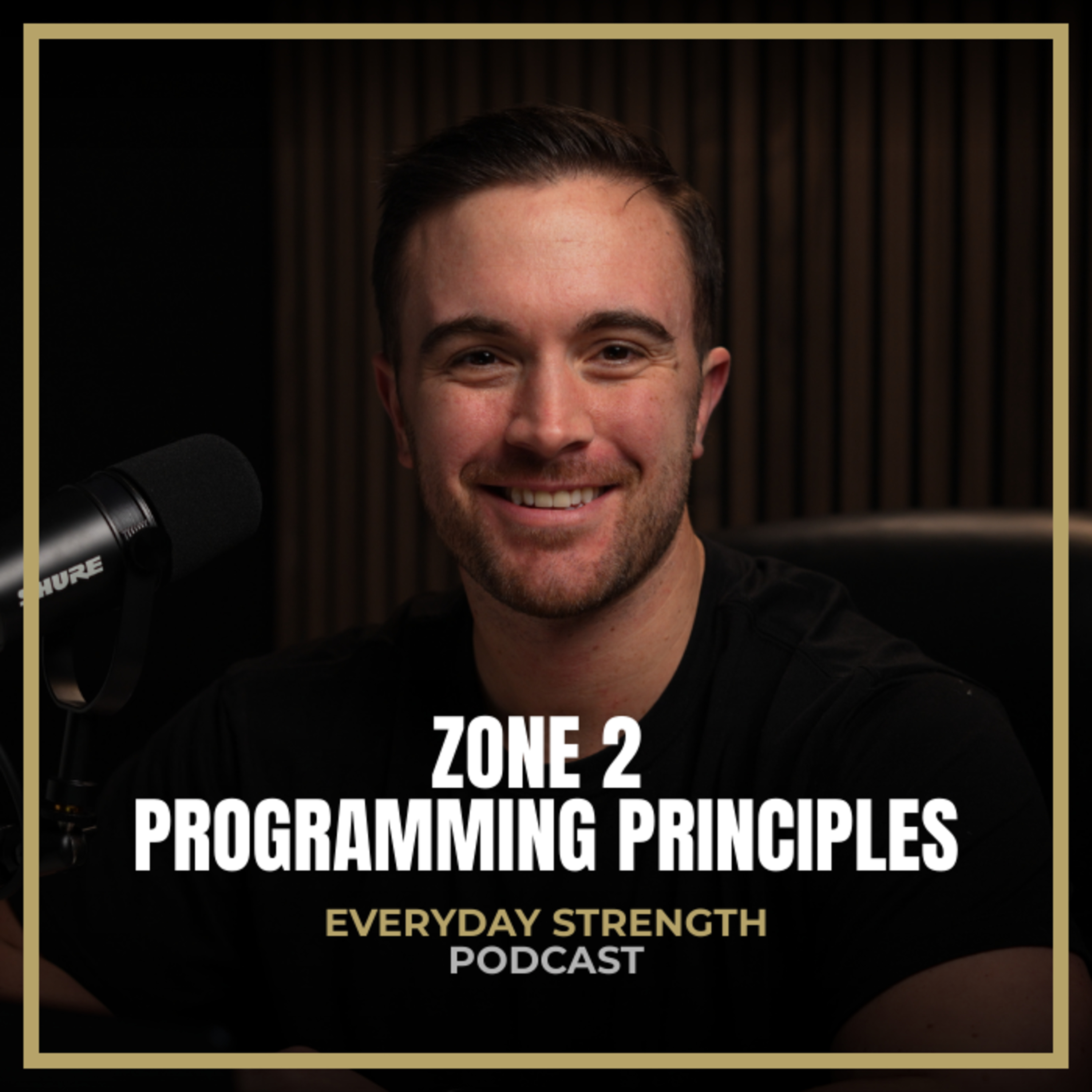
EPISODE · Feb 19, 2026 · 48 MIN
Zone 2 Training Explained: Aerobic Development for Lifters and Hybrid Athletes
from Everyday Strength Podcast · host Anthony Hagele
In this episode, Anthony breaks down what zone 2 training actually develops beneath the surface and why it matters for strength athletes, hybrid competitors, and everyday lifters. He explains the physiology behind aerobic adaptation, how to accurately find the right intensity, how to avoid the classic interference trap, and how to integrate low intensity conditioning without compromising strength. The focus is on precision, sustainability, and building an engine that supports performance long term.Read the full episode notes at hagelestrength.comJoin the Performance Edge Network to receive Anthony’s weekly newsletter.Timestamps:(00:00) Introduction and why zone two matters(02:10) What aerobic training develops beneath the surface(03:00) Stroke volume and central adaptations(04:15) Capillary density and oxygen delivery(04:45) Mitochondrial function and processing capacity(05:25) Substrate utilization and glycogen sparing(06:20) The 2025 critique of zone two and intensity debate(09:25) Zone two as a systems argument, not a magic solution(10:28) Defining LT1 and practical intensity targets(14:05) Breathing, RPE, and heart rate guidance(15:05) The 180 minus age method(16:45) Cardiac drift and managing session stress(17:55) Weekly volume targets for lifters(19:15) Progression and deload strategy(20:15) Timeline of adaptation(22:45) Interference effect and Hickson research(24:55) Modern interpretation of concurrent training(26:10) Modality choice: running vs cycling(29:15) Session order and scheduling considerations(31:50) Sustainability and improving session experience(37:40) Common mistakes and intensity drift(41:50) Hydration and fueling considerations(43:40) Final takeaways and long term perspectiveDisclaimers & DisclosuresConnect with Anthony:Instagram: instagram.com/hagelestrengthX: x.com/hagelestrengthYouTube: youtube.com/hagelestrength
What this episode covers
In this episode, Anthony breaks down what zone 2 training actually develops beneath the surface and why it matters for strength athletes, hybrid competitors, and everyday lifters. He explains the physiology behind aerobic adaptation, how to accurately find the right intensity, how to avoid the classic interference trap, and how to integrate low intensity conditioning without compromising strength. The focus is on precision, sustainability, and building an engine that supports performance long term.Read the full episode notes at hagelestrength.comJoin the Performance Edge Network to receive Anthony’s weekly newsletter.Timestamps:(00:00) Introduction and why zone two matters(02:10) What aerobic training develops beneath the surface(03:00) Stroke volume and central adaptations(04:15) Capillary density and oxygen delivery(04:45) Mitochondrial function and processing capacity(05:25) Substrate utilization and glycogen sparing(06:20) The 2025 critique of zone two and intensity debate(09:25) Zone two as a systems argument, not a magic solution(10:28) Defining LT1 and practical intensity targets(14:05) Breathing, RPE, and heart rate guidance(15:05) The 180 minus age method(16:45) Cardiac drift and managing session stress(17:55) Weekly volume targets for lifters(19:15) Progression and deload strategy(20:15) Timeline of adaptation(22:45) Interference effect and Hickson research(24:55) Modern interpretation of concurrent training(26:10) Modality choice: running vs cycling(29:15) Session order and scheduling considerations(31:50) Sustainability and improving session experience(37:40) Common mistakes and intensity drift(41:50) Hydration and fueling considerations(43:40) Final takeaways and long term perspectiveDisclaimers & DisclosuresConnect with Anthony:Instagram: instagram.com/hagelestrengthX: x.com/hagelestrengthYouTube: youtube.com/hagelestrength
NOW PLAYING
Zone 2 Training Explained: Aerobic Development for Lifters and Hybrid Athletes
No transcript for this episode yet
Similar Episodes
Mar 26, 2026 ·1m
Jan 2, 2026 ·47m
Dec 21, 2025 ·46m