
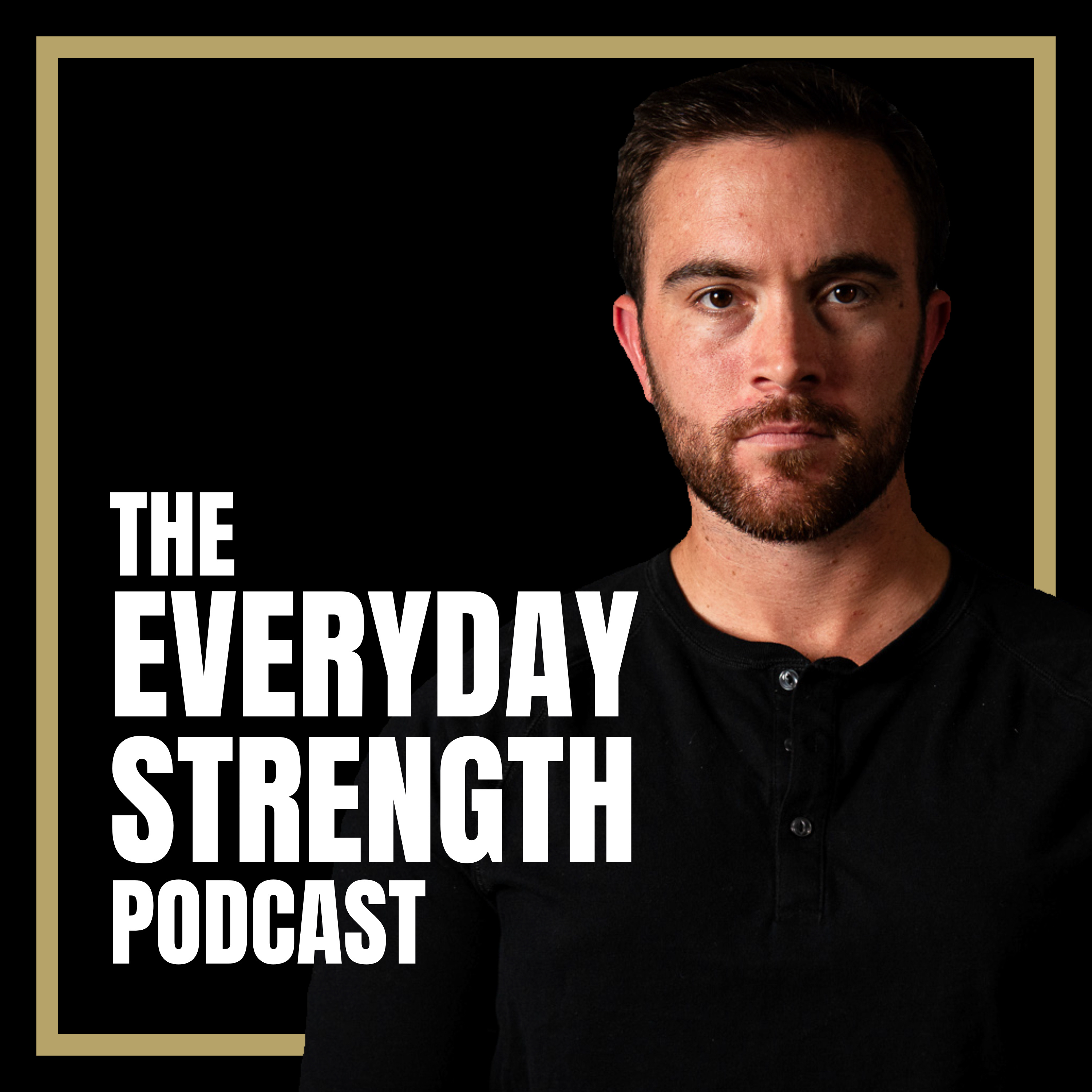
PODCAST · health
Everyday Strength Podcast
by Anthony Hagele
The Everyday Strength Podcast explores the science and strategy behind becoming strong, athletic, and capable for life.Hosted by Anthony Hagele, a coach, researcher, and hybrid athlete, the show blends evidence-based training, conditioning, and nutrition with real-world experience. Each episode gives you practical insight into how to train, fuel, and perform at a higher level while managing the demands of work, family, and life.Drawing from sports science, strength training, and human performance research, Anthony breaks down what actually works for everyday athletes who want to stay lean,
-
42
When Enjoyment Is Hurting Your Training
In this weeks episode, Anthony Hagele break down the role of enjoyment in training and where it fits into a well-structured program. While doing what you enjoy can improve consistency, relying on it as the primary driver often leads to stagnation, poor prioritization, and a lack of progress. We discuss how to balance enjoyment with intentional programming so your training actually moves you forward.Read the full episode notes at hagelestrength.com/when-enjoyment-is-hurting-your-trainingJoin the Performance Edge Network to receive Anthony’s weekly newsletter at hagelestrength.com/newsletterTimestamps:(00:00) Introduction and episode overview(02:15) Why “do what you enjoy” is overapplied(05:40) Training as a physiological process, not entertainment(09:10) The problem with preference-driven programming(13:25) Why you enjoy what you’re already good at(17:50) Avoiding weaknesses and the comfort trap(22:30) How stagnation happens without clear priorities(27:05) Enjoyment and adherence versus adaptation(31:20) Structuring training around what actually matters(36:10) Balancing enjoyment within a program(40:45) Practical takeaways for everyday athletes(45:00) Closing thoughts and key messageDisclaimers & Disclosures:hagelestrength.com/disclaimerConnect with Anthony:Instagram: instagram.com/hagelestrengthX: x.com/hagelestrengthYouTube: youtube.com/hagelestrength
-
41
Aging vs Lifestyle: What’s Actually Causing the Decline?
At some point, everyone is told that getting older means getting weaker, slower, and less capable. In this episode, Anthony breaks down what actually changes with age from a physiological standpoint and what is really driving the decline most people experience. You’ll learn why factors like VO2 max, strength, and recovery don’t disappear overnight and how “lifestyle drift” plays a much bigger role than aging itself.Read the full episode notes at hagelestrength.com/aging-vs-lifestyle-whats-actually-causing-the-declineJoin the Performance Edge Network to receive Anthony’s weekly newsletter at hagelestrength.com/newsletterTimestamps:(00:00) Introduction and the aging narrative(02:30) What actually changes with age(05:30) Recovery, fatigue, and common misconceptions(07:30) Lifestyle drift and behavioral decline(11:30) Life transitions and loss of structure(14:00) Metabolism and muscle loss myths(16:00) Aging vs behavior: what really drives decline(17:30) Strength training as the foundation(18:45) Conditioning and maintaining capacity(19:45) Intensity, movement, and daily habits(21:30) Training adjustments and warmups(23:30) Managing recovery and volume(24:30) Rebuilding structure and long term consistency(26:00) Final takeawaysDisclaimers & Disclosures:hagelestrength.com/disclaimerConnect with Anthony:Instagram: instagram.com/hagelestrengthX: x.com/hagelestrengthYouTube: youtube.com/hagelestrength
-
40
Sleds, Carries, and Ergs for Conditioning That Actually Transfers
As training shifts out of a heavy strength focus, most athletes either guess their conditioning or default to random high intensity work. In this episode, Anthony breaks down how to use sleds carries and ergs to build conditioning that actually supports strength performance and recovery. You will learn how to structure aerobic work intervals and mixed modality sessions with intent so your conditioning improves without interfering with your lifting.Read the full episode notes at hagelestrength.com/episodes/sleds-carries-and-ergs-for-conditioning-that-actually-transfersJoin the Performance Edge Network to receive Anthony’s weekly newsletter at hagelestrength.com/newsletterTimestamps:(00:00) Introduction and seasonal shift in training(02:14) Overview of sleds carries and ergs(03:24) Sled work benefits and implementation(07:14) Carries for integrated conditioning(11:48) Erg based conditioning overview(15:47) Structuring aerobic and interval work(19:29) Combining methods into mixed sessions(23:12) Programming considerations and weekly structure(24:27) Applying this to your trainingDisclaimers & Disclosures:hagelestrength.com/disclaimerConnect with Anthony:Instagram: instagram.com/hagelestrengthX: x.com/hagelestrengthYouTube: youtube.com/hagelestrength
-
39
What the Evidence Really Says About Resistance Training
There is no shortage of opinions when it comes to resistance training, but far fewer conversations that actually reflect the full body of evidence. In this episode, Anthony breaks down what the research consistently shows about training for strength, hypertrophy, and power, and where people tend to overcomplicate the process. The goal is simple: bring clarity back to what actually drives results and what likely matters far less than most think.Read the full episode notes at hagelestrength.comJoin the Performance Edge Network to receive Anthony’s weekly newsletter.Timestamps:(00:00) Introduction and why this conversation matters(00:43) The problem with modern resistance training debates(01:39) Why the fundamentals still hold up(03:35) What kind of paper this is and why it matters(04:04) Understanding umbrella reviews and the bigger picture(05:32) The main takeaway: resistance training works(07:38) The variables that matter most in programming(08:06) Strength adaptations and key training variables(11:42) Hypertrophy and the role of training volume(14:11) What matters less for muscle growth(16:15) Power development and movement intent(18:47) Key variables that consistently show up(19:12) Variables that do not consistently influence outcomes(21:53) Progressive overload and real-world programming(23:29) Why resistance training matters beyond performance(25:03) Practical takeaways for athletes and coaches(26:44) OutroReferenced Resources:American College of Sports Medicine resistance training position stand published in Medicine and Science in Sports and ExerciseDisclaimers & DisclosuresConnect with Anthony:Instagram: instagram.com/hagelestrengthX: x.com/hagelestrengthYouTube: youtube.com/hagelestrength
-
38
Applying Accommodating Resistance in Strength and Power Development
In this episode, Anthony breaks down accommodating resistance and what bands and chains actually do in strength training. He explains how they change the resistance profile of a lift, how they influence force production and bar speed, and where they make sense within a program. Listeners will walk away with a clear understanding of when to use these tools, how to set them up correctly, and how to apply them for both strength and power development.Read the full episode notes at hagelestrength.comJoin the Performance Edge Network to receive Anthony’s weekly newsletter at hagelestrength.com/newsletterTimestamps:(00:00) Introduction and why accommodating resistance matters(02:00) Constant load versus changing force production and strength curves(04:15) How accommodating resistance changes loading and velocity(05:40) Origins in Westside Barbell and dynamic effort training(08:55) Chains versus bands key differences(12:00) Programming intent and when to use each tool(13:00) Movement selection and strength curve alignment(15:05) Setup mistakes and why details matter(15:40) Proper chain setup and loading principles(17:20) Proper band setup, tension, and anchoring(20:30) Programming applications and transition to loading(20:50) Peak power and optimal loading ranges(21:35) Dynamic effort examples for squat and bench(23:10) Chains for max effort and strength work(24:20) Integrating strength and power in programming(25:55) Practical use and when these tools are not necessary(26:30) Closing thoughts and where to find researchDisclaimers & DisclosuresConnect with Anthony:Instagram: instagram.com/hagelestrengthX: x.com/hagelestrengthYouTube: youtube.com/hagelestrength
-
37
What I Would Do If I Could Only Train Three Days Per Week
If your schedule only allows three training sessions per week, the answer is not random workouts or trying to squeeze everything in. In this episode, Anthony walks through the exact philosophy and structure he would use to maintain strength, athleticism, and long-term performance with limited time. He explains the non-negotiable qualities that must remain in any program and how to structure efficient sessions that continue driving progress.Read the full episode notes at hagelestrength.comJoin the Performance Edge Network to receive Anthony’s weekly newsletterTry a free week of the PEAK 3X program at hagelestrength.comTimestamps:(00:00) Introduction and the three day training question(00:31) Training with real life constraints(01:41) Why structure matters more when time is limited(02:19) The problem with random workouts(02:48) The philosophy behind the three day model(03:04) Who this approach is designed for(04:04) What cannot leave the program(04:31) The three non negotiable qualities(05:10) Why power stays in the program(05:38) Why heavy strength work remains essential(06:04) The role of repetition effort work(07:00) How these qualities work together(08:30) Structuring an efficient training week(10:30) How each session earns its place(12:00) Example weekly structure for three days(15:30) Managing volume and intensity with limited time(18:00) Conditioning considerations(20:30) Common mistakes with low frequency training(23:30) Why consistency beats complexity(26:00) Final thoughts on training for real lifeDisclaimers & DisclosuresConnect with Anthony:Instagram: instagram.com/hagelestrengthX: x.com/hagelestrengthYouTube: youtube.com/hagelestrength
-
36
When the Box Squat Makes Sense in Your Program (And When It Doesn’t)
The box squat is often misunderstood. Some lifters treat it as a powerlifting relic while others avoid it entirely in favor of traditional squatting. In this episode, Anthony breaks down the mechanical, physiological, and programming reasons the box squat frequently appears in his training plans. You will learn how the lift changes hip and knee loading, how it alters force production at the bottom of the movement, and why it can be particularly useful for athletes balancing strength training with conditioning.Read the full episode notes at hagelestrength.comJoin the Performance Edge Network to receive Anthony’s weekly newsletter.Timestamps:(00:00) Introduction and framing the box squat debate(01:25) Influences from Louie Simmons and the origins of the box squat(02:21) Mechanical differences between box squats and traditional squats(05:34) Stretch shortening cycle and producing force from stillness(08:06) Starting strength and the importance of the first rep(10:38) Concurrent training and managing fatigue and recovery(12:32) Depth standards, proprioception, and positional control(14:01) Programming variables including box height and effort methods(15:12) Bar variations and how they change the stimulus(16:09) When the box squat is not the right choice(17:05) Why the box squat often solves common programming problems(18:00) Closing thoughts and supporting the podcastDisclaimers & DisclosuresConnect with Anthony:Instagram: instagram.com/hagelestrengthX: x.com/anthonyhageleYouTube: youtube.com/hagelestrength
-
35
Unavoidable Trade Offs in Hybrid Training
In this episode, Anthony breaks down the biological reality behind hybrid training and why progress can feel uneven when you pursue strength, muscle, and endurance at the same time. He explains the cellular signaling pathways involved, the classic concurrent training research, and how recovery bandwidth influences adaptation across systems. You will learn why strength development slows as endurance rises, why hypertrophy velocity changes, and how to manage these trade offs intelligently through seasonal emphasis rather than chasing everything at once.Read the full episode notes at hagelestrength.com/episodes/unavoidable-trade-offs-in-hybrid-trainingJoin the Performance Edge Network to receive Anthony’s weekly newsletter at hagelestrength.com/newsletterTimestamps:(00:00) Introduction and defining hybrid training(01:22) What hybrid training actually means(02:21) mTOR, AMPK, and cellular signaling(04:31) Transcription bias and adaptive prioritization(05:14) Glycogen, cortisol, and whole organism recovery(06:25) Neural freshness and motor unit recruitment(07:08) Acute fatigue versus chronic adaptation(07:46) Hickson and the interference effect(08:17) Dose dependent nature of concurrent training(08:32) Trade off one: strength development slows(10:09) Maintenance versus building strength(11:11) Trade off two: hypertrophy versus endurance(12:48) Managing muscle gain across seasons(13:20) Trade off three: power versus fatigue resistance(15:23) Trade off four: breadth versus depth(16:28) Seasonal rotation and emphasis shifting(17:30) Negotiated adaptation and competing signals(18:29) When stagnation signals excessive stress(19:30) Long term compounding of trade offs(20:02) Closing and next stepsDisclaimers & Disclosures:hagelestrength.com/disclaimerConnect with Anthony:Instagram: instagram.com/hagelestrengthX: x.com/hagelestrengthYouTube: youtube.com/hagelestrength
-
34
Zone 2 Training Explained: Aerobic Development for Lifters and Hybrid Athletes
In this episode, Anthony breaks down what zone 2 training actually develops beneath the surface and why it matters for strength athletes, hybrid competitors, and everyday lifters. He explains the physiology behind aerobic adaptation, how to accurately find the right intensity, how to avoid the classic interference trap, and how to integrate low intensity conditioning without compromising strength. The focus is on precision, sustainability, and building an engine that supports performance long term.Read the full episode notes at hagelestrength.comJoin the Performance Edge Network to receive Anthony’s weekly newsletter.Timestamps:(00:00) Introduction and why zone two matters(02:10) What aerobic training develops beneath the surface(03:00) Stroke volume and central adaptations(04:15) Capillary density and oxygen delivery(04:45) Mitochondrial function and processing capacity(05:25) Substrate utilization and glycogen sparing(06:20) The 2025 critique of zone two and intensity debate(09:25) Zone two as a systems argument, not a magic solution(10:28) Defining LT1 and practical intensity targets(14:05) Breathing, RPE, and heart rate guidance(15:05) The 180 minus age method(16:45) Cardiac drift and managing session stress(17:55) Weekly volume targets for lifters(19:15) Progression and deload strategy(20:15) Timeline of adaptation(22:45) Interference effect and Hickson research(24:55) Modern interpretation of concurrent training(26:10) Modality choice: running vs cycling(29:15) Session order and scheduling considerations(31:50) Sustainability and improving session experience(37:40) Common mistakes and intensity drift(41:50) Hydration and fueling considerations(43:40) Final takeaways and long term perspectiveDisclaimers & DisclosuresConnect with Anthony:Instagram: instagram.com/hagelestrengthX: x.com/hagelestrengthYouTube: youtube.com/hagelestrength
-
33
Testing and Monitoring Strength: How to Use Data in Training
In this episode, Anthony breaks down how strength data should guide decisions, not create confusion. He explains why both ignoring measurement and obsessing over it lead to poor outcomes, and how everyday athletes can use simple tools like a logbook, RPE, and occasional testing to drive progress. You will learn what to track, when it matters, and how to know if your training is actually working.Read the full episode notes at hagelestrength.comJoin the Performance Edge Network to receive Anthony’s weekly newsletter.Timestamps:(00:00) Introduction and the role of data(00:55) Why we measure strength(03:15) Technology versus decision making(07:07) The practical monitoring system(10:53) Tracking is not the same as using(13:19) Strength as a foundational capacity(15:44) When testing should occur(17:00) Final takeawaysDisclaimers & DisclosuresConnect with Anthony:Instagram: instagram.com/hagelestrengthX: x.com/hagelestrengthYouTube: youtube.com/hagelestrength
-
32
Advanced Strength Training Techniques: Force Curves, Bands, Chains, and Partial Ranges
In this episode, Anthony breaks down advanced strength training techniques from a physiological and mechanical perspective. Instead of focusing on exercises or programs, the discussion centers on how different loading strategies shape force distribution across a movement. You’ll learn how straight weight, accommodating resistance, and partial ranges each create distinct training stimuli, and how understanding these tools leads to more precise and effective program design.Read the full episode notes at hagelestrength.comJoin the Performance Edge Network to receive Anthony’s weekly newsletter.Timestamps:(00:00) Introduction and framing the episode(00:58) Straight weight and fixed external load(04:33) Strength curves and joint-specific force capacity(07:21) How straight weight distributes force(10:36) Accommodating resistance with bands and chains(12:17) Mechanical differences between bands and chains(14:24) Partial range of motion training(17:32) Comparing force distribution methods(18:07) Training constraints across athlete types(21:38) Exercises as containers for force expression(23:00) Precision as the defining feature of advanced training(23:17) Closing thoughts and calls to actionDisclaimers & DisclosuresConnect with Anthony:Instagram: instagram.com/hagelestrengthYouTube: youtube.com/hagelestrength
-
31
The Conjugate Method for Hybrid and Everyday Athletes
In this episode of the Everyday Strength Podcast, Anthony breaks down the conjugate method and how to adapt it for hybrid and everyday athletes. He explains why traditional linear periodization often fails for real life training, and how conjugate allows you to build strength, conditioning, and durability at the same time. You’ll learn how to modify max effort, dynamic effort, and repetition work so your training supports performance instead of burning you out.Read the full episode notes at hagelestrength.comJoin the Performance Edge Network to receive Anthony’s weekly newsletter.Timestamps:(00:00) Intro and why hybrid athletes struggle with linear programs(01:20) Real life training constraints and concurrent demands(03:27) Why linear periodization breaks for hybrid athletes(04:00) Overview of the conjugate method and effort types(05:50) Core principles of conjugate training(06:50) Weakness driven programming(07:30) Max effort abuse and recovery issues(08:40) Redefining dynamic effort for hybrid athletes(09:20) Conditioning as the primary stressor(10:20) Modified max effort for everyday athletes(11:00) Repetition effort for durability and tendon health(11:40) Dynamic effort with fatigue and power development(12:30) Weekly structure and training splits(13:25) Conditioning frequency and energy systems(14:00) Conditioning within a conjugate framework(15:00) Who this system is for and long term philosophy(15:50) Closing thoughts and next stepsDisclaimers & DisclosuresConnect with Anthony:Instagram: instagram.com/hagelestrengthX: x.com/hagelestrengthYouTube: youtube.com/hagelestrength
-
30
Training Habits That Support Long-Term Performance
In this episode, Anthony breaks down the training habits that actually support long term performance when motivation fades and life gets busy. Instead of focusing on fragile routines like perfect sleep or meal prep, this conversation centers on the habits that survive stress, chaos, and real world responsibilities. You will learn how everyday athletes, fit dads, and busy professionals can stay strong, conditioned, and confident without making training their whole life.Read the full episode notes at hagelestrength.com/episode/training-habits-that-support-long-term-performanceJoin the Performance Edge Network to receive Anthony’s weekly newsletter at hagelestrength.com/newsletterTimestamps:(00:00) Introduction and why habits matter more than motivation(01:30) Why typical fitness habits fail under stress(02:05) Habits that did not make the cut(04:52) Habit 1 calendar ownership and planning training ahead of time(07:00) Habit 2 short and efficient training sessions(09:55) Why equipment and time are not barriers(10:27) Habit 3 submaximal and modulated training(11:54) Habit 4 conditioning and aerobic fitness year round(13:55) Why dads and everyday athletes need conditioning(14:05) Habit 5 training in a way that allows you to train tomorrow(16:42) Rebuilding the foundation and long term identity(17:14) Closing thoughts and how to go deeperDisclaimers & Disclosures:hagelestrength.com/disclaimerConnect with Anthony:Instagram: instagram.com/hagelestrengthX: x.com/hagelestrengthYouTube: youtube.com/hagelestrength
-
29
Core Training Methods for Strength, Power, and Conditioning
This episode wraps up the Everyday Strength programming series with a deep dive into the core training methods that actually drive results. I break down why different methods exist, how max effort, dynamic effort, and repetition effort each serve a specific purpose, and how they work together to build strength, power, muscle, conditioning, and long-term resilience. We also cover how to integrate conditioning without sabotaging strength, and why this systems-based approach is ideal for real life athletes who want to train year-round without burning out.Read the full episode notes at hagelestrength.com/episodes/core-training-methods-for-strength-power-and-conditioningJoin the Performance Edge Network to receive Anthony’s weekly newsletter at hagelestrength.com/newsletterTimestamps:(00:00) Introduction and episode overview(01:09) Why different training methods exist(02:54) Common programming mistakes and misunderstandings(03:17) Max effort method overview(04:50) What max effort is not and how to apply it correctly(05:49) Exercise variation and conjugate-style rotation(07:11) Strength, aging, and long-term health(08:47) Dynamic effort method overview(09:55) Expressing strength and improving power(11:18) Set and rep structure for dynamic effort(12:09) Bands, chains, and accommodating resistance(13:08) Repetition effort method overview(13:41) Hypertrophy, joint health, and resilience(15:33) Avoiding junk volume and targeted accessory work(17:10) Conditioning and aerobic training overview(18:20) Zone 2 aerobic work recommendations(19:23) Tempo intervals and mixed modality conditioning(21:10) Integrating methods across the training week(22:13) Long-term programming and conjugate advantages(24:15) Evaluating your current training program(25:40) Final thoughts and next steps(26:05) Where to go deeper and closing remarksDisclaimers & Disclosures:hagelestrength.com/disclaimerConnect with Anthony:Instagram: instagram.com/hagelestrengthX: x.com/hagelestrengthYouTube: youtube.com/hagelestrength
-
28
Sets, Reps, and Rest: How Training Variables Actually Drive Results
In this episode of the Everyday Strength Podcast, Anthony breaks down the real purpose of sets, reps, and rest periods and how they actually drive training adaptations. This conversation goes beyond memorizing numbers and explains how rep ranges, set structure, rest, and weekly volume work together to build strength, muscle, and durability. If you want to write smarter programs and understand why different schemes exist, this episode gives you a practical framework you can apply immediately.Read the full episode notes at hagelestrength.com/sets-reps-and-rest-how-training-variables-actually-drive-resultsJoin the Performance Edge Network to receive Anthony’s weekly newsletter at hagelestrength.com/newsletterTimestamps:(00:00) Introduction and purpose of the episode(01:05) Why most people misunderstand sets and reps(02:15) Sets and reps as instructions, not arbitrary numbers(04:50) Rep ranges explained and what they actually train(07:10) Strength adaptations and why fatigue is not the goal(07:55) Ten sets of three vs three sets of ten(09:20) Set structure and managing fatigue for strength(10:35) Hypertrophy programming and accepting fatigue(11:05) Rest periods and how they change training outcomes(12:50) Weekly set accumulation and why distribution matters(14:05) Strength vs hypertrophy weekly volume guidelines(15:40) Signs volume is too high or too low(15:55) Choosing the right set and rep schemes when writing programs(17:40) Common programming mistakes with uniform rep schemes(18:50) Final framework and key takeaways(19:45) Closing thoughts and next stepsDisclaimers & Disclosures:hagelestrength.com/disclaimerConnect with Anthony:Instagram: instagram.com/hagelestrengthX: x.com/hagelestrengthYouTube: youtube.com/hagelestrength
-
27
Periodization Models Explained and How to Choose the Right One
In this episode of the Everyday Strength Podcast, Anthony breaks down the four primary periodization and programming models used in strength training and athletic development. You’ll learn how linear, undulating, block, and conjugate approaches actually work, who each model is best suited for, and how lifestyle, training age, and consistency should drive programming decisions. This episode is about understanding how training stress is organized so you can choose a system that actually fits your life and long-term goals.Read the full episode notes at hagelestrength.comJoin the Performance Edge Network to receive Anthony’s weekly newsletterTimestamps:(00:00) Introduction and programming series overview(01:20) What linear periodization is and how it works(03:50) Strengths and limitations of linear progression(05:22) Traditional linear phase examples(06:32) Introduction to undulating periodization(07:15) Weekly vs daily undulating structures(08:36) Benefits and use cases of undulating training(09:43) Introduction to block periodization(10:09) Accumulation, intensification, and transmutation blocks(11:57) Residual effects and block periodization limitations(12:46) Introduction to conjugate training(13:06) Max effort, dynamic effort, and repetition methods(15:22) Why conjugate works for everyday athletes(16:54) Summary of all four models(18:03) Choosing a model based on lifestyle and consistency(20:07) Final thoughts on organizing training stress(20:52) Outro and programming optionsDisclaimers & DisclosuresConnect with Anthony:InstagramXYouTube
-
26
Macrocycles, Mesocycles, and Microcycles Explained
In this episode of the Everyday Strength Podcast, Anthony breaks down macrocycles, mesocycles, and microcycles and explains how training actually works over time. Rather than focusing on single workouts, this conversation shows how structure, timing, and sequencing drive long-term progress. You’ll learn how to organize training around real life, avoid program hopping, and think like a coach when planning weeks, months, and entire training years.Read the full episode notes at hagelestrength.comJoin the Performance Edge Network to receive Anthony’s weekly newsletterTimestamps:(00:00) Introduction and episode overview(00:28) Why progress comes from training over time, not single workouts(01:25) What a macrocycle is and how to plan a training year(02:10) Learning from elite athletes and long-term preparation(03:16) Why you cannot chase strength, muscle, and conditioning all at once(04:36) Macrocycle phases including base, build, peak, and transitions(05:52) Planning training around life stress, travel, and busy seasons(07:06) What a mesocycle is and how training blocks work(07:49) How to judge progress over three to six week blocks(09:12) Choosing accumulation versus intensification based on life stress(10:09) What a microcycle is and how to structure a training week(11:04) Making weekly training flexible and realistic(11:47) Adjusting training splits when life interferes(12:07) How macro, meso, and microcycles work together(13:06) Why zooming out creates clarity and confidence(14:52) Winning the week instead of chasing perfect workouts(15:12) Programming example for busy parents(16:27) Programming example for competitive HYROX athletes(17:52) How structure eliminates decision fatigue for gym-goers(19:03) How this framework sets up future programming episodes(19:53) Final thoughts on consistency and long-term training successDisclaimers & DisclosuresConnect with Anthony:InstagramXYouTube
-
25
The Role of Programming for the Everyday Athlete
Programming is not picking exercises or sets and reps. It is the strategic application of stress that creates predictable adaptation over time. In this episode, Anthony breaks down the difference between workouts, training plans, and real programming, outlines why everyday athletes need structure, and explains the three qualities you must maintain year round. This episode sets the foundation for the full programming mini-series.Read the full episode notes at hagelestrength.comJoin the Performance Edge Network to receive Anthony’s weekly newsletterTimestamps:00:00) Introduction to the Programming Series(00:26) What programming actually is(01:33) Why effort alone does not create real progress(02:01) Purpose of this mini-series(02:22) Workouts vs training plans vs real programming(05:57) What true programming is designed to accomplish(07:03) Why everyday athletes need a program(08:42) The three non-negotiable qualities every athlete must maintain(10:52) Introducing the conjugate method(12:06) Why linear periodization often fails busy adults(13:21) How to evaluate whether a program is good(15:57) What programming actually builds over time(16:36) What’s coming next in Episode 2Disclaimers & DisclosuresConnect with Anthony:InstagramXYouTube
-
24
Rethinking Bulking and Cutting: A Modern Approach to Getting Lean and Strong
The science is clear. You can lose fat and build muscle at the same time if you follow the right blueprint. In this episode, Anthony breaks down the three pillars of effective body recomposition and explains why traditional bulking and cutting fails everyday athletes. You will learn the optimal rate of fat loss, why resistance training is non-negotiable, and how protein intake influences body composition during a calorie deficit.Read the full episode notes at hagelestrength.comJoin the Performance Edge Network to receive Anthony’s weekly newsletter.Timestamps:(00:00) Introduction and why recomposition is misunderstood(01:07) Bulking and cutting: where the old model came from(02:26) Enhanced athletes vs natural athletes(04:17) Why aggressive bulks and cuts fail most people(05:27) Pillar One: The optimal rate of fat loss(06:36) What the research shows about slow vs fast weight loss(08:22) How low energy and recovery impact performance(09:54) Pillar Two: Why resistance training is essential during fat loss(12:43) Pillar Three: Protein intake and maintaining lean mass(14:03) What the Longland and Layman studies reveal(15:43) Practical protein targets for everyday athletes(16:52) Building your recomposition blueprint(18:33) What sustainable progress actually looks like(19:25) Final takeaways and closing messageReferenced Resources:Garthe et al., 2011. Effect of two different weight-loss rates on body composition and performance.Layman et al., 2005. Dietary protein and exercise have additive effects on body composition during weight loss in adult women.Longland et al., 2016. Higher compared with lower dietary protein during an energy deficit combined with intense exercise promotes greater lean mass gain and fat mass loss: a randomized trial.Disclaimers & DisclosuresConnect with Anthony:InstagramXYouTube
-
23
The Science of Training Deloads: Managing Fatigue for Long-Term Progress
Deloads are one of the most overlooked pieces of training, yet they’re essential for long-term progress, recovery, and staying healthy. In this episode, Anthony breaks down what a deload actually is, why it matters, and how everyday athletes can use it to train harder and adapt better over time. You’ll learn the physiology behind fatigue, the signs that tell you when a deload is needed, and how to run an effective and practical deload week inside any training system, including the Conjugate Method.Read the full episode notes at hagelestrength.comJoin the Performance Edge Network to receive Anthony’s weekly newsletter.Timestamps:(0:00) Introduction and episode setup(0:06) What a deload is and why it matters(0:29) Why deloads get a bad reputation(1:01) Programming and physiology 101(1:58) General Adaptation Syndrome explained(2:29) How training disrupts homeostasis(3:00) Adaptation and the caffeine analogy(3:47) Why soreness decreases as you get more trained(4:04) Adaptation vs exhaustion(4:46) Training as medicine: the Tylenol analogy(5:45) Underdosing and overdosing the training stimulus(6:09) Categories of fatigue(6:40) Stress signaling and recovery demands(7:13) Why recovery creates adaptation(7:28) Nutrition context: protein, antioxidants, ice baths(8:11) When recovery methods help or hurt progress(8:35) Planning deloads strategically(8:47) Why hybrid and everyday athletes especially need deloads(9:02) Stress is stress: training, work, life, and obligations(9:29) Life stress vs training stress(10:01) Stagnation, fatigue, and injury risk(10:22) Modern stress load and doomscrolling(10:43) Why deloads aren’t optional(11:02) Four systems affected by fatigue(11:32) Neural fatigue explained(12:03) Muscular and mechanical fatigue(12:22) Tendon and ligament stress(12:46) Autonomic and systemic fatigue(13:14) Supercompensation explained(13:42) Common deload mistakes(14:10) “Deloads are only for advanced athletes” myth(14:35) “I’ll lose my gains” myth(15:02) Deloads reduce stress, not eliminate it(15:18) Knowing when to take a deload(15:39) Objective signs: bar speed, strength dips, conditioning difficulty(16:26) Subjective signs: joint pain, low motivation, global fatigue(17:29) Environmental stressors and predictive deloading(18:16) How to run a deload week(18:33) Option A: reduce intensity(18:53) Option B: reduce volume(19:27) How deloads apply to strength work(19:52) Why PRs happen after deloads, not during(20:11) Modifying conditioning during deloads(20:24) Managing systemic fatigue(20:52) Keeping aerobic and skill work in(21:15) What to avoid during a deload(21:45) Random high intensity workouts(22:07) Avoiding max attempts(22:39) Nutrition during deload week(23:02) Movement and technique practice(23:17) Expected outcomes of a deload(23:42) Performance rebound after recovery(24:19) Injury reduction and autonomic reset(24:53) Long-term training quality(24:58) How deloads work within the Conjugate Method(25:19) Why variation doesn’t eliminate systemic fatigue(25:49) Natural volume ebb and flow in conjugate(26:12) Systemic fatigue still accumulates(26:41) The body doesn’t care which method you use(27:07) Fatigue from submaximal and maximal work(27:32) Deload cues for conjugate lifters(27:54) Neural fatigue as the silent killer(28:25) Three-week waves and built-in deload structure(28:50) Week-by-week coaching logic(29:30) Variation as a “silent deload”(30:09) Example deload timing across phases(30:47) High-intensity block considerations(31:04) Final thoughts on deload frequency(31:12) Why deloads protect long-term progress(31:45) Closing message and call-to-action(31:58) Subscribe on platforms(32:08) Join Performance Edge Network(32:30) Final sign-offDisclaimers & DisclosuresConnect with Anthony:InstagramXYouTube
-
22
Everyone Talks About Improving Performance… But What Does It Actually Mean?
Performance is one of the most overused words in fitness, but most people never stop to define it. In this episode, Anthony breaks down what performance really means by separating capacity from skill and explaining why the basics still drive long-term improvement. You’ll learn how to evaluate your own performance, what truly moves the needle, and how to build the physical and mental qualities that hold up under pressure.Read the full episode notes at hagelestrengthJoin the Performance Edge Network to receive Anthony’s weekly newsletterTimestamps:(0:00) Episode intro(0:04) What “performance” actually means(1:22) Why performance varies across individuals(3:15) Capacity, skill, and the F1 analogy(5:29) Early adaptations and long-term development(8:42) Basics vs flashy training(12:37) Defining performance for your goals(15:19) Closing thoughts and takeawaysDisclaimers & DisclosuresConnect with Anthony:InstagramXYouTube
-
21
How Plyometrics Improve Strength, Running Economy, and Longevity
Plyometrics are one of the most misunderstood elements of training, yet they influence strength, speed, running efficiency, and long-term athleticism more than most people realize. In this episode, Anthony breaks down what plyometrics actually are, how they differ from basic jumps, why they matter for everyday athletes, and how they support both performance and longevity. You will also learn how to integrate plyometrics safely, how to build progressions, and how they fit into hybrid and conjugate-style programming.Read the full episode notes at Hagele StrengthJoin the Performance Edge Network to receive Anthony’s weekly newsletter.Timestamps:(0:00) Introduction(0:30) What plyometrics actually are(1:10) The stretch-shortening cycle explained(2:00) Why most “jumps” are not true plyometrics(3:00) Tendon stiffness, elastic energy, and neural drive(4:15) Power loss with age and why plyos matter for longevity(5:30) Why everyday athletes should include plyometrics(6:30) Athleticism, movement quality, and injury risk reduction(7:20) Plyometrics for hybrid athletes and runners(8:10) Running mechanics, tendon elasticity, and efficiency(9:20) Injury risk in running and why plyos build durability(10:20) Improving running economy and ground contact times(11:15) Practical plyometric options for runners(12:00) How to integrate plyos before lifting and after runs(12:30) The importance of proper progressions(13:00) Learning to land: the starting point(13:45) Low-level elastic work: pogos, skips, jump rope(14:50) Submaximal jumps and intent-based training(15:30) True plyometrics: depth jumps, hurdle hops, bounding(16:15) Managing volume, ground contacts, and frequency(17:10) Surfaces, injury prevention, and environmental considerations(17:40) Common mistakes to avoid with plyometric training(18:30) Technique, quality, and avoiding “conditioning disguised as plyos”(19:20) Fatigue, timing, and why placement in the session matters(20:10) Practical examples for strength and hybrid athletes(21:30) Weekly integration strategies and simple templates(22:00) Final takeaways(22:40) Closing remarksDisclaimers & Disclosures
-
20
How One Bad Night of Sleep Wrecks Your Performance
In this episode of the Everyday Strength Podcast, Anthony breaks down what actually happens in the body and brain after a single poor night of sleep. Instead of treating sleep deprivation as all or nothing, this episode examines the acute, measurable effects that even one short night can have on strength, endurance, hormones, coordination, and decision-making. You’ll learn how sleep loss alters testosterone, growth hormone, cortisol, and glycogen resynthesis, and how to modify training and recovery to limit damage and rebound faster.Read the full episode notes at hagelestrength.comJoin the Performance Edge Network to receive Anthony’s weekly newsletterTimestamps:(00:00) Intro: how bad is one night of sleep(01:15) What happens physiologically during acute sleep deprivation(03:00) Hormonal disruption and recovery breakdown(04:45) Reaction time, coordination, and cognitive performance(06:00) Effects of sleep loss on strength and endurance(08:30) How to modify training when sleep deprived(11:00) Creatine and cognitive protection during sleep loss(14:00) Caffeine, naps, and recovery tools(16:30) Sleep hygiene and recovery habits(19:00) Final takeaways and key lessonsReferenced Resources:Walker, M. (2017). Why We Sleep. Scribner. https://www.simonandschuster.comDisclaimers & DisclosuresConnect with Anthony:InstagramXYouTube
-
19
Lower Body Training Methods: Inside the Max Effort Method
In this episode of the Everyday Strength Podcast, Anthony breaks down one of the most misunderstood pillars of the Conjugate system: the Max Effort Method for the lower body. He explains what true max-effort training actually is, what it is not, and why it remains the most effective way to develop maximal strength. You’ll learn the physiology behind strength development and how to program max-effort work safely and sustainably for everyday athletes without burning out or getting hurt.Read the full episode notes at hagelestrength.comJoin the Performance Edge Network to receive Anthony’s weekly newsletterTimestamps:(00:00) Intro: what the Max Effort Method is and why it matters(02:00) Why every athlete needs maximal strength(05:00) The intent behind strain and how it differs from volume training(07:00) The science of strength: motor unit recruitment, rate coding, and coordination(10:00) Practical benefits for performance, longevity, and injury prevention(11:00) Programming structure and how often to use max-effort work(14:00) Inside a full max-effort session from warm-up to accessories(21:00) Choosing effective lower-body variations(27:00) How long to stick with variations and when to rotate(29:00) Technical max versus absolute max(32:00) Common mistakes including ego lifting and poor recovery(36:00) Final takeaways and safe implementation guidelinesDisclaimers & DisclosuresConnect with Anthony:InstagramXYouTube
-
18
Conditioning Series Part 3: The Methods to Building Elite Conditioning
In this episode of the Everyday Strength Podcast, Anthony breaks down how to actually train the aerobic, glycolytic, and phosphagen energy systems using real physiological principles rather than guesswork. Instead of treating conditioning as random cardio or calorie burn, this episode frames it as a structured, long-term performance tool. You’ll learn how to sequence conditioning across training phases so adaptations build without competing, and how to manage stress and CNS load so conditioning supports strength and durability.Read the full episode notes at hagelestrength.comJoin the Performance Edge Network to receive Anthony’s weekly newsletterTimestamps:(00:00) Intro and recap of the Conditioning Series(01:00) The aerobic system: cardiac output, tempo work, and strongman endurance(09:20) The glycolytic system: power, capacity, and hybrid conditioning circuits(14:00) The phosphagen system: alactic power, capacity, and contrast training(17:55) Vertical integration and residual training effects(20:00) Stress management and CNS load(21:45) Practical programming guidelines and wrap-upDisclaimers & DisclosuresConnect with Anthony:InstagramXYouTube
-
17
Conditioning Series Part 2: Inside Your Body’s Energy Systems
In this episode of the Everyday Strength Podcast, Anthony breaks down the actual physiology behind conditioning and how the body creates, regenerates, and uses energy during training. Moving beyond vague cardio prescriptions, this episode explains how ATP is produced inside the muscle, what adaptations occur in the heart and skeletal muscle, and why misunderstanding energy systems leads to poor conditioning outcomes. This episode serves as the physiological backbone of the Conditioning Series and gives listeners the tools to think more critically about how and why they train.Read the full episode notes at hagelestrength.comJoin the Performance Edge Network to receive Anthony’s weekly newsletterTimestamps:(00:00) Intro: Conditioning Series overview(00:40) What conditioning really means(01:37) The three energy systems explained(01:58) Aerobic (Oxidative) System: the foundation(03:57) Step-by-step: how the aerobic system creates ATP(05:02) Adaptations in the heart, mitochondria, and capillaries(06:54) Improvements in enzyme activity and substrate efficiency(08:09) Why aerobic conditioning builds your performance base(09:02) Glycolytic (Anaerobic) System: the middle gear(10:25) Glycolysis explained and the source of “the burn”(11:14) The truth about lactate and energy production(12:27) Glycolytic adaptations including buffering and cardiac response(13:58) Phosphagen (Alactic) System: short-term power output(15:34) Creatine, ATP regeneration, and recovery between efforts(16:46) Neural efficiency and rate coding adaptations(17:11) How all three systems interact using the relay race analogy(18:59) Vertical integration and training residuals(20:00) Why understanding energy systems matters for your training(21:01) What’s coming in Part 3 of the Conditioning Series(22:09) Final thoughts: function over fatigue(22:47) Outro and next episode previewDisclaimers & DisclosuresConnect with Anthony:InstagramXYouTube
-
16
Conditioning Series Part 1: Defining Conditioning & the Energy Systems
In the first episode of the Everyday Strength Conditioning Series, Anthony breaks down what conditioning actually means and why it is not the same thing as traditional cardio. This episode shifts the focus away from calorie burn and fatigue and toward energy production, adaptation, and performance. You’ll learn why misunderstanding conditioning leads to poor training decisions and how energy systems provide the foundation for smarter conditioning and long-term progress.Read the full episode notes at hagelestrength.comJoin the Performance Edge Network to receive Anthony’s weekly newsletterTimestamps:(00:00) Intro: Conditioning vs cardio(01:00) Cardio’s role for calorie burn and general health(03:30) Why conditioning matters for performance(05:00) Common misunderstandings about “just cardio”(06:00) What ATP is and why it’s the real energy currency of the body(08:20) The three gears of energy production(09:25) Phosphagen, glycolytic, and oxidative systems explained(11:30) How energy systems overlap in real-world performance(12:30) Conditioning vs Energy System Development (ESD)(13:00) Training residuals, the conjugate method, and why aerobic work is always present(14:30) The real goal: chase adaptation, not exhaustion(15:30) Preview of upcoming episodes in the conditioning series(16:40) Key takeaway: conditioning is energy production, not cardioDisclaimers & DisclosuresConnect with Anthony:InstagramXYouTube
-
15
The Everyday Athlete’s Guide to Proven Performance Supplements
Most supplements promise dramatic results, but very few are supported by solid evidence. In this episode of the Everyday Strength Podcast, Anthony breaks down which performance supplements are actually worth your time and money and which ones are mostly marketing hype. You’ll learn why supplements should always come after training, nutrition, and recovery, and how to use a small number of proven options intelligently without chasing gimmicks.Read the full episode notes at hagelestrength.comJoin the Performance Edge Network to receive Anthony’s weekly newsletterDisclaimers & DisclosuresConnect with Anthony:InstagramXYouTube
-
14
The 5-Step Process for Writing Great Training Programs
In this episode of the Everyday Strength Podcast, Anthony breaks down his complete five-step framework for writing effective training programs. Instead of treating programming as random workouts or exercise selection, this episode reframes it as a structured decision-making process built around clarity, recovery, and long-term progress. You’ll learn how to design training that is purposeful, adaptable, and sustainable without overcomplicating the process.Read the full episode notes at hagelestrength.comJoin the Performance Edge Network to receive Anthony’s weekly newsletterDisclaimers & DisclosuresConnect with Anthony:InstagramXYouTube
-
13
Concurrent Training: How to Build Strength and Conditioning Together
In this episode of the Everyday Strength Podcast, Anthony breaks down the long-standing belief that cardio ruins strength and muscle gains. He explains where the interference effect actually comes from, why it’s been misunderstood, and how outdated interpretations still drive poor training decisions. You’ll learn how strength and conditioning can coexist when programmed intelligently, and how to build both without unnecessary fear or confusion.Read the full episode notes at hagelestrength.comJoin the Performance Edge Network to receive Anthony’s weekly newsletterDisclaimers & DisclosuresConnect with Anthony:InstagramXYouTube
-
12
Repetition Method Explained: Muscle, Strength, and Longevity
The repetition method is often treated as secondary to max effort and dynamic effort work, yet it plays a critical role in building muscle, reinforcing joint health, and supporting long-term performance. In this episode of the Everyday Strength Podcast, Anthony explains what the repetition method actually is, how it fits within a conjugate-style framework, and why misunderstanding it leads to incomplete training systems. You’ll learn how higher-repetition, submaximal work supports hypertrophy, work capacity, and resilience for hybrid athletes and everyday lifters.Read the full episode notes at hagelestrength.comJoin the Performance Edge Network to receive Anthony’s weekly newsletterDisclaimers & DisclosuresConnect with Anthony:InstagramXYouTube
-
11
Minimalist Training for Maximum Results: Why Simplicity Outperforms Complexity
In this episode of the Everyday Strength Podcast, Anthony breaks down why minimalist training is one of the most effective approaches for busy everyday athletes. He explains how overcomplication and constant novelty derail progress, while simple, well-executed training drives consistent results. You’ll learn how to focus on the basics with intent, structure your week efficiently, and build both strength and conditioning without wasting time or energy.Read the full episode notes at hagelestrength.comJoin the Performance Edge Network to receive Anthony’s weekly newsletterDisclaimers & DisclosuresConnect with Anthony:InstagramXYouTube
-
10
Squatting Is the Key to Strength, Speed, and Athleticism
In this episode of the Everyday Strength Podcast, Anthony breaks down why squatting is one of the most important movements for building long-term athleticism. He explains how squatting progresses from basic movement competency to maximal strength and eventually to power and speed under load, and why skipping these steps causes so many lifters to stall. You’ll learn how squats fit into a conjugate-style approach that builds strength, power, and durability without relying on rigid linear plans.Read the full episode notes at hagelestrength.comJJoin the Performance Edge Network to receive Anthony’s weekly newsletterDisclaimers & DisclosuresConnect with Anthony:InstagramXYouTube
-
9
Welcome to the Everyday Strength Podcast with Anthony Hagele
I’m Anthony Hagele, strength coach at Hagele Strength and an exercise and performance nutrition researcher at Lindenwood University. I created the Everyday Strength Podcast to bridge the gap between high-level performance science and the reality of being a busy everyday athlete. This show is built for men who want to be strong, lean, athletic, and healthy without having to sacrifice family, work, and life outside the gym. Each week, I break down the science of training and nutrition into practical, no-nonsense strategies that you can actually use. You’ll hear deep dives into programming, why certain methods work, how to structure your week, and what it really takes to become incredibly strong and well conditioned.We’ll cover themes like the Conjugate Method adapted for hybrid athletes, energy system development for conditioning, and the nutrition strategies that fuel both performance and longevity. We’ll dig into how to train for health and performance, not one at the expense of the other.Along the way, you’ll also hear about mindset, discipline, and the lessons that carry beyond the gym. Because being an everyday athlete is about more than chasing numbers, it’s about building a body and lifestyle that can keep up with your kids, withstand stress, and thrive for decades.You can expect episodes that blend evidence-based research with practical application, drawing from my work in exercise science, my coaching experience, and my own training journey. The goal is always the same: to equip you with tools, insights, and systems that make you better. Stronger. Healthier. And ready for whatever life throws at you.If you’re tired of cookie-cutter fitness advice and want a podcast that goes deep while staying grounded in the realities of everyday life, you’re in the right place. Stay tuned for new episodes dropping every week.
-
8
Why I Don’t Call It “Core” Training
Most people train their core with the wrong goal and the wrong tools, focusing on crunches and sit-ups that fail to improve real-world performance. In this episode of the Everyday Strength Podcast, Anthony explains why he prefers the term trunk musculature and why its primary role is force transfer, stability, and coordination rather than visible abs. You’ll learn how to train the trunk intelligently so it actually carries over to lifting, running, and long-term injury resilience.Read the full episode notes at hagelestrength.comJoin the Performance Edge Network to receive Anthony’s weekly newsletterDisclaimers & DisclosuresConnect with Anthony:InstagramXYouTube
-
7
How to Build Strength: Sets, Reps, and Proven Techniques
In this episode of the Everyday Strength Podcast, Anthony breaks down one of the most common and misunderstood questions in strength training: how many sets and reps actually drive strength gains. Instead of relying on gym folklore or rigid templates, this episode explains how volume, intensity, frequency, and progression work together across different training phases. You’ll learn how to use proven frameworks and methods to build strength with intention rather than guesswork.Read the full episode notes at hagelestrength.com.Join the Performance Edge Network to receive Anthony’s weekly newsletterDisclaimers & DisclosuresConnect with Anthony:InstagramXYouTube
-
6
How Long Do Gains Last? Understanding Training Residuals
Most people assume that missing a few workouts automatically means losing strength, conditioning, or fitness, but human physiology does not work that way. In this episode of the Everyday Strength Podcast, Anthony breaks down the concept of training residuals and explains how long different physical qualities actually persist once training stimulus is reduced or removed. You’ll learn why some qualities fade quickly while others are surprisingly resilient, and how understanding this can reduce stress and lead to smarter, more sustainable programming.Join the Performance Edge Network to receive Anthony’s weekly newsletterDisclaimers & DisclosuresConnect with Anthony:InstagramXYouTube
-
5
Zone 2 Training: Science, Hype, and Reality
Zone 2 training is often marketed as the foundation for fat loss, mitochondrial health, and longevity, but the reality is far more nuanced than social media suggests. In this episode of the Everyday Strength Podcast, Anthony breaks down what Zone 2 training actually is, where the hype comes from, and what the research really says. You’ll learn why Zone 2 alone may fall short for certain adaptations, how VO2max fits into long-term health and performance, and how everyday athletes should apply aerobic training intelligently.Read the full episode notes at hagelestrength.comJoin the Performance Edge Network to receive Anthony’s weekly newsletterDisclaimers & DisclosuresConnect with Anthony:InstagramXYouTube
-
4
Strongman Conditioning for Everyday Athletes
Strongman-style conditioning is one of the most effective and overlooked ways to build real-world strength, work capacity, and resilience. In this episode of the Everyday Strength Podcast, Anthony breaks down what strongman-style conditioning actually is, why it works so well for busy everyday athletes, and how it develops strength and conditioning at the same time. You’ll learn how to program these methods so they support long-term progress instead of beating you into the ground.Read the full episode notes at hagelestrength.comJoin the Performance Edge Network to receive Anthony’s weekly newsletterDisclaimers & DisclosuresConnect with Anthony:InstagramXYouTube
-
3
Train with the Seasons: Structuring Your Training Year as an Everyday Athlete
In this episode of the Everyday Strength Podcast, Anthony introduces a practical annual training framework called Training with the Seasons, built specifically for everyday athletes. Instead of chasing year-round intensity or constant PRs, this approach rotates training focus across the calendar to support consistency, progress, and longevity. Anthony explains how to align strength training, conditioning, and recovery with real-life factors like work stress, holidays, travel, and motivation so training actually fits your life.Read the full episode notes at hagelestrength.comJoin the Performance Edge Network to receive Anthony’s weekly newsletterDisclaimers & DisclosuresConnect with Anthony:InstagramXYouTube
-
2
Debunking the Myths About Conjugate Training
In this episode of the Everyday Strength Podcast, Anthony breaks down the biggest myths surrounding the Conjugate Method and why it’s so often misunderstood. He explains what conjugate training actually is, how max effort, dynamic effort, and repetition effort work together, and why the system extends far beyond powerlifting. You’ll learn how conjugate can be simplified and applied to build strength, muscle, and athleticism for everyday lifters without overcomplicating your training.Read the full episode notes at hagelestrength.comJoin the Performance Edge Network to receive Anthony’s weekly newsletterDisclaimers & DisclosuresConnect with Anthony:InstagramXYouTube
-
1
The Best Training Split You're Not Using
In this episode of the Everyday Strength Podcast, Anthony breaks down how to choose the right training split for real life, not internet fitness culture. He explains why many lifters stall despite consistent training and how poor split selection is often the root cause. The conversation focuses on aligning training frequency, recovery, and goals with limited time and real-world responsibilities. You’ll learn practical, no-BS options for 2, 3, and 4-day schedules and why traditional bro splits fail most everyday athletes.Read the full episode notes at hagelestrength.com/the-best-training-split-youre-not-usingJoin the Performance Edge Network to receive Anthony’s weekly newsletter at hagelestrength.com/newsletterDisclaimers & DisclosuresConnect with Anthony:InstagramXYouTube
We're indexing this podcast's transcripts for the first time — this can take a minute or two. We'll show results as soon as they're ready.
No matches for "" in this podcast's transcripts.
No topics indexed yet for this podcast.
Loading reviews...
ABOUT THIS SHOW
The Everyday Strength Podcast explores the science and strategy behind becoming strong, athletic, and capable for life.Hosted by Anthony Hagele, a coach, researcher, and hybrid athlete, the show blends evidence-based training, conditioning, and nutrition with real-world experience. Each episode gives you practical insight into how to train, fuel, and perform at a higher level while managing the demands of work, family, and life.Drawing from sports science, strength training, and human performance research, Anthony breaks down what actually works for everyday athletes who want to stay lean,
HOSTED BY
Anthony Hagele
Loading similar podcasts...
Frequently Asked Questions
How many episodes does Everyday Strength Podcast have?
Everyday Strength Podcast currently has 42 episodes available on PodParley. New episodes are automatically indexed when they're published to the podcast feed.
What is Everyday Strength Podcast about?
The Everyday Strength Podcast explores the science and strategy behind becoming strong, athletic, and capable for life.Hosted by Anthony Hagele, a coach, researcher, and hybrid athlete, the show blends evidence-based training, conditioning, and nutrition with real-world experience. Each episode...
How often does Everyday Strength Podcast release new episodes?
Everyday Strength Podcast has 42 episodes. Check the episode list to see recent publication dates and frequency.
Where can I listen to Everyday Strength Podcast?
You can listen to Everyday Strength Podcast on PodParley by clicking any episode. We provide an embedded audio player for direct listening, and you can also subscribe via your preferred podcast app using the RSS feed.
Who hosts Everyday Strength Podcast?
Everyday Strength Podcast is created and hosted by Anthony Hagele.
URL copied to clipboard!