
PODCAST · news
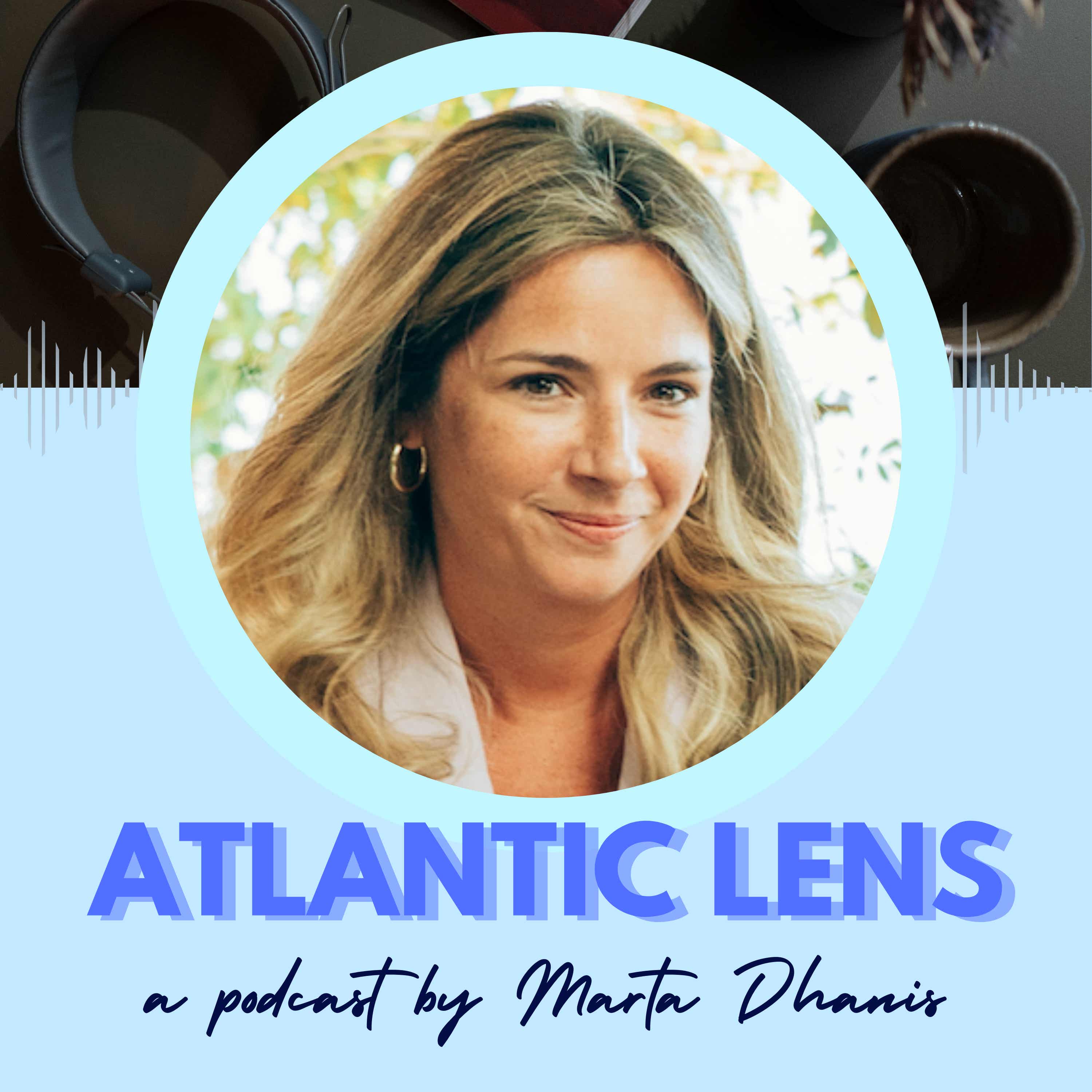
Atlantic Lens, a Podcast by Marta Dhanis
by Marta Dhanis
Tracing the fault lines of transatlantic justice and power. After reporting on the world’s most high-profile cases for major U.S. networks, Atlantic Lens provides the independent analysis and deep-background context that the daily news cycle misses. atlanticlens.substack.com
-
18
Ep. 18: At the Edge of the Bomb: Inside Iran’s “War of Wills”
The war involving Iran is entering a more dangerous, and more unpredictable, phase. What may look like escalation is, in reality, something more complex: a test of endurance, strategy, and limits.In this wide-ranging conversation episode of Atlantic Lens podcast, MIT’s nuclear weapons expert Jim Walsh - one of the few Westerners to sit across the table from Iranian leadership every single year for the last two decades - joins Marta Dhanis to pull back the curtain on the internal mechanics of Tehran’s decision-making.In this episode:* The “Ricochet” Effect: Why military strikes are reinforcing, rather than extinguishing, Iran’s drive for a nuclear deterrent.* The Death of the Doves: How the current conflict has decimated the voices for diplomacy in Tehran and handed total power to the Revolutionary Guard.* The “Amateur” Problem: Walsh’s blunt assessment of the current U.S. negotiating team and why a “fast resolution” is a “fever dream.”* Persian Civilization vs. Global Pressure: Why threatening a “civilization” (rather than a regime) was the biggest strategic blunder of the year.* What to watch now: negotiations, collapse, or something in between* The Mystery of the Scientists: Jim weighs in on the series of disappearances and deaths currently rocking the nuclear physics community.Key Quotes:“You can blow up a bunch of buildings, but you can’t bomb the knowledge and experience of Iranian engineers out of their heads.”“Once the horse is out of the barn, you have to persuade it to come back in, you can’t force it. Right now, we are reinforcing the exact reasons why they would want the bomb in the first place.”Resources:* Read the companion article here * Watch the full interview and subscribe to the YouTube Channel If you find this reporting valuable, please consider a paid subscription to Atlantic Lens to support independent, boots-on-the-ground journalism. Get full access to Atlantic Lens by Marta Dhanis at atlanticlens.substack.com/subscribe
-
17
Ep. 17: Police Files, Surveillance and Targeted Killing of MIT Physicist Nuno Loureiro
A 96-page police report obtained by Atlantic Lens reveals the final hours of MIT physicist Nuno Loureiro, a leading figure in nuclear fusion research, who was shot and killed outside his home in the outskirts of Boston.In this episode of Atlantic Lens Podcast, journalist Marta Dhanis reconstructs the timeline of the attack - from hours of surveillance to the moment a man posing as a delivery worker rang the doorbell.The report details how the suspect, Cláudio Valente, mapped the area, tracked the family’s routine, and carried out the shooting in seconds.Loureiro was still conscious when first responders arrived.The two men had known each other decades earlier as students in their native Portugal. Authorities now believe the attack was planned over several years.This episode examines what the police files confirm - and what remains unresolved - in a case that has drawn federal attention and raised broader questions about the vulnerability of scientists working in critical fields like fusion energy.Thanks for reading Atlantic Lens by Marta Dhanis! This post is public so feel free to share it. Get full access to Atlantic Lens by Marta Dhanis at atlanticlens.substack.com/subscribe
-
16
Why the Nick Reiner Case Could Test America’s Insanity Defense
Prefer to Read? 📖 HereA homicide case in Hollywood is about to test one of the most controversial doctrines in American law: the insanity defense.Nick Reiner, the son of filmmaker Rob Reiner, is accused of killing his parents in Los Angeles. His case could hinge on whether severe mental illness can erase criminal responsibility under U.S. law - a legal standard that dates back to 19th-century England.In this episode of Atlantic Lens, journalist Marta Dhanis examines how American courts evaluate insanity claims, why the legal threshold is so high, and how the U.S. approach contrasts with a recent verdict in Ireland where a jury accepted a psychiatric defense after a killing.Drawing on courtroom experience covering major criminal trials in New York, this episode explores a deeper question: how should modern justice systems judge actions committed by a mind in psychosis?Thanks for reading Atlantic Lens by Marta Dhanis! This post is public so feel free to share it. Get full access to Atlantic Lens by Marta Dhanis at atlanticlens.substack.com/subscribe
-
15
Bruna Ferreira: ICE, Trump’s Deportation Machine, and a White House Family Connection
Prefer to Read? 📖 HereWhen ICE detained Brazilian immigrant Bruna Ferreira in Massachusetts, the case quickly became politically explosive.In this episode of Atlantic Lens, journalist Marta Dhanis examines how Ferreira’s detention reveals deeper tensions inside the American immigration system - from aggressive ICE enforcement and internal whistleblower warnings to the political messaging surrounding deportation in Donald Trump’s second term.Atlantic Lens by Marta Dhanis is a reader-supported publication. To receive new posts and support my work, consider becoming a free or paid subscriber.Ferreira was ultimately granted bond after the government itself acknowledged she was neither a danger nor a flight risk. Yet the Department of Homeland Security appealed the decision the very next day.So what does this case reveal about the machinery of immigration enforcement in the United States today?And what happens when someone with deep ties to American society suddenly becomes a symbol of a national political battle? Get full access to Atlantic Lens by Marta Dhanis at atlanticlens.substack.com/subscribe
-
14
Trump, the Supreme Court, and the Future of the Trade War
🔗 Prefer to Read? Full Article HereThe U.S. Supreme Court has stepped directly into the trade war. In February 2026, the Court issued a major ruling limiting presidential tariff authority, raising constitutional questions about executive power, congressional delegation, and the future of U.S. trade policy.In this episode of Atlantic Lens (listen wherever you get your podcasts), I break down:• What the Supreme Court actually decided• Why separation of powers matters in trade policy• Why President Trump reacted so forcefully, including criticism of justices he appointed• The confusion over 10% vs. 15% tariff enforcement• FedEx’s lawsuit seeking tariff refunds• The European Commission’s response and what it signals• What this means for consumers in the U.S. and EuropeThis is a structural story about institutional limits under economic pressure, and why judicial decisions in Washington can ripple through Brussels, Lisbon, and global markets.If trade wars are fought politically, they are paid for economically.And this ruling may redefine who gets to fight them.Atlantic Lens is my independent space to examine power and justice across the Atlantic. If this work matters to you, consider subscribing: free or paid. Get full access to Atlantic Lens by Marta Dhanis at atlanticlens.substack.com/subscribe
-
13
Podcast: Why Trump’s Greenland Obsession Was Never About Security
In this episode of Atlantic Lens, we unpack why Greenland has suddenly re-entered U.S. political discourse, and why the security case behind it doesn’t stand up to scrutiny.Donald Trump framed Greenland as a critical national security asset, pointing to Russia, China, and a rapidly changing Arctic. But according to leading Arctic experts, the obsession with Greenland has far less to do with defense than with power, symbolism, and political disruption.Featuring insights from former U.S. Arctic policymaker David Balton and Arctic security analyst Andreas Østhagen, this episode breaks down what Washington actually signals through its Arctic policy, why Greenland isn’t the strategic prize it’s often portrayed to be, and how exaggerated threat narratives are reshaping transatlantic relations.In this episode:* Why Greenland became a political fixation in Washington* The weak security case behind Trump’s Greenland rhetoric* What the U.S. National Security Strategy doesn’t say about the Arctic* Russia, China, and the reality of Arctic military threats* Why minerals and melting ice don’t equal strategic dominance* How Greenland’s status inside Denmark and NATO complicates the narrative* What this debate reveals about U.S. power, legacy, and disruption politicsFeatured voices:* David Balton, is a Senior Fellow with the Belfer Center's Arctic Initiative/Harvard Kennedy School and former senior U.S. official (Biden, G.W.Bush) and Arctic policy expert* Andreas Østhagen, senior research fellow, Fridtjof Nansen InstituteWhy it matters:Greenland isn’t a strategic prize because of what lies beneath the ice, but because of the political disruption its pursuit creates above it. Understanding that distinction is essential to decoding today’s Arctic geopolitics and the future of the transatlantic alliance. Get full access to Atlantic Lens by Marta Dhanis at atlanticlens.substack.com/subscribe
-
12
A Tragedy in San Francisco: Where the Law Draws the Line
On a quiet Saturday in March 2024, a Portuguese-Brazilian family of four was killed while waiting for a bus in San Francisco’s West Portal neighborhood. A driver traveling more than three times the speed limit mounted the curb and struck them. No drugs. No alcohol. No medical emergency. Four people, including two very young children, died.Nearly two years later, a judge was asked a narrower but deeply unsettling question: should the felony charges against the driver be reduced to misdemeanors?In this episode of Atlantic Lens, I walk through the facts of the case, the arguments made in court, and the ruling that refused to shrink accountability on paper, even in the face of age, remorse, and a life without prior criminal record.This is a story about responsibility, not intent. And about how the law draws boundaries when tragedy offers no explanation.🗞️ Prefer to read?I break down this case in writing here: Get full access to Atlantic Lens by Marta Dhanis at atlanticlens.substack.com/subscribe
-
11
Inside the Mind of the Iranian State: A Conversation with a Former Political Prisoner
How does a regime survive 1,000% inflation and protests in 150 cities? Kian Tajbakhsh, a world-renowned political scientist and former Iranian political prisoner, breaks down the current crisis in Iran. As of Tuesday, January 27 (31st day), the wave of unrest has claimed the lives of at least 6,221 people, according to the US-based Human Rights Activists News Agency (HRANA), which is currently investigating another 17,000 reports of fatalities, potentially bringing the toll to over 23,000.Tajbakhsh was “Exhibit A” in a Stalinist-style televised trial in Tehran. He spent years in Evin Prison, looking into the eyes of interrogators who told him they would “do anything” to save the regime. In this episode of Atlantic Lens, Kian discusses the machinery behind the 2025-2026 protests and what is truly next for Iran. From the chilling psychology of his own captors to the “digital kill switch” being built with Chinese help, Kian explains why this moment is fundamentally different from the 2009 and 2022 uprisings. We go beyond the headlines to explore:The 10% Rule: How an organized minority crushes a disorganized majority.The Digital Fortress: Iran’s decade-long project with China to build a domestic internet.The Road to Peace: Why a democratic transition in Iran is the only path to the 'Golden Prize' of Middle East stability.Key Topics:The logic of the 'Massive Massacre.'Why sanctions are a choice, not a necessity.The existing 'Vessels' of democracy inside Iran.The Abraham Accords and the 'Golden Prize' of Saudi-Israeli peace.The Interview in 3 Quotes:"Organized minorities are more powerful than disorganized majorities.""The regime knows if there are 4 million people in the street, it is beyond their capacity to control.""Iran is more ready for a democratic transition than many people think."Connect & Support:This podcast episode is part of a series following my analysis of the recent wave of protests and massacre in Iran “Why Iran’s Regime Will Kill to Survive,” published Monday on Atlantic Lens.Subscribe to Atlantic Lens for more in-depth global analysis: https://atlanticlens.substack.com/subscribeFollow me on X: https://x.com/MartaDhanis Get full access to Atlantic Lens by Marta Dhanis at atlanticlens.substack.com/subscribe
-
10
What 'El Chapo' and Noriega Teach Us About Maduro’s Fate
History is repeating itself. 36 years to the day after Manuel Noriega’s capture, Nicolás Maduro faces the same legal fate. But having covered the trials of El Chapo and Juan Orlando Hernández from inside the courtroom, I argue that the legal victory is the easy part. The real danger is the power vacuum left behind.In this episode, I break down the specific legal trap the SDNY has set for Maduro, why "Head of State" immunity won't save him, and why the fragmentation of the Cartel of the Suns could lead to more violence, not less.In this episode, we cover:The Coincidence: Why the January 3rd date matters (Noriega vs. Maduro).The Legal Trap: How United States v. Noriega killed the "Head of State" defense.Inside the Courtroom: What I saw during the El Chapo and JOH trials that predicts Maduro's future.The Vacuum: Why removing a "Kingpin" often leads to a violent scramble for control (The Panama Lesson).Prediction: What happens to figures like Diosdado Cabello now?Mentioned in this Episode:Article: My reporting from inside the "Trial of the Century."Article: How the US prosecutes a Head of State.Historical Reference: The 1989 Invasion of Panama and the fall of Noriega.Quote of the Week:"Justice for the Kingpin does not always mean peace for the Kingdom."Connect & Support:Subscribe to the newsletter for deep dives: https://atlanticlens.substack.com/subscribeFollow me on X: https://x.com/MartaDhanis Get full access to Atlantic Lens by Marta Dhanis at atlanticlens.substack.com/subscribe
-
9
Jeffrey Epstein: Prison Negligence or Conspiracy? A Former Federal Prosecutor Breaks It Down
In this episode of Atlantic Lens, I speak with David Weinstein, a former federal prosecutor, now in private pratice, who worked in the Southern District of Florida - the first office to investigate Jeffrey Epstein - to unpack what the public still gets wrong about Epstein’s death.David Weinstein has stepped inside federal detention centers about a hundred times. He knows exactly what those guards were doing while the cameras were off, and it wasn’t a conspiracy. It was something much more common.This conversation is the second layer of reporting following my investigation,“What Really Happened in the Final Days Before Jeffrey Epstein Died,” published yesterday on Atlantic Lens.On the podcast, we go inside:* How federal detention centres like the MCC actually operate* What the Bureau of Prisons (BoP) failures really tell us* How to read the newly released Epstein files * And whether there is any factual basis for the so-called “Black Book” mythologyWeinstein brings a prosecutor’s perspective grounded in experience, explaining how these systems fail, how investigations really work, and why Hollywood-style explanations often collapse under scrutiny.This episode is for listeners who want facts, context, and clarity.🎧 Listen wherever you get your podcasts: here, Apple, or Spotify. If you value independent reporting on justice and power across the Atlantic, subscribe here: free or paid.👉 Read the first layer of this investigation here: Get full access to Atlantic Lens by Marta Dhanis at atlanticlens.substack.com/subscribe
-
8
Renato Seabra 15 Years Later and the Limits of the Insanity Defense in U.S. Courts
Editor’s Note Fifteen years have passed since the ‘Renato Seabra case,’ my first criminal justice assignment in the United States. In the decade and a half since the 2011 trial, I have tracked the intersection of mental health and the American punitive system through the lens of this case. I am writing about this case now not to revisit the crime itself, but because recent cases have exposed the same recurring misunderstandings about how the American justice system works.⸻The very first criminal justice case I covered in New York taught me how quickly our assumptions about crime unravel once a case enters a courtroom.On January 7, 2011, I had recently moved to the United States, completing journalism post-graduation training in New York while on leave from my job as a business television reporter in Portugal. I had committed to serving as my network’s first U.S. correspondent that year, then TVI/TVI24 (now CNN Portugal). That night, I began to fulfill that role when my newsroom woke me up to cover what initially appeared to be an unexplained death and quickly revealed itself as a homicide that would come to define my professional life for the next two years. The case became known in Portugal as the ‘Renato Seabra case,’ involving two Portuguese citizens. It was the first criminal trial I followed in the United States from the crime scene to final sentencing.By the time I reached the Midtown hotel around 3 a.m., it was still an active crime scene. Police cars lined the entrance. Inside, investigators moved in and out of elevators carrying sealed boxes of evidence. By morning, hotel guests were visibly shaken by the scale of the police presence. There was still little confirmed information, but it was already clear this would not be a routine case.Fifteen years later - having covered the most consequential criminal cases of the past two decades, including Dominique Strauss-Kahn, Bill Cosby, Harvey Weinstein, Jeffrey Epstein, ‘El Chapo’, Sam Bankman-Fried, and the various criminal prosecutions of Donald Trump - I still see in that first trial the same systemic patterns. Largely while working for Fox News as their resident member of the press corps covering New York State and federal courts, I recognized in the Seabra case many of the same public misunderstandings that resurface whenever extreme violence intersects with mental illness.A Brief Factual RecapFor readers unfamiliar with the case: Carlos Castro, a Portuguese tabloid personality, was brutally killed in his New York hotel room in Times Square. The crime involved prolonged violence, including sexual mutilation, and lasted for an extended period of time. NYPD officers later testified that the scene was one of the most complex they had processed, requiring more than a full day of forensic work.The brutality of the act fueled tabloid coverage in New York. Renato Seabra was dubbed the ‘castration killer’ by the New York Post, the city’s most influential tabloid, a label that came to define the public’s perception of the case. He was ultimately convicted of second-degree murder and sentenced to the maximum of 25 years to life in prison, becoming eligible for parole in 2036. It will be up to a Parole Board to evaluate his release, a request that can be repeatedly denied and reviewed, typically every two years, which could potentially keep Seabra in prison for the rest of his life.While the 2012 verdict appeared to seal Seabra’s fate, his attorney, Scott Tulman, revealed to Atlantic Lens that, although no appeal has been filed recently, he is currently drafting a post-conviction motion. While the likelihood of success at this stage is slim, the move indicates that the defense is still seeking to exhaust all available procedural remedies.The Enduring Myth: Mental Illness as AbsolutionFrom the outset, the Seabra case was framed - publicly and emotionally - through the lens of mental illness: psychosis, bipolar disorder, a psychological break. These questions were legitimate, but they were also profoundly misunderstood.In the U.S. legal system, mental illness does not automatically negate criminal responsibility. And despite what popular culture - and Hollywood films in particular - suggest, the insanity defense is not only rare; it is almost never successful. This is another persistent myth, one I explored in depth in my 2014 book on the case, The Renato Seabra Case: Behind the Curtains (published in Portuguese). At trial, the defense relied heavily on psychiatric testimony. There was little alternative: the defendant had confessed to the crime, and the physical evidence was overwhelming. Diagnoses were presented, and multiple experts testified. Yet the jury was not asked to rule on whether mental illness existed, but only whether it fully eliminated intent at the precise moment of the crime.Ultimately, twelve New York jurors unanimously concluded that it did not. They found that, at the time of the killing, there was sufficient awareness to establish criminal responsibility.This distinction, between explaining behavior and excusing it, is one of the hardest for the public to accept. Yet it is foundational to how American courts function, and it remains widely misunderstood on both sides of the Atlantic.What Juries Actually WeighOne of the most important lessons from that first trial was understanding how juries truly evaluate cases: not morally, but structurally. Jurors are not tasked with resolving existential questions of good and evil. They are instructed to assess evidence against a strict legal standard: proof ‘beyond a reasonable doubt.’ In practice, they focus on: intent, sequence of actions, coherence of behavior before and after the crime, attempts to conceal or explain, and credibility of expert testimony.In the Seabra case, there was no premeditation, but there was prolonged violence, extreme brutality, and post-crime behavior that weighed heavily in deliberations. That analytical framework has repeated itself across vastly different cases I later covered: from Weinstein’s abuse of power, to Epstein’s long-running impunity, to the unprecedented criminal exposure of a former U.S. president (Trump). Different crimes, different defendants, same legal architecture.Before Verdicts: the System’s First ResponseMonths before a jury ever deliberated, I was granted exclusive access to Rikers Island, where the defendant was held for roughly two years while awaiting trial and sentencing. Rikers is not a prison designed for rehabilitation or treatment. It is a massive pretrial detention complex operated by New York City, one of the largest and most dangerous in the U.S., and a place where mentally ill defendants often wait months or years before their cases move forward. The defendant in this case was housed in a psychiatric unit, sharing space with dozens of other detainees diagnosed with mental illness.The environment was heavy, volatile, and deeply institutional. During our reporting visit, alarms suddenly sounded and the crew was evacuated due to an internal emergency. It was a stark reminder that long before questions of guilt or innocence are resolved, the system’s first interaction with mental illness is often containment, not care.In 2013, Seabra was transferred into the New York state prison system and held for over a decade at Clinton Correctional Facility, a maximum-security prison in the far north of the state, often referred to as “little Siberia” because of its isolation and harsh climate. According to official records Atlantic Lens had access to, Seabra was transferred on April 4, 2024, to another maximum-security facility in upstate New York: Attica Correctional Facility.The corrections department conducts regular transfers of “hundreds” of incarcerated individuals across the state system every month and explained to Atlantic Lens that such moves can reflect a range of factors, including “security concerns, programmatic needs, medical and mental health levels, moving from special housing units to residential rehabilitation units.” Due to federal privacy laws, the department would not comment on the medical or mental health treatment of the specific inmate.Seabra’s attorney also confirmed that neither he nor his client were informed of the reasons for the transfer.Both Clinton and Attica are designed primarily for custody and control. Mental health care exists within these institutions, but it operates within the constraints of a punitive system rather than a therapeutic one.Attica, in particular, occupies a singular place in the American penal imagination because it represents the enduring reality of a prison system built around incapacitation rather than rehabilitation. For international audiences, namely in Portugal, this often contrasts sharply with popular expectations of how justice is administered in the United States once a defendant disappears from public view.Why Juries Trust One Expert Over AnotherAt trial, the clash between psychiatric experts became central. The defense psychologist argued that the defendant suffered from bipolar disorder and was experiencing a manic psychotic episode, rendering him incapable of understanding his actions. The prosecution’s psychiatrist countered with a different interpretation: that the crime was driven by rage, loss of control and humiliation, and that any psychotic symptoms emerged only after the act itself.What the jury ultimately weighed was not compassion, but credibility. Credentials, consistency, and alignment with observable behavior mattered more than diagnostic labels. This dynamic - experts in direct conflict, juries choosing coherence over complexity - is something I have since seen repeated in many major U.S. criminal trials.When the same misreadings returnMore recently, another case with Portuguese connections - the Cláudio Valente case/the Brown University and MIT shootings - has triggered many of the same public reactions I witnessed in 2011: shock, a rush to psychological explanations, and a tendency to reduce complex legal processes into two simplistic conclusions: madness or evil. But that is not how the American justice system operates.As with Seabra, the central legal question is not whether mental illness exists, but whether it can be proven, to an exacting standard, that it fully erased criminal intent at the precise moment of the act. That bar is extraordinarily high and it always has been.There is often an expectation that psychological explanation should lead to legal absolution, but American courts rarely operate that way. Mental illness can contextualize behavior, it can influence sentencing, and can shape incarceration conditions, but it very rarely erases criminal responsibility entirely.A System Less Cinematic And More UnforgivingIf my first homicide trial taught me anything, it is this: the U.S. justice system is far less cinematic than popular narratives suggest, and far more unforgiving. It demands proof, coherence, and credibility.That is why verdicts often feel unsatisfying to the public, yet remain internally consistent within the legal system itself. At the center of that system is the standard of ‘beyond a reasonable doubt’, a threshold that prioritizes certainty over catharsis. In Portugal and most European countries, this is expressed through the principle of in dubio pro reo; though the English terminology is not native to the system, the mandate remains the same: any insurmountable doubt must result in an acquittal, ensuring that the burden of proof remains a pillar of the judicial process.Atlantic Lens is my independent space to examine power, justice, and media across the Atlantic. If this work matters to you, consider subscribing: free or paid.Fifteen Years LaterWith time and distance, I no longer see that first case primarily as a crime story. I see it as a structural lesson, and one that shaped how I approached every major criminal case that followed.Extreme crimes expose individual fractures, but also collective ones: how poorly we understand mental illness in legal contexts, how much we expect justice to deliver emotional resolution, and how uncomfortable we remain with outcomes that resist simple narratives.Fifteen years on, those tensions remain, and may be more visible than ever.Thanks for reading Atlantic Lens by Marta Dhanis! This post is public so feel free to share it. Get full access to Atlantic Lens by Marta Dhanis at atlanticlens.substack.com/subscribe
-
7
The Dictator’s Day in Court: Maduro Enters 'Not Guilty' Plea
If you missed the preview of the hearing, read it here.The transition from a presidential palace in Caracas to a high-security cell at the Metropolitan Detention Center (MDC) in Brooklyn is a distance that cannot be measured in miles.Today, Nicolás Maduro Moros and his wife, Cilia Flores, appeared before Judge Alvin K. Hellerstein in the Daniel Patrick Moynihan U.S. Courthouse for their formal arraignment. Under the heavy gaze of U.S. Marshals and amidst a total security lockdown of Pearl Street, the couple, once the most powerful figures in Venezuela, stood to hear the charges that could see them spend the rest of their lives in American prison. The man who once commanded Venezuela entered shackled at the ankles (not that common at SDNY), though not at the wrists, wearing prison orange shoes, beige pants and a blue shirt.The “Not Guilty” PleaAs expected, Maduro and Flores entered pleas of “not guilty” to all counts, including narco-terrorism conspiracy, cocaine importation, and the newly unsealed weapons charges.“I am not guilty, I am a decent man, I am still the president of my country,” said Maduro in Spanish and through a court interpreter.At another instance, Maduro’s frustration boiled over. He declared: 'I am the President of the Republic of Venezuela (...) I am here kidnapped (...) I was captured at my home in Caracas.' Judge Hellerstein, maintaining the brisk pace of the court, immediately cut him off, informing the defendant that there would be an 'appropriate time' for such arguments, but that time was not today.The physical toll of the extraction was also laid bare for the court. Mark Donnelly, the Houston-based attorney representing Cilia Flores, informed the judge that his client sustained significant health issues during her capture, including bruising to her ribs that the defense believes may be a fracture requiring immediate X-ray and medical attention.While the proceedings were brief - roughly 20 minutes, the atmosphere was historic. This was a collision of international law and American executive power. Judge Hellerstein, a veteran of the bench known for his no-nonsense efficiency, moved through the procedural requirements with the same rigor that he’s known for. In this room, Maduro was not “El Presidente”, but rather a defendant facing a superseding indictment that carries a mandatory minimum of 50 years to life.To a non-American audience, a “not guilty” plea can sound defiant or strategic but in U.S. federal court, it is neither. At this stage, the plea functions as a procedural placeholder. It preserves the defendants’ rights, allows discovery to begin, and opens the door to pre-trial motions. Almost every federal defendant enters the same plea at arraignment, including those who later plead guilty.The Pollack Defense: A Tactical StartThe most significant development inside the courtroom today wasn’t the reading of the charges, but the presence of the man standing next to Nicolás Maduro. Barry Pollack, the veteran trial lawyer who famously secured Julian Assange’s freedom, has officially taken the lead for the defense.His appearance signals that the defense strategy will not be a simple denial of facts, but a sophisticated assault on the legal architecture of the prosecution. Pollack is a specialist in “extraterritoriality”, challenging the U.S. government’s right to arrest and try foreign citizens for actions taken on foreign soil. By retaining him, Maduro has moved from a political defense to a high-level constitutional one.If you value independent reporting on justice and power across the Atlantic, subscribe to Atlantic Lens newsletter&podcast: free or paid. The Immediate “Remand”Judge Hellerstein ordered that both Maduro and Flores remain in federal custody without bail.Pollack did not offer a formal argument for release today, a tactical choice. In a case of this magnitude, asking for bail at an arraignment is a losing battle. Instead, Pollack’s focus remained on the long game. By accepting detention for now, he preserves his ability to file more complex motions regarding Maduro’s status as a “Prisoner of War” or a “protected head of state” later this month.While awaiting trial, the couple will be held at the Metropolitan Detention Center (MDC) in Brooklyn. Since the 2021 closure of the MCC in Manhattan - following the fallout of Jeffrey Epstein’s death - the Brooklyn facility has become the primary destination for the SDNY’s highest-profile defendants. Maduro and Flores now join a roster of notorious current residents that includes Luigi Mangione, and former ones such as Sean “Diddy” Combs, Sam Bankman-Fried, and Ghislaine Maxwell.In cases involving terrorism-related charges, international narcotics trafficking, and mandatory minimum sentences measured in decades, detention is structural. Flight risk is absolute, the sentencing exposure here is significant, and bail is functionally irrelevant.The Noriega ShadowThe timing is actually ironic: 36 years ago to the day of Maduro’s capture, on January 3, 1990, Panamanian leader Manuel Noriega was brought to the United States following a military invasion.As I’ve reported previously, the “Noriega Precedent” is the roadmap for this case. In 1990, during George H. W. Bush administration, the courts established that the U.S. could try a foreign leader captured during military operations, even without prior Congressional authorization - as we have seen now under Trump’s tenure. And today, we saw the 21st-century version of that playbook.The Legal Battlefield AheadWhile the arraignment is over, the real legal war is just beginning and the next hearing has been scheduled for March 17. David Weinstein, a former federal prosecutor now in private practice with Hinshaw & Culbertson, has previously told Atlantic Lens that the coming months will test the boundaries of international law.“What we will see in the weeks ahead are arguments about the USA’s extraterritorial power to enforce our laws, the reach of conspiracy statutes, the Geneva Convention and prisoners of war, and head of state immunity,” Weinstein noted.The most contentious fight will likely center on ‘Head-of-State Immunity.’ Maduro’s defense is expected to argue that he is protected from prosecution as a sitting leader. However, the U.S. government’s explicit refusal to recognize the results of the July 2024 Venezuelan elections, and its recognition of opposition figures as the legitimate victors, strips Maduro of that legal shield in the eyes of the SDNY.The Math of “Full Wrath” = Death Penalty?Despite some headlines suggesting otherwise, the death penalty is not currently on the table for Nicolás Maduro or Cilia Flores. While reports have speculated about capital punishment, the legal reality at SDNY is far more grounded in existing statutes.The “full wrath of justice” promised by Attorney General Pam Bondi is mathematically staggering, but it is focused on ensuring the couple never leaves a U.S. prison alive, not on an execution.Legal expert David Weinstein explains why a death sentence is highly improbable.“It is unlikely that they would seek the death penalty and even unlikelier that it would be imposed. The current charges don’t carry that penalty. They would have to supersede and add a Continuing Criminal Enterprise (CCE) charge, and they would likely have to specifically allege a death in the indictment.”While some may speculate that under a Trump-appointed DOJ anything is possible, the legal reality is that the death penalty is not a unilateral executive decision. Even if prosecutors were to supersede the indictment to seek capital punishment, federal law requires a jury - not just a judge - to unanimously authorize a death sentence. Ultimately, the trial remains under the gavel of Judge Hellerstein, a Clinton appointee known for a strict, by-the-book adherence to sentencing guidelines.Under the current federal law:* Narco-Terrorism: Carries a 20-year floor.* Weapons Stacking: The unsealed 2026 indictment includes “stacked” counts for possession of machine guns and destructive devices. Because these 30-year mandatory sentences must run consecutively (one after the other), the couple is facing an effective 50-year mandatory minimum.For a couple in their 60s, this is a life sentence by another name. The DOJ’s strategy appears to be a “guaranteed exit” from society through mandatory minimums rather than the years of constitutional litigation that a capital case would trigger.The Global Financial LockdownWhile the SDNY handles the criminal prosecution, the international financial net is tightening. Just hours before the arraignment, the Swiss Federal Council announced it has frozen all assets held in Switzerland by Nicolás Maduro and his associates with immediate effect.This move, enacted under the Foreign Illicit Assets Act (FIAA), is designed to prevent an “outflow of assets” during the current volatility. In a statement from Bern, Swiss officials clarified that while they are monitoring the “legality” of the U.S. military action, their priority is ensuring that any illicitly acquired funds are preserved for the eventual benefit of the Venezuelan people. This adds a third front to Maduro’s legal battles: a criminal trial in New York, a transition in Caracas, and a total freeze of his European “nest egg.”The Political VacuumWhile the legal gears turn in Manhattan, a political vacuum looms over Caracas. Interestingly, President Trump has signaled a lack of support for María Corina Machado, the moral leader of the Venezuelan opposition and 2025 Nobel Peace Prize winner.“I think it’d be very tough for her to be the leader,” Trump said recently. “She doesn’t have the support or the respect within the country.”This suggests that while the SDNY handles the criminal prosecution of the old guard, the Trump administration may be looking toward a different, perhaps more pragmatic, transition of power in Venezuela, and one that may involve figures less aligned with the traditional opposition.What’s Next in Court?Maduro and Flores will return to court on March 17. Until then, the case now goes into discovery and pre-trial motions phase. Given his history with complex litigation, the judge is unlikely to tolerate delays. The defense will undoubtedly file motions for “Prisoner of War” status and a challenge to the legality of the military capture.But for today, the image remains: a former dictator standing in a Manhattan courtroom, answering to a judge appointed by the very system he spent decades trying to undermine. In the Southern District of New York, the law has a very long memory.Thanks for reading Atlantic Lens by Marta Dhanis! This post is public so feel free to share it. Get full access to Atlantic Lens by Marta Dhanis at atlanticlens.substack.com/subscribe
-
6
Justice Without Judgment, Gary Zukav and the Earth School
There are intellectual, and spiritual, encounters that flip us inside out. Gary Zukav, who is the author of ‘The Seat of the Soul’ - a 36-year-old bestseller that somehow feels timeless - is one of them. I’m reading the book for the second time. The first was about three years ago, at the beginning of my true spiritual awakening, when it blew me wide open. And recently, I listened to a podcast episode of his that struck me as particularly provocative, so I want to share some reflections with you.Zukav became a global reference in personal growth and spiritual development largely because of his long relationship with Oprah Winfrey. She says he changed her life; he says the same about her. For years, he became one of the thinkers she most often brought to her show and not by accident. He talks about spirituality with the clarity of a scientist.The episode opens with a disarming sentence:“The universe doesn’t judge.”Written on a mug, it could be a cliché, but Zukav takes it somewhere else entirely: if the universe doesn’t judge, then the concepts of “justice” and “injustice”, as we use them generically, collapse. Not because “anything goes,” but because everything that happens is, in his words, “appropriate to the soul that experiences it.”🎙️Listen To The Podcast Episode For More Depth On This Topic, Here Or On Spotify: When The Spiritual Meets The CourtroomThis particular episode struck me for reasons that go beyond spirituality, it touches something at the core of my work: criminal justice. I spent over a decade covering criminal justice in the U.S., dealing with victims, trials, systems that fail, tragedies that never should have happened and witnessing devastation and trauma up close and perhaps that’s why Zukav’s framing caught me off guard.He does not say suffering is desirable, does not deny the existence of harm or evil, nor does he argue against accountability. What he says is that every choice generates consequences, and those consequences become our lesson in what he calls the Earth School, the school of life, where everything that happens is neither fair nor unfair, but simply the natural consequence of choice.Zukav argues that the universe doesn’t operate through judgment, not in the way human institutions do, not in the way courtrooms do, and not even in the way we do when we say: this is unfair, this is unjust, this shouldn’t be happening to me. In his view, the deepest form of justice is non-judgment. The thing we call “karma” is, he says, “the universal, impersonal teacher of responsibility.” And here’s where he goes further: karma unfolds not just in this lifetime, but in the next.This is not empirically provable and he never pretends otherwise, but it makes sense: every choice carries an energetic imprint that eventually returns, even if not immediately, even if not in this life.Covering Epstein, El Chapo, and the stories that break usThis idea collided with my years covering cases that felt incomprehensible: from Jeffrey Epstein to ‘El Chapo’, extremely violent crimes and murders, massive fraud and scandals, tragedies, loss and accountability. I’ve heard “That’s not fair” more times than I can count: from victims, defendants, families, even prosecutors.Nothing in Zukav’s framework minimizes these experiences. Everything that reaches your life - even the painful, devastating, senseless - is “appropriate to the person experiencing it,” he says. Not because they deserve it, but because it serves their evolution. Zukav suggests that fairness isn’t the point, learning is. It’s a difficult idea, until you sit with it and then it becomes strangely stabilizing.Fear, Love, And The Only Two Choices That MatterZukav returns again and again to one simple question: from where do I respond, fear or love? He says something simple and brutal: “Justice is the lack of judgment.”If justice is the absence of judgment, then what we call “injustice” may simply be a misunderstanding of how the universe teaches. Choices create consequences and consequences create growth. Fear generates more fear, while love generates clarity. Judgment generates more judgment, especially toward ourselves.Judging someone, he argues, doesn’t only affect them, it affects us, because judgment creates consequences that eventually return to the one who generated them. In the Earth School, everything we emit comes back.What happens in court is only one layer of justice: the human layer. The deeper layer is internal, personal, spiritual, and far older than our institutions.“Nothing Occurs In Your Life That Does Not Serve Your Spiritual Growth”Zukav repeats this like a mantra:“Nothing occurs in your life that does not serve your spiritual growth.”You may not agree and, years ago, I wouldn’t have agreed either. However, today, I think he’s right, not in a fatalistic way but in an empowering one. It’s not about destiny but about accountability - for instance Madonna, whose spiritual life I analized in another post, has said many times that she wouldn’t have pursued her path if it weren’t for the traumas she experienced early in life.What Zukav is really saying is this: we always have the freedom to choose our next response, and that love or fear are not emotions, they’re decisions. A world with “new consciousness”?Zukav often says his work is part of “an unprecedented new consciousness,” a new world being born. Is he right? Because in this chaotic world it doesn’t always feel like it. We’re living through polarization, disinformation, extremism, and systems under strain, but he argues that evolution is messy and that crises accelerate clarity and that fear rising to the surface is part of a transition to a more conscious collective.Are there indicators of rising collective awareness? There are small ones: mental health conversations, trauma literacy, restorative justice experiments, shifts toward meaning-driven work. There is certainly no empirical measure of “global consciousness” but, being in my forties, I can say this: we have far better tools for introspection and healing than our parents or grandparents ever did.A final thoughtThis is one of Zukav’s gift: a concept of justice that moves beyond blame and into existential responsibility, not judicial. Maybe that’s why The Seat of the Soul feels more relevant today than when it was published. We live in a world obsessed with punishment, spectacle, and moral certainty, yet profoundly disconnected from meaning.If you want to change your life, Zukav points to, change the choices you make from fear into choices you make from love. Everything else follows, in this lifetime or the next.Zukav is one of our greatest teachers and, honestly, I should listen to Zukav every single day. It’s astonishing how quickly we lose sight of our own essence.If you found these reflections meaningful, I go deeper into them on the Atlantic Lens podcast, available here, on Apple Podcasts, and on Spotify:Independent reporting, sustained by readers. Subscribe to Atlantic Lens for new posts: free or paid. Get full access to Atlantic Lens by Marta Dhanis at atlanticlens.substack.com/subscribe
-
5
Two Brilliant Physicists, Two Diverging Paths
What do former classmates remember and what do they refuse to speculate about?In this 10-minute documentary-style episode of Atlantic Lens, journalist Marta Dhanis reconstructs the early academic years of Cláudio Valente and Nuno Loureiro at Lisbon’s Instituto Superior Técnico - long before violence reshaped their names.Through firsthand testimony from former colleagues and teaching assistants, this episode traces two brilliant but diverging trajectories: one marked by rupture, silence, and disappearance; the other by steady international recognition and scientific achievement.The episode explores elite academic pressure, immigration and identity, unprocessed failure, and the ethical limits of retrospective explanation - without offering diagnoses, excuses, or easy answers.This is not an episode about crime.It is about promise, fracture, and the silences that often precede collapse.🎧 Atlantic Lens is a transatlantic podcast on justice, power, and the stories shaping our world. Get full access to Atlantic Lens by Marta Dhanis at atlanticlens.substack.com/subscribe
-
4
Protecting Kids Online: a Global Wake-Up Call from Australia
Australia just became the first democracy to ban social media for anyone under 16, a decision shaking governments, platforms, and parents worldwide.In this episode, Stephen Balkam, founder and CEO of the Family Online Safety Institute (FOSI), a global non-profit, breaks down what this moment tells us: explains why this moment matters far beyond Australia. He breaks down how Europe is preparing its next big regulatory push under the DSA review, why the U.S. fell years behind after weakened protections by the Trump administration, and what his latest international research reveals about parents and teens across multiple countries.Stephen also warns that the next challenge will move beyond social media: generative AI is already becoming a source of advice, information, and emotional support for kids.A timely, global look at where child online safety is headed and why democracies can’t afford to wait. Get full access to Atlantic Lens by Marta Dhanis at atlanticlens.substack.com/subscribe
-
3
Why Certain Trials Grip a Nation: What the Brian Walshe Case Reveals About America and About Us
When Ana Walshe vanished on New Year’s Day 2023, the case spiraled into one of the most shocking domestic crime stories in recent American memory. In this episode, Marta Dhanis unpacks the evidence, the digital trail, and the psychological pull behind the Brian Walshe trial. A transatlantic look at true crime, justice, and the stories we can’t look away from. Get full access to Atlantic Lens by Marta Dhanis at atlanticlens.substack.com/subscribe
-
2
A Harvard Scandal Years in the Making: Epstein’s Circle Unravels
This week, I look at what the latest wave of Epstein disclosures actually tells us, not just about one man, but about the ecosystem that enabled him. From newly released congressional emails to Donald Trump’s sudden push for full disclosure, and now a prominent economist stepping down under scrutiny, the story has entered a new phase.I break down what’s real, what’s political theatre, and why the quiet collapse of reputational immunity inside elite institutions matters more than any headline.This is the unraveling, finally happening in daylight. Get full access to Atlantic Lens by Marta Dhanis at atlanticlens.substack.com/subscribe
-
1
'Atlantic Lens' Podcast: Listening To Your Inner Voice, And Madonna's Too
Why do so many powerful artists and public figures rise fast, burn bright, and then collapse under the weight of their own success?In this episode of Atlantic Lens, I reflect on a rare, revealing interview Madonna gave to Jay Shetty, not to discuss celebrity, but to examine what happens when success outpaces inner life.Drawing from my years covering public figures under pressure and my own spiritual journey, I explore why ambition without grounding so often leads to self-destruction and why spirituality, consciousness, and inner structure may be the missing anchor we rarely talk about.This episode isn’t about belief systems or mysticism. It’s about survival at the top and the quiet work required to stay whole.In This Episode, We CoverWhy so many powerful figures collapse after reaching the peakMadonna’s reflections on trauma, discipline, and spiritual structureThe difference between channeling “light” and being grounded enough to hold itFame, excess, and self-destruction as substitutes for transcendenceWhy inner work matters more, not less, the higher you riseWhat spirituality means to me, beyond religion or labelsMentioned in This EpisodeInterview: Madonna in conversation with Jay ShettyTheme: Trauma, success, and spiritual disciplineConcept: Inner life as structure, not escape Get full access to Atlantic Lens by Marta Dhanis at atlanticlens.substack.com/subscribe
We're indexing this podcast's transcripts for the first time — this can take a minute or two. We'll show results as soon as they're ready.
No matches for "" in this podcast's transcripts.
No topics indexed yet for this podcast.
Loading reviews...
ABOUT THIS SHOW
Tracing the fault lines of transatlantic justice and power. After reporting on the world’s most high-profile cases for major U.S. networks, Atlantic Lens provides the independent analysis and deep-background context that the daily news cycle misses. atlanticlens.substack.com
HOSTED BY
Marta Dhanis
CATEGORIES
Loading similar podcasts...
Frequently Asked Questions
How many episodes does Atlantic Lens, a Podcast by Marta Dhanis have?
Atlantic Lens, a Podcast by Marta Dhanis currently has 18 episodes available on PodParley. New episodes are automatically indexed when they're published to the podcast feed.
What is Atlantic Lens, a Podcast by Marta Dhanis about?
Tracing the fault lines of transatlantic justice and power. After reporting on the world’s most high-profile cases for major U.S. networks, Atlantic Lens provides the independent analysis and deep-background context that the daily news cycle misses. atlanticlens.substack.com
How often does Atlantic Lens, a Podcast by Marta Dhanis release new episodes?
Atlantic Lens, a Podcast by Marta Dhanis has 18 episodes. Check the episode list to see recent publication dates and frequency.
Where can I listen to Atlantic Lens, a Podcast by Marta Dhanis?
You can listen to Atlantic Lens, a Podcast by Marta Dhanis on PodParley by clicking any episode. We provide an embedded audio player for direct listening, and you can also subscribe via your preferred podcast app using the RSS feed.
Who hosts Atlantic Lens, a Podcast by Marta Dhanis?
Atlantic Lens, a Podcast by Marta Dhanis is created and hosted by Marta Dhanis.
URL copied to clipboard!