
PODCAST · education
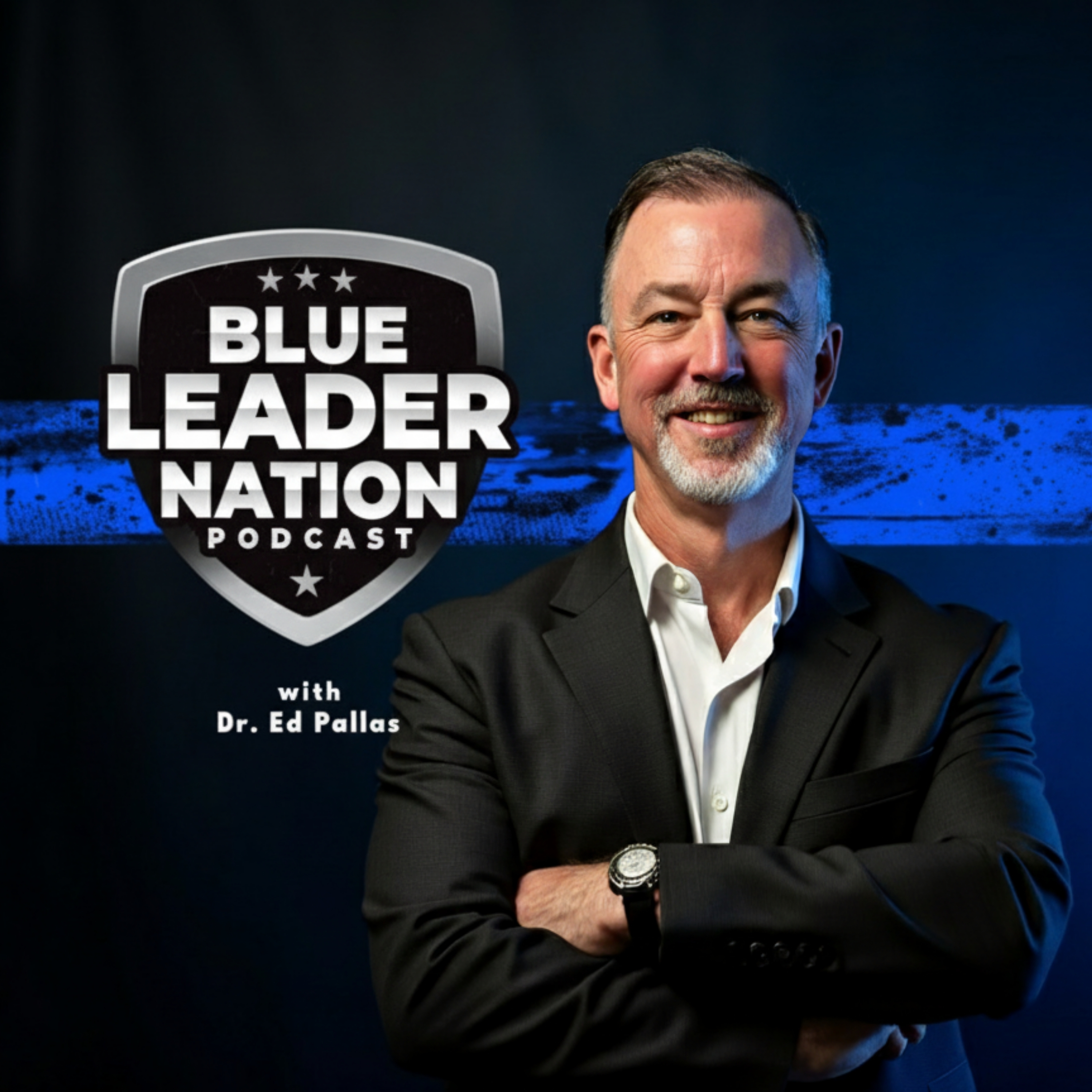
Blue Leader Nation Podcast
by Edward Pallas
Hosted by Dr. Ed Pallas, Blue Leader Nation delivers leadership lessons for the modern law enforcement professional — both sworn and civilian.Every episode dives into real-world experiences and evidence-based strategies to help you lead with integrity, build trust, and inspire others to follow. The podcast delivers straight-talk conversations and practical lessons drawn from real-world policing and proven behavioral science.Each week, you’ll hear stories and strategies that help you:• Strengthen your leadership mindset• Build trust within your team• Communicate with clarity and confidence• Prepare for promotion and career growth• Lead with integrity — on and off dutyWe invite you to join us as a featured guest as we celebrate the highs, unpack the lows, and embrace the beautiful chaos of life, one brutally honest conversation at a time.
-
28
Episode 27: You're Exhausted Because You're Fighting the Wrong Battles
You already know what's in your control. So why aren't you living it? That gap is exactly where burnout lives — and this episode closes it.A Roman slave named Epictetus figured out the answer while his leg was being broken. What he discovered became the foundation of modern clinical therapy, resilience psychology, and one of the most replicated findings in leadership research. This week we break it all down for the badge.In this episode: — The Dichotomy of Control: the two-column system that explains most leadership burnout — Albert Ellis, CBT, and why A never causes C (your belief does) — ACT therapy: the difference between clean pain and dirty pain — Julian Rotter's Locus of Control research — and the LE-specific finding that changes how you think about assignments — The PressureProof tool this week: The Control Audit (90 seconds, piece of paper, everything changes)TIMESTAMPS 0:00 — Cold open 1:30 — Who was Epictetus 3:30 — The Dichotomy of Control 5:30 — Modern science: Ellis, ACT, and Rotter 11:30 — The leadership lesson 13:00 — Two supervisors, same transfer, different result 15:00 — PressureProof Minute: The Control Audit 16:30 — Weekly challenge 17:15 — Next week: SenecaREFERENCES — Epictetus, Enchiridion (The Handbook), c. 125 AD — Albert Ellis — Rational Emotive Behavior Therapy (REBT), 1950s — Steven Hayes — Acceptance and Commitment Therapy (ACT), 1980s — Julian Rotter — Locus of Control, 1966SUBSCRIBE for weekly episodes on leadership, resilience, and what it actually takes to lead in law enforcement.Listen on Spotify:https://open.spotify.com/show/0T3gNgY60pywDEuKtXzvlNWatch the full episode on Youtube here:https://lnkd.in/eSrWx8NkListen on Apple Podcasts here:https://lnkd.in/eSz7uMJm#LawEnforcementLeadership #PolicePodcast #LeadershipDevelopment #Stoicism #BurnoutPrevention #PoliceLeadership #BlueLeaderNation #FirstResponders #PressureProof
-
27
Episode 26: The Stoic Supervisor
What can a Roman emperor who lived nearly 2,000 years ago teach today’s police supervisors about pressure, difficult people, and leadership?Quite a bit.In this episode of the Blue Leader Nation Podcast, Ed Pallas explores lessons from Marcus Aurelius and Meditations and connects the ancient philosophy of Stoicism to the challenges facing law enforcement leaders today.Marcus Aurelius commanded armies, governed an empire, endured war, political pressure, personal loss, and plague. Yet much of Meditations was simply Marcus reminding himself how he wanted to think and respond when the world refused to cooperate.For today’s leader, Stoicism comes down to a simple principle:You may not control what happens around you, but you can control how you respond to it.Ed applies that idea to difficult employees, angry citizens, staffing shortages, organizational politics, critical incidents, and the everyday frustrations that come with carrying rank.One of the biggest lessons?The obstacles are not distractions from leadership. They are leadership.The subordinate who refuses to listen. The call that goes sideways. The citizen screaming in your face. The supervisor creating friction. The staffing problem you cannot fix.Those are the moments when leadership actually gets tested.Instead of asking, Why is this happening to me? try:This is the part where I actually do the job.Control the ControllablesEvery shift brings two categories of problems: things you can influence and things you cannot.Too many leaders burn their energy on staffing shortages, organizational politics, other people’s opinions, and circumstances they cannot change.Marcus Aurelius offers a better approach.Ask yourself:What can I actually do something about right now?Then do that.That is not passive leadership. It is disciplined leadership.PressureProof MinutePressure does not ask permission. It arrives mid-shift, mid-conversation, and mid-decision.So decide ahead of time how you are going to respond.Decide now who you are going to be under pressure. Don’t wait for pressure to decide it for you.This Week’s ChallengeBefore your next shift, briefing, or difficult conversation, take 30 seconds.Write down one thing that is completely outside your control.Name it.Put it on paper.Then deliberately let it go before you walk in.See what happens when you stop carrying weight that was never yours to carry.Preparing for Promotion?The Police Promotion Challenge includes five private one-on-one coaching sessions focused on your next law enforcement promotional process.We’ll identify your strengths, uncover areas that could cost you points, and build a practical preparation plan for written exams, interviews, and assessment center exercises.Interested? Email [email protected] the full episode here:https://www.youtube.com/@edpallasListen here:https://podcasts.apple.com/us/podcast/blue-leader-nation-podcast/id1874648825or here:https://open.spotify.com/show/0T3gNgY60pywDEuKtXzvlNControl the controllables. That’s the Stoic Supervisor.
-
26
Episode 25: No Good Options
Episode 25: No Good OptionsDecisive Leadership When Every Choice Is BadSome leadership decisions don’t come with a good option.During the 2010 hostage crisis at the Discovery Channel headquarters in Silver Spring, Maryland, Ed Pallas sat inside the mobile command bus as negotiators, tactical officers, bomb technicians, commanders, and federal partners worked through an increasingly dangerous situation.The goal was a peaceful resolution. But as the negotiations continued, one thing became increasingly clear: the normal “hooks” negotiators rely on weren’t there. The suspect appeared willing to die, had taken hostages, and was believed to be wearing an explosive device with a possible dead-man switch.There were no good options.In this episode of Blue Leader Nation, Ed reflects on what that incident taught him about one of the hardest responsibilities of leadership: making decisions when every available choice carries risk.The lesson goes far beyond a tactical incident.Leaders delay difficult conversations. They postpone personnel decisions. They wait for more information. They hope circumstances will become clearer.Sometimes waiting is wise. That’s the purpose of a tactical pause.But waiting is not neutral.While a leader waits, people continue making decisions, relationships continue changing, problems continue developing, and the environment keeps moving.In this episode, Ed explores:• The difference between a tactical pause and indecision• Why experienced leaders still feel uncertainty• How loss aversion can cause leaders to delay difficult decisions• Why leadership is often a choice between imperfect options• The hidden consequences of waiting for perfect information• How quickly changing conditions can make yesterday’s decision irrelevant• Why adaptability is just as important as decisiveness• The extraordinary professionalism of negotiators, SWAT operators, and commanders during a critical incident• The question every leader should ask when tempted to wait: “Am I actually gaining anything by waiting, or am I just handing the decision to someone else?”One of the central lessons from that day is simple:Leadership isn’t choosing between good and bad.More often, it’s choosing between imperfect options before time, circumstances, or someone else chooses for you.Good leaders gather information. They challenge assumptions. They pause when necessary.Then they decide.And when the environment changes, they have the humility to change with it.Because leadership isn’t about eliminating uncertainty.It’s about accepting the responsibility to lead anyway.If this episode challenges the way you think about difficult decisions, share it with another leader who carries the weight of making them.Blue Leader NationReal Talk for the Next Generation of Law Enforcement Leaders
-
25
Visible Calm: The Real Meaning of Command Presence
Command presence is not about being the loudest person in the room, barking orders, or using rank as a personality. Real command presence is visible calm.In this episode of the Blue Leader Nation Podcast, retired police commander Ed Pallas explains how effective leaders create stability during critical incidents, chaotic briefings, difficult conversations, and other high-pressure moments.Ed shares a story from an early police pursuit that taught him an enduring leadership lesson: under pressure, people do not simply follow the person with rank. They orient toward the person who appears steady enough to follow.You will learn the four signals of visible calm:Stillness: Eliminate unnecessary movement that adds noise to an already chaotic environment.Voice: Use a controlled tone, deliberate pace, and fewer words.Eyes: Demonstrate that you see both the people and the larger situation.Direction: Give people a clear next step, responsibility, or action.You will also learn a simple four-question check you can use before entering a difficult conversation, briefing, media interview, or critical incident:What is my body communicating?What is my voice communicating?What is my pace communicating?What direction do people need from me right now?Pressure does not create command presence. It reveals whether you have built it.This week’s PressureProof ChallengeChoose one element of visible calm to improve: stillness, voice, eyes, or direction. After each important interaction, ask yourself:“Did my body, voice, pace, and direction match the leader I intended to be?”Preparing for a police promotion process?If your oral board, assessment center, or promotional examination is coming up within the next three to four months, Ed is assembling a focused Police Promotion Challenge. It includes five private coaching sessions designed around your specific process.You will organize your preparation, learn to think like the next rank, and develop structured, confident answers to promotional questions.Send me an email to [email protected] with “PROMOTION” in the subject lineConnect with Blue Leader NationBlue Leader Nation provides real talk, practical leadership tools, promotion preparation, and professional development for the next generation of law enforcement leaders.Website/community: www.edwardpallas.comBook or resources: https://www.amazon.com/dp/B08XZJB5ZD/?bestFormat=true&k=leader%20armor%20book&ref_=nb_sb_ss_w_scx-ent-bk-ww_k1_1_12_de&crid=219Y641DSUWKE&sprefix=leader%20armorConnect with Ed: [email protected] for more practical leadership lessons built for law enforcement and public-safety professionals.Stay safe and lead well.#CommandPresence #LawEnforcementLeadership #PoliceLeadership #LeadershipDevelopment #BlueLeaderNation #PressureProof #PolicePromotion
-
24
When the System Turns on You- Rusty Myers on Tattered
Episode 23: When the System Turns on You- Rusty Myers on TatteredWhat happens when a routine foot pursuit turns into 141 days of silence, a criminal investigation, and a fight to save your career, your marriage, and your life?In this episode of Blue Leader Nation, I sit down with Arthur "Rusty" Myers III, a 23-year law enforcement veteran and former Charleston PD lieutenant, whose new book Tattered: When the Blue Line Frays tells the story of a body cam review, a rumor about "kicked rocks" that never happened, and an internal affairs process that nearly cost him everything before it ultimately made him the leader he is today.Rusty walks us through the whole arc: the incident itself, the two-and-a-half-year administrative leave, the SLED investigation, the misconduct hearing in front of the state training council, and the slow, brutal unraveling of due process along the way. But this conversation goes deeper than the case. Rusty gets honest about the accumulated trauma he was carrying long before that day, the drinking he used to quiet his mind, and the moment his wife's frustration became the wake-up call that got him into counseling. It's a hard conversation, and an important one.We also dig into what real leadership accountability should look like: the difference between a mistake and misconduct, why internal affairs should be your best people and not a punishment assignment, and why "discipline is training" rather than punishment for its own sake.If you lead officers, supervise an investigation, or have ever wondered what it actually feels like to sit on the other side of one, this episode is for you.📖 Grab Rusty's book, Tattered: When the Blue Line Frays: https://amzn.to/4fhP11O🎙️ New to Blue Leader Nation? Subscribe for real conversations with the next generation of law enforcement leaders.⏱️ Timestamps 0:00 Introduction 2:00 The foot pursuit and the use of force 9:00 Two weeks of silence, then SLED gets involved 14:00 The "kicked rocks" allegation 17:00 The Law Enforcement Training Council hearing 19:00 Getting back on the job and running internal affairs 23:00 The suicidal spiral and the phone call that changed everything 27:00 Accountability vs. abandonment 30:00 The leadership lesson every chief needs to hear#BlueLeaderNation #LawEnforcementLeadership #InternalAffairs #OfficerWellness #Leadership
-
23
Episode 22: When Leaders Go Silent
A supervisor walks out of a command staff meeting. Quiet. Short answers. No eye contact. Nobody knows what happened, but within ten minutes the whole squad has written its own story, and it's rarely a good one.In this episode of Blue Leader Nation, Ed Pallas breaks down one of the most underrated leadership skills there is: clarity. Not certainty. Not having every answer. Clarity.You'll learn:- Why unexplained silence isn't neutral, and what your people fill that space with instead- The difference between certainty ("I know exactly what's happening") and clarity ("here's what I know, here's what I don't, here's what's next")- A real story from a chief who walked into a room the morning after an officer-involved shooting and shut down the entire rumor mill with five minutes of honesty- The Pressure-Proof Minute: five questions to ask before your next briefing or difficult update- This week's challenge: find one information gap your team is stuck in, and close itIf you've ever had someone say "stop by my office when you get a chance" and then spent the rest of the day mentally reviewing every decision since 2009, this one's for you.Your people don't need you to know everything. They need you to be honest and steady. That's leadership.🎧 New episodes of Blue Leader Nation drop weekly. Subscribe for real talk built for the next generation of law enforcement leaders.📩 Preparing for a promotion process? Learn more about the Police Promotion Launchpad and the Police Promotion Challenge. Send an email to [email protected]
-
22
Episode 21: Low and Slow: Communication Lessons from a Hostage Negotiator -Guest Don Fieselman
Episode 21: Low and Slow: Communication Lessons from a Crisis NegotiatorIf you think command presence means getting louder, this conversation may change your mind.In this episode of the Blue Leader Nation Podcast, Ed sits down with Don “Woody” Fieselman, a negotiation coach with The Black Swan Group, former Las Vegas Metropolitan Police Department crisis negotiation team leader, and active cold case homicide investigator.Don spent more than 25 years in law enforcement, with much of his career focused on investigations, crisis negotiation, instruction, and team leadership. In this conversation, he brings those experiences into a practical discussion for law enforcement leaders, especially supervisors who need to communicate clearly when emotions are high, stakes are real, and people are not always ready to listen.The big idea: communication is not a soft skill. In law enforcement, it is a survival skill, a leadership skill, and sometimes the difference between escalation and progress.Don explains why tone often matters as much as the words themselves. Under pressure, many leaders get louder, more direct, and more forceful. The problem is that yelling often creates the opposite result. The other person may stop processing the message and start reacting to the emotion behind it.That is where Don’s “low and slow” approach comes in.By lowering your voice, slowing your cadence, taking a breath, and staying curious, you help regulate yourself and the person in front of you. That applies during a crisis call, a difficult counseling session, a conflict with a subordinate, or even a tense conversation with command staff.Ed and Don also talk about the difference between police communication and human communication, why many of us are not as good at listening as we think, and how active listening skills such as labels and mirrors can help leaders build trust before the crisis happens.This episode is packed with practical tools for new supervisors, experienced leaders, crisis negotiators, and anyone who has ever found themselves thinking, “Why are they not hearing what I’m saying?”Maybe the answer is not to say it louder.Maybe the answer is to say it better.In this episode, we discuss:The difference between police communication and human communicationWhy yelling often shuts down thinking instead of creating complianceHow a low and slow tone can calm both the leader and the person being ledWhy leaders need to respond instead of reactThe role of curiosity in emotional self-controlHow listening breaks down when we start forming our reply too earlyWhy leaders should practice listening in everyday conversations, not just during major incidentsHow labels and mirrors can help supervisors build trust and get better informationWhy people often remember how you made them feel more than what you saidHow calm leadership can steady an entire scene, squad, or conversationKey takeaway:The leader who can stay calm, listen deeply, and communicate with control has a major advantage. Not because they are soft. Because they are disciplined. Low and slow is not weakness. It is command presence with the volume turned down.Resources mentioned:The Black Swan GroupNever Split the Difference by Chris Vosshttps://amzn.to/4yaSh6BFight Less, Win More by Derek Gaunt and Jonathan Smithhttps://amzn.to/44iTZ8gEgo, Authority, Failure by Derek Gaunthttps://amzn.to/4p8go1A
-
21
Episode 20: Stress Contagion: The Emotional Footprint You Leave Behind
Have you ever walked into a briefing and known within thirty seconds that the lieutenant was having a bad day? Nobody said a word. No memo, no email. Yet everyone in the room felt it.That's stress contagion, and in this solo teaching episode, Dr. Ed Pallas breaks down the behavioral science behind why it happens and what it means for the way you lead.Drawing on more than thirty years in policing and over two decades as a hostage negotiator, Ed explains why your emotional state never stays with you. It spreads. Your calm spreads. Your frustration spreads. And in law enforcement, where the emotional baseline is already elevated, a leader's presence carries more weight, not less.This is the third episode in a deliberate arc following Episode 17 (The Tactical Pause) and Episode 18 (Set the Emotional Weather). Here, Ed answers the question those episodes raised: why does one person's emotional state move an entire team?In this episode:Why communication begins before you ever speakThe accidental 1990s lab discovery that helps explain emotional contagionThe one question your brain is always asking, and how your team reads the answer in youWhy a leader's emotional footprint outlasts the words they useThe PressureProof Minute: a sixty-second, three-question reset to use before any high-stakes momentThe four footprints every leader leaves: calm, confidence, curiosity, or chaosYour rank gives you authority. Your emotional state gives people information. People comply with authority. They respond to your emotional state. That difference is what this episode is about.🎧 Listen to the full Blue Leader Nation podcast:Youtube: https://www.youtube.com/@edpallasCHAPTERS00:00 The briefing room nobody warned you about01:30 Welcome + where this series has been heading03:30 Communication begins before you speak06:00 Why police officers read you so well08:30 The science: a monkey, a peanut, and a lab in Italy12:00 The one question your brain never stops asking14:30 Why law enforcement amplifies emotional contagion17:00 A story from the field20:00 The first person you negotiate with is yourself22:30 The Emotional Footprint Principle24:30 The PressureProof Minute27:00 The four footprints29:00 Your challenge this week30:30 ClosingCONNECTWebsite: edpallas.comEmail: [email protected]#LawEnforcement #PoliceLeadership #BlueLeaderNation #LeadershipDevelopment #FirstResponders #PoliceSupervisor #EmotionalIntelligence #LawEnforcementLeadership
-
20
EP 19: The Courage to Lead: Dennis Flynn on Pressure, Empathy, and Hard Decisions.
What does hostage negotiation teach us about police leadership? More than most leaders realize.In this episode of the Blue Leader Nation Podcast, host Dr. Ed Pallas sits down with Dennis Flynn, a retired Las Vegas Metropolitan Police Department leader, former hostage negotiation commander, author of Held Hostage, and negotiation coach with The Black Swan Group.Dennis brings more than three decades of law enforcement experience, including 18 years as a hostage negotiator and 10 years commanding a hostage negotiation team. During his career, he responded to more than 1,000 hostage, barricade, and suicidal crisis incidents where communication, trust, calm, and decision-making were not just leadership ideas. They were life-and-death skills.This conversation is about what it really takes to lead under pressure. Dennis and Ed discuss how leaders can stay composed in chaotic moments, why tone of voice matters more than most people realize, and how tactical empathy applies far beyond crisis negotiation. They also explore the difference between being liked and being respected, the danger of ego in leadership, and why some of the hardest leadership decisions are also the most important ones.Dennis shares powerful lessons from his career, including a deeply personal story about the consequences of wanting to be liked instead of stepping in as a leader. His message is clear: leadership requires courage, humility, self-awareness, and the willingness to make hard decisions before the consequences arrive.You will also hear practical tools any law enforcement leader can start using immediately, including labels, mirrors, and dynamic silence. These are not just hostage negotiation techniques. They are leadership skills that help people feel heard, understood, and more willing to move in a better direction.If you are a sergeant, lieutenant, commander, chief, sheriff, FTO, aspiring supervisor, or anyone trying to lead people through pressure, this episode is packed with real-world wisdom.In this episode, we discuss:How crisis negotiation skills transfer directly into police leadershipWhy leaders must bring calm to chaosThe difference between empathy and sympathyHow tactical empathy builds trust-based influenceWhy tone of voice can change the entire direction of a conversationThe danger of ego in leadership decisionsLeadership versus “likership”Why first-line supervisors shape the culture of an agencyHow labels, mirrors, and dynamic silence can improve leadership communicationWhy listening is one of the most powerful leadership tools availableConnect with Dennis Flynn and The Black Swan Group:Learn more about The Black Swan Group at:https://www.blackswanltd.com/Grab a copy of Held Hostage: Negotiating Life and Death for the Las Vegas Police Department:https://amzn.to/3QBeLfWAbout Blue Leader NationThe Blue Leader Nation Podcast is built for the next generation of law enforcement leaders. Hosted by Dr. Ed Pallas, retired police commander, author of Leader Armor, and FBI-LEEDA instructor, this podcast delivers practical leadership lessons, real conversations, and proven tools for those who serve, lead, and influence others in the public safety profession.Stay safe. Lead well.
-
19
Episode 18: Set the Emotional Weather
In Episode 18 of Blue Leader Nation, Ed Pallas discusses how law enforcement leaders influence the emotional climate of their teams.This episode builds on the previous episode about the tactical pause. The tactical pause is about regulating yourself. Setting the emotional weather is about regulating the room.Ed introduces the concept of emotional contagion, which describes how emotions can spread from person to person through facial expressions, tone, posture, pace, and body language. For supervisors, this matters because the team is always reading the leader, especially under pressure.When a supervisor walks into a room anxious, irritated, rushed, cynical, or overwhelmed, the team picks up those signals. But the reverse is also true. Calm, confidence, steadiness, and clarity can also spread.The episode challenges supervisors to think about whether they are acting as thermometers or thermostats. A thermometer simply reflects the temperature of the room. A thermostat reads the room and adjusts the temperature to what the mission requires.This is not about becoming emotionless or passive. Calm leadership can still be firm, direct, urgent, and accountable. The goal is not to suppress emotion. The goal is to manage emotion so it serves the mission instead of hijacking it.To help supervisors apply the lesson, Ed shares the WEATHER Check, a simple tool leaders can use before entering roll call, a squad room, a critical incident, a meeting, or a difficult conversation.Download the free WEATHER handout here:https://link.blueleadernation.com/widget/form/TeAg29JeY561dOwq9PcA
-
18
Episode 17: The Tactical Pause for Law Enforcement Leaders
In this episode of Blue Leader Nation, Dr. Ed Pallas breaks down one of the most important leadership tools a law enforcement supervisor can develop: the tactical pause.Law enforcement trains people to assess, decide, and act quickly. That action bias can save lives on the street, but in leadership, it can also create problems when supervisors react before they think.Ed explains what happens in the body when stress spikes, why the first few seconds matter, and how supervisors can use a deliberate pause to regain control before speaking, deciding, or correcting behavior.You’ll learn four practical tools:The tactical pauseBreathworkCommand presenceInternal scriptsThis episode also connects the tactical pause to hostage negotiation, difficult supervisory conversations, discipline decisions, squad dynamics, and the everyday pressure of law enforcement leadership.The challenge for this week: identify one trigger, write one internal script, and use the tactical pause once before responding.Because between the trigger and your response is a space. Your leadership lives in that space.Want to go deeper on first-line leadership?Dr. Ed Pallas is the author of Leader Armor: Leadership for the Law Enforcement First-Line Supervisor, a practical leadership book written specifically for the men and women leading teams in law enforcement. You can read the reviews and purchase the book on Amazon here:https://amzn.to/4xfFsYhEd’s speaking website:https://www.edpallasspeaks.com/Ed’s law enforcement website:https://edwardpallas.com/Connect with Ed on LinkedIn:https://www.linkedin.com/in/edpallas/
-
17
Episode 16: Nicholas Loumos
What happens when law enforcement, community violence intervention, and focused deterrence actually work together?In this episode of the Blue Leader Nation Podcast, host Dr. Ed Pallas sits down with Nicholas Loumos, founder of Guardian Consulting, to discuss practical strategies for reducing community violence. Nicholas brings a unique background in community violence intervention, social work, policing, and focused deterrence. His work helps police departments, local governments, service providers, and community partners coordinate around one mission: preventing the next shooting.This conversation gets beyond buzzwords and acronyms. Ed and Nicholas break down what community violence really is, why it is often retaliatory and hyper-concentrated, and how police leaders can think differently about violence reduction.One of the most practical takeaways from the episode is Nicholas’s three-question framework after a shooting:Who did it?Who’s next?How are we going to stop the next shooting?They also discuss how police leaders can work with community violence intervention professionals, how direct communication can help prevent retaliation, and why relationship-building remains one of the most important tools in public safety.This episode is especially valuable for police commanders, supervisors, detectives, patrol officers, special unit leaders, and anyone interested in practical violence reduction strategies.Learn more about Nicholas Loumos and Guardian Consulting:Guardian Consulting: guardianconsulting.usEmail: [email protected] Leader Nation is real talk for the next generation of law enforcement leaders.
-
16
Episode 15: The Expectation Effect
In this solo episode of Blue Leader Nation, Dr. Ed Pallas explores leadership lessons from David Robson’s book, The Expectation Effect: How Your Mindset Can Change Your World.Ed breaks down how expectations influence motivation, confidence, effort, satisfaction, and performance, especially inside law enforcement teams. Drawing from the placebo effect, the nocebo effect, the Pygmalion Effect, the Golem Effect, and the famous Rosenthal and Jacobson classroom study, this episode shows why a leader’s expectations are never neutral.This is not about lowering standards or pretending everyone is outstanding. It is about understanding that what leaders believe about their people often leaks through their tone, body language, feedback, assignments, and willingness to coach.Ed offers practical guidance for supervisors, trainers, FTOs, and aspiring leaders on how to pair high standards with high belief, correct behavior without labeling identity, and lead people as if improvement is possible.The challenge from this episode: pick one person you may have quietly labeled and ask yourself how that story is shaping your leadership behavior.Book mentioned: The Expectation Effect by David RobsonAffiliate link: https://amzn.to/4tVOTJe
-
15
Episode 14: George Sichler
What happens when the uniform comes off, but the weight of the job stays with you?In this episode of the Blue Leader Nation Podcast, Dr. Ed Pallas sits down with retired NYPD Detective George Sichler for a raw and powerful conversation about resilience, identity, and finding purpose after the uniform.George shares stories from his NYPD career, including time in the South Bronx, Special Operations, the gang squad, and his later work in the tactical industry and film world, including helping train Keanu Reeves for John Wick. But the heart of this conversation goes far beyond career highlights.Ed and George discuss the hidden cost of first responder life: grief, emotional numbness, dark humor, compassion fatigue, retirement identity loss, and the struggle many officers face when their professional purpose disappears.George also shares practical tools for rebuilding resilience, including family connection, peer support, gratitude, physical recovery, outdoor challenge, and rediscovering a mission beyond the badge.This episode is a reminder that real strength is not pretending the job does not affect you. Real strength is recognizing the impact, doing the work, staying connected, and finding purpose in the next chapter.To learn more about George Sichler, visit:George Sichler: www.georgesichler.comMIRA Safety: www.mirasafety.comBlue Leader Nation: www.blueleadernation.com
-
14
Episode 13: The 21 Irrefutable Laws of Leadership
In this episode, Edward Pallas explores five key leadership laws from John Maxwell's 'The 21 Irrefutable Laws of Leadership,' emphasizing their relevance for law enforcement and public safety leaders. The discussion offers practical insights on growing leadership capacity, building influence, connecting with teams, developing others, and leaving a lasting legacy.Download my Recommended Reading List for Leaders HERE
-
13
Episode 12: Interview with Katie Armstrong CEO of PATC
In this episode, Katie Armstrong, CEO of the Public Agency Training Council (PATC), discusses the critical training needs in law enforcement, emphasizing de-escalation, leadership, and adapting to technological changes. She shares insights on affordable training options for small agencies and the importance of continuous learning for officers.
-
12
Episode 11: Police Promotion 101: What to expect and how to begin
This episode explores the essential steps and mindset needed for police officers to prepare effectively for promotion. It covers understanding the process, early preparation, and developing leadership qualities to succeed in competitive promotion exams. Click HERE for more information on the Police Promotion Challenge.
-
11
Episode 10: Interview with Ted Stern of Fit Responder
In this episode of Blue Leader Nation, Ed Pallas interviews Ted Stern of Fit Responder to discuss the importance of health, fitness, energy, and long-term readiness for first responders. They explore personal journeys, common pitfalls, and practical steps to improve fitness in demanding public safety careers.Fit Responder | #1 Fitness Program for First Responders@fitresponder
-
10
Episode 9: Your Credibility Account
In this episode of the Blue Leader Nation podcast, Ed Pallas discusses the importance of credibility in leadership, particularly in law enforcement. He introduces the concept of the 'credibility bank account,' which consists of four key accounts: competence, consistency, character, and caring. Palus emphasizes the significance of building trust through small, consistent actions and the detrimental effects of withdrawing trust through negative behaviors. He provides practical strategies for leaders to enhance their credibility and offers a seven-day challenge to help listeners implement these strategies effectively.
-
9
Episode 8: Lt. David Cohen Mental Health & Critical Incidents
In this episode of the Blue Leader Nation podcast, host Ed Palus interviews Lieutenant Dave Cohen of the Montgomery County Police. They discuss Dave's extensive career in law enforcement, including a critical incident that occurred on May 7, 2020, during the COVID-19 pandemic. Dave shares his experiences during the incident, the mental preparation and training that influenced his actions, and the aftermath of the shooting, including the investigation process and the impact on his mental health. The conversation emphasizes the importance of support systems, mental health resources, and the need for proactive mental health care in law enforcement.
-
8
Episode 7: Micromanagement is Not Leadership
In this episode of the Blue Leader Nation podcast, host Ed Pallas delves into the often unacknowledged issue of micromanagement in leadership, particularly within law enforcement. He explores the reasons behind micromanagement, its detrimental effects on performance and trust, and offers strategies for both employees and supervisors to address and overcome this behavior. The conversation emphasizes the importance of self-awareness, effective communication, and the need for leaders to empower their teams rather than control them.
-
7
Episode 6: Dr. Lewis Schlosser, Interview with a Police Psychologist
In this conversation, Dr. Lewis Z. Schlosser, a police psychologist, discusses the critical importance of mental health in law enforcement. He addresses the stigma surrounding mental health issues, the role of fitness for duty evaluations, and the impact of critical incidents on officers. Dr. Schlosser emphasizes the need for ongoing support, the importance of debriefings after traumatic events, and the necessity of normalizing mental health discussions within police culture. He also provides insights into how supervisors can effectively support their teams and the resources available for agencies to promote officer wellness.
-
6
Episode 5: The Promotion Trap
In this episode of the Blue Leader Nation podcast, host Ed Pallas discusses the challenges faced by newly promoted leaders in law enforcement. He explores the concept of the 'Promotion Trap,' where high performers struggle with identity shifts and imposter syndrome after being promoted. Pallas highlights the Peter Principle, which explains how individuals are often promoted based on their current performance rather than their preparedness for new roles. He emphasizes the unique pressures in law enforcement leadership, including the legal consequences of decisions and the relational dynamics with former peers. The episode concludes with strategies for redefining success and becoming intentional leaders to avoid the promotion trap.
-
5
Episode 4: Guest John Detweiler : Worker to Supervisor
In this episode of the Blue Leader Nation podcast, host Ed Pallas and guest Jon Detweiler discuss the complexities of leadership, particularly the transition from being a peer to a supervisor. They explore common mistakes new leaders make, the importance of maintaining professional relationships, and the necessity of modeling good behavior. Detweiler emphasizes the value of mentorship, continuous learning, and the need for leaders to inspire and motivate their teams. The conversation also touches on recommended resources for leadership development and practical advice for new leaders.
-
4
Episode 3: As a Man Thinketh
In this episode of the Blue Leader Nation podcast, host Ed Pallas reflects on the themes of intentional thinking, personal growth, and the inner life of law enforcement officers. Drawing from James Allen's book 'As a Man Thinketh', Pallas emphasizes the importance of self-reflection and the impact of thoughts on character and circumstances. He discusses how pressure reveals true character and the necessity of guarding one's mind to maintain mental and physical health. The conversation encourages listeners to take responsibility for their thoughts and actions, highlighting that true leadership begins within
-
3
Episode 2: FBI LEEDA CEO and COO interview
In the second episode of the Blue Leader Nation podcast, host Ed Pallas delves into law enforcement leadership with the CEO of FBI LEEDA, Jacques Battiste and the COO of FBI LEEDA, Michael Robinson. Their extensive backgrounds and insights into the FBI LEEDA program provide a unique perspective on the evolution of law enforcement training and community trust-building.
-
2
Episode 1 Blue Leader Nation
In this episode of Blue Leader Nation, host Dr. Ed Pallas discusses the importance of leadership and personal growth within law enforcement. He emphasizes the need for leaders to aim for excellence, communicate effectively, and influence others positively. The podcast aims to build a community of leaders who are committed to making a difference, regardless of their rank or title. Through practical tools, real stories, and insights from various fields, listeners are encouraged to pursue their best selves and leave a lasting impact on those around them.
We're indexing this podcast's transcripts for the first time — this can take a minute or two. We'll show results as soon as they're ready.
No matches for "" in this podcast's transcripts.
No topics indexed yet for this podcast.
Loading reviews...
ABOUT THIS SHOW
Hosted by Dr. Ed Pallas, Blue Leader Nation delivers leadership lessons for the modern law enforcement professional — both sworn and civilian.Every episode dives into real-world experiences and evidence-based strategies to help you lead with integrity, build trust, and inspire others to follow. The podcast delivers straight-talk conversations and practical lessons drawn from real-world policing and proven behavioral science.Each week, you’ll hear stories and strategies that help you:• Strengthen your leadership mindset• Build trust within your team• Communicate with clarity and confidence• Prepare for promotion and career growth• Lead with integrity — on and off dutyWe invite you to join us as a featured guest as we celebrate the highs, unpack the lows, and embrace the beautiful chaos of life, one brutally honest conversation at a time.
HOSTED BY
Edward Pallas
Loading similar podcasts...
Frequently Asked Questions
How many episodes does Blue Leader Nation Podcast have?
Blue Leader Nation Podcast currently has 27 episodes available on PodParley. New episodes are automatically indexed when they're published to the podcast feed.
What is Blue Leader Nation Podcast about?
Hosted by Dr. Ed Pallas, Blue Leader Nation delivers leadership lessons for the modern law enforcement professional — both sworn and civilian.Every episode dives into real-world experiences and evidence-based strategies to help you lead with integrity, build trust, and inspire others to follow. The...
How often does Blue Leader Nation Podcast release new episodes?
Blue Leader Nation Podcast has 27 episodes. Check the episode list to see recent publication dates and frequency.
Where can I listen to Blue Leader Nation Podcast?
You can listen to Blue Leader Nation Podcast on PodParley by clicking any episode. We provide an embedded audio player for direct listening, and you can also subscribe via your preferred podcast app using the RSS feed.
Who hosts Blue Leader Nation Podcast?
Blue Leader Nation Podcast is created and hosted by Edward Pallas.
URL copied to clipboard!