
PODCAST · business
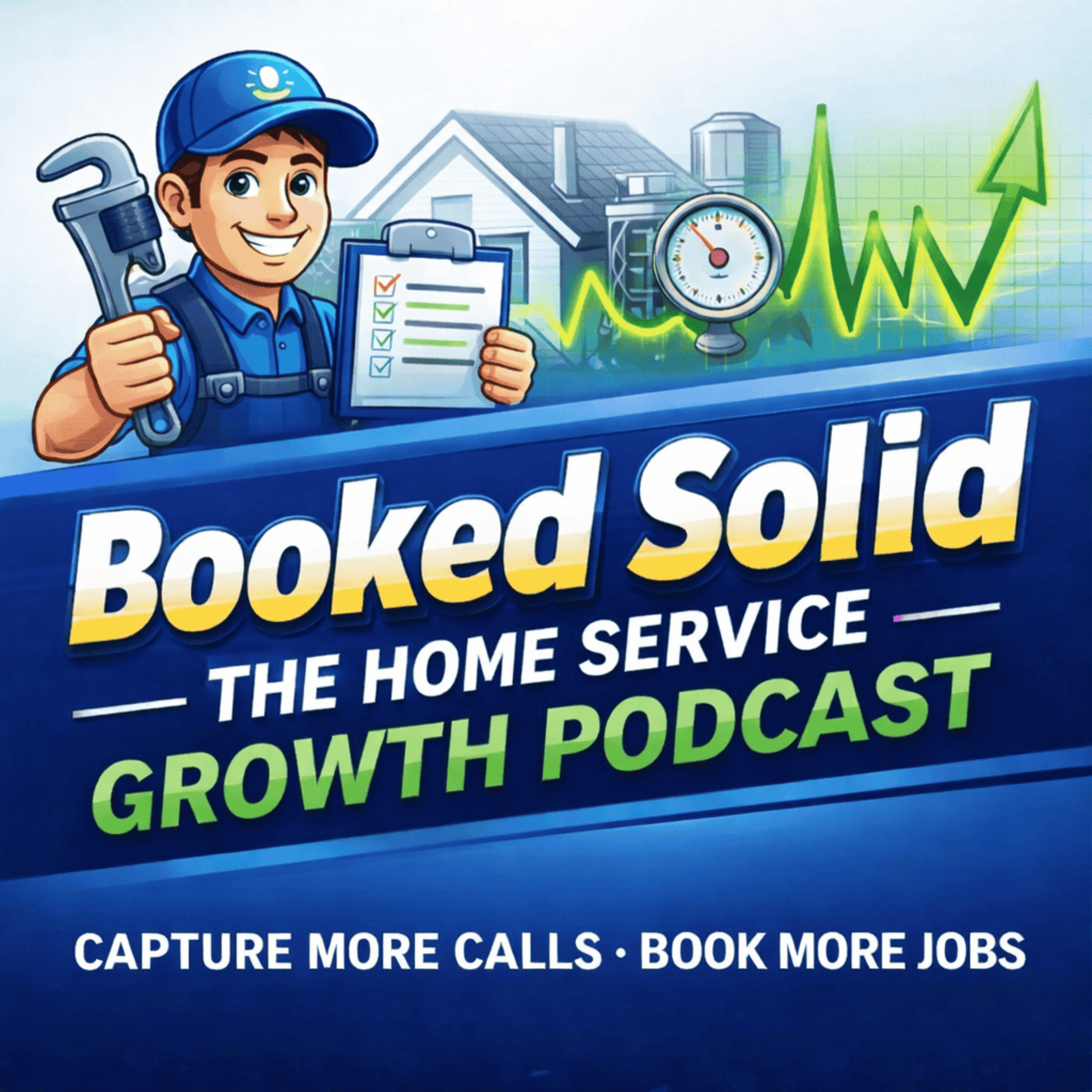
Booked Solid: The Home Service Growth Podcast
by Jeff Middleton
Most home service companies don’t have a lead problem. They have a missed call and slow follow-up problem.On this podcast, Jeff shares simple strategies to help plumbing, HVAC, electrical, roofing, and other home service businesses capture more calls, follow up faster, and turn more leads into booked jobs.You’ll learn practical systems for:• capturing missed calls• automating follow-up• improving response speed• increasing booked jobs• generating more revenue from the leads you already haveIf you run a home service company and want to stop losing jobs to competitors, this podcast will show you how.
-
79
The Bookable-Zone Rule: Qualify Leads Without Slowing Them Down
{"title":"The Bookable-Zone Rule: Qualify Leads Without Slowing Them Down","one_liner":"You may not need more leads—you may need a faster way to identify which inquiries your team can actually serve and book.","description":"A service company can waste hours chasing inquiries that are outside its service area, require work it does not perform, or need a schedule it cannot realistically provide. Meanwhile, genuinely bookable customers wait for a response and may call a competitor. In this episode, Jeff introduces the Bookable-Zone Rule: a simple three-part fit check that helps plumbing, HVAC, electrical, roofing, and other home service companies sort inquiries by location, service type, and timing before follow-up time disappears. The goal is not to reject customers or make the intake process feel complicated. It is to give every lead a fast, honest next step—book now, offer an alternative, or refer them appropriately. Jeff walks through a relatable scenario, explains the questions an office team or automated system should ask, and shows how to use the answers to prioritize follow-up without adding staff. Listeners leave with a practical intake rule they can put into use today to protect response speed, reduce wasted effort, and book more of the opportunities that fit their business.","why_now":"Every home service company has limited technician capacity and limited office attention. A clear, consistent way to identify the best-fit opportunities helps teams respond quickly and serve customers well without adding unnecessary complexity.","target_audience":"Owners and office managers of plumbing, HVAC, electrical, roofing, landscaping, and other home service companies who want to respond faster, reduce wasted follow-up, and book more profitable jobs from existing inquiries.","episode_type":"monologue","estimated_runtime_s":600,"outline":["00:00-01:00 — Hook: A lead can be real and still be impossible to book; open with a scenario where the team spends time chasing a poor-fit inquiry while a good customer waits.","01:00-02:00 — The Cost of Poor Fit: Explain how unclear service boundaries, vague job types, and unrealistic timing create slow responses, frustrated customers, and lost bookings.","02:00-03:15 — The Bookable-Zone Rule: Introduce the three-part fit check: can we serve the location, do we perform the requested work, and can we meet the customer’s timing?","03:15-04:30 — Question One, Location: Show how to confirm service-area details early and how to provide a helpful alternative when an address is outside the company’s normal range.","04:30-05:45 — Question Two, Service: Explain how to distinguish a job the company performs from a vague request, using plain-language examples for plumbing, HVAC, electrical, and roofing calls.","05:45-07:00 — Question Three, Timing: Demonstrate how to offer realistic appointment choices instead of promising an unavailable window or leaving the customer waiting for an answer.","07:00-08:15 — Turn Answers into Priority: Create three simple outcomes—bookable now, needs a quick clarification, or not a fit—and connect each outcome to one clear next action.","08:15-09:15 — Quick Implementation: Give listeners a 20-minute exercise to write their service boundary, accepted job list, and realistic appointment options, then add them to the phone or lead intake process.","09:15-10:00 — Recap and CTA: Summarize how fast fit checks protect response time and booking capacity, then invite listeners to visit ProfitPulse.biz to download 107 Quick Wins for Home Service Businesses before closing.","],"tags":["lead qualification","booking more jobs","service area management","home service operations","response speed"],"duplication_check":{"nearest_match_title":"The Job-Ready Lead Card: Stop Repeating Questions and Book Faster","similarity_score":0.41,"decision":"distinct"},"risks":["The fit check could become a long interrogation that makes callers feel rejected or delays urgent requests.","Team members may use service-area or job-type rules inconsistently, creating confusing customer experiences.","Owners may use the rule to dismiss inquiries too quickly instead of offering a useful next step."],"mitigations":["Keep the check to three plain-language questions and route emergencies according to the company’s existing safety and dispatch process.","Write a one-page decision guide with examples of accepted locations, services, and appointment ranges, then review it with the team.","Require every non-fit outcome to include a helpful response, such as a referral, alternative service, clarification request, or realistic future appointment."]}
-
78
The Lost-Lead Ledger: Turn Unbooked Calls into a Weekly Booking Fix
Most home service owners know some leads do not become jobs, but they often record only “lost” and move on. That hides the real problem. A caller may have chosen another company, never received a follow-up, needed a time slot you could not offer, disliked the price, or simply was not ready yet. Each reason requires a different fix. In this episode, Jeff explains how to create a simple Lost-Lead Ledger that tracks every unbooked opportunity with five practical fields: source, service type, response time, outcome, and loss reason. He walks through a relatable example of a plumbing company that discovers its biggest issue is not marketing or pricing, but unavailable appointment windows. Listeners will learn how to review the ledger weekly, identify the most common failure pattern, and test one operational change at a time. The result is a repeatable way to recover revenue from existing leads without adding office staff or buying more advertising. Jeff also points listeners to 107 Quick Wins for Home Service Businesses at ProfitPulse.biz.
-
77
The Voicemail That Books: Turn Every After-Hours Call into a Clear Next Step
Many home service companies treat voicemail as a dead end: “Leave your name and number, and we’ll call you back.” For a homeowner with a leaking water heater or a failing air conditioner, that message creates uncertainty—and uncertainty sends them to the next company. In this episode, Jeff explains how to turn voicemail into a simple intake tool that works after hours, during lunch, and whenever the team cannot answer. He breaks down a practical voicemail structure that identifies the company, sets expectations, separates urgent situations from routine requests, and gives callers one easy way to continue—such as texting a keyword, submitting a short form, or leaving specific details. Listeners will also learn how to pair the greeting with a follow-up process and measure whether it produces more completed inquiries and booked jobs. The result is not a complicated call center system, but a clearer first step for customers who already tried to reach you.
-
76
The Job-Ready Lead Card: Stop Repeating Questions and Book Faster
A homeowner calls about a failing water heater, gives a few details, and then gets asked to repeat everything when another employee follows up. That friction creates delays, weakens confidence, and gives the customer time to call someone else. In this episode, Jeff introduces the Job-Ready Lead Card: a simple four-part record every new opportunity should have before it moves through your team. The card captures the customer’s contact information, service need, urgency, and preferred appointment window. Jeff explains how to collect those details without turning the conversation into an interrogation, how to use a short intake script, and how to make the information visible to whoever handles the next step. Listeners will leave with a practical template they can use for plumbing, HVAC, electrical, roofing, and other home service calls. Jeff also points listeners to the free guide 107 Quick Wins for Home Service Businesses at ProfitPulse.biz.
-
75
The Two-Lane Intake: Stop Emergency Calls from Blocking Bookable Jobs
When every caller enters the same intake process, a burst of emergency calls can overwhelm the office and cause routine opportunities to disappear. A homeowner with a leaking water heater may get immediate attention, while someone requesting an HVAC tune-up waits hours for a callback—and books with another company. In this episode, Jeff introduces the two-lane intake system: one path for urgent service and another for routine, schedulable work. He explains how to identify urgency with a few plain-language questions, route each caller to the right next step, and use a simple follow-up sequence when the office is busy. Listeners will learn how to protect emergency response without sacrificing profitable maintenance, replacement, and estimate requests. The approach works for plumbing, HVAC, electrical, roofing, and other home service companies without adding office staff. Jeff also shares a quick implementation checklist and points listeners to 107 Quick Wins for Home Service Businesses at ProfitPulse.biz.
-
74
The Booking Confirmation Gap: Protect More Jobs After the Call
Many home service companies work hard to answer the call and book the appointment, then lose revenue in the quiet space that follows. The customer forgets the time, cannot find the address they gave, gets confused about the arrival window, or accepts a faster option from another company. In this episode, Jeff explains how to build a simple booking confirmation system that protects the jobs you already earned. He walks through the few details every confirmation should include, when to send them, and how to use one easy customer reply to catch scheduling problems before they become cancellations or no-shows. Listeners will hear a relatable plumbing scenario and learn a practical confirmation sequence that can run by text, email, or a quick call without adding office staff. The goal is not more complicated automation; it is making the next step obvious for the customer and visible for the team. Owners can apply the system today to improve show rates, reduce confusion, and turn more booked appointments into completed revenue.
-
73
The Response Promise: Turn Faster Follow-Up into a Customer Experience Advantage
When a homeowner contacts a plumbing, HVAC, electrical, or roofing company, uncertainty starts the moment the call ends. If they do not know when someone will respond, they often contact another contractor. In this episode, Jeff introduces the Response Promise: a simple commitment that tells every lead what happens next, when they will hear back, and what to do if the situation becomes urgent. The focus is not on making unrealistic guarantees or adding office staff. It is on matching a clear customer expectation with a basic internal follow-up standard. Jeff walks through a relatable example, explains the three parts of a useful promise, and shows how to apply it to live calls, missed calls, web inquiries, and after-hours requests. Listeners will leave with language they can use immediately, a practical response-time target, and a way to track whether the promise is being kept. The episode also points listeners to the free guide 107 Quick Wins for Home Service Businesses at ProfitPulse.biz.
-
72
The No-Answer Audit: Find the Revenue Hiding in Your Phone Logs
Many home service owners know they miss calls, but they do not know which missed calls are costing them the most money. This episode introduces the No-Answer Audit, a simple weekly review of phone logs that turns vague frustration into a clear revenue recovery plan. Jeff walks through the five numbers to capture: total inbound calls, unanswered calls, time of day, source or campaign, and eventual booking outcome. He then shows how to estimate lost opportunity without pretending every missed call would have become a job. A relatable HVAC example reveals how a small cluster of missed calls during lunch created more recoverable revenue than an expensive marketing campaign. Listeners will learn how to spot patterns, choose one operational fix, and measure whether it works over the next seven days. The focus is diagnosis rather than adding staff or software: find the leak first, then decide whether routing, overflow answering, scheduling coverage, or follow-up is the right response. Jeff closes by pointing listeners to 107 Quick Wins for Home Service Businesses at ProfitPulse.biz.
-
71
The One-Owner Rule: Stop Leads from Dying Between the Office and the Field
A homeowner calls about a leaking water heater, reaches the office during a rush, and is told that someone will call back. The dispatcher assumes the service manager has it. The service manager assumes the dispatcher followed up. By the time anyone checks, the homeowner has hired someone else. In this episode, Jeff explains how to use the One-Owner Rule to prevent leads from disappearing during handoffs between the phone, office, and field team. Listeners will learn how to assign one accountable person to every new opportunity, define the next action before ending a conversation, and set a simple deadline for that action. Jeff will also show how a shared lead note or basic tracking board can make ownership visible without adding office staff or complicated software. The result is a practical system for keeping inbound calls moving from first contact to booked appointment, even when the owner is busy or the team is small.
-
70
The Lead Aging Map: A Simple Escalation System for Every Unbooked Opportunity
A home service company can have every lead recorded and still lose jobs because nobody knows which opportunity deserves attention first. In this episode, Jeff introduces the Lead Aging Map, a simple system that sorts every unbooked inquiry by two factors: how long it has been waiting and how likely it is to become a job. Using green, yellow, and red categories, plumbing, HVAC, electrical, roofing, and other service companies can create clear follow-up rules without adding office staff. Jeff walks through a relatable example: a homeowner requests service, receives one response, then quietly disappears while newer calls take priority. Listeners will learn how to define aging thresholds, assign an owner to each lead, and create a daily red-lead review so valuable opportunities do not get buried. The episode focuses on prioritization and accountability rather than sending more messages, giving owners a practical way to make their existing follow-up process more consistent and revenue-focused.
-
69
First-30 Answer: The Two-Question Live-Call Close that Books Jobs on the Spot
Most contractors think they need more leads when the real leak is in how they answer the phone. This episode teaches a simple, repeatable live-answer framework you can train a tech or receptionist to use: a friendly 30-second opener, two quick qualifying questions (urgency + preferred times), a clear price band, and a one‑sentence commitment close that turns callers into booked jobs. I walk through a real-world garage-call example, give word-for-word scripts you can copy, and a two-minute daily roleplay routine that improves conversion without hiring. These tactics are practical, low-cost, and work for plumbing, HVAC, electrical, roofing and other home services — you’ll finish the episode with an exact script to try on the next call and a simple way to track lift. Before you go, grab the free guide 107 Quick Wins for Home Service Businesses at ProfitPulse.biz.
-
68
The 2-Hour Hold: Use Scarcity + One-Reply Booking to Rescue Missed Calls
Missed calls lose jobs fast because homeowners call the next company within minutes. This episode shows a low-friction, high-conversion tactic: the 2-Hour Hold. After a missed call, send an SMS that offers a guaranteed two-hour arrival window (no deposit), a clear price band, and a one-word reply to accept. That small scarcity signal and ultra-easy reply turn hesitant leads into booked jobs without adding office headcount. I’ll walk you through real wording, timing, and automation rules that fit plumbing, HVAC, electrical, roofing and other home services. You’ll hear a short, relatable scenario, learn the exact message template, and get two operational tweaks to make holds reliable and repeatable. The system recovers urgent revenue, shortens response time, and preserves customer trust because you only promise what your team can deliver. Grab the free guide 107 Quick Wins for Home Service Businesses at ProfitPulse.biz to implement this today.
-
67
Calendar-First Missed-Call Recovery: Send a Tentative Booking They Can Confirm in One Tap
Most missed-call strategies try to start a conversation; the calendar-first approach skips the back-and-forth and treats a missed lead like a tentative appointment. After a missed call, send a concise SMS that includes a short price band, a realistic ETA window, and a tentative calendar invite or one-tap confirm link. The homeowner either confirms, requests to swap, or taps a safety option — and the system auto-holds the slot for a short window while the owner reviews. That small change creates commitment, reduces scheduling friction, and recovers jobs that otherwise go to faster competitors. In this episode Jeff walks through the copy, timing, and simple automation rules most small plumbing, HVAC, electrical, and roofing companies can set up in a day, plus two quick fallback tactics for homeowners who prefer voice or email.
-
66
Multiple-Choice SMS Triage: Book Jobs Faster with a 3-Question Text Flow
Too many missed calls die because follow-up asks too many questions. In this episode Jeff lays out a lightweight, repeatable SMS triage that converts voicemail and missed-call leads without adding office work. You’ll hear a short, believable contractor story where a missed call became a booked afternoon job after a two-message SMS flow. Then Jeff explains the core idea: replace a slow voice callback with a low-friction, multiple-choice text sequence that qualifies urgency, collects address context, and offers a near-term booking or technician ETA. He walks through exact message wording, timing rules, and automation triggers any shop can set up in their existing texting platform. By the end you’ll have two plug-and-play templates—a 3-question triage and a rapid-book reply—and clear rules for when to escalate to a phone callback. Quick, practical, and designed for immediate implementation to stop losing jobs to faster competitors.
-
65
Voicemail Rescue: Turn Forgotten Voicemails into Booked Jobs in 10 Minutes
Most contractors ignore voicemails or let them sit until the end of the day. That’s a hidden leak: voicemail content is often the best signal you’ll get about urgency, problem details, and willingness to pay. In this episode Jeff lays out a simple, repeatable 10-minute voicemail-rescue system that uses voicemail-to-text, a short personalization script that lifts language from the caller, and two low-friction booking options to convert missed voicemails into same-day or next-day booked jobs. You’ll get exact wording for a 30–45 second callback and a 1-line SMS that references the caller’s own words, plus a priority rule for when a live call is required. Practical, tool-light, and designed for small plumbing, HVAC, electrical, and roofing teams, this episode focuses on fast wins you can implement today to stop losing work to slow voicemail follow-up. Download the free guide at ProfitPulse.biz to get the voicemail scripts and templates.
-
64
The 9 AM Recovery Sprint: Turning Overnight Missed Calls into Booked Jobs
Most home service companies lose jobs overnight not because of marketing but because the morning after a missed call becomes chaotic. This episode teaches a repeatable 10-minute 9 AM Recovery Sprint that any plumbing, HVAC, electrical, roofing, or landscaping shop can run without extra staff. Jeff walks through a five-step checklist: review overnight leads, quick triage rules to prioritize callers, fast SMS and callback templates, offering tiny same-day micro-slots or calendar holds, and a simple confirm-and-assign step to seal the booking. You get ready-to-use language, a rule-of-thumb prioritization matrix, and two plug-and-play templates to implement immediately. The result: faster follow-up, higher booking rates from the leads you already have, and recovered revenue without hiring more office staff. Simple systems, executed consistently, beat more marketing spend every time.
-
63
Nearby Now: Turn Missed Calls into Booked Jobs with Local-Job Proof
Most home service businesses don’t lose jobs because they lack leads — they lose them because they don’t sound local, immediate, and relevant after a missed call. In this episode Jeff lays out a compact, low-tech system that uses recent job history and technician proximity as social proof to nudge callers to book before they call a competitor. You’ll get exact language for an automated SMS and short callback script (“We just finished two houses down and can be there this afternoon”), practical rules for when to use price bands or guaranteed slots, what data to pull (last 24–48 hour job addresses, ETA window, quick price band), and simple automation patterns that take under a day to implement. The focus is on immediacy and trust—small signals that reduce friction and dramatically increase same-day bookings without adding staff.
-
62
Put a Face on the Call: Technician-First One-Tap Booking After Missed Calls
Missed calls cost home service companies hundreds or thousands every month — not because of marketing, but because callers pick the next company who answers. In this episode Jeff explains a simple, low-friction system that turns a missed call into a booked job by humanizing your response: send a short SMS that introduces the assigned technician (name, one-line credential, and a clear photo), offers two short guaranteed slots, and includes one-tap confirm. The combination of an actual person’s photo plus an easy booking button reduces friction, builds trust, and nudges homeowners to lock in a slot fast. Jeff walks through exact message templates, timing rules, consent language, and a lightweight workflow you can implement with basic SMS tools and a phone-based photo process. Practical, actionable, and ready to test in a single week. Before you go, grab the free guide 107 Quick Wins for Home Service Businesses at ProfitPulse.biz.
-
61
Loyalty Shortcut: One‑Tap Rebooking for Returning Customers
Most missed-call strategies treat every caller the same. This episode teaches a lean system that treats returning callers differently — and wins more jobs. I walk through a practical workflow you can set up in a single afternoon: detect returning numbers, pull the last job summary (service, date, price band, tech), send an immediate SMS/MMS with that context and two one-tap rebook options, then route confirmations straight into your calendar. You’ll hear a real, relatable example of a plumber who recovered three same-week jobs after losing a single morning of calls. The goal: recover revenue you already earned once by reducing friction for people who already trust you. No extra office hires, no heavy software projects — just smart templates, a simple trigger, and a booking link. By the end you’ll have one concrete sequence to implement that boosts conversions from your best, easiest prospects.
-
60
60-Second Home Checklist: Turn Missed Calls into Booked Jobs with a Quick DIY Triage
Most missed calls go cold because homeowners don’t feel immediate value from a voicemail or generic text. This episode teaches a simple, high-trust tactic: an immediate 60-second home checklist sent by SMS after a missed call. The checklist is short, safety-first, and tailored to common categories (water heater, furnace, electrical) so the homeowner can self-check three quick items that reveal urgency and calm fears. That quick interaction builds credibility, provides a reason to reply, and gives you a natural next step to offer a same-day booking or technician visit. I’ll walk through real phrasing, three ready-to-use checklists, how to automate the flow in your SMS/call system, and the exact one-line CTAs that convert. Practical, low-cost, and implementable inside an hour with any texting platform.
-
59
Photo-First: Turn Missed Calls into Booked Jobs with One-Tap Photo Intake
Missed calls often die on voicemail — but what if your first reply asked for a photo? In this episode Jeff explains a lightweight, practical system that sends an automated one-tap SMS after a missed call asking the homeowner to snap a photo of the problem. A photo-first intake reduces friction, lets techs give faster price guidance, and gives your team enough context to offer a narrow time slot or a flat-range price without an extra callback. I walk through real examples contractors will recognize, the exact wording for the initial SMS and confirmation flow, how to triage image submissions (urgent vs. estimate-ready), and two simple booking rules that recover more revenue without adding office staff. By the end you’ll have a plug-and-play approach you can start testing this week and a fallback script when photos aren’t available. Don’t forget to download the free guide 107 Quick Wins for Home Service Businesses at ProfitPulse.biz.
-
58
Property-Profile First Reply: Turn Missed Calls into Booked Jobs with Address-Based Context
Many missed calls go cold because the first follow-up feels generic. In this episode Jeff shows a practical, low-friction system: use the caller's phone number or incoming DID to look up public property details (year built, single/multi-family, common systems) and include that brief context in your first reply. That small step signals competence, previews likely solutions and a realistic price band, and gives homeowners the confidence to book before they call a competitor. Jeff walks through a real contractor scenario where a missed call turned into a same-day water-heater booking after the first message referenced the caller's home type and a price range. You’ll get two implementation paths—manual lookup plus template text for immediate rollout, and an automated lookup with a simple verification line—plus a ready-to-use message template, rules to avoid privacy landmines, and a quick test plan to measure recovered revenue. Actionable, low-tech, and deployable this week.
-
57
Quote-in-60: A 60-Second Callback Script to Book More Jobs
Every missed callback is a revenue leak — and speed plus clarity wins. In this episode Jeff teaches the 'Quote-in-60' callback script: a tight, tested framework contractors can use when returning missed calls to deliver a provisional price range, confirm urgency, and close the appointment in one minute. You’ll hear a short field example of a plumbing callback that turned a hesitant caller into a same-day booking. Jeff breaks the script into three parts: quick rapport, a transparent price band, and the commitment close, plus two short variations for after-hours and price-shopping callers. Practical show notes include exact phrasing, tone tips, how to handle the three common pushbacks, and a one-week rollout plan that doesn’t require new staff or expensive tech. This episode is action-first: you’ll walk away with a script to use on the next missed call and simple steps to measure results.
-
56
Hold My Spot: Use Micro-Commitments to Convert Hesitant Callers
Many callers aren’t ready to book on the first ring, but they will agree to a tiny next step. This episode teaches contractors how to use micro-commitments—short verbal prompts and one-tap SMS actions like “Hold my spot for 2 hours” or “Text YES to confirm a callback”—to capture momentum and convert hesitant prospects into scheduled jobs. Jeff explains the psychology in plain language, shares exact one-line phone scripts and SMS sequences you can start using today, and shows how to automate the flow so you don’t add office hours or headcount. You’ll hear a real-world scenario contractors recognize, two practical templates (phone + SMS), and a deployment checklist that fits plumbing, HVAC, electrical, and roofing operations. By the end, owners will know how to stop losing leads in the five minutes after a missed call by getting tiny commitments that increase booking rates without pressure or deposits.
-
55
Call-Behavior Triage: Prioritize Missed Calls by Intent to Book More Jobs
Most contractors treat every missed call the same — and watch customers call a competitor within minutes. In this episode Jeff walks through a practical, low-tech playbook that scores missed-call behavior and routes a targeted, high-conversion follow-up. You’ll learn three caller personas (urgent, price-shopper, researcher), the exact first-touch channel and script for each, and two micro-automations you can set up today to act within the critical first 10 minutes. This approach requires no extra office hires: it’s about rules, short templates, and timing. By the end you’ll have concrete scripts, simple decision rules, and a checklist to stop losing callers to faster competitors. Want more quick wins? Grab the free guide 107 Quick Wins for Home Service Businesses at ProfitPulse.biz.
-
54
Voicemail-to-Booked: Turn Every Voicemail into a Priority Job
Many contractors treat voicemail like a dead end. In this episode Jeff shows a practical system that treats every voicemail as a recoverable lead: automated transcription, simple urgency scoring, and an immediate, templated one-tap booking or priority callback. You’ll hear a relatable field example of a late-night water heater call that would’ve been lost, and the exact sequence that recovered it. Jeff breaks the idea into two actionable moves you can implement this week: 1) auto-transcribe voicemails, parse urgency keywords, and send an instant SMS with two booking slots and a confirm link; 2) flag high-urgency transcriptions for an immediate 60–90 second voice-note reply or priority tech dispatch. The episode stays tactical—what tools to use, short message templates, and a simple triage checklist—so owners can capture revenue from missed calls without hiring extra staff.
-
53
Two-Slot Text: Book Same-Day Jobs from Missed Calls in Under 60 Seconds
Missed calls often become lost jobs within minutes — but a targeted SMS with two short, guaranteed availability windows flips the script. In this episode Jeff walks through a simple system that sends every missed caller a brief text with two tightly defined time slots (example: “Today 2–4pm or 5–7pm”), a price-range line, and a one-tap confirm link. It’s fast to implement, fits existing calendars, and converts indecision into booked appointments without hiring more staff. You’ll hear a relatable contractor scenario, the exact message template, how to hold slots safely, and two practical ways to plug this into your day: manual triage for small teams and a lightweight automation for growing shops. The episode closes with a quick checklist to pilot the tactic this week and a reminder to download the free guide 107 Quick Wins for Home Service Businesses at ProfitPulse.biz for more practical fixes.
-
52
Two-Question Phone Triage: An IVR That Books the Right Jobs
Too many contractors lose business before they even pick up the phone. In this episode Jeff walks through a lean Interactive Voice Response (IVR) approach that actually helps — not frustrates — callers: two quick, human-friendly prompts that capture urgency (emergency vs. routine), preferred service window, and then surface an immediate booking option or a priority callback. You’ll hear a realistic scenario contractors face, the one insight that makes a two-question triage work, and step-by-step implementation notes you can set up in a morning using common phone platforms. The method improves response speed, reduces abandoned calls, and creates same-day booking opportunities without hiring more staff. Before we close Jeff points listeners to the free guide 107 Quick Wins for Home Service Businesses at ProfitPulse.biz for ready-to-implement templates.
-
51
The Instant Job Card: Turn Missed Calls into Actionable Work Orders in 60 Seconds
Most missed-call follow-ups fail because the person who calls back lacks context and speed. In this episode Jeff walks contractors through building an ‘instant job card’ that turns any missed ring into an actionable work order in under 60 seconds. You’ll hear a real-world scenario contractors know well: a homeowner who calls once, shops three competitors, and books the first responder. Then Jeff breaks down the simple system—auto-capture caller info, pull recent property/job notes, suggest a confident price band, and send a one-tap booking link or quick-call button. The episode gives two practical templates (SMS job card and tech handoff note) you can implement with basic tools and an inexpensive integration. By standardizing follow-up into a compact, decision-ready card, small teams capture more calls, respond faster, and book more jobs without hiring. Download the free guide at ProfitPulse.biz for implementation checklists.
-
50
The 30-Second Video Reply: Turn Missed Calls into Booked Jobs with a Human Face
Many contractors assume missed calls are gone forever. In this episode Jeff walks through a low-effort, high-trust tactic: the 30-second personalized video reply. After a missed call, a short, human video (owner or dispatch) sent by text reintroduces the company, shows a recent nearby job or the tech, and offers an immediate priority slot — all in one clip. Jeff explains why video boosts trust and response rates, gives exact scripts and two delivery workflows (manual quick-record vs automated templated video), and shows how to measure conversion without adding office staff. You’ll get step-by-step language for the video, timing rules, and the follow-up SMS that turns views into bookings. This episode is practical, repeatable, and designed for a 10-minute listen so contractors can implement the approach today. Grab the free guide 107 Quick Wins for Home Service Businesses at ProfitPulse.biz.
-
49
Generated Episode Idea
{"title":"Neighborhood Blitz: Turn Missed-Call Hotspots into Same-Day Bookings","one_liner":"Use missed-call heatmaps and short neighborhood 'blitz' windows to convert clustered missed calls into same-day booked jobs using proximity, priority messaging, and reserved mobile slots—no extra office staff required.","description":"Most missed calls aren’t random; they cluster by neighborhood and time. This episode shows contractors how to spot those micro-hotspots in their call logs, reserve short same-day neighborhood slots, and send a tight, trust-building priority message to nearby missed callers that converts at much higher rates. I walk through the exact data to pull, a simple radius rule, how to hold 1-2 mobile slots without overcommitting, and the two-line SMS plus one-tap booking message that wins jobs fast. You’ll get concrete examples for plumbing, HVAC, electrical, and roofing, plus a quick pilot plan you can run in a single week to recover lost revenue. The system is low-cost, operationally simple, and focused on speed and proximity—so you book more jobs from leads you already have. Before we close I’ll remind you to grab the free guide 107 Quick Wins at ProfitPulse.biz.","why_now":"Missed calls and slow follow-up are a constant leak for service businesses. Because calls often cluster geographically, using proximity to offer short priority windows is a low-cost, operationally simple way to convert missed opportunities into booked jobs—no trend or tech fad required.","target_audience":"Owners and managers of plumbing, HVAC, electrical, roofing and other home service companies who want to recover missed-call revenue, book more same-day jobs, improve lead response speed, and grow without adding office staff.","episode_type":"monologue","estimated_runtime_s":600,"outline":["00:00-00:35 — Hook: quick problem callout and why clustered missed calls matter: a single neighbor cluster can represent multiple lost jobs in one afternoon","00:35-01:10 — Why it matters: how proximity and speed beat marketing spend when calls cluster and customers call next competitor in minutes","01:10-02:20 — Relatable scenario: a weekend surge of missed calls in one subdivision and the simple opportunity it created for a technician who was nearby","02:20-03:40 — Key insight: missed-call heatmaps plus reserved mobile slots creates a tiny supply that matches local demand and shortens response time dramatically","03:40-05:40 — Step 1 setup: what data to pull, how to create a missed-call heatmap, define a radius and timing rule, and pick which service types to include","05:40-07:20 — Step 2 execution: how to reserve 1-2 same-day slots, write the priority SMS template and one-tap booking link, and trigger messages to callers inside the hot zone","07:20-08:40 — Step 3 field tactics: tech prep, price-band guidance for quick bookings, handling confirmations and drive-time math so slots stay profitable","08:40-09:30 — Risks and mitigations: common failure modes like overcommitting or wide territories and how to pilot safely and iterate","09:30-10:00 — Recap and CTA: 3 quick takeaways, encourage a 1-week pilot, and reminder to download 107 Quick Wins at ProfitPulse.biz","tags":["missed-calls","mobile-dispatch","same-day-booking","lead-recovery"],"duplication_check":{"nearest_match_title":"The ETA Nudge: Turn Arrival Updates into Last-Minute Bookings","similarity_score":0.43,"decision":"distinct"},"risks":["Overcommitting mobile slots and increasing drive time costs","Messaging floods causing customer confusion or unsubscribes","Mis-identifying hotspots leading to low conversion during a pilot"],"mitigations":["Limit pilot to a 3-mile radius and hold at most 1-2 short time slots per day; track drive-time and adjust radius","Use a single concise priority SMS with clear opt-in language and one-tap booking; monitor response rates and reduce frequency if opt-outs rise","Start with a one-week pilot in one neighborhood, measure booked jobs and conversion, then refine radius and timing before scaling"]}
-
48
The 30-Minute Call-Back Promise: Stop Losing Jobs While You’re On Another Call
Every missed ring is a dollar walking to the next company—customers call another contractor within minutes. This episode teaches a practical, low-effort system: when you miss a call, immediately send a clear SMS that promises a guaranteed callback within 30 minutes (or a short, staffed window), offers a one-tap link to claim a priority slot, and captures basic intent with a single-tap reply. I walk through the exact message wording, the automation trigger, how to route priority slots to on-shift techs, and how to measure recovery lift. You’ll hear a short contractor scenario showing how the promise prevented a lost AC repair, then get two simple workflows you can implement today with existing phone/SMS tools and a calendar. This episode keeps it focused, practical, and doable within small teams—so you book more jobs without new office hires.
-
47
Chat-to-Calendar: Convert Website & Messaging Leads into Booked Jobs in Minutes
Many service owners ignore or under-prioritize messaging leads because they seem low-effort or unclear. In this episode Jeff shows a simple, repeatable system to treat messages like calls: fast triage, an instant booking pathway, and a short fallback for higher-urgency jobs. You’ll get a real-world example contractors will recognize, a two-question triage script that fits a tech or owner answering messages in under 90 seconds, and a plug-and-play automation flow that moves chats straight to calendar holds or a quick callback. The episode focuses on low-tech options that work with common tools (Google Business Messages, website chat widgets, Facebook) and includes ready-to-use message templates and a three-step testing checklist so teams can implement the play in a single afternoon. Practical, feasible, and built to recover revenue without adding office staff.
-
46
The Confident Price-Band Play: Book More Jobs on the First Call
Most missed opportunities aren’t from bad marketing—they’re from weak first-call intake. In this episode Jeff breaks down a simple, repeatable ‘price-band + next-step’ framework that contractors can use on every inbound call to reduce hesitation and book more jobs on the spot. You’ll hear a realistic field example of a hesitant homeowner and how a confident, concise price band plus a two-option next step turns that call into a booked appointment. Jeff walks through exact language to use, how to train techs and answering staff in 10-minute roleplays, and two plug-and-play variations: a fast on-phone band for urgent calls and a low-pressure band for estimate requests. Actionable, practical, and executable today—no extra hires required. Visit ProfitPulse.biz to grab the free guide 107 Quick Wins for Home Service Businesses and apply this play to recover easy revenue.
-
45
The Neighbor-Proof Play: Use Local Job Proof to Convert Missed Calls Fast
Most customers pick the next company within minutes after a missed call. This episode teaches a simple, repeatable sequence that uses immediate local proof to close that gap: send a short SMS that shows a recent nearby job photo, a two-line micro-testimonial naming the neighborhood (not a full address), and a confident one-tap booking link with a priority hold. I walk through what to capture on the truck, how to write a micro-testimonial that builds trust without violating privacy, and the exact timing to send the message so it beats competitors. You’ll get ready-to-use message examples, simple measurement targets, and a low-effort workflow your techs or dispatcher can follow today — no new hires required. Implementing this turns visual local proof into booked jobs by turning uncertainty into immediate trust.
-
44
The ETA Nudge: Turn Arrival Updates into Last-Minute Bookings
Jeff walks listeners through a simple, high-impact tactic: turning routine ETA updates into a last-minute booking engine. He explains why customers value certainty and how a timely ETA text — paired with a micro-offer and quick prep checklist — removes friction, stops shoppers, and converts calls you might otherwise lose. The episode includes a relatable contractor scenario, the core behavioral insight (ETA = trust signal + call-to-action), and two practical playbook moves you can implement today: a 30–45 second SMS template that mixes ETA, a confident price band, and a one-tap confirm; plus a lightweight tech workflow to keep ETAs accurate without new hires. The episode closes with a reminder to grab the free guide, 107 Quick Wins for Home Service Businesses at ProfitPulse.biz, and a concise recap of why small, timely nudges recover real revenue.
-
43
48-Hour Value-Add Recovery: Turn Missed Calls into Priority Bookings
Most contractors chase new leads when the real money sits in missed opportunities. In this episode Jeff walks through a practical, repeatable 48-hour value-add recovery sequence that converts missed calls into booked jobs by doing two things: give useful, trust-building value first (a short diagnostic checklist or quick troubleshooting tip) and then offer a limited, priority booking window. You’ll hear a realistic scenario contractors recognize, the psychology that makes value-first outreach more effective than pushy sales messages, and exact SMS + voicemail scripts you can copy. The episode focuses on minimal friction—no extra hires, no complex tools—just timed messages, a concise one-page checklist, and a short priority-booking link that creates urgency. Actionable, measurable, and easy to run in under an hour per week, this playbook recovers revenue from calls you already get.
-
42
Five-Minute Call Huddles: Turn Live Calls into More Booked Jobs
Most owners focus on missed calls; but when calls are answered and still don’t book, that’s wasted revenue. In this episode Jeff walks through a practical, low-effort system—daily or weekly five-minute call huddles using a three-item scorecard—to boost live-call conversion without hiring. You’ll hear a short, relatable contractor scenario that shows how small script tweaks and focused feedback turned a 20% booking rate into 35% in weeks. Then Jeff outlines exactly what to listen for (opening, price confidence, clear next step), how to score a call in under 90 seconds, and three coaching prompts you can use on the spot. This episode ends with quick tracking advice and an easy rollout plan any plumbing, HVAC, electrical, roofing, or landscaping owner can start tomorrow. Grab the free guide 107 Quick Wins for Home Service Businesses at ProfitPulse.biz to pair with this playbook.
-
41
Booked & Saved: Turning Missed Calls into Confirmed Calendar Appointments
Most missed-call follow-ups are short on trust and long on friction. In this episode Jeff walks through a simple, repeatable system that converts missed calls into confirmed appointments by combining three things many contractors miss: an immediate one-click confirmation, an automatic calendar invite that lands on the homeowner’s calendar, and a tiny prep checklist plus a tech photo to reduce hesitancy. You’ll hear a short real-world scenario contractors will recognize, learn exactly what to include in the SMS and calendar invite, and get two practical setups you can implement today with common booking tools. The result: faster bookings, fewer no-shows, and more jobs booked from the leads you already get — with zero new office hires. Grab the free guide 107 Quick Wins for Home Service Businesses at ProfitPulse.biz to pair with the flow in this episode.
-
40
Use Their History: Recover Missed Calls with Past-Service Personalization
Most missed-call recoveries start cold. This episode shows a different path: use the customer’s own service history as the opening line. I’ll walk through a simple system that automatically looks up a missed caller’s last job (date, tech, or repair), inserts one clear reminder or recommendation, and sends a short SMS with a confident price band and one-tap booking. That single personal detail short-circuits shopper behavior, increases trust, and raises booking rates—especially for recurring services and common repairs. You’ll get step-by-step guidance for setting this up with existing dispatch/CRM data or a lightweight spreadsheet + automation, two ready-to-use message templates, and fallback rules for unknown numbers. This is low-cost, low-friction, and built to work inside a 10-minute daily routine so contractors can recover revenue from missed calls without adding office staff.
-
39
From Voicemail to Booked: Automating Transcripts and a 3-Touch Recovery
Most contractors treat voicemail like a graveyard for leads. This episode flips that thinking and walks owners through a practical system that turns voicemail into revenue. I’ll explain how automatic voicemail transcription plus simple keyword routing can triage true opportunities, then trigger a three-touch recovery sequence (SMS, prioritized callback, short follow-up message) designed to convert before a caller rings a competitor. You’ll hear a short field example you can relate to, see exactly which keywords and tags matter, and get two low-effort implementation steps you can set up in a single afternoon. The approach recovers after-hours work, speeds response when your phone rings, and increases booked jobs with minimal tech and zero new hires. Download the free guide 107 Quick Wins for Home Service Businesses at ProfitPulse.biz to pair this flow with templates and a checklist.
-
38
The 30-Second Proof: Convert Missed Calls with a Local Tech Photo and One-Tap Booking
Missed calls often become lost jobs the moment a customer calls a competitor. In this episode I walk through the 30-Second Proof: a repeatable, low-tech play that uses fast visual trust to recover missed leads. Instead of a bland follow-up, send a concise SMS that includes a local tech photo (truck or uniform), a confident two-line price band, and a one-tap booking link—so prospects see proof you’re local and available and can commit in seconds. You’ll hear a real-world scenario contractors will recognize, two ready-to-use message templates, photo and compliance guidelines, and a short implementation checklist you can set up in under a day. No extra hires, no complex software—just smarter intake, clearer trust signals, and actionable scripts to increase booked jobs from leads you already have.
-
37
The Same-Day Hold: Turn Missed Calls into Booked Slots with Priority Calendar Holds
Most missed-call recoveries focus on speed. This episode flips the problem: create intentional same-day capacity and sell it the moment a call is missed. I walk through a simple, low-risk system that blocks a few short 'priority hold' slots in each technician's route, auto-sends a one-tap SMS with live short-notice openings, and lets the customer claim a slot in seconds. You’ll get the why, the daily blocking rules (how many slots, where to place them), the exact wording cadence for phone-to-SMS handoff, and an easy way to protect yourself from no-shows. This isn’t tech fantasy — it works with basic calendars, a texting tool, and a tiny operational shift. By the end you’ll know how to convert last-minute opportunities into booked jobs without hiring office staff, with templates and risk controls you can implement in a single day.
-
36
The 2-Minute Callback Playbook: Geo-Prioritized Queues to Beat Competitors to the Phone
Many contractors think they need more leads when the real problem is response speed. This episode lays out a practical, repeatable 2-minute callback playbook that prioritizes missed and voicemail leads by proximity, urgency, and call age so you reach warm customers before they call a competitor. Jeff walks listeners through setting a simple SLA, building a geo-prioritized callback queue using existing phone and SMS tools, creating two short scripts (emergency and booking), and a tiny dashboard to track callback compliance. You’ll hear a realistic scenario showing how a single fast callback turns a neighborhood call into a booked estimate, plus two easy automations you can enable this afternoon. No extra hires, no complicated tech—just clear rules, short scripts, and measurable metrics that recover revenue from missed opportunities. By the end you’ll have an implementation checklist and the first steps to cut callback time and win more jobs.
-
35
The Weekly Missed Call Recovery Sprint: Turn Last Week’s Lost Calls into Booked Jobs
Most contractors focus on new leads and ignore the pile of missed calls that sat unanswered last week. This episode teaches a one-hour weekly process you can run with your current team to recover real revenue from forgotten opportunities. I walk through a simple triage system (voicemail, call length, caller repeat), priority scoring, two short outreach templates (SMS-first and callback), and a no-nonsense offer that nudges hesitant prospects to book. You’ll get a clear cadence for outreach, a tiny playbook for what to text vs. call, and the tracking metrics that show whether the sprint is working. This is practical, repeatable, and built so a single lead tech or owner can run it in 30–60 minutes each week. For more quick wins, grab the free guide 107 Quick Wins for Home Service Businesses at ProfitPulse.biz.
-
34
The Instant Price Band: Give Fast Price Ranges to Stop Callers from Shopping
Customers hate uncertainty. On this episode Jeff walks you through a simple, repeatable system — the Instant Price Band — that lets plumbing, HVAC, electrical and roofing teams give fast, credible price ranges in phone and text intake so prospects stop shopping and start booking. You’ll hear a real-world scenario of a missed-call lead who booked same day after a clear price band and one-line next step. Jeff breaks down the psychology (certainty + perceived competence), a short script for receptionists and techs, two conservative band structures (repair vs. replacement), and low-friction follow-ups (SMS + one-tap booking link) that keep momentum without hiring staff. Practical, no-fluff examples and a 3-point rollout plan make this approach immediately usable. At the end Jeff points listeners to the free guide 107 Quick Wins for Home Service Businesses at ProfitPulse.biz to implement faster.
-
33
Two-Path One-Click Intake: Split Missed Calls to Faster Bookings
Many contractors try to fix missed calls with longer scripts or bigger call centers. This episode shows a simpler path: a Two‑Path One‑Click Intake that turns missed calls into fast outcomes by giving callers two clear choices via SMS—'Immediate Estimate' or 'Schedule Visit'—each triggering a tailored, low‑friction workflow. I’ll walk through the exact messages, routing rules, and decision logic that let you capture urgent jobs, convert hesitant callers with instant price bands, and keep slow leads moving without adding office staff. You’ll hear a short field example that makes the tradeoffs obvious, then get two plug‑and‑play templates and a 5‑step checklist you can implement in a day. Finish the episode knowing which metrics to watch and how this simple intake split recovers revenue from missed calls and reduces follow‑up load. Download the free guide 107 Quick Wins for Home Service Businesses at ProfitPulse.biz to grab the templates mentioned.
-
32
The 5-Question Rescue: Qualify, Price, and Book Missed Calls with One SMS
In this episode Jeff walks through a compact, repeatable system that turns missed calls into same-day bookings using a single, short SMS with five targeted questions. You’ll hear why a tiny qualification flow beats long voicemail chains, a real contractor scenario that shows how quick qualification recovered a high-value job, and the exact five questions that gather the minimum facts to price, prioritize, and offer an immediate booking link. Jeff shares word-for-word templates, guidance on conservative price bands, rules for after-hours vs daytime sends, and a simple checklist to set this up with any basic SMS tool—no extra office hires required. Practical, low-friction, and designed for plumbers, HVAC techs, electricians, roofers and landscapers, this episode gives one concrete workflow you can activate today. Download the free guide 107 Quick Wins for Home Service Businesses at ProfitPulse.biz to pair this tactic with other quick revenue recovery moves.
-
31
The 10-Minute Rescue Flow: Recover Missed Calls Before Customers Call a Competitor
Most lost jobs happen in the first few minutes after a missed call. In this episode Jeff walks through a practical, repeatable 10-minute rescue flow contractors can run any time a call slips through: an immediate auto-SMS, a prioritized callback plan, a short tech-ready intake script, and a one-click booking or hold. You’ll hear a relatable field scenario, the core insight (speed + clarity beats perfect info), two ready-to-use message templates, routing rules for dispatch or owners, and a short measurement checklist to know the flow is working. Everything in the episode is designed to work with current crews and simple tools—no hiring, no complex integrations—so plumbing, HVAC, electrical, roofing and landscaping companies can implement this today and start recovering jobs that would otherwise vanish.
-
30
Generated Episode Idea
{"title":"Voicemail Goldmine: Turn Backlogged Voicemails into Booked Jobs in Under 3 Minutes","one_liner":"A practical, 10-minute playbook to convert voicemail backlogs into booked appointments with a repeatable triage-and-recover flow that needs no extra staff.","description":"Most contractors treat voicemail like junk mail—old messages pile up and jobs quietly walk to competitors. In this episode Jeff walks through a simple, repeatable system to turn that backlog into cash: a 3-minute triage, a one-text recovery script with a clear price band and booking link, and a batching routine that fits into a tech’s day. You’ll get exact language to use, a timing rule for prioritizing messages, and a lightweight escalation plan for high-value leads. This is built for plumbing, HVAC, electrical, roofing and other home services that want more booked jobs from leads they already have—without hiring receptionists. Practical, step-by-step, and designed for a 10-minute listen, the episode ends with a quick checklist you can implement today and a reminder to grab the free guide 107 Quick Wins for Home Service Businesses at ProfitPulse.biz.","why_now":"Voicemail backlogs are a persistent, industry-wide leak—no new trend required. Every contractor has missed messages; turning them into bookings is timeless, low-cost revenue recovery.","target_audience":"Owners and managers of plumbing, HVAC, electrical, roofing, and other home service companies who want to recover missed opportunities, speed up lead response, and book more jobs without adding office staff.","episode_type":"monologue","estimated_runtime_s":600,"outline":["00:00-00:30 — Hook: A familiar scene—10 voicemails, one booked job. Why voicemail backlog feels harmless but costs real revenue.","00:30-01:00 — Promise: What you’ll learn in this 10-minute episode: a 3-minute triage, a one-text recovery flow, and a batching routine you can use today.","01:00-02:00 — Relatable scenario: A real example of a week-long voicemail backlog that lost three jobs and how a quick recovery would’ve reclaimed them.","02:00-03:30 — Key insight: Why voicemails are low-hanging fruit—callers still want service, they’re warm leads, and a fast simple touch often wins.","03:30-06:00 — Step 1 - The 3-Minute Triage: How to scan voicemails, capture four fields (name, issue, urgency, location), prioritize, and tag for action with exact scripts.","06:00-07:30 — Step 2 - The Two-Step Recovery Text: The one-text template that converts (recognize voicemail, offer price band, include one-click booking), plus timing rules.","07:30-08:30 — Step 3 - Batch and Close Without New Staff: How to schedule 15-minute voicemail recovery blocks, assign to techs or a morning admin, and track outcomes.","08:30-09:30 — Micro case study: Before-and-after numbers from a contractor who recovered a week’s worth of voicemails and booked 40% more jobs.","09:30-09:50 — CTA: Quick reminder to download 107 Quick Wins for Home Service Businesses at ProfitPulse.biz for templates and scripts.","09:50-10:00 — Recap & Outro: One-sentence recap, final practical nudge—simple systems win jobs.","tags":["missed calls","voicemail recovery","lead response","home services","booking systems"],"duplication_check":{"nearest_match_title":"Voice-First Lead Rescue: Capture After-Hours Jobs with a 30-Second Voice Intake","similarity_score":0.42,"decision":"distinct"},"risks":["Over-automating replies that feel impersonal and reduce callbacks","Sending price bands that are too wide or inaccurate and erode trust","Failing to follow the batching routine consistently, causing the system to collapse"],"mitigations":["Use the episode’s short, humanized SMS templates that reference the voicemail to keep replies personal","Use conservative, tested price bands and add a clear disclaimer that final price may vary after inspection","Start with one 15-minute recovery block per day and measure results; turn it into a habit with a simple checklist and accountability metric"]}
We're indexing this podcast's transcripts for the first time — this can take a minute or two. We'll show results as soon as they're ready.
No matches for "" in this podcast's transcripts.
No topics indexed yet for this podcast.
Loading reviews...
ABOUT THIS SHOW
Most home service companies don’t have a lead problem. They have a missed call and slow follow-up problem.On this podcast, Jeff shares simple strategies to help plumbing, HVAC, electrical, roofing, and other home service businesses capture more calls, follow up faster, and turn more leads into booked jobs.You’ll learn practical systems for:• capturing missed calls• automating follow-up• improving response speed• increasing booked jobs• generating more revenue from the leads you already haveIf you run a home service company and want to stop losing jobs to competitors, this podcast will show you how.
HOSTED BY
Jeff Middleton
CATEGORIES
Loading similar podcasts...
Frequently Asked Questions
How many episodes does Booked Solid: The Home Service Growth Podcast have?
Booked Solid: The Home Service Growth Podcast currently has 50 episodes available on PodParley. New episodes are automatically indexed when they're published to the podcast feed.
What is Booked Solid: The Home Service Growth Podcast about?
Most home service companies don’t have a lead problem. They have a missed call and slow follow-up problem.On this podcast, Jeff shares simple strategies to help plumbing, HVAC, electrical, roofing, and other home service businesses capture more calls, follow up faster, and turn more leads into...
How often does Booked Solid: The Home Service Growth Podcast release new episodes?
Booked Solid: The Home Service Growth Podcast has 50 episodes. Check the episode list to see recent publication dates and frequency.
Where can I listen to Booked Solid: The Home Service Growth Podcast?
You can listen to Booked Solid: The Home Service Growth Podcast on PodParley by clicking any episode. We provide an embedded audio player for direct listening, and you can also subscribe via your preferred podcast app using the RSS feed.
Who hosts Booked Solid: The Home Service Growth Podcast?
Booked Solid: The Home Service Growth Podcast is created and hosted by Jeff Middleton.
URL copied to clipboard!