
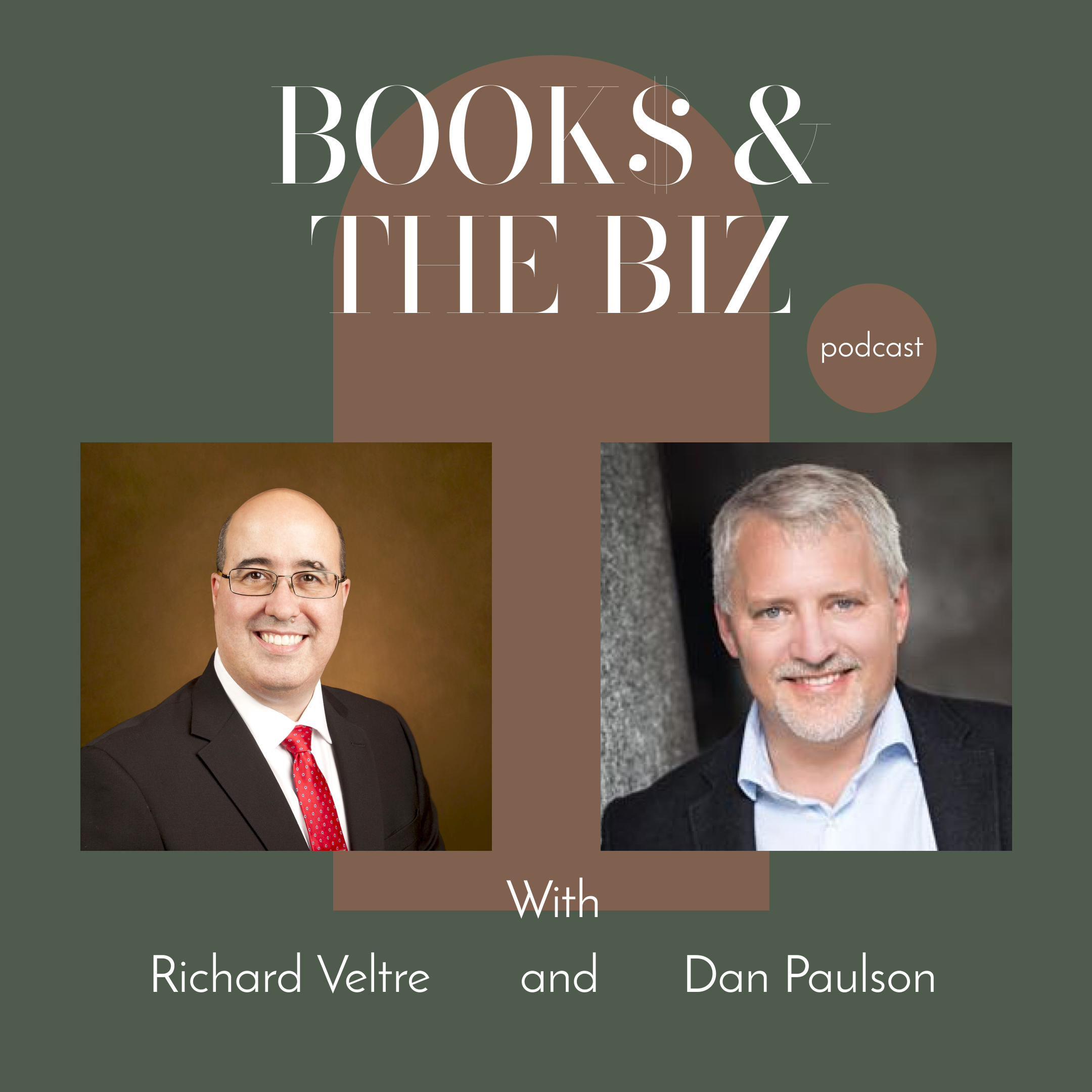
PODCAST · business
Books & The Biz
by Dan Paulson and Richard Veltre
Finance and Operations need to work together.Often they don’t.Join Richard Veltre and myself for discussions about business (the BIZ) and finance (the BOOKS).About Rich: He has served in executive leadership positions at finance consulting firms focusing on the development, implementation, and management of the full spectrum of financial systems. Rich started his career at Price Waterhouse and now acts at a fractional CFO for companies in healthcare, finance, logistics, and construction.About Dan: He built his career working key leadership positions for several large corporations such as Menards and Lands’ End. In 2005, Dan decided he no longer wanted to continue on the corporate executive path and launched InVision. He now helps owners and executives improve operational performance and workplace culture in the areas of manufacturing, construction, healthcare, and finance.Books &
-
149
Are the Warning Signs Already Here? What Business Owners Should Be Watching
Is the economy beginning to slow down, or are these just isolated warning signs? More importantly, how should business owners respond?In this episode of Books & The Biz, Dan and Rich discuss what they're seeing across construction, commercial real estate, lending, tariffs, AI, and cash flow. They explore the early indicators of a changing economy, why every business owner should revisit their forecasts, and what steps you can take now to become leaner, stronger, and better prepared for whatever comes next.Waiting for certainty may be the biggest risk of all.
-
148
Why Good Employees Get Frustrated (And Eventually Leave)
Good employees rarely become frustrated overnight. More often, it's the result of unclear expectations, inconsistent communication, and leadership habits that slowly wear people down.In this episode of **Books & The Biz**, Dan, Rich, and HR expert Kelly Murphy discuss why employee frustration is usually a symptom of deeper operational and leadership issues. They explore the importance of setting clear expectations, improving communication, and creating an environment where good employees can succeed before turnover becomes an expensive problem.If you're wondering why your best people seem disengaged, this conversation is a great place to start.
-
147
The Experience Gap: When Saving Money Costs You More
Saving money is important—but hiring the wrong expertise can become one of the most expensive decisions a business makes.In this episode of **Books & The Biz**, Dan and Rich discuss real-world examples of how inexperience in accounting, payroll, bookkeeping, and financial leadership can create costly mistakes that go unnoticed for months. They also explore the risks of outsourcing, relying too heavily on AI, and why business owners need to ask better questions before trusting someone with critical functions.Experience doesn't guarantee success—but a lack of it can be very expensive.
-
146
The Race to the Bottom: Why Competing on Price Never Ends Well
Competing on price might win you a job today, but it can cost you your business tomorrow.In this episode of **Books & The Biz**, Dan and Rich discuss the race to the bottom after seeing competitors slash prices to win work. They explore why discounting is rarely a long-term strategy, the hidden costs of competing on price, and how businesses can stand out by delivering value instead of becoming just another commodity.If your only competitive advantage is being the cheapest, this conversation is one you won't want to miss.
-
145
The Fractional Boom: Who's Qualified and Who's Pretending?
The fractional executive market is growing fast—but so is the number of people claiming expertise they haven't earned.In this episode of **Books & The Biz**, Dan and Rich discuss what separates a true fractional executive from someone with a new title. They cover the experience, leadership, and real-world results business owners should look for, along with the questions to ask before trusting someone to help lead your company.If you're considering hiring a fractional executive, this conversation could save you time, money, and costly mistakes.
-
144
When Costs Keep Rising: Raise Prices or Fix the Business?
Costs are rising, margins are getting tighter, and business owners are being forced to make decisions without a clear playbook.In this episode of Books & The Biz, Dan and Rich talk through pricing, cash flow, tariffs, healthcare costs, and the operational waste that often gets ignored when expenses climb. Raising prices may be part of the answer, but better financial visibility, stronger processes, and more efficient operations matter just as much.If everything is costing more, the real question is what you can control before the pressure starts showing up in your margins.
-
143
AI Knows a Lot. Experience Knows What's Right.
AI can generate answers in seconds—but that doesn't mean those answers are correct.In this episode of **Books & The Biz**, Dan, Rich, and Kelly Murphy discuss where AI adds real value and where experience still matters most. They explore why asking better questions leads to better results, how industry knowledge helps you recognize bad answers, and why human judgment is still essential when making business decisions.If you're relying on AI to help run your business, this conversation will show you how to get better results without replacing the expertise that matters most.
-
142
Growing Your Business Shouldn't Create More People Problems
Why growth often creates chaos.In this episode of Books & The Biz, Dan and Rich welcome HR expert Kelly Murphy to discuss why adding more employees doesn’t automatically make a company stronger. As businesses grow, communication breaks down, expectations become unclear, and informal processes that worked with five employees begin to fail with twenty-five.If your business is growing—or you’re planning for it—this episode will help you build a stronger foundation before growth starts working against you.
-
141
Want More Freedom? Start With These 10 Changes
This Independence Day, we’re talking about a different kind of freedom—the freedom to step away from your business without everything falling apart.In this episode of Books & The Biz, Dan and Rich share 10 practical ways business owners can gain more freedom, from outsourcing bookkeeping and building a trusted inner circle to setting boundaries with clients, protecting personal time, charging for the value you deliver, and creating systems that reduce owner dependency.If your business can’t run without you, this episode will help you start changing that.
-
140
The High Cost of Unrealistic Expectations
Business owners often want better forecasts, stronger profits, and a clear growth strategy. The problem? Those goals depend on having accurate information to begin with.In this episode of Books & The Biz, Dan and Rich discuss what happens when years of neglected accounting, incomplete records, or operational issues collide with unrealistic expectations for immediate results. They explore why professionals often have to rebuild the foundation before they can provide meaningful advice—and why trying to rush that process usually costs more in the long run.If you’ve ever wondered why “simple fixes” sometimes take weeks instead of days, this conversation explains what really happens behind the scenes.Please Like, Share, and Subscribe.
-
139
The Great Ownership Transfer: Why So Many Businesses Won’t Survive the Next 10 Years
This is becoming one of the biggest business stories that almost nobody is talking about.Millions of business owners are approaching retirement, but many have no succession plan and no realistic buyer lined up. Studies suggest millions of businesses could change hands over the next decade, while a large percentage of owners still aren’t prepared for transition. What we will discuss:Why revenue is not the same as business valueWhy many businesses are “owner-dependent”The difference between a job and a sellable companyInternal succession vs outside buyersWhat owners should be doing 5-10 years before exit
-
138
75% of Businesses Overpay! What Your Worker's Comp Could Cost You
Workers' Compensation is often viewed as just another cost of doing business. But what if you're paying more than you should?In this episode of Books & The Biz, Dan and Rich sit down with Bobby Giurintano of Premium Recovery Experts to discuss a problem many business owners don't realize exists: workers' compensation audit errors. Bobby shares why these mistakes occur, where overpayments are commonly found, and how businesses can identify opportunities to recover money that may have been lost for years.If you're looking for practical ways to reduce costs, improve cash flow, and make sure you're not leaving money on the table, this is a conversation worth hearing.Please like, share, and subscribe!
-
137
Keep It Practical: Why Businesses Overcomplicate What Should Work
In this episode of Books & The Biz, we break down why simple processes, clear accountability, and practical execution outperform bloated systems and unnecessary complexity every time. From overloaded SOPs to too many meetings and titles with no ownership, we discuss why businesses slow down as they grow — and how to fix it before the owner becomes the bottleneck again.#BusinessLeadership #Operations #ConstructionBusiness #Manufacturing #LeadershipDevelopment #Entrepreneur #SmallBusiness #EscapeTheOwnersTrap
-
136
Broken Process, Broken Numbers
Most businesses do not fail because people are lazy. They fail because process breaks down under pressure. Bookkeeping falls behind. Reports become inconsistent. Teams stop following procedures. Leadership starts making decisions using incomplete or inaccurate information.In this episode of Books & The Biz, Dan Paulson and Rich Veltre break down how weak process quietly damages operations, finance, accountability, and long-term business performance.
-
135
Dead Inventory: The Silent Profit Killer Sitting on Your Shelves
Inventory is supposed to generate cash, not collect dust.In this episode of Books & The Biz, Dan and Rich take a hard look at dead inventory—products, materials, and stock that sit too long, tie up cash, consume space, and quietly erode profitability.Many businesses don’t realize how much money is trapped in slow-moving inventory until margins tighten, cash flow gets squeezed, or warehouse space starts disappearing. What often begins as “just in case” purchasing or inaccurate forecasting can quickly turn into a costly operational problem.If your shelves are full but cash still feels tight, this episode will help you understand where the problem starts—and what to do before it gets worse.Like, share, and subscribe for more conversations on the financial and operational realities of running a business.
-
134
Process Breakdown! When Procedures are Missed.
Most companies think their processes are well documented and followed. But what happens when the systems fail? In this episode, we discuss common mistakes businesses make and their impact on growth and profitability.Also be sure to order your copy of Escape The Owner's Trap now available on Amazon: https://www.amazon.com/dp/B0GWB33F63?ref_=cm_sw_r_ffobk_cp_ud_dp_WGZ9JX679D4JJYS80C2J_3&bestFormat=trueBe sure to Like, Share, and Subsribe
-
133
Not all HR tasks need to be outsourced. When to hire a consultant.
HR usually gets attention after something breaks—and by then, it’s already costing you time, money, and people.Kelly talks about three simple buckets of HR work: what should stay with you and your managers, what needs more structure, and what’s easier with a second set of eyes. Kelly offers a starting point so you can see what’s fine to keep doing it yourself and where outside help actually takes some of the HR burden off your plate.If your HR feels reactive or disorganized, this conversation will help you get ahead of it—and yes, the HR Snapshot is free.Please Like, Share, and Subscribe!
-
132
Taxes After the Fact: What Now and What’s Next
Taxes are either filed or pushed to extension—but that doesn’t mean you’re done. In this episode, we break down what business owners should still be paying attention to after the deadline has passed, especially if your return isn’t fully finalized yet. There are still decisions, adjustments, and opportunities that can impact what you ultimately pay.We also take a look at how the “Big Beautiful Bill” is affecting businesses right now. What actually changed, what’s getting misunderstood, and where it may create either advantages or unexpected costs depending on how your business is structured.Then we shift forward. What should you be doing today to prepare for 2026 so you’re not reacting again next year? From entity structure considerations to timing of income and expenses, we walk through practical ways to reduce tax burden while aligning with how your business is actually operating.If you’ve ever felt like taxes are something that just happens to you instead of something you can plan for, this episode will help you start thinking differently about how to take control.Be sure to Like, Share, and Subscribe.
-
131
Taxes After the Fact: What Now and What’s Next
Taxes are either filed or pushed to extension—but that doesn’t mean you’re done. In this episode, we break down what business owners should still be paying attention to after the deadline has passed, especially if your return isn’t fully finalized yet. There are still decisions, adjustments, and opportunities that can impact what you ultimately pay.We also take a look at how the “Big Beautiful Bill” is affecting businesses right now. What actually changed, what’s getting misunderstood, and where it may create either advantages or unexpected costs depending on how your business is structured.Then we shift forward. What should you be doing today to prepare for 2026 so you’re not reacting again next year? From entity structure considerations to timing of income and expenses, we walk through practical ways to reduce tax burden while aligning with how your business is actually operating.If you’ve ever felt like taxes are something that just happens to you instead of something you can plan for, this episode will help you start thinking differently about how to take control.Be sure to Like, Share, and Subscribe.
-
130
When “Nonprofit” Doesn’t Mean What You Think
Nonprofit doesn’t always mean low pay, low margins, or mission over money.In this episode of Books & The Biz, Dan and Rich break down a headline that’s raising eyebrows—massive executive compensation inside a nonprofit organization—and what it reveals about how businesses are actually structured behind the scenes.This isn’t about one company. It’s about incentives.When reimbursements are cut, processes become automated, and executive pay continues to rise, it raises a bigger question: how do financial decisions, operational systems, and leadership incentives align inside an organization?The conversation explores how “nonprofit” status works, why compensation can look very different than expected, and what business owners should take away when it comes to structure, accountability, and decision-making.If you’ve ever assumed labels like “nonprofit” or “for-profit” tell the whole story, this episode will challenge that thinking.Like, share, and subscribe for more conversations on the financial and operational realities of running a business.View the post here: https://x.com/WallStreetApes/status/2041303597229687241?s=20
-
129
The Hidden Cost of Rising Prices: Why Passing It On Isn’t Working
Prices are going up everywhere. Materials, labor, insurance, and operating costs continue to rise, and many businesses are responding the same way—by raising prices.But here’s the problem.Passing costs on to customers doesn’t always fix the issue.In this episode of Books & The Biz, Dan and Rich break down why higher prices often fail to protect margins and what’s really happening behind the numbers. When demand softens, efficiency drops, or internal costs go unchecked, price increases can create more pressure instead of less.This conversation focuses on where profits actually disappear, why effort is up but results feel flat, and what leaders should be watching to maintain control of their business.If your business feels busier but not more profitable, this episode will hit close to home.Like, share, and subscribe for more conversations on the financial and operational realities of running a business.
-
128
When Multi-Entity Structures Make Sense (And When They Don’t)
Most business owners hear about multi-entity structures as a way to save on taxes. What they don’t hear is the complexity, cost, and unintended consequences that come with it.In this episode of Books & The Biz, Dan and Rich break down when multi-entity structures actually make sense—and when they create more problems than they solve.Using real-world examples, they walk through how LLCs, S Corps, and C Corps can be layered together, why structure should be based on your goals (not just tax savings), and how many owners get into trouble by following advice that doesn’t fit their situation.This conversation also explores something unexpected: how a structure that initially didn’t make sense can become a strategic advantage when growth, succession, or acquisition plans come into play.If you’re considering changing your business structure—or already have—this episode will help you understand what to watch for, what questions to ask, and how to avoid costly mistakes.👍 Like, share, and subscribe for more conversations on the financial and operational realities of running a business.
-
127
Structuring Success: Are You Set Up to Grow… or Stuck by Design?
Structuring Success: Are You Set Up to Grow… or Stuck by Design?S Corps are often pushed for tax savings—but those same benefits can create limitations when it’s time to grow.In this episode of Books & The Biz, Dan Paulson and Rich Veltre break down how entity structure impacts real business decisions. From S Corp restrictions to the scalability of C Corps and the flexibility of LLCs, this isn’t about theory—it’s about how your structure affects expansion, ownership, and long-term value.The question isn’t just what saves you money today…It’s whether your business is built for where you’re going next.Listen now and rethink how your business is structured.Like, share, and subscribe for more real-world business insights.#BusinessStrategy #Entrepreneurship #BusinessGrowth #Leadership #TaxStrategy #EscapetheOwnersTrap
-
126
The Execution Gap: Why Strategy Sounds Good but Nothing Changes
Every leadership team talks about strategy. Growth plans are discussed, initiatives are announced, and new ideas sound promising in the meeting room. Yet months later, many businesses realize that very little has actually changed.That disconnect is what we call the execution gap.In this episode of Books & The Biz, Dan and Rich unpack why strong strategies often fail to translate into real results. The issue usually isn’t a lack of ideas. More often it’s unclear priorities, weak accountability, operational friction, or leadership habits that prevent initiatives from gaining traction.Strategy may set direction, but execution determines whether a business actually moves forward. When teams don’t have clarity around roles, decisions stall, initiatives drift, and progress slows down. Over time, the gap between what leaders say they want and what actually happens begins to widen.This conversation explores why that gap forms, the hidden costs it creates, and what leaders can do to turn strategy into consistent action.If you’ve ever walked out of a strategy meeting feeling optimistic only to see the momentum fade weeks later, this episode will hit close to home.Like, share, and subscribe for more conversations about the financial and operational realities of running a business.
-
125
AI Won’t Fix a Broken Business
AI is everywhere right now. Every platform promises more productivity, faster decisions, and smarter operations. But there’s a problem most businesses are discovering the hard way.Technology doesn’t fix broken operations.In this episode of Books & The Biz, we discuss why AI often exposes messy workflows, unclear roles, and bad data rather than solving them—and what leaders need to fix first.Like, share, and subscribe.
-
124
The True Cost of Avoided Decisions
Every owner has at least one decision they’ve been putting off.It might be a difficult conversation with a team member, a pricing adjustment that’s overdue, a role that needs to change, or a strategic move that feels risky. The problem is that delay doesn’t eliminate the cost—it compounds it.In this episode of Books & The Biz, Dan and Rich break down what avoided decisions are really doing to your business. The financial impact often shows up quietly at first through slower throughput, missed opportunities, and unnecessary labor costs. Over time, that hesitation turns into margin erosion, cash flow strain, and a team that senses uncertainty at the top.This conversation gets into why leaders delay decisions in the first place, how to recognize the difference between intentional waiting and true avoidance, and why most companies don’t struggle because of one big mistake—they struggle because of dozens of decisions that were never made. You’ll hear how indecision creates operational drag, weakens accountability, and makes growth feel harder than it should.More importantly, this episode gives you a practical way to move forward. Identifying the one decision you’ve been avoiding, understanding its real cost, and putting a clear timeline around action can change the trajectory of your business faster than most owners expect.If you want clearer direction, stronger execution, and better financial outcomes, this is a conversation you need to hear.🎧 Follow Books & The Biz for weekly discussions on the financial and operational realities of running a business.👍 If this episode resonates, like, share, and subscribe so more owners can build stronger, more predictable companies.
-
123
Sloppy Accounting Is Costing You More Than You Think
If your numbers are off, your decisions are off.Using insights from the Business.com article on common small business accounting mistakes, this conversation goes beyond bookkeeping basics and gets into what bad numbers actually do to your operations, your tax exposure, and your ability to make confident decisions as an owner.Many companies think they are doing “good enough” with their accounting. In reality, small errors, inconsistent processes, and delayed reporting can create major blind spots. Those blind spots show up as cash flow surprises, tax issues, missed profit opportunities, and a constant feeling that the business is harder than it should be.In this episode, we discuss where inaccurate financial data comes from, how it impacts forecasting and daily operations, and why clean, reliable numbers are one of the most important leadership tools a business owner has.If you want clearer decisions, better margins, and fewer financial surprises, this is a conversation you need to hear.🎧 Follow Books & The Biz for weekly conversations on the financial and operational realities of running a business.👍 If this episode was helpful, like, share, and subscribe so more owners and leaders can build stronger, more predictable businesses.
-
122
Consulting Gone Wrong
Bringing in outside expertise should simplify your business—not make it harder to run.In this episode of Books & The Biz, we break down a real-world situation where a business owner hired a consultant who promised significant tax savings by restructuring the company. On the surface, the pitch made sense. The numbers looked attractive. The strategy sounded sophisticated.What followed was something very different.Two separate corporate entities were formed. New layers of accounting were introduced. Additional compliance requirements showed up. Professional fees increased. Administrative work multiplied. Confusion set in. The owner found himself managing complexity he didn’t ask for—and didn’t fully understand.The intended savings? Minimal.The added workload? Very real.This conversation isn’t about criticizing consultants. It’s about asking better questions before making structural decisions that permanently alter how your business operates. We explore the hidden costs of complexity, the difference between technical optimization and operational reality, and why every “savings strategy” must be evaluated against time, clarity, and long-term execution.If you’ve ever been pitched a strategy that sounded smart but felt heavy… this episode is for you.Before you implement anything that changes the foundation of your company, listen in.Like what you hear? Like, Share, and Subscribe so you don’t miss future conversations that protect your business from costly mistakes.
-
121
Why Smart Owners Still Stay Stuck
Smart, experienced business owners don’t get stuck because they lack intelligence, effort, or ambition. Most are doing everything they were taught to do—working harder, staying involved, and solving problems as they arise. On paper, it looks like leadership. In reality, it often becomes the very thing holding the business back.This episode explores the subtle behaviors that trap capable owners in the middle of their companies. Not bad decisions. Not laziness. But patterns that feel responsible, helpful, and necessary—until they quietly limit growth, drain energy, and keep progress just out of reach.We unpack why insight alone isn’t enough, how good intentions can create dependence, and what actually has to shift for a business to move forward without the owner carrying all the weight. If you’ve ever felt busy, needed, and exhausted at the same time, this conversation will feel uncomfortably familiar—in the best way.Please Like, Share, and Subscribe
-
120
Why Smart Owners Still Stay Stuck
Smart, experienced business owners don’t get stuck because they lack intelligence, effort, or ambition. Most are doing everything they were taught to do—working harder, staying involved, and solving problems as they arise. On paper, it looks like leadership. In reality, it often becomes the very thing holding the business back.This episode explores the subtle behaviors that trap capable owners in the middle of their companies. Not bad decisions. Not laziness. But patterns that feel responsible, helpful, and necessary—until they quietly limit growth, drain energy, and keep progress just out of reach.We unpack why insight alone isn’t enough, how good intentions can create dependence, and what actually has to shift for a business to move forward without the owner carrying all the weight. If you’ve ever felt busy, needed, and exhausted at the same time, this conversation will feel uncomfortably familiar—in the best way.Please Like, Share, and Subscribe
-
119
Busy Is Not Profitable: The Cost of Operational Noise
If your team is constantly busy but results aren’t improving, something is off.In this episode of Books & The Biz, we unpack a problem most business owners feel but struggle to name: operational noise. It’s the endless activity, urgency, and motion that makes a company look productive while quietly draining profit, energy, and focus.Being busy can feel like progress. In reality, it often masks broken workflows, unclear priorities, and leadership habits that keep organizations stuck in reaction mode.In this episode, we explore:Why activity and output are not the same thingHow operational noise shows up in meetings, emails, and daily fire drillsThe hidden financial cost of constant urgencyWhere time and attention leak inside otherwise “healthy” businessesHow leaders can reduce noise without slowing the business downThis conversation is for owners and executives who are tired of feeling slammed but not seeing proportional results. If your days are full yet progress feels shallow, this episode will help you identify what’s actually getting in the way—and how to clear it.New episodes weekly on the financial and operational realities of running a business. Please like, share, and subscribe!
-
118
Businesses Struggling Filling High Paying Jobs
This week we bring in Jay Goninen of Wrenchway to share his experience helping auto repair shops fill open tech positions. He can speak firsthand on the challenges we are facing and what the potential solutions are.Jay is Co-Founder of Wrenchway and hosts his own podcast called Beyond the Wrench. He has dedicated his career to improving how the automotive and diesel industries support technicians and schools that develop them.He is passionate about helping schools build stronger programs, showing employers how to better support their technicians, and educating the industry on what it takes to create real, lasting change.Check out his valuable insight, and be sure to like, share, and subscribe!
-
117
Six Figure Jobs Unfilled! Why Can't We Get Employees?
[00:00:23.24] - Alice Welcome to Books in the Biz, the show where real-world business meets real-world results. Hosted by business strategist Dan Paulson and veteran CFO Richard Beltry, this podcast breaks down the stories, trends, and financial insights shaping today's company. Dan brings decades of experience helping leaders simplify operations, build strong cultures, and scale with confidence. Rich adds his deep financial expertise from guiding organizations across healthcare, construction, logistics, and professional services. Together, they dig into what's really happening behind the numbers and what it means for owners, executives, and anyone trying to grow a stronger, smarter business. This is practical conversation, real talk, and tools you can use right now. Welcome to Books in the Biz. [00:01:13.04] - Dan Paulson Hello. Welcome back, everyone. Rich, how are you doing today? [00:01:26.18] - Rich Veltre I am okay today. How are you? [00:01:28.08] - Dan Paulson You are okay. I am just fine. [00:01:31.19] - Rich Veltre Just fine. [00:01:32.29] - Dan Paulson Here we are, another cold winter day, and this is round two of a brand new year. And you were kind enough last week to share an article in the Wall Street Journal with me. So the Wall Street Journal one was behind a paywall, of course, and couldn't be nice enough to just show what's going on. But I thought this was very interesting as well. And I think there's both operational and other implications financially that we've got to deal with. So I just pulled up Apple News to show some of the different talks out there. But two different ones I want to point you on here, a business outsider, very similar to what Wall Street Journal posted. Ford is desperate for mechanics and giving free tools, Carhartt gear, and I believe in another article, if not this one, they also talk about where they're giving scholarships. What's even more interesting is if you look further down here at the New York Post article, for those of you who are watching on YouTube, Board CEO, Jim Farley, laments that he can't fill 5,000 mechanics jobs at 120 grand per year. And I seem to remember the Wall Street Journal saying something like 160 grand per year. [00:03:00.24] - Dan Paulson So I'm going to click on the post one here. But 5,000 jobs. I believe this last month, the unemployment rate went up slightly, a minor tick up, but it did go up. And to me, this is somewhat of a flag that, are we training people for the needed positions or Our school is just pushing people through, and a lot of you figure it out after you leave here type stuff. What's your thoughts? [00:03:38.17] - Rich Veltre Obviously, it's concerning, right? Yes. Because we've talked about this before that the workforce has been pushed. The vast majority has been pushed towards college and four-year education. And there's fewer people available for trade-type jobs, mechanic-type jobs. And this is now becoming where it's coming out into the mainstream media. And it's coming out from the head of Ford. Because my first reaction is, well, Ford itself doesn't own the dealership, so it's not really Ford. And then I'm like, but I'm not going to buy a Ford if I can't get the car serviced. So it does have an effect on the CEO. So there's a flow here of a problem for the CEO. And I don't know that he can fix it by himself or even at Ford headquarters, right? I think this is an industry problem. And this is the first time that we're able to say that this is the indicator of an industry problem. [00:04:51.18] - Dan Paulson Yeah. And yeah, I think that's why I was so interested in this article when you approach me on it. I thought why this would be a good one to start with this time around, because he needs... Ford needs 5,000 mechanics. But it's not just Ford. There's GM, there's Toyota, there's Nissan, there's Dodge, Ram. If Ford needs 5,000, what do the other ones need? I'm guessing the number is going to be similar, pretty close. And then you're still talking about the independence in the industry. I was trying to get Jay Gonen on here from Wrenchway, because, of course, this is in his wheelhouse. And I think maybe in the next couple of weeks, we'll try and get them back on to talk in more detail about some of the things that they're trying to do to get people in here. But I see Decades of an issue. I don't see a quick fix on any of this right now. And I'm not sure where you're at from a financial point of view. But as you start talking about paying people good Six figure salaries to start with, and then also buying equipment for them. Because from what I heard from Jay and what I heard from some others, including my brother, who is a mechanic, is it can cost you anywhere because you buy your own tools. [00:06:14.25] - Dan Paulson It can cost you anywhere from $10,000 on the low end to $20,000 to $30,000 on the... So you got somebody who's coming out of technical college or school with service tech training. And the first big purchase they have to make is the equipment they need to use because that's the stuff they take with them wherever they're working. So this has been a huge issue in the industry is most of that cost has been pushed on the student to come up with. And it's almost as bad as going to college, right? If you're going to college and spending 20 grand a year to go to college, but you don't want to go to college, and this is your choice. But now you got to come up with, we'll say 5 to 10 grand to go to a tech school. And after you graduate from there, you got to come up with another 20 grand to actually go to the job that you've now been trained for. That's pretty deterring for some people who might be more interested in going into this line of work. [00:07:25.19] - Rich Veltre I think maybe there's a little bit more to it even, right? When When you think about the policy shift years ago has not pushed people towards going to the four-year college or whatever. And these sound like great ideas of how you can promote and give some money towards it and get people out of that mindset. But how long does it take? If you've been doing it this way for 40, 50 years, and then you come out today and say, Hey, we're going to change policy. Does Does it take you 40 to 50 years to reverse it and send it back the other way? And who's going to reverse? The people in school now are all geared towards how I'm supposed to go to school. And now you're going to tell them, well, guess what? You don't have to go to school. You could have gotten this way. You got better off. But there's just so much of that flip flop that you can throw into that conversation. And I'll throw this out there. I realize we're talking mostly on the trade stuff because it's very, very key for the trade stuff, if you ask me. [00:08:38.23] - Rich Veltre But the accountants did this, too. They are all changing the laws state by state. I think the last number I saw was 22. New Jersey was one of the most recent that they have changed their law for who can become a CPA. And now there's two paths to get the CPA. One of those is the one that I passed, how I got my certification 25, 30 years ago. So they've just basically reversed back to 25, 30 years ago. And now they're saying, well, now it's okay. We'll go back to the way it was before. We've been in every newspaper, every publication, as we don't have enough accountants. And you changed this law 25 plus years ago. Now you're trying to flip it back. Now it's okay. We'll Who are you going to flip back now? And how long is it going to take to re-energize a profession? So essentially, it's a parallel conversation to what we're talking about in this article. [00:09:42.13] - Dan Paulson How long is it going to take for you to replenish the fact that you're telling you you're this many people short, and you have this many people retiring? [00:09:53.04] - Rich Veltre You don't really have a plan. You're throwing spaghetti at the wall to see if it sticks. [00:10:00.00] - Dan Paulson Yeah. And that's, I think, the biggest challenge with us whenever... I'll say this has probably started as more of a government issue, because they want to push a lot of people to a four-year degree. Well, that was fine. And I've even told people this, back in the '90s, when I graduated from college, it made sense because the degree paid for itself. You could get affordable good degree that when you graduate with college, you could actually use and you'd make more money than you'd have to pay and what it costs you to get that degree. And what I see now is 40 years later, we push people to this. So we've got parents, and in some cases, grandparents who are told you have to go to college. The common theme I hear from a lot of parents is we need people in the trades. We need people in... We need mechanics because AI is not going to fix any of that stuff. And at the same point, my kid is going to go to school, going to get a four year degree. Well, you're not helping the problem here. You're tied into the old way of thinking, which is everyone has to get a four year degree. [00:11:14.13] - Dan Paulson And now we have situations, for example, if you can get somebody to pay for your tools, pay for your clothing, potentially pay for your education, and on top of it, when you graduate, you're already going to start at a six-figure income, which is going to put you within the top 5 % of the population out there right now, why wouldn't you allow your kid to do that if that's what they want to do? If they want to be a grease monkey. I'm like, go ahead, be one. If you want to go into construction, do that because you're going to be better off long term. [00:11:47.15] - Rich Veltre Yeah, I think, again, I think it's a big reversal of the policy. And I think that we should be talking about you have a choice. And I think it started. I don't necessarily think it's because this CEO, Ford, is now making mainstream news. People have already been talking about it because the cost of the four-year degree, I think you mentioned it before, the cost of the four-year degree is pushing people out. And then I saw somebody who graduated with my daughter five years ago as a customer service person at the local food store. So how is he paying back for college education as the customer service person at a food store? Yeah. [00:12:31.16] - Dan Paulson And how long is he going to be paying on that? And how long does that go? [00:12:35.05] - Rich Veltre Yeah. So on top of that, let's add a little bit more to the Ford problem. All right? Cars are not cars anymore. Cars are not what they were when we were kids. And it was a combustion engine, and it was something you can work on in your driveway if you wanted to. Now, one of these articles called them rolling computers. So does the mechanic at Ford have to be somebody with a four-year degree who can actually figure out computers and problem-solve? I'm not really sure we have a logical argument coming from somebody like Ford. They're designing cars to be more fuel-efficient, more electronic, more computer-generated. Half the time, I think they don't consider the fact that the cars will need repairs at some point. And they design them based on the design and the cost. And they don't design them on the fact that somebody wants to change their oil. They have to take the engine out of the car. I mean, it gets a little ridiculous that fuel efficiency gets you to the point where your head gasket goes at $85,000. [00:13:57.13] - Dan Paulson Right. That's what happened. Well, here's where I will make an argument for the other side. I think, yes, and this is deliberate. And here's the example. If I had time, I'd pull up the article. Unfortunately, we don't have a back crew that can go out and do the research on us. But I saw an article that BMW changed their to be BMW-specific. So you need a specific tool that only BMW allows you to have to work on in your vehicle. And the reason they did that is they got tired of people fixing their own cars. They want to push more stuff to the dealership. And I think that's also part of why stuff is going to electronics. So again, my experience As you know, I'm a car guy, and a lot of people on here know. Gm, to more or less standardize how systems in their cars are updated and what can be done to that car? So by locking down the electronic system or the computer system on the car to only work with their platform, you prevent people from being able to do performance upgrades or any changes to it. Basically, you have to go to a tech, or if you do any changes, A, voids your warranty, B, shuts down your car, which, by the way, is sometimes a problem now with all these computers in it, or C, turns you off and pushes drives you back into an older vehicle. [00:15:33.16] - Dan Paulson There's a lot of people out there who already can't fix their cars. They just don't have that mechanical wearwithal because they didn't grow up on a farm or they didn't grow up in the garage with a parent who was busy wrenching on vehicles. So that's all changed already. But now you're almost setting yourself up to a situation where the only way you can get an oil change or the only way you can do minor maintenance is you have to take it to a dealership and spend hundreds of dollars. I want to say average hourly It costs somewhere around $150 or $175 an hour for the dealer mechanic to work on it with a minimum one hour charge plus parts. So it's crazy. [00:16:14.29] - Rich Veltre Unreal. When I had my issue with the car, they had the car for weeks. [00:16:20.20] - Dan Paulson Yes. [00:16:21.15] - Rich Veltre Weeks. And just to get to it, I think at the end of the day, though, I don't think they had more than 20 labor hours on the car. It was just there for weeks just because you had backlog, and you had parts, and you had things that had to get done and farmed out to somebody else to get it done. And you're sitting there saying, I don't know where this is going to end. So I can definitely see the issue. At the same time, it's of your own doing. So how about we figure out how to fix it in a faster way for the consumer, not for your reputation? [00:16:59.23] - Dan Paulson Yeah. So now looking at it from a financial perspective, let's take a look at it from a CFO point of view. You are now working for Ford or working with Ford, and this is a problem you're trying to solve. Based on some of the options they've thrown out, what would you agree to or what would you do? And how do you manage that cost from a, I'll say, the franchise level and the private industry level? Because here's the thing, most Those auto mechanics don't work for Ford or GM or whatnot. They work in a shop in a town that's run privately. They're not tied into the franchise. So this, to me, is where the biggest bench is going to happen is those people need mechanics. They don't have the luxury of Ford backing them up and paying these six-figure income. So what do you do about that? [00:17:58.10] - Rich Veltre Well, Interesting. Very interesting. Because I don't think I have enough data to be able to give you too specific an answer. [00:18:05.17] - Dan Paulson Sure. [00:18:06.09] - Rich Veltre But I think that my curiosity here is, what's the end game? If you realize that repairs and maintenance is problem. And I can guarantee you from what I saw, it's a problem for the dealerships. So then how do you help the dealerships? Because the dealerships are independent. If your only thing here is you're going to throw a scholarship program out there or offer to buy some tools. When I saw the number that I think it threw out there, I'm looking at it and I'm going, that really feels pretty small for billions of dollars going into Ford. The amount of money they're throwing at it is tiny. But if this is that big of an issue where I go in and I drop off the car at a dealership, and Essentially, they look at me and go, we're not really willing to fix it. We're just going to replace your entire engine. And so the cost is way over the ceiling. But, yeah, your hours putting that in is probably tiny because what you're telling me. So you're not really... By throwing money into the mechanics pool for scholarships and tools, I don't feel like you're solving the real problem. [00:19:28.02] - Rich Veltre I feel like you're solving possibly the labor number problem. But you're not fixing the customer experience. Because now, what? I go down there and I've got 120 or $160,000 new guy working on my vehicle, and maybe he can't work on my vehicle because you set it up where the vehicles are so complicated that he may not even know what the problem is. So I realized maybe I'm rambling a little bit there, but I just feel like the number that they threw out there that they're investing trying to fix the problem doesn't sound like it's big enough to fix a five or six thousand mechanic shortage just on his company. Now, like you said, it's all the industry. It's the whole thing. Multiply that time, six, seven, eight big brands. And so I think there's more money that has to be spent. I think there's almost a reeducation that has to be spent. Who knows how long that would And I think that put the money into it, put the money into this is what's going to solve our problem. I mean, my first reaction was, do the dealerships have to be assisted to go out and buy some of these independent repair shops? [00:20:50.16] - Rich Veltre That's a fast way to get people. It's a fast way to get experienced people who know what the problems are. And I have personal opinion. I don't want to go to the dealerships anymore. I absolutely got turned off 100 %. And I was dealing with a local guy who, number one, fixed my problem, number two, was 100 % honest and did it with a reasonable price. And I'd give him all my oil changes in every maintenance at this point because Dodge was my brand. Dodge drove me into this guy's shop. [00:21:30.00] - Dan Paulson Right. Yeah. And so it's interesting. You're talking about investing more money, which I agree with. And my understanding has somewhat limited. But again, because I deal with the industry maybe a little bit more because of the toys I play around with. The mechanics now, like you said, they need to be taught a completely different skill beyond just the wrenching side of things. There also is now this computer side of things that they have to understand, which to To some degree is an advantage for new people coming into the industry because most of them have been raised on computers their entire life. They understand how they work. Basically, there is a module you plug into the computer on the car that gives you what's called an error code. And depending upon that error code can give you three, four, five different possible problems that you need to look into. It might highlight what the more likely problem is, but it might also point out some other other potential issues as well. How do I know this? Because I went through a very similar problem to what you did with my Dodge. Well, actually, my Jeep that our son uses. [00:22:40.06] - Dan Paulson And we were trying to figure out what was going on with it. And my brother, who, again, is a mechanic, We took it to his shop, and he's like, well, we think it's this, but it could also be this, this, and this. So we're going to try this first, and that being the lowest cost option, and see if that addresses it. If that doesn't address it, bring it back in, and then we got to go to the next and so on. And I'm seeing that more and more where in the past, when it was just a mechanical issue, you didn't have to deal with the umpteen different computers that are in the car. You could just deal with the physical mechanical problem that's not working. And in most cases, a good mechanic back in the day could listen to what the engine was doing and go, it's this problem. Fix this, that takes care of it, and it costs this much. Nowadays, there's diagnosis There's all this other stuff that goes into it. So I agree with you that you need to spend more money to get people trained up and get them prepared for it. [00:23:39.11] - Dan Paulson And possibly, though it concerns me a little bit that they would go out and try and consolidate a lot of the independent dealerships, but that seems to be the world we're coming to, it's still going to cost us more to fix our cars. That's the thing. It sucks. [00:23:56.10] - Rich Veltre Yeah. I don't know whether it's a good thing or It's not your bad thing that the Ford CEO is the guy out on the news. He's the guy making this statement. If the problem is at your dealerships, why are you the face of the problem on the repairs and maintenance side? Because to a certain extent, you're still involved, right? You're guaranteeing the vehicle. So I get that you have some degree of connection to it. But the independents are the ones who need the support. They would be the ones that I would want to see, well, how can these guys get the funds to go get an acquisition going on an independent repair shop? Or is there a better way at that level to get the independent repair shop to be able to handle the problems that you have? Outsourcing a lot of times, is cheaper than building it all yourself. And I think a lot of these independents probably already have some of this stuff figured out. And they're not complaining because they've figured out how to figure it out. They've figured out how to move forward so that they can fix the stuff that goes to the dealership and the dealership fails. [00:25:19.04] - Rich Veltre And then everybody has to find that independent. So is your problem really that you have to build up your own, or do you just have to support the fact that your stuff can be fixed by others? [00:25:32.16] - Dan Paulson Yeah, what I'm seeing, at least with the independents, where I think they... And this is more the operational potential solution, is really communication and culture are the two things that I see. Part of this is because I am now working with an auto shop. And when I'm talking with their service managers, the owners, and a lot of these are family run businesses, it might be second or third generation even. Yeah, they got some of the systems figured out, but there's a lot, again, they're doing that old school way. So it worked back 20 years ago. Now it's gotten more complicated. Now they're running into some problems. But that's, again, a lot of that stems from communication between the service managers, the customers, the owners, is the trifecta there. But then it's also putting in place the systems and processes and making them consistent. So that's where it'll be interesting when we get Jay back on, because he can talk a little bit more about that. And I think that would be where he would probably even share some agreement, where systematizing your shop allows you to then go look at other shops and consolidate that way. [00:26:46.01] - Dan Paulson Because the more consistent you are in your operation, the more you can replicate that. And I do agree with you, service level at many franchise dealerships or the major brands, they're really structured to make money and not always concerned about customer care. Some are better than others, obviously. But it's really a push to see how much you can get in the door because they know they don't make as much on the car sales, but They make a lot of money on the service side of things and the parts side of things. And that's really where the goal is, I'll sell you the car, I'll sell you the warranty, and then we get you on the warranty work. And after the warranty works done, we get you on the other repairs that need to be done after assuming you're keeping your vehicle for longer than five to six years at this point, now coming up on seven in most cases. Yeah. [00:27:40.22] - Rich Veltre Again, not enough data for me to really dive in further. [00:27:46.14] - Dan Paulson Sure. [00:27:47.13] - Rich Veltre A lot of auto guys and you would probably tell me this might not work, but it's the piece that I'm seeing right now. It's the piece that I think you have to explore, because, again, if he if he wants to rebuild the repairs maintenance, I don't see it being a fast fix. [00:28:06.03] - Dan Paulson Right. [00:28:06.27] - Rich Veltre The loss of reputation comes down to how much that's going to cost you. Is it worth paying to fund the acquisitions as opposed to trying to rebuild? And how much do all these costs, how much are the options actually? How much do they cost you? And then you can figure out what's the most logical step to move into. [00:28:34.20] - Dan Paulson Yeah, I was just and as you're talking about that, I was just thinking, you asked the question, well, why is Ford the face of this? And why is this coming up now? I think Ford is the face of it because they're probably getting feedback from their franchises that, hey, we can't get enough people here. You are making these cars more complicated and also require more service work to come to the dealership. What are you doing about that? So to To me, that's probably why Farley is now being put out in front of people because he's a recognized person, he's a recognized brand. I would actually like to see that more like Mike Row does. Mike Row really was one of the first ones to, on a high level or on a broad scale, raise the flag that we need more people in things like the trades and automotive and more hands on type individuals. And he even talks about, you got to create the right culture and all this other stuff, too. So I think that's where we're starting to see some bigger names speak out about this because they recognize that there is a problem But at the same point, they got to start doing stuff to address it. [00:29:48.10] - Dan Paulson And to me, from my perspective, that's getting some of these dealerships or some of these tech shops in schools and getting them to talk again about the trades and about other opportunities that they have that go beyond that four year degree. Because as you pointed out, for 40 years, we've been beating it into people's heads that you need a bachelor's degree at the very least. And often you need a master's beyond that. And it's good. Probably take another 10, 20, 30 years to finally pivot the other direction. You just hope you haven't swung the ship around too far that you're now back in the same problem somewhere else. So I see that as the challenge is that we all have is by the time we catch up, we've already probably gone too far. So how do you measure that is really going to be the the future of how we get the right people in the right spots. But, yeah, we need to move people back to a direction where It's not all about going to get a four year degree. There's other opportunities out there that are far more lucrative right now. And if you're even thinking about graduating from high school, you probably should look at some other opportunities. [00:31:00.00] - Dan Paulson So Rich, if these companies, especially these family-run shops, or anybody wants to figure out how to be more profitable, how to build a strategy around growth and scalability, How should they contact us? [00:31:17.19] - Rich Veltre You can always send me an email at [email protected]. [00:31:21.15] - Dan Paulson And you can do the same for me, except I'm [email protected]. Rich, this has been an interesting subject. And we'll have to get, like I said, we'll have to get Jay on here because I'm sure he can share a lot of insight based on his experience on what's going on here. But until next week, we will see you later. [00:31:42.17] - Rich Veltre All right. [00:31:44.10] - Dan Paulson All right. Here we go. Thanks for listening to Books and the Biz. [00:31:54.08] - Bob If today's conversation sparked new ideas for your company, the team at XCXO can help you turn those ideas into action. Xcxo brings together seasoned executives, fractional CEOs, COOs, CFOs, and CXOs who step into your business with the experience, strategy, and leadership to drive real results. Whether you're trying to scale, strengthen operations, improve profitability, or prepare for transition, our experts help you move faster and lead with confidence. To learn more or start a conversation, visit xcxo.net. That's xcxo.net, your shortcut to stronger leadership and a better run business. Thanks again for joining us. We'll see you next time on Books and the Biz.
-
116
The Margin Mirage: Why Revenue Is Up but Cash Still Feels Tight
[00:00:24.06] - Alice Welcome to Books in the Biz, the show where real-world business meets real-world results. It's Hosted by business strategist Dan Paulson and veteran CFO Richard Beltry, this podcast breaks down the stories, trends, and financial insights shaping today's company. Dan brings decades of experience helping leaders simplify operations, build strong cultures, and scale with confidence. Rich adds his deep financial expertise from guiding organizations across healthcare, construction, logistics, and professional services. Together, they dig into what's really happening behind the numbers and what it means for owners, executives, and anyone trying to grow a stronger, smarter business. This is practical conversation, real talk, and tools you can use right now. Welcome to Books and the Biz. [00:01:19.04] - Dan Paulson Happy New Year. Rich, how are you doing? [00:01:24.13] - Rich Veltre I'm doing well. Happy New Year to you as well. [00:01:26.20] - Dan Paulson Well, thank you. It has been a whirlwind of a winter, ups and downs, and staying warm and getting cold again. I know you are battling the ick. I think I'm getting over battling the ick. But anyway, We're on to a new year, 2026. Actually, I was looking up, this is season four that we are going into for us. We have over 120 episodes we've created already. So in that respect, I think we are well-established. But there were some interesting conversations we actually had over the holiday with some clients, and that led to our subject for today, which we called the Margin Mirage, the idea that you're making all this money, but it doesn't seem to be getting to where it needs to go, ideally in your profits and in your pocket eventually. And I thought this would be a good one for us to maybe talk about. I know we've touched on this in the past, but it's not a bad idea to go through this because we are also hitting your favorite time of year, which is tax season. So your tax business will be dealing with customers or clients that are going through some of these issues and asking, where did all my money go? [00:02:50.13] - Dan Paulson I can't pay taxes. Well, here's why you plan ahead, guys. And we're going to talk a little bit about that. So Rich, why don't you explain what you see from a CFO side of things that leads to some of these cash crunch problems when you look on the paper, it says we're making all this money, but when you look in the bank, it says something completely different. [00:03:15.11] - Rich Veltre Well, I'll do the easy one, and I'll do it from, I'll call it the tax return perspective, right? So there's a lot of people that they are advised to use the cash basis, which means cash in, cash out. And that's where they can look and say, well, here's what cash is coming in, and here's what cash gets paid out. Problem is your profit loss statement that comes out of your system really just shows you the profit loss cash, or I like to call it the tax cash, right? Because the pieces that you don't show on there would be anything that you pay for debt. So when you're looking at cash basis and you see I brought in $100,000, I paid out $100,000. I didn't make any money. I don't have any taxes due. Well, the big part of that $100,000 out was you paying any debt or credit cards or anything else that you have on your books. And at that point, the numbers change, right? Because your profit loss, according to you, it showed you at zero because you're saying, Cash basis, cash in, cash out. Your debt's on your balance sheet. It's not in your tax PnL. [00:04:34.25] - Rich Veltre That part, you're basically paying tax on. And if you're not looking at it from that perspective, then you get surprised because you think you're at zero, you're not making anything. And then all of a sudden, somebody like me has to tell you, Hey, guess what? You got this big tax payment to make. And everybody jumps on you and says, Why do I have any tax payment? I didn't make any money, like you said when we started the podcast. So the only thing I I would also tell you is the alternative is where all the accountants jump in and say, well, if you buy this equipment, then you can depreciate the equipment and write it off. And that goes the opposite way of the dead. But your mindset as the business owner still remains that $100,000 came in, $100,000 went out. What are you talking about? I got to do all these moves and make all these changes in order. I should be at zero. Not how it works. And I think it's a good point to make right Now that anybody who's making a business and growing a business and has employees, you should be looking at the accrual basis anyway, because the cash basis should be what probably helps you out when you're figuring out your taxes. [00:05:46.11] - Rich Veltre But as far as managing the business, accrual is so much more intuitive and so much more able to show you not only what has happened, but at least a little bit of what's coming. [00:06:00.13] - Dan Paulson Maybe you could explain a little bit more about that, because I think a lot of us use Quickbooks, small to medium-sized companies, even medium to large. I've seen use Quickbooks for things. And I think QuickBooks sometimes defaults to one or the other. And of course, the owner, not knowing whether he's in cash or accrual, looks at the numbers and gets, like you said, a certain idea of, well, I either didn't make money or I made too much money or whatever it might be. So for those non-accounting people, what's really the difference between cash and accrual? And why are you saying accrual should be the better part if you How do you compare that to cash? [00:06:47.13] - Rich Veltre So I don't want to call it the true accounting way. When you go to school, accounting- The preferred. [00:06:57.28] - Dan Paulson How about that? [00:06:58.16] - Rich Veltre Cash first. Well, they They do teach you cash first because they try to teach you money in, money out. But accrual is really earned in. And I always blank on when When I say it on the expense side, you've incurred it. I think incurred is the right word. [00:07:21.14] - Dan Paulson Incurred, yeah. [00:07:22.08] - Rich Veltre So you've earned it or you've incurred it. So if you owe somebody money, it's reflected in the business. It's reflected in the If you owe somebody money, you're on cash basis, it doesn't show anywhere. It's in your drawer. That note that I owe Joe 50,000 dollars is in your drawer. It's not in your books anywhere. So it's misleading. You think, hey, look how great I did. But you're forgetting about the fact that in your drawer is a $50,000 bill you have to pay, and suddenly you're not going to look as good. On the other side, on the income side, if you build it and they owe you the money, you earned it, right? So you're expected to get that and convert it to cash. So you're getting a picture of what have I actually done, as opposed to who's actually paid me. So there's a difference between the two. On the payable side, It's just reverse. And that's what the big change is between cash basis and accrual basis, is that you switch to... Quickbooks will show you what you've billed, who owe you money. That's the accrual side. So it will continue to go down and follow that path, and it'll change as you go. [00:08:35.22] - Rich Veltre And then you have the responsibility that if you build somebody and they didn't pay you, then you have the responsibility of going in and telling not only the QuickBooks, but yourself that this person hasn't paid you, and you might not collect it. And if you're not going to collect it, then number one, why? Number two, is there anything you do about it? But you certainly You shouldn't be telling yourself you still earned that money because you may not catch it. You may not get it paid. So somewhere along the line, you have to set up rules that essentially say, if it goes over 90 or 120 days, six months, whatever you want to actually set your rule to be, if they haven't paid you by six months, are you going to collect it? What's your company history? At six months, unpaid, do they eventually pay you? Or have they run for the hills or put their head in the sand or whatever they're doing on their side, but it's not coming. So you can't keep looking at it like it's coming. [00:09:41.19] - Dan Paulson Yeah, I have a couple of clients that have very long pay cycles, three to six months. And what you don't realize, especially if you're not reading the numbers right, like you said, I build $100,000, but you're not going to see that $100,000 for three to six months. You're still paying employees, you're still paying for materials, you're still paying for your overhead and other operational expenses. And then by the time you get towards the end of that, you're now Okay, I go, Where'd all my money go? I should have all this money because I made all this money. Well, yes and no, you made the money, but it's taking you so long to collect. And I've gotten into a few heavy discussions. I wouldn't say heated, but With clients that allow these patterns to stretch out where basically their customers using them as a bank, an interest free bank, where they're doing short term borrowing and they're making money off of your product or service, and then They're paying you well after the fact, and you're essentially holding all the costs to that. And I think that's probably the biggest part of what we're talking about here, because there's something that stuck with me early on when we first met. [00:10:59.01] - Dan Paulson I can't remember remember the exact phrase, but you basically said you had a client that said, I have this bucket or I have this barrel. And as long as there's money in the barrel, I'm making money. And you very succinctly corrected him on that. That, well, there might be money in that barrel, but how often is that barrel refilled? And maybe you can clarify what that actual discussion was. [00:11:25.16] - Rich Veltre That was his discussion, 100 %. That was his barrel theory, that money came in, you put it in the barrel, you pay the expenses out. And if there's money left at the end, you're good. The problem is, what if there isn't money left in the barrel? Because that's really a great example, right? Because at that point, if there's no money left in the barrel, but you have all additional bills to still pay, your barrel theory doesn't answer, how are you going to get that paid? It doesn't really tell you anything other than when When the barrel game is over, you're going to know it because you ran out of money. There's no money left in the barrel. And that sounds like a really bad game. In that case, that company was a $10 million company with probably 30, 40 employees. [00:12:18.26] - Dan Paulson Yeah. So we're not talking about businesses that are only doing 50 to $100,000 a year. You're talking about... I mean, $10 million to me is pretty solid. It's a smaller company, but it's still doing pretty good. [00:12:30.27] - Rich Veltre Yeah. I mean, it runs the gamut, right? I mean, the theories around these things are really the same, whether you're a couple of hundred thousand dollar business or your $10, $20, $30 million dollar business. I had the client that put medics on oil rigs, and it should have been a very simple business, because it's a service business. You have training, you put the person on the oil rig. The oil rig would pay you for the fact that you gave them medical expertise on site with a connection to a doctor by satellite phone. [00:13:11.29] - Dan Paulson Telemed, yeah. [00:13:13.08] - Rich Veltre Right? So It should be a relatively small business. Somewhere along the line, someone decided that there was a long pay cycle from the oil and gas industry to the medical industry. So what wound up happening was they were factoring the invoices with the oil and gas people, which I'll explain in a second, because I know everybody goes, what is he talking about? Essentially, they were using a financing company to get 80 % or 60 % of the money up front. And then once the oil company paid, they would take their cut out of that differential. So the financing company was getting 30, 40 % interest on invoices. It's crazy. But they were so hung up on we need to cash that they went into this arrangement, and then it was not very well-monitored. So it made it way more complicated, and it made it where there was no policing it. So you became reliant on the factoring because you've shifted all of your expenses to go along with the factoring. So you got way out ahead on your expenses because you were just going to keep factoring. And then when the business started to shrink, you had nowhere to go. [00:14:30.00] - Dan Paulson Yeah. And I think that's a perfect example of where you are now treated as the bank because now you have to finance a loan to pay yourself instead of getting payment from your client And also now that margin, and in your situation, I don't know how much they have factored in for actual margin, but as you point out, if they're making or they're giving up anywhere between 30 to 40 % in interest because they have to finance their income, essentially, that's a huge chunk. I can't imagine that there's much left over after that's all said and done. And from another perspective, looking at from either manufacturing or construction, where there's what I call float. You're doing work, you're then sending out, you might be invoicing for some of that work, but you're not collecting the full balance until the work is completed and shipped or in the construction case until the work is done. There's this gap that happens. And I see too many times where lines of credit are brought in, and there's this ebb and flow in lines of credit. Usually, at least in construction, a lot of times I saw at end of the year, beginning of the year, you see this huge cash dump from their line of credit into their accounts because they got to pay their employees, they got to pay for materials, they got to pay for the lights, every everything going on. [00:16:01.05] - Dan Paulson That money is then paid back over the next three to six months, but then that cycle repeats itself the following year. And I think what we're talking about here is how do you break that cycle? Because that's the thing that gets us into trouble, because like you said, it's fine when the money is coming in, but if something changes, for example, you have a large client that goes away all of a sudden, and now that money dries up, but you still owe or you're still borrowing against, you're now in this pickle where there's more going out than there's coming in, which can lead to some serious problems. [00:16:37.05] - Rich Veltre Yeah, add another part to that, right? Because I've been thinking about this a lot recently with a bunch of clients that if everybody thinks, well, we talked about tariffs a lot, right? Because that was the big 2025 buzzword was tariffs, okay? Tariffs drove prices up, okay? On top of regular inflation before that drove prices up. So now, prices are significantly higher. So everybody's like, well, you just raise your price because you have to, and your excuse is the tariffs. And that way, you cover the increase in cost for your cost of materials, right? So your cost of goods sold is covered by your increase in price. What about your overhead? Okay? Your base cost of everything has gone up as well. So you're trying to increase margin to cover an increased cost of goods sold, and you also have to increase margin to cover the increase in your overhead, so that doesn't affect your profit. Now you're hitting twice, at least the way I think it is, it's hitting twice. So How do you come up with a price that's not going to drive every customer away because you're increasing your margin to cover your overhead and to cover your cost of goods sold? [00:17:56.12] - Dan Paulson Yeah, that's where I think most people We'll get into these problems. And now I'm going to tap into your CFO hat. So let's put on your CFO hat. It's now the beginning of the year. We've seen this cycle happen in your client's business for the past several years. We've noticed this up and down in riding this wave. And now we're saying, well, we want to stop doing that. So here we are, the first part of January. What's the recommendation from a strategic side financially to now start moving away from this up and down cycle? Is it changing your prices? Is it operational structure? I mean, what do you got to do to basically get out of this roller coaster? [00:18:49.26] - Rich Veltre It might be a combination depending on how much you have to actually, I'll call it find, right? [00:18:56.23] - Dan Paulson Yes. [00:18:57.17] - Rich Veltre But I think when you think about it, okay, one of the problems I've always had with founders, CEOs, a lot of times they think that they'll just sell their way out of it. We're short on cash, we're going to sell our way out of it. And I would look at them and go, the fastest way to actually cure the problem is to cut costs. And you can only cut costs so much without suffering outside quality problems or just running into an issue of the perception of the fact that you're cutting costs and you're getting rid of people or you're getting rid of services that you don't necessarily use enough. But when you get rid of a cost, it's dollar for dollar in the financials, right? If you're spending a dollar on software and you cut it out, you just cut fully a dollar. If you increase sales by a dollar, you still had to make whatever your for whatever you're selling for the dollar, or you have to pay the labor for whoever did the work for the dollar. So maybe you only get 50 cents. Because you got an extra sale for a dollar. [00:20:13.11] - Rich Veltre That's fabulous. But that 50 cents didn't show up because you had to give 50 cents to somebody else. So you only got 50 cents out of the dollar by raising the salary. You got a full dollar by getting rid of the expense. [00:20:25.14] - Dan Paulson Yeah. And here's where I'll jump in on the operational side. Nobody's ever cut their way to growth. So you have to find that balance between what you need to cut back and maybe it's a short term reduction for a long term growth. Because, yes, in the short term, dollar for dollar, you can save quite a bit of money, keep cash in the pocket. And I think we've all been in those situations where we've needed to do that. At the same point, there's got to be a reinvestment, and that reinvestment is in operational improvement. It is in employee performance improvement. It is in sales because eventually you do need to sell back or get that growth is going to be in marketing. So as you take those dollars out of the system in your way in cutting back, you have to take a look at where those dollars are now being reallocated because they can't just sit in the bank and you go, okay, life is good. You got to figure out how to strategically plug that money back in where it's now going to lead to financial growth. Because First, we got to figure out where we're bleeding. [00:21:31.28] - Dan Paulson We got to do the triage. So you were talking medical before. So do the triage, cauterize the wound, and then do the surgical that you need to do to now get back to good health. And I think that's the important part we got to see here. I don't mean to throw you in on that, but I all too often hear from financial people, specifically accountants, we'll just cut your way out of it. This is one I dealt with when I was in the restaurant industry, well, just raise your prices. Yes, you'll lose business, but the price difference, you're doing less work. You should still be making the same or more money. And I had an owner who bought into that. Well, that works the first couple of times. But after you finally raise your prices enough that you've hit that price sensitivity point and somebody's going to say, well, I can get a very similar product or quality somewhere else for the same or less money, I'm no longer going to pay for these price increases. That's another issue you run into. So there's always this balance that has to take place. And I think that's what most organizations don't realize. [00:22:40.06] - Dan Paulson They either listen to the account and they cut everything back, and then they go, I've got all this money. I'm good. But then all of a sudden, those sales start to come back down. And now you're back in the same problem. Now you have less resources to fight with. [00:22:53.17] - Rich Veltre Yeah. I don't believe in cutting costs that aren't real, that it's not... If you're telling me I've got 52 different software programs that you're paying a monthly fee on, and you realize that nobody's on it, that's the cut. That's really easy. Making cuts further, you have to justify. Because a lot of times, you have to figure out, is it just mismanagement of the money or ops that we have, or is it a bad strategy? So when I go back and I think about the fact that I work with shoe company for four years. When I got there, operations were a mess. Here's the problem. The founder had already run everything very, very lean. There wasn't a lot of expense to cut. So when they hit a problem with supply chain, that they were getting shoes that were defective, and they didn't have the ability to flip that script and make things work, they were losing sales already because you couldn't get good shoes. You didn't have the inventory. So they were going to find something somewhere else. Once they actually recognized that that was the problem, and they did a restructure of what they were trying to accomplish, they changed the strategy, the whole strategy for the company. [00:24:18.03] - Rich Veltre They were a wholesale distributor... The wholesale distributor. Distributor. [00:24:23.10] - Dan Paulson Distributor. [00:24:24.26] - Rich Veltre They were a wholesale distributor, and they held a warehouse full of shoes So that special doctors could actually say, this is the shoe you need for the problem you're having with your feet. And what they turned around and said, well, wait a second, we're selling it to the doctor at a low margin. At that point, it was time to go on the Internet. And they said, what happens if we become an online retailer and sell the shoes ourselves, direct to consumer? Well, the margin on those was we were selling it to the doctor for 65 bucks, but we could sell them online for 120. And guess what? Our cost of goods sold was still the same, whether we sold it to the doctor or we sold it to online retail. So that increase in margin, it just became a whole new strategy of, hey, we just have to go out and market the crap out of it. And once we marketed the crap out of it, this thing, all of a sudden, sales started going up again. [00:25:19.28] - Dan Paulson At the same point, though, we were already clean. You had to make an investment there, right? Correct. I'm guessing you didn't have the sales channel set up for that yet. So there you had to invest in a website. You had to invest in SEO, probably, keywords, things like that, and of course, keeping that updated. So there were still costs that were needed. Now you're in this price pinch, if you will, you got to work through that hurdle. And this is where I think most companies get into trouble is they cut themselves back to the point they have no resources left, and then they finally figure out how to pivot. But now they've got to figure out how to pay for it all. And that's the hard part. How much debt are you going to leverage to make that happen? So that's where having somebody like you or I come in and figure out how to make that work so that you're getting the biggest bang for your buck could be quite helpful. [00:26:20.03] - Rich Veltre Absolutely. And understanding those margins will help you make those decisions. If we didn't know that our margin was decent as a wholesale distributor, the margin was a heck of a lot better as an online seller. [00:26:36.20] - Dan Paulson Definitely. [00:26:37.19] - Rich Veltre So that flip, the cost of good sold didn't cost us anymore. The only thing that actually did change was we had to match the volume. When we started selling online, the volume went up, which was great. It was fabulous. But we had to keep up that supply chain. We had to make sure that the shoes were coming in fast enough and we weren't running out of Running out a product. Because that was our original problem. We would have just repeated it if we didn't have that coming in. [00:27:09.25] - Dan Paulson That's really where forward thinking needs to happen. And I guess this is where I will as we're wrapping this up, turn this into a soft pitch, because we haven't talked about in a while anyway, that 20 questions we do helps uncover these particular issues. Because within a few short questions, we can start seeing where potential problems lie and start addressing how you need to fix it. And as you're getting into the first part of the year, you've got 12 months in front of you right now. Don't wait till month 11, when you now have to borrow 50 or $100,000 in cash to get you through the winter months, so that way you can turn around and try and make it back the following year. Fix it now versus waiting until later. And I think that's the key message that we want to as a takeaway from this episode is, if the problem exists, Figure out how to deal with the problem. Some of it's going to require cutting, some of it's going to require reinvestment and growth. And there's people out there that can help you do that. [00:28:09.20] - Rich Veltre Yeah, 100 %. [00:28:12.16] - Dan Paulson Excellent. Rich, if they do want to do our 20 questions or want to talk to us maybe about getting over this roller coaster cycle that they have before things go nuts with tax season, what's the best way to get a hold of you? [00:28:26.16] - Rich Veltre Send me an email at [email protected] [00:28:30.00] - Dan Paulson And you can do the same for me at [email protected] Rich, great discussion this time. I think it's very fitting and timely with everything that's going on, especially that we're now into the new year. And I'm sure we will have some more exciting topics to talk about next week. [00:28:47.02] - Rich Veltre Always do. [00:28:49.07] - Dan Paulson All right. Take care. Have a good one. Get feeling better. [00:28:52.11] - Rich Veltre All right. See you later. [00:29:00.00] - Bob Thanks for listening to Books and the Biz. If today's conversation sparked new ideas for your company, the team at XCXO can help you turn those ideas into action. Xcxo brings together seasoned executives, fractional CEOs, COO CFOs, CFOs, and CXOs who step into your business with the experience, strategy, and leadership to drive real results. Whether you're trying to scale, strengthen operations, improve profitability, or prepare for transition, our experts help you move faster and lead with confidence. To learn more or start a conversation, visit xcxo.net that's xcxo.net, your shortcut to stronger leadership and a better run business. Thanks again for joining us. We'll see you next time on Books and the Biz.
-
115
Selling vs Building - What Should You Do?
The Silver Tsunami is happening and everyone from Private Equity to individual investors are calling. The question is are you prepared to sell, or are you better building your enterprise further. In today's final episode for 2025, we explore the strategy behind the big deals being thrown around to determine if they are the best opportunity for you. We will also share some alternatives to better prepare yourself for when that eventual call will happen. Please be sure to like, share, and subscribe to catch all our past episodes as well as our new ones for 2026.
-
114
How Fractional Executives Save You Time, Money, and Effort
Business is growing. You are getting bogged down with too much, but you lack the experience on your team to get what you need done. Maybe it's time to go out and hire that talent you need to scale. Not so fast. Many companies don't need, nor can afford, a full-time executive to lead growth. So what do you do when you need help? Think Fractional. When you look at the costs of hiring a full time, executive caliber leader, the costs can be substantial. In many cases that person will be upwards of six figures before benefits and incentives. Our research has shown that an executive with more than 10 years experience can run well into a quarter of a million dollars. Then you still need to kick in for retirement, insurance, and taxes. Not to mention performance incentives such as bonuses, or stocks that could drive the price higher. Today we talk about why XCXO was formed and explain how you can invest in the help you need for far less. Tune in, and be sure to like, share, and subscribe.
-
113
Top 10 Business Actions Heading Into 2026
Happy Thanksgiving! It seemed like a good time to do a top 10 list and we came up with several actions you should dig into before 2026. Check out this episode to learn what you should prepare for in the new year as you wrap up 2025. Be sure to Like, Share, and Subscribe!
-
112
Has the Bubble Popped? How the Market May Affect You.
AI investment may be showing signs of a correction. On Tuesday, November18th, the Stock Market took a significant dip of over 8% fueled by the concerns that Artificial Intelligence may be hitting a roadblock. Like other new industries before it, corrections are bound to happen. So what could this mean to you? Uncertainty in the stock market combined with ongoing tariff concerns, political pressures, and consumer sentiment could make for an interesting start to 2026. What should you do to be prepared no matter what happens? Books & The Biz will dig in with our thoughts
-
111
AI Is Coming For You!
Artificial Intelligence is the new buzzword in business. Today there is a story in every newsfeed about the power this new technology has to reshape our world. Many are concerned that AI will lead to massive job losses and ultimately hurt our economy. So is AI the next new thing, a tech bubble, or a job killer? Today's show will share our insights and where AI may help, or hurt, your business. Stay tuned! Be sure to like, share, and subscribe.
-
110
Getting to 3X to 5X Growth
Success in business doesn't need to be complicated. That is why we have developed the M.A.A.X. System. The goal was to focus on four key areas of financial and operational performance that truly drive business growth. Today we dig into the M.A.A.X. principles and show where, when utilized successfully, they lead to unprecedented growth for small to medium-sized companies. Please like, share, and subscribe.
-
109
Spending Money to Make More Money
The power of Add Backs. In our final roundtable for October, we bring Paul Curtiss back on to talk about add backs and how spending money on people and operations can actually INCREASE the money you get at sale. We will discuss where many business leaders spend money that actually take equity away from the deal instead of maximizing dollars in the offer. Learn about why hiring executives and investing in new equipment and technology will help you now and later! Be sure to Like, Share, and Subscribe!
-
108
Three Areas To Maximize Your Business Sale
Join us for this succession round table discussion. We invite Paul Curtiss to continue our succession discussion in this multi-part series that dives into the three areas we believe are important for putting the most money in your pocket when it's time to sell. Here we will each share our thoughts on Operations, Finance, and finally Structuring the deal so you as an owner can step away and gain the most from the hard work you put in over the years. Please like, share and subscribe.
-
107
Which is best when looking to sell? Private Equity vs Intermediary vs Broker
Video is not supported by this plan. Upgrade to add video files. So you are considering selling your business. Or maybe you had a call from someone offering to buy your company. How do you know what the best alternative is for your situation? To start, you should know the differences between the different agents you could be speaking to and what they offer. In today's episode, Paul Curtiss from EBIT Associates will join us to help explain the differences and give you some idea what may be the best fit. Please like, share, and subscribe.
-
106
Unclear Roles and Goals: A Costly Mistake Many Business Owners Make
One of the biggest obstacles to growth and long-term success isn’t a lack of strategy—it’s the lack of clarity. Too often, business owners assume their team understands expectations, but when roles and goals are unclear, confusion, duplication of effort, and costly mistakes follow. In this episode, we dive into how unclear roles and undefined goals silently erode productivity, weaken accountability, and limit profitability. We’ll also explore why this becomes especially dangerous when it’s time to sell or transition a business. Buyers and successors don’t just look at financials—they look at systems, leadership, and how well the company can operate without the owner. Without clear structure and measurable goals, the value of your business can take a serious hit. If you’re thinking about succession or planning for a future sale, this conversation will help you see where clarity creates confidence—not only for your team today but also for the future owner who’s evaluating whether your company is truly built to last.
-
105
Free Money! Could Your Loan Fees Be Waived?
The SBA released a notice on September 18th that could be a sign of help for small manufacturers. In order to build our industrial base, the Trump administration is considering a one-year waiver incentives return that could reduce loan fees to zero when borrowing $950,000 or less. That could save a business owner thousands. This episode will focus on the possible change and how we believe it may impact you. Be sure to like, share, and subscribe.
-
104
Unprepared Makes You Undervalued
Success in business is offering a better produce or service than a competitor. The same applies when you look at succession. You need to be more attractive than another company to maximize your value. Being prepared for the next move is critical. Today we will share some Books & The Biz experiences that show what happens when you fail to prepare your company for succession. This is especially important if you are counting on the business sale to fund your retirement.
-
103
Private Equity: The Good, The Bad, And The Ugly
Video is not supported by this plan. Upgrade to add video files. Are you looking to sell your business? Maybe you've had private equity come knocking on your door. Some industries are seeing PE firms flashing incredible numbers for valuations that can be quite attractive as a business owner. But what should you watch for? As they say in business, "buyer beware". There are some great and reputable PE firms out there. Depending on your situation, selling to a PE may be the best thing for you to do, and can provide a great return. Others may turn out to be something else, and those sky high valuations fall far short when the deal finally ends. Today's Books & The Biz shares our experience and what to watch for when crafting your exit through Private Equity. Join us for an informative episode that could save you millions!
-
102
It's More Complicated Than You Think
Video is not supported by this plan. Upgrade to add video files. A recent guest pointed out that about 70% of business owners looking to sell have no plan and want to get our as soon as possible. Now Books & The Biz shares a real world example of how complex a seemingly simple business sale can impact the overall transfer of wealth in the family. Succession is a process and needs to be planned well in advance of the actual transfer of business. Other factors need to be brought forth and discussed that are often overlooked. This episode digs deeper into how as simple transaction can become more complicated as the family gets involved. Please like, share, and subscribe.
-
101
Keeping Your Money - With Will Sutherland
Video is not supported by this plan. Upgrade to add video files. So you sold your company for a huge multiple - Now what? Private sales, PE, and VC money can leave business owners with a huge windfall, but it also can have serious tax implications that could take a lot of that money out of your pocket. Today we bring in Will Sutherland, CEO and President of Three Pillars Wealth Management who believe in educating his clients on the critical importance of planning, especially when there could be a sudden inflow of cash that requires special handling to make sure as much as possible stays with you. Will shares his experience with owners who sell and what they need to do to set themselves up as they prepare to exit their company.
-
100
Could You Be Losing Millions? Proactive Planning Matters
Video is not supported by this plan. Upgrade to add video files. Today we talk about why being proactive in your succession planning can make the difference between retiring comfortably and falling short on your investment goals. A 2024 article from The Economic Times highlights the importance of proper planning, and the fact that it is a detailed process to get the results you want. Rich and I highlight what that lack of planning could cost you not only tomorrow, but today! Please like, share, and subscribe.
We're indexing this podcast's transcripts for the first time — this can take a minute or two. We'll show results as soon as they're ready.
No matches for "" in this podcast's transcripts.
No topics indexed yet for this podcast.
Loading reviews...
ABOUT THIS SHOW
Finance and Operations need to work together.Often they don’t.Join Richard Veltre and myself for discussions about business (the BIZ) and finance (the BOOKS).About Rich: He has served in executive leadership positions at finance consulting firms focusing on the development, implementation, and management of the full spectrum of financial systems. Rich started his career at Price Waterhouse and now acts at a fractional CFO for companies in healthcare, finance, logistics, and construction.About Dan: He built his career working key leadership positions for several large corporations such as Menards and Lands’ End. In 2005, Dan decided he no longer wanted to continue on the corporate executive path and launched InVision. He now helps owners and executives improve operational performance and workplace culture in the areas of manufacturing, construction, healthcare, and finance.Books &
HOSTED BY
Dan Paulson and Richard Veltre
CATEGORIES
Loading similar podcasts...
Frequently Asked Questions
How many episodes does Books & The Biz have?
Books & The Biz currently has 50 episodes available on PodParley. New episodes are automatically indexed when they're published to the podcast feed.
What is Books & The Biz about?
Finance and Operations need to work together.Often they don’t.Join Richard Veltre and myself for discussions about business (the BIZ) and finance (the BOOKS).About Rich: He has served in executive leadership positions at finance consulting firms focusing on the development, implementation, and...
How often does Books & The Biz release new episodes?
Books & The Biz has 50 episodes. Check the episode list to see recent publication dates and frequency.
Where can I listen to Books & The Biz?
You can listen to Books & The Biz on PodParley by clicking any episode. We provide an embedded audio player for direct listening, and you can also subscribe via your preferred podcast app using the RSS feed.
Who hosts Books & The Biz?
Books & The Biz is created and hosted by Dan Paulson and Richard Veltre.
URL copied to clipboard!