
PODCAST · technology
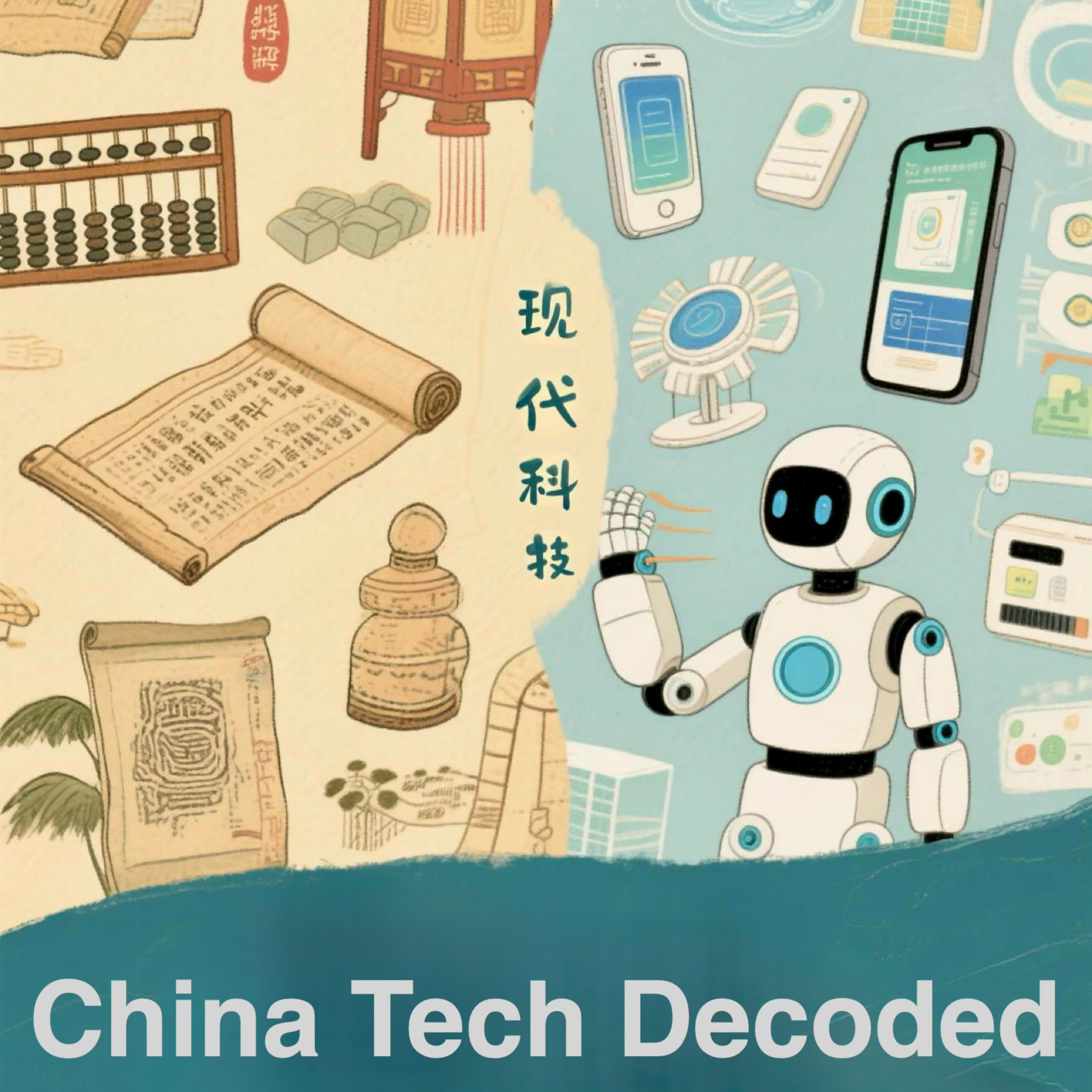
China Tech & Business Decoded
by Takefumi Makino
Google Notebooklm unravel Chinese technology and business. Based on Japanese Newsletter “知らなかった!中国ITを深く知るためのキーワード”. by IT Journalist Takefumi Makino.
-
89
vol.123:The Painful Pivot:Moving toward Mass-Market
These sources analyze a significant shift in the Chinese IT landscape, where niche platforms like Bilibili and Xiaohongshu are moving toward mass-market generalization. Originally catering to specific subcultures such as ACG enthusiasts and young women, these services are now expanding their user bases to include broader demographics to achieve profitability. This transition is driven by China’s move from a high-growth economy to a stable-growth era, forcing companies to prioritize revenue through advertising and e-commerce over specialized community identities. As these platforms diversify, they increasingly clash with established giants like Alibaba, which previously dominated the general retail market. However, this expansion often creates cultural friction between original core fans and new users, leading to a dilution of the platforms' unique atmospheres. Ultimately, the text illustrates a broader trend of innovation and survival strategies within the competitive and evolving Chinese digital economy.
-
88
vol.122:Huawei's Phoenix Comeback
These sources detail the dramatic decline and strategic reorganization of Huawei’s smartphone business following severe U.S. government sanctions. While restrictions on critical 5G technology and Google services initially removed the company from global market leaderboards, Huawei has responded by launching its independent HarmonyOS. This new operating system aims to create a seamless interconnected ecosystem that links smartphones with diverse IoT devices and home appliances. By shifting focus toward the domestic Chinese market and utilizing 4G chips, the company is attempting to regain a significant market share. Recent updates indicate that supply chain issues have improved, signaling a potential comeback for the brand. Ultimately, the text explores whether this pivot to a self-reliant platform can redefine the smartphone’s role as a central hub for all electronic interactions.
-
87
vol.121:The New Rules of E-Commerce:Product Quality
Modern retail is evolving into a multi-layered structure where traditional e-commerce integrates with social media, short-form video, and live streaming. In this new era, the definition of product quality has expanded beyond mere durability to include the entire customer experience, specifically logistics speed and responsive support. Successful brands like Anker and Apple demonstrate that seamless replacement policies and efficient service are now as vital as the physical goods themselves. To thrive, businesses must monitor specific metrics such as shipping punctuality and instant messaging response times to maintain consumer trust. Furthermore, platforms like TikTok are transforming how inventory is managed, shifting the focus toward curated selections and interactive entertainment to drive high-volume sales. Ultimately, companies must harmonize their presence across physical stores and digital channels to adapt to these shifting consumer expectations.
-
86
vol.120:Rise of Deep Synthesis:Chinese Tech Giants
These sources explore the rapid evolution of deep synthesis technology, more commonly known as deepfakes, and its expanding role in industrial and social applications. While early uses often focused on deceptive media, the text highlights how Chinese tech giants like Baidu, Tencent, and ByteDance are repurposing these tools for virtual sign language interpretation, automated driving simulations, and entertainment special effects. The author explains the underlying mechanics of Generative Adversarial Networks (GANs), demonstrating how AI models learn to create hyper-realistic imagery by competing against one another. Practical case studies illustrate the technology’s power to restore historical footage, provide emotional solace through vocal reconstruction, and navigate ethical dilemmas in film production. Ultimately, the material suggests that while the West leads in theoretical AI research, China’s aggressive integration of deep synthesis into consumer products has established it as a global leader in practical application.
-
85
vol.119:Demystifying the Tech Winter:Alibaba and Tencent
Major Chinese technology firms like Alibaba, Tencent, and JD.com are currently navigating a "winter" characterized by large-scale layoffs and a strategic pivot from hyper-growth to stable, sustainable development. This transition is driven by economic cooling, increased government regulations aimed at consumer protection, and the elimination of grueling labor practices like the "996" work schedule. Companies are aggressively streamlining underperforming divisions―such as offline retail and online education―to improve profit margins and adapt to a maturing market. Simultaneously, these giants face the complex challenge of delisting from U.S. stock exchanges due to regulatory friction and data security concerns. To mitigate risks, many are pursuing dual listings in Hong Kong to ensure long-term financial stability. Ultimately, the landscape is shifting from high-stakes speculation toward a regulated, professional investment environment focused on moderate, consistent gains.
-
84
vol.118:Beijing 2022's Hidden Tech:Winter Olympics
The 2022 Beijing Winter Olympics served as a major stage for showcasing advanced Chinese innovations, often referred to locally as "black technology." Key developments included the digital yuan for seamless payments and fully autonomous robotaxis operated by Baidu. While the pandemic limited international exposure due to a lack of spectators, the event highlighted significant progress in AI-driven solutions, such as real-time athlete tracking and AR navigation systems. Specialized security tools, including all-weather surveillance and robotic guards, were also deployed to manage the complex Olympic venues. Furthermore, high-resolution LED display technology and instant translation devices demonstrated the practical application of cutting-edge research. Ultimately, these sources illustrate China's strategic effort to use the games as a global launching pad for its modern IT industry.
-
83
vol.117:Alibaba's Paradigm Shift
The provided text details a significant strategic shift for Alibaba as it transitions from a pure platform provider to an active retail participant. While the company historically acted as a facilitator for third-party sellers, it has recently launched direct-sales flagship stores on Tmall, mirroring the business model of its rival, JD.com. This move is largely a response to stagnating online advertising revenue and intense competition from emerging platforms like Pinduoduo and Douyin. By managing its own inventory and logistics, Alibaba aims to capture new growth in the "new retail" sector where traditional e-commerce has hit a ceiling. Ultimately, the source examines whether this departure from a high-margin, asset-light strategy marks a fundamental transformation of Alibaba’s core identity.
-
82
vol.116:China's Collecting Toy Market
The text provides a comprehensive look at the shuzhuang wanju or "collection toy" market in China, a rapidly expanding sector primarily targeting adult consumers. Driven by the massive popularity of blind boxes, this industry has been pioneered by major players like Pop Mart and 52TOYS, both of which were heavily influenced by Japanese toy culture and sales models. Unlike other Chinese industries, this market remains driven by original intellectual property and cultural appeal rather than the dominance of big tech firms. The sources highlight a significant demographic shift as younger generations trade traditional antique collecting for modern hobby toys, signaling long-term economic growth. Ultimately, the text suggests that as the market matures and integrates Chinese traditional culture, it offers substantial opportunities for international collaboration and expansion.
-
81
vol.115:China's Great Ad Collapse
Major Chinese tech giants like Alibaba, Tencent, and Baidu have recently seen a significant decline in advertising revenue, leading some experts to suggest that traditional internet ads are becoming obsolete. While economic downturns and regulatory shifts in the education and gaming sectors played a role, a more fundamental change is the rise of DIY advertising. Modern retailers are increasingly bypassing agencies to produce their own low-cost, high-impact short-form videos using smartphones. These self-made advertisements are distributed directly through social media and e-commerce platforms, allowing companies to capture precise marketing data without paying traditional placement fees. Because these platforms align ads with the active intent of the user, the need for expensive, high-production branding is being replaced by practical, conversion-focused content. This evolution indicates that while the advertising industry is not disappearing, it is shifting toward a decentralized model where internal teams manage the entire creative and analytical process.
-
80
vol.114:China's Great Coffee War:Starbucks and Luckin Coffee
The provided text examines the rapid transformation of China’s coffee industry, which has evolved from a non-existent market to a global leader in just two decades. While major metropolises like Shanghai now boast the highest density of cafes worldwide, the market is shifting focus toward underserved regional cities and rural areas. This expansion is driven by diverse business models, including ultra-low-cost franchises targeting budget-conscious consumers and specialty cafes offering unique aesthetic experiences. Notably, non-traditional players like China Post are leveraging their massive existing infrastructure to enter the fray, potentially disrupting established leaders like Starbucks and Luckin Coffee. Ultimately, the narrative highlights a strategic pivot toward market penetration and digital integration as coffee becomes a staple habit across the entire nation.
-
79
vol.113 :How WeChat Became The "Everything App"
The provided text outlines the historical evolution and strategic growth of WeChat, positioning it as a fundamental pillar of China's digital infrastructure. Led by engineer Zhang Xiaolong, the platform achieved dominance by integrating diverse features such as mobile payments, mini-programs, and short-video channels to meet evolving consumer needs. A core component of its success is a strategy of refined imitation, where existing concepts are adapted and optimized for the WeChat ecosystem to ensure user convenience. The narrative also highlights how the app transitioned from a simple messaging tool into a comprehensive business and social hub through innovations like the "Red Envelope" digital gift. Additionally, the text touches on the early history of Kingsoft, detailing how strategic software development helped the company navigate market competition. Overall, the sources emphasize the importance of product management and market sensitivity in building a platform that serves over a billion users.
-
78
vol.112:The Counterattack:Chinese Traditional Supermarkets
Traditional Chinese supermarkets like Yonghui and RT Mart are launching a rapid "counterattack" to survive the intense competition from Alibaba’s tech-driven New Retail and community buying platforms. To overcome significant financial losses, Yonghui has pivoted by internalizing its technology development, hiring top engineers to build a custom operating system that maximizes staff efficiency through algorithmic task management. Meanwhile, RT Mart is rolling out a new store format that streamlines inventory while integrating diverse services like laundry and key cutting into their digital delivery ecosystem. These physical retailers are redesigning their layouts to prioritize logistical efficiency, adopting overhead conveyor systems similar to those used by Freshippo to lower delivery costs. This strategic shift highlights the remarkable speed of Chinese enterprises in blending high-tech infrastructure with physical grocery operations to regain market relevance.
-
77
vol.111:China's 'Starbucks of Night’:China’s Nighttime Economy
This text explores the rise of China’s nighttime economy and the evolution of a modern bar culture driven by Z-Generation consumers. Central to this shift is the "light intoxication" culture, which prioritizes low-alcohol drinks and unique social atmospheres over traditional heavy drinking. The source highlights the success of Helen’s, a massive bar chain that utilizes a low-cost business model featuring private-label products and strategic placement in smaller cities. Rather than focusing solely on alcohol, these venues emphasize "store experience" by creating environments that facilitate natural social encounters and romantic possibilities for young adults. By standardizing operations and keeping prices affordable, such chains have successfully integrated into the daily social lives of students and young professionals.
-
76
vol.110:The 9-Box War:EC Evolution and Competitive Strategy
This text analyzes the massive expansion and diversification of the Chinese e-commerce market by using a strategic two-axis matrix to categorize business models. The author explains that growth is driven by distinct positioning across different consumer behaviors―search-based, content-driven, and social-based―and various sales environments like live streaming and online platforms. By examining specific success stories such as Alibaba, Pinduoduo, and Xiaohongshu, the source illustrates how Chinese firms avoid direct imitation to find "blue ocean" opportunities. Currently, the industry is entering a crossover phase where major players attempt to dominate multiple matrix segments simultaneously. The overview concludes by highlighting Tencent’s potential disruption of the status quo through new integrated commerce features within the WeChat ecosystem.
-
75
vol.109:China's Great Tech Reset:2022
The provided text features a 2022 forecast for the Chinese technology sector by journalist Takefumi Makino, who characterizes the upcoming year as a period of strategic retreat and survival. Following a year of aggressive government crackdowns on monopolies and data security, major players like Alibaba and Didi are expected to downsize, sell off non-core assets, and face significant restructuring to avoid further regulatory scrutiny. While the report anticipates a slowdown in traditional online advertising and hardware sales, it highlights a pivotal shift toward content-driven e-commerce on platforms like WeChat and Douyin. Despite the overall pessimistic outlook for tech giants, the author suggests this "cooling off" period may foster a healthier competitive landscape for smaller startups and innovative short-video commerce. Ultimately, the source frames 2022 as a transformative transition from unchecked expansion to a more disciplined and stable growth model.
-
74
vol.108:China's Digital Workforce:Virtual Characters
The provided text explores the rapid evolution of virtual characters in China, noting how they have shifted from simple entertainment to practical business tools. Unlike Japanese VTubers who often rely on human actors for movement, Chinese tech firms are advancing AI-driven precision through performance capture and speech synthesis. These digital entities now serve as automated news anchors, bank tellers, and multilingual guides to improve efficiency in various industries. The source suggests that the popularity of sci-fi films and a desire to reduce human contact during the pandemic accelerated this technological shift. Ultimately, these lifelike characters are viewed as essential infrastructure for the future metaverse, acting as the primary interface between humans and virtual environments.
-
73
vol.107:China's Service Paradox
This source explores the complexities of consumer protection and e-commerce disputes in China, contrasting them with the high service standards found in Japan. It explains that while Chinese business culture historically prioritized short-term profit, the government has implemented rigorous legal frameworks like the Consumer Rights Protection Law to safeguard buyers. Key features of this legislation include "Three Guarantees" for repairs and a seven-day unconditional return policy specifically for online purchases. The text provides numerous real-world examples of friction involving false advertising, delivery delays, and refund refusals on major digital platforms. Ultimately, the author highlights how transparency and public complaint platforms are used to hold companies accountable in a high-stakes, competitive market.
-
72
vol.106:China's E-Scooter Empire
This text examines the symbiotic relationship between urban planning and electric two-wheeled vehicles in China's rapidly expanding cities. The author explains how China utilizes a "compact city" model, aiming for a "happy commute" where residents live within five kilometers of their workplaces and essential services. Because these districts are designed for short-distance travel, electric bicycles and scooters have surpassed cars in popularity, serving as the primary mode of transportation for over 300 million people. While the transition from lead-acid to lithium-ion batteries has improved performance, the source also highlights significant safety challenges regarding battery fires and the need for standardized charging infrastructure. Ultimately, the narrative suggests that integrating high-tech personal transit with decentralized urban hubs offers a sustainable alternative to the overcrowded public transit systems found in traditional megacities.
-
71
vol.105:The Future of Retail:O2O
This text explores the transformation of physical retail in China, highlighting how traditional stores are adapting to the dominance of e-commerce and the impact of the pandemic. The author emphasizes that survival now depends on integrating Online-to-Offline (O2O) services while offering unique "in-store experiences" that cannot be replicated digitally. Strategies for success involve targeting specific demographics, such as Z-Generation youth who value social and hobby-based consumption, or the "New Middle Class" who seek artistic and high-quality shopping environments. Other specialized approaches include "one-stop" facilities tailored for busy young mothers or the growing elderly population. Ultimately, the source argues that physical shops must evolve from simple points of sale into destination-based experiences to remain viable in a modern economy.
-
70
vol.104:China's Tech Reckoning:2021
Journalist Takefumi Makino provides a comprehensive retrospective on the 2021 Chinese tech sector, highlighting a fundamental shift from aggressive expansion to stable growth amidst a shrinking labor force. The overview identifies increased government regulation and anti-monopoly crackdowns against giants like Alibaba as the defining trends of the year. Beyond legal hurdles, the text explores viral marketing successes on platforms like Bilibili and the rapid electrification of the automotive market led by Tesla and Wuling. It also addresses sensitive social issues, including workplace sexual harassment scandals and the complexities of labor practices in the Xinjiang cotton industry. Ultimately, the author suggests that these structural changes and regulatory "normalizations" are designed to foster fairer competition for the next generation of startups.
-
69
vol.103:Interest E-commerce:TikTok Shopping
The provided text explores the transition in Chinese e-commerce from traditional search-based models to a dynamic ecosystem known as Interest EC. Unlike conventional platforms where consumers look for specific necessities, this new approach uses short-form videos and AI algorithms to match products with users' lifestyle desires. By leveraging platforms like TikTok (Douyin) and Taobao, merchants can stimulate a "want" rather than just fulfilling a "need," allowing the product to find the person. This shift prioritizes authentic, functional content over high-budget celebrity endorsements, making the shopping experience feel more like a discovery in a digital mall. Ultimately, the source argues that the integration of live commerce and video storytelling represents the definitive future of global retail.
-
68
vol.102:The AI Magic of TikTok Filters
The provided text examines how ByteDance utilizes sophisticated artificial intelligence to maintain the global dominance of its short-video platforms, Douyin and TikTok. By integrating high-level facial recognition and augmented reality, the app provides users with immersive special effects that seamlessly track movement and anatomical features in real time. The author highlights the use of Generative Adversarial Networks (GANs) to create realistic transformations, such as aging filters and photo restoration, which drive high user engagement. To ensure these complex functions run smoothly on mobile devices, the company employs knowledge distillation to compress massive algorithms into lightweight, efficient processes. Ultimately, the source argues that ByteDance’s success stems from its ability to turn academic technological breakthroughs into intuitive, addictive entertainment tools.
-
67
vol.101:China's City Brain
This text explores the development and implementation of City Brain, a sophisticated cloud-based smart city infrastructure pioneered by Alibaba. Originally designed to alleviate chronic traffic congestion in Hangzhou through AI-driven signal control and video analysis, the system has expanded to manage public health, emergency services, and urban utility efficiency. The narrative details the historical struggle and ultimate success of lead engineer Wang Jian, who secured the unwavering support of Jack Ma to establish Alibaba Cloud as a global technological powerhouse. Today, this framework serves as the backbone for over 500 Chinese cities, integrating diverse IoT data to streamline resident services via centralized QR code systems. By transforming urban centers into interconnected digital ecosystems, City Brain represents a fundamental shift in how modern municipalities function and solve complex logistical challenges.
-
66
vol.100:The New Face of Fraud:Cyber Fraud in China
This source analyzes the dramatic evolution of cyber fraud in China, noting a significant shift in tactics following the COVID-19 pandemic. While pre-pandemic scams primarily targeted older generations with investment schemes, modern criminals now use personal data and AI technology to lure young people into sophisticated part-time job and refund scams. By purchasing stolen information from the black market, fraudsters create highly personalized scenarios that convince victims they are speaking with legitimate authorities or customer service agents. The text highlights a growing trend of "gray area" traps, where victims are coerced into illegal or embarrassing acts, making them reluctant to report the crimes to the police. To combat these threats, Chinese authorities and tech giants are deploying white-hat hacker teams and anti-fraud applications to identify malicious actors. Ultimately, the source serves as a warning that as technology advances, scams are becoming more targeted, psychologically manipulative, and difficult to track.
-
65
vol.099:The Post-COVID Consumer
The provided text examines how consumer behavior in China has fundamentally shifted following the initial waves of the pandemic. It identifies four primary drivers of this evolution: a heightened focus on personal health, the widespread digitization of daily life, an increasing environmental consciousness, and the emergence of innovative shopping styles. To meet these needs, businesses have launched creative solutions like smart fitness mirrors, app-integrated health foods, and on-demand pharmaceutical delivery supported by online consultants. Additionally, the source highlights a growing trend toward sustainability through gamified recycling programs and a booming market for curated second-hand goods. Ultimately, the author suggests that while these themes are global, China’s unique ability to rapidly introduce and scale technology-driven services sets its recovery apart.
-
64
vol.098:China's Tech Crackdown:VIE Structure
This text examines the Variable Interest Entity (VIE) structure, a legal workaround that allowed Chinese tech giants to secure foreign investment despite strict domestic regulations. Historically, the Chinese government tolerated these gray-market arrangements to foster rapid innovation and economic expansion during an era of high growth. However, the author explains that the recent regulatory crackdown on companies like Alibaba and Didi signifies a strategic shift toward market stability and "common prosperity." By enforcing anti-monopoly laws and closing legal loopholes, the state aims to transition from chaotic, high-speed development to a more controlled, equitable economic environment. Ultimately, these measures represent a formalizing of the tech sector as China prepares for a future of steady, long-term growth.
-
63
vol.097:China's Great EV Reversal
This text examines the successful EV shift in China, highlighting how it transitioned from a government-subsidized initiative to a consumer-driven market led by small electric vehicles. Central to this transformation is the "Liuzhou Model," where local authorities solved urban congestion by providing significant perks for compact cars, such as dedicated parking and bus lane access. The author identifies "small," "rural," and "female" as the three critical keywords defining this new era of mobility. Unlike early adopters who prioritized status, current buyers value these cars as "all-weather commuters" for short-distance daily tasks. The narrative suggests that focusing on practical convenience rather than just environmental idealism allowed China to overcome previous infrastructure hurdles. Ultimately, the source argues that this model serves as a global blueprint, suggesting that lightweight EVs could similarly trigger a rapid shift in markets like Japan.
-
62
vol.096:China's "Guochao" Movement:Why Young Consumers Choose Domestic Products
The provided text examines Guochao, a prominent trend among China’s younger generations―specifically those born after 1995 and 2000―who increasingly favor domestic brands over foreign ones. This shift is driven by a genuine appreciation for the improved quality, performance, and cultural relevance of Chinese products rather than exclusionary nationalism. The author highlights the revival of traditional aesthetics through "New National Goods," such as Hanfu apparel and heritage-inspired cosmetics, which resonate with a youth demographic eager to explore their cultural roots. While global icons like the iPhone remain successful due to their superior balance of features, many Japanese and Western brands are losing ground as local competitors close the gap in innovation and value. Ultimately, the source argues that international businesses must move beyond past brand prestige and compete directly on functional excellence to capture this evolving market.
-
61
vol.095:The $5,000 Electric Car
This text examines the massive success of the Hongguang MINI EV, a budget-friendly electric vehicle produced by SAIC-GM-Wuling that debuted at approximately $4,500. Contrary to the misconception that its low price stems from cheap labor, the author attributes its profitability to strategic product planning and the clever utilization of China’s NEV credit system. By repurposing existing internal combustion engine designs and production lines, the manufacturer achieved extreme cost reductions while maintaining high design standards. The vehicle successfully captured two distinct markets: rural commuters seeking affordable transit and urban women drawn to its compact size and customizable aesthetics. Ultimately, the source highlights how Wuling leveraged government subsidies and market timing to transform a low-margin product into a financial triumph.
-
60
vol.094:Douyin's Superstar Engine:TikTok
This text explains the sophisticated AI-driven recommendation engine behind the short-video platform Douyin, the Chinese precursor to TikTok. Unlike traditional social media that relies on established influencers for content distribution, Douyin uses a "traffic pool" system that functions like a multi-stage tournament to identify high-quality videos. Every upload undergoes automated tagging and screening before being tested against small, random groups of viewers to measure engagement metrics like completion and like rates. This democratic mechanism allows unknown creators to achieve viral fame overnight based solely on the merit and relatability of their content. Furthermore, the source highlights how this same logic applies to e-commerce and advertising, forcing brands to create authentic, engaging clips rather than polished, traditional commercials. Ultimately, the system maintains a highly addictive user experience by prioritizing fresh, diverse, and high-performing content over historical fame or follower counts.
-
59
vol.093:The Invisible Engine:Recommendation System of EC and Music
This newsletter excerpt by IT journalist Takefumi Makino explores the critical role of recommendation systems in the Chinese digital economy, specifically within e-commerce and music streaming. The author explains how companies like JD.com have moved beyond simple collaborative filtering to adopt machine learning and learning to rank models to increase sales precision. In the music sector, services from Tencent and NetEase are shifting their competitive focus toward AI-driven radio features that analyze acoustic similarities rather than just user history. The text also highlights the ongoing battle between platforms and vendors who attempt to manipulate these algorithms for profit. Ultimately, the source frames these sophisticated technologies as essential tools for helping consumers navigate an overwhelming landscape of digital content.
-
58
vol.092:The App-within-an-App War
This text explores the evolving landscape of Chinese mini-programs, focusing on the fierce competition between WeChat and Alipay. While WeChat traditionally dominated the market by leveraging its massive social media traffic, recent government anti-monopoly regulations are forcing platforms to remove link-blocking barriers. These changes allow Alipay to potentially capture social traffic it previously lacked, challenging WeChat's supremacy. The author highlights how Alipay succeeds through superior search functionality and integrated merchant information, whereas WeChat relies on word-of-mouth discovery. Ultimately, the source suggests that the shift from native apps to integrated mini-programs is a global trend that offers consumers better privacy and convenience.
-
57
vol.091:China's Appliance Revolution
This text examines the rapid resurgence and modernization of China's home appliance market following the pandemic. The author identifies three primary drivers of growth: a focus on health-oriented features, the rise of specialized pet electronics, and widespread smart technology integration. Unlike Japanese manufacturers that prioritize internal efficiency, Chinese brands emphasize enhancing user experience through AI and smartphone connectivity. The market is also evolving through a strategic split in sales channels, where physical stores act as high-end showrooms while online platforms handle mass-market goods. Ultimately, the source suggests that Japan's stagnant industry could find strategic inspiration by observing China’s bold approach to design and innovation.
-
56
vol.090:The Great Unplugging:Online Gaming Limits
This text examines the sweeping regulatory changes China implemented in 2021 to transform the lives of its youth by restricting entertainment and academic pressures. The government enforced strict online gaming limits, permitting only three hours of play per week, while simultaneously banning private for-profit tutoring to alleviate student stress and financial burdens on families. Despite these rigid interventions, many children have shown resourcefulness and resilience, utilizing VPNs or specialized hardware to bypass digital restrictions and finish homework. The narrative also highlights the rapid digitization of Chinese schools, where mobile devices and smartwatches have become essential tools for both education and safety. Ultimately, the source suggests that while these "Double Reduction" policies aim to foster social equity and holistic development, they have forced a massive shift in the country's massive educational and tech industries.
-
55
vol.089:China's Billionaire Paradox:Role of Female Entrepreneurs
This newsletter explores the prominent role of female entrepreneurs and executives in China’s rapidly evolving technology sector. While structural challenges like career interruptions for childcare and a lack of representation on corporate boards persist, the author highlights how women leverage user-centric perspectives to drive modern innovation. By examining the success of leaders at major firms like Alibaba and Didi, as well as social media-driven startups, the text illustrates a shift toward non-traditional business strategies. Ultimately, it suggests that women in China are redefining markets by integrating domestic labor outsourcing with digital services and consumer-focused branding. These sources emphasize that despite remaining gender disparities in high-level compensation, women are essential architects of Chinese economic disruption.
-
54
vol.088:The Bilibili Model:Otaku and ACGN
This text explores the evolution of China’s ACGN (Anime, Comic, Games, and Novel) culture from a niche hobby into a dominant mainstream economic force for Generation Z. The author highlights how cutting-edge technology, such as AI-generated imagery and motion synthesis, is being integrated into fan creative spaces. A central focus is placed on Bilibili, a platform that transitioned from an unofficial fan site to a major corporation by bridging the gap between user-generated content and copyright legality. By establishing systems like "Bilibili Huahuo," the platform allows creators to collaborate with major brands such as KFC, turning fan tributes into legitimate marketing tools. Ultimately, the source argues that the "otaku economy" has become an essential professional industry where technology and business interests align with youth subcultures.
We're indexing this podcast's transcripts for the first time — this can take a minute or two. We'll show results as soon as they're ready.
No matches for "" in this podcast's transcripts.
No topics indexed yet for this podcast.
Loading reviews...
ABOUT THIS SHOW
Google Notebooklm unravel Chinese technology and business. Based on Japanese Newsletter “知らなかった!中国ITを深く知るためのキーワード”. by IT Journalist Takefumi Makino.
HOSTED BY
Takefumi Makino
CATEGORIES
Loading similar podcasts...
Frequently Asked Questions
How many episodes does China Tech & Business Decoded have?
China Tech & Business Decoded currently has 36 episodes available on PodParley. New episodes are automatically indexed when they're published to the podcast feed.
What is China Tech & Business Decoded about?
Google Notebooklm unravel Chinese technology and business. Based on Japanese Newsletter “知らなかった!中国ITを深く知るためのキーワード”. by IT Journalist Takefumi Makino.
How often does China Tech & Business Decoded release new episodes?
China Tech & Business Decoded has 36 episodes. Check the episode list to see recent publication dates and frequency.
Where can I listen to China Tech & Business Decoded?
You can listen to China Tech & Business Decoded on PodParley by clicking any episode. We provide an embedded audio player for direct listening, and you can also subscribe via your preferred podcast app using the RSS feed.
Who hosts China Tech & Business Decoded?
China Tech & Business Decoded is created and hosted by Takefumi Makino.
URL copied to clipboard!