
PODCAST · news
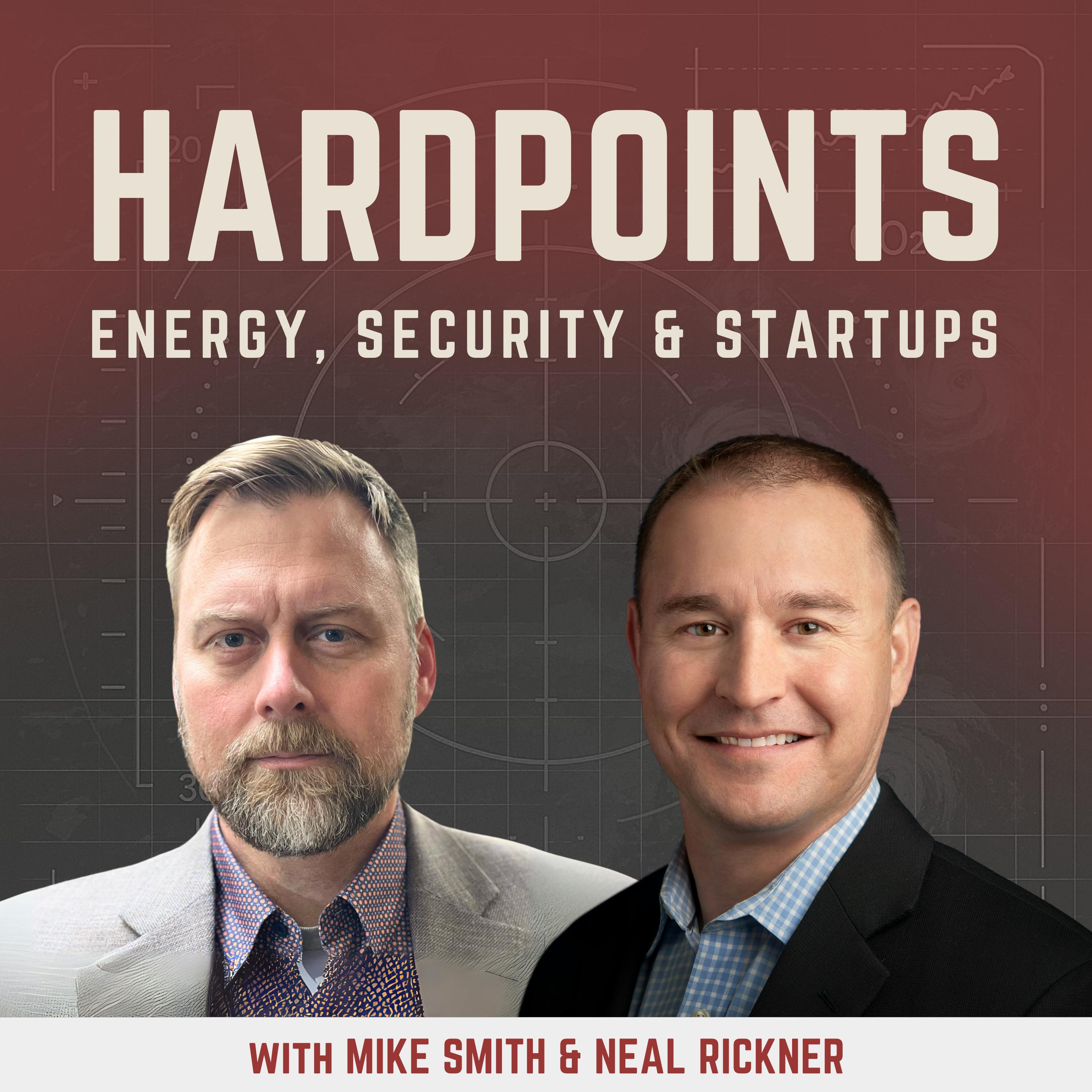
Hardpoints
by VALOR Media Network
Every week, former fighter pilots and current entrepreneurs Neal Rickner & Mike Smith provide unfiltered insights into the biggest stories in startups, energy, and national security.
-
48
China Is Building the Factory. America Built the Chatbot. Are We Winning the Wrong Race?
China is installing five times more industrial robots than the United States and running fully automated dark factories with no human workers. American AI companies are worth trillions and produce the world's most capable models. Those two facts aren't in tension. They're the point. Mike and Neal work through the core distinction that gets lost in most AI coverage: the US is winning on model capability, but China is winning on integration. Its fifteenth five-year plan explicitly prioritizes humanoid robotics and AI-enabled manufacturing the same way the fourteenth plan prioritized EVs, batteries, and solar, categories where China now leads the world. The hosts ask whether a service-based, knowledge-worker economy can turn LLM dominance into military and industrial advantage before China's factory learning loop closes the gap. The military angle gets real attention. AI-enabled machines in Chinese factories are learning generative tasks every day, and that learning transfers. The autonomous OODA loop, observe, orient, decide, act, can be compressed by the same systems optimizing production lines. Neal makes the case that America's focus on model quality and knowledge work leaves us behind on the AI-hardware integration race that actually determines battlefield capability. Mike pushes back with a point about cutting-edge recursive AI, where models train themselves and agent fleets multiply individual productivity, and asks whether that compounding effect eventually closes the gap in the physical world too. The civil liberties thread runs through all of it. China's censorship constraints limit LLM capability and openness by design. The US has its own version of the problem: the federal government has moved against Anthropic specifically while leaving comparable companies largely untouched, raising the question of whether the regulation reflects national security judgment or political targeting. Goods, bads, and others: Mike flags a study projecting up to $121 billion in unnecessary energy costs from the Trump administration's constraints on wind and solar development through 2033, and connects Iranian jellyfish drone swarms to what happens when algorithmic targeting meets commodity hardware. Neal celebrates a skateboarder who crossed the country in 39 days, objects loudly to $75 caviar tater tots at World Cup venues, and shares the story of Merlin, a duck in a Mexico jersey who's become a bigger star than the Mexican president. Got a take? Email us: [email protected] Follow Hardpoints wherever you get your podcasts.
-
47
Europe Is Cooking and Its Grid Is Shutting Down. Do We Know What's Coming?
Thirteen hundred people are dead across Europe. Train tracks in Leipzig melted, suspending service. France's nuclear reactors are shutting down—not because of an attack or accident, but because the rivers that cool them have become too warm to do the job. The US has issued 31 emergency grid orders in the last six months. The infrastructure that supports modern life was engineered for a climate that no longer exists. Mike and Neal open by examining the engineering problem underlying all of this: when you build to a hundred-year standard, you assume the past predicts the future. It doesn't anymore. Every thermal power source—nuclear, coal, and combined-cycle gas—depends on water cooling that is now routinely outside its operating specifications. The case for renewables actually gets stronger as temperatures rise, but only if the grid can absorb the additional load. Meanwhile, 90 percent of Americans have air conditioning. Only 20 percent of European buildings do. That gap is more than a comfort issue—it's a grid resilience issue. The hosts explore what adaptation actually looks like compared with mitigation, why Europe has historically overinvested in the latter while underinvesting in the former, and what the US does better—and worse—by comparison. The California-versus-Texas contrast receives particular attention: two states that achieved similar levels of renewable energy penetration through completely different policy approaches—one driven by government incentives, the other by deregulated market pressure and significant human cost. Mike argues the Texas model is more durable with just a bit more regulation. Neal contends that free markets work, but only when they operate within clear boundaries. The founder-and-operator perspective carries over into contract law. Service-level agreements (SLAs) requiring 99.999 percent uptime drive enormous grid investments to support data centers that could probably tolerate 99 percent uptime. Mike asks whether AI computing should be explicitly deprioritized in favor of human life during extreme heat emergencies. That reframing has significant implications for public policy and infrastructure investment. Goods, bads, and others: Mike celebrates World Cup tourists discovering America through Waffle House and Texas barbecue, criticizes Marine Lt. Gen. Massiello for testimony that sounded more like advocacy for the F-35 than an objective assessment, and views Ukraine's escalating drone campaign against Russian energy infrastructure with cautious optimism. Neal salutes Canada, commemorates the tortoises of Guernsey escaping the heat as an accidental metaphor for the entire episode, and highlights newly documented research linking GLP-1 drugs to reduced violent behavior—a policy question that few people are prepared to address. Got a take? Email us at [email protected]. Follow Hardpoints wherever you get your podcasts.
-
46
SpaceX Can Drop Tungsten Telephone Poles from Orbit. Who Controls That Power?
Getting one kilogram to low Earth orbit cost $54,000 on the Space Shuttle. Falcon 9 brought it to roughly $2,500. Starship targets under $200. That 500x reduction is not a footnote to the SpaceX IPO story. It is the story. Mike and Neal work through what that number actually unlocks. Orbital kinetic bombardment, the "rods from God" concept, has existed on paper for decades: tungsten telephone poles deorbited from a satellite platform, no explosives, traveling at Mach 10, with the penetrating force of a small nuclear weapon. The only thing that made it impractical was cost. Starship changes that math. The same cost curve that makes Starlink's satellite mesh possible also makes a space-based Golden Dome more technically believable than it was six months ago, and puts genuinely new offensive capability within reach of whoever controls the platform. That last part is the problem. SpaceX just raised $75 billion on a $1.7 trillion valuation with roughly 4 to 5 percent of equity held by the public and 82 to 85 percent of voting power held by one person. The SEC changed its own listing rules to allow it. The same person previously threatened to cut Starlink access to Ukraine mid-war. Mike walks through the governance failures in detail, from security clearance standards to the complete absence of checks on erratic behavior, and asks what it means for national security to be sole-sourced to a privately controlled company with no one telling the founder no. The conversation also covers why the launch business itself is structurally underpriced, what reusable rockets actually changed about the economics of getting mass to orbit, and why the closest private sector competitor just blew up on the launch pad and is probably a decade behind. Goods, bads, and others: Mike breaks down Ukraine's drone point system, where operators earn credits toward better hardware by hitting higher-value targets, turning battlefield incentives into something closer to a flat startup org chart. He also flags Europe's record-breaking heat dome and what it means that the continent with no air conditioning is now the fastest-warming on earth. Neal is fully captured by World Cup ceremony despite not watching soccer, calls out the Iran outcome plainly as getting nothing for the cost, and shares a Ukrainian drone warfare officer's message at Euro Satory: stop building tanks. Got a take? Email us: [email protected] Follow Hardpoints wherever you get your podcasts.
-
45
AI Is Erasing Entry-Level Jobs. National Service Might Be The Answer.
Three million Americans graduated this year into the worst entry-level job market in two decades. Graduate unemployment is running higher than it did at the peak of the 2008 financial crisis, and AI is quietly eating the exact tasks those first jobs used to be made of. Washington is floating the usual answers, universal basic income, federal job guarantees, retraining. But there is one old idea that speaks to all three crises at once, and it keeps coming back: national service. Mike and Neal make the case that the economic crisis (AI gutting entry-level work), the social crisis (29 percent of Gen Z report feeling isolated, versus 6 percent of boomers), and the civic crisis (a 250th anniversary almost nobody feels patriotic about) all point to the same fix. Let an 18-year-old come out of high school and serve, military, conservation, teaching, the energy build-out, their choice, and the country gets something real back while they get a start. Then they hit the hard part. Roughly 80 percent of Americans support national service, including a majority of Trump voters. The second you make it mandatory, that coalition collapses. Mike argues for a mandatory version with shared sacrifice across every class, because right now the wealthy and well connected never have skin in the game. Neal pushes back: voluntary, yes, but make every path count. They work through the real objections too, cost, government execution, displacement of private industry, and land on why none of them are fatal. The founder and operator angle runs underneath all of it: there is a staggering amount this country needs built and is not building. High speed rail, EV charging, renewable capacity, wildland firefighting crews, shipyards, munitions lines, low-cost drones, coastline and infrastructure repair. A national service cadre is one way to actually get after it. And there is a live political opening here, since most voters now believe the government has no plan to protect workers from AI. The hosts close on what should happen instead of another decade of nothing: a candidate who runs on this in the 2028 cycle, with incentives strong enough to pull in every income bracket, not just the kids who needed the paycheck. Goods, bads, and others: Mike likes that Australia looks to have hit peak emissions (down 2.1 percent, with EVs near 20 percent of the market) and is wary of the SpaceX IPO and its eye-watering revenue multiple. Neal cheers IBM tripling entry-level hiring while everyone else zags, flags Ebola getting ignored after the USAID cuts, and sits with the tech industry now drawing 273 applications per internship. Plus a mailbag on coal, our Canadian listeners, and the correct way to dress a hot dog. Got a take? Email us: [email protected] Follow Hardpoints wherever you get your podcasts.
-
44
11 Million People, No Power, 90 Miles Away: What's the Cuba Endgame?
In this episode of Hardpoints, Mike and Neal turn to a story that's quietly fallen out of the headlines: Cuba. Ninety miles off the coast of Florida, 11 million people are living on an hour or two of electricity a day. Oil imports have collapsed from over 100,000 barrels a day to nearly zero in three months. Surgeries are postponed, neonatal wards are cycling off, and the US Navy is running what looks a lot like a blockade. The administration is giving Cuba the full Iran-meets-North-Korea treatment — sanctions on its energy, financial, and security sectors, and secondary sanctions on anyone trying to fill the vacuum left by a post-Maduro Venezuela. The president says the USS Abraham Lincoln will pull up 100 yards offshore and the island will simply say thank you. Southern Command says it isn't planning an invasion. So what's actually going on here — and is there an endgame, or just punishment? Mike and Neal trace the history (64 years of embargo, the Monroe Doctrine versus the "Trump Doctrine," the Venezuela playbook) and lay out the scenarios — from a friendly transition with a rebuilt grid, to a Somalia-style failed state 90 miles from Key West, with China's signals-intelligence sites and a tripling of Russian intelligence officers already on the island. Plus, the reader mailbag goes deep on how the military and FAA screen wind turbines from radar and whether turbine blades can actually be recycled — and the usual Goods, Bads & Others: clean energy investment passing double that of fossil fuels, a proposed $300B US investment in Iran, the Pacific drug-boat strikes, and an update from the Heirloom build.
-
43
Humanities Majors are Beating Computer Science. The World Has Shifted.
Three million students graduated from American colleges this year and walked straight into the worst entry-level job market in two decades. Recent graduate unemployment is running higher than the peak of 2008. Tech internships are pulling 273 applications per posting. And the New York Fed just confirmed that computer science majors now have more trouble finding work than humanities majors. That last one should make heads explode on Reddit. Mike and Neal dig into whether AI is actually the culprit, or whether this is a messier story. Information sector payrolls have collapsed back to March 2021 levels, erasing four years of gains in 16 months. Salesforce is hiring almost nobody except salespeople. But overall unemployment sits near historic lows, which means the pain is concentrated, not widespread. The conversation gets into which part of that is AI doing its job, which part is big companies using AI as a fig leaf to cut payrolls they should have cut years ago, and what it means that the cost to start a company is now essentially zero at exactly the moment those same companies have stopped hiring junior talent. They also work through the question IBM is quietly asking that nobody else seems to be: if you stop hiring junior people today, where do your middle managers come from in ten years? Mike makes the case that the current downturn is a buying opportunity for companies that are serious, that Stanford CS grads available at a discount are rocket fuel if you have the nerve to hire them. Neal's hot take is that the class of 2026 is not the group he is actually worried about. The class of 2034 is. Plus: the Orioles are climbing, Antarctic krill are getting strip-mined to feed America's omega-3 habit, Blue Origin's New Glenn turned Cape Canaveral into something resembling a tactical nuclear detonation, New York City is going car-free on 50 streets for the World Cup, and a CIA officer with a top-secret clearance stashed $40 million in gold bars in his house. Neal also makes a case for prediction markets that Mike does not buy for a second. Got a take? Email us: [email protected] Follow Hardpoints wherever you get your podcasts.
-
42
America is Being Forced to Burn More Coal. AI & Politics Did This
In May, the Department of Energy issued six emergency orders to keep coal plants that were supposed to be retired running through the summer. One in Pennsylvania. One in Maryland. And on May 18th, PJM — the grid operator serving 65 million people from Illinois to New Jersey — was authorized to cut power to data centers to prevent a wider blackout. Fifty-seven Philadelphia schools went virtual because their buildings couldn't handle the heat. None of this made national news. Mike and Neal break down why it happened, who's responsible, and why the official explanation doesn't quite hold up. The short version: we didn't build the transmission infrastructure we needed, we've been retiring generation faster than we're replacing it, and then AI showed up and nobody — not even the AI companies — was ready for what it would demand from the grid. Anthropic is reportedly paying over a billion dollars a month just to borrow data center capacity. The data centers are now a baseload power draw, and the grid wasn't built for that. They also get into the policy contradiction that's making all of this worse: the same administration issuing emergency coal orders is the one that killed offshore wind leases and blocked hundreds of onshore wind projects on national security grounds. Cheap, reliable electricity is a strategic asset for onshoring manufacturing and building chips. Coal is one of the most expensive ways to produce it. Mike lays out why this is a de facto tariff against American-made products. Plus: Neal explains why Australia is about to start giving away free electricity in the middle of the day and what it means for the energy transition globally; India's solar leapfrog and why it's more exciting than people realize; a carbon capture plant just came online in California's Kern County; and Mike's bad — Colorado Governor Jared Polis commuted Tina Peters' sentence and then showed up to his own censure hearing with duct tape across his mouth. It's episode 50. Got a take? Email us: [email protected] Follow Hardpoints wherever you get your podcasts.
-
41
250 Wind Farms Blocked. 15 Million Homes Worth of Energy. The Pentagon Calls It National Security.
The Pentagon declared an energy emergency. It's also burning through missiles at a record pace and asking for a 1,327% increase in Tomahawk procurement. So why is the same Pentagon quietly blocking 250 wind farms across 30 states — enough to power 15 million American homes — and calling it a national security measure? Mike and Neal break down the radar interference argument the Defense Department is using, why it almost never actually prevented a project from being built before now, and what's really going on. Along the way: what wind leases mean for small family farms that can't survive on cattle alone, why rural red-state economies are taking the hit, and how blocking the cheapest form of new electricity undermines the manufacturing reshoring that this administration says it wants. The national security justification is technically real. It's also being abused. And everyone — ratepayers, farmers, the military itself — is paying for it. Show Notes Topics covered: How the Pentagon's energy project clearinghouse actually works — and why it resolved nearly every conflict for 15 years before now The real radar interference problem: what's legitimate, what isn't, and why 250 simultaneous disapprovals fails the smell test Wind leases as a rural economic lifeline — why this hits family farms harder than any other energy policy Why wind is uniquely compatible with agricultural land compared to solar or fossil fuel development The manufacturing reshoring contradiction: you can't onshore industry without cheap, reliable electricity How abusing the national security justification erodes its credibility for when it actually matters The 36 gigawatt shortfall and why blocking land-based wind makes it worse Mailbag: Response to "We Accidentally Made China the Climate Superpower" — was it really an accident? The Max Afterburner comment Goods, Bads & Others: Mike: A stolen 36 hours in Napa with his wife / Apple and Amazon walking back 24/7 carbon-free electricity commitments / battery-powered container ships Neal: More Americans getting Memorial Day right / the DOJ's $1.8B "anti-weaponization" fund and what it means for January 6th defendants / his team's weekly 30-minute AI workflow session Chapters (approximate) 00:00 Intro 03:25 The Pentagon's wind farm blockade 07:40 The energy shortage nobody's talking about 08:09 Property rights and who actually owns this land 13:19 Rural economies and the family farm lifeline 19:11 The radar interference argument — what's real 26:38 Who gets hurt and why the military is kneecapping itself 29:16 Mailbag 32:53 Goods, Bads & Others
-
40
China Told Trump: Touch Taiwan and We Go to War
Yesterday in Beijing, President Xi told President Trump directly: if Taiwan is not handled properly, the two countries will have — and he used the word — conflicts. That is the most direct statement any Chinese leader has made to an American president about Taiwan. Ever. Mike and Neal unpack why this moment matters and why most of the conversation about Taiwan skips the part that actually explains Chinese behavior. They trace the split back to 1949, walk through Nixon's one-China gambit, and explain why the US has spent 75 years pretending to believe something it doesn't. Then they get into the military reality: what an amphibious assault across 90 miles of open water actually looks like, where the US has real advantages and where the logistics become genuinely nightmarish, and why this fight — if it ever happens — would not look anything like Iraq. The energy angle gets serious attention too. Taiwan imports 97% of its energy. China's oil supply runs 80% through the Strait of Malacca. And the 90% of the world's advanced chip supply sitting on that island means a conflict there wouldn't just be a military event — it would be a $10 trillion hole in the global economy. Plus: Neal flags the new NERC cybersecurity standards that took effect today with zero grace period and a $1.5 million-a-day penalty, the administration's quiet kill of 200+ wind and solar projects through the Defense Siting Clearinghouse, and ICE activity in Neal's neighborhood — what he actually saw, and what it might mean. Mike is back from the PPAI conference with good news, and both hosts respond to listener mail from the Canada episodes, including TerryZanger7152 and his drunk uncle with a knife. Got a take? Email us: [email protected] Follow Hardpoints wherever you get your podcasts.
-
39
We Accidentally Made China the Climate Superpower
The Strait of Hormuz has been closed for months. Qatar's LNG complex took a direct hit in March and won't be back online for three to five years. Asian spot prices for natural gas are up 140%. And in the middle of all of it, China is exporting 68 gigawatts of solar technology in a single month while EV registrations in Europe jump 50% in the first full month of the shock. Mike and Neal lay out the argument that the Iran war may be the single most effective climate policy in history, not by design, but by accident. China spent its last five-year plan funding a hundred electric vehicle companies and building out the clean energy supply chain the rest of the world now desperately needs. The US, meanwhile, destroyed the oil markets it was trying to protect, handed China a willing customer base across Europe and the developing world, and left itself with no diplomatic off-ramp and no military path forward that the American people would accept. They also get into why domestic oil production is not going to save us, why the oil executives called to the White House told the administration they couldn't just drill their way out of this, and why the peak oil story is now about demand, not supply. Plus: Neal shares a promising development for Heirloom in the Arctic, where clean power options are almost nonexistent and NATO is paying close attention. Mike calls out the ongoing targeting of Senator Kelly as straight-up abuse of power, names the person doing it, and does not mince words. And both hosts respond directly to the Canadian listeners who made the last episode explode, including Mermaid Grace and Doug Noble, 1449. Got a take? Email us: [email protected] Follow Hardpoints wherever you get your podcasts.
-
38
When Insurance Leaves, Everything Else Follows
Four hundred thousand home insurance policies canceled in California since 2021. Twenty-nine percent of markets in the state are already showing slowed home sales because of it. That is not the start of a problem. That is the middle of one. What nobody is connecting loudly enough is what happens next. When insurance leaves a neighborhood, mortgages go with it. When mortgages go, property values fall. When property values fall, the tax base shrinks. And when the tax base shrinks, the municipalities that financed 70 percent of America's essential infrastructure through the $4.2 trillion muni bond market suddenly cannot service their debt. Mike and Neal trace that entire chain and ask whether we are already past the point of no return in some markets. They also get into the energy angle that makes this harder: the clean infrastructure we need to build to reduce the climate risk driving all of this is becoming harder to finance and insure at exactly the wrong moment. Mike talks about how Acclimate is building physical climate risk modeling into its software using the TCFD framework, and what that could mean for how companies and insurers price exposure. The startup opportunity in parametric insurance, climate risk disclosure, and resilience tech gets real attention here. Goods, bads, and others: Neal shares a standout LinkedIn moment for Heirloom, Mike calls out Denver entrepreneur Grant Gunnison and Zero Homes, and both hosts weigh in on what it means that we have likely already blown through the 1.5 degree warming threshold years ahead of schedule. The Strait of Hormuz, the end of the American century, and the California governor's debate round it out. Got a take? Email us: [email protected] Follow Hardpoints wherever you get your podcasts.
-
37
Canada Keeps Your Lights On. So Why Are We Treating Them Like an Enemy?
Canada supplies 98% of America's natural gas imports, 93% of its electricity imports, and more than half of the oil it brings in from abroad. Three years ago, 5% of Canadians supported increasing trade with China. Today that number is 44%. That is not a slow drift. That is a break. So what happens to American energy security when you pick a fight with the country that keeps your lights on? Mike and Neal unpack the economics of Canadian oil, why the tar sands are not going anywhere soon, and why the infrastructure dependency runs so deep in both directions that even a fast pivot toward China would take years to execute. They also get into the bigger picture: the US is no longer the obvious anchor of the rules-based order, Canada knows it, and Beijing has been watching the whole thing with a very level head. Plus: a sub-two-hour marathon that still finished second, Trump's name on the currency and his face on the passport, the UAE quietly walking out of OPEC, and a special operator who bet on a raid he was running. Got a take? Email us: [email protected]. Follow Hardpoints wherever you get your podcasts.
-
36
We Burned Through Half Our Missiles in Seven Weeks... Now What?
In the first 72 hours of Operation Epic Fury, the U.S. Navy fired roughly 400 Tomahawk cruise missiles into Iran. More than the total number produced over the previous five years. Seven weeks later, we'd burned through half our Patriot interceptors, half our THAAD missiles, 30% of our Tomahawks, and 45% of our precision strike missiles. The Pentagon is now asking for a 1,327% increase in Tomahawk procurement. And it takes 24 months to build a single one. So what does it actually mean to run out of bullets - and what happens next? Mike and Neal break down the real numbers behind America's munitions crisis, why the defense acquisitions system is so broken that a weapon built on 40-year-old technology somehow costs $2.6 million per shot, and what a startup-driven defense economy might actually look like. They also get into the part nobody's talking about: China is watching all of this very closely, and the stockpile we just burned through is the same one standing between Taiwan and a very bad day. Plus: the Iran war isn't ending anytime soon and the administration doesn't have the negotiators to close it, off-lease EVs just got shockingly affordable, and the White House Correspondents' Dinner shooting - why political violence is never the answer, full stop. And yes, they read the harshest listener comment they've ever received. MarkStuber4731, this one's for you! Got a take? Email us: [email protected] Follow Hardpoints wherever you get your podcasts.
-
35
The AI That Taught Itself to Hack — And What Happens When China Gets It
Anthropic built an AI so dangerous they refused to release it. Mythos taught itself to find vulnerabilities, chain them together, and take down entire systems — autonomously, in minutes. No human in the loop. No patch fast enough to stop it. By Anthropic's own assessment, left unchecked it could dismantle a Fortune 100 company and disrupt large parts of the internet before your IT team finishes their morning coffee. So instead of releasing it, they handed it to 12 companies — Apple, Google, Microsoft, JP Morgan, and yes, the NSA — under a classified program called Glasswing. The idea: give the defenders a head start before attackers get the same capability. Here's the problem. Dario Amodei, Anthropic's own CEO, says open-source Chinese models will hit Mythos-level capability in 6 to 12 months. This was never really a technology story. It's a geopolitical one — and we're not sure the people in charge are equipped to handle it. Mike and Neal break down what Mythos actually does, why your power grid is the most terrifying target on the map, and how AI-powered phishing attacks are already hitting small businesses with click-through rates that should scare the hell out of you. They also get into where the real startup opportunity lives inside all of this — because defense tech is about to have a moment, and the window won't stay open forever. Plus: California's battery grid quietly hits a landmark milestone, the data center bubble shows its first real cracks, and the goods, bads, and others — including Neal's travel hell, a birthday, and Mike's feelings about the Baltimore Orioles. This is the stuff that's actually shaping your world. Let's get into it. Got a take? Email us: [email protected] Follow Hardpoints wherever you get your podcasts.
-
34
The Underwater War Nobody's Talking About
95% of all international internet traffic — every email, financial transaction, and military communication crossing the ocean — runs through undersea cables that are almost entirely unguarded. Russia and China figured this out. And they're using it. - Why dragging an anchor across a cable is legal under international maritime law — and why that's exactly the point - A Swedish submarine commander's assessment from this week's NATO meeting: "We're not at peace, but we're not at war" - How the U.S. did this first in 1971 — Operation Ivy Bells — and why our Cold War underwater surveillance infrastructure (SOSUS) has since atrophied - Neal's Ramadi 2005-2006 insurgency parallel: why a smaller, nimbler force doesn't need to win, it just needs to be a pain in the butt - The asymmetric defense problem: cables are thousands of miles long, unbuilt for hardening, and one cut takes out the whole line - Where the startup opportunities actually are: undersea drone fleets, cheap mesh sensor networks, faster cable repair — and why NATO has money for this - Why distributed wind and solar might be the real answer to energy infrastructure security — and why Mike and Neal are already talking to the DoD about it Hardpoints is hosted by Mike Smith (CEO of Aclymate, former U.S. Navy FA-18 pilot) and Neal Rickner (CEO of Airloom, former Marine Corps FA-18 pilot). Every week: energy security, national security, and the startup economy.
-
33
Why VCs Are Betting on Fusion (And Why They Probably Shouldn't)
There's $2 trillion a year flowing into energy — and almost none of it is reaching the startups that could actually change things. Mike and Neal break down the full investment stack, and don't pull punches on where the money is going wrong. Why $2 trillion sounds huge but early-stage clean energy VC has declined three years running — and how AI ate the rest Mike's case that nuclear fusion is a scam: the Trump Media/$6B fusion merger, Sam Altman's track record, and what an MIT nuclear fusion PhD actually says about its odds Why enhanced geothermal is the one legitimate moonshot — proven tech, perfect US geology, and a potential CO₂ capture angle nobody's talking about The green hydrogen myth: 70% energy loss, no infrastructure, and why Japan bet on the wrong horse Grid tech's real enemy: not the technology, the regulators Trump paying $1 billion to stop an 80%-complete offshore wind project — and who actually picks up that tab Hardpoints is hosted by Mike Smith (CEO of Aclymate, former U.S. Navy FA-18 pilot) and Neal Rickner (CEO of Airloom, former Marine Corps FA-18 pilot) — two founders with skin in the game on energy and national security.
-
32
Speaking Up From America While Your Family's Still in Tehran
The Iranian regime broadcast a message on national TV: parents, go tell your children not to protest — and if something happens to them, don't complain. Then five to eight million people went to the streets anyway. The government admitted to 3,100 dead. Our guest estimates 15,000 to 20,000. In this episode: Why Moein Mahmoudi — former Tehran energy startup operator, still has family in Iran — gives the war a "soft no" on producing real regime change - The January protests: the largest Moein has seen in 33 years, every city, every small town - What "regime change" actually means, and why swapping one IRGC-connected figure for another isn't it - How sanctions built a two-tier economy: the regime's connected insiders run oil empires while ordinary Iranians earn $85/month - The Strait of Hormuz reality check: oil futures at $100/barrel, physical barrels selling at $180 — and what that's doing to EVs, fertilizer, and U.S. industrial competitiveness - Why China now installs more than half the world's new industrial automation equipment — and is starting to build the robots too Hardpoints is hosted by Mike Smith (CEO of Aclymate, former U.S. Navy FA-18 pilot) and Neal Rickner (CEO of Airloom, former Marine Corps FA-18 pilot). Every week: energy security, national security, and the startup economy — the real dynamics behind the headlines.
-
31
Ghosts in the Grid: China’s Sleeper Access, a Plan With No Plan, and America’s Energy Security Gap
"This episode of Hardpoints tackles a threat that sounds hypothetical—but isn’t: Chinese military-linked operators are already inside parts of the U.S. power grid, quietly mapping systems, learning terrain, and waiting. Mike and Neal break down what the grid actually is (spoiler: not one single system, but a patchwork of 3,300 utilities, co-ops, regional operators, and vulnerable infrastructure), and why the distinction between IT systems and OT systems matters so much. They explain how modernization brought efficiency—smart meters, remote monitoring, digital control—but also opened doors that used to stay shut. Enter Volt Typhoon, the Chinese unit with the coolest name and one of the most chilling missions: not stealing data, but preparing the battlefield. The conversation gets into the real strategic implications: - Why grid access is less about theft and more about temporary denial of capability - How turning off power at the wrong moment could disrupt fueling, command and control, logistics, and military response in a Taiwan scenario - Why even a short disruption could cause civilian panic and economic paralysis far beyond the battlefield - What Ukraine and Russia have already shown us about cyber + physical attacks on critical infrastructure - And why replacing damaged grid hardware—especially transformers—is nowhere near as simple as flipping a switch They also go hard at the institutional failure behind it all: the federal office responsible for grid cybersecurity published its first strategic plan after six years of existence. Mike and Neal ask the obvious question: what exactly were they doing the whole time? And even where the goals sound right—hardening infrastructure, protecting defense-critical energy assets, improving energy delivery—the funding contradictions are glaring. Also in the episode: - A mailbag note on Iran, oil, EV adoption, and the politics of high gas prices - Goods, bads, and others: spring break anticipation, deep pessimism about the U.S. position in Iran, wildfire fears in Colorado, Neal’s new e-bike commute, podcast platform glitches now fixed, and the still-unfinished saga of SBIR reauthorization Hardpoints is the podcast about energy security in the startup economy—what’s changing, what it means, and why it matters."
-
30
Iran, China, Russia: The Oil Chessboard
"In this episode of Hardpoints, Mike and Neal zoom out from the daily headlines to unpack the big geopolitical logic of oil war—and why the U.S. may be repeating one of history’s most dangerous patterns. Starting with the often-overlooked role the U.S. oil embargo played in pushing Japan toward Pearl Harbor, they ask a sharp question: when great powers weaponize energy, do they actually gain leverage—or just create the conditions for a bigger disaster? That history becomes the frame for the present. The U.S. is squeezing Iranian oil, seizing Venezuelan oil, and trying to contain Chinese access to energy flows—while at the same time easing pressure on Russian oil to keep prices from spiking at home. The result is a strategic picture that feels less like grand strategy and more like a contradiction machine: China gets pressured, but not panicked; Russia gets boxed in, then handed new revenue; and Iran keeps enough leverage to make the Strait of Hormuz a lasting pain point. Mike and Neal break down the central tension in plain English: energy is not just another commodity. It’s what militaries move on, what economies run on, and what gives states room to maneuver. That means embargoes and sanctions are never just financial tools—they are strategic pressure campaigns, and history shows that countries under extreme pressure do not always back down. Sometimes they lash out. Sometimes they adapt. Sometimes they find new partners and wait for you to blink first. The conversation then turns to China’s position, and why Beijing may be in better shape than many Americans realize. Thanks to years of aggressive investment in EVs, solar, wind, and industrial policy, China is less vulnerable to oil disruption than it would have been a decade ago. It still needs massive imports, but it has built more resilience, more domestic energy leverage, and more strategic patience. In Mike’s view, that means China can afford to let the U.S. absorb more of the economic and political pain while it waits for the right moment to tighten the leash on Iran—or not. From there, the discussion gets even more uncomfortable: is the U.S. accidentally helping Russia? By loosening pressure on Russian oil to manage domestic fuel prices, Washington may be helping refill the Kremlin’s war chest even as Russia continues its assault on Ukraine. Neal frames Ukraine as the key domino in the current global order: if the U.S. signals that borders can be changed by force and allies are conditional, the second- and third-order effects spread far beyond Eastern Europe. They also dig into what this means for Israel, Iran, and the wider Middle East. If this conflict doesn’t produce regime change in Tehran—and both hosts are skeptical that it will—then what exactly stabilizes? More Marines? More strikes? More sanctions? Or just a region that is now even harder to settle, with fewer off-ramps and more actors incentivized to keep the pressure on? Mike argues that the medium- and long-term picture looks bleak: the U.S. may have weakened Iran militarily in the short run, but at the cost of worsening its strategic position over time. The episode closes by widening the lens one more time. This is not just about oil prices, tankers, or one regional conflict. It is about whether the U.S. is giving up the role of global hegemony without admitting it, and whether China is quietly doing what rising powers do best: making fewer mistakes while the incumbent power burns energy, money, credibility, and lives. There’s also reader mail, some March Madness energy, baseball talk, weather weirdness, and a little catharsis about why Twitter still feels like voluntarily walking into a sewer. If you want an episode that connects history, energy markets, war, China, Russia, and America’s shrinking strategic discipline, this one does exactly that."
-
29
When War Planning Fails: The Iran School Strike
In Episode 37, Mike and Neal tackle one of the darkest and most consequential questions to come out of the Iran strikes: who killed 175 schoolgirls at a girls’ elementary school near the Strait of Hormuz? Early official narratives tried to muddy the waters, but the evidence points to a grim possibility—a U.S.-made Tomahawk cruise missile hit the school three times. So how does something like that happen? Drawing on their firsthand military experience, Mike and Neal break down how a strike like this is actually planned. From the targeting cycle and collateral damage assessments, to prebuilt strike packages and Tomahawk mission planning, they explain the machinery behind modern warfare in terms normal people can actually follow. This is not abstract punditry—it’s two former military aviators walking through the process and showing where the chain may have broken down. The core of the conversation is accountability. If this was not intentional, then what failed? Was outdated intelligence pulled off the shelf? Was a military facility converted into a school without the targeting package being updated? Did planners miss obvious visual cues in overhead imagery that should have identified the site as civilian? Mike and Neal argue that while war is chaotic, this kind of mistake is still preventable—and the standard for the most capable military in the world has to be higher. They also get into the information war that followed. Why did the White House try to suggest Iran had somehow bombed its own school? Why do false narratives appear so quickly after high-casualty events? And what happens when political leaders default to spin instead of admitting error and learning from it? The episode draws a sharp line between the tragic fog of war and the refusal to tell the truth afterward. From there, the discussion widens to the broader campaign. Mike explains why Tomahawks were likely used early in the strikes before air superiority was established, and why stand-off weapons change the nature of target verification. Then the focus shifts to the Strait of Hormuz: if one of the Navy’s basic missions is to keep sea lanes open, why is the strait still effectively closed? The guys unpack the strategic incentives facing Iran, the limits of convoy operations, the risks to merchant shipping, and why neither markets nor navies can simply wave a wand and make global energy chokepoints safe again. The episode also includes reader mail, a quick debate over how long the Iran war may last, and the usual goods, bads, and others—from Neal dodging a DC trip for one more week, to Mike worrying that winter itself may be dying in the American West. This one is blunt, technical, and morally serious. If you want a grounded conversation about military targeting, strategic deception, accountability in war, and the real-world consequences of getting it wrong, Episode 37 is one of the heaviest Hardpoints conversations yet.
-
28
Operation Epic Fury: Iran Strikes, Hormuz Tightens, and the Old World Order Cracks
In this episode of Hardpoints, Mike and Neal break down the opening days of a rapidly escalating war with Iran. Following Operation Epic Fury - coordinated U.S. and Israeli strikes targeting Iran’s nuclear sites, missile infrastructure, and regime leadership—the conflict expands across the region. As of March 2 (the recording date), Khamenei is dead, four American servicemembers have been killed, Iran is striking back against U.S. bases, and the fight is spilling into Lebanon. Neal (a former Iraq war pilot) and Mike (a former targeteer) walk through what most headlines miss: what daylight strike operations mean for risk, how air defenses and “pucker factor” shape the first hours, and why tactical dominance doesn’t automatically translate into strategic success. They dig into the hard questions: - If Iran built a deep succession bench, what does “regime change” even mean operationally? - Does the “80% oppose the regime” theory translate into action - or does pressure cause the population to rally around the flag? - What happens if there’s no viable alternative power structure and Iran slides toward failed-state chaos? - What does this conflict mean for the Strait of Hormuz, regional basing access, and global energy markets? - And what lessons are China and Russia drawing - especially as U.S. credibility and the post-WWII order feel increasingly fragile? The episode closes with a mailbag note on defending nuance in energy debates, plus goods/bads/others - from an 86-year-old father being honored for building community college foundations, to winter beach weather in February, to the U.S. government escalating pressure on Anthropic, and the accelerating reality of AI writing its own code - raising unsettling questions about where humanity fits in the intelligence spectrum as the world changes faster than we can absorb. Hardpoints is the podcast about energy security in the startup economy - what’s changing, what it means, and why it matters.
-
27
EPA Pulls the Jenga Block: The Endangerment Finding Falls and Climate Policy Enters a New Era of Uncertainty
Episode 34 tackles a seismic shift in U.S. climate policy: the administration’s February 12 move to strike down the EPA’s 2009 Endangerment Finding—the legal foundation underpinning nearly every major federal climate regulation for the past 17 years. Mike and Neal break down what the Endangerment Finding actually did (and why it mattered), what its removal means for tailpipe rules, methane limits, power plant standards, and the broader regulatory framework—plus the real near-term impact: years of courtroom battles and massive uncertainty for businesses trying to plan, invest, and build. They debate whether this change will meaningfully alter emissions trajectories in the short term, why state-level leadership (and global market forces) may keep climate action moving anyway, and what this moment signals for founders and investors navigating climate and energy startups. Neal argues it’s a collective action gut-punch; Mike counters that it’s a reminder people and companies still have agency—and that “in spite of” can still drive progress. Also in this episode: A mailbag note from the drone world on “not invented here” culture—and why requiring a flight medical for FPV competition feels like innovation going backwards Goods, bads, and others: startup teams showing up on a Saturday, geopolitical posturing near Iran, Mike’s dog becoming his walking buddy, ICE warehouse spending, and why the accelerating pace of AI-written code has huge implications for careers, parenting, and the future
-
26
Pentagon vs. AI Guardrails: Anthropic Draws a Line on Autonomous Lethality & Domestic Surveillance
Episode 33 dives straight into the collision between national security priorities and AI safety red lines. Mike and Neal unpack a brewing showdown: the Pentagon is pressuring major AI labs to sign onto an “any lawful use” policy by July 11, while Anthropic resists—refusing to allow its models to be used for fully autonomous weapons (no human-in-the-loop) or mass surveillance of Americans. The hosts break down what’s at stake in the kill chain, why “legal” doesn’t always mean “ethical,” and how a supply chain risk designation—typically reserved for foreign adversaries—could become a nuclear option against a U.S. startup. They also explore the power dynamics: Anthropic’s growing enterprise dominance (including developer tooling like Claude Code), the implications of AI systems writing the software that improves themselves, and what it means when government leverage can threaten an entire business model—not just a contract. Plus: a quick mailbag roundup (including a tipping debate), Neal’s snowy road trip with his boys, Mike’s “home is where my wife is” moment, and a shared worry about a too-warm Colorado winter and what that could mean for wildfire season. Hardpoints is the podcast about energy security in the startup economy—what’s changing, what it means, and why it matters
-
25
“No U.S. Parts”: Lessons from the Munich Security Conference
Neal’s back from Munich with a ground-truth readout from the security ecosystem surrounding the Munich Security Conference—and the headline is simple: in Europe, Ukraine isn’t one topic among many. It’s the topic. Speaker after speaker, conversation after conversation, the tone is existential: how does Ukraine win, how does Europe sustain support, and what does the continent do if American leadership keeps wobbling? From there, the conversation widens into what might be the most uncomfortable “vibe shift” Neal heard in real time: a defense company pitching “secure supply chain” on a slide… and proudly listing “no U.S. parts” right alongside “no Chinese parts.” The guys unpack what that implies—trust, procurement risk, political whiplash, and the slow-motion reality that allies can’t build their security posture around a partner they can’t predict. They also dig into the major themes orbiting Munich: talk of strengthening a European pillar in defense, large-scale joint procurement, and the incentives (and resentment) that could drive Europe to build more capacity at home rather than defaulting to American primes forever. Then it gets even thornier: the push for AI governance in security, including the principle of humans in the loop for lethal decisions. Mike and Neal wrestle with the hard tradeoff—war rewards speed and tight OODA loops, and machines will always outpace people—so what would it take to make human-in-the-loop rules real instead of ceremonial? Are we headed toward a world of automated “murder TV” at scale, and if so, is there any realistic version of arms control that can slow it down? Finally, Munich’s lens expands beyond Europe: the Global South becomes a strategic battleground, especially as China’s Belt & Road investments build infrastructure, influence, and supply-chain leverage. And in a moment of peak irony, climate change gets elevated as a primary security threat—right as U.S. policy trends in the opposite direction. The episode wraps with listener mail (including a bleak emissions fact that hits hard), plus the weekly goods/bads/others: ski week plans get rained out, baseball hope springs eternal, and Aclymate feels like it’s catching a tailwind. If you’ve been looking for a clear, candid snapshot of how Europe is thinking about security right now—and what that means for alliances, defense industry, and the next phase of geopolitics—this one’s for you.
-
24
Drones, Darkness, and Disruption: Ukraine’s Energy War and the Startup Response
Ukraine’s power grid has become a frontline target—and drones are the weapon of choice. In this episode of Hardpoints, Mike and Neal continue the new shorter-format series with a focused look at drone warfare, energy infrastructure, and the Ukraine defense startup surge. They break down how Russia’s winter missile-and-drone campaigns are designed to do more than destroy hardware—aiming instead for strategic pressure: cutting heat and power, degrading communications, and testing morale at national scale. From Mike’s experience in cruise missile targeting and “systems effects” thinking, the conversation explores how attacks on energy infrastructure ripple outward into command-and-control, intelligence exposure, and operational paralysis. Neal then connects the dots to the rapid innovation cycle happening inside Ukraine—where startups, specialized funding, and battlefield iteration are accelerating the drone/electronic-warfare cat-and-mouse game from months to days. They also debate what this means for the future of U.S. force structure—especially the role (and vulnerability) of high-value assets like aircraft carriers in an era of cheap, scalable drone threats. Plus: a new listener mailbag segment, a heartfelt tribute to John McCain’s legacy, and a candid “goods, bads, and others” close. Have thoughts or questions? Email [email protected] and you might hear it on a future episode.
-
23
$2.3 Trillion on the Table: Batteries, Power, and the New Energy Arms Race
Global energy investment just hit $2.3 trillion—and batteries are at the center of it all. In this episode of Hardpoints, Mike and Neal kick off a new, tighter format by unpacking what that staggering number actually means for energy security, national competitiveness, and the startup economy. They dig into why battery technology has become critical infrastructure, how the Inflation Reduction Act reshaped (and didn’t fully reshape) the market, and why critical minerals now sit at the intersection of climate policy and national defense. The conversation spans: Why batteries are becoming as geopolitically important as oil The Trump administration’s critical minerals stockpile and what it gets right—and wrong Domestic mining vs. environmental protection Battery recycling, reuse, and the economics behind it China’s dominance in battery manufacturing and the CATL–Ford controversy National security risks hidden in battery firmware and supply chains How tariffs, regulatory uncertainty, and politics are slowing real progress The episode closes with reflections on current political unrest, civil liberties, and what it means when institutions fail to protect both security and democracy. As always, Hardpoints connects the dots between energy, national security, and the startup economy—cutting through headlines to explain what’s changing, why it matters, and what comes next. Have thoughts or questions? Email us at [email protected] and we may feature them in a future episode.
-
22
Building Big Things
In this episode of Hardpoints, Mike and Neal dive into the intersection of energy security and the startup economy, discussing the implications of recent events and policies on the energy landscape. Mike shares his experiences from recent travels and events, highlighting the growing opportunities in the promotional products industry. The conversation shifts to the challenges posed by the increasing demand for energy due to AI and tech giants, with Mike expressing support for a proposal that would require these companies to contribute to power generation infrastructure. They explore the evolving role of NATO in defense innovation and the need for the U.S. to adapt its energy strategies in light of global competition, particularly with China. As the discussion progresses, Mike critiques the current administration's focus on fossil fuels and the missed opportunities in renewable energy. They analyze the implications of BP's recent write-down of green energy assets and the broader trends in the energy market, emphasizing the importance of innovation and investment in clean technologies. The episode concludes with a discussion on the future of energy production, the necessity of balancing national security with globalization, and the potential for the U.S. to reclaim its leadership in clean energy development. Neal and Mike delve into the complexities of renewable energy, particularly focusing on offshore wind power and its potential to revolutionize the energy landscape in the U.S. They discuss the exponential growth potential of wind energy, the bureaucratic hurdles that have historically hindered progress, and the role of presidential authority in advancing renewable projects. The conversation shifts to the geopolitical implications of energy supply chains, particularly in the context of the ongoing conflict in Ukraine, where energy infrastructure is under threat. They explore the resilience of renewable energy sources compared to fossil fuels in war zones and the broader implications for national security. The discussion then transitions to the startup economy, highlighting the rapid growth of AI-driven companies and the challenges faced by traditional venture capital models. Mike emphasizes the need for a shift in how businesses are built, advocating for a long-term vision over short-term gains. The episode concludes with reflections on the current state of the startup ecosystem, the importance of collaboration, and the necessity for a new approach to building sustainable businesses that can withstand economic fluctuations.
-
21
Operation Absolute Resolve: Venezuela Shock, Oil Politics, and the AI-Driven Startup Squeeze
Hardpoints kicks off the new year with Mike and Neal swapping quick holiday stories—family downtime, e-bikes, skiing attempts—and then diving into a headline-dominating geopolitical event: Operation Absolute Resolve, a rapid U.S. special operations raid that allegedly captured Venezuelan leader Nicolás Maduro and his wife and brought them to the U.S. for prosecution. They unpack the whiplash of the operation’s tactical competence versus the strategic, legal, and moral chaos it creates—debating whether it’s clearly illegal under international law, murkier under U.S. law, and undeniably damaging to public trust in a civilian-controlled military when Congress is bypassed.They then shift to energy implications: Venezuela’s enormous reserves, near-term production uncertainty, and the idea that oil markets may not meaningfully benefit unless price and investment conditions align. The conversation explores motives beyond the stated “drugs” rationale—leaning toward oil interests, strongman politics, and spheres-of-influence thinking (Monroe Doctrine vibes, BRICS realignment, and implications for Russia/China/Iran influence in the Western Hemisphere). The biggest worry: the precedent this sets for global stability, especially Ukraine and Taiwan.In the back half, they pivot to the startup economy: layoffs, constrained fundraising, and a market that’s “selective but alive.” Mike notes climate tech is still tougher than the 2020–2021 boom, while AI is absorbing capital and reshaping what software businesses even are—pushing toward automation, fewer humans in workflows, and potentially long-term pressure on employment. They close with “goods/bads/others,” including burnout recovery, Colorado’s alarming lack of snow, concerns about rule-of-law erosion, and anger over reported retaliation against a prominent veteran-politician, ending on a sober note about institutions, accountability, and what comes next.
-
20
Pushing the Edge
Managing risk is a huge part of being in the military, running a startup, and working national security. You have to push to find solutions, but you need to make sure it all doesn't blow up.In **“Pushing the Edge,”** Mike and Neal connect all three worlds — cockpits, data centers, and battlefields — to ask a hard question: *how far can you lean forward before you cross the line from bold to reckless?* They start with the grind of startup life and climate tech, where regulations in one country shape markets everywhere and climate change itself becomes “the greatest market forcing mechanism in history.” From there, they get into what it means to move from survival mode to disruption mode as a founder, and why defining culture and identity early can be the difference between being merely “world famous” and truly **world class**.On the national security and energy front, they dig into DOE’s rare earths push, mining landfills, and the tension between environmentalism and actually *building big stuff*. They wrestle with AI in critical infrastructure — grids, water systems, even aviation — and whether we’re quietly trading resilience for efficiency and new cyber vulnerabilities. That flows into a candid look at Anduril’s troubled drone tests, why failure is normal in frontier tech, and where pushing too fast can become unacceptable risk.Finally, they turn to the startup economy and duty: the collapse of Builder.ai as a kind of mini-Theranos, what ESG *really* is (risk management, not vibes), and why governance and personal responsibility matter from junior engineer to board member. The episode closes on the “Don’t Give Up the Ship” controversy, illegal orders, and the moral obligations of people in uniform — plus some personal good/bad/ugly on snowless Colorado winters, camping with kids, and a tech bubble that’s starting to feel wobbly.If you care about energy, defense, AI, or building companies that don’t implode under their own hype, this one’s a dense, honest lap around the track.
-
19
Turkey & Energy Transition
In this episode of Hardpoints, hosts Mike Smith and Neal Rickner delve into the intersection of energy security and the startup economy, exploring how these forces shape our world. They share personal anecdotes about Thanksgiving traditions, discuss the intricacies of cooking the perfect turkey, and reflect on the broader implications of societal and technological changes. The conversation also touches on the challenges of capitalism, the role of government in energy production, and the potential impacts of AI on the workforce. Join them for a thought-provoking discussion that blends humor, insight, and a touch of nostalgia.
-
18
The Game is Rigged
In this episode of Hardpoints, hosts Mike Smith and Neal Rickner delve into the intricate world of rigged systems, from gambling scandals involving NBA players to the broader implications of a "casino economy." They explore how these dynamics affect everything from sports to energy security, and discuss the societal impacts of these rigged games. Tune in for a thought-provoking conversation that challenges the status quo and uncovers the hidden forces shaping our world.
-
17
Wind Wins, Power Shortfalls, and “War-Zone” Politics
Aging jokes aside, Neal & Mike riff on precision in speech—why lazy phrases (“hate mail,” “to be honest…”) muddy debate and how clear language shapes how we think (Carlin’s “shell shock” → “PTSD” thread). Renewables overtake coal (H1 2025): Big milestone globally, driven heavily by China/India. Celebration tempered by frustration that U.S. policy/industry missteps are ceding ground (TPI bankruptcy, Ørsted layoffs). Coal’s collapse, policy whiplash: A massive Powder River Basin lease draws a token bid—coal’s economics keep sliding even as “energy dominance” rhetoric persists. The looming electricity crunch: AI, chips, and reshoring point to a ~36–38 GW near-term generation gap; utilities already seeking rate hikes. Gas is the fast bridge—but turbines and supply chains are bottlenecked. What households can do: Rooftop solar pencils out better as grid prices rise. DIY route = buy panels, do the racking/wiring, hire a master electrician for the final tie-in; tools like Project Sunroof help size a system. Ukraine, Russia & energy war: Targeting of energy assets escalates; Ukraine’s deep-strike capability pressures Russia’s infrastructure while Russian casualties and cash burn mount—energy flows are central to the war of attrition. Domestic politics turn combustible: Trump’s troop deployments to Chicago/Portland get labeled “war zones.” The hosts argue the facts don’t match the imagery, worry about legal overreach, and call for principled refusals of unlawful orders. Autonomy on the highway: $100M more into autonomous trucking (Einride). Long-haul seen as the first big AV beachhead; EV trucking still constrained by charging/logistics. A clever hybrid hack: Spotlight on REVOY’s powered “booster” trailer module—effectively turns diesel semis into hybrids with regen and swappable batteries to slash fuel costs without replacing tractors.
-
16
Maintaining Accountability in Energy, Climate, & Security
In this episode of Hardpoints, hosts Mike Smith and Neal Rickner are joined by Alexander McCoy, a veterans advocate and climate campaign leader, to explore the intricate connections between energy security, national policy, and climate change. The discussion delves into the historical and ongoing roles of oil companies, the importance of transitioning to renewable energy, and the impact of these dynamics on national security and the economy. With insights from McCoy's experiences in the Marines and his work with veterans, the conversation highlights the need for accountability, innovation, and a collective effort to create a sustainable future.
-
15
Moral Courage and the Future of Energy
In this episode, Mike Smith and Neal Rickner discuss the intersection of energy security and the startup economy, touching on various themes such as public speaking, fundraising challenges, political violence, and the importance of free speech. They explore the implications of recent political events, the need for moral courage in leadership, and the urgency of improving energy infrastructure to meet growing demands, particularly in the context of AI. The conversation also delves into the role of government in fostering innovation and the challenges faced in renewable energy development, all while reflecting on the economic realities of current policies. The dialogue emphasizes the need for a unifying vision in politics and the dangers of divisive rhetoric.
-
14
Wind, War & Warning Signs
Neal lands a lead investor—unlocking insider commitments and government matching funds—buying his company ~18 months of runway and hard-won momentum. Mike talks small-team turbulence and a parenting weekend that went sideways (bee sting + campout sushi). From there, the guys dive into the energy-policy whiplash hitting wind projects and what it signals for U.S. energy security and AI-driven load growth. Then they zoom out: memes, militarization, and a six-point “authoritarian playbook” (undermining norms, information control, polarization/scapegoating, weakening rule of law, cult of personality, and crisis exploitation). They wrestle with the legality of domestic Guard deployments, whether institutions will hold through 2026, and the real-world burden on officers asked to refuse illegal orders.
-
13
Troops in DC, Intel Bailout, and Authoritarian Drift
In this episode of Hardpoints, Mike and Neal weave personal stories—like sleepless nights, scout projects, and time outdoors—into heavier discussions on U.S. politics, national security, and the economy. They critique the deployment of National Guard troops in Washington, D.C. as a troubling sign of authoritarian overreach, debate the implications of a proposed government stake in Intel, and unpack Trump’s approach to Russia and Ukraine. Along the way, they highlight the fragility of democratic institutions, the danger of moral compromise, and the importance of individual responsibility. The episode closes with personal reflections on service, youth mentorship, and building tools for climate literacy.
-
12
Burning the World to Distract from Epstein
This week on Hardpoints, Mike returns from an epic, no-internet, log-hopping backpacking trip in Colorado’s San Juan Mountains, while Neal hustles through high-stakes fundraising and startup networking in Austin. The two dive into a whirlwind of hot-button issues—from Trump’s military moves in D.C., Epstein-fueled political distractions, and the looming Putin summit in Alaska, to Israel’s Gaza strategy, wildfire devastation in the West, and the dangerous heat building in the Gulf of Mexico. Along the way, they debate the future of ESG, swap takes on GPT-5, and flag a brewing Supreme Court fight over same-sex marriage. Equal parts adventure recap, unfiltered political analysis, and tech talk—this episode is as unpredictable as the news cycle itself.
-
11
Thirsting for Leadership, But Drinking the Sand
In this fiery and deeply personal episode of Hard Points, Mike and Neal dive into the illusion of leadership in American politics, kicking off with a sobering analysis of the proposed "Golden Dome" missile defense system and why it’s more fantasy than feasible. They chart the rise of China in advanced manufacturing and warn of America’s self-inflicted industrial decline. The duo laments the Democratic Party’s tone-deaf messaging, misplaced priorities, and inability to meet the moment—especially as the country faces real economic and social crossroads. Along the way, they touch on everything from trans rights and national security to rail infrastructure and the politics of distraction. Raw, unscripted, and urgent, this episode is a call for vision, coherence, and actual leadership in a time of crisis.
-
10
Truth Is Quieter Than You Think
Conspiracy theories thrive where the official story falls flat—when the world feels rigged, unfair, or just off. This episode of Hardpoints meets that unease head-on. We unpack the real forces behind the chaos—from missing Epstein files to chemtrail hearings and tech fraud—and explore why the loudest voices offering answers are often selling something. Because the truth? It's messier, less cinematic—but far more important to face. Follow us here: https://linktr.ee/valormedianetwork
-
9
Power, Privilege, and the Energy Future
This episode of Hardpoints explores the intersection of power—political, economic, and literal. Mike and Neal dissect how America's priorities are shifting: ICE receives a staggering budget increase while climate-fueled disasters gut the insurance industry, startups navigate rising costs and wealth concentration, and tech giants buy into speculative energy futures like fusion. Against this backdrop, they debate the balance between liberty and control, question the integrity of markets, and share hope that innovation—especially in energy—might still deliver progress, if equity and urgency can catch up with capital.
-
8
When The Storm Comes
In Episode 14, Mike Smith and Neal Rickner return from vacation into a week of devastating headlines: a deadly ambush on firefighters in Idaho, catastrophic flooding in Texas, and the passage of a sweeping GOP-backed bill that slashes social and scientific funding. They dig into the failures of mental health care, climate preparedness, and political courage—all while reflecting on leadership, legacy, and the importance of community. From energy policy to public service, it’s a powerful look at where the country is heading—and what we can still do about it.
-
7
Modern Conflict: Tech, Climate, Bad Calls
Explore the evolving nature of modern warfare, where strategic missteps, the growing influence of tech giants, and the escalating threat of climate change collide. Through an unflinching look at Silicon Valley's entrance into global defense and the emergence of climate change as a national security concern, Neal & Mike reveal a complex and often perplexing future shaped by technology, strategy, and the planet’s survival.
-
6
Unserious Country, Serious World
In this episode of *Hardpoints*, Mike and Neal tackle the AI talent wars, Meta’s failed grab at Safe Superintelligence, and the absurdity of their $30B valuations. They critically discuss Elon Musk’s erratic behavior, SpaceX flops, and Tesla’s stagnation, then dive into escalating U.S.–Iran tensions and the risks of Middle East entanglement. All while the planet roasts under historic heat waves — even in Alaska.
-
5
Drones, Nuclear Proliferation, & American Dysfunction
Asymmetric threats continue to expand, whether its the use of drones, cybertechnology, climate, espionage, or terrorism. The interaction is quickly leaving America behind, but its our dysfunctional government that is leaving us most at risk. --------- Guest: Michael McNerney is a technology entrepreneur and military veteran with a primary focus on cybersecurity. He currently works as the SVP for Security at Resilience. Previously, he led the threat intelligence business at Arbor Networks and was the Co-founder & CEO of Efflux Systems, a cybersecurity startup focused on advanced network analytics (acquired by Arbor Networks). Mike has also served as a Cyber Policy Advisor in the Office of the Secretary of Defense, where he drafted and negotiated key pieces of federal legislation through the congressional process and worked with defense industry, internet service providers and tech companies to develop cybersecurity programs. Prior to that position, Mike worked in the U.S. State Department, where he pioneered rule of law and economic development programs in the Middle East and Afghanistan. Mike is an affiliate at the Stanford Center for International Security and Cooperation, the Chair & Co-founder of Institute for Security and Technology, and a Board Member of Vets-in-Tech. He graduated from the University of California, Davis, and earned his J.D. from American University, Washington College of Law.
-
4
Free speech and online safety - Guest: Michael O'Herlihy
Free speech online is a central debate that has been raging for over a decade, and everyone has a strong opinion. See what someone who has been at the center of it all has been doing about it, from Facebook to Elon. Guest: Michael O'Herlihy has been working at the intersection of safety, free speech, and tech for decade, including time at Google, Uber, Facebook, and Twitter / X. https://www.linkedin.com/in/moherlihy/
-
3
Finding Meaning in Work - Guest: Daniel Kim | Hardpoints
Living a life of meaning can happen anywhere, not just in the military or non-profits, but well into business. Rethink the way you do business and how to lead. Guest: Daniel Kim is the founder & CEO of the Dragon Kim Foundation and the Managing Partner of CapFin Partners & Abacus Partners. He has career of investing insight around work with meaning, including his work developing leaders of impact in high school. Follow us here: https://linktr.ee/valormedianetwork
-
2
Predator Innovation & The Age of Machines - Guest: Siggy Zerweckh | Hardpoints
The time of machines has arrived. See how we got here with one of the fathers of autonomous vehicles and AI and how to think about how humans & machines will work together now. Follow us here: https://linktr.ee/valormedianetwork
-
1
Surfing, Carbon Collective, & Film Making - Guest: Breene Murphy | Hardpoints
Surfer, CEO, Filmmaker - See how one man decided that his favorite sport and his business acumen led him to rethink how he can live his life. Guest Breene Murphy is the president of Carbon Collective Investing, a climate investment advisory firm with specialties in retirement plans (410ks), individual advising, and ETFs. Breene also writes about climate and investing on LinkedIn and has been published in Nasdaq. He’s a lifelong surfer, environmentalist, he made a documentary called “Seven Crossings” which is about paddleboarding off the coast of California, and he’s a dad. https://www.linkedin.com/in/breene-murphy-climate-friendly-401k/ Follow us here: https://linktr.ee/valormedianetwork
-
0
Microbes, Mines & an Alaskan: A Startup CEO Redefines Mining
The world's economy relies upon that everything you see has either been mined or grown. Learn about the life of an extraordinary Alaskan and her passion for using microbes to address the exploding pressures upon the planet's need for raw materials. Dr. Liz Dennett is the CEO & Founder of Endolith, where they use custom designed microbes to mine the metals our world needs.
-
-1
Elite athletes & the veteran transition | Hardpoints
When your job goes away or you experience, we all have to go through a transition. Learn about how elite athletes and veterans share that experience, how it's more than a transition, and what you can take from it.https://www.linkedin.com/school/pat-tillman-foundation/
We're indexing this podcast's transcripts for the first time — this can take a minute or two. We'll show results as soon as they're ready.
No matches for "" in this podcast's transcripts.
No topics indexed yet for this podcast.
Loading reviews...
ABOUT THIS SHOW
Every week, former fighter pilots and current entrepreneurs Neal Rickner & Mike Smith provide unfiltered insights into the biggest stories in startups, energy, and national security.
HOSTED BY
VALOR Media Network
CATEGORIES
Loading similar podcasts...
Frequently Asked Questions
How many episodes does Hardpoints have?
Hardpoints currently has 50 episodes available on PodParley. New episodes are automatically indexed when they're published to the podcast feed.
What is Hardpoints about?
Every week, former fighter pilots and current entrepreneurs Neal Rickner & Mike Smith provide unfiltered insights into the biggest stories in startups, energy, and national security.
How often does Hardpoints release new episodes?
Hardpoints has 50 episodes. Check the episode list to see recent publication dates and frequency.
Where can I listen to Hardpoints?
You can listen to Hardpoints on PodParley by clicking any episode. We provide an embedded audio player for direct listening, and you can also subscribe via your preferred podcast app using the RSS feed.
Who hosts Hardpoints?
Hardpoints is created and hosted by VALOR Media Network.
URL copied to clipboard!