PODCAST · health
Hypertrophy Past and Present
by Chris Beardsley and Jake Doleschal
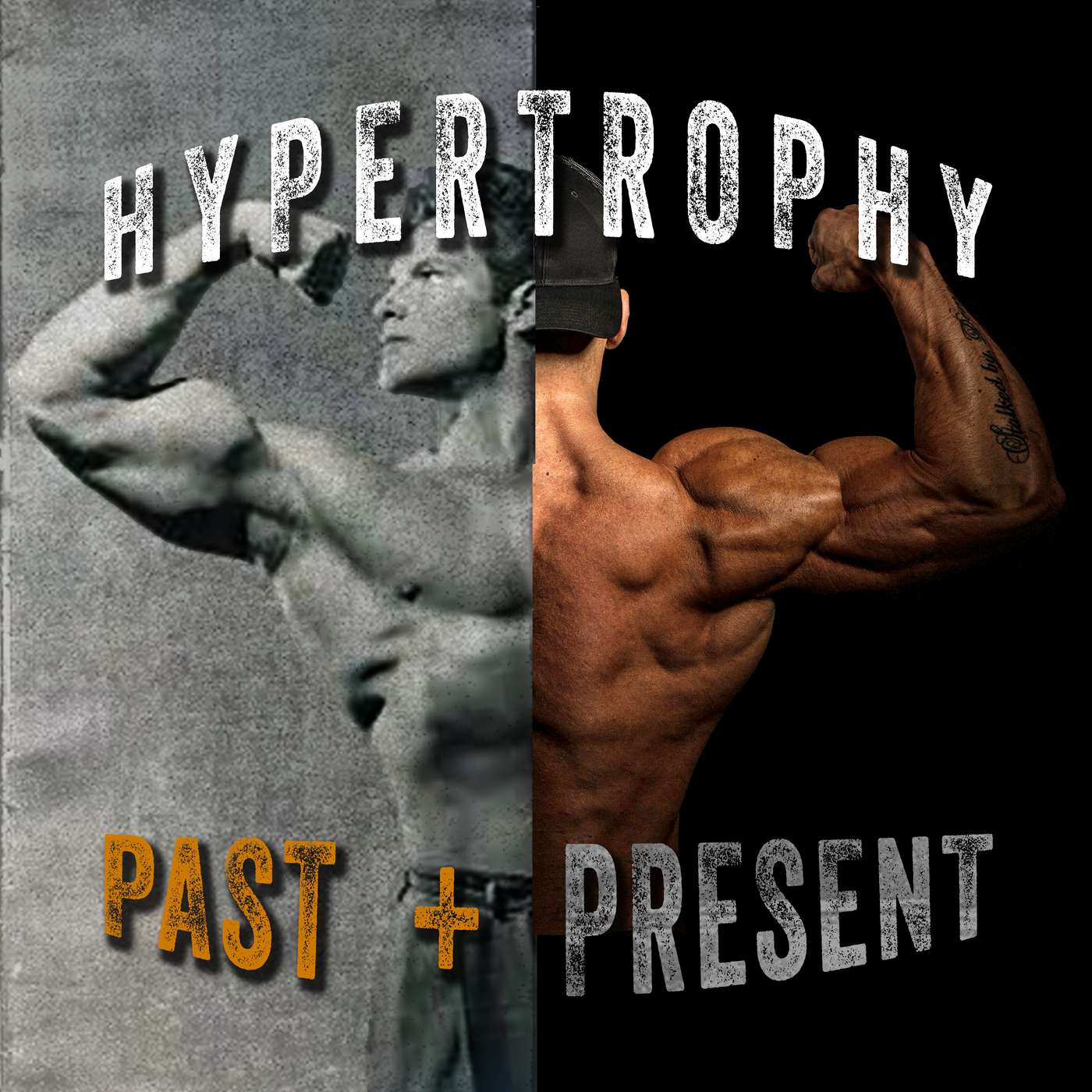
A deep dive into the science of muscle growth. Hosted by Chris Beardsley and Jake Doleschal, this podcast explores hypertrophy training through the lens of pre-steroid era bodybuilding and modern muscle physiology.
-
55
067 Why you’re not progressing (and why it might not be a plateau)
In this episode of Hypertrophy Past & Present, Jake and Chris begin by reviewing Stuart McRobert’s 1989 hardgainer routine, a minimalist two-day-per-week program designed as an alternative to the increasingly extreme bodybuilding routines of the late 1980s. The conversation then explores an important distinction: is every period of stalled progress really a plateau, or are there times when we should simply expect progress to slow or stop?Key topics include:Stuart McRobert’s 1989 twice-weekly full-body hardgainer routineThe difference between a true plateau and a program that was never capable of producing continued progressWhy strength gains can sometimes make a poorly designed hypertrophy program appear to be workingWhy life stress, poor sleep, dieting, or adding other forms of exercise may cause you to stop progressing without necessarily creating a true plateauWhy coaches should investigate what has changed before immediately modifying a client’s training programThe difference between managing a temporary lack of progress and actively trying to “bust” a plateauWhy temporary stressors may only require reducing training volume, while long-term lifestyle changes may require rebuilding the program entirelyWant to train like a Silver-Era bodybuilder? Join our Hypertrophy Past and Present Training group on TrainHeroic.com
-
54
066 Do you need to feel a muscle for it to grow?
In this episode of Hypertrophy Past & Present, Jake and Chris begin with another Leroy Colbert routine, this time examining an over 100 set silver-era routine. The conversation then explores whether you actually need to “feel” a muscle for it to grow, what the pump can tell us about muscle recruitment, and where the mind-muscle connection may or may not be useful.Key topics include:Leroy Colbert’s extreme 10-set-per-exercise Silver Era routineWhy “feeling” a muscle and getting a pump are not necessarily the same thingWhy stretch, cramping, and soreness can be misleading indicators of muscle activationMind-muscle connection, internal focus, and how they change muscle recruitmentWhy exercise selection may be a better solution than trying to force a mind-muscle connectionWhen mind-muscle connection and isometric contractions may actually be usefulWhy constantly using a mind-muscle connection can interfere with progressive overloadWhy pre-fatiguing a muscle doesn’t cause the other muscles in a compound exercise to “do more work”What motor learning research tells us about training and practising skills while fatiguedJoin our Hypertrophy Past and Present Training group on TrainHeroic.com
-
53
065 How anabolics changed the fitness industry
In this episode of Hypertrophy Past & Present, Jake and Chris begin with Leroy Colbert’s late-1970s enormous volume training plan. The conversation then explores whether using pre-steroid bodybuilders as a model for natural training is really an “appeal to tradition,” before examining the evidence that anabolic steroids can directly stimulate muscle growth even without resistance training.Key topics include:Leroy Colbert’s high-volume late-1970s routineWhy bodybuilding training changed so dramatically after the introduction of anabolic steroidsForcing Chris into a philosophy conversation: appeal to tradition fallacy, Chesterton’s fence, the Lindy effect, and Occam’s razorEvidence that anabolic steroids can build muscle without a resistance-training stimulusWhy steroid-induced muscle growth cannot simply be dismissed as water weight or sarcoplasmic hypertrophyThe dose-response relationship between testosterone and muscle growthWhy “replacement” doses of testosterone may still produce supraphysiological effects at the muscleJoin our Hypertrophy Past and Present Training group on TrainHeroic.com
-
52
064 Is time under tension important for muscle growth?
In this episode of Hypertrophy Past & Present, Jake and Chris begin with Reg Park’s 1949 pre-contest routine, which involved training six days per week, twice per day, including the infamous 20-rep breathing squat. This leads into a deep dive on time under tension: Does making a set last longer actually increase muscle growth? Jake and Chris explore why total time under tension may be the wrong thing to measure and whether we should instead be thinking about “time under stimulating tension.”Key topics include:Reg Park’s 1949 twice-a-day, six-day-per-week routineWhy total time under tension may be a misleading measure of stimulusThe difference between time under tension and time under stimulating tensionWhy the early repetitions of a high-rep set may contribute little to muscle growthWhether slowing down the concentric can maintain stimulus with fewer repetitionsWhy very slow eccentrics may actually reduce the hypertrophy stimulusWhether the final repetition of a set is really the most stimulatingUsing isometrics to replicate the stimulus of a conventional setJoin our Hypertrophy Past and Present Training group on TrainHeroic.com
-
51
063 Are workouts over an hour killing your gains?
In this episode of Hypertrophy Past & Present, Jake and Chris begin with a full-body routine from legendary bodybuilding coach Vince Gironda and the unusual reliance on isolation exercises. The conversation then shifts to workout duration: Is there any truth to the claim that workouts must be kept under 45, 60 or 90 minutes? Jake and Chris examine what actually happens as a workout becomes longer, including declining motivation, cardiovascular fatigue, exercise-order effects, cortisol, and the post-workout MPS elevation.Key topics include:Vince Gironda’s beginner full-body routineWhy Gironda avoided conventional bench presses and squatsCan isolation-only training build a complete physiqueWhether exercise-induced cortisol interferes with muscle growthWhy muscle growth is regulated at the muscle-fibre level, not across the whole bodyWhen an extremely long workout may stop stimulating the same muscleWhy returning to the same muscle several hours later may be redundantWhether cardio after resistance training interferes with hypertrophyJoin our Hypertrophy Past and Present Training group on TrainHeroic.com
-
50
062 How to overcome a hypertrophy plateau
In this episode of Hypertrophy Past & Present, Jake and Chris begin with an early 1950s “muscular bulk” routine from Jack Delinger. They discuss the minimalist, barbell-only full-body program and how exercise variety may need to gradually increase as a bodybuilder becomes more advanced.The conversation then shifts to training plateaus: what actually qualifies as a plateau, why slow progress is often mistaken for no progress, and how to distinguish between plateaus caused by accumulating fatigue and those caused by limitations in exercise selection or motor unit recruitment.Key topics include:Jack Delinger’s minimalist full-body muscular bulk routineWhat actually qualifies as a training plateauThe difference between fatigue and “stimulus” plateausWhy changing exercises can create the illusion that a plateau has been solvedHow dominant muscle groups can limit the development of other musclesWhen to keep an exercise and add another rather than replacing itWhy adding more volume rarely addresses the actual cause of a plateauJoin our Hypertrophy Past and Present Training group on Trainheroic.com
-
49
061 Does training hard help or hinder hypertrophy?
In this episode of Hypertrophy Past & Present, Jake and Chris begin with a 1972 routine from Bradley J. Steiner and discuss what makes it one of the more sensible "golden era" bodybuilding programs they've reviewed so far and whether splitting exercises across consecutive days is likely to be more or less effective than performing all exercises in a single workout. The conversation then shifts towards the concept of "training hard." Jake and Chris unpack what hard training actually means, why RPE is often a poor proxy for hypertrophy, and how chasing "hard training" can unintentionally encourage fatigue instead of productive training.Key topics include: Bradley J. Steiner's minimalist 1972 bodybuilding routine Whether splitting workouts across consecutive days improves stimulus to fatigue ratio Why RPE and reps in reserve are not interchangeable How cardiovascular fatigue, burning sensations, and instability can increase effort while reducing stimulus The concept of "quality over quantity" as a better way to think about muscle growth Why telling people to "train harder" may actually make their programs less effective
-
48
060 How to make your second set more stimulating
In this episode of Hypertrophy Past & Present, Jake and Chris begin with Steve Michalik’s enormous 1972 Mr. America routine and why silver-era routines are the best data set for natural training routines. From there, Jake and Chris explore how the hypertrophy dose-response relationship interacts with the stimulating reps model. They discuss why the second and third sets provide progressively less growth stimulus, whether this means they contain fewer stimulating repetitions, and how the answer depends on whether the reduction is caused by fatigue or stimulus saturation.Key topics include:• Steve Michalik’s 1972 Mr. America routine• How training status changes the number of potentially stimulating repetitions• Combining the stimulating reps and weekly net stimulus models• Why fewer hypertrophy gains from a second set does not necessarily mean fewer stimulating reps• The difference between fatigue and stimulus saturation• How longer rest periods can make a second set more effective• Why making the second set better makes later sets less valuable• Why back-off sets are an inefficient method for doing a second set• How to achieve more hypertrophy stimulus with fewer total sets
-
47
059 Hypertrophy is muscle-fibre specific
In this episode of Hypertrophy Past & Present, Jake and Chris begin with Alan Stephan’s classic Silver Era full-body routine, which he reportedly followed for years while building enormous strength and muscle. This leads into a deeper discussion about exercise variation, whether exercises really “stop working”, and why good natural bodybuilding programs often end up looking repetitive.From there, Jake and Chris move into one of the most important physiological arguments behind the stimulating reps model: hypertrophy is not a whole-muscle phenomenon, but a muscle-fibre-specific one. They discuss why this matters for understanding mechanical tension, light-load training to failure, sarcomerogenesis, stretch-mediated hypertrophy, force-velocity relationships, fatigue, exercise selection, and training frequency.Key topics include:• Alan Stephan’s 1940s full-body routine• Why an exercise does not “stop working” just because progress slows• How single-fibre mechanical tension explains the stimulating reps model• Sarcomerogenesis, passive tension, titin, and stretch-mediated growth• Why hypertrophy and sarcomerogenesis are not the same thing• How cross-bridge formation and shortening velocity influence fibre tension• Why exercise selection matters if hypertrophy is fibre-specific• How Silver Era routines line up with modern physiology
-
46
058 Does mTOR determine your optimal training frequency?
In this episode of Hypertrophy Past & Present, Jake and Chris begin with a classic Clancy Ross full-body routine from the Silver Era, then move into a discussion about training frequency, mTOR, muscle protein synthesis, and whether training again before the previous hypertrophy stimulus has “finished” is actually a problem.Key topics include:• Clancy Ross’ 1940s full-body single set routine• Whether training a muscle every 48 hours can blunt hypertrophy• How repeated bout effect studies can be misapplied to training frequency• Why mTOR signalling is not the same thing as muscle growth• The role of oxidative stress and inflammation in post-workout recovery• How volume, frequency, stress, dieting, and athletic workloads affect recovery• Why the best training frequency is limited by recovery
-
45
057 Full Body A/A/A vs A/B, which is right for you?
In this episode of Hypertrophy Past & Present, Jake and Chris discuss a full body training A/A/A program from Steve Reeves before exploring how to choose between repeating the same full body workout three times per week or alternating between two different full body workouts.Key topics include:• Steve Reeves’ full body AAA routine• Why many old-school routines online should be treated cautiously• The lying dumbbell front raise and how it may train different regions of the chest• Why exercise selection should come before choosing a training split• Full body AAA vs full body ABA/BAB • The problem with doing multiple sets of the same exercise versus using more exercise variety• How spinal CNS fatigue, supraspinal CNS fatigue, metabolites, and calcium ion accumulation affect hypertrophy training• How advanced lifters can use priorities to decide which exercises stay the same and which rotate
-
44
056 Most deloads are too short
In this episode of Hypertrophy Past & Present, Jake and Chris discuss deloads. The episode begins with a look at a training program used by six-time Mr. Olympia Dorian Yates before exploring the physiology of accumulated fatigue and recovery.Key topics include: • Dorian Yates' Olympia-era training program • Why training hard does not automatically mean you need a deload • The difference between planned deloads and reactive deloads • How accumulated fatigue affects hypertrophy training • Whether anabolic steroid use changes the need for deloads • How Chris would structure the “perfect” deload • How to program RIR during a deload • How long a deload should actually last
-
43
055 How to build the biggest back possible
In this episode of Hypertrophy Past & Present, Jake and Chris discuss how to build the biggest back possible. The episode begins with a back specialization routine from Silver Era educator Peary Rader before breaking down the most effective modern exercises for lats, traps, rear delts, and spinal erectors. Key topics include: • Peary Rader's Silver Era back specialization routine • Why lats are best trained with both sagittal and frontal plane exercises • The most overrated back exercise according to Chris • Kelso shrugs vs vertical shrugs • The challenge of directly training spinal erectors • Are deadlifts are enough to build the spinal erectors • The simple 3-exercise framework for back training • The controversy surrounding Jefferson curls and loaded spinal flexion
-
42
054 Strength vs Hypertrophy: Is Powerbuilding the Solution?
In this episode of Hypertrophy Past & Present, Jake and Chris analyse a Reg Park power-focused routine and use it as a starting point to discuss powerbuilding. The episode explores how lifters can structure training depending on whether they lean more toward bodybuilding, powerlifting, or a true middle ground.Key topics include:• Reg Park’s power routine from his Mr. Universe course• The difference between bodybuilding, powerlifting, and powerbuilding goals• How to modify a bodybuilding routine toward strength• How to modify a powerlifting routine toward hypertrophy• Why full body A/B routines may suit powerbuilding better than full body A• How Reg Park’s routine compares to a Chris and Jake's modern powerbuilding program
-
41
053 Progression Models and the Truth About Progressive Overload
In this episode of Hypertrophy Past & Present, Jake and Chris analyse a 1940s training routine from silver era bodybuilder George Eiferman, including his progression model. The episode explores how silver era lifters approached progression and how confusion around progression models has influenced the modern bodybuilding.Key topics include:• George Eiferman’s 1940s full body training routine• Why silver era bodybuilders often used wider rep range• Understanding progression as an input vs progression as an output• Why “progressive overload” is often misunderstood• Why strength gains naturally slow over time without indicating a plateau• The Hepburn progression model and why it works• How exercise selection influences practical rep ranges and loading strategies
-
40
052 Resting 2-3 minutes between sets isn't "optimal"
In this episode of Hypertrophy Past & Present, Jake and Chris follow up last week's episode on drop sets by diving deeper into the physiology of fatigue and rest periods. Using an extreme high-volume routine from Serge Nubret, the episode explores why different exercises, rep ranges, and proximity to failure dramatically change the amount and type of fatigue that accumulates during training.Key topics include:• Serge Nubret’s ultra high-volume, short-rest training system• The four major fatigue mechanisms involved in strength training• Why “2-3 minute rest periods” may be an oversimplified recommendation• How exercise selection changes optimal rest periods• How clusters and reps in reserve reduce fatigue accumulation• Why stretch-position exercises are more sensitive to muscle damage and calcium ion accumulation
-
39
051 The silver era perfected drop sets 75 years ago
In this episode of Hypertrophy Past & Present, Jake and Chris explore the origins and physiology of drop sets, beginning with a 1949 drop set routine from Henry J. Atkin. The episode examines how “multiple poundage system” training was originally performed in the silver era, before transitioning into a physiological breakdown of why modern drop set research may not support many of the claims made about the method today. Key topics include: • Henry J. Atkin’s 1949 “multiple poundage system” • Why early drop set protocols may have been more intelligent than modern versions• A review of the recent drop sets meta analysis and systematic review • How short rest periods influence motor unit recruitment and fatigue • Why drop set studies may actually just be studies on rest periods • The difference between drop sets, clusters, and rest-pause training • How cardiovascular fitness changes recovery between sets • When drop sets may make sense for clients, and when they likely don’t
-
38
050 Are circuits for hypertrophy the next big thing?
In this episode of Hypertrophy Past & Present, Jake and Chris explore the use of circuits in hypertrophy training, starting with a 1960s circuit-style routine published by John McCallum. The episode examines how circuit-style training was used in the silver era, before transitioning into a physiology-first breakdown of when circuits might actually make sense for muscle growth today, and when they likely fall short.Key topics include: • A breakdown of McCallum’s Peripheral Heart Action (PHA) circuit routine • Why inserting low-fatigue exercises between compounds can improve performance • How circuits may reduce the exercise order effect across a workout • When circuits might outperform straight sets (and when they won’t) • How to structure circuits using clusters, low reps, and reps in reserve • The practical limitations of circuits in busy gyms
-
37
049 The data says you need more first sets
In this episode of Hypertrophy Past & Present, Jake and Chris break down a 1950s weightlifting plan from Paul Anderson, one of the strongest men to ever live. The episode begins with a deep dive into Anderson’s low volume, high frequency training structure, before expanding into a physiology-first explanation of why low per session volume and high frequency training still makes sense today. Key topics include: • Paul Anderson’s 1954 weightlifting program • Why separating squats into their own sessions may improve performance and recovery • How extremely low volume can still build maximal muscle • Why the first set in a workout provides the majority of the growth stimulus • Why training frequency (not just weekly volume) is key • How modern research might be distorted by muscle swelling• Why social media isn't a good place for "education"
-
36
048 How to do more exercises in a workout without fatigue holding you back
In this episode of Hypertrophy Past & Present, Jake and Chris break down what fatigue actually is, and why most lifters misunderstand it. The episode begins with a deep dive into a late Silver Era full body program from Joe Abenda, before expanding into a practical framework for understanding intra-workout and post-workout fatigue, and how this relates to the total number of exercises in a session.Key topics include: • A breakdown of Joe Abenda’s Silver Era beginner full body program • Why most people confuse fatigue with motivation • The difference between intra-workout fatigue and post-workout fatigue • How exercise selection, reps, and rest periods determine fatigue more than just total number of exercises • How to structure workouts to minimise fatigue and maximise performance across the entire session
-
35
047 How to write the perfect program
In this episode of Hypertrophy Past & Present, Jake and Chris break down what the “perfect” workout actually looks like. The episode begins with a deep dive into a pre-steroid era full body program from Arthur Jones, before expanding into a framework for structuring training based on your goals, time, and priorities.Key topics include: • An analysis of Arthur Jones’ early full body program • A framework for building programs: bare minimum, minimalist, and maximalist • The difference between minimalist and “consolidated” training approaches • How to adjust a program based on which muscles you do or don’t care about • A common mistake science based lifters make: over-optimising one variable while ignoring others
-
34
046 How fast can you grow?
In this episode of Hypertrophy Past & Present, Jake and Chris tackle the question everyone wants to know - how fast can you actually progress? The episode begins with a deep dive into a golden era beginner program from Frank Zane, before exploring the realities of progressive overload, strength gains, and natural hypertrophy potential.Key topics include: • A breakdown of Frank Zane's full body beginner program • Why most people misunderstand the relationship between strength and hypertrophy • The difference between gaining strength with vs without muscle growth • Why progressive overload is not the cause of growth, but proof that it occurred • The problem with constantly changing exercises and why it can stall long-term progress • Why most advanced lifters should only expect extremely slow strength gains • How to estimate your natural ceiling using simple models and historical physiques • Why Silver Era physiques may represent a more realistic target for most natural lifters
-
33
045 Training a muscle 2x per week - Full Body vs Upper/Lower
In this episode of Hypertrophy Past & Present, Jake and Chris break down an often misunderstood programming question: how does full body training twice per week compare to an upper/lower split performed four times per week? The episode begins with a deep dive into a late 1960s program from Chuck Sipes, before discussing the key differences between full body and upper/lower when frequency is equated.Key topics include: • Why full body twice per week is one of the most underrated training splits • A breakdown of a classic Chuck Sipes program • The difference between within-session fatigue vs post-workout fatigue • Why back-to-back training days may reduce motor unit recruitment • Why doing more volume per session can actually limit long-term progress • The trade-off between rate of growth vs ceiling of growth • Practical considerations (time, lifestyle, gym access) that influence split selection
-
32
044 How to write a fat loss training program
In this episode of Hypertrophy Past & Present, Jake and Chris break down how to structure a training program during a dieting phase. The episode begins with a deep dive into how Silver Era bodybuilders approached “definition” training, including a reconstructed Reg Park program, before moving into the physiological realities of training in a calorie deficit.Key topics include:• Why Silver Era bodybuilders didn’t drastically change their training when dieting • Reg Park’s “definition” routine • Why exercise variety may help prevent atrophy during a calorie deficit • Why high volume and excessive fatigue are counterproductive when cutting • How to adjust reps, load, and exercise selection based on equipment and fatigue • Practical programming strategies • Why most modern “evidence-based” takes on programming miss key physiological details
-
31
043 How to design the ultimate glute program
In this episode of Hypertrophy Past & Present, Jake and Chris discuss how to build the biggest glutes possible. The episode begins with a rare Silver Era lower-body routine from a female 1940s strength athlete Abby “Pudgy” Stockton, before breaking down the most effective modern exercises for glute development.Key topics include: • Abby Stockton’s 1940s lower body routine • The difference between upper and lower regions of the gluteus maximus • Why seated hip abduction is one of the best exercises for the upper glutes • Hip thrust vs glute bridge • Why squats and leg presses can still stimulate glute growth in the stretched position • Why glutes can often tolerate more training volume than upper body muscles • A simple three exercise framework for maximizing glute development
-
30
042 How to build the biggest arms possible
In this episode of Hypertrophy Past & Present, Jake and Chris discuss how to build the biggest arms possible. The episode begins with a Golden Era arm routine from Chuck Sipes, before assessing the best exercises for both minimalist and maximalist arm programming.Key topics include:Chuck Sipes’ Golden Era arm routine (biceps and triceps)How different exercises bias the brachialis, brachioradialis, and biceps brachiiWhy chin-ups are not actually a great biceps exerciseVoluntary activation deficits and why exercise variety mattersThe difference between minimalist and maximalist programmingWhy arm muscles fatigue and damage more easily than most people think
-
29
041 New study shows twice as much volume doesn't cause extra muscle growth
In this episode of Hypertrophy Past & Present, Jake and Chris dive into whether more volume is always better. The episode opens in the late Silver Era with Sergio Oliva’s high-volume split, then pivots into a brand-new study that compares “high” vs “super high” volumes in trained lifters. Key topics include:Sergio Oliva’s late-Silver Era routine New study 18 vs ~32 sets per weekWhy “more volume” didn’t produce more hypertrophyDamage as “resource drain” vs damage as fatigueNo fascicle length changes in trained lifters (and what that implies about sarcomerogenesis)Practical programming tip, reframing “rest days” as repair days
-
28
040 This new study will change how you think about fatigue
In this episode of Hypertrophy Past & Present, Jake and Chris unpack a new hypertrophy study that illustrates how fatigue doesn’t just make training harder but can directly reduce the hypertrophic stimulus by lowering single-fibre mechanical tension. The episode opens in the Silver Era again with Henry Paschal’s 1950 “busy person” program then pivots into the core discussion: why fatigue mechanisms (CNS and calcium-ion related) dampen muscle growth, and what this implies for exercise order, rep ranges, and advanced training methods. Key topics include:Henry Paschal’s 1950 routineA new “repetition duration” studyHow CNS fatigue and calcium-ion fatigue both serve the same functionWhy max effort and slow velocity don’t always equal max recruitment and max tensionProgramming implications: exercise order, rep ranges, RIR, clusters, and isometrics
-
27
039 How to instantly increase your strength (through motivational techniques)
In this episode of Hypertrophy Past & Present, Jake and Chris break down how you can become stronger immediately - not by changing your program, but by changing your motivation. The conversation starts in the Silver Era again, comparing Clarence Ross’ 1949/50 routine to his 1952 “favourite routine”, and why the small adjustments he made make physiological sense. From there, Chris connects motivation to motor unit recruitment through Marcora’s Psychobiological Model of Fatigue.Key topics include:Clarence Ross’ 1949/50 vs 1952 routine: what changed and why it mattersHow motivation can increase strength right now via higher voluntary activation / recruitmentPractical ways to boost motivationHow cognitive fatigue reduces performance and how to mitigate it in the gymWhether or not you can “stack” motivation tools
-
26
038 Periodisation for hypertrophy is pointless (unless you do this)
In this episode of Hypertrophy Past & Present, Jake and Chris unpack periodisation for hypertrophy, including what it actually is (and isn’t), why most “periodised” bodybuilding programs end up adding complexity without adding results, and which variables you can change over time without accidentally driving atrophy or accumulating a fatigue debt. The episode opens in 1952 with Clarence Ross’ pre-steroid full-body AAA “favourite routine”. From there, Jake and Chris break down the three main variables people try to periodise in hypertrophy training: volume, rep range, and exercise selection. Key topics include:-Why Clarence Ross’ 1952 full-body plan is a great 'non periodised' template-What is training 'periodisation'-The 3 variables people periodise for hypertrophy: volume, rep range, exercise selection-Why escalating volume blocks can reduce stimulus-Why light-load blocks for 'capillarisation' doesn't potentiate future hypertrophy-The only phase potentiation effect that really makes sense for hypertrophy
-
25
037 How to grow muscle only training once per week
In this episode of Hypertrophy Past & Present, Jake and Chris tackle a surprisingly common question: what if you can only train once per week? Beginning with an early-1960s two-way split from John McCallum to discuss exercise sequencing, why multi-joint lifts paired with single-joint “finishers” can preserve recruitment better than simply adding more straight sets, and what older routines got right (and missed) due to equipment constraints. The episode then breaks down why once-weekly training is uniquely difficult for hypertrophy, how maintenance literature informs minimum set targets, and what a realistic once-per-week template actually looks like.Key topics include:-John McCallum's silver era two-way split and how we would modify it today-Why very high reps don't cause the same muscle growth as moderate reps-Training once per week: when it’s a real constraint vs avoidable-Why every 5 days is a massive upgrade over every 7-Different once per week program ideas-Posing as a mid-week stimulus
-
24
036 Dorian Yates, Maximalist Programming, and Neuromechanical Matching
In this episode of Hypertrophy Past & Present, Jake and Chris analyse one of Dorian Yates’ early pre-Olympia training programs, breaking down the structure of his torso-limbs split and the intuitive exercise sequencing.From there, the conversation expands into a deeper discussion on exercise selection within a workout, why multiple exercises for the same muscle in a single session can produce a superior stimulus to rotating single exercises across sessions, and how this ties into neuromechanical matching and motor unit recruitment. The episode finishes with Chris addressing common criticisms of neuromechanical matching, explaining why alternative theories fail to explain motor control, efficiency-driven muscle recruitment, and sarcomere adaptation during strength training.Key topics include:Dorian Yates’ early torso-limbs programWhy single-joint “finisher” exercises maintain recruitment levels better than extra setsPractical improvements to Dorian’s plan using modern biomechanicsThe physiological problem with ABC exercise splits for hypertrophyHow to structure multi-exercise workouts without increasing gym timeNeuromechanical matching explained simplyWhy leverage must govern muscle recruitmentWhy active length-tension theories fail as motor control models
-
23
035 Which advanced methods work? Cluster sets, drop sets, pre-fatigue, and more!
In this episode of Hypertrophy Past & Present, Jake and Chris break down the resurgence of “advanced” training techniques like clusters, supersets, giant sets, pre-exhaust, drop sets, and rest-pause. Using an early Chuck Sipes “heavy-light” split as an example of early bodybuilding plans that incorporated some advanced methods, the conversation then explains why most of these methods are at best time-saving rather than stimulus enhancing. The episode finishes with Jake and Chris discussing a “physiological drop set” concept, which may increase recruitment levels without suffering from the same fatigue problems as other advanced methods. Key topics include: -Chuck Sipes’ early “heavy-light” superset program -Why most supersets (agonist or antagonist) reduce stimulus rather than increase it -Why pre-exhaustion methods don't work -Why classic drop sets tend to be the worst “advanced technique” -Rest-pause vs clusters -A “physiological drop set” idea
-
22
034 Voluntary activation deficit: exercise selection, muscle mass, and form
In this episode of Hypertrophy Past & Present, Jake and Chris analyse a Golden Era training plan attributed to Larry Scott and Vince Gironda, using it as a lens to explore how hypertrophy programming evolved after the introduction of anabolic drugs. From there, the conversation pivots into a deeper examination of modern debates around exercise selection, “redundant” movements, single vs multi joint training, and the current discussions around form. Chris introduces voluntary activation deficits as the unifying physiological principle.Key topics include:Larry Scott’s Golden Era full-body routineThe limits of motor unit recruitment and voluntary activation deficits"Redundant" exercisesWhy more total muscle mass in an exercise reduces local recruitmentThe form debate and how excessive technique focus can impair hypertrophy outcomes
-
21
033 How to write programs that satisfy client expectations AND really work
In this episode of Hypertrophy Past & Present, Jake and Chris kick off 2026 with a Part 2 follow-up aimed at coaches. Last episode was about the mistakes lifters make when they return to the gym, this week is about the mistakes coaches make when they design and deliver programs to clients. The conversation starts with Bob Hoffman’s time-efficient “working man” full-body routine and why the plan made sense for its context, while also pointing out where it falls short. From there, the episode pivots into the two main problems coaches have to solve today: time constraints and novelty expectations, plus practical strategies that can be used to solve these problems and deliver effective sessions. Key topics include: -Bob Hoffman’s minimalist full-body routine for busy lifters -Simple exercise swaps that improve full-body development with limited equipment -The two constraints coaches must solve: novelty and time -How to give the illusion of novelty without compromising programming efficacy -Time efficiency: avoiding cardiovascular-limited sets, smarter exercise order, and exercise structuring -Using rest periods to add value instead of feeling like dead time -A better approach to 30-minute PT sessions
-
20
032 Common training mistakes to avoid in 2026
In this episode of Hypertrophy Past & Present, Jake and Chris take a practical, end-of-year look at the most common mistakes people make when returning to the gym, whether they’re starting fresh in January or jumping back in after time off. Using a pre-steroid era full-body routine attributed to George Eiferman the discussion highlights what earlier bodybuilders consistently got right.From there, the conversation expands into current gym programming trends, including unstable exercise selection, cardio-driven exercises, excercise novelty, poor progress tracking, and misguided injury-prevention strategies. Key topics include:-George Eiferman's "favourite" 1952 full-body routine-Why unstable exercises reduce motor unit recruitment-The problem with excessive cardiovascular demand-Why changing exercises too often prevents meaningful hypertrophy-Progressive overload as a tracking tool-Muscle damage, repeated bout effect, and the risks of rushing back after time off-Why warm-up sets aren't the same as 'warming up'
-
19
031 How steroids and TRT increase injury risk (and how modifying your training might help)
In this episode of Hypertrophy Past & Present, Jake and Chris break down Mike Mentzer’s “most productive” routine and use it as a turning point to discuss how training trends shifted across the Golden Era. From there, the conversation shifts to how anabolic steroid use increases tendon and ligament rupture risk and whether the rise of higher-rep training, shorter rest periods, machines, slower eccentrics, and lower frequency in the post-steroid bodybuilding era might partly reflect an unconscious attempt to manage connective tissue risk as drug use escalated.Key topics include:Mike Mentzer’s two-way split (with rest days) and why it’s more “physiology-friendly” than most people expectThe tendon problem with anabolics: collagen synthesis, collagen breakdown, and possible disorganised tendon structureHeavy vs light loads in enhanced liftersBFR as a tool to reduce injury risk in enhanced liftersPractical programming to reduce injury risk
-
18
030 Everyone's wrong about muscle activation + how to compare hypertrophy programs (WNS)
In this episode of Hypertrophy Past & Present, Jake and Chris shift from the Silver Era into the early anabolic era by analysing a Golden Era training plan from Ken Waller. Using Waller’s 1975 routine as a case study, they explore how bodybuilding training changed as anabolic use became more common. The discussion then transitions into a deep dive on the Weekly Net Stimulus model and why hypertrophy must be understood at the muscle fibre level.Key topics include:Ken Waller’s 1975 Golden Era training split and how it contrasts with Silver Era full-body plansWhy large volumes can appear “unrecoverable” on paper but may differ in practiceVoluntary activation deficits and why muscles cannot be fully activatedMuscle fibre–specific hypertrophyThe Weekly Net Stimulus model: assumptions, limits, and what it can (and can’t) tell usThe role of practical compromises, adherence, and time constraints in real-world programming
-
17
029 Elevated MPS ≠ muscle growth
In this episode of Hypertrophy Past & Present, Jake and Chris revisit the Silver Era through one of the most iconic Silver Era bodybuilders, John Grimek, and his bulking plan. They then discuss what muscle protein synthesis (MPS) and muscle protein breakdown (MPB) really mean, dismantling the idea that “elevated MPS = muscle growth”. Key topics include:-John Grimek’s full-body gaining routine and the practical logic of Silver Era plans-MPS vs MPB and net protein balance-Why you can’t assume elevated MPS always reflects hypertrophy or protection from atrophy-How steroids physiologically make dieting and comp prep "easier"
-
16
028 How does dieting affect hypertrophy?
In this episode of Hypertrophy Past & Present, Jake and Chris go back to 1945 and break down Clancy Ross’ pre-contest “definition” routine to show how Silver Era lifters tried to get lean using their gym programming. From there they pivot into dieting and how caloric restriction, stress, glycogen, and glucocorticoids actually affect muscle protein synthesis and muscle protein breakdown. Key topics include:Clancy Ross’ 1945 full-body “reducing routine” and why even this questionable plan still beats most modern fat-loss programsA muscle-physiology model of dieting: suppressed MPS and when deficits become a stressor that ramps up muscle protein breakdownWhy anabolics (and even TRT) largely sidestep these dieting problemsPractical tips for naturals: adjusting training volume, keeping frequency high, pre-workout carbs, carb mouth-rinse, post-workout protein, and subjective stress load
-
15
027 Are 4 reps optimal?! New study: stimulating reps vs volume load
In this episode of Hypertrophy: Past & Present, Jake and Chris use a 1967 Bill Pearl program to jump from the silver era into the early steroid era, showing how training volume exploded once anabolics entered the picture. They contrast Bill Pearl’s high-volume, six-day split and contrast it with his earlier natural-era programming, before diving into a new study comparing heavy versus light loads in trained lifters and what it really means for stimulating reps, volume load, and rep range choices.Key topics include:Bill Pearl’s 1967 high-volume, six-day split and how it differs from his natural-era routinesHow anabolic steroids break the feedback loop and drive the shift toward extreme training volumesA new heavy vs light load study in trained liftersWhat this means for the stimulating reps model, volume load, and rep ranges for natural vs enhanced lifters
-
14
026 How does insufficient sleep affect hypertrophy / atrophy?
In this episode of Hypertrophy: Past & Present, Jake and Chris dive into a Bill Pearl full-body routine, using it as a bridge between the pre-steroid silver era and the early anabolic era. From there, they shift into part two of their sleep series, unpacking how sleep loss influences muscle atrophy and recovery in natural lifters.Key topics include:Bill Pearl’s 1957 full-body planThe difference between immobilisation/diet-induced atrophy vs stress/sleep-loss-induced atrophy Practical programming changes when sleep is poorWhy dieting hard while sleep-deprived is a recipe for muscle loss in naturals, and why enhanced lifters often don’t experience the same downside
-
13
025 How does insufficient sleep affect training?
In this episode of Hypertrophy: Past & Present, Jake and Chris break down Bob Hoffman’s basic athletic program through a modern physiology lens and unpack how insufficient sleep impacts training performance.Key topics include:Bob Hoffman’s silver era full-body athlete hypertrophy programSleep deprivation vs restriction vs cumulative sleep debtHow insufficient sleep affects hypertrophy training performancePractical strategies for adjusting a workout after poor sleep
-
12
024 Training, hypertrophy, and recovery for older people
In this episode of Hypertrophy: Past & Present, Jake and Chris discuss Silver-Era author Peary Rader’s “training as you get older” guidelines and dive into how to construct a modern, physiology-led template for older lifters.Key topics include:Why recovery, not “low stimulus sensitivity” likely limits muscle growth in older liftersIntra-session fatigue control in older liftersProgramming for older lifters: volume, RIR, exercise selection, frequencyIsometrics for older lifters
-
11
023 Fatigue accumulation and what to do about it.
In this episode of Hypertrophy: Past and Present, Jake and Chris unpack a Silver-Era routine passed from 1950 Mr America John Farbotnik to Gene Mozee at a time where high volume plans were taking over bodybuilding. From there they go deep into accumulating fatigue, how excitation–contraction coupling failure, muscle damage, and supraspinal CNS fatigue interact across sessions, why exercise novelty and split design can make this worse, and how to calculate and clear your “fatigue debt” without losing muscle.Key topics include:John Farbotnik full body routineBack-off sets: why back-offs add soreness but little stimulusThe three post-workout fatigue mechanisms (ECC failure, muscle damage, supraspinal CNS): timelines, interactions, and accumulationHow swapping exercises can re-hit damaged fibres and accumulate fatiguePractical programming, typical recovery times, and fatigue-debt math
-
10
022 How intra-workout carbohydrates reduce supraspinal CNS fatigue
In this episode of Hypertrophy: Past and Present, Jake and Chris unpack Steve Reeves’ 1947 pre-competition full-body routine, then dive into why the Silver-Era were such advocates of orange juice + honey during training. We assess the building research on carbohydrate mouth-rinsing, what this tells us about supraspinal CNS fatigue, and how the performance increase from carbohydrate mouth-rinsing differs from the performance increase from creatine supplementation. Key topics include:Steve Reeves’ 1947 pre-comp full-body planWhat carbohydrate mouth-rinsing is doing and intra-workout carbohydratesWhy everyone experiences supraspinal CNS fatigue during strength training and what you can do about itWhy creatine adds reps without adding stimulus, but carbs can add stimulating reps
-
9
021 Why Counting “Half Sets” for Secondary Muscles Doesn't Make Sense
In this episode of Hypertrophy: Past and Present, Jake and Chris break down Dick DuBois’ 1954 full-body routine (and we finally have some pull-ups!). They then tackle the “half-set” myth, why counting half sets for secondary muscles doesn't make any sense and how to adjust multi joint exercises to bias growth in a particular muscle.Key topics include:• Dick DuBois’ 1954 full-body plan• The “Half-Set” problem • Damage in secondary muscles• Using multi joint exercises in beginner vs advanced lifters
-
8
020 How to program a muscle specialisation phase
In this episode of Hypertrophy: Past and Present, Jake and Chris use Peary Rader’s leg routine to outline a practical, physiology-led blueprint for muscle specialisation.Key topics include:Peary Rader’s pre-steroid era leg routine (and the changes we would make today)A framework for designing a muscle specialisation phase for any muscleWhen to specialise and how to integrate it into your main plan without losing your progressWriting programs using science-based (mechanisms) vs evidence-based (outcomes)
-
7
019 Cluster Sets – How they work and how to use them
In this episode of Hypertrophy: Past and Present, Jake and Chris start by discussing one of the most widely used methods of the Silver Era; the 20 rep squat. They then dive into the physiology of cluster sets: what they are, how they differ from rest-pause and drop sets, and how cluster sets can be programmed to offer benefits over traditional straight sets. Key topics include:• Reg Park chest specialisation phase (including the classic 20-rep breathing squat method)• Fatigue mechanisms in clusters explained: metabolite, calcium-ion, spinal, and supraspinal fatigue• Clusters vs rest-pause vs drop sets• Practical guidelines for programming clusters
-
6
018 Pauses, Stretching, and Partials
In this episode of Hypertrophy: Past and Present, Jake and Chris unpack Reg Park’s calf-specialisation phase before discussing the physiology of pauses: when they work, when they don’t, and how they compare to partial reps.Key topics include: • Reg Park’s 1952 calf-specialisation program • Straight-leg vs bent-leg calf work and how they bias gastroc vs soleus • The physiology of pause fatigue: metabolite vs calcium-related mechanisms • Why static “passive” stretching isn’t the same as active pause contractions • How to assess whether a given exercise will actually benefit from pauses
We're indexing this podcast's transcripts for the first time — this can take a minute or two. We'll show results as soon as they're ready.
No matches for "" in this podcast's transcripts.
No topics indexed yet for this podcast.
Loading reviews...
ABOUT THIS SHOW
A deep dive into the science of muscle growth. Hosted by Chris Beardsley and Jake Doleschal, this podcast explores hypertrophy training through the lens of pre-steroid era bodybuilding and modern muscle physiology.
HOSTED BY
Chris Beardsley and Jake Doleschal
Loading similar podcasts...