
PODCAST · society
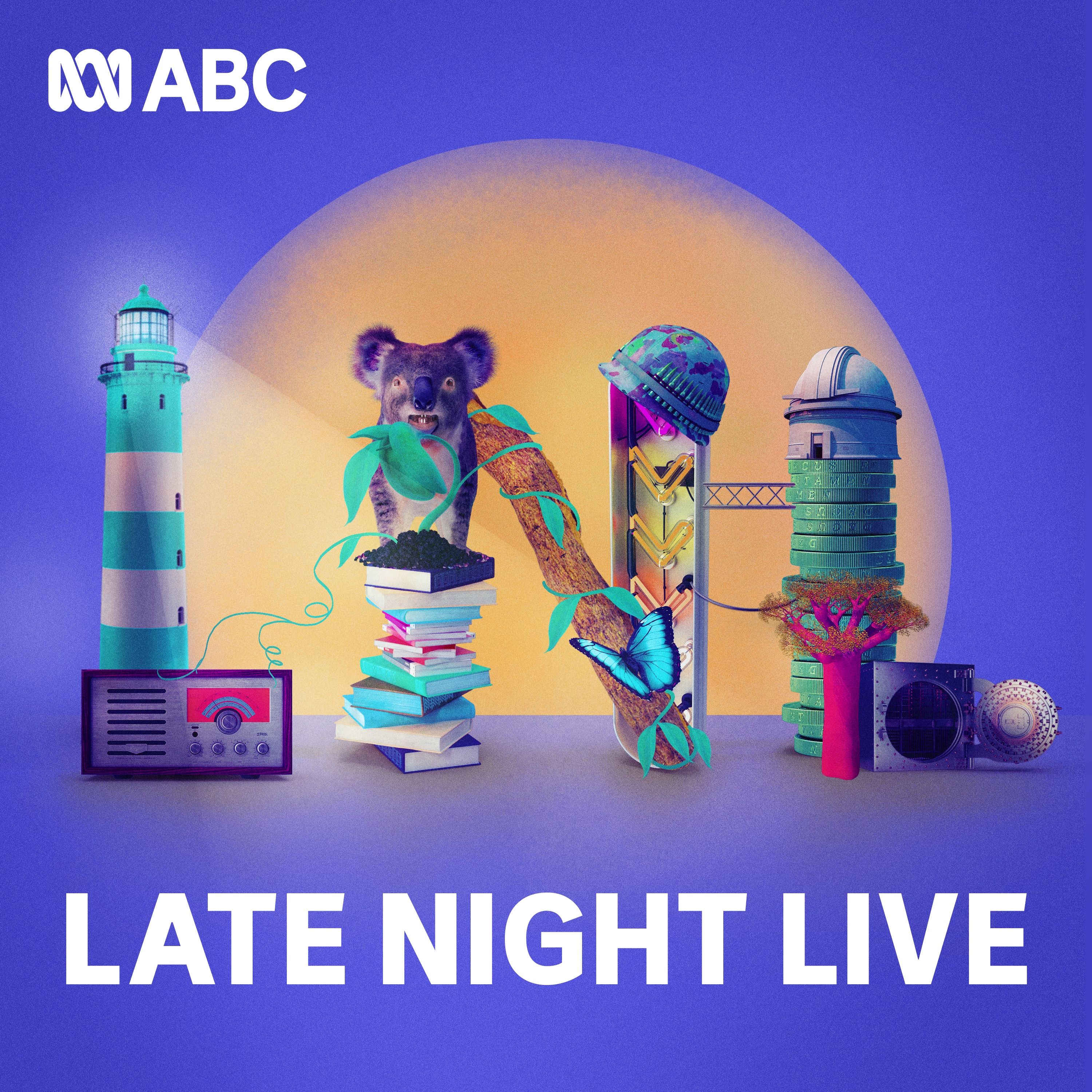
Late Night Live — Full program podcast
by ABC Australia
Incisive analysis, fearless debates and nightly surprises. Explore the serious, the strange and the profound with David Marr.
-
1000
The birth and death of US foreign aid, plus a tribute to trailblazing judge Mary Gaudron
The U.S.A.I.D program was established by President John F Kennedy in 1961, at the peak of Cold War tensions, but researcher Luke Fletcher says its roots date back to WWII, and a desire by the US to greatly expand its economic and military power. Plus, a tribute to Mary Gaudron, Australia's first female High Court judge.Guests: Luke Fletcher, Executive Director, Jubilee Australia Research Centre and author of America and the Birth of Global Aid, published by RoutledgeJohn Basten AO KC, former judge of the NSW Court of Appeal
-
999
Ian Dunt's UK, a controversial curator, and the allure of world globes
Our regular UK correspondent appraises Ed Miliband's bold stance on West Bank. Meet Dutch-Australian Kim Sajet, former Smithsonian director who Donald Trump tried to fire. And the allure of world globes.Guests:Ian Dunt, columnist with i-news; co-host of the Origin Story podcastKim Sajet, Director of the Milwaukee Art Museum; former Director of the US National Portrait Gallery, SmithsonianNikolaus Schobesberger, Director at the Globe Museum of the Austrian National Library in Vienna
-
998
Anna Henderson's Canberra, former Israeli PM Ehud Olmert on Israel's future, and the art of a good wine label
Anna Henderson on One Nation’s migration policy, the response to Pauline Hanson's 'derogatory' remarks about Aboriginal people on a podcast, and the government’s increasingly aggressive approach to big tech. Former Israeli Prime Minister Ehud Olmert on what Benjamin Netanyahu was told before October 7, and why Netanyahu is threatening to sue Israeli newspaper Haaretz. Plus the hidden meanings in wine labels. Guests:Anna Henderson, Chief Political Correspondent, SBSFormer Israeli Prime Minister, Ehud OlmertKatie Spain, freelance wine writer
-
997
Tobacco lobbying in Australia, plus the secret dinners of the Cold War
As Australia grapples with a surging illicit tobacco trade, the Coalition and One Nation have called for a substantial cut to Australia's excise on legal tobacco. Professor Becky Freeman says the tobacco industry has long backed a tax cut, and continues to wield significant political influence. Plus, how did Washington journalists gain access to information during the Cold War, and why did they keep secrets? Guests:Professor Becky Freeman, school of public health, University of SydneyKathryn McGarr, Associate Professor at the UW-Madison School of Journalism and Mass Communication, Madison, Wisconsin
-
996
How journalism is wrestling with AI, plus Europe's shrinking rivers
Artificial intelligence presents enormous challenges to the business of journalism in its pursuit of truth and dissemination of credible information. News Director with EBU Liz Corbin says AI developers must respect key principles around transparency and accreditation to ensure their tools don’t damage the integrity of news. Plus, after an extraordinarily hot summer, Europe's iconic rivers have reached record lows, exposing warships, skeletons - and enormous geopolitical vulnerabilities. Guests:Liz Corbin, News Director, European Broadcasting Union (EBU)Ben Coates, guest essayist for New York Times, author of The Rhine
-
995
Bruce Shapiro's USA, Adelaide Parklands row, and the US shadow over Greenland
Bruce Shapiro reflects on the life of American feminist icon, Gloria Steinem, former New York Mayor Rudolph Giuliani's attempts to keep current Mayor Zohran Mamdani from attending the commemoration of 9/11, and multiple legal cases are still at play over President Trump's attempts to centralise electoral rolls. In Adelaide, the SA Premier is pushing ahead with plans to cut down nearly a thousand trees in the heritage listed parklands to make way for a golf tournament and a motorcycle race. Plus why America wants its Greenland airbase back. Guests: Bruce Shapiro, contributing editor with The Nation magazine and Director of the Global Center for Journalism and Trauma. Greg Mackie, Former CEO, SA History Trust, former Adelaide City CouncillorOle Guldager, historian, curator at Narsarsuaq Air Base Museum
-
994
Anna Henderson's Canberra, Meloni’s record reign, plus the father of ecology
Anna Henderson discusses falling house prices, One Nation's superannuation policy and Nationals' leader Matt Canavan's controversial 'feminisation of the curriculum' statement. Italian political analyst Lorenzo Pregliasco on how prime minister Giorgia Meloni has stayed in power for four years. Plus meet Alexander von Humboldt, the German philosopher who started the ecology movement. Guests: Anna Henderson, chief political correspondent, SBSLorenzo Pregliasco, political analyst, Adjunct Professor, University of Bologna, ItalyDalia Nassar, Professor of Philosophy at The University of Sydney,
-
993
The failed promise of lab-grown meat, plus digging up the campsites of Queensland's Native Mounted Police
By now lab-grown meat was supposed to be a tasty, affordable, ethical food option, reducing the harms of industrial livestock farming. But these hi-tech ventures have failed to deliver on the hype. Plus, revelations from archaeological work at the old campsites of Queensland's notorious Native Mounted Police.Guests: Erin Somers, writer, essayist, critic and novelist. Author of 'Where's the beef', the cover story of the September edition of Harper's Magazine.Heather Burke, co-author with Lynley Wallis and Bryce Barker of 'Buried: Archaeology, frontier conflict and the QLD Native Mounted Police' (Sydney University Press)
-
992
When corporations harm, who pays? Plus, the man that looted Cambodia
Corporations can cause enormous harm, yet the law often struggles to hold them to account. Law professor Penny Crofts argues that horror helps us understand the scale of corporate wrongdoing. Plus how a British art dealer looted Cambodia’s ancient treasures during the Khmer Rouge era, and sold them to the world’s most prestigious museums and collectors.Guests:Penny Crofts, Professor of Law at UTS, co-author of Corporate Harm: A Horror Story with Honni van RijswijkMatthew Campbell, author The man who stole the gods
-
991
Ian Dunt's UK, and the radical life of writer Lesbia Harford
There's been a big Tory reshuffle, a bloody one. Our UK politics commentator Ian Dunt analyses what's behind it. And Jeff Sparrow on the radical, socialist, unionist life of Australian poet and writer Lesbia Harford. Guests: Ian Dunt, columnist with i-news; co-host of the Origin Story podcastJeff Sparrow, journalist, writer, editor, author of the biography 'Somewhere Here the Future's Hid - the Extraordinary Life of Lesbia Harford’ (Monash University Publishing)
-
990
Anna Henderson's Canberra, separatists in Canada, plus how GPS really works
Anna Henderson looks at One Nation's historic win in Western Australia, securing its first lower house seat in the state. In oil-rich Alberta, a growing separatist movement is asking a once unthinkable question: should the province leave Canada and become an independent country? Plus, how GPS (Global Positioning System) now underwrites everything from rideshares to traffic light systems, international banking and supply chains.Guests:Anna Henderson, Chief Political Correspondent, SBSAndrea Lawlor, Associate Professor in political science, at McMasters University, Ontario, CanadaKatherine Dunn, author, Little Blue Dot: How the Global Positioning System Shaped the Modern World
-
989
How the US became a country for old men, plus the extraordinary encounters of a 1900s cattle station girl
Yale Professor Samuel Moyn argues that the old in the United States have hoarded wealth and power, and that something needs to give. Plus, Australian historian Tom Griffiths corroborates the extraordinary encounters of a 1900s white cattle station girl, Alice Duncan-Kemp, who learned from Indigenous Mithaka people in outback Queensland. Guests:Samuel Moyn, Professor of Law and History at Yale University, author of 'Gerontocracy in America: how the old are hoarding wealth and power - and what to do about it' (2026)Tom Griffiths, historian and author of 'Alice's dreaming' (2026)
-
988
Bruce Shapiro's USA, who's supplying weapons to Sudan, plus the first camera in Australia
Bruce Shapiro asks if US President Donald Trump has betrayed American cattle farmers, after he eased tariffs on foreign beef. Australia sells weapons to the United Arab Emirates, but could those weapons be ending up in Sudan? Plus, the story of the first camera that made it to colonial Australia in May 1841. Guests:Bruce Shapiro, contributing editor for The Nation, executive director of the Global Centre for Journalism and TraumaAndrew Bartlett, President of Australians for War Powers Reform and former Democrats and Greens Senator for QueenslandElisa DeCourcy, writer and curator, author of Early Photography in Colonial Australia, Melbourne University Press
-
987
Anna Henderson's Canberra, the Israeli ambassador on Zomi Frankcom, plus the music in our names
One Nation is mopping up after new MP David Farley's 'rookie mistake' on his party's net migration target. Veteran Jerusalem correspondent examines the work of the Israeli ambassador to Australia Hillel Newman, after an IDF report found that no one would be held criminally liable for the death of Australian aid worker Zomi Frankcom and her colleagues in Gaza in 2024. Plus, composer and host of The Music Show Andrew Ford ponders the musical qualities of our names and nicknames.Guests:Anna Henderson, chief political correspondent, SBSIrris Makler, freelance journalist, veteran Jerusalem correspondentAndrew Ford, composer and host of The Music Show on Radio National
-
986
John Cameron Mitchell wants kids to be more punk, plus an apartheid 'native' hospital in Australia
John Cameron Mitchell, American actor, playwright, and film director, directed some of the more outrageous movies of the 2000s, like Hedwig and the Angry Inch, and Shortbus. He argues that punk is as relevant than ever, and it is much more than a look. Plus, in the first half of the 20th century, up on the far north coast of WA, Wyndham Native Hospital incarcerated and treated Aboriginal people, because they were not allowed to be treated at the Wyndham District Hospital, known as the 'white' hospital.Guests: John Cameron Mitchell, American punk icon and multimedia artistAnnabel (A.M.) Stafford, former journalist, teacher, author of 'The wanted and the unwanted' (MUP)
-
985
Is a classless society impossible? Plus, fresh dirt on the Cambridge Five spies
German philosopher Hanno Sauer argues that class hierarchies are a permanent feature of human societies. So if true equality is elusive, how do we live with class? Plus new revelations on the Cambridge Five - the young men who spied against Britain from the 1930s to the 1950s. Guests: Hanno Sauer, Associate Professor of Philosophy at the Department of Philosophy & Religious Studies at Utrecht University. Guest of the Festival of Dangerous Ideas in SydneyAntonia Senior, author, journalist and co-host of the History Book Buffs podcast. New book is Stalin’s Apostles: The Cambridge Five and the Making of the Soviet Empire
-
984
Ian Dunt's UK, the KPMG scandal, plus 500 years of nightlife
Our regular UK correspondent on the death of former Cambridge Professor Jason Arday. An accounting and ethics expert who has been following the KPMG case explains why some of the firm's activities are so controversial. And 'going out' - a colourful romp through the many ways that many cultures enjoy night life.Guests: Ian Dunt, columnist with i-news; co-host of the Origin Story podcastTom Ravlic, journalist, author and academic who has been writing about the KPMG saga for Crikey, and The MandarinImogen Willetts, author of ‘Up All Night: A History of Going Out'
-
983
Anna Henderson's Canberra, Jordan stuck in the crosshairs of war, plus Gina Rinehart and the press
Political correspondent Anna Henderson surveys a busy sitting week, with the government eager to pass NDIS reforms. The Kingdom of Jordan, a neighbour of Israel, is trying to stay neutral in the Middle East war, but is caught between the US and Iran. And a look at how mining magnate Gina Rinehart attempts to control her public image. Guests: Anna Henderson, chief political correspondent, SBSNabih Bulos, Middle East bureau chief, Los Angeles TimesSarah Martin, senior correspondent for The Guardian Australia
-
982
Inside the world of sovereign citizens, plus the magic of night music
Sovereign citizens believe they’ve discovered a hidden legal system that can set them free from the state. The new book Outlawed explores the strange world of pseudolaw, and what its rise tells us about trust, power and the law. Plus Late Night Live looks at the abiding popularity of calming 'night' music to help people sleep, and how 19th century composers like John Field, Chopin and others first brought us the musical concept of 'nocturnes'. And Late Night Live pays tribute to former producer, Kris Short.Guests: Harry Hobbs, Associate Professor in the Faculty of Law and Justice at the University of New South Wales, co-author, with Stephen Young, of Outlawed: Responding to the Global Rise of Sovereign Citizens and legal conspiracies.Susan Tomes, award-winning pianist and author of 'Nocturnes, and the fascination of night music'.
-
981
James Baldwin: The loves that shaped a literary giant
James Baldwin’s writing was inseparable from the people he loved, mentored and collaborated with. A new biography explores the intimate relationships that shaped his novels, essays and plays, and his role in Black and queer literary history.From Harlem and Paris, to Istanbul and the American South, it reveals the private life behind one of the 20th century’s most influential writers.Guest: Nicholas Boggs, author of Baldwin: A Love StoryProducer: Ali Benton
-
980
Bruce Shapiro's USA, Marwan Barghouti to run for Palestinian president, plus a lost cantata rediscovered
Bruce Shapiro looks at the fight inside the Democrats between emerging populists and a conservative group called The Third Way. Imprisoned Palestinian leader Marwan Barghouti's son talks about his father plans to run for president of the Palestinian Authority, from jail. Plus how an Australian harpsichord player discovered a three-hundred-year-old cantata by a Venetian contemporary of Antonio Vivaldi, who was a disabled female orphan. Guests: Bruce Shapiro, contributing editor with The Nation magazine and Director of the Global Center for Journalism and Trauma. Arab Barghouti, son of Fatah party leader, Marwan BarghoutiElizabeth Anderson, Assistant Artistic Director, Australian Chamber Choir
-
979
Anna Henderson's Canberra, the Mecca defence pact, and the history of punctuation
PM Albanese and Opposition Leader AngusTaylor are doing a deal on gambling. Saudi Arabia, Türkiye, and Pakistan have just signed a new NATO-like defence pact which commits each country to respond in the event of an attack on the other. So what are the implications for the Gulf conflict? Plus, from hieroglyphs to hashtags, the hidden history of punctuation and the tiny marks that have shaped how we communicate.Guests: Anna Henderson, SBS World News Chief Political Correspondent | National Press Club DirectorProfessor Simon Mabon, Professor of International Politics at Lancaster UniversityFlorence Hazrat, author, On the Mark
-
978
Peter Garrett on AUKUS, plus Australia's sugar slaves
Peter Garrent discusses the testimonies being presented at the crowdfunded AUKUS public inquiry which has so far recieved over 500 submissions, and heard from former PMs and ministers. Plus decades after Britain abolished slavery in its colonies, Australia was using Pacific island workers to harvest sugar, with many essentially held captive.Guests:Peter Garrett, Lead Commissioner, AUKUS public inquiry, former Labor MinisterRyan Butta, author of 'Blackbirding: a reckoning with the Australian Slave Trade'
-
977
Bernard Keane on Australia's opportunities, plus how wine shaped civilisation
In his new book, Crikey’s political editor, Bernard Keane, turns his eye not just to where Australia has gone wrong, but to how we can best position ourselves to navigate the triple threat of Trump, China and AI. Plus the eight thousand year history of wine - from Georgia to the present day.Guests: Bernard Keane, political editor, Crikey, and author of ‘Seize the Moment - Australia’s real opportunities in an unstable world,’Kathleen Burk, Professor Emerita of Modern and Contemporary history at University College London and author of Wine, A global history
-
976
Ian Dunt's UK, boycotting The Odyssey, and the last cats of Kangaroo Island
Ian Dunt on Nigel Farage's planned 'Operation Fortress', stopping all illegal boats. The Odyssey film-makers caused offence in an indigenous-owned region that Morocco claims as its own. And the push to rid Kangaroo Island of cats, both feral and pet.Guests: Ian Dunt, columnist with i-news, co-host of Origin Story podcastSarah Yerkes, North Africa specialist and senior fellow with the Middle East program at the Carnegie Endowment for International PeacMichael Pengilly, Mayor of Kangaroo Island
-
975
Anna Henderson at Garma, reunifying Cyprus, plus the last butterfly collectors
Anna Henderson recaps an eventful Garma festival in Arnhem Land, which included a blistering speech from Noel Pearson. Is there hope for a reunified Cyprus, amid planned UN talks? Plus, why butterfly collectors are a dying breed.Guests:Anna Henderson, chief political correspondent, SBSDr. Erol Kaymak, Professor of Political Science and International Relations, Eastern Mediterranean UniversityEmil Leth Beiter, Danish writer and critic
-
974
Encore: Oscar Wilde's grandson on the scandal that ruined him
The famous writer Oscar Wilde died alone in a French hotel in 1900. Since that time, so much has been written about the man - much of it rumour and speculation. In his new book, 'After Oscar: The Legacy of a Scandal', Oscar Wilde’s grandson Merlin Holland sets the record straight. The book is thirty years in the making and is an exploration of Wilde’s posthumous reputation and how his imprisonment for homosexuality affected Wilde's family, friends and literary legacy.Guest: Merlin Holland, Oscar Wilde's grandson and author, Oscar: The Legacy of a ScandalProducer: Ali BentonOriginally broadcast in January 2026.
-
973
Russia's far-right bikies, plus the afterlives of Sarah Baartman
Established in Moscow in 1989, the 'Night Wolves' motorcycle club continues to operate as a powerful propaganda arm of the Putin regime. Plus, the writer Sisonke Msimang defends the legacy of Sarah "Saartjie" Baartman, the African woman trafficked through early 19th Century Europe as a 'freak show' spectacle. Guests:Dr Olga Boichak, Senior Lecturer in digital cultures, Sydney UniversitySisonke Msimang, writer and activist, author of 'Defending the dead: the many afterlives of Sarah Baartman' in the latest Griffith Review
-
972
Bruce Shapiro's USA, controversial weed killer Paraquat, and curly questions in the Census
Our regular US commentator, Bruce Shapiro, looks at how President Trump is caught between pressure at home to get out of the Iran war, and pressure from Israel to stay in it. Plus why use of the agricultural weed killer Paraquat has just been allowed to continue in Australia, despite being banned in many other countries. And this year's Census is getting more personal. Guests: Bruce Shapiro, contributing editor with The Nation magazine and Director of the Global Center for Journalism and TraumaSarah Rogers, Associate Professor in Geography, University of MelbourneLiz Allen, demographer, ANU
-
971
Anna Henderson's Canberra, how tech is transforming warfare, and the dark side of Route 66
Anna Henderson on Pauline Hanson's discrimination court loss, and Labor rejecting Ed Husic's genocide motion at their national conference. How technology is transforming modern warfare and creating a new global arms race. Plus, one hundred years on, LNL looks at the dark side of Route 66. Guests: Anna Henderson, SBS World News Chief Political Correspondent | National Press Club DirectorSteve Feldstein, author of Bytes and Bullets: Global Rivalries, Private Tech, and the New Shape of Modern WarfareDr Daniel Milowski, author of 'Route 66 and the Formation of a National Cultural Icon: Mother Road to Mythic American Byway'
-
970
How British slave money flowed to Australia, plus Trump's grand designs
Australia likes to think it has no history of slavery, but two-thirds of Australia's colonial governors had links to the slave economy of the British Empire. A new book, Legacies of British Slavery in Australia and New Zealand reveals how slave money shaped the colonies. Plus, veteran architecture critic Paul Goldberger examines what Donald Trump's building agenda says about his politics, power and legacy.Guests: Professor Zoe Laidlaw, historian, University of Melbourne, co-editor with Sally Lydon of 'Legacies of British Slavery in Australia and NZ'Paul Goldberger, former architecture critic for The New York Times, and The New Yorker, and the author of 'Why Architecture Matters.'
-
969
One Nation's reinvention, plus the fierce women who built democracy
One Nation is on a transformative mission, intent on professionalising its operation. But can they? Plus the trailblazing, and sometimes gun-blazing, women who built democracy around the world - they’re all fierce, all feminists, but not all of them were progressives.Guests: Jordan McSwiney, Senior Research Fellow, Canberra University, who specialises in right wing politicsPaula Bartley, historian and author of 'Trailblazers, the first women elected to government’, published by Polity.
-
968
Britain's Burnham era begins, the Pentagon's pollution, plus the case for tighter means-testing
Britain has its seventh Prime Minister in ten years as Andy Burnham moves into 10 Downing Street. A new documentary counts the staggering emissions of US military operations globally. Plus, is Australia becoming a nation of handouts for the rich? A leading economist makes the case for tighter means-testing.Guests:Naomi Smith, commentator and CEO of Best for BritainAbby Martin, journalist and director of Earth's Greatest EnemyProfessor Robert Breunig, director of the Tax and Transfer Policy Institute at the Crawford School of Public Policy, ANU
-
967
Anna Henderson's Canberra, US attacks in Somalia, and demolishing Nazi bunkers
Anna Henderson looks at the government's decision to go on the front foot with their AI policy and how it will play out at Labor's upcoming national conference. The Guardian investigates a US air strike in Somalia which killed and injured 12 civilians, including children. Plus the Nazi bunker that could be destroyed to make way for a block of flats in Berlin.Guests:Anna Henderson, chief political correspondent with SBSMohamed Gabobe, freelance reporter in Mogadishu.Dr. Caroline Sharples, Senior Lecturer in history at the University of Roehampton, UK.
-
966
Why India is threatening Pakistan's water supply, plus the destruction of olive trees in the West Bank
After a terror attack in Kashmir in 2025, India suspended a key water treaty between the nations, threatening to cut Pakistan’s water supplies off by building a series of hydro-electric dams which can divert water away from Pakistan. Pakistan has threatened nuclear retaliation if it goes ahead. Plus in the West Bank Israel has stepped up the bulldozing of olive groves, which the IDF claims is a security measure.Guests:Michael Kugelman, senior fellow for South Asia at the Atlantic Council, and writer of Foreign Policy magazine’s weekly South Asia Brief.Raja Shehadeh, Palestinian author, poet and human rights lawyer
-
965
Australia's new treaties in the Pacific, plus do we really want to colonise space?
Australia's new treaties with Fiji and Vanuatu are being hailed as a diplomatic triumph. But how meaningful are they, and are they in the best interests of the wider Pacific? And a philosopher's take on why the push for the New Space Age, when humans will someday be living, working, and vacationing in space, is a mistake.Guests: Joanne Wallis, Professor of International Security, Adelaide University. Co-author, with Jack Corbett, of ‘Neighbours: Australia and the Pacific’ (La Trobe)Ben Bramble, lecturer in philosophy at the Australian National University and a mission specialist at ANU’s Institute for Space. Author of ‘Lunacy - Ten False promises of the New Space age’ (NewSouth)
-
964
Bruce Shapiro's USA, how sustainable is Ikea's wood, and the gossip and scandals of Australia's past
US commentator Bruce Shapiro looks at the death of Senator Lindsey Graham, Trump's attack on New York Times journalists over their Air Force One reporting, and how the US's latest attacks on Iran are being seen ahead of the November primaries. Plus a new documentary by Danish journalist Tom Heinemann investigates Ikea's claims that it's wood from a Romanian forest is sustainable. And 'The dead can't sue', a cheeky new ABC podcast about the scandals and gossip from Australia's past.
-
963
Mark Kenny's Canberra, death penalty methods in the US, and why more of us are using subtitles
Canberra columnist Professor Mark Kenny examines Liberal leader Angus Taylor's fresh criticism of One Nation. In Alabama, there's debate over the use of nitrous oxide as a method to execute death row prisoners. And why are more and more of us watching TV and film with the subtitles on? Guests:Professor Mark Kenny, columnist with the Canberra Times; Director of the Australian Studies Institute at ANUDeborah Denno, criminologist and Professor at the Fordham University School of Law, New York Andy Wright, Oscar-winning sound editor
-
962
Jonathan Swan inside Trump's regime, plus Thomas Jefferson's slavery paradox
The hit new book Regime Change offers staggering insights into Donald Trump's second presidency, revealed by New York Times journalists Jonathan Swan and Maggie Haberman. Plus, historian Nicholas Guyatt exposes the paradox of founding father and early US president Thomas Jefferson - who opposed slavery politically, yet enslaved more than 600 people. A new book explores his vision of abolition — and racial exclusion.Guests:Jonathan Swan, journalist with New York Times and co-author, Regime Change: Inside the Imperial Presidency of Donald TrumpNicholas Guyatt, Professor of North American History, Cambridge University
-
961
Ian Dunt on Nigel Farage's future, anti-gay laws in Africa, and the right to safe footpaths in India
UK commentator Ian Dunt joins Late Night Live moments before Reform leader Nigel Farage's fiery resignation as MP. Human rights researcher Larissa Kojoue says many African leaders are outlawing homosexuality because they don't want to seem 'Western'. And an Indian Supreme Court ruling establishes that is a human right to walk safely on a footpathGuests:Ian Dunt, columnist with i-news, co-host of Origin Story podcastLarissa Kojoue, African human rights researcher with Human Rights WatchRishi Aggarwal, activist and founder of the Mumbai Walking Project
-
960
Mark Kenny's Canberra, the age of manipulation, plus collecting ancient coins
Prof Mark Kenny surveys the Coalition's ongoing struggles to handle the surging popularity of Pauline Hanson's One Nation. Israeli philosopher Assaf Sharon studies how states coerce and manipulate their citizens. Plus, a look inside one of Australia's premier ancient coin collections. Guests:Professor Mark Kenny, Director of the Australian Studies Institute at ANU, host of the Democracy Sausage podcastAssaf Sharon, Israeli philosopher. Co-author of 'Captive minds: a study of manipulation' (Harvard Uni Press)Peter Edwell, Deputy Director of the Australian Centre for Ancient Numismatic Studies at Macquarie University
-
959
Did America's Revolution spur Australia's colonisation?
As the US celebrates 250 years since its Declaration of Independence, what links can we draw between America's Revolution and Australia's colonisation? Plus, the 'Indian' world of George Washington: founding father and aggressive land speculator. Guests:Professor Kate Fullagar, historian at ACUProfessor Colin G. Calloway, historian at Dartmouth College, author of The Indian World of George Washington
-
958
When Australia had the world's first euthanasia laws, plus the huge potential of tiny gardens
30 years ago today, the Northern Territory briefly became the first place in the world where eligible patients could access voluntary euthanasia, until the laws were scuttled at the federal level. Former Chief Minister Marshall Perron reflects on the political fight. Plus, with a third of the world's fertilisers held up in the Strait of Hormuz, a new book reminds us of a time when cities where far more self-sufficient, growing their own food in tiny gardens. Guests: Marshall Perron, former Chief Minister of the Northern Territory (1988-1995)Kate Brown, author of Tiny gardens everywhere, a history of urban resilience
-
957
Bruce Shapiro's USA, Japan's military woes, and vigilante cactus smugglers
Bruce Shapiro on the USA turning 250 and why a new Supreme Court decision means US President Donald Trump will have even more firing powers. Japan is struggling to recruit people to its militar as its population ages. Plus the booming global trade in rare succulents and cacti across the Mexican border.Guests: Bruce Shapiro, contributing editor with The Nation magazine and Director of the Global Center for Journalism and Trauma. Tom Le, Associate Professor of Politics at Pomona College, CaliforniaCharlie McCann, Features Writer, the Economist 's long-reads section, 1843
-
956
Anna Henderson's Canberra, France ditches Palantir, plus Italy's expanding forests
Anna Henderson (chief political correspondent, SBS) surveys the latest polling figures, as the Coalition records a historically low primary vote of 17 per cent. Why is the French government ditching the services of American tech firms Palantir and Microsoft? Plus, Italy now has more woodland than farmland. As Italians abandon rural village life, trees are sprawling into forgotten fields. Guests:Anna Henderson, chief political correspondent, SBSOcéane Herrero, reporter, POLITICO, in ParisAntonio Brunori, Secretary General of PEFC Italy (Programme for Endorsement of Forest Certification schemes) and editor of “Ecodelleforeste.it” magazine
-
955
How Murdoch's media wields power, plus the epidemics we've averted
A new book interrogates how Rupert Murdoch's global media empire shapes politics and public opinion in Australia and beyond. Plus, as the current outbreak of Ebola in DRC grows, an annual report reminds us of the epidemics we've successfully averted.Guests:Andrew Robb and Matthew Ricketson, co-authors of Getting Murdoched: How Murdoch's Media Wields Power and PunishmentAmanda McClelland, global health director, Resolve to Save Lives
-
954
UN to leave Lebanon, and should we ever bring lost species back to life?
UN peacekeepers will be leaving southern Lebanon after 40 years of service in the region, which dismays former peacekeeper, Professor Ray Murphy. Plus, "de-extinction" - the controversial science of reviving vanished species - raises myriad ethical and environmental questions. Guests:Ray Murphy, former UN peacekeeper with UNIFIL in Lebanon and Professor with the Irish Centre for Human Rights at the University of GalwaySadiah Qureshi, Chair of Modern British History, University of Manchester. Writer and historian of science, race, and empire
-
953
Anna Henderson's Canberra, economist Mariana Mazzucato on the common good, and Australia's first soccer match
After Pauline Hanson declared Australia should be 'monocultural', Coalition leader Angus Taylor has refused to commit his support for a multicultural Australia. International economist Mariana Mazzucato urges a whole new approach to economics which prioritises the common good. Plus Australia's passion for soccer goes back further than you might think.Guests:Anna Henderson, chief political correspondent, SBSMariana Mazzucato, author of ‘The Common Good Economy - A New Compass”. Professor in the Economics of Innovation and Public Value at University College LondonIan Syson, author of The Game that Never Happened; The Vanishing History of Soccer in Australia
-
952
Ian Dunt on Keir Starmer's resignation, plus the rise and fall of Islamic State
After months of political pressure, British Prime Minister Keir Starmer, has resigned. Late Night Live's UK correspondent, Ian Dunt, joins the show for breaking analysis on what's ahead for British Labour. Plus, what happened to Islamic State since the fall of their caliphate in 2019? Guests:Ian Dunt, iNews columnist and regular LNL commentatorGreg Barton, Chair In Global Islamic Politics, Deakin University
-
951
Whatever happened to the Australian Sex Party? Plus, the drawings that rewrite Aboriginal art history
A new tell-all book recounts the colourful escapades of adult industry lobbyists Robbie Swan and Fiona Patten, in the lead up to the formation of the Australian Sex Party. Plus, a new book celebrates the rediscovery of some 800 beautiful crayon drawings, made by Indigenous stockmen on Birrundudu Station NT, 80 years ago. Guests:Robbie Swan and Fiona Patten, co-founders of the Australian Sex PartyDr John Carty, Professor of Museum and Curatorial Studies at the University of Adelaide ; Robert McKay, Djaru man and collaborator on the Birrundudu project
We're indexing this podcast's transcripts for the first time — this can take a minute or two. We'll show results as soon as they're ready.
No matches for "" in this podcast's transcripts.
No topics indexed yet for this podcast.
Loading reviews...
Loading similar podcasts...
Frequently Asked Questions
How many episodes does Late Night Live — Full program podcast have?
Late Night Live — Full program podcast currently has 50 episodes available on PodParley. New episodes are automatically indexed when they're published to the podcast feed.
What is Late Night Live — Full program podcast about?
Incisive analysis, fearless debates and nightly surprises. Explore the serious, the strange and the profound with David Marr.
How often does Late Night Live — Full program podcast release new episodes?
Late Night Live — Full program podcast has 50 episodes. Check the episode list to see recent publication dates and frequency.
Where can I listen to Late Night Live — Full program podcast?
You can listen to Late Night Live — Full program podcast on PodParley by clicking any episode. We provide an embedded audio player for direct listening, and you can also subscribe via your preferred podcast app using the RSS feed.
Who hosts Late Night Live — Full program podcast?
Late Night Live — Full program podcast is created and hosted by ABC Australia.
URL copied to clipboard!