
PODCAST · business
Lies We Bought
by Emily Rask
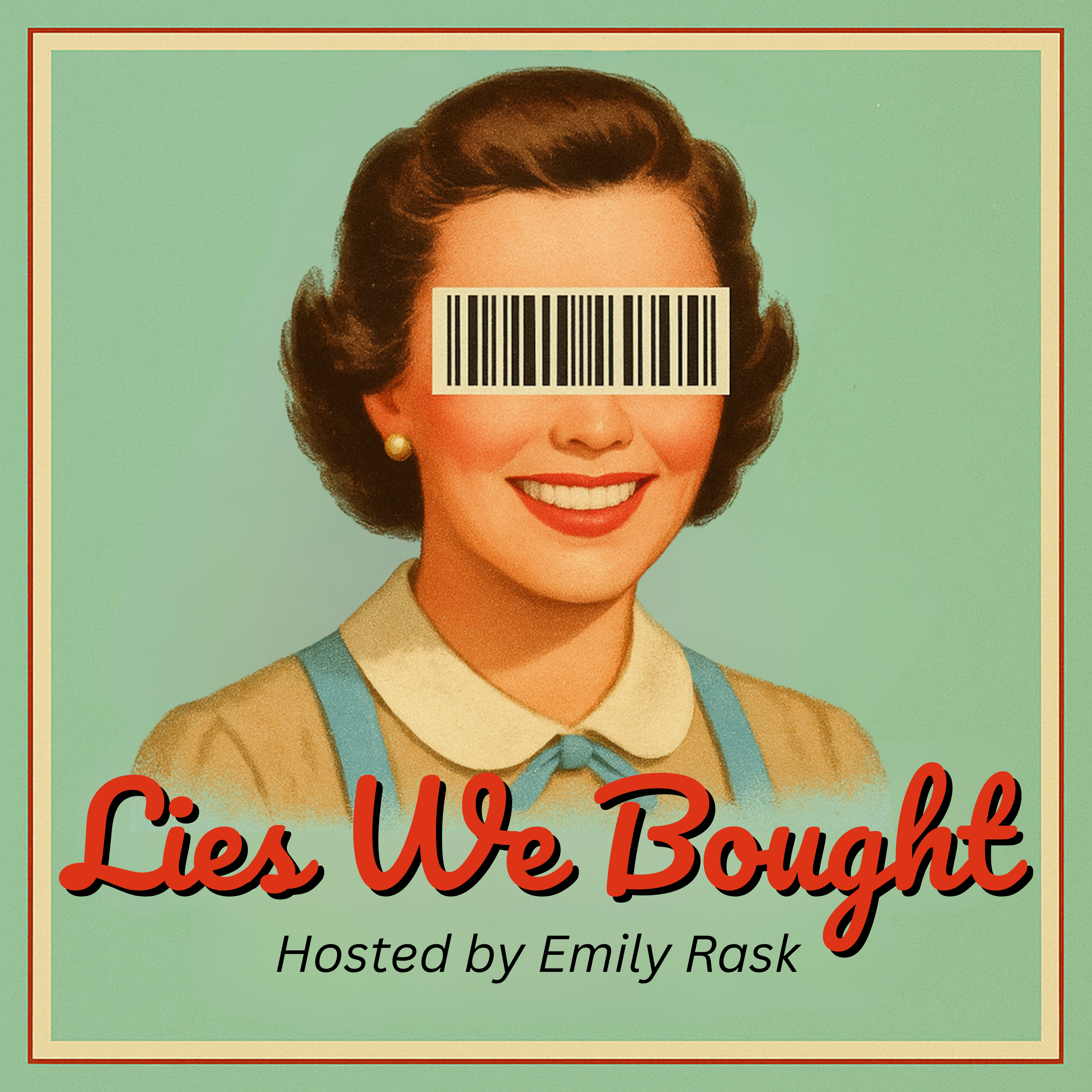
Lies We Bought is a marketing podcast with receipts. We unpack the slogans, myths, and shiny cultural truths we were sold. From “breakfast is the most important meal” to “clean beauty,” each episode peels back the glossy packaging.Hosted by Emily Rask, a marketer who knows the tricks because she used to build them, the show blends consumer psychology, vintage charm, and a wink of 1950s humor. It reached the Top 10 on Apple’s Marketing charts within two weeks of launching its teaser.
-
19
Always a Bridesmaid, Never a Bride: How Listerine Sold a Disease
Always a bridesmaid, never a bride. The phrase sounds like it has been around forever, but it traces back to a 1925 Listerine ad built around a fictional woman named Edna and a manufactured condition called halitosis. This week I follow the phrase back to its real origin, a 1917 British music hall comedy song, and then into the hands of Gerard Lambert, the mouthwash heir who found an obscure word in a medical textbook and used it to make America afraid of its own breath. We cover Listerine's bizarre early years as a floor cleaner and surgical antiseptic, the fear formula behind the Edna campaign, the sales explosion that made Listerine the third largest print advertiser in the country, and what psychology research on social comparison and fear appeals says about why this same playbook still runs in advertising today. By the end you'll hear the phrase differently, and you'll know exactly why a mouthwash company wanted it in your head. 📱 Follow along on Patreon: https://www.patreon.com/LiesWeBought/ Instagram: https://www.instagram.com/lieswebought/ TikTok: https://www.tiktok.com/@lieswebought LinkedIn: https://www.linkedin.com/company/lieswebought Facebook: https://www.facebook.com/lieswebought/ https://www.lieswebought.com/
-
18
Controversy Sells | One-Minute What
P.T. Barnum knew people would pay to see something questionable before they would ignore it completely. This One Minute What breaks down how controversy, curiosity, and the sunk cost fallacy work together to pull you in, and why once you have paid attention, your brain starts looking for ways to justify it. Because they do not need you to like it. They just need you to look.
-
17
The Dark Origin of Nike's Just Do It Slogan
In 1977, a man faced a firing squad in a Utah state prison and said three words. A decade later, an ad man changed one of them and handed them to the entire world. In this episode I trace the full origin of the "Just Do It" campaign, from Phil Knight selling shoes out of a car trunk to the moment Dan Wieden pitched a line Knight famously called unnecessary. The emotional branding playbook, the Jordan deal that was three times the industry standard, the Banned campaign built around a rule Nike never actually broke, and the ecosystem trap that turns your running app into a shoe subscription you never signed up for. Plus my personal story of growing up as the kid who couldn't afford the Swoosh, and what it cost me long before I could afford it financially. Next time you lace up, you're going to hear those three words a little differently.
-
16
THe Ogilvy Halo Effect | One-Minute What
David Ogilvy famously said, “The consumer is not a moron, she is your wife,” and that belief shaped how modern advertising earns trust and attention. This One Minute What breaks down the halo effect and how brands use subtle signals like style, tone, and positioning to create a high class perception that makes people feel comfortable paying more. Because once something looks premium, your brain starts filling in the rest.
-
15
The Great Low-Fat Conspiracy of 1994
Somewhere along the way, we decided fat was the problem, and built an entire way of eating around that idea. This episode breaks down how that belief took hold, from early nutrition research to government policy to the food industry quietly reshaping what ended up on store shelves. Because what looked like a simple health shift turned into something much bigger, and a lot more profitable, than anyone realized at the time.
-
14
Listerine, Halitosis, & The Fake Health Crisis | One-Minute What
Your "morning routine" isn't a health choice - it's a series of manufactured solutions. In this episode of One-Minute What, we’re exposing Albert Lasker, the "Father of Modern Advertising" who realized that the easiest way to sell a product is to invent a problem first.Lasker didn't just meet consumer demand; he created shame. From turning floor cleaner into a cure for "Halitosis" to forcing orange juice onto your breakfast table to save a surplus crop, Lasker’s "Salesmanship in Print" changed the human psyche forever. Stop buying the "Reason Why" and start seeing the sales tool. This is your One-Minute What.
-
13
The Supersize Strategy: The Secret History of the Large Fry
You didn't want the Large fries. In this episode of Lies We Bought, we unpack the "Bigger is Better" business model. We explore the psychological traps that make "more" feel like the only rational choice, from fast food menus to the SUV loophole. Inside this episode: The Origin of "Large": How David Wallerstein invented the large fry to boost margins. The Decoy Effect: Why pricing tiers are designed to trick your brain into spending more. Unit Bias: The famous "bottomless soup" experiment and why we eat more than we need. The SUV & McMansion Era: How fuel standards and building trends doubled our lifestyle size while families shrank. "Bigger is better" isn't a natural law; it's a margin strategy. If you’ve ever upgraded for forty cents, this episode is for you. Enjoyed the episode? Drop us a review! It helps other people realize they don't need that XL soda either. P.S. This episode is the shortest one yet on purpose - because bigger isn't always better.
-
12
Rockefeller’s Dimes & The Death of Truth | One-Minute What
"Good" companies don't exist - only very good storytellers do. In this episode of One-Minute What, we’re peeling back the curtain on the man who invented the modern "corporate soul" - Ivy Lee. Before Lee, if a monopoly did something wrong, they hid. Lee taught them to do the opposite: flood the zone. By exploiting what psychologists call the "Availability Cascade," Lee proved that if you repeat an idea enough in public discourse, our brains eventually accept it as truth. Stop falling for the story and start looking at the dimes.
-
11
Got Milk? The Deprivation Strategy & The Great Cheese Caves
It’s 1993. You’re one trivia question away from $10,000, but your mouth is full of peanut butter and the milk carton is empty. Welcome to Lies We Bought. Today, Emily unpacks the "Got Milk?" campaign—the marketing "miracle" that saved a dying industry. But the story doesn't start with celebrities and white mustaches. It starts with "swill milk," wartime price supports, and a government that accidentally produced so much dairy they had to hide it in limestone caves. We’re diving into: The Ghost of Aaron Burr: How a peanut butter sandwich changed advertising forever. The Caves of Missouri: The true story of the "problem of abundance." The School Lunch Mandate: How milk became a "non-negotiable" for American kids. Is milk a nutritional powerhouse, or just a really successful redemption story? Let’s unpack the lie. Love the show? Help a "community of one" by following the podcast and leaving a 5-star review. It helps more than you know! Join the inner circle at LiesWeBought.com.
-
10
McDonald’s CEO vs. Burger King CEO | One-Minute What
Can a single bite of a burger start a corporate war? In this episode of One-Minute What, we’re breaking down the PR disaster currently taking over social media. It all started when McDonald’s CEO Chris Kempczinski posted a video trying the new Big Arch Burger. Instead of a mouth-watering review, fans were left watching a "tentative, fearful bite" and cringing as he repeatedly referred to the food as a "product". The internet was quick to call him out for looking like he’s never actually stepped foot inside a McDonald’s.The Clapback: Enter Burger King. Their President, Tom Curtis, stepped up with a massive, messy bite of a Whopper, showing exactly how a real human eats a burger. From "burgermogging" to the "Battle of the Bites," we dive into why authenticity (and a napkin) is winning this corporate food war.
-
9
Why We’re Afraid of Getting Older : The Business of Anti-Aging
Why does aging feel loaded now when it didn’t used to? In this episode of Lies We Bought, we trace how the beauty industry transformed getting older into something women were taught to manage, monitor, and correct. From early skincare diagnosis and salon culture to Botox, preventative treatments, and modern “longevity” language, this episode explores how fear became one of the most profitable tools in beauty marketing. We look at the history, the money, and the psychology behind anti-aging, and why staying “on top of yourself” started to feel like responsibility instead of choice. If this episode made you think differently, consider following the show and leaving a review on Apple Podcasts. It helps more people find the series and keeps these conversations going. Another lie, bought and sold. And maybe one you can finally retire.
-
8
Cultural Brainworms | One-Minute What
Some ideas don’t spread because they’re true. They spread because they’re repeated. This One-Minute What looks at cultural brainworms and why they’re not accidental. How simple ideas, repeated often enough, start to feel like facts. Not because they’re proven, but because they’re familiar. Brands don’t need to convince you. They just need to remind you. Again and again. Until belief feels obvious. So if something feels self-evident but you can’t remember where it came from, it might not be truth. It might just be well distributed. And that’s your One-Minute What.
-
7
The Astrology Business: How Brands Market Your Zodiac Sign
Ever notice how “Mercury in Retrograde” is the only astronomical event that makes everyone panic? Before you decide you’re just “off” today, this episode looks at how astrology became one of the most effective belief systems in modern marketing. We trace astrology back more than 4,000 years to Babylonia, where tracking the stars wasn’t about personality traits or compatibility. It was a high-stakes survival tool used by kings to anticipate famine, war, and political collapse. Over time, that complex system was simplified, personalized, and repackaged. By the 20th century, astrology had been transformed into something scalable. Sun signs replaced planetary charts. Horoscopes shifted from nations to individuals. Media learned that identity sells better than prediction, and astrology became a brand. We explore how zodiac signs turned into personality shorthand, why retrogrades offer emotional cover when life feels chaotic, and how ancient meaning was reshaped into modern reassurance. This episode isn’t about whether astrology is real. It’s about how belief is built, simplified, and sold. Welcome to Lies We Bought. They sold it. We bought it. Now we’re unpacking it. Follow the show for future episodes.
-
6
Work-Life Balance | One-Minute What
Work-life balance isn’t a personal failure. It’s a system problem. In this One-Minute What, we’re unpacking why burnout isn’t caused by bad boundaries, poor time management, or not trying hard enough. Research shows burnout comes from chronic workload, lack of control, unclear expectations, and workplace stress, not individual weakness. So how did work-life balance become your responsibility instead of your employer’s? Marketing, wellness culture, and productivity hacks quietly shifted the blame. If you’re exhausted, you’re probably not doing life wrong. You’re operating inside a system that was never designed to be balanced. And that’s your One-Minute What.
-
5
The Forever Diamond Lie: How Marketing Made a Gem a Requirement
Diamonds feel ancient. Inevitable. Like they’ve always been part of love. They haven’t. In this episode of Lies We Bought, we dig into the marketing history behind diamonds and how one of the most successful advertising campaigns of all time turned a plentiful gemstone into a symbol of forever. We explore how De Beers controlled supply, reshaped social expectations, and tied diamonds to love, sacrifice, and seriousness through repetition and psychology rather than tradition. From the invention of the Four Cs to the myth of the salary rule, this episode breaks down how diamonds became mandatory, why they still feel emotionally charged today, and what happens as lab-grown diamonds begin pulling at the threads of that story. This is a cultural and marketing history of diamonds, not a judgment on personal choice. Understanding the story doesn’t mean rejecting it. It just means finally seeing it. Welcome to Lies We Bought. They sold it. We bought it. Now we’re unpacking it. Follow the show for future episodes.
-
4
Rethinking “Treat Yourself” | One-Minute What
Does “treat yourself” actually work? I love a good treat. Truly. But some fascinating research made me pause. Studies show that while buying yourself something feels good in the moment, acts of kindness toward others tend to create deeper, longer-lasting happiness. Helping someone else does more for our well-being than another self-focused reward. Marketing noticed this gap. For years, self-care has been sold as consumption. You deserve this. Buy this. Reward yourself. And sometimes that’s great. But the science suggests the real emotional payoff often comes from connection, not just consumption. So maybe “treat yourself” doesn’t always mean buying something. Maybe sometimes it means showing up for someone else. I still love a good treat. I just see it a little differently now. And that’s your One-Minute What.
-
3
Clean Eating, Dirty Marketing: The Truth About Organic Food
At some point, food quietly stopped being food. A label on the package. A higher price. A feeling that one choice says something better about you than the other. In this episode, I unpack how organic food became a moral signal rather than just a farming method. What started as early 20th-century fears around chemicals and industrialization evolved into a multi-billion-dollar industry built on purity, identity, and responsibility. I trace the origins of the organic movement, from early food safety scares and biodynamic farming to Whole Foods, the USDA organic seal, and the rise of fear-based grocery marketing. We look at what science actually says about nutrition, pesticides, and health, and why the organic label feels so personal even when the evidence is far more nuanced. This is not about telling you what to buy. It is about understanding how a label became a moral benchmark. Welcome to Lies We Bought. They sold it. We bought it. Now we’re unpacking it. If this episode resonates, follow the show and leave a review. It helps new listeners find the podcast and supports independent storytelling.
-
2
Is Multitasking a Scam? | One-Minute What
Welcome to my new bonus series, One-Minute What? Where I talk about something for one minute that makes you stop and go… what? Is multitasking actually productive, or does it just feel that way? Multitasking didn’t become popular because it works. It became popular because it sounds productive. It fits perfectly into hustle culture. Do more. Faster. At the same time. The problem is, multitasking doesn’t make us more efficient. It makes us feel efficient. And feeling productive is much easier to sell than actually being productive. That’s why companies love it. Productivity tools love it. And why “must be able to multitask” keeps showing up in job descriptions. So the next time you see that phrase, just know what they’re really asking for. And that’s your One-Minute What.
-
1
10,000 Steps Later: The Fitness Lie We All Walked Into
At some point, a daily walk quietly turned into a performance review. A buzz on your wrist. A glowing ring. A number that decides whether today “counts.” This episode unpacks how ten thousand steps became the world’s most accepted fitness goal, despite never being rooted in science. What began as a 1960s marketing idea evolved into a global wellness rule that now lives on smartwatches, corporate challenges, insurance incentives, and personal guilt. We trace the origin of the ten-thousand-step myth, what research actually says about walking and health, and why round numbers are so effective at shaping behavior. This episode is not about walking less. It is about understanding how a marketing idea became a moral benchmark. Welcome to Lies We Bought. They sold it. We bought it. Now we’re unpacking it. Follow the show for future episodes.
-
0
Live, Laugh, Lie: The Marketing Behind “Live Laugh Love
If you’re a millennial woman, you might want to sit down for this one. This episode explores how “Live Laugh Love” became one of the most successful pieces of modern décor, not because it was profound, but because it was comforting. What began as a reflective early-1900s essay quietly transformed into a cultural shorthand for optimism, warmth, and emotional safety, and eventually into a multibillion-dollar home décor industry. We trace how inspirational language moved from meaning to merchandise, why people like words in their homes, and how familiar phrases began standing in for identity, reassurance, and the version of ourselves we were trying to become. Especially during a time when adulthood felt unstable, expensive, and overwhelming. This episode is not about judging taste or mocking trends. It is about understanding why comforting words matter, and how marketing learned to scale that instinct. Once you see how meaning, emotion, and commerce intertwine, you start seeing décor differently. Welcome to Lies We Bought. They sold it. We bought it. Now we’re unpacking it. Follow the show for future episodes.
-
-1
All I See Are Red Flags: How Color Controls What We Buy
Do you know why certain colors make you feel calm, hungry, energized, or oddly loyal to a brand you have never questioned? This episode explores how color became one of the most powerful psychological tools in marketing, shaping reactions long before we realize we are reacting at all. Red creates urgency. Blue signals trust. Green implies health. Black and white suggest power and restraint. None of it is accidental. Entire industries spend millions testing shades because color influences belief, behavior, and choice before logic ever enters the room. We trace how color carried meaning long before modern advertising, rooted in history, symbolism, and emotion, then follow how marketers, psychologists, and corporations turned it into a behavioral shortcut. From packaging and apps to grocery aisles and “add to cart” buttons, color quietly guides movement, appetite, and impulse. This episode is not about telling you what color to like. It is about understanding how emotion, culture, and strategy work together to shape preference and behavior. Your instincts are wiser than any palette a company selects. Once you see the patterns, you cannot unsee them. Welcome to Lies We Bought. They sold it. We bought it. Now we are unpacking it. Follow the show for future episodes.
-
-2
Hydration Nation: How Drinking Water Became a Lifestyle
How did drinking water become a moral achievement? Hydration used to be a biological need. Somewhere along the way, it became a wellness routine, a personality trait, and a daily metric to prove you are doing life correctly. This episode explores how water went from necessity to lifestyle. From the eight-glasses-a-day rule and wartime nutrition guidance, to bottled water brands selling purity, performance, and identity, hydration became less about thirst and more about control. We trace how nuance disappeared, how marketing filled the gap, and how a free public resource turned into a multibillion-dollar industry. We also look at how modern wellness culture, influencer routines, and WaterTok trends turned drinking water into content and competition. This episode is not about telling you how much to drink. It is about understanding how belief is shaped, repeated, and sold. Hydration should not feel like a moral scoreboard. It should feel like balance - Drink when you are thirsty and pause when you are not. Your body already knows what it needs. Welcome to Lies We Bought. They sold it. We bought it. Now we are unpacking it. Follow the show for future episodes.
-
-3
Marketing Made Me Eat This: How Breakfast Became a Billion-Dollar Belief
“Breakfast is the most important meal of the day.” That belief didn’t come from nutrition science. It came from marketing. This episode explores how breakfast became a moral obligation, something we were taught we should eat to be a good, healthy person. Cereal companies, early wellness movements, and strategic public relations turned a meal into a cultural belief worth billions. We start in the late 1800s at Dr. John Harvey Kellogg’s sanitarium, where food was tied to purity, discipline, and moral control. From there, we trace the rise of cereal, the shift toward sugary convenience foods, and the emotional advertising that linked breakfast to family, productivity, and success. We also look at Edward Bernays, the public relations strategist who used psychology and manufactured authority to sell bacon and eggs to America. His work reshaped how we trust experts and how we decide what is “healthy” or “correct.” That same playbook never went away. Modern wellness culture, influencers, curated morning routines, and aesthetic meal prep follow the same behavioral cues once used in cereal ads. Different tools. Same emotional triggers. This episode is not about telling you what to eat. It is about understanding how belief is shaped, repeated, and sold. Eat when you are hungry. Skip it when you are not. Your body is wiser than any marketing campaign. Welcome to Lies We Bought. They sold it. We bought it. Now we are unpacking it. If this episode resonates, follow the show to catch future episodes.
-
-4
Lies We Bought Trailer: The Myths, Marketing, and Stories That Shaped Us
They sold it. We bought it. Now we’re unpacking it. “Breakfast is the most important meal of the day.”“Live. Laugh. Love.”“Ten thousand steps.”“Diamonds are forever.” We grew up believing these lines were truth, but they were marketing. Lies We Bought is a narrative storytelling and cultural analysis podcast that explores how billion-dollar campaigns, catchy slogans, and pop culture myths shaped the way we live, shop, and see ourselves. It blends marketing psychology, history, and storytelling to uncover how everyday beliefs were built and sold to us. From wellness trends to home decor mantras, we dig into the slogans that sold us serenity, success, and self-worth, and the emotional marketing that made them stick. Because sometimes, the biggest lies are not the ones we are told. They are the ones we keep buying. This one-minute teaser gives you a first listen inside the world of Lies We Bought, where nostalgia meets marketing and storytelling meets truth. Launching November 2025.New episodes every other week.Follow now before the next lie drops. If you love Offline with Jon Favreau, Work Appropriate, The Dream, or Marketing Made Simple, you will love Lies We Bought, a show for millennial women who love stories, strategy, and a little skepticism.
We're indexing this podcast's transcripts for the first time — this can take a minute or two. We'll show results as soon as they're ready.
No matches for "" in this podcast's transcripts.
No topics indexed yet for this podcast.
Loading reviews...
ABOUT THIS SHOW
Lies We Bought is a marketing podcast with receipts. We unpack the slogans, myths, and shiny cultural truths we were sold. From “breakfast is the most important meal” to “clean beauty,” each episode peels back the glossy packaging.Hosted by Emily Rask, a marketer who knows the tricks because she used to build them, the show blends consumer psychology, vintage charm, and a wink of 1950s humor. It reached the Top 10 on Apple’s Marketing charts within two weeks of launching its teaser.
HOSTED BY
Emily Rask
Loading similar podcasts...
Frequently Asked Questions
How many episodes does Lies We Bought have?
Lies We Bought currently has 24 episodes available on PodParley. New episodes are automatically indexed when they're published to the podcast feed.
What is Lies We Bought about?
Lies We Bought is a marketing podcast with receipts. We unpack the slogans, myths, and shiny cultural truths we were sold. From “breakfast is the most important meal” to “clean beauty,” each episode peels back the glossy packaging.Hosted by Emily Rask, a marketer who knows the tricks because she...
How often does Lies We Bought release new episodes?
Lies We Bought has 24 episodes. Check the episode list to see recent publication dates and frequency.
Where can I listen to Lies We Bought?
You can listen to Lies We Bought on PodParley by clicking any episode. We provide an embedded audio player for direct listening, and you can also subscribe via your preferred podcast app using the RSS feed.
Who hosts Lies We Bought?
Lies We Bought is created and hosted by Emily Rask.
URL copied to clipboard!