
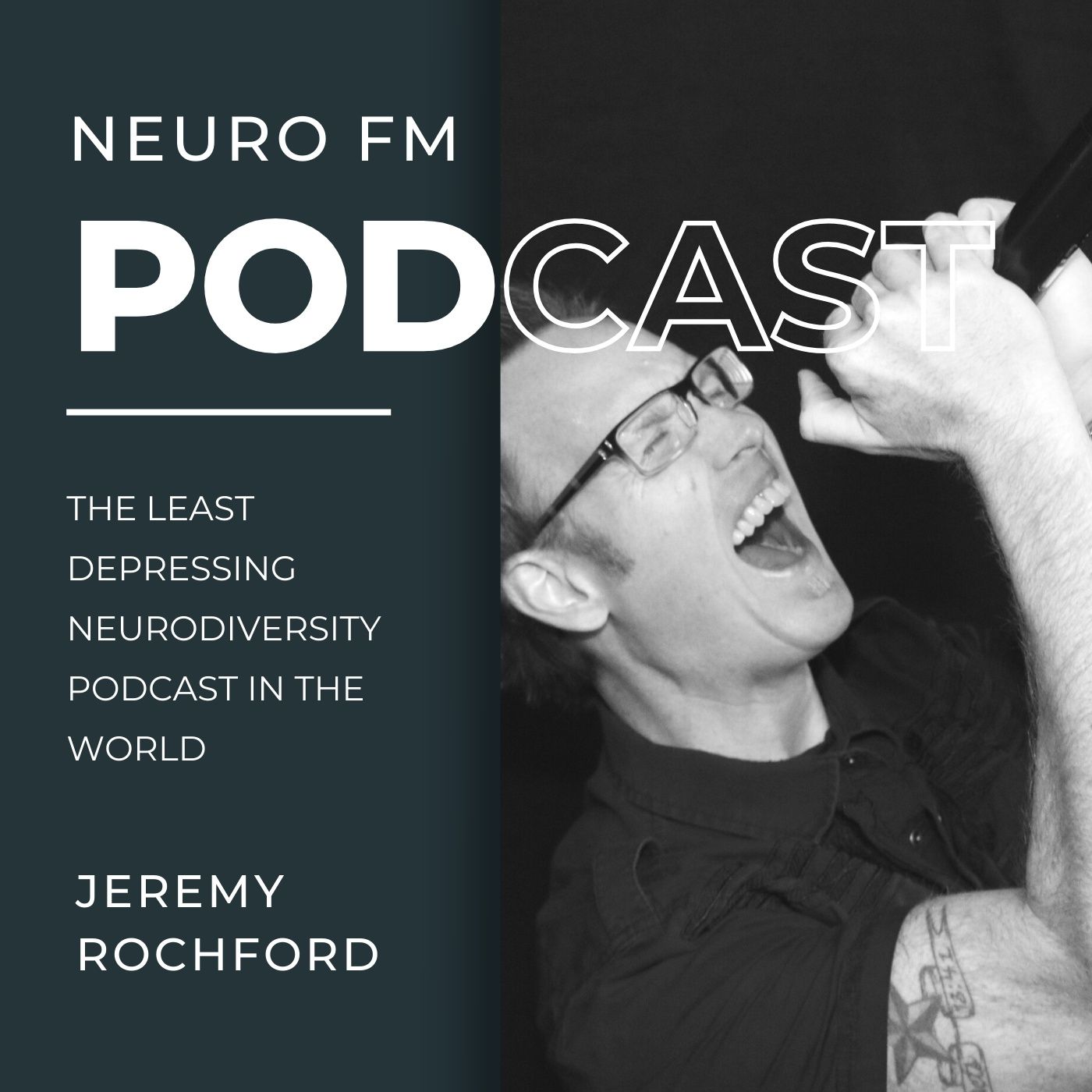
PODCAST · health
Neuro FM
by Jeremy Rochford
Jeremy Rochford is a later in life diagnosed Autistic/ADHD’r who is raising two Neurodivergent Children with his “NT” wife Charity. Through guest interviews and “Team Rochford,” you’ll hear firsthand the challenges and benefits of being on the spectrum as well as practical advice for those who are Neurodivergent or love someone who is. Join us and experience why “NeuroFm” is called the least depressing Neurodivergent podcast in the world.
-
116
My Autistic Diary: Empathy, Understanding & Emotional Maturity
What does growth actually look like when you’re autistic—especially in areas like empathy, understanding, and emotional maturity? In this episode of NeuroFM, I open up “My Autistic Diary” and talk honestly about the work it takes to move beyond simply knowing what someone else needs and actually learning how to respond in a way that helps them feel seen, understood, and cared for. We’ll look at some of the places autistic adults can get stuck—not because they don’t care, but because emotional connection often requires skills that may need to be learned more intentionally.More importantly, this episode is about the tools that help us grow. I’ll share practical ways to build stronger empathy, slow down defensiveness, better understand another person’s emotional experience, and increase emotional maturity without pretending to be someone you’re not. If you’re autistic and trying to become a safer, more connected partner, parent, friend, or family member—or you love someone who is—this conversation offers a hopeful but practical look at what growth can actually look like.To learn more about NeuroFam, please check out https://www.ourneurofam.com/ To send us an email or question- shoot a message to [email protected] Music for the show’s intro is provided (with permission) by Matt Langston & EleventySeven. You can check out their awesome stuff here - https://www.eleventysevenisalive.com/ Music for the show’s outro is provided (with permission) by Sean Rogers & Shineunder. The band doesn’t exist anymore, but Sean is still doing great work and can be found here - https://heyworldcreative.com/
-
115
On The Journey - Learning To Listen w/ Tommy, Brian & Jeremy
We all know how to hear—but do we actually know how to listen? In this episode of On The Journey, we dig into one of the most important—and often most difficult—relational skills for autistic men: learning how to listen without immediately defending, explaining, fixing, correcting, or preparing our response. We talk honestly about why listening can be challenging, what gets in the way, and how becoming a better listener requires more than simply staying quiet while someone else talks.Together, we explore what it looks like to slow down, stay curious, and listen for the experience underneath the words. Because listening isn't just about gathering information—it's about helping the other person feel heard, understood, and valued. Whether it's with your wife, your kids, or the people closest to you, learning to listen can change the way you connect. And like everything we talk about on On The Journey, this isn't about getting it perfect. It's about recognizing where we struggle, practicing something different, and continuing to grow into healthier, more emotionally mature men.For more on Brian Hight, check out: https://a.co/d/0ihKcZyAFor more on Tommy Smith, check out their podcast HERETo email the show: [email protected] To learn more about NeuroFam, please check out https://www.ourneurofam.com/ Music for the show’s intro is provided (with permission) by Matt Langston & EleventySeven. You can check out their awesome stuff here: https://www.eleventysevenisalive.com/ Music for the show’s outro is provided (with permission) by Sean Rogers & Shineunder. They don’t exist anymore, but Sean is still doing great work and can be found here: https://heyworldcreative.com/
-
114
Lights, Camera, Action! w/ Johnathan Rochford
What happens when you finally find a place where you fit? In this episode, Johnathan and I talk about the opening of Shrek Jr., the musical he’s performing in, and the hope that can come from discovering a community where you feel like you belong. We talk about how much confidence can grow when someone finds a space where their interests, personality, strengths, and even their differences are welcomed—and why finding that kind of place can change the way you see yourself and your future.We also talk about how parents can help their kids keep searching until they find those spaces, especially when belonging hasn’t always come easily. Sometimes it’s theater. Sometimes it’s sports, art, gaming, church, music, volunteering, or something completely unexpected. The point isn’t that everyone has to fit into the same place—it’s that everyone deserves the chance to find their place. And when families and communities work together to encourage people instead of trying to make them fit a mold, it reminds all of us that there is more hope out there than we sometimes realize. Keep looking. Your place—and your people—may be closer than you think.To learn more about NeuroFam, please check out https://www.ourneurofam.com/ To send us an email or question- shoot a message to [email protected] Music for the show’s intro is provided (with permission) by Matt Langston & EleventySeven. You can check out their awesome stuff here - https://www.eleventysevenisalive.com/ Music for the show’s outro is provided (with permission) by Sean Rogers & Shineunder. The band doesn’t exist anymore, but Sean is still doing great work and can be found here - https://heyworldcreative.com/
-
113
Becoming The Man I Was Meant To Be w/ Russell Grigsby
In this episode of NeuroFM, I sit down with Russell Grigsby for an honest conversation about what it means to become the man God has called you to be when autism is part of your story. Russell shares how his diagnosis has helped him better understand himself—not as an excuse for staying stuck, but as an invitation to grow in self-awareness, responsibility, faith, and purpose. We talk about learning to work with the way God wired you while still pursuing maturity in the places where growth is needed.At the heart of Russell’s journey is a growing desire to know and love both himself and his wife better. We talk about how understanding his autism has given him new language for his own needs, emotions, strengths, and struggles—and how that self-understanding can create more room for empathy, connection, and intentional love in marriage. This is a conversation about learning to accept the way God made you without using it as a reason to stop growing, and discovering how knowing yourself more deeply can help you show up with greater love for the person beside you.To learn more about NeuroFam, please check out https://www.ourneurofam.com/ To send us an email or question- shoot a message to [email protected] Music for the show’s intro is provided (with permission) by Matt Langston & EleventySeven. You can check out their awesome stuff here - https://www.eleventysevenisalive.com/ Music for the show’s outro is provided (with permission) by Sean Rogers & Shineunder. The band doesn’t exist anymore, but Sean is still doing great work and can be found here - https://heyworldcreative.com/
-
112
Special Olympics & Angels in the Outfield w/ Johnathan Rochford
Sometimes inclusion looks less like a program and more like getting to step onto the field and be one of the players. In this episode of NeuroFM, Jeremy is joined by his son Johnathan to talk about an unforgettable experience: attending a Special Olympics baseball clinic at PNC Park, home of the Pittsburgh Pirates. From being inside a Major League ballpark to learning, playing, and connecting with others, Johnathan shares what it was like to experience baseball in a place where athletes of all abilities were welcomed and celebrated.But this episode is about more than baseball. Jeremy and Johnathan talk about why opportunities like this matter so much for neurodivergent kids and their families—and what can happen when we stop focusing on limitations and start creating places where people can participate, contribute, and belong. It’s a conversation about confidence, inclusion, trying something new, and the power of being given a chance to step onto the field. Because sometimes a great day at the ballpark becomes a reminder of something much bigger: everyone deserves a place to play.To learn more about coaching NeuroFam, please check out https://www.ourneurofam.com/ To learn more about NeuroFam small groups, please check out https://www.ourneurofam.com/groupcoachingMusic for the show’s intro is provided (with permission) by Matt Langston & EleventySeven. You can check out their awesome stuff here - https://www.eleventysevenisalive.com/ Music for the show’s outro is provided (with permission) by Sean Rogers & Shineunder. The band doesn’t exist anymore, but Sean is still doing great work and can be found here - https://heyworldcreative.com/
-
111
Self-Care & Finding J.O.Y w/ Christina Marie Paperie
In this episode of NeuroFM, I'm joined by Christina Marie Papeire—a self-care coach, neurodiversity advocate, and self-proclaimed planner aficionado who is passionate about helping people navigate life's most chaotic moments with greater clarity, intention, and grace. Together, we explore why self-care is so much more than bubble baths and breaks, especially for neurodivergent individuals and the families who love them.Whether you're constantly feeling overwhelmed, struggling to stay organized, or simply trying to create rhythms that actually work with your brain instead of against it, this conversation is packed with practical encouragement and realistic strategies. Christina shares thoughtful insights on building sustainable habits, reducing stress, and finding peace in the middle of life's beautiful chaos. If you've ever wondered how to care for yourself without guilt, this episode is one you won't want to miss.SMALL GROUPS ARE NOW OPEN!!! Check out: https://www.ourneurofam.com/groupcoachingTo learn more about Christiana Marie, check out her website & self-care coaching: https://christinamariepaperie.com/Journey Of You Planner on Kickstarter: https://www.kickstarter.com/projects/cmpaperie/the-joy-planner-systemTo learn more about NeuroFam, please check out https://www.ourneurofam.com/ To send us an email or question- shoot a message to [email protected] Music for the show’s intro is provided (with permission) by Matt Langston & EleventySeven. You can check out their awesome stuff here - https://www.eleventysevenisalive.com/ Music for the show’s outro is provided (with permission) by Sean Rogers & Shineunder. The band doesn’t exist anymore, but Sean is still doing great work and can be found here - https://heyworldcreative.com/
-
110
On The Journey - Pilot Episode w/ Tommy & Jeremy
Introducing: "On The Journey"What does it look like to discover you're autistic later in life... and then decide you're not going to stay stuck and live life beyond the diagnosis? On The Journey is a new recurring segment on NeuroFM where autistic men pull back the curtain on their lives with honesty, humility, and hope. These aren't polished success stories or experts pretending to have all the answers. They're real conversations about the challenges they've faced, the mistakes they've made, the victories they've celebrated, and the practical steps they're taking to grow into healthier, more emotionally mature men.Whether you're newly exploring the possibility of autism, recently diagnosed, or years into understanding yourself, On The Journey is a reminder that growth is possible. Together, we'll explore what it means to become more regulated, more self-aware, and more connected—not only for ourselves, but for our wives, our children, our families, and the people we love most. Because a diagnosis isn't the finish line. It's the beginning of a journey toward becoming the best version of yourself.For more on Brian Hight, check out: https://a.co/d/0ihKcZyAFor more on Tommy Smith, check out their podcast HERETo email the show: [email protected] To learn more about NeuroFam, please check out https://www.ourneurofam.com/ Music for the show’s intro is provided (with permission) by Matt Langston & EleventySeven. You can check out their awesome stuff here: https://www.eleventysevenisalive.com/ Music for the show’s outro is provided (with permission) by Sean Rogers & Shineunder. They don’t exist anymore, but Sean is still doing great work and can be found here: https://heyworldcreative.com/
-
109
My Autistic Diary: Regulation & Relationships
Have you ever ruined a perfectly good day because it didn't go according to plan?That's exactly what almost happened to Jeremy during his son's Special Olympics soccer camp. He arrived excited to support his son, but before long the schedule felt disorganized, communication was unclear, and the uncertainty began pressing on every part of him that craves structure and predictability. His familiar conflict cycle started to emerge: rising frustration, tightening expectations, and the quiet belief that someone else needed to fix the situation before he could enjoy it. In that moment, Jeremy had a choice. He could spend the day fighting reality, or he could regulate himself first.In this episode, Jeremy shares how changing his expectations transformed the entire experience. Rather than trying to control the environment, he learned to manage his own nervous system, embrace flexibility, and become fully present with his son. The result wasn't a perfect day—it was a connected one. If you've ever found yourself frustrated because life, marriage, parenting, or even a family outing didn't unfold the way you expected, this conversation will help you recognize your own conflict cycle and discover how regulation can create connection, even when life refuses to follow the script.To get in touch, send a message to [email protected] learn more about NeuroFam, please check out https://www.ourneurofam.com/ Music for the show’s intro is provided (with permission) by Matt Langston & EleventySeven. You can check out their awesome stuff here - https://www.eleventysevenisalive.com/ Music for the show’s outro is provided (with permission) by Sean Rogers & Shineunder. The band doesn’t exist anymore, but Sean is still doing great work and can be found here - https://heyworldcreative.com/
-
108
Why Hard Things Are Worth Doing w/ Johnathan Rochford
For many families, opportunities like Special Olympics are about far more than sports—they're about belonging. In this episode, Jeremy sits down with his son, Johnathan, to relive an unforgettable week at Special Olympics Soccer Camp. Together, they talk about everything from making new friends and learning new skills to the excitement of competing, growing in confidence, and experiencing the unique community that makes Special Olympics so special. Through John's perspective, listeners get an honest look at what it's feels like to step outside your comfort zone and discover you're capable of more than you imagined.They also don't shy away from the hard parts. Camp was exhausting—physically, mentally, and emotionally—but as John shares, some of the greatest rewards come from doing things that stretch us. Whether you're raising a neurodivergent child, participating in adaptive sports, or simply looking for encouragement to embrace new challenges, this conversation is a reminder that growth rarely comes without effort, and that the experiences that leave us most tired are often the ones that leave us most changed. Join Jeremy and Johnathan for a heartfelt conversation filled with laughter, lessons, and a celebration of what becomes possible when we're willing to show up and give our best.To learn more about NeuroFam, please check out https://www.ourneurofam.com/ To send us an email or question- shoot a message to [email protected] Music for the show’s intro is provided (with permission) by Matt Langston & EleventySeven. You can check out their awesome stuff here - https://www.eleventysevenisalive.com/ Music for the show’s outro is provided (with permission) by Sean Rogers & Shineunder. The band doesn’t exist anymore, but Sean is still doing great work and can be found here - https://heyworldcreative.com/
-
107
Injury Update & A Deep Appreciation
Sometimes life has a way of slowing us down in ways we never expected. After fracturing his sacrum, Jeremy suddenly found himself unable to do many of the everyday things he'd always taken for granted. In this deeply personal episode, he shares how that painful season gave him a fresh perspective—not just on his own limitations, but on the incredible ways Charity cared for him during the whole experience. What began as an injury became an unexpected lesson in gratitude, humility, and seeing the love that's often hidden inside ordinary acts of service.But this episode isn't really about a broken bone. It's about the things we overlook when life is moving too fast. Jeremy challenges listeners to pause and ask a simple but life-changing question: Who or what have I stopped appreciating simply because it's become familiar? Whether it's your spouse, your family, your health, your faith, or the countless blessings woven into your daily routine, this conversation invites you to rediscover gratitude before loss or hardship forces you to. Sometimes the greatest changes in our relationships don't begin with fixing what's broken—they begin by noticing what's already beautiful.To learn more about NeuroFam, please check out https://www.ourneurofam.com/ Music for the show’s intro is provided (with permission) by Matt Langston & EleventySeven. You can check out their awesome stuff here - https://www.eleventysevenisalive.com/ Music for the show’s outro is provided (with permission) by Sean Rogers & Shineunder. They don’t exist anymore, but Sean is still doing great work and can be found here - https://heyworldcreative.com/
-
106
When a Special Interest Becomes a Dream Fulfilled
Most people know Jeremy Rochford as a coach, speaker, podcast host, and autism advocate. What many don't know is that before any of those things, he was a comedian. In this episode of NeuroFM, Jeremy shares the story of how comedy became one of the earliest tools he used to connect with people, navigate social situations, and make sense of the world around him. From performing stand-up and improv to eventually achieving a lifelong dream of opening for Christian comedian and author Bob Smiley, Jeremy reflects on how humor has shaped both his personal life and professional journey. He also shares why his wife, Charity, believes his ability to make people laugh is one of his greatest strengths—not because comedy avoids hard things, but because it helps people feel safe enough to face them.Jeremy also explores the surprising science behind humor and why laughter has become an important part of the NeuroFam coaching approach. Research consistently shows that appropriate humor can lower stress, reduce defensiveness, strengthen relationships, improve learning, and help regulate the nervous system. In a world where neurodivergent families often spend so much time focused on challenges, diagnoses, and conflict, comedy can create connection, build resilience, and remind us that joy is an essential part of growth. Whether you're a longtime fan of stand-up or simply curious why laughter matters so much in healthy relationships & joy building, this episode offers a behind-the-scenes look at how one of Jeremy's special interests became an unexpected coaching tool.To learn more about NeuroFam, please check out https://www.ourneurofam.com/ Music for the show’s intro is provided (with permission) by Matt Langston & EleventySeven. You can check out their awesome stuff here - https://www.eleventysevenisalive.com/ Music for the show’s outro is provided (with permission) by Sean Rogers & Shineunder. They don’t exist anymore, but Sean is still doing great work and can be found here - https://heyworldcreative.com/
-
105
School's Out, Now What? Finding Purpose in the Summer Pause w/ Johnathan & Jeremy Rochford
Summer has a way of inviting us to slow down, breathe a little deeper, and step away from the routines that often dominate the rest of the year. In this episode of NeuroFM, Jonathan and Jeremy sit down to talk about the joys of summer vacation—what they love most about the season, the adventures they look forward to, and why taking time to rest isn't just enjoyable, it's necessary. Together, they explore how summer creates space for families to reconnect, pursue hobbies and interests, and recover from the demands of work, school, and everyday life.But summer isn't only about relaxation. Jonathan and Jeremy also discuss how this natural pause in the calendar can become an opportunity to reset expectations, revisit goals, and prepare for the season ahead. Whether you're reflecting on what has been working, adjusting what hasn't, or simply creating a little more margin in your life, summer can serve as a valuable checkpoint rather than just a break. This lighthearted and practical conversation offers encouragement for individuals and families looking to make the most of the season while setting themselves up for success in the months to come.To learn more about NeuroFam, please check out https://www.ourneurofam.com/ To send us an email or question- shoot a message to [email protected] Music for the show’s intro is provided (with permission) by Matt Langston & EleventySeven. You can check out their awesome stuff here - https://www.eleventysevenisalive.com/ Music for the show’s outro is provided (with permission) by Sean Rogers & Shineunder. The band doesn’t exist anymore, but Sean is still doing great work and can be found here - https://heyworldcreative.com/
-
104
Incomplete Consideration - The Silent Disruptor of Marriage Repair
In this episode of NeuroFM, Jeremy Rochford explores one of the most overlooked relationship killers in neurodiverse marriages: incomplete and unfulfilled consideration. Not necessarily cruelty. Not always intentional neglect. But the slow erosion that happens when someone feels repeatedly unseen, unaccounted for, or emotionally stranded in the small moments that make up daily life. Jeremy breaks down why good intentions alone don’t rebuild trust—and how repeated patterns of “I meant to” can quietly become relational exhaustion for the other person.Through practical examples, honest reflection, and relational insight, Jeremy explains why repair requires more than apologies or awareness. It requires consideration that becomes visible, actionable, and sustainable. He unpacks how executive function struggles, emotional overwhelm, defensiveness, and assumptions can all interfere with follow-through—and what couples can begin doing instead to create safety, predictability, and repair. If you’ve ever felt stuck in the cycle of “we talked about this already,” this episode offers a grounded and hopeful path forward.To learn more about their coaching services, NeuroFam, please check out https://www.ourneurofam.com/ Music for the show’s intro is provided (with permission) by Matt Langston & EleventySeven. You can check out their awesome stuff here - https://www.eleventysevenisalive.com/ Music for the show’s outro is provided (with permission) by Sean Rogers & Shineunder. The band doesn’t exist anymore, but Sean is still doing great work and can be found here - https://heyworldcreative.com/
-
103
Part 2 -Understanding Autism Together: A Father & Daughter Perspective
Jeremy Rochford returns for Part 2 of this heartfelt conversation—this time sitting down with his daughter, Corinne Rochford, to hear her side of the story. Through humor, honesty, and candid reflection, Corinne shares what it was like growing up in a family slowly discovering and understanding autism, how those realizations shaped the way she saw herself and her relationships, and the moments that suddenly started making sense in hindsight. Jeremy asks thoughtful questions as Corinne opens up about identity, family dynamics, communication, and navigating life through her own perspective.Throughout the episode, Corinne reflects on the challenges, honest moments, and unexpected growth that came from better understanding both herself and the people around her. The conversation balances meaningful insight with lighthearted storytelling, creating an episode that feels relatable, genuine, and encouraging for anyone navigating neurodiversity, late discovery, or family relationships. More than anything, this episode is about perspective, connection, and what can happen when a family learns to better understand each other over time..To learn more about NeuroFam, please check out https://www.ourneurofam.com/ Music for the show’s intro is provided (with permission) by Matt Langston & EleventySeven. You can check out their awesome stuff here - https://www.eleventysevenisalive.com/ Music for the show’s outro is provided (with permission) by Sean Rogers & Shineunder. They don’t exist anymore, but Sean is still doing great work and can be found here - https://heyworldcreative.com/
-
102
Understanding Autism Together: A Father & Daughter Perspective – Part 1
Jeremy Rochford sits down with a very special guest—his daughter, Corinne Rochford—for a deeply personal conversation about autism, identity, and what it looked like for their family to slowly connect the dots over time. Through humor, honesty, and heartfelt reflection, Corinne interviews her dad about the moments that led to his autism diagnosis, the fears and misconceptions he had to work through, and how understanding his neurodivergence reshaped the way he saw himself, his marriage, parenting, and relationships. Together, they explore the emotional tension between feeling “different” your entire life and finally having language that brings clarity instead of shame.In this episode, Jeremy opens up about the journey from confusion and masking to self-awareness and acceptance, while Corinne offers the unique perspective of a daughter watching her father become more emotionally present, self-aware, and grounded through the process. The conversation is filled with candid stories, generational insight, and practical encouragement for families navigating late diagnosis, identity shifts, or neurodiverse relationships. More than a conversation about autism, this episode becomes a story about understanding, connection, and how acceptance can transform not just an individual—but an entire family system."To learn more about NeuroFam, please check out https://www.ourneurofam.com/ To send us an email or question- shoot a message to [email protected] Music for the show’s intro is provided (with permission) by Matt Langston & EleventySeven. You can check out their awesome stuff here - https://www.eleventysevenisalive.com/ Music for the show’s outro is provided (with permission) by Sean Rogers & Shineunder. The band doesn’t exist anymore, but Sean is still doing great work and can be found here - https://heyworldcreative.com/
-
101
100th Episode Spectacular!!!!!!!!!!!!
Episode 100 of the NeuroFM slows things down a bit—in a good way—as Jeremy & Charity take a more reflective look back on the first 100 episodes, revisiting the moments that stayed with them, the conversations that shaped their thinking, and the themes they keep coming back to in their own lives and work. They share what they’ve genuinely loved about the journey, a few favorite moments and behind-the-scenes memories, and the lessons that didn’t just land with listeners—but with them, too. It’s a thoughtful mix of gratitude, honesty, and perspective, paired with a hopeful look ahead at what they want the next 100 episodes to become: deeper, more helpful, and even more grounded in real life.To email us- [email protected] learn more about NeuroFam, please check out https://www.ourneurofam.com/ Music for the show’s intro is provided (with permission) by Matt Langston & EleventySeven. You can check out their awesome stuff here - https://www.eleventysevenisalive.com/ Music for the show’s outro is provided (with permission) by Sean Rogers & Shineunder. They don’t exist anymore, but Sean is still doing great work and can be found here - https://heyworldcreative.com/
-
100
The Silent Saboteurs in Neurodiverse Relationships
On this episode of NeuroFM, we’re naming the things that are quietly working against your relationship—the ones that don’t show up as obvious conflict, but still create distance over time. The silent saboteurs. The unspoken expectations. The missed meanings. The “I thought you knew” moments that slowly turn into frustration, withdrawal, or that familiar Groundhog Day loop. In neurodiverse relationships, it’s not just about what’s being said—it’s about how it’s being interpreted, filtered, and sometimes completely missed.Jeremy breaks down the hidden dynamics that keep couples stuck—like assumption gaps, sensory overload, and internal narratives that never make it out loud—and why they matter more than most communication strategies. More importantly, he offers a practical path forward: how to start recognizing these patterns in real time and shift from reacting to understanding. Because once you can see what’s been invisible, you can finally start changing the story.To learn more about NeuroFam, please check out https://www.ourneurofam.com/ Music for the show’s intro is provided (with permission) by Matt Langston & EleventySeven. You can check out their awesome stuff here - https://www.eleventysevenisalive.com/ Music for the show’s outro is provided (with permission) by Sean Rogers & Shineunder. They don’t exist anymore, but Sean is still doing great work and can be found here - https://heyworldcreative.com/
-
99
When Special Interests Collide w/ Johnathan Rochford
In this episode of NeuroFM, Jeremy and Johnathan take listeners behind the scenes of their unforgettable trip to Lake Placid—part father-son hockey adventure, part meaningful journey through one of sports’ most iconic moments. What started as a tournament weekend quickly became something deeper: shared laughs on the road, stories between games, and the kind of moments that remind you why experiences matter more than outcomes. Jeremy reflects on the joy of watching Johnathan compete, the bond that forms through travel and challenge, and the simple but powerful gift of being fully present together.But the trip wasn’t just about hockey—it was also about stepping into history. Jeremy and Johnathan visited the site of the legendary “Miracle on Ice,” where the 1980 U.S. Olympic team stunned the world and inspired a generation. Standing in that arena gave them a fresh appreciation for grit, belief, and what can happen when ordinary people rise to extraordinary moments. In this heartfelt conversation, they unpack what the trip taught them about perseverance, legacy, and why some memories stay with you long after the final buzzer.To learn more about NeuroFam, please check out https://www.ourneurofam.com/Music for the show’s intro is provided (with permission) by Matt Langston & EleventySeven. You can check out their awesome stuff here - https://www.eleventysevenisalive.com/ Music for the show’s outro is provided (with permission) by Sean Rogers & Shineunder. They don’t exist anymore, but Sean is still doing great work and can be found here - https://heyworldcreative.com/
-
98
My Autistic Diary; Expectations, Regulation & Impulse Control
In this episode of My Autistic Diary, Jeremy walks you step-by-step through how he personally navigates three of the biggest friction points in an Autistic's everyday life: expectations, regulation, and impulse control. Rather than talking in theory, he opens up his real-time process—how he slows down, identifies what’s actually being expected (by himself and others), and uses practical tools to bring clarity before pressure builds. He breaks expectations down into something usable, showing how he filters, prioritizes, and communicates them in a way that works with his brain instead of against it. From there, Jeremy separates regulation and impulse control into their own distinct challenges—and shows you exactly how he approaches each one with intention. He walks through the specific tools he uses to regulate his nervous system in the moment, then how he layers in impulse control strategies after regulation is established—never before. This episode is less about concepts and more about application: real tools, real scenarios, and a clear demonstration of how to navigate each situation individually. If you’ve ever wondered what it actually looks like to “do the work” in real time, this episode gives you a practical, honest roadmap you can begin using immediately.To learn more about NeuroFam, please check out https://www.ourneurofam.com/ Music for the show’s intro is provided (with permission) by Matt Langston & EleventySeven. You can check out their awesome stuff here - https://www.eleventysevenisalive.com/ Music for the show’s outro is provided (with permission) by Sean Rogers & Shineunder. They don’t exist anymore, but Sean is still doing great work and can be found here - https://heyworldcreative.com/
-
97
Creating A NeuroDiverse Relationship That Works for Us w/ Ginny & Tommy Smith
In this episode, Jeremy sits down with Ginny and Tommy Smith for a candid, unfiltered conversation about the moment a marriage stops matching the dream—and what comes after. Ginny puts words to what so many wives feel but struggle to articulate: the challenge of realizing why your husband struggles to step into the roles you expected—leader, initiator, emotional connector. For years, she carried the weight of confusion, loneliness, and relentless effort to “fix” the marriage, only to discover that the issue wasn’t effort—it was understanding. Jeremy helps frame their story through the lens of neurodiversity, drawing out how Tommy’s late diagnosis reframed some of his challenges, not as intentional failure, but as a missing framework. Together, they explore the emotional tension between grieving what was hoped for and choosing to stay in the “hard” with purpose and faith. But this isn’t a story about settling—it’s a story about rebuilding. The conversation moves into what it actually looks like to “find your rhythm” as a neurodiverse couple: redefining fairness, creating practical systems for communication and follow-through, and learning how to support each other without resentment or excuses. Ginny shares how she’s learned to understand without losing herself, while Tommy speaks to the challenging reality of unmasking and relearning life later in adulthood. Though hard, it's finally brought them to a place of understanding that healthy neurodiverse marriages aren’t about keeping score, but intentional rhythms that evolve. Some days sound like harmony, others like chaos—but with consistency, humility, and the right tools, couples can move from constant friction to a rhythm that, while imperfect, is deeply their own.To learn more about NeuroFam, please check out https://www.ourneurofam.com/ To send us an email or question- shoot a message to [email protected] To learn more about Kevin & Shawna Meek please check out https://www.livingstonescoaching.com/Music for the show’s intro is provided (with permission) by Matt Langston & EleventySeven. You can check out their awesome stuff here - https://www.eleventysevenisalive.com/ Music for the show’s outro is provided (with permission) by Sean Rogers & Shineunder. The band doesn’t exist anymore, but Sean is still doing great work and can be found here - https://heyworldcreative.com/
-
96
The Secret to Better Regulation
Most people think better regulation comes from trying harder, staying calmer, or just “getting it together.” But the truth is, regulation usually doesn’t begin with willpower — it begins with awareness in the conflict(s). In this episode, we unpack the real secret to better regulation: learning to notice what’s happening in your body, your mind, and your environment before things spiral. Because for so many neurodivergent individuals, couples, and families, the issue isn’t a lack of effort — it’s a lack of understanding about what’s actually driving the dysregulation in the first place. If you’ve ever found yourself shutting down, snapping, going numb, or feeling overwhelmed and not fully knowing why, this conversation is for you. Jeremy breaks down what regulation really is, what gets in the way of it, and how small, practical shifts can create more peace, clarity, and connection in everyday life. This episode is a reminder that better regulation isn’t about becoming a different person — it’s about learning how to work with your nervous system instead of constantly fighting against it.To learn more about NeuroFam, please check out https://www.ourneurofam.com/ To send us an email or question- shoot a message to [email protected] Music for the show’s intro is provided (with permission) by Matt Langston & EleventySeven. You can check out their awesome stuff here - https://www.eleventysevenisalive.com/ Music for the show’s outro is provided (with permission) by Sean Rogers & Shineunder. The band doesn’t exist anymore, but Sean is still doing great work and can be found here - https://heyworldcreative.com/
-
95
A Guys Perspective On Betrayal Trauma
From a lot of men’s perspectives, betrayal trauma can be confusing. Many guys think the issue is simply the mistake itself—something that happened in the past that they apologized for and are trying to move beyond. But for many women, betrayal trauma isn’t just about the event; it’s about the collapse of safety, trust, and emotional reality. In this episode, we explore what betrayal trauma can feel like from a woman’s perspective—how the nervous system responds, why questions keep resurfacing, and why healing often takes longer than the person who caused the harm expects. Rather than dismissing these reactions as “overreacting,” we unpack why they are often the mind and body trying to make sense of a shattered sense of safety.In this episode, Jeremy breaks down what betrayal trauma actually is—and just as importantly, what it isn’t. Speaking directly to men who want to repair their marriages, he explains why many of the instincts guys have after betrayal (move on quickly, defend intentions, minimize the impact, or try to “fix” the problem fast) often make the wound deeper instead of helping it heal. Jeremy walks through the emotional and relational realities many women experience after betrayal, helping men understand why rebuilding trust requires more than apologies or promises to do better.More importantly, he lays out the non-negotiable do’s and don’ts of navigating betrayal trauma if a couple truly wants their marriage to survive—and eventually come out stronger on the other side. From the importance of radical honesty and consistent accountability to avoiding defensiveness and emotional shutdown, Jeremy offers a practical roadmap for men who are serious about rebuilding safety, restoring trust, and doing the slow, steady work required for real relational repair.To learn more about their coaching practice, NeuroFam, please check out https://www.ourneurofam.com/ To write a message, please use [email protected] for the show’s intro is provided (with permission) by Matt Langston & EleventySeven. You can check out their awesome stuff here - https://www.eleventysevenisalive.com/ Music for the show’s outro is provided (with permission) by Sean Rogers & Shineunder. The band doesn’t exist anymore, but Sean is still doing great work and can be found here - https://heyworldcreative.com/
-
94
Somewhere I Belong w/ Johnathan Rochford
In this episode, Jeremy Rochford and Johnathan reflect on a weekend hockey tournament that quietly revealed how belonging is built—or broken—in everyday moments. The rink becomes the backdrop for a bigger conversation about inclusion: who feels welcomed into a space, who has to work harder to fit in, and how subtle social rules can make people feel either safe or on the outside. Through small, ordinary interactions with parents, kids, and staff, they unpack how belonging isn’t about being invited into the room—it’s about being able to show up as yourself once you’re there.The conversation moves beyond sports to explore what inclusion actually looks like for neurodivergent families in public spaces: the unspoken pressures to “blend in,” the exhaustion of masking, and the relief that comes when someone slows down enough to notice what another person needs. Jeremy and Johnathan share practical insights for creating environments where people don’t have to perform to be accepted—whether that’s in a rink, a workplace, a church lobby, or your own home. It’s a grounded reminder that belonging isn’t created by policies alone, but by the everyday choices we make to see, include, and make room for each other.To learn more about NeuroFam, please check out https://www.ourneurofam.com/ To send us an email or question- shoot a message to [email protected] Music for the show’s intro is provided (with permission) by Matt Langston & EleventySeven.You can check out their awesome stuff here - https://www.eleventysevenisalive.com/ Music for the show’s outro is provided (with permission) by Sean Rogers & Shineunder. The band doesn’t exist anymore, but Sean is still doing great work and can be found here - https://heyworldcreative.com/
-
93
Autism & Executive Function Demystified : Part 2 w/ Robin Tate
In Part 2, Jeremy Rochford and Robin Tate move from understanding executive function to living with it—what changes after the “aha” moment fades and real life still demands consistency. They explore the emotional whiplash many late-diagnosed autistics experience once they finally have language for their wiring, but still find themselves missing deadlines, stalling on simple tasks, or shutting down under pressure. Rather than framing this as failure, they unpack why executive function challenges are context-dependent—shaped by stress, energy, sensory load, and relational safety—and why progress rarely looks linear. The focus shifts from “Why can’t I just do the thing?” to “What conditions help me do the thing more often?” The conversation gets practical and relational. Jeremy and Robin outline how to build supportive systems that work with neurodivergent wiring instead of against it—external scaffolding, realistic pacing, clear agreements with partners, and repair when systems break down. They also address the relational impact: how mismatched expectations, unspoken resentment, and chronic over-functioning can creep into neurodiverse relationships when executive function struggles are misunderstood. Part 2 offers a grounded playbook for turning insight into action—helping late-diagnosed autistics (and their partners) move from self-judgment to skill-building, shared language, and rhythms that actually hold up under real life.To listen to Part 1, please click here.To learn more about Robin Tate, please check out https://www.robintatellc.com/To learn more about NeuroFam, please check out https://www.ourneurofam.com/ To send us an email or question- shoot a message to [email protected] Music for the show’s intro is provided (with permission) by Matt Langston & EleventySeven. You can check out their awesome stuff here - https://www.eleventysevenisalive.com/ Music for the show’s outro is provided (with permission) by Sean Rogers & Shineunder. The band doesn’t exist anymore, but Sean is still doing great work and can be found here - https://heyworldcreative.com/
-
92
Autism & Executive Function Demystified : Part 1 w/ Robin Tate
In this episode, Jeremy Rochford sits down with Robin Tate for a candid, insider conversation about executive function—what it actually is, what it isn’t, and why so many later-in-life diagnosed autistics feel blindsided by it. Drawing from their own lived experience on the spectrum, they cut through the vague labels and clinical fog to explain executive function in plain language: the invisible skills that help you start, stop, plan, shift gears, regulate emotions, and follow through. They name the common traps—confusing executive function challenges with laziness, lack of care, or character flaws—and show how that misunderstanding quietly fuels shame, burnout, and relational friction for adults who spent years trying to “power through” without the right framework.The conversation moves beyond insight into practical clarity. Jeremy and Robin unpack how executive function challenges often show up differently after diagnosis—when you finally have language for your wiring, but real life still expects performance on demand. They explore why awareness alone doesn’t fix the bottlenecks, how sensory load, stress, and emotional flooding can hijack follow-through, and what supportive systems actually look like for neurodivergent adults trying to build sustainable rhythms. The result is a grounded, validating roadmap for late-diagnosed autistics—and the people who love them—to replace self-blame with tools, compassion, and strategies that make everyday life feel more doable.To learn more about Robin Tate, please check out https://www.robintatellc.com/To learn more about NeuroFam, please check out https://www.ourneurofam.com/ To send us an email or question- shoot a message to [email protected] Music for the show’s intro is provided (with permission) by Matt Langston & EleventySeven. You can check out their awesome stuff here - https://www.eleventysevenisalive.com/ Music for the show’s outro is provided (with permission) by Sean Rogers & Shineunder. The band doesn’t exist anymore, but Sean is still doing great work and can be found here - https://heyworldcreative.com/
-
91
The Real Difference Between Hobbies and Special Interests
Is it “just a hobby,” or is it something deeper? In neurodiverse relationships, this question often shows up in the middle of real conflict—not curiosity. One partner sees time spent or distraction; the other experiences regulation, focus, and emotional recovery. In this episode, Jeremy breaks down the t difference between hobbies and special interests, explaining why the distinction has less to do with what the activity is and everything to do with what it does for the nervous system. This isn’t about labels or intensity—it’s about function, regulation, and identity.You’ll learn when a hobby crosses over into a special interest, why removing or limiting a special interest can unintentionally increase emotional dysregulation, and how couples can stop arguing about “fairness” and start planning for stability instead. With practical guidance for mixed-neurotype couples, this conversation offers a new lens for negotiating time, boundaries, and connection—without pathologizing either partner. If you’ve ever felt stuck in the same argument about interests, focus, or disengagement, this episode gives you language that actually moves the conversation forward.To listen to the episode on Safety, check out "https://www.ourneurofam.com/neuro-fm-podcast" and click on the "Why Can't Autistics Follow Through?" episode. To learn more about their coaching practice NeuroFam, please check out https://www.ourneurofam.com/ Music for the show’s intro is provided (with permission) by Matt Langston & EleventySeven.You can check out their awesome stuff here - https://www.eleventysevenisalive.com/ Music for the show’s outro is provided (with permission) by Sean Rogers & Shineunder. The band doesn’t exist anymore, but Sean is still doing great work and can be found here - https://heyworldcreative.com/
-
90
My Autistic Diary - Emotional Intelligence, Shared Agency & Parenting that Works
In this episode of My Autistic Diary, Jeremy Rochford challenges the idea that emotional intelligence in autistic families is something you either “have” or “don’t.” Instead, he shows how emotional intelligence is built through understanding, regulation, and understanding what the situation needs—not pressure to change who you are. Drawing from real moments in parenting and marriage, Jeremy exposes why so many outdated parenting models miss the mark in neurodiverse homes and what actually helps when emotions run high and expectations collide. From there, Jeremy pivots to discuss how most relationships don’t collapse in a single dramatic moment—rather, they slowly wear down through small, repeated ruptures: misunderstood tone, unmet expectations, unresolved tension, and the quiet accumulation of feeling unseen. This is where micro-healing becomes transformative. Instead of waiting for major breakthroughs or crisis-level conversations, micro-healing focuses on repairing small moments as they happen—naming a misunderstanding, softening a reaction, clarifying intent, or pausing to reset before distance takes root. Over time, these tiny acts of repair interrupt the “death by a thousand papercuts” and replace it with something steadier and safer. Micro-healing doesn’t just prevent damage; it gradually rebuilds trust, restores agency, and creates a rhythm of connection that makes real, sustainable closeness possible.To learn more about our coaching practice, NeuroFam, please check out https://www.ourneurofam.com/ Music for the show’s intro is provided (with permission) by Matt Langston & EleventySeven. You can check out their awesome stuff here - https://www.eleventysevenisalive.com/ Music for the show’s outro is provided (with permission) by Sean Rogers & Shineunder. The band doesn’t exist anymore, but Sean is still doing great work and can be found here - https://heyworldcreative.com/
-
89
Why Neurodiverse Relationships Need a Different Approach Than Traditional Couples Therapy w/ Stephanie Holmes & Jenilee Goodwin
In this episode, Jeremy Rochford is joined by Dr. Stephanie Holmes and Jenilee Goodwin for a grounded, clarifying conversation about why solo work and couples work are not interchangeable—especially in neurodiverse relationships. Rather than defaulting to “just do couples therapy,” they unpack why many mixed-neurotype couples stall or escalate when relational work starts in the wrong place. The discussion highlights how individual regulation, self-understanding, and skill-building often need to come before joint sessions can be productive. For neurodivergent partners in particular, solo coaching can create the clarity, language, and emotional capacity required to show up well in couples work instead of feeling flooded, defensive, or misunderstood. They also explore why neurodiverse coaching must be handled differently than traditional therapy models. Jeremy, Stephanie, and Jenilee explain how insight-based or emotionally interpretive approaches can miss the mark when executive functioning, sensory load, communication differences, and processing speed aren’t accounted for. Coaching, when done well, provides structure, explicit tools, and predictable frameworks that reduce ambiguity rather than increase it. This episode helps listeners understand when to focus on individual coaching, when to shift into couples work, and why matching the right type of support to a neurodiverse nervous system isn’t a shortcut—it’s the difference between repeating old cycles and finally making forward progress together.For more on Dr. Stephanie Holmes, check out: https://www.christianneurodiversemarriage.com/For more on Jenilee Goodwin, check out: https://jenileerachel.com/To learn more about NeuroFam, please check out https://www.neurofam.com/ Music for the show’s intro is provided (with permission) by Matt Langston & EleventySeven. You can check out their awesome stuff here - https://www.eleventysevenisalive.com/ Music for the show’s outro is provided (with permission) by Sean Rogers & Shineunder. They don’t exist anymore, but Sean is still doing great work and can be found here - https://heyworldcreative.com/
-
88
Neurodiverse Love 2026: 5 Tools That Actually Work (Part 2)
In Part Two of the 2026 kickoff series, Jeremy Rochford picks up where we left off and opens the rest of the toolkit couples have been waiting for. If Part One gave you language, Part Two gives you momentum. Jeremy delivers frameworks 4 and 5— that help couples operationalize what they’ve learned so far. With unfiltered honesty and a coach’s eye for patterns, Jeremy digs into the forces that quietly sabotage intimacy: assumption loops, nervous-system misfires, mismatched feedback styles, and the exhaustion that comes from never feeling fully understood. Then he does what Jeremy always does—he replaces the chaos with something usable: a rhythm, a script, and permission to repair without performing. In this episode, you’ll learn how to give feedback without triggering shutdown, receive truth without spiraling into threat, and build connection through structure instead of losing it to emotional static. This isn’t just inspiration—it’s implementation. And implementation is what changes relationships. Jeremy reminds listeners that frameworks only work when couples use them together—so he shows you exactly how. You’ll hear how to identify the difference between conflict that’s dumping on you versus emotions that are spilling out, and what to do in the moment when either one happens. These tools help couples pause self-defense, interrupt emotional flooding, regulate before responding, and co-author expectations without erasing identity. Jeremy challenges both partners to stop treating feedback like a personal attack and start treating it like data—with emotion allowed, but collaboration required. Because 2026 isn’t the year you finally get it perfect. It’s the year you finally get it working. This is Part 2 of a two-part masterclass. It builds on everything from Part One, but stands alone as the moment couples shift from learning the tools… to living them. If you want 2026 to be the year your relationship moves from surviving to synchronized, this episode is your next step forward. Because the right systems don’t just change your words—they change your life.To learn more about our small groups or to check out NeuroFam, please visit https://www.ourneurofam.com/ Music for the show’s intro is provided (with permission) by Matt Langston & EleventySeven. You can check out their awesome stuff here - https://www.eleventysevenisalive.com/ Music for the show’s outro is provided (with permission) by Sean Rogers & Shineunder. They don’t exist anymore, but Sean is still doing great work and can be found here - https://heyworldcreative.com/
-
87
Neurodiverse Love 2026: 5 Tools That Actually Work (Part 1)
In Part One of this 2026 kickoff series, Jeremy Rochford cuts through the noise and hands couples real tools they can actually use. Neurodiverse relationships don’t need more theory—they need language, rhythm, and a plan. That’s exactly what Jeremy delivers as he unveils the 5 most powerful relationship frameworks for the year ahead. Drawing from lived experience, coaching insights, and a communicator’s instinct for clarity, Jeremy breaks down the invisible forces that derail connection and replaces them with practical strategies that restore it. In this episode, you’ll learn the first half of the toolkit that helps couples shift from emotional overload to collaborative repair, communicate without self-defense, and finally understand the difference between being dumped on and dumped out in conflict. This isn’t just content—it’s a relationship lifeline for 2026.Jeremy walks listeners through the first 3 frameworks designed to lower friction and increase understanding in mixed-neurotype marriages. These tools help couples identify emotional tripwires, respond with regulation instead of reaction, and build shared expectations without losing their sense of self. With honesty, warmth, and just the right amount of challenge, Jeremy invites both partners into a new operating system for their relationship—one where feedback builds trust instead of threat, connection beats confusion, and 2026 becomes the year they finally make it work with confidence.This is Part One of a two-part masterclass, but it stands alone as a powerful catalyst for change. If you want to start 2026 strong in your relationship, this episode is your first step forward—because the right words can change everything.To learn more about our small groups or to check out NeuroFam, please visit https://www.ourneurofam.com/ Music for the show’s intro is provided (with permission) by Matt Langston & EleventySeven. You can check out their awesome stuff here - https://www.eleventysevenisalive.com/ Music for the show’s outro is provided (with permission) by Sean Rogers & Shineunder. They don’t exist anymore, but Sean is still doing great work and can be found here - https://heyworldcreative.com/
-
86
My Autistic Diary; Redemption, Repair & Accountability Part 2
In Part Two of this episode, we pick up exactly where we left off—unpacking lessons six through ten.These lessons speak directly to the Neurodiverse marriage experience, where it's not all about “fixing” the relationship or proving you’ve changed—but rather, it’s about becoming safer, steadier, and more relational over time. If Part One helped you start to understand what it takes to repair and restore a marriage, Part Two helps you understand how to make those new habits stick. To learn more about NeuroFam, or to get in touch, please check out https://www.ourneurofam.com/ Music for the show’s intro is provided (with permission) by Matt Langston & EleventySeven. You can check out their awesome stuff here - https://www.eleventysevenisalive.com/ Music for the show’s outro is provided (with permission) by Sean Rogers & Shineunder. They don’t exist anymore, but Sean is still doing great work and can be found here - https://heyworldcreative.com/
-
85
My Autistic Diary; Redemption, Repair & Accountability Part 1
In Part One of this two-part series, Jeremy steps back from theory and frameworks to share something more personal: five hard-earned lessons in the five years since he and his wife went through their separation. This episode isn’t about assigning blame or offering quick fixes—it’s about telling the truth of what separation, or the threat of, teaches when you’re willing to learn from it. Jeremy reflects on the internal shifts that only happen when a relationship breaks down, questions about identity, responsibility, emotional regulation, and the stories we tell ourselves to survive pain, and how it all factored back into restoring his marriage to be better than it was before. Rather than rushing toward closure, this episode invites listeners to slow down and listen for more nuanced lessons and what separation reveals about patterns, blind spots, and growth that can’t be forced. Whether you’re walking through separation yourself, processing a past one, or simply wrestling with the cost of relational loss, Part One offers ideas for experiences & repair that are often desired but rarely named. The remaining five lessons—and how they intertwine with the first 5—will unfold in Part Two.To learn more about NeuroFam, or to get in touch, please check out https://www.ourneurofam.com/ Music for the show’s intro is provided (with permission) by Matt Langston & EleventySeven. You can check out their awesome stuff here - https://www.eleventysevenisalive.com/ Music for the show’s outro is provided (with permission) by Sean Rogers & Shineunder. They don’t exist anymore, but Sean is still doing great work and can be found here - https://heyworldcreative.com/
-
84
Why Coaching Works (Even When Counseling Didn’t) w/ Barbara Grant
In this episode, Jeremy Rochford sits down with therapist-turned-coach Barbara Grant for a candid, grounded conversation about a question many couples and individuals silently wrestle with: What’s the real difference between counseling and coaching—and how do I know which one I need? Barbara breaks down the distinction with refreshing simplicity. Counseling, she explains, is about healing what’s been wounded, untangling old stories, and creating emotional stability. Coaching, on the other hand, is forward-focused—designed to help you build skills, apply tools, and create momentum toward who you’re becoming. Together, they peel back the misconceptions, including why coaching isn’t “therapy lite” and why counseling isn’t just for crisis.From there, Jeremy and Barbara explore how to get the absolute best out of coaching—especially if you’re wired neurodivergently or navigating a mixed-neurotype marriage. They talk about the importance of setting realistic goals, naming the problem you want solved, and showing up with both honesty and curiosity. Barbara shares practical tips for maximizing sessions, from embracing accountability to resisting the urge to people-please your coach. Jeremy adds his own lived experience from both sides of the table, reminding listeners that coaching works best when you’re willing to experiment, self-reflect, and take small, brave steps between sessions. Whether you’re on the edge of starting coaching or simply trying to understand the landscape, this conversation gives you a roadmap that feels both doable and empowering.To learn more about Barbara Grant, you can find her at https://bg-hc.com/To learn more about NeuroFam, please check out https://www.ourneurofam.com/ To send us an email or question- shoot a message to [email protected] Music for the show’s intro is provided (with permission) by Matt Langston & EleventySeven. You can check out their awesome stuff here - https://www.eleventysevenisalive.com/ Music for the show’s outro is provided (with permission) by Sean Rogers & Shineunder. The band doesn’t exist anymore, but Sean is still doing great work and can be found here - https://heyworldcreative.com/
-
83
5 Reason's to be Thankful for an Autism Diagnosis
In this episode of NeuroFM, Jeremy Rochford gets personal about something people don’t always expect to hear: why he’s thankful for his autism diagnosis. Not because it made life easier or tied everything up with a bow, but because it finally gave shape and language to patterns he’d carried his whole life. Jeremy breaks down the five reasons he’s genuinely grateful — from the relief of finally understanding his wiring, to the emotional clarity it brought to his marriage, to the unexpected confidence that comes from calling something what it is instead of fighting what it’s not.Jeremy also shares how the diagnosis reshaped his fatherhood, transformed the way he makes decisions, and gave him a sense of purpose he never saw coming. Through humor, honesty, and a few hard-won insights, he invites listeners to see diagnosis not as an ending, but as a beginning — a moment of truth that clears the fog and opens the door to a more honest, more aligned, more compassionate life. This episode is raw, real, and filled with the kind of hopeful gratitude that only comes from understanding yourself at a deeper level.To learn more about NeuroFam, please check out https://www.ourneurofam.com/ Music for the show’s intro is provided (with permission) by Matt Langston & EleventySeven. You can check out their awesome stuff here - https://www.eleventysevenisalive.com/ Music for the show’s outro is provided (with permission) by Sean Rogers & Shineunder. They don’t exist anymore, but Sean is still doing great work and can be found here - https://heyworldcreative.com/
-
82
So Your Wife Thinks You're Autistic - Now What?
When the woman you love looks at you and says, “I think you might be autistic,” it can hit like a surprise plot twist you didn’t see coming. For some men, it feels like clarity. For others, it feels like criticism. And for most? It’s confusing, disorienting, and more emotional than they expected. In this episode, Jeremy breaks down what actually happens inside a marriage when one partner starts connecting the dots and the other isn’t sure they want to. With honesty, humor, and the kind of practical wisdom only lived experience can teach, he walks husbands through the very normal reactions—denial, defensiveness, curiosity, relief—and explains why this moment doesn’t have to be a crisis… it can be the beginning of understanding yourself in a brand-new way.But more importantly, Jeremy shows how this conversation can become a turning point for the relationship, not just the individual. He unpacks why your wife brought it up, what she’s actually hoping for, and how to respond in ways that build connection instead of conflict. This isn’t about labeling yourself or proving anything. It’s about learning to see what your partner sees, honoring your own pace, and deciding what to do with the information sitting on the table. Whether you’re skeptical, seeking answers, or somewhere in between, this episode offers a compassionate roadmap for husbands who want to understand themselves—and love their wives—better than ever.To learn more about NeuroFam, please check out https://www.ourneurofam.com/ Music for the show’s intro is provided (with permission) by Matt Langston & EleventySeven. You can check out their awesome stuff here - https://www.eleventysevenisalive.com/Music for the show’s outro is provided (with permission) by Sean Rogers & Shineunder. They don’t exist anymore, but Sean is still doing great work and can be found here - https://heyworldcreative.com/
-
81
Does Autism Define Me?
When you first hear the words “You’re autistic,” it can feel like the ground shifts beneath your feet. For some, it’s relief—finally, a name for years of confusion. For others, it’s resistance—does this label now define who I am? In this episode, Jeremy unpacks the tension between identity and diagnosis through the lens of what he calls The Autistic Identity Ladder—a four-part journey from denial to confident acceptance. He shares candid stories of his own process, the humor and heartbreak of self-realization, and why true understanding isn’t found in a label, but in how we choose to live with it.In this episode, Jeremy takes listeners on an honest walk through what it means to navigate identity after a diagnosis—especially when the label feels both clarifying and confining. He explores how we move from discomfort to confidence, from “I don’t want this to be me” to “I can live well with who I am.” Through grounded wisdom and gentle humor, Jeremy reminds us that autism may help explain your wiring, but it doesn’t write your worth.To learn more about NeuroFam, please check out https://www.ourneurofam.com/ To send us an email or question- shoot a message to [email protected] Music for the show’s intro is provided (with permission) by Matt Langston & EleventySeven. You can check out their awesome stuff here - https://www.eleventysevenisalive.com/Music for the show’s outro is provided (with permission) by Sean Rogers & Shineunder. The band doesn’t exist anymore, but Sean is still doing great work and can be found here - https://heyworldcreative.com/
-
80
My Autistic Diary - Rejection Sensitivity, Blame Shifting & Joy Building
Sometimes the hardest battles are the ones we fight inside our own minds. In this deeply honest episode, Jeremy opens up about a recent moment when a big life decision could have easily spiraled into conflict. What started as a simple disagreement began to trigger old patterns—rejection sensitivity, impulsivity, blame shifting, and worst-case-scenario thinking. But instead of reacting from fear, Jeremy chose to pause, regulate, reframe, and use the tool's offered in prior Podcast episodes. What followed wasn’t just a better outcome—it was a breakthrough in emotional maturity, empathy, and connection. With equal parts humor and vulnerability, Jeremy walks listeners through the exact tools he used to interrupt the mental chaos and find calm in the middle of uncertainty. He shares what it looks like, step-by-step, to move from defensiveness to self-awareness, from shame to ownership, and from catastrophic thinking to collaborative problem-solving. This isn’t a story about perfection—it’s a masterclass in progress. If you’ve ever replayed a conversation in your head or felt hijacked by your own emotions, this episode is a gentle reminder: growth isn’t about never being triggered—it’s about learning how to stay present when you are.To learn more about NeuroFam, please check out https://www.ourneurofam.com/ To send us an email or question- shoot a message to [email protected] Music for the show’s intro is provided (with permission) by Matt Langston & EleventySeven. You can check out their awesome stuff here - https://www.eleventysevenisalive.com/ Music for the show’s outro is provided (with permission) by Sean Rogers & Shineunder. The band doesn’t exist anymore, but Sean is still doing great work and can be found here - https://heyworldcreative.com/
-
79
Why NeuroDiverse Love Feels So Hard — and How to Make It Work w/ Dr. Tony Attwood (Part 2)
In Part 1, we explored why neurodiverse love can feel so hard—and what makes it work. In Part 2, Jeremy Rochford and Dr. Stephanie Holmes continue their heartfelt conversation with world-renowned autism expert Dr. Tony Attwood, diving even deeper into the complexities of connection between autistic and neurotypical partners.Building on insights from his new book, Relationship Counselling with Autistic Neurodiverse Couples: A Guide for Professionals, Dr. Attwood unpacks how couples can move from misunderstanding to mutual respect, and from exhaustion to emotional safety. Together, the trio discuss the hidden layers of communication, why repair can be harder—but more meaningful—in neurodiverse relationships, and how small shifts in empathy and language can lead to profound transformation.With honesty, humor, and hard-won wisdom, this follow-up conversation brings even more practical tools for therapists, coaches, and couples who want to make neurodiverse love not just possible—but deeply rewarding.For more on Dr. Tony Attwood, check out: https://attwoodandgarnettevents.com/ and his New BookFor more on Dr. Stephanie Holmes, check out: https://www.christianneurodiversemarriage.com/To learn more about NeuroFam, please check out https://www.ourneurofam.com/ Music for the show’s intro is provided (with permission) by Matt Langston & EleventySeven. You can check out their awesome stuff here - https://www.eleventysevenisalive.com/ Music for the show’s outro is provided (with permission) by Sean Rogers & Shineunder. They don’t exist anymore, but Sean is still doing great work and can be found here -
-
78
Why NeuroDiverse Love Feels So Hard — and How to Make It Work w/ Dr. Tony Attwood (Part 1)
When love meets neurodiversity, even the smallest moments can feel impossibly complex. In this heartfelt and deeply insightful episode, Jeremy Rochford and Dr. Stephanie Holmes sit down with world-renowned autism expert Dr. Tony Attwood to unpack why neurodiverse relationships can feel so challenging—and what helps them truly thrive. Drawing from his new book, Relationship Counselling with Autistic Neurodiverse Couples: A Guide for Professionals, Dr. Attwood offers practical wisdom for both clinicians and couples who want to better understand the emotional dynamics at play when two minds love differently.Together, they explore what’s really happening beneath the surface of missed cues, emotional shutdowns, and moments of disconnect that can leave both partners feeling unseen. Through humor, humility, and decades of lived and clinical experience, they reveal how empathy, language, and patience can bridge the gap. This episode isn’t just theory—it’s a roadmap for real love in the real world, full of grace, laughter, and the kind of hope that comes from finally being understood. For more on Dr. Tony Attwood, check out: https://attwoodandgarnettevents.com/ and his New BookFor more on Dr. Stephanie Holmes, check out: https://www.christianneurodiversemarriage.com/To learn more about NeuroFam, please check out https://www.ourneurofam.com/ Music for the show’s intro is provided (with permission) by Matt Langston & EleventySeven. You can check out their awesome stuff here - https://www.eleventysevenisalive.com/ Music for the show’s outro is provided (with permission) by Sean Rogers & Shineunder. They don’t exist anymore, but Sean is still doing great work and can be found here - https://heyworldcreative.com/
-
77
The Science of Rejection Sensitivity: A Neurodiverse Look at RSD
In this heartfelt conversation, Jeremy Rochford opens up about his personal experience with Rejection Sensitivity Dysphoria (RSD) — that intense emotional pain that can come from even the smallest hint of criticism or disapproval. With honesty and humor, Jeremy breaks down what RSD really is (and what it isn’t), exploring why it hits so hard for many neurodivergent adults and how it often hides beneath anger, shutdowns, or avoidance.But this episode doesn’t stop at awareness — it’s about healing and growth. Jeremy offers practical strategies to recognize emotional triggers, create safe relational spaces, and retrain your nervous system for resilience. He shares the tools that helped him move from reactivity to regulation, and from fear of rejection to deeper connection. Whether you’re living with RSD or loving someone who is, this conversation is both validating and full of hope — reminding you that sensitivity isn’t weakness; it’s an invitation to understand yourself more fully.To learn more about NeuroFam, please check out https://www.ourneurofam.com/ To send us an email or question- shoot a message to [email protected] Music for the show’s intro is provided (with permission) by Matt Langston & EleventySeven. You can check out their awesome stuff here - https://www.eleventysevenisalive.com/ Music for the show’s outro is provided (with permission) by Sean Rogers & Shineunder. The band doesn’t exist anymore, but Sean is still doing great work and can be found here - https://heyworldcreative.com/
-
76
My Autistic Diary - Impulsivity, Anxiety & Politics
In this episode, I share my personal journey of learning to manage anxiety and impulsivity—not through lofty theories, but through practical tools that actually work. From simple breathing practices to building routines that ground me, I’ve discovered that the right strategies don’t erase the struggles, but they give me enough space to choose my responses rather than being ruled by them. We also explore how these same tools apply when it comes to politics.Just like in our personal lives, the political world is full of impulsive reactions and anxiety-driven decisions. By looking at how tools for self-regulation can help us engage with politics in healthier ways, this conversation highlights why intentional practices aren’t just personal—they’re powerful enough to change how we show up in the world around us.To learn more about NeuroFam, please check out https://www.ourneurofam.com/ To learn more about The All Abilities, No Filter Podcast, please check out https://www.allabilitiesnofilter.com/To send us an email or question- shoot a message to [email protected] Music for the show’s intro is provided (with permission) by Matt Langston & EleventySeven. You can check out their awesome stuff here - https://www.eleventysevenisalive.com/ Music for the show’s outro is provided (with permission) by Sean Rogers & Shineunder. The band doesn’t exist anymore, but Sean is still doing great work and can be found here - https://heyworldcreative.com/
-
75
What is Enemy Mode & Does It Really Affect NeuroDiverse Relationships? w/ Jeremy Rochford
In this episode of NeuroFM, Jeremy breaks down the concept of Enemy Mode—which is when the brain is treating individuals as enemies to overcome, rather than people to love. This leads connections to shut down, and for every interaction to start feeling like a battle. He explores how enemy mode shows up differently in neurodiverse relationships, especially when partners think, feel, or process the world in different ways. Jeremy shares real-life examples that reveal how easily couples can slip into this defensive posture and why it leaves both partners feeling misunderstood, isolated, and stuck in cycles of conflict. But this isn’t just theory—it’s a roadmap toward hope. Jeremy outlines practical ways to recognize when enemy mode is active and steps couples can take to move back toward empathy, curiosity, and connection. Whether you’re autistic, ADHD, neurotypical, or somewhere in between, this conversation invites you to see enemy mode not as a flaw, but as a signal—one that, if noticed and addressed, can actually strengthen your relationship. It’s a must-listen for anyone who wants to replace disconnection with deeper trust and love.To lean more about Escaping Enemy Mode, please check out https://podcasts.apple.com/us/podcast/escaping-enemy-mode-podcast/id1651300799To learn more about NeuroFam, please check out https://www.ourneurofam.com/ To send us an email or question- shoot a message to [email protected] Music for the show’s intro is provided (with permission) by Matt Langston & EleventySeven. You can check out their awesome stuff here - https://www.eleventysevenisalive.com/ Music for the show’s outro is provided (with permission) by Sean Rogers & Shineunder. The band doesn’t exist anymore, but Sean is still doing great work and can be found here - https://heyworldcreative.com/
-
74
The Confidence Formula: Support + Opportunity w/ Johnathan & Jeremy Rochford
In this episode of NeuroFM, Jeremy sits down with his son Johnathan for an honest, funny, and surprisingly deep conversation about the power of accommodations. Through the lens of Johnathan’s experiences in both hockey and theater, they unpack what it means to be supported in ways that don’t erase differences but actually empower strengths. From the ice rink to the stage, Johnathan shares how thoughtful adjustments—whether it’s a coach breaking down a drill in smaller steps or a director allowing extra time to rehearse—don’t just make participation possible, they make growth and confidence flourish. Together, Jeremy and Johnathan show how accommodations aren’t about “special treatment,” but about leveling the playing field so every kid can thrive. Their back-and-forth is filled with insight, humor, and heartfelt stories that highlight how small, intentional changes can transform challenges into opportunities. Whether you’re a parent, educator, coach, or simply curious about what true inclusion looks like, this episode offers a hopeful and practical reminder: when we make room for differences, we create space for everyone’s potential to shine.To learn more about this episode’s sponsor, the All Abilities No Filter podcast, please check out https://www.allabilitiesnofilter.com/To learn more about ASAH Special Hockey, please check out https://www.specialhockey.org/To learn more about the Penguin Project, please check out https://paautism.org/social_group/penguin-project-mon-river-arts/To learn more about us at NeuroFam, please check out https://www.ourneurofam.com/ To send us an email or question- shoot a message to [email protected] Music for the show’s intro is provided (with permission) by Matt Langston & EleventySeven. You can check out their awesome stuff here - https://www.eleventysevenisalive.com/ Music for the show’s outro is provided (with permission) by Sean Rogers & Shineunder. The band doesn’t exist anymore, but Sean is still doing great work and can be found here - https://heyworldcreative.com/
-
73
Why Can't Autistics Follow Through? The "OCS" w/ Jeremy Rochford
So many neurotypical wives find themselves whispering—or sometimes shouting—the same question: Why can’t my husband follow through? In this candid conversation, Jeremy Rochford unpacks what’s really going on beneath the surface. It’s not laziness, carelessness, or a lack of love. More often, it’s a collision of executive functioning challenges, emotional regulation, and the unspoken expectations that swirl inside neurodiverse marriages.Through real-life stories, relatable humor, practical insight, and the introduction of the OCS Model, Jeremy shows why what looks like procrastination is often something much deeper—and what it means for connection at home. But this isn’t just about identifying the problem. This episode offers a fresh framework for moving forward together. You’ll hear strategies to shift from frustration to collaboration, build rhythms of accountability that actually stick, and create space for both partners to thrive. Whether you’re exhausted by broken promises or simply curious about the dynamics at play, this is your invitation to trade confusion for clarity—and blame for better tools.To learn more about our sponsor, please check out https://www.allabilitiesnofilter.com/ To learn more about NeuroFam, please check out https://www.ourneurofam.com/ To send us an email or question- shoot a message to [email protected] Music for the show’s intro is provided (with permission) by Matt Langston & EleventySeven. You can check out their awesome stuff here - https://www.eleventysevenisalive.com/ Music for the show’s outro is provided (with permission) by Sean Rogers & Shineunder. The band doesn’t exist anymore, but Sean is still doing great work and can be found here - https://heyworldcreative.com/
-
72
Listener Requested: Mastering Emotional Regulation w/ Jeremy Rochford
If you’re neurodivergent, you already know regulation can feel like chasing something that keeps slipping through your fingers. In this episode, Jeremy Rochford takes a practical look at what it really means to become more regulated—and why it’s not about “fixing yourself” but about creating rhythms that work for your unique wiring. You’ll discover how to spot your personal stress signals earlier, how to build in small resets before burnout hits, and why regulation is more about building systems that fit you than trying to copy what works for everyone else. Jeremy also dives into the staying-regulated side of the equation: the everyday practices, environments, and mindsets that help you hold steady instead of bouncing between calm and chaos. Whether you’re navigating work deadlines, parenting on overload, or just trying to get through a noisy grocery store without shutting down, you’ll walk away with simple, sustainable tools to help you stay grounded. This is about thriving in your neurodivergence—not in spite of it.To learn more about the All Abilities, No Filter Podcast, please check out https://www.allabilitiesnofilter.com/To learn more about NeuroFam, please check out https://www.ourneurofam.com/ Music for the show’s intro is provided (with permission) by Matt Langston & EleventySeven. You can check out their awesome stuff here - https://www.eleventysevenisalive.com/ Music for the show’s outro is provided (with permission) by Sean Rogers & Shineunder. They don’t exist anymore, but Sean is still doing great work and can be found here - https://heyworldcreative.com/
-
71
Better Communication= Better Relationships; The Art of Giving and Receiving Feedback Well w/ Jeremy Rochford
Feedback doesn’t have to feel like walking into a minefield. In this episode of Better Feedback, Better Relationships, Jeremy Rochford unpacks the art of giving and receiving feedback in ways that build trust rather than break it. Drawing from personal stories, practical frameworks, and a few lessons learned the hard way, Jeremy explores why most feedback conversations go sideways—and how to shift them toward connection, clarity, and growth.Whether you’re navigating marriage, parenting, or professional life, the ability to both share truth and hear truth is a game-changer. Jeremy breaks down how to create safe spaces for honest dialogue, why your delivery matters as much as your words, and how feedback—when done well—can actually deepen relationships instead of damaging them. If you’ve ever avoided hard conversations or braced yourself when someone says, “Can we talk?”, this episode offers the tools to move from fear to freedom.To learn more about our sponsor, please check out https://www.allabilitiesnofilter.com/To learn more about NeuroFam, please check out https://www.ourneurofam.com/ Music for the show’s intro is provided (with permission) by Matt Langston & EleventySeven. You can check out their awesome stuff here - https://www.eleventysevenisalive.com/ Music for the show’s outro is provided (with permission) by Sean Rogers & Shineunder. They don’t exist anymore, but Sean is still doing great work and can be found here - https://heyworldcreative.com/
-
70
25 Things Autistics Wish You Understood w/ Jeremy Rochford
So much of what the world “knows” about autism comes from stereotypes, secondhand assumptions, or outdated ideas. In this episode, Jeremy pulls back the curtain and shares 25 raw, honest truths that autistic people wish you really understood. From sensory overload to social fatigue, from the way words land differently to the need for recovery time—these aren’t just quirks or preferences, they’re real experiences that shape daily life. By walking through these insights with both clarity and compassion, Jeremy invites you to see the world through autistic eyes.Whether you’re a parent, grandparent, partner, teacher, or friend, this episode will help you bridge the gap between “knowing about autism” and actually understanding autistic people. The goal isn’t pity or perfection—it’s empathy & understanding. With candid storytelling and practical takeaways, you’ll walk away with a deeper appreciation of why connection sometimes feels complicated, and how small shifts in awareness can make relationships not just easier, but richer.To learn more about this episode’s sponsor, the All Abilities No Filter podcast, please check out https://www.allabilitiesnofilter.com/To learn more about us at NeuroFam, please check out https://www.ourneurofam.com/ To send us an email or question- shoot a message to [email protected] Music for the show’s intro is provided (with permission) by Matt Langston & EleventySeven. You can check out their awesome stuff here - https://www.eleventysevenisalive.com/ Music for the show’s outro is provided (with permission) by Sean Rogers & Shineunder. The band doesn’t exist anymore, but Sean is still doing great work and can be found here - https://heyworldcreative.com/
-
69
Emotional Intimacy & Romance: What No One Told You
* Disclaimer- this episode is specificly for married &/or long term couples. There's nothing crazy, but we do use the word "itimacy" a few times and would rather be safe and let everyone know. Without further ado-Most advice about emotional intimacy and romance assumes you experience connection the “typical” way — but for many Autistics, that’s like being handed directions in a language you don’t speak. You may deeply love your partner, yet struggle to read the unspoken cues they rely on. You may crave closeness, but find the process of getting there exhausting or confusing. And no one ever sat you down to explain that this isn’t about being cold or unfeeling — it’s about having a different wiring for how you notice, process, and express emotions. The result? You both feel misunderstood, even when your love is real.In this episode, we break open the myths and unspoken rules around Autistics and emotional intimacy. You’ll learn why “trying harder” rarely works, what to focus on instead, and how to create a romantic connection that feels safe and authentic for both partners. We’ll share stories, practical steps, and mindset shifts that can help you move past the fear of getting it wrong and into the joy of getting it real. Because once you understand how your brain works — and how your partner’s does too — romance isn’t about meeting some impossible standard. It’s about building a rhythm of connection that’s yours alone.To learn more about the All Abilities No Filter podcast, please check out https://www.allabilitiesnofilter.com/To learn more about NeuroFam, please check out https://www.ourneurofam.com/ To send us an email or question- shoot a message to [email protected] Music for the show’s intro is provided (with permission) by Matt Langston & EleventySeven.You can check out their awesome stuff here - https://www.eleventysevenisalive.com/ Music for the show’s outro is provided (with permission) by Sean Rogers & Shineunder. The band doesn’t exist anymore, but Sean is still doing great work and can be found here - https://heyworldcreative.com/
-
68
Triggered & Dysregulated? Real Tools That Actually Work!
Let’s be honest—being neurodivergent in a neurotypical world can feel like emotional whiplash. One moment you're fine, the next you're overstimulated, misunderstood, or spiraling into shutdown. In this episode, Jeremy dives into the raw and real experience of dysregulation—and why traditional advice like “just take a deep breath” often falls flat for neurodivergent folks.Instead of vague platitudes, you'll get practical, tested tools that actually work—like how to create a sensory recovery plan, ways to prevent overload before it hits, and a surprisingly simple phrase that can de-escalate even the most chaotic moments. Whether you’re an ND adult trying to navigate work and relationships or a parent desperate to support your child through meltdowns, this conversation meets you with both honesty and hope.This episode is presented by The All Abilities, No Filter Podcast—a show that offers the unfiltered table talk you didn’t know you needed! Join thier crew of specialists as they dive into the real, raw, and often surprising side of autism and disability advocacy. You can learn more and check out some episodes at https://www.allabilitiesnofilter.com/.To learn more about NeuroFam, please check out https://www.ourneurofam.com/ To get in touch with us, shoot us a message to [email protected] for the show’s intro is provided (with permission) by Matt Langston & EleventySeven. You can check out their awesome stuff here - https://www.eleventysevenisalive.com/ Music for the show’s outro is provided (with permission) by Sean Rogers & Shineunder. They don’t exist anymore, but Sean is still doing great work and can be found here - https://heyworldcreative.com/
-
67
What Actually Makes a NeuroDiverse Marriage Work? w/ Jeremy & Charity Rochford
In this candid and heartfelt episode, Jeremy and Charity Rochford sit down to answer the question so many couples ask but few feel brave enough to explore out loud: What actually makes a neurodiverse marriage work? Drawing from over two decades of lived experience and the messy, beautiful reality of navigating love across neurological differences, they unpack what’s helping them right now stay connected—even when their wiring seemed worlds apart. From missed cues to meaningful rituals, they share both the hard-won lessons and surprising gifts that come with doing life together as a neurodivergent and neurotypical pair.You’ll hear raw stories, honest reflections, and the practical tools they’ve used to bridge communication gaps, rebuild trust after shutdowns, and grow through—not just go through—conflict. Whether you’re in a neurodiverse marriage, love someone who is, or simply want to understand how empathy, flexibility, and humor can transform a relationship, this conversation offers both hope and a roadmap. Because as Jeremy and Charity prove—it’s not about having it all figured out. It’s about choosing to keep learning, together.Want to work with Jeremy or Charity to help your NeuroDiverse marriage or NeuroDivergent loved one or self? Learn more about NeuroFam, please check out https://www.ourneurofam.com/ Music for the show’s intro is provided (with permission) by Matt Langston & EleventySeven. You can check out their awesome stuff here - https://www.eleventysevenisalive.com/ Music for the show’s outro is provided (with permission) by Sean Rogers & Shineunder. They don’t exist anymore, but Sean is still doing great work and can be found here - https://heyworldcreative.com/
We're indexing this podcast's transcripts for the first time — this can take a minute or two. We'll show results as soon as they're ready.
No matches for "" in this podcast's transcripts.
No topics indexed yet for this podcast.
Loading reviews...
ABOUT THIS SHOW
Jeremy Rochford is a later in life diagnosed Autistic/ADHD’r who is raising two Neurodivergent Children with his “NT” wife Charity. Through guest interviews and “Team Rochford,” you’ll hear firsthand the challenges and benefits of being on the spectrum as well as practical advice for those who are Neurodivergent or love someone who is. Join us and experience why “NeuroFm” is called the least depressing Neurodivergent podcast in the world.
HOSTED BY
Jeremy Rochford
Loading similar podcasts...
Frequently Asked Questions
How many episodes does Neuro FM have?
Neuro FM currently has 50 episodes available on PodParley. New episodes are automatically indexed when they're published to the podcast feed.
What is Neuro FM about?
Jeremy Rochford is a later in life diagnosed Autistic/ADHD’r who is raising two Neurodivergent Children with his “NT” wife Charity. Through guest interviews and “Team Rochford,” you’ll hear firsthand the challenges and benefits of being on the spectrum as well as practical advice for those who are...
How often does Neuro FM release new episodes?
Neuro FM has 50 episodes. Check the episode list to see recent publication dates and frequency.
Where can I listen to Neuro FM?
You can listen to Neuro FM on PodParley by clicking any episode. We provide an embedded audio player for direct listening, and you can also subscribe via your preferred podcast app using the RSS feed.
Who hosts Neuro FM?
Neuro FM is created and hosted by Jeremy Rochford.
URL copied to clipboard!