
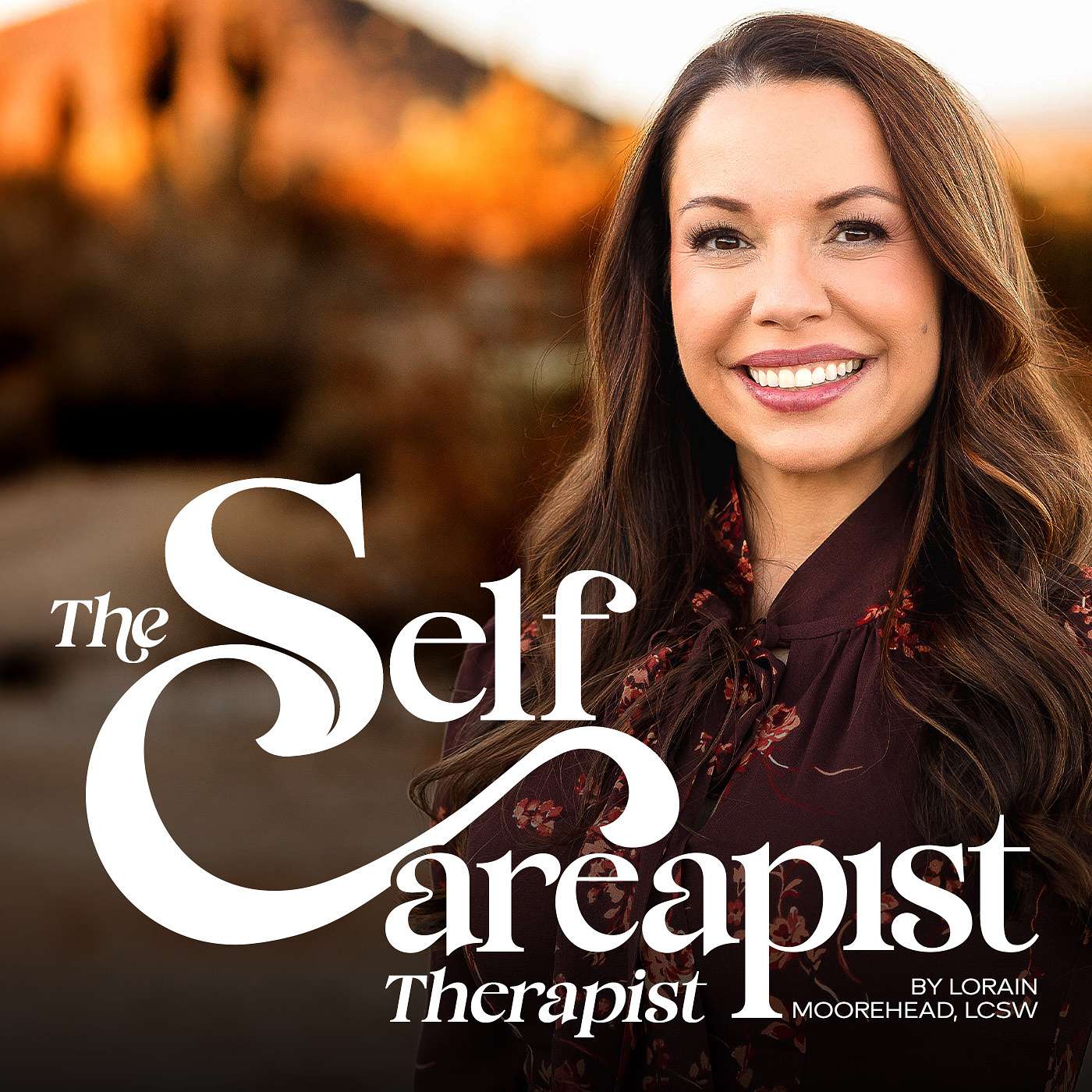
PODCAST · science
Self Careapist Therapist Podcast
by Lorain Moorehead
How do you actually use EMDR, CBT, or IFS in session, not the textbook version, but with a real client sitting across from you? Self Careapist Therapist is a therapist-to-therapist podcast where licensed clinicians break down the clinical skills, modalities, and hard conversations that training programs skim over.Hosted by Lorain Moorehead, LCSW, PMH-C, EMDR Certified Approved Consultant, Clinical Supervisor, and graduate school faculty associate. Each week features expert guests, including researchers, authors, and practicing clinicians, sharingevidence-based interventions you can take straight into your next session. Topics include: • EMDR therapy, trauma processing, and advanced EMDR applications • Internal Family Systems (IFS), parts work, and integrative trauma approaches • CBT, DBT, RO-DBT, ACT, and third-wave cognitive behavioral therapies • Clinical supervision, therapist training, and profess
-
29
Anti-Racist Psychotherapy: Addressing Race and Racism in Therapy
David Archer, MSW, MFT — EMDR therapist, EMDRIA-approved trainer, and author of "Anti-Racist Psychotherapy" breaks down how EMDR therapy can be used to treat racial trauma and complex trauma in clinical practice.In this episode of the Self Careapist Therapist Podcast, Lorain Moorehead, LCSW, PMH-C, sits down with David to explore anti-racist psychotherapy as a science-based framework that integrates EMDR therapy, trauma-informed therapy, and an understanding of how systemic racism creates lasting neurobiological harm. David shares his Rhythm and Processing (RAP) approach, a somatic, rhythm-based method rooted in EMDR principles and explains how therapists can apply memory reconsolidation techniques to help clients heal from racial trauma, complex trauma, and the intersection of both.Whether you're an EMDR therapist, a trauma therapist, or a clinician working with diverse populations, this conversation offers practical clinical tools for addressing race and racism in the therapy room.⏱️ CHAPTERS0:00 — Introduction: Who is David Archer?02:30 — What Is Anti-Racist Psychotherapy?08:15 — The Overlap Between Racial Trauma and Complex Trauma15:42 — How Systemic Racism Creates Neurobiological Harm22:18 — EMDR Therapy and Racial Trauma: The Clinical Connection29:05 — Rhythm and Processing (RAP): A Somatic Approach to Healing36:50 — Memory Reconsolidation and Conflicting Client Beliefs44:12 — Working with Clients' Nervous Systems and Allostatic Load51:30 — Practical Clinical Applications for Therapists58:20 — Accessibility and Making Healing Available to All1:05:00 — David's Books and EMDR Training Programs1:08:00 — Final Reflections and Takeaways for Clinicians📌 TOPICS COVERED• Anti-racist psychotherapy as a clinical framework• EMDR therapy for racial trauma and complex PTSD• Rhythm and Processing (RAP) — David Archer's somatic approach• Racial trauma vs. complex trauma: overlaps and distinctions• Memory reconsolidation in trauma therapy• How allostatic load and nervous system dysregulation manifest as racial trauma• Conflicting beliefs and cognitive dissonance in trauma processing• Trauma-informed therapy across cultural and racial identities• Practical EMDR therapy techniques for diverse client populations• Accessibility in mental health care🔗 RESOURCES & LINKS📚 David Archer's book — "Anti-Racist Psychotherapy: Confronting Systemic Racism and Healing Racial Trauma"Available on Amazon (US & Canada) and BIPOC-owned bookstores:https://archertherapy.com/books/anti-racist-psychotherapy/🌐 David Archer's website (therapy services, consultation, blog):https://archertherapy.com/🎓 EMDR Training & RAP Approach (EMDRIA-approved, online):https://archertherapy.com/training/emdr-basic/📚 David's other books:• "Black Meditation" — https://archertherapy.com/black-meditation/• "Racial Trauma Recovery" — https://archertherapy.com/racial-trauma-recovery/• "Black Mountain" — https://archertherapy.com/black-mountain/• "Transforming Complex Trauma" — https://archertherapy.com/transforming-complex-trauma/📧 Contact David Archer:https://archertherapy.com/contact/📚 ABOUT SELF CAREAPIST THERAPIST PODCASTHosted by Lorain Moorehead, LCSW, PMH-C, EMDR Certified Consultant, and Clinical Supervisor Self Careapist Therapist Podcast delivers conference-level clinical training between sessions. Each episode features in-depth clinician interviews and practical technique walkthroughs covering EMDR, CBT, DBT, RO-DBT, ACT, IFS, play therapy, and trauma-informed approaches.Whether you're a practicing therapist, social worker, clinical psychologist, or counselor, you'll find assessment strategies, case conceptualization frameworks, and evidence-based interventions you can apply in your very next session.🔔 Subscribe for weekly clinical training episodes: https://www.youtube.com/@selfcareapist💬 Join the conversation leave a comment with your clinical questions or reflectionsThe Self Careapist Therapist Podcast is a biweekly conversation with Lorain Moorehead, LCSW a therapist in private practice. With guests ranging from expert psychologists, therapists, researchers and authors, each episode offers a deep dive and keeps listeners from intern to advanced supervisor in mind while dropping gems and aha moments for everyone who loves to learn! If you love learning and want to keep track of some future learning opportunities, grab your personal curriculum here!If you liked this episode, feel free to subscribe and leave a review! Your support helps us be a top mental health podcast and resource. See you next week!The Self Careapist Therapist Podcast is a biweekly conversation with Lorain Moorehead, LCSW a therapist in private practice. With guests ranging from expert psychologists, therapists, researchers and authors, each episode offers a deep dive and keeps listeners from intern to advanced supervisor in mind while dropping gems and aha moments for everyone who loves to learn! If you love learning and want to keep track of some future learning opportunities, grab your personal curriculum here!If you liked this episode, feel free to subscribe and leave a review! Your support helps us be a top mental health podcast and resource. See you next week!
-
28
Therapy or Clinical Supervision: Two Different Takes
Lorain Moorehead, LCSW, PMH-C, EMDR Certified Consultant & Clinical Supervisor, sits down with Dr. Laurie Bruce, clinical psychologist (25+ years), mindfulness coach, host of "From Both Sides of the Couch," in a cross-show conversation recorded for both podcasts.They unpack the gap between CEUs and real clinical consultation, what happens when a client triggers something personal in session, and the barriers that keep therapists from finding their own therapist. If you found our episode on EMDR consultation requirements useful, this conversation goes further into the blurry territory between supervision, consultation, and personal therapy.Timestamps: 0:00 — The problem with supervision ending at licensure 1:14 — How other countries require ongoing consultation and the US doesn't 2:16 — Why CEUs should partially be replaced with consultation hours 3:16 — Learning a new modality means starting over, and why that demands supervision 11:04 — Lorain's experience with EMDR consultation requirements 12:47 — Dr. Bruce on DBT consultation teams, RO-DBT, and DART training 17:26 — The deep self-exploration required in IFS training 18:29 — The blurry line between therapy, supervision, and consultation 22:00 — Naming it as a form of informed consent and emotional regulation 23:39 — Administrative vs. clinical supervision: why they're not the same 27:10 — Barriers to therapists seeking their own therapy 34:06 — Structured vs. organic supervision: two different philosophies 42:01 — Why the intake process is the clinical work, not just a formality 43:23 — Individual vs. peer consultation: the role of trust and vulnerability 45:09 — How to find a therapist when you're a therapist yourself 49:32 — Dr. Bruce's upcoming virtual community for therapists and caregivers 52:05 — Where to find Lorain's work on perfectionism, burnout, and anxietyEpisode Highlights: Supervision is treated as a finish line tied to licensure instead of an ongoing clinical need. Several countries require monthly consultation to maintain licensure, while the US relies on CEU hours alone. Specializing in a new modality puts a clinician back at square one, requiring the same level of supervision as early training. Administrative supervision and clinical supervision serve different functions and should not be conflated. Naming what is happening in the room functions as both informed consent and a regulation tool. The biggest barriers to therapists seeking their own therapy are financial, the conditioning to be the expert, and the difficulty of finding someone outside their professional circle. A strong intake is not a formality. It is where the clinical work and the supervisee's core skills are actually built.Host: Lorain Moorehead, LCSW, PMH-C, EMDR Certified Consultant & Clinical Supervisor. Private practice supporting high-achieving adults and therapists with perfectionism, burnout, anxiety, and irritability.This episode covers topics relevant to CE/CEU for LCSW, LMHC, LPC, LMFT, NCC. Free CEU available for Arizona licensure through the Board of Behavioral Health Examiners.Subscribe for weekly clinical training you can use in your next session.Website: https://lorainmoorehead.com Instagram: @selfcareapist Podcast: https://feeds.buzzsprout.com/2512198#therapist #mentalhealth #continuingeducation #CEU #LCSW #LPC #LMFT #clinicalsupervision #EMDR #DBTThe Self Careapist Therapist Podcast is a biweekly conversation with Lorain Moorehead, LCSW a therapist in private practice. With guests ranging from expert psychologists, therapists, researchers and authors, each episode offers a deep dive and keeps listeners from intern to advanced supervisor in mind while dropping gems and aha moments for everyone who loves to learn! If you love learning and want to keep track of some future learning opportunities, grab your personal curriculum here!If you liked this episode, feel free to subscribe and leave a review! Your support helps us be a top mental health podcast and resource. See you next week!
-
27
DBT for LGBTQ+ Mental Health: Self-Love, Emotional Resilience & Queer Joy With Dr. Kiki Fehling
What does DBT look like when it is truly LGBTQ+ affirming?In this episode of The Self Careapist Therapist, I sit down with Dr. Kiki Fehling to talk about DBT for LGBTQ+ mental health, minority stress, queer joy, self-love, emotional resilience, and what it means to apply skills in a way that actually honors context.We talk about why being queer is not the source of mental health harm, how anti-queer environments shape emotion dysregulation, and why DBT can be especially helpful when clinicians understand the transaction between identity, biology, environment, invalidation, and safety.If you are a therapist working with LGBTQ+ clients, or if you are trying to deepen your affirming practice beyond good intentions, this conversation offers a thoughtful clinical lens. Listen to the full episode of DBT for LGBTQ+ Mental Health: Self-Love, Emotional Resilience & Queer Joy With Dr. Kiki Fehling.Dr. Kiki Fehling, Ph.D., is a licensed psychologist and Linehan-Board-certified Dialectical Behavior Therapy (DBT) expert therapist. She specializes in emotional sensitivity, borderline personality disorder, self-harm and suicide, trauma, and LGBTQ+ mental health. She is the co-author of Self-Directed DBT Skills: A 3-Month DBT Workbook and regularly shares mental health tips and DBT-related posts through her @dbtkiki social media accounts. Her work focuses on making DBT skills more accessible and affirming for LGBTQ+ people, especially around self-love, emotional resilience, minority stress, and queer joy.Website: https://www.kikifehling.com/ Instagram: https://www.instagram.com/dbtkiki/ Li: https://www.linkedin.com/in/drkikifehling/FB: https://www.facebook.com/drkikifehling/ Tiktok: https://www.tiktok.com/@dbtkikiLorain Moorehead is a therapist, consultant, and EMDR Certified, EMDRIA‑approved consultant specializing in trauma‑informed care and EMDR integration. She works with high‑achieving adults navigating anxiety, perfectionism, identity loss, and relational stress through depth‑oriented, evidence‑based approaches. Lorain brings advanced training in DBT and certification in Perinatal Mental Health, grounding her work in safety, attunement, and nervous‑system awareness. She also supports clinicians through supervision, consultation, and training, with a strong focus on ethical practice and clinical decisionmaking. In 2025, she launched The Self Care‑apist Therapist Podcast, creating space for therapists to explore innovative, research‑backed modalities—including emerging conversations around KAP and trauma treatment.Website: https://lorainmoorehead.com/ LinkedIn: https://www.linkedin.com/in/lorainmoorehead/ Instagram: https://www.instagram.com/theselfcareapist/ TikTok: https://www.tiktok.com/@theselfcareapist YouTube: https://www.youtube.com/playlist?list=PLjS1AkQopGeVq6eP-1j7Y4i-oloOPSJmw The Self Careapist Therapist Podcast is a biweekly conversation with Lorain Moorehead, LCSW a therapist in private practice. With guests ranging from expert psychologists, therapists, researchers and authors, each episode offers a deep dive and keeps listeners from intern to advanced supervisor in mind while dropping gems and aha moments for everyone who loves to learn! If you love learning and want to keep track of some future learning opportunities, grab your personal curriculum here!If you liked this episode, feel free to subscribe and leave a review! Your support helps us be a top mental health podcast and resource. See you next week!
-
26
Interracial Marriage: Love, Identity, and Navigating Differences with Geoffrey Greif and Victoria D. Stubbs
What can interracial couples teach therapists about race, family systems, and the conversations many clients are still learning how to have?In this episode of The Self Careapist Therapist, I sit down with Dr. Geoffrey Greif and Victoria D. Stubbs, LCSW, co-authors of Interracial Marriage: How Diverse Couples Navigate Relationships. We talk about what hundreds of interviews with interracial and interethnic couples revealed about communication, family approval, identity, power, children, language, safety, and the daily accommodations many couples learn to make.We also explore how therapists can approach these conversations with more humility, curiosity, and clinical nuance. Victoria shares how the six pillars of a brave space framework can support conversations about race, power, privilege, oppression, and identity, while Geoffrey highlights what research interviews can reveal that surveys often miss.Listen to this episode of Interracial Marriage: Love, Identity, and Navigating Differences with Geoffrey Greif and Victoria D. StubbsDr. Geoffrey Greif is a professor at the University of Maryland School of Social Work, researcher, author, and co-author of Interracial Marriage: How Diverse Couples Navigate Relationships. His work spans family relationships, fathers, adult sibling relationships, group work, and interracial marriage research.Website: https://geoffreygreifbooks.comVictoria D. Stubbs is the founder of Inner Truth Psychotherapy and Wellness, co-author of Interracial Marriage: How Diverse Couples Navigate Relationships and was previously a full-time clinical instructor at the University of Maryland School of Social Work. Website: https://www.innertruthllc.com/Instagram: https://www.instagram.com/innertruthllc/Discover how love transcends boundaries — click the link to grab your copy of Interracial Marriage: How Diverse Couples Navigate Relationships in a Divided Time and explore the powerful, real stories that remind us that connection is stronger than division! Buy the Book Here: https://www.amazon.com/Interracial-Marriage-Diverse-Navigate-Relationships/dp/0231218192Lorain Moorehead is a therapist, consultant, and EMDR Certified, EMDRIA‑approved consultant specializing in trauma‑informed care and EMDR integration. She works with high‑achieving adults navigating anxiety, perfectionism, identity loss, and relational stress through depth‑oriented, evidence‑based approaches. Lorain brings advanced training in DBT and certification in Perinatal Mental Health, grounding her work in safety, attunement, and nervous‑system awareness. She also supports clinicians through supervision, consultation, and training, with a strong focus on ethical practice and clinical decisionmaking. In 2025, she launched The Self Care‑apist Therapist Podcast, creating space for therapists to explore innovative, research‑backed modalities—including emerging conversations around KAP and trauma treatment.Website: https://lorainmoorehead.com/ LinkedIn: https://www.linkedin.com/in/lorainmoorehead/ Instagram: https://www.instagram.com/theselfcareapist/ TikTok: https://www.tiktok.com/@theselfcareapist YouTube: https://www.youtube.com/playlist?list=PLjS1AkQopGeVq6eP-1j7Y4i-oloOPSJmw The Self Careapist Therapist Podcast is a biweekly conversation with Lorain Moorehead, LCSW a therapist in private practice. With guests ranging from expert psychologists, therapists, researchers and authors, each episode offers a deep dive and keeps listeners from intern to advanced supervisor in mind while dropping gems and aha moments for everyone who loves to learn! If you love learning and want to keep track of some future learning opportunities, grab your personal curriculum here!If you liked this episode, feel free to subscribe and leave a review! Your support helps us be a top mental health podcast and resource. See you next week!
-
25
Radically Open DBT (RO-DBT): A Clinical Approach to Emotional Overcontrol With Ellen Astrachan-Fletcher
Your most contained, rule-following, hardest-working clients may be the ones standard DBT is least equipped to help.In this episode of Self Careapist Therapist, I sit down with Dr. Ellen Astrachan-Fletcher, lecturer at Northwestern University's Feinberg School of Medicine, Associate Professor of Psychiatry at UIC, and owner of EAF ReCenter. With over 30 years of clinical and teaching experience, Dr. Astrachan-Fletcher is a nationally recognized expert in both DBT and Radically Open DBT (RO-DBT). She is the co-author of two clinical workbooks used in eating disorder treatment programs across the country, and her third book, RO-DBT for Anxiety, is set for release in August 2026.We cover what RO-DBT is, who it's designed for, how it differs from standard DBT, and what a training path looks like for clinicians who want to learn it.What You'll Learn in This Episode:Radically Open DBT was developed by Dr. Tom Lynch after observing that many clients, particularly those with chronic depression, restrictive eating disorders, and anxiety, were not responding to standard DBT. Standard DBT targets emotional dysregulation, helping clients learn to contain and control. RO-DBT does the opposite: it targets emotional overcontrol, the pattern of holding emotions in, appearing fine, and disconnecting from authentic social signaling.Dr. Astrachan-Fletcher explains the concept of emotional leakage, the moments when a tightly controlled client expresses emotion in unexpected, often indirect ways. She walks through the three core treatment targets in RO-DBT: flexibility, receptivity and openness, and true connection. True connection, she is careful to clarify, is not having a large social network. It is the felt experience of being known and loved even in your most uncomfortable truths.We also discuss emotional loneliness, what Tom Lynch identifies as the core suffering of overcontrolled clients: feeling utterly alone in a room full of people. Dr. Astrachan-Fletcher explains how this loneliness develops from the overcontrolled pattern of masking inner experience and what RO-DBT teaches clients to do differently.Other topics from this conversation:The temperament and developmental origins of overcontrol, including the role of threat sensitivity and detail focus in shaping coping early in life. The three mind states in RO-DBT: fixed mind, fatalistic mind, and flexible mind, and how each shows up in session. The clinical presentation differences between emotionally undercontrolled and overcontrolled clients, and how easy it is to misread a controlled client as doing well. Why RO-DBT calls its group component a "class" rather than a group, and what that distinction signals about how overcontrolled clients experience social environments. How RO-DBT is transdiagnostic, reaching across depression, OCPD, restrictive eating disorders, anxiety, and several personality disorders. Resources Mentioned:Official RO-DBT Training Site: radicallyopendbt.netEAF ReCenter (Dr. Astrachan-Fletcher's practice): eaf-recenter.comRO-DBT for Eating Disorders workbook by Dr. Astrachan-FletcherRO-DBT for Anxiety (forthcoming, August 2026) by Dr. Astrachan-FletcherKey Points:00:00 Introduction03:19 Emotional overcontrol defined06:51 Overcontrol as the “high road”09:03 DBT and RO-DBT as dialectics12:50 Leakage in real life15:05 Flexibility, openness, true connection19:49 Social signaling23:57 Frozen and masked expressions25:28 Mirror neurons and Botox28:02 The eyebrow wag31:29 Self-inquiry and Malamati Sufism35:38 Self-inquiry meets EMDR39:14 Mindfulness differences43:36 Playfulness and teasing45:35 Screening and self-reporting50:00 Skills class structure53:28 Diagnoses that respond to RO-DBT58:02 Self-care recommendationEllen Astrachan-Fletcher is a licensed clinical psychologist, Founder of EAF reCenter, and expert in eating disorders, DBT, and Radically Open DBT (RO-DBT). With nearly three decades of experience spanning academia, clinical leadership, supervision, and training, she specializes in helping individuals cultivate authentic connection and emotional resilience. Website: https://www.eaf-recenter.com/ LI: https://www.linkedin.com/in/ellen-astrachan-fletcher-ph-d-ceds-s-faed-a2aa8151/?isSelfProfile=false Lorain Moorehead is a therapist, consultant, and EMDR Certified, EMDRIA‑approved consultant specializing in trauma‑informed care and EMDR integration. She works with high‑achieving adults navigating anxiety, perfectionism, identity loss, and relational stress through depth‑oriented, evidence‑based approaches. Lorain brings advanced training in DBT and certification in Perinatal Mental Health, grounding her work in safety, attunement, and nervous‑system awareness. She also supports clinicians through supervision, consultation, and training, with a strong focus on ethical practice and clinical decision making. Website: https://lorainmoorehead.com/ LinkedIn: https://www.linkedin.com/in/lorainmoorehead/ Instagram: https://www.instagram.com/theselfcareapist/ TikTok: https://www.tiktok.com/@theselfcareapist YouTube: https://www.youtube.com/playlist?list=PLjS1AkQopGeVq6eP-1j7Y4i-oloOPSJmw The Self Careapist Therapist Podcast is a biweekly conversation with Lorain Moorehead, LCSW a therapist in private practice. With guests ranging from expert psychologists, therapists, researchers and authors, each episode offers a deep dive and keeps listeners from intern to advanced supervisor in mind while dropping gems and aha moments for everyone who loves to learn! If you love learning and want to keep track of some future learning opportunities, grab your personal curriculum here!If you liked this episode, feel free to subscribe and leave a review! Your support helps us be a top mental health podcast and resource. See you next week!
-
24
Why Clients Skip Their Second EMDR Session (And What It's Telling You)
Moments of hesitation after a first EMDR session often signal that meaningful work has already begun. In this episode of The Self Careapist Therapist, I break down what’s really happening when clients feel unsure about continuing EMDR after their first session. I walk through common reactions like exhaustion, vivid dreams, confusion, and the sense that something shifted without fully understanding why. I also talk about how to respond clinically. Sometimes it’s about better debriefing and helping clients understand what their brain is doing.In some cases, hesitation points to something deeper. Slowing down, strengthening safety, and meeting the client where they are can make the difference between dropout and meaningful progress.Let this episode sharpen how you interpret hesitation in your clients. Watch now Why Clients Skip Their Second EMDR Session (And What It's Telling You).Lorain Moorehead is a therapist, consultant, and EMDR Certified, EMDRIA‑approved consultant specializing in trauma‑informed care and EMDR integration. She works with high‑achieving adults navigating anxiety, perfectionism, identity loss, and relational stress through depth‑oriented, evidence‑based approaches. Lorain brings advanced training in DBT and certification in Perinatal Mental Health, grounding her work in safety, attunement, and nervous‑system awareness. She also supports clinicians through supervision, consultation, and training, with a strong focus on ethical practice and clinical decisionmaking. In 2025, she launched The Self Care‑apist Therapist Podcast, creating space for therapists to explore innovative, research‑backed modalities—including emerging conversations around KAP and trauma treatment.Website: https://lorainmoorehead.com/ LinkedIn: https://www.linkedin.com/in/lorainmoorehead/ Instagram: https://www.instagram.com/theselfcareapist/ TikTok: https://www.tiktok.com/@theselfcareapist YouTube: https://www.youtube.com/playlist?list=PLjS1AkQopGeVq6eP-1j7Y4i-oloOPSJmw The Self Careapist Therapist Podcast is a biweekly conversation with Lorain Moorehead, LCSW a therapist in private practice. With guests ranging from expert psychologists, therapists, researchers and authors, each episode offers a deep dive and keeps listeners from intern to advanced supervisor in mind while dropping gems and aha moments for everyone who loves to learn! If you love learning and want to keep track of some future learning opportunities, grab your personal curriculum here!If you liked this episode, feel free to subscribe and leave a review! Your support helps us be a top mental health podcast and resource. See you next week!
-
23
ACT Then and Now: Why the Originator Turned a Framework Into an Invitation with Dr. Steven C. Hayes
What does it actually mean to practice ACT — and how would you know if you already are? Dr. Steven C. Hayes, the originator of acceptance and commitment therapy, joins the podcast to talk about the 45-year arc of ACT's development, where the field of psychotherapy has gone wrong, and what it would mean to truly serve the person sitting in front of you. This conversation covers the six core processes of psychological flexibility, why randomized controlled trials may be misleading your clinical work, and why Dr. Hayes thinks every therapist should start by trying ACT on themselves. If you have been ACT-curious, or if you have been using elements of it without naming it, this episode gives you the bones.Episode Timestamps0:00 — Introduction1:27 — What ACT is, and why it may already be in your practice2:41 — ACT in a single sentence: open, aware, and actively engaged4:48 — The origin story: personal suffering, panic disorder, and the limits of existing evidence-based therapy8:08 — Did ACT precede DBT? Dr. Hayes on Marsha Linehan and the shared roots of third-wave approaches10:35 — Process-based therapy: why the technique matters less than the mechanism13:29 — What to do instead of drawing a fence around your modality21:27 — The six core processes of psychological flexibility, explained one by one29:32 — Reaching more people: how ACT is being used in lower- and middle-income countries33:28 — Why your journal articles may be statistically misleading you (the ergodic theorem)38:30 — Idiographic measurement: tracking the individual, not the aggregate43:00 — PsychFlex and the Personalized Life Assessment Network: tools you can use now48:51 — The eugenics roots of standard statistical methods in psychology52:29 — The neurodiversity movement and what it gets right56:00 — Outcome measurement that fits the actual person1:01:35 — Where ACT is going: empowering clinicians from the bottom upEpisode HighlightsACT is not a set of techniques. It is a model built around processes of change — the small, repeatable behaviors that lift people up or push them down. A new randomized trial is published on ACT every two days.Psychological flexibility — learning to be more open, aware, and actively engaged in meaningful life — is the core target of ACT. Dr. Hayes argues it is also the mediating mechanism behind DBT, MBCT, and most other third-wave approaches.The six core processes of ACT are organized around three pairs: openness (cognitive defusion and acceptance), awareness (flexible attention and a transcendent sense of self), and engagement (values and committed action). They are not six separate things — they work as a system.The statistical methods clinicians rely on — Pearson's R, analysis of variance, factor analysis — were developed by eugenicists and assume that differences between people predict any individual's future. The ergodic theorem, proven in the 1930s, demonstrates mathematically that this assumption is false.Process-based therapy means starting with the person in front of you, identifying which processes are lifting them up or pushing them down, and choosing methods that move those processes. The label you attach to it matters less than whether it works for that person.Dr. Hayes recommends two starting points for clinicians: (1) do a perceived causal network with your client — map what matters, what helps, what hurts — and (2) track those nodes over time with a small number of personalized items. He has been doing this with himself for years.ACT has more randomized trials from lower- and middle-income countries than any other psychotherapy model. Dr. Hayes attributes this to the process-based approach: when clinicians are empowered to apply principles in their own cultural language, the framework travels.ResourceThe Self Careapist Therapist Podcast is a biweekly conversation with Lorain Moorehead, LCSW a therapist in private practice. With guests ranging from expert psychologists, therapists, researchers and authors, each episode offers a deep dive and keeps listeners from intern to advanced supervisor in mind while dropping gems and aha moments for everyone who loves to learn! If you love learning and want to keep track of some future learning opportunities, grab your personal curriculum here!If you liked this episode, feel free to subscribe and leave a review! Your support helps us be a top mental health podcast and resource. See you next week!
-
22
Accelerated Resolution Therapy (ART): How It Compares to EMDR with the founder, Lainey Rosenzweig, LMFT
What happens when a therapist takes EMDR training, loves the eye movements, and throws out the protocol entirely? Laney Rosenzweig did exactly that. In 2007, she walked out of an EMDR training room convinced there was a better way. Eighteen years later, ART (Accelerated Resolution Therapy) has been trained at military bases, studied at Mayo Clinic and Yale, and is resolving complex trauma in a single session. Laney joins the show to break down how ART works, who it helps, and what the training path looks like for licensed clinicians.Episode Timestamps• 0:38 - The origin story of ART• 9:27 - Modifications since the stroke and continued dedication• 10:14 - Commonalities between ART and EMDR origins• 11:48 - Eye movements vs. other bilateral stimulation methods• 13:45 - Positization and the role of humor in ART• 15:32 - The ART script and how it restructures trauma• 17:14 - ART training at military bases and Walter Reed• 18:33 - ART as a foundational model vs. EMDR• 19:24 - Free association vs. guided protocol• 22:56 - How to set expectations with new ART clients• 24:25 - The role of metaphor in ART• 26:23 - Staying passionate after decades of clinical work• 28:30 - What to expect from the basic three-day training• 31:43 - Practicum structure and the three-to-one ratio• 33:25 - Advanced training and credentialing pathway• 36:09 - Who is not a candidate for ART• 37:19 - How to explain ART to a new client• 39:56 - Working with children and the SAFT technique• 42:53 - Training licensed therapists and ethical considerations• 44:30 - Becoming an ART trainer• 47:36 - How ART grew through word of mouth and research• 54:03 - Free intro sessions and getting started• 58:12 - Self-care through ARTEpisode Highlights• ART was developed after Laney found EMDR's free association protocol too unpredictable. By placing eye movements directly on the problem and building in a structured end point, she created a model that consistently resolves trauma in one session.• The core mechanism is image rescripting combined with eye movements. Rather than asking clients to free associate, the ART script guides the brain to replace distressing images with positive ones, which Laney calls positization.• Humor is a deliberate part of the ART approach. Laney gave the example of a palmetto bug phobia transformed into a favorable image of Willie Nelson. When clients can bring lightness to a previously terrifying image, the therapeutic shift has taken hold.• Metaphor is built into the model, not added as an option. The brain processes in images during sleep, and ART mirrors that process. Clients who resist direct confrontation of a trauma can work entirely through metaphor, including a structured script for clients who fear change.• ART is not free association. Unlike EMDR, the therapist guides the protocol from start to finish. Clients know what to expect and sessions have a clear endpoint, which Laney found critical for both therapist confidence and client safety.• The three-day basic trainingThe Self Careapist Therapist Podcast is a biweekly conversation with Lorain Moorehead, LCSW a therapist in private practice. With guests ranging from expert psychologists, therapists, researchers and authors, each episode offers a deep dive and keeps listeners from intern to advanced supervisor in mind while dropping gems and aha moments for everyone who loves to learn! If you love learning and want to keep track of some future learning opportunities, grab your personal curriculum here!If you liked this episode, feel free to subscribe and leave a review! Your support helps us be a top mental health podcast and resource. See you next week!
-
21
Complex Trauma Approaches That Don't Retraumatize: The Four Blinks Version of Flash Technique
Can Flash technique fully and permanently resolve a trauma memory in a single session, with almost no distress, even in clients with complex PTSD? Thomas Zimmerman has been answering that question for four and a half years, and his answer is yes. In this episode, he walks through the science, the structure, and the live protocol of the Predictive Processing Flash technique (formerly Four Blinks Version of Flash), with me as the client.Thomas is a mental health therapist, EMDR consultant, author, podcaster, and trainer based in Cleveland, Ohio. He developed his version of the Flash technique, originally called Four Blinks, around a predictive mind model of the brain. He explains why that model changes how we understand trauma, memory, and healing, and why it means every client is capable of change.We cover the four resourcing tools that make this approach safe for complex presentations, how Flash differs from EMDR in every structural and theoretical way, and what is actually happening in the nervous system during a session. Then we do a live demo. I work through a real memory in real time.Thomas also offers free Flash trainings every two weeks, free bi-monthly consultation, and a free weekly self-care Flash group for trained clinicians. This is a conversation worth sharing with every trauma-focused colleague in your network.Resources: https://emdrwithcomplextrauma.com/, https://thomaszimmerman.us/, https://emdrcleveland.com/1:00 - Thomas's background: 10 careers, trauma work, and finding Flash3:10 - From CBT to EMDR to Flash, and why each mattered5:32 - Watching 70 consecutive clients resolve trauma without significant distress6:29 - Flash is not a resource. How Zimmerman changed his understanding8:29 - The working mechanism: how Flash actually resolves memory9:20 - Why Zimmerman moved away from the triune brain model11:28 - The predictive mind model: predictions, error, and precision weighting14:07 - Why effective trauma approaches feel culturally non-intuitive19:00 - Demo setup: orienting to what Flash asks you to do20:25 - Resource 1: Container22:09 - Resource 2: Shop Vac26:17 - Resource 3: Pleasant (Calm) Scene28:44 - Resource 4: Sensory Grounding34:06 - Selecting the memory and setting up the live demo37:34 - The Flash demo begins44:22 - The memory resolves: checking for distress on all channels47:06 - The positive cognition that installed on its own51:41 - Neurobiological debrief: what just happened in the predictive mind58:18 - Free Flash trainings, consultation, and the weekly therapist self-care group59:49 - Why Thomas offers all of this at no charge1:02:43 - Thomas's book and the metaphorical index1:05:19 - Self-care: what Flash has done for Thomas personallyEpisode HighlightsFlash technique fully and permanently resolves trauma memories, not just reduces distress before EMDR. Zimmerman watched 70 consecutive clients complete full adaptive resolution before he changed how he understood the modality.The Self Careapist Therapist Podcast is a biweekly conversation with Lorain Moorehead, LCSW a therapist in private practice. With guests ranging from expert psychologists, therapists, researchers and authors, each episode offers a deep dive and keeps listeners from intern to advanced supervisor in mind while dropping gems and aha moments for everyone who loves to learn! If you love learning and want to keep track of some future learning opportunities, grab your personal curriculum here!If you liked this episode, feel free to subscribe and leave a review! Your support helps us be a top mental health podcast and resource. See you next week!
-
20
5 Common EMDR Questions Explained
What if the most common sticking points in EMDR therapy have clear, evidence-informed answers? In this solo episode, Lorain Moorehead, LCSW draws directly from her EMDR consultations with therapists to answer five questions that come up again and again in clinical practice. From understanding adaptive information processing and the eight-stage EMDR protocol to navigating negative cognitions, assessing dual awareness, and knowing when to adjust bilateral stimulation, this episode is a practical resource for therapists at every stage of their EMDR training and practice. Whether you are newly trained or a seasoned EMDR therapist, this episode will sharpen how you approach your next session.0:00 - Intro1:15 - How adaptive information processing works2:29 - How trauma generalizes across situations4:30 - The eight-stage EMDR protocol6:16 - Resourcing and dual awareness8:20 - Signs a client needs more resourcing10:20 - Building the trauma timeline: first, worst, and most recent13:00 - Virtual EMDR and eye movements vs. other bilateral stimulation16:00 - Negative cognitions and linked trauma targets18:11 - Why negative cognitions are hard to identify20:16 - Criteria for a strong negative cognition22:38 - Belief vs. fact: an important distinction24:32 - The gut punch test for the right NC26:42 - When a client is stuck in reprocessing28:29 - Adjusting BLS length and speed30:44 - Combining bilateral stimulation modalities Episode Highlights:Adaptive information processing is the theory underlying EMDR. The brain has a natural capacity to process experience, but trauma disrupts that process, and what begins as one trigger can generalize to many situations over time.EMDR is an eight-stage protocol, and the reprocessing portion is only one part of it. The work has already begun long before bilateral stimulation starts.Assessing dual awareness, the ability to hold one foot in the present and one foot in the past, is one of the most important readiness indicators before moving into reprocessing.Spending multiple sessions on resourcing is not a delay. It builds the capacity for clients to visit difficult material and return to the present moment without destabilizing.The trauma timeline does not need to be exhaustive. Focusing on the first, worst, and most recent incidents is enough to identify the full scope of a target without unnecessarily retraumatizing clients in the process.Eye movements tend to be the most effective form of bilateral stimulation for many clients, and virtual EMDR can be just as productive as in-person sessions when set up thoughtfully.A negative cognition must be about the self, negative rather than neutral, a belief and not a fact, and felt as present-tense relevant in order to carry the weight needed for reprocessing to move.Negative cognitions are often shaped in childhood and can persist even when the adult brain understands the situation differently on a logical level. The NC connects with the instinctual layer of belief, not the reasoning one.Continuing Education: Many episodes offer a free CEU for licensure in Arizona through the Board of Behavioral Health Examiners. Content is relevant for continuing education across LCSW, LMHC, LPC, LMFT, NCC, NBCC, and psychology licensure.Subscribe and leave a review — it helps other therapists find the show.The Self Careapist Therapist Podcast is a biweekly conversation with Lorain Moorehead, LCSW a therapist in private practice. With guests ranging from expert psychologists, therapists, researchers and authors, each episode offers a deep dive and keeps listeners from intern to advanced supervisor in mind while dropping gems and aha moments for everyone who loves to learn! If you love learning and want to keep track of some future learning opportunities, grab your personal curriculum here!If you liked this episode, feel free to subscribe and leave a review! Your support helps us be a top mental health podcast and resource. See you next week!
-
19
Mindfulness, Intuition, and Continued Education with Dr. Nikki Rubin
What if mindfulness is not a homework assignment you give clients, but the thread running through every single clinical decision you make? In this episode of Self Careapist Therapist, I sit down with Dr. Nikki Rubin, licensed clinical psychologist, ACT specialist, assistant clinical professor at UCLA, and co-founder and COO of Mind Science Collective, a continuing education platform built by clinicians for clinicians. We trace the full history of cognitive behavioral therapies from first wave behaviorism through second wave cognitive interventions to the third wave approaches that define evidence-based practice today, including ACT, DBT, and CFT. Dr. Rubin breaks down how mindfulness functions as a core behavioral tool in the therapy room, how it connects to clinical intuition, and how to help clients distinguish between what their gut is really telling them versus what anxiety is projecting. We also dig into behavioral case formulation, the entrepreneurial path in private practice, and what it looks like to build a values-driven continuing education business. Stay until the end for a live guided mindfulness exercise, and use code SELFCAREAPIST10 at checkout for 10% off any MindScience Collective course.0:00 - Intro1:27 - How Dr. Rubin's passion for teaching and training clinicians began4:48 - The founding of Mind Science Collective and what it offers10:33 - How CE courses work and the range of topics available13:18 - ACT values, creativity, and what drives the entrepreneurial instinct13:38 - The history of CBT waves from Skinner to the third wave18:06 - What might come after the third wave21:09 - Reframing the therapist's relationship to marketing and business27:22 - How mindfulness functions as the foundation of every clinical intervention29:55 - A clinical example of moment-to-moment mindfulness with a patient32:28 - Live guided mindfulness exercise with Dr. Rubin37:12 - Processing the exercise and debunking myths about mindfulness41:00 - The link between mindfulness and clinical intuition43:35 - Distinguishing intuition from anxiety in session and in life47:45 - Upcoming course: The Science of Intuition48:27 - Supervision training and its parallels with behavioral case formulation50:27 - What clinicians most commonly miss in case formulation54:03 - Mindfulness as a thread across theoretical orientations56:24 - Dr. Rubin's personal approach to self-careEpisode Highlights:Mindfulness is a core behavioral practice that threads through every clinical intervention, from conceptualization to treatment planning to in-session responses, and carries far more clinical utility than assigning meditation as homework.Third wave CBT therapies, including ACT, DBT, and CFT, emerged in the mid-1980s through a formal integration of acceptance-based and mindfulness-based practices alongside second wave cognitive techniques.ACT values extend beyond the therapy room into professional decisions, entrepreneurial endeavors, and how clinicians approach their own continuing education and growth.Mindfulness is not about clearing the mind. It is about paying present-moment attention while the brain does exactly what it is designed to do, which is generate thoughts, get distracted, and generate distraction again.Mindfulness and intuition are deeply linked. Mindfulness creates the space needed to quiet mental noise so that what intuition is communicating can actually be heard.Intuition is not premonition. It is a synthesis of all available data up to this moment, and it requires practiced mindful awareness to distinguish it from The Self Careapist Therapist Podcast is a biweekly conversation with Lorain Moorehead, LCSW a therapist in private practice. With guests ranging from expert psychologists, therapists, researchers and authors, each episode offers a deep dive and keeps listeners from intern to advanced supervisor in mind while dropping gems and aha moments for everyone who loves to learn! If you love learning and want to keep track of some future learning opportunities, grab your personal curriculum here!If you liked this episode, feel free to subscribe and leave a review! Your support helps us be a top mental health podcast and resource. See you next week!
-
18
Perfectionism Explained: Individual And Group Psychotherapy Interventions
What if perfectionism has nothing to do with wanting things done well? Dr. Paul L. Hewitt, Full Professor of Psychology at the University of British Columbia, researcher, and co-author of Perfectionism: A Relational Approach to Conceptualization, Assessment, and Treatment, joins the podcast to reframe perfectionism as a deeply relational personality style born out of unmet attachment needs. This conversation covers the development of perfectionism through early relational asynchrony, how it functions differently from conscientiousness or high standards, what Dynamic-Relational Therapy for Perfectionism looks like in practice, and what clinicians should know about the depth of pain underneath a high-functioning exterior. The episode also covers new research on how perfectionism in therapists affects the therapeutic alliance.0:00 - Intro and Dr. Hewitt's background0:54 - How a dentist's waiting room started a research career2:30 - Personal connection to perfectionism through classical music training3:17 - Defining perfectionism as a personality style rather than a set of attitudes4:03 - The unmet relational and esteem needs underneath perfectionism8:18 - Whether perfectionism concentrates in one area or crosses all life domains11:55 - Why achievement fails to correct the core wound (case example)14:06 - Links to attachment theory and early developmental asynchrony22:51 - Perfectionism in high-achieving professionals and entrepreneurs27:20 - The wrong tool: an elegant but ultimately childlike solution to deep pain28:21 - How treatment parallels the challenge of exposure work in OCD30:56 - Distinguishing clinical perfectionism from conscientiousness and high standards32:20 - The vulnerability piece: procrastination and never getting started33:35 - Dr. Hewitt's concerns about symptom-based classification systems36:14 - What typically brings someone to therapy for perfectionism38:29 - The tenets of Dynamic-Relational Therapy for Perfectionism40:54 - How the therapeutic relationship becomes the vehicle for change42:37 - Treatment length and the 30-session research benchmark43:46 - The clinician workshop training model explained54:24 - The perfectionism book and the new paperback edition57:38 - The depth of pain underneath high-functioning clients59:44 - Concealment, imposter syndrome, and the hidden self1:01:00 - Research on perfectionism in therapists and its impact on the allianceEpisode Highlights:Perfectionism is a layered, complex personality style rooted in unmet needs for love, acceptance, and personal worth, not a drive for high standards.The core dynamic is a deeply human need to feel acceptable to others and worthy as a self, which perfectionism attempts to solve through a strategy that can never deliver what it promises.Perfectionism develops through early attachment asynchrony, where the child's needs are not adequately met and they learn that appearing perfect may be the path to safety and connection.Striving for excellence and perfectionism are meaningfully different. The key clinical signal is whether achievement produces any lasting impact on the person's sense of self.Perfectionism is less about trying to be perfect and more about ensuring one is never exposed as imperfect, making the fear of imperfection the central organizing force.Dynamic-Relational Therapy for Perfectionism targets the underlying relational needs rather than perfectionism behaviors themselveContinuing Education: Many episodes offer a free CEU for licensure in Arizona through the Board ofThe Self Careapist Therapist Podcast is a biweekly conversation with Lorain Moorehead, LCSW a therapist in private practice. With guests ranging from expert psychologists, therapists, researchers and authors, each episode offers a deep dive and keeps listeners from intern to advanced supervisor in mind while dropping gems and aha moments for everyone who loves to learn! If you love learning and want to keep track of some future learning opportunities, grab your personal curriculum here!If you liked this episode, feel free to subscribe and leave a review! Your support helps us be a top mental health podcast and resource. See you next week!
-
17
Ketamine-Assisted Psychotherapy (KAP) Explained: How It Works, Types, Safety, and EMDR Integration
What happens when two EMDR practitioners who trained together start comparing notes on ketamine? Amanda Baker, LCSW, a clinical social worker at Mindful Springs Counseling in Colorado Springs, joins the conversation to break down ketamine-assisted psychotherapy from the ground up. We explore the striking overlap in neural mechanisms between ketamine and EMDR, walk through the preparation and integration framework, and discuss the virtual group model Amanda ran to make CAP more accessible. She also addresses safety, contraindications, the prescriber relationship, what the training landscape looks like for therapists who want to get started, and why the answer to helping people is rarely about holding on to every client.0:00 - Intro and Amanda's background1:21 - Amanda's varied social work career and path to therapy3:07 - Arrival at Mindful Springs and first exposure to ketamine5:06 - EMDR training origins and how both modalities connect9:28 - Moving past skepticism about psychedelics12:24 - The neural mechanism behind ketamine and how it mirrors EMDR14:13 - Types of ketamine delivery methods explained18:00 - What preparation and integration look like in practice24:21 - Building partnerships with prescribers28:10 - The virtual ketamine group model33:08 - The role of chaperones and reparative attachment34:04 - Conditions the research supports treating with CAP35:44 - Safety, contraindications, and the high-profile misuse case40:37 - The history of psychedelics and ketamine's pharmaceutical origins46:27 - Training resources and how to get started49:51 - The social work mindset and connecting clients to the right provider53:32 - Amanda's self-care and ethics-based consultation practiceEpisode Highlights:Ketamine and EMDR appear to share a neural mechanism, both promoting new neural development and activating overlapping brain regions associated with relaxation and healing.The types of ketamine treatment range from IV infusion and intramuscular injection to oral lozenges and esketamine nasal spray, with differing levels of psychedelic intensity and varying degrees of therapist involvement.Preparation and integration are not optional steps surrounding the dosing session. They are the therapeutic architecture that makes the experience meaningful and the outcomes lasting.A 24 to 48 hour window after a dosing session is the most active period for neural growth and integration, making timely follow-up a clinical priority.Low-dose psycholytic ketamine keeps clients alert and conversational, making it highly compatible with active therapeutic work during the session itself.A prescriber who is willing to write a prescription without speaking with the treating therapist first is a significant red flag.Contraindications include active psychosis or schizoaffective conditions, unregulated hypertension or thyroid disorders, significant cardiac irregularities, and pronounced rigid personality disorder features.The virtual group ketamine model supported four clients at a time through preparation, dosing, and integration, increasing accessibility by reducing individual session costs.The chaperone role during dosing sessions carries potential for reparative attachment, as clients often choose someone close to them who then shows up in a way the client may not have previously experienced.Training resources include Journey Clinical and Fluence, IPI, and Proddy; Sunny Strasburg's Panther model connects the EMDR eight phases directly to the CAP treatment structure.Website: The Self Careapist Therapist Podcast is a biweekly conversation with Lorain Moorehead, LCSW a therapist in private practice. With guests ranging from expert psychologists, therapists, researchers and authors, each episode offers a deep dive and keeps listeners from intern to advanced supervisor in mind while dropping gems and aha moments for everyone who loves to learn! If you love learning and want to keep track of some future learning opportunities, grab your personal curriculum here!If you liked this episode, feel free to subscribe and leave a review! Your support helps us be a top mental health podcast and resource. See you next week!
-
16
Collaborative Assessment and Management of Suicidality with Dr. David Jobes
What would it look like if we actually asked suicidal clients what was making them suicidal and then treated that? Dr. David Jobes, professor of psychology at The Catholic University of America, director of the CUA Suicide Prevention Lab, and developer of the Collaborative Assessment and Management of Suicidality (CAMS), joins the podcast to challenge the dominant medical model response to suicidality and make the case for a better way. This conversation covers the history and structure of CAMS, the evidence behind it, how it compares to the safety plan, why the research on hospitalization should change how clinicians think about least-restrictive care, how CAMS works with adolescents, and the full range of training options available today, including the brief intervention model for inpatient and emergency settings.0:00 - Intro and Dr. Jobes's background0:57 - How a philosophy background led to 43 years in suicide research3:09 - What came before modern suicide prevention4:00 - The medical model problem and why hospitalization often increases risk7:01 - Autonomy, agency, and why containment tends to backfire9:38 - How CAMS works: the Suicide Status Form and the collaborative assessment11:36 - Identifying drivers and building a treatment plan around them15:50 - The relationship between CAMS and DBT19:48 - Safety planning vs. the Crisis Response Plan: what the research actually shows23:04 - The marketing problem and how DBT became world famous while better-evidenced tools stayed obscure24:03 - Types of drivers: relational, vocational, and self-related27:23 - Suicidal ideation rates post-COVID and what the data shows30:12 - CAMS is effective at any level of ideation, not only crisis presentations33:07 - How to get started: the Guilford Press book, CAMS Care training, and consultation38:47 - The CAMS Brief Intervention model for inpatient and emergency settings39:49 - Empath units as a model for humane emergency psychiatric care41:21 - Training for teams, systems of care, and discounts for training programs45:07 - Fidelity, training hubs, and the international reach of CAMS48:12 - What CAMS adds that individual clinicians may not be getting in their training51:09 - CAMS with adolescents: autonomy, existential drivers, and the Stabilization Support Plan for parents55:16 - Grant support, funding shifts, and how to reach CAMS Care56:32 - Dr. Jobes on self-care and consultation as an ethical and clinical requirementEpisode Highlights:CAMS is a framework, not a new psychotherapy. Clinicians of any theoretical orientation can use it without abandoning their existing approach.The core of CAMS is a collaborative therapeutic assessment in which the clinician takes a figurative seat next to the client to complete the Suicide Status Form together, with the client as the primary author.The framework asks the client directly what makes them suicidal, then treats those drivers rather than treating a diagnosis or assuming depression is the primary target.The most common drivers identified through CAMS are relational and vocational, not diagnostic. Research on suicidality from people with lived experience confirms that the drivers are rarely the diagnosis itself.CAMS has seven randomized controlled trials supporting its effectiveness for reducing suicidal ideation, making it one of the most evidenced interventions in the field.The research on hospitalization consistently shows that coming out of inpatient care is a high-risk period, and involuntary commitment does not improve outcomes specific to suicide risk. It may incrThe Self Careapist Therapist Podcast is a biweekly conversation with Lorain Moorehead, LCSW a therapist in private practice. With guests ranging from expert psychologists, therapists, researchers and authors, each episode offers a deep dive and keeps listeners from intern to advanced supervisor in mind while dropping gems and aha moments for everyone who loves to learn! If you love learning and want to keep track of some future learning opportunities, grab your personal curriculum here!If you liked this episode, feel free to subscribe and leave a review! Your support helps us be a top mental health podcast and resource. See you next week!
-
15
Regulate, Relate and Reason: A Deep Dive into Dr. Bruce Perry's Neurosequential Model
What if the key to understanding your mental health and relationships lies in how your brain developed from the very beginning? I'm joined by Michelle Maikoetter, LPC from the Neurosequential Network, to demystify the Neurosequential Model developed by Dr. Bruce Perry. We explore how our earliest experiences, from in utero through childhood, shape our capacity for self-regulation, connection, and reasoning in adulthood. This conversation is a deep dive into the 'regulate, relate, reason' framework, revealing why we often struggle with emotional healing and how we can sequence our support for true mental wellness. We also discuss the vital role of rhythm, relational health, and creating healing environments, even in our workplaces. Listen now to explore how this transformative lens can change your understanding of your own healing journey and your approach to therapy.0:00 - Intro1:44 - Michelle’s personal journey discovering the Neurosequential Model4:18 - Why the model is a transformational lens for all of life5:15 - The core tenets of brain development and early childhood impact7:48 - How the Neurosequential assessment differs from a standard diagnosis9:36 - Understanding bottom-up brain development10:57 - Why we must sequence interventions, starting with sensory activities13:57 - Breaking down the ‘Regulate, Relate, Reason’ framework19:15 - The essential self-exploration and personal transformation in learning the model21:38 - The key components of regulation and creating a balanced system29:51 - How to create a relational and supportive workplace culture33:32 - The profound relevance of rhythm to regulation and connection46:39 - The role of empathy and shared humanity in this work49:57 - How to learn more about the Neurosequential ModelEpisode Highlights:The brain develops sequentially, and experiences from in utero to age three have a disproportionate impact on its organization.Our capacity for regulation, relationship, and reason is built upon foundational neural pathways laid down in our earliest years.To be effective, interventions must be sequenced developmentally, often starting with sensory and regulatory activities before cognitive work.The "Regulate, Relate, Reason" framework reflects the biological order in which our brain processes information.We cannot be relational or access our reasoning cortex when we are in a dysregulated, reactive state.Self-care is about maintaining a consistent baseline of arousal so we aren't overly reactive to daily stressors.Rhythm is a powerful and often overlooked regulatory tool, intertwined with our earliest developmental experiences.When someone is struggling, the goal should be to increase both structure and relational support, not withdraw connection.True empathy requires us to be in a regulated space to imagine another's experience and acknowledge our shared humanity.For change to be sustainable in any system, the leadership and environment must be aligned with the relational model being taught.Resources:Book: What Happened to You by Bruce Perry and Oprah WinfreyBook: The Boy Who Was Raised as a Dog by Bruce PerryBook: Born for Love by Bruce PerryWebsite: Neurosequential Network (neurosequential.com)Guest: Michelle Maikoetter, LPC – Director of Special Projects, Neurosequential NetworkContinuing Education: Many episodes offer a free CEU for licensure in Arizona through the Board of Behavioral Health Examiners. Content is relevant for continuing education across LCSW, LMHC, LPC, LMFT, NCC, NBCC, and psycholThe Self Careapist Therapist Podcast is a biweekly conversation with Lorain Moorehead, LCSW a therapist in private practice. With guests ranging from expert psychologists, therapists, researchers and authors, each episode offers a deep dive and keeps listeners from intern to advanced supervisor in mind while dropping gems and aha moments for everyone who loves to learn! If you love learning and want to keep track of some future learning opportunities, grab your personal curriculum here!If you liked this episode, feel free to subscribe and leave a review! Your support helps us be a top mental health podcast and resource. See you next week!
-
14
A Therapist's Toolkit for Working with Anxious teens with Sophia Vale Galano, LCSW
In this episode, I sit down with clinical social worker and author Sophia Vale Galano to discuss her newly released book, Calming Teenage Anxiety: A Parent's Guide to Helping Your Teenager Cope with Worry (published by Hatherley Press, distributed by Penguin Random House).Sophia shares practical tools and strategies for parents navigating teenage anxiety, exploring the unique challenges teens face today including academic stress, social media pressures, and delayed developmental stages post-COVID. We discuss how parents can shift from fixing and controlling to coaching and collaborating, and why curiosity and open-ended questions are a parent's best friend.In this conversation, we explore:How to distinguish between typical teenage behavior and clinical anxietyThe importance of tracking patterns with curiosity rather than judgmentWhy social media isn't all bad (and how to help teens find the positive)Moving from directive parenting to a coaching approachThe developmental delays we're seeing post-COVID and what that means for familiesHow well-intentioned parenting can accidentally push teens awayPractical phrases and approaches parents can use todayKey takeaway: Sometimes what looks like typical teenage moodiness requires a closer look. By tracking how often and to what extent a teen is struggling, parents can better understand when it's time for additional support.Sophia also shares her publishing journey, offering insights for aspiring authors on how to navigate the process without a literary agent and turn your message into a book that helps people.About Sophia Vale Galano: Sophia is an LCSW who has been working with teens and their families for nearly 11 years in private practice, residential treatment centers, and school settings. Her book provides a compassionate, practical blueprint for parents who want to support their anxious teens.Resources mentioned:Calming Teenage Anxiety: A Parent's Guide to Helping Your Teenager Cope with Worry by Sophia Vale GalanoAvailable on Amazon, Barnes & Noble, Target, Walmart, and local bookstoresPort Light Books for bulk salesContinuing Education: Many episodes offer a free CEU for licensure in Arizona through the Board of Behavioral Health Examiners. Content is relevant for continuing education across LCSW, LMHC, LPC, LMFT, NCC, NBCC, and psychology licensure.Subscribe and leave a review — it helps other therapists find the show.The Self Careapist Therapist Podcast is a biweekly conversation with Lorain Moorehead, LCSW a therapist in private practice. With guests ranging from expert psychologists, therapists, researchers and authors, each episode offers a deep dive and keeps listeners from intern to advanced supervisor in mind while dropping gems and aha moments for everyone who loves to learn! If you love learning and want to keep track of some future learning opportunities, grab your personal curriculum here!If you liked this episode, feel free to subscribe and leave a review! Your support helps us be a top mental health podcast and resource. See you next week!
-
13
The Top 5 Self Care Tips of 2025
Welcome to the final episode of the year! In this solo wrap-up, Lorain revisits the most powerful self-care insights, quotes, and practical strategies shared by the incredible guests who joined The Self Careapist Podcast in 2025. This episode weaves together short audio clips from guests—researchers, clinicians, authors, and innovators—to highlight the patterns, contradictions, and surprising themes that emerged around what real self-care looks like for mental health professionals.Whether you’re reflecting on the year behind you or preparing intentionally for the one ahead, this episode gives you a grounded, compassionate, evidence-informed way to think about your own self-care plan.Key Themes Across All GuestsSelf-care is individualized, not prescriptive.Movement often regulates faster than stillness.Micro-practices matter: two minutes can shift everything.Physiological rhythm informs emotional capacity.Creativity is deeply restorative for mental health clinicians.Self-care is both internal (mindset, skills) and external (hobbies, movement, community).Leaders set the tone for collective self-care culture.Passion and purpose are protective against burnout.Chapters00:00 Introduction to Self-Care and the Podcast00:52 Reflections on Self-Care Trends of the Year02:30 The Importance of Activity in Self-Care04:25 Mindset and Internal Processes in Self-Care06:34 Community and Connection in Self-Care08:44 Quick Self-Care Techniques09:57 Visualization and Trauma Management12:24 Mitigating Secondhand Trauma and Burnout13:52 Nutrition and Self-Care15:58 Emotion Regulation Skills17:54 Distress Tolerance Toolkit19:06 Motivation and Goal Setting for the New Year19:50 Creative Expression in Work21:53 Conclusion and Community EngagementResources MentionedThe Self Careapist Podcast Episode ArchiveEach referenced guest’s full episode Want to Share Your Self-Care Values?Visit LorainMoorehead.com/podcast to submit:Self-care strategies that worked for you this yearSkills you want to practice more oftenGuests you’d like to hear in 2026Connect with LorainWebsite: LorainMoorehead.com Instagram: @lorainmoorehead Podcast: The Self Careapist PodcastContinuing Education: Many episodes offer a free CEU for licensure in Arizona through the Board of Behavioral Health Examiners. Content is relevant for continuing education across LCSW, LMHC, LPC, LMFT, NCC, NBCC, and psychology licensure.Subscribe and leave a review — it helps other therapists find the show.The Self Careapist Therapist Podcast is a biweekly conversation with Lorain Moorehead, LCSW a therapist in private practice. With guests ranging from expert psychologists, therapists, researchers and authors, each episode offers a deep dive and keeps listeners from intern to advanced supervisor in mind while dropping gems and aha moments for everyone who loves to learn! If you love learning and want to keep track of some future learning opportunities, grab your personal curriculum here!If you liked this episode, feel free to subscribe and leave a review! Your support helps us be a top mental health podcast and resource. See you next week!
-
12
Healing Through ACT: A Trauma Journey with Dr. Darrah Westrup and Dr. Robyn Walser
You Are Not Your Trauma: Acceptance and Commitment Therapy for HealingIn this episode, I'm joined by two remarkable clinicians who together have over 60 years of combined experience working with trauma: Dr. Darrah Westrup and Dr. Robin Walser. These two have been collaborating for nearly two decades and three books. Their latest book, "You Are Not Your Trauma" published by Guilford Press, offers something different from traditional trauma treatments.While many approaches focus primarily on symptom reduction, Darrah and Robin take us further—into the territory of meaning, values, and vitality. They're not just asking "How do we make the pain go away?" but rather "How do you want to live your life, even while carrying a difficult history?"In this conversation, we explore:What Acceptance and Commitment Therapy (ACT) is and why it's so effective for trauma workThe three pillars of ACT: Open, Aware, and EngagedThe paradox of avoidance—how our natural instinct to run from pain can actually keep us stuck in itWhy battling trauma is like swatting at a bee—you might survive if you let it pass, but once you engage in battle, things escalateThe distinction between the self that experiences trauma and the experiences themselvesHow values don't compete and don't depend on historyWhy trauma survivors don't need to wait until symptoms disappear to start living meaningful livesPowerful stories from this conversation:A client who spent 30 years stuck in a trauma story, believing they couldn't move forward until the trauma was "resolved"—and the breakthrough that came from accepting that history only goes in one directionA survivor of childhood sexual trauma who discovered that new memories surfacing no longer frightened her because she realized: "I'm larger than that"A veteran who learned his values were still available to him, regardless of what he'd seen or doneDarrah's personal experience with a visualization exercise that changed everything for herAbout our guests:Dr. Darrah Westrup began her career at the VA Palo Alto Health Care System, where she was director of a 90-day residential treatment program for military women with trauma and severe PTSD. She has been working with ACT since her dissertation work and brought ACT into residential treatment for the first time in 2000.Dr. Robin Walser worked at the National Center for PTSD and studied under Dr. Steve Hayes, the developer of ACT, at the University of Washington. She was part of Dr. Marsha Linehan's DBT team during graduate school and has been practicing ACT since 1991.Resources mentioned:You Are Not Your Trauma by Dr. Darrah Westrup and Dr. Robin Walser (Guilford Press)Learning ACT, Second Edition by Dr. Robin WalserAssociation for Contextual Behavioral Science (ACBS)Online mindfulness meditations accompanying the bookContinuing Education: Many episodes offer a free CEU for licensure in Arizona through the Board of Behavioral Health Examiners. Content is relevant for continuing education across LCSW, LMHC, LPC, LMFT, NCC, NBCC, and psychology licensure.Subscribe and leave a review — it helps other therapists find the show.The Self Careapist Therapist Podcast is a biweekly conversation with Lorain Moorehead, LCSW a therapist in private practice. With guests ranging from expert psychologists, therapists, researchers and authors, each episode offers a deep dive and keeps listeners from intern to advanced supervisor in mind while dropping gems and aha moments for everyone who loves to learn! If you love learning and want to keep track of some future learning opportunities, grab your personal curriculum here!If you liked this episode, feel free to subscribe and leave a review! Your support helps us be a top mental health podcast and resource. See you next week!
-
11
A Multi-Faceted Approach to Understanding Motivation
In this insightful conversation, Dr. Hillary Hurst Bush discusses her collaboration with Dr. Ellen Braaten on the Motivation Mindset Workbook, an extension of the book Bright Kids Who Couldn't Care Less. The discussion delves into the concepts of aptitude, pleasure, and practice, exploring how these elements interact to influence motivation in children and teens. Dr. Bush shares personal anecdotes and professional insights, emphasizing the importance of understanding individual motivations and the role of family and societal expectations.TakeawaysMotivation is not a fixed trait; it ebbs and flows.Aptitude, pleasure, and practice are interconnected.The Motivation Mindset Workbook aims to make motivation accessible.Understanding individual motivations is crucial for growth.Family and societal expectations can impact motivation.Pleasure should be genuine and not just an escape.Overscheduling can hinder exploration and motivation.Mismatch in expectations can be mistaken for lack of motivation.Values and gratitude can guide motivation and pleasure.Motivation is fluid and can change over time.Sound bitesMotivation is not a fixed trait. Aptitude is a muscle, not fixed. Pleasure should be genuine. Mismatch, not lack of motivation. Values guide motivation and pleasure. Motivation is fluid and changeable. Family expectations impact motivation. Understanding motivations is crucial. Overscheduling hinders motivation. Motivation Mindset Workbook insights.Chapters:00:00:00 - Introduction to Motivation Mindset*An overview of the Motivation Mindset Workbook00:03:00 - Aptitude, Pleasure, and PracticeExploring the core concepts that drive motivation in children and teens.00:09:00 - Personal Insights and ExperiencesDr. Bush shares personal stories and professional insights on motivation.00:15:00 - Family and Societal ExpectationsDiscussing the impact of family and societal pressures on motivation.00:21:00 - The Fluidity of MotivationUnderstanding how motivation can change and adapt over time.Resources Mentioned:Range- David EpsteinBright Kids Who Couldn't Care Less- Ellen BraatenThe Motivation Mindset Workbook- Ellen Braaten & Hillary Hurst BushContinuing Education: Many episodes offer a free CEU for licensure in Arizona through the Board of Behavioral Health Examiners. Content is relevant for continuing education across LCSW, LMHC, LPC, LMFT, NCC, NBCC, and psychology licensure.Subscribe and leave a review — it helps other therapists find the show.The Self Careapist Therapist Podcast is a biweekly conversation with Lorain Moorehead, LCSW a therapist in private practice. With guests ranging from expert psychologists, therapists, researchers and authors, each episode offers a deep dive and keeps listeners from intern to advanced supervisor in mind while dropping gems and aha moments for everyone who loves to learn! If you love learning and want to keep track of some future learning opportunities, grab your personal curriculum here!If you liked this episode, feel free to subscribe and leave a review! Your support helps us be a top mental health podcast and resource. See you next week!
-
10
How We Can Help Parents Master Their Emotions with Dr. Alissa Jerud
Dr. Alissa Jerud, clinical psychologist and author of Emotion Savvy Parenting joins us to discuss methods to assist parents with remaining emotionally aware while parenting. Dr. Jerud specializes in helping parents master their emotions during the most challenging moments of parenting.Discover why focusing on parental emotion regulation (rather than controlling children's behavior) creates better outcomes for the entire family. Dr. Jerud shares her ART framework (Accept, Regulate, Tolerate), adapted from DBT specifically for parents navigating everyday struggles.What You'll LearnLearn practical techniques for helping parents master their emotions in real time. Dr. Jerud demonstrates how to apply DBT principles without requiring formal training, making these tools accessible for any therapist working with parents.Key Topics:The ART framework for parents mastering their emotions in heated momentsCARE skills that reduce heart rate by 50% in 30 secondsChain analysis adapted for parenting reactions (not children's behavior)Why forcing apologies backfires and what to do insteadInhibitory learning approach for anxious parentsOpposite action and radical acceptance in parenting contextsHow to handle public tantrums, sibling conflicts, and teen independence anxietyTeaching emotion regulation without full DBT certificationPerfect ForTherapists, counselors, social workers, and mental health professionals working with parents, families, or anyone interested in emotion regulation skills. Especially valuable for clinicians seeking practical, evidence based tools to recommend or teach in session.Featured ResourceBook: Emotion Savvy Parenting: How to Help Your Kids Cope, Regulate, and Thrive by Developing Your Own Emotional Intelligence by Dr. Alissa Jerud (now available in audiobook format)About the GuestDr. Alissa Jerud is a licensed clinical psychologist specializing in anxiety disorders and emotion regulation. She trained under Dr. Marsha Linehan (creator of DBT) at the University of Washington and now helps parents master their emotions through evidence based approaches rooted in DBT and exposure therapy with inhibitory learning.Episode HighlightsThe Grocery Store Scenario: Dr. Jerud walks through a classic parenting challenge (the checkout line candy bar meltdown) demonstrating how parents mastering their emotions changes the entire dynamic. Learn specific tools like slow exhales, opposite action, and reframing thoughts that work in real time.The Apology Paradox: Discover why demanding apologies from dysregulated children backfires and how modeling genuine apologies leads to children who naturally give heartfelt, handwritten apologies and repair attempts.Golden Opportunities: Shift perspective from dreaded meltdowns to practice opportunities. When parents view challenging moments as chances to strengthen their emotional mastery, the entire family benefits.The Heart Rate Demo: Learn about the CARE skills (adapted from DBT's TIP skills) that Dr. Jerud demonstrates in workshops using heart rate monitors, showing dramatic physiological changes in under a minute.Continuing Education: Many episodes offer a free CEU for licensure in Arizona through the Board of Behavioral Health Examiners. Content is relevant for continuing education across LCSW, LMHC, LPC, LMFT, NCC, NBCC, and psychology licensure.Subscribe and leave a review — it helps other therapists find the show.The Self Careapist Therapist Podcast is a biweekly conversation with Lorain Moorehead, LCSW a therapist in private practice. With guests ranging from expert psychologists, therapists, researchers and authors, each episode offers a deep dive and keeps listeners from intern to advanced supervisor in mind while dropping gems and aha moments for everyone who loves to learn! If you love learning and want to keep track of some future learning opportunities, grab your personal curriculum here!If you liked this episode, feel free to subscribe and leave a review! Your support helps us be a top mental health podcast and resource. See you next week!
-
9
Transforming Crisis Care With Revolutionary Vision and Partnerships
Join therapist Lorain Moorehead, LCSW, as she interviews Kevin Curtis, LCSW from the Huntsman Mental Health Crisis Care Center about revolutionizing mental health access. Learn how innovative crisis intervention models are transforming care delivery and reducing clinician burnout.What You'll LearnKevin Curtis shares groundbreaking approaches to mental health crisis care that eliminate traditional barriers to treatment. Discover how integrated services—including dental care, legal support, and flexible treatment pathways—create better outcomes for clients while supporting clinician wellbeing.Key Topics:Removing insurance barriers from mental health crisis careImplementing the CAMS framework for suicide interventionCreating partnerships that bridge gaps between systemsIntegrating dental and legal services into crisis careLeveraging peer support specialists effectivelyDesigning systems that reduce clinician burnoutBuilding flexible care continuums from hours to weeksPerfect ForTherapists, social workers, mental health counselors, crisis intervention specialists, and behavioral health administrators seeking innovative approaches to reduce barriers, improve client outcomes, and create more sustainable practice environments.Featured ResourcesCAMS (Collaborative Assessment and Management of Suicidality) FrameworkCertified Crisis Worker CertificationBook: 4,000 Weeks: Time Management for MortalsAbout the GuestKevin Curtis works in administration at the Huntsman Mental Health Crisis Care Center, where he focuses on creating accessible, barrier-free mental health systems and supporting clinicians to do their best work. #MentalHealthCrisisCare #TherapistPodcast #CrisisIntervention #SocialWork #ClinicalInnovation #TherapistBurnout #MentalHealthAccessContinuing Education: Many episodes offer a free CEU for licensure in Arizona through the Board of Behavioral Health Examiners. Content is relevant for continuing education across LCSW, LMHC, LPC, LMFT, NCC, NBCC, and psychology licensure.Subscribe and leave a review — it helps other therapists find the show.The Self Careapist Therapist Podcast is a biweekly conversation with Lorain Moorehead, LCSW a therapist in private practice. With guests ranging from expert psychologists, therapists, researchers and authors, each episode offers a deep dive and keeps listeners from intern to advanced supervisor in mind while dropping gems and aha moments for everyone who loves to learn! If you love learning and want to keep track of some future learning opportunities, grab your personal curriculum here!If you liked this episode, feel free to subscribe and leave a review! Your support helps us be a top mental health podcast and resource. See you next week!
-
8
Navigate the Nuances of AuDHD: A Deep Dive of Autism and ADHD with Dr. Tony Attwood and Dr. Michelle Garnett
In this insightful episode of The Self-Careapist Podcast, we are joined by world-renowned autism experts Dr. Michelle Garnett and Dr. Tony Attwood of Attwood and Garnett Events to explore the evolving understanding of combined autism and ADHD often referred to as AuDHD. Together, they unpack how the field has shifted from autism as a standalone, to understanding it as “autism plus,” often intertwined with ADHD, anxiety, mood disorders, BPD, learning disorders, and other experiences of neurodiversity.The conversation moves from diagnostic history and gender differences to the lived experience of camouflaging, self-identity, and the importance of emotional awareness in therapy. They introduce practical, affirming tools like energy accounting, the spoken social story, and considerations for alexithymia and burnout.Whether you’re a seasoned clinician looking to update your approach or a new learner, this episode offers compassion, clarity and humor for understanding how to connect and serve our AuDHD clients.Resources MentionedCAT-Q: Camouflaging Autistic Traits QuestionnaireModified Questionnaire for Autism Spectrum Conditions (MQ-ASC)Wheel of EmotionMaja Toudal – Energy AccountingLawson’s Work on MonotropismAttwood & Garnett’s Library of TrainingsEpisode Chapters00:00 – Introduction: Autism’s evolution 02:56 – Personal Journeys into Autism Research 06:10 – Understanding the Autism Spectrum 08:58 – Autism Plus: The Intersection with ADHD 11:58 – Camouflaging and Masking 15:09 – Gender Differences in Autism 17:49 – Diagnosis and Self-Identity 20:46 – Therapeutic Approaches for Neurodivergent Clients 23:56 – Mindfulness and Emotional Awareness 26:54 – Creative Therapies and Self-Expression 30:01 – Energy Accounting and Burnout Prevention 32:50 – Understanding Neurodiversity 36:11 – Final ReflectionsContinuing Education: Many episodes offer a free CEU for licensure in Arizona through the Board of Behavioral Health Examiners. Content is relevant for continuing education across LCSW, LMHC, LPC, LMFT, NCC, NBCC, and psychology licensure.Subscribe and leave a review — it helps other therapists find the show.The Self Careapist Therapist Podcast is a biweekly conversation with Lorain Moorehead, LCSW a therapist in private practice. With guests ranging from expert psychologists, therapists, researchers and authors, each episode offers a deep dive and keeps listeners from intern to advanced supervisor in mind while dropping gems and aha moments for everyone who loves to learn! If you love learning and want to keep track of some future learning opportunities, grab your personal curriculum here!If you liked this episode, feel free to subscribe and leave a review! Your support helps us be a top mental health podcast and resource. See you next week!
-
7
Identification, Prevention, and Care for Sex Trafficking Survivors with Dr. Dominique Roe Sepowitz
Human trafficking is often hidden in plain sight. In this episode of The Self Careapist Podcast, Dr. Dominique Roe-Sepowitz, professor at Arizona State University and director of multiple anti-trafficking programs, stops by to speak with Lorain about about identification, prevention, and care for sex trafficking victims and survivors.Content Warning: This episode discusses human trafficking, sexual violence, and exploitation. Please listen with care.This conversation explores the full arc of identification, prevention, and trauma-informed care for human trafficking victims. From validating survivor experiences and creating prevention programs with law enforcement, to treatment models designed for healing, Dominique shares both research and real-world strategies for working with this population.You’ll learn:How to identify human trafficking victims using accurate, client-driven languagePrevention strategies involving law enforcement, housing programs, and community partnersTreatment approaches for sex trafficking victims, including the STAR Group, a CBT-based model for recoveryWhy clinicians should seek expertise beyond client sessions to avoid harmStrategies for therapist self-care and managing burnout when working with highly traumatized survivorsWhy this mattersSupporting human trafficking survivors requires more than compassion—it demands knowledge, collaboration, and trauma-informed care. By focusing on identification, prevention, and treatment, clinicians and advocates can play a critical role in helping victims reclaim safety and dignity.Resources:Gale DinesTed TalkSex Trafficking Training MaterialsListen now for expert insights on human trafficking identification, prevention, and care plus practical tools you can use to support survivors.Continuing Education: Many episodes offer a free CEU for licensure in Arizona through the Board of Behavioral Health Examiners. Content is relevant for continuing education across LCSW, LMHC, LPC, LMFT, NCC, NBCC, and psychology licensure.Subscribe and leave a review — it helps other therapists find the show.The Self Careapist Therapist Podcast is a biweekly conversation with Lorain Moorehead, LCSW a therapist in private practice. With guests ranging from expert psychologists, therapists, researchers and authors, each episode offers a deep dive and keeps listeners from intern to advanced supervisor in mind while dropping gems and aha moments for everyone who loves to learn! If you love learning and want to keep track of some future learning opportunities, grab your personal curriculum here!If you liked this episode, feel free to subscribe and leave a review! Your support helps us be a top mental health podcast and resource. See you next week!
-
6
A Psychologist’s Guide to Recognizing Pathological Demand Avoidance
In this compelling episode of The Self Careapist Podcast, Dr. Maylin Griffiths, a clinical psychologist and founder of the Arizona Pediatric Assessment Center, joins Lorain Moorehead, LCSW, to demystify the misunderstood profile of Pathological Demand Avoidance/ Pervasive Drive for Autonomy (PDA).Dr. Griffiths explains how PDA often hides behind misdiagnoses like ODD or ADHD and share actionable tips for therapists conducting assessments and collaborating with school systems. She emphasizes the role of curiosity in assessments and valuable resources for clinicians and families.Notes:Curiosity drives effective assessment practices.Pathological Demand Avoidance (PDA) is a unique profile that requires specific strategies.Social strategies can be misinterpreted as manipulative behavior.Strengths of PDA kids include creativity and leadership skills.Collaboration among professionals is vital for comprehensive assessments.Shift from “manipulation” to “equalizing” when thinking about client behaviorLinks:Arizona Pediatric Assessment CenterNavigating PDA in AmericaPDA North AmericaChapters:00:00 Introduction to Assessment in Psychology02:57 The Role of Assessments in Therapy06:05 Understanding ODD and ADHD08:56 Exploring Pathological Demand Avoidance (PDA)12:00 Key Components of PDA14:58 Social Strategies and Coping Mechanisms18:09 The Impact of Autonomy on Behavior20:43 Role-Playing and Social Strategies23:43 Fixation and Its Effects25:46 Understanding PDA and Autism Profiles28:23 Navigating Social Dynamics and Self-Identification30:09 Strategies for Effective Communication36:13 Managing Demands and Autonomy39:24 The Role of Sensory Sensitivities44:15 Strengths and Unique Abilities of PDA Kids45:46 Resources for Clinicians and Families47:45 The Importance of Collaborative AssessmentsContinuing Education: Many episodes offer a free CEU for licensure in Arizona through the Board of Behavioral Health Examiners. Content is relevant for continuing education across LCSW, LMHC, LPC, LMFT, NCC, NBCC, and psychology licensure.Subscribe and leave a review — it helps other therapists find the show.The Self Careapist Therapist Podcast is a biweekly conversation with Lorain Moorehead, LCSW a therapist in private practice. With guests ranging from expert psychologists, therapists, researchers and authors, each episode offers a deep dive and keeps listeners from intern to advanced supervisor in mind while dropping gems and aha moments for everyone who loves to learn! If you love learning and want to keep track of some future learning opportunities, grab your personal curriculum here!If you liked this episode, feel free to subscribe and leave a review! Your support helps us be a top mental health podcast and resource. See you next week!
-
5
Why Clinical Ethics and Supervision Matter More Than Ever with Patricia Dobratz, JD, LMFT
In this episode, Lorain Moorehead sits down with Patricia Dobratz, JD, LMFT, a former prosecutor turned LMFT clinical supervisor, to explore ethical gray zones, common regulatory mistakes, and the evolving role of supervision in clinical practice. This episode offers insight into how to protect your license, your clients, and your professional growth whether you're a student, therapist, practice owner or in an adjacent profession. And highlights that often ethical missteps come from a lack of answers and supports rather than intention.Patricia shares guidance on building systems that support ethical decisions, creating separation between administrative and clinical supervision, understanding licensing compacts, and the future of behavioral health.Episode Highlights:[10:15] Ethical challenges in modern clinical practice[20:00] Support systems for clinicians and supervisors[30:00] The evolving role of clinical supervision[40:00] Future trends in behavioral health: AI, intensives & compacts[45:00] Documenting critical incidents to protect your license[50:00] Supervision as professional development, not just licensure[52:00] Lifelong learning, consultation, and avoiding stagnationResources Mentioned:Clinical Best Practice InstituteNot Your Typical Therapy ConferenceNBCC CE'sLorain Moorehead’s Clinical Supervision & ConsultationThe Self Careapist Therapist Podcast is a biweekly conversation with Lorain Moorehead, LCSW a therapist in private practice. With guests ranging from expert psychologists, therapists, researchers and authors, each episode offers a deep dive and keeps listeners from intern to advanced supervisor in mind while dropping gems and aha moments for everyone who loves to learn! If you love learning and want to keep track of some future learning opportunities, grab your personal curriculum here!If you liked this episode, feel free to subscribe and leave a review! Your support helps us be a top mental health podcast and resource. See you next week!
-
4
The Fraud Feeling: EMDR for High Achievers
In this first solo episode of The Self Careapist Therapist Podcast, I'm diving into the treatment of high achievers and entrepreneurs and some of the common symptoms they may experience, including ADHD, depression, anxiety symptoms and imposter syndrome. I detail how Eye Movement Desensitization and Reprocessing can be a helpful treatment modality, as well as the course of training to begin using EMDR as a therapist. You’ll also hear how the Adaptive Information Processing (AIP) model rewires the brain to replace “I’m not enough” with a grounded sense of capability.I close with my own self care framework that can be used for you or for your clients, to help get closer to alignment. You can find the link to your copy of the framework to work through on your own here.For more details on EMDR Certification.For details on EMDR Consultation.A great basic training for EMDR. Continuing Education: Many episodes offer a free CEU for licensure in Arizona through the Board of Behavioral Health Examiners. Content is relevant for continuing education across LCSW, LMHC, LPC, LMFT, NCC, NBCC, and psychology licensure.Subscribe and leave a review — it helps other therapists find the show.The Self Careapist Therapist Podcast is a biweekly conversation with Lorain Moorehead, LCSW a therapist in private practice. With guests ranging from expert psychologists, therapists, researchers and authors, each episode offers a deep dive and keeps listeners from intern to advanced supervisor in mind while dropping gems and aha moments for everyone who loves to learn! If you love learning and want to keep track of some future learning opportunities, grab your personal curriculum here!If you liked this episode, feel free to subscribe and leave a review! Your support helps us be a top mental health podcast and resource. See you next week!
-
3
Prolonged Grief and Seeking Help with Dr. Sonya Lott, PhD
What is Prolonged Grief Disorder Therapy and why does it matter? In this deeply moving episode of The Self Careapist Podcast, Lorain Moorehead, LCSW, sits down with Dr. Sonya Lott, grief therapy expert and affiliate of the Center for Prolonged Grief, to explore Prolonged Grief Disorder (PGD). You’ll learn what PGD is, how it’s diagnosed, and why so many therapists and clients miss the signs.Whether you’re a therapist, a grieving human, or someone supporting others through loss, this conversation offers transformative clarity, heartfelt compassion, and actionable insight. Dr. Lott breaks down the evolution of grief language, explains why the five stages of grief model is outdated, and shares a roadmap for evidence-based grief therapy.You’ll learn:What defines Prolonged Grief Disorder and how it differs from depression or PTSDHow to assess PGD using validated tools like the Inventory of Complicated GriefThe structure of Prolonged Grief Therapy (PGT) and its roots in CBT and attachment theoryWhy grief-specific training is essential for today’s therapistsWhere to access free and low-cost PGD training and resourcesDr. Lott also shares how therapists can protect their own emotional energy while holding space for sorrow and why this work is sacred.Listen now to discover how Prolonged Grief Disorder Therapy is helping us conceptualize how to understand loss and how you can integrate these vital tools into your work and life.Resources mentioned:Center for Prolonged GriefCaring Connections – University of UtahArticleDr. Sonya Lott's websiteThe inventory of complicated griefContinuing Education: Many episodes offer a free CEU for licensure in Arizona through the Board of Behavioral Health Examiners. Content is relevant for continuing education across LCSW, LMHC, LPC, LMFT, NCC, NBCC, and psychology licensure.Subscribe and leave a review — it helps other therapists find the show.The Self Careapist Therapist Podcast is a biweekly conversation with Lorain Moorehead, LCSW a therapist in private practice. With guests ranging from expert psychologists, therapists, researchers and authors, each episode offers a deep dive and keeps listeners from intern to advanced supervisor in mind while dropping gems and aha moments for everyone who loves to learn! If you love learning and want to keep track of some future learning opportunities, grab your personal curriculum here!If you liked this episode, feel free to subscribe and leave a review! Your support helps us be a top mental health podcast and resource. See you next week!
-
2
Why OCD is not an Adjective with Dr. Elizabeth McIngvale
In this episode, Lorain speaks with Dr. Liz McIngvale; the co-founder of new mental health training app MHNTI, the director of the OCD Institute of Texas, and adjunct faculty at Baylor College of Medicine. A nationally and internationally recognized authority on obsessive-compulsive disorder (OCD), Dr. McIngvale has published over 35 peer-reviewed journal articles, multiple textbook chapters and is a sought-after contributor to national expert panels, media, and conferences. This episode packs a punch, describing the importance of proper training when it comes to treating OCD, the importance in not using "OCD" casually to describe preferences, and gives the low down on the evidence based treatment for OCD, Exposure and Response Prevention (ERP). She details her own OCD journey and how it has allowed her to dedicate her career to the treatment advancement of OCD research. Chapters00:00 Introduction to OCD and Its Impact03:00 Personal Journey with OCD Treatment05:46 Understanding ERP and Training in OCD Treatment09:05 The Launch of Menti: A New Training Resource11:35 Defining OCD: Misconceptions and Realities14:48 Subtypes of OCD: Understanding Variability17:28 Improving Clinical Practices for OCD Treatment20:16 Understanding OCD Assessment and Measurement22:31 Risk Factors in OCD Treatment23:48 The Importance of Values-Based ERP27:11 Aligning Treatment with Patient Values29:47 Resources for Finding Qualified OCD Providers32:11 Leveraging Technology in Mental Health Care37:21 Self-Care Strategies for Clinicians and PatientsLinks from the Episode:Yale Brown Obsessive Compulsive Scale (Y-BOCS)Dr. Bruce PerryDr. Jon AbramowitzMHNTIContinuing Education: Many episodes offer a free CEU for licensure in Arizona through the Board of Behavioral Health Examiners. Content is relevant for continuing education across LCSW, LMHC, LPC, LMFT, NCC, NBCC, and psychology licensure.Subscribe and leave a review — it helps other therapists find the show.The Self Careapist Therapist Podcast is a biweekly conversation with Lorain Moorehead, LCSW a therapist in private practice. With guests ranging from expert psychologists, therapists, researchers and authors, each episode offers a deep dive and keeps listeners from intern to advanced supervisor in mind while dropping gems and aha moments for everyone who loves to learn! If you love learning and want to keep track of some future learning opportunities, grab your personal curriculum here!If you liked this episode, feel free to subscribe and leave a review! Your support helps us be a top mental health podcast and resource. See you next week!
-
1
Strengthening Emotional Bonds and Fostering Deep Connections in Couples Therapy with Dr. Marni Feuerman
In this episode, Lorain sits down with Dr. Marni Feuerman, LCSW, LMFT, clinical psychologist and author of Ghosted and Breadcrumbed to explore different approaches to couples therapy including the two she's highly trained in--Emotionally Focused Therapy (EFT) and Gottman. We cover the key tenants of both approaches, how to get started with them, as well as attachment styles and chemistry. Dr. Feuerman is a self-proclaimed therapy nerd and was able to give some key insight into how she has used her endless curiousity to expand and establish her career. Time stamps:00:00 Journey Through Couples Therapy Training02:52 The Evolution of EFT and Its Applications05:44 Experiential Learning in Therapy08:35 Initial Sessions and Assessment Strategies11:38 Integrating Individual and Couples Therapy14:33 The Role of Writing and Public Speaking in Therapy17:33 Understanding Relationship Patterns and Solutions31:03 Reverse Engineering Relationships32:57 Understanding Attachment Styles34:24 The Role of Chemistry in Relationships39:17 Navigating Initial Attraction43:50 Continuous Learning for Therapists47:25 Practical Steps for Aspiring TherapistsKey References from episode:Attachment Theory in PracticeThe New Marriage ClinicGhosted and BreadcrumbedBecoming AttachedThe Talking Solution- Dr. Feuerman's Psychotherapy PracticeDr. MarniContinuing Education: Many episodes offer a free CEU for licensure in Arizona through the Board of Behavioral Health Examiners. Content is relevant for continuing education across LCSW, LMHC, LPC, LMFT, NCC, NBCC, and psychology licensure.Subscribe and leave a review — it helps other therapists find the show.The Self Careapist Therapist Podcast is a biweekly conversation with Lorain Moorehead, LCSW a therapist in private practice. With guests ranging from expert psychologists, therapists, researchers and authors, each episode offers a deep dive and keeps listeners from intern to advanced supervisor in mind while dropping gems and aha moments for everyone who loves to learn! If you love learning and want to keep track of some future learning opportunities, grab your personal curriculum here!If you liked this episode, feel free to subscribe and leave a review! Your support helps us be a top mental health podcast and resource. See you next week!
-
0
Rewrite the Story of Psychosis with Hope with guest Dr. Aaron Brinen, Psy.D.
This episode was timed the week of Dr. Aaron Brinen's new book, Living Well with Psychosis. One of the lines I liked in his book is "in order to talk about Living Well, we have to talk about living," and, we do! From developing goals and aspirations to supporting and encouraging the family, and discussing how to incorporate activity, and plenty of it, we cover some key elements of treating psychosis in addition to discussion about how to support some of the specific obstacles that our clients living with psychosis may be facing. We talk about the development of the Recovery-Oriented Cognitive model in collaboration with Aaron T. Beck, the father of cognitive psychology.If authoring books is in your future, we also get some unexpected gems about the process and considerations of writing!Dr. Brinen's supportive and optimistic attitude as well as his mention of the need to advocate for our clients dealing with psychosis make this a hopeful informative listen, and I think you'll find some takeaways to consider whether you are new to this treatment population or have been treating psychosis for decades. To access a copy of Living Well with PsychosisTo access the activity tracker we discussed in the episodeIf you're interested in learning more about CT-RContinuing Education: Many episodes offer a free CEU for licensure in Arizona through the Board of Behavioral Health Examiners. Content is relevant for continuing education across LCSW, LMHC, LPC, LMFT, NCC, NBCC, and psychology licensure.Subscribe and leave a review — it helps other therapists find the show.The Self Careapist Therapist Podcast is a biweekly conversation with Lorain Moorehead, LCSW a therapist in private practice. With guests ranging from expert psychologists, therapists, researchers and authors, each episode offers a deep dive and keeps listeners from intern to advanced supervisor in mind while dropping gems and aha moments for everyone who loves to learn! If you love learning and want to keep track of some future learning opportunities, grab your personal curriculum here!If you liked this episode, feel free to subscribe and leave a review! Your support helps us be a top mental health podcast and resource. See you next week!
-
-1
Attachment Wounds Through the Lens of Complex Trauma with Melissa Lapides
Melissa Lapides, LMFT (@getsecurelyattached) discusses the profound effects of complex trauma, particularly in early childhood, and how it manifests in adult relationships. She emphasizes the importance of understanding attachment theory and how early experiences shape our emotional responses and relationships. Melissa shares her personal journey of healing from trauma and the significance of trauma-informed care in therapy. The discussion also touches on the role of attachment in relationships with pets and the importance of co-regulation. Overall, the conversation highlights the need for deeper understanding and healing of attachment wounds to foster healthier relationships.Whether you're a therapist who is hearing more curiosity about the impact of complex trauma from your clients, or a person making their own connections about your early experiences, this is a great episode.Key takeaways from this episode:Complex trauma is often misunderstood and widespread.Trauma is about the impact of events, not the events themselves.Adaptive mechanisms from childhood can become harmful in adulthood.Boredom can be a sign of peace, not dysfunction.Healing from trauma is possible at any age.Trauma-informed care emphasizes being present with clients' pain.Clients are the experts of their own experiences.Attachment styles significantly influence adult relationships.Co-regulation is essential in relationships with pets.Resources:The Attachment ProjectThomas Zimmerman (boat metaphor)Continuing Education: Many episodes offer a free CEU for licensure in Arizona through the Board of Behavioral Health Examiners. Content is relevant for continuing education across LCSW, LMHC, LPC, LMFT, NCC, NBCC, and psychology licensure.Subscribe and leave a review — it helps other therapists find the show.The Self Careapist Therapist Podcast is a biweekly conversation with Lorain Moorehead, LCSW a therapist in private practice. With guests ranging from expert psychologists, therapists, researchers and authors, each episode offers a deep dive and keeps listeners from intern to advanced supervisor in mind while dropping gems and aha moments for everyone who loves to learn! If you love learning and want to keep track of some future learning opportunities, grab your personal curriculum here!If you liked this episode, feel free to subscribe and leave a review! Your support helps us be a top mental health podcast and resource. See you next week!
-
-2
Being Seen, Being You: DBT Skills for a Life Worth Living with Dr. Kiki Fehling
For the therapist who might incorporate a DBT skill here or there but has always wondered what else there is to know...In this conversation, Dr. Kiki Fehling a clinical psychologist and Dialectical Behavior Therapy Certified researcher discusses her journey into Dialectical Behavior Therapy (DBT), its structure, and its application, particularly within the LGBTQIA+ community. She explains the importance of consultation teams, the role of mindfulness, and the dialectical approach of acceptance and change. Dr. Fehling shares insights on key DBT skills, such as distress tolerance and opposite action, and highlights the goal of building a life worth living. The discussion also touches on self-care techniques and resources for clinicians interested in DBT. We left you on a a cliffhanger, but the show Dr. Kiki enjoyed and recently finished was...drumroll please...Dying for Sex.Takeaways:DBT was created to help those struggling with BPD and suicidality.The therapy consists of individual sessions, skills groups, phone coaching, and consultation teams.Consultation teams provide essential support for DBT therapists.DBT is effective for various mental health issues beyond BPD, including anxiety and PTSD.Mindfulness skills help individuals reconnect with their emotions and identities.Dialectics emphasizes that acceptance and change can coexist.The goal of DBT is to help clients build a life worth living.Distress tolerance kits are practical tools for managing crises.Opposite action is a powerful skill for changing unhelpful emotional responses.Self-validation is crucial for personal well-being and self-care.Using Skillfull Means to become aware of the being mind vs. the doing mindKeywords:DBT, Dialectical Behavior Therapy, Mental Health, LGBTQIA+, Coping Skills, Mindfulness, Self-Validation, Consultation Teams, Emotion Regulation, Therapy TechniquesFor More Information, check out: https://www.kikifehling.com/Want to learn more about DBT?Self Directed DBT Skills WorkbookDBT Skills Training Manual- Dr. Marsha LinehanAnd, the book Dr. Fehling is reading is Queer Dharma...Skillfull Means00:00Introduction to DBT and Dr. Kiki Fehling01:53Understanding DBT: Structure and Purpose04:54The Importance of Consultation Teams in DBT07:46DBT's Application in the LGBTQIA+ Community10:48Key DBT Skills for Coping with Minority Stress13:42Mindfulness and Non-Judgment in DBT18:29Dialectics: Acceptance and Change in Therapy23:05Building a Life Worth Living with DBT26:20Creating a Distress Tolerance Kit31:58Utilizing Opposite Action in Coping Strategies39:19The Fluidity of Self-Exploration and Change40:05Resources for Learning DBT42:49Encouragement for Clinicians to Share Knowledge51:29Self-Care Techniques and Recommendations&The Self Careapist Therapist Podcast is a biweekly conversation with Lorain Moorehead, LCSW a therapist in private practice. With guests ranging from expert psychologists, therapists, researchers and authors, each episode offers a deep dive and keeps listeners from intern to advanced supervisor in mind while dropping gems and aha moments for everyone who loves to learn! If you love learning and want to keep track of some future learning opportunities, grab your personal curriculum here!If you liked this episode, feel free to subscribe and leave a review! Your support helps us be a top mental health podcast and resource. See you next week!
-
-3
The Traumaplay Path: Child, caregiver, and therapist dyads in play therapy with Paris Goodyear-Brown
SummaryIn this conversation, I have the pleasure of talking with Paris Goodyear Brown about the development and principles of her model Traumaplay, an integrative approach to play therapy that addresses the needs of families and children who have experienced trauma. The discussion covers the evolution of Traumaplay, the importance of attachment relationships, and the integration of various therapeutic models. Paris emphasizes the significance of assessment techniques, how she has integrated these principles at Nurture House, and the role of parents in the therapeutic process, and the necessity of self-care for therapists working with trauma.TakeawaysTrauma play is an integrative approach to therapy.Children communicate through play, which is their primary language.Delight is crucial for healthy child development.Assessment in trauma play serves as an intervention.Parents need support and skill-building in their roles.Understanding a child's grief is essential for effective therapy.Therapists must embody nurturing roles for parents.Wish fulfillment in play can help children process trauma.Self-care practices are vital for therapists' well-being.Therapeutic relationships are built on trust and understanding.Chapters00:00 Introduction to Trauma Play Model02:25 The Evolution of Trauma Play05:12 Integrative Play Therapy Approaches08:28 Research and Learning in Trauma Play11:12 Dyadic Assessment Techniques13:59 Parenting Skills and Psychoeducation16:58 The Role of the Therapist20:17 Self-Care Practices for CliniciansResources Mentioned in Episode:Traumaplay Certification ProcessBooks: Parents as Partners in Child TherapyBig Behaviors in Small ContainersPolyvagal Power in the PlayroomParent Child Interaction Training (PCIT)Jessica Stone, PhDGarry Landreth, PhDSue BrattonDee RayCharlie SchaefferContinuing Education: Many episodes offer a free CEU for licensure in Arizona through the Board of Behavioral Health Examiners. Content is relevant for continuing education across LCSW, LMHC, LPC, LMFT, NCCThe Self Careapist Therapist Podcast is a biweekly conversation with Lorain Moorehead, LCSW a therapist in private practice. With guests ranging from expert psychologists, therapists, researchers and authors, each episode offers a deep dive and keeps listeners from intern to advanced supervisor in mind while dropping gems and aha moments for everyone who loves to learn! If you love learning and want to keep track of some future learning opportunities, grab your personal curriculum here!If you liked this episode, feel free to subscribe and leave a review! Your support helps us be a top mental health podcast and resource. See you next week!
We're indexing this podcast's transcripts for the first time — this can take a minute or two. We'll show results as soon as they're ready.
No matches for "" in this podcast's transcripts.
No topics indexed yet for this podcast.
Loading reviews...
ABOUT THIS SHOW
How do you actually use EMDR, CBT, or IFS in session, not the textbook version, but with a real client sitting across from you? Self Careapist Therapist is a therapist-to-therapist podcast where licensed clinicians break down the clinical skills, modalities, and hard conversations that training programs skim over.Hosted by Lorain Moorehead, LCSW, PMH-C, EMDR Certified Approved Consultant, Clinical Supervisor, and graduate school faculty associate. Each week features expert guests, including researchers, authors, and practicing clinicians, sharingevidence-based interventions you can take straight into your next session. Topics include: • EMDR therapy, trauma processing, and advanced EMDR applications • Internal Family Systems (IFS), parts work, and integrative trauma approaches • CBT, DBT, RO-DBT, ACT, and third-wave cognitive behavioral therapies • Clinical supervision, therapist training, and profess
HOSTED BY
Lorain Moorehead
Loading similar podcasts...
Frequently Asked Questions
How many episodes does Self Careapist Therapist Podcast have?
Self Careapist Therapist Podcast currently has 33 episodes available on PodParley. New episodes are automatically indexed when they're published to the podcast feed.
What is Self Careapist Therapist Podcast about?
How do you actually use EMDR, CBT, or IFS in session, not the textbook version, but with a real client sitting across from you? Self Careapist Therapist is a therapist-to-therapist podcast where licensed clinicians break down the clinical skills, modalities, and hard conversations that training...
How often does Self Careapist Therapist Podcast release new episodes?
Self Careapist Therapist Podcast has 33 episodes. Check the episode list to see recent publication dates and frequency.
Where can I listen to Self Careapist Therapist Podcast?
You can listen to Self Careapist Therapist Podcast on PodParley by clicking any episode. We provide an embedded audio player for direct listening, and you can also subscribe via your preferred podcast app using the RSS feed.
Who hosts Self Careapist Therapist Podcast?
Self Careapist Therapist Podcast is created and hosted by Lorain Moorehead.
URL copied to clipboard!